 Purdue University - Extension - Forestry and Natural Resources
Got Nature? Blog
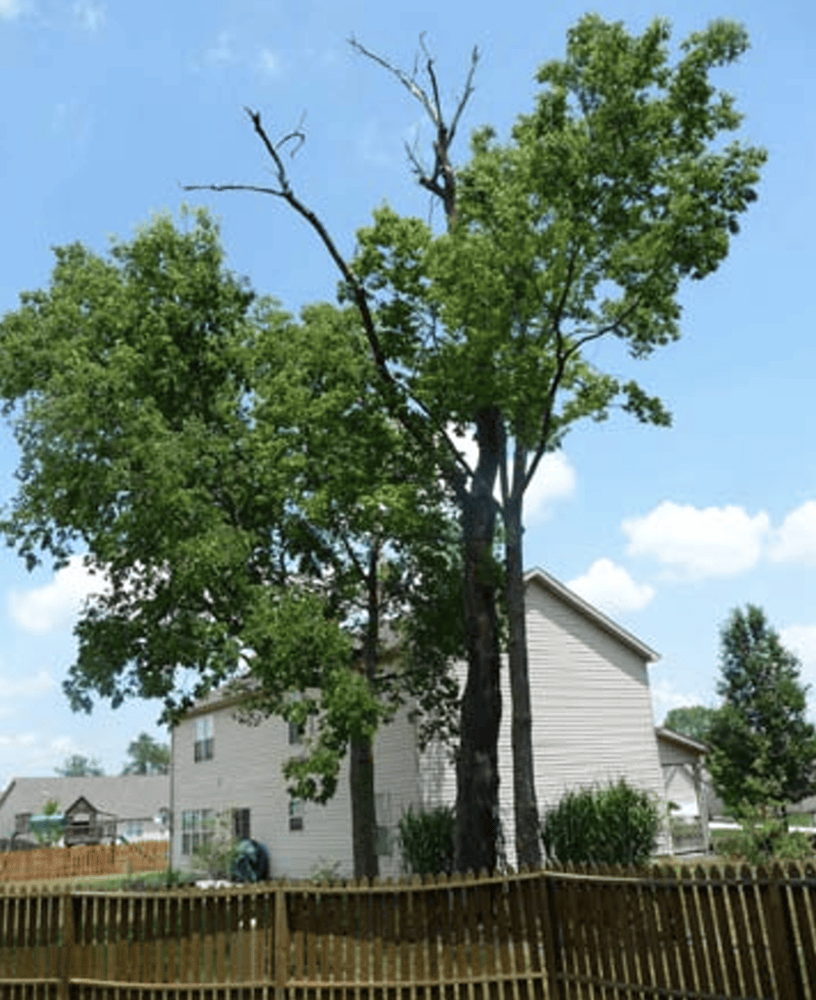
Unhealthy trees can fail, causing potential damage to nearby homes
Trees provide many benefits for our homes, businesses and properties. If a tree is defective, however, it may become a hazard. It is important to understand that tree owners have a duty to inspect and maintain their trees. All property owners should take reasonable steps to protect themselves by involving a qualified consultant or certified arborist.
The primary responsibilities of the arborist are to assess the potential for tree failure, advise owners of the consequences of failure and recommend the proper measures to prevent and abate failures. In assessing and managing trees it is important to create a balance between the inherent risk a tree poses and the benefits provided by the tree. Risk tree management begins with these basic steps:
Reduce tree liabilities: The property owner or manager has an obligation to periodically inspect trees for unsafe conditions. Since all trees have risk associated with them, regular inspection compels the owner or manager to evaluate the amount of risk they are willing to assume. Tree risk assessment is an important part of a program to determine if a tree is structurally sound or has the potential for failure. Inspections show that the tree owner is actively managing their trees and could reduce the owner’s liability if a failure occurs.
Inspect regularly: Trees should be assessed through inspections by a qualified arborist, preferably an International Society of Arboriculture Certified Arborist. Further inspections should be conducted after major weather events. At a minimum, trees should be inspected every five years or according to the owner’s risk tolerance.
Document and maintain records: Every inspection should be recorded and kept on file for future reference. These records are important for several reasons. Past evaluations can show how a tree has changed in its health and structure over the years. Also, written assessments are beneficial in liability claims and court cases. These written evaluations could minimize liability if a failure occurs and a claim is filed against the tree owner.
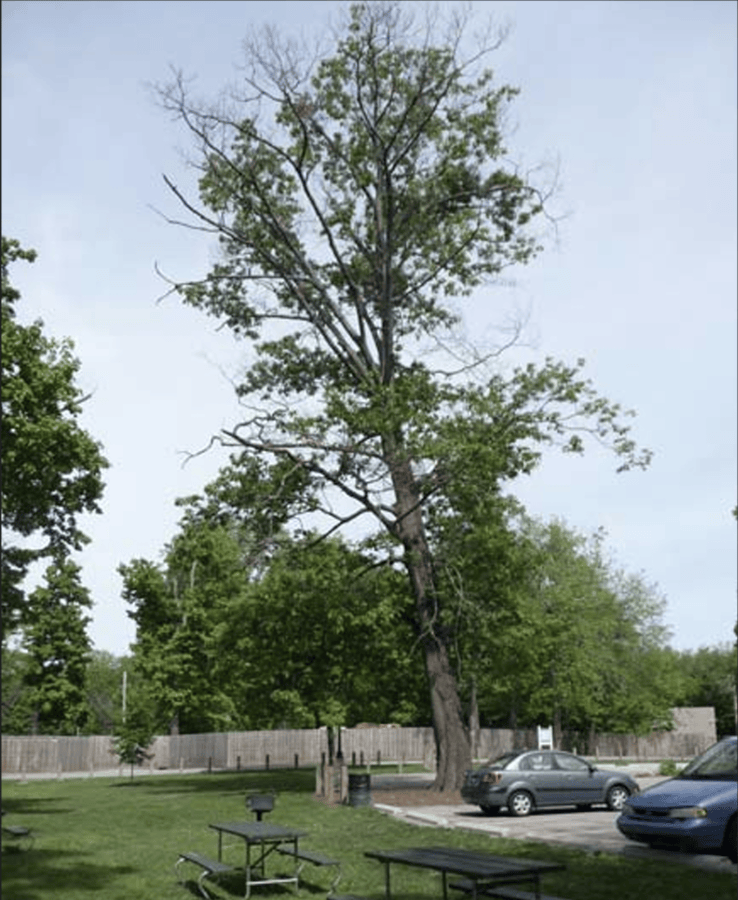
Inspect trees for health conditions and defects during the tree risk assessment.
Develop a site policy and care plan: Every property manager should create and implement a policy for tree risk. This includes developing a standard of care, an inspection process and mitigation of property risk. Routine care and scheduled maintenance for all trees is essential.
Mitigate tree risk: Tree owners should make every effort to reduce risk with proper pruning and health care practices. Consider all options before deciding on removal. If possible, move or remove the “target” (see definition in “Tree Risk Assessment” section). Install structural support systems where feasible. Modify site conditions to improve the environment around the tree. Risk mitigation requires a process of logical options focusing on protecting the target and preserving the tree.
Schedule tree work: While evaluating trees for risk, the inspector should note any tree maintenance needs. The inspection can determine the timing and priority of work needed. The work should be prioritized first for safety and then for tree health. Consider potential risk, activities around the tree, level of acceptable risk and the needs of the client.
Create good tree planting strategies: Identify planting needs and locations that become available as trees are removed or destroyed. Improving the health and safety of the landscape requires an understanding of management principles, such as species selection and diversity. Also consider the impact of site infrastructure, including utilities, streets and sidewalks, and choose the right tree for the right place. Select trees known to thrive under local conditions and sustainable as long-term investments in the property
Tree Risk Assessment
For a tree to be considered hazardous it must be defective either in some part or as a whole, with risk for failure and a target that is threatened. Trees are declared hazards if assessments have been completed and mitigation is required to prevent a failure from causing damage affecting the target. To understand the implications of this concept, tree owners need to know some common terms of tree risk management.
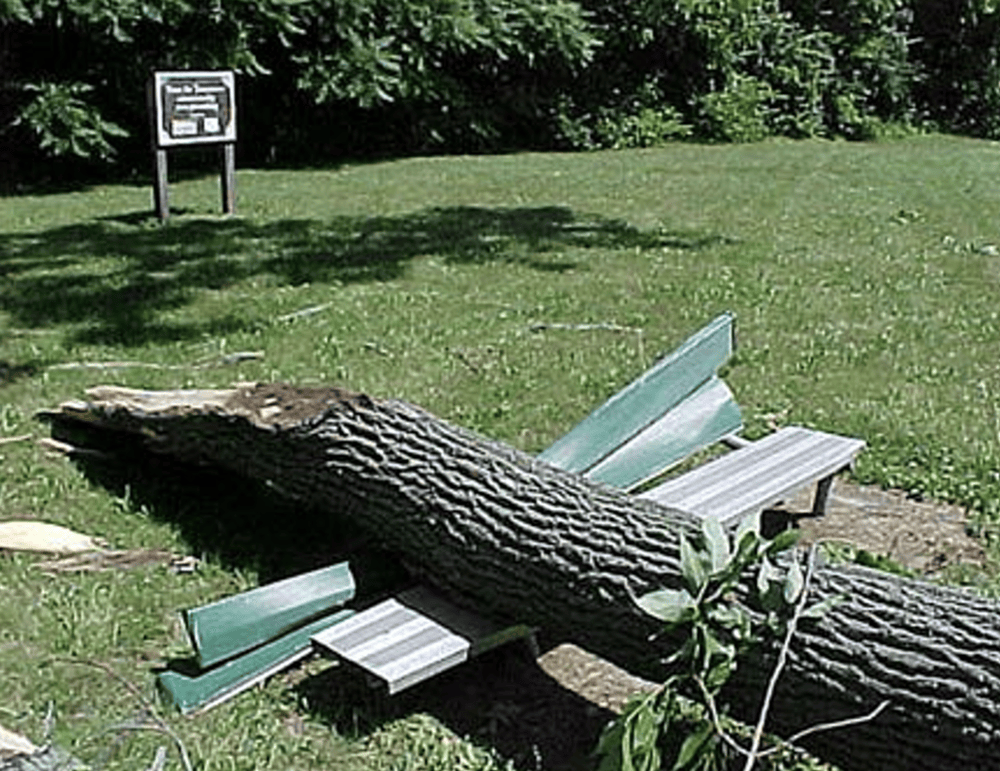
Identify potential targets for tree failure.
A target is people, property or activities that could be injured, damaged or disrupted by a tree failure. Tree owners must carefully assess the area around homes, playgrounds, sidewalks and parking areas. Is the target static, moveable or mobile? Consider whether people can be kept away or separated from the target area. Also, assess the target’s value and potential. Review the target zone, which is the area where the tree or a branch is likely to strike when it falls, to determine consequences of the tree’s failure. The target zone should include the areas inside a circle around the tree, which is at least as wide as the total tree height.
Risk is the combination of the likelihood of a tree failure event and the severity of the possible consequences of that event. Every tree has the potential to fail; however, only a small number of failures actually cause injury or damage. It is impossible to maintain trees free of risk. Some level of risk must be accepted by the owner.
Hazard is a likely source of harm and is identified as the tree part or parts which will affect the target zone. For example, an entire tree or a single branch could be determined as a hazard. Hazards are identified during tree assessments, and tree owners are required to take steps to minimize the risk of damage from failure.
Individual tree characteristics must be considered when conducting evaluations for defects and failure potential. Evaluations should take a systematic approach, assessing the potential for tree failure, understanding the impact of such failures and outlining a plan of action to prevent and mitigate these failures. Tree owners should fully understand the site factors and characteristics of the tree species. There are several contingencies that influence tree failure potential and risk. These include soil type and saturation, wind exposure, pest damage, poor growing conditions and poor pruning practices such as topping.
Among the characteristics to consider when conducting tree risk evaluations are:
- Defects — severity and location. Decay, cankers, cracks and other positive indicators of weakness in the roots, stems and branches may need immediate attention if a target is present.
- Species characteristics. Some tree species possess weaker wood, a susceptibility to decay, poor growth habits and potential for pests. They could be more likely to fail after wounding because of poor ability to wall off internal decay or health issues.
- Canopy size, shape and weight distribution. This is especially true in situations where a tree is exposed to windy conditions, is leaning or has a poor stem-to-canopy ratio.
- Crown architecture. Poor branching and similar characteristics can create high-risk situations in strong winds and other weather conditions.
- Plant health and vigor. This determines how a tree can overcome wounding or pest infestations.
- The overall size of the defective part. A predetermined rating system, which outlines critical thresholds, should be considered and incorporated into the tree’s risk management plan.
 Tree Inspections
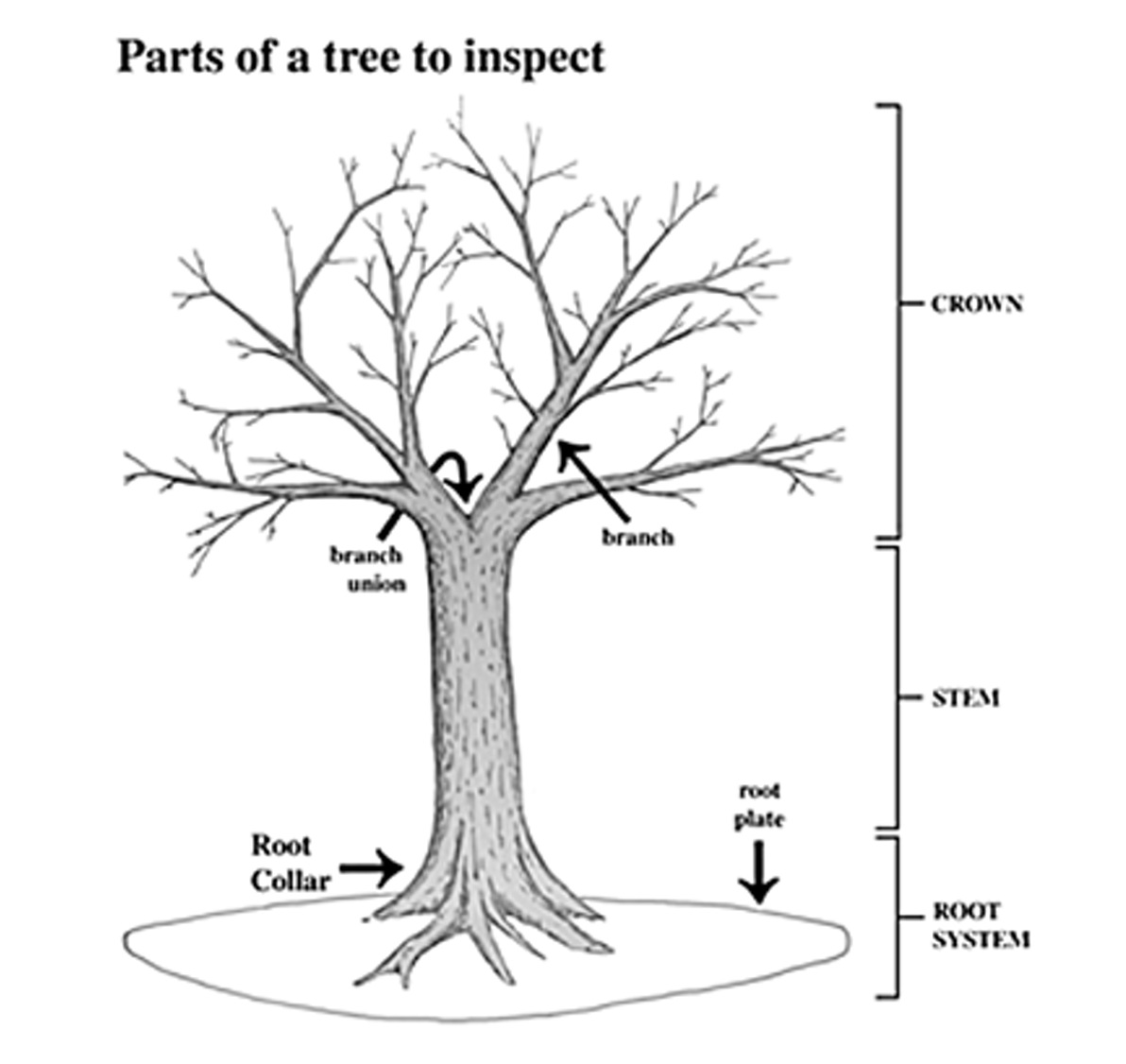
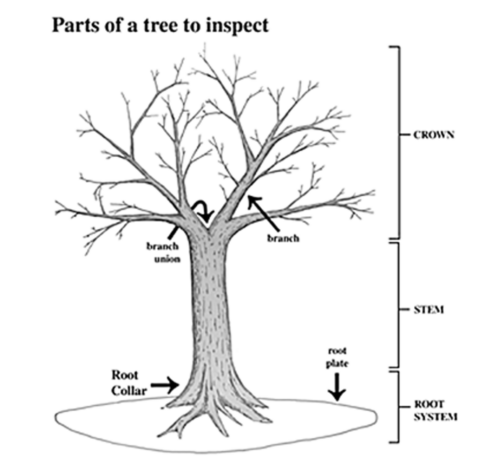
Assessments should include a thorough examination of each section of the tree. A systematic approach using standardized evaluation methods aids the process. Review the canopy (crown), branches and root zone to check for signs of failure. These include:
- Dead, diseased, dying or broken branches.
- Thinning or poor canopy health.
- An unstable branching pattern, overextended or weakly attached branches, or cracks in the stems.
- Cracks or decayed areas in the main trunk.
- Exposed or decayed roots, heaving of the soil, fungus growth or cracks in the soil around the root plate.
Recurrent inspections to determine tree health and condition are critical for successful risk management programs. Trees in active-use areas should be inspected annually for defects and conditions leading to failure. Inspections are necessary after storms to ensure excessive loads have not exceeded the strength of the tree and its parts. Also, be sure to note trees with a history of failures or those with problematic structure, for more frequent monitoring and inspection. A good database and archive of tree evaluations is a critical strategy in the overall risk management plan.
Resources:
Planting Your Tree Part 1: Choosing Your Tree, Purdue Extension YouTube Channel
Tree Pruning Essentials Video, Purdue Extension YouTube Channel
Tree Defect Identification, The Education Store, Purdue Education’s resource center
Why Is My Tree Dying?, Got Nature? Blog, Purdue Extension – Forestry and Natural Resources (FNR)
Tree Wound and Healing, Got Nature? Blog, Purdue Extension – FNR
Surface Root Syndrome, The Education Store
Find an Arborist video, Trees are Good-International Society of Arboriculture (ISA)
Trees and Storms: Understanding Damage, Risk and Recovery – Got Nature? Blog, Purdue Extension – FNR
Report INvasive, Purdue Extension
Indiana Invasive Species Council
ID That Tree, Playlist, Purdue Extension – FNR YouTube Channel (Invasive White Mulberry, Siberian Elm, Tree of Heaven)
Fifty Common Trees of Indiana
Native Trees of the Midwest, Purdue University Press
Subscribe – Purdue Extension-FNR YouTube Channel
Lindsey Purcell, Executive Director
Indiana Arborist Association
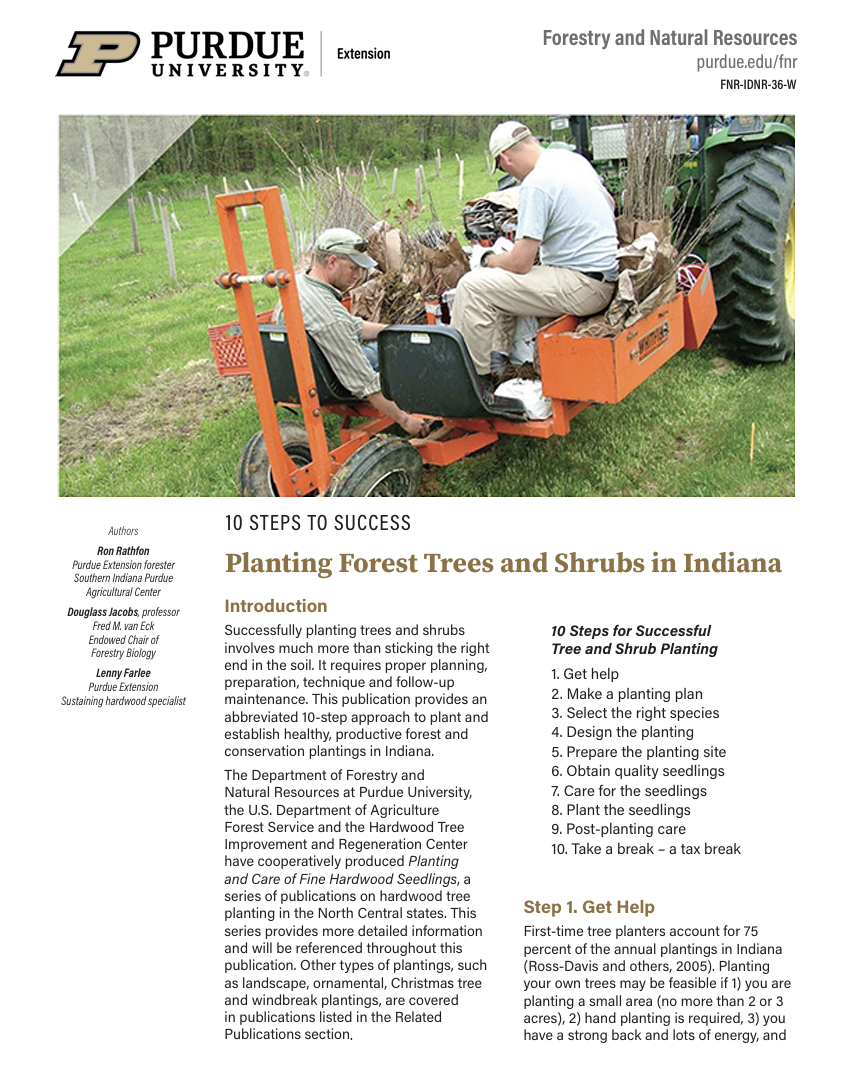 Discover the essential guide for anyone looking to plant forest trees or shrubs in Indiana. Whether you’re a first‑time landowner or an experienced conservationist, Planting Forest Trees and Shrubs in Indiana walks you through the 10 proven steps for establishing healthy, resilient plantings that thrive for generations. From choosing the right species to preparing your site, planting with confidence and ensuring long‑term success, this publication distills expert forestry knowledge into clear, practical advice. Ready to transform your landscape and leave a lasting legacy?
This publication provides an abbreviated 10-step approach to plant and establish healthy, productive forest and conservation plantings in Indiana. Successfully planting trees and shrubs involves much more than sticking the right end in the soil.
To receive the free download, visit the Purdue Extension’s resource center: The Education Store – Planting Forest Trees and Shrubs in Indiana.
Resources:
Control Management of Poison Hemlock, Got Nature? Blog, Purdue Extension – Forestry & Natural Resources (FNR)
Publication: Invasive Plant Series-Tree of Heaven, Got Nature? Blog, Purdue Extension – FNR
Publication – Invasive Plant Series: Swallow-worts, Got Nature? Blog, Purdue Extension – FNR
Question: What is the best management process with cut invasive brush tops?, Got Nature? Blog, Purdue Extension – FNR
Planting Your Tree Part 1: Choosing Your Tree, Purdue Extension YouTube Channel
Tree Pruning Essentials, The Education Store
Tree Pruning Essentials Video, Purdue Extension YouTube Channel
Surface Root Syndrome, The Education Store
District Forester, Indiana Department of Natural Resources, 10+ acres
Directory of Professional Foresters, Indiana Forestry & Woodland Owners Association (IFWOA)
Find an Arborist video, Trees are Good-International Society of Arboriculture (ISA)
Indiana Invasive Species Council
ID That Tree, Playlist, Purdue Extension – FNR YouTube Channel (Invasive White Mulberry, Siberian Elm, Tree of Heaven)
Fifty Common Trees of Indiana
An Introduction to Trees of Indiana
Native Trees of the Midwest, The Education Store
Subscribe – Purdue Extension-FNR YouTube Channel
Ron Rathfon, Regional Extension Forester, Southern Indiana Purdue Agriculture Center (SIPAC)
Purdue Forestry and Natural Resources
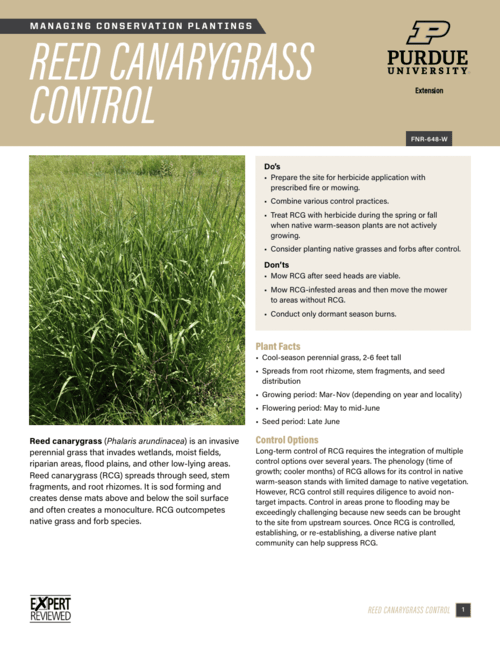 Uncover the challenges posed by reed canarygrass, an invasive perennial grass that threatens conservation plantings, wetlands and low-lying areas. This guide details control options for reed canarygrass. Essential for conservationists and land managers dedicated to preserving native ecosystems: Reed Canarygrass Control.
Check out the Managing Conservation Plantings Series which include details on how to control invasive species and other problematic plants in Conservation Reserve Program (CRP) plantings and native warm-season grass and wildflower conservation plantings.
Publications in this series include:
- Golden Rod Control
- Thinning Native Warm-Season Grasses
- Sericea Lespedeza Control
- Woody Encroachment and Woody Invasives
- Jonhsongrass Control
- Reed Canarygrass Control
- Teasel Control (Common and Cut Leaved)
- Controlling Introduced Cool-Season Grasses
- Crownvetch, Sweetclover and Birdsfoot Trefoil Control
Resources:
Deer Impact Toolbox & Grassland Management, Purdue Extension Pond and Wildlife Management
Pond and Wildlife Management, Purdue Extension
Forestry for the Birds Virtual Tour and Pocket Guide, Got Nature? Blog, Purdue Extension – FNR
Frost Seeding to Establish Wildlife Food Plots and Native Grass and Forb Plantings – Purdue Extension – FNR YouTube channel
Wildlife Habitat Hint: Tips for Evaluating a First Year Native Grass and Forb Plantings, Purdue Extension – FNR YouTube Channel
Drone Seeding Native Grasses and Forbs: Project Overview & Drone Setup, Purdue Extension – FNR YouTube channel
Ask an Expert: Wildlife Food Plots, video, Purdue Extension – FNR YouTube Channel
Handling Harvested Game: Episode 1, Field Dressing, video, Purdue Extension – FNR YouTube Channel
Managing Your Woods for White-Tailed Deer, The Education Store
Forest Improvement Handbook, The Education Store
Forest Management for Reptiles and Amphibians: A Technical Guide for the Midwest, The Education Store
A Template for Your Wildlife Habitat Management Plan, The Education Store
Woodland Stewardship for Landowners, Playlist, Purdue Extension – FNR YouTube channel
Nature of Teaching Unit 1: Animal Diversity and Tracking, The Education Store
Nature of Teaching, Purdue College of Agriculture
Invasive Species Playlist, Playlist, Purdue Extension – FNR YouTube Channel
Report Invasive, Purdue Extension
Subscribe Purdue Extension – Forestry and Natural Resources YouTube Channel
Jarred Brooke, Wildlife Extension Specialist
Purdue Department of Forestry and Natural Resources
 Discover the importance of thinning dense native warm-season grasses in conservation plantings to improve diversity. This guide explains methods to reduce tall native warm-season grasses to improve habitat for wildlife. Essential reading for conservationists and land managers interested in grassland ecosystems.
Learn when and how to thin these grasses effectively, and explore strategies that balance ecological health with long-term land management goals: Thinning Native Warm-Season Grasses
This publication is part of a seven publication series The Managing Conservation Plantings Series which include details on how to control invasive species and other problematic plants in Conservation Reserve Program (CRP) plantings and native warm-season grass and wildflower conservation plantings.
Publications in this series include:
- Golden Rod Control
- Thinning Native Warm-Season Grasses
- Sericea Lespedeza Control
- Woody Encroachment and Woody Invasives
- Johnson Grass Control
- Reed Canarygrass Control
- Teasel Control (Common and Cut Leaved)
- Controlling Introduced Cool-season Grasses
- Crownvetch, Sweetclover and Birdsfoot Trefoil Control
Resources:
Deer Impact Toolbox & Grassland Management, Purdue Extension Pond and Wildlife Management
Pond and Wildlife Management, Purdue Extension
Forestry for the Birds Virtual Tour and Pocket Guide, Got Nature? Blog, Purdue Extension – FNR
Frost Seeding to Establish Wildlife Food Plots and Native Grass and Forb Plantings – Purdue Extension – FNR YouTube channel
Wildlife Habitat Hint: Tips for Evaluating a First Year Native Grass and Forb Plantings, Purdue Extension – FNR YouTube Channel
Drone Seeding Native Grasses and Forbs: Project Overview & Drone Setup, Purdue Extension – FNR YouTube channel
Ask an Expert: Wildlife Food Plots, video, Purdue Extension – FNR YouTube Channel
Handling Harvested Game: Episode 1, Field Dressing, video, Purdue Extension – FNR YouTube Channel
Managing Your Woods for White-Tailed Deer, The Education Store
Forest Improvement Handbook, The Education Store
Forest Management for Reptiles and Amphibians: A Technical Guide for the Midwest, The Education Store
A Template for Your Wildlife Habitat Management Plan, The Education Store
Woodland Stewardship for Landowners, Playlist, Purdue Extension – FNR YouTube channel
Nature of Teaching Unit 1: Animal Diversity and Tracking, The Education Store
Nature of Teaching, Purdue College of Agriculture
Invasive Species Playlist, Playlist, Purdue Extension – FNR YouTube Channel
Report Invasive, Purdue Extension
Subscribe Purdue Extension – Forestry and Natural Resources YouTube Channel
Jarred Brooke, Wildlife Extension Specialist
Purdue Department of Forestry and Natural Resources
Explore the dual nature of goldenrods in conservation plantings. While goldenrods like tall and Canada goldenrod benefit pollinators and wildlife, their aggressive growth can outcompete other plants, reducing diversity. This guide offers insights into managing goldenrods to maintain a balanced and thriving ecosystem. It is essential reading for land managers and conservationists committed to maintaining a diverse grassland ecosystem.

Check out the Managing Conservation Plantings series which include details on how to control invasive species and other problematic plants in Conservation Reserve Program (CRP) plantings and native warm-season grass and wildflower conservation plantings.
Plant Facts
- Herbaceous broadleaf, typically 3-5 feet tall (can range from 1 to 7 feet)
- Perennial warm-season forb
- Growing period: April to October
- Flowering: late July through October
- Reproduction: by seed and rhizome
Whether you’re managing a pasture, wildlife area, or prairie restoration, this resource provides science-based strategies to control goldenrod effectively. Learn more about managing goldenrod species in grasslands and wildlife habitats, enhancing your land’s ecological health by reading the full publication: Managing Conservation Plantings: Goldenrod Control, (330kb, pdf).
This publication is part of a seven publication series The Managing Conservation Plantings Series. Publications in this series include:
- Golden Rod Control
- Thinning Native Warm-Season Grasses
- Sericea Lespedeza Control
- Woody Encroachment and Woody Invasives
- Johnson Grass Control
- Reed Canarygrass Control
- Teasel Control (Common and Cut Leaved)
- Controlling Introduced Cool-season Grasses
- Crownvetch, Sweetclover and Birdsfoot Trefoil Control
Resources:
Deer Impact Toolbox & Grassland Management, Purdue Extension Pond and Wildlife Management
Pond and Wildlife Management, Purdue Extension
Forestry for the Birds Virtual Tour and Pocket Guide, Got Nature? Blog, Purdue Extension – FNR
Frost Seeding to Establish Wildlife Food Plots and Native Grass and Forb Plantings – Purdue Extension – FNR YouTube channel
Wildlife Habitat Hint: Tips for Evaluating a First Year Native Grass and Forb Plantings, Purdue Extension – FNR YouTube Channel
Drone Seeding Native Grasses and Forbs: Project Overview & Drone Setup, Purdue Extension – FNR YouTube channel
Ask an Expert: Wildlife Food Plots, video, Purdue Extension – FNR YouTube Channel
Handling Harvested Game: Episode 1, Field Dressing, video, Purdue Extension – FNR YouTube Channel
Managing Your Woods for White-Tailed Deer, The Education Store
Forest Improvement Handbook, The Education Store
Forest Management for Reptiles and Amphibians: A Technical Guide for the Midwest, The Education Store
A Template for Your Wildlife Habitat Management Plan, The Education Store
Woodland Stewardship for Landowners, Playlist, Purdue Extension – FNR YouTube channel
Nature of Teaching Unit 1: Animal Diversity and Tracking, The Education Store
Nature of Teaching, Purdue College of Agriculture
Invasive Species Playlist, Playlist, Purdue Extension – FNR YouTube Channel
Report Invasive, Purdue Extension
Subscribe Purdue Extension – Forestry and Natural Resources YouTube Channel
Jarred Brooke, Wildlife Extension Specialist
Purdue Department of Forestry and Natural Resources
The aquaculture industry in the Midwest region of the United States has limited or no access to economically feasible seafood processing infrastructure for farmed seafood products, leaving producers to rely on live ethnic fish and recreational markets. This handbook highlights the necessary elements of processing fish to guide any interested fish farmer or entrepreneur.
Local kitchens, such as shared-use commercial kitchens and licensed on-farm kitchens, can provide resources for fish farming entrepreneurs interested in adding some form of value to their fish, by allowing them to diversify their market. These shared-use commercial kitchens can be found in many communities and are rented by food producers, local food entrepreneurs, and caterers to prepare and process their food products for consumer markets. Using local facilities for processing fish and developing aquaculture products could diversify marketing opportunities for small-scale fish farmers and have a positive impact on farm profitability. A diversified market also reduces market risks for fish farmers. Embarking on processing is an additional investment for a fish farmer and requires resources.
This handbook provides some information and resources for fish farmers interested in using licensed kitchen facilities for fish processing or setting up their own on-farm processing kitchen. This handbook highlights the necessary elements of processing fish to guide any interested fish farmer or entrepreneur.
To receive the free download, visit the Purdue Extension’s resource center: The Education Store – Handbook on Processing Fish for Small-Scale Fish Farmers.
Resources:
Profitability of Hybrid Striped Bass Cage Aquaculture in the Midwest, The Education Store, Purdue Extension resource center
A Guide to Marketing for Small-Scale Aquaculture Producers, The Education Store
A Guide to Small-Scale Fish Processing Using Local Kitchen Facilities, The Education Store
Marine Shrimp Biofloc Systems: Basic Management Practices, The Education Store
Aquaculture Industry in Indiana Growing, Purdue Today
Tilapia Farmed Fish Fact Sheet, The Education Store
Rainbow Trout Farmed Fish Fact Sheet, The Education Store
Pacific White Shrimp Farmed Fish Fact Sheet, The Education Store
Walleye Farmed Fish Fact Sheet: A Guide for Seafood Consumers, The Education Store
Sustainable Aquaculture: What does it mean to you?, The Education Store
The Benefits of Seafood Consumption The Education Store
Walleye Farmed Fish Fact Sheet: A Guide for Seafood Consumers, The Education Store
Pond and Wildlife Management website, Purdue Extension
Fish Cleaning with Purdue Extension County Extension Director, Got Nature? Blog, Purdue Extension – Forestry and Natural Resources
Aquaponics: What to consider before starting your business, YouTube, Purdue Ag Economics
Aquatics & Fisheries, Playlist, YouTube, Purdue Extension – Forestry and Natural Resources
Eat Midwest Fish, Illinois-Indiana Sea Grant online resource hub
Kwamena Quagrainie, Aquaculture Marketing Director/Clinical Engagement Full Professor
Purdue Agricultural Economics/Department of Forestry and Natural Resources/Illinois Indiana Sea Grant Program
Amy Shambach, Aquaculture Marketing Outreach Associate
Purdue Department of Forestry and Natural Resources/Illinois Indiana Sea Grant Program
Hunters have been busy preparing food plots, hanging tree stands and working on their marksmanship skills in hopes for getting that buck of a lifetime. The Indiana deer hunting season for 2023-2024 started September 15th and goes to January 31st. As your hunting adventures begin, Purdue Extension-Forestry and Natural Resources (FNR) has the resources you need. You will find How-To videos that address how to score your white-tailed deer, age determination, how to harvest your deer and many other deer management resources. The FNR videos and publications will give you step-by step guidance on how to receive accurate measurements and share best data collection practices, along with sharing what materials are needed.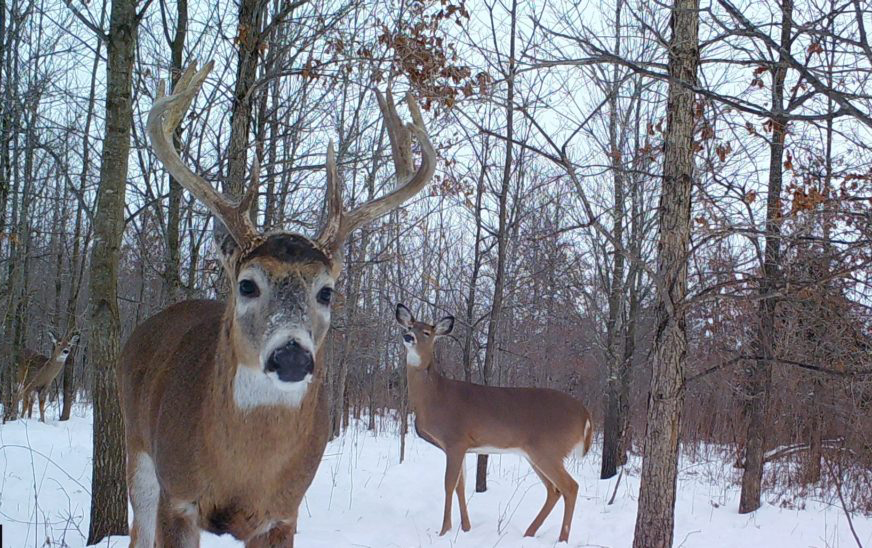
Here is a quick list of just a few of our resources for those deer hunting enthusiasts:
Ask an Expert: Wildlife Food Plots, video, Purdue Extension – Forestry and Natural Resources (FNR) YouTube Channel
Handling Harvested Game: Episode 1, Field Dressing, video, Purdue Extension – FNR YouTube Channel
Handling Harvested Game: Episode 2, Hanging & Skinning, video, Purdue Extension – FNR YouTube Channel
Handling Harvested Game: Episode 3, Deboning, video, Purdue Extension – FNR YouTube Channel
Handling Harvested Game: Episode 4, Cutting, Grinding & Packaging, video, Purdue Extension – FNR YouTube Channel
Deer Harvest Data Collection, Got Nature? Blog, Purdue Extension – FNR
How to Score Your White-tailed Deer, video, The Education Store, Purdue Extension Resource Center
White-Tailed Deer Post Harvest Collection, video, The Education Store
Age Determination in White-tailed Deer, video, The Education Store
Handling Harvested Deer Ask an Expert? video, Purdue Extension – FNR YouTube Channel
How to Build a Plastic Mesh Deer Exclusion Fence, The Education Store
Bovine Tuberculosis in Wild White-tailed Deer, The Education Store
Woodland Stewardship for Landowners: Managing Deer Damage to Young Trees, video, Purdue Extension – FNR YouTube Channel
Integrated Deer Management Project, Purdue FNR
For other hunting and trapping dates view the Indiana Department of Natural Resources, Fish and Wildlife Department website. Enjoy and stay safe!
Diana Evans, Extension & Web Communications Specialist
Purdue University Department of Forestry and Natural Resources
Rod Williams, Assistant Provost for Engagement/Professor of Wildlife Science
Purdue University Department of Forestry and Natural Resources
Jarred Brooke, Wildlife Extension Specialist
Purdue Forestry and Natural Resources
The classic and trusted book “Fifty Common Trees of Indiana” by T.E. Shaw was published in 1956 as a user-friendly guide to local species. Nearly 70 years later, the publication has been updated through a joint effort by the Purdue Department of Forestry and Natural Resources, Indiana 4-H, and the Indiana Department of Natural Resources, and reintroduced as “An Introduction to Trees of Indiana.”
The full publication is available for download for $7 in the Purdue Extension Education Store. The field guide helps identify common Indiana woodlot trees.
Each week, the Intro to Trees of Indiana web series will offer a sneak peek at one species from the book, paired with an ID That Tree video from Purdue Extension forester Lenny Farlee to help visualize each species as it stands in the woods. Threats to species health as well as also insight into the wood provided by the species, will be provided through additional resources as well as the Hardwoods of the Central Midwest exhibit of the Purdue Arboretum, if available. 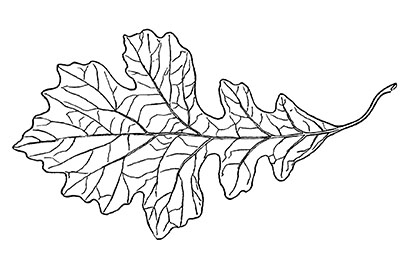
This week, we take a look at the second of our oak varieties in Indiana, the Bur Oak or Quercus macrocarpa.
The bur oak has rounded lobes on the end of the leaves, which have deep sinuses and are very broad across the top. Leaves are typically dark green that turn yellow or brown in the fall.
The bark on bur oak is medium to dark gray in color with heavy ridges and plates, often so thick that it is often fire resistant and resistant to damage from burning. Bur oak may have terminal buds that include small hairs and resemble bear claws.
The fruit of the bur oak is an acorn with a large cap that features a hairy fringe forming a burr along the outside edge. The acorns vary in size, but average one inch in length, and the cap covers half to two thirds of the acorn.
Bur oaks, which grow to 70-80 feet tall and up to five feet wide, are common in both bottomlands and prairie regions, and can tolerate many different sites. Bur oaks can be found in nearly any county and any habitat type in Indiana. The natural range of bur oak is the eastern Great Plains from the Dakotas to Ohio to the eastern Appalachians, except through the southeastern United States. The range also extends into southern Canada.
Lumber from the white oak group, which includes bur oak, is among the heaviest next to hickory, weighing in at 45 pounds per cubic foot. It is very resistant to decay and is one of the best woods for steam bending. Bur oak, however, is somewhat weaker than other species in the white oak group.
For full article with additional photos view: Intro to Trees of Indiana: Bur Oak
If you have any questions regarding wildlife, trees, forest management, wood products, natural resource planning or other natural resource topics, feel free to contact us by using our Ask an Expert web page.
Other Resources:
ID That Tree: Bur Oak
ID That Tree: White Oak Group
ID That Tree: Alternate Leaf Arrangement – Honey Locust/Bur Oak
Hardwood Lumber and Veneer Series: White Oak Group
Morton Arboretum: Bur Oak
Fifty Common Trees of Indiana
An Introduction to Trees of Indiana
Native Trees of the Midwest, The Education Store
Shrubs and Woody Vines of Indiana and the Midwest, The Education Store
Investing in Indiana Woodlands, The Education Store
Forest Improvement Handbook, The Education Store
ID That Tree, Purdue Extension-Forestry & Natural Resources (FNR) YouTube playlist
Woodland Management Moment , Purdue Extension-FNR YouTube playlist
Bur Oak, Native Trees of Indiana River Walk, Purdue-Fort Wayne
Wendy Mayer, FNR Communications Coordinator
Purdue University Department of Forestry and Natural Resources
Lenny Farlee, Sustaining Hardwood Extension Specialist
Purdue University Department of Forestry and Natural Resources
The classic and trusted book “Fifty Common Trees of Indiana” by T.E. Shaw was published in 1956 as a user-friendly guide to local species. Nearly 70 years later, the publication has been updated through a joint effort by the Purdue Department of Forestry and Natural Resources, Indiana 4-H, and the Indiana Department of Natural Resources, and reintroduced as “An Introduction to Trees of Indiana.”
The full publication is available for download for $7 in the Purdue Extension Education Store. The field guide helps identify common Indiana woodlot trees.
Each week, the Intro to Trees of Indiana web series will offer a sneak peek at one species from the book, paired with an ID That Tree video from Purdue Extension forester Lenny Farlee to help visualize each species as it stands in the woods. Threats to species health as well as also insight into the wood provided by the species, will be provided through additional resources as well as the Hardwoods of the Central Midwest exhibit of the Purdue Arboretum, if available.
This week, we introduce the red mulberry or Morus rubra.
Red mulberry has variable leaves, which can come without lobes (entire) or with two (mitten), three or even five lobes. Regardless of shape, the leaves have serrated margins and pointed tips and are arranged alternately on the twigs. The topside of the dark green leaves is sandpapery to the touch and has a matte or flat finish. The dark green leaves turn a golden yellow in the fall.
Basswood has leaves similar to the unlobed variety of red mulberry, but those leaves are smooth to the touch and have finely toothed margins. White mulberry, which is not native to Indiana, also has similar leaves to its cousin red mulberry, but those leaves are typically bright green and smooth, have more rounded teeth on the margins and feature a shinier upper leaf surface.
The bark of red mulberry is gray or brown in color with long flaky ridges, but may show some orange or tan peeking through the fissures in the bark.
The fruit of red mulberry, which hangs individually only the twig, resembles a small blackberry, with a dark purple or almost black color when ripe, that is favored by both birds and humans. Mulberry fruit is typically produced from mid-June to July.
Red mulberry, which is often found under the canopy of other hardwood trees in moist areas such as river bottoms as well as along wooded slopes, wood’s edges and shady roadways, are typically small understory trees, but can grow between 40 and 60 feet tall. Red mulberries are becoming less common on the landscape than the invasive white mulberry, but can be found growing throughout the eastern United States.
The Morton Arboretum warns that red mulberry is susceptible to a variety of pests, including leaf spots, witches brooms, canker diseases, powdery mildew, spider mites and scale insects.
For full article with additional photos view: Intro to Trees of Indiana: Red Mulberry
If you have any questions regarding wildlife, trees, forest management, wood products, natural resource planning or other natural resource topics, feel free to contact us by using our Ask an Expert web page.
Other Resources:
FNR Know Your Tree Series: Red and White Mulberry in Indiana
Morton Arboretum: Red Mulberry
Red Mulberry, Native Trees of Indiana River Walk, Purdue Fort Wayne
Fifty Common Trees of Indiana
An Introduction to Trees of Indiana
Native Trees of the Midwest, The Education Store
Shrubs and Woody Vines of Indiana and the Midwest, The Education Store
Investing in Indiana Woodlands, The Education Store
Forest Improvement Handbook, The Education Store
ID That Tree, Purdue Extension-Forestry & Natural Resources (FNR) YouTube playlist
Woodland Management Moment , Purdue Extension-FNR YouTube playlist
Wendy Mayer, FNR Communications Coordinator
Purdue University Department of Forestry and Natural Resources
Lenny Farlee, Sustaining Hardwood Extension Specialist
Purdue University Department of Forestry and Natural Resources
The classic and trusted book “Fifty Common Trees of Indiana” by T.E. Shaw was published in 1956 as a user-friendly guide to local species. Nearly 70 years later, the publication has been updated through a joint effort by the Purdue Department of Forestry and Natural Resources, Indiana 4-H, and the Indiana Department of Natural Resources, and reintroduced as “An Introduction to Trees of Indiana.”
The full publication is available for download for $7 in the Purdue Extension Education Store. The field guide helps identify common Indiana woodlot trees.
Each week, the Intro to Trees of Indiana web series will offer a sneak peek at one species from the book, paired with an ID That Tree video from Purdue Extension forester Lenny Farlee to help visualize each species as it stands in the woods. Threats to species health as well as also insight into the wood provided by the species, will be provided through additional resources as well as the Hardwoods of the Central Midwest exhibit of the Purdue Arboretum, if available.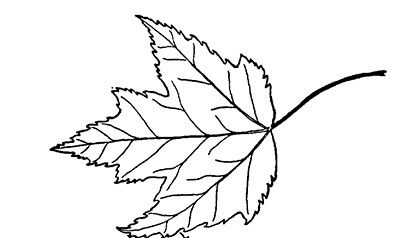
This week, we introduce the red maple or Acer rubrum.
Red maple has simple three to five-lobed leaves with relatively shallow, v-shaped divisions between the lobes. The oppositely held leaves may resemble sugar maple but the V shaped shallow divisions stand in contrast to sugar maple’s deep u-shaped sinuses. In the early spring, it is one of the earliest native trees to flower, producing clusters of reddish flowers as well as reddish colored pairs of winged seeds/fruit. In the fall, foliage typically turns a bright red to maroon color.
The bark is gray and smooth in young trees and may become flaky in older trees.
Red maple, which is a popular ornamental and street tree selection, is one of Indiana’s soft maples alongside silver maple. It also can be found in Indiana woodlands in both moist and dry sites and in bottomlands and uplands.
Red maple, grow 50 to 80 feet tall and are found growing throughout the eastern United States including the coastal regions.
The Morton Arboretum warns that red maple was display chlorosis symptoms of pale green leaves with dark green veins in high pH soil and drought conditions. The species also does not tolerate heavy pollution.
For full article with additional photos view: Intro to Trees of Indiana: Red Maple
If you have any questions regarding wildlife, trees, forest management, wood products, natural resource planning or other natural resource topics, feel free to contact us by using our Ask an Expert web page.
Other Resources:
Hardwoods of the Central Midwest: Soft Maple
Hardwood Lumber and Veneer Series, The Education Store: Soft Maple
Morton Arboretum: Red Maple
Red Maple, Native Trees of Indiana River Walk, Purdue Fort Wayne
Fifty Common Trees of Indiana
An Introduction to Trees of Indiana
Native Trees of the Midwest, The Education Store
Shrubs and Woody Vines of Indiana and the Midwest, The Education Store
Investing in Indiana Woodlands, The Education Store
Forest Improvement Handbook, The Education Store
ID That Tree, Purdue Extension-Forestry & Natural Resources (FNR) YouTube playlist
Woodland Management Moment , Purdue Extension-FNR YouTube playlist
Wendy Mayer, FNR Communications Coordinator
Purdue University Department of Forestry and Natural Resources
Lenny Farlee, Sustaining Hardwood Extension Specialist
Purdue University Department of Forestry and Natural Resources

Recent Posts
- Connecting Research to Practice: Natural Resources & Land Use Spring Training
Posted: June 5, 2026 in Forestry, Forests and Street Trees, How To, Invasive Animal Species, Invasive Plant Species, Land Use, Natural Resource Planning, Urban Forestry, Wildlife, Woodlands - Indiana Monarch and Pollinator Conservation
Posted: June 1, 2026 in Forestry, Forests and Street Trees, Gardening, How To, Natural Resource Planning, Plants, Urban Forestry, Wildlife - Box Tree Moth Range is Expanding
Posted: May 27, 2026 in Forestry, Invasive Animal Species, Invasive Insects, Wildlife - Spotted Lanternfly Feeds on Over 70 Plus Plant Species
Posted: May 20, 2026 in Alert, Forestry, Forests and Street Trees, Gardening, Invasive Insects, Urban Forestry, Wildlife - Painted Hickory Borer, Purdue Landscape Report
Posted: May 14, 2026 in Forestry, Invasive Insects, Wildlife - Saving Giants of the Blue River: Purdue Team Earns Statewide Recognition
Posted: in Aquaculture/Fish, Aquatic/Aquaculture Resources, Wildlife - Restoring Roots to Save the Salamanders, USDA – Natural Resources Conservation Service
Posted: May 6, 2026 in Aquaculture/Fish, Forestry, Wildlife - Spring Storms Are Coming: How to Reduce Tree Damage and Risk
Posted: May 1, 2026 in How To, Urban Forestry, Wildlife, Woodlands - Cryptocline Leaf Spot (Anthracnose) of Elm, Purdue Landscape Report
Posted: April 30, 2026 in Disease, Forestry, Woodlands - Mechanical Damage to Trees: Mowing and Maintenance Equipment
Posted: April 24, 2026 in Forestry, Forests and Street Trees, Urban Forestry
Archives
Categories
- Alert
- Aquaculture/Fish
- Aquatic/Aquaculture Resources
- Ask the Expert
- Christmas Trees
- Community Development
- Disease
- Drought
- Forestry
- Forests and Street Trees
- Gardening
- Got Nature for Kids
- Great Lakes
- How To
- Invasive Animal Species
- Invasive Insects
- Invasive Plant Species
- Land Use
- Natural Resource Planning
- Nature of Teaching
- Plants
- Podcasts
- Ponds
- Publication
- Safety
- Spiders
- Timber Marketing
- Urban Forestry
- Webinar
- Wildlife
- Wood Products/Manufacturing
- Woodland Management Moment
- Woodlands