 Purdue University - Extension - Forestry and Natural Resources
Got Nature? Blog
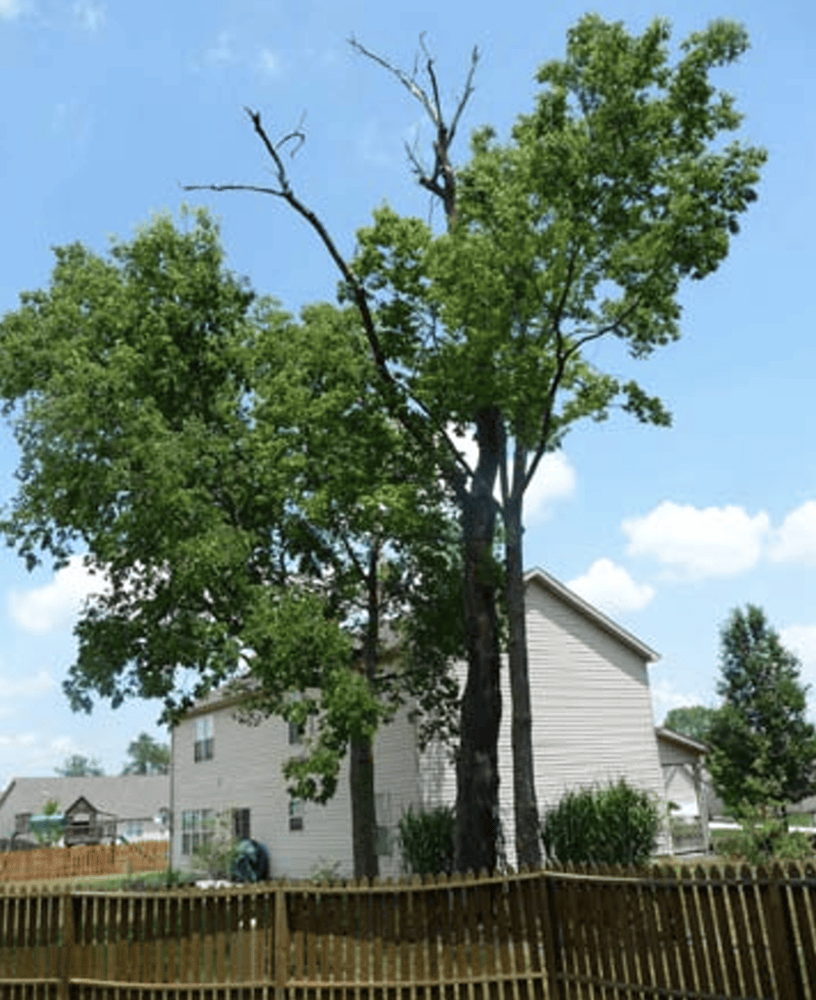
Unhealthy trees can fail, causing potential damage to nearby homes
Trees provide many benefits for our homes, businesses and properties. If a tree is defective, however, it may become a hazard. It is important to understand that tree owners have a duty to inspect and maintain their trees. All property owners should take reasonable steps to protect themselves by involving a qualified consultant or certified arborist.
The primary responsibilities of the arborist are to assess the potential for tree failure, advise owners of the consequences of failure and recommend the proper measures to prevent and abate failures. In assessing and managing trees it is important to create a balance between the inherent risk a tree poses and the benefits provided by the tree. Risk tree management begins with these basic steps:
Reduce tree liabilities: The property owner or manager has an obligation to periodically inspect trees for unsafe conditions. Since all trees have risk associated with them, regular inspection compels the owner or manager to evaluate the amount of risk they are willing to assume. Tree risk assessment is an important part of a program to determine if a tree is structurally sound or has the potential for failure. Inspections show that the tree owner is actively managing their trees and could reduce the owner’s liability if a failure occurs.
Inspect regularly: Trees should be assessed through inspections by a qualified arborist, preferably an International Society of Arboriculture Certified Arborist. Further inspections should be conducted after major weather events. At a minimum, trees should be inspected every five years or according to the owner’s risk tolerance.
Document and maintain records: Every inspection should be recorded and kept on file for future reference. These records are important for several reasons. Past evaluations can show how a tree has changed in its health and structure over the years. Also, written assessments are beneficial in liability claims and court cases. These written evaluations could minimize liability if a failure occurs and a claim is filed against the tree owner.
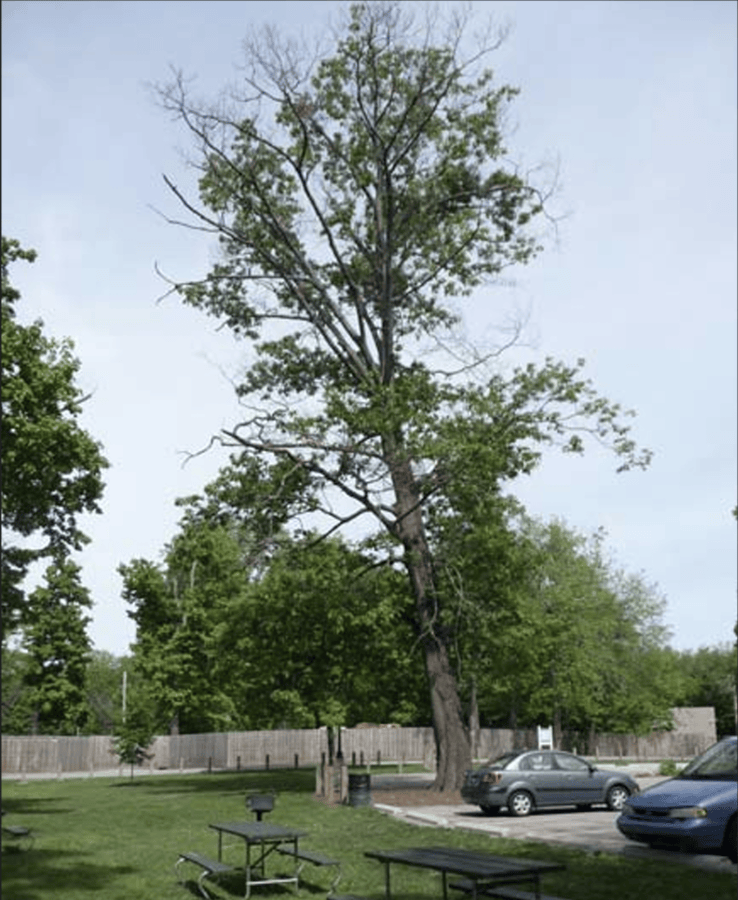
Inspect trees for health conditions and defects during the tree risk assessment.
Develop a site policy and care plan: Every property manager should create and implement a policy for tree risk. This includes developing a standard of care, an inspection process and mitigation of property risk. Routine care and scheduled maintenance for all trees is essential.
Mitigate tree risk: Tree owners should make every effort to reduce risk with proper pruning and health care practices. Consider all options before deciding on removal. If possible, move or remove the “target” (see definition in “Tree Risk Assessment” section). Install structural support systems where feasible. Modify site conditions to improve the environment around the tree. Risk mitigation requires a process of logical options focusing on protecting the target and preserving the tree.
Schedule tree work: While evaluating trees for risk, the inspector should note any tree maintenance needs. The inspection can determine the timing and priority of work needed. The work should be prioritized first for safety and then for tree health. Consider potential risk, activities around the tree, level of acceptable risk and the needs of the client.
Create good tree planting strategies: Identify planting needs and locations that become available as trees are removed or destroyed. Improving the health and safety of the landscape requires an understanding of management principles, such as species selection and diversity. Also consider the impact of site infrastructure, including utilities, streets and sidewalks, and choose the right tree for the right place. Select trees known to thrive under local conditions and sustainable as long-term investments in the property
Tree Risk Assessment
For a tree to be considered hazardous it must be defective either in some part or as a whole, with risk for failure and a target that is threatened. Trees are declared hazards if assessments have been completed and mitigation is required to prevent a failure from causing damage affecting the target. To understand the implications of this concept, tree owners need to know some common terms of tree risk management.
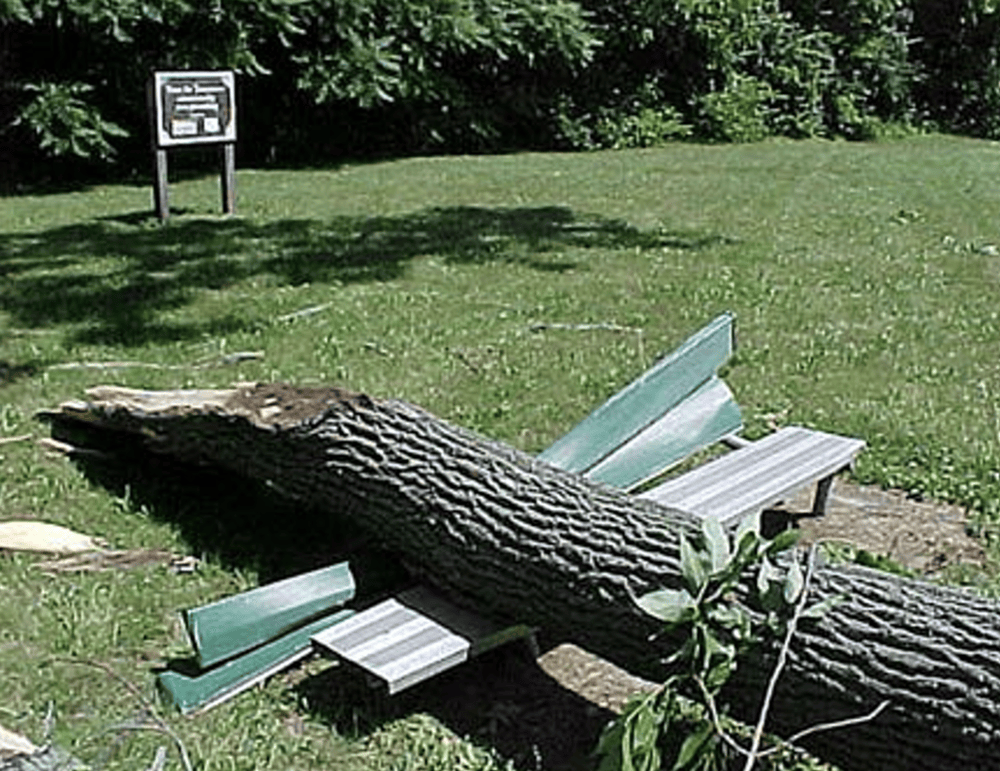
Identify potential targets for tree failure.
A target is people, property or activities that could be injured, damaged or disrupted by a tree failure. Tree owners must carefully assess the area around homes, playgrounds, sidewalks and parking areas. Is the target static, moveable or mobile? Consider whether people can be kept away or separated from the target area. Also, assess the target’s value and potential. Review the target zone, which is the area where the tree or a branch is likely to strike when it falls, to determine consequences of the tree’s failure. The target zone should include the areas inside a circle around the tree, which is at least as wide as the total tree height.
Risk is the combination of the likelihood of a tree failure event and the severity of the possible consequences of that event. Every tree has the potential to fail; however, only a small number of failures actually cause injury or damage. It is impossible to maintain trees free of risk. Some level of risk must be accepted by the owner.
Hazard is a likely source of harm and is identified as the tree part or parts which will affect the target zone. For example, an entire tree or a single branch could be determined as a hazard. Hazards are identified during tree assessments, and tree owners are required to take steps to minimize the risk of damage from failure.
Individual tree characteristics must be considered when conducting evaluations for defects and failure potential. Evaluations should take a systematic approach, assessing the potential for tree failure, understanding the impact of such failures and outlining a plan of action to prevent and mitigate these failures. Tree owners should fully understand the site factors and characteristics of the tree species. There are several contingencies that influence tree failure potential and risk. These include soil type and saturation, wind exposure, pest damage, poor growing conditions and poor pruning practices such as topping.
Among the characteristics to consider when conducting tree risk evaluations are:
- Defects — severity and location. Decay, cankers, cracks and other positive indicators of weakness in the roots, stems and branches may need immediate attention if a target is present.
- Species characteristics. Some tree species possess weaker wood, a susceptibility to decay, poor growth habits and potential for pests. They could be more likely to fail after wounding because of poor ability to wall off internal decay or health issues.
- Canopy size, shape and weight distribution. This is especially true in situations where a tree is exposed to windy conditions, is leaning or has a poor stem-to-canopy ratio.
- Crown architecture. Poor branching and similar characteristics can create high-risk situations in strong winds and other weather conditions.
- Plant health and vigor. This determines how a tree can overcome wounding or pest infestations.
- The overall size of the defective part. A predetermined rating system, which outlines critical thresholds, should be considered and incorporated into the tree’s risk management plan.
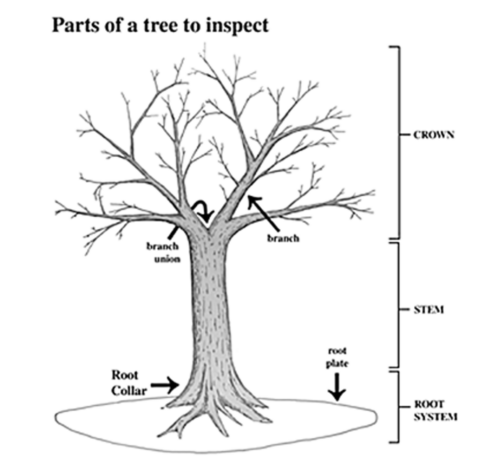 Tree Inspections
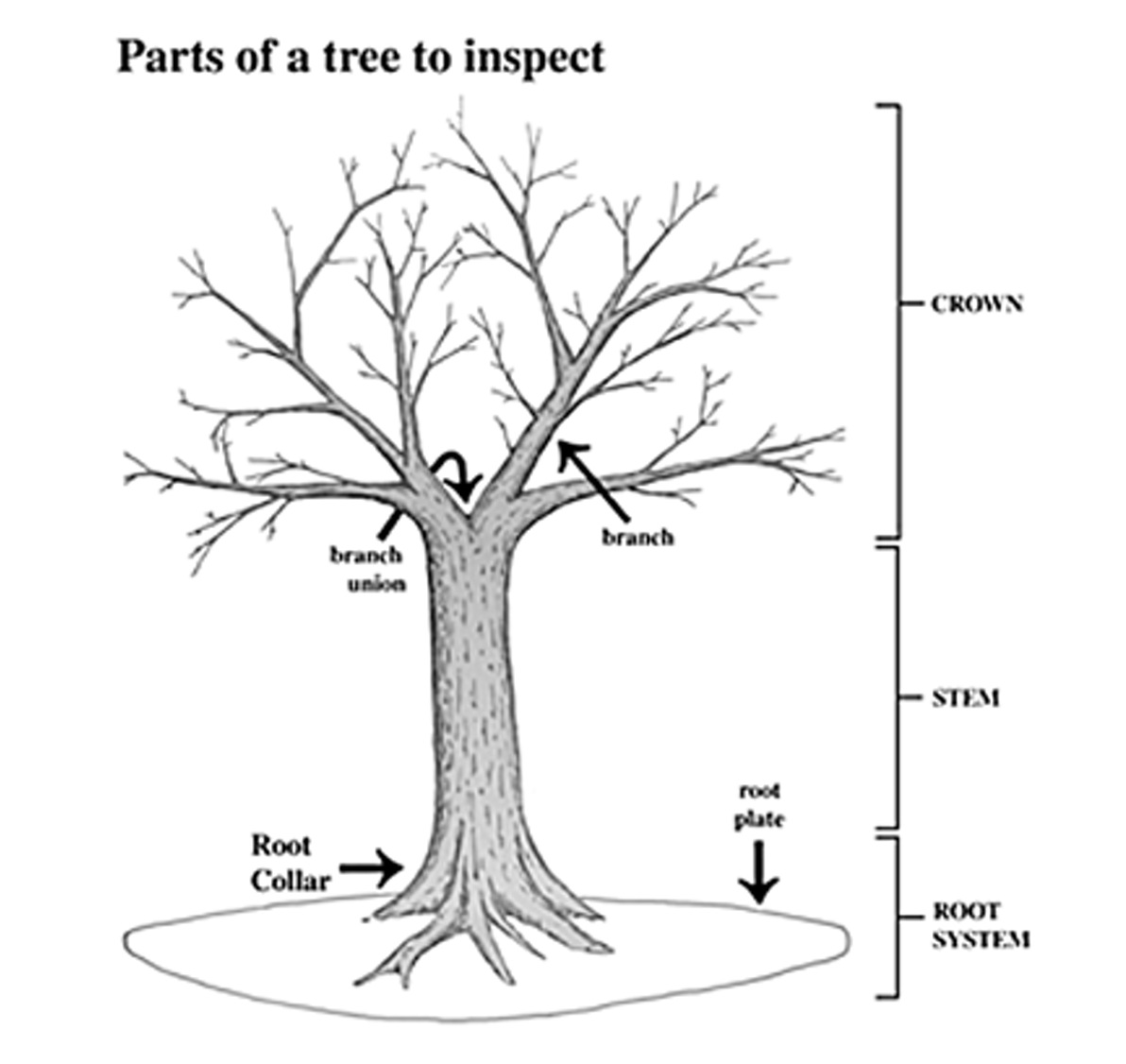
Assessments should include a thorough examination of each section of the tree. A systematic approach using standardized evaluation methods aids the process. Review the canopy (crown), branches and root zone to check for signs of failure. These include:
- Dead, diseased, dying or broken branches.
- Thinning or poor canopy health.
- An unstable branching pattern, overextended or weakly attached branches, or cracks in the stems.
- Cracks or decayed areas in the main trunk.
- Exposed or decayed roots, heaving of the soil, fungus growth or cracks in the soil around the root plate.
Recurrent inspections to determine tree health and condition are critical for successful risk management programs. Trees in active-use areas should be inspected annually for defects and conditions leading to failure. Inspections are necessary after storms to ensure excessive loads have not exceeded the strength of the tree and its parts. Also, be sure to note trees with a history of failures or those with problematic structure, for more frequent monitoring and inspection. A good database and archive of tree evaluations is a critical strategy in the overall risk management plan.
Resources:
Planting Your Tree Part 1: Choosing Your Tree, Purdue Extension YouTube Channel
Tree Pruning Essentials Video, Purdue Extension YouTube Channel
Tree Defect Identification, The Education Store, Purdue Education’s resource center
Why Is My Tree Dying?, Got Nature? Blog, Purdue Extension – Forestry and Natural Resources (FNR)
Tree Wound and Healing, Got Nature? Blog, Purdue Extension – FNR
Surface Root Syndrome, The Education Store
Find an Arborist video, Trees are Good-International Society of Arboriculture (ISA)
Trees and Storms: Understanding Damage, Risk and Recovery – Got Nature? Blog, Purdue Extension – FNR
Report INvasive, Purdue Extension
Indiana Invasive Species Council
ID That Tree, Playlist, Purdue Extension – FNR YouTube Channel (Invasive White Mulberry, Siberian Elm, Tree of Heaven)
Fifty Common Trees of Indiana
Native Trees of the Midwest, Purdue University Press
Subscribe – Purdue Extension-FNR YouTube Channel
Lindsey Purcell, Executive Director
Indiana Arborist Association

Recent Posts
- Disease May Cause Wilting and Eventual Death of Certain Trees and Shrubs, Purdue Landscape Report
Posted: October 5, 2026 in Disease, Forestry, Plants - October Is Firewood Month: Protect Indiana’s Forests by Making Smart Choices
Posted: October 1, 2026 in Forestry, Forests and Street Trees, How To, Invasive Insects, Urban Forestry - Minecraft Meets the Hellbender
Posted: September 22, 2026 in Aquaculture/Fish, Aquatic/Aquaculture Resources, Wildlife - Is It Too Early to Think About Christmas Tree Pests?
Posted: in Christmas Trees, Invasive Insects, Safety - What You Plant Matters to Wildlife
Posted: September 16, 2026 in Plants, Urban Forestry, Wildlife - Woodland Flowers of Late Summer
Posted: September 14, 2026 in Forestry, Gardening, Wildlife, Woodlands - Heavy August Rains Bring More Mosquitoes to Indiana
Posted: September 9, 2026 in How To, Invasive Insects, Safety, Wildlife - Question: Why Did the Shagbark Hickories Survive the Tornado?
Posted: August 27, 2026 in Forests and Street Trees, How To, Urban Forestry - New Indiana Woodland Steward Newsletter
Posted: August 12, 2026 in Forestry, Urban Forestry, Wildlife, Woodlands - Indiana Fall Hunting Licenses on Sale and New Mobile App Available
Posted: in Forestry, How To, Wildlife
Archives
Categories
- Alert
- Aquaculture/Fish
- Aquatic/Aquaculture Resources
- Ask the Expert
- Christmas Trees
- Community Development
- Disease
- Drought
- Forestry
- Forests and Street Trees
- Gardening
- Got Nature for Kids
- Great Lakes
- How To
- Invasive Animal Species
- Invasive Insects
- Invasive Plant Species
- Land Use
- Natural Resource Planning
- Nature of Teaching
- Plants
- Podcasts
- Ponds
- Publication
- Safety
- Spiders
- Timber Marketing
- Urban Forestry
- Webinar
- Wildlife
- Wood Products/Manufacturing
- Woodland Management Moment
- Woodlands