 Purdue University - Extension - Forestry and Natural Resources
Got Nature? Blog
Join fisheries specialist Dr. Mitch Zischke and Fred Whitford from the Purdue Pesticide program as they share about pond vegetation, from what is pond vegetation and why is it useful, to how you prevent negative effects from aquatic plants and what can you do to control problem plants.
If you have any questions regarding trees, forests, wildlife, wood products or other natural resource topics, feel free to contact us by using our Ask an Expert web page.
Resources:
Aquatics & Fisheries, Playlist, Purdue Extension – Forestry and Natural Resources YouTube Channel
Ask an Expert: Pond Wildlife Management, Video, Purdue Extension – FNR YouTube Channel
Ask an Expert: Pond Management: What to Do in Winter, How to Plan for Spring, Video, Purdue Extension – FNR YouTube Channel
Aquatic Pest Management, The Education Store, Purdue Extension resource center
Pond Management: Stocking Fish in Indiana Ponds, The Education Store
Aquatic Plant Management: Identifying and Managing Aquatic Vegetation, The Education Store
Aquatic Vegetation Management, College of Agriculture – Purdue Extension
Pond and Wildlife Management, College of Agriculture – Purdue Extension
Purdue Plant and Pest Diagnostic Lab, College of Agriculture – Purdue Extension
Find your county extension educator, College of Agriculture – Purdue Extension
Purdue Pesticide Program eLearning Aquatic Pest Management Module, Purdue Pesticide Program, Purdue Extension
Part 1: Know Your Pond, Video, Purdue Extension YouTube Channel
Part 2: Selecting the Right Equipment for the Job, Video, Purdue Extension YouTube Channel
Part 3: Proper Placement of the Herbicide, Video, Purdue Extension YouTube Channel
Part 4: Stopping the Hitchhikers Boat Cleaning, Video, Purdue Extension YouTube Channel
Mitch Zischke, Clinical Assistant Professor
Purdue Department of Forestry and Natural Resources
Fred Whitford, Clinical Engagement Professor
Purdue Department of Botany and Plant Pathology
 Did you know that the majority of tilapia grown in the Midwest region of the United States are sold live in ethnic markets? And the majority of tilapia eaten in the United States are imported from Asia and Latin America?
Farmed tilapia is considered safe to eat. In fact, they are identified as a “Best Choice” fish for pregnant women, breastfeeding mothers and children according to the EPA and FDA.
This publication, “Tilapia Farmed Fish Fact Sheet“, is the third in a series of consumer guides that describe fish and shellfish farmed in the Midwest region of the United States. The fact sheet also includes culinary characteristics, cooking tips and a recipe for Sauteed Tilapia.
To view other consumer guide publications and video resources, check out Purdue Extension’s The Education Store website.
Resources:
Fish: Healthy Protein Handout, The Education Store, Purdue Extension resource center
Walleye Farmed Fish Fact Sheet, The Education Store
Yellow Perch Farmed Fish Fact Sheet, The Education Store
Salmon and Trout of the Great Lakes: A Visual Identification Guide, The Education Store
Eat Midwest Fish, Illinois-Indiana Sea Grant online resource hub
Amy Shambach, Aquaculture Marketing Outreach Associate
Purdue Department of Forestry and Natural Resources
Join Purdue FNR’s own professor of wildlife science, Dr. Rod Williams, along with Mike Lodato, member of the Indiana Technical Advisory Committee for Herpetology, and Nate Engbrecht, herpetologist for the Indiana Department of Natural Resources, to learn tips on the how’s, when’s and where’s of herping in Indiana, including what gear to take, where to go and what you might see in different parts of the state.
If you have any questions regarding wildlife, trees, forest management, wood products, natural resource planning, or other natural resource topics, feel free to contact us by using our Ask an Expert web page.
Resources:
What’s a Herp? Indiana Department of Natural Resources YouTube Channel
Appreciating Reptiles and Amphibians in Nature, The Education Store, Purdue Extension resource center
The Nature of Teaching, Unit 3: Reptiles, Amphibians, and the Scientific Method, The Education Store
A Moment in the Wild: Eastern Newt Video, Purdue Extension – FNR YouTube Channel
Help the Hellbender, Purdue Extension
Rod Williams, Professor of Wildlife Science
Purdue Department of Forestry and Natural Resources
Nate Engbrecht, Herpetologist
Indiana Department of Natural Resources
Mike Lodato, Member of the Indiana Technical Advisory Committee for Herpetology
Illinois-Indiana Sea Grant (IISG), serving communities in the Great Lakes region, has largemouth bass workshops now available as videos on the IISG YouTube Channel. Presenters from Illinois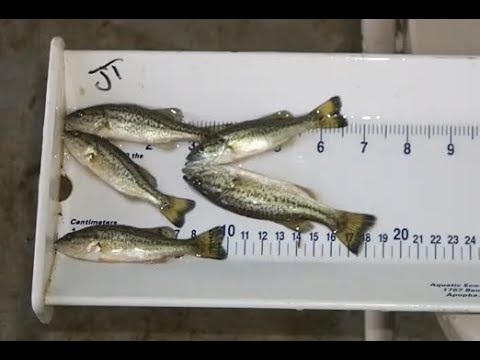 and Kentucky share their expertise with largemouth bass production, marketing trends and best management practices.
Indoor Larval Largemouth Bass Rearing Video
Presenter: Giovanni Molinari, Research Assistant, Center for Fisheries, Aquaculture and Aquatic Science, Sothern Illinois University-Carbondale
Learn about larval largemouth bass rearing in an indoor recirculating aquaculture system from Southern Illinois University graduate student Giovanni Molinari.
Largemouth Bass Production Video
Presenter: Dr. James H. Tidwell, Chair for School of Aquaculture and Aquatic Sciences, Aquaculture Research Center, Kentucky State University
Gain an overview of largemouth bass production from Dr. Tidwell, including stocking and food fish production.
Largemouth Bass Fingerling Production Video
Presenter: Shawn Coyle, Research Associate with the School of Aquaculture and Aquatic Sciences, College of Agriculture, Kentucky State University
Learn about the production of feed trained largemouth bass fingerlings through the first year.
Largemouth Bass Market Trends Video
Presenter: Paul Hitchens, Aquaculture Specialist, Southern Illinois University
Learn about the marketing trends to the food fish market and live market. Paul shares what they gather and how they analyze the numbers there at SIU.
Through workshops, educational materials, and one-on-one interactions, Illinois-Indiana Sea Grant provides people with the tools they need to help incorporate fish into their diet, aid aquaculture producers in defining markets and create value-added opportunities for their products.
Resources:
Eat Midwest Fish website launches fresh fish finder, Illinois – Indiana Sea Grant
Walleye Farmed Fish Fact Sheet: A Guide for Seafood Consumers, The Education Store, Purdue Extension resource center
Yellow Perch Farmed Fish Fact Sheet, The Education Store
Tilapia Farmed Fish Fact Sheet, The Education Store
Fish: Healthy Protein Handout, The Education Store
Fish Cleaning with Purdue Extension County Extension Director, Got Nature? Blog, Purdue Extension – Forestry and Natural Resources
Illinois-Indiana Sea Grant (IISG) YouTube Channel and IISG website, IISG grant combines research, education, and outreach to empower southern Lake Michigan communities to secure a healthy environment and economy.
Amy Shambach, Aquaculture Marketing Outreach Associate
Purdue Department of Forestry and Natural Resources/Illinois Indiana Sea Grant Program
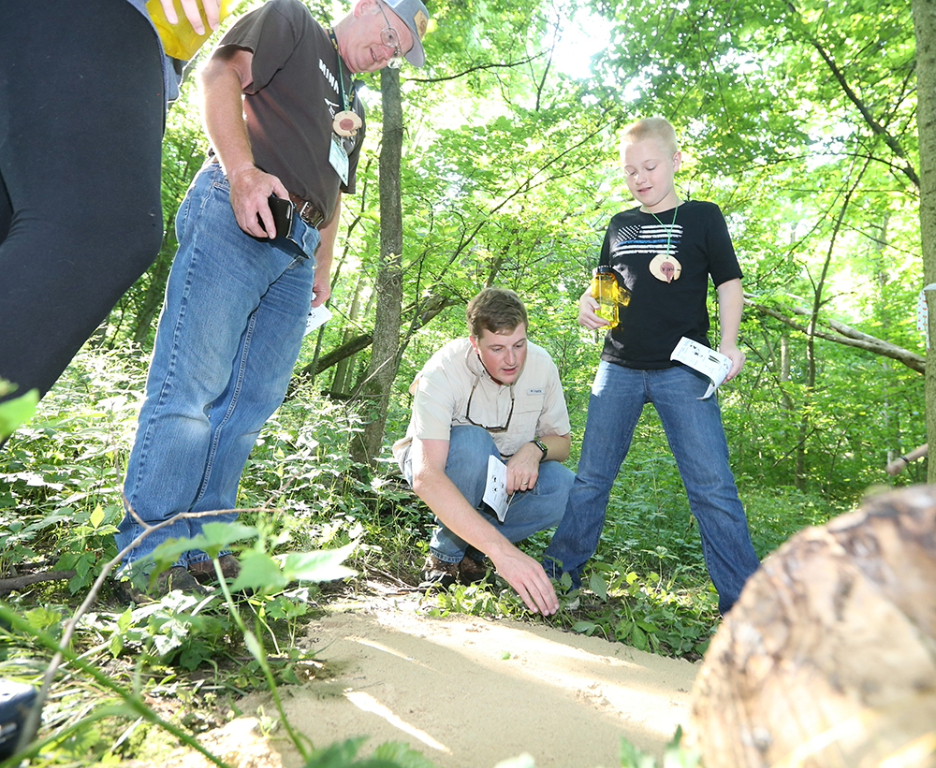 Purdue Extension wildlife specialist Jarred Brooke was honored by the College of Agriculture PK-12 Council on Thursday with the Staff Excellence Award for his work with PK-12 audiences to expand their interest in and preparation for careers in natural resource sciences.
The Council’s Outreach and Engagement Awards were established to recognize, reward and celebrate faculty and staff involved in successful outreach and engagement activities and to encourage the improvement and expansion of those activities.
“Winning this award is truly an honor,” Brooke said. “Working with PK-12 youth and youth educators is one of the most rewarding aspects of my job. Each time I see students or teachers have those ‘aha moments’ while connecting with nature it reaffirms that I chose the right career. I would not have been able to win this award if it were not for the help of my many great colleagues at Purdue, other universities, and beyond.
“Connecting youth with nature is so vital because their outdoor experiences now will shape how they view and understand nature as adults, ultimately influencing their willingness to protect and conserve the natural world in the future.”
Brooke, who earned his wildlife degree from Purdue Forestry and Natural Resources in 2012, joined the FNR staff in August 2016. His extension work impacting youth includes conservation field days, writing natural resources-based curricula for The Nature of Teaching signature program, and also planning and overseeing the 4-H and FFA Wildlife Habitat Education Program contest among other things.
Resources:
Nature of Teaching, Purdue Agriculture
Natural of Teaching YouTube Channel
Indiana 4-H Youth Development, Purdue Extension
4-H Academy, Purdue Extension
College of Agriculture PK-12 Council Outreach and Engagement Awards, Purdue Agriculture
National Wildlife Habitat Education Program (WHEP), Teaching Youth Valuable Skills
Jarred Brooke, Wildlife Extension Specialist
Purdue Department of Forestry and Natural Resources
In this episode of Ask an Expert, Illinois-Indiana Sea Grant‘s aquaculture marketing outreach associate Amy Shambach and Purdue Aquaculture Lab Manager Bob Rode share more about aquaculture, a growing method to increase the food supply.
If you have any questions regarding trees, forests, wildlife, wood products or other natural resource topics, feel free to contact us by using our Ask an Expert web page.
Resources
Aquaculture Research Lab, Purdue Forestry and Natural Resources
Local Farmers, Local Fish: Shrimp, Video, Purdue Extension YouTube channel
Aquaculture Industry in Indiana Growing, Video, Purdue Agriculture YouTube Channel
Aquaponics, Video, Purdue University YouTube channel
Aquaculture: Cage Culture, Video, Purdue University YouTube channel
Eat Midwest Fish
Indiana Department of Natural Resources Commercial Fish Suppliers Database
IN Fish Stocking, Indiana Department of Natural Resources (IDNR)
Fish & Wildlife Properties – State Fish Hatcheries, IN DNR
Indiana Aquaculture Association
North Central Regional Aquaculture Center (NCRAC)
Southern Regional Aquaculture Center (SRAC)
Indiana Fish Entry Requirements, Indiana State Board of Animal Health
Amy Shambach, Aquaculture Marketing Outreach Associate
Purdue Department of Forestry and Natural Resources/Illinois Indiana Sea Grant Program
Bob Rode, Extension Aquaculture Specialist
Department of Forestry and Natural Resources, Purdue University
You may have found salamanders while flipping over rocks and logs in the woods or you may have seen them scurrying in and out of your pond. In this episode of FNR Ask the Expert, join Dr. Rod Williams, extension specialist Nick Burgmeier and IU Northwest’s Dr. Spencer Cortwright as they discuss all things salamander, including the different species as well as some threats to these amazing amphibians.
If you have any questions regarding trees, forests, wildlife, wood products or other natural resource topics, feel free to contact us by using our Ask an Expert web page.
Resources
Ask An Expert, Playlist, Purdue Extension – Forestry and Natural Resources YouTube channel
Help the Hellbender, Purdue Extension – FNR Playlist
A Moment in the Wild, Purdue Extension – FNR Playlist
The Nature of Teaching: Adaptations for Aquatic Amphibians, The Education Store, Purdue Extension resource center
How Our Zoos Help Hellbenders, The Education Store
Help the Hellbender, Website, Purdue College of Agriculture
Rod Williams, Professor of Wildlife Science
Purdue University Department of Forestry and Natural Resources
Nick Burgmeier, Research Biologist and Wildlife Extension Specialist
Purdue Department of Forestry and Natural Resources
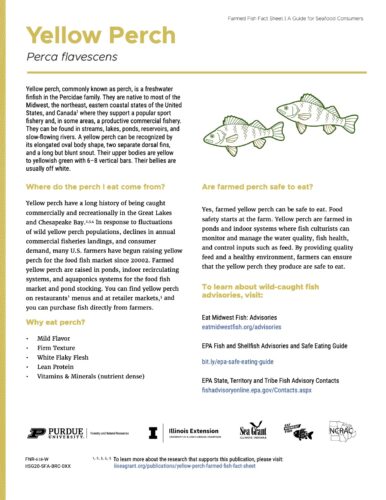 The publication Yellow Perch is the second in a series of fact sheets that describe fish and shellfish produced in the Midwest region of the United States. (See FNR-608-W, Walleye Farmed Fish Fact Sheet.) Yellow perch have been popular among anglers for many years, and since 2002, responding to greater demand, U.S. farmers are raising perch in ponds, aquaponic systems, etc. The fact sheet also includes culinary characteristics, cooking tips, and a recipe for Baked Parmesan Perch.
View other seafood publications and video resources as you place keywords in the search field located on The Education Store website.
Resources
Fish: Healthy Protein Handout, The Education Store, Purdue Extension resource center
Walleye Farmed Fish Fact Sheet: A Guide for Seafood Consumers, The Education Store
Fish Cleaning with Purdue Extension County Extension Director, Got Nature? Blog, Purdue Extension – Forestry and Natural Resources
Eat Midwest Fish, Website
Sustainable Aquaculture: What does it mean to you?, The Education Store, Purdue Extension resource center
Best Practices Guide for Charter Fishing and COVID-19, The Education Store
Pond Management: Managing Fish Populations, The Education Store
Aquatics & Fisheries, Playlist, Purdue Extension – Forestry and Natural Resources
Amy Shambach, Aquaculture Marketing Outreach Associate
Purdue Department of Forestry and Natural Resources/Illinois Indiana Sea Grant Program
Join Purdue Extension fisheries expert Mitch Zischke and Purdue Extension – Ripley County extension educator Dave Osborne as they share about pond management, including how to create a management plan, getting things ready for spring, what to do about early season issues and more.
If you have any questions regarding trees, forests, wildlife, wood products or other natural resource topics, feel free to contact us by using our Ask an Expert web page.
Resources
Pond Management, Website, Purdue College of Agriculture
Pond University Podcast Series
Pond Management Plan Template, The Education Store, Purdue Extension resource center
Pond Fish Species Identification, The Education Store
Pond Fish Stocking, The Education Store
Fish Population Management, Website, Purdue College of Agriculture
Aquatic Plant Management, The Education Store
Ask An Expert, Playlist, Purdue Extension – Forestry and Natural Resources YouTube channel
Licensed Fish Hatcheries, Indiana Department of Natural Resources (IDNR)
County Resources for Ponds in Indiana, Purdue College of Agriculture
Feedback: Qualtrics survey
Mitch Zischke, Clinical Assistant Professor
Purdue Department of Forestry and Natural Resources
Dave Osborne, County Extension Director
Purdue Extension – Ripley County
Talk with the aquaculture experts including different fish species, the benefits of fish, shrimp farming, aquaponics, and much more.
Date: March 4th, 2021
Time: 3 p.m. EST.
Speaker: Bob Rode, Aquaculture Research Lab Manager, Purdue Forestry and Natural Resources; Amy Shambach, Aquaculture Marketing Outreach Associate, Purdue Forestry and Natural Resources
Contact: Diana Evans, Extension and Web Communications Specialist, evans44@purdue.edu
For the Facebook live link and more information, visit Purdue Forestry and Natural Resources Facebook event page.
Resources
Ask An Expert: Hot and Cold, Video, Purdue Extension – Forestry and Natural Resources YouTube channel
Ask An Expert, Purdue Extension – FNR Playlist
Walleye Farmed Fish Fact Sheet: A Guide for Seafood Consumers, The Education Store, Purdue Extension resource center
Sustainable Aquaculture: What does it mean to you?, The Education Store
Fish: Healthy Protein Handout, The Education Store
Rod Williams, Professor of Wildlife Science
Purdue University Department of Forestry and Natural Resources

Recent Posts
- Publication Helps Midwest Fish Producers “Catch a Following” with Consumers
Posted: October 12, 2026 in Aquaculture/Fish, Aquatic/Aquaculture Resources, Wildlife - Minecraft Meets the Hellbender
Posted: September 22, 2026 in Aquaculture/Fish, Aquatic/Aquaculture Resources, Wildlife - Saving Giants of the Blue River: Purdue Team Earns Statewide Recognition
Posted: May 14, 2026 in Aquaculture/Fish, Aquatic/Aquaculture Resources, Wildlife - Discover the Great Lakes, The 2025 Helm Magazine is Available
Posted: November 17, 2025 in Aquaculture/Fish, Aquatic/Aquaculture Resources, Wildlife - Illinois-Indiana Sea Grant Newsletter Shares New Resources
Posted: November 13, 2025 in Aquaculture/Fish, Aquatic/Aquaculture Resources, Wildlife - Learn to Process Your Own Deer – Wild Bulletin
Posted: November 11, 2024 in Aquatic/Aquaculture Resources, Forestry, How To, Wildlife - Publication – Handbook on Processing Fish for Small-Scale Fish Farmers
Posted: October 17, 2024 in Aquaculture/Fish, Aquatic/Aquaculture Resources, How To, Publication, Wildlife - Economics and Aquaculture Expert Kwamena Quagrainie is Featured Specialist in ANR Newsletter
Posted: October 15, 2024 in Aquatic/Aquaculture Resources, Great Lakes - Buoys Keep Eye on Great Lake Conditions
Posted: July 11, 2024 in Aquatic/Aquaculture Resources, Great Lakes, How To - IISG Adds New Water Safety Videos
Posted: May 8, 2024 in Aquaculture/Fish, Aquatic/Aquaculture Resources, Community Development, Great Lakes, Wildlife
Archives
Categories
- Alert
- Aquaculture/Fish
- Aquatic/Aquaculture Resources
- Ask the Expert
- Christmas Trees
- Community Development
- Disease
- Drought
- Forestry
- Forests and Street Trees
- Gardening
- Got Nature for Kids
- Great Lakes
- How To
- Invasive Animal Species
- Invasive Insects
- Invasive Plant Species
- Land Use
- Natural Resource Planning
- Nature of Teaching
- Plants
- Podcasts
- Ponds
- Publication
- Safety
- Spiders
- Timber Marketing
- Urban Forestry
- Webinar
- Wildlife
- Wood Products/Manufacturing
- Woodland Management Moment
- Woodlands