 Purdue University - Extension - Forestry and Natural Resources
Got Nature? Blog
 Illinois-Indiana Sea Grant: Freedom Seekers were environmentalists who learned to navigate the land as they escaped slavery. Songs like “Wade in the Water” and “Follow the Drinking Gourd” remind us that history has always been connected to the land we occupy. The lessons featured in this free curriculum, Freedom Seekers: The Underground Railroad, Great Lakes, and Science Literacy Activities, acknowledge the enslaved Africans who had to rely on environmental science principles in their quest for life, liberty and the pursuit of happiness. These lessons provide educators with cross-curricular teaching opportunities for middle and high school students.
“I didn’t realize that the Great Lakes were linked to the Underground Railroad at all,” said Megan Gunn, aquatic education specialist with Illinois-Indiana Sea Grant and Purdue University Forestry and Natural Resources. Gunn worked with partners across the region to finalize the curriculum. “I grew up near Lake Michigan and never learned how my cultural roots were so closely connected to the natural world, so I’m excited for the next generation to have this educational opportunity.”
The Freedom Seekers curriculum is a collaborative project between several organizations and schools throughout the Great Lakes. It is part of a professional development effort for educators to increase their knowledge of the Great Lakes and environmental issues while incorporating Environmental Justice Education (EJE) approaches to K-12 teaching. These EJE approaches leverage cross-curricular connections that focus on increasing the awareness of local issues and history in the Great Lakes region.
Resources
Center For Great Lakes Literacy (CGLL), Website
Ask An Expert: Hot and Cold, Video, Purdue Extension – Forestry and Natural Resources YouTube channel
Diets of Lake Michigan Salmonids, The Education Store, Purdue Extension resource center
Informing the Development of the Great Lakes Region Decision Support System, The Education Store
Salmon and Trout of the Great Lakes: A Visual Identification Guide, The Education Store
New website: Eat Midwest Fish, Got Nature? Blog, Purdue Extension – Forestry and Natural Resources
Scientists bring the Great Lakes to students learning from home, Got Nature? Blog
ID That Tree: Alternate Leaved Dogwood, Got Nature? Blog
Illinois-Indiana Sea Grant (IISG)
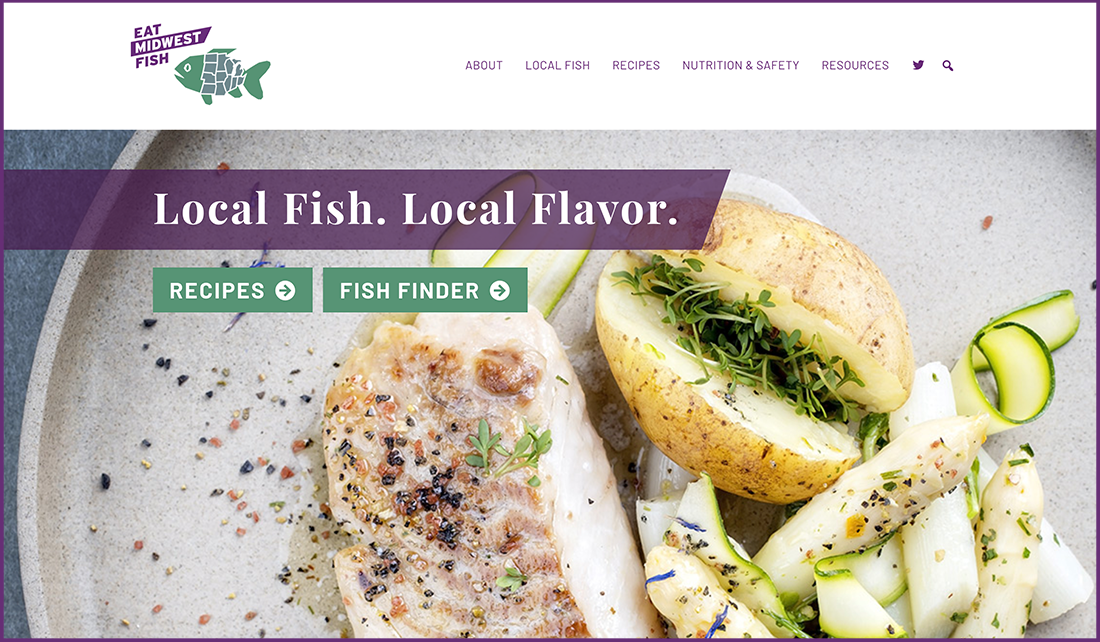 Eat Midwest Fish is an online resource hub that educates consumers about sustainable aquaculture in the Midwest. Consumers have a lot of questions about water farming and farm-raised fish products. Eat Midwest Fish provides resources to inform and inspire consumers to eat more fish and shellfish, including resources focused on where to find locally grown products, what types of products are available, how to source and cook these products, and how farmers are growing both freshwater and marine animals in the Midwest. Information is provided on aquaculture and farm-raised products from the twelve states in the North Central Region: Illinois, Indiana, Iowa, Kansas, Michigan, Minnesota, Missouri, Nebraska, North Dakota, Ohio, South Dakota, and Wisconsin.
Eat Midwest Fish’s mission is to support safe and sustainable seafood through extension, education, and fostering connections. It is a collaborative project involving Illinois-Indiana Sea Grant, North Central Regional Aquaculture Center, Purdue University Extension, University of Illinois Extension, and the Great Lakes Sea Grant Network. This project is supported by the United States Department of Agriculture project number 2016-38500-25753.
Resources
Fish: Healthy Protein Handout, The Education Store, Purdue Extension resource center
Walleye Farmed Fish Fact Sheet: A Guide for Seafood Consumers, The Education Store
Best Practices Guide for Charter Fishing and COVID-19, The Education Store
Fish Cleaning with Purdue Extension County Extension Director, Got Nature? Blog, Purdue Extension – Forestry and Natural Resources
Aquatics & Fisheries, Playlist, Purdue Extension – Forestry and Natural Resources
Aquaculture and Aquatics, Website, Purdue Extension – Forestry and Natural Resources
Eat Midwest Fish website launches fresh fish finder, Illinois – Indiana Sea Grant
Amy Shambach, Aquaculture Marketing Outreach Associate
Purdue Department of Forestry and Natural Resources/Illinois Indiana Sea Grant Program
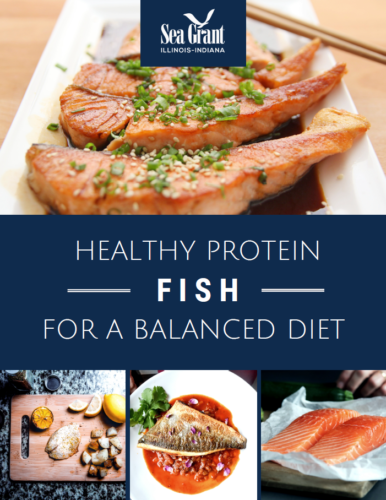 Fish is part of a healthy, balanced diet, but it is sometimes difficult to find fish locally as well as know what to look for and how to cook it. Illinois-Indiana Sea Grant (IISG) has added this new free pdf downloadable quick guide, Fish-Healthy Protein For a Balanced Diet, to their many resources providing easy tools to help as we increase fish in our diets.
Check out the new website Eat Midwest Fish which includes a fish finder map that shows users where fresh seafood is produced near their location, recipes submitted by IISG staff to inspire creativity in the kitchen, how-to cooking videos, nutrition information, an introduction to aquaculture and more.
Resources
Walleye Farmed Fish Fact Sheet: A Guide for Seafood Consumers, The Education Store, Purdue Extension resource center
Best Practices Guide for Charter Fishing and COVID-19, The Education Store
Pond Management: Managing Fish Populations, The Education Store
Pond and Wildlife Management website, Purdue Extension
Natural Resources University Podcasts, Collaboration with Mississippi, Florida, Iowa and Indiana Extension Services
Fish Cleaning with Purdue Extension County Extension Director, Got Nature? Blog, Purdue Extension – Forestry and Natural Resources
Aquatics & Fisheries, Playlist, Purdue Extension – Forestry and Natural Resources
Amy Shambach, Aquaculture Marketing Outreach Associate
Purdue Department of Forestry and Natural Resources/Illinois Indiana Sea Grant Program
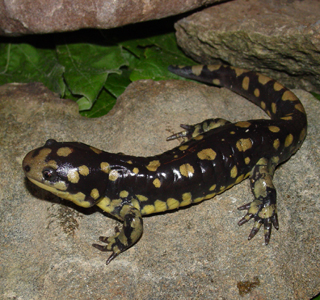 Join this Ask An Expert Live session and learn interesting facts about salamanders, their natural history, interesting research happening in Indiana, and what can you do to help salamanders?
Date: February 18th, 2021
Time: 3 p.m. EST.
Speaker: Dr. Rod Williams, Professor of Wildlife Science, Purdue Forestry and Natural Resources; Nick Burgmeier, Research Biologist and Extension wildlife specialist; Dr. Spencer Cortwright, Associate Professor of Biology, IU Northwest
Contact: Diana Evans, Extension and Web Communications Specialist, evans44@purdue.edu
For the Facebook live link and more information, visit Purdue Forestry and Natural Resources Facebook event page.
Resources
Help the Hellbender, Purdue Extension Website
Ask an Expert: Hardwood Ecosystem Experiment (HEE) Birds and Salamander Research, Video, Purdue Extension – Forestry and Natural Resources YouTube Channel
Hardwood Ecosystem Experiment (HEE) Highlights: Salamanders, Purdue Extension – FNR Video
Help the Hellbender, Purdue Extension – FNR Playlist
How Our Zoos Help Hellbenders, The Education Store, Purdue Extension resource center
Help the Hellbender, North America’s Giant Salamander, The Education Store
Rod Williams, Professor of Wildlife Science
Purdue University Department of Forestry and Natural Resources
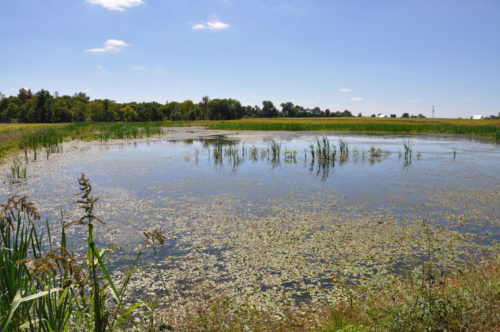 Join this Ask An Expert Live session and Learn how to actively plan for your pond, instead of just fixing problems as they arise. What can you be doing now to get ready for spring?
Date: February 4th, 2021
Time: 3 p.m. EST.
Speaker: Dr. Mitch Zischke, Clinical Assistant Professor, Purdue Forestry and Natural Resources, and Illinois-Indiana Sea Grant Fisheries Specialist; Dave Osborne, Ripley County Extension Director
Contact: Diana Evans, Extension and Web Communications Specialist, evans44@purdue.edu
For the Facebook live link and more information, visit Purdue Forestry and Natural Resources Facebook event page.
Resources
Ask The Expert: Pond Wildlife Management, Video, Purdue Extension – Forestry and Natural Resources YouTube channel
Pond Management: Managing Fish Populations, The Education Store, Purdue Extension – Forestry and Natural Resources
Pond Management: Stocking Fish in Indiana Ponds, The Education Store
A Pond Management Plan Template, The Education Store
Indiana Pond Fish, Species Identification Card Set, The Education Store
Best Practices Guide for Charter Fishing and COVID-19, The Education Store
Purdue Extension Pond and Wildlife Management, Website
Mitch Zischke, Clinical Assistant Professor
Purdue Department of Forestry and Natural Resources
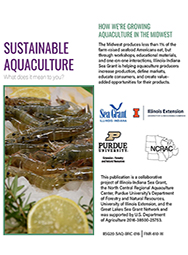 Aquaculture is a rapidly growing industry in the United States. This publication describes what sustainable aquaculture is, a sampling of aquaculture species are produced in the Midwest, health benefits associated with eating fish as part of a balanced diet, and dietary recommendations. Don’t miss trying the recipe shared in this publication: Parmesan Crusted Perch.
Resources
Walleye Farmed Fish Fact Sheet: A Guide for Seafood Consumers, The Education Store, Purdue Extension resource center
Best Practices Guide for Charter Fishing and COVID-19, The Education Store
Pond Management: Managing Fish Populations, The Education Store
Pond and Wildlife Management website, Purdue Extension
Natural Resources University Podcasts, Collaboration with Mississippi, Florida, Iowa and Indiana Extension Services
Indiana Pond Fish, Species Identification Card Set, The Education Store
Fish Cleaning with Purdue Extension County Extension Director, Got Nature? Blog, Purdue Extension – Forestry and Natural Resources
Aquatics & Fisheries, Playlist, Purdue Extension – Forestry and Natural Resources
Amy Shambach, Aquaculture Marketing Outreach Associate
Purdue Department of Forestry and Natural Resources/Illinois Indiana Sea Grant Program
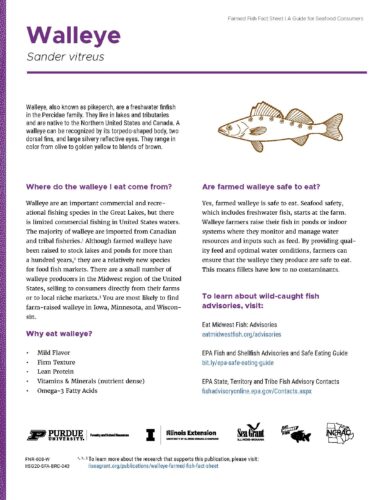 Seafood is a protein category that has many commercially and recreationally available options. Selecting seafood is more like shopping for fruits and vegetables than animal proteins. This publication is the first in a series of fact sheets that describe fish and shellfish produced in the Midwest region of the United States, where commercially available fish comes from, food safety, culinary characteristics, and cooking tips.
View other seafood publications and video resources as you place keywords in the search field located on The Education Store website or the Eat Midwest Fish website.
Resources
Sustainable Aquaculture: What does it mean to you?, The Education Store, Purdue Extension resource center
Best Practices Guide for Charter Fishing and COVID-19, The Education Store
Pond Management: Managing Fish Populations, The Education Store
Indiana Pond Fish, Species Identification Card Set, The Education Store
Fish Cleaning with Purdue Extension County Extension Director, Got Nature? Blog, Purdue Extension – Forestry and Natural Resources
Amy Shambach, Aquaculture Marketing Outreach Associate
Purdue Department of Forestry and Natural Resources/Illinois Indiana Sea Grant Program
 Calling all teachers and parents: Do you need some new ideas on how to get students out in nature or teach them science lessons?
We’ve got you covered with our Nature of Teaching program. We’ve created more than 40 sneak peek videos that introduce you to our lesson plans, offering a quick way for teachers and other K-12 leaders to view the lessons as well as the related activities.
Many of the lesson plans meet state specifications for Next Generation Science Standards and/or Core Standards, while also offering informal curriculum items and fun activities for all K-12 leaders.
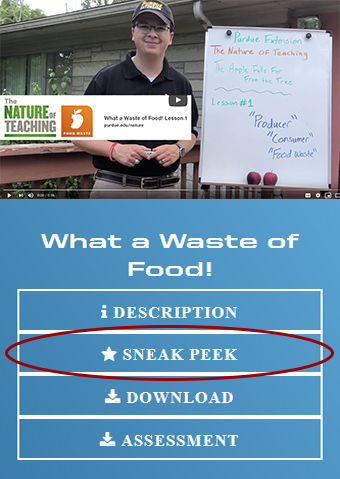
The Nature of Teaching program offers three areas of formal and informal activity-based curricula centered around getting youth outside: wildlife, health and wellness, and food waste.
Sneak Peeks videos include topics ranging from producers, consumers and natural resources and food waste from farm to fork, to exploring nature with your senses and emotional vocabulary exploration, to trees of the Midwest and healthy water/happy home.
Subscribe to the Nature of Teaching YouTube Channel for more Wildlife, Food Waste, and Health and Wellness information.
Resources
Nature of Teaching Website
Nature of Teaching YouTube Channel
Nature of Teaching Program Receives Environmental Education Award, College of Agriculture, Purdue University
Resourceful Animal Relationships, The Education Store, Purdue Extension resource center
The Nature of Teaching: Food Waste Solutions, The Education Store
Benefits of Connecting with Nature, The Education Store
Rod N Williams, Professor of Wildlife Science
Purdue University Department of Forestry and Natural Resources
The Nature of Teaching, a Purdue Extension signature program, was honored as the third place finisher in the central region for the Environmental Education Award presented by the National Extension Association of Family and Consumer Science (NEAFCS).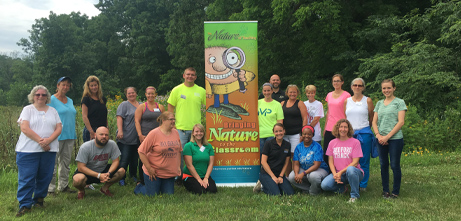 The Nature of Teaching team includes:
- Deb Arseneau, HHS Educator, Newton County
- Jarred Brooke, extension wildlife specialist
- Jay Christiansen, health and human sciences extension educator for Vigo County
- Robert Cordes, Maine Department of Inland Fisheries and Wildlife (MDIFW) wildlife special projects coordinator
- Molly Hoag, health and human sciences extension educator for Wells County
- Molly Hunt, health and human sciences extension educator for Delaware County
- Rebecca Koetz, urban ag/home horticulture extension educator for Lake County
- Tami Mosier, 4-H youth development extension educator
- Kelsie Muller, health and human sciences extension educator for Benton County
- Dr. Rod Williams, professor of wildlife science
- Brad Zitske, Maine Department of Inland Fisheries and Wildlife (MDIFW) assistant regional wildlife biologist
Nature of Teaching
Nature of Teaching YouTube Channel
Transporting Food Waste, The Education Store, Purdue Extension resource center
Resourceful Animal Relationships, The Education Store
Benefits of Connecting with Nature, The Education Store
 Illinois-Indiana Sea Grant (IISG): “I was 19 years old. I never even knew any of this stuff existed. I didn’t know I could be a scientist. I thought that was something way beyond what I could be,” said Susan Daniel, a Buffalo State College researcher who studies invertebrates that live at the bottom of the Great Lakes.
She was talking to students from Ellis Middle School in Elgin, Illinois, who had posed questions for her and a handful of other scientists taking part in a virtual session bringing these two groups together. These students in Holly Yee’s science classes had been studying the Great Lakes and the participating scientists are experts on the subject. They hail from the Environmental Protection Agency (EPA), universities and the Sea Grant program.
Illinois-Indiana Sea Grant (IISG) developed the Scientists to Students (S2S) program to connect students with Great Lakes scientists on board the EPA research ship, the Lake Guardian, via videocasts. While out on the lakes collecting samples, scientists visit classrooms virtually and talk with students about aquatic science, water quality monitoring, careers, and life on a ship. Since the program’s inception, over 25 scientists, 33 teachers, and more than 3400 students throughout the Great Lakes have participated.
This spring, due to COVID-19, as with most events, S2S videocasts needed to be rethought, if the program happened at all. Working with several teachers, IISG’s Kristin TePas and Allison Neubauer refashioned the get-togethers with everyone in their homes, both scientists and students alike.
“This has resulted in a fair amount of trial and error to find processes and platforms that work well,” said Neubauer, IISG Great Lakes outreach associate. “As it turns out, I think this has been beneficial in encouraging participation from different types of learners, ranging from those who feel comfortable unmuting themselves and directly asking the scientists questions to those who would prefer to type in a chat box.”
The interactions with scientists and the Elgin students included prerecorded videos created when convenient—introductory videos from scientists describing their work, students posing questions, and scientists’ recorded answers. Many of the questions focused on Great Lakes conditions and issues, but some were more personal in nature, such as what is your favorite thing about being a scientist?
For full article and the video >>>
Resources
New toolkit makes finding weather and climate lesson plans easy, Got Nature? Blog, Purdue Extension – Forestry and Natural Resources
Aquatics & Fisheries, Playlist, Purdue Extension – Forestry and Natural Resources Youtube channel
Best Practices Guide for Charter Fishing and COVID-19, The Education Store, Purdue Extension resource center
Diets of Lake Michigan Salmonids, The Education Store
Salmon and Trout of the Great Lakes: A Visual Identification Guide, The Education Store
Illinois-Indiana Sea Grant (IISG)

Recent Posts
- Publication Helps Midwest Fish Producers “Catch a Following” with Consumers
Posted: October 12, 2026 in Aquaculture/Fish, Aquatic/Aquaculture Resources, Wildlife - Minecraft Meets the Hellbender
Posted: September 22, 2026 in Aquaculture/Fish, Aquatic/Aquaculture Resources, Wildlife - Saving Giants of the Blue River: Purdue Team Earns Statewide Recognition
Posted: May 14, 2026 in Aquaculture/Fish, Aquatic/Aquaculture Resources, Wildlife - Discover the Great Lakes, The 2025 Helm Magazine is Available
Posted: November 17, 2025 in Aquaculture/Fish, Aquatic/Aquaculture Resources, Wildlife - Illinois-Indiana Sea Grant Newsletter Shares New Resources
Posted: November 13, 2025 in Aquaculture/Fish, Aquatic/Aquaculture Resources, Wildlife - Learn to Process Your Own Deer – Wild Bulletin
Posted: November 11, 2024 in Aquatic/Aquaculture Resources, Forestry, How To, Wildlife - Publication – Handbook on Processing Fish for Small-Scale Fish Farmers
Posted: October 17, 2024 in Aquaculture/Fish, Aquatic/Aquaculture Resources, How To, Publication, Wildlife - Economics and Aquaculture Expert Kwamena Quagrainie is Featured Specialist in ANR Newsletter
Posted: October 15, 2024 in Aquatic/Aquaculture Resources, Great Lakes - Buoys Keep Eye on Great Lake Conditions
Posted: July 11, 2024 in Aquatic/Aquaculture Resources, Great Lakes, How To - IISG Adds New Water Safety Videos
Posted: May 8, 2024 in Aquaculture/Fish, Aquatic/Aquaculture Resources, Community Development, Great Lakes, Wildlife
Archives
Categories
- Alert
- Aquaculture/Fish
- Aquatic/Aquaculture Resources
- Ask the Expert
- Christmas Trees
- Community Development
- Disease
- Drought
- Forestry
- Forests and Street Trees
- Gardening
- Got Nature for Kids
- Great Lakes
- How To
- Invasive Animal Species
- Invasive Insects
- Invasive Plant Species
- Land Use
- Natural Resource Planning
- Nature of Teaching
- Plants
- Podcasts
- Ponds
- Publication
- Safety
- Spiders
- Timber Marketing
- Urban Forestry
- Webinar
- Wildlife
- Wood Products/Manufacturing
- Woodland Management Moment
- Woodlands