 Purdue University - Extension - Forestry and Natural Resources
Got Nature? Blog
Purdue Extension – Forestry and Natural Resources’ ID That Tree video series was recently highlighted in the National Woodland Owners Association’s (NWOA) Woodland Word Newsletter, recognizing the value of this Purdue FNR extension resource for woodland owners nationwide.

Hosted by Purdue Extension – Forestry and Natural Resources Forester Lenny Farlee, ID That Tree is a video series created to help viewers identify forest trees, shrubs and invasive plants through short, easy-to-follow lessons. With more than 150 videos in the playlist, the series offers a practical resource for woodland owners, land managers, outdoor enthusiasts and natural resource professionals interested in learning more about the plants and trees in their woodlands and surrounding landscapes. The ID That Tree playlist can be viewed on the Purdue Extension Forestry and Natural Resources YouTube channel.
In the March 25, 2026 issue of Woodland Word, NWOA featured the playlist in its “Knowledge, Inspiration, and Humor” section, describing it as a helpful tool for woodland owners seeking tree identification assistance.
Connecting National Resources to Indiana Woodland Owners
The National Woodland Owners Association (NWOA) is a nonprofit organization supporting woodland owners through education, advocacy, and stewardship resources across the U.S. To learn more about the opportunities and resources available view Join NWOA.
Here in Indiana, that national mission is carried forward locally through the Indiana Forestry & Woodland Owners Association (IFWOA), an official affiliate of NWOA.
IFWOA provides Indiana woodland owners with:
- Local networking and peer learning
- Educational programs and field tours
- Connections to Purdue Extension resources
- A voice for woodland owners at the state level
Resources:
Purdue Arboretum Explorer
Conservation Tree Planting: Steps to Success, Purdue Extension – FNR YouTube Channel
A Woodland Management Moment, Playlist, Purdue Extension – FNR YouTube Channel
Woodland Stewardship for Landowners, Playlist, Purdue Extension – FNR YouTube Channel
Fifty Common Trees of Indiana, Purdue Extension – FNR
Episode 11 – Exploring the challenges of Invasive Species, Habitat University-Natural Resource University
Shrubs and Woody Vines of Indiana and the Midwest, The Education Store
Native Trees of the Midwest, The Education Store
Professional Forester, Indiana Forestry Woodland Owners Association
Forest Improvement Handbook, The Education Store
Professional Forester, Indiana Forestry Woodland Owners Association (IFWOA)
District Forester, Indiana Department of Natural Resources, 10+ acres
Find an Arborist, International Society of Arboriculture
Indiana Invasive Species Council
Cooperative Invasive Species Management Area (CISMA)
Indiana Department of Natural Resources: Invasive Species
Report Invasive, Purdue Extension
Diana Evans, Extension & Web Communications Specialist
Purdue University Department of Forestry and Natural Resources
Explore the latest newsletter updates on the Indiana Woodland Steward website. Stay up-to-date with forestry news and receive their free e-newsletter by subscribing at IWS Subscribe.
Highlights from the new Newsletter include:
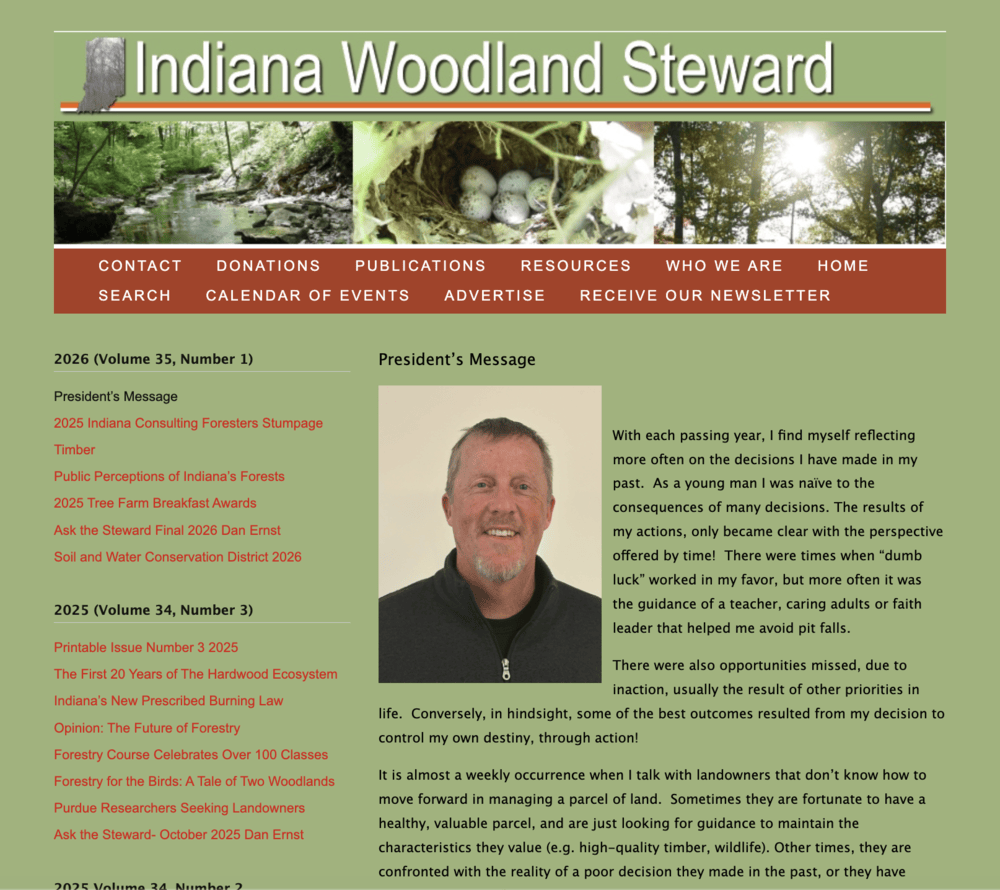
- President’s Message
By Dan McGuckin
“With each passing year, I find myself reflecting more often on the decisions I have made in my past…” - 2025 Indiana Consulting Foresters Stumpage Timber Price Report
“This report is provided annually and is intended to be used as a general indicator of timber stumpage prices and activity in Indiana…” - Public Perceptions of Indiana’s Forests and Woodlands: Insights from a Statewide Survey
By Erica Kronenberger, Zhao Ma, and Cynthia Longmire
“Public opinion plays a critical role in natural resource management. Natural resource agencies and organizations increasingly recognize that achieving and maintaining public approval…” - 2025 Tree Farm Breakfast Awards
By Ken Day
“Kline Contracting is the 2025 Indiana Logger of the Year. Mike Kline is third generation, and Miles Kline is a fourth generation Kline to operate the logging business…” - Ask the Steward – Final Column
by Dan Ernst
“‘Ask the Steward’ began as a Q&A column in the very first issue of Woodland Steward in 1992, with goals of being both informative and entertaining…“ - Soil and Water Conservation District 2026
“Thank you to all the supporting SWCD’s. Supporting the Woodland Steward Newsletter puts timely, relevant and science-based information…”
The Indiana Woodland Steward Newsletter is a resource offering a wealth of valuable information for foresters, woodland owners, timber marketing specialists, woodland and wildlife enthusiasts. The Indiana Woodland Steward Institute (IWS) is an entity made from 11 organizations within the state including Purdue University, Indiana Department of Natural Resources (DNR), and Indiana Hardwood Lumbermen’s Association (IHLA), that works to promote best usage practices of Indiana’s woodland resources through their Woodland Steward publication.
Resources
Hardwood Ecosystem Experiment (HEE) website
Hardwood Ecosystem Experiment – Wildlife Responses to Timber Harvesting, Purdue Extension
Forest Improvement Handbook, The Education Store
Invasive plants: impact on environment and people, The Education Store
Managing Your Woods for White-Tailed Deer, The Education Store
Shrubs and Woody Vines of Indiana and the Midwest, Purdue University Press
Virtual Tour Brings Forest Management for Birds to Life, Got Nature? Blog Post, Purdue Extension – Forestry and Natural Resources (FNR)
Breeding Birds and Forest Management: the Hardwood Ecosystem Experiment and the Central Hardwoods Region, The Education Store
Deer Impact Toolbox, Purdue Extension
Grassland Management Series, Purdue Extension Pond and Wildlife Management
Birdfeeder tips, The National Audubon Society
Explore the Rich World of Oaks with Purdue FNR Extension & Partners, Purdue Extension – FNR
Managing Woodlands for Birds Video, Purdue Extension-Forestry and Natural Resources YouTube Channel
Subscribe: Deer, Forest Management, ID That Tree, Woodland Management Moment, Invasive Species and many other topic video playlists Purdue Extension-Forestry and Natural Resources YouTube Channel
Dan McGuckin, President
Indiana Woodland Steward
Dr. Brian MacGowan, Extension Wildlife Specialist
Department of Forestry & Natural Resources, Purdue University
In this episode of “A Woodland Management Moment”, Purdue Extension forester Lenny Farlee discusses the influence of a topographic characteristic on the landscape and that is aspect: the direction that a slope faces. There are some significant implications on the moisture levels of a site and thus, the tree species that could thrive on that site. The video outlines how aspect can affect factors in an environment and how best to utilize this information as a landowner. Watch to learn about site growth and species information as a casual viewer or a landowner!
If you have any questions regarding trees, forests, wildlife, wood products, or other natural resource topics, feel free to contact us by using our Ask an Expert web page.
Resources:
A Woodland Management Moment, Playlist, Purdue Extension – Forestry and Natural Resources (FNR) YouTube Channel
Explore the Rich World of Oaks with Purdue FNR Extension & Partners, Purdue Extension – FNR Got Nature? Blog
Conservation Tree Planting: Steps to Success, Purdue Extension – FNR YouTube Channel
It’s Not Too Late to Order Trees for Spring Planting, Purdue Extension – FNR Got Nature? Blog
Shrubs and Woody Vines of Indiana and the Midwest, Purdue University Press
Native Trees of the Midwest, Purdue University Press
ID That Tree, Playlist, Purdue Extension – FNR YouTube Channel
Investing in Indiana Woodlands, The Education Store
Woodland Stewardship for Landowners Video Series, Playlist, Indiana Department of Natural Resources YouTube Channel
District Forester, Indiana DNR Division of Forestry, for over 10 acres of woodlands
Professional Forester, Indiana Forestry & Woodland Owners Association (IFWOA)
Forest Improvement Handbook, The Education Store
Purdue Arboretum Explorer
Lenny Farlee, Extension Forester
Hardwood Tree Improvement and Regeneration Center
Purdue Department of Forestry & Natural Resources
Purdue Landscape Report: An unfortunate question I am sometimes asked is similar to this: “I lost my prized shade tree! What can I plant that will grow fast and give me shade?” While there is no instant fix to this scenario, let’s review a few trees that might be better choices here in northern Indiana.
One obstacle to consider is that many of the fast-growing trees are also fast-dying, meaning that, relatively speaking, they are not long-lived for trees. We’re already behind the 8-ball in our highly manipulated landscapes because we know that trees in landscapes tend to live much shorter lives than trees in their unmanipulated natural habitats.
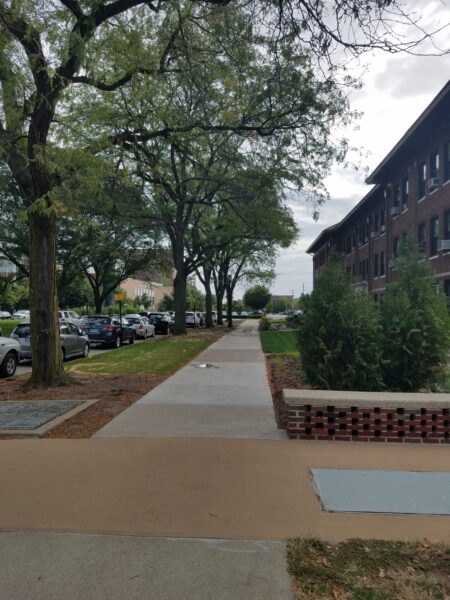
Figure 1. Honeylocust is a fast growing tree that performs well in urban plantings (Image from Purdue Landscape Report)
That said, here are a few trees to consider. I would still encourage homeowners to invest some time in researching the trees that they are considering. There are pros and cons to almost every tree, and there isn’t room in this article to fully explore all the advantages and disadvantages of each tree. Additionally, I will not be getting into detail about all the cultivars available.
Let’s start with our state tree, the Tuliptree (a.k.a Tulip-poplar or Yellow-poplar). Tuliptrees can become quite large and offer a pretty yellow fall color. They prefer deep, rich, well-drained soils.
If maples are on your mind, a couple of options would be Red maple and Freeman maple (a hybrid cross of Silver maple and Red maple). Red maple has more moderate growth. The Freeman maple is a faster grower and has stronger wood than one of its parents, the Silver maple. These maples do best in well-drained, slightly acid soils, but will tolerate a variety of soil conditions.
Northern catalpa is a fast grower, but dealing with the fruit litter, a long seed pod, may be a deterrent for some locations. It has large, heart-shaped leaves. It would grow well in moist sites.
Common hackberry is a fast grower, but it is susceptible to galls on the leaves (from a n insect), and limbs can become susceptible to wind and ice damage. It tolerates a wide variety of soil conditions. Thornless honeylocust is widely adapted to different soil types. Honeylocusts in the wild produce large thorns. The Thornless honeylocust is adapted to landscapes and allows dappled sunlight to reach turfgrass, so that it thrives more than it would under a tree that provides heavy shade.
Sweetgum is also a fast-growing shade tree with brilliant fall colors. It has a star-shaped leaf. One drawback of sweetgum is the spiny seed capsule. This fallen fruit can make walking in the yard barefoot a painful experience.
Eastern cottonwood is the tree on record for the fastest growth rate of any tree native to the U.S. However, those with cottonwoods in their yard can tell you that the cottony seed mass shed in the spring sticks everywhere. It can be a mess. Plus, cottonwood can shed limbs frequently, especially after storms. This tree is commonly found along rivers and streams, so it not surprisingly prefers moist soils.
Also found along rivers and streams, American sycamore is a fast-growing tree in some landscapes. However, it can be a messy landscape tree, shedding bark, leaves, limbs, and fruit nearly year-round. The large fallen leaves can smother grass if not mowed or raked. It is also sensitive to a spring disease called anthracnose, which can cause defoliation and twig death.
Wild black cherry may be another good choice. Although it may not be available in some nurseries, it can be grown from seed. It prefers rich, moist, well-drained soils.
A couple of faster-growing oaks to consider are Pin oak and Northern red oak. Pin oak would be better suited to slightly wetter spots, while Red oak would work on a wider variety of soils, preferring rich, moist, well-drained sites. Pin oak is susceptible to iron chlorosis (yellowing leaves) on alkaline soils.
Finally, American basswood also prefers rich, moist, well-drained soils and is somewhat shade-tolerant. This tree can grow quite tall and provide excellent shade.
In your research, find out how large the tree you will be purchasing will get. One common planting mistake is locating trees too close to structures. Consider the mature size when placing it in the landscape.
Time your spring planting near Arbor Day, the last Friday in April.
Original article posted: Fast-Growing Trees for the Landscape.
Subscribe and receive the newsletter: Purdue Landscape Report Newsletter.
Resources:
Fifty Common Trees of Indiana
An Introduction to Trees of Indiana
Native Trees of the Midwest, The Education Store
Shrubs and Woody Vines of Indiana and the Midwest, The Education Store
Tree Installation: Process and Practices, The Education Store
Wildlife Habitat Hint YouTube Playlist, Purdue Extension – FNR
Invasive Species YouTube Playlist, Purdue Extension – FNR
Report Invasive Species, Purdue Invasive Species
Find an Arborist video, Trees are Good-International Society of Arboriculture (ISA)
ID That Tree, Purdue Extension-FNR YouTube playlist
Purdue Plant and Pest Diagnostic Laboratory
Trees and Storms – The Education Store, Purdue Education’s resource center
Planting Your Tree, video, Purdue Extension
Subscribe Purdue Extension – Forestry and Natural Resources YouTube Channel
John Woodmansee, Extension Educator, Whitely County
Purdue Extension
Purdue Landscape Report: Spring is just around the corner, green spaces are beginning to wake from their winter slumber, Earth Day and Arbor Day are a little over a month away, and people are ready to get outside with planting on their minds. But before you go and get your tree(s) for planting, there is quite a lot to think about. Every tree is an investment, and if properly cared for, will outlast us and potentially future generations. So, what goes into planting trees, especially large trees?
One important note for successfully planting any tree is thinking about your goals, or what you want out of a new tree. In the case of large trees, the first thing that usually comes to mind is shade. Having a large shade tree to block the sun on your home in hot summers can significantly reduce power consumption from air conditioning. Large shade trees also give us great locations to play, picnic, or relax outside in our backyard, at local playgrounds, or parks. Given the space and care to grow, they can create wonderful local environments and beautiful aesthetics, driving down neighborhoods and city streets. The right species can benefit local wildlife with food production and habitat improvement.
When you know what you want, you can begin to assess your site to see if you have the right space for your future tree. Large trees require larger spaces. If your tree survives to a mature size, will it interfere with anything else around it? Are there utility lines above or below your planting site? What is the proximity to homes, buildings, or other structures? Will it obstruct road signs, lights, or line of sight? Will falling leaves, nuts, or fruits adversely affect anything around the tree? What is the quality of the soil: pH, well-drained, wet, clay, loam, or sand? A poorly assessed planting site could lead to a doomed planting project by placing the wrong tree in the wrong place.
Once you have your goals in mind and know what type of site you have, you can begin to consider what species you may want to plant. A couple of good resources for considering species selection in the Midwest include your local extension offices, reputable nurseries, and online resources like the Morton Arboretum. In the case of large shade trees, we all would like to have our shade now, but trees take time to reach mature heights. That being said, some species grow a little faster than others. Faster-growing trees that grow well in urban settings include:
- Tuliptree or tulip-poplar, Liriodendron tulipifera, the state tree of Indiana, can withstand varying light exposure, acidic soil that is moist to well-drained, is moderately sensitive to drought, and can reach heights up to 70-90 feet. It is susceptible to ice damage and has weaker wood than other species.
- Northern catalpa, Catalpa speciosa, is slightly smaller at about 60 feet in good conditions, thrives in full sun, and a little more alkaline soil that is moist to well-drained. Large leaves and long bean-like seed pods can be messy, and the wood and structure are on the weaker side.
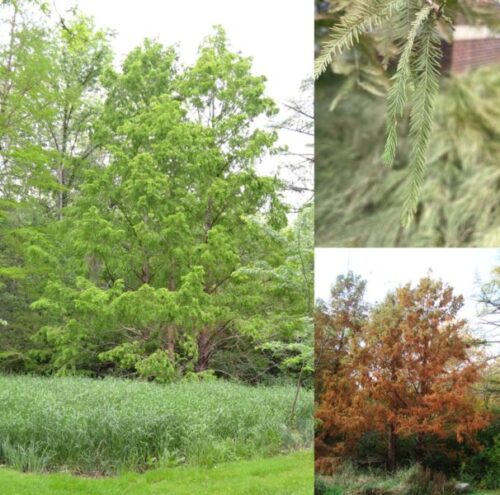
- Dawn redwood, Metasequoia glyptostroboides, is a deciduous conifer (drops its foliage every fall) that can reach heights of 70-100 feet. A non-native tree, it does very well in urban settings without competing with native trees, and can survive full sun in acidic, moist to well-drained soils. It is tolerant of some drought and flooding as well as road salt during the winter.
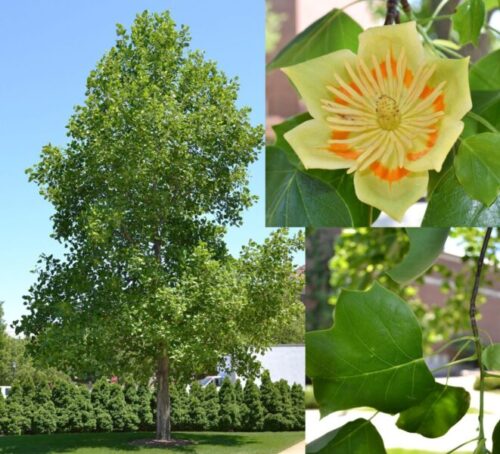
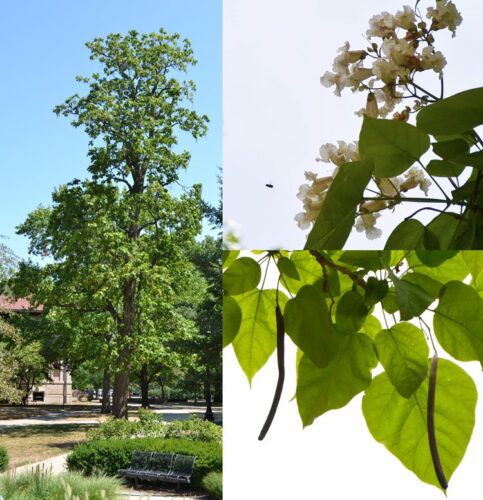
Next, we have some examples of trees slowing down to moderate growth:
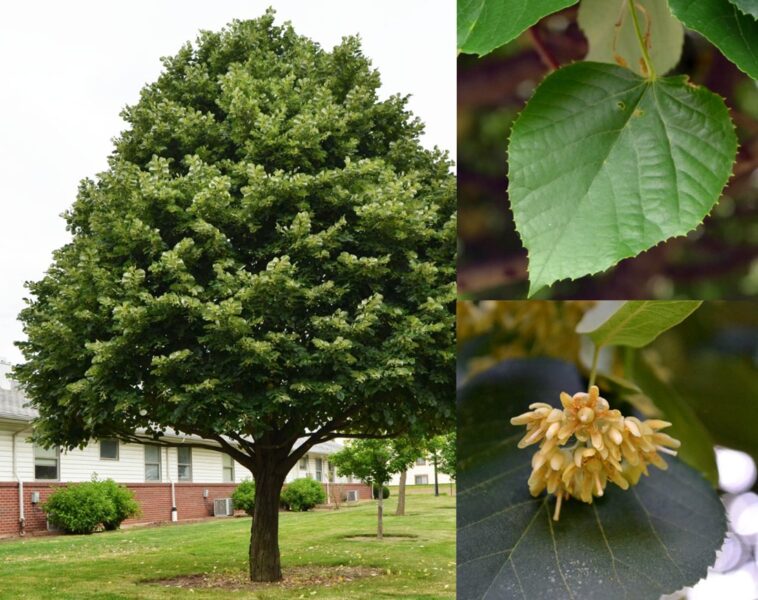
- Silver linden, Tilia tomentosa, another non-native, is a common street tree that can reach heights up to 70 feet. Surviving in full sun to shade, it does well in moist to well-drained soils and is tolerant of some drought, alkaline soils, and road salt. Leaves that are dark green on top and silvery on the bottom, and flowers that can benefit some pollinators.
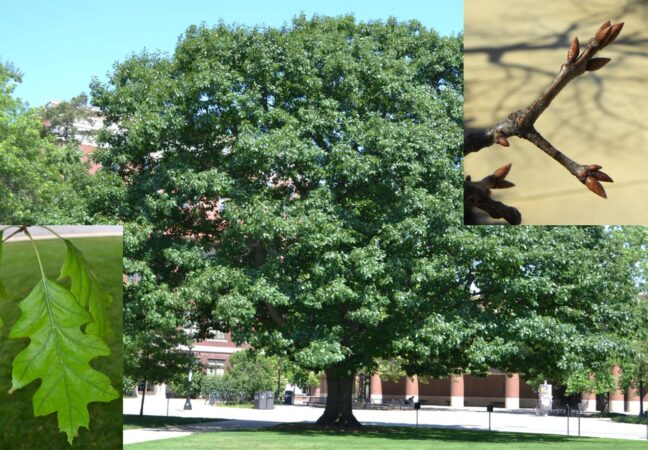
- Northern red oak, Quercus rubra, is one of my favorite native trees and reaches mature heights up to 75 feet. Preferring acidic, moist to well-drained soils, they can tolerate some drought as well as alkaline soils and clay soils. Leaves are dark green in summer and a beautiful red in the fall, with acorn production and interesting branch structure that benefits native birds and small mammals.
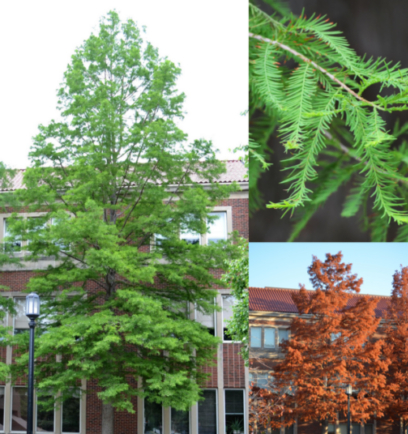
- Bald-cypress, Taxodium distichum, is similar to the dawn redwood. A deciduous conifer that loses its needles after the fall and can grow up to 70 feet. It can survive many soil types, but thrives in acidic, wet soils. In wetter sites, one thing to take into consideration is that it can send up “knee-like” roots well above the soil line to improve structural support and gas exchange. If these appear in lawn situations, they can both damage and be damaged by mowing operations. Extending mulch beds can reduce these negative interactions.
These suggestions are a small sample of large shade trees that can grow well in different urban settings. Remember to think of what the overall goal is for your planting and to assess your site to make informed species choices. With proper forethought, you can make a resilient landscape that your trees will be able to survive in for years and years. If you still have questions, you can contact your local extension office or find an ISA Certified Arborist at Find an ISA-Credentialed Arborist.
Subscribe and receive the newsletter: Purdue Landscape Report Newsletter.
Resources:
Re-mulch Your Trees, Purdue Landscape Report
Find an Arborist video, Trees are Good-International Society of Arboriculture (ISA)
Trees and Storms: Understanding Damage, Risk and Recovery – Got Nature? Blog, Purdue Extension – FNR
Why Is My Tree Dying? – Got Nature? Blog, Purdue Extension – Forestry and Natural Resources
Tree Risk Management – The Education Store
Tree Pruning Essentials, Publication & Video, The Education Store
Trees and Electric Lines – The Education Store
Southwest Damage, Scalding or Frost Cracking, Got Nature? Blog, Purdue Extension – Forestry and Natural Resources (FNR)
Tree Defect Identification, The Education Store
Planting Your Tree, video, Purdue Extension
Tree Risk Management – Got Nature? Blog, Purdue Extension – FNR
Tree Wound and Healing, Got Nature? Blog, Purdue Extension – FNR
Subscribe – Purdue Extension-FNR YouTube Channel
Ben McCallister, Urban Forestry Specialist
Purdue Forestry & Natural Resources
Purdue Landscape Report: We are often the bearers of bad news when a new exotic insect species is discovered in Indiana. This time, however, we have some good news to share. Agrilus smaragdifrons, a beetle that feeds exclusively on Tree-of-Heaven (Ailanthus altissima), was detected in Indiana last year in Allen County.
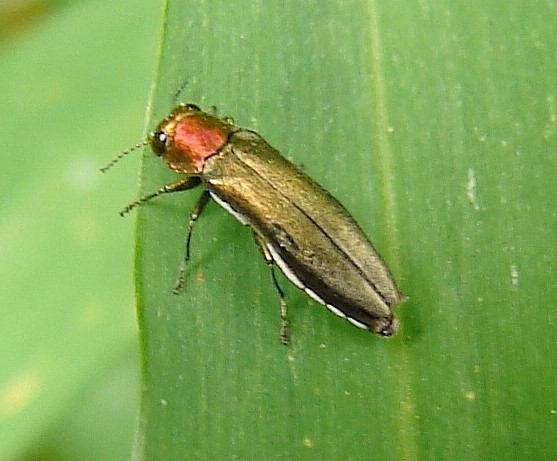
Figure 1. Agrilus smaragdifrons adult (Photograph by Dave Eib, iNaturalist)
You might notice that this beetle belongs to the same genus as the infamous Emerald Ash Borer (Agrilus planipennis) (EAB). Indeed, the two species look quite similar, although there are subtle differences in their striking metallic coloration. While Emerald Ash Borer is a vibrant green from head to wing, A. smaragdifrons has a golden-red head and thorax with green to black-green wings (Fig. 1).
This beetle has been present in the United States for several years, with the earliest record dating back to 2011 from a photograph taken in New Jersey that was uploaded to BugGuide.net. Subsequent detections occurred in several neighboring eastern states, often as bycatch during Emerald Ash Borer surveys (Hoebeke et al. 2017).
The life cycle of A. smaragdifrons also shares many similarities with Emerald Ash Borer. Although its life cycle under North American conditions has not yet been formally described, Hoebeke et al. (2017) summarize the beetle’s biology in its native Asian range based on Chinese literature (Xu and Yang 2007).
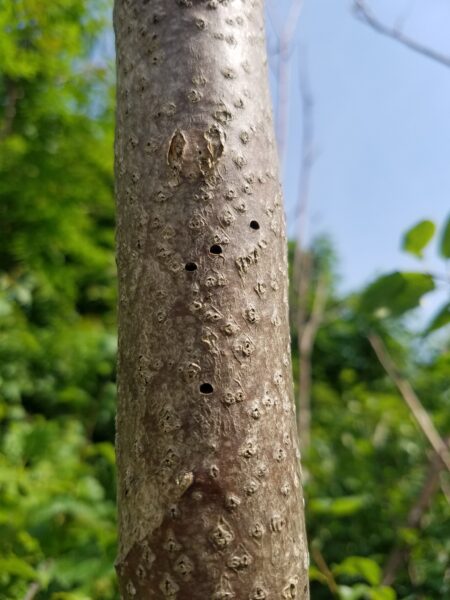
Figure 2. Agrilus smaragdifrons exit holes in Ailanthus altissima (Photograph by Patrick Perish, iNaturalist)
Females lay eggs in bark crevices during mid- to late summer, and newly hatched larvae burrow into the tree. The larvae overwinter within galleries beneath the bark and resume feeding the following spring. Pupation occurs in early summer, around June, and adult mating flights take place from June through July. When adults emerge, they leave characteristic “D”-shaped exit holes in the bark (Fig. 2; Photograph by Patrick Perish, iNaturalist).
It is not yet known whether A. smaragdifrons will function as a biological control agent for Tree-of-Heaven. Additional research and field observations are needed to determine its impact on its host. However, reports from Beijing Forestry University indicate that attacks by A. smaragdifrons can lead to decline and eventual death of Tree-of-Heaven (Hoebeke et al. 2017).
Scientists with the Indiana Department of Natural Resources and Purdue University are interested in tracking the distribution of A. smaragdifrons across the state. The next time you encounter a Tree-of-Heaven, keep an eye out for the distinctive D-shaped exit holes. In late summer, you may also observe adults feeding on the leaves.
See something? Report it Identifying and Reporting Pests at just as you would any other invasive species!
Original article posted: Beetle that attacks Tree-of-Heaven found in Indiana.
Subscribe and receive the newsletter: Purdue Landscape Report Newsletter.
Resources:
Ask the Expert: Pests in Your Woods, Purdue Extension – Forestry & Natural Resources (FNR) YouTube Channel
Report Spotted Lanternfly, Purdue Landscape Report
Invasive Species Playlist, Purdue Extension – FNR YouTube Channel
Indiana Department of Natural Resources: Invasive Species
Indiana Invasive Species Council
Cooperative Invasive Species Management Area (CISMA)
Report Invasive, Purdue Extension
What are invasive species and why should I care?, Got Nature? Blog, Purdue Extension – FNR
Purdue Plant Doctor, Purdue Extension
An Introduction to Trees of Indiana, The Education Store, Purdue Extension’s resource center
Fifty Common Trees of Indiana, Forestry & Natural Resources
ID That Tree, Playlist, Purdue Extension – FNR YouTube Channel
A Woodland Management Moment, Playlist, Purdue Extension – FNR YouTube Channel
Woodland Stewardship for Landowners, Playlist, Purdue Extension – FNR YouTube Channel
Native Trees of the Midwest, Purdue University Press
Forest Improvement Handbook, The Education Store
Alicia Kelley, Cooperative Agricultural Pest Survey (CAPS) Coordinator
Purdue Extension – Entomology
MyDNR, Indiana’s Outdoor Newsletter: The Division of Law Enforcement is looking for highly motivated, outdoor-centered individuals to fill Conservation Officer positions across the state.

DNR’s Law Enforcment officers in training. Photo by: Indiana Department of Natural Resources
Anyone interested should first read “Become a Conservation Officer” at on.IN.gov/ico-hiring and complete the pre-screening test under the “Apply” link. Successful completion of the pre-screening test will automatically enter you into the hiring process.
To be qualified to pass the pre-screening test, you must be a United States citizen and be 21 years old by Oct. 30. You also must be able to pass the new Physical Agility Test, which is the new fitness standard for all Law Enforcement in the state starting Aug. 1. The website listed above also contains a video demonstrating the Physical Agility Test, course diagram and testing protocols.
Conservation officers comprise Indiana’s oldest state law enforcement agency. ICOs are fully recognized Indiana police officers who enforce and uphold all DNR rules and regulations as well as all other Indiana state laws. ICOs spend most of their time on the job enforcing fishing and hunting regulations, conducting marine boat patrol on Indiana’s waterways, and patrolling DNR properties to keep them safe and family friendly.
In addition to traditional law enforcement work, ICOs also engage in specialty areas, including scuba, K-9, search and rescue, swift water rescue and many more.
For more information, visit the DNR hiring for Indiana Conservation Officer positions webpage.
More Resources:
Hunting Guide, Indiana Department of Natural Resources (IN DNR)
MyDNR Newsletter, IN DNR
Wild Bulletin Newsletter, IN DNR
Fishing Guide, IN DNR
Creating a Wildlife Habitat Management Plan for Landowners, The Education Store, Purdue Extension’s resource center
A Template for Your Wildlife Habitat Management Plan, The Education Store
Wildlife Habitat Hint: Trail Camera Tips and Tricks, Got Nature? Blog
Forest Improvement Handbook, The Education Store
Designing Hardwood Tree Plantings for Wildlife – The Education Store
ID That Tree – YouTube Playlist
How to Score Your White-tailed Deer, video, The Education Store, Purdue Extension Resource Center
White-Tailed Deer Post Harvest Collection, video, The Education Store
Age Determination in White-tailed Deer, video, The Education Store
How to Build a Plastic Mesh Deer Exclusion Fence, The Education Store
Forest Management for Reptiles and Amphibians: A Technical Guide for the Midwest, The Education Store
Ask the Expert: Hardwood Ecosystem Experiment – Birds and Salamander Research, Purdue Extension – FNR
A Template for Your Wildlife Habitat Management Plan, The Education Store
Managing Your Woods for White-Tailed Deer, The Education Store
Indiana Department of Natural Resources (IN DNR)
Join Purdue Extension forester Lenny Farlee in this episode of “A Woodland Management Moment” as he discusses the benefits of using windbreak plantings around hardwood tree plantations. Using a black walnut planting as an example, this episode introduces how windbreaks can influence early growth, protection and overall tree form. The video also connects windbreaks to broader planting strategies and long-term management objectives. Watch to learn how thoughtful plantation design can support both tree performance and woodland management goals.
A good resource to learn more is the Walnut Council website. Founded in 1970, the Walnut Council is an international association representing nearly 700 woodland owners, foresters, forest scientists, and wood-producing industry representatives in 45 states and three foreign countries. The purpose is to assist in the technical transfer of forest research to field applications, help build and maintain better markets for wood products and nut crops, and to promote sustainable forest management, conservation, reforestation, and utilization of American black walnut (Juglans nigra) and other high quality fine hardwoods.
If you have any questions regarding trees, forests, wildlife, wood products, or other natural resource topics, feel free to contact us by using our Ask an Expert web page.
Resources:
A Woodland Management Moment, Playlist, Purdue Extension – Forestry and Natural Resources (FNR) YouTube Channel
Explore the Rich World of Oaks with Purdue FNR Extension & Partners, Purdue Extension – FNR Got Nature? Blog
Conservation Tree Planting: Steps to Success, Purdue Extension – FNR YouTube Channel
It’s Not Too Late to Order Trees for Spring Planting, Purdue Extension – FNR Got Nature? Blog
Shrubs and Woody Vines of Indiana and the Midwest, Purdue University Press
Native Trees of the Midwest, Purdue University Press
ID That Tree, Playlist, Purdue Extension – FNR YouTube Channel
Investing in Indiana Woodlands, The Education Store
Woodland Stewardship for Landowners Video Series, Playlist, Indiana Department of Natural Resources YouTube Channel
District Forester, Indiana DNR Division of Forestry, for over 10 acres of woodlands
Professional Forester, Indiana Forestry & Woodland Owners Association (IFWOA)
Forest Improvement Handbook, The Education Store
Purdue Arboretum Explorer
Lenny Farlee, Extension Forester
Hardwood Tree Improvement and Regeneration Center
Purdue Department of Forestry & Natural Resources
Indiana joined 22 other states in 2025 when it launched its state-level Certified Prescribed Burn Manager (CPBM) Program. This program resulted from HB-1557, which went into effect on July 1, 2025. For more information about the new prescribed fire law in Indiana and what it means for burners, check out the Indiana Prescribed Burn Law Factsheet.
This article will walk through the steps to complete all stages of the program. The Indiana DNR CPBM Policy can be viewed by visiting the Indiana Prescribed Fire Council website.
The CPBM program consists of three parts:
- Online Training
- In-Person Training
- Prescribed Burn Experience
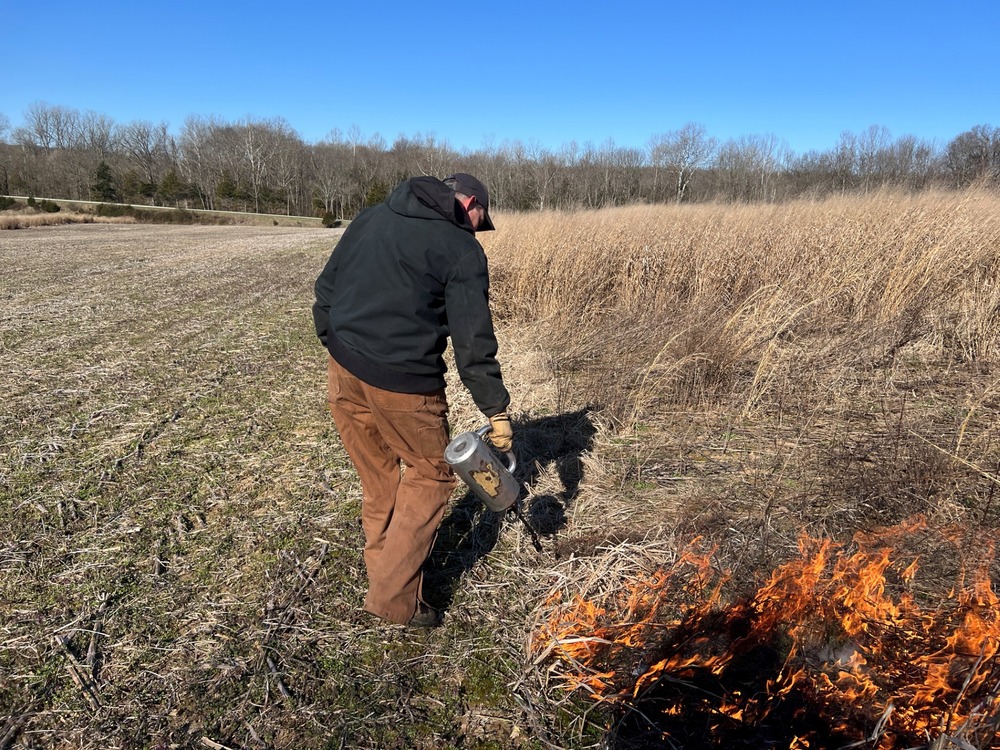 Indiana CPBM Requirements At-a-glance
- Online Training
- S-130
- S-190
- L-180
- IS-100
- In-Person Training
- S-130 Field Day (no pack test requirement)
- Indiana DNR Prescribed Fire for Managers
- Burn Experience (Minimum of 5 total burns for experience)
- Participate in 5 prescribed fires
- At least 3 in woodland at least 1 in grassland
- Ben an Apprentice Burn Manager for 2 burns
- 1 woodland and 1 grassland burn
- Paperwork and Documentation
- IN CPBM Application
- IN CPBM Experience Log
- IN CPBM Task Book
- Burn Plans for Apprentice Burns

Online Training Requirements
The online training required for the CPBM program includes many of the same courses as are necessary for Basic Wildland Firefighting.
- S-130 Firefighter Training
- S-190 Introduction to Wildland Fire Behavior
- L-180 Human Factors on the Fireline I
- S-100 Introduction to the Incident Command System
These are self-paced, free online courses available through FEMA, the National Fire Academy (NFA), and the Wildland Fire Learning Portal.
- FEMA – IS-100
- National Fire Academy Registration Page – S-130, S-190, L-180
- Wildland Fire Learning Portal – S-130, S-190, L-180
*Before taking any courses through FEMA or registering for the NFA, you need to obtain a FEMA SID#. You can do that at FEMA: Student Identification System.

In-Person Training Requirements
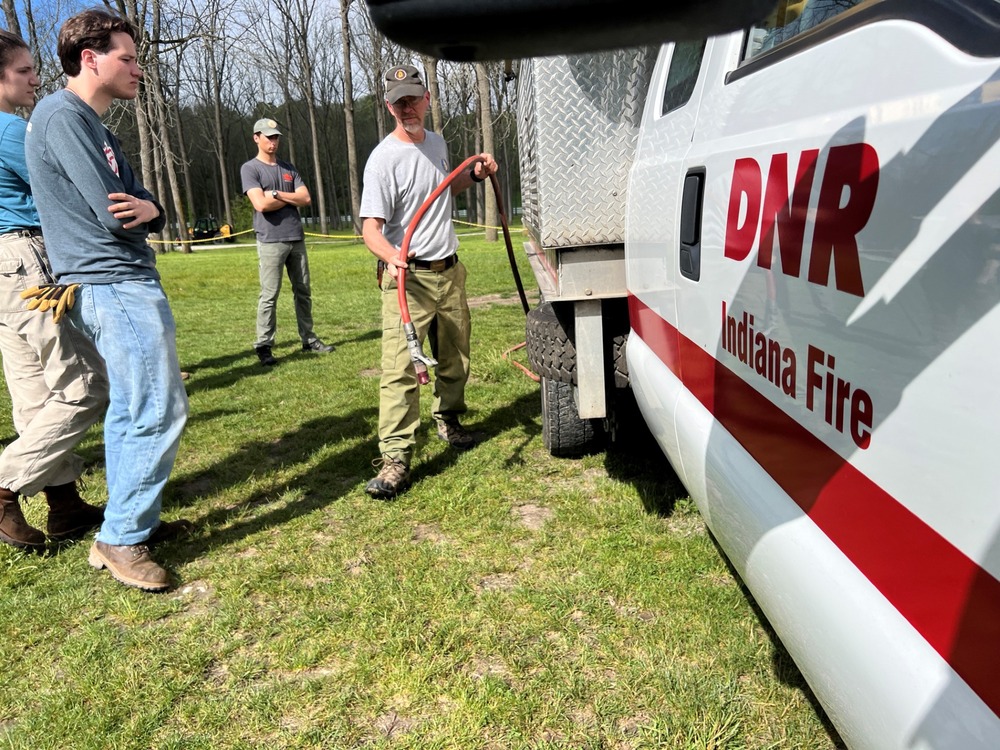 The two requirements for in-person training are:
- S-130 Field Day (1-day; no pack test required)
- Indiana DNR Prescribed Fire for Managers (2-day)
How to complete the in-person training?
In-person S-130 Field Days and Indiana DNR Prescribed Fire for Managers courses are offered 1-2 times per year, often offered in the spring (Feb-Mar) and in December.
*To take the S-130 Field Day, you need to complete the required online training before the field day. To take the Prescribed Fire for Managers Course, you need to take the S-130 Field Day.
You can find information about upcoming trainings by visiting the Indiana Prescribed Fire Council (INPFC) website and the Indiana DNR Fire Headquarters Training Portal.

Prescribed Burn Experience
To be an Indiana CPBM, you need the following prescribed fire experience:
- Participate in 5 prescribed fires across the 2 major fuel model groups in Indiana (grass and hardwood timber litter)
- At least 3 of the burns shall be in the hardwood timber litter fuel model
- Serve as an Apprentice Burn Manager on 2 of the 5 prescribed burns – 1 from each of the two fuel model groups (grass and timber litter)
Serving as an “Apprentice Burn Manager” means you need to lead burns under the guidance of an existing CPBM, RxB1, or RxB2 (RxB1 & RxB2 are Burn Boss qualifications through the National Wildfire Coordinating Group) and complete a Certified Prescribed Burn Manager Task Book related to preparing for and managing a prescribed burn.
How do I receive prescribed fire experience?
To get experience as a crew member on prescribed fires, here are a few steps:
- Meet Common Training Requirements: Many organizations (but not all) require burn crews to have basic wildland fire training courses, many of which are needed for the CPBM program. Having these trainings will open the door for more opportunities.
- Basic Wildland Firefighter (FFT2) Requirements (bolded are required for CPBM)
- S-130 (Online and Field Day)
- S-190
- L-180
- IS-100
- IS-700B
- Arduous Work Capacity Test (Pack Test)
- Basic Wildland Firefighter (FFT2) Requirements (bolded are required for CPBM)
- Attend a Learn-N-Burn: these half- or full-day events can help you get your feet wet with prescribed fire and are offered by groups like the Indiana DNR Division of Fish and Wildlife and Purdue Extension. Generally, prior experience or training is not required for these events.
- Upcoming Learn-N-Burns can be found under Events on the INPFC events website.
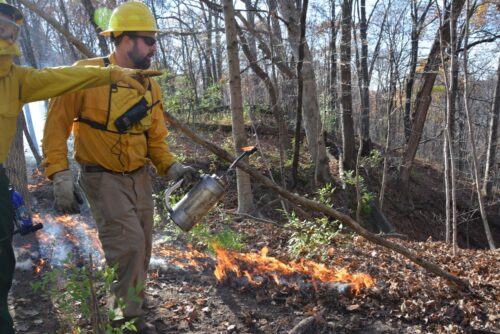 Find Volunteer Opportunities: Many organizations accept volunteers for prescribed fire, but may require Basic Wildland Firefighter Training (see above).
- Volunteer on burns with The Nature Conservancy
- To be a TNC fire volunteer, you need to be a FFT2 or complete the Prescribed Fire Crew Member (RxCM) standard, which is similar to FFT2 standards but does not require IS-700 and requires a moderate pack test. View the TNC Fire Manual for more information.
- To learn more about helping TNC on prescribed burns, contact Stuart Orr, Indiana Fire Program Manager at sorr@tnc.org.
- Volunteer on burns with The Nature Conservancy
- Volunteer with your Local Land Trust
- Indiana is home to over 20 land trusts, many of which utilize prescribed fire.
- Each land trust may have different requirements to volunteer for prescribed fire.
- Visit the Discover Your Land Trust page on the Indiana Land Protection Alliance website to find a land trust in your area.
- Find landowners in your area who are using prescribed fire and volunteer to help
- Several landowners across Indiana use prescribed fire and may be seeking help.
- You may be able to find landowners who burn through existing conservation networks, such as local NGOs (NWTF, NDA, PF, or QF Chapters) or landowner groups such as the Indiana Forest and Woodland Owners Association.
- Join or start a Prescribed Burn Association, which is a collection of landowners who help each other burn by pooling resources, equipment, knowledge, and crew through a “Neighbor Helping Neighbor” model.
- Several landowners across Indiana use prescribed fire and may be seeking help.
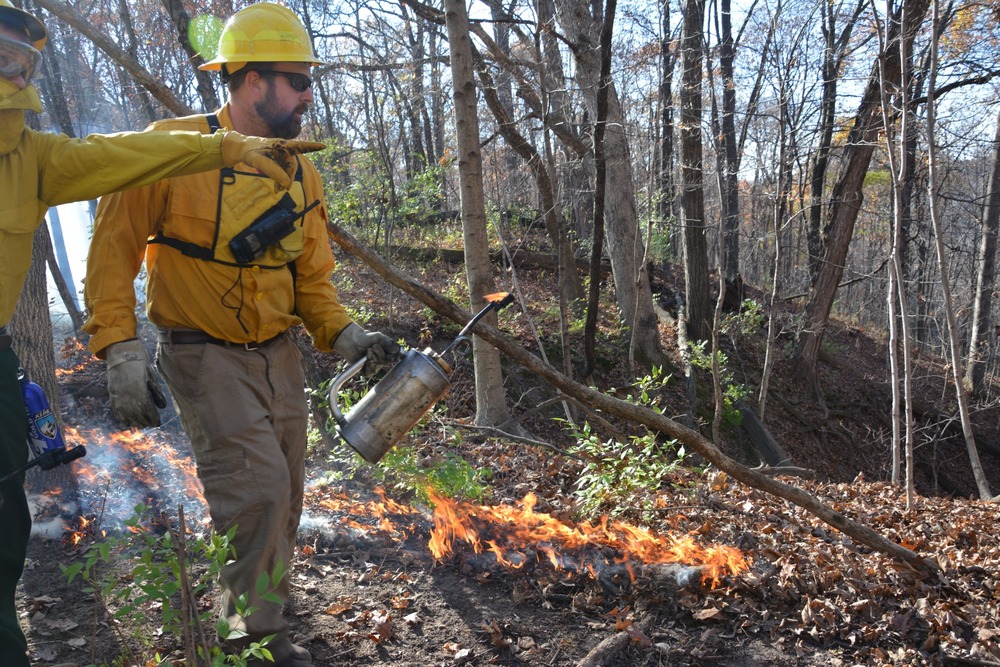
How do I receive apprentice burn manager fire experience?
The first step in finding opportunities is building relationships with current prescribed fire practitioners. By volunteering as a crew member, you start to learn about prescribed fire and build relationships with existing burn managers. This may lead to opportunities to apprentice in the future.
The Indiana Prescribed Fire Council is piloting a Prescribed Fire Opportunity Sharing Network to help connect those seeking burn experience with experienced burners. You can use the links below to sign up for this network as either a Mentor (have experience) or Mentee/Apprentice (need experience). Register on the Mentor sign-up or the Mentee sign-up.
Resources:
FNR Ask The Expert: Prescribed Fire, Purdue Extension Forestry & Natural Resources
100 Year Project Shares New Video, Prescribed Fire, Purdue Extension – FNR Got Nature? Blog
Brooke’s Prescribed Fire Videos Utilized in Global USFS Efforts, Purdue Extension – FNR Got Nature? Blog
Prescribed fire: 6 things to consider before you ignite, Got Nature? Blog, Purdue Extension – 4Forestry and Natural Resources
Wildlife Habitat Hint: Prescribed Fire Techniques – Backing Fire, Video, Purdue Extension – Forestry and Natural Resources YouTube channel
Wildlife Habitat Hint: Prescribed Fire Techniques – Flanking Fire, Purdue Extension – FNR Video
Wildlife Habitat Hint: Prescribed Fire Techniques – Strip Head Fire, Purdue Extension – FNR Video
Wildlife Habitat Hints: Prescribed Fire Techniques – Ring Fire, Purdue Extension – FNR Video
Wildlife Habitat Hints: Prescribed Fire Techniques – Point Source Fire, Purdue Extension – FNR Video
Wildlife Habitat Hint: Late Growing Season Prescribed Fire, Purdue Extension – FNR Video
FNR Ask The Expert: Prescribed Fire with Jarred Brooke and Mike Saunders, Purdue Extension – FNR Video
Indiana Prescribed Fire Council
Renovating Native Warm-Season Grass Stands for Wildlife: A Land Manager’s Guide, The Education Store, Purdue Extension resource center
Jarred Brooke, Wildlife Extension Specialist
Purdue Department of Forestry and Natural Resources
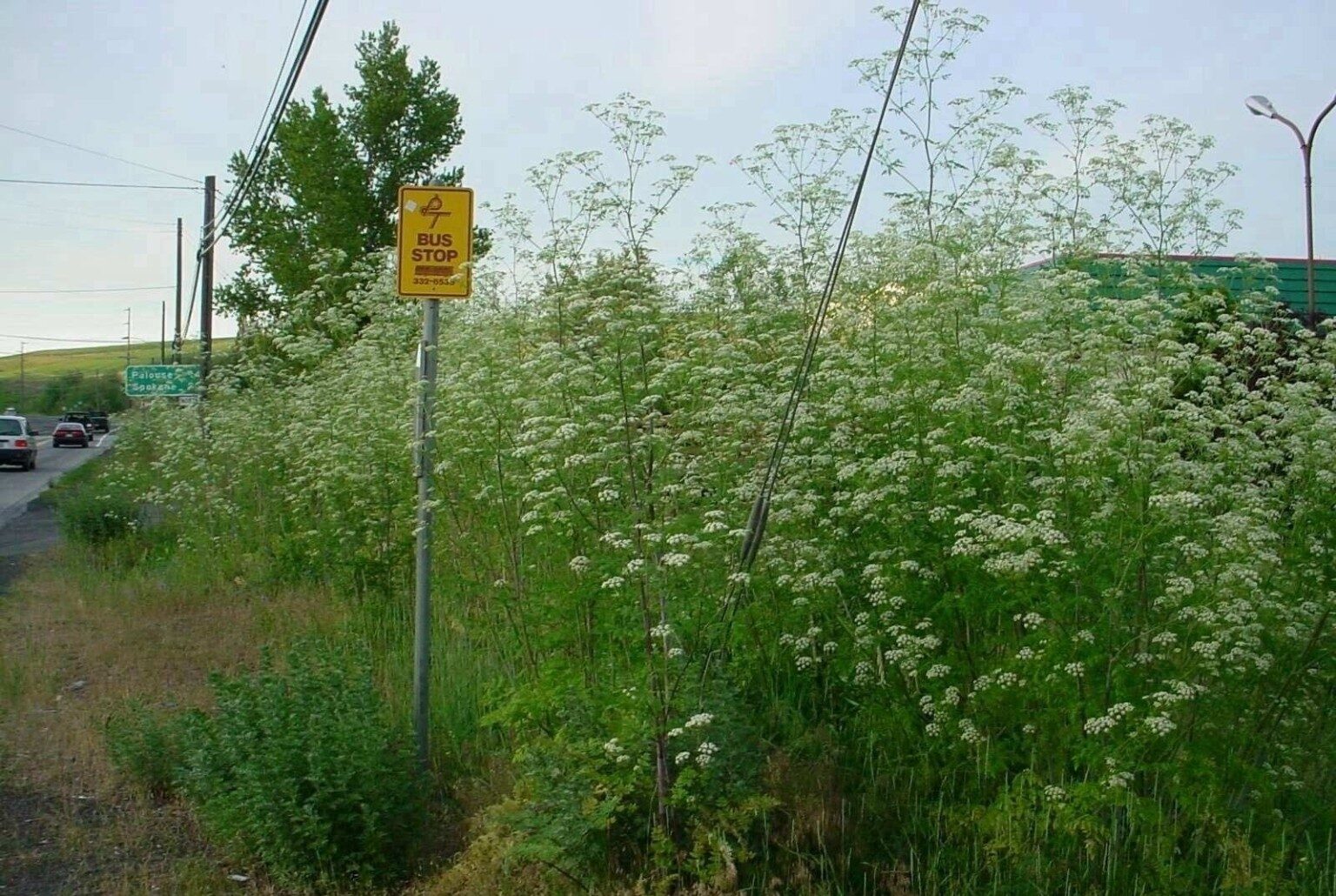
Photo by: Richard Old, XID Services, Inc., Bugwood.org.
Made infamous through the trial of Socrates, Shakespeare’s Hamlet and Macbeth, and several other works of classic literature, poison hemlock is an extremely toxic plant that will pose a risk this summer and should be handled with caution.
Poison hemlock is native to Europe. It is a biennial plant, meaning that it has a two-year lifespan. Last summer, it went through vegetative growth and largely stayed out of sight as a basal rosette. This summer, a long stem (up to 3 to 10 feet tall) will bolt and produce small white clusters of flowers. Poison hemlock is a member of the parsley family and can sometimes be confused with wild carrot. However, its distinguishing feature is its hairless hollow stalks with purple blotches.
The biggest risk with poison hemlock is ingestion. Lethal doses are fairly small, so it is important for animal owners or parents of young children to identify it in their area and remove it if possible. The toxins can also be absorbed through the skin and lungs, so be sure to wear gloves and a mask when handling these plants.
Symptoms of hemlock poisoning include dilation of the pupils, weakening or slowing pulse, blue coloration around the mouth and eventually paralysis of the central nervous system and muscles leading to death. Quick treatment can reverse the effects, so act quickly.
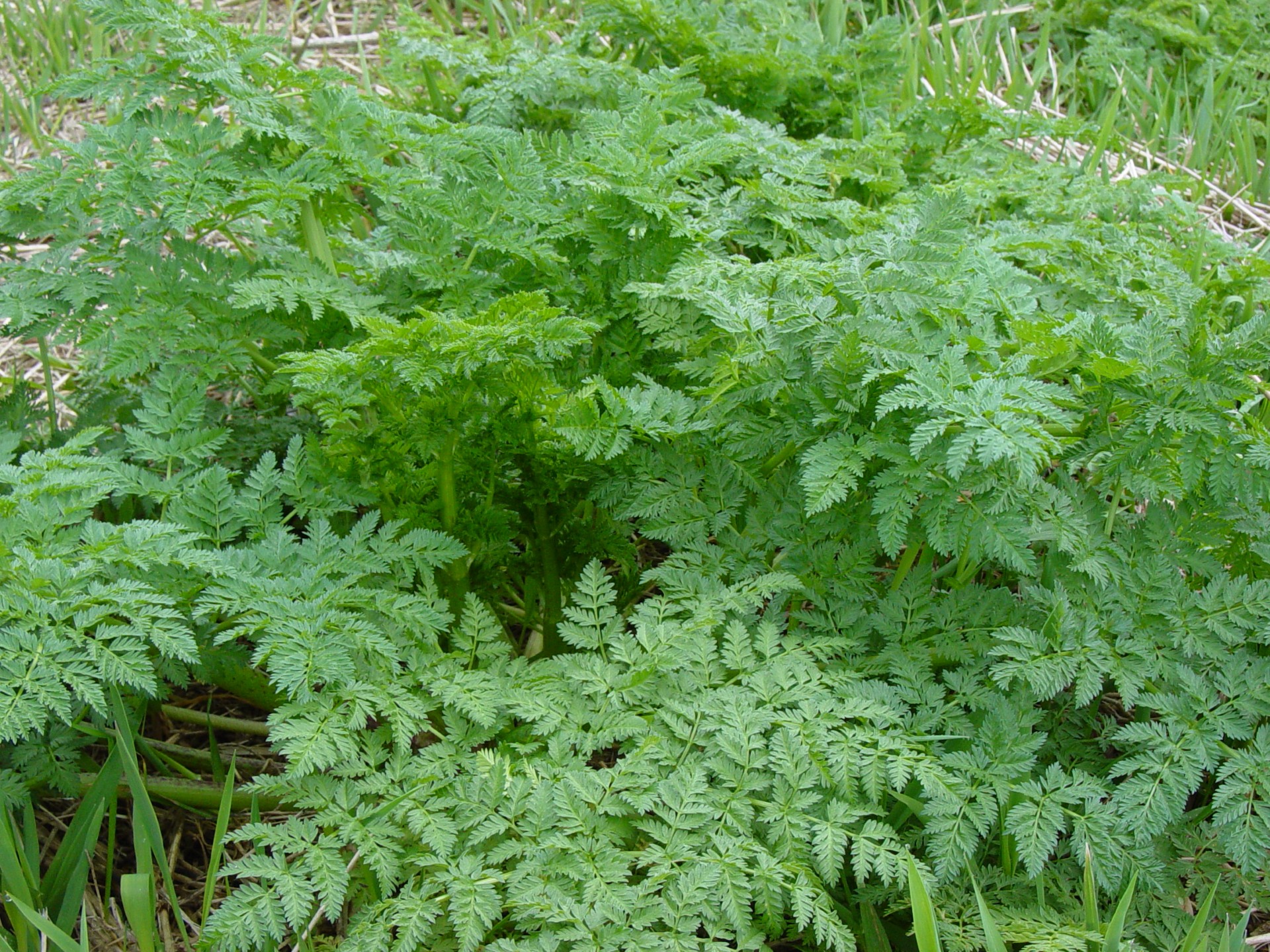 It is considered highly invasive and is listed on both Indiana’s noxious weed list and the terrestrial invasive plant rule list, Indiana General Assembly IC 14-24-12, IC 15-15, IC 15-16-7 to 10, Indiana Department of Natural Resources, Terrestrial Invasive Species – Plants. Thus, its occurrence may have legal implications for landowners. Some Indiana counties aggressively monitor and spray poison hemlock, particularly along county roads. It primarily invades disturbed and early succession sites such as roadsides, stream and ditch banks, vacant lots, and field borders. However, it can spread into pastures, hay fields, and other grassland habitats.
Its sap contains alkaloid toxins which are highly toxic to humans and animals. Although humans would not normally purposely or accidentally ingest poison hemlock (Socrates was a notable exception), care should be taken when mowing or cutting to avoid dermal and respiratory inhalation exposure. Livestock farmers should control poison hemlock in pastures, feed lots and holding pens and ensure it is not baled in hay.
Poison hemlock spreads via seed, so effective management must prevent new seed production, prevent spread of existing seed, and exhaust the existing seed supply in the soil seed bank.
Poison hemlock seed is often inadvertently spread by mowing, road maintenance or agricultural equipment. Mow infested areas along roadsides, ditch banks and field edges before seed develops. A single mowing may delay but not stop poison hemlock from growing another shoot and ultimately flowering and producing seed. Multiple mowings are likely required to prevent new seed production.
 Herbicide control should focus on the first-year basal rosette. Herbicide control can still be achieved in the early stages of flower stem development. However, as the flower stem grows so grows the amount of herbicide required to provide full coverage and thus full control. A 2% solution of glyphosate (41% active ingredient) in water with a non-ionic surfactant will provide good control of poison hemlock basal rosettes. If the poison hemlock is growing among desirable grasses, broadleaf-specific herbicides such as triclopyr and 2,4-D are also very effective on poison hemlock and will not harm the grasses. AS always, read the pesticide label for proper, safe handling and use.
For more information see Purdue Cooperative Extension Invasive Plant Fact Sheet Series FNR-437-W, Poison Hemlock. For further guidance on poison hemlock control, contact your county Purdue Cooperative Extension office.
Resources:
Noxious and Invasive Weeds and the Weed Laws in Indiana, Purdue Extension – Botany & Plant Pathology
Be Careful Around Highly Toxic Poison Hemlock Plant This Summer, Purdue Extension – Forestry and Natural Resources (FNR)
Poison Hemlock, Pest & Crop Newsletter, Purdue Extension – Entomology
Pest & Crop Newsletter, Purdue Extension
Recognizing and Managing Poison Hemlock, Purdue Landscape Report
Hemlock Woolly Adelgid: Distribution Update, Purdue Landscape Report
Poison Hemlock (Conium maculatum), United States Department of Agriculture (USDA)
Invasive plants: impact on environment and people, The Education Store, Purdue Extension’s resource center
Woodland Management Moment: Invasive Species Control Process, Video, Purdue Extension – Forestry and Natural Resources (FNR) YouTube Channel
What are Invasive Species and Why Should I Care?, Purdue Extension – Forestry and Natural Resources (FNR)
Indiana Invasive Species Council
Report INvasive, Purdue Extension & Indiana Invasive Species Council
Purdue Pest and Plant Diagnostic Lab
Ron Rathfon, Regional Extension Forester, Southern Indiana Purdue Agriculture Center (SIPAC)
Purdue Forestry and Natural Resources

Recent Posts
- Spotted Lanternfly Feeds on Over 70 Plus Plant Species
Posted: May 20, 2026 in Alert, Forestry, Forests and Street Trees, Gardening, Invasive Insects, Urban Forestry, Wildlife - Painted Hickory Borer, Purdue Landscape Report
Posted: May 14, 2026 in Forestry, Invasive Insects, Wildlife - Saving Giants of the Blue River: Purdue Team Earns Statewide Recognition
Posted: in Aquaculture/Fish, Aquatic/Aquaculture Resources, Wildlife - Restoring Roots to Save the Salamanders, USDA – Natural Resources Conservation Service
Posted: May 6, 2026 in Aquaculture/Fish, Forestry, Wildlife - Spring Storms Are Coming: How to Reduce Tree Damage and Risk
Posted: May 1, 2026 in How To, Urban Forestry, Wildlife, Woodlands - Cryptocline Leaf Spot (Anthracnose) of Elm, Purdue Landscape Report
Posted: April 30, 2026 in Disease, Forestry, Woodlands - Mechanical Damage to Trees: Mowing and Maintenance Equipment
Posted: April 24, 2026 in Forestry, Forests and Street Trees, Urban Forestry - A Woodland Management Moment: Growing Quality Black Walnut in Openings
Posted: April 20, 2026 in Urban Forestry, Woodland Management Moment, Woodlands - Spring Into Bloom With ID That Tree
Posted: in Forests and Street Trees, Urban Forestry, Woodlands - Question: Have Whippoorwill Birds Declined in Numbers?
Posted: in Ask the Expert, Wildlife
Archives
Categories
- Alert
- Aquaculture/Fish
- Aquatic/Aquaculture Resources
- Ask the Expert
- Christmas Trees
- Community Development
- Disease
- Drought
- Forestry
- Forests and Street Trees
- Gardening
- Got Nature for Kids
- Great Lakes
- How To
- Invasive Animal Species
- Invasive Insects
- Invasive Plant Species
- Land Use
- Natural Resource Planning
- Nature of Teaching
- Plants
- Podcasts
- Ponds
- Publication
- Safety
- Spiders
- Timber Marketing
- Urban Forestry
- Webinar
- Wildlife
- Wood Products/Manufacturing
- Woodland Management Moment
- Woodlands