 Purdue University - Extension - Forestry and Natural Resources
Got Nature? Blog
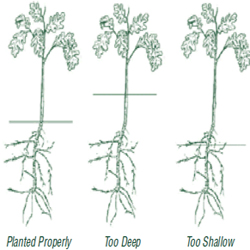 Indiana landowners have access to high quality, inexpensive trees and shrubs for conservation plantings through the DNR Division of Forestry nursery program. Order forms are now available on the Division of Forestry web page.
You may also be able to access hard-copy order forms at your local Purdue Cooperative Extension Service or Soil and Water Conservation District office. Submit your order form to the state nursery system prior to October 2, 2017 for the best chance to get the seedlings you need. The nursery will start processing orders on October 3rd and some species tend to sell out quickly. Orders will be accepted from October 3, 2017 to May 1, 2018. Seedlings will be available for pickup at the nursery or delivery for an additional fee in the Spring of 2018.
Seedlings from the DNR Division of Forestry Nursery program are for conservation plantings in Indiana. Private nurseries are also available to provide seedlings for conservation and other types of plantings, like Christmas trees or landscaping. For a listing of private nurseries and the products they offer, visit the National Nursery and Seed Directory.
Resources:
Instructions for Ordering Tree Seedlings – Indiana DNR Division of Forestry
National Nursery and Seed Directory – USDA Forest Service
Web Soil Survey – USDA Natural Resources Conservation Service
Importance of Hardwood Tree Planting – The Education Store, Purdue Extension Resource Center
Designing Hardwood Tree Plantings for Wildlife – The Education Store
Got Nature? – Purdue Forestry & Natural Resources
Lenny D Farlee, Sustaining Hardwood Extension Specialist
Purdue University Department of Forestry and Natural Resources
 Trees establish themselves quite well in normal situations. However, in special situations, staking, guying, or a similar system may be needed to hold trees upright until adequate root growth anchors them firmly in the soil. The Publication Tree Support Systems answers common questions about post-planting tree care. It describes when to stake trees, how to stake and guy trees, and proper methods of trunk protection.
Resources:
Tree Planting Part 1: Choosing a Tree, The Education Store, Purdue Extension
Tree Pruning: What Do Trees Think?, The Education Store, Purdue Extension
Forest Improvement Handbook, The Education Store, Purdue Extension
Got Nature?, Purdue Extension, Forestry and Natural Resources
Lindsey Purcell, Urban Forestry Specialist
Purdue University, Department of Forestry and Natural Resources
A drone can be defined in a myriad of ways. A constant humming sound can be called a drone. Your professor going over a lecture you find boring can be described as droning on and on about a particular topic. That friend of yours with the uncanny ability to come by your place to eat right at dinnertime but never offers to pay for the food is also a drone. In nature, male bees are also known as drones. These insects, the products of unfertilized eggs have an easy but vital role within the hive; mate with the queen. In technology, a drone is a remote-controlled aircraft either publicly available (those who fly them are termed ‘enthusiasts’) or held by the military that that has dramatically increased in popularity over the last decade. What happens when drone bees and remote-controlled drones meet?
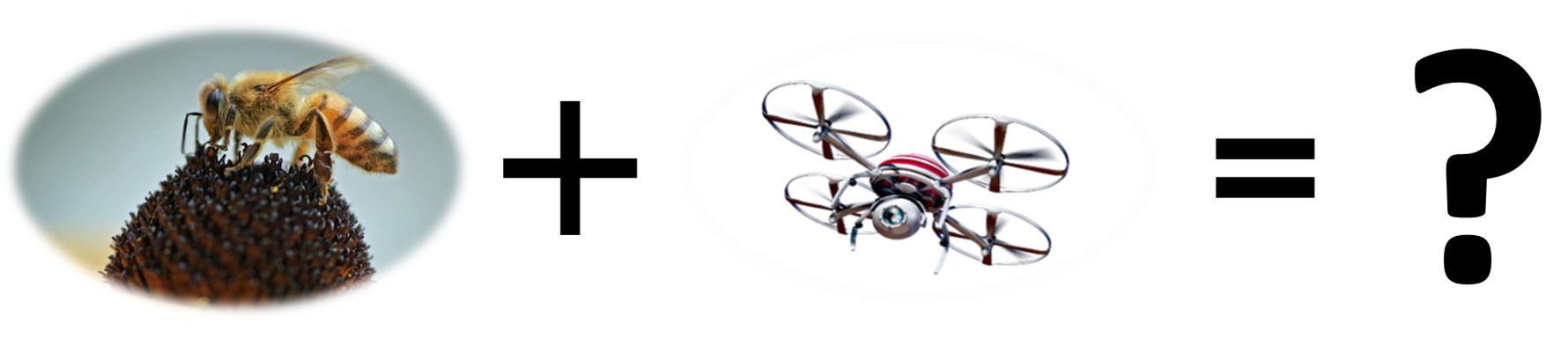
Researchers in Japan have come up with an inventive pollination plan. As bees continue to die out, insect sized drones are being used to pollinate lilies. The miniature robots are covered in horse hair and a sticky gel that allows pollen picked up from one plant to be deposited on another. By no means a solution to the global decline in insect pollinators, these robots are working to help alleviate the demands placed on bee colonies to ensure adequate pollination of agricultural crops.
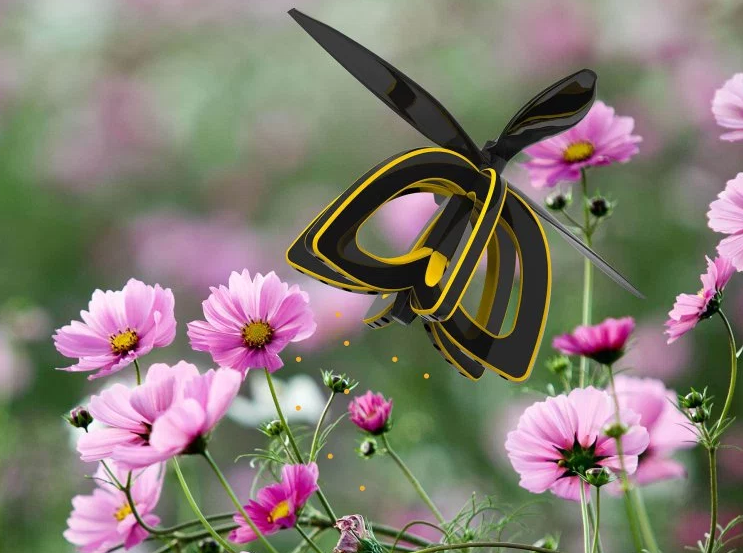 The creative ‘bug’ has reached the industrial design field where 24-year-old senior Anna Haldewang (Savannah College of Art and Design, Georgia) developed Plan Bee. Rather than being the size of the bee, this black-and-yellow drone is the size of hand and resembles a flower. Plan Bee passes over flowers collecting pollen for later cross-pollination. Haldewang has filed a patent application and is roughly two years from having a product for the market. The primary role of Plan Bee is as an educational tool, however, hydroponic and large-scale applications may also be possible.
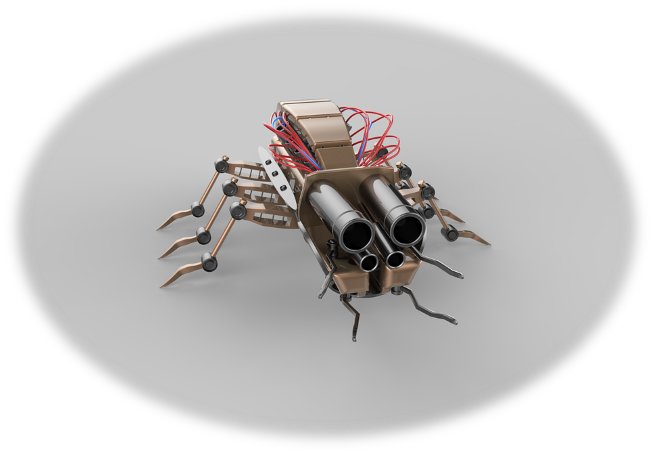 In addition to efforts of the Japanese groups, a research group in Maryland has taken the bee drone one step further. This group, led by Sarah Bergbreiter and her colleagues from the Maryland Microrobotics Laboratory at the University of Maryland, College Park has built tiny, microelectromechanical systems (MEMS) devices that look like and share the same movement as other insects such as fleas and ants. This group hopes to use their tiny robots to evaluate bridges and other structures for breakdown and search for survivors after a natural disaster.
The moral of the story is, when you see a bee hard at work, appreciate the job it’s doing to ensure that our crops are fertilized, our flowers are pollinated, and we have honey to eat.
Literature Cited:
Chechetka et al. 2017. Materially engineered artificial pollinators. Chem 2, 224–239.
AVS: Science Array Technology of Materials, Interfaces, and Processing. Insect-like microrobots move just like real insects. ScienceDaily, 7 November 2016.
Web Resources:
Researchers use drone to pollinate flower, CNN Tech
Biometric Trees: A Shockingly Cool Development, Got Nature?, Purdue Extension-FNR
Consider Pollinators When Planning Your Garden, Got Nature?, Purdue Extension-FNR
Shaneka Lawson, USDA Forest Service/HTIRC Research Plant Physiologist/Adjunct Assistant Professor
Purdue University Department of Forestry and Natural Resources
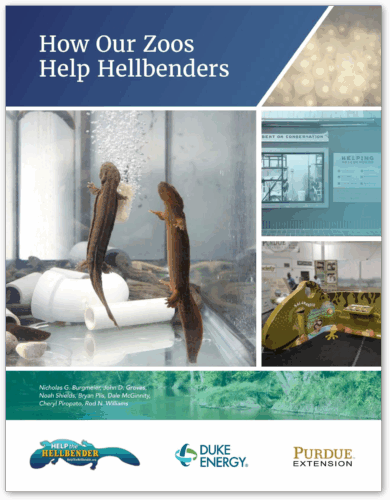 Purdue University has teamed up with four zoos to protect hellbenders. This effort is a worldwide collaboration as zoos, government agencies, and other conservation groups, implement much-needed conservation initiatives. This recently published publication titled How Our Zoos Help Hellbenders shares the current zoos in Indiana that are collaborating with Purdue in this conservation effort. Zoos are conservation and research organizations that play critical roles both in protecting wildlife and their habitats and in educating the public. Thus, with hellbenders experiencing declines over the past several decades, teaming up with zoos in order to preserve and protect the hellbender species is ideal. The zoos that are currently partners with Purdue University in this effort are: Mesker Park Zoo in Evansville, Indiana; Columbian Park Zoo in Lafayette, Indiana; Fort Wayne Children’s Zoo in Fort Wayne, Indiana; and Nashville Zoo in Nashville, Tennessee.
Three videos have been released showing how the zoos are working with Purdue University to help protect hellbenders. You can check them out below!
Resources:
Conservation Efforts, Mesker Park Zoo
Hellbender Research Participation Spotlight, Columbian Park Zoo
Conservation, Fort Wayne Children’s Zoo
Hellbender Conservation, Nashville Zoo
Purdue Partners with Indiana Zoos for Hellbender Conservation – Purdue Newsroom
Help the Hellbender, Purdue Extension-FNR
Nature of Teaching, Purdue Extension-FNR
I found this in my barn. Is it a Hellbender? – Purdue FNR Extension, Got Nature
Purdue University Department of Forestry and Natural Resources
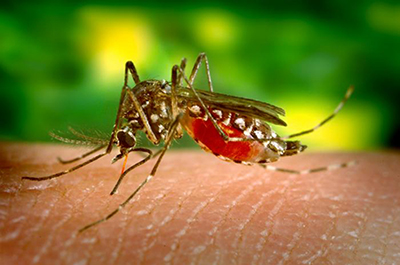
Photo by: James Gathany, Center for Disease Control and Prevention
While researchers say it is difficult to determine whether unusual weather patterns this winter and spring will lead to larger mosquito and tick populations in the Upper Midwest this summer, one thing is certain – anyone planning to spend time outdoors should take steps to avoid the potentially dangerous pests.
“Every year we face the same risks and every year it is wise to take precautions,” said Catherine Hill, Purdue University medical entomologist. “If you’re going to be outside anytime from early spring to late summer and early fall, you need to be thinking about prevention and protection.”
Both mosquitos and ticks can carry a number of pathogens that could pose a serious threat to people and animals. Mosquitos can transmit several viruses that can cause severe encephalitis (inflammation of the brain and spinal cord), including Zika and West Nile virus, among others. Ticks are known carriers of Lyme disease, which infects about 300,000 people each year, as well as less common but equally dangerous conditions such as anaplasmosis, babesiosis, Powassan and Rocky Mountain spotted fever.
To avoid mosquito bites, the best advice is to stay indoors during peak biting times, which is typically dusk to dawn for the mosquitoes that transmit West Nile virus and during the day for mosquitoes that transmit Zika.
“If you have to be outside during those times, it is best to wear clothing that can help prevent bites,” Hill said. Appropriate wardrobe choices include long-sleeve shirts and long pants tucked into socks. It is also advisable to use an effective repellant, such as products containing a minimum of 20 to 30 percent – of diethyltoluamide, commonly known as DEET. The Centers for Disease Control also recommends products containing picaridin, lemon of eucalyptus and IR3535. More information is available on the CDC website at https://wwwnc.cdc.gov/travel/yellowbook/2016/the-pre-travel-consultation/protection-against-mosquitoes-ticks-other-arthropods.
Mosquitoes breed in standing water and their larvae and pupae need water to develop. Homeowners can help reduce mosquito populations in their back yard by dumping standing water out of buckets and wading pools, keeping lawns mowed and removing piles of brush or yard waste, Hill said.
Ticks can thrive in back yards as well, particularly those adjacent heavily wooded areas, in tall grass and brush and under leaf piles.
Hill said the warmer winter and wet spring could have created ideal conditions for ticks in some areas although conditions vary significantly from region to region.
“We’ve already been getting plenty of ticks,” Hill said. “They’re certainly active.”
The best defense against ticks is to wear light colored clothing with long sleeves and pants and to use a U.S. Environmental Protection Agency-approved repellant. It is also a good idea to check your body and clothing for ticks immediately after coming back indoors.
“If you can remove a tick within 24 hours, you have a very good chance of catching them before they transmit,” Hill said.
Ticks feed on blood and tend to attach themselves to tender areas of the skin, including around the hairline and in the armpit and groin.
For the full article, see Purdue Agriculture News.
Resources:
Mosquitoes, Purdue Extension Entomology
One Small Bite: One Large Problem, Got Nature?, Purdue Extension-FNR
Darrin J Pack, Writer/Editor
Purdue University Department of Agricultural Communication
Catherine A Hill, Professor of Entomology/Vector Biology
Purdue University Department of Entomology
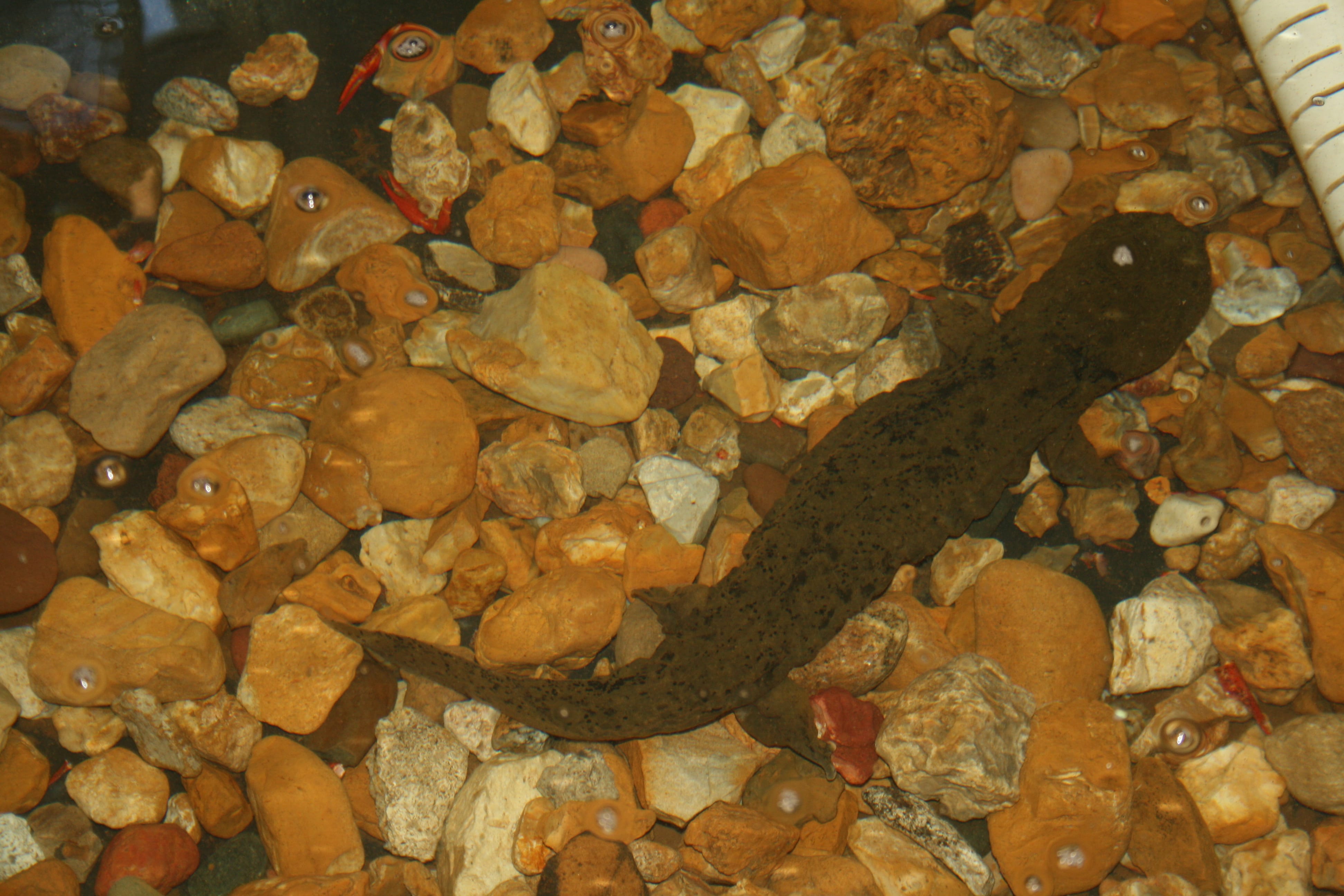 Eastern Hellbender We have written about the Eastern Hellbender salamander (Cryptobranchus alleganiensis alleganiensis) in this blog multiple times. It is a unique species and plays an important role in the aquatic ecosystem in which it inhabits. Unfortunately, the species has been declining throughout much of its range over the past several decades and can no longer be found in many of the rivers and streams where it used to be common. In Indiana, the Eastern Hellbender can only be found in the Blue River. However, this population is also declining and without intervention will likely disappear within the next 20 years. To help prevent this, Purdue University’s “Help the Hellbender” has teamed with Mesker Park Zoo and Botanic Garden (MPZ) to attempt to captive breed the Eastern Hellbender. Purdue University biologists have been capturing wild Eastern Hellbenders from the Blue River and transporting them to MPZ. MPZ has built an indoor stream designed to mimic the conditions in the Blue River. They have followed the advice of members of the highly successful Ozark Hellbender subspecies (C. a. bishopi) breeding program at St. Louis Zoo.  Mesker Park Zoo and Botanic Garden zookeeper, Bryan Plis, places a wild Eastern Hellbender into the new breeding raceway If successful, this captive population will provide a long-term, easily accessible source of young Hellbenders for eventual release. This will allow us to continue to repopulate the Blue River while expanding our release efforts to include other southern Indiana rivers with suitable habitat. The breeding program also will reduce the need to spend countless hours searching the river in the hopes of finding increasingly rare Hellbender nests. Through these efforts we will hopefully be able to reestablish self-sustaining populations of Hellbenders throughout southern Indiana and help prevent the extinction of a truly magnificent animal. For more ways you can help, please visit HelptheHellbender.org. |
Resources:
Mesker Park Zoo: Helping the Hellbender , Purdue Extension-Forestry and Natural Resources, YouTube
Help the Hellbender, Purdue Extension-Forestry and Natural Resources
Mesker Park Zoo and Botanic Garden
Hellbender Information, St. Louis Zoo
Purdue Partners with Indiana Zoos for Hellbender Conservation, Purdue Newsroom
I found this in my barn. Is it a Hellbender?, Purdue Got Nature?, Forestry and Natural Resources
Nick Burgmeier, Research Biologist and Extension Wildlife Specialist
Purdue University Department of Forestry and Natural Resources
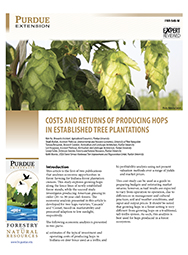 Rapid growth in the craft brewing industry has created an opportunity for Hoosier farmers to start growing hops. Hops are the female flowers (also called cones) from the hop plant (Humulus lupulus). This high-value, perennial crop is used to flavor and stabilize beer. Now available in a free download is a new publication with a study focusing on growing hops along the fence lines of newly established forest stands. This publication titled Costs and Returns of Producing Hops in Established Tree Plantations is the first of two publications that analyzes the economic opportunities in forest farming for Indiana forest plantation owners. The economic analysis presented in this article is developed for two hops varieties, ‘Cascade’ and ‘Comet’, based on marketability and presumed adaption to low sunlight, respectively.
Additional Resources:
Costs and Returns of Producing Wild-Simulated Ginseng in Established Tree Plantations, The Education Store, Purdue Extension’s resource center
Forest Improvement Handbook, The Education Store
The Nature of Teaching, Lesson Plans K-12, Purdue Extension
Hardwood Ecosystem Experiment – Sustaining Our Oak-Hickory Forests, The Education Store
Tree Pruning: What Do Trees Think?, The Education Store
Kim Ha, Research Assistant
Purdue Agricultural Economics
Other contributing authors: Dr. Shadi Atallah, Tamara Benjamin, Dr. Lori Hoagland, Lenny Farlee and Dr. Keith Woeste.
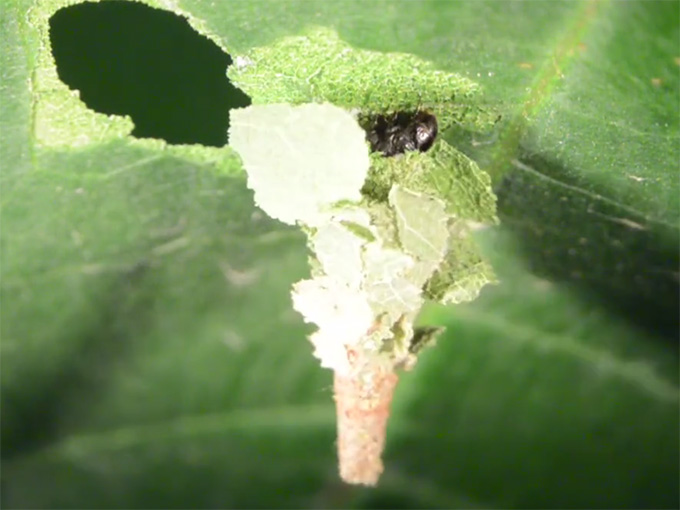 The evergreen bagworm, as its name implies, is well known for its ability to defoliate evergreen trees and shrubs like spruce, arborvitae, fir, junipers and pine. When given a chance, it will also feed on deciduous trees like maples, honeylocust, and crabapples. In late May and early June bagworms hatch from eggs that overwinter in the bag of their mother. When young bagworms begin feeding on broadleaved plants the caterpillars are too small to feed all the way through, so they leave circular patterns of skeletonization. Bagworms can be easily controlled with a spray application of spinosad (Conserve, or Fertilome borer and bagworm killer), or Bacillus thuringiensis (Dipel). More control options are available on the Purdue Tree Doctor App, purdueplantdoctor.com.
View this video located on the Purdue Plant Doctor App Suite Facebook page to watch a young bagworm caterpillar poke its head out of its silken bag to feed on a maple leaf. The young caterpillar scrapes the leaf surface to feed, and cuts bits of green tissue and glues it on its back. At the end of the video it sticks out its legs and flips the entire bag over to hide from the lights.
Resources:
Purdue Plant Doctor App Suite, Purdue Extension-Entomology
Landscape & Ornamentals: Bagworms, The Education Store
Upcoming Workshops, Purdue Extension-Forestry & Natural Resources
Ask An Expert, Purdue Extension-Forestry & Natural Resources
FNR contacts:
Lindsey Purcell, Urban Forestry Specialist
Purdue University, Department of Forestry and Natural Resources
Lenny D Farlee, Sustaining Hardwood Extension Specialist
Purdue University Department of Forestry and Natural Resources
Author:
Cliff Sadof, Professor
Purdue University Department of Entomology
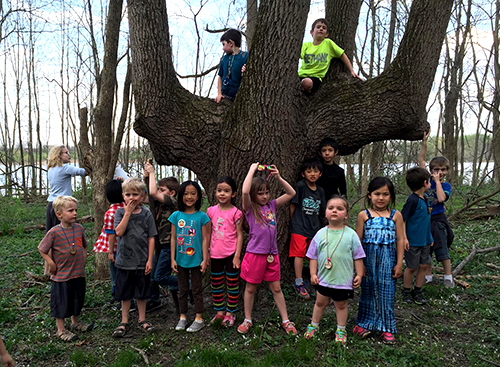
Students in Forestry and Natural Resources (FNR) continue to volunteer for Hands of the Future, Inc., a non-profit program whose mission is to help educate children about the outdoors and natural resources. As this program continues to grow, one of their dreams has been to find woods to create a children’s forest. To have a natural site that has been embellished upon with children’s needs in mind and to encourage outdoor play and adventures.
The students plan on transforming 18.8 acres of idle woods into Zonda’s Children’s Forest. The children’s forest will be composed of six main areas:
- A children’s garden, equipped with a greenhouse and kitchen, that’ll allow children to learn how to properly grow and cook food.
- An enclosed area dedicated to allowing children having fun and safe adventures.
- A viewing area for butterflies, birds and other organisms of the wild, allowing children to easily enjoy the life of the forest.
- A maze designed by sunflowers, where children can have fun and do problem-solving, while close to nature.
- A walk dedicated to viewing the owls and other organisms composing the forest.
- Another enclosed area of the woods for adventures; However, it’ll also contain tree houses, bridges and other fun additions for the children.
Donations:
Donations to help make Zonda’s Children’s Forest a reality can be made here. They have six months to raise $235,000 in order to purchase the woods.
Volunteers & Interns:
Older students and adults can apply to be a volunteer. Volunteers are always appreciated, no past experience necessary. If you love nature and kids you will enjoy this program. Internships are available for college students, contact Zonda Bryant.
Resources:
Family Nature Clubs in Indiana – Indiana Children and Nature Network
Zonda Bryant, Director
765.366.9126
director@hands-future.org
Money doesn’t grow on trees, or so the saying goes. I don’t believe those folks were talking about the cotton and linen currency of today when that phrase was first uttered. Since that period of history, many parents have edited the statement to include: shoes, clothes, toys, and a host of other items that ‘don’t grow on trees’. In the past my mother told me repeatedly that electricity didn’t grow on trees and until this past January, she was correct. Now, things have changed.
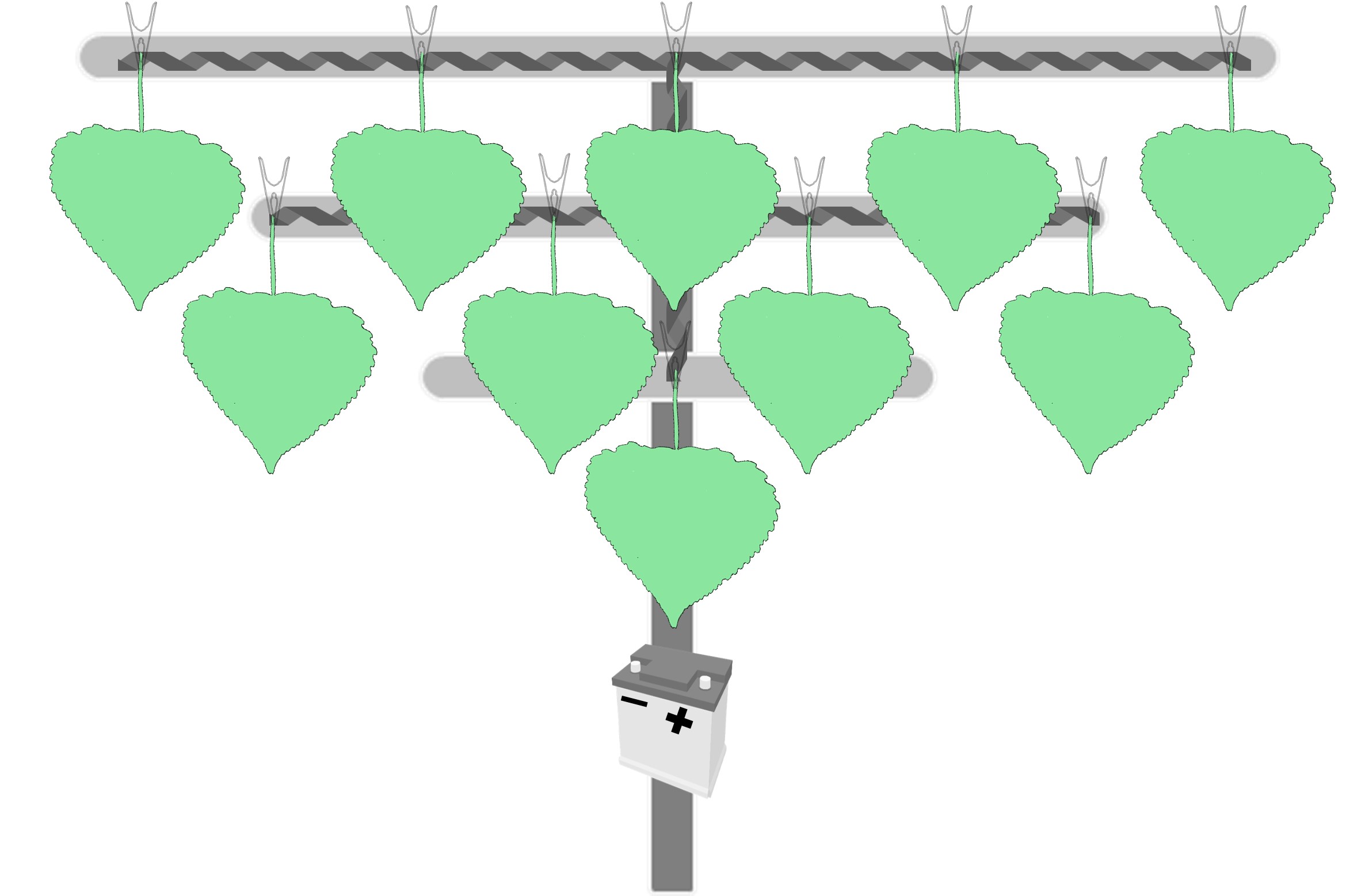
Researchers at Iowa State have designed a device that not only mimics the way tree leaves sway in the wind but generates electricity when in happens. Not meant to replace wind turbines, these inconspicuous machines are much smaller and more compact while turning wind energy into electricity. Because of their smaller footprint, these biometric (use of artificial means to mimic natural processes) trees could, with further development, be the start of a new market in electric generation.
At present the prototype resembles a wire antenna from which plastic leaves dangle that allows them all to be connected to a storage battery. Leaves on the prototype are clear but have been depicted here as green for easier viewing. The Iowa scientists envision that a scaled up model, with tens of thousands of leaves all producing electricity, would allow for a considerable amount of off-grid energy harvesting. Ensuring uncompromised efficiency remains a primary goal of the group.
The device ‘leaves’ were modeled after cottonwood (Populus deltoides) trees because the petioles (leaf stalks) are flat thus allowing the leaves greater movement in the wind. Inside the leaf stalks of the device are specialized plastic strips that release a charge when flexed. The regular fluttering of the leaves maximizes this piezoelectric effect in the model.
Future uses for such technology are variable from powering household electric devices (i.e. a tree-powered vacuum cleaner or coffee maker) to charging various modes of transportation. However, as with most new technology, efficiency remains a challenge and must be maximized to be competitive in the marketplace. New approaches are required before biometric trees and similar devices are ready to be marketed to the public. This research has already influenced new design approaches in computer science, manufacturing, and nanotechnology.
Journal Reference:
McCloskey M, Mosher CL, Henderson ER. 2017. Wind Energy conversion by Plant-Inspired Designs. PLOS ONE. doi: 10.1371/journal.pone.0170022
Web Resources:
Iowa State University. “Scientists design electricity generator that mimics trees.” ScienceDaily. ScienceDaily, 31 January 2017. www.sciencedaily.com/releases/2017/01/170131124330.htm
Additional Resources:
Purdue’s BioWall Project Aims For Cleaner Indoor Air, Got Nature?
Do Trees Sleep?, Got Nature?
Gardens by the Bay: Supertrees of Singapore Light up the Night Sky , Dailymail.com
Shaneka Lawson, USDA Forest Service/HTIRC Research Plant Physiologist/Adjunct Assistant Professor
Purdue University Department of Forestry and Natural Resources

Recent Posts
- 2026 Winter Bat Survey In Progress, MyDNR
Posted: March 27, 2026 in Wildlife - Fast-Growing Trees for the Landscape, Purdue Landscape Report
Posted: March 26, 2026 in Forestry, Urban Forestry, Woodlands - Urban Tree Spotlight: Planting Deciduous Shade Trees, Purdue Landscape Report
Posted: March 25, 2026 in Forests and Street Trees, Urban Forestry, Woodlands - Beetle that attacks Tree-of-Heaven found in Indiana, Purdue Landscape Report
Posted: March 20, 2026 in Invasive Insects, Wildlife, Woodlands - ID That Tree: Dwarf Chinkapin Oak
Posted: in Forestry, Urban Forestry, Wildlife, Woodlands - IN-PREPared: Essential Resources for Indiana’s Severe Weather Season
Posted: March 11, 2026 in How To, Safety - DNR Hiring for Indiana Conservation Officer Positions, MyDNR
Posted: March 9, 2026 in Urban Forestry, Wildlife, Woodlands - ID That Tree: Shumard Oak
Posted: in Plants, Urban Forestry, Wildlife, Woodlands - A Woodland Management Moment: Windbreak Around Walnut Plantings
Posted: March 3, 2026 in Forestry, Urban Forestry, Woodland Management Moment - Getting Certified as an Indiana Certified Prescribed Burn Manager
Posted: March 2, 2026 in How To, Urban Forestry, Woodlands
Archives
Categories
- Alert
- Aquaculture/Fish
- Aquatic/Aquaculture Resources
- Ask the Expert
- Christmas Trees
- Community Development
- Disease
- Drought
- Forestry
- Forests and Street Trees
- Gardening
- Got Nature for Kids
- Great Lakes
- How To
- Invasive Animal Species
- Invasive Insects
- Invasive Plant Species
- Land Use
- Natural Resource Planning
- Nature of Teaching
- Plants
- Podcasts
- Ponds
- Publication
- Safety
- Spiders
- Timber Marketing
- Uncategorized
- Urban Forestry
- Webinar
- Wildlife
- Wood Products/Manufacturing
- Woodland Management Moment
- Woodlands