 Purdue University - Extension - Forestry and Natural Resources
Got Nature? Blog
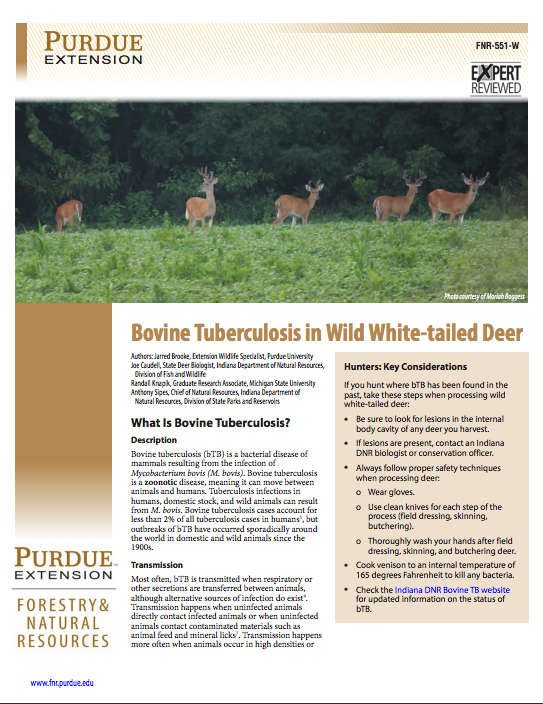 Outbreaks of bovine tuberculosis have occurred sporadically around the world since the 1900s. In Bovine Tuberculosis in Wild White-tailed Deer, Bovine tuberculosis transmission, hosts, current status in Indiana, clinical signs, effects on deer populations, effect on white-tailed deer meat, management, and monitoring is extensively covered. If you’re a hunter or cattle producer, the information provided within this free publication would greatly benefit you!
Resources:
Bovine Tuberculosis in wild white-tailed deer, Got Nature?, Purdue Extension-FNR
Jarred Brooke, Extension Wildlife Specialist
Purdue Department of Forestry and Natural Resources
It’s that time of year again. The desperate rush to find the ‘perfect’ tree for your annual year-end celebration is very real. Unfortunately, you chose a tree last year that died within a month and was disappointingly dull. This year, you are going to do your homework to find the best tree available.
Home preparations:
- Tree Location: Select an area out of direct sunlight and away from the heating vents in your house for the tree. Excessive sunlight and heat will cause your tree to fade and dry out more quickly.
- Ceiling height: Measure your ceiling heights and take into account the height of your tree stand and the tree topper or you’ll have to make excessive cuts in your tree to adjust for the differences. Write down these measurements.
- Tree shape: Visualize the shape of the tree that best fits the space you have available (tall and thin, short and broad) and keep that in mind. Certain tree types are more expensive therefore knowing your budget will help ensure you purchase the perfect tree for your household. Measure the width of the space and write down these measurements.
- Tree stand: Anticipate needing to support your tree stand and acquire a piece of plywood that you can bolt the stand to keep it level. Measure the inside diameter of the tree stand and write down the measurements.
Choosing a tree farm:
- Buy from a local farm if at all possible. These trees are bred to be hardy and to remain fresh longer.
Bring to the farm:
- List of required measurements for your perfect tree.
- A large unbreakable ornament to view branch spacing (ensures your ornaments will hang straight).
- Measuring tape to measure prospective trees before getting them home.
- Thick gloves for handling your tree as the needles may be sharp and the bark rough on your bare hands.
- An old blanket that can cover the truck bed or car roof to protect it from sap.
- Rope, twine, bungee cords, and twist ties to secure the tree to the car if these items are not provided by the tree farm.
Species selection:
- Each tree species is different so careful selection is important: Soft needle species (pines, firs) are best for homes with small children while hard needle species (spruce) are the adult choice.
- Firs often have shorter needles, strong stems, and well-spaced branches making it easier to hang lights and decorations.
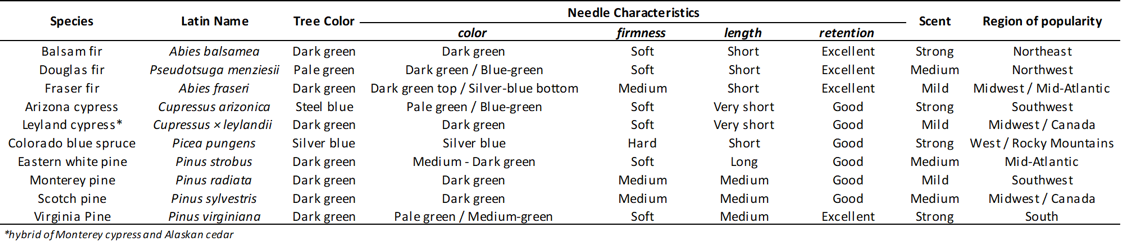 *click image to enlarge
At the tree farm:
- Check freshness: Bend a needle with your fingers (firs snap, pines ben).
- Gentle run your hand over the branch from inside to out or if possible, gently bounce the tree on the cut end. If a few interior needles come off, it is probably fresh; if many exterior needles fall off, choose a different tree.
- Remove and crush a few needles in your hand, if there is little scent choose another tree.
- The tree should have even coloration 360° around and needles should be fresh (shiny, green) and not old (dried out, brown).
When you and your tree get home:
- Protect Your Floor– Place a plastic or other waterproof covering on the floor where your tree will stand so you don’t ruin the carpet or get watermarks on hardwood flooring.
- Put down waterproof coverings or plastic sheeting under the tree skirt to prevent ruining the carpet or hardwood floor if water is spilled.
- Make a fresh cut at the base of the tree, take off ½” from the base so that tree can absorb more water (slows needle drop and helps maintain tree color) and immediately place the tree upright in the stand with lukewarm water.
- Trim any low-hanging branches that hit furniture or are too thin for ornaments parallel to the floor. Keep them in a bucket of water before using as decorations.
- Secure your tree to the wall or heavy furniture if you have pets and children that could knock it over or heavy ornaments that may sway the tree.
- Ensure that your tree stand always has water in it.
- Take a photo of your tree when set up and secured as a reminder for the following year.
After the holidays:
- Recycle your tree through your local waste management company.
- Trees can also be chipped for mulch. Never burn your tree because of the likelihood of starting a fire.
Examples of holiday tree types:
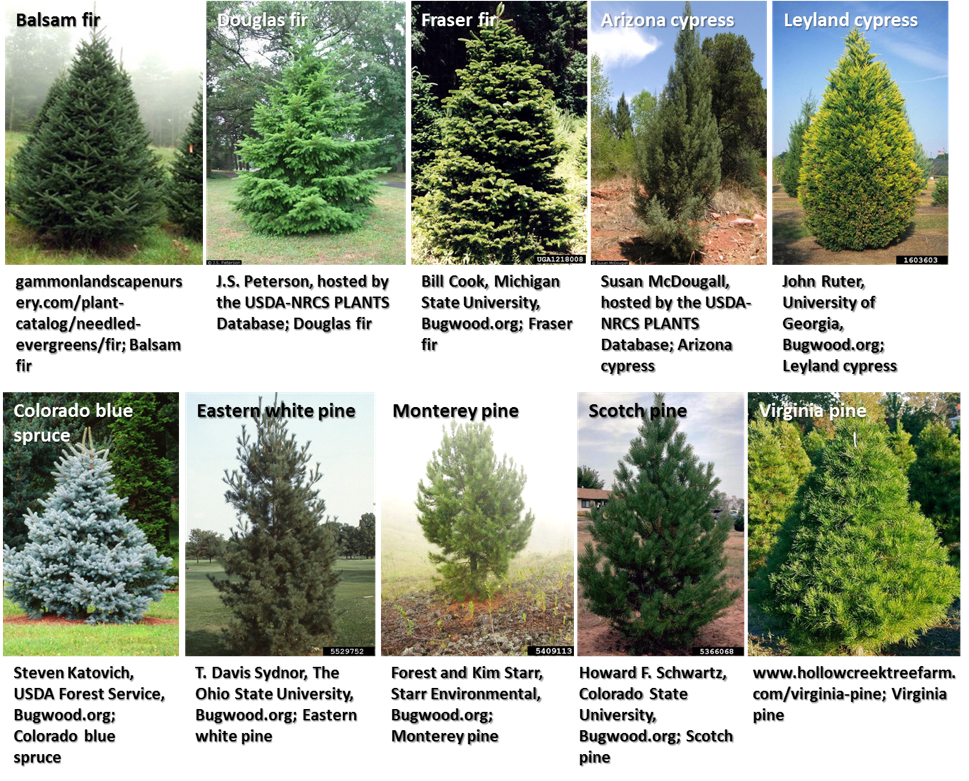 *click image to enlarge
Resources:
Which Real Indiana Christmas Tree Will You Select? – Got Nature?, Purdue FNR-Extension
Living Christmas Trees For The Holidays and Beyond, The Education Store
Tips for First-Time Buyers of Real Christmas Trees, The Education Store
Growing Christmas Trees, The Education Store
Shaneka Lawson, USDA Forest Service/HTIRC Research Plant Physiologist/Adjunct Assistant Professor
Purdue University Department of Forestry and Natural Resources
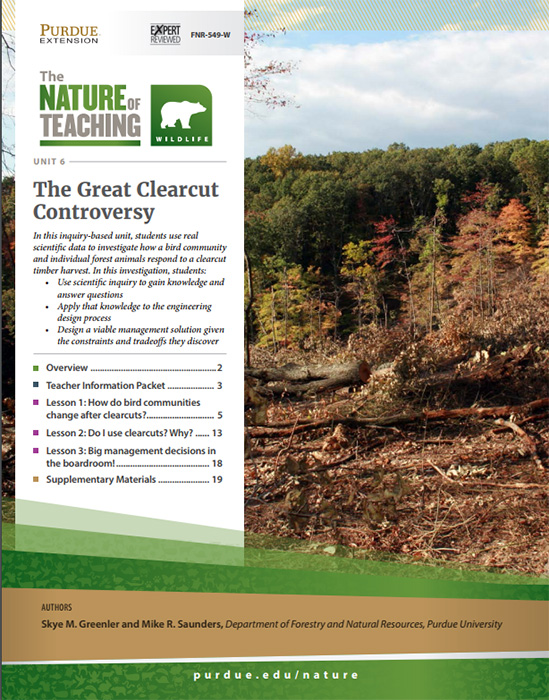 Teachers, parents and outdoor enthusiasts will want to download this free new Purdue Extension-Forestry and Natural Resources publication, The Great Clearcut Controversy. In this inquiry-based teaching unit, students use real scientific data to investigate how a bird community and individual forest animals respond to a clearcut timber harvest. In this investigation, students: use scientific inquiry to gain knowledge and answer questions; apply that knowledge to the engineering design process; and design a viable management solution given the constraints and tradeoffs they discover. All materials used in the three lessons are easily accessible and free.
Resources:
The Nature of Teaching, Purdue Extension
Got Nature? Podcast, Forestry and Natural Resources
Benefits of Connecting with Nature, The Education Store
Skye M Greenler, Graduate Research Assistant
Purdue University. Department of Forestry and Natural Resources
Mike Saunders, Associate Professor of Ecology and Natural Resources
Purdue University, Department of Forestry and Natural Resources
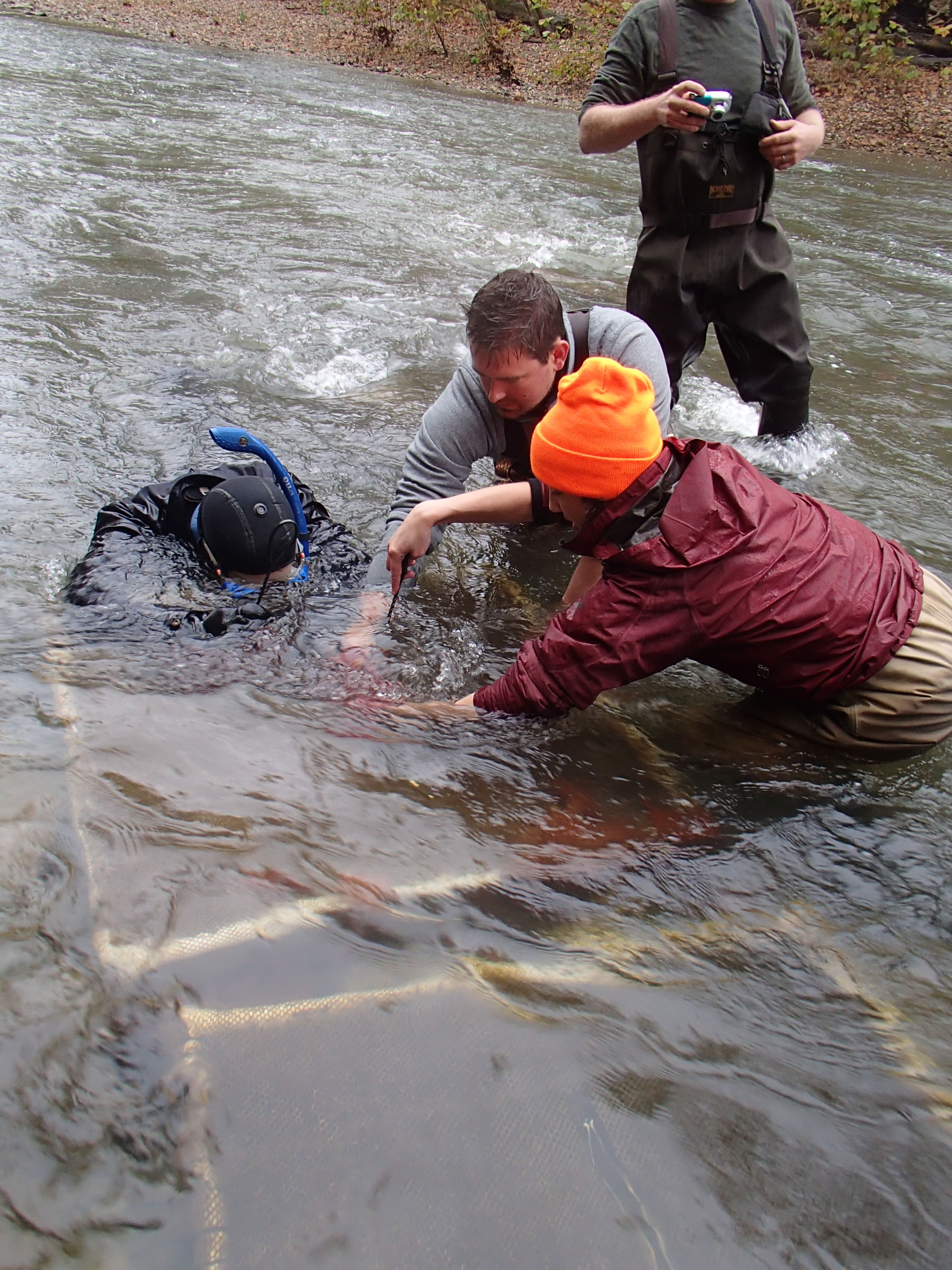
Hellbender release – Purdue biologists help a release attendee place a Hellbender in its temporary holding pen. Photo credit: Marci Skelton.
 The Hellbender salamander is North America’s largest salamander. It is fully aquatic, living its entire life in rivers and streams throughout the midwest and southeast. Hellbenders require cool, clean rivers and streams with rocky substrates to thrive and reproduce. Unfortunately, over the past several decades the species has declined or disappeared from many of these areas. In Indiana, the species can only be found in the Blue River in south-central Indiana where there remains only a very small, geriatric population incapable of sustaining itself. In order to save the species in the state, Purdue University and its many partners have joined together to reverse the decline.
On November 1st and 2nd of this year, Purdue FNR’s Williams lab released 80, 4-year old Hellbenders into a site chosen as the best Hellbender habitat in the Blue River. Members from Purdue University, Mesker Park Zoo and Botanic Garden, Columbian Park Zoo, Fort Wayne Children’s Zoo, Indianapolis Zoo, the Indiana Department of Natural Resources, the Indiana Department of Environmental Management, Duke Energy, and more all helped in the task of releasing the individuals into their new homes.
The chosen Hellbenders had been raised in captivity at Purdue University. Unfortunately, captive-raised animals are often times not equipped with the necessary set of skills to survive life outside of an aquarium. However, these were not all aquarium-raised individuals more akin to pets than wild animals. Forty of the individuals were raised in specially designed tanks called raceways that incorporated water flow to mimic that found in a natural river setting. The remaining forty individuals were raised in standard, low-flow conditions. The idea behind raising the animals in these differing conditions is to compare whether or not the individuals raised in conditions that are more natural (i.e., higher flow rates) will be better able to survive the varying water levels they will encounter in the wild than those that are raised without flow.
In order to document success, all 80 Hellbenders were implanted with radio-transmitters. These transmitters emit a signal that allows biologists to detect them with antennae and locate the exact location an individual is hiding. For the next six to ten months, through rain, snow, and shine, Purdue biologists will follow these animals to document their behavior, habitat preferences, and whether or not they survive life in the wild.
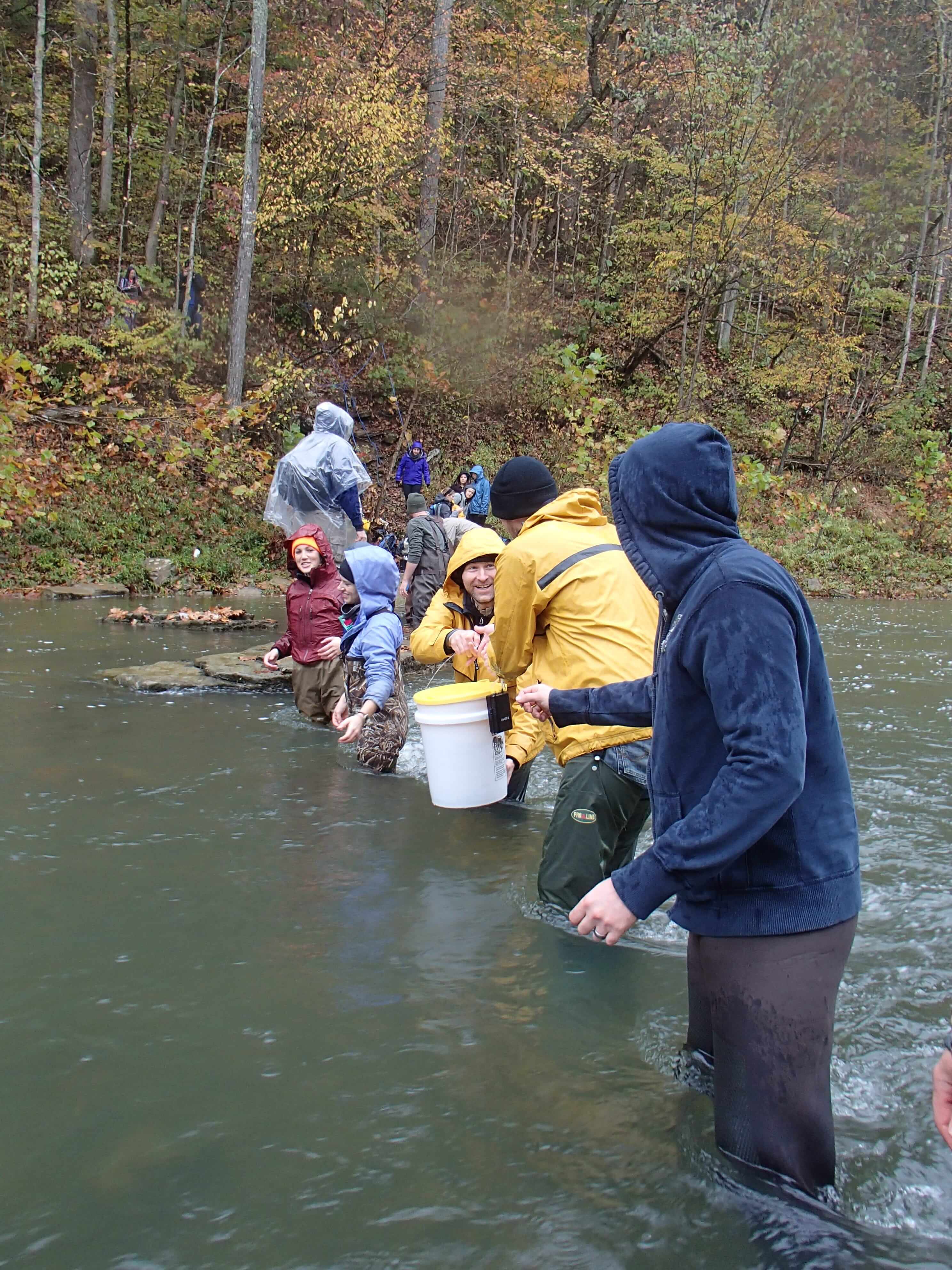
Transporting Hellbenders – Release attendees work together to transport Hellbenders across the river to be processed before release. Photo credit: Marci Skelton.
The outcomes of this study could help solve two major problems facing Hellbender conservation. The first is that the addition of Hellbenders into the system could help spur natural reproduction and help to start stabilizing the system. This small step is important towards our eventual goal of repopulating the Blue River and other former Hellbender streams. The second problem this study will hopefully address is the issue of poor survival of captive-reared animals when released into the wild. If we find that raising animals in more natural conditions improves survival over those raised in the more common no-flow conditions, this technique could be easily adopted at captive-rearing facilities throughout the nation and help increase the overall success of Hellbender conservation in the United States.
For more information, please visit HelptheHellbender.org.
Resources:
Hellbender ID, The Education Store
HelptheHellbender.org, Purdue Extension
Help the Hellbender: North America’s Giant Salamander, The Education Store
How Our Zoos Help Hellbenders, The Education Store
Nick Burgmeier, Research Biologist and Extension Wildlife Specialist
Purdue University Department of Forestry and Natural Resources
A recent study in Costa Rica by scientists at Princeton University-Department of Ecology and Evolutionary Biology and the University of Pennsylvania-Ecology & Biodiversity showed how agricultural waste could help successfully remediate barren tropical forest sites.

A deal between an orange juice manufacturer and advisors for the Área de Conservación Guanacaste was struck that allowed 1,000 truckloads (12 metric tons) of orange peels and pulp to be unloaded on nutrient-poor soils dominated by invasive grass within one of Costa Rica’s national parks in the mid-1990s. The land was left to rest for sixteen years. Now, the forest has begun the lengthy process of regeneration and some secondary forest regeneration has been observed. The peels were spread over 3 ha (7 acres) and scientists measured an increase of 176% in aboveground biomass. The distinction between the orange-fertilized land and the unfertilized areas was pronounced. Orange-fertilized areas demonstrated more tree biomass and species diversity and richer soils than their counterparts.
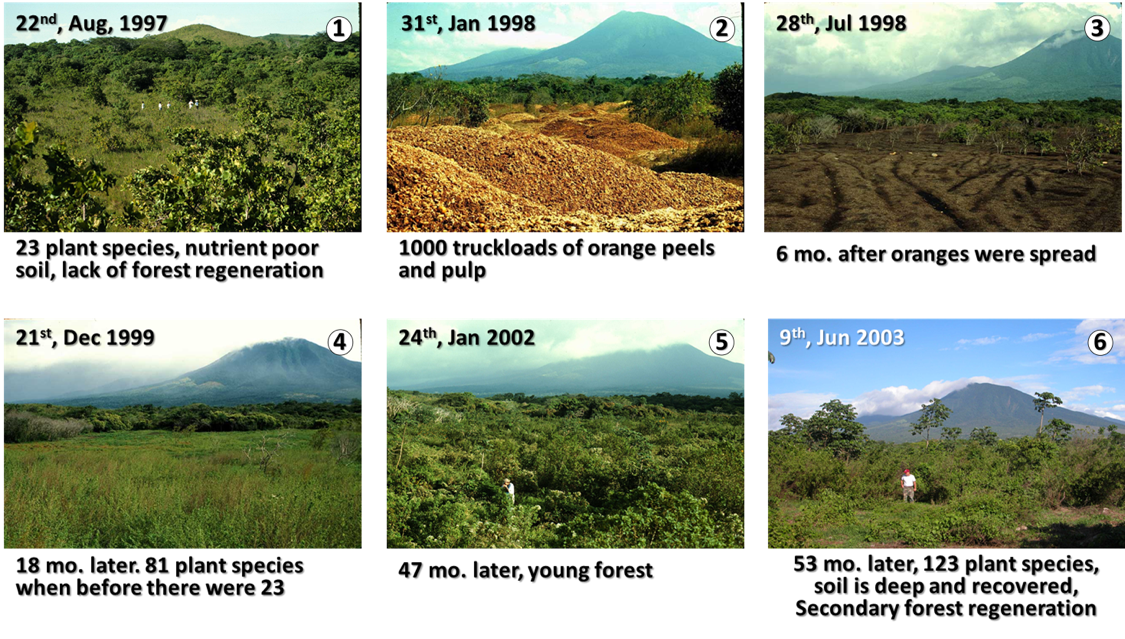
To enlarge photo click on image. Photo credits: Tim Treuer, Daniel Janzen, Winnie Hallwachs, & Leland Werden.
This research shows what could happen when the environmental community and industry find a medium where they can work together to come up with problem solutions. Perhaps, in future, similar uses can be found for agricultural excess here in the United States.
References:
Treuer TLH, Choi JJ, Janzen DH, Hallwachs W, Peréz-Aviles D, Dobson AP, Powers JS, Shanks LC, Werden LK, Wilcove DS. (2017) Low-cost agricultural waste accelerates tropical forest regeneration. Restoration Ecology, DOI: 10.1111/rec.12565
Resources:
Indiana Forestry & Woodland Owners Association
Purdue Extension-Forestry and Natural Resources workshops
Forest Improvement Handbook, The Education Store, Purdue Extension resource center
Shaneka Lawson, USDA Forest Service/HTIRC Research Plant Physiologist/Adjunct Assistant Professor
Purdue University Department of Forestry and Natural Resources
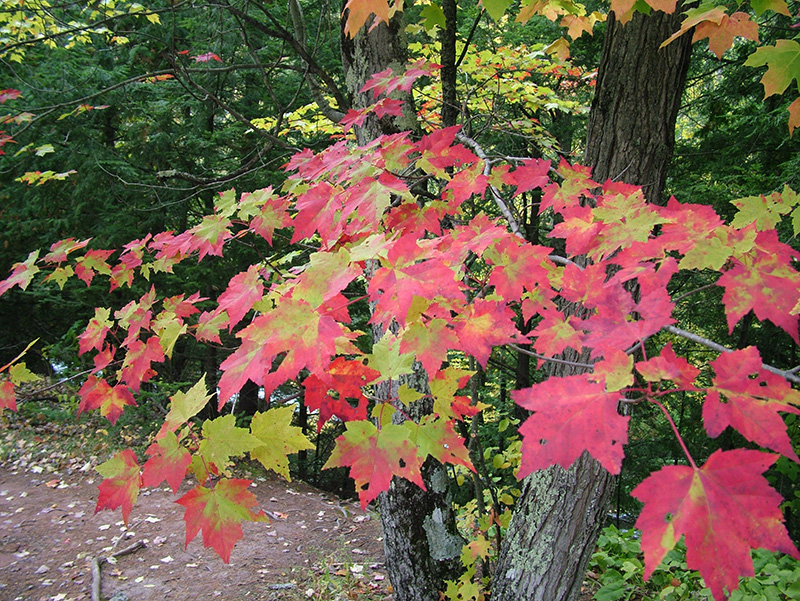
Red maple tree with leaves turning red in fall. Photo by: Lenny Farlee
The calendar flipping over to October is a reminder the annual Autumn leaf color display is on its way. The perennial question is “how will the color be this year?” Predicting the quality of the fall display requires weighing several factors that may vary over time and across the landscape. In general, Indiana started the growing season wet and is ending it dry. The good growing conditions early this year have produced abundant leaf area on many trees. As we have dried out late in the season, some trees are experiencing stress that may cause leaves to turn color and drop early, or to simply turn brown. Drought may also delay the color change by a week or more in some cases. Leaves that were attacked by insects or disease may also drop early or provide very little color. I noticed Japanese beetles seemed to be more active than normal this year, skeletonizing leaves on preferred plants like linden and Virginia creeper. Local weather patterns can also influence color intensity in a positive way. Sunny days and cool nights late in the summer and early fall can enhance the production of anthocyanin – a pigment produced in some trees that provides bright red, maroon and purple tones to the fall color palate.

Hop hornbeam tree with yellow fall leaves. Photo by: Lenny Farlee.
This brings us to another variable: different species of trees may produce different colors, timing, and duration of fall color. Some species like sassafras, sumac, black and sweet gum, and sugar and red maple are famous for bright fall color. Some species like elms, buckeye and walnut may simply turn brown or drop early with little color display. Different individual trees may also vary due to genetic differences, growing conditions and tree health. For example, some sugar maple located in open areas or on the edge of a woodlot, receiving lots of sunlight, may regularly produce vibrant oranges and reds, while nearby sugar maple in the shade of the forest will turn a subdued yellow, lacking the sugar reserves produced by their neighbors in the sun.
Leaf color change is also the result of a very predictable process based on the longer night period as summer slips into fall. The production of green chlorophyll pigments slows and finally stops as the nights become longer and cooler, exposing the yellows and oranges of carotenoids and reds and maroons of anthocyanins. This process also starts forming a zone of separation between the leaf and branch that ultimately brings the leaves to the ground, often with the help of wind and rain.
My best answer to those asking for a fall color prediction is another set of questions: how was your weather, what species of trees do you have, and how much sunlight do they receive?
Resources:
Why Leaves Change Color, The Education Store, Purdue Extension
Why Leaves Change Color, USDA Forest Service, Northeastern Area
Fifty Common Trees of Indiana
An Introduction to Trees of Indiana
Native Trees of the Midwest, The Education Store
Shrubs of Indiana CD: Their Identification and Uses, The Education Store
Shrubs and Woody Vines of Indiana and the Midwest, The Education Store
Trees of Indiana CD, The Education Store
Lenny Farlee, Sustaining Hardwood Extension Specialist
Purdue Department of Forestry and Natural Resources
Wild animals have a dispersal period where young move on to new ground to establish their own home range. This is nature’s way of mixing the gene pool. It also allows for species to reoccupy small, isolated habitat patches. Late summer and early fall is a common time to see juvenile snakes because of dispersal.
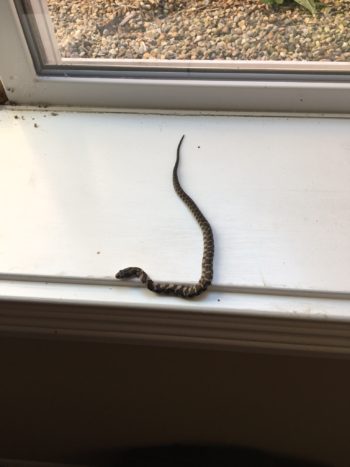
Northern Watersnake (Photo provided by R. Dearing)
Snake identification questions are one of my most common that I receive from the public. Usually, people want to know if the snake is venomous or not. Most snakes in Indiana are not venomous. In fact, there are only four venomous species in Indiana. Their distributions are generally limited.
The snake pictured here to the right is a Northern Watersnake (Nerodia sipedon). Photo and identification request was submitted to our “Ask an Expert” web submission by Mr. R. Dearing. While only about a foot long here, adults can reach several feet in length. Coloration in them is variable, but they typically have dark bands on a lighter tan or brown background. The bands are complete towards the head and fragment towards the tail. This little snake found its way into Mr. Dearing’s house. Fortunately, he was able to catch it and return it to the creek behind their house—which explains why it was there in the first place.
Resources:
Snakes and Lizards of Indiana, The Education Store, Purdue Extension
How can I tell if a snake is venomous, FAQs, Purdue Extension-Forestry and Natural Resources
Indiana Amphibian and Reptile ID Package, The Education Store, Purdue Extension
Ask An Expert, Purdue Extension-Forestry and Natural Resources
Brian MacGowan, Extension Wildlife Specialist
Department of Forestry & Natural Resources, Purdue University
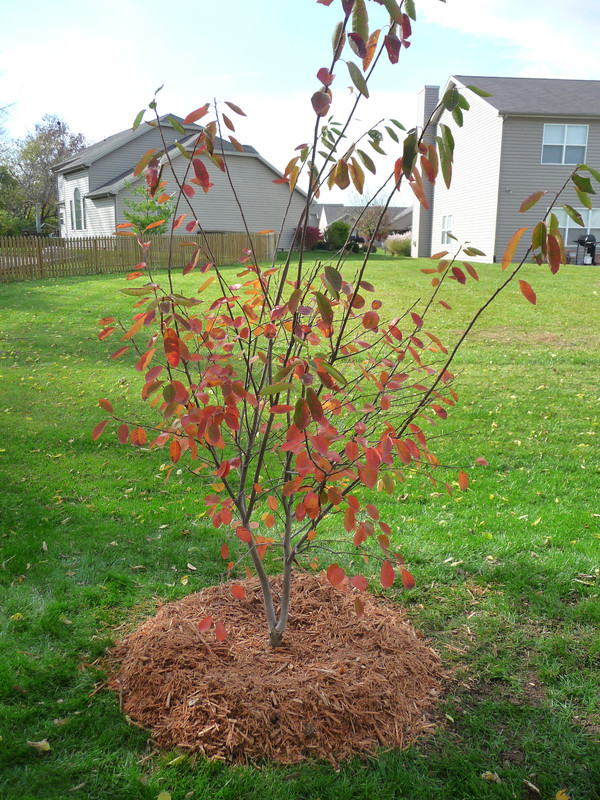 Spring and Fall is prime time for improving your property with new trees. They provide many benefits which everyone can share. Trees mean more attractive landscapes, lower energy bills and a healthier environment. However, just planting a tree without some thought and planning can create a liability rather than an asset to your site. Wise planning is essential to ensure the new trees meet your design needs and functional solutions as well. Follow these basic tips to get your tree started right and make it a long-lasting sustainable planting. For more information, download the free publication Tree Installation: Process and Practice.
Right Tree-Right Place.
Location, location, location! Planning before planting can help ensure that the right tree is planted in the right place. Proper tree selection and placement enhances your property value, prevents costly and sometimes unsightly maintenance with trimming, and lowers the risk of damage to your home and property. In some instances, trees are the innocent victim of poor planting locations and must be removed. Always allow room for growth! Also, consider native trees or those trees with fewer pests which can attack your tree. Large trees include Kentucky Coffeetree, Bur Oak and Hardy Rubber Tree. Medium-sized trees can include Japanese Pagoda Tree, Sourwood, Katsura Tree and Golden Raintree. Finally, for areas with less room, consider Serviceberry, Ironwood, Amur Maackia or Hop Tree. These are just a few of the many trees which can be chosen for your situation.
Look Up, Look Down, and Look All Around!
Regardless if the planting is in the front yard or the back yard of the home or business, be sure there will be no interference with utilities; Call 811 before you dig. It will prevent costly mistakes and maybe a life. In addition, if the tree is going to be planted along the street, typically, there is an ordinance requiring a permit to plant in the right of way. This helps Urban Forestry administration keep up the street tree inventory and allows the ISA Certified Arborists on staff a chance to offer free advice to help in the planting decisions.
It Comes from Good Stock…
Choose the tree twice, meaning get the right species for your location; then, make an informed choice on the nursery stock. Be sure the function of the tree is understood and choose the right tree for the location. Shade? Flowers? Screening? Sound Barrier? Trees can be used as tools to work for you on the site. “You get what you pay for” applies to nursery stock as well. Purchase plant material from a reputable source and get a professional opinion on the tree species for your application. One hint, if it is a fast growing tree, it probably won’t last long. See our video for tree selection tips.
This Hole is a Home!
It is a permanent home for the trees… understand the planting site prior to planting. Determine soil type and pH, drainage and exposure to the sun. If the tree isn’t naturally suited to the planting place, it doesn’t have a chance. Planting depth is a major tree planting concern. Be sure to find the “root flare” when establishing the final grade of the tree. Drainage is crucial to survival. Use the two-hour test. Dig the hole, fill it with water. If the hole is empty upon returning, there is suitable drainage for any tree. Plant the tree properly and at the proper depth, you only get one chance… Don’t dig a $10 hole for a $100 tree. See our video on tree planting tips.
Keep Good Care of the Investment.
Once the tree is in the ground, take good care of it. At least an inch of water per week to keep it growing vigorously, apply clean, hardwood mulch on the root zone to keep soils cool and moist, but never exceed three inches in depth. Remember to remove any tags on the tree and don’t forget to remove the twine from around the trunk. Don’t worry about the fertilizer at planting time, wait until next year, after the tree has gotten settled in to its new home. Enjoy your new addition to the home and landscape!
Resources:
Tree Selection for the “Un-natural” Environment, The Education Store, Purdue Extension
Tree Support Systems, The Education Store, Purdue Extension
Tree Installation: Process and Practices, The Education Store, Purdue Extension
Planting Your Tree Part 1: Choosing Your Tree, video, The Education Store, Purdue Extension
Lindsey Purcell, Urban Forestry Specialist
Purdue University, Department of Forestry and Natural Resources
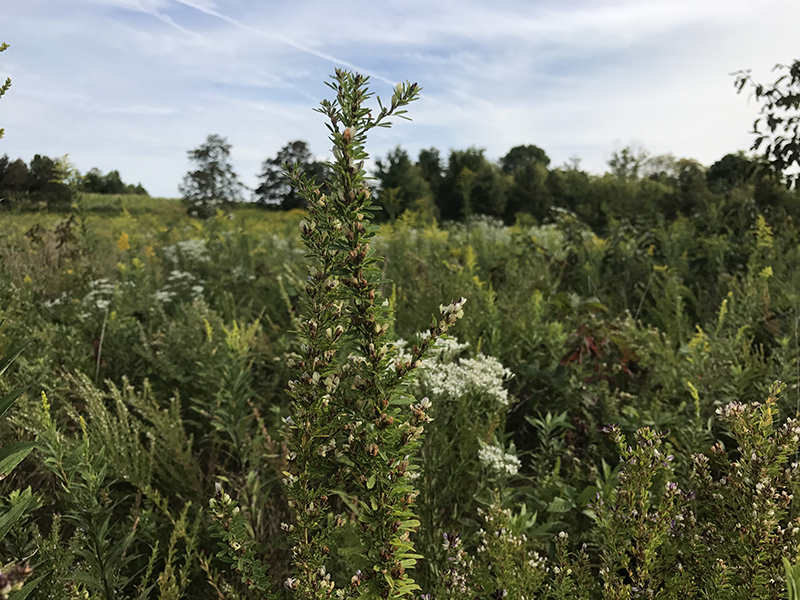 Sericea lespedeza is arguably one of the most problematic invasive species of old fields, prairies and other early successional areas managed for wildlife. Sericea lespedeza is a perennial legume native to eastern Asia that was originally promoted for erosion control, cattle forage, cover and food for wildlife. But as with many plant introductions during the early and mid-19th century (e.g., multiflora rose, autumn olive, and bush honeysuckle), the original beliefs – while well intentioned – were ill fated and short-sided. Sericea has become invasive, is considered noxious in many states, and can be found from Massachusetts to Nebraska and from Florida to Ontario.
Here are 3 problems with sericea and 3 tools for control.
Problems:
- Sericea is adapted to a wide variety of conditions: sericea is able to tolerant and thrive in acidic soils with relatively low soil fertility and is also drought tolerant. These factors combined with allopathic chemicals makes sericea extremely competitive causing sericea to quickly invade and overtake early successional areas displacing many native species.
- Sericea produces an abundance of seed: one sericea plant is able to produce more than 1000 seeds and seeds are thought to be viable for up to 20 years in the seedbank. Sericea was initially thought to provide an abundance of seed valuable to wildlife including northern bobwhite. However, the seed cannot be digested by most wildlife, thus it provides no nutritional benefits and bobwhite can actually starve by consuming only sericea seed. Research in Kansas also reported a higher percentage of sericea seed germinated after passing through the digestive system of bobwhite compared to unconsumed seed.
- Sericea responds prolifically following spring fires: fire is the most effective way to manage early successional vegetation. However, fire during the dormant season seems to only anger sericea and exacerbate the problem. Fire scarifies sericea seed and seedling density is increased following spring fires.
Control: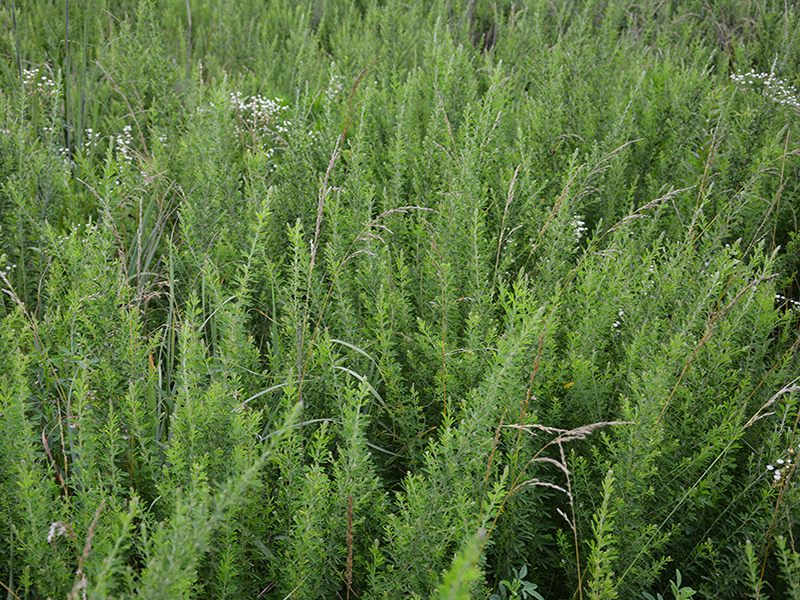
- Herbicide: triclopyr (32 oz/acre), triclopyr + fluroxypyr (1.5 pt/acre), or glyphosate (1-2 qt/acre) can be used to effectively control sericea in early successional areas from June through July when sericea is 12-18 inches tall. Metsulfuron methyl (1 oz/ac) provides effective control when applied to sericea during flowering (Aug-Sep).
- Prescribed fire: while prescribed fire during the dormant season enhances sericea germination, fire during the late-growing season (July-Sep) can reduce sericea seed production and can decrease sericea survival. However, fire alone may not be enough to control sericea long term.
- Herbicide + Prescribed Fire: sericea can be controlled with herbicide during the growing season. This can be followed up with a late-growing season fire to consume any sericea not killed by the herbicide and reduce sericea seed production. The following summer herbicide can be used again to kill any new sericea seedlings or plants that have resprouted from rhizomes.
If you find sericea in fields that you manage, working quickly to stop seed production and kill the existing plants will be the most effective way to control an invasion.
Web Resources:
Herbicides to control sericea lespedeza, Southeastern Association of Fish & Wildlife Agencies
Effects of Growing-Season Prescribed Burning on Vigor of Sericea Lespedeza in the Kansas Flint Hills: I. Suppression of Seed Production and Canopy Dominance, Kansas Agricultural Experiment Station Research Reports
Other Resources:
If Your Native Grasses Look Like This, It’s Time for Management, Got Nature?, Purdue Extension-FNR
Invasive plants: impact on environment and people, The Education Store, Purdue Extension
Jarred Brooke, Extension Wildlife Specialist
Purdue University Department of Forestry and Natural Resources
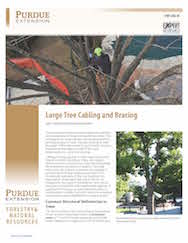 Due to reasons such as pruning, location of growth and species characteristics, trees can grow in ways that don’t endorse long-term health and safety. To counter trees growing in unsafe ways, cabling, bracing, guying, or props can be utilized to prevent branch or whole-tree failure. These tree support systems reinforce critical areas of the tree by limiting the movement of branches or leaders. In the publication titled Large Tree Cabling and Bracing, FNR-550-W, common structural deficiencies in trees and the tree support devices used to prevent problems caused by those deficiencies are described and covered.
Resources:
Tree Support Systems, The Education Store, Purdue Extension
Tree Planting Part 1: Choosing a Tree, The Education Store, Purdue Extension
Tree Pruning: What Do Trees Think?, The Education Store, Purdue Extension
Forest Improvement Handbook, The Education Store, Purdue Extension
Got Nature?, Purdue Extension, Forestry and Natural Resources
Lindsey Purcell, Urban Forestry Specialist
Purdue University, Department of Forestry and Natural Resources

Recent Posts
- ID That Tree: Nannyberry Viburnum
Posted: July 22, 2026 in Forestry, Plants, Wildlife, Woodlands - ID That Tree: Eastern Swamp Privet
Posted: in Forestry, Plants, Wildlife, Woodlands - Jarred Brooke Receives Early Career Award for Prescribed Fire Work
Posted: July 20, 2026 in Forestry, Forests and Street Trees, Natural Resource Planning, Safety - Bovine Tuberculosis in Wild White-tailed Deer: Background and Frequently Asked Questions
Posted: in Disease, Natural Resource Planning, Wildlife - ID That Tree: Carolina Buckthorn
Posted: July 15, 2026 in Forestry, Wildlife, Woodlands - Bat Roost Reporting Tool
Posted: July 8, 2026 in Alert, Community Development, Invasive Animal Species, Wildlife - Pruning Highlight; Espalier Pruning: Training Trees into Living Patterns
Posted: in Forestry, Forests and Street Trees, Gardening - Thank You, Turkey Trackers! Your Brood Counts Make a Difference – MyDNR
Posted: in Alert, Community Development, Wildlife - Identifying Evergreens
Posted: June 24, 2026 in Forestry, Wildlife, Woodlands - Celebrate Pollinator Week With Flowers of June Tour
Posted: June 15, 2026 in Forestry, Gardening, How To, Wildlife
Archives
Categories
- Alert
- Aquaculture/Fish
- Aquatic/Aquaculture Resources
- Ask the Expert
- Christmas Trees
- Community Development
- Disease
- Drought
- Forestry
- Forests and Street Trees
- Gardening
- Got Nature for Kids
- Great Lakes
- How To
- Invasive Animal Species
- Invasive Insects
- Invasive Plant Species
- Land Use
- Natural Resource Planning
- Nature of Teaching
- Plants
- Podcasts
- Ponds
- Publication
- Safety
- Spiders
- Timber Marketing
- Urban Forestry
- Webinar
- Wildlife
- Wood Products/Manufacturing
- Woodland Management Moment
- Woodlands