 Purdue University - Extension - Forestry and Natural Resources
Got Nature? Blog
 The invasive insect has made its way to its 79th county, Sullivan County. It was recently spotted in Jennings, Pike, Scott, Spencer and Warrick counties. There are only a few counties in southern Indiana that have not been affected by the Emerald Ash Borer (EAB). In order to slow the spread of the EAB, the Indiana Department of Natural Resources (DNR) has restricted the movement of ash trees, limbs and untreated ash lumber with bark attached or any cut hardwood lumber of any species with bark attached. Visitors to DNR properties may only bring in firewood that has been certified by the USDA or DNR Division of Entomology and Plant Pathology or is free of bark. Homeowners should also be aware of this invasive species. To learn more about the EAB and what signs to look for if your tree is infected, take a look at the resources below.
Resources
Arrest That Pest! – Emerald Ash Borer in Indiana, Purdue Extension
Invasive Species, Got Nature?
Emerald Ash Borer, Indiana Department of Natural Resources
Emerald Ash Borer in Indiana, Purdue Extension
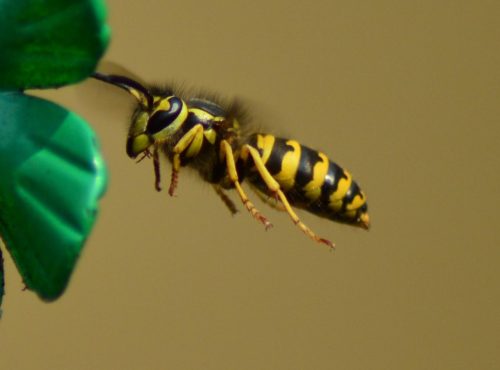 This question and answer were provided by Purdue Extension: In the Grow.
Question: I have small evergreen trees planted in my yard. They are the small, slow-growing type. They are around eight years old. Every fall, the yellow jackets start swarming around them, crawling in and out of the inside of the tree. They don’t seem to hurt it, but it looks like they are trying to find something, acting like a honey bee on a flower. But these have no flowers. They don’t bother us as long as we don’t get too close. Could you tell me why this is happening? – C.K., Shoals, Indiana
Answer: Our Purdue entomologists advise that yellow jackets commonly scavenge for food in the fall, and it is likely they are attracted to tree resin or sap that has some sugar content. Scavenging yellow jackets are less aggressive than those that are protecting a nest. And you are correct; they will not harm the trees and will generally not attack unless provoked. We commend you for aiming for a peaceful coexistence!
View the full post at Purdue Extension’s: In the Grow website.
Resources
Social Bees and Wasps, The Education Store
Indiana Beekeepers Swarm List, Indiana DNR
Department of Entomology, Purdue University
Purdue Extension: In the Grow
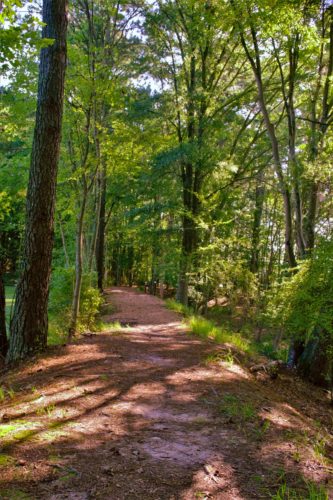 The Washington Post has published an article stating that experts fear how smaller parcels of forest owned, combined with an increase in the number of owners, will affect the long-term health of the American woodlands. With smaller parcels of land, owners are less likely to invest in forest management plans because managing wildlife is more difficult compared to a larger parcel of land. Also the average age of those who privately own forest land is 62.5. The article pointed out how the best and most important thing to do is bridge the gap between the generations, so parents and children talk to each other and know what they want. The restoration of the forest land will benefit many generations to come.
View the full article “Experts Fear For Long-Term Health of U.S. Forests” at The Washington Post’s website.
Resources
State Forest Management Guides, Indiana DNR
Forest Health, Indiana DNR
A Landowner’s Guide to Sustainable Forestry: Part 2: Planning for the Future, The Education Store
Got Nature?
Department of Forestry and Natural Resources, Purdue University
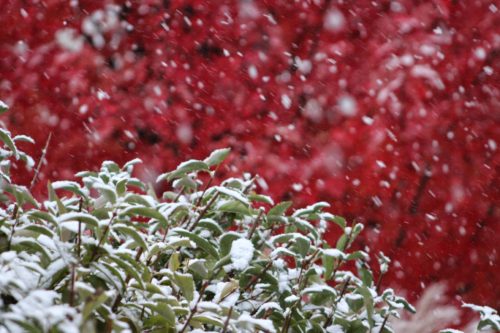 You may be considering giving a plant as a holiday gift this year. But before you buy your plant, there are precautions you need to take into consideration in order to keep it healthy. Purdue Yard and Garden News has some tips for you.
Your plant can get damaged due to cold, frigid air. Ensure that the salesperson wraps your purchase to protect it from the cold temperatures and wind as you walk back to your car. Also preheat your car to keep it out of the cold for the shortest time possible.
Keep plants away from drafts when you return home. Instead, put it in a place that is 60-70 degrees Fahrenheit during the day and provides plenty of bright light. Water your plant until some excess water comes through the drainage holes at the bottom.
View all of the tips on the Purdue Yard and Garden News page.
Resources
Effects of Cold Weather on Horticultural Plants in Indiana, The Education Store
Winter Injury of Ornamentals, Purdue e-Pubs
How To Care For Your Amaryllis, Purdue Yard and Garden News
Purdue Yard and Garden
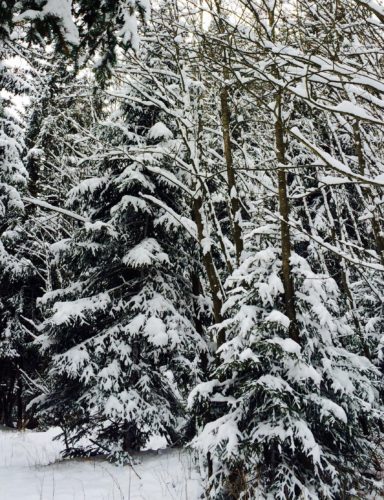 The Purdue Yard and Garden Calendar for January has provided some tips on how to care for your plants as a bitter cold winter sweeps upon us.
HOME
Keep plants near a bright window and hydrated. Increase humidity around houseplants by grouping plants together, placing them on a pebble-water tray or running a humidifier. Check stored produce and tender flower bulbs and roots for rot, shriveling or excess moisture. Remove and discard damaged material.
Repot houseplants as they outgrow current pots.
YARD
Check young trees for rodent injury on lower trunks. Prevent injury with hardware cloth or protective collars.
Keep road and sidewalk salt away from plants. Construct a screen of burlap, if necessary, to keep salt spray off plants.
GARDEN
Order seeds and plants as early as possible for best selection.
Wood ashes from the fireplace can be spread in the garden, but don’t overdo it. Wood ashes increase soil pH, and excess application can make some nutrients unavailable for plant uptake. Have soil tested to be certain of the pH before adding wood ash.
View all of the tips on the Purdue Yard and Garden Calendar page.
Resources
Winter Injury of Ornamentals, The Education Store
Steps To Ensure Your Plants Survive This Winter, Got Nature?
Winterize Your Trees, The Education Store
Purdue Yard and Garden Calendar
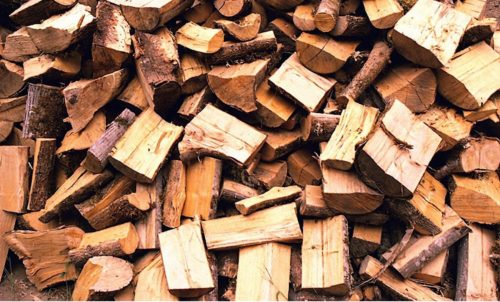 The National Association of State Foresters has published an article debating whether to stack firewood bark up or bark down. They concluded that there are benefits and drawbacks to both ways. When storing wood under shelter, it would depend on personal preference and ease of handling. When split wood is stored outdoors bark down, it is possible that water can collect in the u-shaped trough, causing prolonged drying and accelerating decay. When storing the split wood bark up, it was questioned whether the bark would protect wood from long-term photo-degradation, but it wouldn’t degrade the wood enough to significantly affect thermal output. It was suggested that smaller logs be put perpendicular under stacks of wood to allow for better air-flow and reduce the chance of infestation.
Resources
Wood for Home Heating, The Education Store
Insects in Firewood, The Education Store
Firewood Rules, Indiana DNR
Heating with Firewood, Indiana DNR
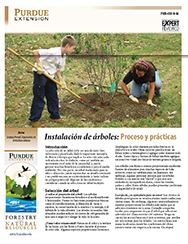 This is a Spanish-language version of our helpful how-to guide, Tree Installation: Process and Practices, which helps in choosing, planting and maintaining trees. It includes a 12-step planting process, Indiana native tree and utility-friendly tree charts, information on Midwest hardiness zones and detailed tree-planting graphics and photographs. View it in The Education Store today!
Resources:
Tree Installation: Process and Practices, The Education Store
Native Trees of the Midwest, The Education Store
Shrubs and Woody Vines of Indiana and the Midwest, The Education Store
Planting Forest Trees and Shrubs in Indiana, The Education Store
Lindsey Purcell, Chapter Executive Director
Indiana Arborist Association
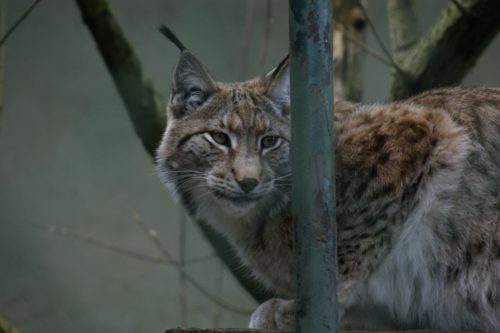 There has been an increase in bobcat sightings throughout central Indiana, namely Hamilton County, according to the Indiana Department of Natural Resources. Bobcats are not dangerous to the public, but beware of them while driving as there have been more “roadkill” cases involving these nocturnal animals. While bobcats were endangered from 1969 to 2005, they are no longer due to their growing population. However, it is still illegal to hunt or trap them in Indiana. Bobcats are also moving south as more males of this species need to find territory of their own. They feed on small animals like rats, mice, moles and squirrels. View the related articles below for more information.
Resources
Bobcat Sightings On Rise In Hamilton County, elsewhere, IndyStar.com
Bobcat, Indiana DNR
As winter comes swiftly upon us, there are precautions we need to take to ensure our plants, both indoor and outdoor, are well taken care of. Below are a few examples of how you can prevent certain problems that occur in the cold months ahead. View all of the steps you can take at the Purdue Extension Yard and Garden Calendar page.
HOME (Indoor plants and activities)
- Houseplants may not receive adequate light because days are short and gloomy. Move plants closer to windows, but avoid placing foliage against cold glass panes. Artificial lighting may be helpful.
- Because growth slows or stops in winter months, most plants will require less water and little, if any, fertilizer.
- Extend the lives of holiday plants such as poinsettias and Christmas cactus by placing them in a cool, brightly lit area that is free from warm or cold drafts.
YARD (Lawns, woody ornamentals and fruits)
- Prevent bark splitting of young and thin-barked trees, such as fruit and maple trees. Wrap trunks with tree wrap or paint them with white latex (not oil-based) paint, particularly on the south- and southwest-facing sides.
- Provide winter protection for roses by mounding soil approximately 12 inches high to insulate the graft union after plants are dormant and temperatures are cold. Additional organic mulch such as straw compost or chopped leaves can be placed on top.
GARDEN (Flowers, vegetables and small fruits)
- To protect newly planted or tender perennials and bulbs, mulch with straw, chopped leaves or other organic material after plants become dormant.
- Store leftover garden chemicals where they will stay dry, unfrozen and out of the reach of children, pets and unsuspecting adults.
- Once the plants are completely dormant and temperatures are consistently below freezing, apply winter mulch to protect strawberries and other tender perennials. In most cases, two to four inches of organic material such as straw, pine needles, hay or bark chips will provide adequate protection.
Resources
Winter Garden Calendar, The Education Store
Winter Storage of Geranium, Canna, Gladiolus, Caladium, and Begonia, The Education Store
Winterize Your Trees, The Education Store
 Over the past few years, an increasing number of marine shrimp enterprises have started up in Indiana. These operations garner attention because of their lower capital costs, their variable scale of production and shrimp’s high market price.
Based on feedback from a 2014 meeting with Indiana shrimp farmers, it appears that both novice and experienced farmers need more technical knowledge. This publication summarizes basic management practices for the majority of farmers raising marine shrimp (Litopenaeus vannamei) in Indiana based on the most current literature available. View it in The Education Store today!
Resources
The Education Store (Search”aquaculture” to find more publications available)
Aquaculture Industry in Indiana Growing, Purdue Today
Aquaculture and Aquatic Resources, Department of Forestry and Natural Resources
Farming Shrimp, and Changing the Industry, Far From an Ocean, article available by news service Aljazeera America
Purdue Extension Helps Rural Communities Reinvent, Revitalize, Purdue Agricultures Magazine
Video: Cage Culture and Aquaponics, FNR Youtube channel
Robert A. Rode, Aquaculture Research Lab Manager
Department of Forestry and Natural Resources

Recent Posts
- 2026 Winter Bat Survey In Progress, MyDNR
Posted: March 27, 2026 in Wildlife - Fast-Growing Trees for the Landscape, Purdue Landscape Report
Posted: March 26, 2026 in Forestry, Urban Forestry, Woodlands - Urban Tree Spotlight: Planting Deciduous Shade Trees, Purdue Landscape Report
Posted: March 25, 2026 in Forests and Street Trees, Urban Forestry, Woodlands - Beetle that attacks Tree-of-Heaven found in Indiana, Purdue Landscape Report
Posted: March 20, 2026 in Invasive Insects, Wildlife, Woodlands - ID That Tree: Dwarf Chinkapin Oak
Posted: in Forestry, Urban Forestry, Wildlife, Woodlands - IN-PREPared: Essential Resources for Indiana’s Severe Weather Season
Posted: March 11, 2026 in How To, Safety - DNR Hiring for Indiana Conservation Officer Positions, MyDNR
Posted: March 9, 2026 in Urban Forestry, Wildlife, Woodlands - ID That Tree: Shumard Oak
Posted: in Plants, Urban Forestry, Wildlife, Woodlands - A Woodland Management Moment: Windbreak Around Walnut Plantings
Posted: March 3, 2026 in Forestry, Urban Forestry, Woodland Management Moment - Getting Certified as an Indiana Certified Prescribed Burn Manager
Posted: March 2, 2026 in How To, Urban Forestry, Woodlands
Archives
Categories
- Alert
- Aquaculture/Fish
- Aquatic/Aquaculture Resources
- Ask the Expert
- Christmas Trees
- Community Development
- Disease
- Drought
- Forestry
- Forests and Street Trees
- Gardening
- Got Nature for Kids
- Great Lakes
- How To
- Invasive Animal Species
- Invasive Insects
- Invasive Plant Species
- Land Use
- Natural Resource Planning
- Nature of Teaching
- Plants
- Podcasts
- Ponds
- Publication
- Safety
- Spiders
- Timber Marketing
- Uncategorized
- Urban Forestry
- Webinar
- Wildlife
- Wood Products/Manufacturing
- Woodland Management Moment
- Woodlands