 Purdue University - Extension - Forestry and Natural Resources
Got Nature? Blog
Emerald Ash Borer University will be providing webinars on the wood-boring pest, the Emerald Ash Borer, along with other pests and disease threats. These live sessions will allow participants to ask questions to the session presenter and moderators. The webinars will last from October to December 2014. To view the webinars, visit the Emerald Ash Borer website.
Resources
Emerald Ash Borer, Purdue Extension
Emerald Ash Borer, Indiana DNR
Invasive Species, Got Nature?
Arrest That Pest! – Emerald Ash Borer in Indiana, Purdue Extension
Cliff Sadof, Professor-Ornamental & Pest Management
Purdue Department of Entomology
For the first time in history, the majority of people reside in cities. For a species that evolved to live in small, primate tribes on the African Savanna, such a migration marks a dramatic shift. In recent years, it’s become clear that such unnatural surroundings have important implications for our mental and physical health and can powerfully alter how we think.
Enter the urban forest. This article, titled How The City Hurts Your Brain by Jonah Lehrer on Boston.com, shares some insight on healthy living in urban areas. Because of the huge migration to city life, urban forests and park spaces have become an integral part of living a healthy life. The good news is that even slight alterations, such as planting more trees in the inner city or creating urban parks with a greater variety of plants, can significantly reduce the negative side effects of city life.
To view more information, see the Urban Forests post from the National Association of State Foresters (NASF).
The Indiana Department of Natural Resources (INDR) has proposed an idea to the state of Indiana to begin work on a two-mile-long berm in northeast Indiana. The berm will restrict Asian carp from reaching the Great Lakes. It will prevent voracious invasive species from jumping from the Mississippi River watershed during floods to a Great Lakes tributary in Eagle Marsh southeast of Fort Wayne. INDR hopes that work will begin this fall and be completed by September 15, 2015.
View the full article, Work Near on Indiana Berm to Block Asian Carp, from greenbaypressgazette.com.
Resources
Indiana Department of Natural Resources
Asian Carp Movements Project, INDR
Eagle Marsh, Little River Wetlands Project
Invasive Asian Carp May Be Able To Spread Further Than Once Thought, Purdue News
Shocking Asian Carp Out of Midwest Rivers Not a Viable Option, Purdue News
Purdue Agriculture Research: Asian Carp, YouTube video
Got Nature? Podcasts
 In the aftermath of a natural disaster such as a hurricane or earthquake, victims could get more than temporary help if the structures erected to provide immediate relief could be easily converted into permanent structures. These converted repurposed buildings could become long-term housing, schools and clinics—or farm and light-industrial buildings. This six-page publication describes two different approaches to building canvas-covered, skeletal, light-timber frames to meet this need.
Light-Timber Frames for Transitional Disaster-Relief Housing is available as a free download at The Education Store.
Resources
First Steps to Flood Recovery, The Education Store
Disaster Recovery, IN.gov
Eva Haviarova, Associate Professor of Wood Products
Department of Forestry and Natural Resources
The Guardian has published an article in regards to the large loss of wildlife in the past 40 years. Due to humans’ rapid consumption practices and our ecological footprint, the Earth cannot replenish what we use fast enough. The WWF analyzed 10,000 different populations consisting of animals, fish and birds in the study to create a representative “Living Planet Index” (LPI). The study showed that freshwater ecosystems had the fastest declining population. While the biggest decline in animal numbers are in low income, developing nations, rich nations are “outsourcing” wildlife decline in developing countries by importing food and other goods produced through habitat destruction. What can you do to make a difference to help keep the Earth clean?
View the full article, Earth Has Lost Half of its Wildlife in the Past 40 Years, says WWF, at theguardian.com.
Resources
Living Planet Report 2014, WWF.panda.org
Land and Water Conservation Fund, Indiana DNR
Saving Energy in Your Home series, The Education Store
 Trees are cultivated in public and private landscapes in and around cities and towns. They are grown for the tremendous contributions they make both to the environment and the quality of people’s lives. In this urban forest, trees must be removed when they die or for reasons of health, safety or necessary changes in the landscape. The wood from these felled landscape trees could potentially be salvaged and used to manufacture wood products but not in the same way as forest-grown trees. This publication describes some key differences between wood products from traditional forests and those available from urban forests.
Urban Wood and Traditional Wood: A Comparison of Properties and Uses is available at The Education Store as a free download.
Resources
Lumber from Hardwood Trees, The Education Store
Winterize Your Trees, The Education Store
Lumber from Urban and Construction-Site Trees, The Education Store
Indiana’s Urban Woodlots, The Education Store
Dan Cassens, Professor of Wood Products and Extension Specialist
Department of Forestry and Natural Resources
Edith Makra, Chairman
Illinois Emerald Ash Borer Wood Utilization Team
 One of the most dangerous pests of trees is humans, especially humans with equipment. Lawn mowers and weed trimmers can cause injuries that can create a hazard when an injury leads to tree disease or death. This publication explains why the damage is so dangerous and suggests ways to protect your trees.
View Lindsey Purcell’s new publication, Mechanical Damage to Trees: Mowing and Maintenance Equipment, today at The Education Store.
Resources
Indiana’s Urban Woodlots, The Education Store
Tree Installation: Process and Practices, The Education Store
Lindsey Purcell, Urban Forestry Specialist
Department of Forestry and Natural Resources
The National Association of State Foresters (NASF) has now provided a Forest Action Plan for Indiana. With our dependency on forests, from clean air and timber to water and wildlife habitat, the sustainability of the forest resources was in question. The Indiana Forest Action Plan recognizes important issues that threaten the sustainability and ecological capacity of Indiana’s forests to provide for all Hoosier citizens.
The Forest Action Plan assessment and strategy can be found on the Forest Action Plans website.
Resources
Forest Action Plan, Indiana Department of Natural Resources
Forest Ecosystem Management in Indiana, The Education Store
Importance of Hardwood Tree Planting, The Education Store

One of the most common questions people ask me is what to do with baby, orphaned wildlife that they find. Recently a homeowner from Carmel asked for advice regarding two hatchling box turtles that her family found in their yard. In early June, they saw the mother laying eggs. They watched the nest periodically throughout the summer only to find two hatchlings just before Labor Day. They wanted to help the young turtles survive but didn’t know what exactly they should do.
Much to the surprise of most people, my answer to this question is almost always “nothing,” regardless of the species. I can’t fault people for wanting to help. That shows me they care about wildlife and are concerned for their well-being. After all, that is a big reason why I got into my line of work. And when it comes to baby animals, we tend to really get concerned. Perhaps that is just the nurturing instinct of parents. We can sometimes forget that wildlife behave very differently than us.
Box turtles may mate anytime during the activity season. During field studies of box turtles in southern Indiana, I encountered pairs mating most often in late summer. After mating, females will store the sperm and delay fertilization up to four years. The following summer (usually late-May to early June), she will locate a nest site, dig the nest, deposit the clutch of eggs and subsequently conceal the nest. The selection of nest sites is unknown, but they generally return to the same area year after year. Some hypothesize they are returning to their own natal region since this is the case for other species of turtles. Once the female deposits her clutch of eggs, they are on their own – box turtles offer no parental care of eggs or hatchlings.
Our good-intended homeowner questioned if the hatchlings she found should be moved to a large state forest (some distance away), a local nature center or the park across the street where she thought the mother came from. Because hatchlings and juvenile box turtles are hard to find, there is very little information known about their movements. It really is not known if the hatching turtles would attempt to cross the street because that is the presumed home of their mother. However, since the wooded park clearly offers better habitat than the housing development, saving the young from a potentially perilous journey across the road is probably ok.
Moving them a long distance away is probably not a good idea and simply not necessary. Based on research of adult movements, we know adult box turtles are very familiar with their home range and are capable of finding this area if displaced from it by up to 3.3 km. Turtles moved a long distance away from their home range may establish a new home range but may also wander great distances looking for home. Similarly, taking the hatchling turtles to a nature center or wildlife rehabilitator isn’t really necessary. They are perfectly fine on their own as long as they have good habitat. Also maintaining a population of box turtles in the park depends on the influx of new turtles.
Resources
Turtles of Indiana, The Education Store
Eastern Box Turtle, Indiana Department of Natural Resources
Orphaned and Injured Animals, Indiana Department of Natural Resources
Brian MacGowan, Extension Wildlife Specialist
Department of Forestry and Natural Resources
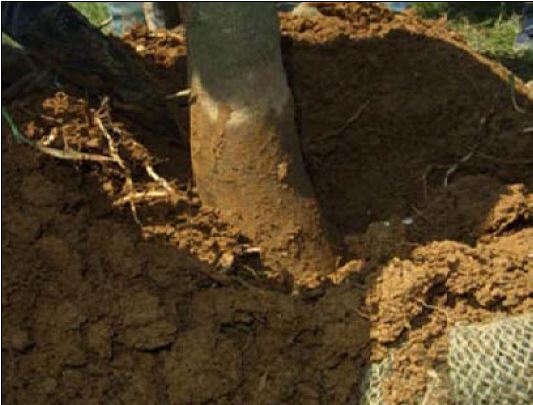 Full Question: I have removed six Silver Maple trees (12″ – 16″ diameter) from my yard because of root intrusion and roots surfacing. Can I treat the stumps by drilling and applying copper sulfate and not be concerned with the existing roots “leaching” to newly planted trees? If there is leaching from the existing roots, how long a period must I wait before replanting a better species of tree(s)? My plans are to replant from approx. 5-6′ from the stump location of the trees that were removed.
Answer: The best treatment for stump and roots left behind from removals is grinding and time. Treating with chemicals is typically not a good solution, nor does it really speed up the process. In fact, copper sulfate is a very caustic chemical. It can cause illness and injury if inhaled or if it comes in contact with your skin. Also do not use copper sulfate if your tree stump is near a water source or if you have children or domestic animals that may accidentally come into contact with the treated area. The copper sulfate that comes into contact with the surrounding landscape can also kill grass, plants and other trees. So caution should be used if you feel the need to use it. However, grinding the stumps and planting into good soil outside the area of the woody debris from the stump is the best course of action. The roots should not cause any issues except depressions in the lawn as they decompose.
Resources:
Tree Installation: Process and Practices, The Education Store, Purdue Extension’s resource center
Tree Pruning Essentials, The Education Store
Tree Appraisal, The Education Store
Tree Installation: Process and Practices, The Education Store
Debrushing, Indiana Department of Natural Resources
Find an Arborist, Trees are Good
Tree wounds and healing, Got Nature? Blog
Ask an Expert: Tree Selection and Planting, Purdue Extension – Forestry and Natural Resources (FNR) YouTube Channel
Planting Your Tree Part 1: Choosing Your Tree, Purdue Extension-FNR YouTube Channel
Subscribe to Purdue Extension-FNR YouTube Channel
Lindsey Purcell, Chapter Executive Director
Indiana Arborist Association

Recent Posts
- Heavy August Rains Bring More Mosquitoes to Indiana
Posted: September 9, 2026 in How To, Invasive Insects, Safety, Wildlife - Question: Why Did the Shagbark Hickories Survive the Tornado?
Posted: August 27, 2026 in Forests and Street Trees, How To, Urban Forestry - New Indiana Woodland Steward Newsletter
Posted: August 12, 2026 in Forestry, Urban Forestry, Wildlife, Woodlands - Indiana Fall Hunting Licenses on Sale and New Mobile App Available
Posted: in Forestry, How To, Wildlife - Trees and Storms: Understanding Damage, Risk and Recovery
Posted: in How To, Urban Forestry - Lighting a Spark: Prescribed Burn Associations
Posted: August 6, 2026 in Community Development, Forestry, Safety, Wildlife - ID That Tree: Nannyberry Viburnum
Posted: July 22, 2026 in Forestry, Plants, Wildlife, Woodlands - ID That Tree: Eastern Swamp Privet
Posted: in Forestry, Plants, Wildlife, Woodlands - Jarred Brooke Receives Early Career Award for Prescribed Fire Work
Posted: July 20, 2026 in Forestry, Forests and Street Trees, Natural Resource Planning, Safety - Bovine Tuberculosis in Wild White-tailed Deer: Background and Frequently Asked Questions
Posted: in Disease, Natural Resource Planning, Wildlife
Archives
Categories
- Alert
- Aquaculture/Fish
- Aquatic/Aquaculture Resources
- Ask the Expert
- Christmas Trees
- Community Development
- Disease
- Drought
- Forestry
- Forests and Street Trees
- Gardening
- Got Nature for Kids
- Great Lakes
- How To
- Invasive Animal Species
- Invasive Insects
- Invasive Plant Species
- Land Use
- Natural Resource Planning
- Nature of Teaching
- Plants
- Podcasts
- Ponds
- Publication
- Safety
- Spiders
- Timber Marketing
- Urban Forestry
- Webinar
- Wildlife
- Wood Products/Manufacturing
- Woodland Management Moment
- Woodlands