 Purdue University - Extension - Forestry and Natural Resources
Got Nature? Blog
 Soundscape ecology is a new field of research that investigates how sound in the environment can be used to assess ecosystem health as well as human connection to nature and the environment in general. With this app, you can help capture and preserve sounds of the Earth and highlight their bellwether role in alerting scientists to environmental habitat changes by species. This app was originally launched to encourage the general public’s citizen researchers to capture natural sound recordings and upload them for preservation during Earth Day 2014. However, we are continuing to preserve sounds that you capture using this app.
Resources
Center for Global Soundscapes
Conserving Biodiversity in Agricultural Landscapes, Purdue University Press
Managing Forest & Wildlife Resources: An Integrated Approach, The Education Store
Bryan Pijanowski, Professor of Human-Environment Modeling and Analysis Laboratory
Department of Forestry and Natural Resources
 Randy Creaser, a graduate student working with Liz Flaherty, Assistant Professor of Wildlife Ecology and Habitat Management, is collaborating with Polar Bears International (PBI). This research consists of developing noninvasive methods to monitor the Western Hudson Bay polar bear population using photography. These methods will allow scientists to document trends in the population along with providing estimates of body condition. The ultimate goal of this project is to further develop a citizen science project that will allow the public to submit and measure their bear and wildlife photos using our methods. Watch the video to learn more about the program. You can learn what other graduate students are doing by visiting their profile pages or attending their events on campus.
Resources
Polar Bears International
Graduate Studies, Purdue FNR
Graduate Spotlight, Purdue Agriculture
Got Nature?
Department of Forestry and Natural Resources
Purdue University
Communities in developing countries have limited budgets for education. Even though they may provide a school building, they often don’t have money to buy furniture to equip it. However, low-cost, durable, attractive school chairs can be produced in essentially any region of the world from locally available wood, wood residues or semi-processed woody materials. These chairs could fill a need for economical, functional school furniture in developing countries. This six-page publication describes the process for producing these kinds of chairs.
How to Build a Simple Chair for Schools or Homes in Disadvantaged Areas of the World Using Local Resources and Low-End Technology is available in The Education Store today!
Resources
Joint Design Manual for Furniture Frames Constructed of Plywood and Oriented Strand Board, The Education Store
The Shrinking and Swelling of Wood and Its Effect on Furniture, The Education Store
Performance Test Method for Intensive Use Chairs – FNEW 83-269: A Description of the Test Method with Drawings, The Education Store
How Baby Bear’s Chair Was Made, The Education Store
Eva Haviarova, Associate Professor of Wood Products
Carl A. Eckelman, Professor of Wood Products
Department of Forestry and Natural Resources, Purdue University
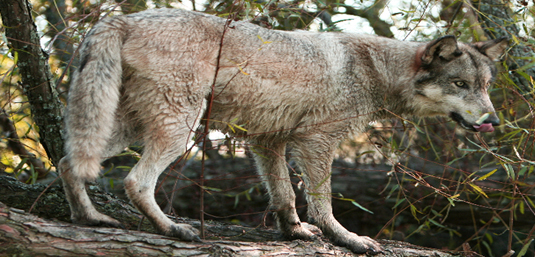 An Obama administration decision sought to remove gray wolves in the Great Lakes region from the endangered species list. However, a federal judge gave a 111-page opinion and ruled to keep the wolves on the list, resulting in a ban to trap and hunt wolves in the surrounding states. Michigan, Minnesota and Wisconsin were mainly affected by the ruling because they have allowed hunting and trapping of the wolves for one season already. There have been arguments on both side of the fence for these wolves. The Elkhart Truth reports, “Animal protection advocates repeatedly have sued over federal efforts to drop federal protections in both regions, arguing that the wolf’s situation remains precarious. Meanwhile, ranchers and farmers complain of heavy financial losses from wolf attacks on livestock.” As of today, it is only legal to shoot wolves if they are threatening human life. It is illegal to kill the wolves even if they are preying on livestock or pets.
Resources
Some Gray Wolves to be Returned to Endangered List, AP News
Gray Wolves in the Northern Rocky Mountains, U.S. Fish and Wildlife Service
Hunting and Trapping Guide, Indiana Department of Natural Resources
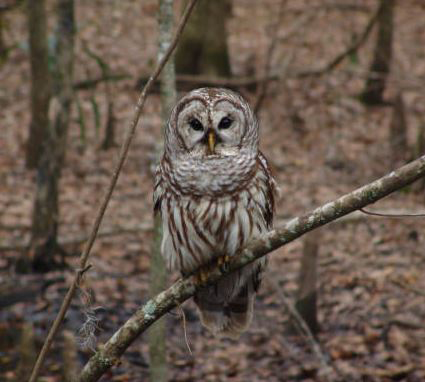
Photo Credit: U.S. Fish and Wildlife Service.
It’s me, the crazy wildlife student again. This time, I’m running around in the dark playing owl calls in the middle of the woods.
What was I doing? Owl surveys, and I was helping provide data for the Hardwood Ecosystem Experiment (or HEE). Basically what we’re trying to figure out is if barred owls and eastern screech owls prefer managed or unmanaged forests. Do they like pristine, untouched areas? Or do they desire a changing atmosphere where timber harvests are opening up new areas and there’s more variation in the age of trees? The data may tell. However, the process to get it is interesting. We drive between different checkpoints with about 90 for barred owls and 100 for eastern screech owls. At each of these, we blare owl noises out of a truck and wait for anything to respond.
How is this fun? Well first, I got to travel with Jeff Riegel, Field Supervisor of the HEE. He helped me understand what we were doing and told me all about the HEE as we bumped along logging roads just wide enough for his truck. “Be prepared for anything,” he told me as he took out a blowtorch to unfreeze lock after lock. He also had a chainsaw in case of fallen trees among various other tools I’m sure have been put to good use.
It was pretty cold outside, just hovering under 20 degrees Fahrenheit, and it was dropping as snow began to quilt the forest. It was also very quiet. One of the only disturbances was when we spooked an eastern screech owl; it flew away in its unique way, wings flapping rapidly but its body perfectly still in flight. As we repeated the process of the survey again and again (pop in the CD, roll down the windows, open both back doors and stand in front of the truck with the lights off), I scanned the trees for the silhouettes of owls as snow filtered down through the scarce frozen leaves. Jeff talked about how some owls would perch at the same branch every year and respond to the calls. He also talked about the volunteers that kept up the data flow, how some did it to enjoy the quiet night atmosphere, while others did it just to get the chance to hear the eerie but beautiful sounds of the owls. Even better was the chance to see dark wings among the trees.
The surveys are conducted in the winter to avoid messing with the owls’ nesting season. An owl’s eggs can freeze quickly if left unattended, and the birds will come to investigate the calls to make sure their territory is not being encroached upon, leaving the eggs. The timing has to be careful.
They’re mysterious creatures, but their calls remind us that the forest is alive in the darkness.
Learn more about the Hardwood Ecosystem Experiment.
Morgan Sussman, Freshman
Department of Forestry and Natural Resources, Purdue Univeristy
 Ever wondered why people go into wildlife? I mean, we’re expected to have low salaries. Why are we spending so much money to get a degree where we’ll go out to observe animals for a living or manage them? Can’t we do that as an everyday person with pets?
I can’t answer this question for everyone, but I’ll give it a shot. We are fascinated by the world around us. We love it and want to understand it, along with our role in it. It’s that simple.
There’s so much to be learned as a student in wildlife, even though we’ve been living alongside the concepts we’re learning about all our lives. Every time I walk into my Introduction to Environmental Conservation class, I walk out and gain an entirely new viewpoint. Recycling has taken on a whole new meaning when put into the dimensions of its actual effects. All my bathroom products give me a deep sense of suspicion because there are simply so many different chemicals and plastics being used with them. I have developed a rational hatred for ginkgo trees while on Purdue’s campus; not only do they stink, they’re also not even native. I worry about the squirrel population because that many squirrels in 10 yards of grass cannot be healthy. I’m all for wooden buildings, so long as it’s sustainable, thanks to carbon sequestration. Did you know wood is made up of 50 percent carbon? So when it’s built into buildings, it’s not actually harming the environment because it’s still holding in all that carbon dioxide that would have gone into the atmosphere had the tree been burned or decomposed. All this to say, I just pay a lot more attention to the environment around me.
Those are just some of the concepts we’ve learned so far, and it’s a blast. On top of this, I feel like we’re actually doing something good for humanity. Not many people want to do the dirty work or have months of research credited with one line in a scientific paper. However, we get to better see how it’s all interconnected. The world is more entwined than anyone knows. If everyone took just one day to be a wildlife student, it would be an incredible transformation in the world, even if each person only took one aspect away from the lesson learned.
Resources
FNR Majors and Minors, Purdue FNR
Prospective Students, Purdue FNR
We Know Nature! FNR This is Your Class Project Video
Morgan Sussman, Freshman
Department of Forestry and Natural Resources, Purdue University
 The invasive insect has made its way to its 79th county, Sullivan County. It was recently spotted in Jennings, Pike, Scott, Spencer and Warrick counties. There are only a few counties in southern Indiana that have not been affected by the Emerald Ash Borer (EAB). In order to slow the spread of the EAB, the Indiana Department of Natural Resources (DNR) has restricted the movement of ash trees, limbs and untreated ash lumber with bark attached or any cut hardwood lumber of any species with bark attached. Visitors to DNR properties may only bring in firewood that has been certified by the USDA or DNR Division of Entomology and Plant Pathology or is free of bark. Homeowners should also be aware of this invasive species. To learn more about the EAB and what signs to look for if your tree is infected, take a look at the resources below.
Resources
Arrest That Pest! – Emerald Ash Borer in Indiana, Purdue Extension
Invasive Species, Got Nature?
Emerald Ash Borer, Indiana Department of Natural Resources
Emerald Ash Borer in Indiana, Purdue Extension
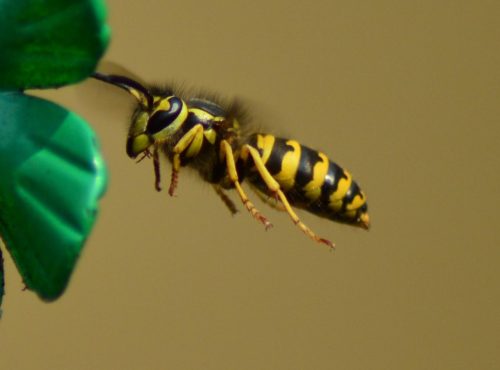 This question and answer were provided by Purdue Extension: In the Grow.
Question: I have small evergreen trees planted in my yard. They are the small, slow-growing type. They are around eight years old. Every fall, the yellow jackets start swarming around them, crawling in and out of the inside of the tree. They don’t seem to hurt it, but it looks like they are trying to find something, acting like a honey bee on a flower. But these have no flowers. They don’t bother us as long as we don’t get too close. Could you tell me why this is happening? – C.K., Shoals, Indiana
Answer: Our Purdue entomologists advise that yellow jackets commonly scavenge for food in the fall, and it is likely they are attracted to tree resin or sap that has some sugar content. Scavenging yellow jackets are less aggressive than those that are protecting a nest. And you are correct; they will not harm the trees and will generally not attack unless provoked. We commend you for aiming for a peaceful coexistence!
View the full post at Purdue Extension’s: In the Grow website.
Resources
Social Bees and Wasps, The Education Store
Indiana Beekeepers Swarm List, Indiana DNR
Department of Entomology, Purdue University
Purdue Extension: In the Grow
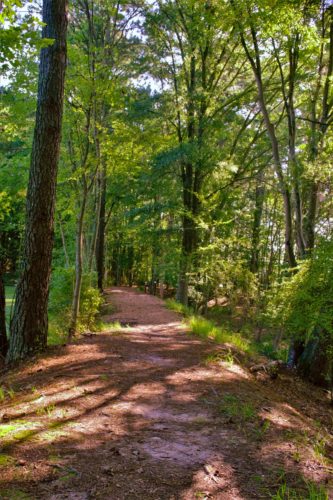 The Washington Post has published an article stating that experts fear how smaller parcels of forest owned, combined with an increase in the number of owners, will affect the long-term health of the American woodlands. With smaller parcels of land, owners are less likely to invest in forest management plans because managing wildlife is more difficult compared to a larger parcel of land. Also the average age of those who privately own forest land is 62.5. The article pointed out how the best and most important thing to do is bridge the gap between the generations, so parents and children talk to each other and know what they want. The restoration of the forest land will benefit many generations to come.
View the full article “Experts Fear For Long-Term Health of U.S. Forests” at The Washington Post’s website.
Resources
State Forest Management Guides, Indiana DNR
Forest Health, Indiana DNR
A Landowner’s Guide to Sustainable Forestry: Part 2: Planning for the Future, The Education Store
Got Nature?
Department of Forestry and Natural Resources, Purdue University
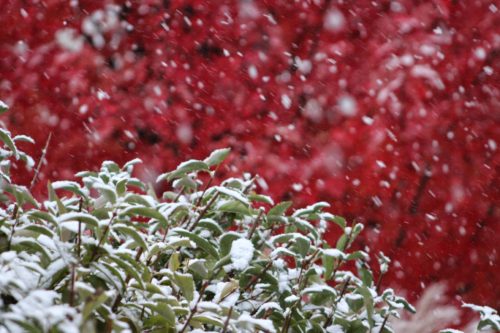 You may be considering giving a plant as a holiday gift this year. But before you buy your plant, there are precautions you need to take into consideration in order to keep it healthy. Purdue Yard and Garden News has some tips for you.
Your plant can get damaged due to cold, frigid air. Ensure that the salesperson wraps your purchase to protect it from the cold temperatures and wind as you walk back to your car. Also preheat your car to keep it out of the cold for the shortest time possible.
Keep plants away from drafts when you return home. Instead, put it in a place that is 60-70 degrees Fahrenheit during the day and provides plenty of bright light. Water your plant until some excess water comes through the drainage holes at the bottom.
View all of the tips on the Purdue Yard and Garden News page.
Resources
Effects of Cold Weather on Horticultural Plants in Indiana, The Education Store
Winter Injury of Ornamentals, Purdue e-Pubs
How To Care For Your Amaryllis, Purdue Yard and Garden News
Purdue Yard and Garden

Recent Posts
- Heavy August Rains Bring More Mosquitoes to Indiana
Posted: September 9, 2026 in How To, Invasive Insects, Safety, Wildlife - Question: Why Did the Shagbark Hickories Survive the Tornado?
Posted: August 27, 2026 in Forests and Street Trees, How To, Urban Forestry - New Indiana Woodland Steward Newsletter
Posted: August 12, 2026 in Forestry, Urban Forestry, Wildlife, Woodlands - Indiana Fall Hunting Licenses on Sale and New Mobile App Available
Posted: in Forestry, How To, Wildlife - Trees and Storms: Understanding Damage, Risk and Recovery
Posted: in How To, Urban Forestry - Lighting a Spark: Prescribed Burn Associations
Posted: August 6, 2026 in Community Development, Forestry, Safety, Wildlife - ID That Tree: Nannyberry Viburnum
Posted: July 22, 2026 in Forestry, Plants, Wildlife, Woodlands - ID That Tree: Eastern Swamp Privet
Posted: in Forestry, Plants, Wildlife, Woodlands - Jarred Brooke Receives Early Career Award for Prescribed Fire Work
Posted: July 20, 2026 in Forestry, Forests and Street Trees, Natural Resource Planning, Safety - Bovine Tuberculosis in Wild White-tailed Deer: Background and Frequently Asked Questions
Posted: in Disease, Natural Resource Planning, Wildlife
Archives
Categories
- Alert
- Aquaculture/Fish
- Aquatic/Aquaculture Resources
- Ask the Expert
- Christmas Trees
- Community Development
- Disease
- Drought
- Forestry
- Forests and Street Trees
- Gardening
- Got Nature for Kids
- Great Lakes
- How To
- Invasive Animal Species
- Invasive Insects
- Invasive Plant Species
- Land Use
- Natural Resource Planning
- Nature of Teaching
- Plants
- Podcasts
- Ponds
- Publication
- Safety
- Spiders
- Timber Marketing
- Urban Forestry
- Webinar
- Wildlife
- Wood Products/Manufacturing
- Woodland Management Moment
- Woodlands