 Purdue University - Extension - Forestry and Natural Resources
Got Nature? Blog
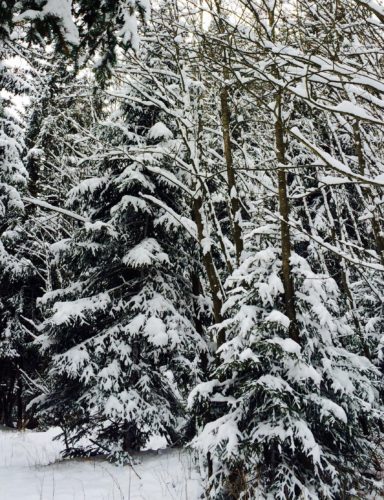 The Purdue Yard and Garden Calendar for January has provided some tips on how to care for your plants as a bitter cold winter sweeps upon us.
HOME
Keep plants near a bright window and hydrated. Increase humidity around houseplants by grouping plants together, placing them on a pebble-water tray or running a humidifier. Check stored produce and tender flower bulbs and roots for rot, shriveling or excess moisture. Remove and discard damaged material.
Repot houseplants as they outgrow current pots.
YARD
Check young trees for rodent injury on lower trunks. Prevent injury with hardware cloth or protective collars.
Keep road and sidewalk salt away from plants. Construct a screen of burlap, if necessary, to keep salt spray off plants.
GARDEN
Order seeds and plants as early as possible for best selection.
Wood ashes from the fireplace can be spread in the garden, but don’t overdo it. Wood ashes increase soil pH, and excess application can make some nutrients unavailable for plant uptake. Have soil tested to be certain of the pH before adding wood ash.
View all of the tips on the Purdue Yard and Garden Calendar page.
Resources
Winter Injury of Ornamentals, The Education Store
Steps To Ensure Your Plants Survive This Winter, Got Nature?
Winterize Your Trees, The Education Store
Purdue Yard and Garden Calendar
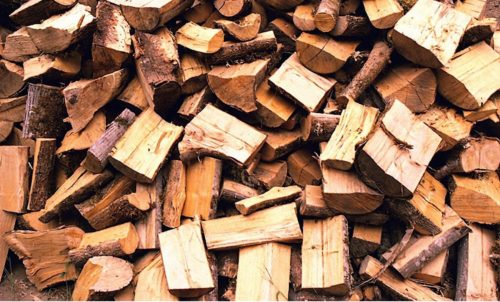 The National Association of State Foresters has published an article debating whether to stack firewood bark up or bark down. They concluded that there are benefits and drawbacks to both ways. When storing wood under shelter, it would depend on personal preference and ease of handling. When split wood is stored outdoors bark down, it is possible that water can collect in the u-shaped trough, causing prolonged drying and accelerating decay. When storing the split wood bark up, it was questioned whether the bark would protect wood from long-term photo-degradation, but it wouldn’t degrade the wood enough to significantly affect thermal output. It was suggested that smaller logs be put perpendicular under stacks of wood to allow for better air-flow and reduce the chance of infestation.
Resources
Wood for Home Heating, The Education Store
Insects in Firewood, The Education Store
Firewood Rules, Indiana DNR
Heating with Firewood, Indiana DNR
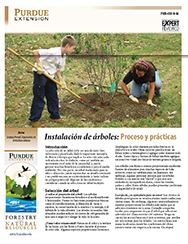 This is a Spanish-language version of our helpful how-to guide, Tree Installation: Process and Practices, which helps in choosing, planting and maintaining trees. It includes a 12-step planting process, Indiana native tree and utility-friendly tree charts, information on Midwest hardiness zones and detailed tree-planting graphics and photographs. View it in The Education Store today!
Resources:
Tree Installation: Process and Practices, The Education Store
Native Trees of the Midwest, The Education Store
Shrubs and Woody Vines of Indiana and the Midwest, The Education Store
Planting Forest Trees and Shrubs in Indiana, The Education Store
Lindsey Purcell, Chapter Executive Director
Indiana Arborist Association
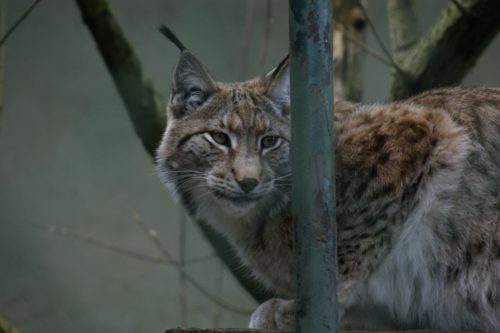 There has been an increase in bobcat sightings throughout central Indiana, namely Hamilton County, according to the Indiana Department of Natural Resources. Bobcats are not dangerous to the public, but beware of them while driving as there have been more “roadkill” cases involving these nocturnal animals. While bobcats were endangered from 1969 to 2005, they are no longer due to their growing population. However, it is still illegal to hunt or trap them in Indiana. Bobcats are also moving south as more males of this species need to find territory of their own. They feed on small animals like rats, mice, moles and squirrels. View the related articles below for more information.
Resources
Bobcat Sightings On Rise In Hamilton County, elsewhere, IndyStar.com
Bobcat, Indiana DNR
As winter comes swiftly upon us, there are precautions we need to take to ensure our plants, both indoor and outdoor, are well taken care of. Below are a few examples of how you can prevent certain problems that occur in the cold months ahead. View all of the steps you can take at the Purdue Extension Yard and Garden Calendar page.
HOME (Indoor plants and activities)
- Houseplants may not receive adequate light because days are short and gloomy. Move plants closer to windows, but avoid placing foliage against cold glass panes. Artificial lighting may be helpful.
- Because growth slows or stops in winter months, most plants will require less water and little, if any, fertilizer.
- Extend the lives of holiday plants such as poinsettias and Christmas cactus by placing them in a cool, brightly lit area that is free from warm or cold drafts.
YARD (Lawns, woody ornamentals and fruits)
- Prevent bark splitting of young and thin-barked trees, such as fruit and maple trees. Wrap trunks with tree wrap or paint them with white latex (not oil-based) paint, particularly on the south- and southwest-facing sides.
- Provide winter protection for roses by mounding soil approximately 12 inches high to insulate the graft union after plants are dormant and temperatures are cold. Additional organic mulch such as straw compost or chopped leaves can be placed on top.
GARDEN (Flowers, vegetables and small fruits)
- To protect newly planted or tender perennials and bulbs, mulch with straw, chopped leaves or other organic material after plants become dormant.
- Store leftover garden chemicals where they will stay dry, unfrozen and out of the reach of children, pets and unsuspecting adults.
- Once the plants are completely dormant and temperatures are consistently below freezing, apply winter mulch to protect strawberries and other tender perennials. In most cases, two to four inches of organic material such as straw, pine needles, hay or bark chips will provide adequate protection.
Resources
Winter Garden Calendar, The Education Store
Winter Storage of Geranium, Canna, Gladiolus, Caladium, and Begonia, The Education Store
Winterize Your Trees, The Education Store
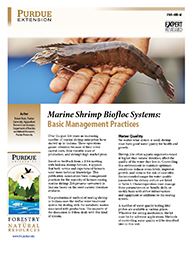 Over the past few years, an increasing number of marine shrimp enterprises have started up in Indiana. These operations garner attention because of their lower capital costs, their variable scale of production and shrimp’s high market price.
Based on feedback from a 2014 meeting with Indiana shrimp farmers, it appears that both novice and experienced farmers need more technical knowledge. This publication summarizes basic management practices for the majority of farmers raising marine shrimp (Litopenaeus vannamei) in Indiana based on the most current literature available. View it in The Education Store today!
Resources
The Education Store (Search”aquaculture” to find more publications available)
Aquaculture Industry in Indiana Growing, Purdue Today
Aquaculture and Aquatic Resources, Department of Forestry and Natural Resources
Farming Shrimp, and Changing the Industry, Far From an Ocean, article available by news service Aljazeera America
Purdue Extension Helps Rural Communities Reinvent, Revitalize, Purdue Agricultures Magazine
Video: Cage Culture and Aquaponics, FNR Youtube channel
Robert A. Rode, Aquaculture Research Lab Manager
Department of Forestry and Natural Resources
Communities that have been infested by emerald ash borers can apply for a share of a federal grant received by the Indiana Department of Natural Resources. This federal grant worth $100,000 will allow for communities in the Great Lakes area to take on tree-planting projects. Due to the loss of trees in the infested areas, planting trees will help replace the large amounts of trees lost by the emerald ash borer. The tree planting project will also improve water quality. Flooding due to storms can cause raw sewage to enter waterways, but trees can intercept the water to stop the flooding. A three inch tree is able to intercept around 400 gallons of water; 800 trees can intercept 320,000 gallons of water which can greatly decrease the chances of flooding. Communities that would like to apply for a share in the grant can first subscribe to the grants information listserv by visiting the Indiana DNR’s forestry site and click on the red envelope on the left side of the page.
Resources
DNR Receives Grant to Help Communities Recover From Ash Borer, Indiana DNR
Emerald Ash Borer, Purdue Extension
Emerald Ash Borer, Indiana DNR
Invasive Insects, Got Nature?
Arrest That Pest! – Emerald Ash Borer in Indiana, Purdue Extension
Carrie Tauscher, Urban Forestry Specialist
Indiana Department of Natural Resources (INDNR)
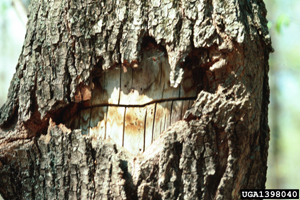
Glycobius speciosus, sugar maple borer, photo by Steven Katovich, USDA Forest Service.
Some of the most diverse taxa on the planet are rarely seen yet play critical roles within our environment. The insects found in the Order Coleoptera (beetles) are represented by over 500,000 species. Collectively, these insects provide a wide range of ecosystem services. They are important pollinators and predators on other insects, and they play essential roles in nutrient cycling. While most species are beneficial or vital for ecosystem functions, there are a few species that are considered pests.
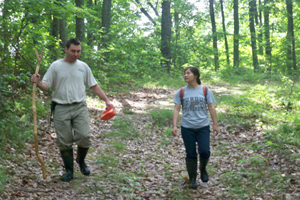
Dr. Jeff Holland and research team studying sugar maple borer in the woods.
The Sugar Maple Borer is a native species found throughout the eastern United States. The larval stage of the beetle specializes in feeding on sugar maple trees, particularly stressed or injured trees. In this podcast, our host, Rod Williams, will be interviewing Dr. Jeff Holland about the unique distribution of this wood-boring beetle, how to survey for this species on your property and the impacts to sugar maple trees throughout the eastern deciduous forests.
To find out more information about sugar maple borers, visit:
Holland Website
Bug Guide Identification
Resources
The Education Store (Search entomology or forest)
Got Nature? Blog Posts
Got Nature? Blog Posts
Jeff Holland, Associate Professor of Spatial Ecology and Biodiversity
Department of Entomology, Purdue University
Rod Williams, Associate Professor of Wildlife Science
Department of Forestry and Natural Resources, Purdue University
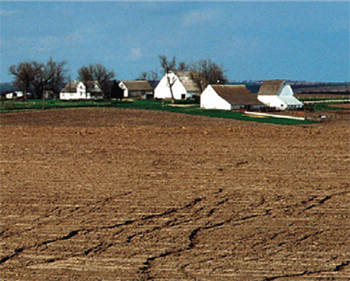 Agricultural educators, community organizers and others promoting environmental awareness can learn about the myths and realities of agricultural conservation from the perspective of a researcher, practitioner and student in a new Purdue Extension publication.
Adoption of Agricultural Conservation Practices: Insights from Research and Practice, developed by the Department of Forestry and Natural Resources at Purdue University, is available for free download from The Education Store.
The authors (Linda Prokopy, associate professor of Natural Resource Social Science; Dan Towery, Indiana Conservation Cropping System Initiative educator; and Nicholas Babin, postdoctoral research assistant in Forestry and Natural Resources) use academic studies and their own observations to address ways of motivating farmers to adopt environmentally-friendly farming practices.
To read the full article, visit Ag conservation publications available from Purdue Extension, Purdue Agriculture News.
Resources
Indiana Soils: Evaluation and Conservation Manual Review, Purdue Agronomy
Conservation Tillage and Water Quality, Purdue Extension
Optimizing Conservation Tillage Systems: Plant-to-Plant Uniformity is Essential for Optimum Yield in No-Till Cont. Corn, The Education Store
Linda Prokopy, Associate Professor of Natural Resource Social Science
Department of Forestry and Natural Resources
 The Wildlife Habitat Education Program (WHEP) helps students understand wildlife ecology and management practices. In addition, students gain skills in teamwork, oral and written communication, decision-making and leadership. The WHEP career development event includes three activities: Wildlife Challenge, Wildlife Management Practices and Wildlife Management Plan. Each activity has an important role in teaching about the management of wildlife populations. The instructions in this publication can help leaders teach students to evaluate habitat for Wildlife Management Practices (WMPs).
Wildlife Habitat Education Program – Teaching and Learning Wildlife Management Practices is available at The Education Store today.
Resources
Wildlife Habitat Education Program (WHEP)
A Template for Your Wildlife Habitat Management Plan, The Education Store
Managing Forest and Wildlife Resources: An Integrated Approach, The Education Store
Teaching and Learning Wildlife Management Practices, The Education Store
Indiana’s State Wildlife Action Plan, Indiana DNR
Brian MacGowan, Extension Wildlife Specialist
Department of Forestry and Natural Resources

Recent Posts
- Heavy August Rains Bring More Mosquitoes to Indiana
Posted: September 9, 2026 in How To, Invasive Insects, Safety, Wildlife - Question: Why Did the Shagbark Hickories Survive the Tornado?
Posted: August 27, 2026 in Forests and Street Trees, How To, Urban Forestry - New Indiana Woodland Steward Newsletter
Posted: August 12, 2026 in Forestry, Urban Forestry, Wildlife, Woodlands - Indiana Fall Hunting Licenses on Sale and New Mobile App Available
Posted: in Forestry, How To, Wildlife - Trees and Storms: Understanding Damage, Risk and Recovery
Posted: in How To, Urban Forestry - Lighting a Spark: Prescribed Burn Associations
Posted: August 6, 2026 in Community Development, Forestry, Safety, Wildlife - ID That Tree: Nannyberry Viburnum
Posted: July 22, 2026 in Forestry, Plants, Wildlife, Woodlands - ID That Tree: Eastern Swamp Privet
Posted: in Forestry, Plants, Wildlife, Woodlands - Jarred Brooke Receives Early Career Award for Prescribed Fire Work
Posted: July 20, 2026 in Forestry, Forests and Street Trees, Natural Resource Planning, Safety - Bovine Tuberculosis in Wild White-tailed Deer: Background and Frequently Asked Questions
Posted: in Disease, Natural Resource Planning, Wildlife
Archives
Categories
- Alert
- Aquaculture/Fish
- Aquatic/Aquaculture Resources
- Ask the Expert
- Christmas Trees
- Community Development
- Disease
- Drought
- Forestry
- Forests and Street Trees
- Gardening
- Got Nature for Kids
- Great Lakes
- How To
- Invasive Animal Species
- Invasive Insects
- Invasive Plant Species
- Land Use
- Natural Resource Planning
- Nature of Teaching
- Plants
- Podcasts
- Ponds
- Publication
- Safety
- Spiders
- Timber Marketing
- Urban Forestry
- Webinar
- Wildlife
- Wood Products/Manufacturing
- Woodland Management Moment
- Woodlands