 Purdue University - Extension - Forestry and Natural Resources
Got Nature? Blog
 Trees are lost every year from storm-related events. Major damage to parts of the tree or even the entire tree can result from high winds, snow and ice. Historic, specimen and significant trees provide value to the landscape and the community, and these trees can become aesthetic, financial and social losses in storms. In addition to physical damage or loss, risk and liability can become a concern to people and the surrounding property. Seasonal storms can cause extensive damage depending on timing and intensity. Deciding what to do with damaged trees is an important process.
Over time, trees swaying in the wind develop extra strength to withstand directional forces. If conditions are consistent, trees will initiate changes in their development to compensate for these loading patterns. They are biologically engineered to adjust to external loading, under normal conditions. This fiber strength can minimize the impact of external forces, unless they are excessive, such as during a storm. Typically, these loads come from wind. However, ice and snow also can cause damage from excessive weight on branches.
Typical weather events are not an issue for trees. They are engineered to withstand normal conditions. However, some storms can exert extreme forces, resulting in injuries of varying degrees. It is at this point that a tree owner or manager must make an informed decision based on the extent of the damage. The assistance of a trained arborist can help determine if a tree can be saved from sustained injuries, or if it requires removal
The response to storm damage should be based primarily on two concepts: risk and sustainability. If the tree is an imminent or likely danger to people, property or activities, the decision leaves little room for options. However, if the residual risk from the damage is determined to be of an acceptable level and the injury to the tree not life- threatening, mitigation may be possible to save the tree and reduce the danger.
There are several types of tree damage that occur from violent weather. Each has its own specific assessment considerations. All parts of the tree should be inspected during a post-storm assessment.

Excessive winds uproot large trees with weak root systems
Some common damage found includes:
Wind Throw
The entire tree is “pushed over” by high winds. The loading forces on the aerial tree portions are too great for the developed root system. Previous harm from activities such as construction damage, lack of maintenance and attacks from pests predisposes the tree to damage with poor anchorage or health. Inspect the root plate of each tree on a regular basis to determine if there are any root health issues. Look for fungal fruiting bodies, exposed roots, lifting or other damage. Larger or more mature trees that have been completely uprooted are typically not salvageable
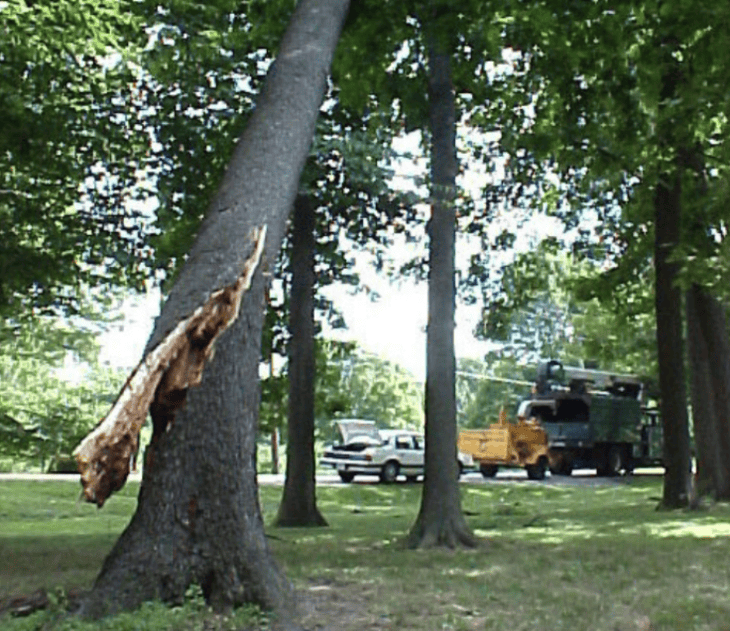
Tree trunks fail at their weakest points, causing them to snap or
break.
Stem Failure
Trees will fail at their weakest point. Typically, failure is caused by the combination of a defect and external forces. Old injury sites or wounds are common on tree trunks, and these damaged areas can lead to tree failure under excessive loads. Also, trees newly exposed to prevailing winds from development or removal can be at greater risk. Trunks can snap or buckle if the tree is unable to withstand the wind forces. Damage from stem failure usually cannot be repaired. Trees with major defects on the trunk should be examined carefully to determine the degree of risk for that location. Look for decayed areas, cavities, nesting holes and fungal fruiting bodies for indicators. The extent and location of these defects will help the arborist determine the potential for failure.
Crown Twist
The tree canopy contains an array of leaves, twigs and branches that make up the crown portion of the tree.
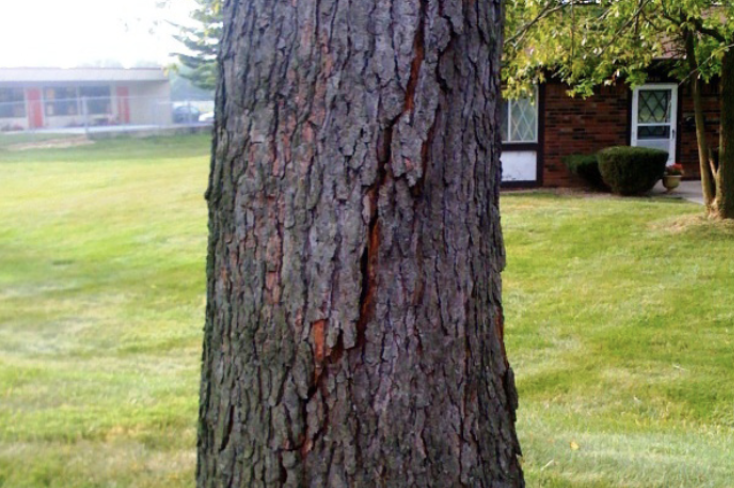
Winds causing a twist of the trunk can leave dangerous splits and
cracks.
Many times, the crown can have an uneven geometry from competition or poor pruning, leaving an unequal appearance. The result of this situation in high winds can be trouble. Uneven wind loading on the lopsided crown produces a damaging twist on major branches and the stem. This twisting causes torsional stress, much like twisting a rope backwards, resulting in splits and cracking. This is especially damaging around old wounds or other defects, which can lead to failure. Close investigation is necessary to spot these often-subtle cracks. Often this damage can be mitigated in branches; however, take caution with damaged trunks.
Root Failure
Stability and anchorage are important roles of the root system for keeping a tree upright.
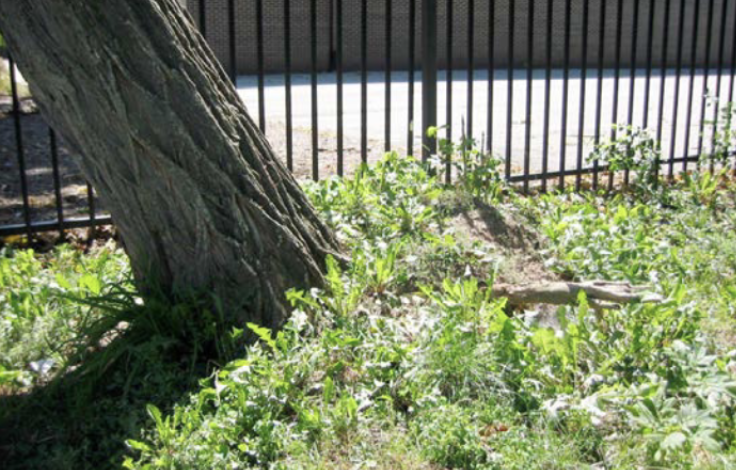
Root failure often leaves trees leaning. Look for exposed roots after
high wind storms.
Both the structural, woody roots and the fine absorbing roots create an effective network of strength to withstand wind-loading forces. As the tree becomes larger, increased stress is put on the roots to maintain stability.
Roots that are restricted, diseased or damaged can cause trees to lean and fall. Careful examination of the root plate is needed to determine if anchorage is compromised. Look for heaving soil and roots around the tree trunk, which can present a high-risk situation. The presence of pulled or broken roots, as well as any mushroom development around the root system, also can be indicators of defects in the roots. Depending on the age, size and degree of exposure, mitigation may be possible. Young trees with healthy roots systems can be up righted and staked or guyed with success. However, if more than 30 percent of the roots are exposed, removal may be the better option.

Damage to branches, such as shear plane cracks, should be
removed by proper pruning.
Branch Failure
Tree branches are easy victims of loading forces. Whether it is axial loading from snow or ice accretion or lateral, side loading from wind, damage is frequent. Because branches can sometimes be poorly attached to the main stems, they can easily experience injury. However, this structural arrangement allows the branches to be flexible and disposable, and easily shed in times of stress to help dampen the impact of wind, minimizing damage to the larger, structural branches.
Poor architecture and development, such as codominant stems and included bark in branch junctions, predisposes branches to failure and often are the first to experience damage. Branch failure can be easily repaired and not lethal to the tree unless more than half the crown has been destroyed. However, they can create high-risk situations in the wrong places. Learn to recognize dead, broken, hanging limbs or other signs of damage to reduce risk. Often twisted and cracked branches are difficult to see and may need closer inspection by an arborist to identify. Be sure to use pruning best practices when correcting damage in the crown.
There are other forms of damage, such as lightning damage, which can be detrimental and even lethal to trees. A certified arborist or qualified consulting arborist can help provide a prognosis.
Storm Damage Prevention
It is impossible to protect a tree from storms or prevent damage from weather events. However, there are some actions that can minimize injury to trees.
The best preparation begins when trees are young or newly planted. Do not stake or guy trees unless absolutely necessary. This prevents development of internal adjustments to wind with response wood growth. Let the tree adjust to local conditions by allowing natural movement.
Functional pruning helps trees form a healthy, more wind-resistant crown. Inspection and corrective pruning of newly planted trees produces a stronger structure. Eliminate codominant stems by pruning these weak- forked branches. Choose a good, strong central leader for young trees. This will prevent losing the whole crown in the future. Choose branches with even spacing, radially around the tree for balance and symmetry.
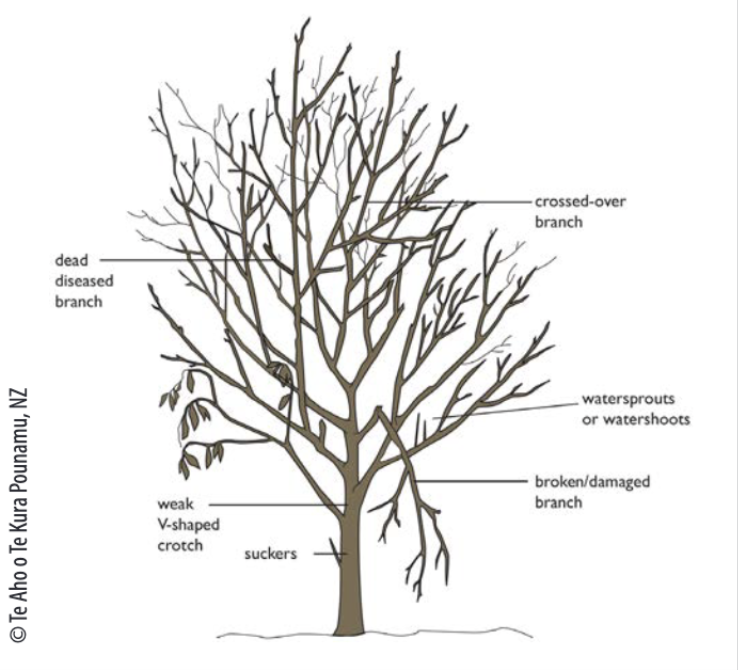
Inspect trees for broken, dying, diseased and dead branches each year. Also, conduct a visual assessment after a storm event. Look for crossing branches, which lead to problems where rubbing produces damage and decay. Always favor branches with a “U” shape or greater than 45° angle, which forms an optimal connection. These branches will have fewer tendencies to split or break from wind or ice loads. Eliminate branches with bark inclusion and tight or narrow branch junctions.

Tree topping is an unhealthy practice.
Branch training is essential for sustainable, long-term tree plantings.
Under no circumstances should a tree be “topped” to prevent wind or ice damage. Topped trees produce many small, poorly attached sprouts and as they grow, the canopy weight and density is actually increased. In addition, topped branches often develop decay and diseased stems, which further weakens the tree and makes the branches more susceptible to breakage. Topping may seem to make a tree safer, but it actually increases the potential for storm damage with unhealthy epicormic sprouting and additional decay in the stems.
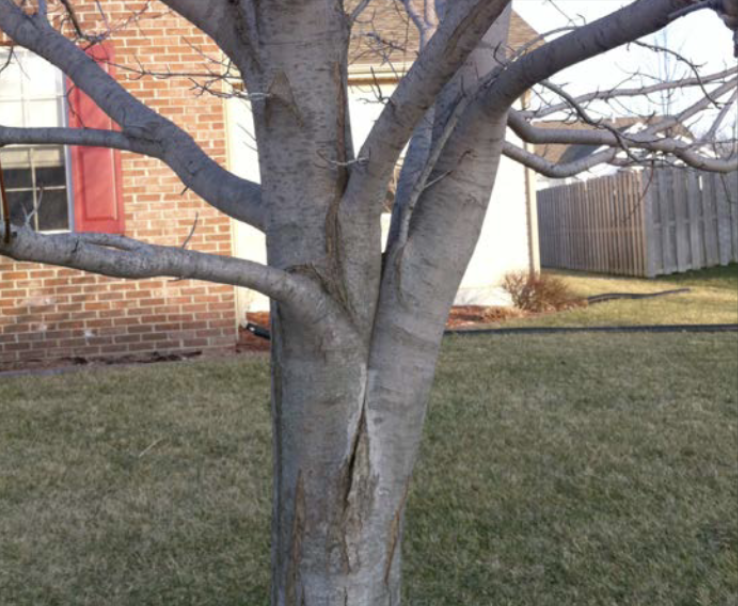
Codominant stems on this maple, as well as included bark, are more
prone to splitting
When mature trees develop unequal crowns, prune to improve symmetry. However, remember pruning best practices and never remove more than 30 percent of the crown at one time. It may take several years for crown restoration. Good pruning techniques also promote faster healing of the cuts.
Do not try to “wind-proof” the tree by thinning out branches. Trees rely on proper branching habits and placement to dampen the wind energy affecting them. Excessive and unnecessary pruning creates wounds and additional stress on tree health. Allow the tree to develop fully and naturally by pruning only when needed. However, proper health care includes pruning for vigor. This includes removing dead, dying or diseased branches, poor branch attachments, crossing branches and narrow branch angles. After this functional pruning, some thinning is achieved to reduce drag or sail in the canopy.
A healthy tree is the best defense to any challenge the tree may face in its lifetime. Appropriate watering and fertilization improves root growth and structure, making the tree more stable. Monitor for pest problems and treat when needed to prevent insects and diseases from weakening tree health. Remove diseased branches, as needed, to minimize spread and potential damage.

This tree has good branch structure with strong attachments.
Risk Assessment
Following a severe storm event, not all trees will need to be pruned or removed, and many will need little or no treatment. After identifying the type of damage, risk assessment is the priority. One of the more critical tasks for the property owner is determining an acceptable level of risk. It is the responsibility of a tree owner or manager to maintain and manage their trees to protect the safety of others. This usually requires assistance from a well-qualified arborist.
Post-Storm Response
- Safety first! Stay clear and look for dangerous hanging limbs, broken branches and other failures before beginning cleanup or inspections. Keep others clear of the areas beneath and around damaged trees. Be alert for power lines that could be involved with damaged trees. All utility lines should be considered energized and dangerous.
-

Functional pruning creates a healthier tree that is less prone to
damage from ice and wind.Damage assessment is the next step. Review the affected tree or trees to determine the level of injury. Some trees may not require any action and can recover on their own. The challenging part of the assessment is deciding which trees can be pruned properly to a healthy state and which trees should be removed. Many factors are involved in the decision, and damage may be hidden or difficult to determine. It is critical to get a professional arborist with credentials to conduct the assessment and the work required to mitigate the injured parts of the tree.
- Match skills with the situation when it comes to reparation of damages and restoration. Be able to recognize when tree damage requires advanced training and is best handled by the arborist. Tree work is dangerous and the hazards are compounded when storm damage is involved. Leaning trees, broken and pinned branches, as well as utility lines, can create life-threatening situations.
- Basic cleanup can be helpful in the post-storm response process. Removing downed branches and limbs, and performing basic pruning on smaller, injured trees, can help speed recovery from the event. This also provides for a better evaluation of the site and the larger affected trees.
Hire a Certified Arborist
One key to dealing with the challenges of storm damage is to consult a qualified tree service. Finding a qualified tree care professional is important protection for the property owner. Sometimes less credible companies follow storms to take advantage of a bad situation. Knowing how to hire a reputable arborist can protect a property owner from being victimized. A professionally trained arborist can determine if a tree can be saved. Even if the tree must be removed, safety and training are needed to prevent additional damage or injury from the removal. An International Society of Arboriculture Certified Arborist can help save a tree or improve the risk situations that follow storms. Also, choosing an accredited company brings the highest level of standards for client satisfaction and safety.
A list of qualified arborists can be obtained by contacting the following sources:
- International Society of Arboriculture website.
https://www.isa-arbor.com/ - Tree Care Industry Association website.
https://www.tcia.org/
For more information contact: Purdue Extension – Forestry and Natural Resources Office, fnrextension@purdue.edu, 765-494- 3590.
Resources:
Find an Arborist video, Trees are Good-International Society of Arboriculture (ISA)
Caring for storm-damaged trees/How to Acidify Soil in the Yard – In the Grow, Purdue Extension
Tree Risk Management – Got Nature? Blog, Purdue Extension – FNR
Why Is My Tree Dying? – Got Nature? Blog, Purdue Extension – Forestry and Natural Resources (FNR)
Mechanical Damage to Trees: Mowing and Maintenance Equipment – Got Nature? Blog, Purdue Extension – FNR
Spring Storms Are Coming: How to Reduce Tree Damage and Risk – Got Nature? Blog, Purdue Extension – FNR
Trees and Electric Lines – The Education Store
Planting Your Tree Part 1: Choosing Your Tree, video, Purdue Extension – FNR YouTube Channel
Tree Installation: Process and Practices, The Education Store
Tree Wound and Healing, Got Nature? Blog, Purdue Extension – FNR
Subscribe – Purdue Extension-FNR YouTube Channel
Lindsey Purcell, Executive Director
Indiana Arborist Association

Recent Posts
- Disease May Cause Wilting and Eventual Death of Certain Trees and Shrubs, Purdue Landscape Report
Posted: October 5, 2026 in Disease, Forestry, Plants - October Is Firewood Month: Protect Indiana’s Forests by Making Smart Choices
Posted: October 1, 2026 in Forestry, Forests and Street Trees, How To, Invasive Insects, Urban Forestry - Minecraft Meets the Hellbender
Posted: September 22, 2026 in Aquaculture/Fish, Aquatic/Aquaculture Resources, Wildlife - Is It Too Early to Think About Christmas Tree Pests?
Posted: in Christmas Trees, Invasive Insects, Safety - What You Plant Matters to Wildlife
Posted: September 16, 2026 in Plants, Urban Forestry, Wildlife - Woodland Flowers of Late Summer
Posted: September 14, 2026 in Forestry, Gardening, Wildlife, Woodlands - Heavy August Rains Bring More Mosquitoes to Indiana
Posted: September 9, 2026 in How To, Invasive Insects, Safety, Wildlife - Question: Why Did the Shagbark Hickories Survive the Tornado?
Posted: August 27, 2026 in Forests and Street Trees, How To, Urban Forestry - New Indiana Woodland Steward Newsletter
Posted: August 12, 2026 in Forestry, Urban Forestry, Wildlife, Woodlands - Indiana Fall Hunting Licenses on Sale and New Mobile App Available
Posted: in Forestry, How To, Wildlife
Archives
Categories
- Alert
- Aquaculture/Fish
- Aquatic/Aquaculture Resources
- Ask the Expert
- Christmas Trees
- Community Development
- Disease
- Drought
- Forestry
- Forests and Street Trees
- Gardening
- Got Nature for Kids
- Great Lakes
- How To
- Invasive Animal Species
- Invasive Insects
- Invasive Plant Species
- Land Use
- Natural Resource Planning
- Nature of Teaching
- Plants
- Podcasts
- Ponds
- Publication
- Safety
- Spiders
- Timber Marketing
- Urban Forestry
- Webinar
- Wildlife
- Wood Products/Manufacturing
- Woodland Management Moment
- Woodlands