 Purdue University - Extension - Forestry and Natural Resources
Got Nature? Blog
Illinois-Indiana Sea Grant Newsroom: Navigating the dos and don’ts of seafood consumption during pregnancy and breastfeeding can be quite challenging and even confusing at times. With a dozen or more seafood choices to navigate, making the right decision for you and your baby is not always easy. In the past, even medical professionals and dietitians offered conflicting advice, cautioning against seafood consumption during pregnancy.
However, things have changed significantly, thanks to the extensive efforts of experts like Charles Santerre, a former food toxicology professor at the Purdue University College of Health and Human Sciences.
Santerre, along with student researchers and a team of experts from across the United States, dedicated over a decade to unraveling the developmental benefits and risks associated with seafood consumption during pregnancy. Their research played a crucial role in establishing the foundation for seafood consumption standards that prioritize the health of babies and children.
Today, the Food and Drug Administration and the Environmental Protection Agency, along with university-created websites such as Fish for Your Health™, provide science-based seafood consumption advice that advocates for eating seafood rich in omega-3 fatty acids and low in mercury and PCBs twice per week.
For full article and videos please visit Fish for Your Health website offers quick safety and nutrition info – IISG
Resources
Aquaculture Industry in Indiana Growing, Purdue Today
Walleye Farmed Fish Fact Sheet: A Guide for Seafood Consumers, The Education Store, Purdue Extension resource center
Sustainable Aquaculture: What does it mean to you?, The Education Store
Fish: Healthy Protein Handout, The Education Store
The Benefits of Seafood Consumption The Education Store, Purdue Extension Resource Center
Walleye Farmed Fish Fact Sheet: A Guide for Seafood Consumers, The Education Store, Purdue Extension resource center
Pond and Wildlife Management website, Purdue Extension
Natural Resources University Podcasts, Collaboration with Mississippi, Florida, Iowa and Indiana Extension Services
Fish Cleaning with Purdue Extension County Extension Director, Got Nature? Blog, Purdue Extension – Forestry and Natural Resources
Aquatics & Fisheries, Playlist, Purdue Extension – Forestry and Natural Resources
Eat Midwest Fish, Illinois-Indiana Sea Grant online resource hub
Illinois-Indiana Sea Grant (IISG)
Purdue Landscape Report: When I was a kid, if you’d asked me what my favorite season was it would always immediately be summer. No school, time for playing outdoors, swimming, hiking, and late nights playing flashlight tag. Now, if I ranked the seasons from worst to best, they’d be Summer in last, followed by Winter (yes, I choose winter over summer), and a tie between Spring and Fall. With the best temperatures, a mix of sun and rain/snow, and an explosion of colors from new blooms in the spring to the reds, yellows, and oranges of leaves before they drop in the fall, Spring and Fall are by far my favorite times of the year. Well, we are nearly to the autumnal equinox with temperatures beginning to drop and the onset of some fall showers as I write this article. With Fall on the doorstep, I’ve received a repeated question recently, “Is it ok to plant a tree in the Fall?”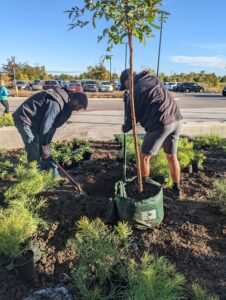
The short answer to this question is, “Yes!” If you want to add some new tree canopy to your yard, then pick your spot, choose the appropriate species, call #811 before you dig, and get that shovel out. Fall has some excellent reasons to plant trees, two of which I’ve already mentioned, cooler temps and autumn rains. While Autumn tends to be the driest time of the growing season, evapotranspiration rates are generally lower than during the summer season. These conditions reduce heat and water stress on trees (but are not an excuse to not mulch and water your new tree). Another good reason to plant in the fall as opposed to Spring is that instead of amping up for growing, trees are powering down and putting resources into root growth and storage. This means better establishment for the root system and a head start on protection for next year’s summer heat and drought.
There are some points to take into consideration, though. Again, make sure to properly water and mulch your new trees. They need an average of 5 gallons a week per inch of stem diameter if weekly rain isn’t providing around 1” of water. Be aware of when the first freeze is expected. You want to make sure your new trees have at least 6 weeks in the ground before the first freeze/frost and can stop watering after the first freeze. Also, for tree selection/protection, avoid broad leafed evergreen trees as they can be damaged by cold desiccation and wrap the trunks of your new trees to protect them from sunscald and animal damage like rubbing from bucks during the rut.
If you keep these points in mind and continue caring for your tree for the next 2-5 years you should have a successful planting. If you have any questions feel free to contact me at bmccalli@purdue.edu or you can find an ISA Certified Arborist at the following link Find an Arborist.
To view this full article and other Purdue Landscape Report articles, please visit Purdue Landscape Report.
Subscribe and receive the newsletter: Purdue Landscape Report Newsletter.
Resources:
The Purdue Landscape Report
Planning the Tree Planting Operation, The Education Store
Tree Risk Management, The Education Store
Tree Planting Part 2: Planting Your Tree, The Education Store
Planting Your Tree Part 1: Choosing Your Tree, Purdue Extension YouTube Channel
Summer Tree Care, Purdue Landscape Report
Tree Defect Identification, The Education Store
Tree Wound and Healing, Got Nature? Blog, Purdue Extension – Forestry and Natural Resources
Surface Root Syndrome, The Education Store
Shrubs and Woody Vines of Indiana and the Midwest, The Education Store
Ask an Expert: Tree Selection and Planting, Purdue Extension-Forestry & Natural Resources (FNR) YouTube playlist
ID That Tree, Purdue Extension-FNR YouTube playlist
Subscribe – Purdue Extension-FNR YouTube Channel
Ben McCallister, Urban Forestry Specialist
Purdue Forestry & Natural Resources
Hunters have been busy preparing food plots, hanging tree stands and working on their marksmanship skills in hopes for getting that buck of a lifetime. The Indiana deer hunting season for 2023-2024 started September 15th and goes to January 31st. As your hunting adventures begin, Purdue Extension-Forestry and Natural Resources (FNR) has the resources you need. You will find How-To videos that address how to score your white-tailed deer, age determination, how to harvest your deer and many other deer management resources. The FNR videos and publications will give you step-by step guidance on how to receive accurate measurements and share best data collection practices, along with sharing what materials are needed.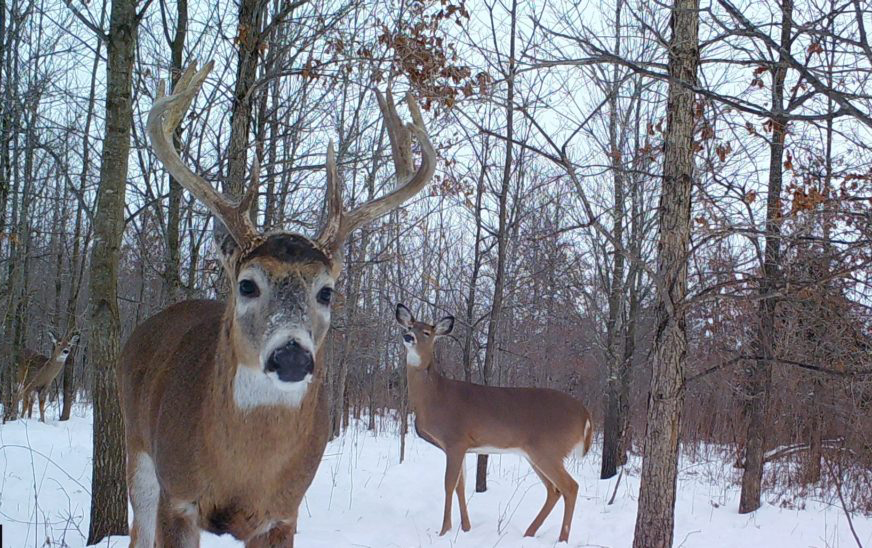
Here is a quick list of just a few of our resources for those deer hunting enthusiasts:
Ask an Expert: Wildlife Food Plots, video, Purdue Extension – Forestry and Natural Resources (FNR) YouTube Channel
Handling Harvested Game: Episode 1, Field Dressing, video, Purdue Extension – FNR YouTube Channel
Handling Harvested Game: Episode 2, Hanging & Skinning, video, Purdue Extension – FNR YouTube Channel
Handling Harvested Game: Episode 3, Deboning, video, Purdue Extension – FNR YouTube Channel
Handling Harvested Game: Episode 4, Cutting, Grinding & Packaging, video, Purdue Extension – FNR YouTube Channel
Deer Harvest Data Collection, Got Nature? Blog, Purdue Extension – FNR
How to Score Your White-tailed Deer, video, The Education Store, Purdue Extension Resource Center
White-Tailed Deer Post Harvest Collection, video, The Education Store
Age Determination in White-tailed Deer, video, The Education Store
Handling Harvested Deer Ask an Expert? video, Purdue Extension – FNR YouTube Channel
How to Build a Plastic Mesh Deer Exclusion Fence, The Education Store
Bovine Tuberculosis in Wild White-tailed Deer, The Education Store
Woodland Stewardship for Landowners: Managing Deer Damage to Young Trees, video, Purdue Extension – FNR YouTube Channel
Integrated Deer Management Project, Purdue FNR
For other hunting and trapping dates view the Indiana Department of Natural Resources, Fish and Wildlife Department website. Enjoy and stay safe!
Diana Evans, Extension & Web Communications Specialist
Purdue University Department of Forestry and Natural Resources
Rod Williams, Assistant Provost for Engagement/Professor of Wildlife Science
Purdue University Department of Forestry and Natural Resources
Jarred Brooke, Wildlife Extension Specialist
Purdue Forestry and Natural Resources
We all want clean water but sometimes it is hard to know how one individual or family can make a difference. People who have a home with a yard have the opportunity to make decisions that can protect and improve water quality.
Rain that falls on your yard does not necessarily stay in your yard. Some water is infiltrated into the ground, some is drawn up through plants and into the air, and some can run off and flow into a roadside ditch or storm sewer, where it continues to flow to a lake or river. This runoff can pick up soil particles, motor oil, lawn chemicals, or other pollutants on your property and carry them downstream, where they can cause water quality problems.
Anyone who has a home with a yard can help protect and improve water quality. This publication offers practical advice about reducing impervious surfaces, select proper landscape plants, effective management of lawns, installing rain barrels and rain gardens, and proper care of septic systems.
To receive the free download visit the Purdue Extension’s resource center: The Education Store – Homeowner Conservation Practices to Protect Water Quality.
Resources:
Improving Water Quality by Protecting Sinkholes on Your Property, The Education Store, Purdue Extension’s resource center
A Landowner’s Guide to Sustainable Forestry: Part 5: Forests and Water, The Education Store
Improving Water Quality Around Your Farm, The Education Store, YouTube
Animal Agriculture’s Effect on Water Quality: Pastures and Feedlots, The Education Store
Improving Water Quality At Your Livestock Operation, The Education Store, YouTube
The Nature of Teaching: Discovering the Watershed, Purdue Extension-The Nature of Teaching
Rainscaping Education Program, Purdue Extension
Community Planning, Purdue Extension
Kara Salazar, Assistant Program Leader and Extension Specialist for Sustainable Communities
Purdue Department of Forestry and Natural Resources
Nick Burgmeier, Research Biologist and Wildlife Extension Specialist
Purdue Department of Forestry and Natural Resources
Laura Esman, Water Quality Program Coordinator
Purdue Department of Forestry and Natural Resources
Purdue Landscape Report: A new invasive insect of concern has been identified in the state of Georgia. In August of 2023, Georgia’s Department of Agriculture, along with the USDA, confirmed the presence of the yellow-legged hornet, Vespa velutina, outside of the city of Savannah. To date, this is the only confirmed identification of this insect in the United States; it has already established in Europe, the Middle East, and parts of Asia outside of its native range. V. velutina is a native of the subtropical and tropical regions of southeast Asia, and it is not yet clear how it arrived in North America. Much like the northern giant hornet, previously known as the Asian giant hornet or ‘murder hornet’, this insect will attack honeybee hives in search of food and represents a potential danger to the beekeeping industry.
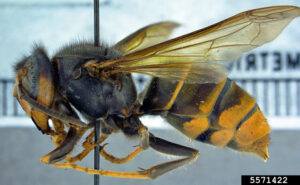
Figure 1. Yellow-Leg Hornet. Image Credit: Allan Smith-Pardo, Invasive Hornets, USDA APHIS PPQ, Bugwood.org
Yellow-legged hornets are predators and will regularly attack honeybees to provide food for their young, though it is possible they could attack other, similar species. Since honeybees concentrate their numbers in hives with a lot of in-and-out traffic, they provide an excellent opportunity for the hornets to hunt and provide food for their young. The hornets are effectively ambush predators, waiting in front of hive entrances and capturing workers with their legs as they leave the hive. The hornets then dismember the bees, returning to their young with only the thorax, which contains the largest amount of protein. However, it is believed that yellow-legged hornets only represent a lethal threat to weaker hives that are already experiencing problems; it is also too early to tell how already-existing honeybee issues, such as mite and disease issues, will interact with the presence of this insect.
The yellow-legged hornet, much like other members of Order Hymenoptera, is a social insect. They create oval or egg-shaped nests in trees that can house as many as 6,000 individuals. Colonies are composed of a foundress and her young, who become the workers within the colony. Female hornets will overwinter within tree hollows, leaf litter, or other environmentally stable locations, and once spring arrives, they start their own colony and give birth to new workers who care for young and hunt.
As with any new invasive species, it is critical to successful identify it and differentiate it from other species of wasps and hornets that we experience in the Midwest. At a glance, the yellow-legged hornet is barely discernable from European hornets, yellowjackets, and similar insects; they possess aerodynamic shapes with heavy yellow and black color patterns like many of their cousins. The most easily identified trait is their namesake: the legs of this insect tend to be black closer to the body, with the lower half of the leg bright yellow. The segments of the abdomen follow a similar pattern, with those segments closer to the center of the body being dominated by black, steadily becoming more yellow as you reach the tip of the abdomen. The yellow-legged hornet is also approximately an inch in length, with reproductive individuals sometimes reaching an inch and a half.
While remaining observant will be critical to reporting any invasive species, there are a few things to keep in mind about the yellow-legged hornet. This insect has only been found in one location in Georgia; no other states have any sightings or confirmed reports of this insect. There is also no evidence the insect has established a population in Georgia, there is only one confirmed sighting. The best course of action for now is to be vigilant and report any potential sightings by calling 1-866-NOEXOTIC, or you can contact our local Purdue Extension educator for assistance.
To view this full article and other Purdue Landscape Report articles, please visit Purdue Landscape Report.
Subscribe and receive the newsletter: Purdue Landscape Report Newsletter.
Resources:
Invasive Species, Playlist, Purdue Extension – FNR YouTube Channel
Report Invasive Species, Purdue Invasive Species
What are invasive species and why should I care?, Got Nature? Blog, Purdue Extension – Forestry and Natural Resources
Pest Management, The Education Store
Protecting Pollinators: Why Should We Care About Pollinators?, The Education Store, Purdue Extension resource center
Ask The Expert: What’s Buzzing or Not Buzzing About Pollinators , Purdue Extension – Forestry & Natural Resources (FNR) YouTube Channel
Purdue Pollinator Protection publication series, Purdue Extension Entomology
Subscribe Purdue Extension-Forestry and Natural Resources YouTube Channel
Bob Bruner, Exotic Forest Pest Educator
Purdue Entomology
Tom Creswell, Plant & Pest Diagnostic Laboratory Director
Purdue Botany and Plant Pathology
Cliff Sadof, Professor, Ornamental, Pest Management
Purdue Entomology Extension Coordinator
In this episode of ID That Tree, Purdue Extension forester Lenny Farlee introduces the Black Spruce. This species is found in bogs, wetlands, and sometimes dry sites within the North Woods of Upper Michigan and Wisconsin. Black Spruce has a bluish cast to the newest needle growth. It has single needles attached to the twigs that are typically less than an inch long. The twigs have a reddish brown cast. This tree also has small cones that are somewhat egg shaped.
If you have any questions regarding wildlife, trees, forest management, wood products, natural resource planning or other natural resource topics, feel free to contact us by using our Ask an Expert web page.
Resources:
ID That Tree, Playlist, Purdue Extension – Forestry and Natural Resources (FNR) YouTube Channel (Invasive White Mulberry, Siberian Elm, Tree of Heaven)
Invasive Species Playlist, Playlist, Purdue Extension – FNR YouTube Channel (Asian Bush Honeysuckle, Burning Bush, Callery Pear, Multiflora rose)
A Woodland Management Moment, Playlist, Purdue Extension – FNR YouTube Channel (Against Invasives, Garlic Mustard, Autumn Olive)
Woodland Stewardship for Landowners, Playlist, Purdue Extension – FNR YouTube Channel (Common Buckthorn, Japanese Barberry)
Report Invasive Species, Purdue Invasive Species
The GLEDN Phone App – Great Lakes Early Detection Network
EDDMaps – Early Detection and Distribution Mapping System
How long do seeds of the invasive tree, Ailanthus altissima remain viable? (Invasive Tree of Heaven), USDA Forest Service
Indiana Department of Natural Resources: Invasive Species
Indiana Invasive Species Council
Cooperative Invasive Species Management Area (CISMA)
Aquatic Invasive Species, Illinois-Indiana Sea Grant (IISG)
Episode 11 – Exploring the challenges of Invasive Species, Habitat University-Natural Resource University
What are invasive species and why should I care?, Got Nature? Blog, Purdue Extension – FNR
Shrubs and Woody Vines of Indiana and the Midwest, The Education Store, Purdue Extension Resource Center
Native Trees of the Midwest, The Education Store
Investing in Indiana Woodlands, The Education Store
Forest Improvement Handbook, The Education Store
Lenny Farlee, Extension Forester
Hardwood Tree Improvement and Regeneration Center
Purdue Department of Forestry & Natural Resources
In this episode of ID That Tree, Purdue Extension forester Lenny Farlee introduces the Quaking Aspen. This species is found in the North Woods of Northern Wisconsin, Northern Indiana, and the Upper Peninsula of Michigan. This species has simple, alternately arranged leaves. The stems are flat which allow them to quake or tremble in the wind. The stems on this species are relatively stout and have a chalky white color.
If you have any questions regarding wildlife, trees, forest management, wood products, natural resource planning or other natural resource topics, feel free to contact us by using our Ask an Expert web page.
Resources:
ID That Tree, Playlist, Purdue Extension – Forestry and Natural Resources (FNR) YouTube Channel (Invasive White Mulberry, Siberian Elm, Tree of Heaven)
Quaking Aspen, Native Trees of Indiana River Walk, Purdue Fort Wayne
Invasive Species Playlist, Playlist, Purdue Extension – FNR YouTube Channel (Asian Bush Honeysuckle, Burning Bush, Callery Pear, Multiflora rose)
A Woodland Management Moment, Playlist, Purdue Extension – FNR YouTube Channel (Against Invasives, Garlic Mustard, Autumn Olive)
Woodland Stewardship for Landowners, Playlist, Purdue Extension – FNR YouTube Channel (Common Buckthorn, Japanese Barberry)
Report Invasive Species, Purdue Invasive Species
The GLEDN Phone App – Great Lakes Early Detection Network
EDDMaps – Early Detection and Distribution Mapping System
How long do seeds of the invasive tree, Ailanthus altissima remain viable? (Invasive Tree of Heaven), USDA Forest Service
Indiana Department of Natural Resources: Invasive Species
Indiana Invasive Species Council
Cooperative Invasive Species Management Area (CISMA)
Aquatic Invasive Species, Illinois-Indiana Sea Grant (IISG)
Episode 11 – Exploring the challenges of Invasive Species, Habitat University-Natural Resource University
What are invasive species and why should I care?, Got Nature? Blog, Purdue Extension – FNR
Shrubs and Woody Vines of Indiana and the Midwest, The Education Store, Purdue Extension Resource Center
Native Trees of the Midwest, The Education Store
Investing in Indiana Woodlands, The Education Store
Forest Improvement Handbook, The Education Store
Lenny Farlee, Extension Forester
Hardwood Tree Improvement and Regeneration Center
Purdue Department of Forestry & Natural Resources
In this episode of ID That Tree, Purdue Extension forester Lenny Farlee introduces the Chokecherry. This species is found in the North Woods of Northern Wisconsin and the Upper Peninsula of Michigan as well as natively in Indiana in small/medium shrub form. This species has alternately held broad leaves with finely toothed margins, and has short leaf stalks. The stems are a light to medium gray color and have prominent lenticels scattered along them.
If you have any questions regarding wildlife, trees, forest management, wood products, natural resource planning or other natural resource topics, feel free to contact us by using our Ask an Expert web page.
Resources:
ID That Tree, Playlist, Purdue Extension – Forestry and Natural Resources YouTube Channel (Invasive White Mulberry, Siberian Elm, Tree of Heaven)
Invasive Species Playlist, Playlist, Purdue Extension – FNR YouTube Channel (Asian Bush Honeysuckle, Burning Bush, Callery Pear, Multiflora rose)
A Woodland Management Moment, Playlist, Purdue Extension – FNR YouTube Channel (Against Invasives, Garlic Mustard, Autumn Olive)
Woodland Stewardship for Landowners, Playlist, Purdue Extension – FNR YouTube Channel (Common Buckthorn, Japanese Barberry)
Report Invasive Species, Purdue Invasive Species
The GLEDN Phone App – Great Lakes Early Detection Network
EDDMaps – Early Detection and Distribution Mapping System
How long do seeds of the invasive tree, Ailanthus altissima remain viable? (Invasive Tree of Heaven), USDA Forest Service
Indiana Department of Natural Resources: Invasive Species
Indiana Invasive Species Council
Cooperative Invasive Species Management Area (CISMA)
Aquatic Invasive Species, Illinois-Indiana Sea Grant (IISG)
Episode 11 – Exploring the challenges of Invasive Species, Habitat University-Natural Resource University
What are invasive species and why should I care?, Got Nature? Blog, Purdue Extension – FNR
Shrubs and Woody Vines of Indiana and the Midwest, The Education Store, Purdue Extension Resource Center
Native Trees of the Midwest, The Education Store
Investing in Indiana Woodlands, The Education Store
Forest Improvement Handbook, The Education Store
Lenny Farlee, Extension Forester
Hardwood Tree Improvement and Regeneration Center
Purdue Department of Forestry & Natural Resources
Drones can be used to assess crop health, monitor livestock, disperse cover crop seed, optimize natural resources, for public safety, and much more. Purdue Extension’s UAV pilots are flying fields, forests, and urban areas through Indiana to help farmers, land and business owners, and government officials turn images into insights. Purdue Extension’s personnel are learning how to help farmers and agricultural professionals more easily analyze and apply data from UAVs or drones.
This publication titled Unmanned Aerial Vehicles: Checklist for Drones Flying in Indiana by Purdue Extension educators explains the steps required to legally fly a UAV or UAS in Indiana.

To legally fly an unmanned aerial vehicle (UAV) or unmanned aerial system (UAS), several steps must be taken. This document provides checklists to assist you in that process. The primary regulatory agency for UAVs is the Federal Aviation Administration (FAA). FAA puts drones in three main categories: 0.55 pounds or less, greater than 0.55 pounds to 55 pounds, and more than 55 pounds. The regulation and registration of drones varies, depending sometimes on usage but mostly on weight.
To receive the free download visit the Purdue Extension’s resource center: The Education Store – Unmanned Aerial Vehicles: Checklist for Drones Flying in Indiana.
For more information regarding Purdue Extension and Purdue Agriculture’s outreach through the agricultural use of unmanned aerial vehicles (UAVs) view Purdue Extension-UAV.
Resources:
Integrated Digital Forestry Initiative (iDiF)
Creating a Wildlife Habitat Management Plan for Landowners, The Education Store
Purdue Extension Pond and Wildlife Management Website, Purdue Extension
Timber Harvesting and Logging Practices for Private Woodlands, The Education Store, Purdue Extension’s resource center
Investing in Indiana Woodlands, The Education Store
Woodland Wildlife Management, The Education Store
ID That Tree, Playlist, Purdue Extension – Forestry & Natural Resources (FNR) YouTube Channel
Woodland Stewardship for Landowners Video Series, Playlist, Purdue Extension – FNR YouTube Channel
Frost Seeding Native Grasses and Forbs with a Drone (UAV): Lessons Learned, Purdue Extension Forestry & Natural Resources
A New Drone Supports Pollinator Efforts, Purdue Extension Forestry & Natural Resources
Nikky Witkowski, Agriculture and Natural Resources
Extension Educator, Purdue University
Mark Carter, Agriculture and Natural Resources
Extension Educator, Purdue University
Alex Helms, Assistant Director,
Purdue Agricultural Centers
MyDNR, Indiana’s Outdoor Newsletter: The latest Hunting Guide for 2023-2024 is available. The Division of Fish & Wildlife is excited to show off the many methods and precautions needed to be successful during hunting season.
The 2023-2024 Indiana Hunting & Trapping Guide is essential in making sure you are hunting legally and safely, as it provides information on what, when, where, why, and how to hunt properly.
Indiana hunting and trapping opportunities include: deer, wild turkey, furbearers, small game, waterfowl and migratory birds along with other game birds. For licenses, where to hunt, and more information view: Hunting and Trapping, IN DNR, Department of Fish and Wildlife.
To subscribe to the newsletter visit MyDNR Email Newsletter.
Explore the outdoors with Indiana Department of Natural Resources in their 24 state parks, Indiana State Parks and Lakes.
Resources:
How to Score Your White-tailed Deer, video, The Education Store, Purdue Extension Resource Center
White-Tailed Deer Post Harvest Collection, video, The Education Store
Age Determination in White-tailed Deer, video, The Education Store
How to Build a Plastic Mesh Deer Exclusion Fence, The Education Store
Managing Your Woods for White-Tailed Deer, The Education Store
Bovine Tuberculosis in Wild White-tailed Deer, The Education Store
Help With Wild Turkey Populations, Video, Purdue Extension – Forestry and Natural Resources YouTube Channel
Turkey Brood Reporting, Indiana Department of Natural Resources (IDNR)
Wild Turkey, Indiana Department of Natural Resources (IDNR)
Wild Turkey Hunting Biology and Management, Indian Department of Natural Resources (IDNR)
Subscribe to Purdue Extension-Forestry & Natural Resources YouTube Channel, Wildlife Playlist
Indiana Department of Natural Resources, Department of Fish & Wildlife

Recent Posts
- Purdue Extension: Empowering Indiana Through Innovation, Education and Community Impact
Posted: January 28, 2026 in Community Development, How To, Invasive Insects, Invasive Plant Species, Natural Resource Planning, Woodlands - Forest Landowners: Share Your Experience with Regeneration and Restoration
Posted: January 27, 2026 in Forestry, How To, Timber Marketing, Woodlands - It’s Not Too Late to Order Trees for Spring Planting
Posted: January 13, 2026 in Forestry, How To, Plants - Now Is The Time To Control Non-Native Bush Honeysuckle
Posted: October 30, 2025 in Forestry, How To, Invasive Plant Species, Woodlands - October Is Firewood Month: Protect Indiana’s Forests by Making Smart Choices
Posted: October 13, 2025 in Forestry, Forests and Street Trees, How To, Invasive Insects, Urban Forestry - ID That Tree: Smooth Sumac
Posted: October 2, 2025 in Forestry, How To, Wildlife - ID That Tree: Wild Grape Vine
Posted: August 12, 2025 in Forestry, How To, Urban Forestry, Wildlife - Publication – Sericea Lespedeza Control
Posted: July 7, 2025 in Forestry, How To, Invasive Plant Species, Wildlife - How to ID Asian Jumping Worms, Purdue Landscape Report
Posted: July 2, 2025 in How To, Invasive Insects, Wildlife - Alert – Water Your Trees, Watch Video
Posted: June 20, 2025 in Alert, Drought, Forests and Street Trees, How To, Urban Forestry, Wildlife, Woodlands
Archives
Categories
- Alert
- Aquaculture/Fish
- Aquatic/Aquaculture Resources
- Ask the Expert
- Christmas Trees
- Community Development
- Disease
- Drought
- Forestry
- Forests and Street Trees
- Gardening
- Got Nature for Kids
- Great Lakes
- How To
- Invasive Animal Species
- Invasive Insects
- Invasive Plant Species
- Land Use
- Natural Resource Planning
- Nature of Teaching
- Plants
- Podcasts
- Ponds
- Publication
- Safety
- Spiders
- Timber Marketing
- Uncategorized
- Urban Forestry
- Webinar
- Wildlife
- Wood Products/Manufacturing
- Woodland Management Moment
- Woodlands