 Purdue University - Extension - Forestry and Natural Resources
Got Nature? Blog
 Indiana’s weather can shift quickly, from calm spring and summer mornings to severe thunderstorms, damaging winds and flash floods by afternoon. These sudden changes make it essential for individuals, families and communities to stay informed and prepared.
INdiana PREPared and the Extension Disaster Education Network (EDEN) have a wide range of resources and educational materials that can be used to help Extension professionals spread the word about preparing for and responding to severe spring and summer weather events.
Find a full collection of resources at these various webpages:
- Educator/Trainer Resources
- Spring and Summer Severe Weather Resources
- Tornado and Wind Damage Response and Recovery
- Flood Resources for Educators
 Stock your Go-Bag!
We encourage everyone to be ready for severe weather events by preparing a Go-Bag of important supplies. Click the image on the right/below to access INPREP’s Go-Bag Checklist, and feel free to share with your local clients. Remember to take into account the needs of family members impacted by disabilities!
By incorporating these IN-PREPared materials into programs, outreach efforts and conversations with community members, we can make a meaningful difference in how our communities respond and recover. Together, we can ensure that Hoosiers have the knowledge, tools and confidence to face severe weather with greater safety and resilience.
Resources:
Purdue Extension: Empowering Indiana Through Innovation, Education and Community Impact, Purdue Extension
Avian Flu in Birds, IN-PREPared
Combine & Field Fires, IN-PREPared
Trees and Storms: Understanding Damage, Risk and Recovery – Got Nature? Blog, Purdue Extension – FNR
Community Development, Purdue Extension
Contact Your County Extension Educator, Purdue Extension
An Introduction to Trees of Indiana, Purdue University Press
Native Trees of the Midwest, Purdue University Press
ID That Tree, Playlist, Subscribe to Purdue Extension – Forestry and Natural Resources YouTube Channel
A Woodland Management Moment, Playlist, Purdue Extension – FNR YouTube Channel
Forest Improvement Handbook, The Education Store
Finding help from a professional forester, Indiana Forestry & Woodland Owners Association
District Foresters for 10 plus acres, Indiana Department of Natural Resources
Invasive Species Playlist, Playlist, Purdue Extension – FNR YouTube Channel
Indiana Department of Natural Resources: Invasive Species
What are invasive species and why should I care?, Got Nature? Blog, Purdue Extension – FNR
Invasive plants: impact on environment and people, The Education Store
Diana Evans, Extension & Web Communications Specialist
Purdue University Department of Forestry and Natural Resources
Ed Sheldon, Farm/Veteran Job Coach and Engagement Coordinator
Department of Agriculture & Biological Engineering, Purdue University
Michael Wilcox, Assistant Director and Program Leader for Community Development
EDEN State Point-of-Contact
Illinois-Indiana Sea Grant (IISG) have four buoys now in place on the Great Lakes which inform scientists, weather forecasters, anglers, boaters, paddlers, surfers, swimmers and educational programs about current lake conditions. They collect data on wind speed, surface current, wave height, and water temperatures, providing valuable insights for scientists and the public.
- Michigan City Buoy – This buoy is located three miles offshore of Michigan City, Indiana. Purdue University’s Lyles School of Civil Engineering created the anchor used to keep the buoy in place. They also maintain and help deploy this buoy each year. The Michigan City Port Authority and the Lake Michigan Indiana Department of Natural Resources office played pivotal roles in helping deploy the anchor. The buoy itself was funded through a grant provided by Illinois-Indiana Sea Grant. A grant from the Indiana Department of Natural Resources Coastal Management Program allowed for the addition of the temperature chain.
- Chicago Buoy – This buoy, also called Chuoy, is based in the busy waters off Navy Pier, approximately a mile due east of the pier. This buoy is jointly owned and operated by Illinois-Indiana Sea Grant and the Lyles School of Civil Engineering at Purdue University.
For more information about Chuoy, check out this IISG article: New to Navy Pier waters, Chuoy the Buoy Proved a Valuable Forecasting Tool. - Wilmette Buoy – The Wilmette Buoy is situated approximately four miles off Wilmette, in Lake Michigan. The Sheridan Shore Yacht Club and the Coast Guard in Wilmette help deploy and store this buoy each year. Henry’s Sports and Bait shop in downtown Chicago helped deploy the anchor. The buoy was first deployed through a grant from the Great Lakes Observing System and the NOAA Coastal Storms Program.
- Waukegan Buoy – The Waukegan buoy is situated about a mile offshore from Waukegan Harbor in Lake Michigan. This buoy is owned and operated by the University of Illinois and the Illinois State Geological Survey. LimnoTech, Inc. and Illinois-Indiana Sea Grant play pivotal roles in helping deploy and support the buoy. The buoy was first deployed through a grant from NOAA. Continued funding support comes from the Illinois Department of Natural Resources Coastal Management Program.

For more information and photos view Purdue College of Agriculture News: Gearing Up for a Great Lake Day.
“The buoys act as a service to people who are active in Lake Michigan,” said Tomas Höök, director of Illinois-Indiana Sea Grant and professor of Forestry and Natural Resources at Purdue University. “A line runs from the surface of the buoy to the bottom of the lake, and sensors collect a variety of data. The buoy’s modem then communicates with a cell tower, providing data that anyone can access in real-time.”
“Near-record high water levels a few years ago were causing erosion along the shoreline, and there were even cases farther north in Lake Michigan of houses falling into the lake. But if you look back about 10 years, near-record low levels made the shoreline look like a mud flat,” Höök explained. “It’s important to understand because if infrastructure is built while the water is low, it’s highly likely the water level will rise back up and threaten that infrastructure.”
Subscribe to Illinois-Indiana Sea Grant YouTube Channel and view buoy videos along with fishing, water safety and other educational videos.
Illinois-Indiana Sea Grant is a partnership between NOAA, University of Illinois Extension, and Purdue University Forestry and Natural Resources, bringing science together with communities for solutions that work. Sea Grant is a network of 34 science, education and outreach programs located in every coastal and Great Lakes state, Lake Champlain, Puerto Rico and Guam.
Partners and Other Resources:
Lyles School of Civil Engineering, Purdue University
Henry’s Sports and Bait, Chicago, Illinois
Great Lakes Observing System
National Oceanic and Atmospheric Administration (NOAA) Coastal Storms
Illinois State Geological Survey
University of Illinois
Purdue University
Forestry and Natural Resources, Purdue University
LimnoTech
Illinois Department of Natural Resources Coastal Management Program
Lake Michigan Coastal Program, Indiana Department of Natural Resources
Michigan City Port Authority
Center For Great Lakes Literacy (CGLL)
Eat Midwest Fish, Illinois-Indiana Sea Grant and North Central Regional Aquaculture Center
Informing the Development of the Great Lakes Region Decision Support System, The Education Store, Purdue Extension’s resource center
Fish Cleaning with Purdue Extension County Extension Director, Got Nature? Blog, Purdue Extension – Forestry and Natural Resources
Walleye Farmed Fish Fact Sheet: A Guide for Seafood Consumers, The Education Store
Meet the buoys of summer who help Purdue and Illinois study Lake Michigan: BTN LiveBIG, BTN
National Data Buoy Center (noaa.gov), National Data Buoy Center
Diana Evans, Extension & Web Communications Specialist
Purdue University Department of Forestry and Natural Resources
Illinois-Indiana Sea Grant Newsroom: During large rainstorms, many Illinois residents brace themselves for flooding in their basements, streets and neighborhoods. A new online tool, Illinois Groundwork, provides communities and stormwater professionals with resources on green stormwater infrastructure, which provides a way for rain to be absorbed into soil where it lands.
Green stormwater infrastructure offers a way to enhance traditional or “grey” infrastructure using a rain garden or permeable pavement but this approach doesn’t always work as well as it might. Improving access to, and use of, data, research and other resources can help increase the effectiveness of green infrastructure in addressing stormwater management challenges.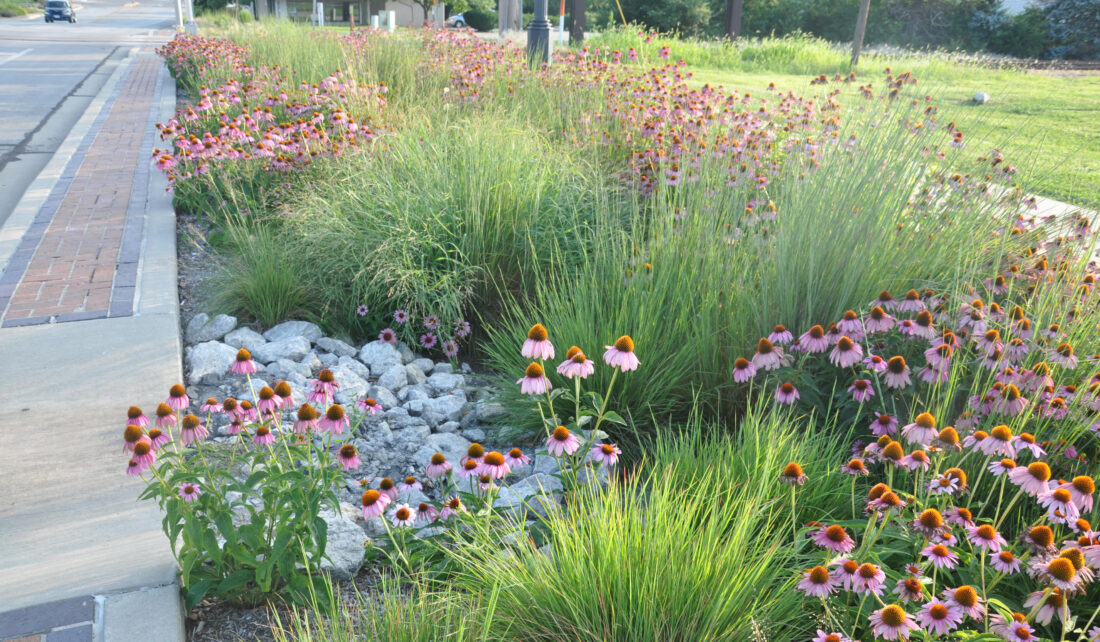
“The University of Illinois not only has relevant research and data across many departments, but also real-world examples of successful green infrastructure, along with other extension and education tools, such as the Red Oak Rain Garden,” said C. Eliana Brown, University of Illinois Extension stormwater specialist. “This new tool brings these resources together, providing a robust platform to access green infrastructure knowledge.”
For full article and videos please visit Illinois Groundwork provides a rich supply of green infrastructure resources – IISG
About IISG: These are trying times for the environment. Climate change and other concerns such as population growth, aquatic invasive species, contaminated waters, and loss of natural habitat, the southern Lake Michigan region faces many challenges. Illinois-Indiana Sea Grant (IISG), with its unique mandate to bring the latest science to those who can best use the information, serves a critical role in empowering people to solve problems in sustainable ways. The program is funded through National Oceanic and Atmospheric Administration (NOAA), the University of Illinois and Purdue University, but IISG also works in partnerships with key organizations, institutions, and agencies in the region to reach more audiences and multiply opportunities for success. IISG brings together scientists, educators, policy makers, community decision makers, outreach specialists, business leaders, and the general public to work towards a healthy environment and economy.
Resources
Center For Great Lakes Literacy (CGLL), Website
Ask An Expert: Hot and Cold, Video, Purdue Extension – Forestry and Natural Resources YouTube channel
Informing the Development of the Great Lakes Region Decision Support System, The Education Store, Purdue Extension’s resource center
Urban Best Management & Low Impact Development Practices, The Education Store
Improving Water Quality Around Your Farm, The Education Store
New website: Eat Midwest Fish, Got Nature? Blog, Purdue Extension – Forestry and Natural Resources (FNR)
Scientists bring the Great Lakes to students learning from home, Got Nature? Blog
Adaptations for Aquatic Amphibians Activity 2: Water Quality Sneak Peak, Purdue Nature of Teaching
Illinois-Indiana Sea Grant (IISG)
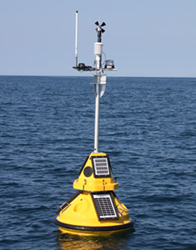
Illinois-Indiana Sea Grant Newsroom: May 2022, Illinois-Indiana Sea Grant (IISG) launched its third buoy in southern Lake Michigan—this one based in the busy waters off Navy Pier. This new buoy with its flow of in-the-moment data is helping the National Weather Service (NWS) Chicago develop more accurate forecasts and warnings, especially related to nearshore wave heights and wind speeds.
This third buoy, known affectionately as Chuoy, joins IISG buoys in the nearshore waters of Michigan City, Indiana and Wilmette, Illinois. Together, these three, along with two University of Illinois buoys closer to the Wisconsin border, paint a comprehensive picture of coastal lake conditions in the two states. In addition to meteorologists, the data is used by scientists, boaters, anglers and beach goers.
“Information from these buoys allows recreational water users to make better informed decisions when it comes to safety,” said Ben Szczygiel, IISG buoy specialist. “The data allows people to plan for current conditions and avoid the water when there are increased safety concerns.”
For full article and videos please visit New to Navy Pier waters, Chuoy the Buoy proved a valuable forecasting tool-IISG
About IISG: These are trying times for the environment. Climate change and other concerns such as population growth, aquatic invasive species, contaminated waters, and loss of natural habitat, the southern Lake Michigan region faces many challenges. Illinois-Indiana Sea Grant (IISG), with its unique mandate to bring the latest science to those who can best use the information, serves a critical role in empowering people to solve problems in sustainable ways. The program is funded through National Oceanic and Atmospheric Administration (NOAA), the University of Illinois and Purdue University, but IISG also works in partnerships with key organizations, institutions, and agencies in the region to reach more audiences and multiply opportunities for success. IISG brings together scientists, educators, policy makers, community decision makers, outreach specialists, business leaders, and the general public to work towards a healthy environment and economy.
Resources
Center For Great Lakes Literacy (CGLL), Website
Ask An Expert: Hot and Cold, Video, Purdue Extension – Forestry and Natural Resources YouTube channel
Informing the Development of the Great Lakes Region Decision Support System, The Education Store, Purdue Extension’s resource center
Urban Best Management & Low Impact Development Practices, The Education Store
Improving Water Quality Around Your Farm, The Education Store
New website: Eat Midwest Fish, Got Nature? Blog, Purdue Extension – Forestry and Natural Resources (FNR)
Scientists bring the Great Lakes to students learning from home, Got Nature? Blog
Adaptations for Aquatic Amphibians Activity 2: Water Quality Sneak Peak, Purdue Nature of Teaching
Illinois-Indiana Sea Grant (IISG)
Purdue Landscape Report: The hard freeze April 20th & 21st had many homeowners concerned about their perennial and annual plants in their landscape. For the vast majority of perennial plants, there aren’t many issues long-term of concern. Some foliage and flowers have significant damage, but the plants will recover, and possibly release new vegetative buds in severe cases. The plants that suffered the most damage, and in some cases death, are the annuals planted by impatient landscapers and gardeners. Planting annuals prior to the frost-free date (May 10th in central Indiana) will more than likely cause a replant to occur.
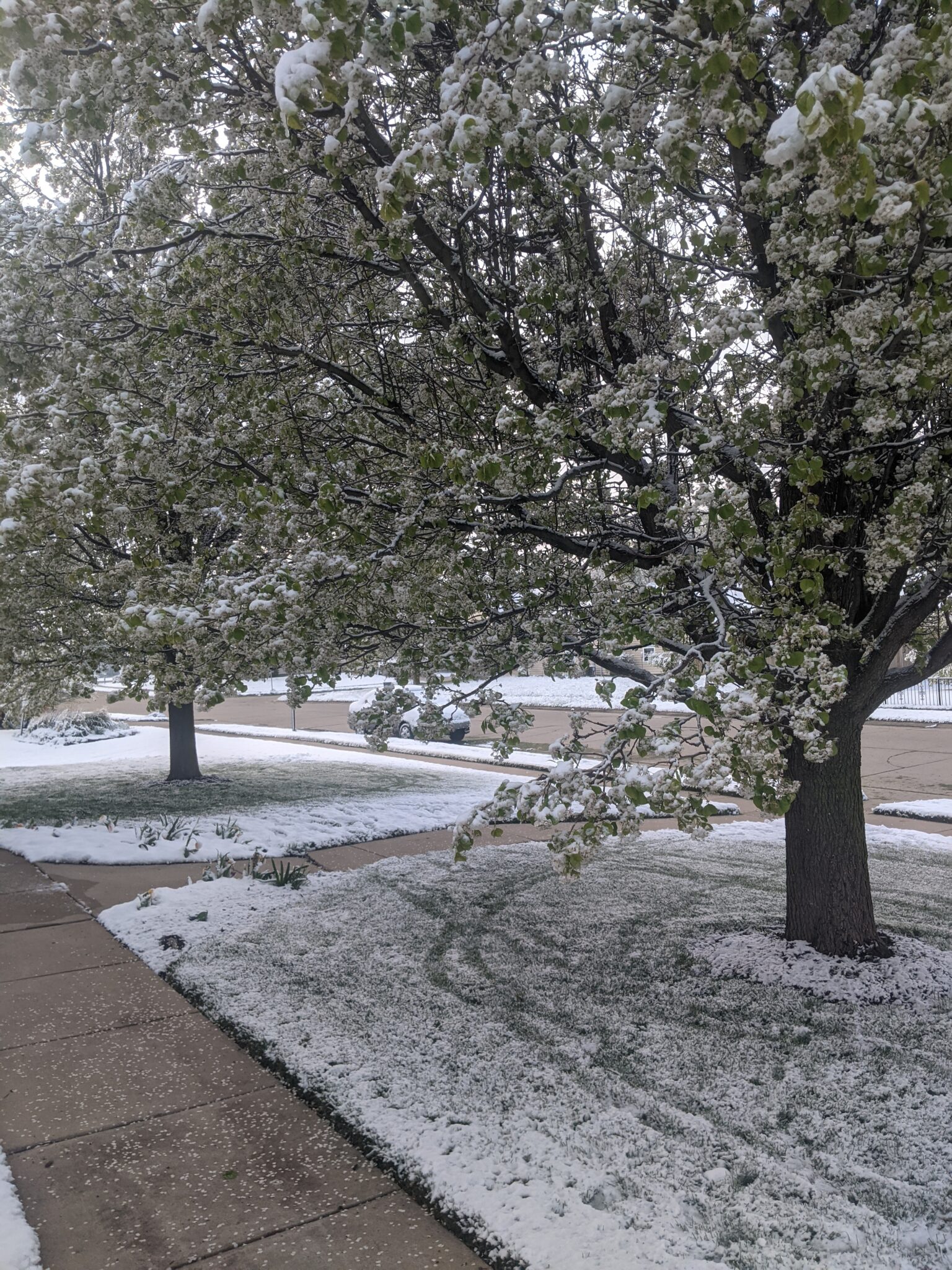
Figure 1. Cold temperatures and cold on April 21-22 caused stress on many plants that have broken buds.
In addition to the potential stress from the temperatures, many trees received broken limbs due the combined weight of the leaves/flowers and snow load.
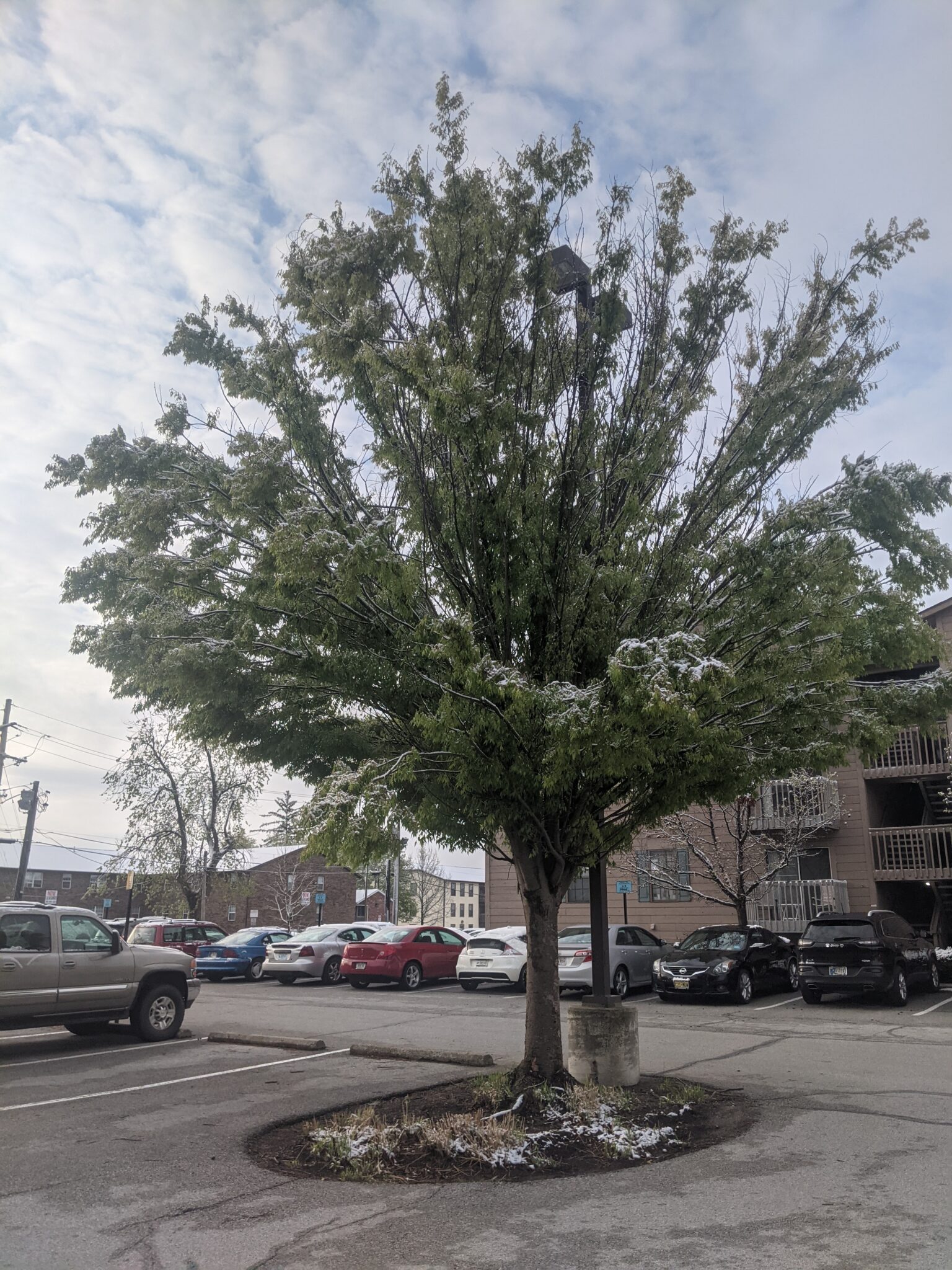
Figure 2. A Japanese Zelkova in full leaf with a heavy snow load.
If you maintain a client’s fruit trees (i.e. apples), there may be a significant impact on fruit production. The Purdue Meigs Horticultural Research Farm, located about eight miles south of the West Lafayette campus, recorded a low temperature of 22o F on April 21st. Dr. Peter Hirst, pomologist, indicated that at the current stage of flowering a temperature of 25o F might result in a 90% bud kill. Since there was a significant snowfall, the hope is that there was some moderation in temperatures.
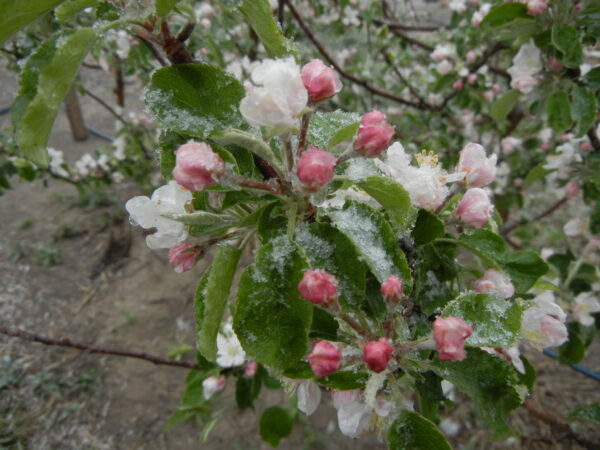
Figure 3. Apple flowers on April 22 in West Lafayette. Photo by Tristand Tucker.
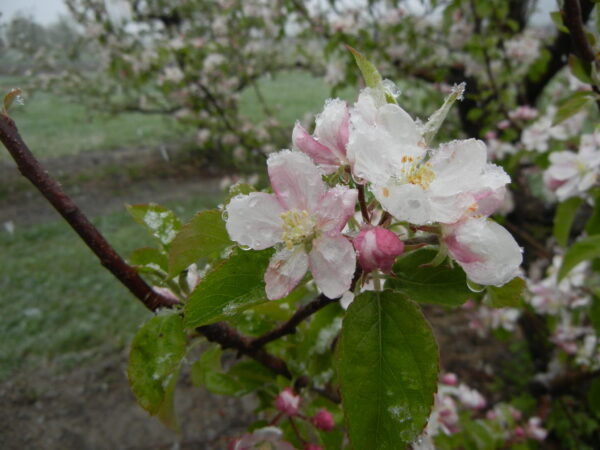
Figure 5. Apple flowers on April 22 in West Lafayette. Photo by Tristand Tucker.
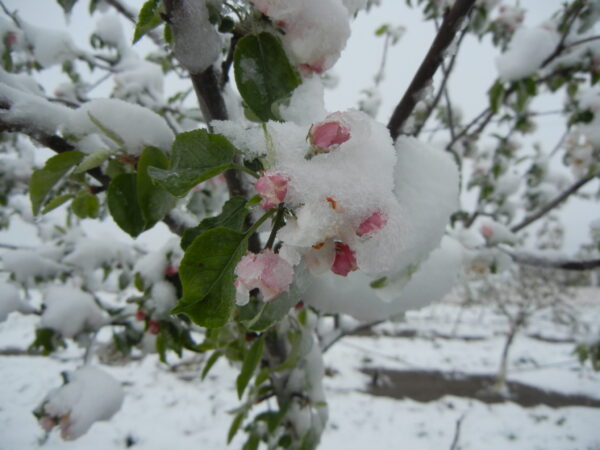
Figure 4. Apple flowers on April 22 in West Lafayette. Photo by Tristand Tucker.
Plants that have been stressed due to cold temperatures should be closely monitored over the growing season. Don’t prune ‘dead’ portions until you allow more buds to break. Chances are the early foliage was dropped and new leaves will soon emerge. Be sure to provide adequate moisture to assist in recovery. Currently about half of the state is in the beginning stages of drought, so be sure to provide irrigation now if your area is dry. Always remember that too much water can be just as detrimental as too little water.
The Indianapolis Star published an article on the extreme low temperatures.
Resources
Purdue Landscape Report
Tree Installation for the Landscape, Video, Purdue Extension – Forestry and Natural Resources YouTube Channel
Effects of Cold Weather on Horticultural Plants in Indiana, The Education Store, Purdue Extension resource center
Winterize Your Trees, The Education Store
What do Trees Do in the Winter? , Got Nature? Blog, Purdue Extension – Forestry and Natural Resources
Kyle Daniel, Nursery & Landscape Outreach Specialist
Purdue Horticulture and Landscape Architecture
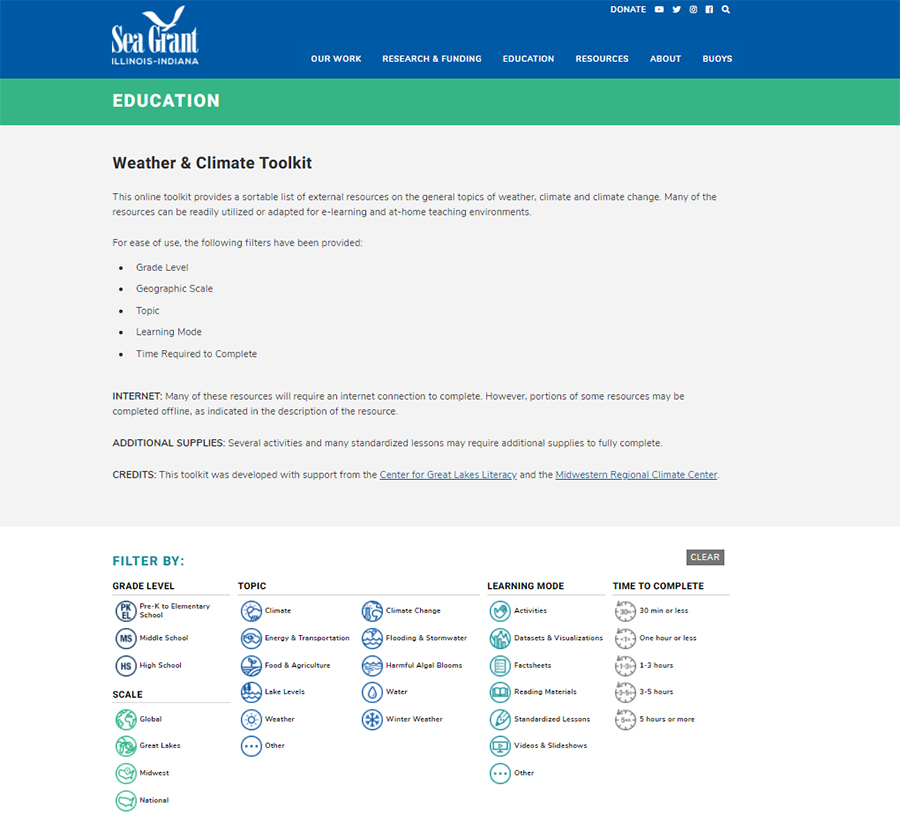 Illinois-Indiana Sea Grant (IISG) Newsroom: With the prolonged pandemic continuing to affect the United States, traditional education has turned toward at-home learning and virtual classrooms to keep students safe. Now more than ever, teachers must be able to find lesson plans for their students that are adaptable to different learning environments and cover topics required by the curriculum. To meet these needs, Illinois-Indiana Sea Grant (IISG) has created a weather and climate education toolkit where teachers can find resources on the topics of weather, climate and climate change.
IISG developed the weather and climate education toolkit with support from the Center for Great Lakes Literacy and the Midwestern Regional Climate Center.
*Illinois-Indiana Sea Grant is a part of University of Illinois Extension and Purdue Extension.
Resources
Climate Resources – Institute for a Sustainable Future
The Nature of Teaching, Purdue Extension
Trees and Storms: Understanding Damage, Risk and Recovery – Got Nature? Blog, Purdue Extension – FNR
Illinois-Indiana Sea Grant (IISG)
Purdue Landscape Report: Just as sure as you try to predict the weather, it is likely to change. But going out on a limb, I predict that we will have a bit of a dud for fall color display this year. Not a very risky prediction, considering that many plants already are starting to turn color and/or drop leaves in some areas of the state.
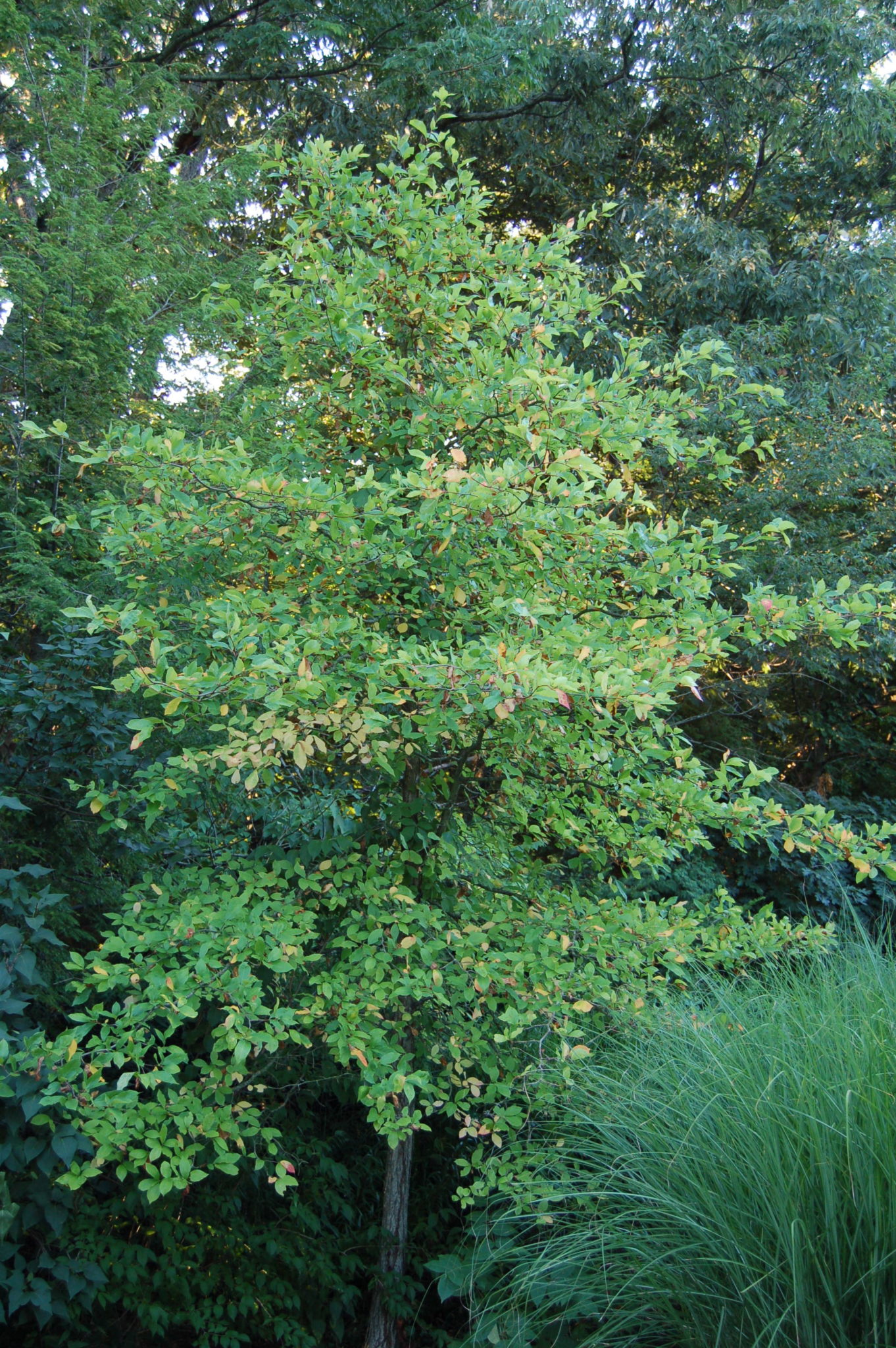
Nyssa sylvatica (black gum) showing early fall color due to drought stress. Source
So why would the colors be early and/or a bit duller than usual? Certainly, some of the reason why plants display fall colors has to do with the genetic makeup of the plant. That doesn’t change from year to year. But the timing and intensity of fall colors do vary, depending on factors such as availability of soil moisture and plant nutrients, as well as environmental signals such as temperature, sunlight, length of day, and cool nighttime temperatures.
The droughty conditions experienced during much of the second half of summer are likely to have decreased the amount of fall color pigment. Southern Indiana has been particularly parched. Despite recent rains in some areas, much of the state remains designated as abnormally dry to moderate drought. You can check your area’s conditions at the US Drought Monitor for Indiana. Additional maps and data is available at the Midwest Regional Climate Center.
Growing conditions throughout the season affect fall color as does current weather. Colors such as orange and yellow, which we see in the fall, are actually present in the leaf all summer. However, those colors are masked by the presence of chlorophyll, the substance responsible for green color in plants during the summer. Chlorophyll allows the plant to use sunlight and carbon dioxide from the air to produce carbohydrates (sugars and starch). Trees continually replenish their supply of chlorophyll during the growing season.
As the days grow shorter and (usually) temperatures cooler, the trees use chlorophyll faster than they can replace it. The green color fades as the level of chlorophyll decreases, allowing the other colored pigments to show through. Plants that are under stress–from conditions like prolonged dry spells–often will display early fall color because they are unable to produce as much chlorophyll.
Yellow, brown and orange colors, common to such trees as birch, some maples, hickory and aspen, come from pigments called carotenoids, the same pigments that are responsible for the color of carrots, corn and bananas.
Red and purple colors common to sweet gum, dogwoods and some maples and oaks are produced by another type of pigment called anthocyanin, the pigment responsible for the color of cherries, grapes, apples and blueberries. Unlike chlorophyll and carotenoids, anthocyanins are not always present in the leaf but are produced in late summer when environmental signals occur. Anthocyanins also combine with carotenoids to produce the fiery red, orange, and bronze colors found in sumac, oaks, and dogwoods.
Red colors tend to be most intense when days are warm and sunny, but nights are cool–below 45º F. The color intensifies because more sugars are produced during warm, sunny days; cool night temperatures cause the sugars to remain in the leaves. Pigments are formed from these sugars, so the more sugar in the leaf, the more pigment, and, thus, more intense colors. Warm, rainy fall weather decreases the amount of sugar and pigment production. Warm nights cause what sugars that are made to move out of the leaves, so that leaf colors are muted.
Leaf color also can vary from tree to tree and even from one side of a tree to another. Leaves that are more exposed to the sun tend to show more red coloration while those in the shade turn yellow. Stress such as drought, poor fertility, disease or insects may cause fall color to come on earlier, but usually results in less intense coloration, too. And stress or an abrupt hard freeze can cause leaves to drop before they have a chance to change color.
So far, weather conditions lead me to think this will be one of those not so showy fall color years. I hope I am proven wrong!
Resources
Fifty Common Trees of Indiana
An Introduction to Trees of Indiana
Native Trees of the Midwest, Purdue University Press
Why Leaves Change Color, USDA Forest Service, Northeastern Area
B. Rosie Lerner, Retired Extension Consumer Horticulturist
Purdue Horticulture and Landscape Architecture

Recent Posts
- Disease May Cause Wilting and Eventual Death of Certain Trees and Shrubs, Purdue Landscape Report
Posted: October 5, 2026 in Disease, Forestry, Plants - October Is Firewood Month: Protect Indiana’s Forests by Making Smart Choices
Posted: October 1, 2026 in Forestry, Forests and Street Trees, How To, Invasive Insects, Urban Forestry - Minecraft Meets the Hellbender
Posted: September 22, 2026 in Aquaculture/Fish, Aquatic/Aquaculture Resources, Wildlife - Is It Too Early to Think About Christmas Tree Pests?
Posted: in Christmas Trees, Invasive Insects, Safety - What You Plant Matters to Wildlife
Posted: September 16, 2026 in Plants, Urban Forestry, Wildlife - Woodland Flowers of Late Summer
Posted: September 14, 2026 in Forestry, Gardening, Wildlife, Woodlands - Heavy August Rains Bring More Mosquitoes to Indiana
Posted: September 9, 2026 in How To, Invasive Insects, Safety, Wildlife - Question: Why Did the Shagbark Hickories Survive the Tornado?
Posted: August 27, 2026 in Forests and Street Trees, How To, Urban Forestry - New Indiana Woodland Steward Newsletter
Posted: August 12, 2026 in Forestry, Urban Forestry, Wildlife, Woodlands - Indiana Fall Hunting Licenses on Sale and New Mobile App Available
Posted: in Forestry, How To, Wildlife
Archives
Categories
- Alert
- Aquaculture/Fish
- Aquatic/Aquaculture Resources
- Ask the Expert
- Christmas Trees
- Community Development
- Disease
- Drought
- Forestry
- Forests and Street Trees
- Gardening
- Got Nature for Kids
- Great Lakes
- How To
- Invasive Animal Species
- Invasive Insects
- Invasive Plant Species
- Land Use
- Natural Resource Planning
- Nature of Teaching
- Plants
- Podcasts
- Ponds
- Publication
- Safety
- Spiders
- Timber Marketing
- Urban Forestry
- Webinar
- Wildlife
- Wood Products/Manufacturing
- Woodland Management Moment
- Woodlands