Purdue Landscape Report: Many of the leaf spot diseases we observe can cause premature leaf drop in affected plants, which can reduce plant vigor if the disease is severe enough and a large proportion of the canopy falls in one season. Elm trees are susceptible to a number of different anthracnose fungi, including Ophiognomoniaintermedia, Gloeosporium betulae, Cryptocline betularum, and Cylindrosporium sp. Cryptocline is the fungus that we encounter the most frequently on samples submitted to the lab for diagnosis.
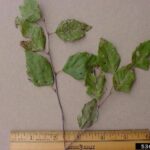
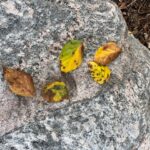
Figure 1: Cryptocline leaf spot on Elm (photo by Paul Bachi, University of Kentucky Research and Education Center)
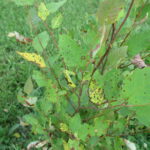
Figure 2: Cryptocline leaf spot on a young elm shrub. As the density of leaf spots increases, the leaf blade turns more yellow. (Photo from Purdue Landscape Report)
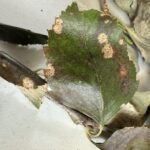
Figure 3: Mature Cryptocline lesions which are tan in color and have black fungal structures within (photo from Purdue Plant & Pest Diagnostic Laboratory)
Symptoms
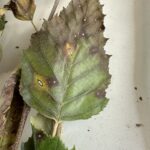
Leaf spots may start as small, round chlorotic lesions that slowly expand over time (Figures 1 & 2). Eventually, a necrotic spot with a purple/black border and tan or white center will form (Figure 3). Lesions may begin to develop on a leaf vein and instead of being circular will follow the vein a little, creating a thin necrotic lesion (Figure 4). With increased leaf spot development, large areas of the leaf blade will turn yellow and eventually necrotic, before it falls from the tree (Figure 5). Leaf drop will typically occur in the lower canopy, areas where there is less air movement and higher humidity; however, epidemics occur during periods of we weather that can cause significant leaf drop. Leaf loss typically occurs in the summer (late July to mid-August).
Figure 4: Lesions of Cryptocline located on leaf veins, creating elongate necrotic lesions instead of the typical round lesions located elsewhere on the leaf. (Photo from Purdue Plant & Pest Diagnostic Laboratory)
Figure 5: Elm leaves which have turned yellow or necrotic and fallen prematurely from the tree. (Photo from Plant & Pest Diagnostic Laboratory)
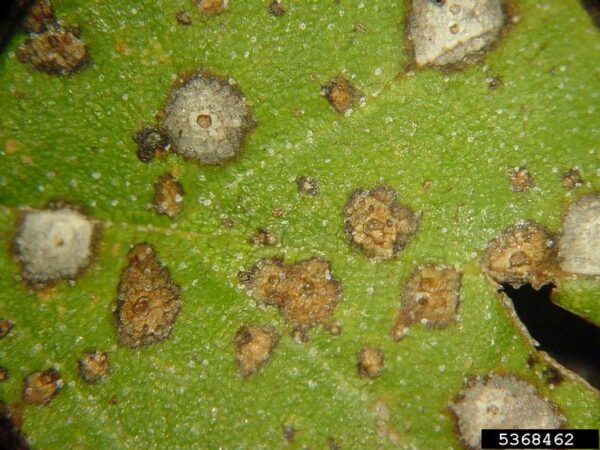
Figure 6: Close up image of Cryptocline leaf spots with acervuli. (Photo by Paul Bachi, University of Kentucky Research and Education Center)
Life Cycle Cryptocline is only known to colonize the leaves, so it overwinters in fallen leaf tissue. In the spring, the fungus will produce ascospores which are carried in the wind to infect young elm leaves. Once initial lesions progress, black fungal structures (acervuli) will form in the necrotic tissue and being producing asexual spores (conidia) in a sticky substance, which can be spread via rain (Figure 6). The conidia act as a secondary infection cycle where it will infect foliage and create new leaf spots continuously throughout the growing season as long as the environmental conditions are conducive.
Management
Like other leaf spot pathogens that do not infect stems, removal of the foliage in the fall can reduce inoculum for the following year (though won’t eliminate the disease). Providing fertilizer (where needed) and water (hot and dry periods) will help mitigate some tree stress, as stress can predispose plants to increased disease severity. Fungicides are not normally recommended for mature trees as it is impractical to get coverage across the entire canopy, but could be practical in a nursery setting if symptoms are observed and leading to leaf drop. It is still early in the season, but the next few weeks are important to monitor for some disease issues that may explode later in the season.
For other information on management of foliar disease problems, please see the following link: Foliar Fungal Disease Management.
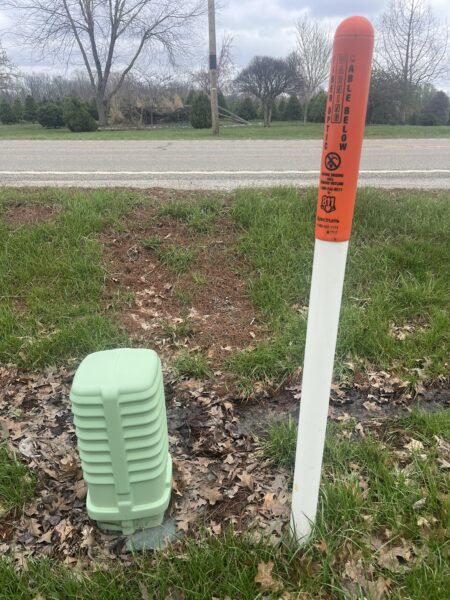
Figure 1. Runoff from roads surfaces into trenches can quickly form gullies from soil erosion if not quickly repaired following utility work (Purdue Landscape Report)
Purdue Landscape Report: Each of us utilize mobile devices and daily consume services that require fiber and other utility infrastructure. Necessary utility work along roadways often leaves sunken trenches, compacted soil for lawns that are uneven or stripped of vegetation. If damage is significant, check with the utility provider, as many companies have restoration policies or reimbursement options for affected homeowners. However, subcontractors and varying degrees of action by utilities can make this a frustrating process.
But a few timely steps can speed recovery and simplify the process rather than dealing with later weed overgrowth or washing overtime. Begin by removing rocks, excess gravel, and construction debris. Loosen the sides of ruts or where excess soil remains beside a trench with a rake or shovel to level out and improve water infiltration and root development. If the area has settled or ruts are present after a period of time, regrade to match the surrounding lawn and ensure proper drainage away from the roadway and sidewalks. Use extra caution when these areas are collocated with drainage or susceptible to water over wash as your work can be whisked away. In some cases, ignored sunken trenches and ruts can be back filled with highly deteriorated mulch to help bring back life to the soil if one has patience to let time continue to run its course and seed later into the mellowed, high organic matter soil.
Next, incorporate quality topsoil or compost to rebuild soil structure and fertility.
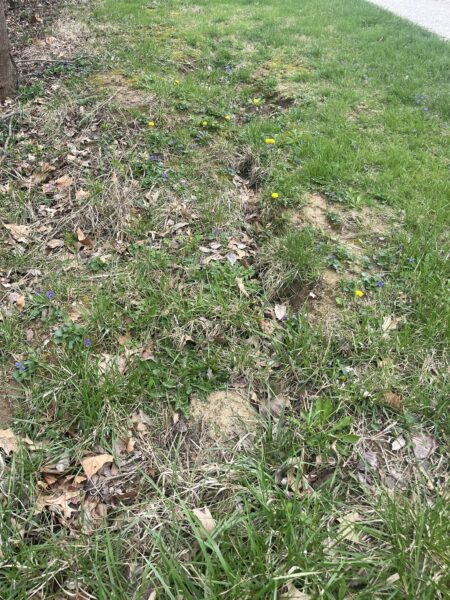
Figure 2. Sunken trenches from utility work that have been overgrown with grass/weeds can be a hazard for one walking or when mowing. Often the easiest fix if one is willing to be patient is to add composted mulch into the trench which will help fill to help soil and have less disturbance. Mulch is also much easier to shovel than top soil.
Choose a grass seed mix appropriate for your region and light conditions and apply it evenly over the prepared area. Lightly rake the seed into the soil and cover with straw mulch to reduce erosion and conserve moisture. Keep the area consistently moist with light, frequent watering until seedlings are well established, typically 2–3 weeks depending on weather. If the season is not fit for seeding grass (i.e. July) try seeding a temporary cover crop like buckwheat that will attract pollinators and give short term cover while choking out weeds.
For larger or highly visible areas, sod can provide an instant fix, though it is both expensive and requires careful watering to root successfully. Once new grass reaches 3–4 inches, begin mowing and apply a light fertilizer application to encourage growth.
In summary, it depends on the time frame and the urgency you have to fix a recently created problem based on its location. For problem areas that have existed over time where weed growth has already occurred, using composted mulch to fill sunken trenches or ruts may be the easiest, while using mowing to manage weeds during summer and seed after lighly working surface more towards late summer or early fall.
Purdue Landscape Report: When talking about invasive species, specialists are most commonly talking about some kind of plant or insect that is making an impact on landscape plants, soil, or hardwood. Most of these species are relatively easy to understand, with a biology that typically resembles that of a native counterpart. Wood-boring insects, vining plants, and fast-growing shrubs all have similar native species that landowners deal with on a regular basis. And then, some invasive species are just plain weird, like the invasive hammerhead worm!
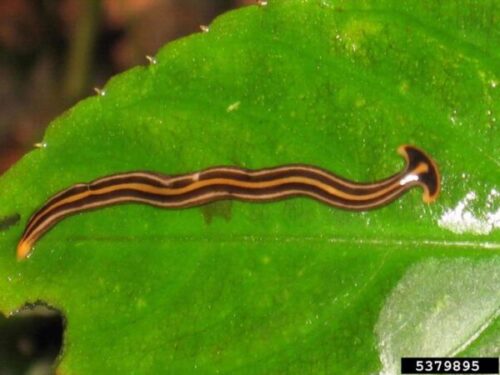
Hammerhead worm (photo from Arun T P, Bugwood.org)
Hammerhead worms, sometimes called shovel-headed garden worms, are a type of land planarian, or flatworm. Flatworms are worm-like organisms that lack the segmentation of earthworms and have the ability to regenerate from parts and pieces. Hammerhead worms belong to a subset of planarians, the genus Bipalium; while there are a few native species of Bipalium, most are from tropical regions. It is believed that hammerhead worms have been present in North America for long time, preferring environments that stay warm and moist through most of the year. Hammerhead worms are named for their spade-shaped head and typically have bright colors with dark lines running the length of their bodies. They are often found in indoor spaces and greenhouses that are temperature controlled and maintain humid conditions. Hammerhead worms can also be found living under rocks, fallen trees, or anywhere that can maintain a high enough relative humidity. While some flatworms are able to live in drier conditions, Bipalium need moisture in order to survive.
Members of Bipalium are predatory, consuming invertebrates like earthworms, snails, slugs, and some soft-bodied insects. Once they capture a prey item, they envelop it in a mouth-like organ located on the underside of their bodies. The primary issue with hammerhead worms is the potential damage they can do by preying on beneficial organisms that maintain soil and plant health. Hammerhead worms, and all other planarians, lack a closed body plan that uses a one-way digest system. Once they eat something, it is digested and waste is excreted through that same mouth-like opening. Some members of Bipalium can also use a toxin called tetrodotoxin to subdue their prey; however, they only produce a small amount and lack a way to use it on a larger organism. While they are often confused for more dangerous species, the Bipalium in North America do not represent a human health concern. Just keep any pets or children away from them, and if found, and use gloves if you’re forced to handle them.
As mentioned above, one of the more unique traits of Bipalium, and planarians in general, is their capacity to regenerate new individuals from parts and pieces. A piece as small as 1/279th of the whole can regenerate into a new individual. Do not attempt to chop up or crush hammerhead worms, or you may be dealing with several dozen when new worms develop in two weeks. However, even though it seems like hammerhead worms could reproduce very quickly, it’s still fairly uncommon to see one. If found, place it in a bag or bucket with either salt, alcohol, or vinegar until the worm is dead. As long as you do not cut or chop up the worms, it is very unlikely you’ll have to deal with more than one at any given time. Just keep your eyes open and remember to report any sightings to 1-866-NOEXOTICS!
Purdue Landscape Report: An unfortunate question I am sometimes asked is similar to this: “I lost my prized shade tree! What can I plant that will grow fast and give me shade?” While there is no instant fix to this scenario, let’s review a few trees that might be better choices here in northern Indiana.
One obstacle to consider is that many of the fast-growing trees are also fast-dying, meaning that, relatively speaking, they are not long-lived for trees. We’re already behind the 8-ball in our highly manipulated landscapes because we know that trees in landscapes tend to live much shorter lives than trees in their unmanipulated natural habitats.
Figure 1. Honeylocust is a fast growing tree that performs well in urban plantings (Image from Purdue Landscape Report)
That said, here are a few trees to consider. I would still encourage homeowners to invest some time in researching the trees that they are considering. There are pros and cons to almost every tree, and there isn’t room in this article to fully explore all the advantages and disadvantages of each tree. Additionally, I will not be getting into detail about all the cultivars available.
Let’s start with our state tree, the Tuliptree (a.k.a Tulip-poplar or Yellow-poplar). Tuliptrees can become quite large and offer a pretty yellow fall color. They prefer deep, rich, well-drained soils.
If maples are on your mind, a couple of options would be Red maple and Freeman maple (a hybrid cross of Silver maple and Red maple). Red maple has more moderate growth. The Freeman maple is a faster grower and has stronger wood than one of its parents, the Silver maple. These maples do best in well-drained, slightly acid soils, but will tolerate a variety of soil conditions.
Northern catalpa is a fast grower, but dealing with the fruit litter, a long seed pod, may be a deterrent for some locations. It has large, heart-shaped leaves. It would grow well in moist sites.
Common hackberry is a fast grower, but it is susceptible to galls on the leaves (from a n insect), and limbs can become susceptible to wind and ice damage. It tolerates a wide variety of soil conditions. Thornless honeylocust is widely adapted to different soil types. Honeylocusts in the wild produce large thorns. The Thornless honeylocust is adapted to landscapes and allows dappled sunlight to reach turfgrass, so that it thrives more than it would under a tree that provides heavy shade.
Sweetgum is also a fast-growing shade tree with brilliant fall colors. It has a star-shaped leaf. One drawback of sweetgum is the spiny seed capsule. This fallen fruit can make walking in the yard barefoot a painful experience.
Eastern cottonwood is the tree on record for the fastest growth rate of any tree native to the U.S. However, those with cottonwoods in their yard can tell you that the cottony seed mass shed in the spring sticks everywhere. It can be a mess. Plus, cottonwood can shed limbs frequently, especially after storms. This tree is commonly found along rivers and streams, so it not surprisingly prefers moist soils.
Also found along rivers and streams, American sycamore is a fast-growing tree in some landscapes. However, it can be a messy landscape tree, shedding bark, leaves, limbs, and fruit nearly year-round. The large fallen leaves can smother grass if not mowed or raked. It is also sensitive to a spring disease called anthracnose, which can cause defoliation and twig death.
Wild black cherry may be another good choice. Although it may not be available in some nurseries, it can be grown from seed. It prefers rich, moist, well-drained soils.
A couple of faster-growing oaks to consider are Pin oak and Northern red oak. Pin oak would be better suited to slightly wetter spots, while Red oak would work on a wider variety of soils, preferring rich, moist, well-drained sites. Pin oak is susceptible to iron chlorosis (yellowing leaves) on alkaline soils.
Finally, American basswood also prefers rich, moist, well-drained soils and is somewhat shade-tolerant. This tree can grow quite tall and provide excellent shade.
In your research, find out how large the tree you will be purchasing will get. One common planting mistake is locating trees too close to structures. Consider the mature size when placing it in the landscape.
Time your spring planting near Arbor Day, the last Friday in April.
Purdue Landscape Report: Spring is just around the corner, green spaces are beginning to wake from their winter slumber, Earth Day and Arbor Day are a little over a month away, and people are ready to get outside with planting on their minds. But before you go and get your tree(s) for planting, there is quite a lot to think about. Every tree is an investment, and if properly cared for, will outlast us and potentially future generations. So, what goes into planting trees, especially large trees?
One important note for successfully planting any tree is thinking about your goals, or what you want out of a new tree. In the case of large trees, the first thing that usually comes to mind is shade. Having a large shade tree to block the sun on your home in hot summers can significantly reduce power consumption from air conditioning. Large shade trees also give us great locations to play, picnic, or relax outside in our backyard, at local playgrounds, or parks. Given the space and care to grow, they can create wonderful local environments and beautiful aesthetics, driving down neighborhoods and city streets. The right species can benefit local wildlife with food production and habitat improvement.
When you know what you want, you can begin to assess your site to see if you have the right space for your future tree. Large trees require larger spaces. If your tree survives to a mature size, will it interfere with anything else around it? Are there utility lines above or below your planting site? What is the proximity to homes, buildings, or other structures? Will it obstruct road signs, lights, or line of sight? Will falling leaves, nuts, or fruits adversely affect anything around the tree? What is the quality of the soil: pH, well-drained, wet, clay, loam, or sand? A poorly assessed planting site could lead to a doomed planting project by placing the wrong tree in the wrong place.
Once you have your goals in mind and know what type of site you have, you can begin to consider what species you may want to plant. A couple of good resources for considering species selection in the Midwest include your local extension offices, reputable nurseries, and online resources like the Morton Arboretum. In the case of large shade trees, we all would like to have our shade now, but trees take time to reach mature heights. That being said, some species grow a little faster than others. Faster-growing trees that grow well in urban settings include:
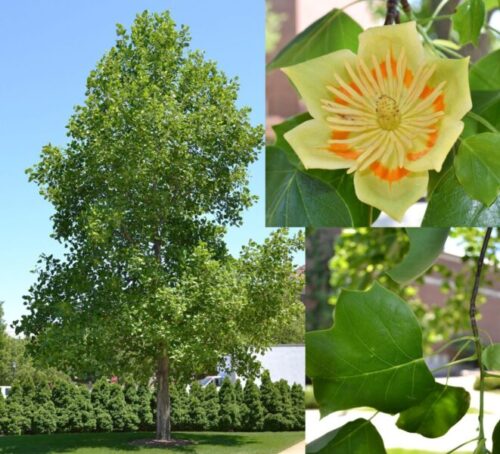
Tuliptree or tulip-poplar, Liriodendron tulipifera, the state tree of Indiana, can withstand varying light exposure, acidic soil that is moist to well-drained, is moderately sensitive to drought, and can reach heights up to 70-90 feet. It is susceptible to ice damage and has weaker wood than other species.
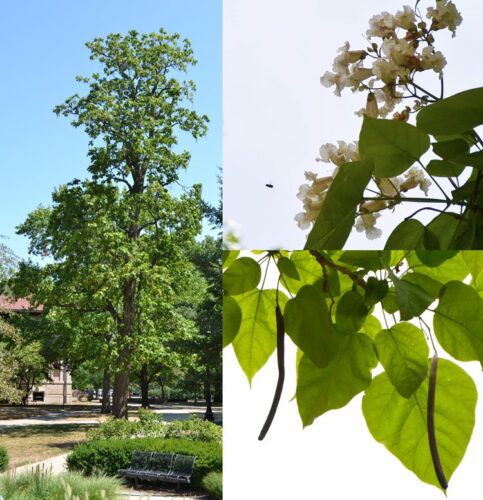
Northern catalpa, Catalpa speciosa, is slightly smaller at about 60 feet in good conditions, thrives in full sun, and a little more alkaline soil that is moist to well-drained. Large leaves and long bean-like seed pods can be messy, and the wood and structure are on the weaker side.
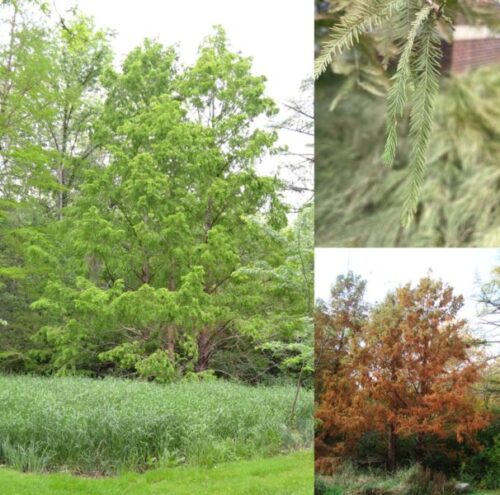
Dawn redwood, Metasequoia glyptostroboides, is a deciduous conifer (drops its foliage every fall) that can reach heights of 70-100 feet. A non-native tree, it does very well in urban settings without competing with native trees, and can survive full sun in acidic, moist to well-drained soils. It is tolerant of some drought and flooding as well as road salt during the winter.
Figure 1: Tuliptree or tulip-poplar, Liriodendron tulipifera; tree structure, flower, and leaf. Photo Credit: Purdue Arboretum
Figure 2: Northern catalpa, Catalpa speciosa; tree structure, flower, and leaf. Photo Credit: Purdue Arboretum
Figure 3: Dawn redwood, Metasequoia glyptostroboides; tree form, leaf, and cone. Photo Credit: Purdue Arboretum
Next, we have some examples of trees slowing down to moderate growth:
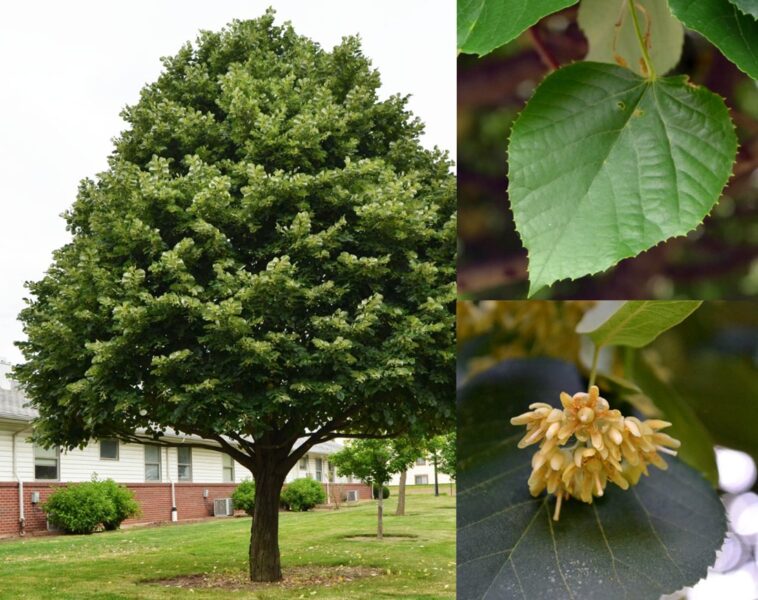
Silver linden, Tilia tomentosa, another non-native, is a common street tree that can reach heights up to 70 feet. Surviving in full sun to shade, it does well in moist to well-drained soils and is tolerant of some drought, alkaline soils, and road salt. Leaves that are dark green on top and silvery on the bottom, and flowers that can benefit some pollinators.
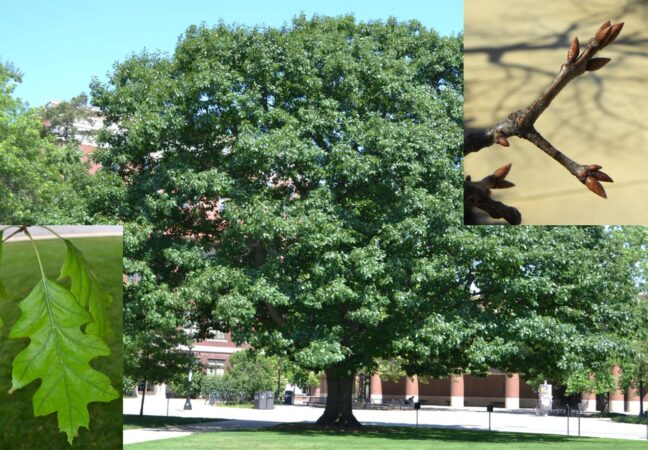
Northern red oak, Quercus rubra, is one of my favorite native trees and reaches mature heights up to 75 feet. Preferring acidic, moist to well-drained soils, they can tolerate some drought as well as alkaline soils and clay soils. Leaves are dark green in summer and a beautiful red in the fall, with acorn production and interesting branch structure that benefits native birds and small mammals.
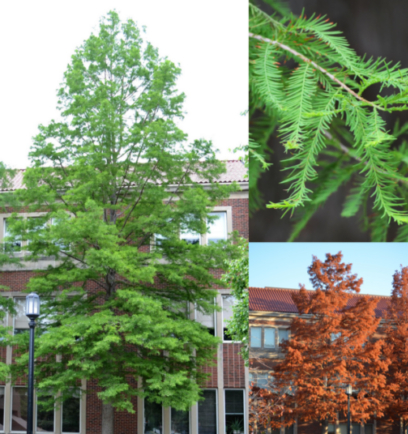
Bald-cypress, Taxodium distichum, is similar to the dawn redwood. A deciduous conifer that loses its needles after the fall and can grow up to 70 feet. It can survive many soil types, but thrives in acidic, wet soils. In wetter sites, one thing to take into consideration is that it can send up “knee-like” roots well above the soil line to improve structural support and gas exchange. If these appear in lawn situations, they can both damage and be damaged by mowing operations. Extending mulch beds can reduce these negative interactions.
Figure 4: Silver linden, Tilia tomentosa; Tree form, upper leaf, and flower. Photo Credit: Purdue Arboretum
Figure 5: Northern red oak, Quercus rubra; Tree form, leaf, and buds. Photo Credit: Purdue Arboretum
Figure 6: Bald-cypress, Taxodium distichum; Tree form, Fall color, and needles. Photo Credit: Purdue Arboretum.
These suggestions are a small sample of large shade trees that can grow well in different urban settings. Remember to think of what the overall goal is for your planting and to assess your site to make informed species choices. With proper forethought, you can make a resilient landscape that your trees will be able to survive in for years and years. If you still have questions, you can contact your local extension office or find an ISA Certified Arborist at Find an ISA-Credentialed Arborist.
Purdue Landscape Report: We are often the bearers of bad news when a new exotic insect species is discovered in Indiana. This time, however, we have some good news to share. Agrilus smaragdifrons, a beetle that feeds exclusively on Tree-of-Heaven (Ailanthus altissima), was detected in Indiana last year in Allen County.
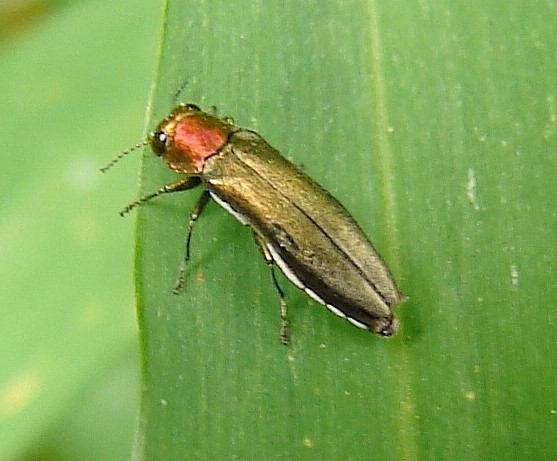
Figure 1. Agrilus smaragdifrons adult (Photograph by Dave Eib, iNaturalist)
You might notice that this beetle belongs to the same genus as the infamous Emerald Ash Borer (Agrilus planipennis) (EAB). Indeed, the two species look quite similar, although there are subtle differences in their striking metallic coloration. While Emerald Ash Borer is a vibrant green from head to wing, A. smaragdifrons has a golden-red head and thorax with green to black-green wings (Fig. 1).
This beetle has been present in the United States for several years, with the earliest record dating back to 2011 from a photograph taken in New Jersey that was uploaded to BugGuide.net. Subsequent detections occurred in several neighboring eastern states, often as bycatch during Emerald Ash Borer surveys (Hoebeke et al. 2017).
The life cycle of A. smaragdifrons also shares many similarities with Emerald Ash Borer. Although its life cycle under North American conditions has not yet been formally described, Hoebeke et al. (2017) summarize the beetle’s biology in its native Asian range based on Chinese literature (Xu and Yang 2007).
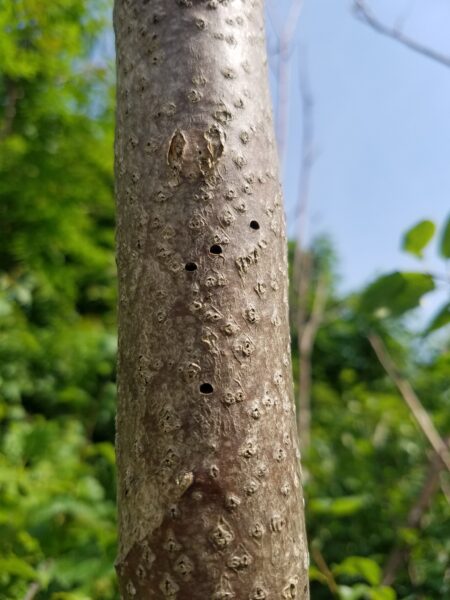
Figure 2. Agrilus smaragdifrons exit holes in Ailanthus altissima (Photograph by Patrick Perish, iNaturalist)
Females lay eggs in bark crevices during mid- to late summer, and newly hatched larvae burrow into the tree. The larvae overwinter within galleries beneath the bark and resume feeding the following spring. Pupation occurs in early summer, around June, and adult mating flights take place from June through July. When adults emerge, they leave characteristic “D”-shaped exit holes in the bark (Fig. 2; Photograph by Patrick Perish, iNaturalist).
It is not yet known whether A. smaragdifrons will function as a biological control agent for Tree-of-Heaven. Additional research and field observations are needed to determine its impact on its host. However, reports from Beijing Forestry University indicate that attacks by A. smaragdifrons can lead to decline and eventual death of Tree-of-Heaven (Hoebeke et al. 2017).
Scientists with the Indiana Department of Natural Resources and Purdue University are interested in tracking the distribution of A. smaragdifrons across the state. The next time you encounter a Tree-of-Heaven, keep an eye out for the distinctive D-shaped exit holes. In late summer, you may also observe adults feeding on the leaves.
Figure 1 – Southwest damage from the base of the tree up the trunk.
We are now on the other side of the equinox, and while the days are getting longer again, we are beset with Midwest snows and icy temperatures that could persist to the beginning of Spring in March. During this time, there is a likely chance of a “tug-of-war” between our current cold weather and intermittent warm spells, and it’s a good time to check on your trees, especially newly transplanted trees and species with thinner bark.
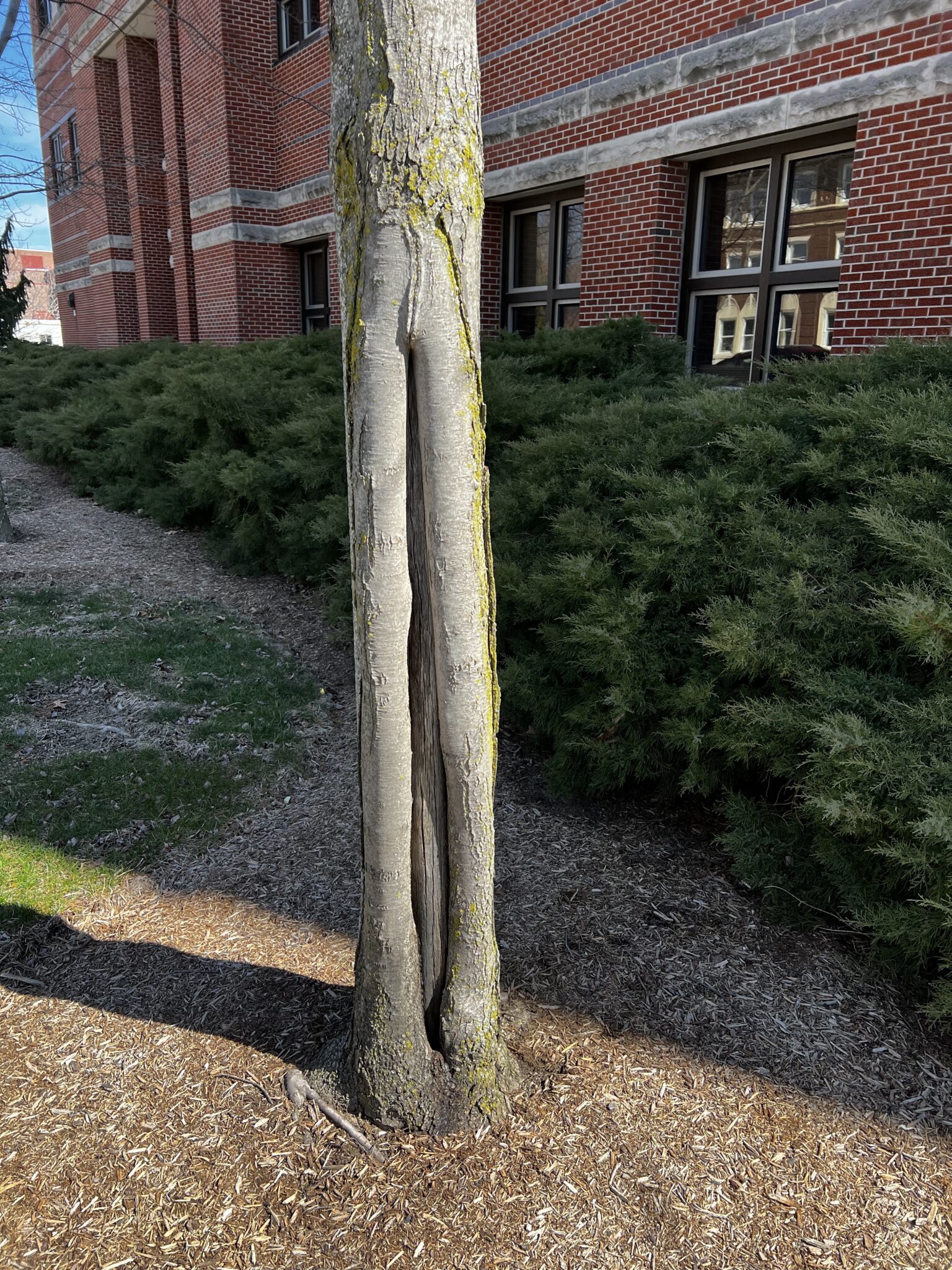
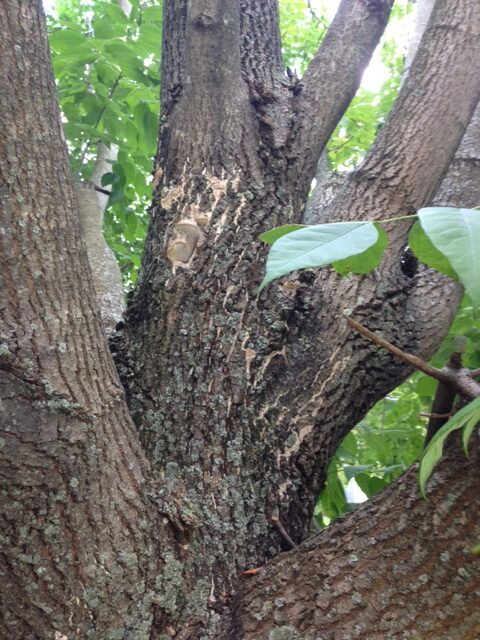
As you head outdoors, what you might notice are signs of damage to your trees that include splits or cracks that could range in size from less than 1” to up to the entire length of the main stem and/or sunken areas on the trunk (Figs. 1 & 2). What you’re witnessing is winter stem damage known as sunscald or southwest damage (usually located on south to southwest-facing sides of the tree).
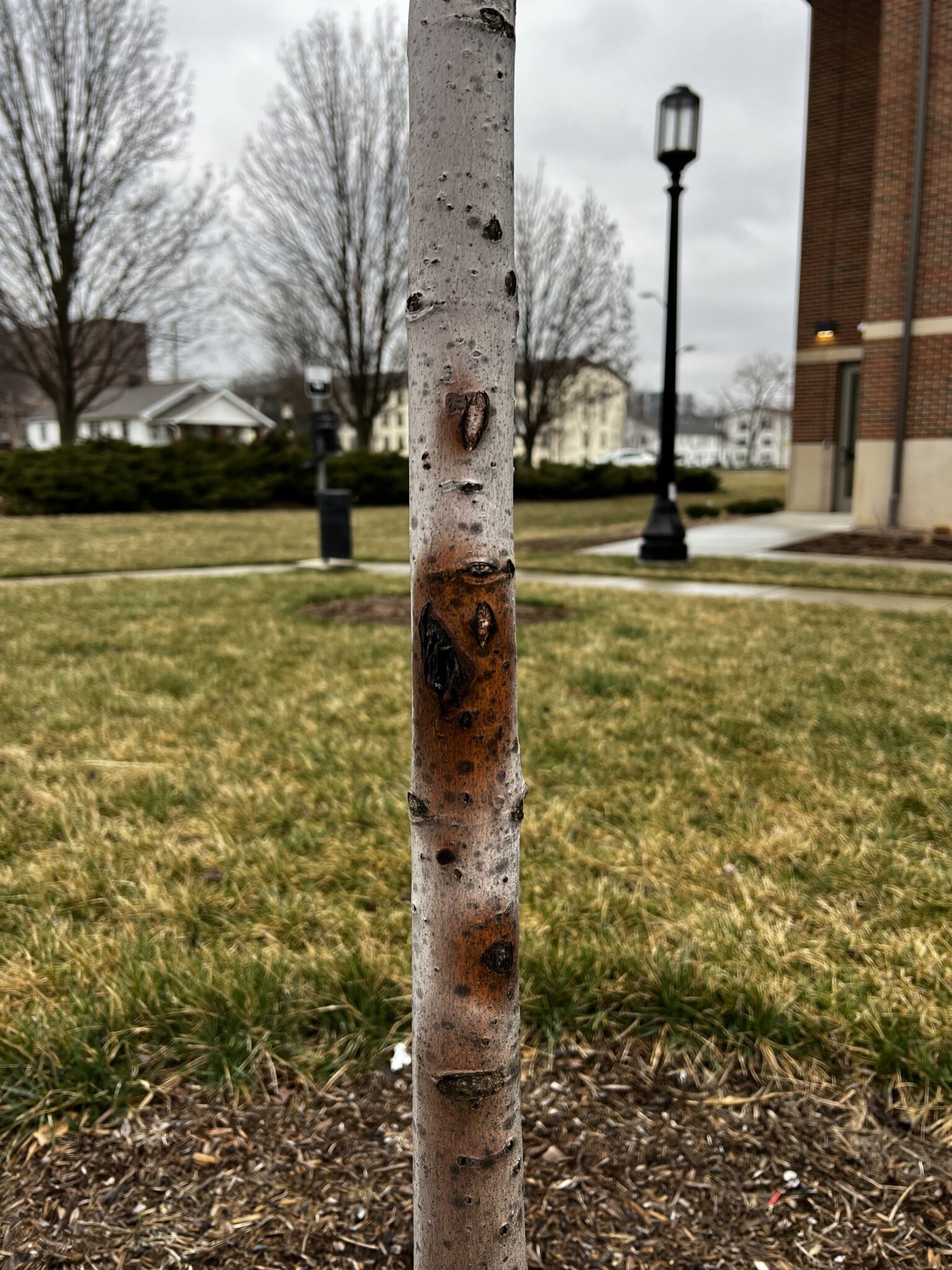
So, what is southwest damage and why has your tree been affected by it? It’s a wound that’s opened during winter due to sudden drops in temperature. These drops can come from different instances like the change from day to night or even from sudden cloud cover on a sunny day. The sun warms the trunk on the south to southwest faces of the tree, then the temperature change causes the bark to split. Repeated instances eventually cause dehydration of the damaged area which causes scalding.
Figure 2 – Sunken wound from scalding damage.
Southwest damage comes from a previously sustained injury and will likely be found on younger trees or species with thin bark including Acer spp., Betula spp., Malus spp., Platanus spp., Prunus spp., and Ulmus spp. If these trees are also stressed, for example, from the dryer hotter summers we’ve been experiencing or other factors, they will be more vulnerable to damage moving into winter months.
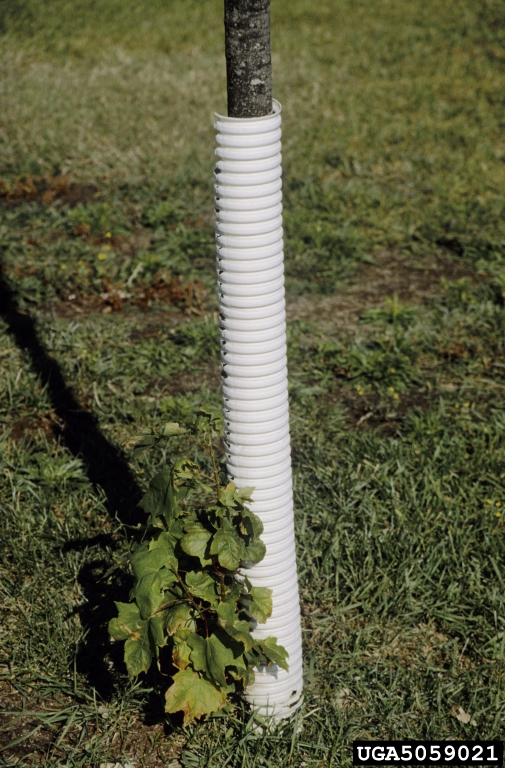
As your trees grow and become more established, chances of damage decrease. Install white tree guards in Fall on trees less than 4” to help protect them during the winter. Those of you that are ahead of the game in your tree protection will have already done this last year to help prevent southwest damage (and damage from deer rub if you installed them in the fall before the rut). I commend you on your efforts, but make sure not to leave them on year-round. As things begin to heat up those covers can be a source of moisture retention which can lead to rot on the trunk of your tree. Plan on removing them as Spring sets in and save them for next Fall.
If cracking has already occurred, don’t panic. It’s not the end of your tree. Depending on the extent of the damage the tree may be able to seal off the damage with callus tissue called wound wood (Fig. 4). Healthier trees can produce this more quickly. Some things you can do to assist your tree include the following:
Figure 3 – Use of white tree guards can protect the trunk from temperature changes that cause damage.
Putting your tree on a watering schedule (especially in the summer) to reduce water and heat stress.
Mulching your tree (no mulch volcanoes) can help stop mechanical damage from mowing and other lawn maintenance and can also help with water retention in the soil.
Herbicide use should be limited and done on days with little to no wind to help reduce drift onto the tree.
Plan on installing white tree guards mid to late Fall. I like the white corrugated drainpipes you can find at local home and garden stores. Make sure to get a diameter larger than you tree to provide airflow to the trunk.
If you are still worried about the health of your tree, you can always find an ISA Certified Arborist nearby using the Trees Are Good website. They will be able to help assess any other issues and provide excellent professional help.
Figure 4 – Callus tissue growth closing over southwest damage.
Purdue Landscape Report: Spotted lanternfly (SLF) has been the subject of a lot of media attention in the last few years. In the east, states like Pennsylvania and New York have been dealing with heavy infestations since the insect was first detected in 2014. In Indiana, this invasive planthopper arrived three years ago, infesting two counties on the eastern side of the state. Since then, the Indiana Department of Natural Resources and Purdue University have been working together to mitigate the spread of this insect as well as educate Hoosiers on what they can do to help. Spotted lanternfly is still on the move, and this update will help refresh you on how this bug works, and where they are headed.
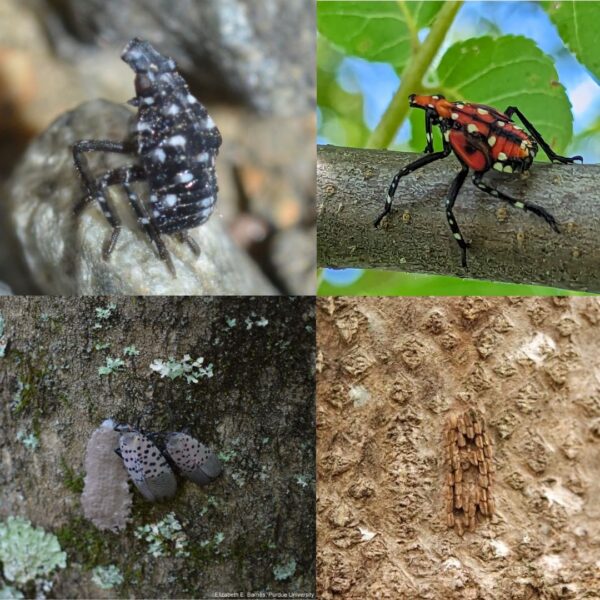
Life cycle Spotted lanternfly is an annual insect, having only a single generation in a year under normal conditions. The insect goes through incomplete metamorphosis; immature stages, called nymphs, resemble smaller, wingless versions of the adults. Nymphs will begin to appear in April or May, developing through four instars, until they reach adulthood in late summer. With each instar, the period in between molting, the nymph will grow larger, develop wingpads, and eventually change color. Early instars are black with a white dot pattern, while later instars will be bright red with black and white patterning (Fig. 1). Late instar nymphs are often compared to milkweed bugs or lady beetles. Once they complete development in the late summer or early fall, they will mate and lay egg masses covered in a protective substance that makes them resemble mud. Eggs masses will overwinter until the spring, while adult insects will die as temperatures cool. In Indiana, depending on temperature, adults can be seen as late as early November.
Impact Spotted lanternfly is a sap-feeding insect, using syringe-like mouthparts to drain nutrients directly from plant tissues. Like other sap-feeding insects, the activity of SLF wounds the plant, creating openings for various pathogens to exploit. Feeding by SLF has been shown to reduce overall health of their hosts, reducing their capacity to survive overwintering, and potentially kill the host plant depending on species. They also produce a sugary waste known as honeydew; while honeydew itself is not harmful, it acts as a growing substrate for sooty mold, which can have a serious impact the photosynthesis of understory foliage as well as attract other nuisance insects.
Spotted lanternfly is a generalist herbivore and can feed on over 100 different species of plant and tree in Indiana. However, this insect has shown strong preference towards certain species, often with devastating consequences. The most preferred host is tree-of-heaven, an invasive tree species in North America. Tree-of-heaven is the primary host of SLF in their shared native range, and the insect appears to experience high reproductive success on it even when they share a new environment. Grapes are also highly preferred by SLF, and infestations will typically result in overfeeding and the death of the plant. Black Walnut, American river birch, and various maple species are also at risk of severe damage from this insect. Evidence has also suggested that maple, when used for syrup production, will experience reductions in yield and quality when attack by spotted lanternfly.
Where are they now? Spotted lanternfly has been present in Indiana since 2021, first arriving in Huntington and Switzerland Counties. In Huntington, the infestation occupies a stand of tree-of-heaven next to an industrial parking lot. Tree-of-heaven moved into the neighboring residential area, allowing SLF to also spread with it. The more rural infestation in Switzerland County was traced to a vehicle transported from Pennsylvania, and the insect has taken advantage of patches of tree-of-heaven in nearby wooded areas. While both infestations have strongly associated with the insect’s primary host, there is some evidence that SLF is beginning to take advantage of other nearby plants, such as maple. In the last year, SLF moved a significant distance and has been detected in several more counties, including Elkhart, St. Joseph, Porter, Allen, Dekalb, and Noble Counties. Most of the activity has been found on tree-of-heaven along rail lines, supporting the idea that the insect is dispersed by rail traffic moving westward out of infested areas.
It’s important to remember that trains aren’t the only vehicles that can have SLF passengers. These insects, and their egg masses, can be found on just about any surface, including the car you drive to work, the RV you used for recreation, semi-trucks that cross the country, and more. Purdue Entomology and Indiana DNR are encouraging everyone to inspect their vehicles when traveling through any of the infested areas. Also check all recreational vehicles and trailers for spotted lanternfly egg masses; if found, scrape them off into a bag or bucket filled with soapy water. This fall and winter, we also want to encourage everyone to please burn any firewood where you buy it, and please don’t move it off your property if you chop it yourself- especially if you are burning tree of heaven. Egg masses will stick to firewood and can survive our winters very well.
What can I do? We are still learning about the spotted lanternfly’s distribution through Indiana, and we need the help of citizen scientists to effectively track the insect’s movement. If you believe you’ve seen spotted lanternfly, please report it using any of the resources listed below. You can also feel free to reach out to Bob Bruner, Exotic Forest Pest Educator, by emailing them at rfbruner@purdue.edu, or you can report sightings by calling 1-866-NOEXOTIC.
Purdue Landscape Report: By now, the emerald ash borer (EAB) invasion is an old story for landscapes and forests in the Midwest. Since EAB was first found in North America in 2002 more millions of ash trees than we can know have died and this tiny insect continues to kill ash in an ever widening zone that currently includes 37 US states and 6 Canadian provinces. Arborists and landscape managers continue to protect valuable ash trees by use of systemic insecticides, typically applied via trunk injection every 2-3 years.
While EAB is the overarching threat, ash survival may also be threatened by wood decay fungi, which may colonize insect exit holes, injections sites and other wounds. The most common decay fungi we see in the lab are Perenniporia and Fomitopsis.
Perenniporia fraxinophila is the most frequently reported wood decay fungus on ash and causes a heart rot that contributes to loss of structural integrity of the tree. Infection sites tend to be high on the tree and may be easily overlooked until decay is advanced. The fungal structure is perennial, expanding each year, and may be confused with Ganoderma applanatum, the artist’s conk. The upper surface turns black or brown with age and the underside is white with pores instead of gills.
Figure 1: Upper ash branches colonized by a suspected Perenniporia sp. (PLR)
Figure 2: Fungal conks of a suspected Perenniporia sp., beginning to emerge from decaying ash branches. (PLR)
Figure 3: Fungal conks of a suspected Perenniporia sp., beginning to emerge from decaying ash branches. (PLR)
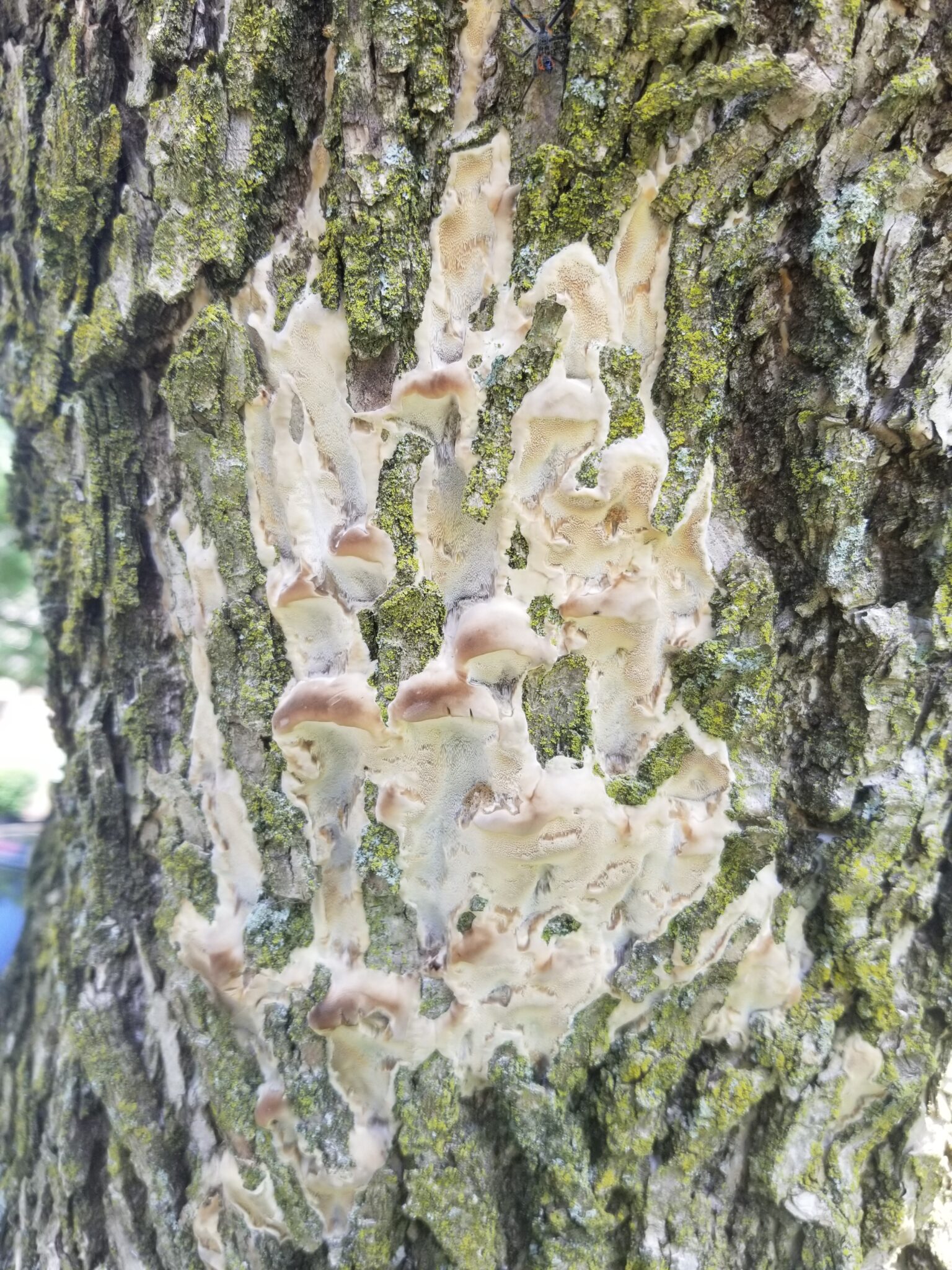
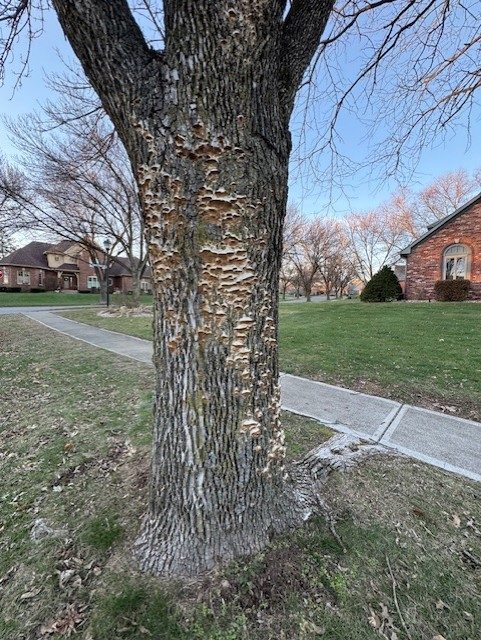
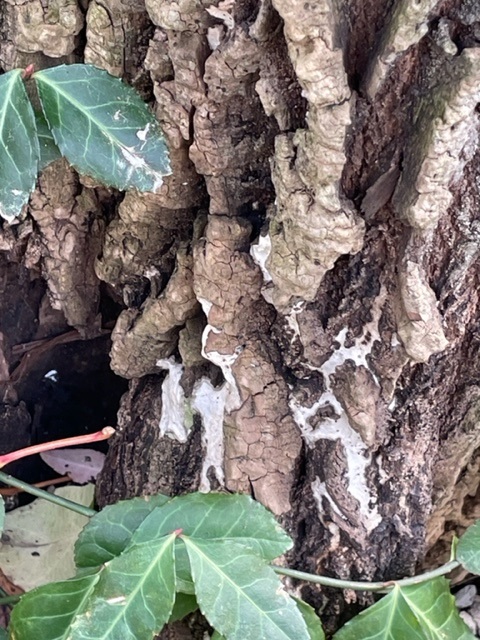
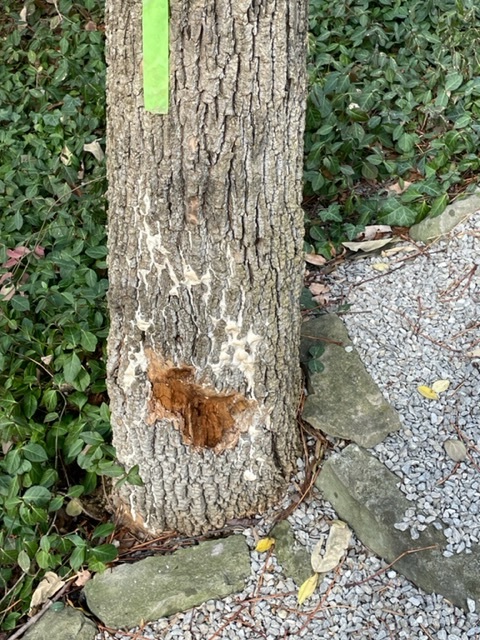
In the last few years, we have had a few samples of a similar fungus colonizing the trunk and base of ash trees, often near injection sites. Initially we were unable to identify the fungus, but DNA analysis revealed the fungus was a Fomitopsis species. This fungus develops a shallow shelf structure with white top and tan underside.
Fungal decay presents a greater risk to ash because it lacks the preservative enriched heartwood found in oak, walnut and other hardwoods that tends to slow down internal spread of fungi. Even fungi that initially invade dead areas of ash may rapidly colonize and degrade stem and trunk tissue.
Figure 4: Fomitopsis sp. colonizing the trunk of ash trees damaged by EAB. (PLR)
Figure 5: Fomitopsis sp. colonizing the trunk of ash trees damaged by EAB. (PLR)
Figure 6: Fomitopsis sp. colonizing the trunk of ash trees damaged by EAB. (PLR)
Fungal decay also disrupts vascular tissues in the stems and trunk, which further limits the movement and effectiveness of insecticide injections, so that infected trees may face greater damage from EAB. When found on small side branches the infection might be successfully pruned out, but in most cases the decay is in major branches or the trunk, which means the tree will need to be removed. If your ash trees that are being regularly treated for EAB but continue to show thinning and decline, check for these fungal invaders, they may be partly responsible.
Purdue Landscape Report: It’s finally October, and we should be enjoying lovely fall temps and colors. While some of the trees are changing, it’s not necessarily due to the change in seasons. As I write this, the temperature is 84 F (29 C). I look out my window and see mostly green leaves with some colors from the short cold snap we had and some from heat and drought stress. Whether you are worried about the trees in your yard and community or not, there are some simple tasks that we can do to assist them as we await the cooler temperatures of Autumn.
A 3 foot radius mulch ring around a medium sized tree (Purdue Landscape Report)
Mulching: One simple task to better prepare your trees for winter is to add a new layer of mulch, which benefits your trees in multiple ways. Adding a 2-3 inch thick layer of mulch will better maintain moisture levels and buffer extreme temperature changes in the soil and will add some organic matter too. Mulching to the drip line will benefit the tree the most, but in the case of larger trees it’s not always feasible. Try for at least a 3-foot radius from the trunk and make sure to leave a 2 inch or so gap between the trunk and the mulch. Remember, no volcano mulching.
Fertilizing: That mulch you just added will add some organic material to your soil as it slowly breaks down, but an autumn fertilization can benefit your trees too. Unlike trees in the forest that have a natural supply of nutrients from fallen leaves and twigs, trees around our homes are usually deprived as we rake and clean up our yards. Adding a slow-release fertilizer in the fall helps provide a nutrient boost over the winter, can promote root growth, and better prepare your tree for Spring.
Watering: Water is still an essential part of your tree care plan, but as temperatures drop and trees begin to head into dormancy they don’t need as much water as is required in the hit summer months. If you have irrigation systems in your yard start to drop the frequency of watering. You can water up until the first freeze, but make sure soils are just a little damp and not soaked. Evergreens in particular will benefit from slow deep watering 1-2 times a week until the soil freezes. Winter winds and temperatures can desiccate the needles without an adequate supply of water.
Pruning: Now is a good time to prune out any dead, damaged, or diseased limbs in your trees. If you have access to hand saws and pole saws or pruners, you can remove smaller branches or those closer to the ground. Make sure you are making proper pruning cuts though, and if there are large limbs, those at heights, or you are just unsure of how to make a good cut enlist the help of a professional arborist.
Use of white tree guards can protect the trunk from temperature changes that cause damage (Joseph O’Brien, USDA Forest Service)
TrunkDamage: Sunscald or southwest damage occurs on young and/or thin barked trees in the winter. Wounds can occur between the south to southwest facing part of the trunk on sunny days in the winter as temperatures rise and suddenly drop. Over time these wounds can become quite large. Trees can also incur damage from deer during the rut. Bucks will scrape trees with their antlers, scraping off the bark and damaging the cambium. Both of these injuries can be reduced one younger trees by installing tree guards in the fall. Tree guards are plastic barriers you place around the main stem of the tree. I recommend using white corrugated drainage pipe that can be found at most home centers. You can make a cut lengthwise along the pipe for easy installation and make sure it has a large enough diameter to leave a space between it and the tree. Just remember to remove it come Spring.
Inspections: Visual inspections can be done year-round, but this time of the year it might be easier to see changes in your tree as leaves are falling and the canopy becomes more visible. From the ground up to the canopy, some of the things you’re looking for include fungal growth around the base of the tree, any sort of damage on the main stem or branches, premature leaf drop or color change, and branches that are dead, cracked, diseased, or seem weak. Any concerns you find are also great information to share with an ISA Certified arborist which can be found using the Trees Are Good website.