 Purdue University - Extension - Forestry and Natural Resources
Got Nature? Blog
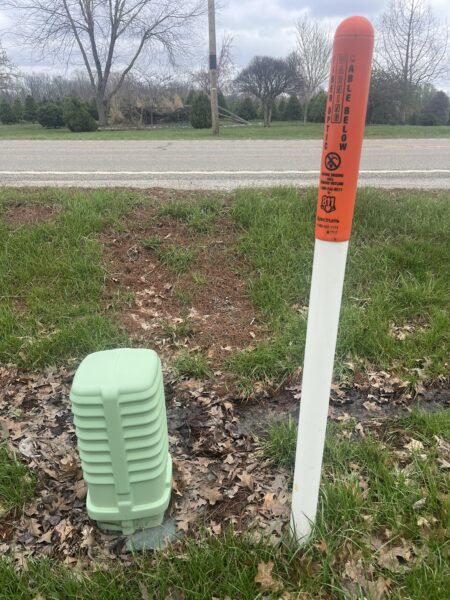
Figure 1. Runoff from roads surfaces into trenches can quickly form gullies from soil erosion if not quickly repaired following utility work (Purdue Landscape Report)
Purdue Landscape Report: Each of us utilize mobile devices and daily consume services that require fiber and other utility infrastructure. Necessary utility work along roadways often leaves sunken trenches, compacted soil for lawns that are uneven or stripped of vegetation. If damage is significant, check with the utility provider, as many companies have restoration policies or reimbursement options for affected homeowners. However, subcontractors and varying degrees of action by utilities can make this a frustrating process.
But a few timely steps can speed recovery and simplify the process rather than dealing with later weed overgrowth or washing overtime. Begin by removing rocks, excess gravel, and construction debris. Loosen the sides of ruts or where excess soil remains beside a trench with a rake or shovel to level out and improve water infiltration and root development. If the area has settled or ruts are present after a period of time, regrade to match the surrounding lawn and ensure proper drainage away from the roadway and sidewalks. Use extra caution when these areas are collocated with drainage or susceptible to water over wash as your work can be whisked away. In some cases, ignored sunken trenches and ruts can be back filled with highly deteriorated mulch to help bring back life to the soil if one has patience to let time continue to run its course and seed later into the mellowed, high organic matter soil.
Next, incorporate quality topsoil or compost to rebuild soil structure and fertility.
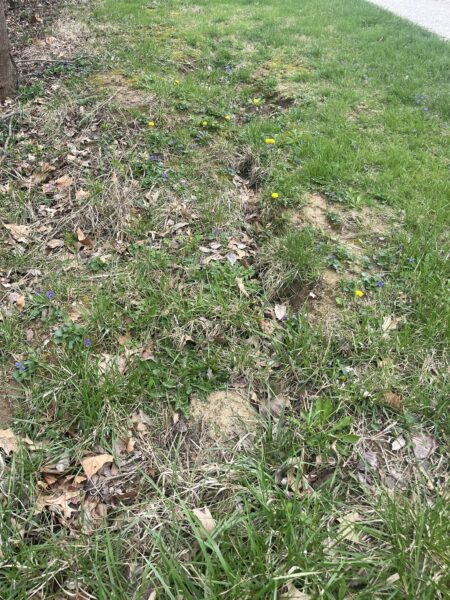
Figure 2. Sunken trenches from utility work that have been overgrown with grass/weeds can be a hazard for one walking or when mowing. Often the easiest fix if one is willing to be patient is to add composted mulch into the trench which will help fill to help soil and have less disturbance. Mulch is also much easier to shovel than top soil.
Choose a grass seed mix appropriate for your region and light conditions and apply it evenly over the prepared area. Lightly rake the seed into the soil and cover with straw mulch to reduce erosion and conserve moisture. Keep the area consistently moist with light, frequent watering until seedlings are well established, typically 2–3 weeks depending on weather. If the season is not fit for seeding grass (i.e. July) try seeding a temporary cover crop like buckwheat that will attract pollinators and give short term cover while choking out weeds.
For larger or highly visible areas, sod can provide an instant fix, though it is both expensive and requires careful watering to root successfully. Once new grass reaches 3–4 inches, begin mowing and apply a light fertilizer application to encourage growth.
In summary, it depends on the time frame and the urgency you have to fix a recently created problem based on its location. For problem areas that have existed over time where weed growth has already occurred, using composted mulch to fill sunken trenches or ruts may be the easiest, while using mowing to manage weeds during summer and seed after lighly working surface more towards late summer or early fall.
View the original article on the Purdue Landscape Report website: Roadside Rehab: Rebuilding Soil and Cover After Utility Damage.
Subscribe and receive the newsletter: Purdue Landscape Report Newsletter.
Resources:
Find an Arborist video, Trees are Good-International Society of Arboriculture (ISA)
Trees and Storms: Understanding Damage, Risk and Recovery – Got Nature? Blog, Purdue Extension – FNR
Caring for storm-damaged trees/How to Acidify Soil in the Yard – In the Grow, Purdue Extension
Why Is My Tree Dying? – Got Nature? Blog, Purdue Extension – Forestry and Natural Resources (FNR)
Tree Risk Management – Got Nature? Blog, Purdue Extension – FNR
Mechanical Damage to Trees: Mowing and Maintenance Equipment – Got Nature? Blog, Purdue Extension – FNR
Trees and Electric Lines – The Education Store
Tree Defect Identification, The Education Store
Planting Your Tree Part 1: Choosing Your Tree, video, Purdue Extension – FNR YouTube Channel
Tree Installation, The Education Store
Tree Wound and Healing, Got Nature? Blog, Purdue Extension – FNR
Ask an Expert: Tree Selection and Planting, Purdue Extension – FNR YouTube Channel
Tree Pruning Essentials, Purdue Extension – FNR YouTube Channel
Subscribe – Purdue Extension-FNR YouTube Channel
Mark Evans, Extension Educator/Plant & Soil Science, Elkhart County
Purdue Extension – Agriculture & Natural Resources (ANR)

Recent Posts
- Disease May Cause Wilting and Eventual Death of Certain Trees and Shrubs, Purdue Landscape Report
Posted: October 5, 2026 in Disease, Forestry, Plants - October Is Firewood Month: Protect Indiana’s Forests by Making Smart Choices
Posted: October 1, 2026 in Forestry, Forests and Street Trees, How To, Invasive Insects, Urban Forestry - Minecraft Meets the Hellbender
Posted: September 22, 2026 in Aquaculture/Fish, Aquatic/Aquaculture Resources, Wildlife - Is It Too Early to Think About Christmas Tree Pests?
Posted: in Christmas Trees, Invasive Insects, Safety - What You Plant Matters to Wildlife
Posted: September 16, 2026 in Plants, Urban Forestry, Wildlife - Woodland Flowers of Late Summer
Posted: September 14, 2026 in Forestry, Gardening, Wildlife, Woodlands - Heavy August Rains Bring More Mosquitoes to Indiana
Posted: September 9, 2026 in How To, Invasive Insects, Safety, Wildlife - Question: Why Did the Shagbark Hickories Survive the Tornado?
Posted: August 27, 2026 in Forests and Street Trees, How To, Urban Forestry - New Indiana Woodland Steward Newsletter
Posted: August 12, 2026 in Forestry, Urban Forestry, Wildlife, Woodlands - Indiana Fall Hunting Licenses on Sale and New Mobile App Available
Posted: in Forestry, How To, Wildlife
Archives
Categories
- Alert
- Aquaculture/Fish
- Aquatic/Aquaculture Resources
- Ask the Expert
- Christmas Trees
- Community Development
- Disease
- Drought
- Forestry
- Forests and Street Trees
- Gardening
- Got Nature for Kids
- Great Lakes
- How To
- Invasive Animal Species
- Invasive Insects
- Invasive Plant Species
- Land Use
- Natural Resource Planning
- Nature of Teaching
- Plants
- Podcasts
- Ponds
- Publication
- Safety
- Spiders
- Timber Marketing
- Urban Forestry
- Webinar
- Wildlife
- Wood Products/Manufacturing
- Woodland Management Moment
- Woodlands