 Purdue University - Extension - Forestry and Natural Resources
Got Nature? Blog
Purdue Landscape Report: Recently a homeowner in Hamilton County posted on the Indiana Native Plant Society Facebook page with concerns about aphids, mites, and apple scab in her maple and oak trees. She asked for a second opinion and treatment options for these pests. I reached out to the homeowner and requested permission to collect samples from the trees. Let’s look at what I found (or didn’t find) and discuss when and if these issues should be treated.
Apple Scab on Maples?
First, we can eliminate the concern about apple scab because maple and oak trees are not hosts for this pathogen. Apple scab is caused by the fungus Venturia inaequalis, and hosts include apples, crabapples, hawthorn, mountain ash, firethorn, and loquat. There are other fungal diseases which cause leaf spotting in maples, such as Anthracnose, tar spot, and Phyllosticta leaf spot. To diagnosis these diseases, homeowners can submit a sample to the Purdue Plant & Pest Diagnostic Lab, or hire a certified arborist to assess the tree. However, all these diseases are primarily aesthetic issues. A healthy tree will not die from these pathogens and does not require treatment. You can find more information about maple diseases in this publication: Diseases in Hardwood Tree Plantings. You can also find a previous article on Tar Spot in Maple in the Purdue Landscape Report (Issue 18-12).

Fig. 1. Severe spider mite damage on maple leaves. (Photo: S. D. Frank, North Carolina State University)
Spider Mites
The next pest concern on these trees is spider mites. Out of the dozens of leaves I collected, I found only two immature mites on a couple of maple leaves I examined. This is a very small mite presence, and it is not recommended to treat for spider mites unless the populations threaten the health or appearance of the tree. Limiting pesticide usage will conserve the natural enemies, which are vital to keeping mite populations in check. In fact, improper pesticide applications can kill these important natural enemies and worsen mite infestations.
When do you know if the mite population is large enough to merit intervention? Check your trees for signs of heavy feeding damage, such as leaf stippling (Fig. 1), or dense webbing on the leaves. Mites can also be monitored by placing a sheet of paper (8.5×11”) beneath a branch and striking the limb. Chemical treatments should be considered when you count ≥24 mites per strike. You can find detailed management recommendations and a full list of pesticide options in this Purdue Extension publication: Spider Mites on Ornamentals.

Fig. 2: Adult painted maple aphids found on maple in Hamilton Co, Indiana. (Photo: Andrew Johnston, Purdue University).
Aphids
The aphids I found on the homeowner’s maple trees are Drepanaphis acerifoliae, or the painted maple aphid (Fig. 2). This species only feeds on maple trees, and is not a threat to the oak tree on this homeowner’s property. Painted maple aphid is a very common aphid in our region. I found only a few aphids on one of the maple trees I sampled, which is not enough to require treatment. In addition, one of the aphids was a “mummy”, or a carcass left behind from a parasitoid wasp. This indicates that natural enemies are already at work managing the aphid population. Aphids may rarely require chemical control if their numbers grow large enough to produce significant amounts of honeydew, which can result in sooty mold outbreaks.
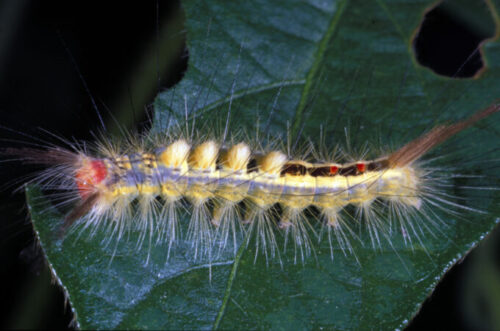
Fig. 3: White-marked tussock moth caterpillar. (Photo: John Obermeyer, Purdue University).
Tussock Moth
The only insect I found on the oak tree was a white-marked tussock moth caterpillar, Orgyia leucostigma (Fig. 3). This is the likely culprit for the minor feeding damage I noticed. These are not significant pests and do not require treatment. Don’t touch them, though! The setae of this caterpillar are irritating and may cause allergic reactions.
Overall, the pests I found were minimal and non-threatening to the trees. It’s normal to find some insect pressure in the landscape. Knowing when and if to treat requires accurate diagnosis and monitoring of pest levels. Check out PurduePlantDoctor.com for an easy-to-use diagnostic aid and treatment recommendations.
Original article posted: Purdue Landscape Report.
Subscribe and receive the newsletter: Purdue Landscape Report Newsletter.
Resources:
Large Spots on Maple Leaves that Look Like Tar, Purdue Extension News
Find an Arborist, International Society of Arboriculture
Diseases in Hardwood Tree Plantings, The Education Store, Purdue Extension’s resource center
Fifty Common Trees of Indiana
An Introduction to Trees of Indiana, The Education Store
Shrubs and Woody Vines of Indiana and the Midwest, The Education Store
Tree Installation: Process and Practices, The Education Store
Forest Improvement Handbook, The Education Store
Invasive Species, Playlist, Purdue Extension – FNR YouTube Channel
Report Invasive Species, Purdue Invasive Species
What are invasive species and why should I care?, Got Nature? Blog, Purdue Extension – Forestry and Natural Resources
Indiana Department of Natural Resources: Invasive Species
Indiana Invasive Species Council
ID That Tree, Purdue Extension-FNR YouTube playlist
Tree Defect Identification, The Education Store
Tree Wound and Healing, Got Nature? Blog, Purdue Extension – Forestry and Natural Resources
Alicia Kelley, Cooperative Agricultural Pest Survey (CAPS) Coordinator
Purdue Extension – Entomology

Figure 1. The cicada emergence will include the 13 and 17 year broods. Photo by John Obermeyer.
Purdue Landscape Report: Hoosiers are in for a special treat this spring. If you have lived in Indiana for more than a year, you have probably grown accustomed to the singing of cicadas in the later days of summer. However, in some years, cicadas will emerge in the spring. This occurred in 2021 when most of the state was inundated in periodical cicadas as Brood X emerged from their 17-year development. This year, two broods will emerge concurrently: Brood XIII and Brood XIX. Brood XIII is a 17-year cicada, while Brood XIX is a 13-year cicada. The emergence of these two broods isn’t unusual, but this year is special because they will emerge at the same time. Their schedules haven’t aligned for over two hundred years! The last time these two cicada songs were heard together, Thomas Jefferson was in the White House. While this may sound like Indiana is about to be covered in cicadas, there are a few facts that may change your expectations.
There are two types of cicadas in the Midwest: annual cicadas and periodical cicadas. Annual cicadas, as the name implies, are seen each year. They normally spend two to five years underground, but there are enough of them that we see them emerge each year. Annual cicadas emerge individually, not as a group, and we see them towards the end of the summer, thus their other common name, “dog day cicadas”. Periodical cicadas have a much different life cycle. They remain in the ground as nymphs for either thirteen or seventeen years, feeding on the roots of the trees they will eventually climb. Around April, the broods will emerge together using a combination of temperature and their own internal clock. Both types of cicadas feed on deciduous trees and tend to inhabit areas where eggs were laid during previous emergences, giving them a low likelihood of moving to new areas. Annual cicadas are green with black eyes, and periodical cicadas have dark-colored bodies with red eyes and orange legs, making it easy to differentiate them as we enter the early summer and both types are present.
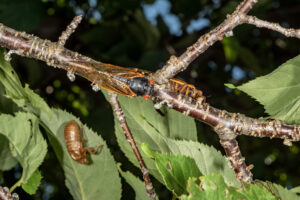
Figure 2. The cicada broods will have minimal overlap in most of Indiana. Photo by John Obermeyer.
The term “brood” cicada biology is referring to a group of cicadas that share the same developmental time and the same physical area. A brood will often contain several different species, though they will all belong to the genus Magicicada. Cicadas in a brood do not need to be genetically related to each other. Some broods are very small and cover a small area, whereas others can cover a significant portion of the Midwest. For example, Brood XII, a brood of 17-year cicadas, last appeared in 2023 and has only been detected in Allen and Orange counties. On the other hand, Brood X, also known as the Great Eastern Brood, covers the entirety of Indiana and several other states. Brood XIII and Brood XIX both cover several states, but they will have very little overlap in Indiana. Only eight western counties, between Posey and Jasper counties, will experience Brood XIX, and three northern counties (Lake, LaPorte, and Porter) will see Brood XIII. Nowhere in Indiana do the broods overlap. Essentially, while there will be a lot of cicadas emerging all at once, the lack of overlap will mean this emergence will be notable, but nothing compared to the Brood X emergence a few years ago.
To view this full article and other Purdue Landscape Report articles, please visit Purdue Landscape Report.
Subscribe and receive the newsletter: Purdue Landscape Report Newsletter.
Resources:
Periodical Cicadas, Indiana Department of Natural Resources, Division of Entomology
17 Ways to Make the Most of the 17-year Cicada Emergence, Purdue College of Agriculture
Ask an Expert: Cicada Emergence Video, Got Nature? Blog, Purdue Extension-FNR
Periodical Cicada in Indiana, The Education Store, Purdue Extension resource center
Cicada Killers, The Education Store
Purdue Cicada Tracker, Purdue Extension-Master Gardener Program
Cicada, Youth and Entomology, Purdue Extension
Indiana Department of Entomology and Plant Pathology
Alicia Kelley, Cooperative Agricultural Pest Survey (CAPS) Coordinator
Purdue Extension – Entomology
Bob Bruner, Exotic Forest Pest Specialist
Purdue Extension – Entomology

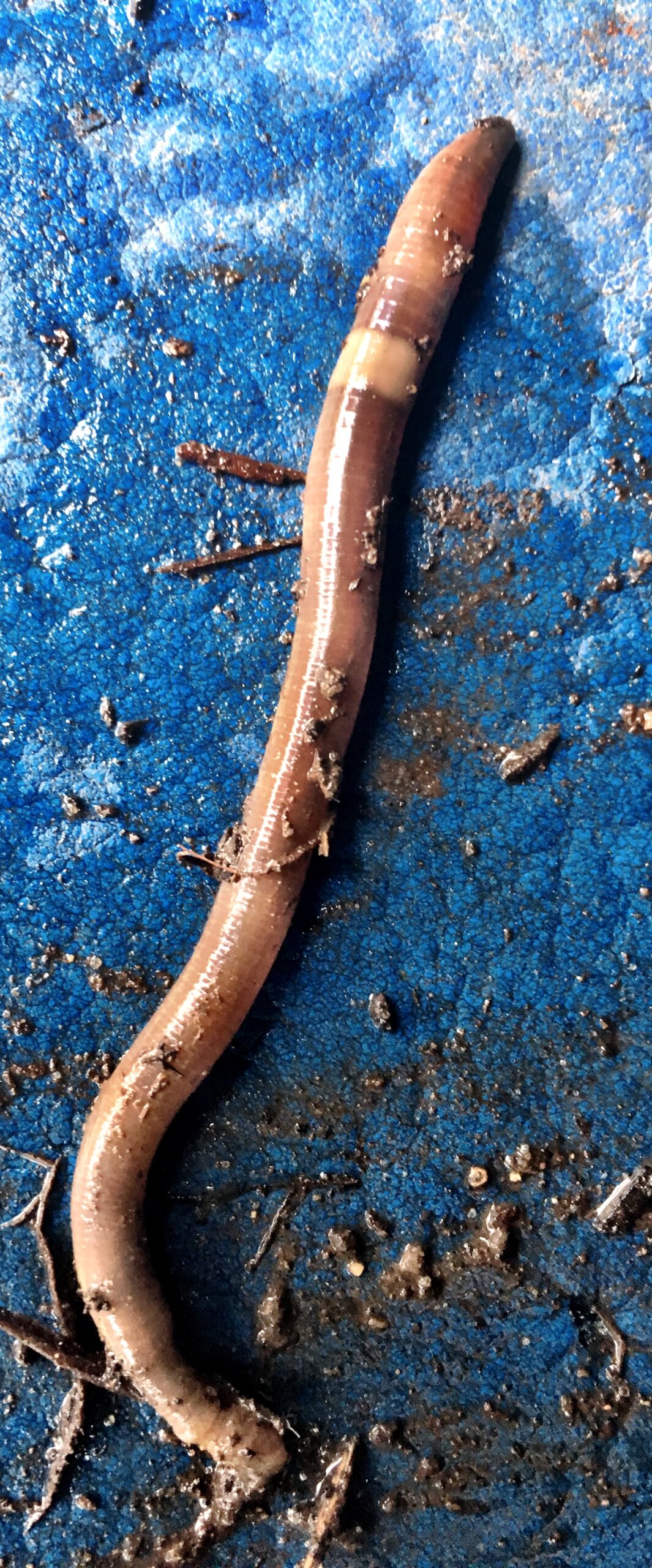
The clitellum, the set of pale, milky colored segments, is the reproductive organ of earthworms.
Purdue Landscape Report: Asian jumping worms, a group of invasive earthworms, have gained a significant amount of media attention in the last several weeks, and for good reason. Unlike the nightcrawlers and other earthworms we know, Asian jumping worms do not improve soil health to the benefit of plants. Instead, jumping worms (also called crazy worms, snake worms, or ‘Alabama jumpers’) almost completely strip nutrients out of soil, altering the soil structure and severely impairing the ability to develop many kinds of plants. After they are done with an area, Asian jumping worms leave behind soil that has a texture similar to that of coffee grounds and very low nutritional value. On top of this, Asian jumping worms are capable of reproducing asexually, allowing their population to grow very rapidly and making them an invasive species of some concern.
Identification
The good news is that Asian jumping worms are not well-suited to Indiana’s environment. They aren’t capable of surviving winters in any life stage except as an egg, meaning their activity periods are limited to late June to the first hard frost of the year. If you see worms outside of this period, it’s highly unlikely an Asian jumping worm. There are also a few traits the worms have that you can use to visually confirm their identity. First off, Asian jumping worms are accurately named; when handled, they writhe and thrash similar to snakes, setting them apart from common earthworms and nightcrawlers. Jumping worms also tend to have drier skin that has an almost iridescent appearance, as compared to the slimy, moist texture of the beneficial earthworms we need for good soil health. The most consistent feature is an organ known as the clitellum, or the reproductive organs of worms. On common earthworms, this looks like a saddle-shape that partially covers several segments, is normally reddish-brown, and is raised off the surface of the body. On an Asian jumping worm, however, the clitellum is indistinguishable from other segments, save for their pale, milky color.
To view this article and other Purdue Landscape Report articles, please visit Purdue Landscape Report.
Subscribe and receive the newsletter: Purdue Landscape Report Newsletter.
Resources:
The Purdue Landscape Report
Purdue Landscape Report Facebook Page
Gardeners Asked to be Vigilant This Spring for Invasive Jumping Worm, Purdue Extension – FNR Got Nature? Blog
Fall webworms: Should you manage them?, Purdue Landscape Report
Mimosa Webworm, The Education Store, Purdue Extension resource center
Sod Webworms, Turf Science at Purdue University
Bagworm caterpillars are out feeding, be ready to spray your trees, Purdue Extension Forestry & Natural Resources (FNR) Got Nature? Blog
Purdue Plant Doctor App Suite, Purdue Extension-Entomology
Landscape & Ornamentals: Bagworms, The Education Store
What are invasive species and why should I care? (How to report invasives.), Purdue Extension – FNR Got Nature? Blog
Indiana Invasive Species Council
Ask An Expert, Purdue Extension-Forestry & Natural Resources
Bob Bruner, Exotic Forest Pest Specialist
Purdue Department of Entomology
While earthworms in the spring are a happy sight for gardeners, an invasive worm species is wreaking havoc for landowners and gardeners in southern Indiana.
Robert Bruner, Purdue Extension’s exotic forest pest specialist, describes jumping worms, an invasive species to North America in the genus Amynthas: “Traditionally, when we see earthworms, they are deep in the ground and a little slimy. The jumping worms are a little bit bigger, kind of dry and scaly, and tend to thrash around much like a snake does.”
While worms have a reputation as a helpful species found in the soil ecosystem, invasive jumping worms do not live up to that standard, Bruner explained. Jumping worms will consume all organic material from the top layer of soil, leaving behind a coffee ground-like waste with no nutrients for plants or seeds.
Since jumping worms stay within the first few inches of topsoil, they are not creating channels for water and air the way earthworms do, disrupting water flow to plant roots.
“So basically, they’re just very nasty pests that ruin the quality of our soil, and the only thing that can really grow in soil like that are essentially invasive plants, or species that are meant to survive really harsh conditions,” Bruner said.
Currently, the worms are being found in cities around southern Indiana, he said, particularly in Terre Haute. There is still much to learn about jumping worms, making eradication efforts difficult. One thing that is known, Bruner said, is they aren’t a migrating species.
“This is the kind of invasive pest that is moved almost entirely through human activity. They don’t crawl superfast,” he explained. “So, when they move, that means they’re moving because we’re transferring soil, say, from someone’s plants or someone’s compost and we’re bringing them to a new area.”
Any invasive species sightings should be reported to the Indiana Department of Natural Resources at depp@dnr.in.gov or by calling 1-866-663-9684.
For full article with additional photos view: Gardeners asked to be vigilant this spring for invasive jumping worms, Purdue College of Agriculture News.
Other Resources:
Fall webworms: Should you manage them?, Purdue Landscape Report
Mimosa Webworm, The Education Store, Purdue Extension resource center
Sod Webworms, Turf Science at Purdue University
Bagworm caterpillars are out feeding, be ready to spray your trees, Purdue Extension Forestry & Natural Resources (FNR) Got Nature? Blog
Purdue Plant Doctor App Suite, Purdue Extension-Entomology
Landscape & Ornamentals: Bagworms, The Education Store
What are invasive species and why should I care? (How to report invasives.), Purdue Extension – FNR Got Nature? Blog
Indiana Invasive Species Council
Report Invasive Species, Purdue Invasive Species
The GLEDN Phone App – Great Lakes Early Detection Network
EDDMaps – Early Detection and Distribution Mapping System
Indiana Department of Natural Resources: Invasive Species
Indiana Invasive Species Council
Cooperative Invasive Species Management Area (CISMA)
Ask An Expert, Purdue Extension-Forestry & Natural Resources
Jillian Ellison, Agricultural Communication
Purdue College of Agriculture
Bob Bruner, Exotic Forest Pest Educator
Purdue Department of Entomology
Purdue Landscape Report, Why are the Japanese beetles running late this year?: Nothing heralds summer like the hum of Japanese beetles ravenously descending on a flower garden. Cool weather this spring has slowed emergence of adults from the soil. Heavy spring rains early followed by relatively drier weather in late June, may have trapped adult Japanese beetles under a crusty layer of hardened soil. Due to their large numbers in many parts of Indiana last year, they are very likely just waiting for a good rain to soften the surface, so they can dig themselves into the light of day and on to your flowers. So, if we get a little more rain by the time this article comes out, we are likely to be awash in adult beetles.
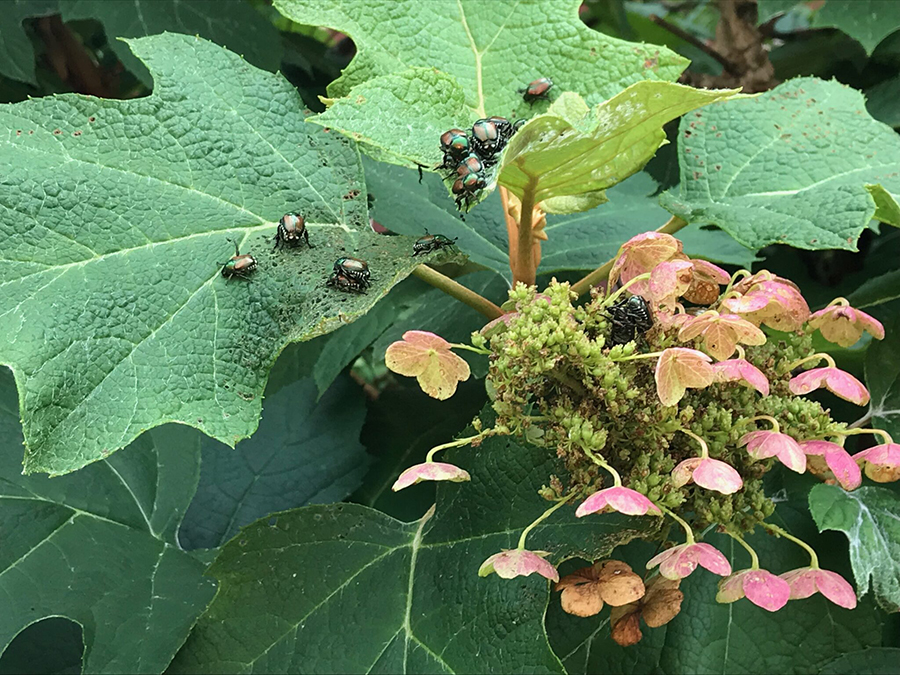 Weather is only part of what makes Japanese beetles predictably unpredictable. Beneficial organisms including fungi, microsporidia, and parasitic wasps also act different life stages of Japanese beetles. Japanese beetles have been the target of several national programs to release these beneficial organisms to reduce beetle populations. Favorable conditions for these beneficials can help reduce the local abundance of grubs and beetles.
Although killing grubs will reduce the number of beetles, the small size of lawns and the long flight range of makes it unlikely for your grub control program to reduce defoliation. In experiments conducted in my lab over 20 years ago, we found adult beetles can easily fly a kilometer (0.66 miles) in a single day. With adults living for several weeks, it is easy to image beetles traveling long distances from untreated lawns to plants on your property.
Life cycle of Japanese beetles: As the weather warms in the spring larvae (aka white grubs) move closer to the surface and begin feeding on turf roots. In May they enter a pupal stage and stop feeding. In June they typically emerge from the soil as adults. Adults fly in summer when they feed on flowers and leaves. In late July and early August adults lay eggs into the turfgrass. White grubs hatch from eggs and feed on the roots until frost when the larvae begin dig deeper into the soil to avoid killing temperatures.
To find out what you can do about Japanese beetles and view photos view: Why are the Japanese beetles running late this year?
Resources:
Report Invasive
Invasive Species, Got Nature?
Invasive Species, Playlist, Purdue Extension – FNR YouTube Channel
Indiana Department of Entomology and Plant Pathology
Spotted lanternfly: Everything You Need to Know in 30 Minutes, Video, Emerald Ash Borer University
Emerald Ash Borer, EAB Information Network
Invasive plants: impact on environment and people, The Education Store, Purdue Extension’s resource center
Woodland Management Moment: Invasive Species Control Process, Video, Purdue Extension – Forestry and Natural Resources (FNR) YouTube Channel
What are invasive species and why should I care?, Got Nature? Blog, Purdue Extension – Forestry and Natural Resources
Pest Management, The Education Store
Cliff Sadof, Professor Entomology/Extension Fellow
Purdue Entomology
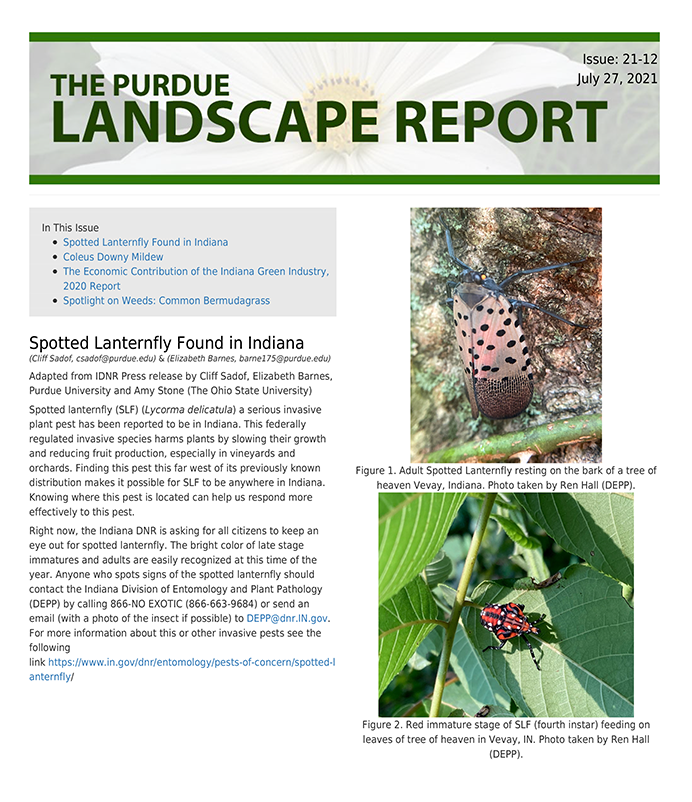 The interdisciplinary faculty and staff behind the Purdue Landscape Report, which provides science-based, timely information regarding Midwest landscapes to commercial growers, garden centers, landscapers, arborists and the general public, has been named as the recipient of the Purdue Agriculture TEAM Award, which was created in 1995 to recognize interdisciplinary team achievements of faculty and staff.
Led by Kyle Daniel, nursery and landscape outreach specialist in the Department of Horticulture and Landscape Architecture, the Purdue Landscape Report is a collaborative effort between Purdue Extension specialists and diagnosticians in the departments of Botany and Plant Pathology, Entomology, Forestry and Natural Resources, and Horticulture and Landscape Architecture. Articles cover everything from urban forestry and tree maintenance to pest and disease problems and management to plant selection and turf science. In addition to an email newsletter and online blog, PLR staff also provide live interactive webinars in order to highlight content and respond to questions from the audience.
In response to the pandemic, the Purdue Landscape Report staff also began a live, to addresses articles and hot topics. That series garnered more than 2,000 views.
In a January 2021 survey sent to PLR subscribers, 88% of respondents said they believed that the newsletter improved their ability to diagnose a problem, while 76% said that PLR has had a positive economic impact on their business.
A local professional shared that “Sometimes when I open up the PLR, it is like you have been reading my mind. The problem I have been seeing or thinking about is there in your headlines.”
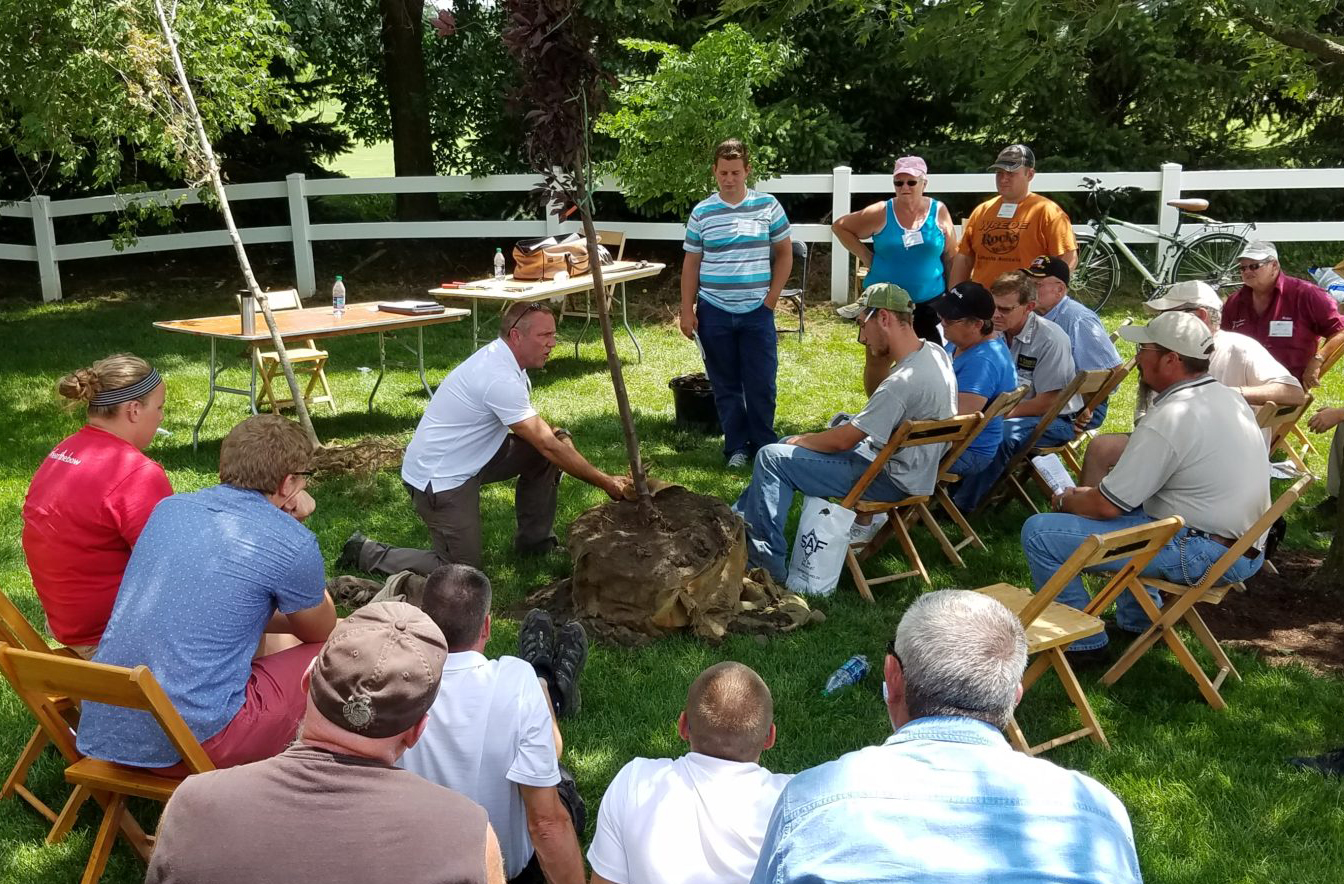 One PLR subscriber said “The Purdue Landscape Report is a great resource for myself and my team members. Within each issue is one or more topics that our team has encountered or discussed recently and the information provided by a very reputable source gives us the material needed to provide the best service to our clients and increase our knowledge base. The virtual sessions are another great resource provided that give an opportunity to have specific questions answered by experts.”
The impact extends from landowners to industry professionals and beyond.
“Often we take for granted the information produced in the PLR and we forget the countless dollars we have saved from information in the PLR,” said Rick Haggard, Indiana Nursery and Landscape Association Executive Director.
“The Purdue Landscape Report provides timely information to the Indiana Arborist Association members and associated parties in a format that is easily accessed and understood,” Associate Executive Director of IAA Ashley Mulis said. “The collaboration that goes into providing this product demonstrates the cohesive nature of several departments within Purdue University and the open sharing and comparison of information. The Purdue Landscape Report is an excellent addition to the many publications offered within Purdue Extension in helping resource professionals manage the ever-changing landscape of pests, diseases and best management practices.”
Resources:
Purdue University Department of Forestry and Natural Resources
Indiana Arborist Association
Question:
I live in central Indiana and have had no cicadas yet. Are they still emerging or is it safe to uncover my tender trees?
Answer:
If you haven’t seen or heard any 17-year cicadas near your trees yet, there probably won’t be any emerging there this year. You should be safe to take off the netting now, but I’d still suggest learning the signs of cicada egg laying damage and keeping an eye on any trees you’re worried about. The damage typically looks like a row of small holes in the bark connected by cracks (exp. periodical cicada (Magicicada septendecim) but it can vary depending on the species of plant. If you see signs of egg laying damage, you can put the netting back on to protect your trees from any additional injury.
Resources:
17 Ways to Make the Most of the 17-year Cicada Emergence, Purdue College of Agriculture
Ask an Expert: Cicada Emergence Video, Got Nature? Blog, Purdue Extension-FNR
Periodical Cicada in Indiana, The Education Store, Purdue Extension resource center
Cicada Killers, The Education Store
Purdue Cicada Tracker, Purdue Extension-Master Gardener Program
Elizabeth Barnes, Exotic Forest Pest Educator
Purdue University Department of Entomology
Do you know what’s “bugging” your trees? There are several exotic insects which may be attacking our trees that you should be on the lookout for. Some have already arrived in Indiana, and others are still beyond our borders but have a risk of showing up here in the future.
Dr. Elizabeth Barnes, exotic forest pest educator with Purdue Department of Entomology, and Liz Jackson Purdue extension forestry specialist, describe these exotic insects, symptoms to watch for in your trees, and discuss what some of the biggest future pest concerns are in this Facebook Live session from June 18, 2020.
Resources
Purdue Report Invasive website
Indiana Department of Natural Resources Division of Entomology & Plant Pathology
Don’t Move Firewood
Purdue Plant and Pest Diagnostic Lab
Indiana District Foresters
Indiana Consulting Foresters
Purdue Landscape Report
Insect specific sites:
Asian Longhorned Beetle Information (from APHIS)
Spotted Lanternfly (Penn State Extension)
Emerald Ash Borer Information from Purdue
EAB University: Invasive insects and pathogens webinar series
Elizabeth Jackson, Manager Walnut Council/IN Forestry Woodland Owners Association (IFWOA) & Engage Specialist
Purdue University Department of Forestry and Natural Resources
Elizabeth Barnes, Exotic Forest Pest Educator
Purdue University Entomology
United States Department of Agriculture Animal and Plant Health Inspection Service Bulletin: USDA declares August Tree Check Month and urges public to look for Asian longhorned beetle.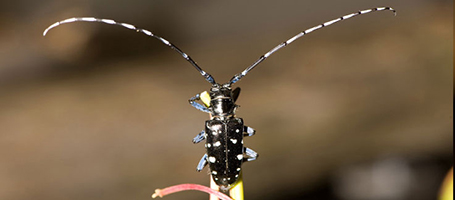
WASHINGTON, July 23, 2019 — August is the height of summer, and it is also the best time to spot the Asian longhorned beetle (ALB) as it starts to emerge from trees. The U.S. Department of Agriculture (USDA) is asking the public to take five minutes to step outside and report any signs of this invasive pest. Checking trees for the beetle will help residents protect their own trees and better direct USDA’s efforts to eradicate this beetle from the United States.
“It’s important to look for signs of the beetle now, because it’s slow to spread during the early stages of an infestation,” said Josie Ryan, APHIS’ National Operations Manager for the ALB Eradication Program. “With the public’s help, we can target new areas where it has spread and provide a better chance of quickly containing it.”
The Asian longhorned beetle feeds on a wide variety of popular hardwood trees, including maple, birch, elm, willow, ash and poplar. It has already led to the loss of more than 180,000 trees. Active infestations are being fought in three areas of the country: Worcester County, MA, Long Island, NY (Nassau and Suffolk Counties), and Clermont County, Ohio.
“Homeowners need to know that infested trees do not recover and will eventually die, becoming safety hazards,” warned Ryan. “USDA removes infested trees as soon as possible because they can drop branches and even fall, especially during storms, and this keeps the pest from spreading to nearby healthy trees.”
The Asian longhorned beetle has distinctive markings that are easy to recognize:
- Antennae that are longer than the insect’s body with black and white bands.
- A shiny, jet-black body with white spots, about 1” to 1 ½” long.
- Six legs and feet, possibly bluish-colored.
Signs of infestation include: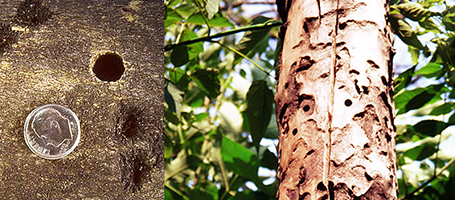
- Round exit holes in tree trunks and branches about the size of a dime or smaller.
- Shallow oval or round scars in the bark where the adult beetle chewed an egg site.
- Sawdust-like material called frass, laying on the ground around the tree or in the branches.
- Dead branches or limbs falling from an otherwise healthy-looking tree.
After seeing signs of the beetle:
- Make note of what was found and where. Take a photo, if possible.
- Try to capture the insect, place in a container, and freeze it. This will preserve it for easier identification.
- Report findings by calling 1-866-702-9938 or completing an online form at USDA Animal and Plant Health Inspection Service.
It is possible to eliminate this pest and USDA has been successfully doing so in several areas. Most recently, the agency declared Stonelick and Batavia Townships in Ohio to be free of the Asian longhorned beetle. We also eradicated the beetle from Illinois, New Jersey, Boston, MA, and parts of New York. The New York City boroughs of Brooklyn and Queens are in the final stages of eradication.
For more information about the Asian longhorned beetle, other ways to keep it from spreading—such as not moving firewood—and eradication program activities, visit USDA Animal and Plant Health Inspection Service. For local inquiries or to speak to your State Plant Health Director, call 1-866-702-9938.
Other Resources:
Report Invasive Species, Purdue Agriculture & Indiana Invasive Species Council
Great Lakes Early Detection Network, Bugwood Apps
New Hope for Fighting Ash Borer, Got Nature? Blog
Mile-a-Minute Invasive Vine Found Indiana, Got Nature? Blog
Sericea Lespedeza: Plague on the Prairie, Got Nature? Blog
Invasive Plants: Impact on Environment and People, The Education Store, Purdue Extension
Invasive Plant Species in Hardwood Tree Plantations, The Education Store
Invasive Plant Species: Callery Pear, Purdue Extension The Education Store
United States Department of Agriculture Animal and Plant Health Inspection Service
Jennifer Koch, and other researchers with the U.S. Forest Service, has spent the last several years studying what are known as lingering ash – trees that have fared much better against the emerald ash borer. The invasive beetle, which came to North America from Asia about 20 years ago, has killed millions of ash trees around the Midwest.

An adult emerald ash borer feeds off a leaf. (Purdue University Department of Entomology photo/John Obermeyer)
But for reasons that researchers are learning more about, some trees have survived.
Koch says they’ve identified at least two reasons why. Lingering ash seem to attract fewer hungry adult ash borers, which means they’re less likely to become homes to eggs. And when eggs do hatch on lingering ash trees, they tend to be smaller and have a higher mortality rate.
Those are extremely valuable characteristic for modern ash trees, so Koch is making sure they get passed on through cloning. Not genetic modification, but rather clonal duplicates of lingering ash literally cut from part of the parent tree.
Maybe most importantly, Koch says the cloned trees appear to be even more resistant to the ash borer. With their cloned trees healthy and growing, researchers are waiting on the next generation of seeds to see if they’re even more resistant than their cloned parents.
Koch says they plan to add more lingering ash seedlings into their on-site orchard this year. Ash trees planted from seed typically take seven to 10 years to begin giving off seeds of their own, so it could be another decade before Koch knows just how successful their ash tree breeding program can be.
See full article: Attack Of The Clones: Ohio Researchers Find New Hope For Fighting Ash Borer, WOSU Public Media
Resources:
Question: What options do we have to treat our ash trees against the Emerald Ash Borer?, Got Nature?, Purdue Extension-FNR
Invasive Pest Species: Tools for Staging and Managing EAB in the Urban Forest, Got Nature?, Purdue Extension-FNR
Emerald Ash Borer, Purdue Extension-Entomology
Emerald Ash Borer Tools & Resources – Purdue Extension Entomology
WOSU Radio, Columbus, Ohio

Recent Posts
- Restoring Roots to Save the Salamanders, USDA – Natural Resources Conservation Service
Posted: May 6, 2026 in Aquaculture/Fish, Forestry, Wildlife - Spring Storms Are Coming: How to Reduce Tree Damage and Risk
Posted: May 1, 2026 in How To, Urban Forestry, Wildlife, Woodlands - Cryptocline Leaf Spot (Anthracnose) of Elm, Purdue Landscape Report
Posted: April 30, 2026 in Disease, Forestry, Woodlands - Mechanical Damage to Trees: Mowing and Maintenance Equipment
Posted: April 24, 2026 in Forestry, Forests and Street Trees, Urban Forestry - A Woodland Management Moment: Growing Quality Black Walnut in Openings
Posted: April 20, 2026 in Urban Forestry, Woodland Management Moment, Woodlands - Spring Into Bloom With ID That Tree
Posted: in Forests and Street Trees, Urban Forestry, Woodlands - Question: Have Whippoorwill Birds Declined in Numbers?
Posted: in Ask the Expert, Wildlife - Invasive Species in Eastern Forests, Webinar Series
Posted: in Invasive Insects, Invasive Plant Species, Urban Forestry, Wildlife - Tree Risk Management: What Every Property Owner Needs to Know
Posted: April 17, 2026 in Forests and Street Trees, Wildlife, Woodlands - As the spring wildflowers emerge, so do the woodland invaders
Posted: April 16, 2026 in Forestry, Forests and Street Trees, Invasive Plant Species
Archives
Categories
- Alert
- Aquaculture/Fish
- Aquatic/Aquaculture Resources
- Ask the Expert
- Christmas Trees
- Community Development
- Disease
- Drought
- Forestry
- Forests and Street Trees
- Gardening
- Got Nature for Kids
- Great Lakes
- How To
- Invasive Animal Species
- Invasive Insects
- Invasive Plant Species
- Land Use
- Natural Resource Planning
- Nature of Teaching
- Plants
- Podcasts
- Ponds
- Publication
- Safety
- Spiders
- Timber Marketing
- Urban Forestry
- Webinar
- Wildlife
- Wood Products/Manufacturing
- Woodland Management Moment
- Woodlands