 Purdue University - Extension - Forestry and Natural Resources
Got Nature? Blog
Prescribed fire is a great tool to improve the food and cover for a variety of wildlife species on your property. One of the most important aspects of using prescribed fire is making sure the fire is conducted safely. This point cannot be overstated, safe use of prescribed fire is paramount. Beyond taking the appropriate training courses or seeking help from a professional, one the most important aspects of safely conducting a prescribed fire is ensuring you have adequate firebreaks.
Firebreaks can serve multiple purposes related to the safe use of prescribed fire and can provide additional food and cover for wildlife. The main purpose of firebreaks is to stop the fire from escaping the burn unit, but they also can provide quick and easy movement around the burn unit, help reduce the amount of people required for the burn and can make igniting the fire safer. Here are a few examples of different types of firebreaks.
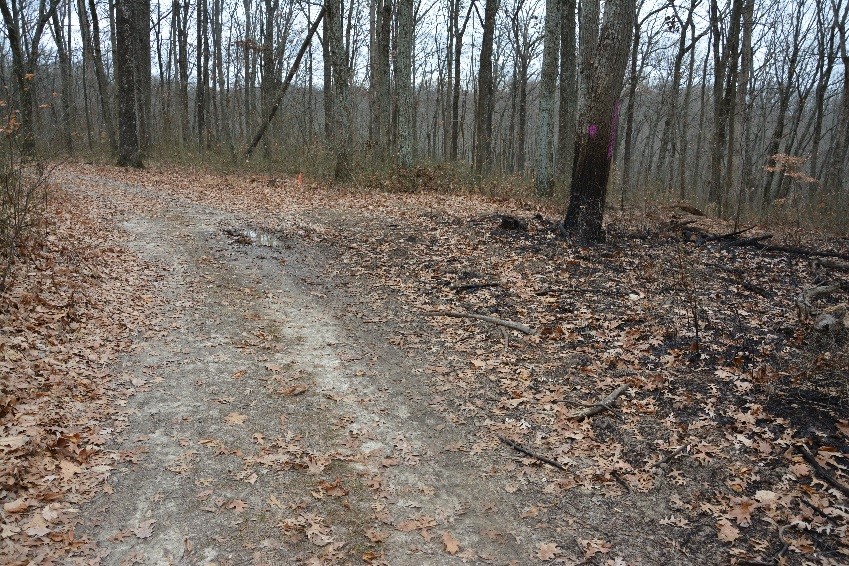
This logging road is a good example of an existing road that can be used as a firebreak.
Existing roads
Existing roads, whether they are paved, gravel, dirt, or logging roads, can serve as outstanding firebreaks, plus they require very little work to prepare prior to a burn. These are also one of the cheapest options for firebreaks. If you are using gravel, dirt, or logging roads as firebreaks, you need to make sure there is not excessive vegetation or leaf litter in the road. Too much vegetation
on the firebreak could lead to an escape.
Streams, creeks, or other bodies of water
Another cheap and easy option for firebreaks is to use existing streams, river, or bodies of water. If you are using water features as a firebreak, here are some things to consider: is the stream or river wide enough to stop the fire from escaping and can people helping with the fire move easily around, across, or through the stream or river to access various part of the burn unit or to stop an escaped fire?
Crop fields
Crop fields with cool-season grains (wheat, oats, rye) or cover crops can serve as a great firebreak. Crop fields with only soybean or corn stubble should be used with caution, as fire may creep through a field with excessive stubble. For fields with crop stubble, planting the edge of the field in a cool-season crop (wheat, clover, oats, etc.), disking the edge of the field, or wetting the crop stubble are all steps that can used to improve the field as a firebreak.
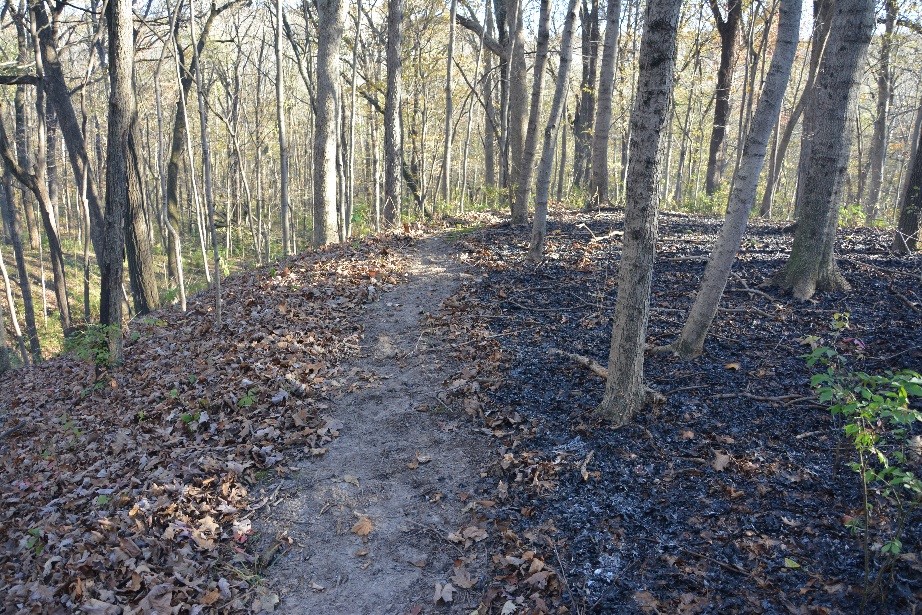
This leaf-blown firebreak was only 3-4 feet wide, but it easily stopped the fire in this situation.
Leaf-blown firebreaks
If you are burning in the woods, using a leaf blower to remove leaf litter and expose bare mineral soil is a quick and easy way to create a firebreak. These firebreaks do not need to be as wide as those in an old field or native grass stand because the flame length when burning in the woods is typically much shorter than burning in a field.
Disked firebreaks for multiple purposes
Disking or tilling to expose bare mineral soil is an extremely effective method of creating a firebreak. These breaks can also provide food and/or cover for various wildlife species if managed correctly. Disking the firebreak and then letting the firebreak remain fallow during the growing season creates outstanding cover for brooding turkeys, pheasants, and quail.
You can also plant the firebreaks after disking to create a food plot for various wildlife species. If you disk the firebreaks in the fall and plan to burn in the spring, you can plant the firebreaks with a mix of wheat and crimson clover or a mix of perennial clovers to create a great food plot for deer and turkey. You can also plant the firebreaks with millet, grain sorghum, or sunflowers after you have burned the field in the spring.

If you use mowed firebreaks you run the risk of fire creeping across the firebreak and escaping, especially if there is too much thatch in the firebreak.
My absolute favorite multiple purpose firebreak is one that is disked in Aug-Sep, planted to winter wheat (40-60 lbs/ac), and then left to remain fallow after the wheat has produced seed. This firebreak effectively stops fire, provide green browse from the fall through the spring, provides seed during the early summer, and provides excellent brood cover throughout the summer and early fall. This is truly an all-in-one firebreak.
Mowed grass firebreak
Mowed grass firebreaks are not ideal, but they can be used in certain situations. If mowed firebreaks are used, you must be sure that there is not excessive thatch built up in the break. Too much thatch will allow the fire to creep across the break and potentially escape. Even on firebreaks without excessive thatch, using water to create a “wet” firebreak is recommended.
No matter which type of firebreak you choose to use, taking the time to make sure the firebreak is adequately installed and is sufficient to stop the fire from escaping will help make the burn safer and will create less headaches for you when conducting the burn.
Additional Resources:
Firebreaks for Prescribed Burning, Oklahoma State University Extension
Prescribed fire: 6 things to consider before you ignite, Got Nature?, Purdue Extension-FNR,
On-line Basic Prescribed Fire Training, USDA, U.S. Forest Service
Publications Focus on Plan, Safety of Prescribed Burns, Iowa State Extension,
eFIRE, North Carolina State Extension
Renovating native warm-season grass stands for wildlife: A Land Manager’s Guide, The Education Store, Purdue Extension resource center
Calibrating a No-Till Drill for Conservation Plantings and Wildlife Food Plots, The Education Store
Jarred Brooke, Wildlife Extension Specialist
Purdue Department of Forestry and Natural Resources
Trees and all forestlands are a major asset to our cities, towns, and communities. They work hard to provide aesthetic, functional and environmental benefits to improve the quality of life. A well-planted and maintained tree will grow faster and live longer than one improperly planted or maintained. Before planting your tree consider selection, placement, and maintenance to ensure an outcome that will meet your needs. This video will walk you through everything you need to know before you plant your tree.
Resources:
Tree Planting Part 1: Choosing a Tree, The Education Store
Tree Installation: Process and Practices, The Education Store
Financial and Tax Aspect of Tree Planting, The Education Store
Tree Risk Management – Got Nature? Blog, Purdue Extension – FNR
Designing Hardwood Tree Plantings for Wildlife, The Education Store
Planning the Tree Planting Operation, The Education Store
Lindsey Purcell, Urban Forestry Specialist,
Purdue Department of Forestry and Natural Resources
You’ve heard about all the traditional careers. But what about being an outdoor scientist? Introducing the world to The Familiar Faces Project which shares careers in fisheries, aquatic sciences, forestry, wildlife and sustainable biomaterials. This video will show by example what it’s like to be an outdoor scientist, walking you through a typical work day of Megan Gunn. For more information about The Familiar Faces Project, contact thefamiliarfacesproject@gmail.com.
Resources:
Aquatic Ecology Research Lab, Forestry and Natural Resources
Megan Gunn, Aquatic Ecology Research Scientist
Purdue University Department of Forestry and Natural Resources
 Forest farming in North America is becoming a popular practice that provides short-term income for owners of new forest plantations while their trees reach maturity. This income diversification is particularly relevant for many of the Indiana hardwood plantations planted in the last decade, but will not fulfill their economic potential until 60–70 years from establishment. This free download publication titled Costs and Returns of Producing Wild-Simulated Ginseng in Established Tree Plantations, FNR-530-W, is the second in a two-part series aimed at analyzing economic opportunities in forest farming for Indiana forest plantation owners. The first study explores growing hops along the tree line of newly established forest stands, while this second study investigates producing American ginseng in older (20- to 30-year-old) forest plantations.
Resources:
Costs and Returns of Producing Wild-Simulated Ginseng in Established Tree Plantations, The Education Store, Purdue Extension’s resource center
Energy Requirements for Various Tillage-Planting Systems, The Education Store
Home Gardner’s Guide, The Education Store
Planting Forest Trees and Shrubs in Indiana, The Education Store
Kim Ha, Research Assistant
Purdue Agricultural Economics
Lenny Farlee, Sustaining Hardwood Extension Specialist
Purdue Department of Forestry and Natural Resources
The Department of Forestry and Natural Resources’ extension team have received four Purdue Extension Issue-Based Action Team (IBAT) awards out of seven. These new initiatives have been chosen from 30 submitted proposals. In an ever-changing world, Purdue Extension is launching big ideas to identify and address priority issues to enhance quality of life as well as the efficiency and/or effectiveness of organizations through research-based education.
Congratulations to the following FNR teams that are moving the world forward:
ENHANCING THE VALUE OF PUBLIC SPACES: HEALTH, WELLNESS, AND DESIGNING THE BUILT ENVIRONMENT
Project Overview: Expand upon the existing Enhancing the Value of Public Spaces program to include a health component — building community capacities for accessible means for physical activity. $50,000.
Team: Michael Wilcox, Assistant Program Leader for Community Development Extension, Purdue Center for Reginal Development; and Kara Salazar, Sustainable Communities Extension Specialist, Department of Forestry & Natural Resources; Donna Vandergraff, Extension Specialist, Nutrition Science; Lisa Graves, Assistant Program Leader and Extension Specialist, Nutrition Science; Melissa Maulding, Director, Nutrition Education Programs; and Steve Yoder, Extension Educator, Agriculture and Natural Resources (ANR), Tippecanoe County.
MARKET BASKET 360
Program Overview: A wealth of resources on a website, educational workshop agendas, certification programs, uniform materials for cooking demonstrations, and more for Farmers’ Market Masters, producers, and consumers. Market Basket 360 centralizes, streamlines, and enhances existing farmers’ market resources available through Purdue Extension, Indiana State Department of Health, the USDA Agricultural Marketing Service, and other industry organizations.
Team: James Wolff, Extension Educator, Agriculture and Natural Resources (ANR), Allen County; Julie Gray, Central District Director, ANR; Morgan Roddy, Extension Educator/Health & Human Sciences (HHS), ANR, Henry County; Curt Campbell, Extension Educator, ANR, Wabash County; Jodee Ellett, Local Foods Coordinator, Purdue Extension; Vickie Hadley, HHS Extension Educator/CED, ANR, Allen County; Nancy Manuel, HHS Extension Educator, ANR, Adams County; Gail Peitzmeier, HHS Extension Educator, Crawford County; Tim Vining, Development Educator, ANR; Teresa Witkoske, HHS Extension Educator/CED, Wabash County; Kwamena Quagrainie, Aquaculture Marketing Director and Associate Professor, Department of Forestry & Natural Resources and Agriculture Economics; Bob Rode, Aquaculture Research Lab Manager and Extension Specialist, Department of Forestry and Natural Resources.
NATURAL RESOURCES LEADERSHIP PROGRAM
Program Overview: Expanding Extension’s capacity to develop and deliver statewide natural resource programs and enhance decision-making for implementation at the community level. $30,000.
Team: Kara Salazar, Assistant Program Leader for Community Development and Sustainable Communities Extension Specialist, Department of Forestry and Natural Resources/Illinois-Indiana Sea Grant; Angie Tilton, Extension Educator, Agriculture and Natural Resources (ANR), Hendricks County Team; Lenny Farlee, Sustaining Hardwood Extension Specialist, Department of Forestry and Natural Resources; Liz Jackson, Hardwood Tree Improvement and Regeneration Center (HTIRC), Engagement Specialist and Executive Director of the Indiana Forestry and Woodland Owners Association and the Walnut Council; Steve Yoder, Regional Extension Educator, Community Development
THE NATURE OF HEALTH
Project Overview: A multifaceted approach to engaging families in nature-learning opportunities that will utilize emerging research to connect Health and Human Sciences and Agriculture and Natural Resources using curriculum developed by Rod Williams titled “The Nature of Teaching.” $20,000.
Team: Rod Williams, Professor of Wildlife Science, Department of Forestry & Natural Resources; Angie Frost, Extension Specialist-Healthy Living, College of Agriculture; Stephanie Woodcox, Extension Specialist-Health & Wellness, College of Health and Human Sciences; Deb Arseneau, Extension Educator, Agriculture Natural Resources (ANR), Newton County; Jay Christiansen, Extension Educator, ANR, Vigo County; Jan Dougan, Extension Educator, ANR, Dubois County; Molly Hoag, Extension Educator, ANR, Wells County; Molly Hunt, Extension Educator, ANR, Delaware County; Gracie Marlatt, Extension Educator, ANR, Rush County; Kelsie Muller, Extension Educator, ANR, Benton County; Lindsey Pedigo, Extension Educator, ANR, Howard County; Katie Zuber, Extension Educator, ANR, Lawrence County.
View the College of Agriculture Strategic Plan and the Purdue Extension Annual Report for more information on Purdue Extension.
For extension resources on Forestry and Natural Resources view Purdue Extension-FNR website.
Diana Evans, Extension and Web Communications Specialist
Purdue University Department of Forestry and Natural Resources
Managing Woodlands for Birds
Learn how forests are used by birds and how best practices in forest management can increase their numbers in these newly released videos on birds and their relationship with woodlands.
In the first video, “Managing Woodlands for Birds,” J. Barny Dunning, professor of wildlife ecology, discusses how forests are used by birds year round, important habitat features of woodlands that can benefit birds, and how woodland owners can enhance their property for birds. In the second video, “Hardwood Ecosystem Experiment – Forest Birds,” Professor Dunning and graduate student Patrick Ruhl cover how disturbance and forest management impact birds. Management recommendations for both videos were developed in part from the Hardwood Ecosystem Experiment, a long-term, large-scale experimental study of forest management and its impacts on plants and animals.
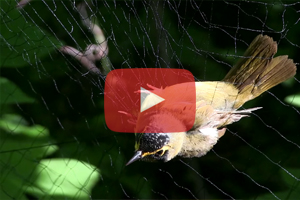
Hardwood Ecosystem Experiment – Forest Birds
Check out “Managing Woodlands for Birds” and “Hardwood Ecosystem Experiment – Forest Birds” to learn more about how birds use forests and how we can impact them in a positive way. To learn more about the Hardwood Ecosystem Experiment, please visit the HEE website.
Resources:
Managing Woodlands for Birds – YouTube, Purdue Extension Resource Center
Hardwood Ecosystem Experiment – Forest Birds – The Education Store
Breeding Birds and Forest Management: the Hardwood Ecosystem Experiment and the Central Hardwoods Region – The Education Store
The Hardwood Ecosystem Experiment: Indiana Forestry and Wildlife – The Education Store
J. Barny Dunning, Professor of Wildlife Ecology
Purdue University Department of Forestry and Natural Resources
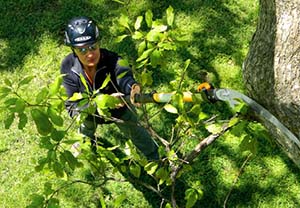 Urban Forestry Specialist Lindsey Purcell‘s helpful publication “Tree Pruning Essentials” is now available in a Spanish-language version, “Lo Esencial Para la Poda de Árboles.” This publication explores the techniques behind good pruning, from the planning process before planting to monitoring the tree’s response after the pruning cuts.
Trees continue to survive in spite of the many challenges they face in the urban environment. However, to grow from seedling to a mature tree in the urban forest, they need our help. They are the largest, oldest living organisms on the planet and can live long, healthy lives with some assistance. We often place trees in less-than-favorable growing locations that don’t allow natural development and maturity and often require pruning to develop a durable structure, improve clearance and maintain aesthetics.
Pruning has been called “one of the best, worst maintenance practices” performed on trees. The process creates wounds, which have a major impact on plant processes. Improper cutting on a tree causes severe damage or even death. To prune properly, it is important to understand both the proper techniques and how the tree responds to pruning.
Check out “Lo Esencial Para la Poda de Árboles” or “Tree Pruning Essentials” and make sure you are pruning your trees to maximize safety, aesthetics, and tree health!
Resources:
Lo Esencial Para la Poda de Árboles (Tree Pruning Essentials)– The Education Store, Purdue Extension Resource Center
Instalación de Árboles: Proceso y practicas (Tree Installation) – The Education Store, Purdue Extension Resource Center
Tree Pruning Essentials – The Education Store
Trees and Storms: Understanding Damage, Risk and Recovery – Got Nature? Blog, Purdue Extension – FNR
Tree Risk Management – Got Nature? Blog, Purdue Extension – FNR
Prune Your Trees – Indiana Department of Natural Resources
Lindsey Purcell, Urban Forestry Specialist
Purdue University Department of Forestry and Natural Resources
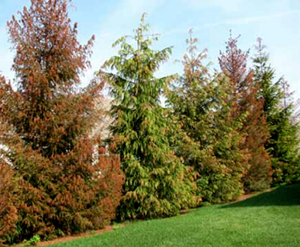 Question: I am noticing pine trees dying in my neighbors’ yards and along the streets in Carmel and NE Indianapolis. The needles turn rust colored and fall within a couple weeks – leaving a bare tree. Some of these trees are mature but most are young. Should I be concerned? What should I do to protect my pine trees? What should I be looking for if it is a pest?
Answer: Many Indiana trees are dying from stress caused by the extreme weather we have had in the last few years. Urban Forestry Specialist Lindsey Purcell and Extension Consumer Horticulture Specialist Rosie Lerner discuss this in more detail in the Purdue Agriculture News article “Purdue experts: Tree deaths across Indiana may be related to weather stress.” There are also other potential causes of foliar discoloration and branch dieback in pine trees that are explained in the publication “Stress-related Conifer Dieback“.
If you’d like to investigate the issue further, a certified arborist can conduct a ground evaluation or you can examine the trees on your own using the Purdue Tree Doctor app.
Resources:
Purdue experts: Tree deaths across Indiana may be related to weather stress – Purdue Agriculture News
Stress-related Conifer Dieback – The Education Store, Purdue Extension Resource Center
Purdue Plant Doctor App – Purdue Botany and Plant Pathology and Extension Entomology
Needle cast in Colorado Blue Spruce, Purdue Landscape Report
Blue Spruce Update, Purdue Landscape Report
Why Spruce Trees Lose Their Needles, Purdue Extension
Blue Spruce Decline, Purdue Extension
Diseases Common in Blue Spruce, Purdue Extension
Tree Installation: Process and Practices, The Education Store, Purdue Extension resource center
Tree Planting and Urban Forestry Videos, Subscribe to our Purdue Extension-FNR YouTube Channel
Find an Arborist, International Society of Arboriculture
Lenny Farlee, Sustaining Hardwood Extension Specialist
Purdue University Department of Forestry and Natural Resources
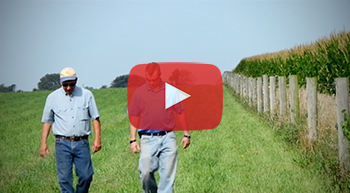 Since 2010, farmers in the Indian Creek watershed in Illinois have been working together to implement conservation practices and nutrient management strategies to reduce nutrient loading in Indian Creek. Postdoctoral Research Associate Sarah Church led the process of evaluating this watershed project and understanding which social conditions contributed to the project’s success. Her findings are presented in this new publication “Indian Creek Watershed Project: Key Takeaways for Success.”
In continuing sharing the research regarding the issues of Indian Creek Purdue Extension’s Aaron Doenges produced two videos. These videos focus on two key reasons for the project’s success: the people involved with the project’s steering committee; and the partnerships formed with agribusinesses.
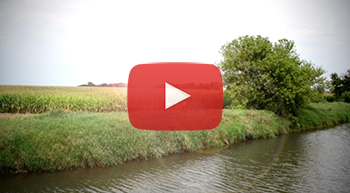 In the first video, “Partnerships and People“, Terry Bachtold of the Livingston County Soil and Water Conservation District, Chad Watts of CTIC, and several others involved in the watershed project, talk about how crucial forming a locally-led steering committee was to the project’s success. Partnerships led to friendships as the group worked together to make a difference in their watershed.
In the second video, “Partnerships with Agribusinesses“, agronomists Harold Reetz, Marion Shier, and other people involved in the watershed project discuss the importance of getting retailers like Mike Trainor involved. Agribusinesses are trusted farmer advisors, provide unique insights, and offer valuable support that can strengthen watershed projects.
“Indian Creek Watershed Project: Takeaways for Success” and the accompanying videos can provide watershed and conservation organizations with valuable insights for their own watershed projects. Moreover, farmers and retailers are encouraged read this publication, view these videos and consider becoming part of something bigger. As members of a watershed join together, economic and environmental improvements can take place.
Resources:
Indian Creek Watershed Project: Takeaways for Success – The Education Store, Purdue Extension Resource Center
Indian Creek Watershed Project – Conservation Technology Information Center (CTIC)
Indian Creek Watershed Project – Reetz Agronomics
Indian Creek Watershed Project Presentation – United States Environmental Protection Agency
A Watershed Approach – United States Environmental Protection Agency
Sarah P. Church, Post Doctoral Research Associate
Purdue University, Department of Forestry and Natural Resources
Your real tree, once cut, is like fresh fruit in regards to its useful life expectancy. Just like fruit, care needs to be exercised in the trees selection and subsequent care according to Daniel Cassens, Professor in the Department of Forestry and Natural Resources, Purdue University and member of the National Christmas Tree Association. Over half of the tree’s weight consists of water when first cut and it is important that the water content be maintained.
First, it is important to select a fresh tree. If you cut the tree at a choose-and-cut farm, it has to be fresh. If the tree is pre-cut, make sure the needles are flexible and firmly attached to the stem. Also, the tree should look “normal” and not crushed with broken branches and distorted or missing needles. Fresh looking trees indicate they have been well cared for.
Fresh cut trees should be kept out of the sun and wind to prevent accelerated dehydration. If the tree needs to be temporarily stored, place it in an unheated building or on the north side of a building where it will be less exposed. It will also help to place the tree in a bucket of water.
Just before setting up the tree, using an inexpensive bow or other saw trim about one-half inch from the base of the trunk. The cut should be perpendicular to the main stem. If the tree cannot be set up within 6 to 8 hours, make another cut. About 6 to 8 hours after the cut is made, the living cells begin to die and become blocked so the tree cannot take up water.
The tree should now be placed in a stand capable of supporting the tree mechanically. Make sure the stand has extended legs to prevent the tree from tipping. Do not whittle down the outside diameter of the tree base. The outer layers of wood are the most effective in taking up water. The stand should also be able to hold at least one quart of water for each inch of stem diameter. A typical 7 foot tree will require a stand with a water holding capacity of about two gallons. Check the water level each day and add cool water as needed. Make sure the butt end of the tree stem is always in water contact. Some stands do not allow the stem to reach the bottom of the water holding container. Trees tend to take large quantities of water each day for the first week or so and then slow down. Remember, if the tree runs out of water, the cells in the very butt or exposed end will become blocked and subsequent water uptake will be prevented.
Some tree lights can also produce excessive heat. Small lights or those that produce low heat will also help to reducing localized drying of the tree.
For more information about Christmas trees or to locate a choose-and-cut tree farm near you, please visit the National Christmas Tree Growers Association.
Resources:
A Choose-and-Cut Pine and Fir Christmas Tree Case Study, The Education Store, Purdue Extension’s resource center
Selecting an Indiana-Grown Christmas Tree, The Education Store
Tips for First-Time Buyers of Real Christmas Trees, The Education Store
Purdue Extension – Forestry and Natural Resources
Originally written by Dan Cassens, Professor Emeritus, Purdue Department of Forestry & Natural Resources

Recent Posts
- Opportunities for Prescribed and Wildland Fire Training
Posted: November 4, 2026 in Forestry, How To, Wildlife, Woodlands - Wildlife Issues and Solutions: A New Online Series
Posted: in Forestry, How To, Wildlife, Woodlands - Burning for Benefits: Where Fire Belongs in Indiana
Posted: in Forestry, Safety, Wildlife, Woodlands - Residents, Alumni Invited to Share Indiana Natural Resource, Spaces, Species Memories
Posted: in Forestry, Forests and Street Trees, Gardening, Urban Forestry, Wildlife - Now Is The Time To Control Non-Native Bush Honeysuckle
Posted: October 30, 2026 in Forestry, How To, Invasive Plant Species, Woodlands - Help Strengthen the Future of Indiana Maple Syrup
Posted: October 29, 2026 in Forestry, How To, Woodlands - Popular Landscape Shrub is Invasive
Posted: October 15, 2026 in Alert, Forestry, Forests and Street Trees, Invasive Plant Species, Plants, Woodlands - Purdue Extension’s Regional Teams Are Here: Connecting Communities with Expertise and Opportunity
Posted: October 14, 2026 in Community Development, Forestry, Forests and Street Trees, Gardening, How To, Timber Marketing, Urban Forestry, Wildlife, Woodlands - Why Do Our Trees Go From Green Leaves to Different Colors?
Posted: in Forestry, Forests and Street Trees, Urban Forestry, Woodlands - Deer and Turkey Archery Seasons Opening Soon, MyDNR
Posted: October 13, 2026 in Alert, Safety, Wildlife
Archives
Categories
- Alert
- Aquaculture/Fish
- Aquatic/Aquaculture Resources
- Ask the Expert
- Christmas Trees
- Community Development
- Disease
- Drought
- Forestry
- Forests and Street Trees
- Gardening
- Got Nature for Kids
- Great Lakes
- How To
- Invasive Animal Species
- Invasive Insects
- Invasive Plant Species
- Land Use
- Natural Resource Planning
- Nature of Teaching
- Plants
- Podcasts
- Ponds
- Publication
- Safety
- Spiders
- Timber Marketing
- Urban Forestry
- Webinar
- Wildlife
- Wood Products/Manufacturing
- Woodland Management Moment
- Woodlands