 Purdue University - Extension - Forestry and Natural Resources
Got Nature? Blog
The debate over rather the use of a real tree or an artificial tree is better for the environment continues, especially as the Holiday season nears. Real tree growers point out that their product is renewable, each species has its own characteristic odor, consumes carbon dioxide and gives off oxygen, can be recycled, provides wildlife habitat and creates jobs in rural America. Artificial trees contain non biodegradable plastics and possible metal toxins such as lead. Most artificial trees are made in China and must be shipped long distances to the United States. On the other hand the artificial tree industry points out that their product can be reused and thus saves several real trees from being harvested. The industry goes on to claim that their trees do not need fertilizers or pesticides and do not create a mess or hassle. These are just examples of claims being made by two distinctly different industries. Considering the entire production cycle for real and artificial trees, it is difficult to determine which type of tree is best for the environment, based on scientific based data. Conducting a “Life Cycle Assessment” (LCA) for real and artificial trees would be one approach to answer this question.
Real Christmas trees, like all green plants, consume carbon dioxide and produce oxygen. The carbon dioxide is absorbed through the leaves or needles, combined with sunshine and water to make food and release oxygen. This process is called photosynthesis. The “carbon” is stored in the wood, needles, and leaves and constitutes about one-half of the dry weight. If the trees are burned or otherwise decomposed the “stored” or sequestered carbon is released back into the atmosphere. Other existing or planted trees absorb the carbon making trees carbon neutral. Some of the carbon is also stored in the soil. Growing trees also require some carbon dioxide back into the atmosphere.
Artificial trees use petroleum based products. Petroleum based products are ancient, stored sources of carbon dioxide and if burned as in the case of gasoline, release new carbon dioxide into the atmosphere. Transportation becomes a significant source of carbon release regardless of the tree being real or artificial.
Carbon dioxide is important because it traps heat from the earth’s surface. This is often referred to as the “greenhouse effect”. The amount of carbon dioxide in the atmosphere has been increasing since the late 1800’s and scientific data shows a particularly significant increase since the 1960’s. “Global warming” is the term being used to describe an increase in the world’s average surface temperature as a result of more heat being trapped.
“Cradle to Grave” or “Life Cycle Assessments” are used to summarize all of the positive and negative activities associated with developing a product and delivering it to the consumer. LCA’s become complicated, costly and the results are dependent on exactly which set or sets of circumstances are considered. Only one documented study on real and artificial trees is available. A Canadian Environmental consulting firm, Ellipsos has completed a LCA for both real and artificial trees. (Ellipsos/Strategists in Sustainable Development)
In this study, the carbon balance for an individual 7 foot high real Christmas tree was about +24 Kg (53 lbs) of CARBON DIOXIDE after all factors such as labor, use of machinery, transportation, and other inputs are considered. The tree was grown south of Montreal, Canada. It was assumed that the tree was grown in the nursery for four years and in the field for 11 years. In Indiana, two year old nursery stock and about 7 years in the field to produce a 7 foot tree are more typical and would probably result in less carbon being released. The “+” indicates that the overall process of growing a tree is carbon positive (i.e. carbon is released).
The carbon balance for a similar six foot artificial tree was about +48Kg (106 lbs) of CARBON DIOXIDE or twice that of the real tree. Most of the positive carbon release in this case is due to the manufacturing of the tree and transportation of the tree by boat from China to Vancouver and then by train to Montreal, Canada.
For comparison purposes, the average American car emits about 1.5 tons or 3000 pounds of carbon into the atmosphere on a yearly basis. (Green Car Congress)
The Ellipsos report assumed that the real tree would be burned for fuel at the end of the life cycle, thus releasing all of the stored carbon in the tree. If the real tree is recycled for mulch or fish habitat or other uses the carbon budget would be closer to zero at least until the tree finally decomposes. The study goes on to conclude that considering climate change impact along with environmental and public health impact, real trees appear to be a better choice for a responsible customer and that artificial trees must be displayed for more than 20 years in order for it to compare favorably with the real Christmas tree.
The assessment method used for the life cycle analysis groups problems into four damage oriented impacts areas on the environment. These are 1) climate change, 2) human health, 3) ecosystem quality, and 4) resource depletion. The results for the Ellipsos report are interesting. Considering climate change, the real tree has much less impact due to a smaller amount of carbon being released into the atmosphere as discussed above. The LCA also considers the products impact on human health, ecosystem quality and resource depletion. Considering human health, the artificial tree is a slightly better choice than the real tree. Considering ecosystem quality, the artificial tree is a better choice. This is likely due to the use of land for plantations and associated cultural practices (fertilizer, pesticide, irrigation) for real trees. In regards to both climate change (global warming) and resource depletion (use of non-renewable energy and mineral extraction), the real tree is a better choice than the artificial tree. The Ellipsos report titled “Comparative life Cycle Assessment (LCA) of Artificial vs Natural Christmas trees” can be viewed by Googling “Ellipsos report 1043-RF3-09.”
Both real and artificial trees have positive and negative attributes. Based on this study, the real tree has less effect on global warming than the artificial tree ie less carbon is released. The amount of carbon released by either the real or artificial tree is relatively small compared to that released by the average car over the course of the year. To reduce carbon production, consumers might be better advised to limit (plan ahead) the use of the car over the holiday season.
For more information about Christmas trees or to locate a choose-and-cut tree farm near you, please visit the National Christmas Tree Growers Association.
Other resources:
A Choose-and-Cut Pine and Fir Christmas Tree Case Study, The Education Store, Purdue Extension’s resource center
Selecting an Indiana-Grown Christmas Tree, The Education Store
Tips for First-Time Buyers of Real Christmas Trees, The Education Store
Daniel Cassens, Professor Emeritus
Department of Forestry and Natural Resources
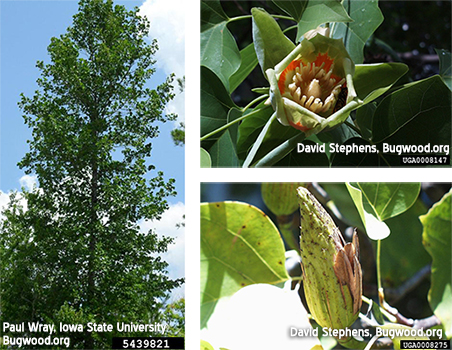 Tulip poplar (Liriodendron tulipifera) is one of the largest trees in Indiana and the eastern portion of the country. Tulip poplar reaching heights in excess of 50-60 m (160-200 ft) with a diameter at breast height (dbh) of 3 m (10 ft) have been reported while the majority of these eastern giants are between 20-30 m (70-100 ft) tall. This tree is fast-growing, has few health problems, and can live upwards of 200 years.
The tree looks best between April and June when it begins to flower as it is covered with large pale green to yellow flowers with an orange band encircling the tepals. These flowers are brimming with nectar and draw in large quantities of bees, birds, and butterflies. The tree has been deemed so magnificent that it is the state tree of Indiana, Kentucky, and Tennessee.
American ginseng (Panax quinquefolius) is an herbaceous perennial member of the ivy family that has traditionally been used in North America by Native Americans for its medicinal properties and cultivated in China for use in herbal remedies. In years past, American ginseng was widespread throughout the eastern United States until overharvesting, habitat fragmentation, urbanization, and deer browsing decimated wild populations.
Though not scientifically proven, ginseng is believed to remedy numerous health conditions such as inflammation, the flu, cancer, insomnia, erectile dysfunction, and hangovers. The herb has become one of the most popular unproven remedies in the world.
A new study noted that wild populations of American ginseng could benefit from being planted near tulip poplar. The data stated that new strategies need to be pursued in conservation efforts to save the rare American ginseng plant. The study advised that planting American ginseng on sites equally suited to tulip trees had the potential to increase outplanting success. The authors recommended planting in isolated, mostly closed canopy areas free of disturbances (trespassers, timber harvesting, large deer populations) and against planting in sites with wild sarsaparilla (Lindera benzoin).
Resources:
Ginseng: Old Crop, New Directions – Purdue University Department of Horticulture
Ginseng – Indiana Department of Natural Resources
American Ginseng – U.S. Fish & Wildlife Service
Liriodendron tulipifera – The IUCN Red List of Threatened Species
Can putative indicator species predict habitat quality for American ginseng? – ScienceDirect – Science Direct
Shaneka Lawson, Plant Physiologist
Purdue University Department of Forestry & Natural Resources
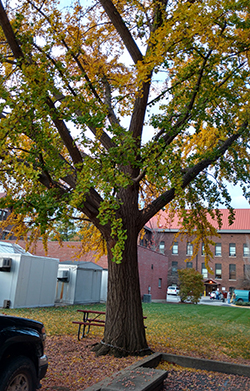 Ginkgo (Ginkgo biloba) trees also known as Maidenhair trees are slow-growing, relatively pest-free, wind-pollinated trees that can be found in all fifty of the contiguous United States. The only tree species within division Ginkgophyta to escape extinction, Ginkgo biloba is known as an ancient tree with prehistoric fossils dating back 270 million years found on every continent except Antarctica and Australia.
Ginkgo grow best in full sunlight and can reach heights greater than 35 m (115 ft). Ginkgo trees are valuable street trees because of their low susceptibility to smoke, drought, or low temperatures. These trees grow slowly and perform relatively well in most soil types provided they are well-drained. The leaves turn a vibrant yellow during autumn but drop soon after its brilliant fall color is observed.
Unfortunately, in late autumn, the dirty secret that female ginkgo trees hide is revealed. The “fruit” produced by female ginkgo trees is foul smelling (has been compared to rancid butter or animal excrement) and is cast in the fall following the first frost. Though immature when cast, the embryos within the fruit continue to mature on the ground for up to two months afterwards. This means that anyone unfortunate enough to step on the fruit during that time is exposed to its pungent odor.
Extreme caution should be used when selecting ginkgo trees for landscape ornamentals or for street trees since there is no way to discern a male from a female at the seedling stage. Several “Boys Only” cultivars have been developed such as ‘Autumn Gold’ or ‘Lakeview’ to ensure that you do not end up with a 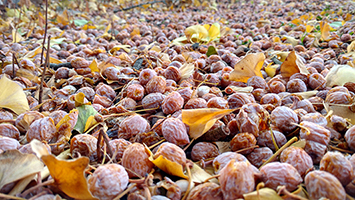 stinky yard or street when the trees begin to fruit. While the scent of the seed coat may be undesirable, the seed kernel is highly valued in Eastern Asia as a food product. In the United States, herbal extracts composed of ginkgo leaves are believed to improve short-term memory and concentration.
On the campus of Purdue University several ginkgo trees can be found although unfortunately for students the vast majority of these are female and the scent of crushed seed pods often follows many students to class on the bottoms of their shoes. A word of warning, the ginkgo trees planted near Pfendler Hall, Forestry, and the Cordova Center are all females. Watch your step this winter and this is the one rare example of when boys ARE better than girls.
Resources:
Ginkgo biloba – Purdue Arboretum Explorer
Ginkgo – Encyclopedia.com
Ginkgo biloba L. – USDA Forest Service
Shaneka Lawson, Plant Physiologist & Adjunct Assistant Professor
Purdue University Department of Natural Resources
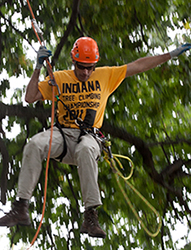 This year’s Indiana Tree Climbing Competition has come to a close, with Purdue’s Casey Johnson finishing first place in the preliminary events and Jon Montgomery winning the Masters Challenge and going on to the international competition in San Antonio next spring.
“What it does is mimics what you do in a work production standpoint, only in a competition environment,” says Lindsey Purcell, who teaches forestry at Purdue and serves as president of the Indiana Arborists Association. “I mean, I call them tree athletes. Instead of ‘triathletes’ I call them ‘tree athletes,’ because you not only have to understand the physiology and biology of the tree, but you also have to be athletic to get to work.”
To read more, check out WBAA’s article. For this year’s scores and more information on the competition, check out Indiana Arborist Association’s Tree Climbing Competition page.
Resources:
A Different Kind of Athlete: Competitive Tree Climbers Compete In Indiana Championship – WBAA
Tree Climbing Competition – Indiana Arborist Association
International Tree Climbing Championship – International Society of Arboriculture
Purdue Forestry & Natural Resources
 Water is the most limiting ecological resource for a tree, and without adequate moisture, decline and death are imminent. Drought can have a major impact on tree health and survival. It reduces carbohydrate production, significantly lowering energy reserves and production of defense chemicals in the tree.
Trees in a weakened state from drought are more susceptible to pests, which can further weaken the tree, and even kill part or all of it. Although there is nothing we can do to prevent drought, it is important to know what can be done to reduce long-term effects of prolonged dry conditions.
Urban Forestry Specialist Lindsey Purcell describes how homeowners can deal with drought-stressed trees in the short-term and long-term in his publication “Drought? Don’t Forget the Trees!” Purcell also provides insight on the state of Indiana’s drought-stressed trees and how to protect them in the video “Trees in Times of Drought.”
Resources:
Trees in Times of Drought, Video, Purdue Agriculture
Drought Information, Indiana Department of Natural Resources
Drought? Don’t forget the trees!, The Education Store
Corn Belt Farmers’ Concerns About Drought and Heat-related Threats to Their Farm Operations, Sustainable Corn
Safety Harvesting Quality Forage in a Drought, The Education Store
Planting Your Tree Part 1: Choosing Your Tree, Purdue Extension YouTube Channel
Tree Defect Identification, The Education Store
Tree Wound and Healing, Got Nature? Blog, Purdue Extension – Forestry and Natural Resources
Surface Root Syndrome, The Education Store
Planning the Tree Planting Operation, The Education Store
Tree Risk Management – Got Nature? Blog, Purdue Extension – FNR
ID That Tree, Purdue Extension-FNR YouTube playlist
Subscribe – Purdue Extension-FNR YouTube Channel
Lindsey Purcell, Chapter Executive Director
Indiana Arborist Association
Indiana has experienced extreme weather over the last couple of years. Extreme heat, draught, cold, winds, you name it, we’ve dealt with it. Most recently, through June and July, Indiana has experienced record-breaking rainfall and flooding. These weather conditions can make it difficult for our surroundings, but it can also cause a lot of stress on our trees.
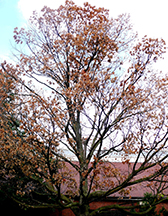
Photo credit: Keith Robinson
Urban trees are more susceptible to weather-related injury because of their oftentimes compromised root systems. In forested areas, trees spread their roots out two to three times the length of the tree. This is important because roots are the tree’s way to receive oxygen from the soil. This provides for a healthy defense system, giving the tree advantages like the ability to draw in moisture during dry spells and secrete fungi- and insect-repelling chemicals. In urban areas, roads and construction oftentimes sever roots or restrict where they can go, leaving the trees in a vulnerable state.
Our vulnerable urban trees are especially likely to be harmed by weather-induced stress. Symptoms like browning of leaves, dying branches and early coloration in the fall are all signs that a tree’s health is declining.
Keep an eye on your trees, and if you are concerned, use the Purdue Tree Doctor app or submit a sample to the Purdue Plant and Pest Diagnostic Lab as you seek best practices to care and protect your trees.
Resources
Purdue Experts: Tree Deaths Across Indiana May be Related to Weather Stress, Purdue Agriculture News
Drought? Don’t forget the trees! The Education Store, Purdue Resource Center
Plan Today For Tomorrow’s Flood, The Education Store
Community & Urban Forestry, Indiana Department of Natural Resources
The Root of the Problem, Northern Woodlands
Purdue University Agriculture News
Lindsey Purcell, Urban Forestry Specialist
Department of Natural Resources, Purdue University
B. Rosie Lerner, Extension Consumer Horticulture Architecture
Department of Horticulture and Landscape Architecture, Purdue University
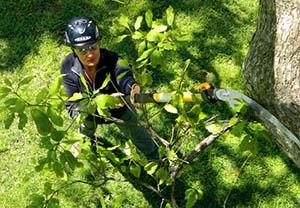 Trees continue to survive in spite of the many challenges they face in the urban environment. However, to grow from seedling to a mature tree in the urban forest, they need our help. They are the largest, oldest living organisms on the planet and can live long, healthy lives with some assistance. We often place trees in less-than-favorable growing locations that don’t allow natural development and maturity and often require pruning to develop a durable structure, improve clearance and maintain aesthetics.
Pruning has been called “one of the best, worst maintenance practices” performed on trees. The process creates wounds, which have a major impact on plant processes. Improper cutting on a tree causes severe damage or even death. To prune properly, it is important to understand both the proper techniques and how the tree responds to pruning.
In this publication, Urban Forestry Specialist Lindsey Purcell explores the techniques behind good pruning, from the planning process before planting to monitoring the tree’s response after the pruning cuts. Check out Tree Pruning Essentials and make sure you are pruning your trees to maximize safety, aesthetics and tree health!
Resources
Tree Pruning Essentials, Purdue Extension
Tree Pruning Essentials Video, Purdue Extension
Trees and Storms: Understanding Damage, Risk and Recovery – Got Nature? Blog, Purdue Extension – FNR
Tree Risk Management – Got Nature? Blog, Purdue Extension – FNR
Pruning, Indiana Department of Natural Resources
Prune Your Trees, Indiana Department of Natural Resources
Lindsey Purcell, Urban Forestry Specialist
Department of Natural Resources, Purdue University
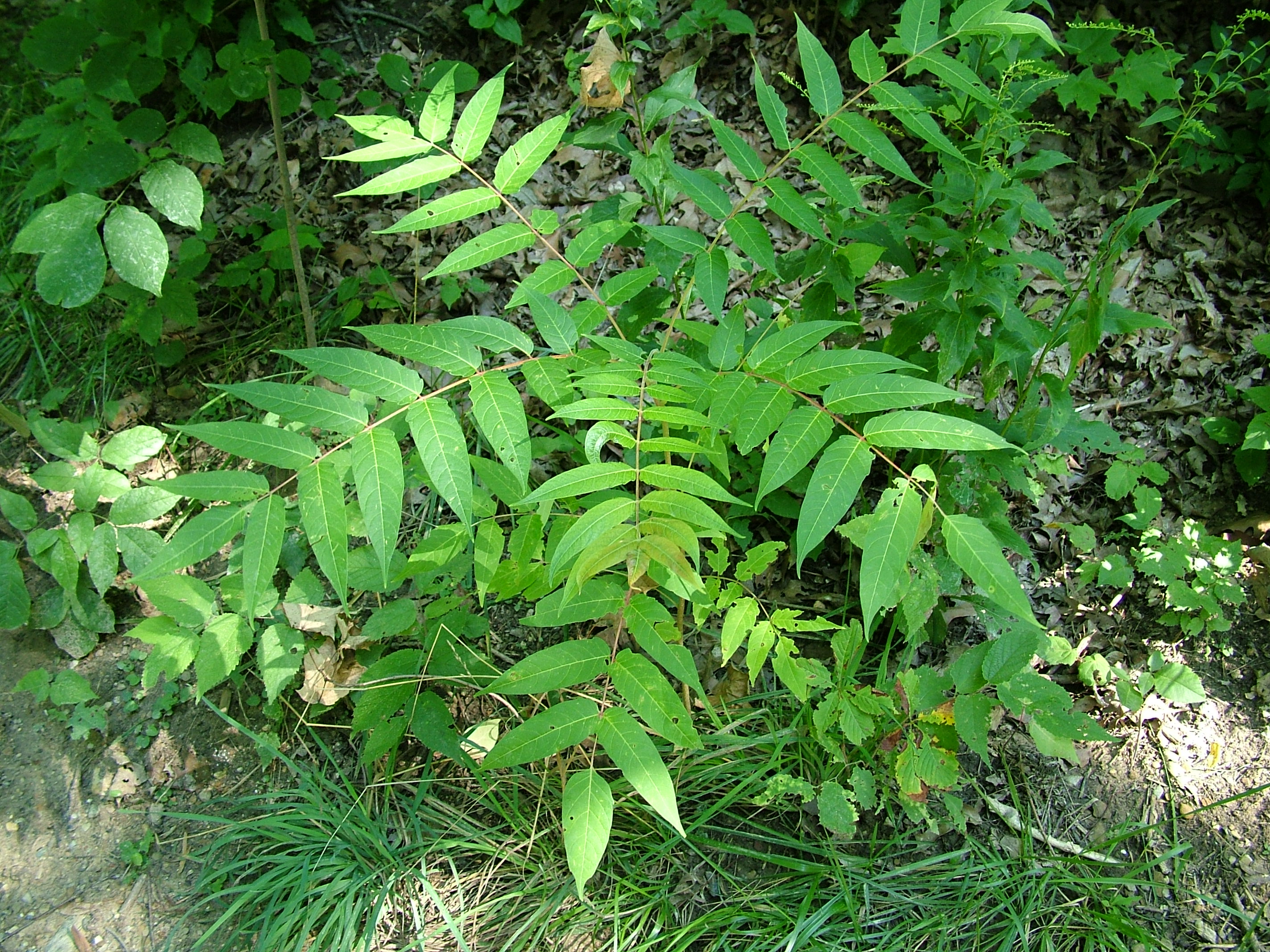
Tree-of-heaven seedling
Invasive plant species threaten many habitats including forests across Indiana. The introduced Asian tree-of-heaven (Ailanthus altissima) is one of these aggressive and troublesome invaders. Tree-of-heaven grows very quickly on a wide variety of sites from seed and sprouts and can rapidly out-compete native trees and shrubs. There are areas in Indiana forests already dominated by this unwelcome invader. Controlling large infestations of this tree can be very expensive and even dangerous. The sap and wet sawdust of this tree can trigger an allergic reaction in some people.
There is some hope on the horizon. Research work done by the U.S. Forest Service and universities in Pennsylvania and Ohio has identified a fungus that can kill tree-of-heaven and has minimal or no impact on surrounding plants. Verticillium nonalfalfae or Ailanthus verticillium wilt is a soil fungus that has been identified so far in Pennsylvania and Ohio that can rapidly kill large patches of tree-of-heaven. Tests with this naturally occurring soil fungus have shown it to be very effective at killing tree-of-heaven without having significant impacts on surrounding native plants.
This naturally-occurring killer of tree-of-heaven could be an important tool in managing this invasive problem in Indiana. The quickest way to get started with natural bio-control of tree-of-heaven is to locate the fungus here in Indiana. Citizens and resource professionals can help us locate ailanthus verticillium wilt by identifying patches of tree-of-heaven that are being impacted by the fungus. This requires familiarity with the identification of both tree-of-heaven and the symptoms of the wilt disease on the tree.
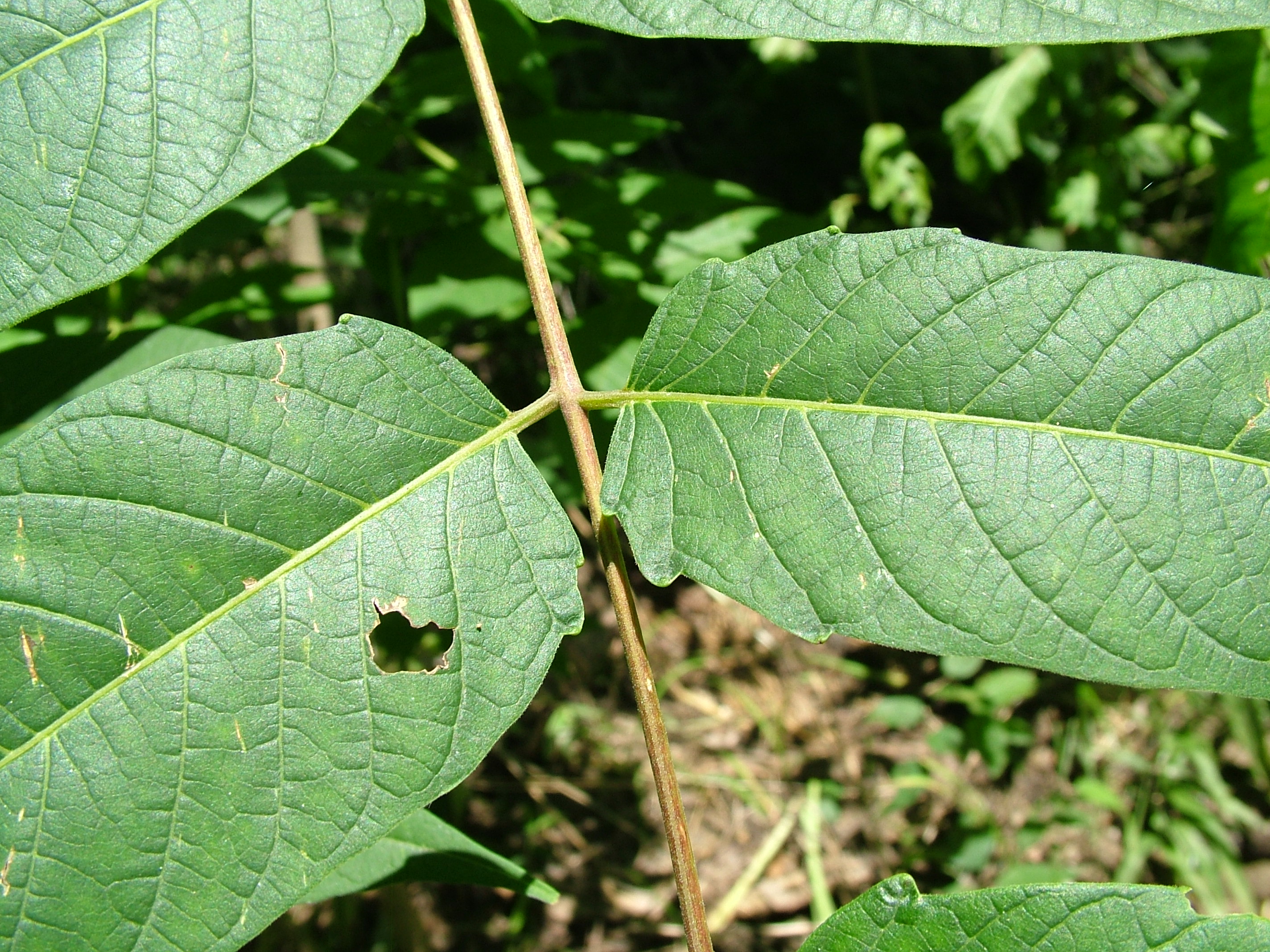
Close-up of the “teeth” on the leaves of tree-of-heaven
Tree of Heaven has long, compound leaves resembling sumac or black walnut but possessing small notches or teeth at the base of the leaflets. The plant parts have a very unpleasant burnt nut odor when crushed or bruised. The bark is smooth and grey with light grey or white fissures running vertically in the bark. Twigs are very stout with a light tan spongy pith in the center.
Ailanthus wilt causes rapid death of the tree, often within one season, so look for patches of tree-of-heaven where most trees are showing wilting foliage or are already dead. The mortality will often be radiating out from a central group of dead or dying trees. Trees with wilt will have a yellow to yellow-brown discoloration of the wood directly beneath the bark. Healthy tree-of-heaven will have nearly white wood under the bark. The mortality will almost always be groups of trees, not scattered individuals. Several resources are included below to help you identify tree-of-heaven and ailanthus wilt.
If you encounter what you think is ailanthus wilt in Indiana, please contact:
Lenny Farlee, Hardwood Ecosystem Extension Specialist
Purdue Forestry and Natural Resources
Email: lfarlee@purdue.edu
Phone: 765-494-2153
Joanne Rebbeck, Plant Physiologist
USFS, Northern Research Station
Email: jrebbeck@fs.fed.us
Phone: 740-368-0054
Resources
Tree-of-heaven Images, Center for Invasive Species and Ecosystem Health
Scientists Using Fungi to Stop an Invader, The Columbus Dispatch
Verticillium nonalfalfae, USDA Forest Service
Invasive Species, Purdue Extension
The Education Store, Purdue Extension Resource Center (search “invasive”)
Lenny Farlee, Hardwood Ecosystem Extension Specialist
Department of Forestry and Natural Resources, Purdue University
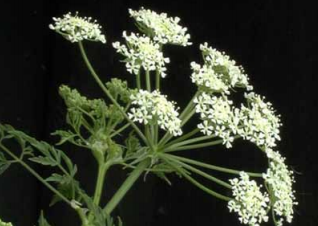
Photo credit: Pedro Tenorio-Lezama, Bugwood.org
Made infamous through the trial of Socrates, Shakespeare’s Hamlet and Macbeth, and several other works of classic literature, poison hemlock is an extremely toxic plant that will pose a risk this summer and should be handled with caution.
Poison hemlock is a biennial plant, meaning that it has a two year lifespan. Last summer, it went through vegetative growth and largely stayed out of sight. This summer, it will produce small white clusters of flowers and will be more likely to catch the attention of animals and people. Poison hemlock is a member of the parsley family and can sometimes be confused with wild carrot. However, its distinguishing feature is its hairless hollow stalks with purple blotches. If you see these, be careful!
The biggest risk with poison hemlock is ingestion. Lethal doses are fairly small, so it is important for animal owners or parents of young children to identify it in their area and remove it if possible. The toxins can also be absorbed through the skin and lungs, so be sure to wear gloves and a mask when handling these plants.
Symptoms of hemlock poisoning include dilation of the pupils, weakening or slowing pulse, blue coloration around the mouth and eventually paralysis of the central nervous system and muscles leading to death. Quick treatment can reverse the effects, so act quickly.
Resources
Invasive Plant Species Fact Sheets: Poison Hemlock, The Education Store, Purdue Extension Resource Center
Recognizing and Managing Poison Hemlock, Purdue Landscape Report
Poison Hemlock, Pest & Crop Newsletter, Purdue Extension – Entomology
Hemlock Woolly Adelgid: Distribution Update, Purdue Landscape Report
What are Invasive Species and Why Should I Care?, Purdue Extension – Forestry and Natural Resources (FNR)
Indiana Invasive Species Council
Report INvasive, Purdue Extension & Indiana Invasive Species Council
Poison Hemlock (Conium maculatum), United States Department of Agriculture (USDA)
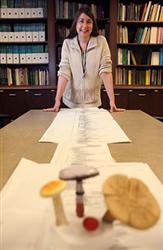
Photo: Tom Campbell
Mushrooms are strange forms of life. Some can kill you within hours, some are psychedelic hallucinogens and others are just good on a pizza. There are estimated to be six to 20 times more species of fungi than plants, and a lot of them are still shrouded in mystery. Since the time of Carl Linnaeus in the 1700s, we have been searching for answers in the fungi kingdom, and recently, we just found a big one in the shape of an evolutionary mapping dubbed the “tree of life.”
Using collections of preserved fungal specimens called fungaria from Purdue’s Arthur Fungarium and Kew’s Fungarium in the Royal Botanic Gardens, two of the biggest and most important fungi collections in the world, mycologists like Catherine Aime were able to study well over 100 years’ worth of preserved specimens and apply modern DNA technology to piece together genomes and discover new connections linking mushroom species. This “tree of life” is the clearest and most comprehensive mapping to date of the evolutionary history of fungi.
Aime says that this study reinforces the importance of fungaria as we advance in the genomic age. These extensive collections are priceless, containing specimens as far back as some from Darwin himself, and documenting hundreds of thousands of species throughout the years. Some of these species might not exist in the future, and it is essential that we document and preserve them as we learn new ways to use them in the future.
The research paper documenting this ‘tree of life’ was published in the Biological Journal of the Linnean Society and is available for journal subscribers and readers at Purdue.
Read the full article.
Resources
DNA Samples From Purdue, Kew Fungi Collections Provide Key to Mushroom ‘Tree of Life’, Purdue Extension
Arthur Fungarium, Purdue Herbaria
Kew’s Fungarium, Kew Royal Botanic Gardens
Aime Lab, Purdue University Department of Botany and Plant Pathology
Fungi – In a Kingdom All By Themselves, Indiana Department of Natural Resources
Natalie van Hoose, Research News Writer
Purdue Extension

Recent Posts
- Opportunities for Prescribed and Wildland Fire Training
Posted: November 4, 2026 in Forestry, How To, Wildlife, Woodlands - Wildlife Issues and Solutions: A New Online Series
Posted: in Forestry, How To, Wildlife, Woodlands - Burning for Benefits: Where Fire Belongs in Indiana
Posted: in Forestry, Safety, Wildlife, Woodlands - Residents, Alumni Invited to Share Indiana Natural Resource, Spaces, Species Memories
Posted: in Forestry, Forests and Street Trees, Gardening, Urban Forestry, Wildlife - Now Is The Time To Control Non-Native Bush Honeysuckle
Posted: October 30, 2026 in Forestry, How To, Invasive Plant Species, Woodlands - Help Strengthen the Future of Indiana Maple Syrup
Posted: October 29, 2026 in Forestry, How To, Woodlands - Popular Landscape Shrub is Invasive
Posted: October 15, 2026 in Alert, Forestry, Forests and Street Trees, Invasive Plant Species, Plants, Woodlands - Purdue Extension’s Regional Teams Are Here: Connecting Communities with Expertise and Opportunity
Posted: October 14, 2026 in Community Development, Forestry, Forests and Street Trees, Gardening, How To, Timber Marketing, Urban Forestry, Wildlife, Woodlands - Why Do Our Trees Go From Green Leaves to Different Colors?
Posted: in Forestry, Forests and Street Trees, Urban Forestry, Woodlands - Deer and Turkey Archery Seasons Opening Soon, MyDNR
Posted: October 13, 2026 in Alert, Safety, Wildlife
Archives
Categories
- Alert
- Aquaculture/Fish
- Aquatic/Aquaculture Resources
- Ask the Expert
- Christmas Trees
- Community Development
- Disease
- Drought
- Forestry
- Forests and Street Trees
- Gardening
- Got Nature for Kids
- Great Lakes
- How To
- Invasive Animal Species
- Invasive Insects
- Invasive Plant Species
- Land Use
- Natural Resource Planning
- Nature of Teaching
- Plants
- Podcasts
- Ponds
- Publication
- Safety
- Spiders
- Timber Marketing
- Urban Forestry
- Webinar
- Wildlife
- Wood Products/Manufacturing
- Woodland Management Moment
- Woodlands