 Purdue University - Extension - Forestry and Natural Resources
Got Nature? Blog
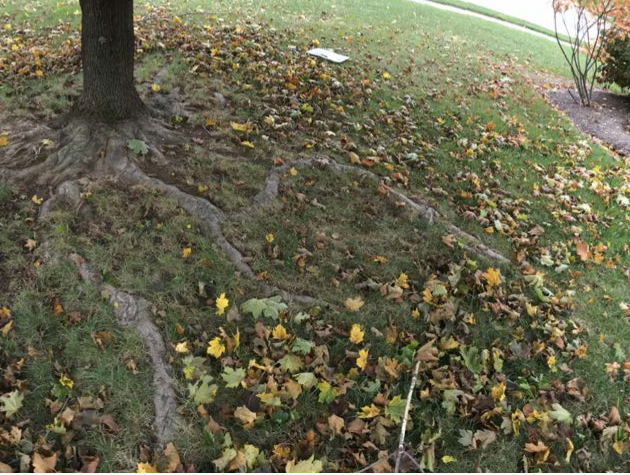 Trees in the landscape are highly prized and provide many benefits to you and your home. However, those shallow roots that appear on the surface of our lawns can create real headaches, especially when trying to grow lush turfgrass. This free download Surface Root Syndrome publication will help you learn what surface roots are, common approaches to address the problem, and best practices to management.
Resources
Find an Arborist video, Trees are Good-International Society of Arboriculture (ISA)
Caring for storm-damaged trees/How to Acidify Soil in the Yard – In the Grow, Purdue Extension
Tree Appraisal and the Value of Trees, The Education Store, Purdue Extension resource center
Tree Support System, The Education Store
Why Is My Tree Dying? – Got Nature? Blog, Purdue Extension – Forestry and Natural Resources
Tree Risk Management – Got Nature? Blog, Purdue Extension – FNR
Mechanical Damage to Trees: Mowing and Maintenance Equipment – The Education Store
Trees and Electric Lines – The Education Store
Urban Forestry Playlist, Purdue Extension-Forestry and Natural Resources YouTube Channel
Lindsey Purcell, Chapter Administrator & Master Arborist
Indiana Arborist Association
Purdue Landscape Report: Just as sure as you try to predict the weather, it is likely to change. But going out on a limb, I predict that we will have a bit of a dud for fall color display this year. Not a very risky prediction, considering that many plants already are starting to turn color and/or drop leaves in some areas of the state.
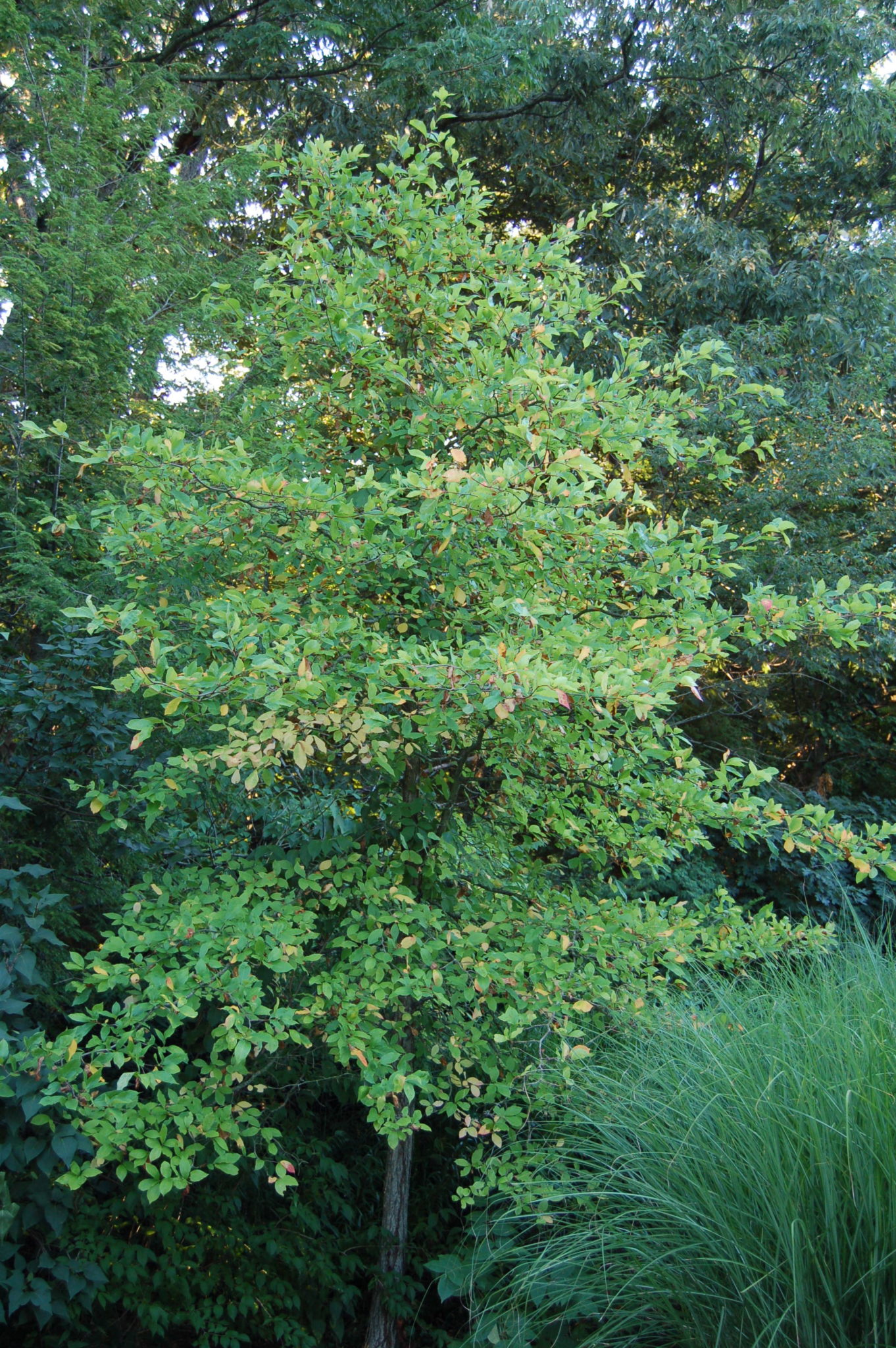
Nyssa sylvatica (black gum) showing early fall color due to drought stress. Source
So why would the colors be early and/or a bit duller than usual? Certainly, some of the reason why plants display fall colors has to do with the genetic makeup of the plant. That doesn’t change from year to year. But the timing and intensity of fall colors do vary, depending on factors such as availability of soil moisture and plant nutrients, as well as environmental signals such as temperature, sunlight, length of day, and cool nighttime temperatures.
The droughty conditions experienced during much of the second half of summer are likely to have decreased the amount of fall color pigment. Southern Indiana has been particularly parched. Despite recent rains in some areas, much of the state remains designated as abnormally dry to moderate drought. You can check your area’s conditions at the US Drought Monitor for Indiana. Additional maps and data is available at the Midwest Regional Climate Center.
Growing conditions throughout the season affect fall color as does current weather. Colors such as orange and yellow, which we see in the fall, are actually present in the leaf all summer. However, those colors are masked by the presence of chlorophyll, the substance responsible for green color in plants during the summer. Chlorophyll allows the plant to use sunlight and carbon dioxide from the air to produce carbohydrates (sugars and starch). Trees continually replenish their supply of chlorophyll during the growing season.
As the days grow shorter and (usually) temperatures cooler, the trees use chlorophyll faster than they can replace it. The green color fades as the level of chlorophyll decreases, allowing the other colored pigments to show through. Plants that are under stress–from conditions like prolonged dry spells–often will display early fall color because they are unable to produce as much chlorophyll.
Yellow, brown and orange colors, common to such trees as birch, some maples, hickory and aspen, come from pigments called carotenoids, the same pigments that are responsible for the color of carrots, corn and bananas.
Red and purple colors common to sweet gum, dogwoods and some maples and oaks are produced by another type of pigment called anthocyanin, the pigment responsible for the color of cherries, grapes, apples and blueberries. Unlike chlorophyll and carotenoids, anthocyanins are not always present in the leaf but are produced in late summer when environmental signals occur. Anthocyanins also combine with carotenoids to produce the fiery red, orange, and bronze colors found in sumac, oaks, and dogwoods.
Red colors tend to be most intense when days are warm and sunny, but nights are cool–below 45º F. The color intensifies because more sugars are produced during warm, sunny days; cool night temperatures cause the sugars to remain in the leaves. Pigments are formed from these sugars, so the more sugar in the leaf, the more pigment, and, thus, more intense colors. Warm, rainy fall weather decreases the amount of sugar and pigment production. Warm nights cause what sugars that are made to move out of the leaves, so that leaf colors are muted.
Leaf color also can vary from tree to tree and even from one side of a tree to another. Leaves that are more exposed to the sun tend to show more red coloration while those in the shade turn yellow. Stress such as drought, poor fertility, disease or insects may cause fall color to come on earlier, but usually results in less intense coloration, too. And stress or an abrupt hard freeze can cause leaves to drop before they have a chance to change color.
So far, weather conditions lead me to think this will be one of those not so showy fall color years. I hope I am proven wrong!
Resources
Fifty Common Trees of Indiana
An Introduction to Trees of Indiana
Native Trees of the Midwest, Purdue University Press
Why Leaves Change Color, USDA Forest Service, Northeastern Area
B. Rosie Lerner, Retired Extension Consumer Horticulturist
Purdue Horticulture and Landscape Architecture
Cities and towns in the U.S. contain more than 130 million acres of forests. These forests vary extensively in size and locale. An urban forest can describe an urban park such as Central Park in New York City, NY, street trees, nature preserves, extensive gardens, or any trees collectively growing within a suburb, city, or town. Urban forestry is the name given to the care and maintenance of those ecosystem areas that remain after urbanization. Data from the 2010 census indicated more than 80% of Americans live in urban centers with a population increase greater than 12%. The population of Indiana represents only 2.1% of the nation. In the last 8 years, IN has had an influx of 200,000 people which represents a population increase of 3.0%!
Urban forests, which help filter air and water, control storm water runoff, help conserve energy and provide shade and animal habitat must be maintained. As our nation becomes more urbanized, appreciate those urban foresters working to ensure we have save urban forest spaces to enjoy. These precious resources add more than curb appeal and economic value, they improve our quality of life.
What does an urban forester do? Here’s a quick answer:
References:
Purdue Urban Forestry & Arboriculture, Purdue Forestry and Natural Resources
USDA Forest Service Urban Forests, United States Department of Agriculture
US Census Bureau, United States Census Bureau
Interested in Purdue Urban Forestry? Contact:
Lindsey Purcell, Chapter Executive Director
Indiana Arborist Association
Ben McCallister, Urban Forestry Specialist
Forestry and Natural Resources
Resources:
Tree Support Systems, The Education Store, Purdue Extension Resource Center
Corrective Pruning for Deciduous Trees, The Education Store
Tree Installation: Process and Practices, The Education Store
What plants can I landscape with in area that floods with hard rain?, Got Nature? Blog, Purdue University Forestry and Natural Resources Extension
One of the most dangerous pests to trees is a human, especially with equipment. 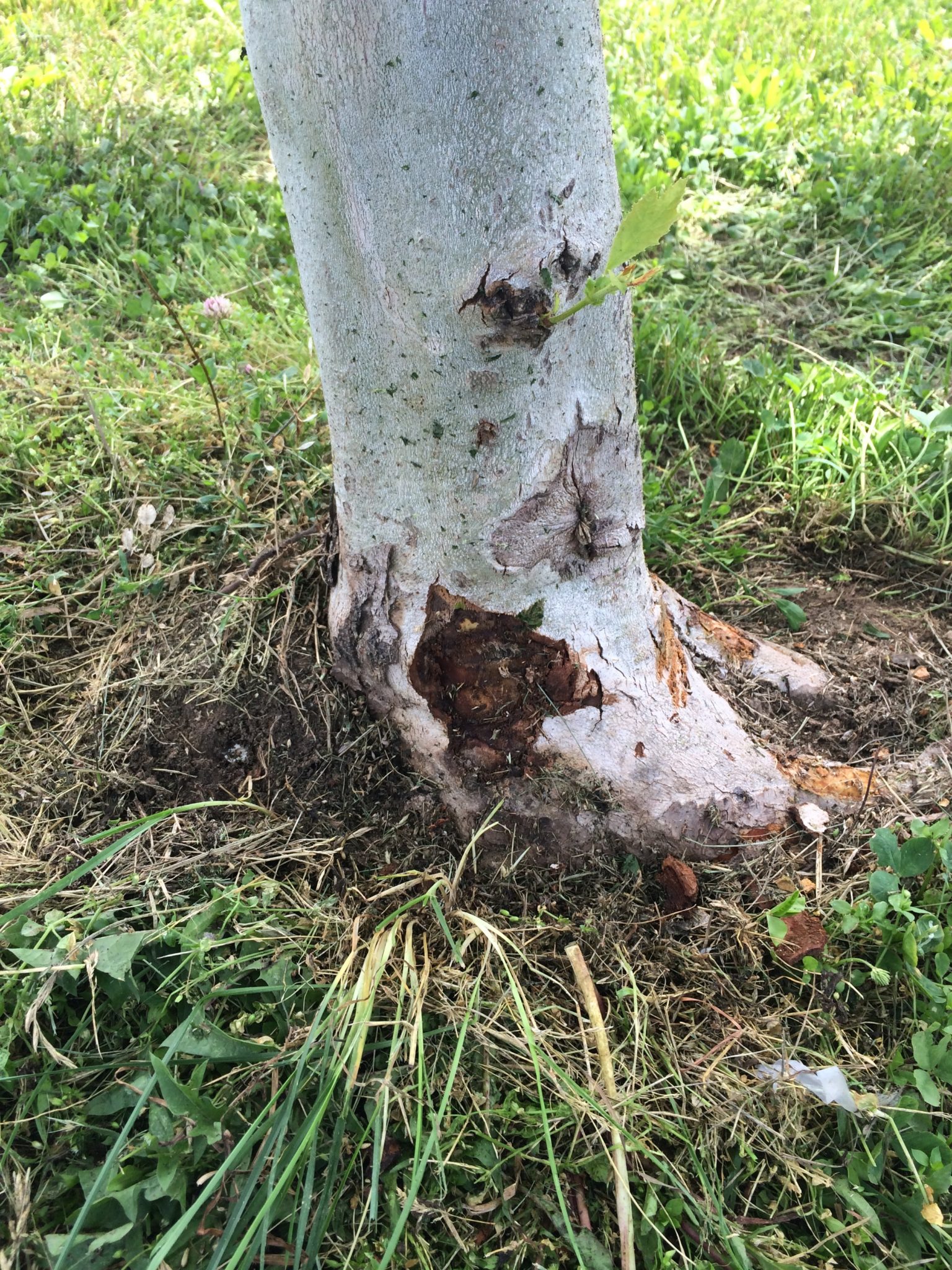 Injuries to trees caused by a lawn mower or weed trimmer can seriously threaten a tree’s health.
Additionally, damage to the bark layer of trees causes a long-term liability by creating a wound which leads to a defect, becoming an unsafe tree.
The site of injury is usually the root flare area, where the tree meets the turf and gets in the path of the mower or trimmer. The bark on a tree acts to protect a very important transport system called the cambium layer.
This is where specialized tubes are located which move nutrients and water between the roots and the leaves. Bark layers can vary in thickness on different tree species. It can be more than an inch in thickness or less than 1/16 of an inch on young, smooth-barked trees such as maples and birch trees. This isn’t much protection against string trimmers and mowing equipment, especially the young trees.
Any type of damage or removal of the bark and the transport system can result in long-term damage. Damage, which extends completely around the base of the tree called girdling, will result in ultimate death in a short time.
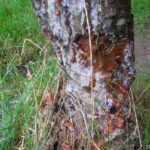
Tree wounds are serious when it comes to tree health. The wounded area is an opportunity for other insects and diseases to enter the tree that causes further damage. Trees can be completely killed from an attack following injuries. Fungi becomes active on the wound surface, causing structural defects from the decay. This weakens the tree or it eventually dies, creating a risk tree to people around it.
Newly planted, young trees need all the help we can provide to become established in the landscape and these trees are often the most commonly and seriously affected by maintenance equipment. However, injury can be avoided easily and at very low cost with these suggestions.
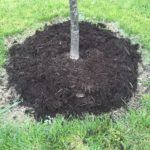 The removal of turf or prevention of grass and weeds from growing at the base of the tree are low-tech solutions to eliminate a serious problem. Spraying herbicides to eliminate vegetation around the base of the tree can decrease mowing maintenance costs. Be sure to use care when applying herbicides around trees.
- A 2-3” layer of mulch on the root zone of the tree provides an attractive and healthy environment for the tree to grow. Additionally, it provides a visual cue to keep equipment away from the tree.
- Also, trunk guards and similar devices can add an additional measure of protection for the tree. Using white, expanding tree guards can help improve the trees ability to withstand equipment contact, but also help to reduce winter injury.

Trees are a major asset to your property and important to our environment. Protect our trees and preserve these valuable assets by staying away from tree trunks with any mowing or weed trimming equipment. The damage lasts and it cannot be repaired and often results in losing your tree.
Purdue University Landscape Report Article
Resources
Corrective Pruning for Deciduous Trees, The Education Store – Purdue Extension resource center
What plants can I landscape with in areas that floods with hard rain?, Purdue Got Nature? Blog
Tree support systems, The Education Store
Tree Installation: Process and Practices, The Education Store
Lindsey Purcell, Urban Forest Specialist
Forestry and Natural Resources
United States Department of Agriculture Animal and Plant Health Inspection Service Bulletin: USDA declares August Tree Check Month and urges public to look for Asian longhorned beetle.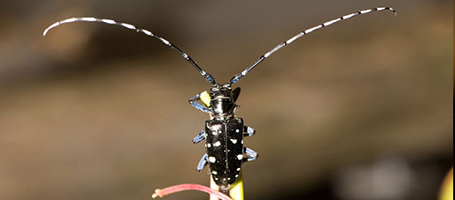
WASHINGTON, July 23, 2019 — August is the height of summer, and it is also the best time to spot the Asian longhorned beetle (ALB) as it starts to emerge from trees. The U.S. Department of Agriculture (USDA) is asking the public to take five minutes to step outside and report any signs of this invasive pest. Checking trees for the beetle will help residents protect their own trees and better direct USDA’s efforts to eradicate this beetle from the United States.
“It’s important to look for signs of the beetle now, because it’s slow to spread during the early stages of an infestation,” said Josie Ryan, APHIS’ National Operations Manager for the ALB Eradication Program. “With the public’s help, we can target new areas where it has spread and provide a better chance of quickly containing it.”
The Asian longhorned beetle feeds on a wide variety of popular hardwood trees, including maple, birch, elm, willow, ash and poplar. It has already led to the loss of more than 180,000 trees. Active infestations are being fought in three areas of the country: Worcester County, MA, Long Island, NY (Nassau and Suffolk Counties), and Clermont County, Ohio.
“Homeowners need to know that infested trees do not recover and will eventually die, becoming safety hazards,” warned Ryan. “USDA removes infested trees as soon as possible because they can drop branches and even fall, especially during storms, and this keeps the pest from spreading to nearby healthy trees.”
The Asian longhorned beetle has distinctive markings that are easy to recognize:
- Antennae that are longer than the insect’s body with black and white bands.
- A shiny, jet-black body with white spots, about 1” to 1 ½” long.
- Six legs and feet, possibly bluish-colored.
Signs of infestation include: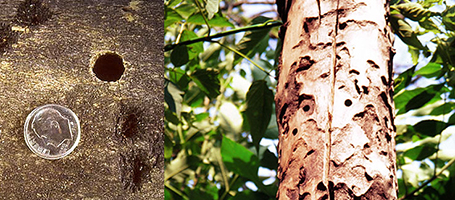
- Round exit holes in tree trunks and branches about the size of a dime or smaller.
- Shallow oval or round scars in the bark where the adult beetle chewed an egg site.
- Sawdust-like material called frass, laying on the ground around the tree or in the branches.
- Dead branches or limbs falling from an otherwise healthy-looking tree.
After seeing signs of the beetle:
- Make note of what was found and where. Take a photo, if possible.
- Try to capture the insect, place in a container, and freeze it. This will preserve it for easier identification.
- Report findings by calling 1-866-702-9938 or completing an online form at USDA Animal and Plant Health Inspection Service.
It is possible to eliminate this pest and USDA has been successfully doing so in several areas. Most recently, the agency declared Stonelick and Batavia Townships in Ohio to be free of the Asian longhorned beetle. We also eradicated the beetle from Illinois, New Jersey, Boston, MA, and parts of New York. The New York City boroughs of Brooklyn and Queens are in the final stages of eradication.
For more information about the Asian longhorned beetle, other ways to keep it from spreading—such as not moving firewood—and eradication program activities, visit USDA Animal and Plant Health Inspection Service. For local inquiries or to speak to your State Plant Health Director, call 1-866-702-9938.
Other Resources:
Report Invasive Species, Purdue Agriculture & Indiana Invasive Species Council
Great Lakes Early Detection Network, Bugwood Apps
New Hope for Fighting Ash Borer, Got Nature? Blog
Mile-a-Minute Invasive Vine Found Indiana, Got Nature? Blog
Sericea Lespedeza: Plague on the Prairie, Got Nature? Blog
Invasive Plants: Impact on Environment and People, The Education Store, Purdue Extension
Invasive Plant Species in Hardwood Tree Plantations, The Education Store
Invasive Plant Species: Callery Pear, Purdue Extension The Education Store
United States Department of Agriculture Animal and Plant Health Inspection Service
Purdue Landscape Report: When was the last time you really looked at your trees? It’s all too easy to just 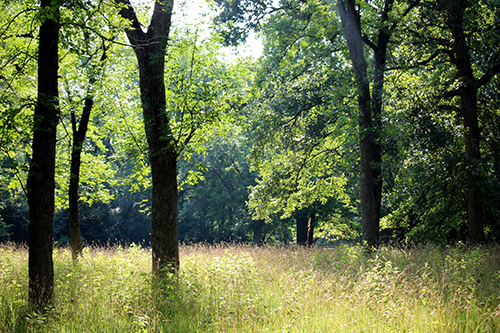 enjoy their cool shade and the sound of their leaves, but if you don’t know what to look for you could miss deadly diseases or dastardly demons lurking in their leaves and branches. A quick check can help you stop a problem before it kills your tree or your local forest!
National Tree Check Month is the perfect time to make sure your tree is in tip-top shape! Our checklist will help you spot early warning signs of native pests and pathogens and invasive pests like Asian longhorned beetle, spotted lanternfly, and sudden oak death. You can stop invasive pests in their tracks by reporting them if you see them.
Is your tree healthy and normal?
Start by making sure you know the type of tree you have. Is it a deciduous tree like an oak or maple? Or is it an evergreen that like a spruce or a pine? Don’t worry about exactly what species it is. It’s enough for you to have a general sense of what the tree should look like when it’s healthy.
Check the leaves
- Are the leaves yellow, red or brown?
- Are they spotted or discolored?
- Do the leaves look distorted or disfigured?
- Is there a sticky liquid on the leaves?
- Do the leaves appear wet, or give off a foul odor?
- Are leaves missing?
- Are parts of the leaves chewed?
Check the trunk and branches
- Are there holes or splits in the trunk or branches?
- Is the bark peeling from a tree that shouldn’t shed its bark?
- Are there tunnels or unusual patterns under the bark?
- Is there sawdust on or under the tree?
- Is there sap oozing down the tree?
- Does the sap have a bad odor?
- Do sticky drops fall on you when you stand under the tree? You might have spotted lanternfly. Please report it right away!
Now what? If you answered YES to any of the questions above, there’s a good chance something is wrong. To decide if and how you should treat or report the problem, you’ll need to have a tentative diagnosis. Luckily, there are many ways to get one!
Know the tree species? Use the Purdue Tree Doctor to get a diagnosis and a recommendation on whether treating or reporting is needed. This app allows you to flip through photos of problem plagued leaves, branches and trunks to help you rapidly identify the problem. If you have an invasive pest, it will guide you how to report it.
Don’t know the tree species and still need help? Reach out to local experts. We’re happy to help!
- Purdue Cooperative Extension Service (https://extension.purdue.edu/) can answer your questions or direct you to a local tree care professional with the right expertise.
- Contact an arborist who can give you an assessment of your tree and specific treatment recommendations (https://www.treesaregood.org/findanarborist).
Confused but think something is TERRIBLY WRONG? Contact Purdue’s Exotic Forest Pest Educator, report online, or call 1-866-NOEXOTIC.
Resources:
Trees and Storms: Understanding Damage, Risk and Recovery – Got Nature? Blog, Purdue Extension – FNR
Why Is My Tree Dying? – Got Nature? Blog, Purdue Extension – Forestry and Natural Resources
Caring for storm-damaged trees/How to Acidify Soil in the Yard, In the Grow, Purdue Extension
Tree Risk Management, The Education Store
Mechanical Damage to Trees: Mowing and Maintenance Equipment, The Education Store
Tree Installation: Process and Practices, The Education Store
Tree Planting Part 1 & Tree Planting Part 2, videos, The Education Store
The Invasive Terrestrial Plant Rule was signed by Governor Holcomb and published on March 18, 2019. the rule goes into effect 30 days after publishing, so it will be effective in April.
The Rule States that a person must not: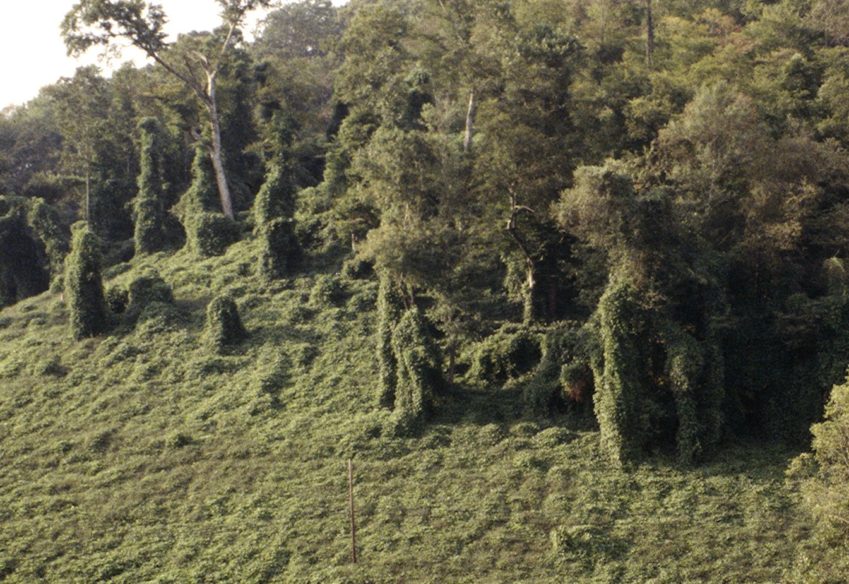
- sell, offer or grow for sale, gift, barter, exchange, or distribute a species;
- transport or transfer a species;
- introduce a species
with respect to the 44 invasive plant species (see full list in the Landscape Report).
Note: Selling, offering, distributing and transporting doesn’t go into effect until April of 2020, so nurseries will have some time to sell down their stock. This is an important component of the rule to minimize economic loss to nurseries that grow and/or sell the few commercially available species that are on the list. Currently there is no mandate to eradicate existing plantings in nurseries, landscapes, or forested areas
To learn more about what an invasive species is, what damage they do, what Indiana is doing, and more please read the Landscape Report, Terrestrial Invasive Species Rule Signed by Indiana Governor.
Resources
Mile-a-Minute Invasive Vine Found Indiana, Got Nature? Blog
Invasive plants: impact on environment and people, Purdue Extension The Education Store
Invasive Plant Species in Hardwood Tree Plantations, The Education Store
Invasive Plant Species: Callery Pear, Purdue Extension The Education Store
Invasive Plant Species: Wintercreeper, Purdue Extension The Education Store
Invasive Plant Species Oriental Bittersweet, Purdue Extension The Education Store
Report Invasive Species, Purdue Invasive Species
The GLEDN Phone App – Great Lakes Early Detection Network
EDDMaps – Early Detection and Distribution Mapping System (Report Invasives)
Cooperative Invasive Species Management Area (CISMA)
Indiana Department of Natural Resources: Invasive Species
Indiana Invasive Species Council
Indiana Department of Natural Resources (IDNR)

Empty cage trap with door open. Image taken by Doug Beckers and courtesy of flickr.com.
Having raccoon, groundhog, or other bothersome wildlife problems? Thinking about setting traps to catch these animals? There is much to consider when using traps. Take a look at the latest publication for best results.
Wildlife specialists Brian MacGowan and Rick Shadel have collaborated to bring you this new publication: Considerations for Trapping Nuisance Wildlife with Box Traps.
Homeowners commonly set traps to capture and remove wildlife from their home or yard. Setting a box trap improperly can decrease their effectiveness and even lead to safety risks to both people and wildlife. The purpose of this publication is to 1) outline the legal and ethical factors homeowners should consider before setting a trap, 2) review the basic procedure for effectively trapping wildlife, and 3) help you to determine the fate of the captured animal.
If you have a serious, dangerous, or a nuisance wildlife issue, you may want to consider hiring a professional. Consider reading this publication before deciding whether or not you need to hire a professional: Selecting a Nuisance Wildlife Control Professional.
Resources
Preventing Wildlife Damage – Do You Need a Permit? – The Education Store, Purdue Extension resource center
Selecting a Nuisance Wildlife Control Professional, The Education Store
How to Construct a Scent Station, The Education Store
Question: How do I properly relocate raccoons from my attic?, Got Nature? Blog, Purdue Extension FNR
Nuisance Wildlife – Indiana Department of Natural Resources
Brian MacGowan, Wildlife Extensions Specialist
Purdue Forestry and Natural Resources
Kristol from Tippecanoe County, IN, sent in question to the Purdue Extension-Forestry and Natural Resources experts (Ask an Expert ) asking what resources are available to help with landscaping for a front yard and sidewalk area that accumulates water after a hard rain. She also asked for resources to improve drainage.
Purdue Extension has several articles and resources to help with this type of situation.
The resources in our Rainscaping and Master Gardeners Program shares several neat options:
Rain Gardens Go with the Flow, Indiana Yard and Garden, Purdue Horticulture
Rainscaping Program
Master Gardeners Program
Don’t miss the publications located in the Purdue Extension resource center, The Education Store, relating to the topic:
Tree Installation: Process and Practices
Planting Forest Trees and Shrubs in Indiana
Climate Change: How will you manage stormwater runoff?
For Midwest Landscapes, have a look at the Purdue Landscape Report:
Purdue Landscape Report
Check out upcoming workshops available for land and woodland owners, to talk with an expert:
Purdue Extension-Forestry and Natural Resources Calendar
Check out our Got Nature? posts as well, as this is always a great resource for new information:
Got Nature?, Forestry and Natural Resources-Purdue Extension
These resources give you lots of options that match what your looking for along with experts in the field to contact if needed.
We always appreciate the questions coming in, so keep them coming. Our experts will respond quickly and give you the guidance you need for your next steps.
Diana Evans, Extension Information Coordinator
Purdue Forestry and Natural Resources
This looks to be shaping up as a tough winter for us and our trees. Lots of snow and ice are predicted for the Hoosier state and this can be a challenge for our trees and shrubs.
After a heavy snowfall, protect your trees and property with these simple tips:
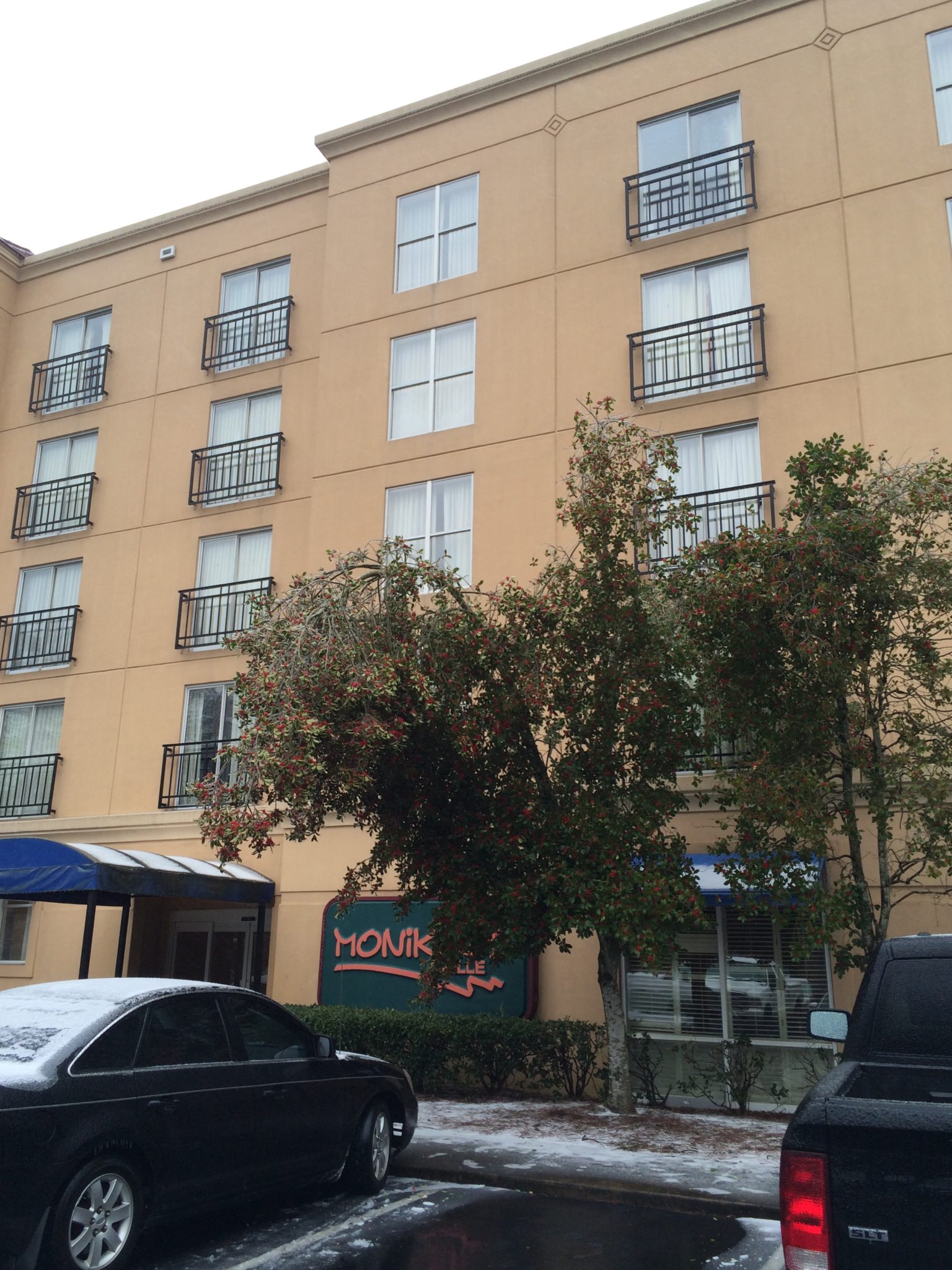
Limbs bending from ice loading.
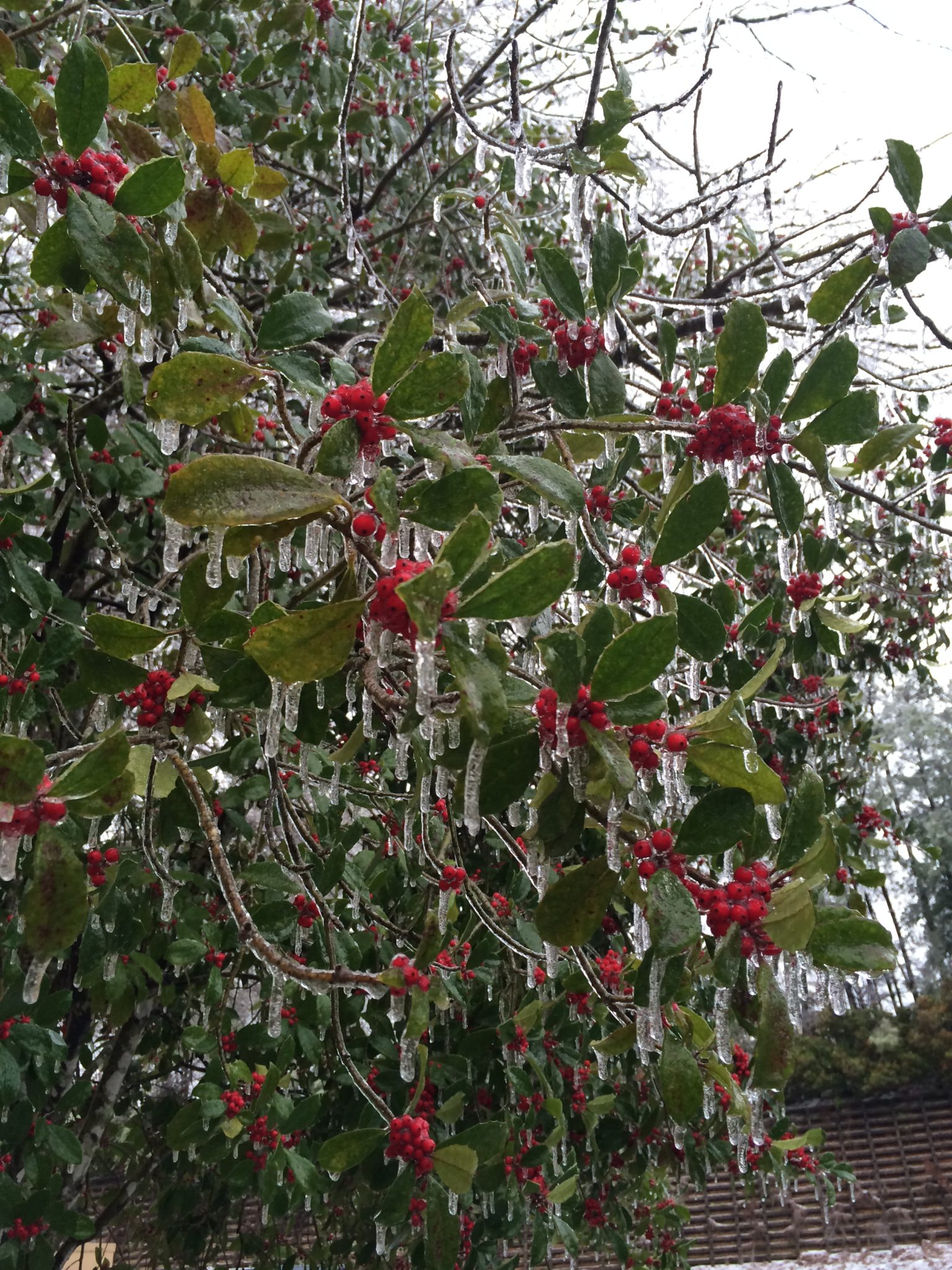
Ice accretion on hawthorn branches.
Do not shake limbs to try to remove snow or ice.
When you find your trees are bending or drooping as a result of ice or snow accumulation, your first instinct is probably to shake the branches or knock the weight off with a broom or something similar. This may cause worse damage or actually cause the branch to snap off. Stop right there! Healthy tree branches are flexible, so knocking off the accumulation of snow or ice accretion may cause them to “snap” back, potentially damaging their food and water transport system. The results of the damage may not be evident until next spring.
Trees that tend to suffer the worst damage as a result of snow and ice are upright evergreens, like arborvitae and juniper, and clump trees, like birch. And, when it comes to ice, age does not make a tree stronger; younger trees are better at actually overcoming damage in ice storms.
Hire a Professional.
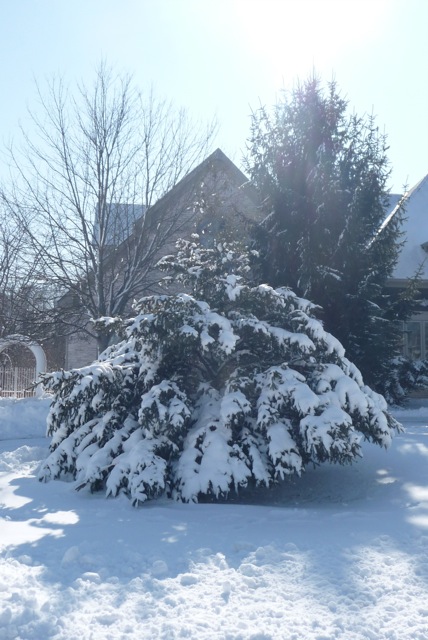
Snow weighing down spruce branches.
Safely remove broken limbs.
Broken and hanging branches can be a threat to people and property. If a limb breaks off from the weight of ice or snow and remains in the tree canopy, have it removed and the remaining stub properly pruned to the branch collar as soon as weather allows. The tree will recover better when properly pruned. For undamaged limbs bending under the weight of ice or snow, don’t prune as a means of correcting the situation. Be patient. It takes time for wood fibers in the limbs to return to its natural position.
Always be mindful of walking or parking under branches loaded down by snow or ice as they may snap and fall, causing injury or damage. If a limb breaks and becomes entangled in power lines, notify your utility company immediately. Never approach a downed power line or a branch touching a utility line.
If there is substantial damage to your tree, have an arborist examine damaged branches and limbs for signs of weakness and injury for reparations. It is best to always hire an ISA Certified Arborist. To find an arborist in your area, visit the website, www.treesaregood.org
How can you help prevent ice damage to trees? Proper pruning is one way. Particularly important is the removal of poor branch attachments and weak branch structure in the tree, prior to winter. For more information on pruning, download the publication, Tree Pruning Essentials.
Full article published in the Purdue Landscape Report.
Resources
Avoid Deadly Risk of Dying Ash Trees with Timely Tree Removal, Got Nature? Purdue Extension-FNR
New Hope for Fighting Ash Borer, Got Nature? Purdue Extension-FNR
Invasive Pest Species: Tools for Staging and Managing EAB in the Urban Forest, Got Nature?
Emerald Ash Borer, Purdue Extension-Entomology
Emerald Ash Borer Tools & Resources – Purdue Extension Entomology
Corrective Pruning for Deciduous Trees, The Education Store, Extension Publications
Lindsey Purcell, Chapter Executive Director
Indiana Arborist Association

Recent Posts
- Opportunities for Prescribed and Wildland Fire Training
Posted: November 4, 2026 in Forestry, How To, Wildlife, Woodlands - Wildlife Issues and Solutions: A New Online Series
Posted: in Forestry, How To, Wildlife, Woodlands - Burning for Benefits: Where Fire Belongs in Indiana
Posted: in Forestry, Safety, Wildlife, Woodlands - Residents, Alumni Invited to Share Indiana Natural Resource, Spaces, Species Memories
Posted: in Forestry, Forests and Street Trees, Gardening, Urban Forestry, Wildlife - Now Is The Time To Control Non-Native Bush Honeysuckle
Posted: October 30, 2026 in Forestry, How To, Invasive Plant Species, Woodlands - Help Strengthen the Future of Indiana Maple Syrup
Posted: October 29, 2026 in Forestry, How To, Woodlands - Popular Landscape Shrub is Invasive
Posted: October 15, 2026 in Alert, Forestry, Forests and Street Trees, Invasive Plant Species, Plants, Woodlands - Purdue Extension’s Regional Teams Are Here: Connecting Communities with Expertise and Opportunity
Posted: October 14, 2026 in Community Development, Forestry, Forests and Street Trees, Gardening, How To, Timber Marketing, Urban Forestry, Wildlife, Woodlands - Why Do Our Trees Go From Green Leaves to Different Colors?
Posted: in Forestry, Forests and Street Trees, Urban Forestry, Woodlands - Deer and Turkey Archery Seasons Opening Soon, MyDNR
Posted: October 13, 2026 in Alert, Safety, Wildlife
Archives
Categories
- Alert
- Aquaculture/Fish
- Aquatic/Aquaculture Resources
- Ask the Expert
- Christmas Trees
- Community Development
- Disease
- Drought
- Forestry
- Forests and Street Trees
- Gardening
- Got Nature for Kids
- Great Lakes
- How To
- Invasive Animal Species
- Invasive Insects
- Invasive Plant Species
- Land Use
- Natural Resource Planning
- Nature of Teaching
- Plants
- Podcasts
- Ponds
- Publication
- Safety
- Spiders
- Timber Marketing
- Urban Forestry
- Webinar
- Wildlife
- Wood Products/Manufacturing
- Woodland Management Moment
- Woodlands