 Purdue University - Extension - Forestry and Natural Resources
Got Nature? Blog
Do you know what’s “bugging” your trees? There are several exotic insects which may be attacking our trees that you should be on the lookout for. Some have already arrived in Indiana, and others are still beyond our borders but have a risk of showing up here in the future.
Dr. Elizabeth Barnes, exotic forest pest educator with Purdue Department of Entomology, and Liz Jackson Purdue extension forestry specialist, describe these exotic insects, symptoms to watch for in your trees, and discuss what some of the biggest future pest concerns are in this Facebook Live session from June 18, 2020.
Resources
Purdue Report Invasive website
Indiana Department of Natural Resources Division of Entomology & Plant Pathology
Don’t Move Firewood
Purdue Plant and Pest Diagnostic Lab
Indiana District Foresters
Indiana Consulting Foresters
Purdue Landscape Report
Insect specific sites:
Asian Longhorned Beetle Information (from APHIS)
Spotted Lanternfly (Penn State Extension)
Emerald Ash Borer Information from Purdue
EAB University: Invasive insects and pathogens webinar series
Elizabeth Barnes, Exotic Forest Pest Educator
Purdue University Entomology
Purdue Landscape Report: Trees provide many benefits for our homes and properties. If a tree is found to have a defect such as dead branches or broken limbs from a storm; it can become a risk issue. It is important to understand that tree owners have a duty to inspect and maintain their trees. All property owners should take reasonable steps to protect themselves by involving a qualified consultant or certified arborist when needed.
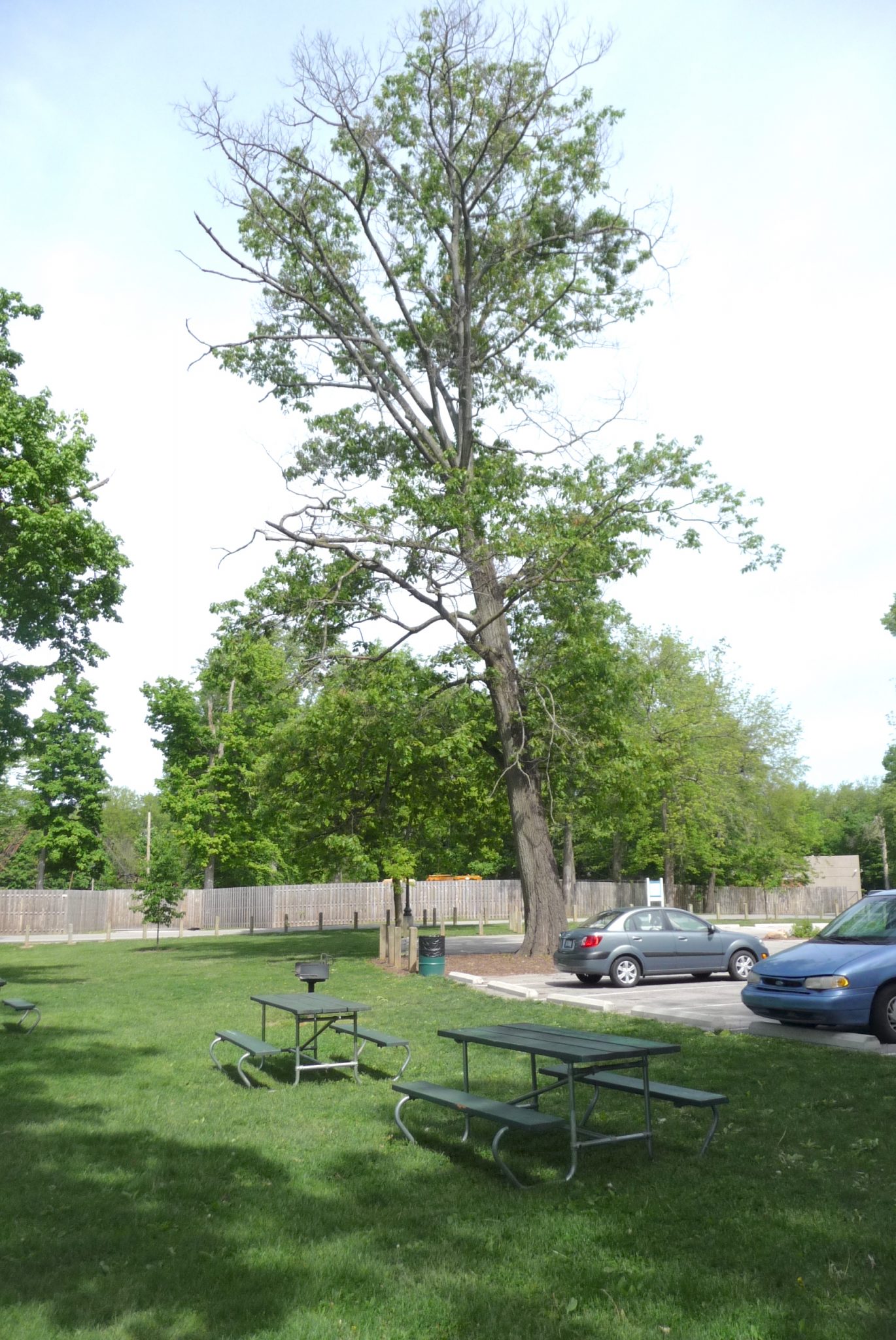
Figure 1. Trees should be inspected for defects which pose a threat or risk to targets.
All trees have some sort of risk involved with it. They are living organisms that are endangered by environmental impacts and pests. However, it is important to create a balance between the risk a tree may pose and the benefits provided by the tree. We don’t want to remove trees unnecessarily, but rather reduce the liability by Identifying, analyzing and evaluating the problem.
Inspect regularly: Trees should be assessed through inspections by a qualified arborist, preferably an International Society of Arboriculture Certified Arborist. It is especially important to inspect trees after major weather events. At a minimum, trees should be carefully checked out every 3-5 years.
Document and maintain records: Every inspection should be recorded and kept on file for future reference. Past evaluations can show how a tree has changed in its health and structure over the years. Also, these written evaluations could minimize liability if a failure occurs and a claim is filed against the tree owner.
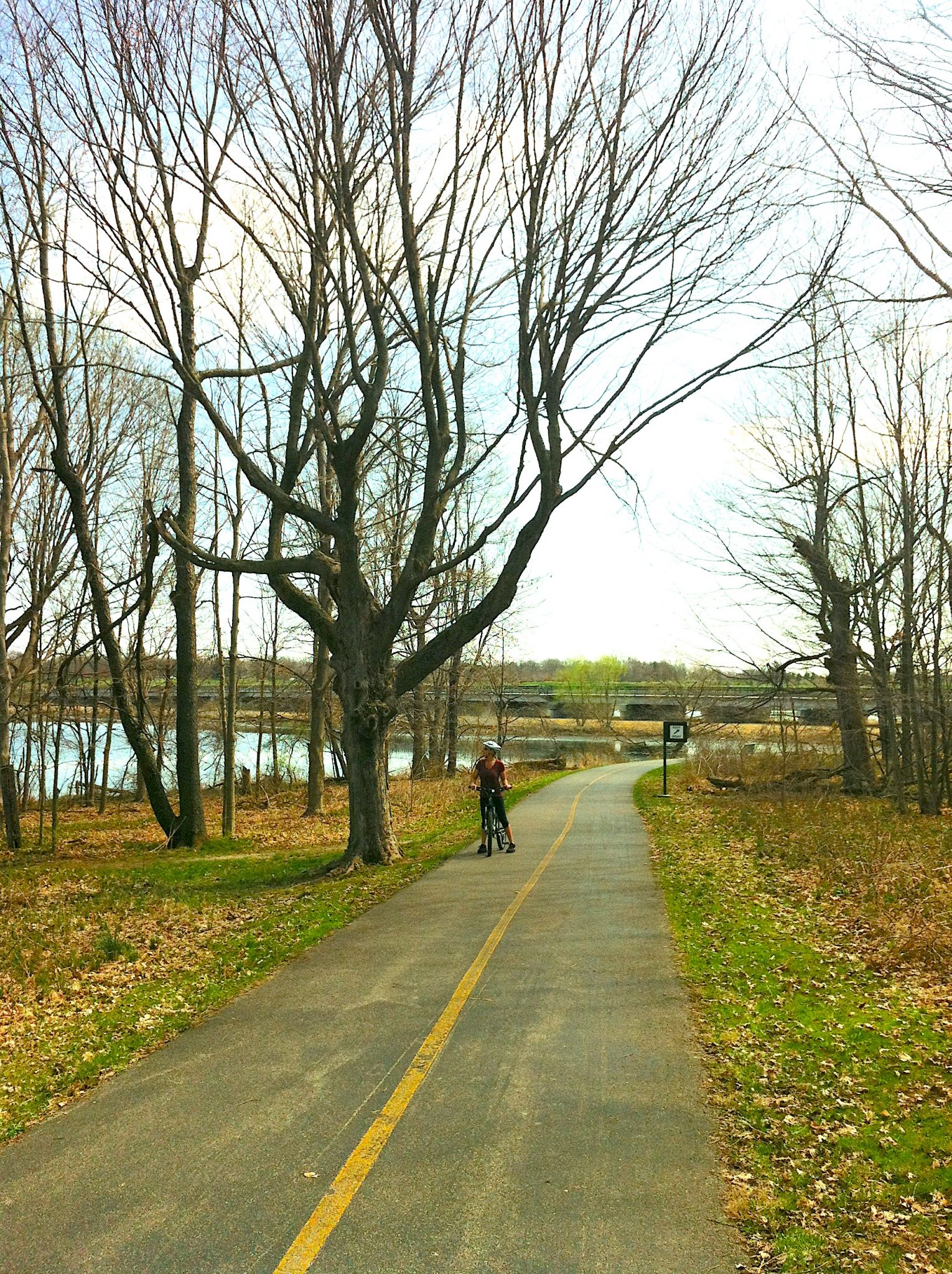
Figure 2. Targets are people, property or activities that could be disrupted by a tree failure.
Tree Inspections: For a tree to be considered a risk it must be defective and a target that is threatened.
A target is people, property or activities that could be injured, damaged or disrupted by a tree failure. Review everything in the target zone. This should include the area inside a circle around the tree, which is at least as wide as the total tree height.
Read the body language of the tree. Inspect each section of the tree including the crown, branches and root zone to check for signs of failure. These include:
- Dead, diseased, dying or broken branches.
- Thinning or poor canopy health.
- An unstable branching pattern overextended or weakly attached branches, or cracks in the stems.
- Cracks or decayed areas in the main trunk.
- Exposed or decayed roots, heaving of the soil, fungus growth or cracks in the soil around the root plate.
Among the characteristics to consider when conducting tree risk evaluations are:
- Decay, cankers, cracks and other positive indicators of weakness in the roots, stems and branches.
- Canopy size, shape and weight distribution. This is especially true in situations where a tree is exposed to windy conditions, is leaning or has a poor stem-to-canopy ratio.
- Crown architecture. Poor branching and similar characteristics can create high-risk situations in strong winds and other weather conditions.
- Plant health and vigor. This determines how a tree can overcome wounding or pest infestations.
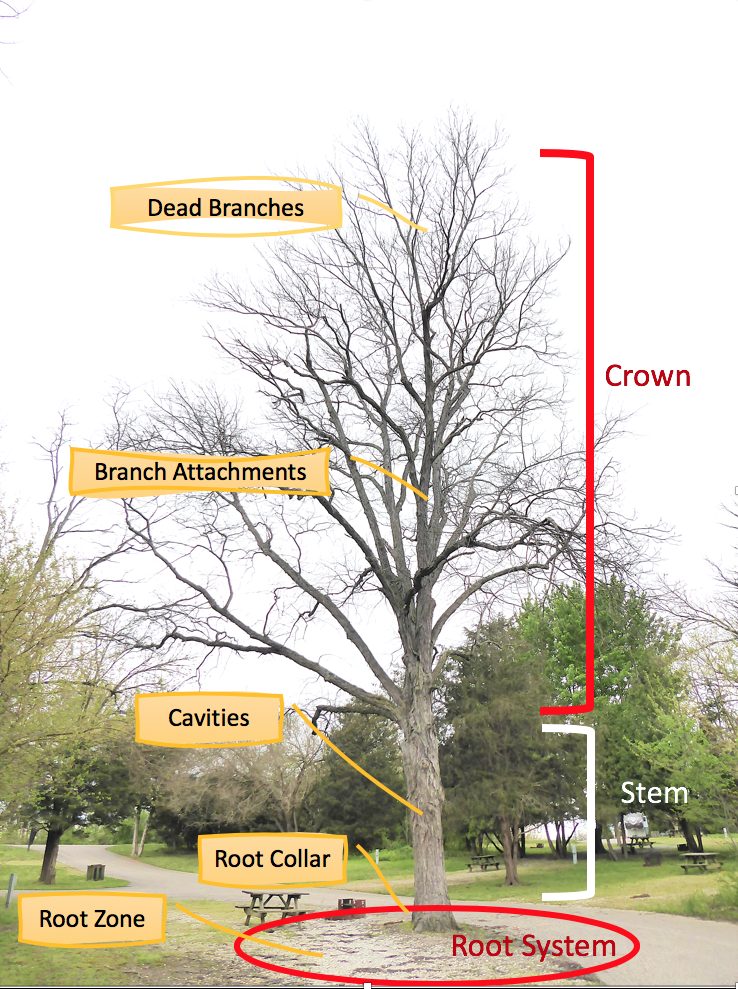
Figure 3. Regular tree inspections should occur reviewing all parts of the tree.
What do you do when a defect is found?
The goal is to reduce the likelihood of failure. Most of the time pruning can improve risk situations. Perhaps cabling and bracing may be an option. Also, plant health care improves the trees condition which can reduce risk… the last option should be removal and that should be an informed decision.
Recurrent inspections to determine tree health and condition are important for sustainable, long-lived tree plantings. The most important factor for any tree owner is know when to contact an ISA Certified Arborist who understands tree risk assessment. They can help with the decision making for the tree if there are concerns about its safety and health.
For more information refer to Trees and Storms: Understanding Damage, Risk and Recovery from theGot Nature? Blog by Purdue Extension, Department of Forestry and Natural Resources (FNR).
Find a certified arborist in your area by going to Trees are Good.
Resources
Planting Problems: Trees Planted Too Deep, Video, Purdue Extension – Forestry and Natural Resources Youtube Channel
Planting Your Tree Part 1: Choosing Your Tree, Video, Purdue Extension Youtube Channel
Tree Planting Part 2: Planting a Tree, Video, Purdue Extension Youtube Channel
Tree Appraisal and the Value of Trees, The Educational Store, Purdue Extension resource center
Surface Root Syndrome, The Education Store
Iron Chlorosis of Trees and Shrubs, The Education Store
Tree Pruning Essentials, Publication & Video, The Education Store
Cold Injury to Trees, Got Nature? Post, Purdue FNR Extension
Lindsey Purcell, Urban Forest Specialist
Purdue University Department of Forestry and Natural Resources
Do you need to open up your woodlands in order to grow new species of trees/shrubs that need extra sunlight or to make for a better wildlife habitat? Forest openings allows us to regenerate species of trees and shrubs that demand full sunlight and also ensures good diversity of species on your property. In this Woodland Management Moment video, Purdue Extension forester Lenny Farlee talks about creating forest openings.
If you have any questions regarding trees, forests, wildlife, wood products or other natural resource topics, feel free to contact us by using our Ask an Expert web page.
Resources
Woodland Management Moment – Deer Fencing, Video, Purdue Extension – Forestry and Natural Resources Youtube Channel
Asian Bush Honeysuckle, Video, Purdue Extension Youtube Channel
Forest Improvement Handbook, The Education Store, Purdue Extension Resource Center
Woodland Stewardship for Landowners, invasive species along with timber resources, Purdue Extension-FNR YouTube Playlist
Managing Your Woods for White-Tailed Deer, The Education Store
Lenny Farlee, Sustaining Hardwood Extension Specialist
Purdue University Department of Forestry and Natural Resources
Purdue urban forester Lindsey Purcell talks about a common planting problem for trees or shrubs that can possibly kill your tree: planting too deep. In the video below he helps you identify the issue and how to remedy it. Follow Purdue Extension – Forestry and Natural Resources Youtube channel for more useful tree planting tips.
Resources
Tree Pruning Essentials, FNR-541-WV, Video, Purdue Extension Youtube Channel
Mechanical Damage to Trees: Mowing and Maintenance Equipment, The Education Store
Tree Installation Process and Practices, The Education Store
Tree Planting Part 1: Choosing a Tree, The Education Store
Tree Planting Part 2: Planting Your Tree, The Education Store
Surface Root Syndrome, The Education Store
Tree Appraisal and the Value of Trees, The Education Store
Question: What are these pretty green flower shaped growth spots? Will they damage the tree?, Got Nature? Post, Purdue FNR Extension
Lindsey Purcell, Urban Forestry Specialist
Purdue University, Department of Forestry and Natural Resources
On May 5th, we held a Facebook LIVE: Ask an Expert with several FNR specialists and one of the questions that came in is a question I receive often.
One of the many benefits of interacting with farmers and land managers is I learn about the problems you face. A question came in around the 17:30 minute mark of how to deal with vole damage problems in their 3- to 5-acre pumpkin patch. I didn’t have an answer regarding registered pesticides (including taste repellents and toxicants) that are labeled for voles in pumpkins. Doing a broad search on the internet is helpful but it is hard to figure out what you can use in your state. Pesticides are often labeled for use in one state but not others. Luckily, anyone can search for registered pesticides online at on the National Pesticide Information Retrieval System. Most states, including Indiana, are included. You can search by EPA registration number, product name, company name, or active ingredient. A particular search can still yield many choices but this is a helpful way of finding out what is available. Each product has a link to the EPA website that includes product labels.
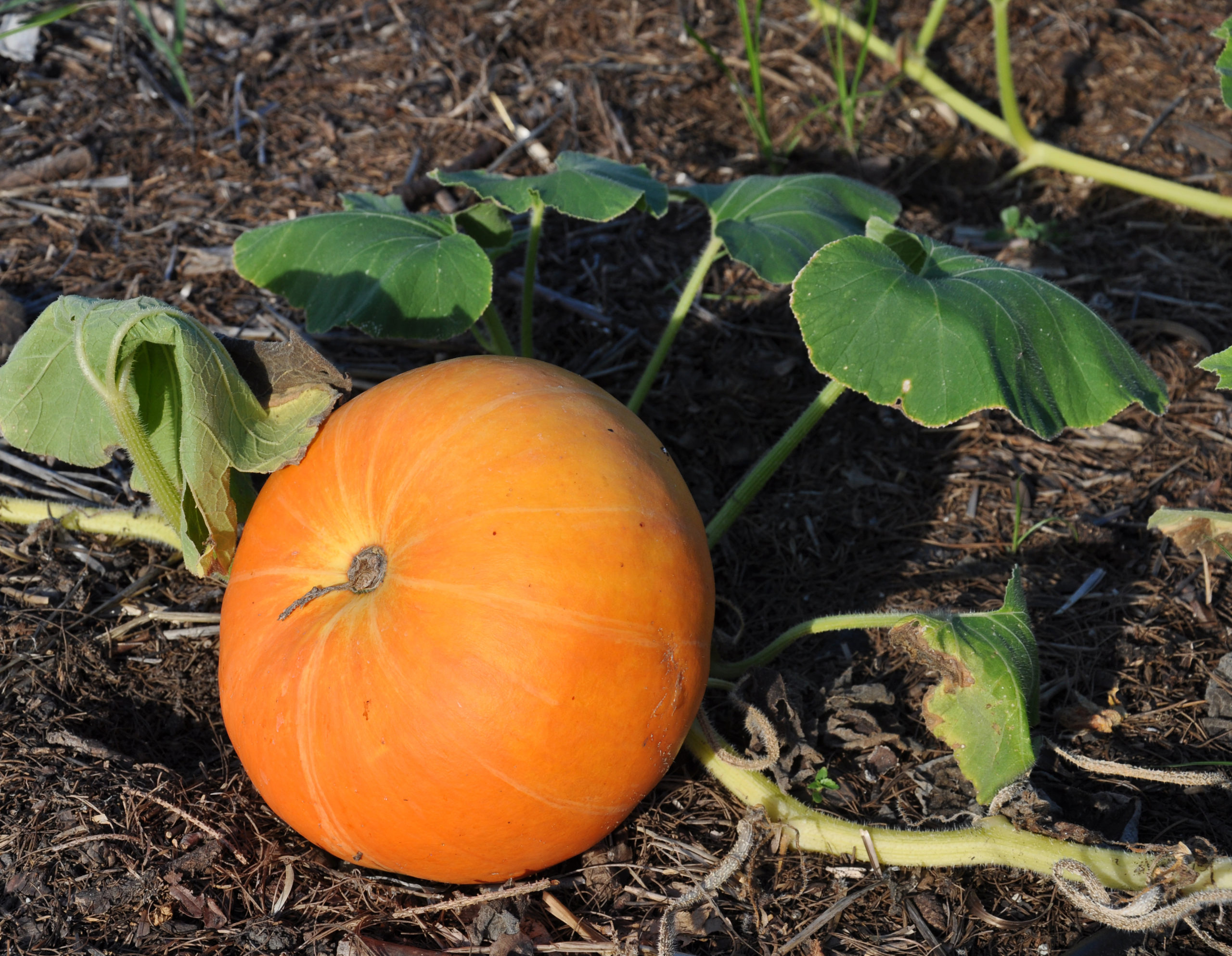
Since our program last week, I did some checking and found a product registered in Indiana labeled for voles in pumpkins as well as many other crops. Millers Hot Sauce is a taste repellent with an active ingredient of capsaicin (2.5% by weight), which is an irritant to animals, but one some people enjoy in hot peppers. Per label instructions adding an antitranspirant film former or a sticker may prolong the effectiveness of the product. Mix the product and additives with water according to label instructions. For heavy damage, start treatment after first true leaves appear and continue treatment every 7 days. If applying to transplants, start application one week after transplanting and continue every 7 days.
Always read the label completely before applying any pesticide. The efficacy of any repellent depends on a number of factors including animal population size and density, available food, and availability of cover. With voles, the year can be key because their populations tend to cycle. Combining other methods with repellents can often increase success. For example, soil cultivation within plant rows and in adjacent habitat can help reduce the habitat quality for voles. Cultivation can also directly kill some voles. There are of course tradeoffs and every situation is unique. Soil cultivation would not be an option in some cases (e.g., adjacent to water, steep slopes). I was unable to find a toxicant registered for voles in pumpkins. But depending on what the land cover is adjacent to the pumpkin patches, some of these may be appropriate in those areas.
With face-to-face Extension programs on hold for the foreseeable future, look for more live Q&A sessions and other programs on Facebook (PurdueFNR) or Twitter (@PurdueFNR).
Resources
National Pesticide Information Retrieval System
Midwest Fruit Pest Management Guide, The Education Store, Purdue Extension resource center
Hops Production in Indiana: Integrated Pest Management Guide for Hops in Indiana, The Education Store
Turfgrass Insects: Managing Black Cutworms in Turfgrass, The Education Store
Applied Research in Field Crop Pathology for Indiana – 2019, The Education Store
Managing Alfalfa Autotoxicity, The Education Store
Brian MacGowan, Wildlife Extensions Specialist
Purdue Forestry and Natural Resources
Our recent cold mornings resulted in late freeze damage to many trees and shrubs. This damage to newly emerging shoots and leaves follows a few hours of temperatures below the freezing mark. Damage is usually characterized by wilting browning of new growth, particularly leaves and needles. It may take a few days, or until temperatures begin warming again, for damage to become evident.
The photos below reveal some late freeze damage in southern Indiana, shared by a concerned tree owner. It is often dramatic and can cause concern for homeowners and landscapers. Fortunately, the damage is largely aesthetic, and plants will quickly resume growth.
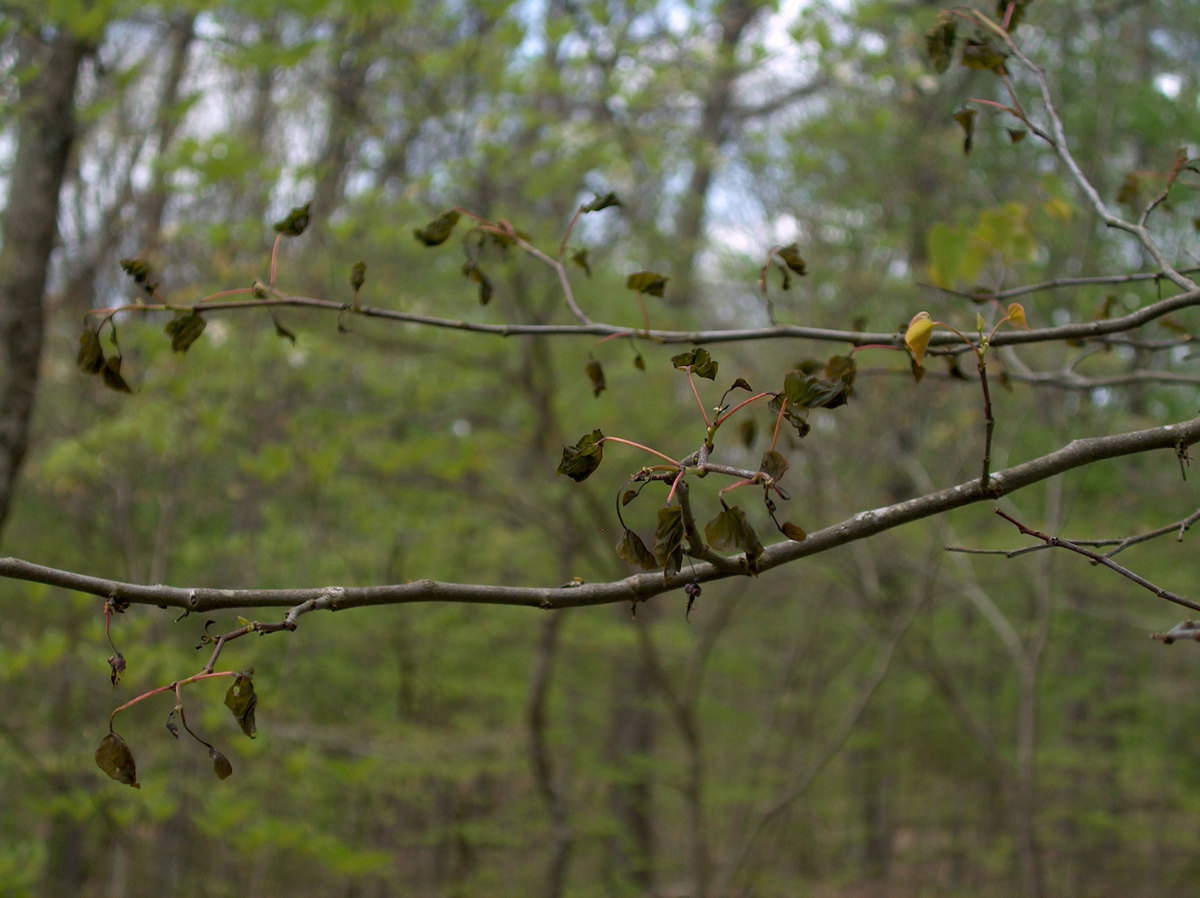
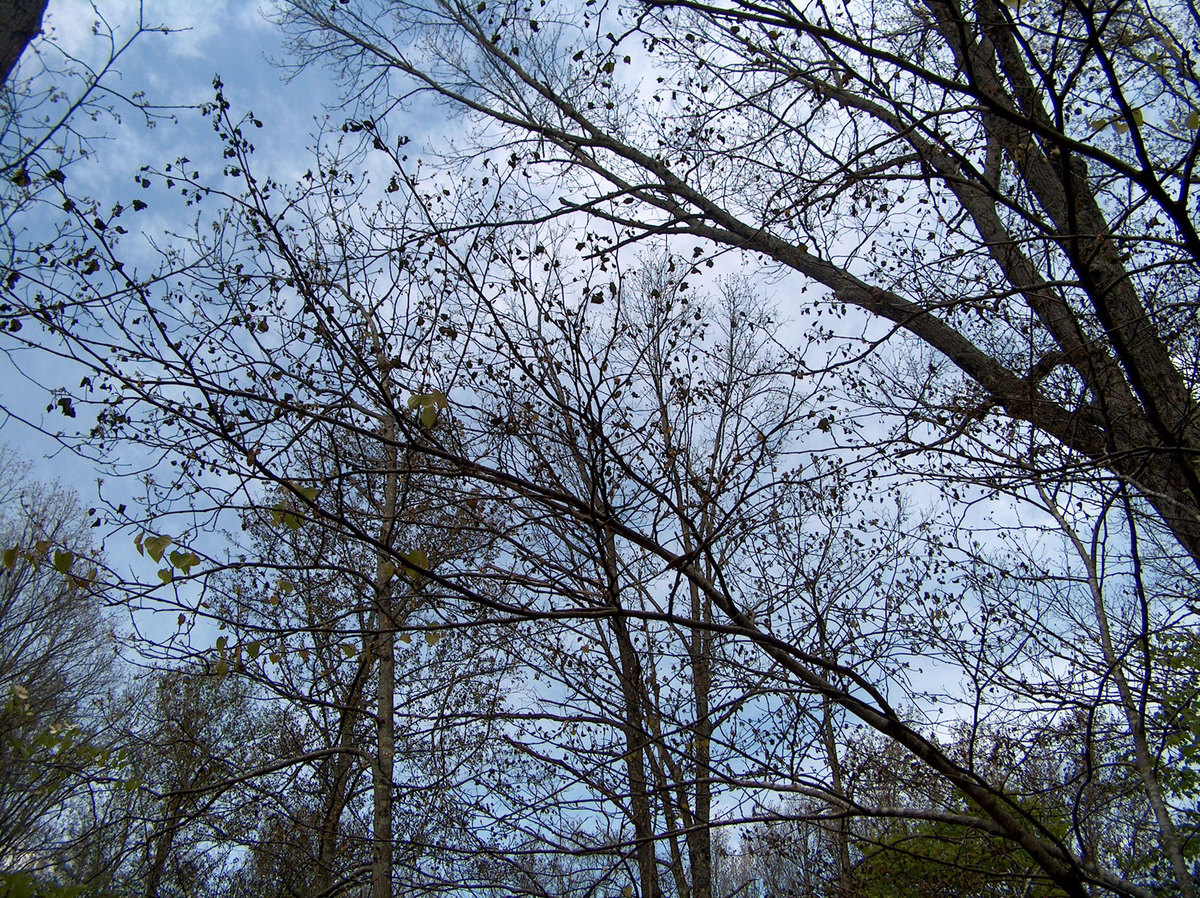
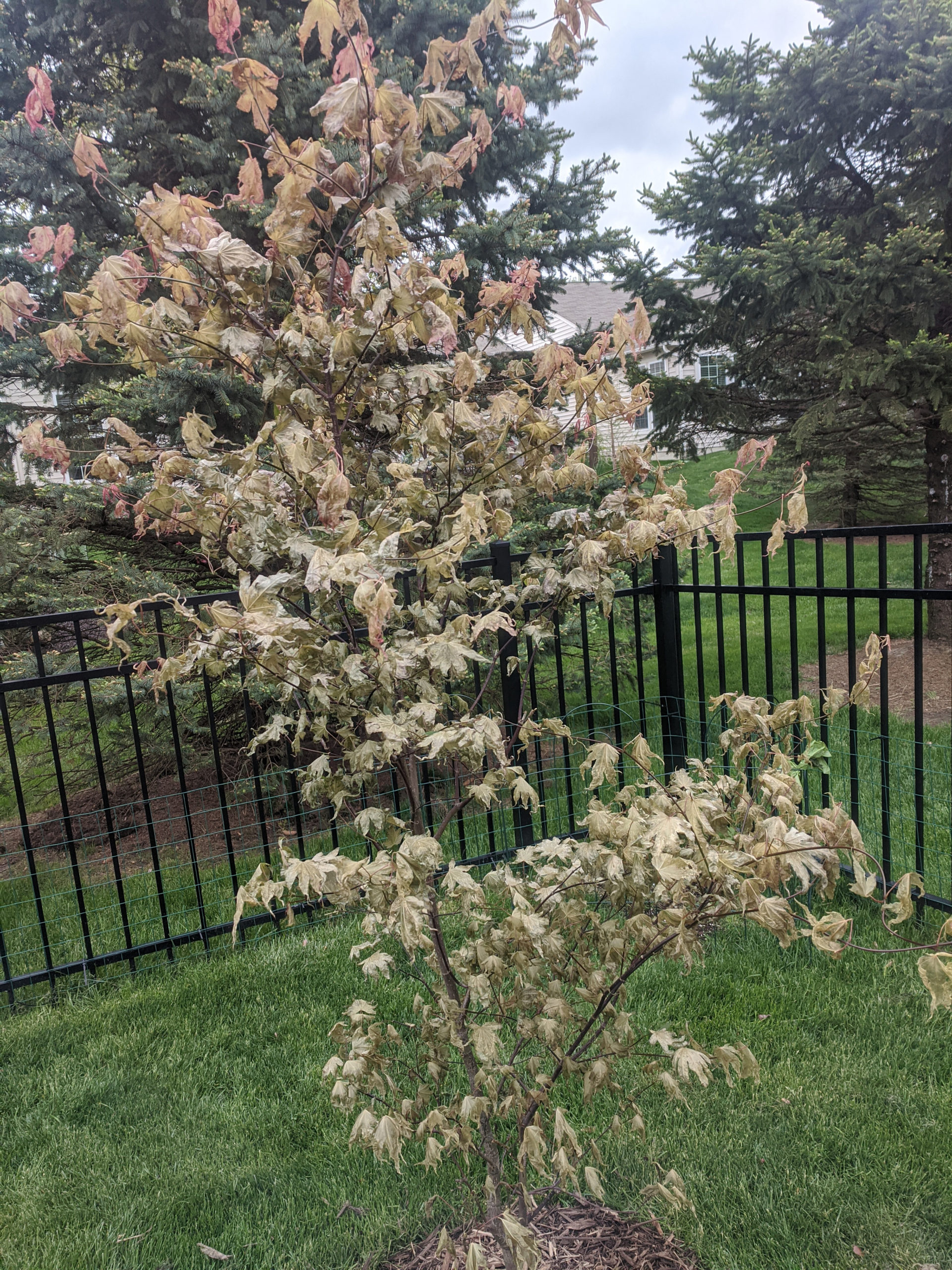
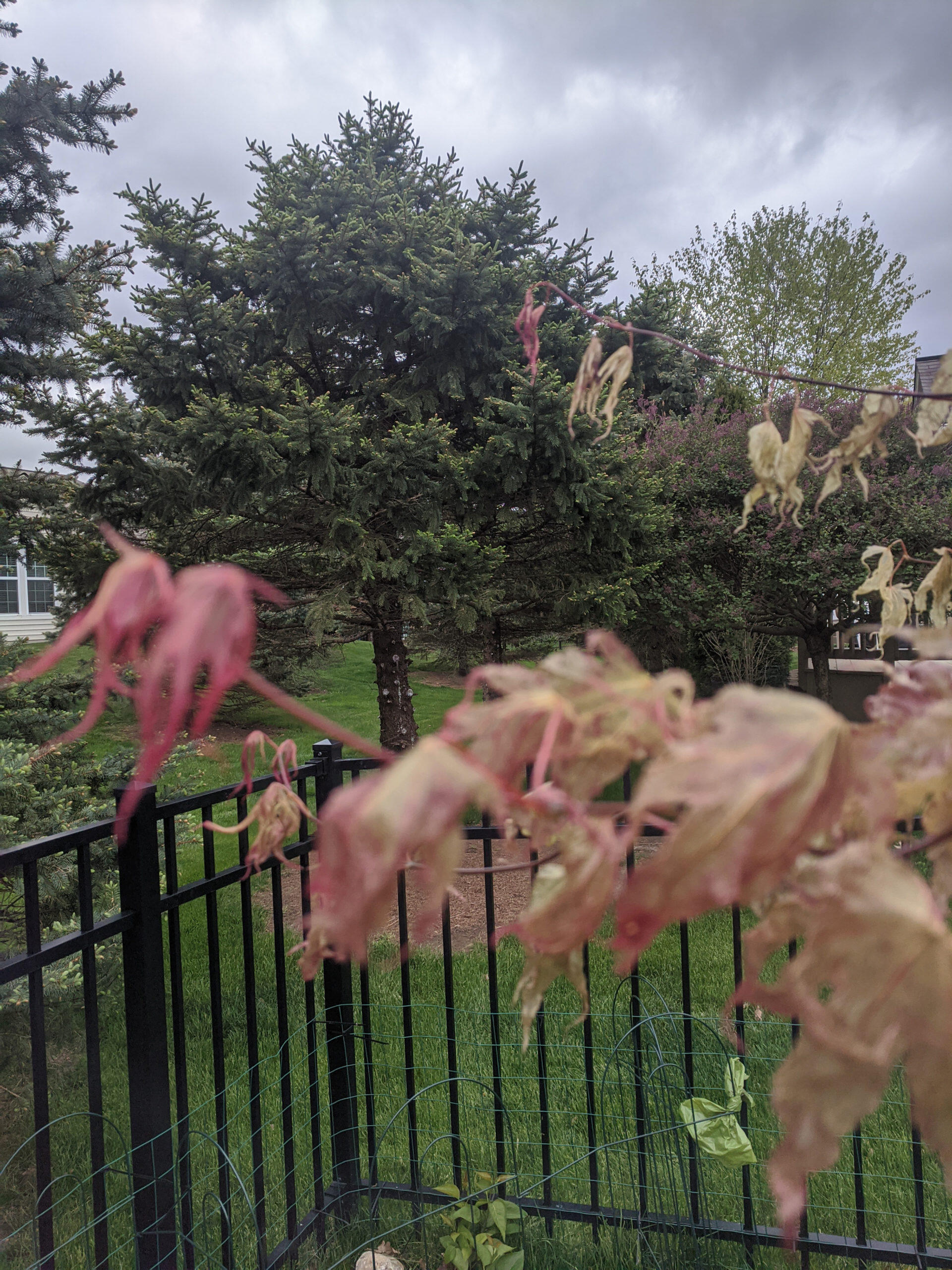
What can you expect? Typically, the damaged or dead leaves will fall and new leaves will emerge, although somewhat slowly. A reduction in growth and leaf size can be anticipated as well. Just remain calm and wait for the tree to recover. If the tree was vigorous going into winter and had a good store of carbohydrates, it can withstand an environmental hit such as these cold extremes.
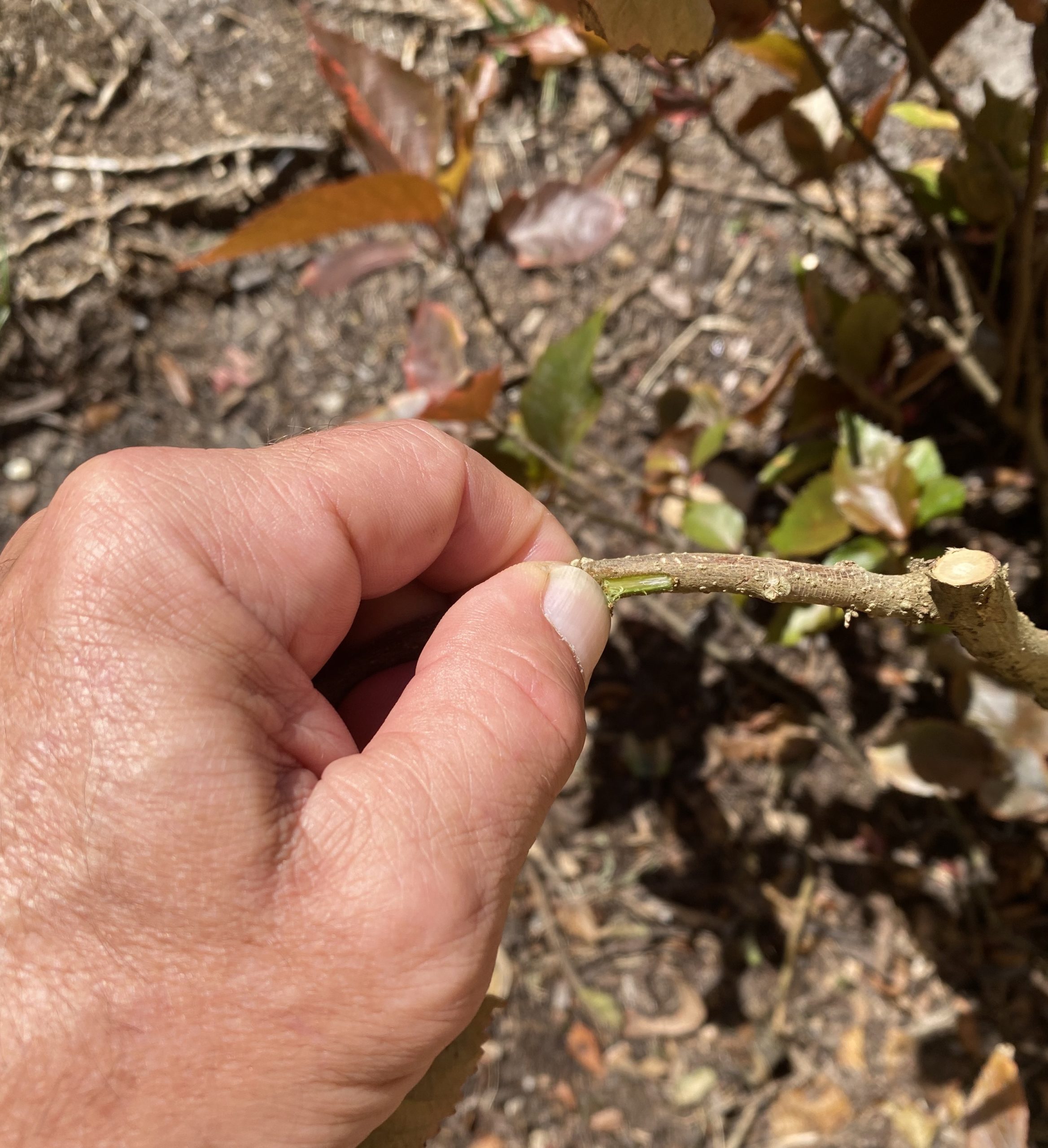 If branches or stems don’t show any evidence of bud or leaf emergence, lightly scratch the bark with your thumbnail. If the green cambial layer is revealed, the tree is likely just slowly emerging from dormancy. If there is no green tissue evident, it is likely dead. Prune out the dead branches to a living later branch and assess the plant.
Resources
Question: What are these pretty green flower shaped growth spots? Will they damage the tree?, Got Nature? Post, Purdue FNR Extension
Iron Chlorosis of Trees and Shrubs, The Education Store, Purdue Extension resource center
Tree Diseases: Oak Wilt in Indiana, The Education Store
Tree Diseases: White Pine Decline in Indiana, The Education Store
Mechanical Damage to Trees: Mowing and Maintenance Equipment, The Education Store
Surface Root Syndrome, The Education Store
Tree Appraisal and the Value of Trees, The Education Store
Lindsey Purcell, Urban Forestry Specialist
Purdue University, Department of Forestry and Natural Resources
 Mark your calendar for four upcoming Facebook LIVE events from Purdue FNR Extension specialists.
On April 30, tune in at 3 p.m. to expand your knowledge about the Hellbender husbandry program as Dr. Rod Williams chats live with Dr. Stephen Spear from The Wilds, who is going to talk about captive rearing, different age groups of hellbenders and some of their research using EDNA to sample for hellbenders across the country. This Facebook LIVE event will take place on the Help the Hellbender page. https://www.facebook.com/HelpTheHellbender
Check back in a few hours later at 6 p.m. for a live Q&A with extension wildlife specialist Jarred Brooke. He will offering habitat help and offering tips and tricks about establishing native grasses and forbs for wildlife. Tune in on the Purdue FNR Facebook page. https://www.facebook.com/PurdueFNR/
On May 5, a host of Purdue extension specialists will be available to answer your questions on a variety of topics during a noon ET Ask the Expert session on the Purdue FNR Facebook page . Have a question about woodlands, wildlife, fish, or ponds you want to ask a Forestry and Natural Resource Specialist? We will be discussing wildlife habitat management, prescribed fire, forest management, invasive plants, wildlife conflict management, wildlife damage, amphibian and reptile identification, wildlife ecology, pond management and fish ecology. This Q&A session will put you in touch with:
- Jarred Brooke, Extension Wildlife Specialist, wildlife habitat management, prescribed fire
- Lenny Farlee, Extension Forestry Specialist, forest management, invasive plants
- Brian MacGowan, Extension Wildlife Specialist, wildlife conflict management, wildlife damage
- Rod Williams, Extension Wildlife Specialist, amphibian and reptile identification, wildlife ecology
- Mitch Zischke, Extension Fisheries Specialist, pond management and fish ecology
On May 7 at 3 p.m., in Episode 3 of our Help the Hellbenders Facebook LIVE series, Dr. Rod Williams will talk with the keepers at the Mesker Park Zoo and Botanical Gardens about their efforts to breed hellbenders in captivity. Viewers will also have a tour of the facility and see interactive exhibits.
All Facebook LIVE sessions will be archived on Facebook. Go back and watch Episode 1 of the Help the Hellbender series.
To access a Facebook live feed, go to the page at the established time. When the event is live, a LIVE icon will show up next to the word video on the left hand side of the page. Click the video link and a new page will open. The video that is live will be the first video in the list. Click that to begin watching.
Resources:
Report Invasive, Purdue Extension
Effective Firebreaks for Safe Use of Prescribed Fire, Got Nature? Blog, Purdue University Forestry and Natural Resources Extension
Renovating native warm-season grass stands for wildlife: A Land Manager’s Guide, The Education Store, Purdue Extension resource center
Invasive plants: impact on environment and people, The Education Store
Pond and Wildlife Management, Purdue Extension
Forest Improvement Handbook, The Education Store, Purdue Extension resource center
Wendy Mayer, FNR Communications Coordinator
Purdue University Department of Forestry and Natural Resources
While our FNR Purdue Extension specialists can’t be with you in person at workshops, meetings or in the field right now, they are still here to assist you. Don’t hesitate to reach out.
Purdue Extension – Forestry and Natural Resources, purdue.edu/fnr/extension
Ask An Expert
Wendy Mayer, Communications Coordinator
Purdue University Department of Forestry and Natural Resources
Diana Evans, Extension & Web Communications Specialist
Purdue University Department of Forestry and Natural Resources
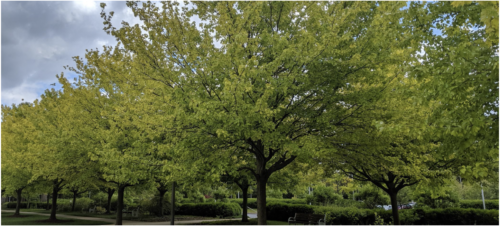 Many trees, shrubs, and other ornamental plantings in Indiana and throughout the Midwest suffer from iron deficiency caused by high pH (alkaline) soil. Soil pH affects plant growth directly and indirectly by affecting the availability of essential nutrients and microbial activity. One of these nutrients is iron, an essential plant nutrient that is required for the production of chlorophyll. Chlorophyll is necessary for photosynthesis and gives plants their green color. Iron (and manganese) deficiency results in leaf yellowing (chlorosis); over time, scorching of foliage, dieback and even death of the tree or shrub can result.
Iron Chlorosis of Trees and Shrubs talks about the symptoms, the cause and the managing of iron chlorosis. One of the authors is Lindsey Purcell, an urban forestry specialist from the Department of Forestry and Natural Resources at Purdue University.
This 5-page publication is part of the Plant Pathology in the Landscape Series and is a free download from the Purdue Extension resource center, The Education Store. View other tree disease publications and video resources as you place keywords in the search field located on The Education Store website.
Resources
Tree Diseases: Oak Wilt in Indiana, The Education Store, Purdue Extension resource center
Tree Diseases: White Pine Decline in Indiana, The Education Store, Purdue Extension resource center
Mechanical Damage to Trees: Mowing and Maintenance Equipment, The Education Store, Purdue Extension resource center
Surface Root Syndrome, The Education Store, Purdue Extension resource center
Tree Appraisal and the Value of Trees, The Education Store, Purdue Extension resource center
Lindsey Purcell, Urban Forestry Specialist
Purdue University, Department of Forestry and Natural Resources
Purdue Landscape Report: Yes, we need trees and here’s why…
Trees have presented as more than just a pretty face as research has indicated that trees are even more valuable for their function as much as their form. Currently, more than 50 percent of the world’s population now lives in towns and cities. In the Hoosier state, the last census indicated that 72% of our population lives in an urban area and this statistic is increasing annually.
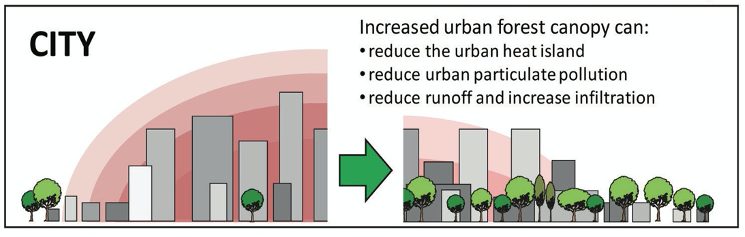
Properly planted trees improve living conditions in downtown and suburban areas. Sources
For the most part, the rapid expansion of cities takes place with little consideration to land use planning strategy. The resulting human pressure has highly damaging effects on our urban trees and green spaces. The environmental impacts of climate change are intensified by urbanization such as increased pollution, increased temperatures, and larger demands on infrastructure such as stormwater systems.
Urban trees can help to mitigate some of the negative impacts and social consequences of urban sprawl and make cities more resilient to these changes. These important functions are called ecosystem services. This is the way urban foresters measure the benefits that trees provide other than just their beauty. Ecosystems services are the many benefits that trees and plants provide to the community. They improve our quality of life by providing food, cleaner air and water, regulating temperatures, supporting pollination and providing recreational, health and spiritual benefits.
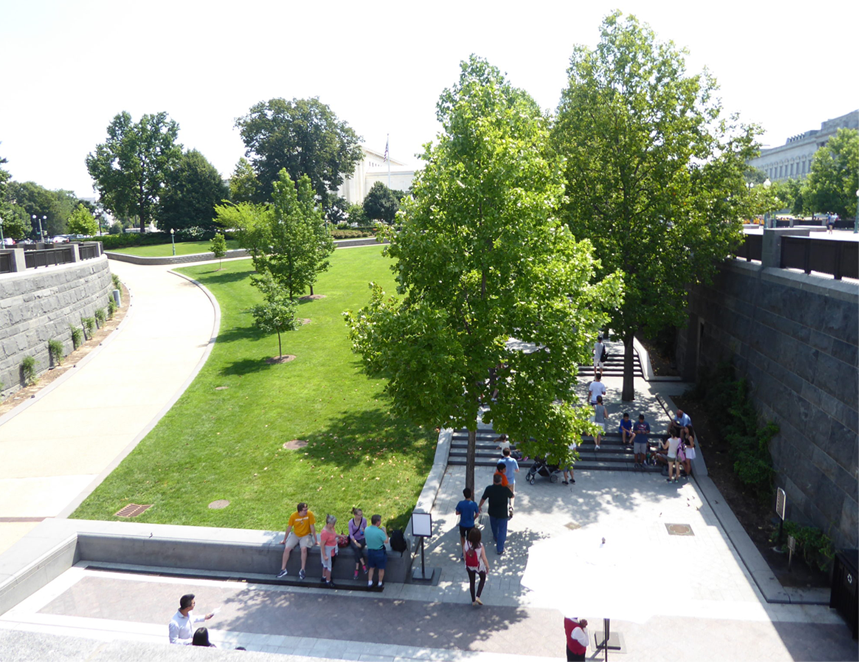
People will stay longer and enjoy urban economy more with tree-lined streets. Sources
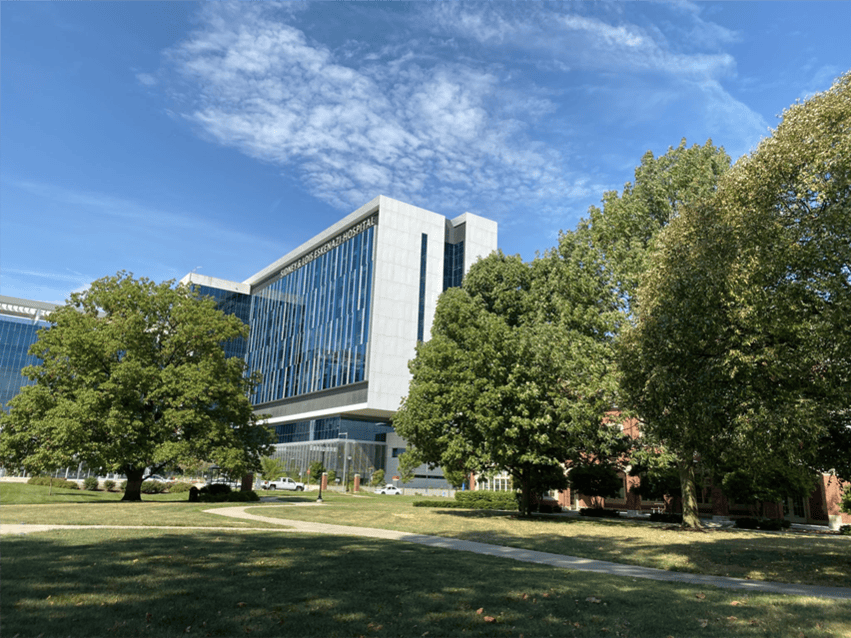
Trees are proven to reduce length of hospital stays and improve birth outcomes. Sources
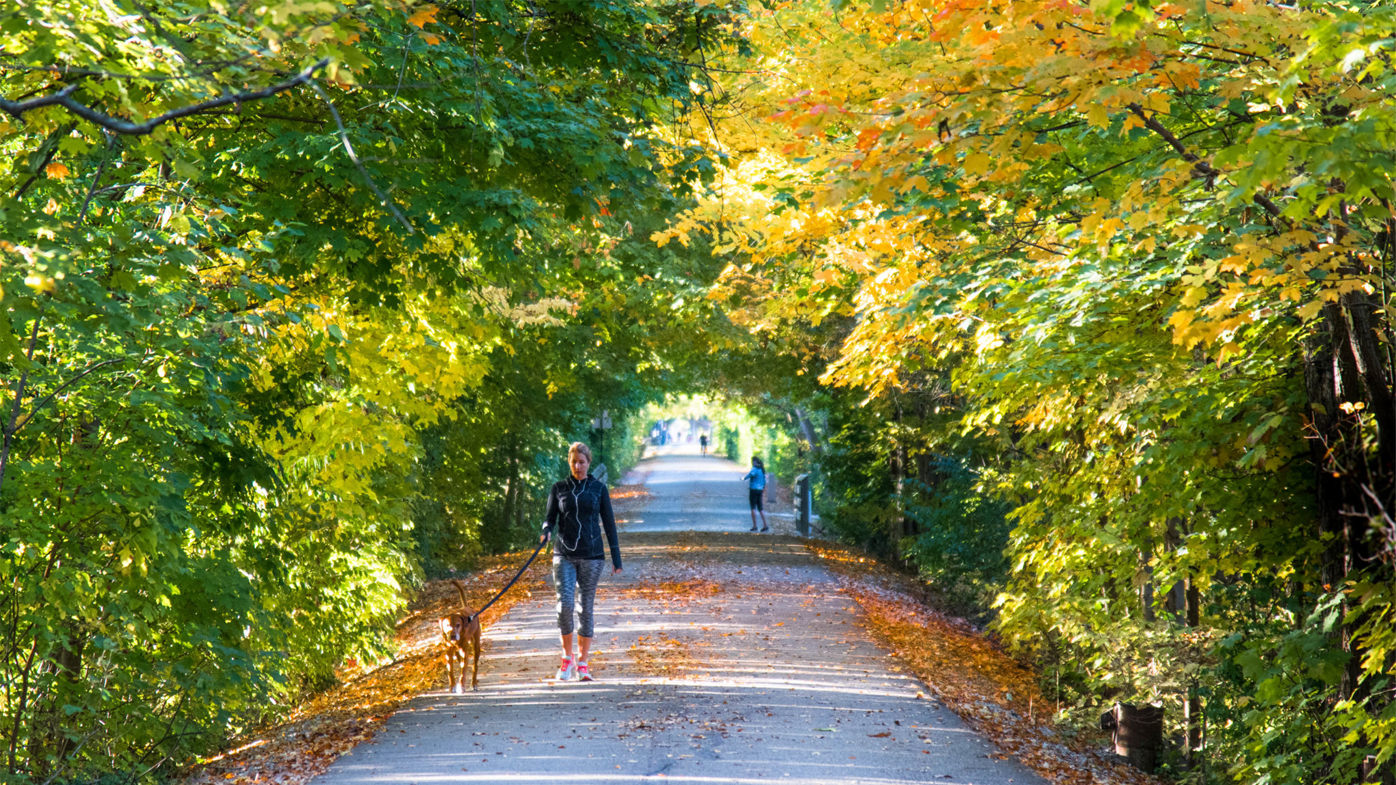
Recreational areas are critical to community well-being. Sources
Here are some easy ways in which urban trees and woodlots contribute to making cities more environmentally sustainable and livable:
- Trees can contribute to the increase of local food and nutrition security, providing food such as fruits and nuts for wildlife and human consumption.
- Trees play an important role in increasing urban biodiversity, providing plants and animals with a proper habitat, food and protection.
- A mature tree can absorb up to 350 lbs. of CO2 per year. As a result, trees play an important role in climate change mitigation. In cities with high levels of pollution, trees can improve air quality making cities healthier places to live in.
- Strategic placement of trees in cities can help to cool the air between 30-40o F, thus reducing the urban “heat island” effect, helping reduce extreme heat conditions in summer weather.
- Large trees are great biological filters for urban pollutants and particulate pollution. They absorb pollutant gases (such as carbon monoxide, nitrogen oxides, ozone and Sulphur oxides) and filter fine particulates such as dust, dirt, or smoke out of the air by trapping them on leaves and bark.
- Research shows that living in close proximity of urban green spaces and having access to them, can improve physical and mental health, for example by decreasing high blood pressure and stress. Also, research indicates greatly improved neo-natal health as well. This, in turn, contributes to the well-being of urban communities.
- Mature trees regulate water flow and play a key role in preventing floods and reducing the risk of sewer overflow. Stormwater management is a crucial city infrastructure issue and trees help. A mature tree, for instance, can intercept more than 5,000 gallons of water per year and without trees, every rain would contribute floods.
- Trees also help to reduce carbon emissions by helping to conserve energy. For example, the correct placement of trees around buildings can reduce the need for air conditioning by 30 percent and reduce winter heating bills by 20-50 percent.
- Planning urban landscapes with trees can increase property value, by up to 15 percent, and attract tourism and business.
These are just a few examples of the functional benefits that trees provide to our everyday life. A community or neighborhood with well-planned and well-managed green infrastructure becomes more resilient, sustainable and equitable in terms of livelihood improvement, climate change mitigation and adaptation, disaster risk reduction and ecosystems conservation. Throughout their lifetime, trees can thus provide a benefit package worth two to three times more than the investment made in planting and caring for them. Trees aren’t the answer, but they are part of the equation. Planting trees is important, but their maintenance is as equally important.
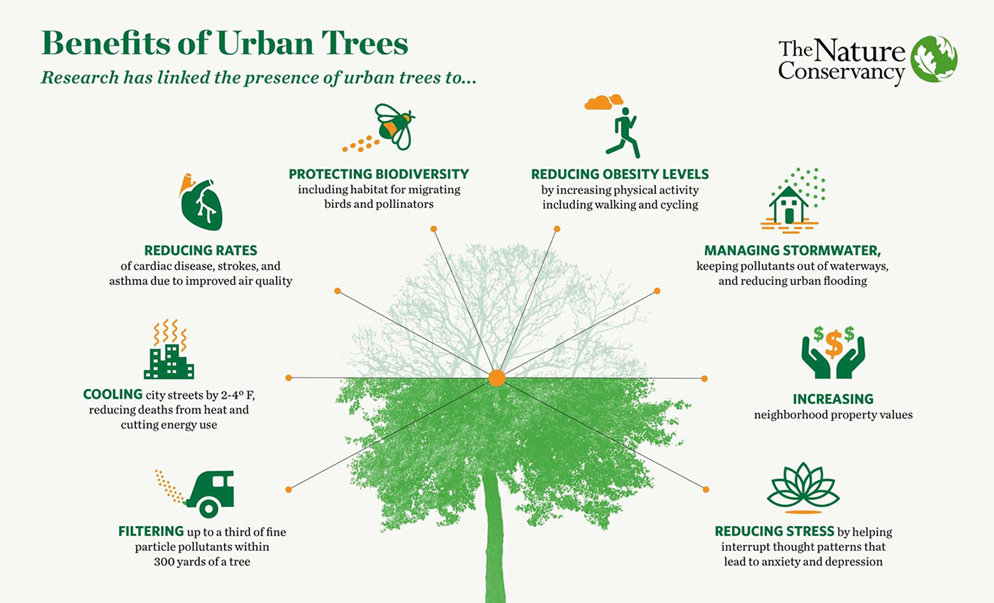
Trees make life better. Sources
For more information on urban tree care, visit the Purdue Education Store for tree care tips and suggestions.
Resources
Tree Appraisal and the Value of Trees, The Education Store, Purdue Extension’s resource center
Tree Pruning Essentials, Publication & Video, The Education Store
Tree Installation: Process and Practices, The Education Store
Tree Selection for the “Un-natural” Environment, The Education Store
The Nature of Teaching: Trees of the Midwest, The Education Store

Recent Posts
- Opportunities for Prescribed and Wildland Fire Training
Posted: November 4, 2026 in Forestry, How To, Wildlife, Woodlands - Wildlife Issues and Solutions: A New Online Series
Posted: in Forestry, How To, Wildlife, Woodlands - Burning for Benefits: Where Fire Belongs in Indiana
Posted: in Forestry, Safety, Wildlife, Woodlands - Residents, Alumni Invited to Share Indiana Natural Resource, Spaces, Species Memories
Posted: in Forestry, Forests and Street Trees, Gardening, Urban Forestry, Wildlife - Now Is The Time To Control Non-Native Bush Honeysuckle
Posted: October 30, 2026 in Forestry, How To, Invasive Plant Species, Woodlands - Help Strengthen the Future of Indiana Maple Syrup
Posted: October 29, 2026 in Forestry, How To, Woodlands - Popular Landscape Shrub is Invasive
Posted: October 15, 2026 in Alert, Forestry, Forests and Street Trees, Invasive Plant Species, Plants, Woodlands - Purdue Extension’s Regional Teams Are Here: Connecting Communities with Expertise and Opportunity
Posted: October 14, 2026 in Community Development, Forestry, Forests and Street Trees, Gardening, How To, Timber Marketing, Urban Forestry, Wildlife, Woodlands - Why Do Our Trees Go From Green Leaves to Different Colors?
Posted: in Forestry, Forests and Street Trees, Urban Forestry, Woodlands - Deer and Turkey Archery Seasons Opening Soon, MyDNR
Posted: October 13, 2026 in Alert, Safety, Wildlife
Archives
Categories
- Alert
- Aquaculture/Fish
- Aquatic/Aquaculture Resources
- Ask the Expert
- Christmas Trees
- Community Development
- Disease
- Drought
- Forestry
- Forests and Street Trees
- Gardening
- Got Nature for Kids
- Great Lakes
- How To
- Invasive Animal Species
- Invasive Insects
- Invasive Plant Species
- Land Use
- Natural Resource Planning
- Nature of Teaching
- Plants
- Podcasts
- Ponds
- Publication
- Safety
- Spiders
- Timber Marketing
- Urban Forestry
- Webinar
- Wildlife
- Wood Products/Manufacturing
- Woodland Management Moment
- Woodlands