 Purdue University - Extension - Forestry and Natural Resources
Got Nature? Blog
In this webinar, hosted by Indiana Forestry & Woodland Owners Association (IFWOA), presenter LeAnne Barta of Indiana Lyme Connect shares strategies for preventing tick bites and discuss the ticks found in Indiana, their life stages, and symptoms of tick-borne illnesses like Lyme disease.
Check out the Indiana Forestry & Woodland Association YouTube Channel for videos including: What is IFWOA?; A New Carbon Program for Hardwood Landowners Webinar, Indiana’s Native Orchids, Magnificent Trees of Indiana, Observing Seasonal Changes in Nature and much more.
The Indiana Forestry & Woodland Owners Association (IFWOA) was founded in 1977 and is a non-profit organization dedicated to conservation and sustainable management of woodlands in Indiana. IFWOA advocates for scientific best practices for management to achieve objectives of clean water, wildlife habitat, soil protection, native species diversity, timber production, recreation, carbon sequestration and many others.
IFWOA is an affiliate of the National Woodland Owners Association. IFWOA is a partner, collaborator or is represented on leading National and State organizations. These memberships or collaborations are selected to advance Indiana Woodland owner’s interests. IFWOA monitors and influences legislation and economic trends impacting Indiana woodlands and landowners for our members. Membership in IFWOA provides a valuable network linkage to information and resources at the leading edge of science, industry and politics impacting Indiana woodlands.
Resources:
Find an Indiana Professional Forester, Indiana Forestry & Woodland Owners Association (IFWOA)
Purdue Arboretum Explorer
Native Trees of the Midwest, Purdue University Press
Shrubs and Woody Vines of Indiana and the Midwest, Purdue University Press
Investing in Indiana Woodlands, The Education Store
Forest Improvement Handbook, The Education Store
ID That Tree, Purdue Extension-Forestry & Natural Resources (FNR) YouTube playlist
Woodland Management Moment , Purdue Extension-FNR YouTube playlist
Liz Jackson, Engagement Lead
Indiana Forestry & Woodland Association
MyDNR, Indiana’s Outdoor Newsletter: The Indiana Natural Resources Foundation, in partnership with the Division of Forestry, is planning another busy year for the Indiana Tree Project. In 2022, more than 11,000 trees were added to Indiana’s public lands through Indiana Tree Project plantings, and this year is expected to be another successful year.
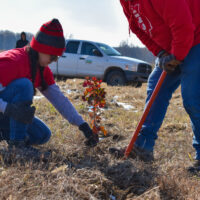
Through a partnership with the Division of Forestry, we are helping Indiana’s forests grow, one tree at a time, with the Indiana Tree Project. Healthy forests in Indiana promote wildlife habitats, clean air and an abundance of outdoor recreation opportunities. It is estimated that 85 percent of Indiana was once forested. Today, only 19 percent of the state is forested. The Indiana Tree Project is much more than just planting trees. Through this project we are adding new acreage to Indiana’s State Forests and we’re trying to add 1,000 acres of new forested land.
When you support the Indiana Tree Project, we provide you with an official tree certificate to demonstrate your support for the smart management of Hoosier forests. It includes the coordinates for the acre on which your tree is, or will be, planted.
Newsletter can be found online: MyDNR Email Newsletter
For more information please visit Help Grow Indiana’s Forests – MyDNR
Resources:
Forest Improvement Handbook, The Education Store, Purdue Extension’s resource center
Harvesting our forests, the wildlife debate, Purdue Extension – Forestry and Natural Resources (FNR) Got Nature? Blog
Wildlife Responses to Timber Harvesting, The Education Store
Breeding Birds and Forest Management: the Hardwood Ecosystem Experiment and the Central Hardwoods Region, The Education Store
Forest Management for Reptiles and Amphibians: A Technical Guide for the Midwest, The Education Store
Hardwood Ecosystem Experiment – Forest Birds , Purdue Extension – FNR YouTube Channel
Managing Woodlands for Birds , Purdue Extension – FNR YouTube Channel
Sustaining Our Oak-Hickory Forests , Purdue Extension – FNR YouTube Channel
Ask the Expert: Hardwood Ecosystem Experiment – Birds and Salamander Research, Purdue Extension – FNR
Subscribe to Purdue Extension-FNR YouTube Channel
Indiana Department of Natural Resources, Department of Fish & Wildlife
In this episode of ID That Tree, Recep Yildiz a FNR graduate student shares his expertise on how to ID black alder. Black alder, which is also known as common alder or European alder, is found in most of Europe and extends into North Africa and Asia. It is easily identified by its gummy twigs and leaves. Learn more about the black alder tree and how it was introduced to Indiana with now current warning signs of being an invasive species.
If you have any questions regarding wildlife, trees, forest management, wood products, natural resource planning or other natural resource topics, feel free to contact us by using our Ask an Expert web page.
Resources:
ID That Tree, Playlist, Purdue Extension – Forestry and Natural Resources YouTube Channel (Invasive White Mulberry, Siberian Elm, Tree of Heaven)
Invasive Species Playlist, Playlist, Purdue Extension – FNR YouTube Channel (Asian Bush Honeysuckle, Burning Bush, Callery Pear, Multiflora rose)
A Woodland Management Moment, Playlist, Purdue Extension – FNR YouTube Channel (Against Invasives, Garlic Mustard, Autumn Olive)
Woodland Stewardship for Landowners, Playlist, Purdue Extension – FNR YouTube Channel (Common Buckthorn, Japanese Barberry)
Report Invasive Species, Purdue Invasive Species
The GLEDN Phone App – Great Lakes Early Detection Network
EDDMaps – Early Detection and Distribution Mapping System
How long do seeds of the invasive tree, Ailanthus altissima remain viable? (Invasive Tree of Heaven), USDA Forest Service
Indiana Department of Natural Resources: Invasive Species
Indiana Invasive Species Council
Cooperative Invasive Species Management Area (CISMA)
Aquatic Invasive Species, Illinois-Indiana Sea Grant (IISG)
Episode 11 – Exploring the challenges of Invasive Species, Habitat University-Natural Resource University
What are invasive species and why should I care?, Got Nature? Blog, Purdue Extension – FNR
Spotted Lanternfly Feeds on Over 70 Plus Plant Species, Got Nature? Blog, Purdue Extension – FNR
Shrubs and Woody Vines of Indiana and the Midwest, The Education Store, Purdue Extension Resource Center
Native Trees of the Midwest, The Education Store
Investing in Indiana Woodlands, The Education Store
Forest Improvement Handbook, The Education Store
Recep Yildiz, FNR graduate student
Purdue Department of Forestry & Natural Resources
In this episode of ID That Tree, Recep Yildiz a FNR graduate student shares his expertise on how to ID Persian walnut or sometimes called common walnut or English walnut. It is not native to Indiana but is widely cultivated and grown for nuts. This species is deciduous and native to Europe, the Himalayas and China. Learn more about Persian walnut and along with clear photos of the bark and leaves.
If you have any questions regarding wildlife, trees, forest management, wood products, natural resource planning or other natural resource topics, feel free to contact us by using our Ask an Expert web page.
Resources:
ID That Tree, Playlist, Purdue Extension – Forestry and Natural Resources YouTube Channel (Invasive White Mulberry, Siberian Elm, Tree of Heaven)
Invasive Species Playlist, Playlist, Purdue Extension – FNR YouTube Channel (Asian Bush Honeysuckle, Burning Bush, Callery Pear, Multiflora rose)
A Woodland Management Moment, Playlist, Purdue Extension – FNR YouTube Channel (Against Invasives, Garlic Mustard, Autumn Olive)
Woodland Stewardship for Landowners, Playlist, Purdue Extension – FNR YouTube Channel (Common Buckthorn, Japanese Barberry)
Report Invasive Species, Purdue Invasive Species
The GLEDN Phone App – Great Lakes Early Detection Network
EDDMaps – Early Detection and Distribution Mapping System
How long do seeds of the invasive tree, Ailanthus altissima remain viable? (Invasive Tree of Heaven), USDA Forest Service
Indiana Department of Natural Resources: Invasive Species
Indiana Invasive Species Council
Cooperative Invasive Species Management Area (CISMA)
Aquatic Invasive Species, Illinois-Indiana Sea Grant (IISG)
Episode 11 – Exploring the challenges of Invasive Species, Habitat University-Natural Resource University
What are invasive species and why should I care?, Got Nature? Blog, Purdue Extension – FNR
Spotted Lanternfly Feeds on Over 70 Plus Plant Species, Got Nature? Blog, Purdue Extension – FNR
Shrubs and Woody Vines of Indiana and the Midwest, The Education Store, Purdue Extension Resource Center
Native Trees of the Midwest, The Education Store
Investing in Indiana Woodlands, The Education Store
Forest Improvement Handbook, The Education Store
Recep Yildiz, FNR graduate student
Purdue Department of Forestry & Natural Resources
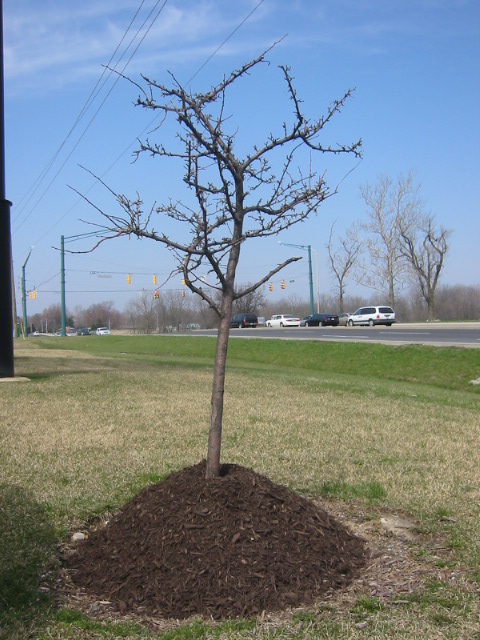
Figure 1: Volcano mulching around the base of the tree. Photo credit Lindsey Purcell.
Purdue Landscape Report: It’s that wonderful time of year again where temps are rising, life is coming back into the landscape, and people are thinking about how to improve the urban canopy around them. Well, maybe not that specifically, but we have the urge to plant trees. Whether it’s for Earth Day or Arbor Day or you just enjoy the act of planting, one of the hot topics is getting trees into the ground. That’s not what I’m here to talk about today, though.
As much as I love assisting communities with their greening efforts, getting the right tree in the right place, planting is not the only way to help grow the canopy around you. One of the topics that can be neglected is maintaining trees from previous plantings. Often, trees get placed in the ground, they are mulched, watered, and staked, then left on their own to make it in the world. New trees can take about 2-5 years to become established in their new homes and they could require assistance from us for much longer to thrive. Luckily, there is a simple activity to do assist trees, young and old.
Just like when they were placed in the ground, trees still benefit from mulch. Reapplying mulch benefits trees in multiple ways. It’s a natural way to prevent weeds and grass competing in the root zone and adds a protective buffer against mechanical damage from mowers and weed eaters. It will also help to maintain moisture levels in the soil as we transition into the hotter summer months. When applying new mulch, don’t worry about removing the old layer. It’s working its way into the soil around the tree adding organic matter, improving the quality of the soil.
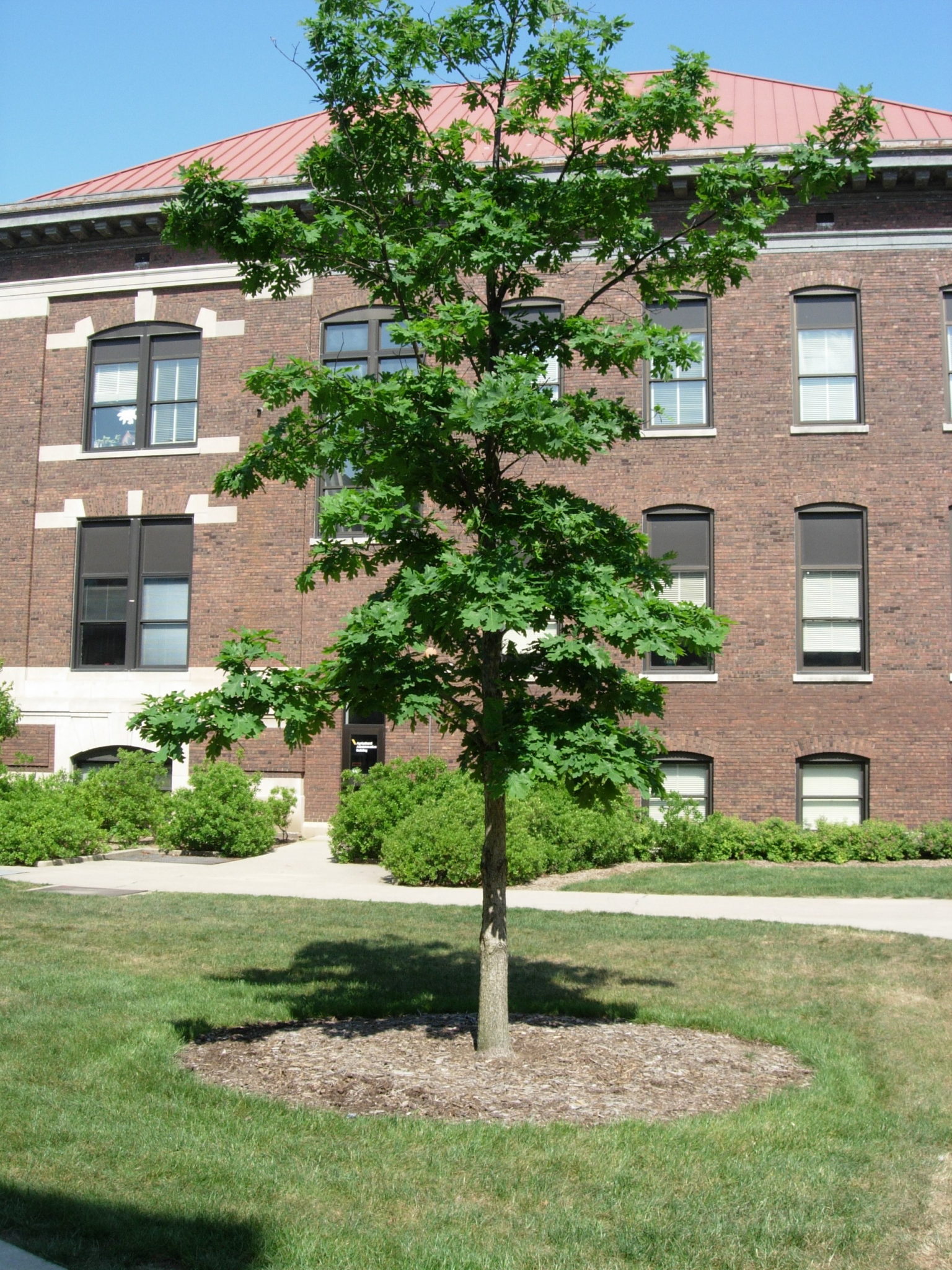
Figure 2: Correct application of mulch. Photo Credit John Bonkowski.
Add enough mulch so there is a 2–3-inch layer sloping away from the tree with at least a 3–5-foot radius around the stem (older, larger trees can benefit from larger mulch rings). No volcano mulching (Figure 1), make sure you also have around a 1-2-inch gap between the stem and the start of the mulch ring (Figure 2) to prevent unwanted root growth above ground and rot from excess moisture on the stem. Continuing this practice every year can help maintain soil moisture levels, while enriching the soil around your tree, maintaining a safety zone, and adding a nice aesthetic.
To view this article and other Purdue Landscape Report articles, please visit Purdue Landscape Report.
Subscribe and receive the newsletter: Purdue Landscape Report Newsletter.
Resources:
The Purdue Landscape Report
Purdue Landscape Report Facebook Page
Find an Arborist website, Trees are Good, International Society of Arboriculture (ISA)
Tree Installation: Process and Practices, The Education Store
Planting Forest Trees and Shrubs in Indiana, The Education Store
Planting Your Tree Part 1: Choosing Your Tree, Video, Purdue Extension – Forestry and Natural Resources YouTube Channel
Tree Defect Identification, The Education Store, Purdue Extension resource center
Tree wounds and healing, Got Nature? Blog
Tree Pruning Essentials, Publication & Video, The Education Store
Shrubs and Woody Vines of Indiana and the Midwest, The Education Store
Tree Risk Management – Got Nature? Blog, Purdue Extension – FNR
Why Is My Tree Dying? – Got Nature? Blog, Purdue Extension – Forestry and Natural Resources
ID That Tree, Purdue Extension-Forestry & Natural Resources (FNR) YouTube playlist
Subscribe to Purdue Extension-FNR YouTube Channel
Ben McCallister, Urban Forestry Specialist
Purdue Forestry and Natural Resources
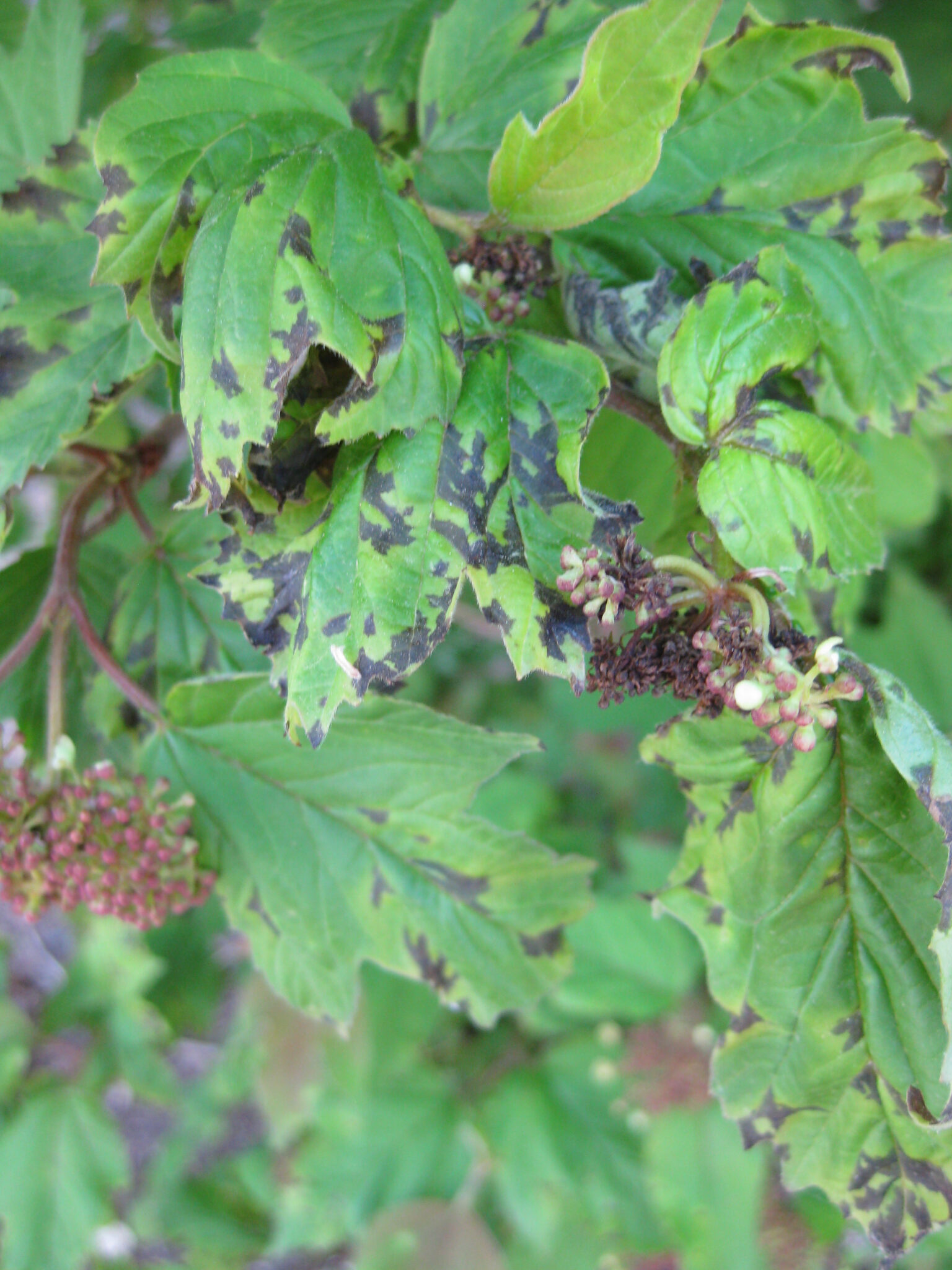
Bacterial leaf spots are often angular with chlorotic halos, as seen on this high bush-cranberry. Photo by Janna Beckerman.
Purdue Landscape Report: Pseudomonas syringae pv. syringae is an opportunistic bacterial pathogen that attacks a diversity of woody ornamental plants. The bacteria cause flower blights, cankers, shoot blights, and diebacks.
Symptoms
Symptoms often begin as expanding leaf spots. On lilac and viburnum, small spots expand to irregularly shaped brown lesions with yellow halos (Fig. 1). For most other hosts (cherry, pear, basswood, dogwood, hydrangea, high bush-cranberry, mountain-ash), infected leaves turn reddish brown or black and usually remain on the branch after they die (Fig. 2). As the bacteria spread into woody tissue, dark, sunken sections of the stem (cankers) expand, working their way back toward the trunk from infected leaves and flowers. Leaves attached to a cankered branch will wilt while the tip of the affected branch curls and droops like a shepherd’s crook (Fig. 3). Cloudy droplets of sticky fluid (ooze) may accumulate on leaf tips, leaf surfaces, stems, and even infected fruit.
Image of infected flowers result in blossom blast.
Figure 2. Infected flowers result in blossom blast. The continued growth of the bacteria can result in cankering and blight. Photo by George Sundin.
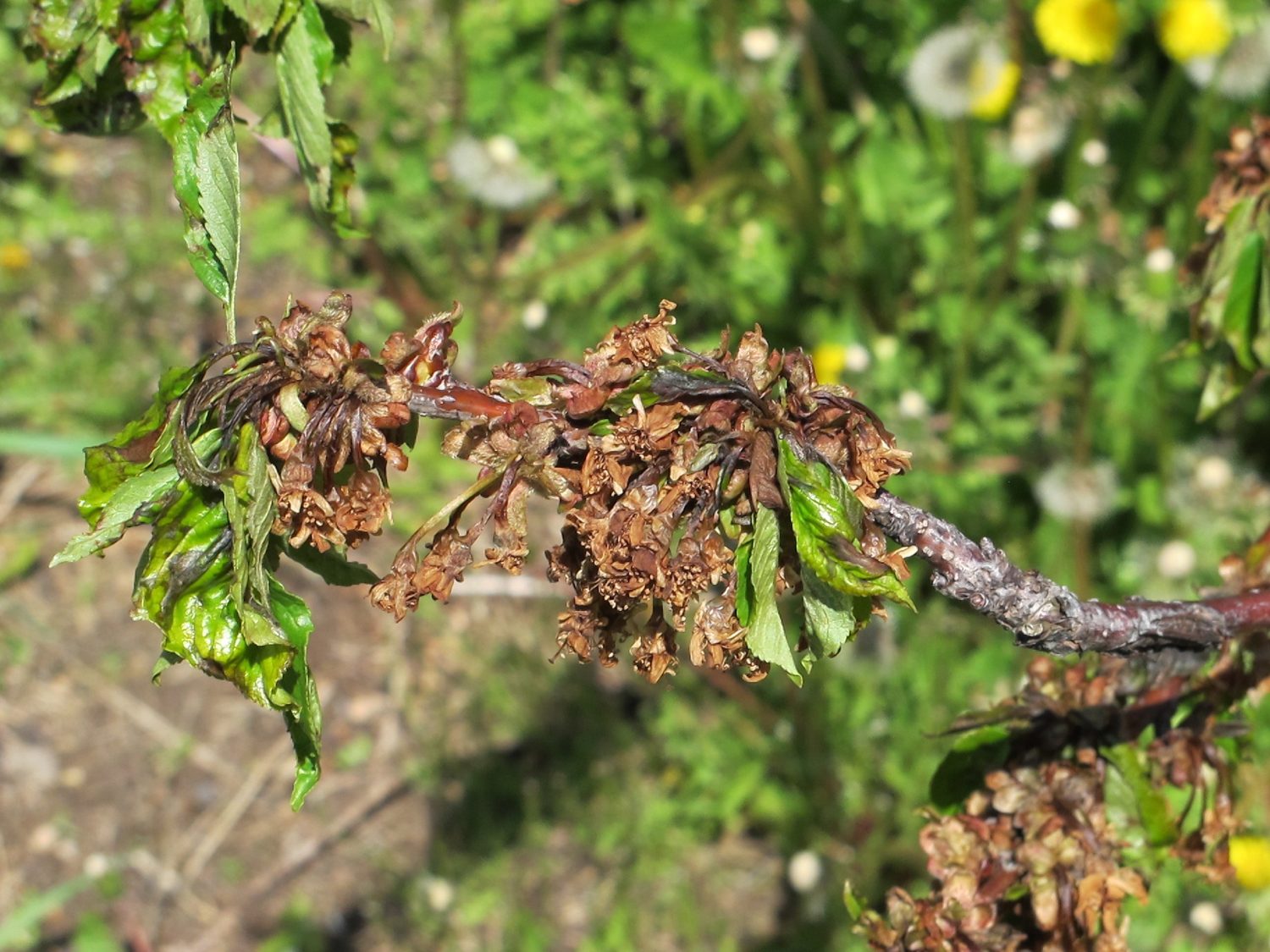
Figure 2. Infected flowers result in blossom blast. The continued growth of the bacteria can result in cankering and blight. Photo by George Sundin.
Life Cycle
The bacteria overwinter and persist in cankers, along with asymptomatic bud and twig tissue. In presence of water and warming temperatures, bacteria multiply and may ooze from infected tissue. Wind-driven rain, insect, or mechanical pruning spread Pseudomonas. Bacteria enter the plant through flowers or injury.
Management
All bacterial pathogens, including Pseudomonas, invade flowers or wounded tissue. To prevent or minimize the risk of infection:
- Use disease-free plants and budwood.
- Prune in the late winter/early spring.
- When pruning, do not mix pruning to shape woody ornamentals with pruning to manage disease.
- When pruning to remove infected shoots, be sure to disinfect shears between plants.
- Minimize overhead irrigation when possible to minimize splashing and pathogen spread.
- Avoid over-fertilization practices that drive excess succulent growth.
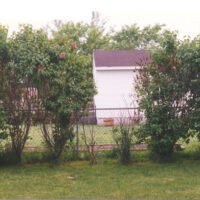
Figure 3. Bacterial blight is a common scourge to common lilac. Using resistant varieties is the best way to protect against the disease. Photo by Janna Beckerman.
- Avoid late season fertilization practices that prevent plants from achieving timely dormancy and promote freeze damage and/or winter injury (Fig. 4).
- Choose zone appropriate plants to avoid freeze damage and/or winter injury.
- Choose disease resistant plants, when available. The following lilac varieties were found to be resistant over a four-year trial: Donald Wyman, Royalty, Superba, Miss Kim, Edmund Boisier, Victor Lemoine, Dwarf Korean, Mme. Antoine Buchner Isabella, Sensation, Anna Amhof, Krasavitska Moskvy, Michael Buchner, and Alphonse Lavallée.

Foliar sprays of some copper-based bactericides (e.g., Camelot, Kocide, and Nu-Cop) were found to reduce disease incidence in trials on lilac (Vey and Palmer, 2018). Avoid using copper under cool, humid conditions to reduce the risk of phytotoxicity and damaging plants. Copper resistant populations of Pseudomonas syringae have been reported in other crops (vegetables, stone fruit). Products containing acibenzolar have provided inconsistent control in multiple trials but is labeled for use. Use of quaternary-ammonium disinfestants (KleenGrow) have been found to reduce bacterial populations and disease incidence and should be considered as part of any rotation with copper products. Due to the diversity of copper products, be sure to test for phytotoxicity issues prior to large scale treatment of crops.
To view this article and other Purdue Landscape Report articles, please visit Purdue Landscape Report.
Subscribe and receive the newsletter: Purdue Landscape Report Newsletter.
Resources:
The Purdue Landscape Report
Purdue Landscape Report Facebook Page
Find an Arborist website, Trees are Good, International Society of Arboriculture (ISA)
Phytophthora Diseases in Ornamentals, The Education Store, Purdue Extension’s resource center
Root Rot in Landscape Plants, The Education Store
Symptoms and Signs for Plant Problem Diagnosis, The Education Store
Tree Defect Identification, The Education Store
Tree Pruning Essentials, Publication & Video, The Education Store
Shrubs and Woody Vines of Indiana and the Midwest, Purdue University Press
Tree Risk Management – Got Nature? Blog, Purdue Extension – FNR
Equipment Damage to Trees, Got Nature? Blog
Tree wounds and healing, Got Nature? Blog
ID That Tree, Purdue Extension-Forestry & Natural Resources (FNR) YouTube playlist
Southwest Damage, Scalding, or Frost Cracking – Landscape Report
Subscribe to Purdue Extension-FNR YouTube Channel
Janna Beckerman, Professor of Plant Pathology
Purdue Department of Botany
This exotic invasive tree species is commonly found in Indiana landscape, callery pear. Callery pear has been planted as an ornamental tree in the midwest for decades. The original selection bradford pear was actually infertile and would not spread from seed but additional varieties have been planted and have crossed with the original Bradford and those are producing fertile seed. Find out how the seed spreads and what we can do to help our forest.
If you have any questions regarding wildlife, trees, forest management, wood products, natural resource planning or other natural resource topics, feel free to contact us by using our Ask an Expert web page.
Resources:
ID That Tree, Playlist, Purdue Extension – Forestry and Natural Resources YouTube Channel (Invasive White Mulberry, Siberian Elm, Tree of Heaven)
Invasive Species Playlist, Playlist, Purdue Extension – FNR YouTube Channel (Asian Bush Honeysuckle, Burning Bush, Callery Pear, Multiflora rose)
A Woodland Management Moment, Playlist, Purdue Extension – FNR YouTube Channel (Against Invasives, Garlic Mustard, Autumn Olive)
Woodland Stewardship for Landowners, Playlist, Purdue Extension – FNR YouTube Channel (Common Buckthorn, Japanese Barberry)
Report Invasive Species, Purdue Invasive Species
The GLEDN Phone App – Great Lakes Early Detection Network
EDDMaps – Early Detection and Distribution Mapping System (Report Invasives)
How long do seeds of the invasive tree, Ailanthus altissima remain viable? (Invasive Tree of Heaven), USDA Forest Service
Indiana Department of Natural Resources: Invasive Species
Indiana Invasive Species Council
Cooperative Invasive Species Management Area (CISMA)
Aquatic Invasive Species, Illinois-Indiana Sea Grant (IISG)
Episode 11 – Exploring the challenges of Invasive Species, Habitat University-Natural Resource University
What are invasive species and why should I care?, Got Nature? Blog, Purdue Extension – FNR
Shrubs and Woody Vines of Indiana and the Midwest, The Education Store, Purdue Extension Resource Center
Native Trees of the Midwest, The Education Store
Investing in Indiana Woodlands, The Education Store
Forest Improvement Handbook, The Education Store
Lenny Farlee, Extension Forester
Hardwood Tree Improvement and Regeneration Center
Purdue Department of Forestry & Natural Resources

The clitellum, the set of pale, milky colored segments, is the reproductive organ of earthworms.
Purdue Landscape Report: Asian jumping worms, a group of invasive earthworms, have gained a significant amount of media attention in the last several weeks, and for good reason. Unlike the nightcrawlers and other earthworms we know, Asian jumping worms do not improve soil health to the benefit of plants. Instead, jumping worms (also called crazy worms, snake worms, or ‘Alabama jumpers’) almost completely strip nutrients out of soil, altering the soil structure and severely impairing the ability to develop many kinds of plants. After they are done with an area, Asian jumping worms leave behind soil that has a texture similar to that of coffee grounds and very low nutritional value. On top of this, Asian jumping worms are capable of reproducing asexually, allowing their population to grow very rapidly and making them an invasive species of some concern.
Identification
The good news is that Asian jumping worms are not well-suited to Indiana’s environment. They aren’t capable of surviving winters in any life stage except as an egg, meaning their activity periods are limited to late June to the first hard frost of the year. If you see worms outside of this period, it’s highly unlikely an Asian jumping worm. There are also a few traits the worms have that you can use to visually confirm their identity. First off, Asian jumping worms are accurately named; when handled, they writhe and thrash similar to snakes, setting them apart from common earthworms and nightcrawlers. Jumping worms also tend to have drier skin that has an almost iridescent appearance, as compared to the slimy, moist texture of the beneficial earthworms we need for good soil health. The most consistent feature is an organ known as the clitellum, or the reproductive organs of worms. On common earthworms, this looks like a saddle-shape that partially covers several segments, is normally reddish-brown, and is raised off the surface of the body. On an Asian jumping worm, however, the clitellum is indistinguishable from other segments, save for their pale, milky color.
To view this article and other Purdue Landscape Report articles, please visit Purdue Landscape Report.
Subscribe and receive the newsletter: Purdue Landscape Report Newsletter.
Resources:
The Purdue Landscape Report
Purdue Landscape Report Facebook Page
Gardeners Asked to be Vigilant This Spring for Invasive Jumping Worm, Purdue Extension – FNR Got Nature? Blog
Fall webworms: Should you manage them?, Purdue Landscape Report
Mimosa Webworm, The Education Store, Purdue Extension resource center
Sod Webworms, Turf Science at Purdue University
Bagworm caterpillars are out feeding, be ready to spray your trees, Purdue Extension Forestry & Natural Resources (FNR) Got Nature? Blog
Purdue Plant Doctor App Suite, Purdue Extension-Entomology
Landscape & Ornamentals: Bagworms, The Education Store
What are invasive species and why should I care? (How to report invasives.), Purdue Extension – FNR Got Nature? Blog
Indiana Invasive Species Council
Ask An Expert, Purdue Extension-Forestry & Natural Resources
Bob Bruner, Exotic Forest Pest Specialist
Purdue Department of Entomology
The Natural Resources University podcast group received the gold award in the podcast or radio category from the Association of Natural Resource Extension Professionals (ANREP). The NRU podcast group includes the Habitat University podcast co-hosted by Purdue Extension wildlife specialist Jarred Brooke and Adam Janke, an extension wildlife specialist at Iowa State University.
“Receiving the ANREP Gold Award is an honor,” Brooke said. “What started as casual conversations amongst colleagues about creating science-based natural resources podcasts has blossomed into a podcast network with multiple unique podcasts and over 100 episodes. This collaboration has been a great avenue to get up-to-date science about natural resource management into landowners and managers’ hands (and ears).”
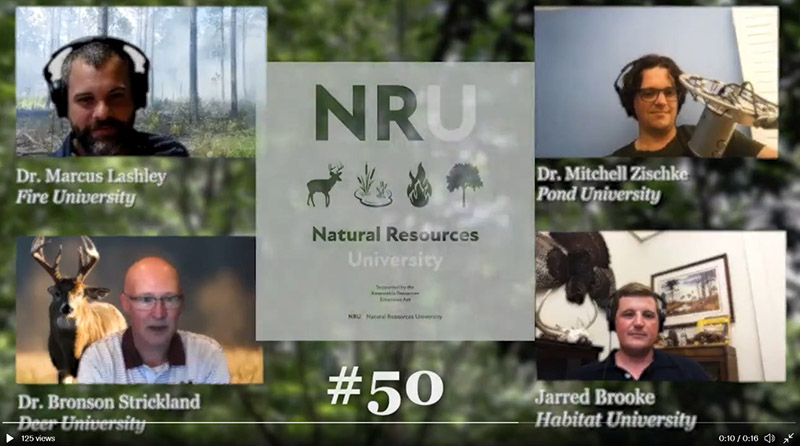
The NRU podcast group initially began with four science-based podcasts covering different aspects of natural resource management: Deer University, Pond University, Fire University and Habitat University.
Deer University, which is hosted by Dr. Bronson Strickland and Steve Demarais, focuses on the science of deer, including deer ecology, biology and management.
Pond University, which was co-hosted by FNR’s Mitch Zischke and Megan Gunn before ending its 11-episode run in August 2021, covered topics from pond habitat to fish stocking, vegetation control and pond construction.
Fire University, which is hosted by Dr. Marcus Lashley, covers the gamut of the latest research in fire ecology and how it relates to management of wildlife and plant communities.
Habitat University, hosted by Brooke and Janke, discusses the science behind wildlife habitat management and how landowners and manages can use different habitat management practices to improve their land for wildlife.
New to the NRU family in 2022-2023 are:
- Wild Turkey Science – Dr. Marcus Lashley and Dr. Will Gulsby bring you the latest research on wild turkey ecology and management
- Timber University – Dr. Brady Self and Dr. Shaun Tanger cover the latest research in timber management.
- Working Wild University – Dr. Alex Few and Dr. Jared Beaver immerse the listener in stories at the heart of the struggle to sustain productive, resilient and connect rural landscapes and communities.
- Fish University – Dr. Wes Neal covers the latest research in fish management from the small pond to the vast ocean.
The series housed within the NRU network aim to deliver expert-based knowledge for their corresponding genre of natural resource management. The network is a partnership between the extension services at several land-grant university, including Mississippi State Extension Service, University of Florida Extension, Iowa State University Extension and Outreach and Purdue Extension. Funding for the project comes from the Renewable Resources Extension Act.
The Natural Resources University podcasts are available through the individual podcast websites, through the NRU podcast main hub or wherever podcasts are available to download.
For full article and more photos view Purdue Forestry and Natural Resources News & Stories: Natural Resources University Podcasts Earn ANREP Gold Award .
More Resources:
Ask an Expert: Pond Management, Purdue Extension-Forestry & Natural Resources (FNR) YouTube playlist
Pond Management: Managing Fish Populations, The Education Store, Purdue Extension’s resource center
Yellow Perch Farmed Fish Fact Sheet, The Education Store
Frogs and Toads of Indiana, The Education Store
Snakes and Lizards of Indiana, The Education Store
Forest Improvement Handbook, The Education Store
Frost Seeding Native Grasses and Forbs with a Drone (UAV), Purdue Extension-FNR
Hardwood Ecosystem Experiment – Wildlife Responses to Timber Harvesting, The Education Store
Invasive Plants: Impact on Environment and People, The Education Store
Ask the Expert: Turtles and Snakes video, Got Nature? post
ID That Tree, Purdue Extension-FNR YouTube playlist
Woodland Management Moment , Purdue Extension-FNR YouTube playlist
Wendy Mayer, FNR Communications Coordinator
Purdue University Department of Forestry and Natural Resources
Jarred Brooke, Wildlife Extension Specialist
Purdue Forestry and Natural Resources
The classic and trusted book “Fifty Common Trees of Indiana” by T.E. Shaw was published in 1956 as a user-friendly guide to local species. Nearly 70 years later, the publication has been updated through a joint effort by the Purdue Department of Forestry and Natural Resources, Indiana 4-H, and the Indiana Department of Natural Resources, and reintroduced as “An Introduction to Trees of Indiana.”
The full publication is available for download for $7 in the Purdue Extension Education Store. The field guide helps identify common Indiana woodlot trees.
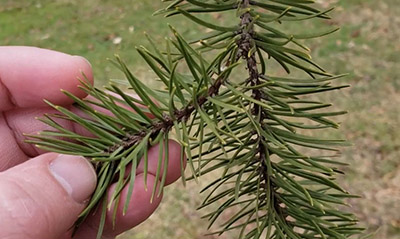
Each week, the Intro to Trees of Indiana web series will offer a sneak peek at one species from the book, paired with an ID That Tree video from Purdue Extension forester Lenny Farlee to help visualize each species as it stands in the woods. Threats to species health as well as also insight into the wood provided by the species, will be provided through additional resources as well as the Hardwoods of the Central Midwest exhibit of the Purdue Arboretum, if available.
This week, we meet the Jack pine, or Pinus banksiana.
This conifer, also known as scrub pine, has clusters of two dark green needles, which are one to one and a half inches long, noticeably curved or arched like a bow and slightly twisted.
Bark on the jack pine is dark to medium gray, thin and flaky when young and features thick plates in older trees. This tree growth irregularly and can produce between one and three whorls of side branches annually. It tends to have a much lighter crown than white pine or the spruces.
The cones of jack pine are one to three inches long and remain closed while on the tree unless disturbed by a heat event such as fire. The cones may also be curved and twisted into many irregular shapes and tend to stay on the tree for many years.
For full article with additional photos view: Intro to Trees of Indiana: Jack Pine, Forestry and Natural Resources’ News.
If you have any questions regarding wildlife, trees, forest management, wood products, natural resource planning or other natural resource topics, feel free to contact us by using our Ask an Expert web page.
Other Resources:
ID That Tree: Jack Pine
Morton Arboretum: Jack Pine
Jack Pine, Native Trees of Indiana River Walk, Purdue Fort Wayne
Borers of Pines and Other Needle Bearing Evergreens in Landscapes, The Education Store, Purdue Extension’s resource center
Managing the Zimmerman Pine Moth, The Education Store
Purdue Arboretum Explorer
The Woody Plant Seed Manual, U.S. Forest Service
Native Trees of the Midwest, The Education Store
Shrubs and Woody Vines of Indiana and the Midwest, The Education Store
Investing in Indiana Woodlands, The Education Store
Forest Improvement Handbook, The Education Store
ID That Tree, Purdue Extension-Forestry & Natural Resources (FNR) YouTube playlist
Woodland Management Moment , Purdue Extension-FNR YouTube playlist
Wendy Mayer, FNR Communications Coordinator
Purdue University Department of Forestry and Natural Resources
Lenny Farlee, Extension Forester
Purdue University Department of Forestry and Natural Resources

Recent Posts
- New Indiana Woodland Steward Newsletter
Posted: August 12, 2026 in Forestry, Urban Forestry, Wildlife, Woodlands - ID That Tree: Nannyberry Viburnum
Posted: July 22, 2026 in Forestry, Plants, Wildlife, Woodlands - ID That Tree: Eastern Swamp Privet
Posted: in Forestry, Plants, Wildlife, Woodlands - ID That Tree: Carolina Buckthorn
Posted: July 15, 2026 in Forestry, Wildlife, Woodlands - Identifying Evergreens
Posted: June 24, 2026 in Forestry, Wildlife, Woodlands - Pruning Highlight-Pollarding Trees: A Traditional Pruning Practice with Modern Uses
Posted: June 11, 2026 in Forestry, Forests and Street Trees, Urban Forestry, Wildlife, Woodlands - Danielle Howard Hired as FNR Extension Prescribed Fire Specialist
Posted: June 10, 2026 in Forestry, Wildlife, Woodlands - Flat-Faced Longhorn Beetle Found in Hardwood Logs – IDNR Division of Entomology
Posted: June 8, 2026 in Alert, Forestry, Forests and Street Trees, Invasive Insects, Urban Forestry, Wildlife, Woodlands - Connecting Research to Practice: Natural Resources & Land Use Spring Training
Posted: June 5, 2026 in Forestry, Forests and Street Trees, How To, Invasive Animal Species, Invasive Plant Species, Land Use, Natural Resource Planning, Urban Forestry, Wildlife, Woodlands - Spring Storms Are Coming: How to Reduce Tree Damage and Risk
Posted: May 1, 2026 in How To, Urban Forestry, Wildlife, Woodlands
Archives
Categories
- Alert
- Aquaculture/Fish
- Aquatic/Aquaculture Resources
- Ask the Expert
- Christmas Trees
- Community Development
- Disease
- Drought
- Forestry
- Forests and Street Trees
- Gardening
- Got Nature for Kids
- Great Lakes
- How To
- Invasive Animal Species
- Invasive Insects
- Invasive Plant Species
- Land Use
- Natural Resource Planning
- Nature of Teaching
- Plants
- Podcasts
- Ponds
- Publication
- Safety
- Spiders
- Timber Marketing
- Urban Forestry
- Webinar
- Wildlife
- Wood Products/Manufacturing
- Woodland Management Moment
- Woodlands