 Purdue University - Extension - Forestry and Natural Resources
Got Nature? Blog
MyDNR, Indiana’s Outdoor Newsletter: The Indiana Natural Resources Foundation, in partnership with the Division of Forestry, is planning another busy year for the Indiana Tree Project. In 2022, more than 11,000 trees were added to Indiana’s public lands through Indiana Tree Project plantings, and this year is expected to be another successful year.
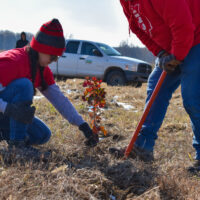
Through a partnership with the Division of Forestry, we are helping Indiana’s forests grow, one tree at a time, with the Indiana Tree Project. Healthy forests in Indiana promote wildlife habitats, clean air and an abundance of outdoor recreation opportunities. It is estimated that 85 percent of Indiana was once forested. Today, only 19 percent of the state is forested. The Indiana Tree Project is much more than just planting trees. Through this project we are adding new acreage to Indiana’s State Forests and we’re trying to add 1,000 acres of new forested land.
When you support the Indiana Tree Project, we provide you with an official tree certificate to demonstrate your support for the smart management of Hoosier forests. It includes the coordinates for the acre on which your tree is, or will be, planted.
Newsletter can be found online: MyDNR Email Newsletter
For more information please visit Help Grow Indiana’s Forests – MyDNR
Resources:
Forest Improvement Handbook, The Education Store, Purdue Extension’s resource center
Harvesting our forests, the wildlife debate, Purdue Extension – Forestry and Natural Resources (FNR) Got Nature? Blog
Wildlife Responses to Timber Harvesting, The Education Store
Breeding Birds and Forest Management: the Hardwood Ecosystem Experiment and the Central Hardwoods Region, The Education Store
Forest Management for Reptiles and Amphibians: A Technical Guide for the Midwest, The Education Store
Hardwood Ecosystem Experiment – Forest Birds , Purdue Extension – FNR YouTube Channel
Managing Woodlands for Birds , Purdue Extension – FNR YouTube Channel
Sustaining Our Oak-Hickory Forests , Purdue Extension – FNR YouTube Channel
Ask the Expert: Hardwood Ecosystem Experiment – Birds and Salamander Research, Purdue Extension – FNR
Subscribe to Purdue Extension-FNR YouTube Channel
Indiana Department of Natural Resources, Department of Fish & Wildlife
MyDNR, Indiana’s Outdoor Newsletter: During the spring and summer please let us know if you think you may have seen spotted lanternfly by contacting us at 866-NO-EXOTIC (866-663-9684), or by email at DEPP@dnr.IN.gov. Please be sure to provide your contact information and detailed information about the location. Early detection is crucial to successful spotted lanternfly management efforts.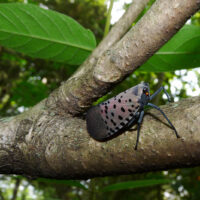
Spotted lanternfly is a major pest of concern across most of the United States. This insect is native to China and parts of India, Vietnam, Japan, and Taiwan. It was first identified as an invasive species in 2004 in South Korea and is now a major pest there. Spotted lanternfly was first detected in the United States in Pennsylvania in 2014.
In July 2021, a population of spotted lanternfly (Lycorma delicatula) was identified in Indiana in Switzerland County, near the Ohio River. A second population was found in Huntington, Indiana in July 2022. DEPP and USDA continue to conduct surveys to ascertain the extent and source of these infestations as well as determine what management strategies will be implemented.
Newsletter can be found online: MyDNR Email Newsletter
For more information please visit Spotted Lanternfly – MyDNR
Resources:
Spotted Lanternfly, Indiana Department of Natural Resources Entomology
Spotted Lanternfly Found in Indiana, Purdue Landscape Report
Invasive plants: impact on environment and people, The Education Store, Purdue Extension’s resource center
Woodland Management Moment: Invasive Species Control Process, Video, Purdue Extension – Forestry and Natural Resources (FNR) YouTube Channel
Invasive Species, Playlist, Purdue Extension – FNR YouTube Channel
What are invasive species and why should I care?, Got Nature? Blog, Purdue Extension – FNR
Report Invasive, Purdue College of Agriculture – Entomology
Indiana Department of Natural Resources, Department of Fish & Wildlife
In this episode of ID That Tree, Recep Yildiz a FNR graduate student shares his expertise on how to ID black alder. Black alder, which is also known as common alder or European alder, is found in most of Europe and extends into North Africa and Asia. It is easily identified by its gummy twigs and leaves. Learn more about the black alder tree and how it was introduced to Indiana with now current warning signs of being an invasive species.
If you have any questions regarding wildlife, trees, forest management, wood products, natural resource planning or other natural resource topics, feel free to contact us by using our Ask an Expert web page.
Resources:
ID That Tree, Playlist, Purdue Extension – Forestry and Natural Resources YouTube Channel (Invasive White Mulberry, Siberian Elm, Tree of Heaven)
Invasive Species Playlist, Playlist, Purdue Extension – FNR YouTube Channel (Asian Bush Honeysuckle, Burning Bush, Callery Pear, Multiflora rose)
A Woodland Management Moment, Playlist, Purdue Extension – FNR YouTube Channel (Against Invasives, Garlic Mustard, Autumn Olive)
Woodland Stewardship for Landowners, Playlist, Purdue Extension – FNR YouTube Channel (Common Buckthorn, Japanese Barberry)
Report Invasive Species, Purdue Invasive Species
The GLEDN Phone App – Great Lakes Early Detection Network
EDDMaps – Early Detection and Distribution Mapping System
How long do seeds of the invasive tree, Ailanthus altissima remain viable? (Invasive Tree of Heaven), USDA Forest Service
Indiana Department of Natural Resources: Invasive Species
Indiana Invasive Species Council
Cooperative Invasive Species Management Area (CISMA)
Aquatic Invasive Species, Illinois-Indiana Sea Grant (IISG)
Episode 11 – Exploring the challenges of Invasive Species, Habitat University-Natural Resource University
What are invasive species and why should I care?, Got Nature? Blog, Purdue Extension – FNR
Spotted Lanternfly Feeds on Over 70 Plus Plant Species, Got Nature? Blog, Purdue Extension – FNR
Shrubs and Woody Vines of Indiana and the Midwest, The Education Store, Purdue Extension Resource Center
Native Trees of the Midwest, The Education Store
Investing in Indiana Woodlands, The Education Store
Forest Improvement Handbook, The Education Store
Recep Yildiz, FNR graduate student
Purdue Department of Forestry & Natural Resources
MyDNR, Indiana’s Outdoor Newsletter: Do you have bats roosting on your property? Help DNR by counting how many bats fly out during a few evenings this summer. Monitoring bats as they emerge from roosts helps us manage the reproductive health of bats across the state.
The Summer Bat Roost Monitoring Project uses volunteers to collect information on the distribution, occupancy and abundance of bat colonies throughout Indiana.
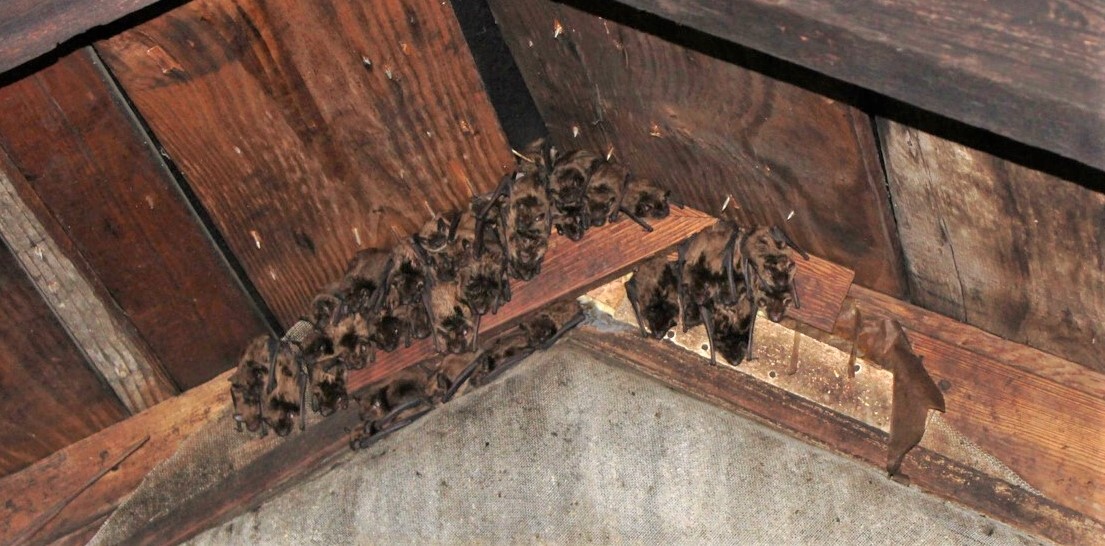
Participants must have bats roosting on their property or permission to enter property where a roost occurs. Possible roost sites include trees, bat houses, barns, attics, outbuildings and other structures. On each night of surveying, volunteers count the bats that exit the roost and record weather information. Each survey takes about an hour and is conducted on eight to 12 nights from mid-May to mid-July.
Newsletter can be found online May: DNR: Communications: MyDNR Email Newsletter (in.gov)
For more information please visit Summer Bat Roost Monitoring Project.
To sign up for the project, visit the Division of Fish & Wildlife’s volunteer page and select “Find an ongoing service project.” Wildlife Diversity staff also monitor bats using mobile acoustic surveys and acoustic monitoring stations.
Resources:
Hardwood Ecosystem Experiment (HEE) Highlights: Bats, Video, Purdue Extension – Forestry and Natural Resources (FNR) YouTube Channel
Bats in the Belfry, Purdue Extension – FNR Got Nature? Blog
Ask An Expert: Bats on the Hardwood Ecosystem Experiment (HEE), Video, Purdue Extension – FNR Facebook
Bats in Indiana, Indiana Department of Natural Resources (IN DNR)
Bat Houses, Bat Conservation International
Creating a Wildlife Habitat Management Plan for Landowners, The Education Store, Purdue Extension’s resource center
The Hardwood Ecosystem Experiment (HEE): Indiana Forestry and Wildlife, The Education Store
Subscribe to Purdue Extension-FNR YouTube Channel
Indiana Department of Natural Resources, Department of Fish & Wildlife

The clitellum, the set of pale, milky colored segments, is the reproductive organ of earthworms.
Purdue Landscape Report: Asian jumping worms, a group of invasive earthworms, have gained a significant amount of media attention in the last several weeks, and for good reason. Unlike the nightcrawlers and other earthworms we know, Asian jumping worms do not improve soil health to the benefit of plants. Instead, jumping worms (also called crazy worms, snake worms, or ‘Alabama jumpers’) almost completely strip nutrients out of soil, altering the soil structure and severely impairing the ability to develop many kinds of plants. After they are done with an area, Asian jumping worms leave behind soil that has a texture similar to that of coffee grounds and very low nutritional value. On top of this, Asian jumping worms are capable of reproducing asexually, allowing their population to grow very rapidly and making them an invasive species of some concern.
Identification
The good news is that Asian jumping worms are not well-suited to Indiana’s environment. They aren’t capable of surviving winters in any life stage except as an egg, meaning their activity periods are limited to late June to the first hard frost of the year. If you see worms outside of this period, it’s highly unlikely an Asian jumping worm. There are also a few traits the worms have that you can use to visually confirm their identity. First off, Asian jumping worms are accurately named; when handled, they writhe and thrash similar to snakes, setting them apart from common earthworms and nightcrawlers. Jumping worms also tend to have drier skin that has an almost iridescent appearance, as compared to the slimy, moist texture of the beneficial earthworms we need for good soil health. The most consistent feature is an organ known as the clitellum, or the reproductive organs of worms. On common earthworms, this looks like a saddle-shape that partially covers several segments, is normally reddish-brown, and is raised off the surface of the body. On an Asian jumping worm, however, the clitellum is indistinguishable from other segments, save for their pale, milky color.
To view this article and other Purdue Landscape Report articles, please visit Purdue Landscape Report.
Subscribe and receive the newsletter: Purdue Landscape Report Newsletter.
Resources:
The Purdue Landscape Report
Purdue Landscape Report Facebook Page
Gardeners Asked to be Vigilant This Spring for Invasive Jumping Worm, Purdue Extension – FNR Got Nature? Blog
Fall webworms: Should you manage them?, Purdue Landscape Report
Mimosa Webworm, The Education Store, Purdue Extension resource center
Sod Webworms, Turf Science at Purdue University
Bagworm caterpillars are out feeding, be ready to spray your trees, Purdue Extension Forestry & Natural Resources (FNR) Got Nature? Blog
Purdue Plant Doctor App Suite, Purdue Extension-Entomology
Landscape & Ornamentals: Bagworms, The Education Store
What are invasive species and why should I care? (How to report invasives.), Purdue Extension – FNR Got Nature? Blog
Indiana Invasive Species Council
Ask An Expert, Purdue Extension-Forestry & Natural Resources
Bob Bruner, Exotic Forest Pest Specialist
Purdue Department of Entomology
This is the eighth in a series of consumer guides that describe fish and shellfish farmed in the Midwest region of the United States. The fact sheet also includes culinary characteristics, cooking tips and a recipe for Easy Baked Salmon.
Atlantic salmon, also known as sea-run salmon, kelts, and black salmon, are anadromous finfish in the Salmonidae family. Anadromous fish start their lives in freshwater and migrate to saltwater, returning to freshwater to spawn. Atlantic salmon are the only salmon species found in the Atlantic Ocean. They are native to the North Atlantic Ocean and coastal streams of North America and Europe and landlocked populations have been documented.1,2 They can be found in coastal waterways, freshwater streams, and lakes. They have long silver bodies with small black spots, appearing brownish from above. During spawning, males turn bronzish-purple with red spots and develop a hook-like lower jaw, known as a “kype.”
To receive the free download for the Atlantic Salmon Farmed Fish Fact Sheet please visit The Education Store.
Resources:
Walleye Farmed Fish Fact Sheet, The Education Store, Purdue Extension’s resource center
Pacific White Shrimp Farmed Fact Sheet, The Education Store
Yellow Perch Farmed Fish Fact Sheet, The Education Store
Tilapia Farmed Fish Fact Sheet, The Education Store
Rainbow Trout Farmed Fish Fact Sheet, The Education Store
American Paddlefish, The Education Store
A Guide to Small-Scale Fish Processing Using Local Kitchen Facilities, The Education Store
Aquaculture Family Coloring Book Development, The Education Store
Eat Midwest Fish, Illinois-Indiana Sea Grant online resource hub
Aquatics & Fisheries Videos, Purdue Extension-Forestry and Natural Resources YouTube Channel Playlist
Channel Catfish, The Education Store
Amy Shambach, Aquaculture Marketing Outreach Associate
Purdue Department of Forestry and Natural Resources/Illinois Indiana Sea Grant Program
The Natural Resources University podcast group received the gold award in the podcast or radio category from the Association of Natural Resource Extension Professionals (ANREP). The NRU podcast group includes the Habitat University podcast co-hosted by Purdue Extension wildlife specialist Jarred Brooke and Adam Janke, an extension wildlife specialist at Iowa State University.
“Receiving the ANREP Gold Award is an honor,” Brooke said. “What started as casual conversations amongst colleagues about creating science-based natural resources podcasts has blossomed into a podcast network with multiple unique podcasts and over 100 episodes. This collaboration has been a great avenue to get up-to-date science about natural resource management into landowners and managers’ hands (and ears).”
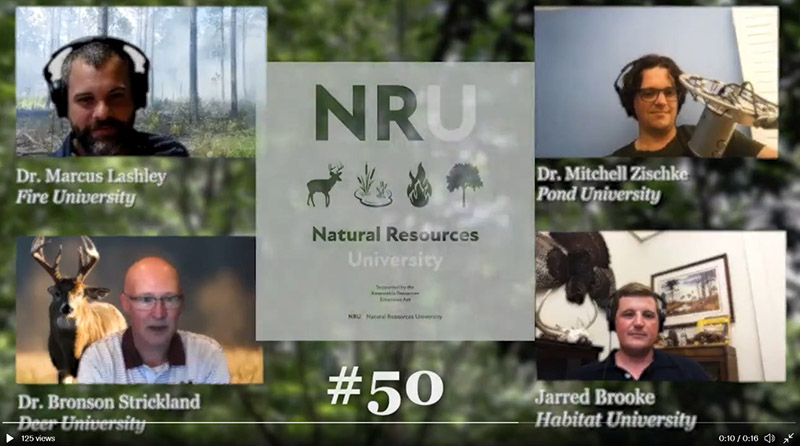
The NRU podcast group initially began with four science-based podcasts covering different aspects of natural resource management: Deer University, Pond University, Fire University and Habitat University.
Deer University, which is hosted by Dr. Bronson Strickland and Steve Demarais, focuses on the science of deer, including deer ecology, biology and management.
Pond University, which was co-hosted by FNR’s Mitch Zischke and Megan Gunn before ending its 11-episode run in August 2021, covered topics from pond habitat to fish stocking, vegetation control and pond construction.
Fire University, which is hosted by Dr. Marcus Lashley, covers the gamut of the latest research in fire ecology and how it relates to management of wildlife and plant communities.
Habitat University, hosted by Brooke and Janke, discusses the science behind wildlife habitat management and how landowners and manages can use different habitat management practices to improve their land for wildlife.
New to the NRU family in 2022-2023 are:
- Wild Turkey Science – Dr. Marcus Lashley and Dr. Will Gulsby bring you the latest research on wild turkey ecology and management
- Timber University – Dr. Brady Self and Dr. Shaun Tanger cover the latest research in timber management.
- Working Wild University – Dr. Alex Few and Dr. Jared Beaver immerse the listener in stories at the heart of the struggle to sustain productive, resilient and connect rural landscapes and communities.
- Fish University – Dr. Wes Neal covers the latest research in fish management from the small pond to the vast ocean.
The series housed within the NRU network aim to deliver expert-based knowledge for their corresponding genre of natural resource management. The network is a partnership between the extension services at several land-grant university, including Mississippi State Extension Service, University of Florida Extension, Iowa State University Extension and Outreach and Purdue Extension. Funding for the project comes from the Renewable Resources Extension Act.
The Natural Resources University podcasts are available through the individual podcast websites, through the NRU podcast main hub or wherever podcasts are available to download.
For full article and more photos view Purdue Forestry and Natural Resources News & Stories: Natural Resources University Podcasts Earn ANREP Gold Award .
More Resources:
Ask an Expert: Pond Management, Purdue Extension-Forestry & Natural Resources (FNR) YouTube playlist
Pond Management: Managing Fish Populations, The Education Store, Purdue Extension’s resource center
Yellow Perch Farmed Fish Fact Sheet, The Education Store
Frogs and Toads of Indiana, The Education Store
Snakes and Lizards of Indiana, The Education Store
Forest Improvement Handbook, The Education Store
Frost Seeding Native Grasses and Forbs with a Drone (UAV), Purdue Extension-FNR
Hardwood Ecosystem Experiment – Wildlife Responses to Timber Harvesting, The Education Store
Invasive Plants: Impact on Environment and People, The Education Store
Ask the Expert: Turtles and Snakes video, Got Nature? post
ID That Tree, Purdue Extension-FNR YouTube playlist
Woodland Management Moment , Purdue Extension-FNR YouTube playlist
Wendy Mayer, FNR Communications Coordinator
Purdue University Department of Forestry and Natural Resources
Jarred Brooke, Wildlife Extension Specialist
Purdue Forestry and Natural Resources
MyDNR, Indiana’s Outdoor Newsletter: With around 200 different species of fish in Indiana waters, it’s not uncommon that Hoosier anglers might hook a species they’ve never seen before.
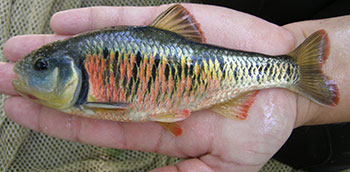
For more information and how to identify fish please visit Fishing Species & Identification.
Send a picture with the location information and date of your catch to fishid@dnr.IN.gov, and a biologist will respond to you with an identification. Not only do you receive an identification, DNR biologists benefit by gaining new information on the distribution of some of our less common species.
Resources:
FNR Extension Aquaculture and Aquatic Resources
FNR Extension Publications
Indiana Pond Fish, Species Identification Card Set, Purdue Extension – Forestry and Natural Resources (FNR)
Walleye Farmed Fish Fact Sheet, The Education Store, Purdue Extension’s resource center
Pacific White Shrimp Farmed Fact Sheet, The Education Store
Yellow Perch Farmed Fish Fact Sheet, The Education Store
Tilapia Farmed Fish Fact Sheet, The Education Store
Rainbow Trout Farmed Fish Fact Sheet, The Education Store
American Paddlefish, The Education Store
A Guide to Small-Scale Fish Processing Using Local Kitchen Facilities, The Education Store
Aquaculture Family Coloring Book Development, The Education Store
Eat Midwest Fish, Illinois-Indiana Sea Grant online resource hub
Aquatics & Fisheries Videos, Purdue Extension-Forestry and Natural Resources YouTube Channel Playlist
Indiana Department of Natural Resources, Department of Fish & Wildlife
The classic and trusted book “Fifty Common Trees of Indiana” by T.E. Shaw was published in 1956 as a user-friendly guide to local species. Nearly 70 years later, the publication has been updated through a joint effort by the Purdue Department of Forestry and Natural Resources, Indiana 4-H, and the Indiana Department of Natural Resources, and reintroduced as “An Introduction to Trees of Indiana.”
The full publication is available for download for $7 in the Purdue Extension Education Store. The field guide helps identify common Indiana woodlot trees.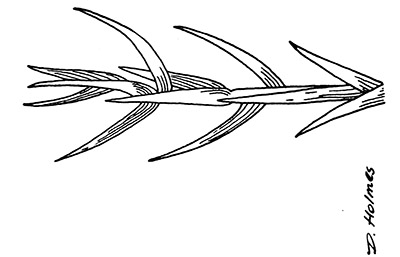
Each week, the Intro to Trees of Indiana web series will offer a sneak peek at one species from the book, paired with an ID That Tree video from Purdue Extension forester Lenny Farlee to help visualize each species as it stands in the woods. Threats to species health as well as also insight into the wood provided by the species, will be provided through additional resources as well as the Hardwoods of the Central Midwest exhibit of the Purdue Arboretum, if available.
This week, we meet Eastern red cedar or Juniperus virginiana, one of the most common coniferous trees in Indiana.
This evergreen tree, also known as aromatic cedar, is unique in that it has both scale-like and sharp-pointed leaves. The foliage can be soft to the touch on mature trees or be quite sharp in seedlings and younger trees. The foliage turns from green to blueish green in spring to red or brown in winter.
The red cedar features a shreddy bark on both the trunk and branches, which is gray brown in color. It is slow growing but may live longer than 450 years.
The fruit of red cedar is a small cone, which resembles and is often referred to as a berry, that is blue in color and features a whitish bloom on the surface. The fruit is preferred by birds and wildlife of many varieties and is thus spread to roadsides, old pastures and other locations with plenty of sun and disturbed soil. It can be found in forest understories, but prefers direct sunlight.
For full article with additional photos view: Intro to Trees of Indiana: Eastern Red Cedar, Forestry and Natural Resources’ News.
If you have any questions regarding wildlife, trees, forest management, wood products, natural resource planning or other natural resource topics, feel free to contact us by using our Ask an Expert web page.
Other Resources:
ID That Tree: Eastern Red Cedar
Morton Arboretum: Eastern Red Cedar
Fruit Diseases: Cedar Apple and Related Rusts on Apples in the Home Landscape
Diseases of Landscape Plants: Cedar Apple and Related Rusts on Landscape Plants
Purdue Arboretum Explorer
The Woody Plant Seed Manual, U.S. Forest Service
Fifty Common Trees of Indiana
An Introduction to Trees of Indiana
Native Trees of the Midwest, The Education Store
Shrubs and Woody Vines of Indiana and the Midwest, The Education Store
Investing in Indiana Woodlands, The Education Store
Forest Improvement Handbook, The Education Store
ID That Tree, Purdue Extension-Forestry & Natural Resources (FNR) YouTube playlist
Woodland Management Moment , Purdue Extension-FNR YouTube playlist
Eastern Redcedar, Purdue Fort Wayne
Wendy Mayer, FNR Communications Coordinator
Purdue University Department of Forestry and Natural Resources
Lenny Farlee, Extension Forester
Purdue University Department of Forestry and Natural Resources
While earthworms in the spring are a happy sight for gardeners, an invasive worm species is wreaking havoc for landowners and gardeners in southern Indiana.
Robert Bruner, Purdue Extension’s exotic forest pest specialist, describes jumping worms, an invasive species to North America in the genus Amynthas: “Traditionally, when we see earthworms, they are deep in the ground and a little slimy. The jumping worms are a little bit bigger, kind of dry and scaly, and tend to thrash around much like a snake does.”
While worms have a reputation as a helpful species found in the soil ecosystem, invasive jumping worms do not live up to that standard, Bruner explained. Jumping worms will consume all organic material from the top layer of soil, leaving behind a coffee ground-like waste with no nutrients for plants or seeds.
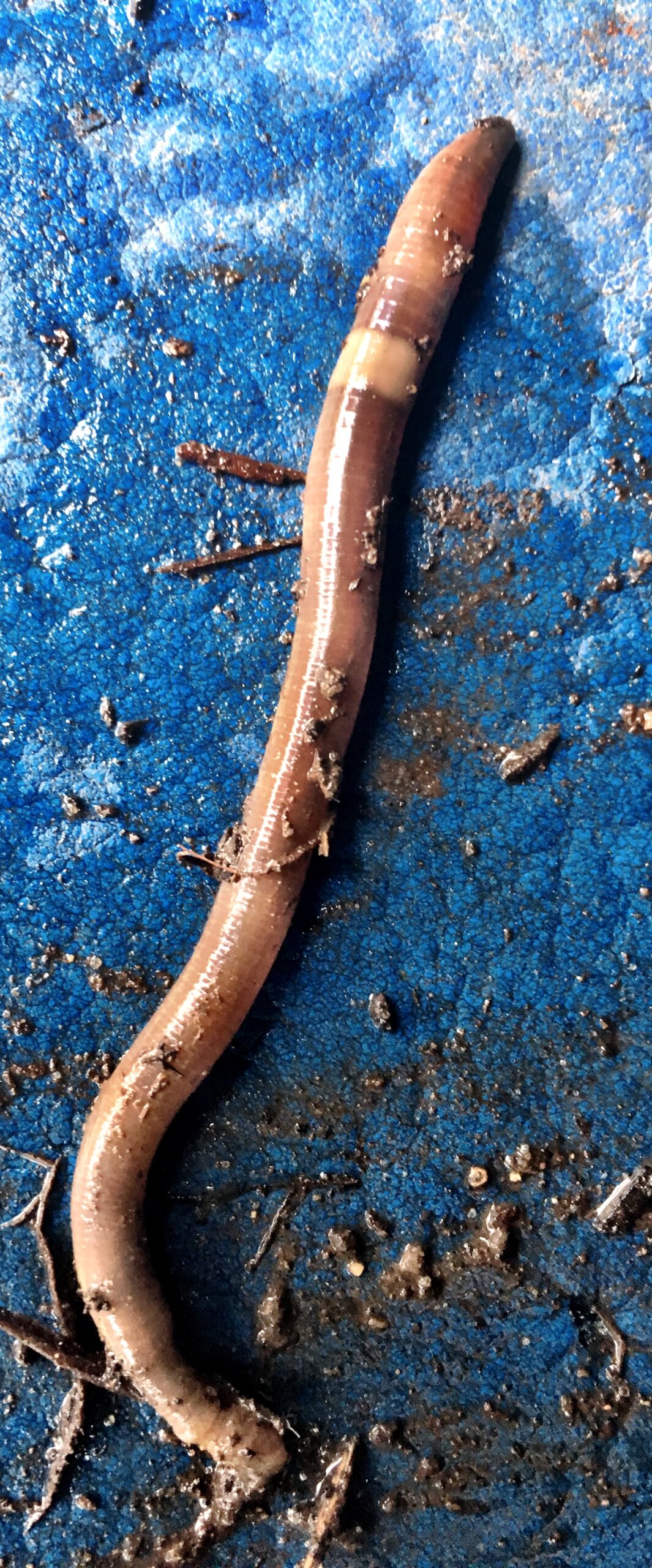
Since jumping worms stay within the first few inches of topsoil, they are not creating channels for water and air the way earthworms do, disrupting water flow to plant roots.
“So basically, they’re just very nasty pests that ruin the quality of our soil, and the only thing that can really grow in soil like that are essentially invasive plants, or species that are meant to survive really harsh conditions,” Bruner said.
Currently, the worms are being found in cities around southern Indiana, he said, particularly in Terre Haute. There is still much to learn about jumping worms, making eradication efforts difficult. One thing that is known, Bruner said, is they aren’t a migrating species.
“This is the kind of invasive pest that is moved almost entirely through human activity. They don’t crawl superfast,” he explained. “So, when they move, that means they’re moving because we’re transferring soil, say, from someone’s plants or someone’s compost and we’re bringing them to a new area.”
Any invasive species sightings should be reported to the Indiana Department of Natural Resources at depp@dnr.in.gov or by calling 1-866-663-9684.
For full article with additional photos view: Gardeners asked to be vigilant this spring for invasive jumping worms, Purdue College of Agriculture News.
Other Resources:
Fall webworms: Should you manage them?, Purdue Landscape Report
Mimosa Webworm, The Education Store, Purdue Extension resource center
Sod Webworms, Turf Science at Purdue University
Bagworm caterpillars are out feeding, be ready to spray your trees, Purdue Extension Forestry & Natural Resources (FNR) Got Nature? Blog
Purdue Plant Doctor App Suite, Purdue Extension-Entomology
Landscape & Ornamentals: Bagworms, The Education Store
What are invasive species and why should I care? (How to report invasives.), Purdue Extension – FNR Got Nature? Blog
Indiana Invasive Species Council
Report Invasive Species, Purdue Invasive Species
The GLEDN Phone App – Great Lakes Early Detection Network
EDDMaps – Early Detection and Distribution Mapping System
Indiana Department of Natural Resources: Invasive Species
Indiana Invasive Species Council
Cooperative Invasive Species Management Area (CISMA)
Ask An Expert, Purdue Extension-Forestry & Natural Resources
Jillian Ellison, Agricultural Communication
Purdue College of Agriculture
Bob Bruner, Exotic Forest Pest Educator
Purdue Department of Entomology

Recent Posts
- Beetle that attacks Tree-of-Heaven found in Indiana, Purdue Landscape Report
Posted: March 20, 2026 in Invasive Insects, Wildlife, Woodlands - ID That Tree: Dwarf Chinkapin Oak
Posted: in Forestry, Urban Forestry, Wildlife, Woodlands - DNR Hiring for Indiana Conservation Officer Positions, MyDNR
Posted: March 9, 2026 in Urban Forestry, Wildlife, Woodlands - ID That Tree: Shumard Oak
Posted: in Plants, Urban Forestry, Wildlife, Woodlands - Uniting Indiana Residents Against Invasive Species
Posted: February 27, 2026 in Community Development, Invasive Insects, Wildlife - Have You Seen a Soaring Eagle Lately? Morning Ag Clips
Posted: February 25, 2026 in Urban Forestry, Wildlife - Register for Natural Resources Teacher Institute’s Class of 2026
Posted: February 19, 2026 in Forestry, Wildlife, Woodlands - ID That Tree: Fragrant Sumac
Posted: February 4, 2026 in Plants, Urban Forestry, Wildlife - Woodsy Owl Edition for Educational Learning, USDA – U.S. Forest Service
Posted: January 21, 2026 in Forestry, Forests and Street Trees, Got Nature for Kids, Urban Forestry, Wildlife - Opt-in to the Deer Management Survey, MyDNR
Posted: January 12, 2026 in Forestry, Wildlife
Archives
Categories
- Alert
- Aquaculture/Fish
- Aquatic/Aquaculture Resources
- Ask the Expert
- Christmas Trees
- Community Development
- Disease
- Drought
- Forestry
- Forests and Street Trees
- Gardening
- Got Nature for Kids
- Great Lakes
- How To
- Invasive Animal Species
- Invasive Insects
- Invasive Plant Species
- Land Use
- Natural Resource Planning
- Nature of Teaching
- Plants
- Podcasts
- Ponds
- Publication
- Safety
- Spiders
- Timber Marketing
- Uncategorized
- Urban Forestry
- Webinar
- Wildlife
- Wood Products/Manufacturing
- Woodland Management Moment
- Woodlands