 Purdue University - Extension - Forestry and Natural Resources
Got Nature? Blog
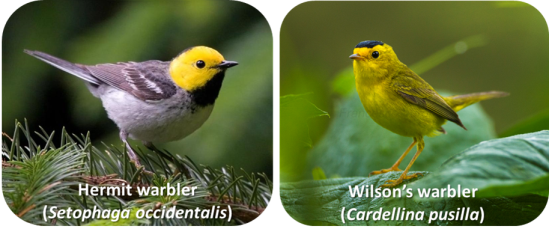
A new study published in Diversity and Distributions noted old-growth forests, with their diverse tree sizes and species may provide refuge for bird species in population decline resulting from climate shifts. Researchers at Oregon State University’s College of Forestry noted over the last 30 years that temperature increases during the breeding season limited population growth for two tracked species; Wilson’s warbler (Cardellina pusilla) and the hermit warbler (Setophaga occidentalis). These effects were mitigated in areas containing significant proportions of old-growth forest.
Using satellite imagery of the research areas allowed the research team, led by Matthew Betts, to calculate approximate distances to old-growth forests along each 25mi survey route. Their findings provide support for the importance of old-growth forest conservation in our current changing climate. Researchers on this project admit that more research is needed to identify specific qualities of old-growth forests that provide a buffer for these bird species however, they have stated that it could be that the trees are able to moderate temperatures by functioning as heat sinks with multiple canopy layers as climate buffers.
Reference:
Betts MG, Phalan B, Frey SJK, Rousseau JS, Yang Z. Old-growth forests buffer climate-sensitive bird populations from warming. Divers Distrib. 2017;00:1–9.
Resources:
Complex, old growth forests may protect some bird species in a warming climate, ScienceDaily.com
Forest Birds, The Education Store
Breeding Birds and Forest Management: the Hardwood Ecosystem Experiment and the Central Hardwoods Region, The Education Store
Forest Improvement Handbook, The Education Store
Shaneka Lawson, USDA Forest Service/HTIRC Research Plant Physiologist/Adjunct Assistant Professor
Purdue University Department of Forestry and Natural Resources
Prescribed fire is a great tool to improve the food and cover for a variety of wildlife species on your property. One of the most important aspects of using prescribed fire is making sure the fire is conducted safely. This point cannot be overstated, safe use of prescribed fire is paramount. Beyond taking the appropriate training courses or seeking help from a professional, one the most important aspects of safely conducting a prescribed fire is ensuring you have adequate firebreaks.
Firebreaks can serve multiple purposes related to the safe use of prescribed fire and can provide additional food and cover for wildlife. The main purpose of firebreaks is to stop the fire from escaping the burn unit, but they also can provide quick and easy movement around the burn unit, help reduce the amount of people required for the burn and can make igniting the fire safer. Here are a few examples of different types of firebreaks.
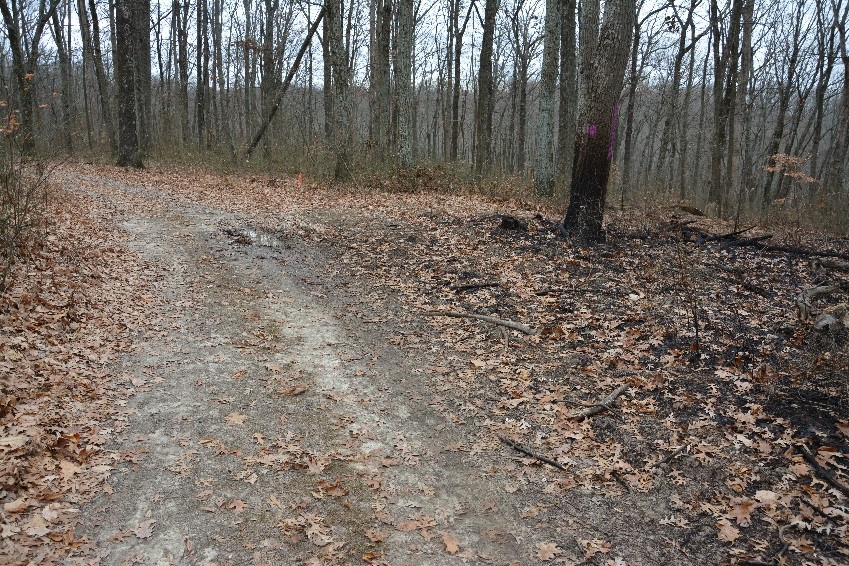
This logging road is a good example of an existing road that can be used as a firebreak.
Existing roads
Existing roads, whether they are paved, gravel, dirt, or logging roads, can serve as outstanding firebreaks, plus they require very little work to prepare prior to a burn. These are also one of the cheapest options for firebreaks. If you are using gravel, dirt, or logging roads as firebreaks, you need to make sure there is not excessive vegetation or leaf litter in the road. Too much vegetation
on the firebreak could lead to an escape.
Streams, creeks, or other bodies of water
Another cheap and easy option for firebreaks is to use existing streams, river, or bodies of water. If you are using water features as a firebreak, here are some things to consider: is the stream or river wide enough to stop the fire from escaping and can people helping with the fire move easily around, across, or through the stream or river to access various part of the burn unit or to stop an escaped fire?
Crop fields
Crop fields with cool-season grains (wheat, oats, rye) or cover crops can serve as a great firebreak. Crop fields with only soybean or corn stubble should be used with caution, as fire may creep through a field with excessive stubble. For fields with crop stubble, planting the edge of the field in a cool-season crop (wheat, clover, oats, etc.), disking the edge of the field, or wetting the crop stubble are all steps that can used to improve the field as a firebreak.
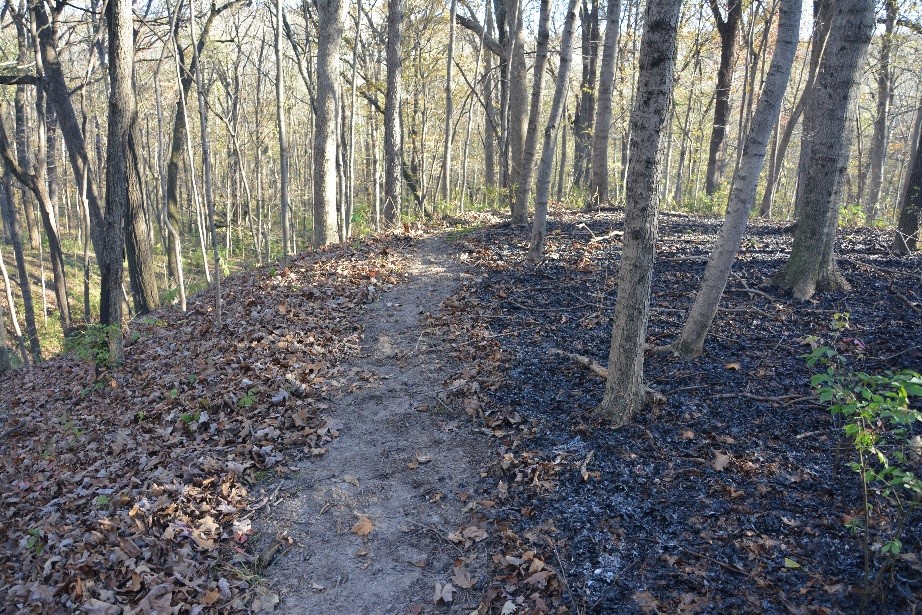
This leaf-blown firebreak was only 3-4 feet wide, but it easily stopped the fire in this situation.
Leaf-blown firebreaks
If you are burning in the woods, using a leaf blower to remove leaf litter and expose bare mineral soil is a quick and easy way to create a firebreak. These firebreaks do not need to be as wide as those in an old field or native grass stand because the flame length when burning in the woods is typically much shorter than burning in a field.
Disked firebreaks for multiple purposes
Disking or tilling to expose bare mineral soil is an extremely effective method of creating a firebreak. These breaks can also provide food and/or cover for various wildlife species if managed correctly. Disking the firebreak and then letting the firebreak remain fallow during the growing season creates outstanding cover for brooding turkeys, pheasants, and quail.
You can also plant the firebreaks after disking to create a food plot for various wildlife species. If you disk the firebreaks in the fall and plan to burn in the spring, you can plant the firebreaks with a mix of wheat and crimson clover or a mix of perennial clovers to create a great food plot for deer and turkey. You can also plant the firebreaks with millet, grain sorghum, or sunflowers after you have burned the field in the spring.

If you use mowed firebreaks you run the risk of fire creeping across the firebreak and escaping, especially if there is too much thatch in the firebreak.
My absolute favorite multiple purpose firebreak is one that is disked in Aug-Sep, planted to winter wheat (40-60 lbs/ac), and then left to remain fallow after the wheat has produced seed. This firebreak effectively stops fire, provide green browse from the fall through the spring, provides seed during the early summer, and provides excellent brood cover throughout the summer and early fall. This is truly an all-in-one firebreak.
Mowed grass firebreak
Mowed grass firebreaks are not ideal, but they can be used in certain situations. If mowed firebreaks are used, you must be sure that there is not excessive thatch built up in the break. Too much thatch will allow the fire to creep across the break and potentially escape. Even on firebreaks without excessive thatch, using water to create a “wet” firebreak is recommended.
No matter which type of firebreak you choose to use, taking the time to make sure the firebreak is adequately installed and is sufficient to stop the fire from escaping will help make the burn safer and will create less headaches for you when conducting the burn.
Additional Resources:
Firebreaks for Prescribed Burning, Oklahoma State University Extension
Prescribed fire: 6 things to consider before you ignite, Got Nature?, Purdue Extension-FNR,
On-line Basic Prescribed Fire Training, USDA, U.S. Forest Service
Publications Focus on Plan, Safety of Prescribed Burns, Iowa State Extension,
eFIRE, North Carolina State Extension
Renovating native warm-season grass stands for wildlife: A Land Manager’s Guide, The Education Store, Purdue Extension resource center
Calibrating a No-Till Drill for Conservation Plantings and Wildlife Food Plots, The Education Store
Jarred Brooke, Wildlife Extension Specialist
Purdue Department of Forestry and Natural Resources
Planting at the proper seeding rate is an important step to ensure a successful native warm-season grass and forb planting or a wildlife food plot. This video will discuss how to properly calibrate the seeding rate for a Truax No-Till Seed Drill. The video will also discuss a calibration method that can be used with multiple different types of seed drills.
Check out these detailed resources that are referenced in the video:
Seed Fillers and Carriers for Planting Native Warm-Season Grasses and Forbs
Pure Live Seed: Calculations and Considerations for Wildlife Food Plots
Resources:
Renovating Native Warm-Season Grass Stands for Wildlife: A Land Manager’s Guide, The Education Store, Purdue Extension resource center
Food Plots, Got Nature?, Purdue Extension-FNR
Food Plots for White-Tailed Deer, The Education Store
Jarred Brooke, Extension Wildlife Specialist
Purdue Department of Forestry and Natural Resources
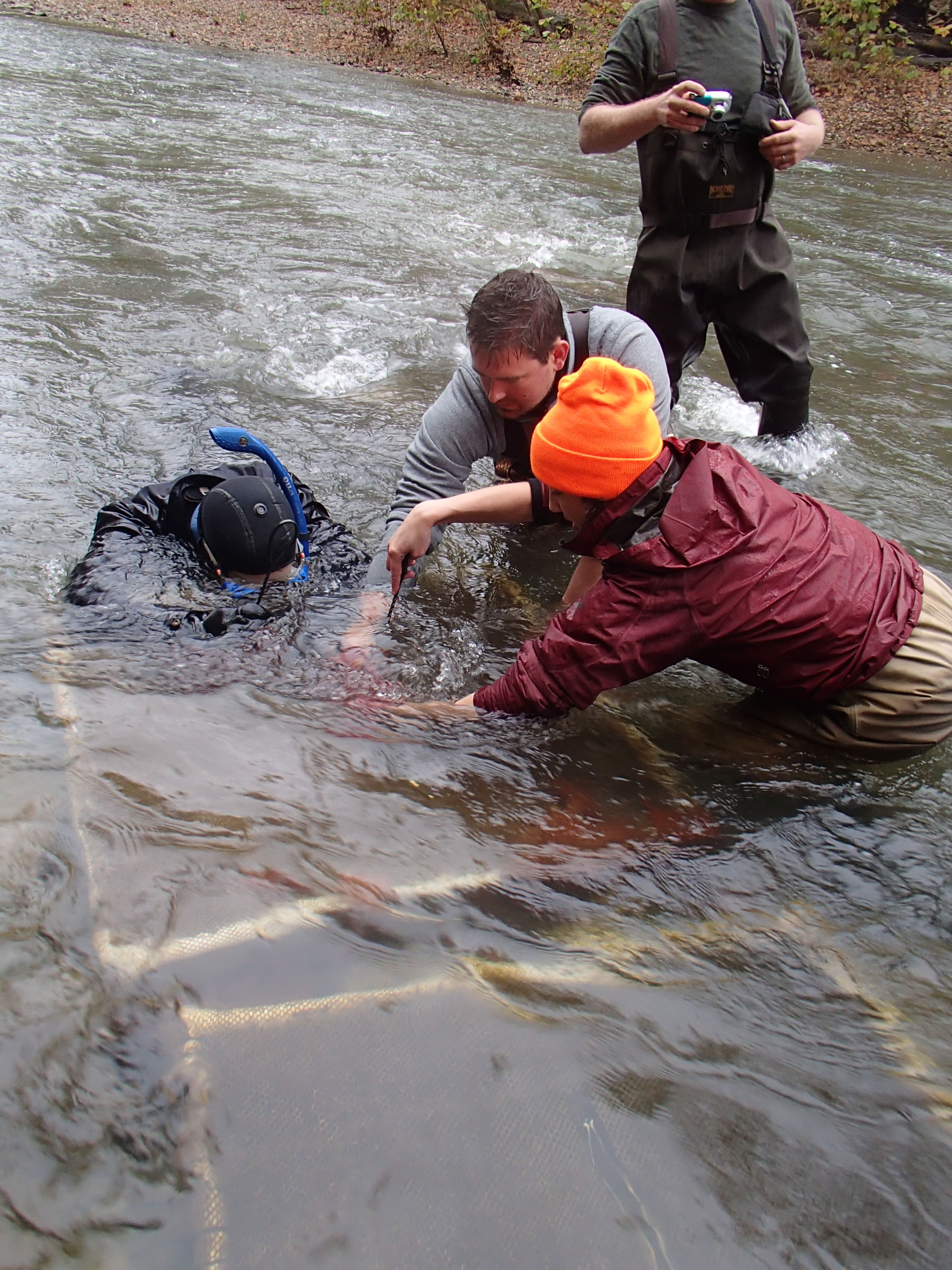
Hellbender release – Purdue biologists help a release attendee place a Hellbender in its temporary holding pen. Photo credit: Marci Skelton.
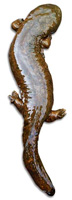 The Hellbender salamander is North America’s largest salamander. It is fully aquatic, living its entire life in rivers and streams throughout the midwest and southeast. Hellbenders require cool, clean rivers and streams with rocky substrates to thrive and reproduce. Unfortunately, over the past several decades the species has declined or disappeared from many of these areas. In Indiana, the species can only be found in the Blue River in south-central Indiana where there remains only a very small, geriatric population incapable of sustaining itself. In order to save the species in the state, Purdue University and its many partners have joined together to reverse the decline.
On November 1st and 2nd of this year, Purdue FNR’s Williams lab released 80, 4-year old Hellbenders into a site chosen as the best Hellbender habitat in the Blue River. Members from Purdue University, Mesker Park Zoo and Botanic Garden, Columbian Park Zoo, Fort Wayne Children’s Zoo, Indianapolis Zoo, the Indiana Department of Natural Resources, the Indiana Department of Environmental Management, Duke Energy, and more all helped in the task of releasing the individuals into their new homes.
The chosen Hellbenders had been raised in captivity at Purdue University. Unfortunately, captive-raised animals are often times not equipped with the necessary set of skills to survive life outside of an aquarium. However, these were not all aquarium-raised individuals more akin to pets than wild animals. Forty of the individuals were raised in specially designed tanks called raceways that incorporated water flow to mimic that found in a natural river setting. The remaining forty individuals were raised in standard, low-flow conditions. The idea behind raising the animals in these differing conditions is to compare whether or not the individuals raised in conditions that are more natural (i.e., higher flow rates) will be better able to survive the varying water levels they will encounter in the wild than those that are raised without flow.
In order to document success, all 80 Hellbenders were implanted with radio-transmitters. These transmitters emit a signal that allows biologists to detect them with antennae and locate the exact location an individual is hiding. For the next six to ten months, through rain, snow, and shine, Purdue biologists will follow these animals to document their behavior, habitat preferences, and whether or not they survive life in the wild.
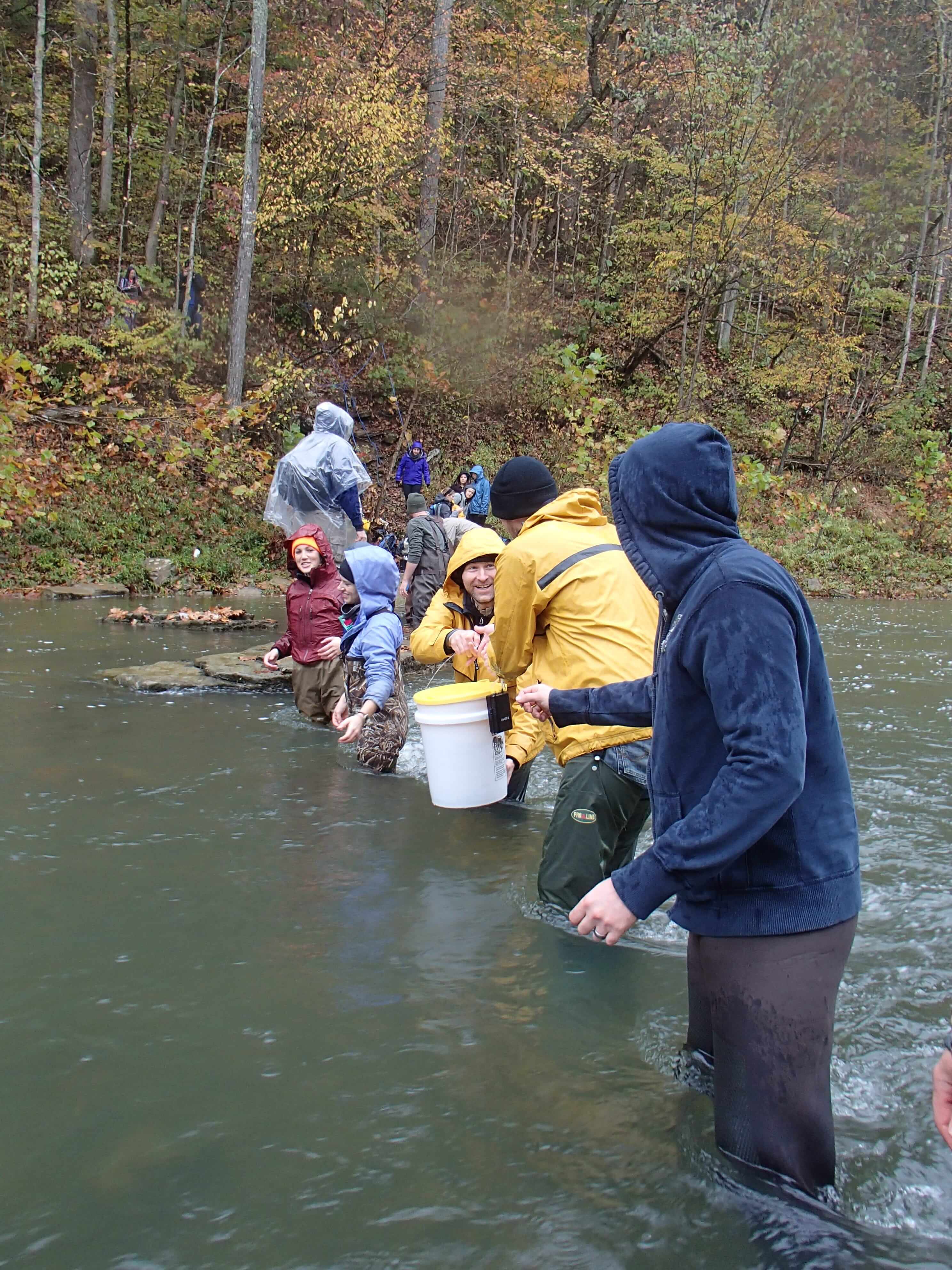
Transporting Hellbenders – Release attendees work together to transport Hellbenders across the river to be processed before release. Photo credit: Marci Skelton.
The outcomes of this study could help solve two major problems facing Hellbender conservation. The first is that the addition of Hellbenders into the system could help spur natural reproduction and help to start stabilizing the system. This small step is important towards our eventual goal of repopulating the Blue River and other former Hellbender streams. The second problem this study will hopefully address is the issue of poor survival of captive-reared animals when released into the wild. If we find that raising animals in more natural conditions improves survival over those raised in the more common no-flow conditions, this technique could be easily adopted at captive-rearing facilities throughout the nation and help increase the overall success of Hellbender conservation in the United States.
For more information, please visit HelptheHellbender.org.
Resources:
Hellbender ID, The Education Store
HelptheHellbender.org, Purdue Extension
Help the Hellbender: North America’s Giant Salamander, The Education Store
How Our Zoos Help Hellbenders, The Education Store
Nick Burgmeier, Research Biologist and Extension Wildlife Specialist
Purdue University Department of Forestry and Natural Resources
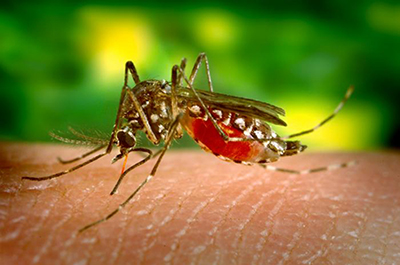
Photo by: James Gathany, Center for Disease Control and Prevention
While researchers say it is difficult to determine whether unusual weather patterns this winter and spring will lead to larger mosquito and tick populations in the Upper Midwest this summer, one thing is certain – anyone planning to spend time outdoors should take steps to avoid the potentially dangerous pests.
“Every year we face the same risks and every year it is wise to take precautions,” said Catherine Hill, Purdue University medical entomologist. “If you’re going to be outside anytime from early spring to late summer and early fall, you need to be thinking about prevention and protection.”
Both mosquitos and ticks can carry a number of pathogens that could pose a serious threat to people and animals. Mosquitos can transmit several viruses that can cause severe encephalitis (inflammation of the brain and spinal cord), including Zika and West Nile virus, among others. Ticks are known carriers of Lyme disease, which infects about 300,000 people each year, as well as less common but equally dangerous conditions such as anaplasmosis, babesiosis, Powassan and Rocky Mountain spotted fever.
To avoid mosquito bites, the best advice is to stay indoors during peak biting times, which is typically dusk to dawn for the mosquitoes that transmit West Nile virus and during the day for mosquitoes that transmit Zika.
“If you have to be outside during those times, it is best to wear clothing that can help prevent bites,” Hill said. Appropriate wardrobe choices include long-sleeve shirts and long pants tucked into socks. It is also advisable to use an effective repellant, such as products containing a minimum of 20 to 30 percent – of diethyltoluamide, commonly known as DEET. The Centers for Disease Control also recommends products containing picaridin, lemon of eucalyptus and IR3535. More information is available on the CDC website at https://wwwnc.cdc.gov/travel/yellowbook/2016/the-pre-travel-consultation/protection-against-mosquitoes-ticks-other-arthropods.
Mosquitoes breed in standing water and their larvae and pupae need water to develop. Homeowners can help reduce mosquito populations in their back yard by dumping standing water out of buckets and wading pools, keeping lawns mowed and removing piles of brush or yard waste, Hill said.
Ticks can thrive in back yards as well, particularly those adjacent heavily wooded areas, in tall grass and brush and under leaf piles.
Hill said the warmer winter and wet spring could have created ideal conditions for ticks in some areas although conditions vary significantly from region to region.
“We’ve already been getting plenty of ticks,” Hill said. “They’re certainly active.”
The best defense against ticks is to wear light colored clothing with long sleeves and pants and to use a U.S. Environmental Protection Agency-approved repellant. It is also a good idea to check your body and clothing for ticks immediately after coming back indoors.
“If you can remove a tick within 24 hours, you have a very good chance of catching them before they transmit,” Hill said.
Ticks feed on blood and tend to attach themselves to tender areas of the skin, including around the hairline and in the armpit and groin.
For the full article, see Purdue Agriculture News.
Resources:
Mosquitoes, Purdue Extension Entomology
One Small Bite: One Large Problem, Got Nature?, Purdue Extension-FNR
Darrin J Pack, Writer/Editor
Purdue University Department of Agricultural Communication
Catherine A Hill, Professor of Entomology/Vector Biology
Purdue University Department of Entomology

The end of the school year represents not only the beginning of summer but also the start of field season. Time spent out in the field can be fun, informative, and an opportunity to gather important data. Field data can also be difficult to gather as outdoor conditions are often unpredictable. Anyone expecting to do work out in the field must be prepared for anything. In addition to the likelihood of heat stress and the threat of diseases carried by insect assailants (i.e. ticks, mosquitoes), those in the field must prepare for events that come naturally with doing research outside of a controlled environment.
Packing an emergency bag before venturing into the field is one way to ensure that negative ramifications of any accidents are kept to a minimum or eliminated completely. Standard emergency supplies should accompany field researchers on every trip. The nature of the outing should also be considered since additional, more specialized, equipment may be needed in some areas. Typical emergency equipment needed for each foray into the wild includes:
- Charged cell phone with an extra battery and a charger (stored in plastic bag with some petty cash)
- Fully stocked first aid kit (large size with an array of bandages and wound wrapping materials) with specialized field supplies (fish hook removers, seasickness tablets, flare gun, mosquito net, etc.) and general forest supplies (sunscreen, poison ivy/oak/sumac cream, insect repellent)
- Vehicle emergency kit (with vehicle operator’s manual and emergency blankets)
- Non-perishable, easy to open food stuffs (i.e. peanut butter, beef jerky, granola bars)
- Water (minimum of 1 gal / person / day of the trip plus an additional 3 days) and water purification tablets or filter devices
- Plastic Ziploc bags for personal hygiene products (toilet paper, sanitizing wipes, feminine products), extra clothes including a brimmed hat, and electronic devices
- Local guidebook and ability to identify hazardous plant and native wildlife species in the traversed field region
- Flashlight (with extra batteries)
- Two-way radio (if necessary to work alone in an isolated or dangerous area and check in regularly) and handheld weather station
- Personal protective equipment (safety glasses/goggles, gloves, hard hat, sturdy boots, etc.)
- Identification (photocopy of driver’s license, medical prescriptions and coverage information, and emergency contact information) for everyone in the field
- Maps, compass, and GPS unit
Following this list is the first start to a safe and successful field season! Best of luck!
Resources:
Nature of Teaching-Health and Wellness, Purdue Extension
Benefits of Connecting with Nature, The Education Store
Orphaned Wildlife, Got Nature?, Purdue Extension-FNR
Shaneka Lawson, USDA Forest Service/HTIRC Research Plant Physiologist/Adjunct Assistant Professor
Purdue University Department of Forestry and Natural Resources
Lenny Farlee, Sustaining Hardwood Extension Specialist
Purdue Department of Forestry and Natural Resources
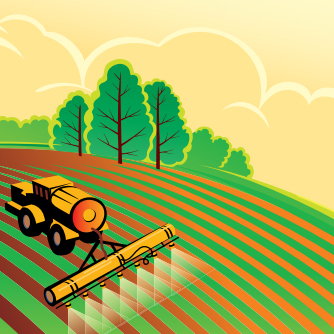 Pesticides are a great way for farmers and homeowners to protect plants against insects and disease. However, sometimes pesticide ends up where it isn’t supposed to – on neighboring properties like homes, schools, and parks. This is called pesticide drift, and it can be very dangerous to your health and damaging to property. You have the legal right to be free from pesticide drift, and it is important to be able to recognize it and understand what to do next if you are experiencing it. Purdue Extension-Pesticide Program has a new publication titled “Options for Dealing with a Pesticide Drift Incident” sharing resources to help simplify that process, explore what exactly pesticide drift is, what causes it, and what steps you can take to resolve it. The publication is available as a free download in The Education Store, so those interested can take a look and be sure to stay safe and informed about pesticide drift.
Resources:
Options for Dealing with a Pesticide Drift Incident – The Education Store, Purdue Extension Resource Center
Driftwatch: Watch Out for Pesticide Drift and Organic Production – Purdue Extension
Agricultural Plant Pest Control – The Education Store
Purdue Pesticide Programs – Purdue Agriculture
National Pesticide Information Center – U.S. Environmental Protection Agency
District Forester (forestry landowners with 10+acres) – Indiana Department of Natural Resources
Directory of Professional Foresters – Indiana Forestry & Woodland Owners Association
Michael O’Donnell, Purdue Extension Educator of Delaware County
Purdue University Department of Botany and Plant Pathology
Roy Ballard, Purdue Extension Educator of Hancock County
Purdue University Department of Agriculture
Fred Whitford, Clinical Engagement Professor of Purdue Pesticide Programs
Purdue University Department of Botany and Plant Pathology
Joe Becovitz, Pesticide Investigator
Office of Indiana State Chemist

Photo by Brian MacGowan
As the weather begins to warm up later this year, the sight of Canada geese returning is pleasant to some as a reminder of spring approaching. It can also be downright irritating to others who experience property damage and other conflicts as the geese concentrate on their property. There are several strategies for dealing with geese listed in further detail at the Indiana Department of Natural Resources (IDNR) website, ranging from mild to severe.
The first thing that is important to know regarding geese is that it is simply not a good idea to feed them. While this act is positive in intention, it is a bad thing for both people and geese. Feeding geese gives them an artificially abundant source of food, which can cause them to delay or skip their migration and instead congregate in areas where they will conflict with people. Furthermore, being fed can cause geese to lose their fear of people, giving them the confidence to stroll across roadways and runways. Finally, large amounts of geese competing over bread and other food of limited nutritional value greatly increases their chances of developing and spreading avian diseases. The U.S. Fish & Wildlife Service‘s free publication “Caution: Feeding Waterfowl May Be Harmful!” further explains the need to stop feeding geese.
INDNR offers a significant amount of other advice on other methods of handling goose problems. Habitat modification such as adding vegetative barriers or suspended grid systems can be a good long term solution by making your land less attractive to geese. If geese have already begun to settle in, nonlethal harassment techniques like air horns and sprayers can be used twice a day to scare geese away from your property. Nests can be legally removed as long as there are no eggs present. If the situation calls for more severe actions, a permit can be acquired to destroy nests with eggs, or another permit can be issued by a District Wildlife Biologist to capture and relocate the animals. In cases of excessive property damage, a District Wildlife Biologist can also issue an agricultural depredation permit to shoot geese outside of the normal hunting season.
There are many methods of handling nuisance Canada geese this spring, and not one solution for every problem. If there is a goose problem in your area, please view INDNR’s Nuisance Canada Goose Management page to learn more about what you can do and how to acquire permits if needed.
Resources:
Nuisance Canada Goose Management – Indiana Department of Natural Resources (IDNR)
Caution: Feeding Waterfowl May Be Harmful! – U.S. Fish & Wildlife Service
Selecting a Nuisance Wildlife Control Professional, Got Nature? blog, Purdue Extension-Forestry & Natural Resources
Aaron Doenges, videographer & assistant web designer
Purdue Forestry and Natural Resources
Photo by: James Gathany, Center for Disease Control and Prevention
You may have likely heard of the Zika virus at this point – a new infection on the rise that is drawing many parallels to the West Nile virus that caused 286 deaths in the United States in 2012. Like the West Nile, Zika was first discovered over sixty years ago and wasn’t considered to be a large concern until it reemerged unexpectedly years later. Both viruses are carried by mosquitos, and 80% of people infected display no symptoms and are at risk of unwittingly further spreading the infection. And most importantly, both viruses have no current treatment or vaccination and can be deadly.
When discussing the Zika virus, it is important to know that currently there have been no cases of infection in the continental U.S. While this means there is no need to immediately panic, transmission of diseases are often unpredictable as human population and global travel increase. Zika appeared in Brazil last May and has quickly spread to over 20 countries across Central and South America, causing the World Health Organization to declare the virus an international public health emergency, predicting that Zika could infect as many as 4 million people by the end of this year. With that ominous prediction looming over us, a good precaution to take is knowing how the mosquitos potentially carrying the virus can be controlled and avoided.
Simply avoiding mosquitos is an effective first step. Staying indoors during the daytime when mosquitos feed can help lessen exposure to mosquitos, as well as wearing long sleeves, pants, and U.S. Environmental Protection Agency-approved mosquito repellant when going outdoors.
Another preventative measure you can take is eliminating potential mosquito breeding sites from your area. Mosquitos breed in containers of standing water, and getting rid of them can reduce mosquito population in your area. Dog bowls, birdbaths, potted plants, and similar objects are all potential breeding grounds, and removing them means less places for mosquito eggs to hatch.
Again, the Zika virus isn’t currently an immediate concern for people in the United States, but this information is crucial to know as scientists learn more about how this virus is spread. At any rate, they’re also give good tips for avoiding annoying mosquito bites! To learn more, please check out the Purdue University Agriculture News article “Controlling and avoiding mosquitos helps minimize risk of Zika.”
Resources:
Controlling and avoiding mosquitos helps minimize risk of Zika – Purdue University Agriculture News
Zika virus and mosquito-borne disease experts – Purdue University News
Mosquitos – Purdue University Medical Entomology
Zika Virus – World Health Organization
Management of Ponds, Wetlands, and Other Water Reservoirs to Minimize Mosquitos – The Education Store, Purdue Extension Resource Center
Aaron Doenges, videographer & assistant web designer
Purdue Forestry and Natural Resources
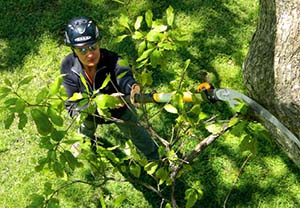 Urban Forestry Specialist Lindsey Purcell‘s helpful publication “Tree Pruning Essentials” is now available in a Spanish-language version, “Lo Esencial Para la Poda de Árboles.” This publication explores the techniques behind good pruning, from the planning process before planting to monitoring the tree’s response after the pruning cuts.
Trees continue to survive in spite of the many challenges they face in the urban environment. However, to grow from seedling to a mature tree in the urban forest, they need our help. They are the largest, oldest living organisms on the planet and can live long, healthy lives with some assistance. We often place trees in less-than-favorable growing locations that don’t allow natural development and maturity and often require pruning to develop a durable structure, improve clearance and maintain aesthetics.
Pruning has been called “one of the best, worst maintenance practices” performed on trees. The process creates wounds, which have a major impact on plant processes. Improper cutting on a tree causes severe damage or even death. To prune properly, it is important to understand both the proper techniques and how the tree responds to pruning.
Check out “Lo Esencial Para la Poda de Árboles” or “Tree Pruning Essentials” and make sure you are pruning your trees to maximize safety, aesthetics, and tree health!
Resources:
Lo Esencial Para la Poda de Árboles (Tree Pruning Essentials)– The Education Store, Purdue Extension Resource Center
Instalación de Árboles: Proceso y practicas (Tree Installation) – The Education Store, Purdue Extension Resource Center
Tree Pruning Essentials – The Education Store
Trees and Storms – The Education Store
Tree Risk Management – The Education Store
Prune Your Trees – Indiana Department of Natural Resources
Lindsey Purcell, Urban Forestry Specialist
Purdue University Department of Forestry and Natural Resources

Recent Posts
- Combine & Field Fires, IN-PREPared
Posted: September 25, 2025 in Safety, Urban Forestry, Woodlands - Researchers Study Deer-Vehicle Collision Reduction Method
Posted: July 31, 2024 in Safety, Wildlife - MyDNR – First positive case of chronic wasting disease in Indiana
Posted: April 29, 2024 in Alert, Disease, How To, Safety, Wildlife - Cicadas in Spring! – Purdue Landscape Report
Posted: April 9, 2024 in Forestry, Plants, Safety, Wildlife - New Deer Impact Toolbox
Posted: April 7, 2024 in Forestry, Land Use, Plants, Publication, Safety, Wildlife, Woodlands - Help Research Chronic Wasting Disease – Wild Bulletin
Posted: April 3, 2024 in Disease, Forestry, How To, Safety, Wildlife, Woodlands - How to Interact with Young Wildlife This Spring, MyDNR
Posted: March 28, 2024 in Forestry, How To, Safety, Wildlife, Woodlands - Barn Owls in Goose Pond Fish & Wildlife Area Nest Box, MyDNR
Posted: March 4, 2024 in Forestry, Land Use, Safety, Wildlife, Woodlands - Learn About Lead: Avoiding Lead Ingestion in Wild Game, Wild Bulletin
Posted: December 8, 2023 in Alert, Disease, How To, Safety, Wildlife - Wildlife Wins of 2023, Wild Bulletin
Posted: in Aquaculture/Fish, Aquatic/Aquaculture Resources, How To, Safety, Wildlife
Archives
Categories
- Alert
- Aquaculture/Fish
- Aquatic/Aquaculture Resources
- Ask the Expert
- Christmas Trees
- Community Development
- Disease
- Drought
- Forestry
- Forests and Street Trees
- Gardening
- Got Nature for Kids
- Great Lakes
- How To
- Invasive Animal Species
- Invasive Insects
- Invasive Plant Species
- Land Use
- Natural Resource Planning
- Nature of Teaching
- Plants
- Podcasts
- Ponds
- Publication
- Safety
- Spiders
- Timber Marketing
- Uncategorized
- Urban Forestry
- Webinar
- Wildlife
- Wood Products/Manufacturing
- Woodland Management Moment
- Woodlands