 Purdue University - Extension - Forestry and Natural Resources
Got Nature? Blog

May IDNR Wildlife Bulletin Newsletter: Do you know what to do if you find an injured wild animal? The first step is determining if it is actually injured. Clear signs of distress include:
- Bleeding or clear signs of injuries such as bruises, cuts, punctures or broken bones
- Looks thin, weak, cold or soaking wet
- Signs of diarrhea
- Flies, fly eggs, maggots, ticks, lice or fleas have infested the animal
If a wild animal shows any of these signs and is unable to move or run away effectively, it may be time to call a licensed wildlife rehabilitator for help. You can find a list of wildlife rehabilitators on IDNR Orphaned & Injured Animals website.
Please note that the Indiana DNR does not provide services for injured or orphaned wildlife. We rely on licensed wildlife rehabilitators to assist with these situations.
Resources
Orphaned & Injured Animals, Indiana Department of Natural Resources (IN DNR)
Resourceful Animal Relationships, The Education Store, Purdue Extension resource center
Wildlife, Playlist, Purdue Extension – Forestry and Natural Resources (FNR) YouTube channel
How to Stop Woodland Animals from Digging in Your Flower Pots, Got Nature? Blog with video, Purdue Extension FNR
Considerations for Trapping Nuisance Wildlife with Box Traps, The Education Store
Indiana Department of Natural Resources (IN DNR)
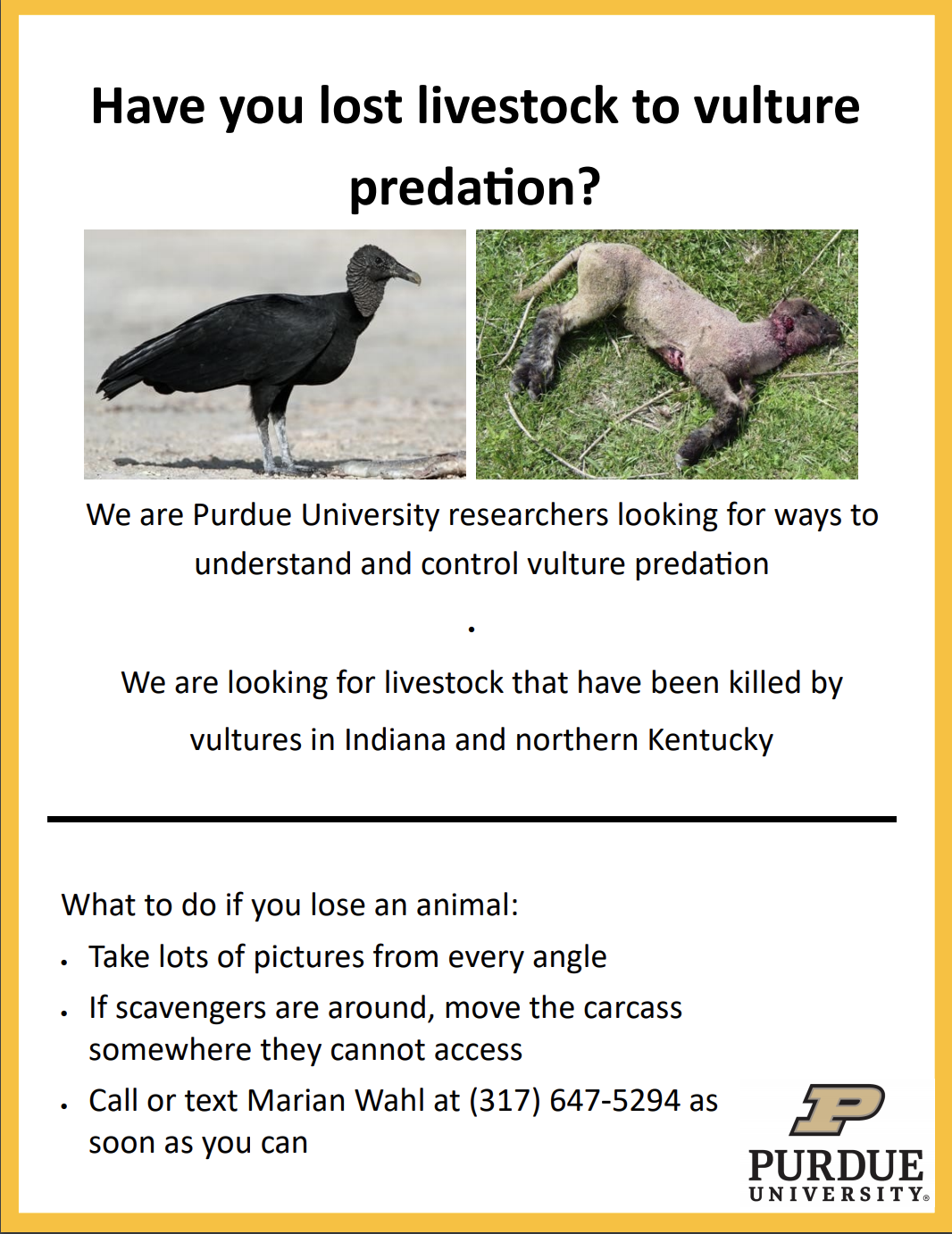 Across the globe, most vulture species are declining dramatically. This is concerning because vultures provide valuable ecosystem service by cleaning the environment of carrion, thereby reducing disease risk for humans and livestock. In contrast to most other vulture species, populations of the American black vulture have grown and expanded into new areas during the past several decades. This has created the potential for conflict because black vultures have been documented to kill weak or newborn livestock.
The Purdue Forestry and Natural Resources’ research team seeks to better understand vulture ecology to inform conservation of other vulture species, as well as to understand how best to minimize conflict between vultures and producers by investigating what factors place some farms at greater risk.
What to do if you lose an animal:
• Take lots of pictures from every angle.
• If scavengers are around, move the carcass somewhere they cannot access.
• Call or text Marian Wahl at (317) 647-5294 as soon as you can. Marian is a graduate research assistant working with Pat Zollner, professor of wildlife science.
Thank you for your help as we gather livestock loss due to vultures in the states of Indiana and Kentucky.
To view, print and share flyer: Loss of Livestock to Vultures.
Resources
Livestock, Education Store, Purdue Extension resource center
Dr. Pat Zollner Research, Purdue Forestry and Natural Resources
Wildlife Research, Purdue Forestry and Natural Resources
Marian Wahl, Graduate Research Assistant
Purdue Department of Forestry and Natural Resources
Purdue Landscape Report: Homeowners can easily become injured – often fatally – while attempting to trim trees near overhead electrical wires. Though it is tempting to try to save money with this “do-it-yourself” approach, the potential for electrocution is not worth the risk. It is important to recognize when to call a professional arborist.
Terrible accidents can happen when a homeowner uses any type of cutting tools and/or ladders when attempting to trim backyard trees and shrubs. Overhead wires are often unnoticed and is touched by directly or indirectly, causing injury or death.
Examples include:
- A homeowner climbed a ladder to trim a tree branch that was dropping leaves into his above ground swimming pool and causing a nuisance. A branch came in contact with the power line, shocking the man with a jolt of electricity and sending him into cardiac arrest. He fell 20 feet to the ground but was revived by medics at the scene.
- MATTHEWS, N.C. — A man trimming trees in a neighborhood was shocked Wednesday morning after a limb fell on power lines, authorities said. Nearby resident Margie Owens knows the man and said he does odd jobs around the neighborhood. According to officials, after the limb fell from pruning, the tree continued to be energized by the power line, leaving the man stuck.
- A Charlotte County man was electrocuted trimming trees in a backyard. The victim was part of a landscaping crew and came in direct contact with a utility line.
Preventable Accidents
Tree limbs can conduct electricity. When trees grow near overhead wires, they can contact the wires and become energized. Trees and wires are dangerous, full of electrical power that can injure or kill humans. How do we know which lines are energized? WE DON’T! Assume all are carrying dangerous electrical current and should be avoided when working around them.
A common house switch carries 120 volts, but the electric flow is usually limited to 10, 15 or 20 amps. A common “house drop” (service wire) contains 240 volts and up to 20 amps or more. Given the right set of circumstances, even the shock a person gets from a common light switch can kill, but at the same time, it is easier to break electrical contact while standing inside a house. If a person is climbing a ladder or is in the tree, it may be more difficult to break contact with the energized wire. This means that the service line over a typical yard could easily kill a person.

Utility service providers can help select a tree which is compatible with nearby lines and reduce the need for excessive pruning to maintain safety and reliability

These powerlines could be “energizing” the tree creating a potential shock hazard for anyone touching the tree. Notice the burning on the new growth.
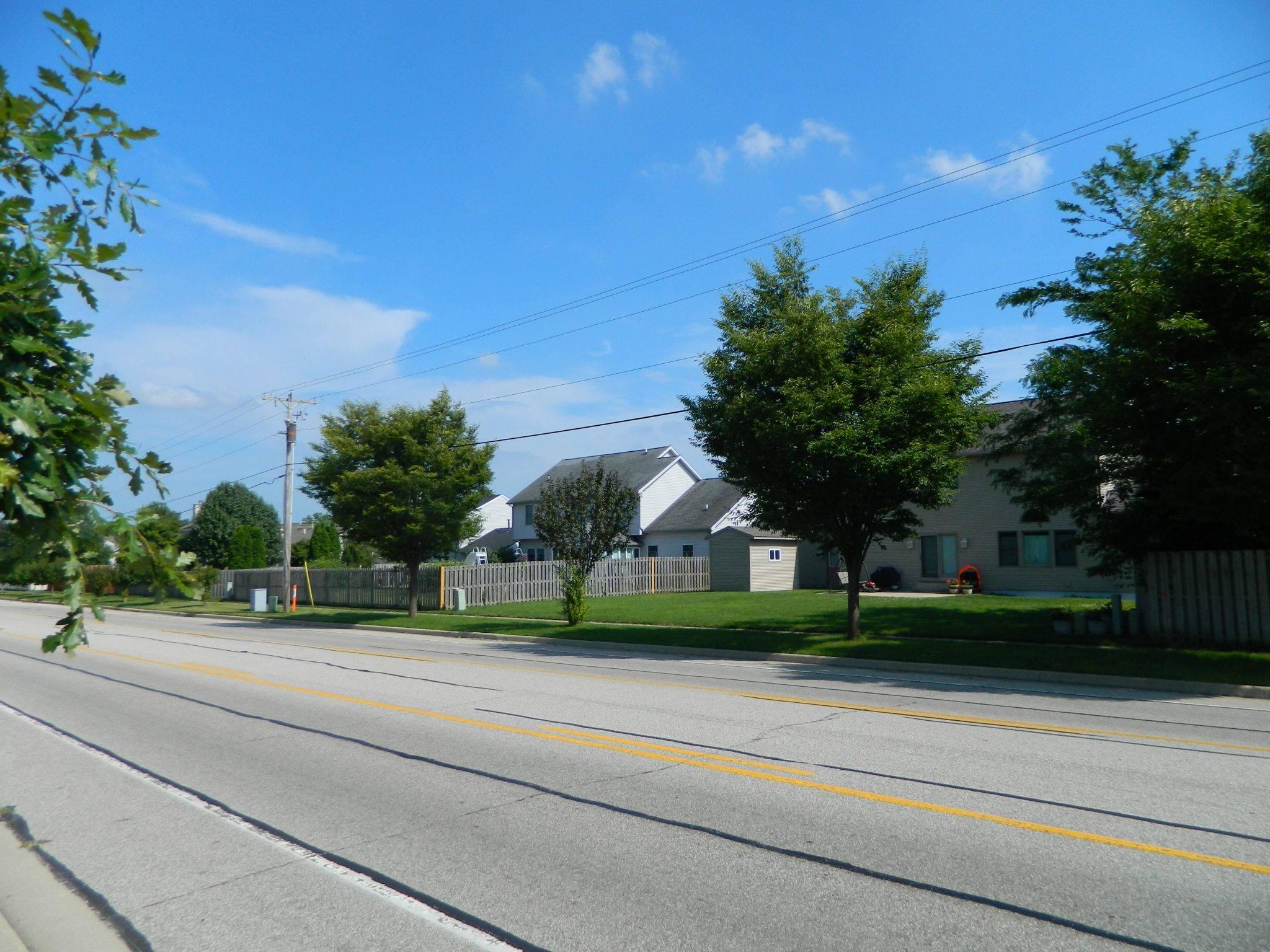
Trees growing into utility lines should be pruned by a qualified arborist.
Here are a few tips to avoid trees in wires:
- Look for power lines before pruning trees and large shrubs. If lines are anywhere near the tree within 10 ft. don’t attempt any tree work. Tree care professionals have the training and equipment needed to perform these tasks safely.
- Never climb a tree in order to prune it. Even if the wires aren’t currently touching the tree, remember that the tree’s branches will shift once you begin climbing or removing limbs.
- Don’t move ladders or long-handled pruning tools around the yard without first looking up. Always read and heed ladder-use safety labels.
Find a professional
Be sure to always hire an insured, tree care professional, preferably and ISA Certified Arborist with the experience, expertise, and equipment to safely take down or prune trees in wires. Require proof of liability insurance to protect yourself as well.
Another easy way to find a tree care service provider in your area is to use the “Locate Your Local Tree Care Industry Association Member Companies” program. For more information refer to the publication Trees and Utilities at the Purdue Education Store.
Find a certified arborist in your area by going to Trees are good website.
Resources:
Tree Pruning for the Landscape, Video, Purdue Extension – Forestry and Natural Resources YouTube Channel
Tree Pruning Essentials, Video & Publication
Tree Appraisal and the Value of Trees, The Education Store, Purdue Extension’s resource center
Tree Pruning: What Do Trees Think?, The Education Store
Mechanical Damage to Trees: Mowing and Maintenance Equipment, The Education Store
Tree Installation Process and Practices, The Education Store
Purdue Extension forester Lenny Farlee tells you where to find and how to identify a species that clings to many of our trees, poison ivy. Protect yourself from the itch by recognizing this species before it is a problem.
If you have any questions regarding trees, forests, wildlife, wood products or other natural resource topics, feel free to contact us by using our Ask an Expert web page.
Resources
Poison Ivy, Purdue Landscape Report
Poison Ivy, Purdue Extension
Poison Ivy, The Education Store, Purdue Extension resource center
Investing in Indiana Woodlands, The Education Store
Tree Appraisal and the Value of Trees, The Education Store
Forest Improvement Handbook, The Education Store
ID That Tree, Playlist, Purdue Extension – Forestry and Natural Resources Youtube Channel
A Woodland Management Moment, Playlist, Purdue Extension – Forestry and Natural Resources Youtube Channel
Lenny Farlee, Sustaining Hardwood Extension Specialist
Purdue University Department of Forestry and Natural Resources
Purdue Landscape Report: Now that we’ve reach midsummer, many people tending to small plants and bushes may notice small odd round grey objects attached to their plants that are made by potter wasps. Do you need to do anything about them? Do these nests help or harm your plants? And are they dangerous to people?
What do they look like?
You are more likely to notice the nests of potter wasps than the adults. Potter wasp nests often look, like the name suggests, like a small grey pot (figure 1). They are rounded with a small opening that looks like the neck of a vase and are about the size of a cherry tomato. These wasps will attach their nests to many different surfaces but tend to prefer plant and bush stems. Potter wasp nests are often found hidden behind foliage in bushes.
Potter wasp adults come in a variety of colors but all of them look like small hornets. The most common species found in Indiana are mostly black with pale yellow bands around their abdomen (figure 2).
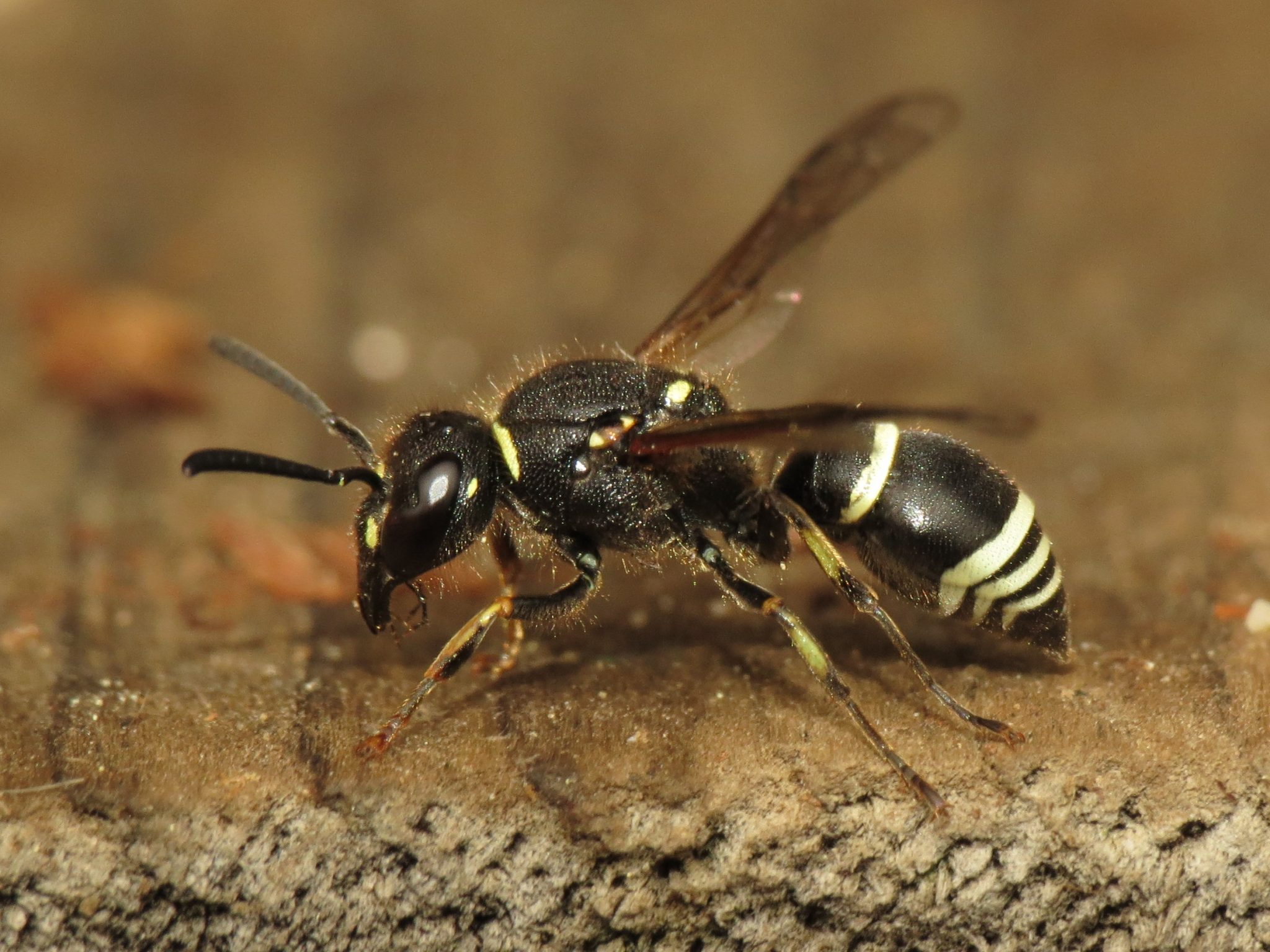
Figure 2. An adult potter wasp resting. This is just one of many different species of potter wasps. Photo by Fyn Kynd on flickr
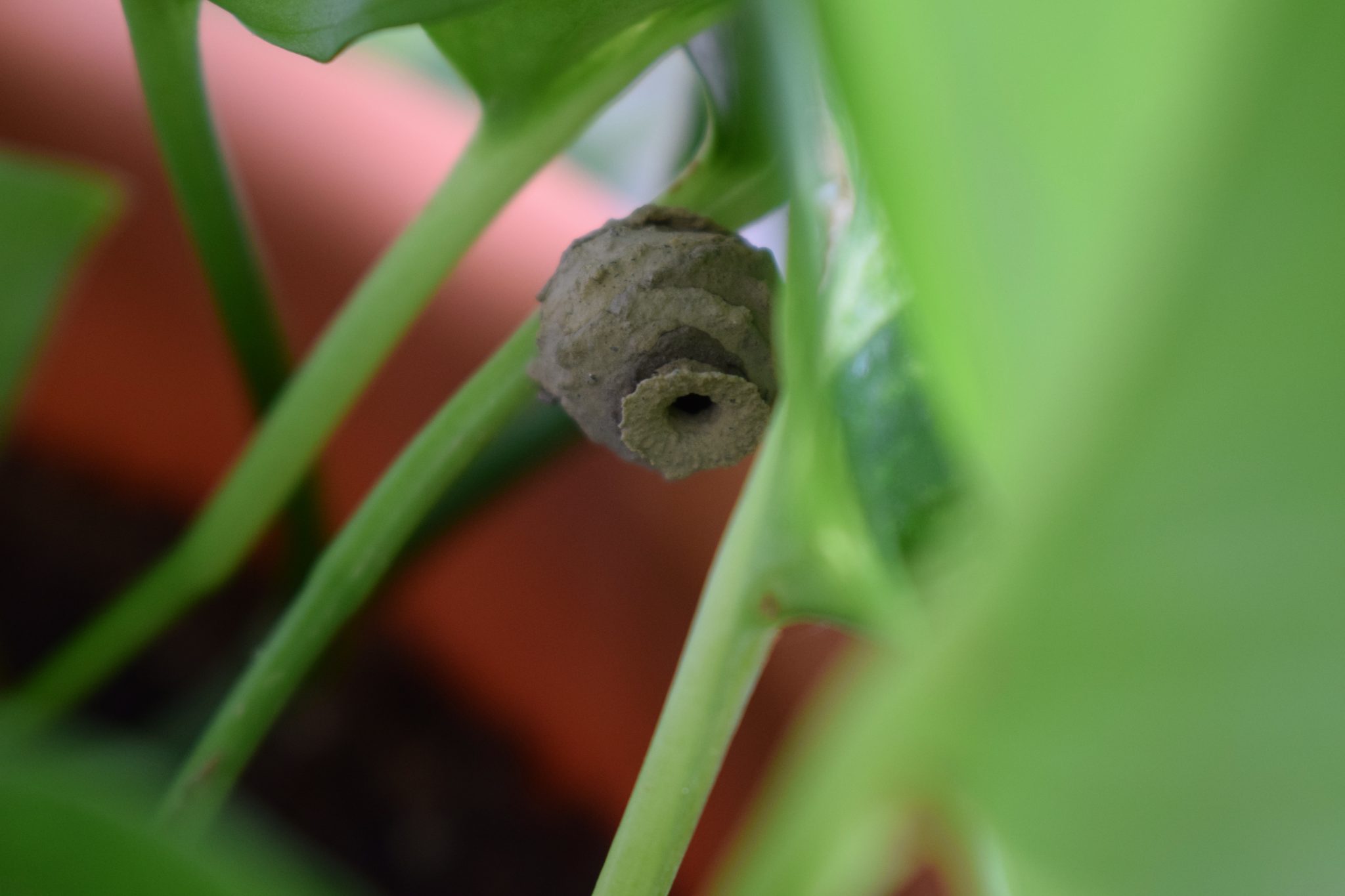
Figure 1. Close up of a potter wasp nest attached to the stem of a house plant. Photo by Elizabeth Barnes, Department of Entomology, Purdue University.
How do they help plants?
Each “pot” that the wasps build is a tiny nursery for a single wasp. Adult potter wasps lay a single egg in each “pot” and then fill it with paralyzed caterpillars and small beetle larvae. When the wasp egg hatches it has all the food it needs to develop into an adult contained in the pot. Each wasp does a small part to keep down the number of caterpillars in the landscape which can reduce the amount of leaf damage on nearby plants.
Will they hurt me?
Probably not! Potter wasps don’t defend their nests and are generally not aggressive. Unless you actively try to bother them they will probably not bother you. If you need to remove one of their nests, you can simply pull it off the plant or object that it’s attached to. However, since they help with pest control, you may want to either leave the nest be or relocate it to a different section of the landscape.
Does anything else look like the “pots”?
Although the “pots” have a very distinct shape there are a few other things that could be confused with them at first glance. Mantis egg masses (ootheca) and some types of galls are both about the same size as potter wasp nests and also often grey. However, they both lack the vase neck-like opening that potter wasp nests have.
What should I do if I see one?
Let it be! Since these wasps rarely sting and help keep caterpillar populations down leave them alone so that they can continue to act as biocontrol agents. If you think you’ve seen a potter wasp or one of their nests and would like help identifying it, take a picture and either upload it to a community science project like iNaturalist or send a picture to the author of this article.
Resources
Social Bees and Wasps, The Education Store, Purdue Extension resource center
Parasitic Wasps, The Education Store
Mud Daubers, The Education Store
Cicada Killers, The Education Store
Industrial, Institutional, Structural and Health-Related Pest Management, The Education Store
Elizabeth E Barnes, Exotic Forest Pest Educator
Purdue University Department of Entomology
Across the entire United States, and into Canada and Mexico, coyotes can be found just about everywhere. But what would you do if you encountered a coyote while out all alone? Would you feel comfortable knowing how to act? How about how to keep your children or pets safe in such an encounter?
In our June 11th Ask the Experts series, “Coexisting with Coyotes,” Purdue researchers Brian MacGowan and Bee Overbey talked about these topics and more. As a keystone species in their ecosystem, coyotes play an extremely important role in maintaining population levels of other animals, such as deer, rabbits, raccoons, and voles. By keeping these populations in check, plants and trees are better able to grow, and this creates greater biodiversity and healthier habitat. And coyotes are not going anywhere! This resilient, intelligent species has learned to adapt around humans and every change that we bring.
Check out the video below to learn more about coyotes, how important they are to the lands where they are found, and tips on how to coyote-proof your property and keep yourself and your loved ones safe in coyote encounters. By working together, we can easily and safely coexist with this vital native species.
Resources
Ask an Expert, Playlist, Purdue Extension – Forestry and Natural Resources (FNR) YouTube Channel
Coyotes, IN DNR
Coyotes (PDF), Wildlife Conflicts, Department of Entomology, Purdue University
Coexisting With Coyotes, Wild Bulletin, Indiana Department of Natural Resources, Division of Fish and Wildlife
Urban Coyotes – Should You Be Concerned?, Purdue Extension – FNR Got Nature? Blog
Pets Disappearing? The Cause May Be Coyotes, Purdue Extension – FNR Got Nature? Blog
Question: Which is the correct species of coyotes I have on my land here in Indiana, coyote or coywolf?, Purdue Extension – FNR Got Nature? Blog
Permitted Wildlife Rehabilitators, Indiana Department of Natural Resources
Dealing with Nuisance Coyotes, Indiana Department of Natural Resources (IN DNR)-Fish and Wildlife
Urban Coyote Research Center, Urban Coyote Ecology & Management, Cook County, Illinois
Brian MacGowan, Wildlife Extension Specialist
Purdue Forestry and Natural Resources
Brande (Bee) Overbey
Purdue Forestry and Natural Resources
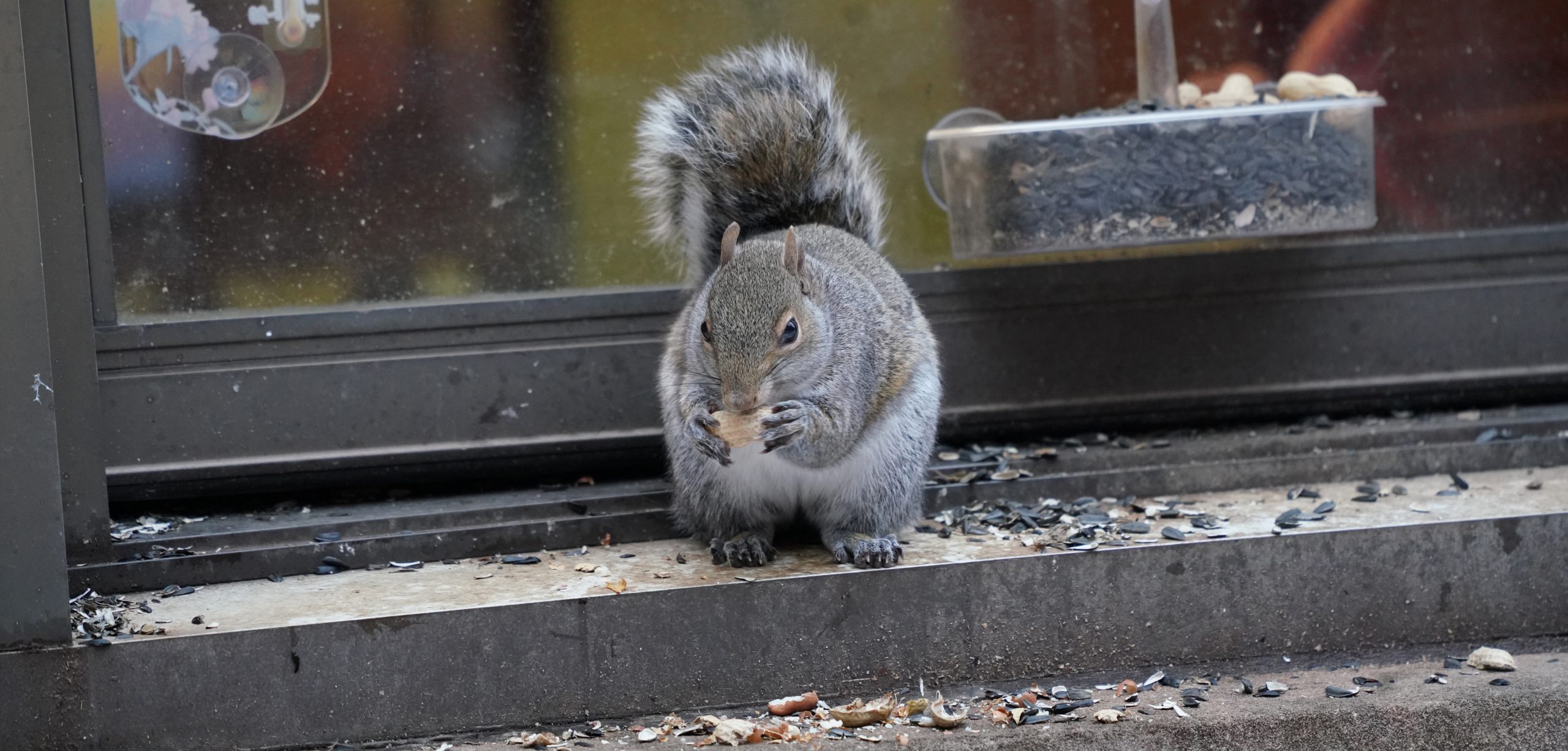
Question: We live in eastern Tippecanoe county and have a couple of adult squirrels that seem to be sick. They act like they are drunk — falling over frequently. We have two apple trees in blossom, and they come and nibble on fallen branches/blooms. As they sit on their hind legs to eat, they fall over on the ground like they are dead. Then after a few minutes/flip around and get up again, only to fall over “dead” again. This has been going on for a few weeks. We also have a baby that is not afraid of people – does not run away from me or our dog. This baby appears to have missing hair/or possible mange? We also had a raccoon in early March that came toward my husband in the yard – was not afraid of him. It did not appear rabid, but did not run away either. We do have several bird feeders, one of which squirrels and chipmunks sit on and eat the bird food. Is what they are eating making them “sick/drunk” or is this something else? I googled and found possible raccoon roundworm? What do YOU think this is — and could these cases be related? How should I dispose of any dead animals, and should I be concerned for us or our dog?
Answer: What you describe could be a number of wildlife diseases. The clinical signs of many of these diseases are often similar and infection can only be determined through specific examinations, tests or lab work. It may be canine distemper. Both squirrels and raccoon can carry canine distemper. The disease is spread by direct contact with body fluids or droppings of an infected animal. Humans cannot get distemper. However, it may also be another disease or a separate disease for each species. Your choices are really to 1) do nothing or 2) contact a wildlife rehabilitator (see below). In Indiana, wildlife rehabilitators have necessary state and federal permits to house and care for sick or injured wild animals. No federal or state agencies will provide care for sick and injured animals.
Since wild animals can carry diseases that are dangerous to people, direct contact with wildlife is discouraged. Just as the case with people, you can’t tell if an animal is sick just by looking at them. Expression of clinical signs of diseases are not the same for every animal. It may also take a period of time for clinical signs to present themselves. An animal that appears perfectly healthy may have a disease, and may be able to transmit the disease.
I could find no specific guidelines for the disposal of dead wild animals. The Indiana State Board of Animal Health lists allowable methods of dead animal disposal, but these do not apply to wildlife, which they specify as creatures not under someone’s care. This is guidance on the DNR website for:
Dead Birds: “According to Indiana State Department of Health guidelines, if you need to dispose of a dead bird, do not handle it with your bare hands. Use gloves or a plastic bag turned inside out over your hand to pick up the bird and dispose of the bird/bag in the trash. You can follow these recommended disposal procedures regardless of the cause of death, if testing is not available.”
Dead Bats: “Do NOT pick up a bat with your bare hands. Any wild animal can carry disease, therefore precautions should be taken if an animal needs to be moved. Wear heavy-duty leather gloves and scoop up the bat with a shovel or container. If the bat is alive move it to a tree branch, away from nearby buildings if possible. To dispose of a dead bat, scoop it into a plastic bag. Place it into another plastic bag, close it securely, spray with disinfectant, and dispose of it in your trash.”
• Indiana Licensed Wildlife Rehabilitators, Indiana Department of Natural Resources – Fish and Wildlife.
Other Resources
Protecting Yourself from Wildlife Diseases: Raccoon Roundworm (Baylisascaris procyonis), The Education Store, Purdue Extension resource center
Indiana Animal Disease Diagnostic Laboratory
Orphaned Wildlife, Got Nature? blog
Orphaned & Injured Animals, Indiana Department of Natural Resources (IDNR)
Purdue Extension – FNR: Ask An Expert, Video, Purdue Extension – Forestry and Natural Resources YouTube channel
Brian MacGowan, Wildlife Extension Specialist
Purdue University, Department of Forestry and Natural Resources
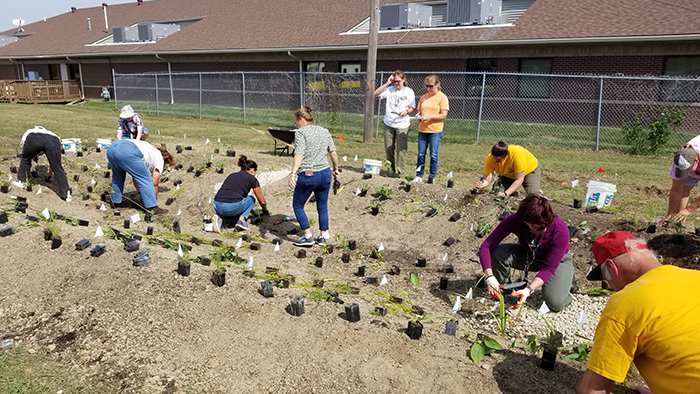
The Purdue Extension and Illinois-Indiana Sea Grant Rainscaping Education Program was highlighted in the National Oceanic and Atmospheric Administration’s Education Accomplishments Report (pdf) for fiscal year 2019.
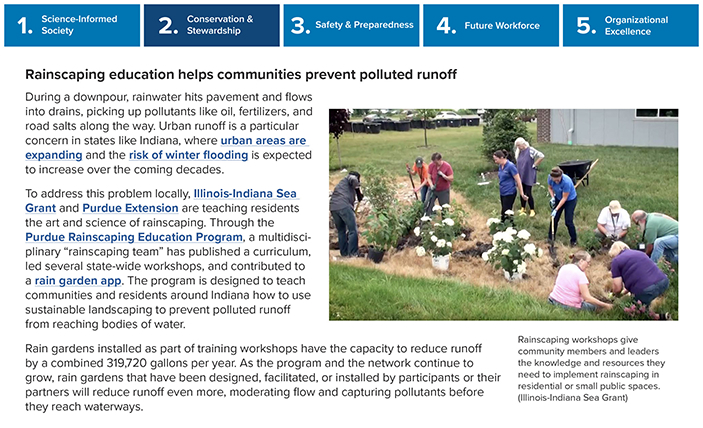
This report highlighted all of NOAA’s greatest accomplishments related to education in five main goal areas: science informed society, conservation and stewardship, safety and preparedness, future workforce and organizational excellence.
The Rainscaping Education Program was featured in the Conservation and Stewardship section of the report. The Purdue Rainscaping Education Program offers state-wide training for Purdue Master Gardeners, conservation agencies and organizations, stormwater professionals and landscape companies and consultants. Through two-day workshop sessions, the program provides an introduction to rainscaping and rain gardens, including segments on site selection, plant selection, garden design, installation, maintenance and community engagement.
“It is wonderful to have the innovative and collaborative work of the Purdue Rainscaping Education Team recognized for its efforts,” Kara Salazar, assistant program leader and extension specialist for sustainable communities said. “The team has been working together since 2013 to develop and implement the interdisciplinary program addressing the need for community education on sustainable landscape practices to prevent polluted runoff.”
Salazar and John Orick, Purdue Master Gardener State Coordinator, are co-leads on the project. View the full Rainscaping Team.
The featured segment on the Rainscaping program from the NOAA annual report is below.
Resources
What is Rainscaping? Purdue Rainscaping Education Program Video, Purdue Extension
Q&A About Drainage Water Recycling for the Midwest, The Education Store, Purdue Extension resource center
Become a Purdue Master Gardener, The Education Store
Plan Today For Tomorrow’s Flood, The Education Store
Kara Salazar, Assistant Program Leader and Extension Specialist for Sustainable Communities
Department of Forestry and Natural Resources
ArcGIS.com
Unmanned Aerial Systems and Burn Management Strategies
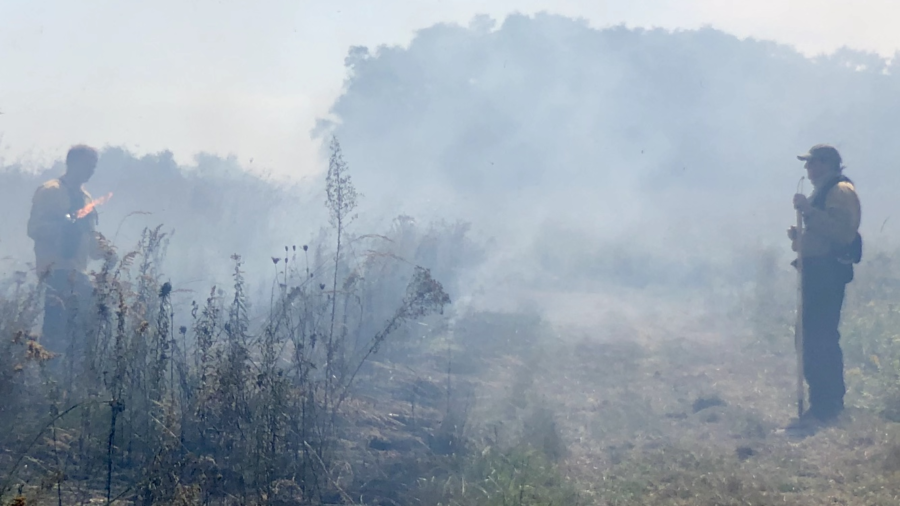
On September 19, 2019 a controlled burn was conducted on the Doak grassland and forest property, owned and managed by the Department of Forestry and Natural Resources at Purdue University. Burn events such as this one present a unique opportunity to demonstrate how UAS can be utilized as an effective tool to both monitor the burn events in real time, but also to effectively gather data before and after the burn to map and better manage vegetation. This collection of maps, videos, and images provide a narrative on how UAS can be used as an effective tool in controlled burn management practices. Beyond controlled burns, the story should demonstrate how UAS can be used to better monitor and inventory other disturbance events, whether they are planned or unexpected.
A Collaborative Effort
The data collected for this event represents a collaborative effort between multiple colleges at Purdue University and private industry. Employees with Purdue Forestry and Natural Resources (College of Agriculture) performed and managed the burn while data collection for the pre and post-burn mapping was conducted by student researchers and pilots from the Purdue School of Aviation and Transportation Technology (SATT; Polytechnic Institute). Peter Menet and Chris Johnson from MenetAero provided aerial monitoring support throughout the controlled burn. A total of three different aircraft were used during this event. The SATT student pilots deployed a C-Astral Bramor PPX equipped with a MicaSense Altum 6 band multispectral sensor at 121 meters before and after the event for mapping purposes. MenetAero deployed a C-Astral C4Eye to monitor the burn in real time using EO/Thermal IR video with real time geographic coordinates at 121 meters while SATT students monitored the burn with a DJI M600 equipped with a Zenmuse XT2 sensor at lower altitudes.
Monitoring the Burn:
The nimble nature of UAS makes them ideally suited to deploy rapidly, and into tight situations otherwise too dangerous for ground crews and manned aircraft. Add to this the aerial perspective offered by UAS via real-time video feed, and you have the perfect platform to assist in hazard events such as fire. The real-time video feed allows the UAS pilot and crew to communicate with ground-based fire crews, providing information on potential hazards and overall fire behavior patterns. For this aerial perspective to be effective, however, the video needs to have geospatial context so what the UAS operator is seeing is effectively communicated to ground-based fire crews. Full-Motion-Video, or video that has metadata with geospatial coordinate information, is a game changer in this regard. The video below shows how software such as Remote Geosystems Line Vision Ultimate can place video in a geospatial context. The video below is being played after the flight, but Pete Menet from MenetAero had the video live streaming to his Ground Station during the flight and was able to effectively serve as an ‘eye in the sky’ to provide real time information to ground based crews. This was all done in a controlled burn, but this same technology and method is used by MenetAero during Wild Fire Events where MenetAero provides UAS services as a contractor with the U.S. Department of Interior. Peter Menet and the MenetAero crew were kind enough to donate their services and time to the controlled burn event this day as part of a collaborative research effort between industry and Purdue.
A Before and After Comparison
Prior to recent advances in UAS technology, gathering imagery at sub-centimeter accuracy and resolution immediately before and after a planned burn event would prove difficult at best. The PPK technology on the C-Astral PPX allowed us to conduct the flights without the need to layout and survey ground control markers, but still achieve centimeter level accuracy by post-processing our data with a Continuously Operating Reference Stations in close proximity. Without UAS, getting satellite data within this time frame would have been pretty much impossible, and getting a manned aircraft to do this prohibitively expensive.
Making Sense of it all through Classification Analysis
Pre-Burn Land Cover Classification
When we think of disturbance events, we often think of the unplanned ones – fire, ice storms, wind storms, floods, etc. But what about planed disturbances such as a controlled burn, or a timber harvest operation? In the case of a planned disturbance, we have the ability to inventory land cover immediately before an event, and then with classification methods, quantify that land cover. Land Use/Cover classification methods are nothing new, and go back to the very beginnings of GIS/Remote Sensing, but new here is the ability to deploy a UAS to get this data in a way that is accurate and precise enough to classify down to resolutions of several square centimeters. Add to that the imagery was gathered less than an hour before the burn and you have some amazing potential for forestland management.
*Thank you to ArcGIS.com for sharing the great work of our FNR specialists as they continue to “strengthen lives and livelihoods” here in Indiana and around the world.
Resources
Unmanned Aerial Systems and Burn Management Strategies, Unmanned Aerial Systems and Burn Management Strategies webpage
Effective Firebreaks for Safe Use of Prescribed Fire, Got Nature? Blog, Purdue University Forestry and Natural Resources Extension
Prescribed fire: 6 things to consider before you ignite, Got Nature? Blog
Renovating native warm-season grass stands for wildlife: A Land Manager’s Guide, The Education Store, Purdue Extension resource center
Calibrating a No-Till Drill for Conservation Plantings and Wildlife Food Plots, The Education Store
Jarred Brooke, Extension Wildlife Specialist
Purdue Department of Forestry and Natural Resources
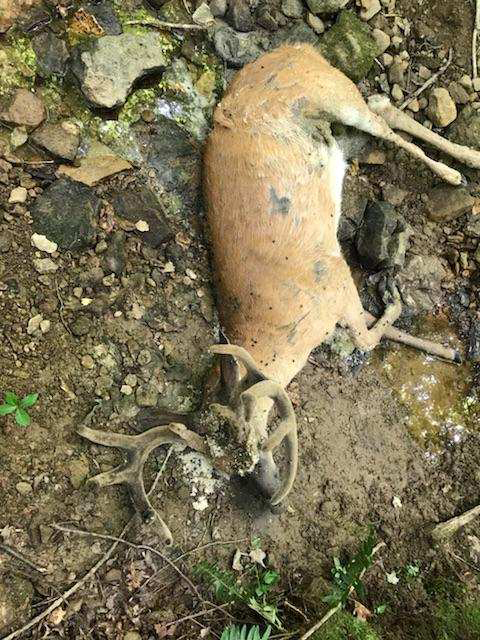
Deer that die from EHD are often found around water. This deer was found in August 2019 in Crawford County and was likely killed by EHD. Photo courtesy of Brody Wade.
Be on the watch for deer with EHD in Indiana
Recently, a white-tailed deer in Clarke County Indiana tested positive for Epizootic Hemorrhagic Disease (EHD), and potential EHD cases have been reported in 26 other Indiana counties. Here are a few things you should know about how EHD, how to spot it, and how to report it.
What is EHD and BTV?
Epizootic hemorrhagic disease (EHD) and bluetongue virus (BTV) are viral diseases, collectively called hemorrhagic diseases (HD), and are common in white-tailed deer. Both diseases are transmitted by biting midges often called “no-see-ums” or gnats. Neither disease is a human health issue, but they can cause significant mortality in white-tailed deer. Outbreaks of HD tend to impact deer populations locally, meaning an outbreak may occur in one part of a county but not in other parts.
When do EHD outbreaks occur?
EHD and BTV outbreaks often occur in late summer and early fall (August-September), especially in years with drought-like conditions. Drought causes water sources to shrink, which creates warm, shallow, and stagnant pockets of water creating ideal breeding habitat for the midges that transmit EHD. Deer also congregate in these areas to find water, which helps the midges pass the disease between infected and healthy deer. EHD outbreaks can last until a frost that kills the midges.
What are the signs of a deer with EHD?
Deer with EHD often appear weak, lethargic, and disoriented. Other signs of EHD in deer are ulcers in the mouth or on the tongue, swollen face, neck, or eyelids, and a bluish color to the tongue. Deer with EHD often search for water to combat the fever caused by the disease. EHD can be confirmed by testing blood and tissue (i.e., spleen) samples, but samples must be collected shortly after death.
Where am I likely to find a deer with EHD?
Because deer with EHD often seek out water to combat the resulting fever, deer killed by EHD are commonly found around water. If you have a stream, creek, river, or other source of water on your property, looking in the vicinity of those areas can help you locate deer that have succumb to EHD.
What do I do if I find a deer I think has EHD?
If you come across a sick or dead deer that you think has EHD you can report it through an online reporting system run by the Indiana DNR. Here is a link to the reporting system: Report a Dead or Sick Deer.
Can deer survive an EHD outbreak?
Yes, some deer will survive EHD. While up to 90% of deer that contract EHD may die from the disease, the deer that survive build up antibodies to EHD, which may make them immune to future outbreaks. Additionally, does may pass the antibodies and immunity to their offspring.
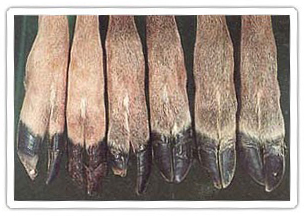
Sloughing or splitting hooves on two or more feet of a deer taken during the fall hunting season are typical of chronic HD. Photo courtesy of the Southeastern Cooperative Wildlife Disease Study.
How can I tell if a deer I killed during hunting season has survived EHD?
If you kill a deer during the hunting season this year, pay attention to the hooves. Deer that survive an EHD outbreak often have indentions or cracks on their hooves (see picture).
Sloughing or splitting hooves on two or more feet of a deer taken during the fall hunting season are typical of chronic HD. Photo used courtesy of the Southeastern Cooperative Wildlife Disease Study.
Are deer that have survived EHD safe to eat?
Yes, deer that have survived EHD are safe to eat.
For updated information on EHD in Indiana check out the Indiana DNR – Epizootic Hemorrhagic Disease web page.
Resources:
Report a Sick or Dead Deer, Indiana Department of Natural Resources (IN-DNR)
EHD Virus in Deer: How to Detect and Report video, Quality Deer Management Association
Epizootic Hemorrhagic Disease, Cornell University
How to Score Your White-Tailed Deer video, Purdue Extension – FNR YouTube Playlist
Deer Harvest Data Collection, Purdue FNR Got Nature? blog
Jarred Brooke, Wildlife Extension Specialist
Purdue Forestry and Natural Resources

Recent Posts
- Combine & Field Fires, IN-PREPared
Posted: September 25, 2025 in Safety, Urban Forestry, Woodlands - Researchers Study Deer-Vehicle Collision Reduction Method
Posted: July 31, 2024 in Safety, Wildlife - MyDNR – First positive case of chronic wasting disease in Indiana
Posted: April 29, 2024 in Alert, Disease, How To, Safety, Wildlife - Cicadas in Spring! – Purdue Landscape Report
Posted: April 9, 2024 in Forestry, Plants, Safety, Wildlife - New Deer Impact Toolbox
Posted: April 7, 2024 in Forestry, Land Use, Plants, Publication, Safety, Wildlife, Woodlands - Help Research Chronic Wasting Disease – Wild Bulletin
Posted: April 3, 2024 in Disease, Forestry, How To, Safety, Wildlife, Woodlands - How to Interact with Young Wildlife This Spring, MyDNR
Posted: March 28, 2024 in Forestry, How To, Safety, Wildlife, Woodlands - Barn Owls in Goose Pond Fish & Wildlife Area Nest Box, MyDNR
Posted: March 4, 2024 in Forestry, Land Use, Safety, Wildlife, Woodlands - Learn About Lead: Avoiding Lead Ingestion in Wild Game, Wild Bulletin
Posted: December 8, 2023 in Alert, Disease, How To, Safety, Wildlife - Wildlife Wins of 2023, Wild Bulletin
Posted: in Aquaculture/Fish, Aquatic/Aquaculture Resources, How To, Safety, Wildlife
Archives
Categories
- Alert
- Aquaculture/Fish
- Aquatic/Aquaculture Resources
- Ask the Expert
- Christmas Trees
- Community Development
- Disease
- Drought
- Forestry
- Forests and Street Trees
- Gardening
- Got Nature for Kids
- Great Lakes
- How To
- Invasive Animal Species
- Invasive Insects
- Invasive Plant Species
- Land Use
- Natural Resource Planning
- Nature of Teaching
- Plants
- Podcasts
- Ponds
- Publication
- Safety
- Spiders
- Timber Marketing
- Uncategorized
- Urban Forestry
- Webinar
- Wildlife
- Wood Products/Manufacturing
- Woodland Management Moment
- Woodlands