 Purdue University - Extension - Forestry and Natural Resources
Got Nature? Blog
Purdue Landscape Report: By now, the emerald ash borer (EAB) invasion is an old story for landscapes and forests in the Midwest. Since EAB was first found in North America in 2002 more millions of ash trees than we can know have died and this tiny insect continues to kill ash in an ever widening zone that currently includes 37 US states and 6 Canadian provinces. Arborists and landscape managers continue to protect valuable ash trees by use of systemic insecticides, typically applied via trunk injection every 2-3 years.
While EAB is the overarching threat, ash survival may also be threatened by wood decay fungi, which may colonize insect exit holes, injections sites and other wounds. The most common decay fungi we see in the lab are Perenniporia and Fomitopsis.
Perenniporia fraxinophila is the most frequently reported wood decay fungus on ash and causes a heart rot that contributes to loss of structural integrity of the tree. Infection sites tend to be high on the tree and may be easily overlooked until decay is advanced. The fungal structure is perennial, expanding each year, and may be confused with Ganoderma applanatum, the artist’s conk. The upper surface turns black or brown with age and the underside is white with pores instead of gills.
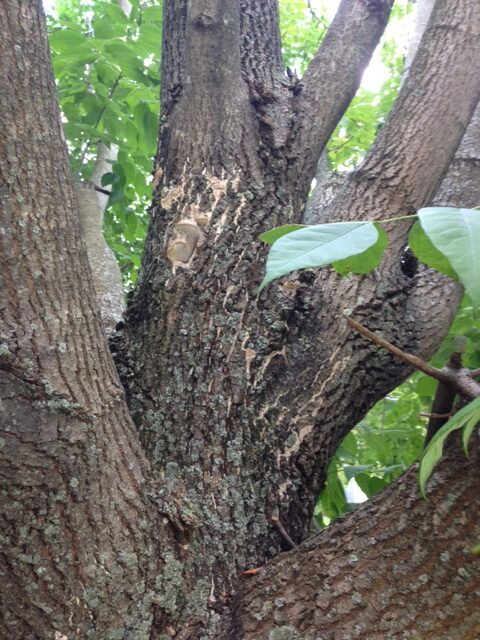

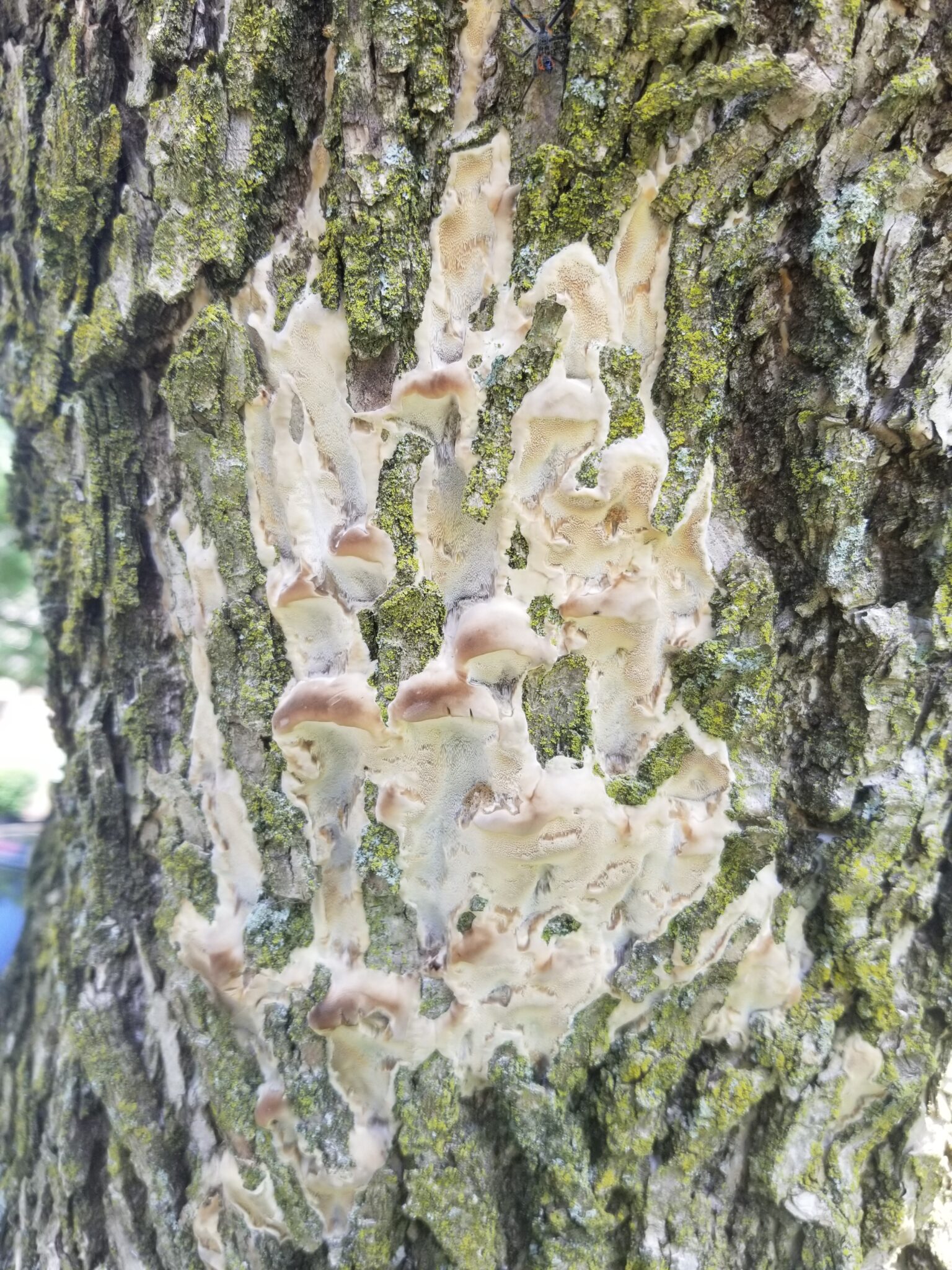
In the last few years, we have had a few samples of a similar fungus colonizing the trunk and base of ash trees, often near injection sites. Initially we were unable to identify the fungus, but DNA analysis revealed the fungus was a Fomitopsis species. This fungus develops a shallow shelf structure with white top and tan underside.
Fungal decay presents a greater risk to ash because it lacks the preservative enriched heartwood found in oak, walnut and other hardwoods that tends to slow down internal spread of fungi. Even fungi that initially invade dead areas of ash may rapidly colonize and degrade stem and trunk tissue.
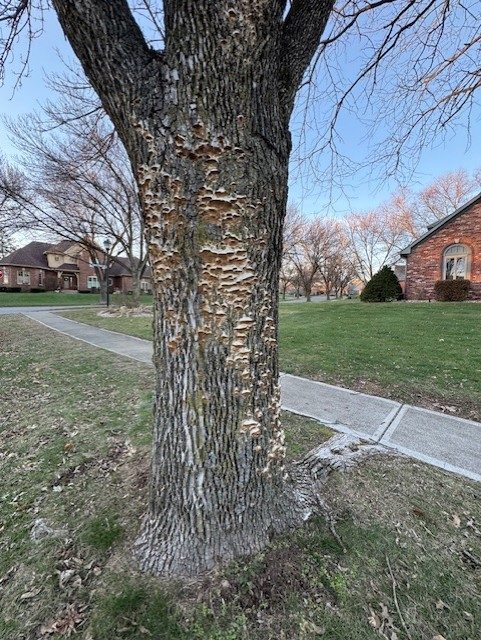
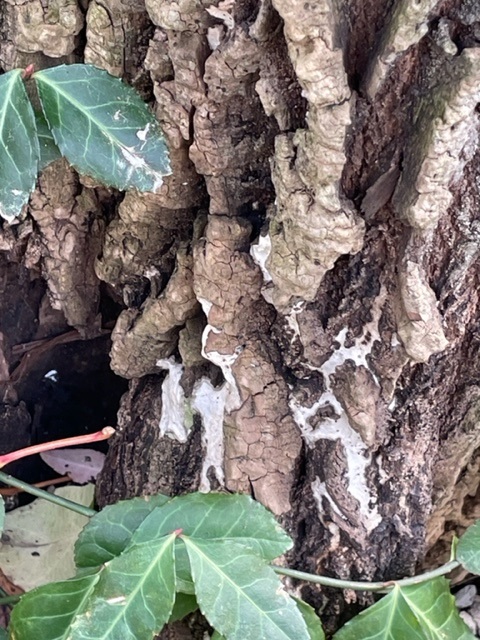
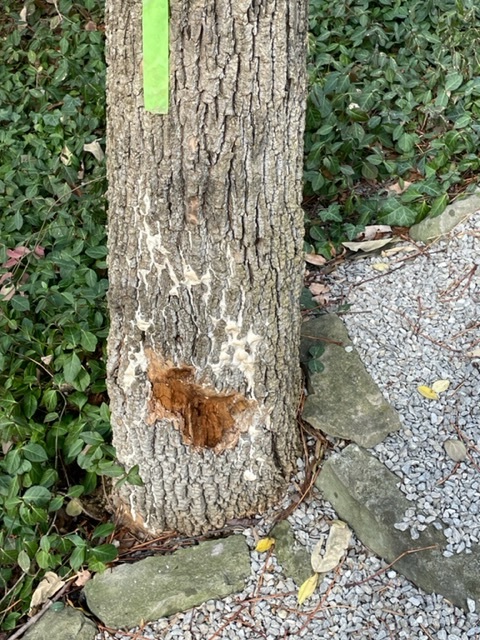
Fungal decay also disrupts vascular tissues in the stems and trunk, which further limits the movement and effectiveness of insecticide injections, so that infected trees may face greater damage from EAB. When found on small side branches the infection might be successfully pruned out, but in most cases the decay is in major branches or the trunk, which means the tree will need to be removed. If your ash trees that are being regularly treated for EAB but continue to show thinning and decline, check for these fungal invaders, they may be partly responsible.
View the original article on the Purdue Landscape Report website: Fungal Decay of Ash Trees.
Subscribe and receive the newsletter: Purdue Landscape Report Newsletter.
Resources:
Diplodia Tip Blight of Two-Needle Pines, The Education Store, Purdue Extension resource center
Boxwood Blight, The Education Store
Disease of Landscape Plants: Cedar Apple and Related Rusts on Landscape Plants, The Education Store
Planting Your Tree Part 1: Choosing Your Tree, Purdue Extension – Forestry & Natural Resources (FNR) YouTube Channel
Tree Planting Part 2: Planting a Tree, Purdue Extension – FNR YouTube Channel
Find a Certified Arborist, Trees are Good-International Society of Arboriculture (ISA)
Video: Step by Step to Find an Arborist, Trees are Good-International Society of Arboriculture (ISA)
Professional Forester, Indiana Forestry Woodland Owners Association
District Forester, Indiana Department of Natural Resources, 10+ acres
Trees and Storms: Understanding Damage, Risk and Recovery – Got Nature? Blog, Purdue Extension – FNR
Why Is My Tree Dying? – Got Nature? Blog, Purdue Extension – Forestry and Natural Resources
Tree Risk Management – Got Nature? Blog, Purdue Extension – FNR
Tree Pruning Essentials, Publication & Video, The Education Store
Tree Wound and Healing, Got Nature? Blog, Purdue Extension – FNR
What are Invasives Species and Why Should I Care?, Got Nature? Blog, Purdue Extension – FNR
Subscribe – Purdue Extension-FNR YouTube Channel
Tom Creswell, Plant & Pest Diagnostic Laboratory Director
Purdue Botany and Plant Pathology
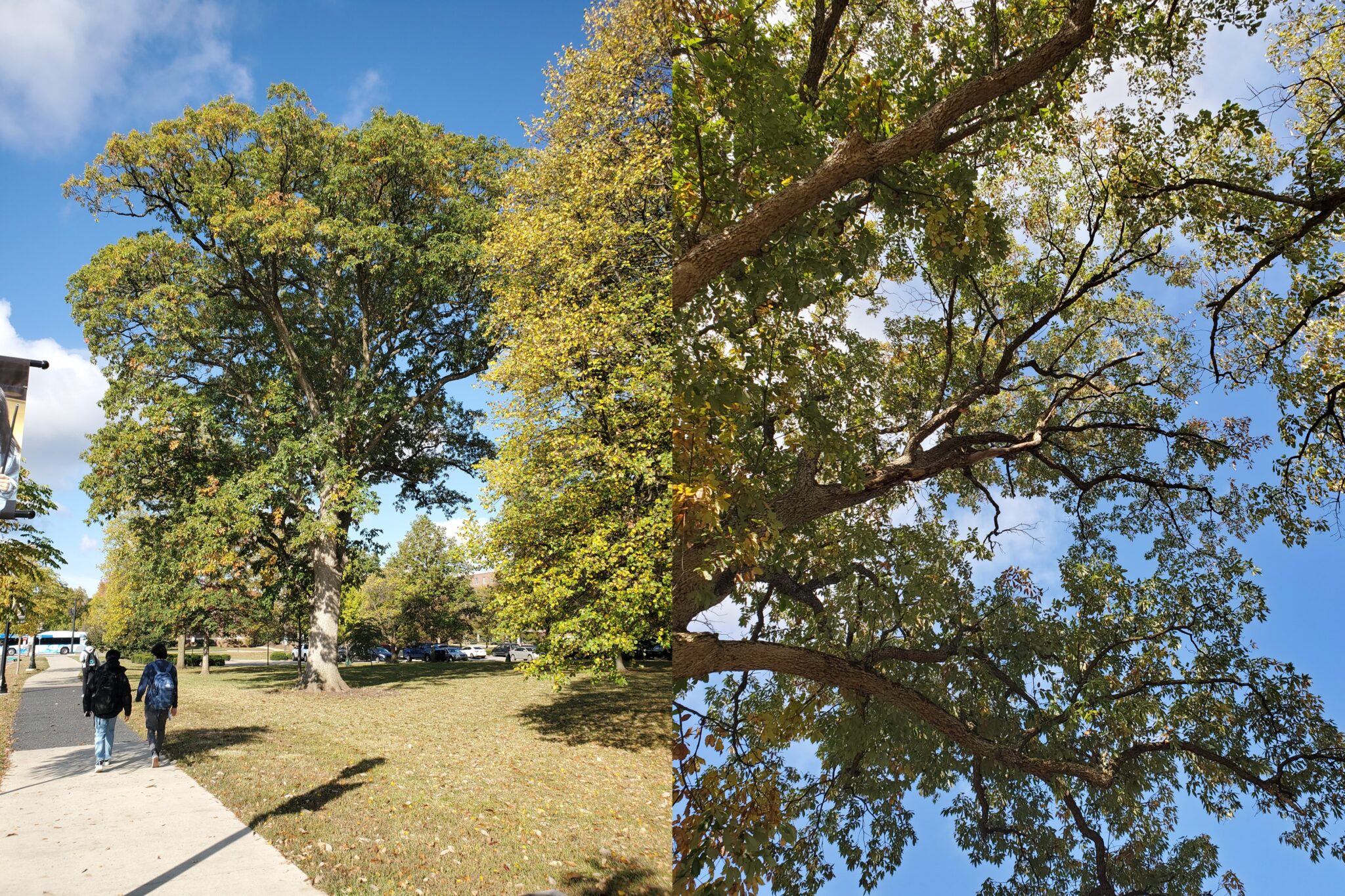
Figure 1: Mature oak tree known to be infected by Inonotus dryadeus on Purdue University West Lafayette campus. Right image shows limb death suggestive of tree decline.
Purdue Landscape Report: Inonotus dryadeus is one of the more common wood decay fungi we receive at the diagnostic lab in association with declining trees, specifically oaks. Inonotus is found so frequently on oaks it has the common name oak bracket fungus, but it can cause root rot of a number of other hardwood trees (including maples, sweet gum, buckeyes, chestnut, and ash) and conifers (fir, pines, spruce, and hemlock – mostly in western US).
Similar to other butt and root rots of trees, Inonotus causes internal decay near the base of the tree. Trees may not show any external symptoms while there is a raging root rot decaying everything holding it up, eventually leading to an unexpected failure of the tree during a windstorm. Trees with compromised root systems may also die suddenly during hot and dry weather. Most often, we see a gradual decline of infected trees with stunted growth, limb dieback, and/or sparse, off-color foliage; symptoms that may accelerate during adverse environmental conditions (Figure 1).
The only good thing about this fungus is that it is somewhat easy to identify. Inonotus produces a round to irregularly-shaped conk like structure each year from colonized host tissue, such as exposed roots, the trunk at the soil-line, or lower trunk (Figure 2). When it is young the conk is yellow to orange on the upper surface and white on the underside. Pores in the upper surface of the conk producing amber colored liquid can also be found earlier in the spring and early summer, lending to its other common name the weeping conk (Figure 3).
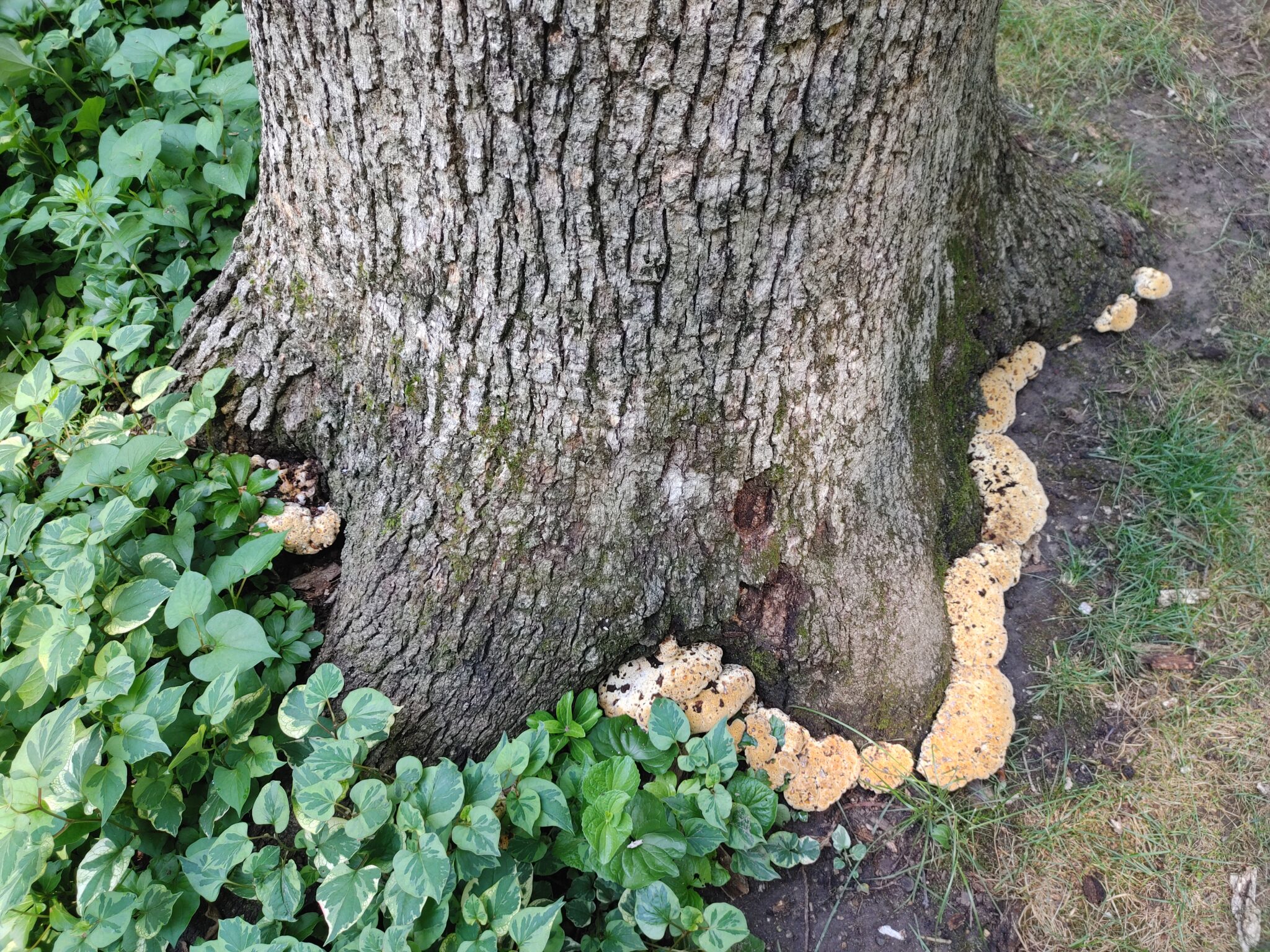
Figure 2: Extensive growth of Inonotus dryadeus from the base of an oak tree. The tree had significant limb dieback, was at risk of falling over, and subsequently removed.
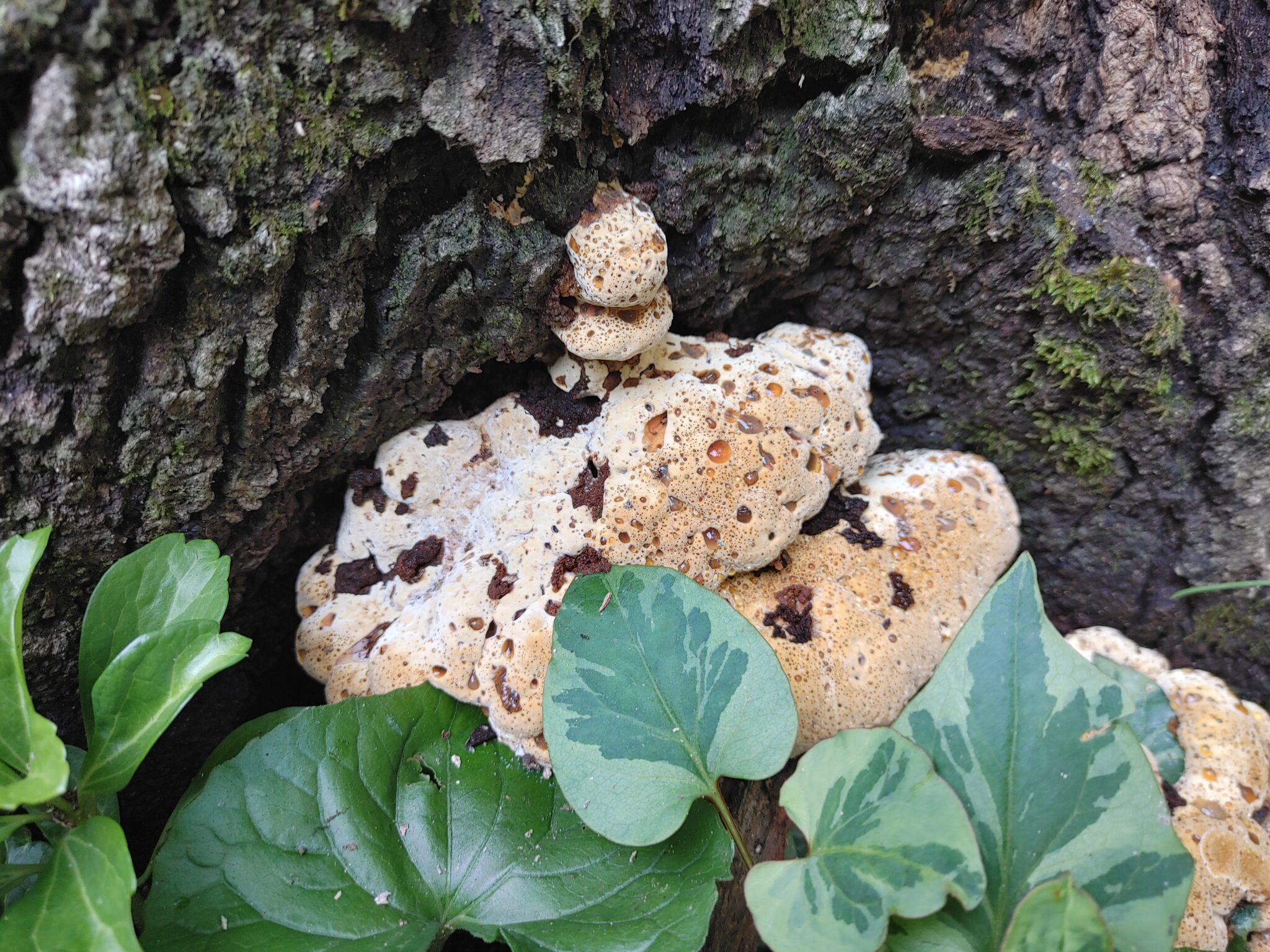
Figure 3. Inonotus conks with amber droplets on their upper surface.
To view this full article and other Purdue Landscape Report articles, please visit Purdue Landscape Report.
Subscribe and receive the newsletter: Purdue Landscape Report Newsletter.
Resources:
Root Rot in Landscape Plants, The Education Store, Purdue Extension resource center
Dead Man’s Fingers, Purdue Landscape Report
ID That Tree Fall Color: Sugar Maple, Purdue Extension – Forestry and Natural Resources (FNR) YouTube Channel
ID That Tree Fall Color Edition: Black Gum, Purdue Extension – FNR YouTube Channel
An Introduction to Trees of Indiana, The Education Store
Autumn Highlights Tour – South Campus, Purdue Arboretum Explorer
Subscribe, Purdue Extension – FNR YouTube Channel
Tree Defect Identification, The Education Store
Tree Wound and Healing, Got Nature? Blog, Purdue Extension – FNR
Shrubs and Woody Vines of Indiana and the Midwest, The Education Store
Ask an Expert: Tree Selection and Planting, Purdue Extension – FNR YouTube playlist
ID That Tree, Purdue Extension – FNR YouTube playlist
Invasive Species, Playlist, Purdue Extension – FNR YouTube Channel
Report Invasive Species, Purdue Invasive Species
Find an Arborist, International Society of Arboriculture
John Bonkowski, Plant Disease Diagnostician
Departments of Botany & Plant Pathology

Recent Posts
- Spring Storms Are Coming: How to Reduce Tree Damage and Risk
Posted: May 1, 2026 in How To, Urban Forestry, Wildlife, Woodlands - Cryptocline Leaf Spot (Anthracnose) of Elm, Purdue Landscape Report
Posted: April 30, 2026 in Disease, Forestry, Woodlands - Mechanical Damage to Trees: Mowing and Maintenance Equipment
Posted: April 24, 2026 in Forestry, Forests and Street Trees, Urban Forestry - Spring Into Bloom With ID That Tree
Posted: April 20, 2026 in Forests and Street Trees, Urban Forestry, Woodlands - Question: Have Whippoorwill Birds Declined in Numbers?
Posted: in Ask the Expert, Wildlife - Invasive Species in Eastern Forests, Webinar Series
Posted: in Invasive Insects, Invasive Plant Species, Urban Forestry, Wildlife - Tree Risk Management: What Every Property Owner Needs to Know
Posted: April 17, 2026 in Forests and Street Trees, Wildlife, Woodlands - As the spring wildflowers emerge, so do the woodland invaders
Posted: April 16, 2026 in Forestry, Forests and Street Trees, Invasive Plant Species - Roadside Rehab: Rebuilding Soil and Cover After Utility Damage, Purdue Landscape Report
Posted: April 15, 2026 in Alert, Forests and Street Trees, Urban Forestry, Wildlife, Woodlands - Ash Trees have Disappeared. What is Taking Their Place?
Posted: in Forestry, Urban Forestry, Woodlands
Archives
Categories
- Alert
- Aquaculture/Fish
- Aquatic/Aquaculture Resources
- Ask the Expert
- Christmas Trees
- Community Development
- Disease
- Drought
- Forestry
- Forests and Street Trees
- Gardening
- Got Nature for Kids
- Great Lakes
- How To
- Invasive Animal Species
- Invasive Insects
- Invasive Plant Species
- Land Use
- Natural Resource Planning
- Nature of Teaching
- Plants
- Podcasts
- Ponds
- Publication
- Safety
- Spiders
- Timber Marketing
- Urban Forestry
- Webinar
- Wildlife
- Wood Products/Manufacturing
- Woodland Management Moment
- Woodlands