“Why is my tree starting to die just after I built my house?”
This is a common question following new construction. Typically, trees don’t die immediately from construction damage. It often takes several years for the symptoms to develop. Connecting today’s dying tree to the damage of a few years ago is difficult for homeowners to recognize and diagnose. So what actually kills trees in a formerly wooded lot turned into a subdivision or home lot? The words “formerly wooded” should be a clue.
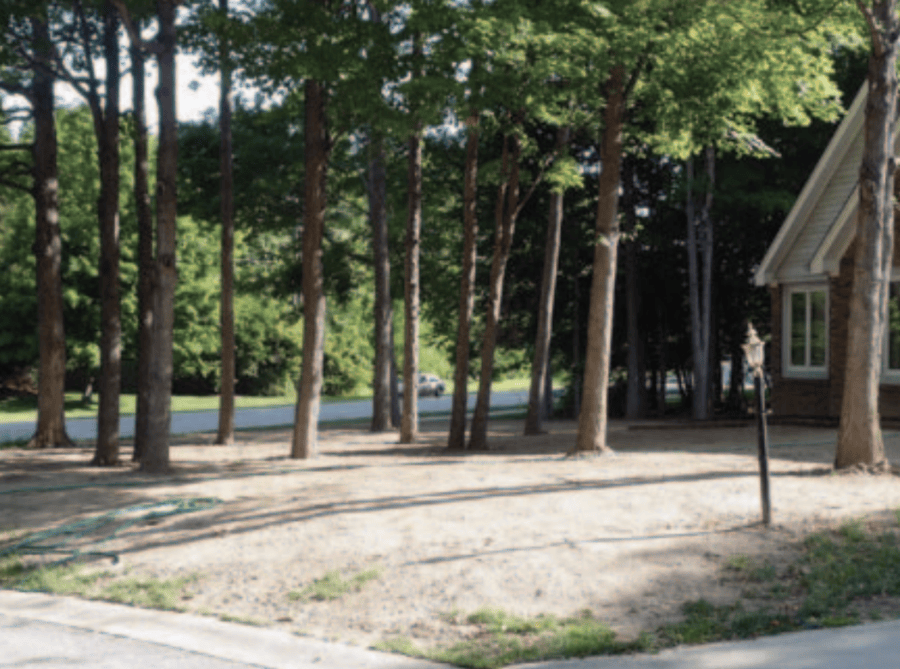
After selectively clearing all but the best trees on the building site, landscape equipment such as bulldozers, skid steer loaders and excavators begin to grade the lot surface into a level, compacted plane. Building infrastructure, such as the foundation, utilities, walks and driveways, is cut into place for the site. As the building process occurs, several things may happen, none of which is good for trees.
Soil and Root System Changes
Oftentimes, the below ground damage to trees is the most significant and most difficult to diagnose and remedy. Even minor changes to the soil grade or soil profile can produce negative responses from trees. Whether removing or adding soil around the roots of trees, extreme caution is advised.
Undisturbed soils, such as those found in a forested area, are composed of layers, or horizons. The lop layer occupies the upper 6 inches to 12 inches and is rich in nutrients and organic matter. This is the soil component usually missing in new home construction because of the grading and leveling process. The topsoil is typically removed, stockpiled or used elsewhere in random areas around the site.
Important chemical processes take place in this topsoil/root layer that enable trees to absorb essential nutrients and water. If a tree is unable to obtain these in sufficient quantities, decline and, eventually, death will occur. This is typical on construction sites because disturbed soils lack good structure and composition.
Soil consists of various sized particles depending upon type and composition: sand, silt and clay. In addition to the solid parts of the soil, plants need open spaces between the particles. It is recommended that soils should contain at least 12 percent oxygen for good root growth.
The compaction from equipment running over the soil in the leveling process forces these spaces together, leaving as little as 2 to 4 percent of the necessary oxygen in the soil. Unfortunately, once the soil is ready for the home, sidewalk and driveway, it’s no longer suitable for root growth or tree survival.
A relatively flat, compacted surface is required to build a home. This is achieved by grading the existing soil surface. Large equipment is used to level and compact the soil to get the bulk density necessary to support the home or structure. Soil conditions required to support a house and the necessary infrastructure are different from, and in sharp contrast to, the soils of the formerly wooded lot. Undisturbed soils, such as those in a forest, are pliable and easily penetrated by the roots because needed open spaces or pores in the soil are filled with life supporting oxygen and water.
The excavation and grading processes create a “hard pan” and remove the valuable topsoil, leaving the remaining topsoil to be used for leveling and covering the lot. This subsoil usually is compacted, nutrient-poor and lacking pore space for water and oxygen, and not suitable for long-lasting, healthy trees.
Soil Grade Changes
One of the most common causes of decline in trees on the construction site is raising the grade or soil level around existing trees. “Filling” graded areas on the site raises the level of soil and covers the original soil. This causes damage to tree root systems by cutting off the oxygen supply, preventing gas exchange between soil and air. In addition, an existing tree grows accustomed to a certain amount of water it receives. Cutting or filling soil around a tree disrupts normal water flow and either deprives the tree of water or creates excessive soil moisture. Trees can decline and die with as little as 1 inch of clay-type soils added to the existing grade. So changing the level of soils around a tree and allowing these fill soils to touch the tree can be fatal!
Studies have shown that fill soil over the root system greatly reduces the root system. In a short time, roots begin to decay and die back, causing overall decline in the tree and significantly increasing the risk of tree failure. Often this type of root damage doesn’t reveal itself for several years. Symptoms may be observed, such as untimely fall color or declining and dying branches in the upper and outermost parts of the tree canopy.
Physical Damage
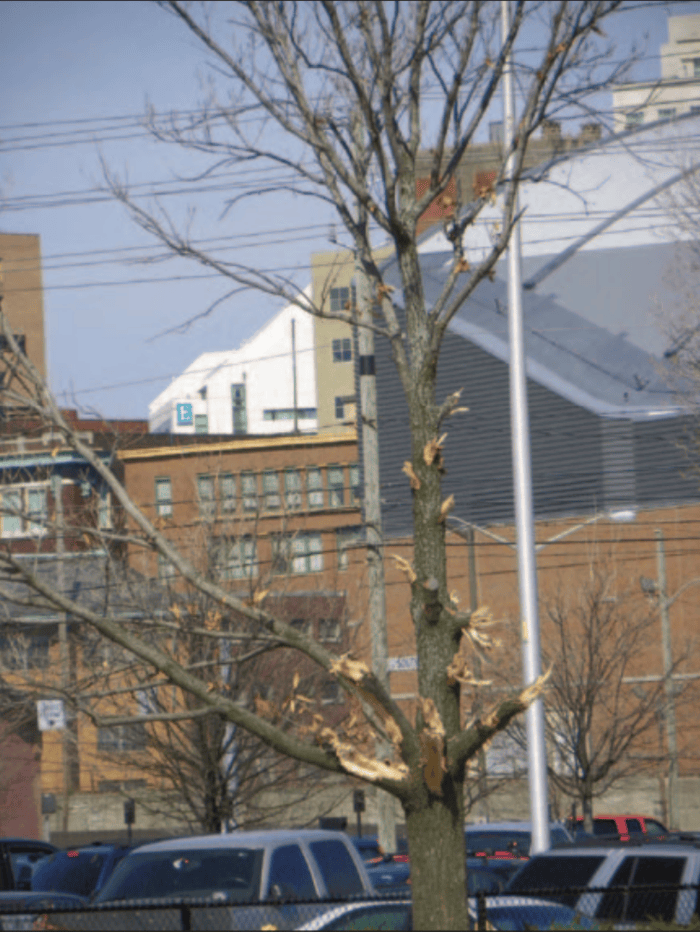
Careless operation of equipment around trees can cause severe damage to trees and compromise their future health. Any damage to the tree trunk can create conditions that affect health and safety.
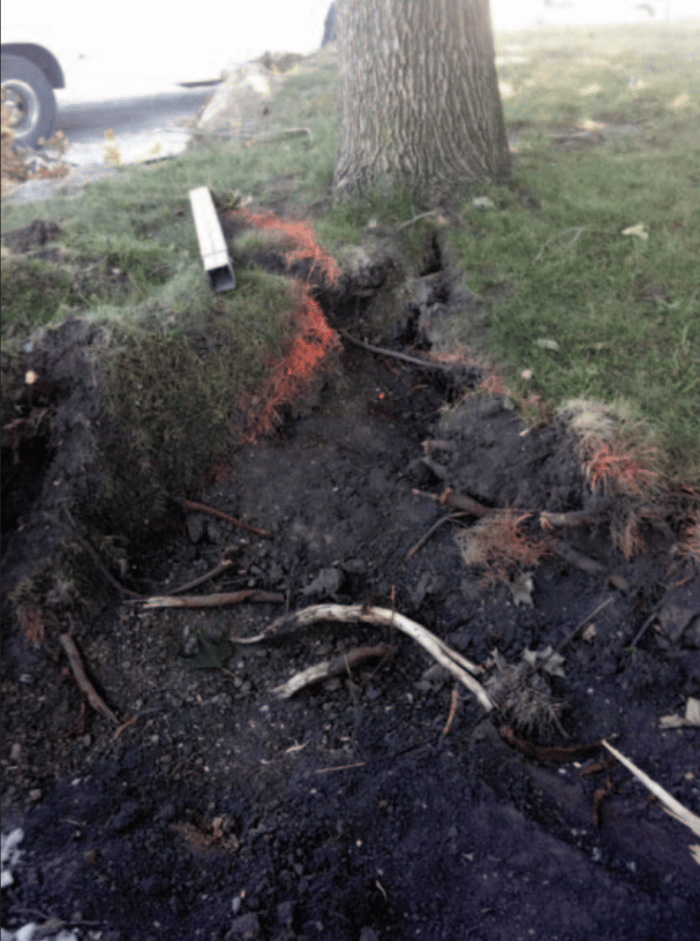
Construction equipment can injure the aboveground and below ground parts of a tree by breaking branches, tearing the bark, wounding the trunk or cutting trunk flares and roots. These injuries are permanent and can kill a tree.
Root Cutting
Excavating for foundations and other structures on the site severs the roots of those chosen trees remaining on the site. Since a majority of a tree’s root system is found in the topsoil area, these building processes can be devastating.
Research indicates that a large portion of most tree roots grow in the upper 12 inches of the soil profile and can spread laterally up to 2 to 3 times the height of the tree. For example, the root system of a 50-foot shade tree can be found in a 150-foot circle around the trunk. Therefore, digging foundations, sidewalks or driveways drastically reduces important root structures of these carefully selected trees. Reducing the root system lessens a tree’s ability to absorb the water and nutrients that are essential for growth. This root loss also places additional stress on the tree as it tries to recover by using stored carbohydrate reserves, further weakening the tree and making it more susceptible to insects and disease.
Root cutting near a tree also reduces stability and increases risk to the owner. Research indicates if 40 percent of the roots are cut, the tree becomes 40 percent less stable, making it more susceptible to windthrow.
Trunk and Crown Damage
The vascular system of a tree lies just beneath the bark in an area called the cambium layer. This includes the water and food-conducting tissue known as the xylem and phloem. Any injury to the cambium layer on the trunk and branches creates a wound disrupting the flow of the conducting tissue. If the damage is severe enough, the tree can die. The affected area on the trunk or branches takes months to years to heal. In some tree species which don’t heal well, the wound may never close. In this time, fungi and other wood-decaying organisms can enter the tree. This decay can begin spreading to other parts of the tree, causing more health issues for the tree and risk for the owner.
Construction damage causes health and survival issues for trees and creates risk issues for people and the property around them. Tree damage above and below ground creates weaknesses in the tree structure and reduces its ability to withstand storms and other weather-related events.
So, why does the tree seem to decline and die within a few years of construction?
The answer is reduced health and inability to perform critical plant functions because of direct or indirect damage to the tree or its soil environment.
For example, as normal photosynthesis occurs, trees store carbohydrates for next year’s growth. If a tree was healthy and growing before construction, functions such as processing food for energy storage were in effect for the coming year. When that process and any other critical function is interrupted by root damage and soil changes, the tree begins to use up its food reserves and becomes unable to replace them. This drastically weakens the tree and predisposes it to other issues such as insect and disease infestations. Trees unable to continue their basic processes won’t function well and the result is gradual decline, dieback and death. Protecting trees now prevents problems in the future. Preservation is critical for those who would save existing trees on a construction site.
To prevent this type of tree damage during construction also refer to Purdue Extension publication FNR-463-W, Construction and Trees: Guidelines for Protection.
Discover the essential guide for anyone looking to plant forest trees or shrubs in Indiana. Whether you’re a first‑time landowner or an experienced conservationist, Planting Forest Trees and Shrubs in Indiana walks you through the 10 proven steps for establishing healthy, resilient plantings that thrive for generations. From choosing the right species to preparing your site, planting with confidence and ensuring long‑term success, this publication distills expert forestry knowledge into clear, practical advice. Ready to transform your landscape and leave a lasting legacy?
This publication provides an abbreviated 10-step approach to plant and establish healthy, productive forest and conservation plantings in Indiana. Successfully planting trees and shrubs involves much more than sticking the right end in the soil.
Purdue Landscape Report: It’s finally October, and we should be enjoying lovely fall temps and colors. While some of the trees are changing, it’s not necessarily due to the change in seasons. As I write this, the temperature is 84 F (29 C). I look out my window and see mostly green leaves with some colors from the short cold snap we had and some from heat and drought stress. Whether you are worried about the trees in your yard and community or not, there are some simple tasks that we can do to assist them as we await the cooler temperatures of Autumn.
A 3 foot radius mulch ring around a medium sized tree (Purdue Landscape Report)
Mulching: One simple task to better prepare your trees for winter is to add a new layer of mulch, which benefits your trees in multiple ways. Adding a 2-3 inch thick layer of mulch will better maintain moisture levels and buffer extreme temperature changes in the soil and will add some organic matter too. Mulching to the drip line will benefit the tree the most, but in the case of larger trees it’s not always feasible. Try for at least a 3-foot radius from the trunk and make sure to leave a 2 inch or so gap between the trunk and the mulch. Remember, no volcano mulching.
Fertilizing: That mulch you just added will add some organic material to your soil as it slowly breaks down, but an autumn fertilization can benefit your trees too. Unlike trees in the forest that have a natural supply of nutrients from fallen leaves and twigs, trees around our homes are usually deprived as we rake and clean up our yards. Adding a slow-release fertilizer in the fall helps provide a nutrient boost over the winter, can promote root growth, and better prepare your tree for Spring.
Watering: Water is still an essential part of your tree care plan, but as temperatures drop and trees begin to head into dormancy they don’t need as much water as is required in the hit summer months. If you have irrigation systems in your yard start to drop the frequency of watering. You can water up until the first freeze, but make sure soils are just a little damp and not soaked. Evergreens in particular will benefit from slow deep watering 1-2 times a week until the soil freezes. Winter winds and temperatures can desiccate the needles without an adequate supply of water.
Pruning: Now is a good time to prune out any dead, damaged, or diseased limbs in your trees. If you have access to hand saws and pole saws or pruners, you can remove smaller branches or those closer to the ground. Make sure you are making proper pruning cuts though, and if there are large limbs, those at heights, or you are just unsure of how to make a good cut enlist the help of a professional arborist.
Use of white tree guards can protect the trunk from temperature changes that cause damage (Joseph O’Brien, USDA Forest Service)
TrunkDamage: Sunscald or southwest damage occurs on young and/or thin barked trees in the winter. Wounds can occur between the south to southwest facing part of the trunk on sunny days in the winter as temperatures rise and suddenly drop. Over time these wounds can become quite large. Trees can also incur damage from deer during the rut. Bucks will scrape trees with their antlers, scraping off the bark and damaging the cambium. Both of these injuries can be reduced one younger trees by installing tree guards in the fall. Tree guards are plastic barriers you place around the main stem of the tree. I recommend using white corrugated drainage pipe that can be found at most home centers. You can make a cut lengthwise along the pipe for easy installation and make sure it has a large enough diameter to leave a space between it and the tree. Just remember to remove it come Spring.
Inspections: Visual inspections can be done year-round, but this time of the year it might be easier to see changes in your tree as leaves are falling and the canopy becomes more visible. From the ground up to the canopy, some of the things you’re looking for include fungal growth around the base of the tree, any sort of damage on the main stem or branches, premature leaf drop or color change, and branches that are dead, cracked, diseased, or seem weak. Any concerns you find are also great information to share with an ISA Certified arborist which can be found using the Trees Are Good website.
Purdue Landscape Report: Tree care, in many cases, can be expensive if you require the assistance of an arborist for pruning or removals. Extreme weather events, characterized by extensive rain and wind, can cause damage to the canopy or, in worst-case scenarios, lead to tree failure. In cases of failures, weather is often the final push to already existing issues. One cause that can lead to decay, decline, and failure if applied incorrectly can also extend the life of your tree with proper application.
Mulch is the double-edged sword that can promote healthy growth by maintaining soil moisture and temperature through extreme heat, cold, and drought, enrich the soil in the critical root zone, maintain a safety area from mechanical damage from lawn care tools, and add a nice aesthetic.
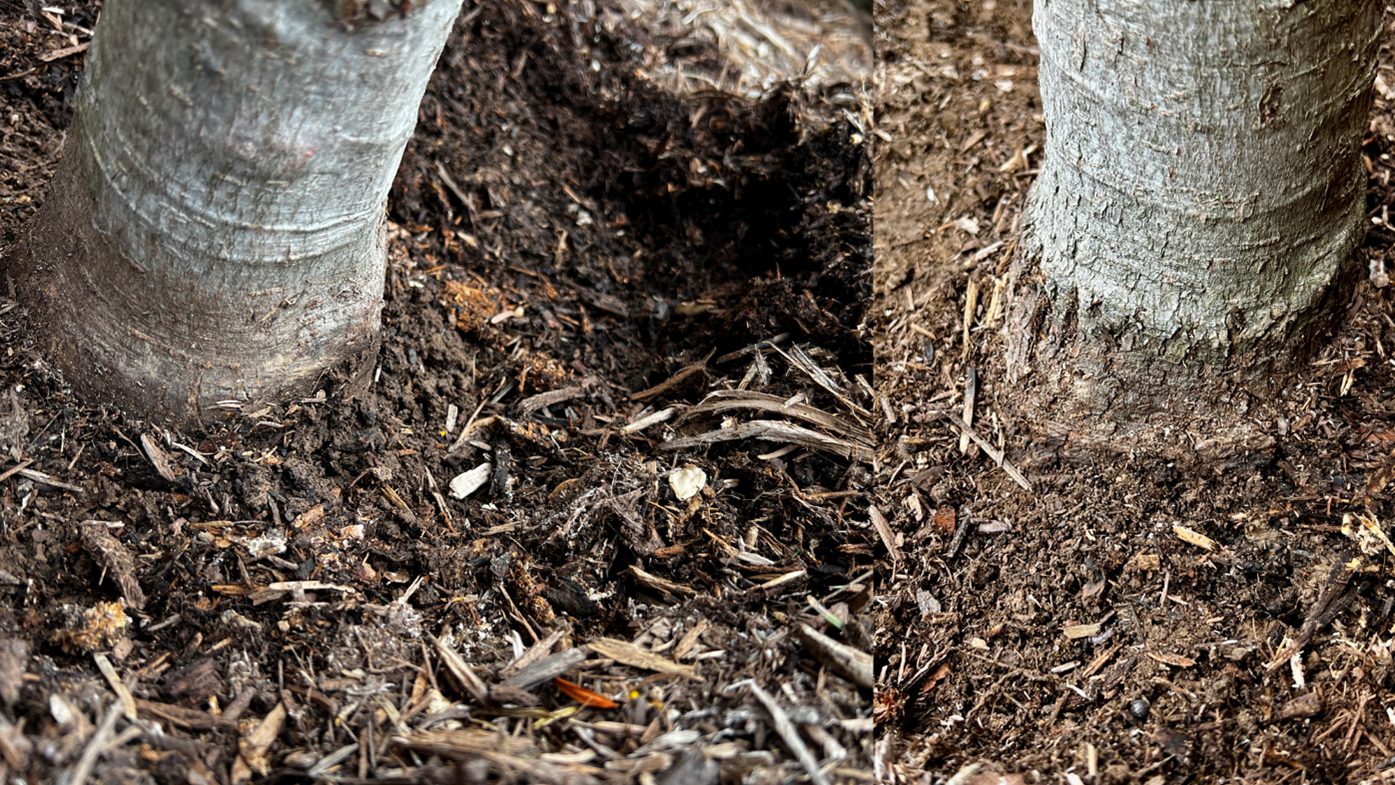
Figure 2: Digging out and exposing the root flare (PLR)
But it can also cause decay through excess moisture to the root flare, damage from pests like mice and insects that can live in mulch, expose the tree to pathogens, and promote unnecessary root growth and/or stem girdling roots that cut off nutrient supply between the root system and the rest of the tree.
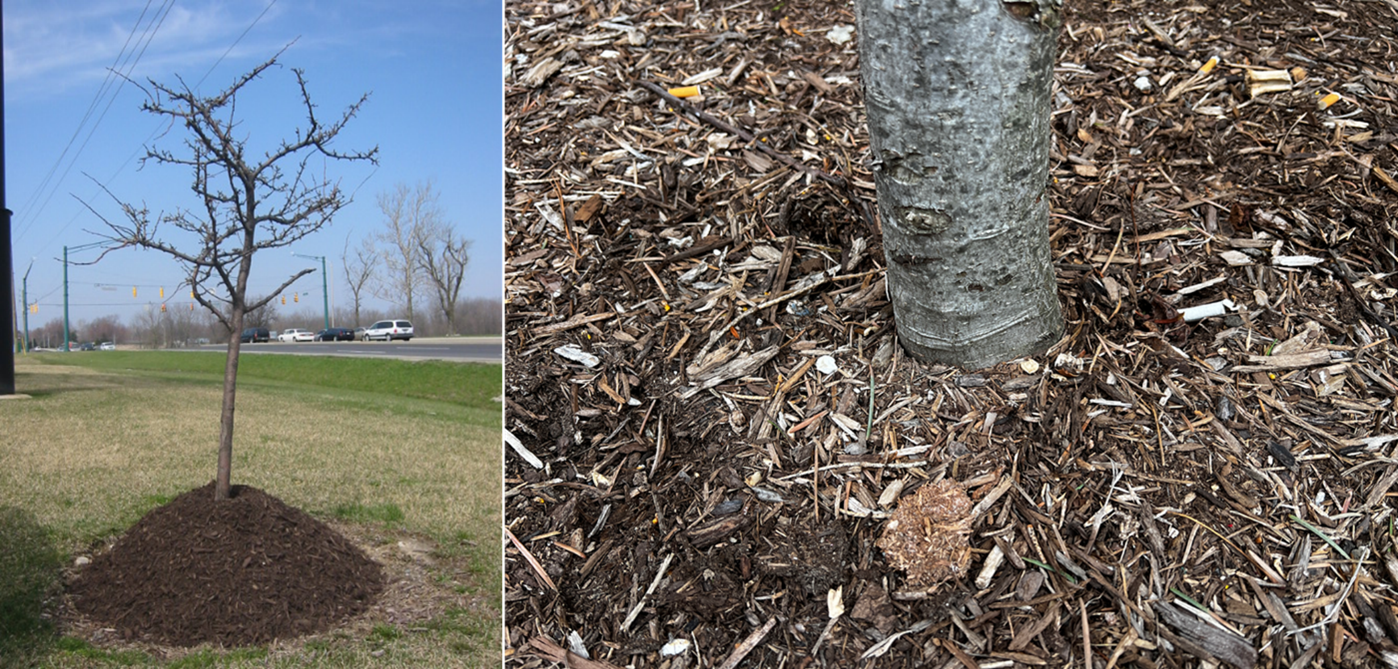
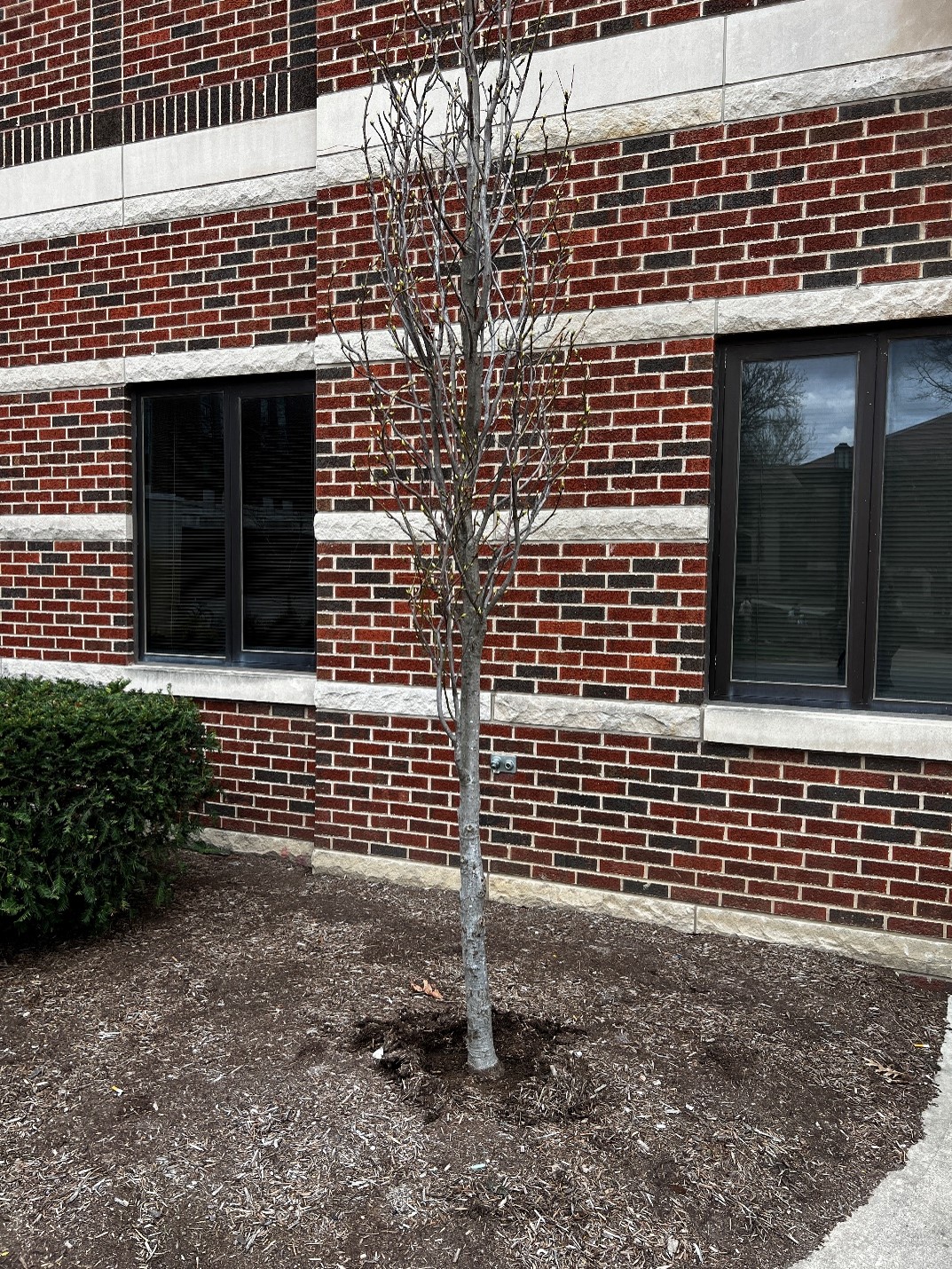
The application is the same if it’s the first time mulching a tree or a re-application. Add enough mulch so there is a 2–3-inch layer sloping away from the tree with at least a 3–5-foot radius around the stem (older, larger trees can benefit from larger mulch rings). No volcano mulching, make sure you also have around a 1-2-inch gap between the stem and the start of the mulch ring.
Figure 3: Creating a 1–2-inch space between the root flare and the mulch.
If you are reapplying mulch, first rake the old mulch to even the layer and mix some into the soil if possible. If your tree has already been mulched and has been volcano mulched, simply dig out the excess, exposing the root flare and creating that 1-2-inch gap between the stem and the mulch.
This simple act is relatively inexpensive, does not require a lot of time, and will help keep your tree healthy, extending its life. If you notice any other issues with your trees, hiring an ISA Certified arborist is the next step in managing your trees’ health. To find an arborist near you and verify credentials, use the link at Find an Arborist, Trees are Good, International Society of Arboriculture (ISA).
Purdue Landscape Report: August was National Check Your Tree Month, but this is something that every tree owner/manager should be doing year-round. As the last hot days of summer are finishing up and we look forward to cooler fall days, we can look to our trees for different signs of trouble.
Most people tend to look up at the canopy before anything else in trees. Check leaves for dieback, discoloration, stickiness or signs of chewing. Check branches and the main stem for damage like splits and breaks, peeling bark, tunneling patterns under the bark, oozing wet spots, or sawdust around the tree. These could be signs of issues in the root system, pathogens like bacteria or fungal organisms, insect problems, or structural damage.
This is not an exhaustive list and if you notice these or anything else that seems off, it could be time for a deeper dive into what might be wrong. If you know the species of your tree the Purdue Plant Doctor is a great tool to narrow down a diagnosis. You can also contact your local Extension office or an ISA Certified Arborist.
On a more positive side, you don’t have to be on the lookout for damage, decline, or signs of pathogens and pests. It is also a matter of enjoying the trees in your landscape. Take some time out of your day to sit in the shade especially as we transition from hot summer temperatures into the cooling of autumn. Revel in the color changes as chlorophyll production slows revealing the carotenoids (that give us yellows, oranges, and browns) and anthocyanin (that produces reds and purples). In winter, not only can you better see damage in the canopy hidden by leaves in the growing seasons, but also the structure and architecture of the canopies in different tree species and the differences in bark textures. And in Spring, new growth of leaves and flowers shows us Winter is nearing its end, bringing warmer days.
So check your trees throughout the year. But not only for potential issues and risk management but also for enjoyment. Trees offer us no many benefits and sometimes it takes a little reminder. If you do see any signs of decline or damage, again, be sure to contact your local Extension office or an ISA Certified Arborist.
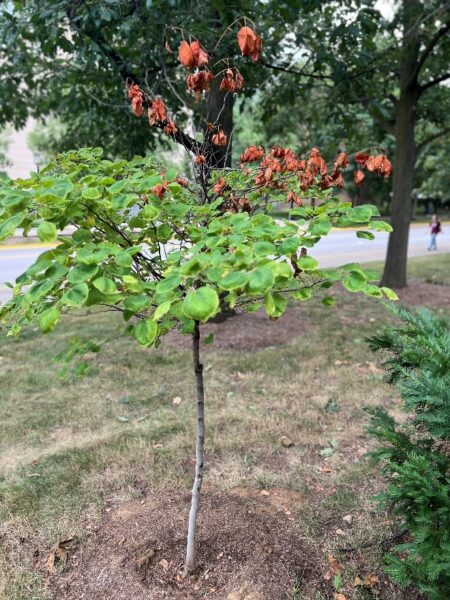
Figure 1: Drought stress can cause decline and, in some cases, death in trees.
Purdue Landscape Report: With recent rain storms across the state, watering may not be at the forefront of everyone’s minds. But as we head deeper into summer it is food to remember most of Indiana is in a state of abnormal dryness to moderate drought, continuing similar conditions from previous years. With that in mind, we should be thinking about the health of our trees (Fig. 1).
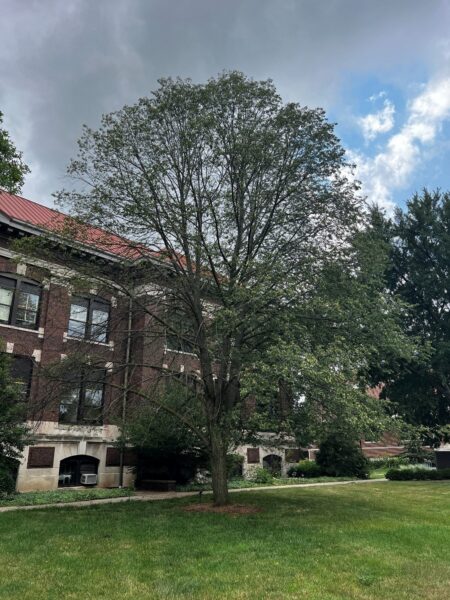
Understanding what drought is and its effects on trees can help to bolster care plans. Drought is an extended time with little to no precipitation and can slow growth, reducing photosynthesis, and depleting energy reserves trees need to survive dormancy in winter. Drought conditions can stress trees, making them susceptible to pests and diseases, reducing their ability to produce defensive chemicals, and in severe situations resulting in death (Fig. 2).
One simple task to protect your trees is watering. This is especially important in young and newly transplanted trees. A good industry guideline is the 5-plus-5 rule.
Figure 2a: Wilting in leaves and dieback in parts of the tree can indicate drought stress.
Figure 2b: Wilting in leaves and dieback in parts of the tree can indicate drought stress.
Apply 5 gallons of water plus 5 gallons for every diameter inch of the trunk. For example, a 4-inch tree would require about 25 gallons of water as needed. A good tactic to reduce water runoff from the hose is to take a large bucket and drill enough small holes to create a slow drip watering system. Also check moisture levels in your soil to see if conditions are dry, moist, or saturated.
Another way to maintain soil moisture is to mulch around the tree. Mulch rings should be at least 3 feet in diameter and 2-3 inches deep with a 2–3-inch space between the base of the trunk and the inner mulch ring. Mulching up to the trunk is called volcano mulching and causes issues like stem girdling root production and decay. Mulching reduces evaporation from the soil and helps maintain moderate soil temperatures. It also reduces competition with surrounding lawn and landscaping plants while protecting the trunk from mechanical damage caused by mowing and lawn care practices.
These little steps can go a long way to protect your trees, extending their life spans and your enjoyment with a healthy canopy. For a more detailed look at drought and trees, please have a look at the Purdue extension store here.
Spring is almost here and we get to wave goodbye to winter. Temperatures are rising, the winds are blowing, and trees are waking up—one of the hot topics every spring is planting. If you missed the chance to get a tree or two (or many more) in the ground this past autumn, then now is the time to start thinking about it again. Look at your planting spaces to see what kind of tree would do well. Think about the tree going in the ground now vs 10 years from now, 30 years, or even 50 years. Will a full-size oak fit in your space or will a smaller redbud work better? Do you have poorly drained soil where a willow or bald cypress will enjoy the excess water or well-drained soil that an American beech or black gum might fare better? Think about what you might want growing in your portion of the ecosystem. Are you looking for spring flowers, shade in the summer, color in the fall, or even different bark types and branch architecture for the winter? Also, once you’ve made your decision and got your new tree make sure you plant it properly to ensure a long happy life and lots of enjoyment.
Don’t forget about the trees you already have in the ground, too. One simple act that you can do to help them out is to re-mulch your current trees. Mulching helps to regulate soil moisture and temperature for the roots of your trees. Grab a rake and work last year’s mulch into the ground a little, then apply enough new mulch to have about a 2–3-inch layer around your tree. Depending on the size of your tree you might need to have a larger mulch ring, but aim for at least a 3-foot diameter, and DO NOT mulch up to the trunk. This is volcano mulching and creates an area of decay in the trunk that can lead to failure. Leave a 2-3-inch ring between the trunk and the mulch.
Purdue Landscape Report: Temperatures are finally dropping and leaves are changing color. Autumn is progressing well in my opinion. Before you know it winter will be here, and some people will be wondering is there anything to be done to better protect the trees around you? The answer is yes, and I applaud you for your initiative to continue caring for your trees. To give your trees the best chance to survive the winter and better thrive next year there is an assortment of activities available ranging from diy projects up to calling in an ISA certified arborist to help you out.
Figure 1. Maintenance of trees in the fall include many tasks before dormancy occurs.
Mulching:
One simple task to better prepare your trees for winter is to add a new layer of mulch, which benefits your trees in multiple ways. Adding a 2-3 inch thick layer of mulch will better maintain moisture levels and buffer extreme temperature changes in the soil and will add some organic matter too. Mulching to the drip line will benefit the tree the most, but in the case of larger trees it’s not always feasible. Try for at least a 3-foot radius from the trunk and make sure to leave a 2 inch or so gap between the trunk and the mulch. Remember, no volcano mulching.
Fertilizing:
That mulch you just added will add some organic material to your soil as it slowly breaks down, but an autumn fertilization can benefit your trees too. Unlike trees in the forest that have a natural supply of nutrients from fallen leaves and twigs, trees around our homes are usually deprived as we rake and clean up our yards. Adding a slow-release fertilizer in the fall helps provide a nutrient boost over the winter, can promote root growth, and better prepare your tree for Spring.
Watering:
Water is still an essential part of your tree care plan, but as temperatures drop and trees begin to head into dormancy they don’t need as much water as is required in the hit summer months. If you have irrigation systems in your yard start to drop the frequency of watering. You can water up until the first freeze, but make sure soils are just a little damp and not soaked. Evergreens in particular will benefit from slow deep watering 1-2 times a week until the soil freezes. Winter winds and temperatures can desiccate the needles without an adequate supply of water.
Pruning:
Now is a good time to prune out any dead, damaged, or diseased limbs in your trees. If you have access to hand saws and pole saws or pruners, you can remove smaller branches or those closer to the ground. Make sure you are making proper pruning cuts though, and if there are large limbs, those at heights, or you are just unsure of how to make a good cut enlist the help of a professional arborist.
Trunk damage:
Sunscald or southwest damage occurs on young and/or thin barked trees in the winter. Wounds can occur between the south to southwest facing part of the trunk on sunny days in the winter as temperatures rise and suddenly drop. Over time these wounds can become quite large. Trees can also incur damage from deer during the rut. Bucks will scrape trees with their antlers, scraping off the bark and damaging the cambium. Both of these injuries can be reduced one younger trees by installing tree guards in the fall. Tree guards are plastic barriers you place around the main stem of the tree. I recommend using white corrugated drainage pipe that can be found at most home centers. You can make a cut lengthwise along the pipe for easy installation and make sure it has a large enough diameter to leave a space between it and the tree. Just remember to remove it come Spring.
Inspections:
Visual inspections can be done year-round, but this time of the year it might be easier to see changes in your tree as leaves are falling and the canopy becomes more visible. From the ground up to the canopy, some of the things you’re looking for include fungal growth around the base of the tree, any sort of damage on the main stem or branches, premature leaf drop or color change, and branches that are dead, cracked, diseased, or seem weak. Any concerns you find are also great information to share with an ISA Certified arborist which can be found using the Trees Are Good website.
To view this full article and other Purdue Landscape Report articles, please visit Purdue Landscape Report.
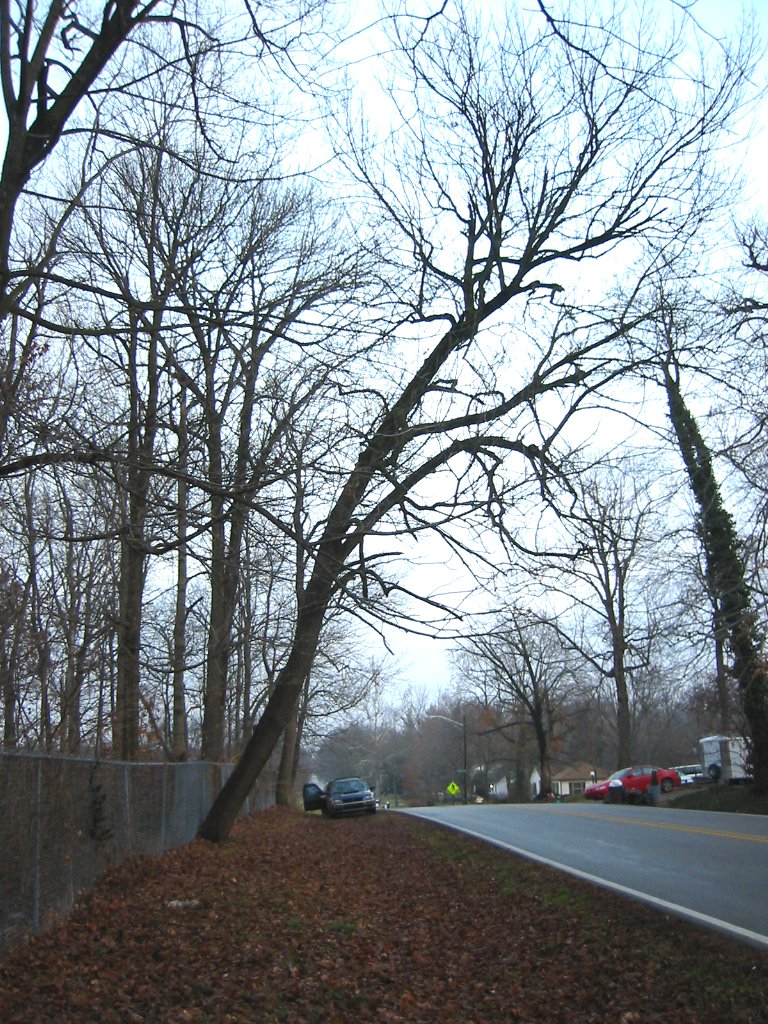
Leaning trees can be a risk to neighboring property owners.
Purdue Landscape Report: I hear this complaint or issue more frequently, “what can I do about the neighbor’s tree?” or “my neighbor just butchered my tree!”. Often, we see issues with a neighboring tree that may threaten safety or appears to be an elevated risk. For example, from the view of your window, you see your neighbor’s tree dropping dead branches all over your driveway. Or, you can’t see a favorable view at all because of that tree or unruly hedge. Or you are certain that the neighbor’s tree will eventually fall onto your garage.
Before you take any action, establish ownership of the tree, and find out if you have rights to work on the offending vegetation. Otherwise, it can land you into a contentious legal situation.
Some questions to consider include:
When tree limbs or even the trunk of the tree crosses property line, are you within your rights to prune or remove it?
Check with local government websites for property maps which can help identify boundaries.
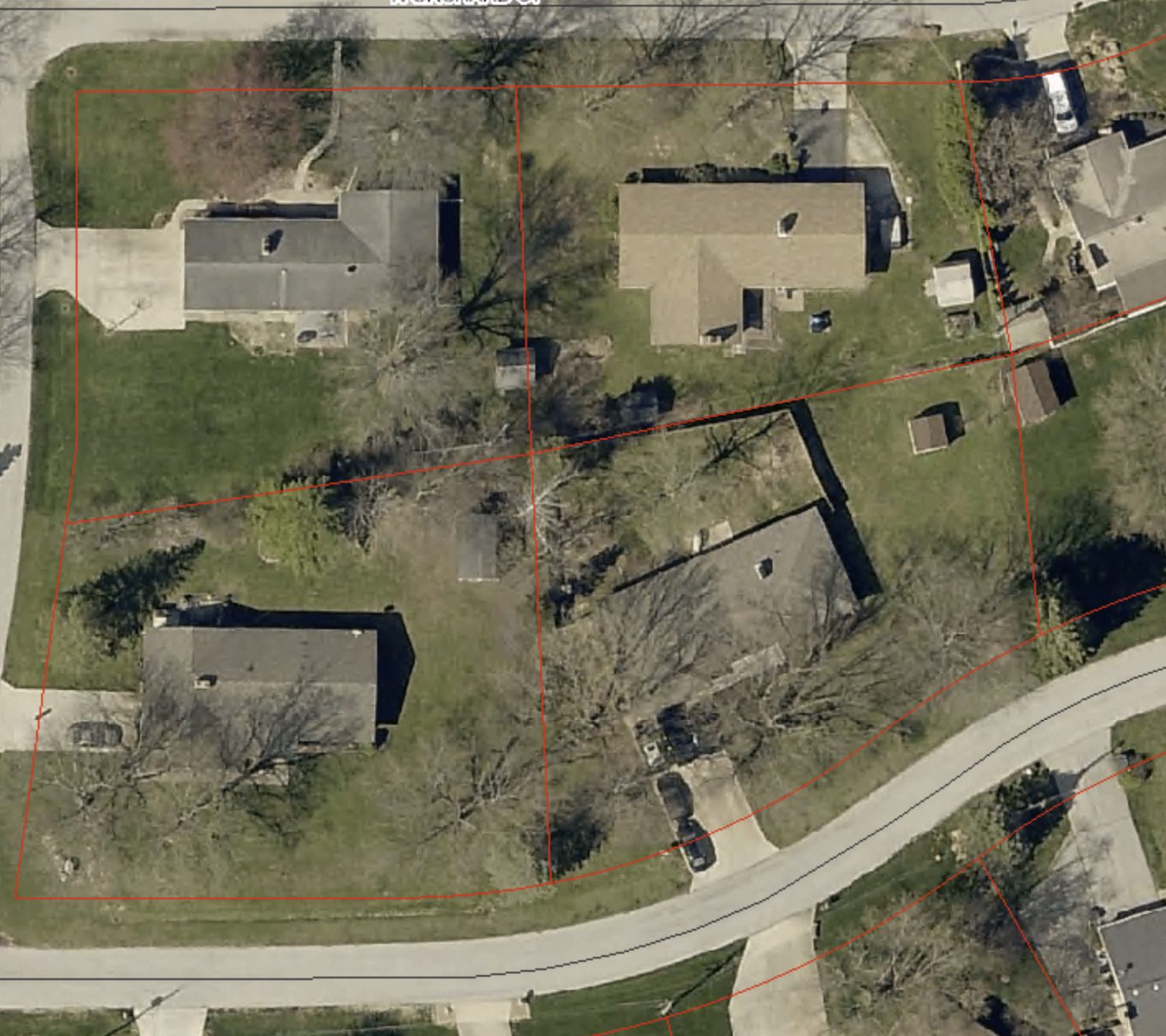
Boundary laws vary with every state. Often the boundary lines are uncertain or assumed based on local information. However, in contentious situations that may result in major modifications to a tree, it is advised to get a survey to establish exactly who owns the tree.
Rights are determined by who owns the tree. Check with your town, city, county and state municipalities for regulations about trees and property lines. The rights and responsibility for care and maintenance of trees are assigned to its owner, and ownership is determined by the location of the tree’s trunk. If the trunk is located entirely on the neighbor’s land even if its limbs or branches overhang onto your land, the neighbor is the tree’s owner. The neighbor has the sole right to preserve the tree or cut it down. This is true regardless of the neighbor’s motivation or the impact the tree removal would have on your land.
An ISA certified arborist can provide mitigation options that are best for the tree and helpful for the tree owner.
It is always best practice and considerate to first ask your neighbor if you can arrange to have it removed or pruned. They might actually appreciate it.
When tree work is required to remove or prune the tree and neighbor conflict exists, have a qualified tree care provider determine the work specifications on exactly how the tree issue should be mitigated. It is usually a bit more complex than simply stating, “cut limbs back to property line.” The work order must reference the ANSI A300 tree pruning standards to assure the procedures being proposed take into consideration the tree’s future health. Ensure that your tree care provider has a copy of their current liability insurance policy on hand. Check their references as well, not all tree care companies are guaranteed to provide the best results for you or your tree.
The best advice is to hire a tree care professional with the experience, expertise, and equipment to assess and safely prune, remove or otherwise care for your or your neighbors’ trees. Search for a tree care provider in your area. Also, consider hiring an ISA Certified Arborist which can be found here.
According to most attorneys, open-minded communications with the neighbor can result in an acceptable resolution for any situation. This will help to avoid contentious, expensive, time consuming, and unpredictable lawsuits.