 Purdue University - Extension - Forestry and Natural Resources
Got Nature? Blog
Purdue Landscape Report: Homeowners can easily become injured – often fatally – while attempting to trim trees near overhead electrical wires. Though it is tempting to try to save money with this “do-it-yourself” approach, the potential for electrocution is not worth the risk. It is important to recognize when to call a professional arborist.
Terrible accidents can happen when a homeowner uses any type of cutting tools and/or ladders when attempting to trim backyard trees and shrubs. Overhead wires are often unnoticed and is touched by directly or indirectly, causing injury or death.
Examples include:
- A homeowner climbed a ladder to trim a tree branch that was dropping leaves into his above ground swimming pool and causing a nuisance. A branch came in contact with the power line, shocking the man with a jolt of electricity and sending him into cardiac arrest. He fell 20 feet to the ground but was revived by medics at the scene.
- MATTHEWS, N.C. — A man trimming trees in a neighborhood was shocked Wednesday morning after a limb fell on power lines, authorities said. Nearby resident Margie Owens knows the man and said he does odd jobs around the neighborhood. According to officials, after the limb fell from pruning, the tree continued to be energized by the power line, leaving the man stuck.
- A Charlotte County man was electrocuted trimming trees in a backyard. The victim was part of a landscaping crew and came in direct contact with a utility line.
Preventable Accidents
Tree limbs can conduct electricity. When trees grow near overhead wires, they can contact the wires and become energized. Trees and wires are dangerous, full of electrical power that can injure or kill humans. How do we know which lines are energized? WE DON’T! Assume all are carrying dangerous electrical current and should be avoided when working around them.
A common house switch carries 120 volts, but the electric flow is usually limited to 10, 15 or 20 amps. A common “house drop” (service wire) contains 240 volts and up to 20 amps or more. Given the right set of circumstances, even the shock a person gets from a common light switch can kill, but at the same time, it is easier to break electrical contact while standing inside a house. If a person is climbing a ladder or is in the tree, it may be more difficult to break contact with the energized wire. This means that the service line over a typical yard could easily kill a person.

Utility service providers can help select a tree which is compatible with nearby lines and reduce the need for excessive pruning to maintain safety and reliability

These powerlines could be “energizing” the tree creating a potential shock hazard for anyone touching the tree. Notice the burning on the new growth.
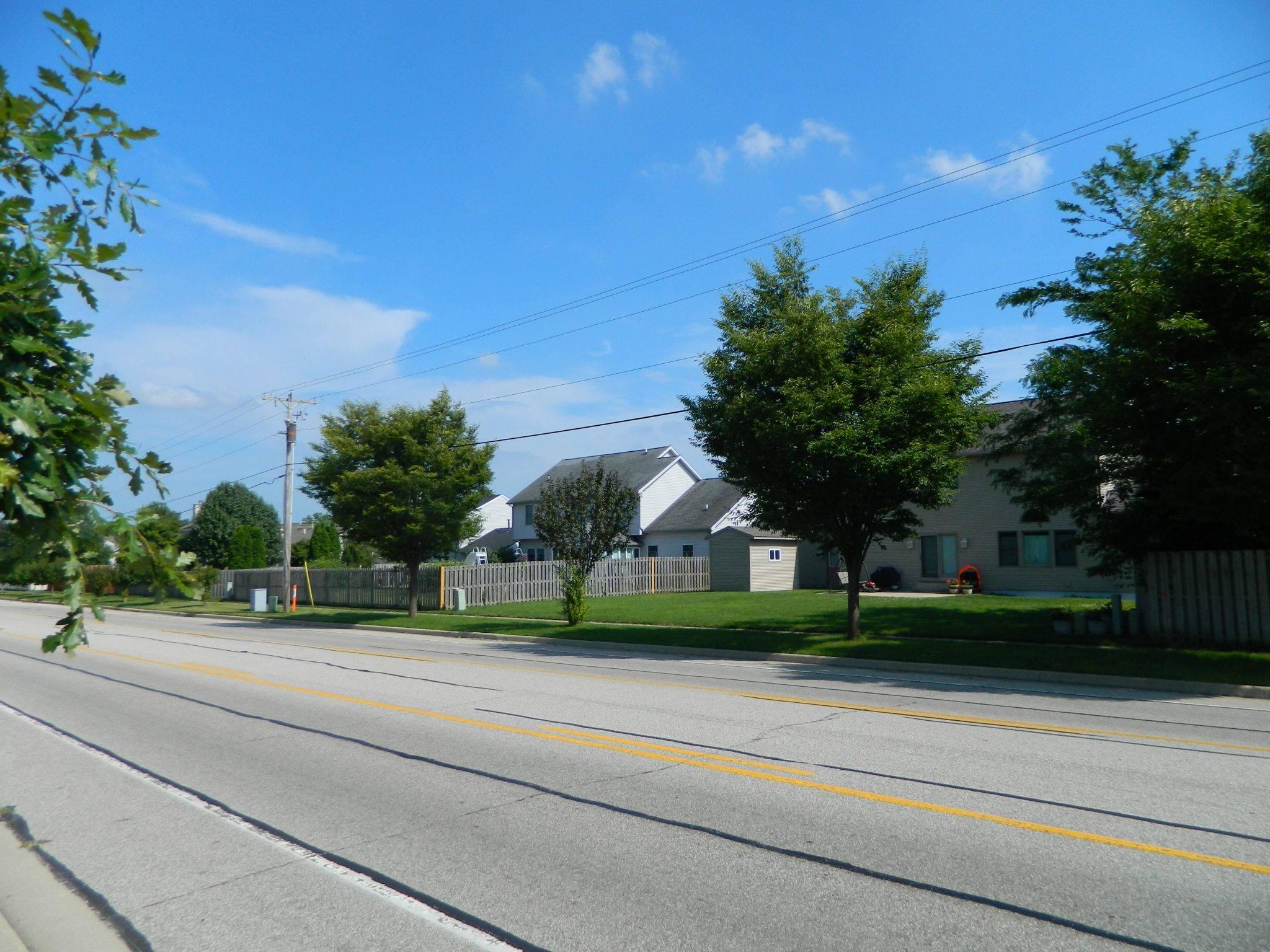
Trees growing into utility lines should be pruned by a qualified arborist.
Here are a few tips to avoid trees in wires:
- Look for power lines before pruning trees and large shrubs. If lines are anywhere near the tree within 10 ft. don’t attempt any tree work. Tree care professionals have the training and equipment needed to perform these tasks safely.
- Never climb a tree in order to prune it. Even if the wires aren’t currently touching the tree, remember that the tree’s branches will shift once you begin climbing or removing limbs.
- Don’t move ladders or long-handled pruning tools around the yard without first looking up. Always read and heed ladder-use safety labels.
Find a professional
Be sure to always hire an insured, tree care professional, preferably and ISA Certified Arborist with the experience, expertise, and equipment to safely take down or prune trees in wires. Require proof of liability insurance to protect yourself as well.
Another easy way to find a tree care service provider in your area is to use the “Locate Your Local Tree Care Industry Association Member Companies” program. For more information refer to the publication Trees and Utilities at the Purdue Education Store.
Find a certified arborist in your area by going to Trees are good website.
Resources:
Tree Pruning for the Landscape, Video, Purdue Extension – Forestry and Natural Resources YouTube Channel
Tree Pruning Essentials, Video & Publication
Tree Appraisal and the Value of Trees, The Education Store, Purdue Extension’s resource center
Tree Pruning: What Do Trees Think?, The Education Store
Mechanical Damage to Trees: Mowing and Maintenance Equipment, The Education Store
Tree Installation Process and Practices, The Education Store
While our FNR Purdue Extension specialists can’t be with you in person at workshops, meetings or in the field right now, they are still here to assist you. Don’t hesitate to reach out.
Purdue Extension – Forestry and Natural Resources, purdue.edu/fnr/extension
Ask An Expert
Wendy Mayer, Communications Coordinator
Purdue University Department of Forestry and Natural Resources
Diana Evans, Extension & Web Communications Specialist
Purdue University Department of Forestry and Natural Resources
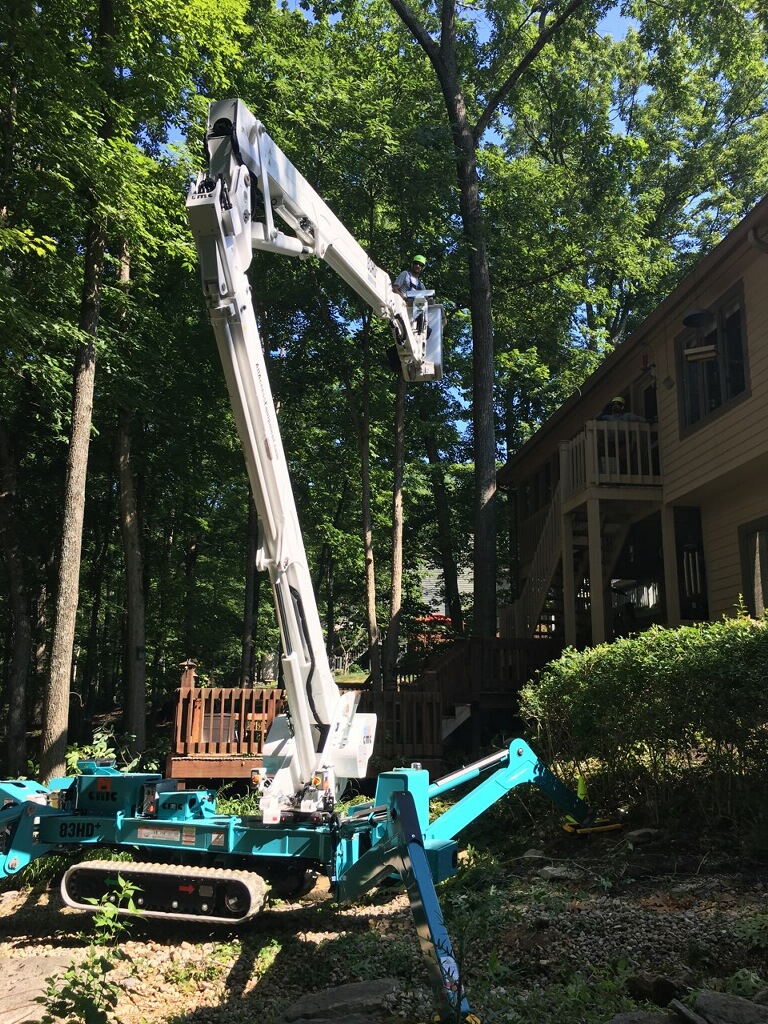
Purdue Landscape Report: There are many different aspects of tree work which include a wide range of costs, but let’s start with the most common expense: tree removal. It can be difficult to understand why removing a tree can cost so much when the whole process seems as simple as “just cutting it down.” In reality, the work is usually much more involved than making a few cuts with a chain saw and then hauling it all away.
Complexity – Trees being removed often need to be cut apart in sections to avoid dropping the whole tree or large pieces onto the lawn or landscape or into the street. This is a safer approach and also prevents serious damage to the turf and landscape below. News reports are full of accidents involving untrained tree workers, or homeowners, attempting to cut down a tree without the knowledge of how the tree reacts to being cut. Usually, specialized equipment is needed, such as aerial lifts or cranes to access the tree safely. This equipment is costly to acquire and maintain. Some of the typical equipment such as these mentioned can cost more than some homes! Often, the use of this equipment involves setting up traffic control in busy streets where permits and additional flagging support are needed.
Difficult and dangerous – 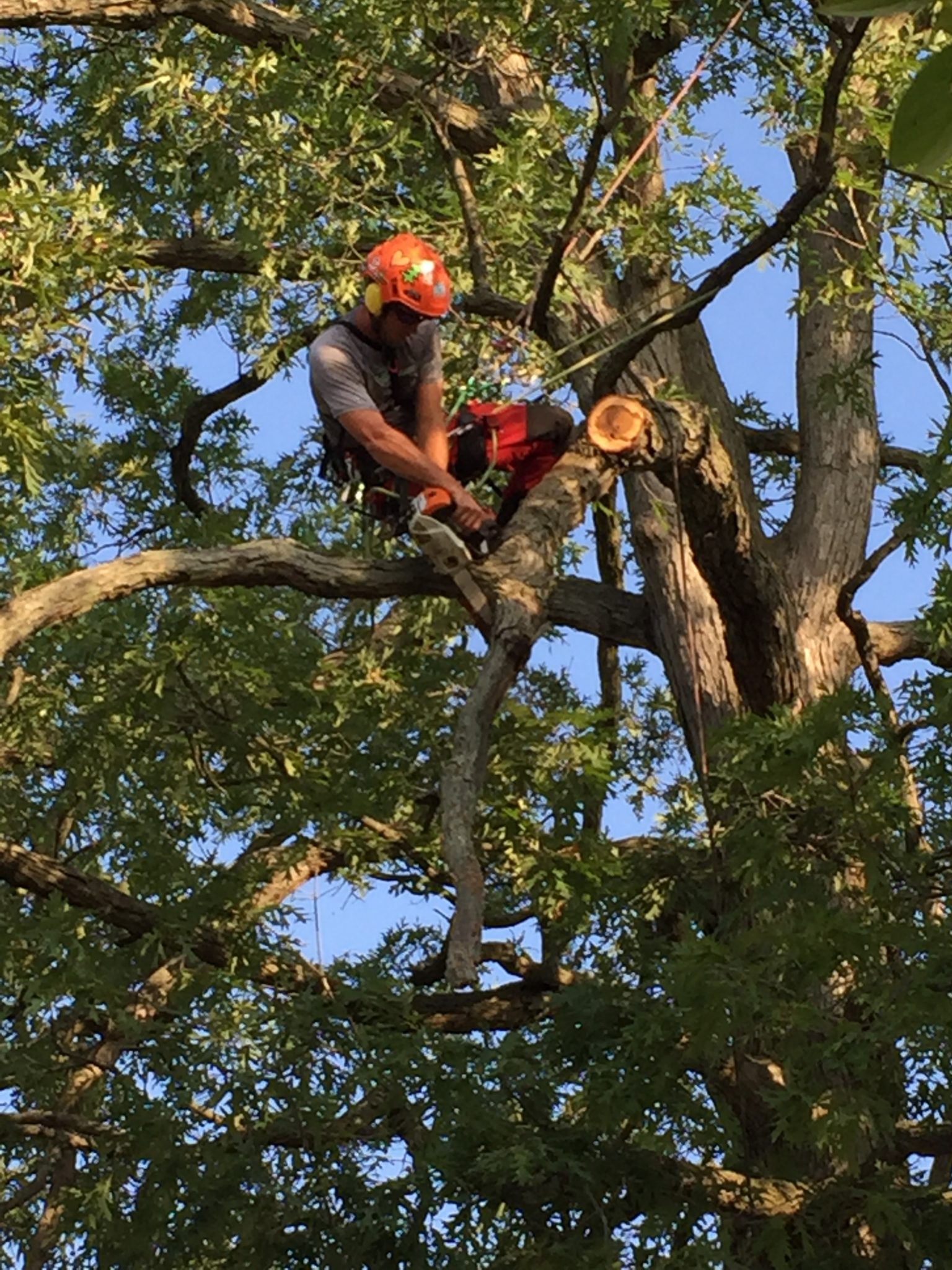 Tree pruning and tree removal, is difficult and dangerous work. Also, there is a reason why the tree is being removed. Often it has been deemed high risk or presents a danger on the site. Tree crews are regularly asked to work on trees with compromised structure from storm damage or years of neglect. These compromised trees are often dead trees, which are particularly dangerous. A tree that has been dead for several years usually becomes brittle and inflexible. When you try to cut it down, controlling the direction of fall is a challenge and it will often shatter, throwing broken branches in an uncontrolled manner. Often, tree workers are in trees that have electrical conductors running through the branches. That risky situation should speak for itself.
Insurance, Licensing – Because tree work can be hazardous, qualified companies will have expensive liability insurance to protect the homeowner’s property, as well as workers’ compensation insurance to help cover injuries sustained by the crew, should they occur. You get what you pay for and this includes tree care as well! If you select a company that is less expensive, they may not carry insurance which leaves the tree owner at a high risk of having to pay damages several times the original job estimate, if something goes wrong. Always check with your tree care company to be sure they can validate proper insurance before starting tree work. This applies to any service company which may be used in and around your home or property.
Trained and Certified Workers – Its best to choose a tree care company where the crew has current industry credentials 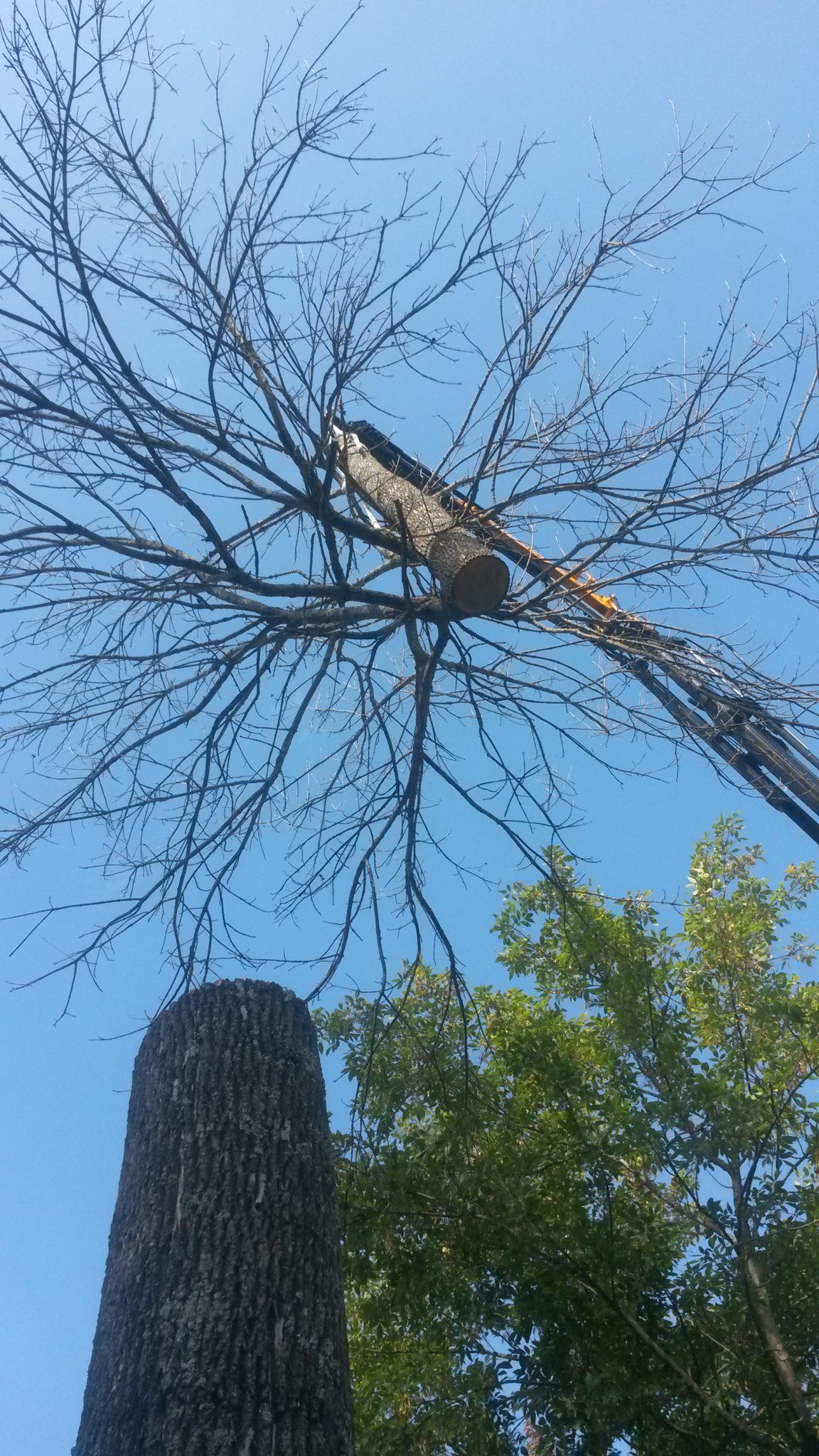 and a history of training and experience. How do you know if a company’s staff is trained and experienced? Ask to see their credentials and look for programs such as the International Society of Arboriculture (ISA) Certified Arborist, or the Tree Care Industry Association (TCIA) Certified Treecare Safety Professional which are indicators of a professional business with the expertise to perform the work. Tree owners and managers have the option to interview two or three tree care companies before deciding about tree removal or other critical practices such as pruning. Ask to see a copy of the current insurance certificate as well as copies of the crew’s competency credentials. If a company representative hesitates to provide these documents or insists, they don’t need to “prove” themselves, find another company to perform the work. Ask for references. This is easy since often all that is needed is to drive by a location to see the quality of the pruning work or removal work completed.
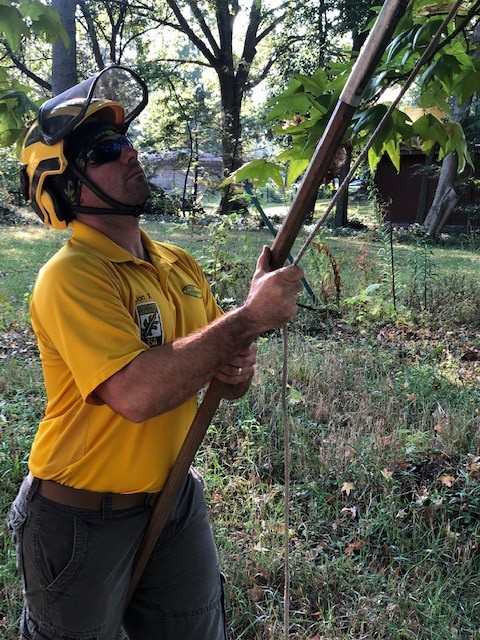
Find a professional – Also, to check for an ISA Certified Arborist in your area, visit the website www.treesaregood.org then click on the link “Find an Arborist”. By entering your zip code, a list of credentialed arborists can be found nearest your location.
Tree care performed properly will be an investment in your property that, when done correctly, will give you valued returns for decades.
Resources
Mechanical Damage to Trees: Mowing and Maintenance Equipment, The Education Store, Purdue Extension’s resource center
Tree Appraisal and the Value of Trees, The Educational Store
Tree Pruning Essentials, video, The Education Store
Tree Pruning Essentials, The Education Store
Tree Selection for the “Un-natural” Environment, The Education Store
Lindsey Purcell, Chapter Executive Director
Indiana Arborist Association
Choosing and planting a tree should be a well-informed and planned decision. Proper selection and planting can provide years of enjoyment for you and future generations as well as increased property value, improved environmental quality, and economic benefits. On the other hand, an inappropriate tree for your site or location can be a continual challenge and maintenance problem, or even a potential hazard, especially when there are utilities or other infrastructure nearby. This informative video will describe everything needed to know about choosing the right tree.
Resources:
Financial and Tax Aspect of Tree Planting, The Education Store
Tree Risk Management – Got Nature? Blog, Purdue Extension – FNR
Designing Hardwood Tree Plantings for Wildlife, The Education Store
Importance of Hardwood Tree Planting, The Education Store
Planning the Tree Planting Operation, The Education Store
Purdue Extension – Forestry and Natural Resources

It’s a tough neighborhood for trees in the built environment. It is an ecosystem unlike any other, because it is dynamic, fragmented, high-pressure, and constantly under siege. There are continual extremes and challenges in this “un-natural” area as opposed to the environment in a more natural woodland. It’s a place where trees die young, without proper selection, planting, and care. Successful tree selection requires us to think backwards—beginning with the end in mind— to get the right tree in the right place…in the right way. This publication, Tree Selection for the “Un-natural” Environment, takes a look at some important components of the decision-making process for tree selection. There is both a publication and a video resource on this topic, both of which can be found below.
The video can be watched here:
Planting Your Tree Part 1: Choosing Your Tree
Resources:
Tree Selection for the “Un-natural” Environment, The Education Store, Purdue Extension’s resource center
Tree Installation: Process and Practices, The Education Store
Construction and Trees: Guidelines for Protection, The Education Store
Diseases in Hardwood Tree Plantings, The Education Store
The eastern hellbender is an endangered salamander found in the Blue River in southern Indiana. It requires cool, clean rivers and streams with high water quality in order to thrive. Water quality in the Blue River is affected by many factors. One relatively unknown contributor to poor water quality is pollution entering sinkholes. Many landowners have sinkholes on their properties and treat them like outdoor waste sites without knowing that these sinkholes have a direct link to our water supplies. In this video, Purdue biologists interview a local cave expert and a local conservationist about how sinkholes are connected to our rivers, streams, and water supplies and how we can help protect them.
Resources:
Improving Water Quality by Protecting Sinkholes on Your Property, The Education Store, Purdue Extension’s resource center
A Landowner’s Guide to Sustainable Forestry: Part 5: Forests and Water, The Education Store
Improving Water Quality Around Your Farm, The Education Store, YouTube
Animal Agriculture’s Effect on Water Quality: Pastures and Feedlots, The Education Store
Improving Water Quality At Your Livestock Operation, The Education Store, YouTube
Nick Burgmeier, Research Biologist & Extension Wildlife Specialist
Purdue Department of Forestry and Natural Resources
Dr. Rod Williams, Professor of Wildlife Science
Purdue Department of Forestry and Natural Resources
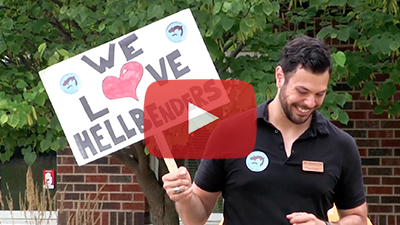 On August 29th, the Colombian Park Zoo in Lafayette hosted ‘Help the Hellbender Day’, an outreach event filled with fun and educational activities to promote awareness of this fascinating at-risk salamander. Partners in the community including Purdue University, Illinois – Indiana Sea Grant, Tippecanoe County Partnership for Water Quality, and the Wabash River Enhancement Corporation provided activities and booths to teach the community about water quality issues and how they can get involved to help the hellbender. The Salamander Tale exhibit featuring the Hellbender Havoc video game made an appearance as well.
To play the Hellbender Havoc video game visit:
Hellbender Havoc Game, Apple Store
Hellbender Havoc Game, Google Play
Perhaps the most interesting part of the day was the zoo sharing a rare glimpse of the juvenile hellbenders. As one of Purdue University’s partners the zoo is helping raise the hellbenders to increase their numbers. The three hellbenders showed in the video were hatched at the Purdue’s Aquaculture Research Lab by Professor of Wildlife Science Rod Williams and his team. They were then transferred to the zoo last spring, where they will be studied and raised until they are mature enough to be released in the wild.
Purdue FNR Extension’s Aaron Doenges filmed this exciting day at the zoo and put together a Help the Hellbender Day video featuring zoo director Ron Breeding, education coordinator Amber Frederick, and hellbender keeper Noah Shields. The FNR team returned to the zoo on October 21st for its annual Boo at the Zoo event sharing resources on hellbenders.
Resources:
Help the Hellbender Day at Columbian Park Zoo video – Purdue Extension
Help the Hellbender – Purdue Extension
Help the Hellbender Facebook page
Ask the Expert: Learn All About Hellbenders and Take a Tour, Subscribe Purdue Extension – Forestry & Natural Resources (FNR) YouTube Channel
Ask the Expert video: Help the Hellbender – Dr. Stephen Spear of The Wilds, Purdue Extension – FNR YouTube Channel
Ask the Expert video: Live with Mesker Park Zoo and Botanical Gardens – Hellbenders, Purdue Extension – FNR YouTube Channel
A Moment in the Wild video: Hellbender Hide, Purdue Extension – FNR YouTube Channel
A Moment in the Wild video: Release Moment of Hellbenders,
How Anglers and Paddlers Can Help the Hellbender video, Purdue Extension – FNR YouTube Channel
Eastern Hellbender ID Video, Purdue Extension – FNR YouTube Channel
Hellbenders Rock!, The Education Store, Purdue Extension’s resource center
Help the Hellbender, North America’s Giant Salamander, The Education Store
How Our Zoos Help Hellbenders, The Education Store
The Nature of Teaching: Adaptations for Aquatic Amphibians, The Education Store
Healthy Water, Happy Home – Lesson Plan, The Education Store
Purdue Expert: Hellbender Salamander, Purdue University News YouTube Channel
FNR Assists in First Natural Breeding of Eastern Hellbender in Captivity, Purdue FNR News & Stories
Helping the Hellbender: Mesker Park Zoo Begins Captive Breeding Efforts, Purdue Agriculture News
Purdue partners with Indiana zoos for hellbender conservation – Purdue Agriculture News
Purdue-Zoo Partnership Aims To Save The Hellbender – WFYI
Rod Williams, Professor of Wildlife Science and Assistant Provost for Engagement at Purdue University.
Purdue Department of Forestry & Natural Resources
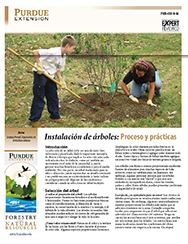 This is a Spanish-language version of our helpful how-to guide, Tree Installation: Process and Practices, which helps in choosing, planting and maintaining trees. It includes a 12-step planting process, Indiana native tree and utility-friendly tree charts, information on Midwest hardiness zones and detailed tree-planting graphics and photographs. View it in The Education Store today!
Resources:
Tree Installation: Process and Practices, The Education Store
Native Trees of the Midwest, The Education Store
Shrubs and Woody Vines of Indiana and the Midwest, The Education Store
Planting Forest Trees and Shrubs in Indiana, The Education Store
Lindsey Purcell, Chapter Executive Director
Indiana Arborist Association
 Woodland owners seem to have a lot to worry about these days. Threats to the health of their woodlands are announced regularly as new insects or diseases are detected, drought rages or invasive plant species compete with native vegetation. Some threats, like the emerald ash borer or a large tornado, can result in nearly unstoppable destruction. However, there are some actions that woodland owners can take to make their woodlands more resistant to other damaging agents or events. One of the best preventative measures is to use forest management practices to make the trees in your woodland as healthy and vigorous as possible. Competition between trees is a natural part of forest growth and development, but excessive competition as trees become more crowded and fight for growing space can make trees more susceptible to attack by insects and diseases and damage by weather extremes like droughts. Thinning around desirable trees provides additional growing space and reduces stress on these trees. Thinning can be done by harvesting trees for firewood or other personal use products, selling trees in a timber sale, or felling or girdling trees to be left for wildlife habitat. Gradual thinning in your woodland helps maintain the vigor of the remaining trees much like thinning carrots in a garden result in larger, faster growing carrots.
Vines and invasive plants can also create problems for tree health. Some vines, like wild grape, kudzu and Asian bittersweet, can climb over the crown of the tree, covering the leaves and reducing growth and vigor, and in some cases, killing the tree. Trees with large vines in their crowns may also be more susceptible to damage during wind, snow or ice storms, due to the extra weight of the vines. Cutting vines that climb into desirable trees is a good way to protect their health. Invasive plants like Asian bush honeysuckles and tree-of-heaven can become serious competitors with native forest trees and shrubs for space, water and nutrients required for tree growth and regeneration. Heavy infestations of invasive plant species can even change the soil environment, making it more difficult for trees to regenerate. Controlling invasive plants in your woodland is an important step in encouraging long-term woodland health.
Professional foresters and arborists can help you manage the health of your woodland. You can find professional foresters through the website findindianaforester.org or from the Indiana Division of Forestry.
The Education Store, available through Purdue Extension, has many resources available to help you manage your woodlands. Just place the keyword “woodland” in the search field box.
Forest Improvement Handbook.
Resources:
Resources and Assistance Available for Planting Hardwood Seedlings, The Education Store, Purdue Extension’s resource center
Creating a Wildlife Habitat Management Plan for Landowners, The Education Store
How to Build a Plastic Mesh Deer Exclusion Fence, The Education Store
Planting Forest Trees and Shrubs in Indiana, The Education Store
Shrubs and Woody Vines of Indiana and the Midwest, The Education Store
Investing in Indiana Woodlands, The Education Store
Woodland Stewardship for Landowners Purdue Extension – Forestry & Natural Resources (FNR) Extension YouTube Playlist
ID That Tree, Purdue Extension-FNR YouTube playlist
Woodland Management Moment , Purdue Extension-FNR YouTube playlist
Lenny Farlee, Extension Forester
Hardwood Tree Improvement and Regeneration Center (HTIRC)
Forestry and Natural Resources, Purdue University

Recent Posts
- Celebrate Pollinator Week With Flowers of June Tour
Posted: June 15, 2026 in Forestry, Gardening, How To, Wildlife - Pruning Highlight-Pollarding Trees: A Traditional Pruning Practice with Modern Uses
Posted: June 11, 2026 in Forestry, Forests and Street Trees, Urban Forestry, Wildlife, Woodlands - Danielle Howard Hired as FNR Extension Prescribed Fire Specialist
Posted: June 10, 2026 in Forestry, Wildlife, Woodlands - Flat-Faced Longhorn Beetle Found in Hardwood Logs – IDNR Division of Entomology
Posted: June 8, 2026 in Alert, Forestry, Forests and Street Trees, Invasive Insects, Urban Forestry, Wildlife, Woodlands - Connecting Research to Practice: Natural Resources & Land Use Spring Training
Posted: June 5, 2026 in Forestry, Forests and Street Trees, How To, Invasive Animal Species, Invasive Plant Species, Land Use, Natural Resource Planning, Urban Forestry, Wildlife, Woodlands - Indiana Monarch and Pollinator Conservation
Posted: June 1, 2026 in Forestry, Forests and Street Trees, Gardening, How To, Natural Resource Planning, Plants, Urban Forestry, Wildlife - Box Tree Moth Range is Expanding
Posted: May 27, 2026 in Forestry, Invasive Animal Species, Invasive Insects, Wildlife - Spotted Lanternfly Feeds on Over 70 Plus Plant Species
Posted: May 20, 2026 in Alert, Forestry, Forests and Street Trees, Gardening, Invasive Insects, Urban Forestry, Wildlife - Painted Hickory Borer, Purdue Landscape Report
Posted: May 14, 2026 in Forestry, Invasive Insects, Wildlife - Saving Giants of the Blue River: Purdue Team Earns Statewide Recognition
Posted: in Aquaculture/Fish, Aquatic/Aquaculture Resources, Wildlife
Archives
Categories
- Alert
- Aquaculture/Fish
- Aquatic/Aquaculture Resources
- Ask the Expert
- Christmas Trees
- Community Development
- Disease
- Drought
- Forestry
- Forests and Street Trees
- Gardening
- Got Nature for Kids
- Great Lakes
- How To
- Invasive Animal Species
- Invasive Insects
- Invasive Plant Species
- Land Use
- Natural Resource Planning
- Nature of Teaching
- Plants
- Podcasts
- Ponds
- Publication
- Safety
- Spiders
- Timber Marketing
- Urban Forestry
- Webinar
- Wildlife
- Wood Products/Manufacturing
- Woodland Management Moment
- Woodlands