 Purdue University - Extension - Forestry and Natural Resources
Got Nature? Blog
The aquaculture industry in the United States Department of Agriculture North Central Region (USDA NCR) is relatively small and diverse, consisting primarily of small- to medium-scale family-owned and operated farms, with a few large operations scattered throughout the region. Regardless of farm size, regional aquaculture businesses face similar product marketing challenges, such as low prices and competition with wild-capture and imported farm-raised fish products.
To maximize profits, companies generally adapt marketing strategies based on factors such as location, product offerings, consumers’ willingness to pay, and profit margins. In the NCR, due to relatively high regional production costs, low production capacities, and lack of economically feasible processing infrastructure, many aquaculture businesses have opted to market and sell to wholesalers specializing in recreational stocking, the pet trade, bait, and live food fish. With ongoing changes to the way people shop, including more online purchasing than ever before, regional aquaculture businesses are exploring opportunities for direct marketing to consumers to diversify their sales portfolios. This requires finding new customers who are willing to pay a premium price.
Direct marketing means any marketing strategy that relies on business-to-consumer communication or distribution. This guidebook is for small- to medium-scale farmers interested in directly marketing aquaculture products to individual consumers, essentially shortening the supply chain by eliminating all or some of the intermediaries or “middlemen.”
To receive the free download, visit the Purdue Extension’s resource center: The Education Store – Direct Marketing Guidebook for Small- to Medium-Scale Aquaculture Businesses.
Resources:
Profitability of Hybrid Striped Bass Cage Aquaculture in the Midwest, The Education Store, Purdue Extension resource center
A Guide to Marketing for Small-Scale Aquaculture Producers, The Education Store
A Guide to Small-Scale Fish Processing Using Local Kitchen Facilities, The Education Store
Marine Shrimp Biofloc Systems: Basic Management Practices, The Education Store
Aquaculture Industry in Indiana Growing, Purdue Today
Tilapia Farmed Fish Fact Sheet, The Education Store
Rainbow Trout Farmed Fish Fact Sheet, The Education Store
Pacific White Shrimp Farmed Fish Fact Sheet, The Education Store
Walleye Farmed Fish Fact Sheet: A Guide for Seafood Consumers, The Education Store
Sustainable Aquaculture: What does it mean to you?, The Education Store
The Benefits of Seafood Consumption The Education Store
Walleye Farmed Fish Fact Sheet: A Guide for Seafood Consumers, The Education Store
Pond and Wildlife Management website, Purdue Extension
Fish Cleaning with Purdue Extension County Extension Director, Got Nature? Blog, Purdue Extension – Forestry and Natural Resources
Aquaponics: What to consider before starting your business, YouTube, Purdue Ag Economics
Aquatics & Fisheries, Playlist, YouTube, Purdue Extension – Forestry and Natural Resources
Eat Midwest Fish, Illinois-Indiana Sea Grant online resource hub
Kwamena Quagrainie, Aquaculture Marketing Director/Clinical Engagement Full Professor
Purdue Agricultural Economics/Purdue Forestry & Natural Resources/Illinois Indiana Sea Grant Program
Amy Shambach, Aquaculture Marketing Outreach Associate
Purdue Forestry & Natural Resources/Illinois Indiana Sea Grant Program
Taylor Bradford, Aquaculture Extension Assistant
Illinois-Indiana Sea Grant/Purdue Forestry & Natural Resources/Purdue Agricultural Economics
Stuart Carlton, IISG Assistant Director
Illinois-Indiana Sea Grant/Purdue Forestry & Natural Resources
How does forest management affect wildlife, specifically birds? Which birds prefer which types of forest habitat? How can you help birds thrive on your property?
The Forestry for the Birds Virtual Tour is a new tool developed by Purdue Forestry and Natural Resources and Purdue Extension, which offers answers to those questions and more in an easily digestible and visual format. The virtual tour is based on The Nature Conservancy’s Forestry for the Birds program.
The virtual tour is an interactive guide to forest management techniques and birds in the forest that features 360-degree images, including several taken on eight Purdue FNR properties across the state. Bird identification resources from Cornell Lab of Ornithology’s Macaulay Library, forest management resources from Purdue Extension and more make the tour come to life and allow landowners to improve their identification and management skillsets.
The tour was created and is narrated by Kaitlyn Young, a 2022 wildlife alumna and current FNR master’s degree student. Young spent the summer of 2023 monitoring birds as an avian monitoring and extension intern for the Purdue FNR Extension Internship program.
Young conducted breeding bird surveys and made recordings of all the species she encountered whether audibly or visually last summer. She utilized a GoPro Max to capture 360-degree images of the properties she surveyed. Song Meter Mini acoustic monitors allowed her to capture various bird songs, which are incorporated into the background of some of the virtual scenes of the tour. Still camera images also provide stunning visuals of each property and bird type.
“I think my favorite thing about the tour is that when you are exploring each scene, it really feels like you are there,” Young explains. “I want folks who may not be able to visit our properties to feel like they are right there, inside the scene, while learning a thing or two about bird conservation and managing our forests for our rapidly declining feathery friends.”
Young is quick to note, however, that it is much easier to spot the birds she added to each scene of the tour than when trying to look for them during surveys, when they are often hiding behind the leaves in the canopy.
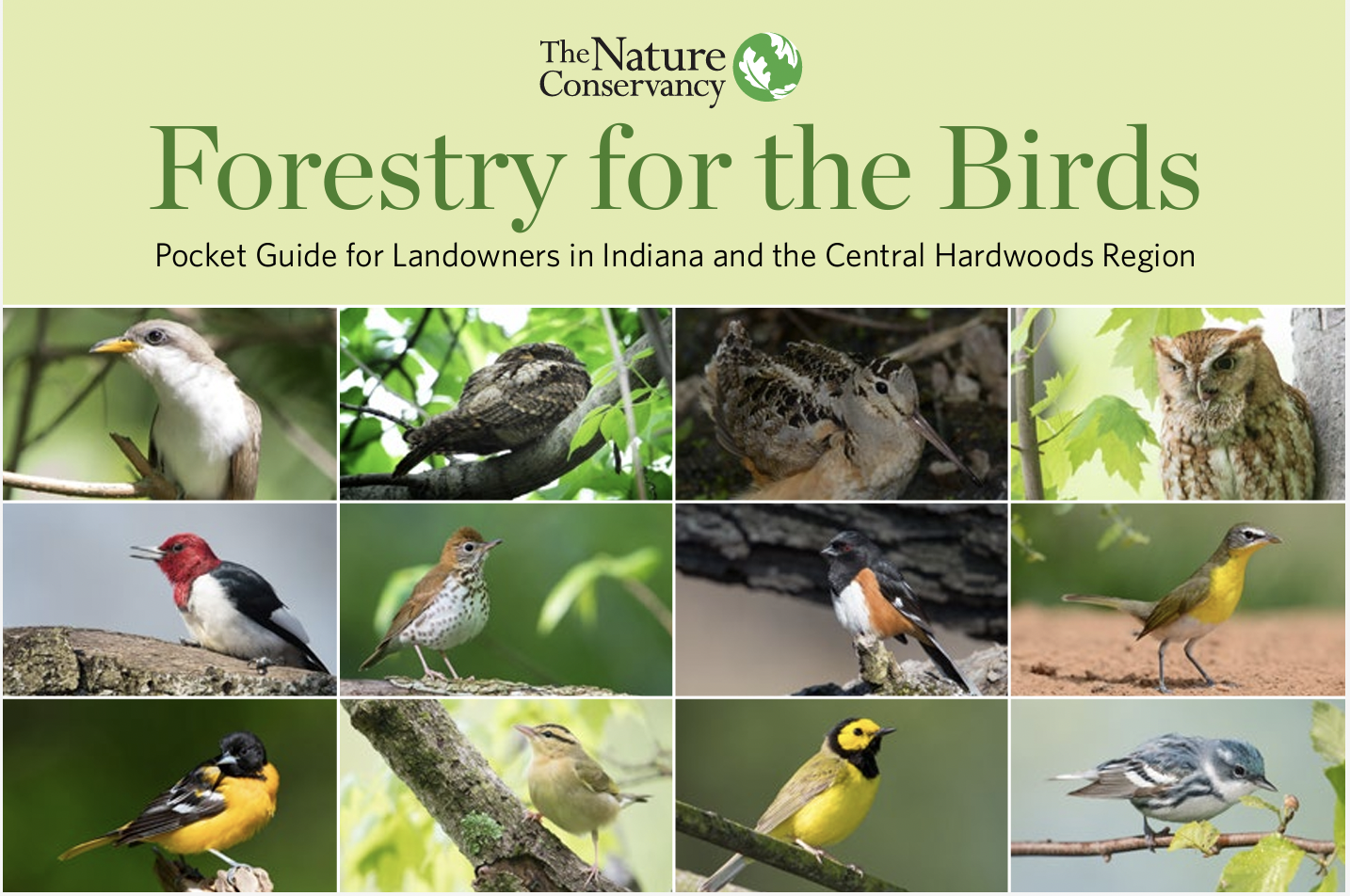
Forestry for the Birds is a project developed by the Indiana Chapter of The Nature Conservancy, which provides foresters and private landowners with the information and tools needed to enhance their forests in a way that fosters thriving bird communities. Many resources, including the Forestry for the Birds pocket guides, focus on the “Birders’ Dozen,” or 12 bird species which nest in the Central Hardwood ecoregion of Indiana that are easy to identify by sight and/or sound, and need conservation action to assist with range-wide or local population declines. The Birders’ Dozen species were selected by The Nature Conservancy and an independent group of birders, ornithologists and conservationists.
The virtual tour focuses on how different forest stewardship practices and forest types can benefit a variety of bird species, including the Birders’ Dozen. In each scene, there are three or more bird species to look for, recorded bird songs which are representative of what you could hear in that scene, interactive icons that link to images and videos and an audio description of the scene.
“I’m excited to see this virtual tour come to fruition – it provides some depth of information to complement the Forestry for the Birds Pocket Guide and Silvicultural Guide,” said Jessica Outcalt, Purdue Extension Educator, who helped develop the Forestry for the Birds materials for TNC. “I especially appreciate the visuals and audio that can’t be communicated via printed materials, and how this tour captures the sense of being in a forest that will make the material accessible to a wider audience.”
The properties shown illustrate a variety of forest stewardship techniques ranging from single tree selection to group tree selection, shelterwood, clearcut, oak woodland restoration and prescribed fire. The tour also highlights both young forests and mature closed-canopy forests.
The Birders’ Dozen includes:
- Yellow-billed and Black-billed Cuckoo
- Eastern Whip-poor-will
- American Woodcock
- Eastern Screech-Owl
- Red-headed Woodpecker
- Wood Thrush
- Eastern Towhee
- Yellow-Breasted Chat
- Baltimore Oriole
- Worm-eating Warbler
- Hooded Warbler
- Cerulean Warbler
*Bird species listed above with links will take you to the Indiana Woodland Steward website as they share highlights with this information in “The Birders’ Dozen Profile” written by Jessica Outcalt.
The American Woodcock, Wood Thrush and Cerulean Warbler are listed on the National Audubon Society watchlist, while the Cerulean warbler is state endangered in Indiana. The Eastern Whip-poor-will, American Woodcock, Worm-eating Warbler and Hooded Warbler have been noted as species of special concern by the Indiana Department of Natural Resources Division of Fish and Wildlife.
To view this article along with other news and stories posted on the Purdue Forestry and Natural Resources website view: Virtual Tour Brings Forest Management for the Birds to Life.
Resources:
Breeding Birds and Forest Management: the Hardwood Ecosystem Experiment and the Central Hardwoods Region, The Education Store, Purdue Extension – Forestry and Natural Resources
Forest Birds, The Education Store
Managing Woodlands for Birds, The Education Store
Managing Woodlands for Birds Video, Purdue Extension-Forestry and Natural Resources (FNR) YouTube Channel
Breeding Birds and Forest Management: the Hardwood Ecosystem Experiment and the Central Hardwoods Region, The Education Store
The Birders’ Dozen, Profile: Baltimore Oriole, Indiana Woodland Steward
Ask An Expert, Playlist, Purdue Extension – FNR YouTube channel
It’s For the Birds, Indiana Yard and Garden-Purdue Consumer Horticulture
Birds and Residential Window Strikes: Tips for Prevention, The Education Store, Purdue Extension resource center
No Room at the Inn: Suburban Backyards and Migratory Birds, Education Store, Purdue Extension resource center
Putting a Little Wildlife in Your Backyard This Spring, The Education Store
Wendy Mayer, FNR Communications Coordinator
Purdue University Department of Forestry and Natural Resources
Quality of life encompasses individuals’ overall well-being, goals, expectations, standards, and concerns. Various factors shape a person’s perception of quality of life, such as physical and mental health, economic stability, social connections, education, and the environment. Access to healthcare, education, employment opportunities, and recreational facilities significantly influences a person’s ability to meet their needs and achieve their goals (World Health Organization, 2012).
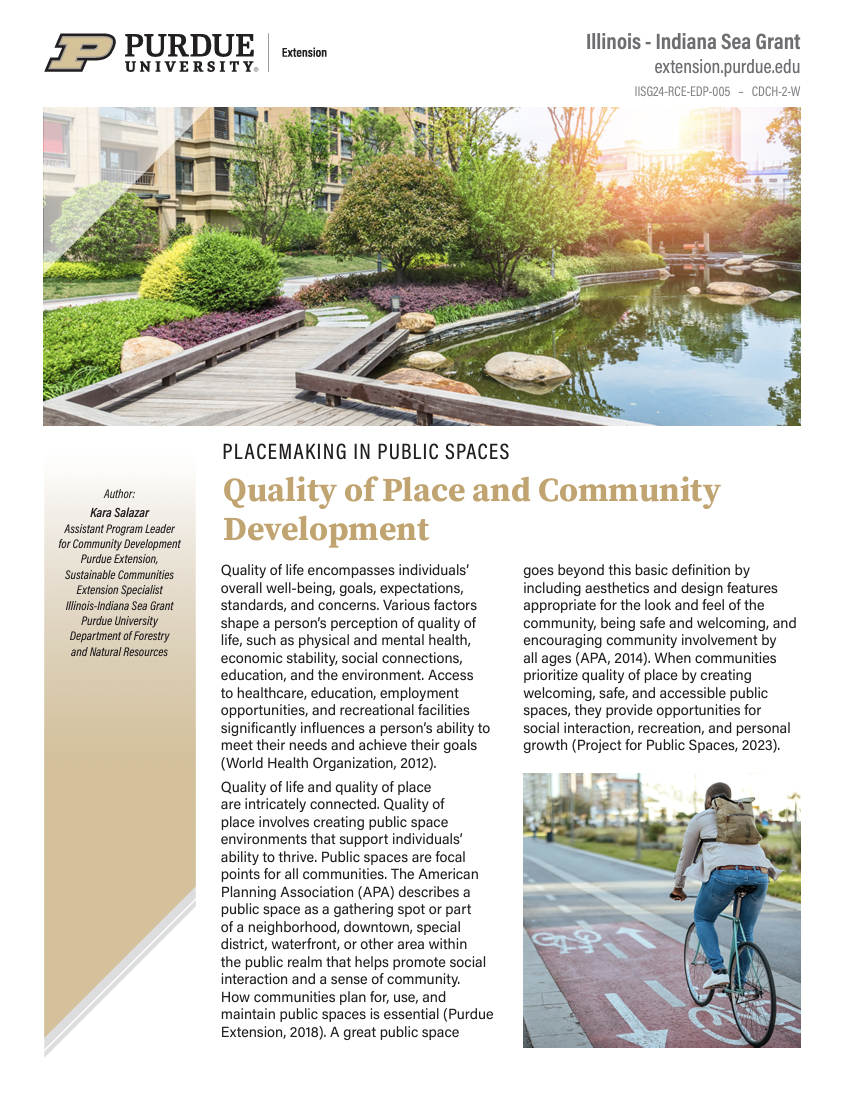
Discover the power of quality of place and placemaking through this new publication by Kara Salazar, who is the Assistant Program Leader for Community Development for Purdue Extension along with being the Sustainable Communities Extension Specialist for Illinois-Indiana Sea Grant. Placemaking is the process of planning, designing, and managing public spaces to enhance quality of life and foster community. Effective placemaking, whether through tactical interventions like pop-up parks or strategic projects that reshape entire neighborhoods, revitalizes communities. By involving residents in the process, we create vibrant spaces that reflect local culture and values. These efforts not only improve quality of life but also attract investment, support local businesses, and promote sustainability.
To receive the free download, visit the Purdue Extension’s resource center: The Education Store – Quality of Place and Community Development.
Resources:
Implementation Examples of Smart Growth Strategies in Indiana, The Education Store, Purdue Extension’s resource center
Community Development, Purdue Extension
Enhancing the Value of Public Spaces Program Video, Purdue Extension
Enhancing the Value of Public Spaces: Creating Healthy Communities, The Education Store – Purdue Extension’s resource center
Enhancing the Value of Public Spaces Curriculum, The Education Store
Sustainable Communities Extension Program Website, Purdue Extension
Conservation Through Community Leadership, The Education Store
One Water Approach to Water Resources Management, The Education Store
Rainscaping Education Program, Purdue Extension
Indiana Creek Watershed Project – Keys to Success, Partnerships and People, Video, Purdue Extension You Tube Channel
Subscribe to Purdue Extension – Forestry and Natural Resources YouTube Channel
Kara Salazar, Sustainable Communities Extension Specialist
Purdue University Department of Forestry and Natural Resources
Oak-hickory forests, which are comprised of a variety of different tree species, shrubs, grasses, sedges and wildflowers, as well as wildlife, including songbirds, are important to Indiana’s biodiversity. Learn how you can support oak-hickory ecosystems on your property through a new publication, “Forest Stewardship for Oak-Hickory Ecosystems in Indiana,” produced by Let the Sun Shine In – Indiana.
“The goal of this publication is to provide woodland owners with information about the stewardship practices they can use to sustain and enhance oak-hickory ecosystems on their land,” said co-author Jarred Brooke, Purdue Extension wildlife specialist. “Having this information will help them make informed decisions about how to manage their land to meet their forestry and wildlife objectives.”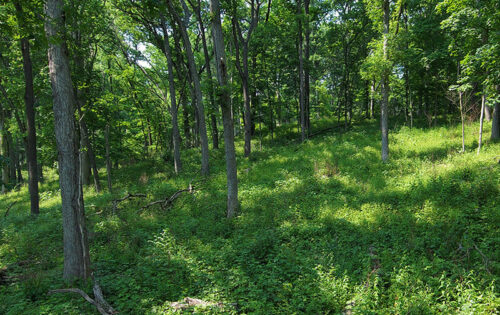
The publication discusses various methods landowners can use on their properties, from midstory removal to overstory thinning, prescribed fire, supplemental planting, controlling deer browsing, crop tree release and invasive species control. It also details options for timber harvest, which can be used to regenerate the next generation of a forest. Additional resources from forestry and wildlife professionals as well as other publications discussing current research and management tips also are included in this document.
“Oak ecosystem management is confusing,” said co-author Dan Shaver, state forester for the Indiana Natural Resources Conservation Service. “This publication provides easy to understand basic concepts to help landowners see where their property fits in the oak restoration process. It does not answer all questions or provide all the technical details, but it will help reduce confusion and foster better communication and understanding between landowners and foresters.”
The publication is co-authored by Brooke, Shaver and Kyle Brazil, Central Hardwoods Joint Venture coordinator for the American Bird Conservancy.
“The oak-hickory ecosystem of southern Indiana is incredibly important to birds, other wildlife, and overall biodiversity,” Brazil said.
“Unfortunately, it’s continued persistence isn’t a given. Lack of management, and specifically lack of fire, over the past century has left it in peril. Restoring the oak-hickory ecosystem will require a concerted effort and private landowners are a key part of the solution. This publication is intended to help landowners understand how to manage oak ecosystems on their properties, and give them a roadmap for getting started.”

Woodland owners who are curious about oak restoration or improving their woodlands for songbirds can reach out to their local IDNR forester, the Let the Sun Shine In – Indiana organization or Purdue Extension to find out how to get started.
Let the Sun Shine In – Indiana is a collaboration of several organizations with a shared goal of maintaining oak-hickory ecosystems for the benefit of the people and wildlife of Southern Indiana.
“The LSSI IN collaboration utilizes education and outreach opportunities for landowners, to inform them of the imperiled Oak-Hickory Ecosystem,” explained Judi Brown, coordinator of the Let the Sun Shine In – Indiana. “Part of this outreach includes providing the Oak Hickory Stewardship Guide to landowners. The Stewardship Guide explains common forest management concepts that they can utilize on their properties, and encourages the growth of oak and hickory trees from the acorn or nut into the forest canopy.”
The primary method of distribution of the Stewardship Guide is through the Indiana DNR district foresters, but the guide also is available online. LSSI IN is providing metal gate signs to recognize the stewardship of forest landowners who are actively managing their forest land.
Support for the stewardship guide was provided by the Central Hardwoods Joint Venture, the American Bird Conservancy, the Indiana Department of Natural Resources Division of Forestry, Let the Sun Shine In – Indiana, Purdue Forestry and Natural Resources Extension, the United States Department of Agriculture Natural Resources Conservation Service and the United States Forest Service.
To view this article along with other news and stories posted on the Purdue Forestry and Natural Resources website view: Publication Teaches Landowners How to Support Oak-Hickory Ecosystems.
Resources
ID That Tree: Shingle Oak, Purdue Extension-Forestry & Natural Resources (FNR) YouTube Channel
ID That Tree: Red Oak Group, Purdue Extension-FNR YouTube Channel
Red Oak Group – Hardwood Lumber and Veneer Series, The Education Store, Purdue Extension’s resource center
Shingle Oak, Morton Arboretum
The Nature of Oaks Webinar, Purdue Extension-FNR YouTube Channel, Shared from Indiana Forestry & Woodland Owners Association
An Introduction to Trees of Indiana, The Education Store, Purdue Extension’s resource center
Native Trees of the Midwest, The Education Store
Shrubs and Woody Vines of Indiana and the Midwest, The Education Store
Investing in Indiana Woodlands, The Education Store
Forest Improvement Handbook, The Education Store
ID That Tree, Purdue Extension-FNR YouTube playlist
Woodland Management Moment , Purdue Extension-FNR YouTube playlist
Invasive Species, Purdue Extension – FNR YouTube Playlist (Asian Bush Honeysuckle, Burning Bush, Callery Pear, Multiflora rose)
Finding help from a professional forester, Indiana Forestry & Woodland Owners Association
Wendy Mayer, FNR Communications Coordinator
Purdue University Department of Forestry and Natural Resources
Jarred Brooke, Wildlife Extension Specialist
Purdue Forestry and Natural Resources
Deer are an important part of Indiana woodlands and represent a true conservation success story. Many Hoosiers spent time in the woods pursuing deer during hunting season or marveling at them during walks in their woodlands. But as recently as the 1930s deer were absent from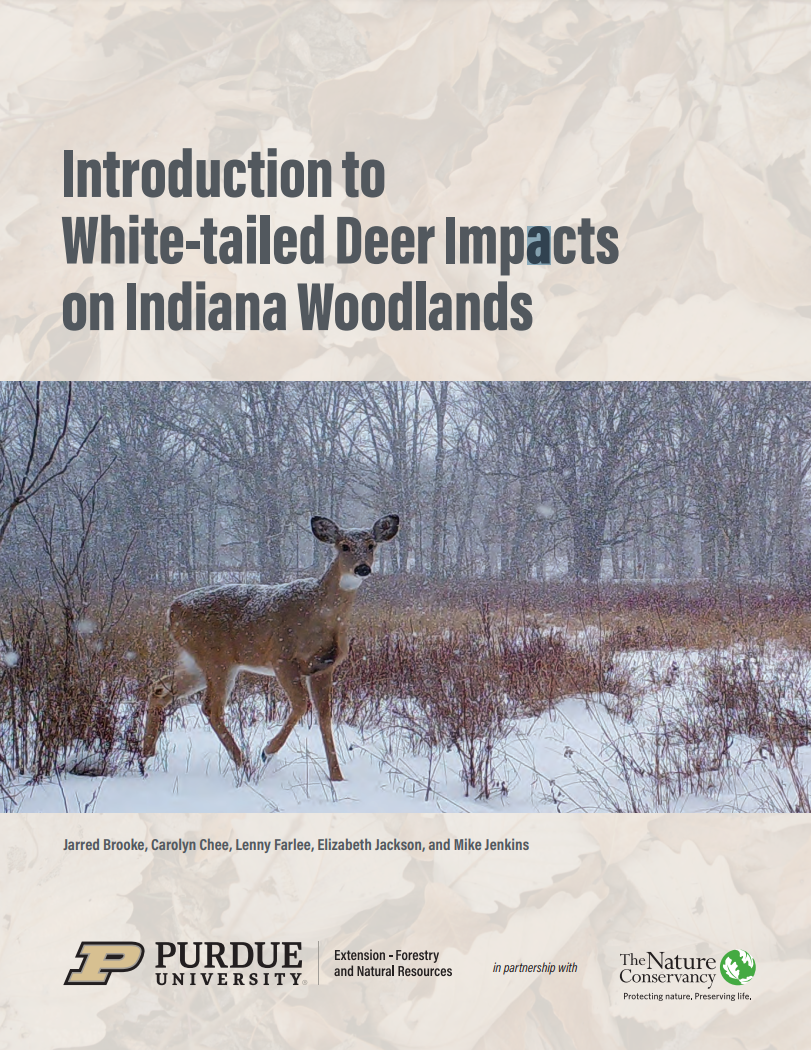 Indiana woodlands. Restocking efforts led by the Indiana Department of Natural Resources helped reestablish deer populations across the state. However, deer populations have rebounded beyond what the land can support in many areas, leading to issues like crop damage, deer-vehicle collisions, and damage to woodlands.
Deer overabundance can pose a threat to the future health of many Indiana woodlands. Deer are considered a “keystone” species, which means their feeding habits (browsing) can shape our woodlands’ look and their plant and wildlife communities. This publication will outline some of the impacts deer can have on Indiana woodlands and what signs and symptoms to look for in your woods.
Learn more about the amount of impact in this new publication:
Low Impact: When deer have little impact on your woodlands, you often see a high diversity of plants. An abundance of preferred species like trillium (picture) can also be a sign of low deer impact.
Moderate Impact: When sprouts of preferred species are “hedged” or kept short by deer browse and browse on less preferred species is noticeable, then deer impact may be moderate.
High Impact: If invasive species like Japanese stiltgrass and garlic mustard are common in your woodland, it may be a sign that deer are overbrowsing native plants.
High Impact: If invasive species like Japanese stiltgrass and garlic mustard are common in your woodland, it may be a sign that deer are overbrowsing native plants.
Very High Impact: Browse lines indicate a severe deer problem and appear when deer browse all plants within their reach (<6 feet).
You can read this full publication for free at Introduction to White-tailed Deer Impacts on Indiana Woodlands.
View the Deer Impact Toolbox for more resources and videos.
Resources:
Purdue Extension Pond and Wildlife Management
Introduction to White-tailed Deer Impacts on Indiana Woodlands
Understanding White-tailed Deer and Their Impact on Indiana Woodlands, The Education Store
Monitoring White-tailed Deer and Their Impact on Indiana Woodlands, The Education Store
Managing White-tailed Deer Impacts on Indiana Woodlands, The Education Store
Ask an Expert: Wildlife Food Plots, video, Purdue Extension – FNR YouTube Channel
How to Build a Plastic Mesh Deer Exclusion Fence, The Education Store
Managing Your Woods for White-Tailed Deer, The Education Store
Bovine Tuberculosis in Wild White-tailed Deer, The Education Store
Handling Harvested Game: Episode 1, Field Dressing, video, Purdue Extension – FNR YouTube Channel
Deer Harvest Data Collection, Got Nature? Blog, Purdue Extension – FNR
How to Score Your White-tailed Deer, video, The Education Store, Purdue Extension Resource Center
White-Tailed Deer Post Harvest Collection, video, The Education Store
Age Determination in White-tailed Deer, video, The Education Store
Handling Harvested Deer Ask an Expert? video, Purdue Extension – FNR YouTube Channel
Subscribe to Purdue Extension-Forestry & Natural Resources YouTube Channel, Wildlife Playlist
Jarred Brooke, Wildlife Extension Specialist
Purdue Department of Forestry and Natural Resources
Deer are an essential part of our ecosystems, but the phenomenon of too many deer should be of concern to forest landowners and the public in general. Deer are a “keystone” species, meaning their browsing can impact forest and wildlife communities. It is clear that when deer become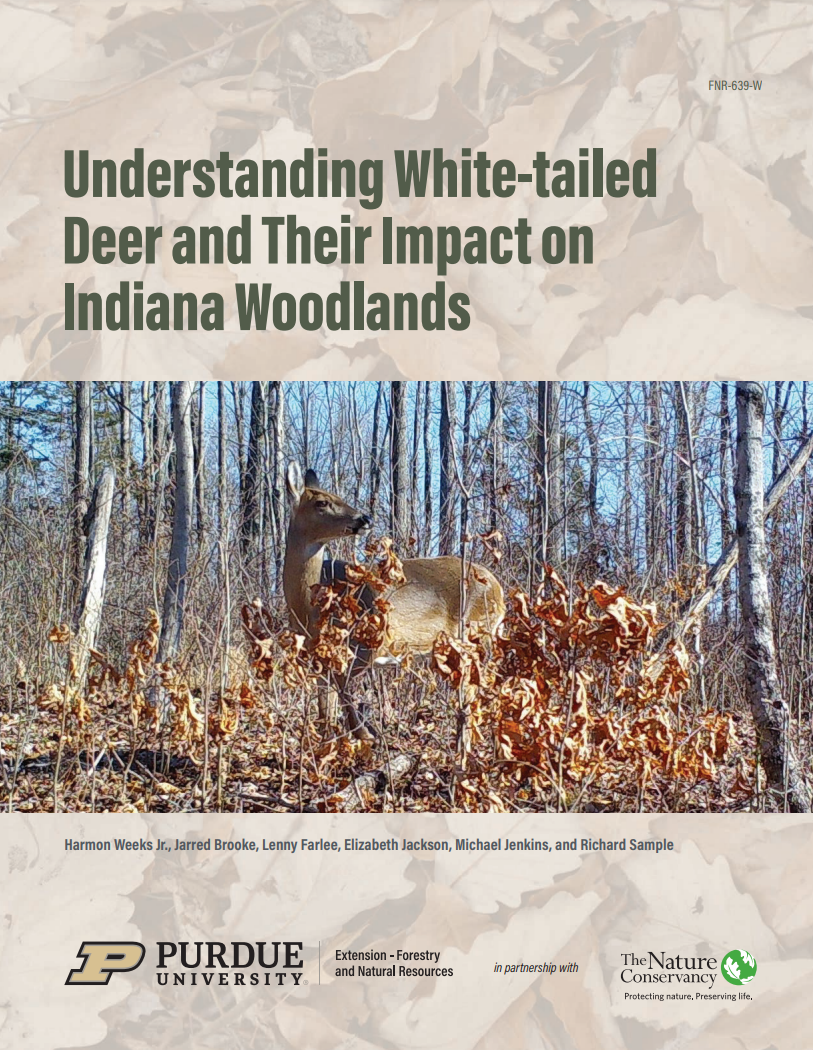 overabundant, their impact on the environment can be problematic. But by understanding the impacts deer have on our woodlands, their food preferences, and how to assess and evaluate impacts in your woodlands, we can begin to address the problems caused by overabundant deer.
Learn more about the research and how it can help you and your land:
- Carrying Capacity
- Too Many Deer or Not Enough Food: Managing the Foodscape
- Monitoring Deer and Forest Vegetation
- Food Preferences
- Deer Impact Assessment
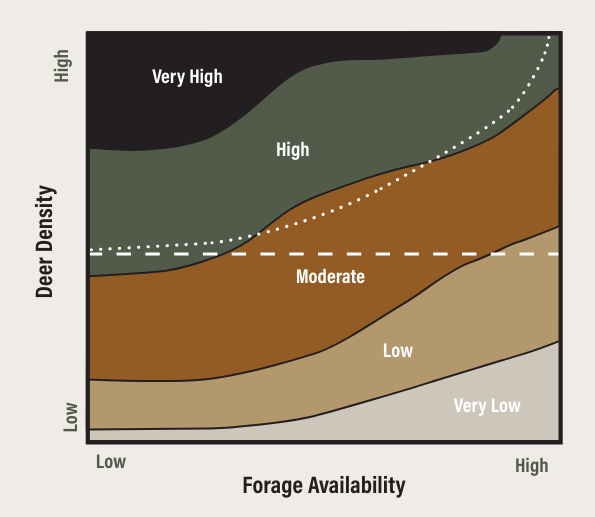
Too many deer or not enough food: managing the foodscape
- More Resources
To receive the free download and recipe visit the Purdue Extension’s resource center: The Education Store – Understanding White-tailed Deer and Their Impact on Indiana Woodlands.
View the Deer Impact Toolbox for more resources and videos.
Resources:
Purdue Extension Pond and Wildlife Management
Introduction to White-tailed Deer Impacts on Indiana Woodlands
Understanding White-tailed Deer and Their Impact on Indiana Woodlands, The Education Store
Monitoring White-tailed Deer and Their Impact on Indiana Woodlands, The Education Store
Managing White-tailed Deer Impacts on Indiana Woodlands, The Education Store
Ask an Expert: Wildlife Food Plots, video, Purdue Extension – FNR YouTube Channel
How to Build a Plastic Mesh Deer Exclusion Fence, The Education Store
Managing Your Woods for White-Tailed Deer, The Education Store
Bovine Tuberculosis in Wild White-tailed Deer, The Education Store
Handling Harvested Game: Episode 1, Field Dressing, video, Purdue Extension – FNR YouTube Channel
Deer Harvest Data Collection, Got Nature? Blog, Purdue Extension – FNR
How to Score Your White-tailed Deer, video, The Education Store, Purdue Extension Resource Center
White-Tailed Deer Post Harvest Collection, video, The Education Store
Age Determination in White-tailed Deer, video, The Education Store
Handling Harvested Deer Ask an Expert? video, Purdue Extension – FNR YouTube Channel
Subscribe to Purdue Extension-Forestry & Natural Resources YouTube Channel, Wildlife Playlist
Jarred Brooke, Wildlife Extension Specialist
Purdue Department of Forestry and Natural Resources
Wherever deer exist, they will be impacting the ecosystem through browsing. But at what level is that impact considered harmful? Many ecologists consider deer impact harmful when deer begin to reduce plant diversity in a woodland through browsing. knowing the exact number of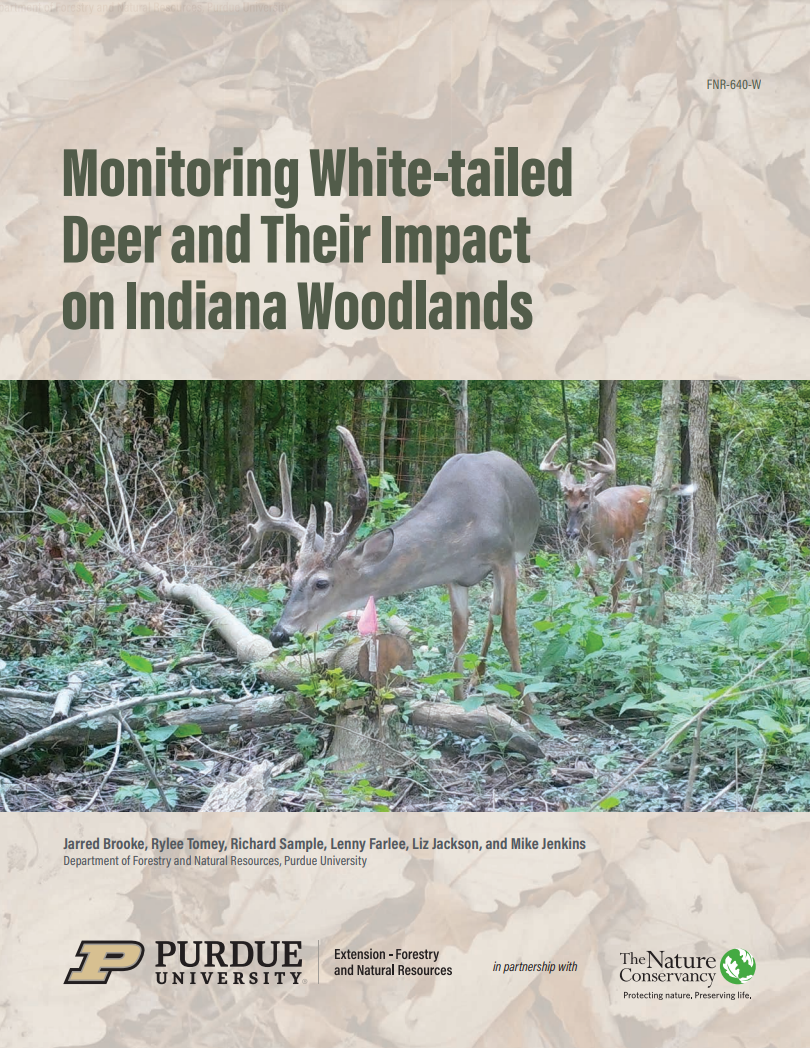 deer on a property is difficult to measure and unnecessary. There are relatively easy ways to estimate the number of deer on a property or track trends in population sizes over time. This publication is written to help woodland owners better understand how to monitor deer and their impact.
Monitoring deer impact is done by surveying what deer eat in a forest and how intensively they browse those species. Deer are browsers rather than grazers (like bison and cattle), preferring to eat forbs (broadleaf herbaceous plants), vines, shrubs, and trees rather than grasses. Deer also select specific parts of the plants (e.g., leaves, twigs, and young tender growth).
Monitoring Deer Impact Methods: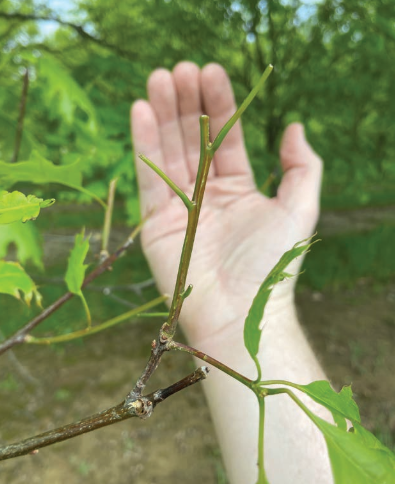
- Browse Surveys
- Indicator Plants
- Assessing Vegetation Impacts from Deer
- Ten-Tallest Method
- Twig-Aging
- Oak Sentinel
- Stump Sprouts
To receive the free download visit the Purdue Extension’s resource center: The Education Store – Monitoring White-tailed Deer and Their Impact on Indiana Woodlands.
Resources:
Purdue Extension Pond and Wildlife Management
Introduction to White-tailed Deer Impacts on Indiana Woodlands
Understanding White-tailed Deer and Their Impact on Indiana Woodlands, The Education Store
Monitoring White-tailed Deer and Their Impact on Indiana Woodlands, The Education Store
Managing White-tailed Deer Impacts on Indiana Woodlands, The Education Store
Ask an Expert: Wildlife Food Plots, video, Purdue Extension – FNR YouTube Channel
How to Build a Plastic Mesh Deer Exclusion Fence, The Education Store
Managing Your Woods for White-Tailed Deer, The Education Store
Bovine Tuberculosis in Wild White-tailed Deer, The Education Store
Handling Harvested Game: Episode 1, Field Dressing, video, Purdue Extension – FNR YouTube Channel
Deer Harvest Data Collection, Got Nature? Blog, Purdue Extension – FNR
How to Score Your White-tailed Deer, video, The Education Store, Purdue Extension Resource Center
White-Tailed Deer Post Harvest Collection, video, The Education Store
Age Determination in White-tailed Deer, video, The Education Store
Handling Harvested Deer Ask an Expert? video, Purdue Extension – FNR YouTube Channel
Subscribe to Purdue Extension-Forestry & Natural Resources YouTube Channel, Wildlife Playlist
Jarred Brooke, Wildlife Extension Specialist
Purdue Department of Forestry and Natural Resources
White-tailed deer are an integral piece of Indiana’s forest ecosystems. When in balance with the ecosystem, deer can enhance the health of the forest. This publication highlights the various tools available to woodland owners for mitigating the impacts of deer on their regenerating trees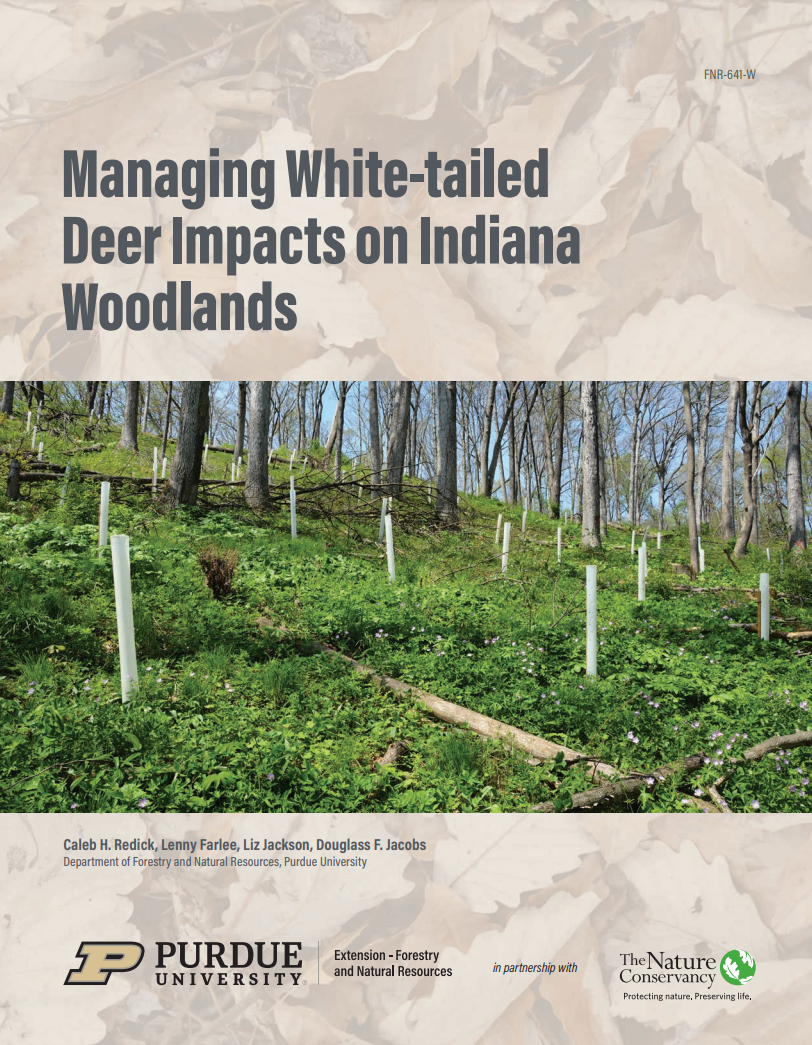 and is based on a compilation of research on the relative effectiveness of various deer browse control methods.
What control methods are available to help with forest regeneration? You will find the answer to this question and more, along with what deer population control means for forest landowners in this publication.
Check out the publications for the “Browse Control Methods for Forest Regeneration and Their Effectiveness” table which includes these control methods: Fencing; Population Control; Tree Shelters; Cages; Companion Plants; Repellents; Timber Harvests; Slash; and Fertilizer.

To receive the free download and recipe visit the Purdue Extension’s resource center: The Education Store – Managing White-tailed Deer Impacts on Indiana Woodlands.
Resources:
Purdue Extension Pond and Wildlife Management
Introduction to White-tailed Deer Impacts on Indiana Woodlands
Understanding White-tailed Deer and Their Impact on Indiana Woodlands, The Education Store
Monitoring White-tailed Deer and Their Impact on Indiana Woodlands, The Education Store
Managing White-tailed Deer Impacts on Indiana Woodlands, The Education Store
Ask an Expert: Wildlife Food Plots, video, Purdue Extension – FNR YouTube Channel
How to Build a Plastic Mesh Deer Exclusion Fence, The Education Store
Managing Your Woods for White-Tailed Deer, The Education Store
Bovine Tuberculosis in Wild White-tailed Deer, The Education Store
Handling Harvested Game: Episode 1, Field Dressing, video, Purdue Extension – FNR YouTube Channel
Deer Harvest Data Collection, Got Nature? Blog, Purdue Extension – FNR
How to Score Your White-tailed Deer, video, The Education Store, Purdue Extension Resource Center
White-Tailed Deer Post Harvest Collection, video, The Education Store
Age Determination in White-tailed Deer, video, The Education Store
Handling Harvested Deer Ask an Expert? video, Purdue Extension – FNR YouTube Channel
Subscribe to Purdue Extension-Forestry & Natural Resources YouTube Channel, Wildlife Playlist
Jarred Brooke, Wildlife Extension Specialist
Purdue Department of Forestry and Natural Resources
Bluegill, also called bream, brim, sunfish, or panfish, are freshwater finfish in the Centrarchidae family. The native range includes the St. Lawrence-Great Lakes and Mississippi River basins from New York to Minnesota south to the Gulf; and Atlantic and Gulf Slope drainages from Virginia to Florida and Texas to New Mexico. They are found in slow moving streams, lakes, ponds, and reservoirs. They have deep bodies; tall and flat sides; and bluish coloration on the gill covers, or operculum. A dark spot at the base of the dorsal fin, small mouth, and vertical bars on the sides distinguish them from similar species. Often breeding with other sunfish species, resulting offspring can be distinctly shaped and colored.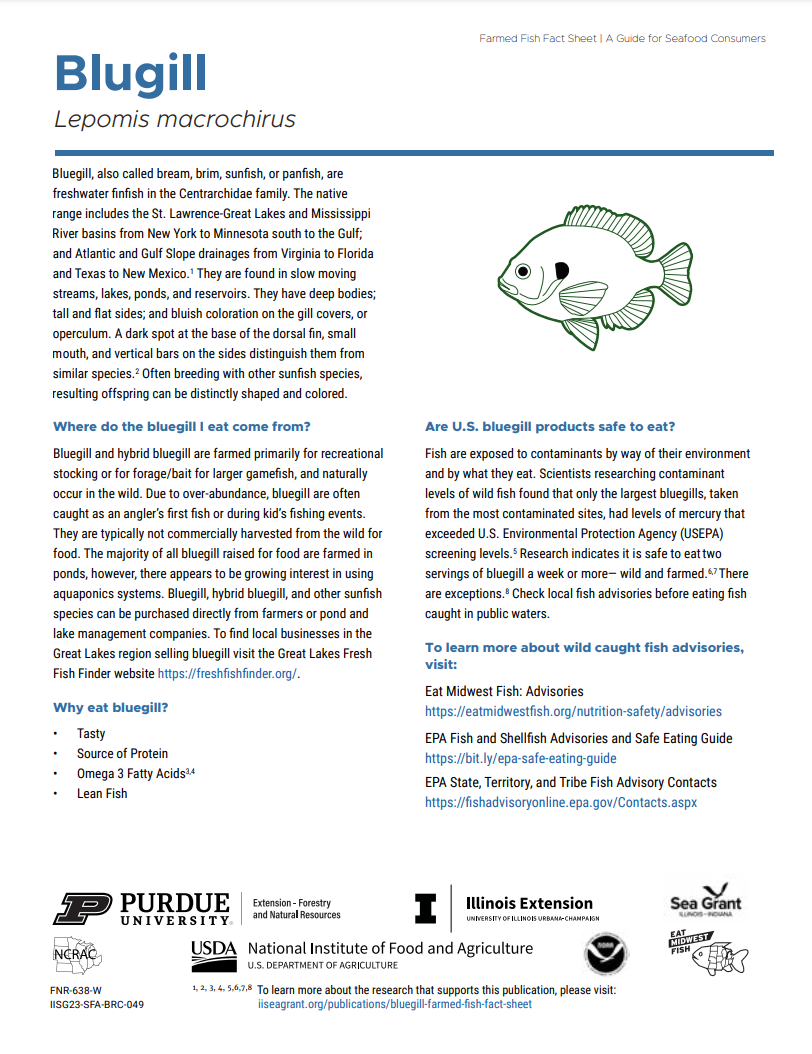
Where do the bluegill I eat come from?
Bluegill and hybrid bluegill are farmed primarily for recreational stocking or for forage/bait for larger game fish, and naturally occur in the wild. Due to over-abundance, bluegill are often caught as an angler’s first fish or during kid’s fishing events. They are typically not commercially harvested from the wild for food. The majority of all bluegill raised for food are farmed in ponds, however, there appears to be growing interest in using aquaponics systems. Bluegill, hybrid bluegill, and other sunfish species can be purchased directly from farmers or pond and lake management companies. To find local businesses in the Great Lakes region selling bluegill visit the Great Lakes Fresh.
To receive the free download and recipe visit the Purdue Extension’s resource center: The Education Store – Bluegill Farmed Fish Fact Sheet.
Resources:
Hybrid Striped Bass Farmed Fish Fact Sheet, The Education Store
Freshwater Prawn Farmed Fish Fact Sheet, The Education Store
Ask An Expert: What is Aquaculture?, Purdue Extension FNR YouTube Channel
Walleye Farmed Fish Fact Sheet, The Education Store, Purdue Extension’s resource center
Pacific White Shrimp Farmed Fact Sheet, The Education Store
Yellow Perch Farmed Fish Fact Sheet, The Education Store
Tilapia Farmed Fish Fact Sheet, The Education Store
Rainbow Trout Farmed Fish Fact Sheet, The Education Store
American Paddlefish, The Education Store
A Guide to Small-Scale Fish Processing Using Local Kitchen Facilities, The Education Store
Aquaculture Family Coloring Book Development, The Education Store
Channel Catfish, The Education Store
Eat Midwest Fish, Illinois-Indiana Sea Grant online resource hub
Amy Shambach, Aquaculture Marketing Outreach Associate
Purdue Department of Forestry and Natural Resources/Illinois Indiana Sea Grant Program
Seafood is more than just fish caught in the ocean. It includes a wide variety of product types, forms, flavors, and textures. One of the great things about using seafood is its versatility—it can be served as a main course or be used as an ingredient for appetizers, salads, and soups. Packed with important nutrients the human body needs to maintain good health, it is an excellent source of protein to include on your shopping list. Being informed about both the benefits and potential concerns with different types of seafood can help you decide which products to add to your cart or order at a restaurant.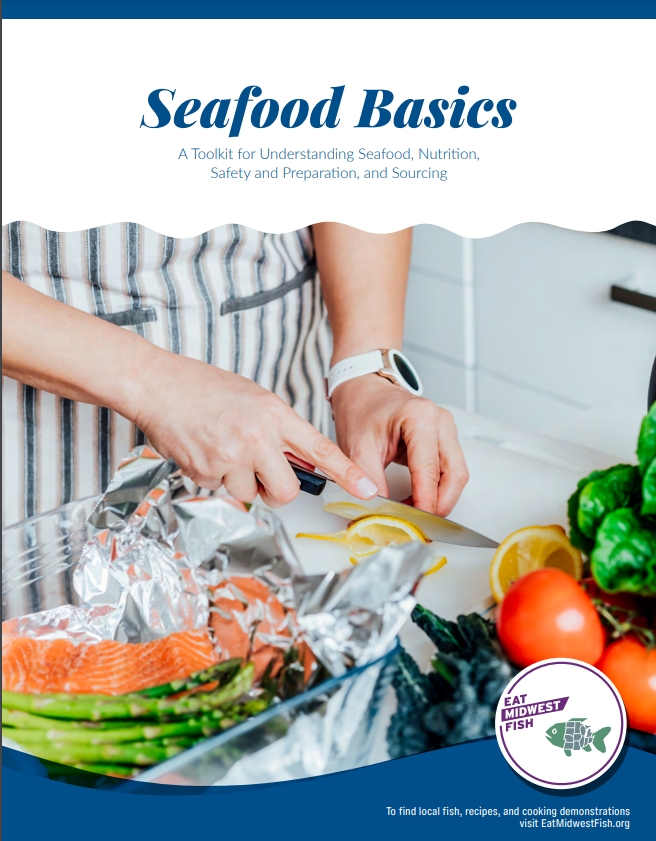
This toolkit, designed specifically for nutrition and wellness professionals and educators, will provide you with information and resources to help you talk to your clients about the complex food category known as seafood. You will learn about the basics of seafood, nutrition benefits of including seafood as part of a healthy eating pattern, concerns about safety, tips for purchasing seafood, and ideas for cooking demonstrations. We’ve included simple and tasty recipes that you can use to introduce your clients to the many flavors of fish and shellfish, links to downloadable and printable handouts, and sample social media posts that you can use to inform and inspire.
This toolkit is geared toward extension staff who teach nutrition and wellness. It includes both printable and digital elements that can be shared with clients based on interest and need.
To receive the free download and recipe visit the Purdue Extension’s resource center: The Education Store – Seafood Basics: A Toolkit for Understanding Seafood, Nutrition, Safety and Preparation, and Sourcing.
Resources:
Purdue Extension – Forestry and Natural Resources– Subscribe to the Youtube channel
Freshwater Prawn Farmed Fish Fact Sheet, The Education Store
Ask An Expert: What is Aquaculture?, Purdue Extension FNR YouTube Channel
Largemouth Bass Market Trends, Purdue Extension – Forestry and Natural Resources (FNR) YouTube Channel
Yellow Perch Farmed Fish Fact Sheet, The Education Store
Tilapia Farmed Fish Fact Sheet, The Education Store
Rainbow Trout Farmed Fish Fact Sheet, The Education Store
American Paddlefish, The Education Store
A Guide to Small-Scale Fish Processing Using Local Kitchen Facilities, The Education Store
Aquaculture Family Coloring Book Development, The Education Store
Channel Catfish, The Education Store
Eat Midwest Fish, Illinois-Indiana Sea Grant online resource hub
Amy Shambach, Aquaculture Marketing Outreach Associate
Purdue Department of Forestry and Natural Resources/Illinois Indiana Sea Grant Program

Recent Posts
- Publication – Planting Forest Trees and Shrubs in Indiana
Posted: April 8, 2026 in Forests and Street Trees, Urban Forestry, Wildlife, Woodlands - ID That Tree: Virgin’s Bower Clematis
Posted: April 6, 2026 in Urban Forestry, Wildlife, Woodlands - It’s Timberdoodle Time!
Posted: April 3, 2026 in Got Nature for Kids, How To, Wildlife - Keep An Eye Out for Hammerhead Worms, Purdue Landscape Report
Posted: April 2, 2026 in Invasive Animal Species, Wildlife, Woodlands - When is the Peak Migration For Hummingbirds and How Can You Attract Them?
Posted: in How To, Wildlife - ID That Tree Featured in National Woodland Owners Association Newsletter
Posted: April 1, 2026 in Urban Forestry, Wildlife, Woodlands - New 2026 Indiana Woodland Steward Newsletter
Posted: March 30, 2026 in Urban Forestry, Wildlife, Woodlands - A Woodland Management Moment: Why Aspect Matters
Posted: in Urban Forestry, Woodland Management Moment, Woodlands - 2026 Winter Bat Survey In Progress, MyDNR
Posted: March 27, 2026 in How To, Wildlife - Fast-Growing Trees for the Landscape, Purdue Landscape Report
Posted: March 26, 2026 in Forestry, Urban Forestry, Woodlands
Archives
Categories
- Alert
- Aquaculture/Fish
- Aquatic/Aquaculture Resources
- Ask the Expert
- Christmas Trees
- Community Development
- Disease
- Drought
- Forestry
- Forests and Street Trees
- Gardening
- Got Nature for Kids
- Great Lakes
- How To
- Invasive Animal Species
- Invasive Insects
- Invasive Plant Species
- Land Use
- Natural Resource Planning
- Nature of Teaching
- Plants
- Podcasts
- Ponds
- Publication
- Safety
- Spiders
- Timber Marketing
- Uncategorized
- Urban Forestry
- Webinar
- Wildlife
- Wood Products/Manufacturing
- Woodland Management Moment
- Woodlands