 Purdue University - Extension - Forestry and Natural Resources
Got Nature? Blog
Do you have invasive plants in your landscaping? Tippecanoe County Soil and Water Conservation District is hosting an Invasive Plant Swap on September 25th from 9 a.m. to 12 p.m. at the Tippecanoe County Fairgrounds Show Arena.
This free event offers an opportunity for community members to bring in invasive landscaping plants and exchange them for native species that support pollinators and local ecosystems. While the event flyer highlights five common invasive plants (burning bush, callery pear, Japanese barberry, wintercreeper and periwinkle) residents are welcome to bring any invasive plant used in landscaping. If you’re not sure whether your plant qualifies, feel free to reach out in advance or bring it with you for identification.
Native plants will be available while supplies last. Early arrival is recommended.
Replacing invasives with native plants is a great way to support local wildlife, improve soil and water quality, and help restore ecological balance. The deadline to apply is August 1, 2025.
For further information and the application, visit the event page on the Tippecanoe County SWCD website.
Resources:
Invasive Species, Playlist
Invasive Plant Species Identification, Video
Invasive plants: impact on environment and people, The Education Store, Purdue Extension resource center
Indiana Department of Natural Resources: Invasive Species
Indiana Invasive Species Council
Cooperative Invasive Species Management Area (CISMA)
Episode 11 – Exploring the challenges of Invasive Species, Habitat University-Natural Resource University
Emerald Ash Borer Information Network, Purdue University and Partners
What Nurseries Need to Know About the Invasive Species Regulation, The Education Store, Purdue Extension’s resource center
Invasive plants: impact on environment and people, The Education Store, Purdue Extension’s resource center
Tree Installation: Process and Practices, The Education Store
ID That Tree – Video Playlist, Purdue Extension – Forestry and Natural Resources (FNR) YouTube Channel
Tree Pruning Essentials Video, Purdue Extension YouTube Channel
Find an Arborist, International Society of Arboriculture
Welcome to ID That Tree! In this episode, Purdue Extension Forester Lenny Farlee introduces us to a striking native shrub known as Wild Hydrangea. Found in forest understories and along wooded slopes in southern Indiana, this plant is especially noticeable in summer thanks to its large, white flowers. Learn how to identify this species by it’s unique characteristics. Whether you’re a student, hiker, gardener or just curious about native plants, this video offers a quick and informative look at how to spot Wild Hydrangea and appreciate its role in Indiana’s woodland ecosystems.
If you have any questions regarding wildlife, trees, forest management, wood products, natural resource planning or other natural resource topics, feel free to contact us by using our Ask an Expert web page.
Resources:
ID That Tree – Video Playlist, Purdue Extension – Forestry and Natural Resources (FNR) YouTube Channel
Purdue Arboretum Explorer
Conservation Tree Planting: Steps to Success, Purdue Extension – FNR YouTube Channel
A Woodland Management Moment, Playlist, Purdue Extension – FNR YouTube Channel
Woodland Stewardship for Landowners, Playlist, Purdue Extension – FNR YouTube Channel
Indiana Department of Natural Resources: Invasive Species
Indiana Invasive Species Council
Cooperative Invasive Species Management Area (CISMA)
Report Invasive, Purdue Extension
Fifty Common Trees of Indiana, Purdue Extension – FNR
Habitat University, Episode 12 – Exploring the challenges of Invasive Species, Habitat University-Natural Resource University
Shrubs and Woody Vines of Indiana and the Midwest, Purdue University Press
Native Trees of the Midwest, Purdue University Press
Professional Forester, Indiana Forestry Woodland Owners Association
District Forester, Indiana Department of Natural Resources, 10+ acres
Find an Arborist, International Society of Arboriculture
Forest Improvement Handbook, The Education Store
Lenny Farlee, Extension Forester
Hardwood Tree Improvement and Regeneration Center
Purdue Department of Forestry & Natural Resources
Welcome to ID That Tree! In this episode, Purdue Extension Forester Lenny Farlee introduces us to a relatively common Indiana shrub called Witch-Hazel. Discover the characteristics of the environment this shrub is found in, the features of the shrub itself and the interesting history behind it! As a nature lover, student or someone who’s simply just curious about local plants, this video is a great way to get a quick run-down on important information and identification.
If you have any questions regarding wildlife, trees, forest management, wood products, natural resource planning or other natural resource topics, feel free to contact us by using our Ask an Expert web page.
Resources:
ID That Tree – Video Playlist, Purdue Extension – Forestry and Natural Resources (FNR) YouTube Channel
Purdue Arboretum Explorer
Conservation Tree Planting: Steps to Success, Purdue Extension – FNR YouTube Channel
A Woodland Management Moment, Playlist, Purdue Extension – FNR YouTube Channel
Woodland Stewardship for Landowners, Playlist, Purdue Extension – FNR YouTube Channel
Indiana Department of Natural Resources: Invasive Species
Indiana Invasive Species Council
Cooperative Invasive Species Management Area (CISMA)
Report Invasive, Purdue Extension
Fifty Common Trees of Indiana, Purdue Extension – FNR
Habitat University, Episode 12 – Exploring the challenges of Invasive Species, Habitat University-Natural Resource University
Shrubs and Woody Vines of Indiana and the Midwest, Purdue University Press
Native Trees of the Midwest, Purdue University Press
Professional Forester, Indiana Forestry Woodland Owners Association
District Forester, Indiana Department of Natural Resources, 10+ acres
Find an Arborist, International Society of Arboriculture
Forest Improvement Handbook, The Education Store
Lenny Farlee, Extension Forester
Hardwood Tree Improvement and Regeneration Center
Purdue Department of Forestry & Natural Resources
Purdue Landscape Report: Recently, there has been an uptick in questions related to one of Indiana’s most notorious invasive pests: the emerald ash borer. Homeowners, businesses, even professionals have asked if ash trees are still present in Indiana, and if the insect is still a threat to our ecosystem. Emerald ash borer wreaked significant havoc among Indiana’s hardwoods, and a person could be forgiven for believing that there are no ash trees at all in our state, but this is simply not true. Ash still survives in Indiana and can be found both as ornamental plantings and in untended woodlots; unfortunately, emerald ash borer is also still present and just as deadly to them as ever. The question of protecting ash versus removal them is complex, but entomologists and tree specialists have learned from this insect’s invasion.
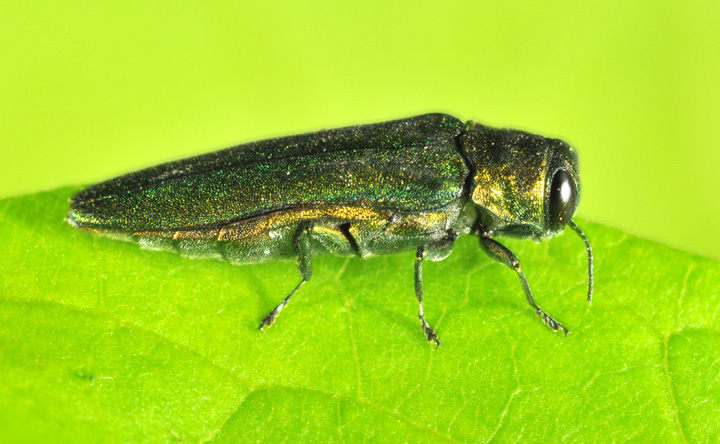
Figure 1. Side view of EAB, John Obermeyer
The emerald ash borer (Agrilus planipennis), a wood-boring insect native to Asia, is responsible for decimating ash (Fraxinus spp.) throughout the United States and elsewhere. In Indiana, this insect’s presence was confirmed in 2004, though it had probably been in the state for some time before then. Since its arrival, Hoosiers have been forced to watch as ash trees have rapidly declined and died due to the insect’s feeding and life cycle. The insect lays its eggs in crevices in the bark of an ash that is 8 to 10 years old, and after hatching, the new larvae begin to bore through the tree’s cambium tissue. The tree relies on its cambium tissue to transport water and nutrients and supply cells for new growth. Often, the only signs of the insect’s presence are a reduction in canopy coverage and D-shaped exit holes in the bark, indicating adult emergence. As time goes on, however, the tree will continue to lose canopy, experience limb death, and often have large chunks of bark detach. Unprotected trees will typically die within 2 to 5 years of infestation. Dead and dying ash trees represent a serious hazard to health and property as infestation will leave them extremely brittle. Brittle ash will often fall during weather events or even collapse over time as limbs fall off.
While emerald ash borer did significant damage to ash tree populations in Indiana, they did not destroy the population entirely. While virtually all untreated trees will eventually become infested, saplings with a trunk diameter of ½ to 1 inch will remain untouched, allowing annual replacement of trees to continue. Since the initial invasion killed so many trees, the borer’s populations have been proportionally reduced as well due to a lack of a food source. This combination of factors has created a cycle of growth and infestation that allows both populations to survive, but at significantly lower levels as compared to the period of the initial infestation. Unfortunately, this also means that emerald ash borer is now a permanent fixture in the hardwood ecosystem in Indiana.

Figure 2. This photo illustration shows three ash trees in Bloomington, Indiana, with different levels of canopy lost to the emerald ash borer. (Purdue Tree Doctor app illustration/Cliff Sadof)
While many may believe ash trees are a total loss, there are still options to protect ash tree and even rescue ash that have already been infested. The first step in this process is to determine the extent of damage in a given tree. As the cambium tissue is consume by ash borer larvae, the tree will experience a steady loss of canopy and limb death. The proportion of lost canopy makes a great indicator for treatment viability. For example, a tree that has only lost 10% of its canopy will normally respond well to treatment. As more canopy is lost, recovery is more challenging, until the tree has lost %30 of canopy coverage. After that point, there is very little chance that a rescue treatment will be successful, and removal will most likely be necessary. It is also important to remember that limb death may occur; these limbs will not recover and will need to be removed to avoid any potential hazards.
There are several insecticides with varying ranges of efficacy that can be used to manage emerald ash borer. These include imidacloprid, dinotefuran, azadirachtin, and emamectin benzoate. Several studies have been conducted to find the best combination of chemical and application type, such as the difference between using a soil drench compared to a trunk injection. While all of the above chemicals can be effective against the insect, the combination of emamectin benzoate applied through a trunk injection offers the best, longest lasting protection from infestation. This combination has a durable effect lasting for two years under dense infestations. However, the reduction in emerald ash borer populations have spread the distribution of the insect thinner, and longer intervals between treatments are possible. A ten-year study conducted by Purdue University demonstrated that treating trees once every three years provided sufficient protection from the beetles, while also showing that 4 to 5 years after last treatment coincided with an increase in damage to the trees. This same study also found that by six years post-treatment, the trees would decline to the point of making removal a necessity. This research concluded that increasing time between intervals after three years increased the risk of catastrophic damage due to emerald ash borer activity, thus the recommendation for three-year intervals.
Ultimately, many will see this as a financial issue: the cost of treatment over time against the cost of removal to avoid potential damages. The above study estimated the cost of treating a single tree with an emamectin benzoate injection at $300 per treatment. Since treatment only needs to happen once every three years, the cost per year per tree would be $100, approximately. Tree removal was estimated between $1800 and $3600, depending on tree location and other factors. Also consider replacement costs if you wanted to continue to grow ash in that area, and how long the tree would need to grow to match the size of the tree you just replaced. Additionally, add in any treatment costs to make sure it survives infestation. When looked at from this angle, maintaining regular treatment on rescuable trees would appear to be the most cost-effective route for managing ash. Any treatment plan should be discussed with a professional, such as a certified arborist.
Read the original article posted in the Purdue Landscape Report April 2025 Newsletter: Revisiting Ash Tree Protection.
Subscribe and receive the newsletter: Purdue Landscape Report Newsletter.
Resources:
New Hope for Fighting Ash Borer, Got Nature? Purdue Extension-FNR
Invasive Pest Species: Tools for Staging and Managing EAB in the Urban Forest, Got Nature?
Emerald Ash Borer, Purdue Extension-Entomology
Emerald Ash Borer Tools & Resources – Purdue Extension Entomology
Planting Your Tree Part 1: Choosing Your Tree, Purdue Extension YouTube Channel
Tree Planting Part 2: Planting a Tree, Purdue Extension – Forestry and Natural Resources YouTube Channel
Indiana Invasive Plant List, Indiana Invasive Species Council, Purdue Entomology
Landscape Report Shares Importance of Soil Testing, Purdue FNR Extension
Find an Arborist website, Trees are Good, International Society of Arboriculture (ISA)
Tree Risk Management – The Education Store, Purdue Extension’s resource center
ID That Tree – Video Playlist, Purdue Extension – Forestry and Natural Resources (FNR) YouTube Channel
Purdue Arboretum Explorer
Conservation Tree Planting: Steps to Success, Purdue Extension – FNR YouTube Channel
A Woodland Management Moment, Playlist, Purdue Extension – FNR YouTube Channel
Woodland Stewardship for Landowners, Playlist, Purdue Extension – FNR YouTube Channel
Indiana Department of Natural Resources: Invasive Species
Indiana Invasive Species Council
Cooperative Invasive Species Management Area (CISMA)
Report Invasive, Purdue Extension
Native Trees of the Midwest, Purdue University Press
Professional Forester, Indiana Forestry Woodland Owners Association
Forest Improvement Handbook, The Education Store
Bob Bruner, Exotic Forest Pest Educator
Purdue Entomology
Hoosier Ag Today: White-tailed deer are very important to Indiana woodlands. But in many areas of the state, deer populations have grown far beyond what the land can support.
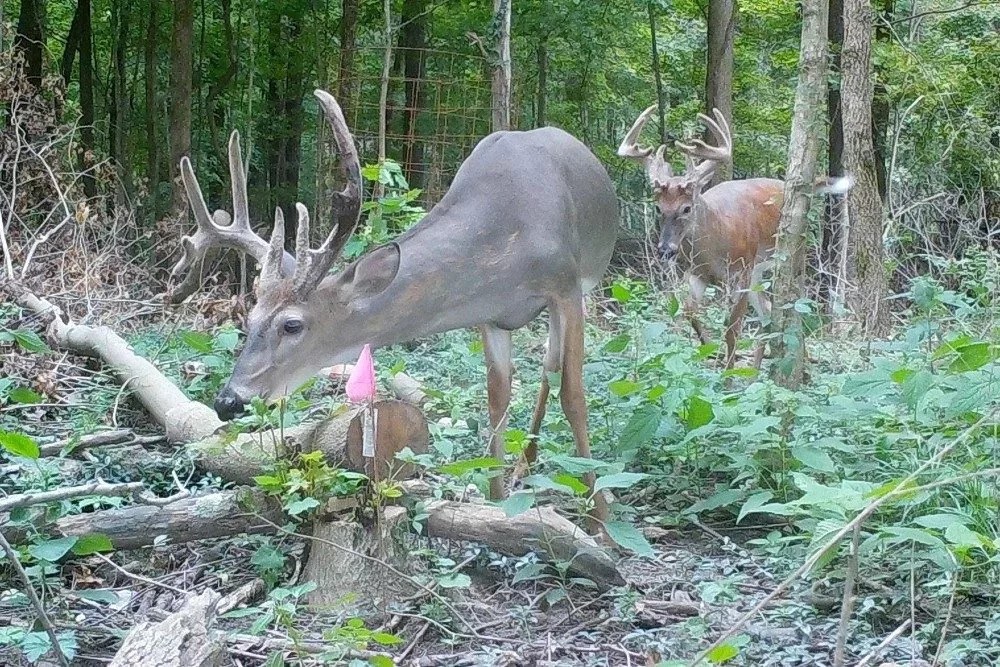
Trail cameras monitor deer impact on woodlands. Integrated Deer Management Project, Purdue University photo.
“Through their browsing and what they eat, they can actually reduce plant diversity and limit the growth of some of our tree seedlings, such as Oak, which are both economically and ecologically important,” says Jarred Brooke, Purdue Extension Wildlife Specialist.
“They can actually cause issues with increases in the invasive species that they don’t eat, like Japanese stilt grass or garlic mustard,” he says.
For woodland owners across Indiana who might not be sure if deer are even a problem on their property, how can they better understand and measure deer impacts?
“I think the first step is being aware and being tuned in to the problems that deer can cause,” he says. “Fortunately, with the help of The Nature Conservancy here in Indiana, we at Purdue Extension created a series of publications and videos called the Deer Impact Toolbox, which are designed to help landowners really understand, monitor, and address the impacts that deer have in their woodlands. These resources are a great starting point for any landowner that is interested in learning more about deer impacts.”
He adds that the best way to manage those impacts from deer are hunting, habitat management, and plant protection.
“Through the reduction of the number of deer by harvesting does on your property, that can be an effective way to reduce their impact,” he says. “Also if you can improve the habitat for deer on your property, either through forest improvement or through a timber harvest, you can actually create more food on the landscape, which reduces overall dear impact.
“The last big way is through protecting the plants that you’re trying to keep deer from browsing. That can be fencing, tree plantations, putting tree tubes or tree shelters on young trees, or fencing sensitive areas from deer browsing,” he says.
Read the Deer Toolbox Publications: Deer Impact Toolbox.
View the original article and listen to the Hoosier Ag Today’s radio News in the Hoosier Ag Today April 2025: Managing the Impact of White-tailed Deer on Indiana Woodlands.
Resources:
Purdue Extension Pond and Wildlife Management
Ask an Expert: Wildlife Food Plots, video, Purdue Extension – FNR YouTube Channel
How to Build a Plastic Mesh Deer Exclusion Fence, The Education Store
A Woodland Management Moment – Deer Fencing, Purdue Extension – FNR YouTube Video
Managing Your Woods for White-Tailed Deer, The Education Store
Bovine Tuberculosis in Wild White-tailed Deer, The Education Store
Handling Harvested Game: Episode 1, Field Dressing, video, Purdue Extension – FNR YouTube Channel
Deer Harvest Data Collection, Got Nature? Blog, Purdue Extension – FNR
How to Score Your White-tailed Deer, video, Purdue Extension
White-Tailed Deer Post Harvest Collection, video, Purdue Forestry and Natural Resources
Age Determination in White-tailed Deer, video, Purdue Extension
Handling Harvested Deer Ask an Expert? video, Purdue Extension – FNR YouTube Channel
Subscribe to Purdue Extension-Forestry & Natural Resources YouTube Channel, Wildlife Playlist
Jarred Brooke, Wildlife Extension Specialist
Purdue Department of Forestry and Natural Resources
IN DNR, Division of Fish & Wildlife: For Indiana Arbor Day, the Indiana DNR tree seedling nurseries provide a tree seedling for each Indiana third grade student whose school and teachers wish to participate in the Arbor Day program.

A letter is mailed to every Indiana school in January of each year. To receive a tree seedling for every third grader, the school’s Arbor Day coordinator or principal must return the postcard to Vallonia Nursery by the date indicated in the letter.
Each Indiana school may also receive an Arbor Day seedling to plant on the school grounds. The seedling is ordered at the same time as the third grade seedlings.
To ensure your school receives its third grade trees and school seedling, be sure to return the postcard from the DNR by the date indicated!
To find out more, view the Indiana Department of Natural Resources webpage on Indiana Arbor Day Free seedlings.
Learn more: The Arbor Day Foundation is a diverse community of bold thinkers, supporters, organizers, connectors, and doers.
Arbor Day History: It takes a lot of Yeses to plant 500 million trees. That’s why when you commit to celebrating Arbor Day, you’re doing more than helping put trees in the ground. You’re saying Yes to a healthier world. So grab your gardening gloves and join an event in your area, plant a tree in your yard, or hit the donate button—however you say it, your Yes makes a difference.
Resources:
Find an Arborist video, Trees are Good-International Society of Arboriculture (ISA)
Trees and Storms – The Education Store, Purdue Education’s resource center
Moist soil and rotten roots makes it easy for trees to come crashing down – Fox 59 News
Expert: Some storm damage can be easily prevented – Fox 59
Why Is My Tree Dying? – The Education Store
Tree Risk Management – The Education Store
Mechanical Damage to Trees: Mowing and Maintenance Equipment – The Education Store
Trees and Electric Lines – The Education Store
Tree Defect Identification, The Education Store
Planting Your Tree, video, The Education Store
Tree Installation, The Education Store
Tree Wound and Healing, Got Nature? Blog, Purdue Extension – Forestry and Natural Resources
Subscribe – Purdue Extension-FNR YouTube Channel
Division of Fish and Wildlife, Indiana Department of Natural Resources
Oak-hickory forests, which are comprised of a variety of different tree species, shrubs, grasses, sedges and wildflowers, as well as wildlife, including songbirds, are important to Indiana’s biodiversity. Learn how you can support oak-hickory ecosystems on your property through a new publication, “Forest Stewardship for Oak-Hickory Ecosystems in Indiana,” produced by Let the Sun Shine In – Indiana.
“The goal of this publication is to provide woodland owners with information about the stewardship practices they can use to sustain and enhance oak-hickory ecosystems on their land,” said co-author Jarred Brooke, Purdue Extension wildlife specialist. “Having this information will help them make informed decisions about how to manage their land to meet their forestry and wildlife objectives.”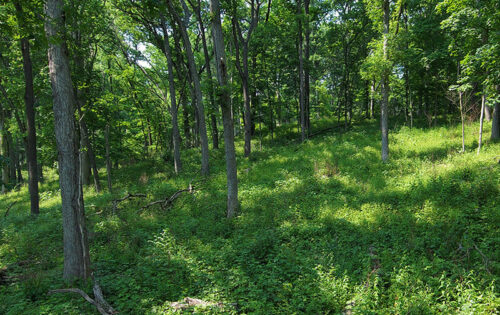
The publication discusses various methods landowners can use on their properties, from midstory removal to overstory thinning, prescribed fire, supplemental planting, controlling deer browsing, crop tree release and invasive species control. It also details options for timber harvest, which can be used to regenerate the next generation of a forest. Additional resources from forestry and wildlife professionals as well as other publications discussing current research and management tips also are included in this document.
“Oak ecosystem management is confusing,” said co-author Dan Shaver, state forester for the Indiana Natural Resources Conservation Service. “This publication provides easy to understand basic concepts to help landowners see where their property fits in the oak restoration process. It does not answer all questions or provide all the technical details, but it will help reduce confusion and foster better communication and understanding between landowners and foresters.”
The publication is co-authored by Brooke, Shaver and Kyle Brazil, Central Hardwoods Joint Venture coordinator for the American Bird Conservancy.
“The oak-hickory ecosystem of southern Indiana is incredibly important to birds, other wildlife, and overall biodiversity,” Brazil said.
“Unfortunately, it’s continued persistence isn’t a given. Lack of management, and specifically lack of fire, over the past century has left it in peril. Restoring the oak-hickory ecosystem will require a concerted effort and private landowners are a key part of the solution. This publication is intended to help landowners understand how to manage oak ecosystems on their properties, and give them a roadmap for getting started.”

Woodland owners who are curious about oak restoration or improving their woodlands for songbirds can reach out to their local IDNR forester, the Let the Sun Shine In – Indiana organization or Purdue Extension to find out how to get started.
Let the Sun Shine In – Indiana is a collaboration of several organizations with a shared goal of maintaining oak-hickory ecosystems for the benefit of the people and wildlife of Southern Indiana.
“The LSSI IN collaboration utilizes education and outreach opportunities for landowners, to inform them of the imperiled Oak-Hickory Ecosystem,” explained Judi Brown, coordinator of the Let the Sun Shine In – Indiana. “Part of this outreach includes providing the Oak Hickory Stewardship Guide to landowners. The Stewardship Guide explains common forest management concepts that they can utilize on their properties, and encourages the growth of oak and hickory trees from the acorn or nut into the forest canopy.”
The primary method of distribution of the Stewardship Guide is through the Indiana DNR district foresters, but the guide also is available online. LSSI IN is providing metal gate signs to recognize the stewardship of forest landowners who are actively managing their forest land.
Support for the stewardship guide was provided by the Central Hardwoods Joint Venture, the American Bird Conservancy, the Indiana Department of Natural Resources Division of Forestry, Let the Sun Shine In – Indiana, Purdue Forestry and Natural Resources Extension, the United States Department of Agriculture Natural Resources Conservation Service and the United States Forest Service.
To view this article along with other news and stories posted on the Purdue Forestry and Natural Resources website view: Publication Teaches Landowners How to Support Oak-Hickory Ecosystems.
Resources
ID That Tree: Shingle Oak, Purdue Extension-Forestry & Natural Resources (FNR) YouTube Channel
ID That Tree: Red Oak Group, Purdue Extension-FNR YouTube Channel
Red Oak Group – Hardwood Lumber and Veneer Series, The Education Store, Purdue Extension’s resource center
Shingle Oak, Morton Arboretum
The Nature of Oaks Webinar, Purdue Extension-FNR YouTube Channel, Shared from Indiana Forestry & Woodland Owners Association
An Introduction to Trees of Indiana, The Education Store, Purdue Extension’s resource center
Native Trees of the Midwest, The Education Store
Shrubs and Woody Vines of Indiana and the Midwest, The Education Store
Investing in Indiana Woodlands, The Education Store
Forest Improvement Handbook, The Education Store
ID That Tree, Purdue Extension-FNR YouTube playlist
Woodland Management Moment , Purdue Extension-FNR YouTube playlist
Invasive Species, Purdue Extension – FNR YouTube Playlist (Asian Bush Honeysuckle, Burning Bush, Callery Pear, Multiflora rose)
Finding help from a professional forester, Indiana Forestry & Woodland Owners Association
Wendy Mayer, FNR Communications Coordinator
Purdue University Department of Forestry and Natural Resources
Jarred Brooke, Wildlife Extension Specialist
Purdue Forestry and Natural Resources
 Question: I am building a hedge row and am contemplating working with Osage-orange seedlings and planting them. Is this a good choice?
Answer: Osage-orange, (Maclura pomifera) aka hedge, hedge-apple, bodark, bois d’arc and several other common names, is a tree native to parts of Arkansas, Oklahoma, and Texas, but has been planted in every one of the lower 48 states. The reason for that extensive planting was Osage-orange was promoted as the best tree for “living fences”, which were hedgerows planted to enclose or exclude livestock before the use of barbed wire. Osage-orange was also widely panted as a hedge-row and windbreak by the conservation programs of the FDR administration in the 1930’s. You can still encounter some of those old hedgerows on the landscape. It made a good hedgerow because the stems have stout thorns at the base of the leaves and will produce large and dense sprout colonies when cut back or pruned. It produced a living fence described as “horse-high, bull-strong, and pig-tight”.
The wood of Osage-orange was also used for wagon wheel parts, tool handles and fence posts due to its strength and rot-resistance. I have met a few landowners who showed me Osage gate or fence posts they had helped set as a child that were still in good condition 60 or more years later. It is also an excellent firewood, with one of the highest BTU yields of any native tree. Native peoples used straight-grained Osage-orange wood for outstanding bows, thus the French name bois d’arc and the English derivation bodark. Some crafters still seek Osage wood for making traditional bows or for turnings and other decorative items. The wood becomes so hard and dense with drying that it is recommended in most cases to work it green. The yellow-orange fresh wood color gradually ages to a deep reddish brown.
Osage-orange may have had more favorable treatment as a wood for many uses were it not for the tendency of the tree to fork, bend and twist, making straight, long stems uncommon.
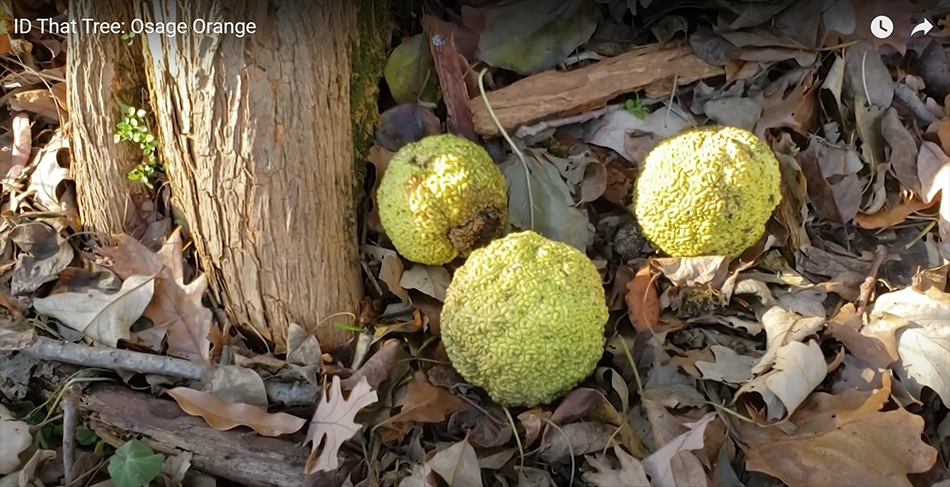
The fruit of Osage-orange is where this and the hedge-apple name comes from. Osage-orange is neither a citrus tree nor an apple, but the large, round, green to yellow fruit suggest each to some extent. The interlacing bumps and crevices and the round shape suggest a brain to many, including myself. The closest relatives of Osage-orange are actually the mulberries. The size of this fruit and the limited number of current animals that will use it have prompted some to suggest it was originally eaten and propagated by large, and now extinct, ice-age animals such as the giant ground sloth, mammoth, and mastodon.
Osage-orange has many interesting and sometimes useful characteristics, but it can also become weedy in some situations. It can spread by seed or sprouts into disturbed areas like abandoned fields, farmlands, or grazed areas and out-compete native vegetation. For these reasons, planting new areas to Osage-orange is usually discouraged.
Resources:
You Say Hedge-Apple, I Say Osage Orange!, Indiana Yard and Garden – Purdue Consumer Horticulture.
Osage Orange, The Wood Database
ID That Tree: Osage-Orange, Purdue Extension-FNR’s YouTube playlist
ID That Tree, Purdue Extension-FNR’s YouTube playlist
Windbreaks – Agroforestry for Any Property, Caring for your Woodland, University of Wisconsin-Madison, Extension
The Woody Plant Seed Manual, U.S. Forest Service
Native Trees of the Midwest, The Education Store, Purdue Extension’s resource center
Shrubs and Woody Vines of Indiana and the Midwest, The Education Store
Woodland Management Moment , Purdue Extension-FNR’s YouTube playlist
Investing in Indiana Woodlands, The Education Store
Forest Improvement Handbook, The Education Store
Lenny Farlee, Sustaining Hardwood Extension Specialist
Purdue University Department of Forestry and Natural Resources
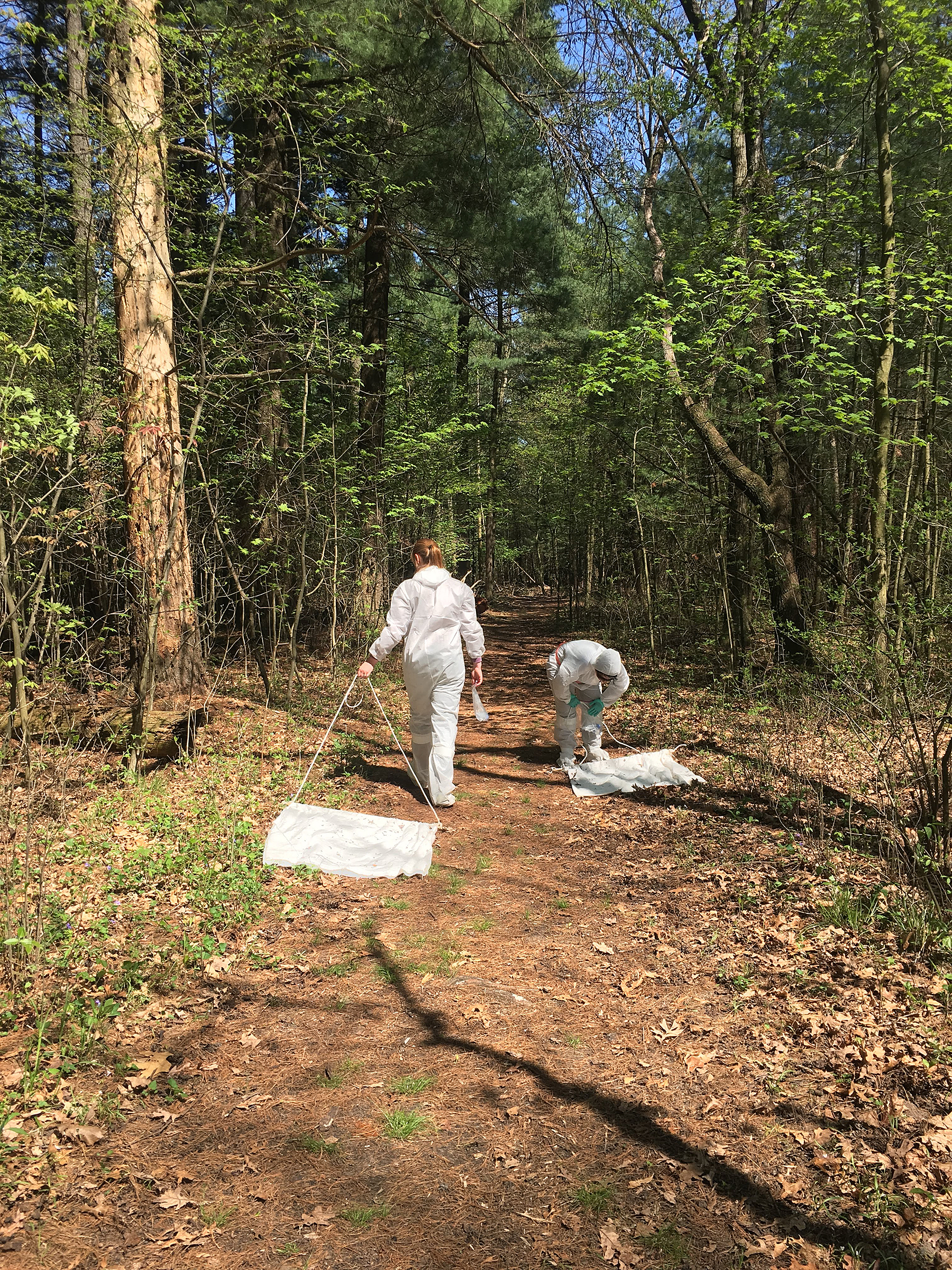
Scientists from Purdue’s Tick INsiders program, Lauren Hagen (left) and Maria Muriga (right), drag and check tick cloths at Tippecanoe River State Park in 2018. The program is looking for high school students and citizen scientists interested in helping with tick collections this year. (Tick INsiders photo)
Purdue University’s Tick INsiders program is looking for Indiana high school students and other Indiana residents willing to roll down their sleeves to get involved in a citizen science project.
Cate Hill, a Purdue professor of entomology, leads this effort to analyze the bacteria and viruses in Indiana’s ticks to build an understanding of what they are carrying and how that might impact human health. To do that, she needs volunteers to collect ticks from all over the state.
This year the Tick INsiders program will provide training for up to 50 students. Citizen scientists are also now welcome to collect and send ticks to Hill’s lab.
“It’s really important work. The Centers for Disease Control and Prevention reports that human cases of tick-borne diseases doubled from 2004 to 2016. If we’re going to get a handle on that and develop strategies for reducing tick bites and treating patients, we need to know where our ticks are and what our ticks are carrying around inside them,” Hill said. “That means we need a lot of ticks, and we need help collecting them.”
Three species of ticks – the blacklegged or deer tick, the lone star tick and the American dog tick – are found in Indiana. These ticks can transmit multiple pathogens, nine of which are known to cause human illnesses, though not all have been identified in Indiana. The Indiana State Department of Health reports more than 100 cases of Lyme disease each year and dozens of cases of Ehrlichiosis, anaplasmosis and Rocky Mountain spotted fever.
Research suggests that ticks can carry a cocktail of microbes – bacteria and viruses – that can sicken bite victims and may work in concert to affect the severity of an illness and human immune response.
“Not all tick bites are the same. We don’t know what is passed from a tick to a human each time someone is bitten, which means that health care professionals may need to consider multiple tick-borne pathogens in a person who has been bitten by a tick,” Hill said. “This program improves our knowledge so that we can improve our outcomes.”
Indiana residents interested in participating can collect ticks and send them to Hill’s lab for analysis. Videos on safe and proper collection techniques, as well as how to send ticks will be at Tick INsiders.
For full article, see Purdue Agriculture News.
Resources
Ticks 101: A Quick Start Guide to Indiana Tick Vectors, The Education Store – Extension Resource
The Biology and Medical Importance of Ticks in Indiana, The Education Store
Mosquitoes, Purdue Extension Entomology
One Small Bite: One Large Problem, Got Nature?, Purdue Extension-Forestry and Natural Resources
Mosquitoes and ticks – little pests carry big risks, Got Nature?
Catherine A Hill, Professor of Entomology/Vector Biology
Purdue University Department of Entomology
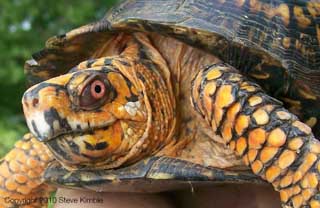
People have been catching wild turtles and selling them as pets, leading to many species becoming endangered. This is very dangerous for the health and survival of the turtle as well as being highly illegal in Indiana. We highly discourage you from taking turtles from their natural habitat and turning them into pets (or any animal for that matter). Here’s a list of reasons why it is not good to make a pet out of a wild turtle and what you can do if you see any turtle miss handling and turtle wrong doing.
Turtles DO NOT make good pets!
Reasons why turtles aren’t good pets:
- Turtles require time and money for proper care, and some species can live up to 50 years.
- Pet turtles do not like to be held and are loners; therefore, they can become boring pets for children.
- Turtles are cold-blooded and need a source of heat. They also require an ultraviolet light for proper growth and health.
- Without this special light, many health issues arise such as metabolic bone disease.
- It is very important to know what kind of species you want and the care it needs before you acquire a pet turtle. Many need special food and tanks.
- Each species has different feeding requirements, with some being strictly carnivores or herbivores. Map turtles, for example, have restricted diets that must include snails, aquatic insects and crayfish. Some species of aquatic turtles, such as the red-eared slider, map turtle and soft-shell, grow up to 12 inches long, requiring a large tank for swimming and basking.
- Land turtles need a large pen, with sufficient substrate, properly sized water bowl, a hide area, as well as heat. Some require more humidity than others.
- If you no longer want your pet turtle, you cannot release into the wild because it is not likely to survive.
- It will have to find its own food, deal with the elements and deal with predators.
- These once-captive turtles are also likely to transmit diseases to wild turtle populations.
- Turtles can carry salmonella bacteria.
- The Centers for Disease Control and Prevention recommend that children, pregnant women, and persons with compromised immune systems avoid contact with reptiles to avoid getting Salmonella.
- The DNR does not encourage the keeping of turtles as pets, but does allow it if the turtle species is obtained legally with a hunting or fishing license.
It is illegal to sell wild turtles
Many native, wild-caught turtles are still sold as pets, even though this practice is illegal in Indiana. The collection of wild turtles has caused many species to become endangered, especially when combined with habitat loss, water pollution and predators. Predators such as raccoons eat a large number of turtle eggs each year, and some species do not even breed until they are several years old, meaning that it can take many years for a population to become established. You can help protect Indiana’s turtles by helping to preserve turtle habitat, especially wetlands, through local conservation organizations or the Indiana Nongame and Endangered Wildlife Program.
Help our endangered turtle species and report any wrong handling, contact DNR Customer Service Center.
For the full article, see Turtles As Pets, Indiana Department of Natural Resources.
Resources:
Turtles of Indiana, The Education Store, Purdue Extension’s resource center
Reptile and Amphibian Regulations, Indiana Department of Natural Resources
Eastern Box Turtle Information, Indiana Department of Natural Resources
Indiana Department of Natural Resources (IDNR)

Recent Posts
- It’s Timberdoodle Time!
Posted: April 3, 2026 in Got Nature for Kids, How To, Wildlife - Keep An Eye Out for Hammerhead Worms, Purdue Landscape Report
Posted: April 2, 2026 in Invasive Animal Species, Wildlife, Woodlands - When is the Peak Migration For Hummingbirds and How Can You Attract Them?
Posted: in How To, Wildlife - ID That Tree Featured in National Woodland Owners Association Newsletter
Posted: April 1, 2026 in Urban Forestry, Wildlife, Woodlands - New 2026 Indiana Woodland Steward Newsletter
Posted: March 30, 2026 in Urban Forestry, Wildlife, Woodlands - A Woodland Management Moment: Why Aspect Matters
Posted: in Urban Forestry, Woodland Management Moment, Woodlands - 2026 Winter Bat Survey In Progress, MyDNR
Posted: March 27, 2026 in How To, Wildlife - Fast-Growing Trees for the Landscape, Purdue Landscape Report
Posted: March 26, 2026 in Forestry, Urban Forestry, Woodlands - Urban Tree Spotlight: Planting Deciduous Shade Trees, Purdue Landscape Report
Posted: March 25, 2026 in Forests and Street Trees, Urban Forestry, Woodlands - Beetle that attacks Tree-of-Heaven found in Indiana, Purdue Landscape Report
Posted: March 20, 2026 in Invasive Insects, Wildlife, Woodlands
Archives
Categories
- Alert
- Aquaculture/Fish
- Aquatic/Aquaculture Resources
- Ask the Expert
- Christmas Trees
- Community Development
- Disease
- Drought
- Forestry
- Forests and Street Trees
- Gardening
- Got Nature for Kids
- Great Lakes
- How To
- Invasive Animal Species
- Invasive Insects
- Invasive Plant Species
- Land Use
- Natural Resource Planning
- Nature of Teaching
- Plants
- Podcasts
- Ponds
- Publication
- Safety
- Spiders
- Timber Marketing
- Uncategorized
- Urban Forestry
- Webinar
- Wildlife
- Wood Products/Manufacturing
- Woodland Management Moment
- Woodlands