 Purdue University - Extension - Forestry and Natural Resources
Got Nature? Blog
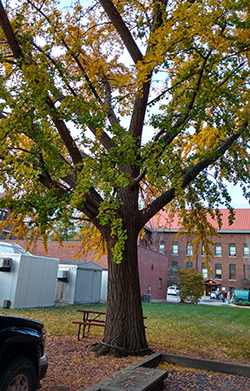 Ginkgo (Ginkgo biloba) trees also known as Maidenhair trees are slow-growing, relatively pest-free, wind-pollinated trees that can be found in all fifty of the contiguous United States. The only tree species within division Ginkgophyta to escape extinction, Ginkgo biloba is known as an ancient tree with prehistoric fossils dating back 270 million years found on every continent except Antarctica and Australia.
Ginkgo grow best in full sunlight and can reach heights greater than 35 m (115 ft). Ginkgo trees are valuable street trees because of their low susceptibility to smoke, drought, or low temperatures. These trees grow slowly and perform relatively well in most soil types provided they are well-drained. The leaves turn a vibrant yellow during autumn but drop soon after its brilliant fall color is observed.
Unfortunately, in late autumn, the dirty secret that female ginkgo trees hide is revealed. The “fruit” produced by female ginkgo trees is foul smelling (has been compared to rancid butter or animal excrement) and is cast in the fall following the first frost. Though immature when cast, the embryos within the fruit continue to mature on the ground for up to two months afterwards. This means that anyone unfortunate enough to step on the fruit during that time is exposed to its pungent odor.
Extreme caution should be used when selecting ginkgo trees for landscape ornamentals or for street trees since there is no way to discern a male from a female at the seedling stage. Several “Boys Only” cultivars have been developed such as ‘Autumn Gold’ or ‘Lakeview’ to ensure that you do not end up with a 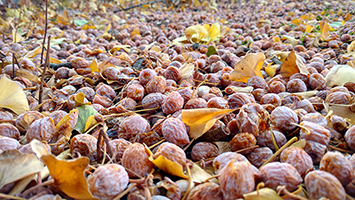 stinky yard or street when the trees begin to fruit. While the scent of the seed coat may be undesirable, the seed kernel is highly valued in Eastern Asia as a food product. In the United States, herbal extracts composed of ginkgo leaves are believed to improve short-term memory and concentration.
On the campus of Purdue University several ginkgo trees can be found although unfortunately for students the vast majority of these are female and the scent of crushed seed pods often follows many students to class on the bottoms of their shoes. A word of warning, the ginkgo trees planted near Pfendler Hall, Forestry, and the Cordova Center are all females. Watch your step this winter and this is the one rare example of when boys ARE better than girls.
Resources:
Ginkgo biloba – Purdue Arboretum Explorer
Ginkgo – Encyclopedia.com
Ginkgo biloba L. – USDA Forest Service
Shaneka Lawson, Plant Physiologist & Adjunct Assistant Professor
Purdue University Department of Natural Resources
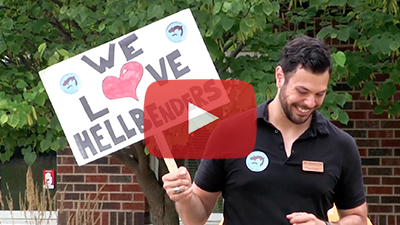 On August 29th, the Colombian Park Zoo in Lafayette hosted ‘Help the Hellbender Day’, an outreach event filled with fun and educational activities to promote awareness of this fascinating at-risk salamander. Partners in the community including Purdue University, Illinois – Indiana Sea Grant, Tippecanoe County Partnership for Water Quality, and the Wabash River Enhancement Corporation provided activities and booths to teach the community about water quality issues and how they can get involved to help the hellbender. The Salamander Tale exhibit featuring the Hellbender Havoc video game made an appearance as well.
To play the Hellbender Havoc video game visit:
Hellbender Havoc Game, Apple Store
Hellbender Havoc Game, Google Play
Perhaps the most interesting part of the day was the zoo sharing a rare glimpse of the juvenile hellbenders. As one of Purdue University’s partners the zoo is helping raise the hellbenders to increase their numbers. The three hellbenders showed in the video were hatched at the Purdue’s Aquaculture Research Lab by Professor of Wildlife Science Rod Williams and his team. They were then transferred to the zoo last spring, where they will be studied and raised until they are mature enough to be released in the wild.
Purdue FNR Extension’s Aaron Doenges filmed this exciting day at the zoo and put together a Help the Hellbender Day video featuring zoo director Ron Breeding, education coordinator Amber Frederick, and hellbender keeper Noah Shields. The FNR team returned to the zoo on October 21st for its annual Boo at the Zoo event sharing resources on hellbenders.
Resources:
Help the Hellbender Day at Columbian Park Zoo video – Purdue Extension
Help the Hellbender – Purdue Extension
Help the Hellbender Facebook page
Ask the Expert: Learn All About Hellbenders and Take a Tour, Subscribe Purdue Extension – Forestry & Natural Resources (FNR) YouTube Channel
Ask the Expert video: Help the Hellbender – Dr. Stephen Spear of The Wilds, Purdue Extension – FNR YouTube Channel
Ask the Expert video: Live with Mesker Park Zoo and Botanical Gardens – Hellbenders, Purdue Extension – FNR YouTube Channel
A Moment in the Wild video: Hellbender Hide, Purdue Extension – FNR YouTube Channel
A Moment in the Wild video: Release Moment of Hellbenders,
How Anglers and Paddlers Can Help the Hellbender video, Purdue Extension – FNR YouTube Channel
Eastern Hellbender ID Video, Purdue Extension – FNR YouTube Channel
Hellbenders Rock!, The Education Store, Purdue Extension’s resource center
Help the Hellbender, North America’s Giant Salamander, The Education Store
How Our Zoos Help Hellbenders, The Education Store
The Nature of Teaching: Adaptations for Aquatic Amphibians, The Education Store
Healthy Water, Happy Home – Lesson Plan, The Education Store
Purdue Expert: Hellbender Salamander, Purdue University News YouTube Channel
FNR Assists in First Natural Breeding of Eastern Hellbender in Captivity, Purdue FNR News & Stories
Helping the Hellbender: Mesker Park Zoo Begins Captive Breeding Efforts, Purdue Agriculture News
Purdue partners with Indiana zoos for hellbender conservation – Purdue Agriculture News
Purdue-Zoo Partnership Aims To Save The Hellbender – WFYI
Rod Williams, Professor of Wildlife Science and Assistant Provost for Engagement at Purdue University.
Purdue Department of Forestry & Natural Resources
The Wildlife Habitat Education Program (WHEP) is an environmental education program for youth ages 8-19 that teaches all about wildlife habitat and damage management through hands-on activities. This program is the largest of its kind in the nation, and has been awarded the Conservation Education Award by The Wildlife Society, the only professional organization that certifies wildlife biologists around the world.
Purdue Extension’s “WHEP – Wildlife Habitat Education Program” video takes a deeper look at the program through the testimonials of students and staff members involved with the program, including Extension Wildlife Specialist Rob Chapman and Professor of Wildlife Ecology Rod Williams.
Each year, WHEP has a national contest for its senior level (ages 14-19) youth consisting of three individual events and one team event. The first event, the wildlife challenge, consists of 30 general knowledge questions and 20 animal identifications based on skins and/or skulls. With only 30 minutes allowed for this event, it can be a challenging task.
Competitors can look to the WHEP manual for help studying for the general knowledge questions. The new publication “Wildlife Habitat Evaluation Program: Preparing for the Wildlife Challenge” assists further by providing flashcards for all of the species found on the identification questions, complete with pictures of the animal’s skins and a list of characteristics. Practicing with these flashcards is an extremely effective way to learn the material and perform better in the event.
This year’s event has come to a close, with 1st place going to Tennessee, 2nd place to Alabama, and 3rd to North Carolina. Study with the “Wildlife Habitat Evaluation Program: Preparing for the Wildlife Challenge” publication to prepare for next year!
Resources:
Wildlife Habitat Evaluation Program: Preparing for the Wildlife Challenge – The Education Store, Purdue Extension Resource Center
National WHEP Manual – Wildlife Habitat Education Program
Developing a Wildlife Habitat Management Plan – The Education Store
Wildlife Habitat Education Program – Teaching and Learning Wildlife Management Practices – The Education Store
Rod Williams, Professor of Wildlife Ecology
Purdue University Department of Forestry and Natural Resources
Rob Chapman, Extension Wildlife Specialist
Purdue University Department of Forestry and Natural Resources
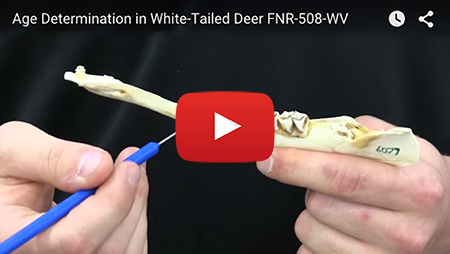 The age of a harvested deer is important for both hunters and landowners to know. The relationship between the age of a deer and its antler development can be an indicator of the deer’s health, and whether foraging conditions or harvest strategies should be changed. To help with determining this, the Purdue Student Chapter of the Quality Deer Management Association has created a How-To video to walk you through two of the techniques used to deduce how old the deer is using it’s jawbone.
This free video is available to view through The Education Store: Age Determination in White-Tailed Deer.
Other Resources:
How to Score Your White-Tailed Deer video, The Education Store-Purdue Extension Resource Center
Food Plots for White-tailed Deer, The Education Store
Boiler Up for Wildlife: Fall outbreaks of EHD and Blue Tongue in deer, Got Nature? Podcasts
Boiler Up for Wildlife: Deer Warts, Got Nature? Podcasts
iTunes – Got Nature? Podcasts
Rod Williams, Associate Professor of Wildlife Science
Department of Forestry and Natural Resources, Purdue University
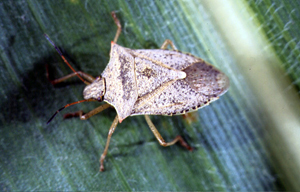
Photo credit: B. Christine
Every fall, a little pest called the brown marmorated stink bug returns to annoy and destroy. This invasive species from the far east has no local predators to control its numbers and does a great deal of damage to fruits, vegetables, and other plants. As the weather cools down, they also like to sneak into homes to stay warm, and will remain there throughout the winter unless dealt with. As the name suggests, these bugs’ defense mechanism is the release of a foul-smelling chemical, and dealing with them can be unpleasant.
Purdue Extension Entomologist Rick Foster answers several questions about stink bugs and what to do about them in a Q&A article for The Star Press. Check out “Stink bug Q&A with Purdue expert” and learn some more about these pesky invaders.
Resources:
Brown Marmorated Stink Bug In Homes – Purdue Extension Entomology
Stink bug Q&A with Purdue expert – The Star Press
Brown Stink Bug – Purdue University Field Crops IPM
 This year’s Indiana Tree Climbing Competition has come to a close, with Purdue’s Casey Johnson finishing first place in the preliminary events and Jon Montgomery winning the Masters Challenge and going on to the international competition in San Antonio next spring.
“What it does is mimics what you do in a work production standpoint, only in a competition environment,” says Lindsey Purcell, who teaches forestry at Purdue and serves as president of the Indiana Arborists Association. “I mean, I call them tree athletes. Instead of ‘triathletes’ I call them ‘tree athletes,’ because you not only have to understand the physiology and biology of the tree, but you also have to be athletic to get to work.”
To read more, check out WBAA’s article. For this year’s scores and more information on the competition, check out Indiana Arborist Association’s Tree Climbing Competition page.
Resources:
A Different Kind of Athlete: Competitive Tree Climbers Compete In Indiana Championship – WBAA
Tree Climbing Competition – Indiana Arborist Association
International Tree Climbing Championship – International Society of Arboriculture
Purdue Forestry & Natural Resources
 Water is the most limiting ecological resource for a tree, and without adequate moisture, decline and death are imminent. Drought can have a major impact on tree health and survival. It reduces carbohydrate production, significantly lowering energy reserves and production of defense chemicals in the tree.
Trees in a weakened state from drought are more susceptible to pests, which can further weaken the tree, and even kill part or all of it. Although there is nothing we can do to prevent drought, it is important to know what can be done to reduce long-term effects of prolonged dry conditions.
Urban Forestry Specialist Lindsey Purcell describes how homeowners can deal with drought-stressed trees in the short-term and long-term in his publication “Drought? Don’t Forget the Trees!” Purcell also provides insight on the state of Indiana’s drought-stressed trees and how to protect them in the video “Trees in Times of Drought.”
Resources:
Trees in Times of Drought, Video, Purdue Agriculture
Drought Information, Indiana Department of Natural Resources
Drought? Don’t forget the trees!, The Education Store
Corn Belt Farmers’ Concerns About Drought and Heat-related Threats to Their Farm Operations, Sustainable Corn
Safety Harvesting Quality Forage in a Drought, The Education Store
Planting Your Tree Part 1: Choosing Your Tree, Purdue Extension YouTube Channel
Tree Defect Identification, The Education Store
Tree Wound and Healing, Got Nature? Blog, Purdue Extension – Forestry and Natural Resources
Surface Root Syndrome, The Education Store
Planning the Tree Planting Operation, The Education Store
Tree Risk Management, The Education Store
ID That Tree, Purdue Extension-FNR YouTube playlist
Subscribe – Purdue Extension-FNR YouTube Channel
Lindsey Purcell, Chapter Executive Director
Indiana Arborist Association
 Information from Grist.org:
If you’re like many other Americans, at some point this week unless you are a vegetarian, you will probably be eating some sort of red meat like beef or pork. In fact, you might be having it for dinner later this evening. However, a significantly smaller amount of the people reading this might have recently had a meal of seafood. As of 2012, the average American consumed 71.2 pounds of red meat a year, compared to only 14.4 pounds of fish and shellfish, according to the annual report Fisheries of the United States 2012.
This might not seem like a huge deal today, but something to consider is our planet’s growing population. Over the next 40 years, we will have 2.3 billion extra people, 2.3 billion extra mouths to feed and not a whole lot of extra space for producing food. Looking to the future, it is crucial that we think about efficiency and sustainability to maximize the amount of food we can produce with the resources we have. And we have to start thinking about the idea that the amount of red meat currently being produced might not be the most effective way to do that.
To feed a cow, it needs to be supplied with grass to graze on. A lot of grass, actually. A cow needs calories not only to grow but to produce heat and stay upright. Pound for pound, a cow needs 8.7 pounds of feed for every pound of meat it provides. Pigs, while a little more efficient, still need 5.9 pounds of feed per pound of pork. A large percentage of our crops grown go straight into feed for animals that provide much less than they take. This sounds pretty inefficient compared to just eating the plants and vegetables ourselves and skipping the energy-burning middle man. However, this is not to say that livestock is a bad thing – they provide many benefits to agriculture like consuming resources not edible to humans and providing natural fertilizer in the form of manure. Non-edible parts of the animals are used in many things from food glue to train brakes. Eliminating livestock is not the answer, but perhaps switching our focus to farmed fish is.
Farmed fish is not to be confused with fisheries. Both are highly inspected and provide us with food with great health benefits as discussed in our blog post “The Benefits of Seafood Consumption.” However, there is a distinct difference between the two. Farmed fish are grown in cages or monitored areas and fed regularly, similar to livestock on land. Fisheries catch fish in the wild and use a little more energy in the process. There are likely very few new areas for fishing left to be discovered, and already there is a limit to how many fish we can catch so that the fish population can keep up. So while fisheries are also important, a focus on fish farming, where we can still grow, is important.
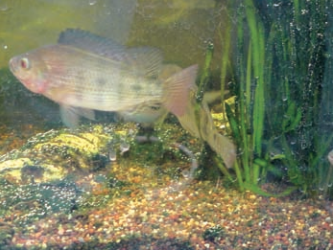
Unlike a cow or any other warm-blooded livestock, a fish does not need to spend energy to keep warm and stay upright. In fact, a farmed fish can provide a 1 to 1 ratio of feed to weight. This feed comes from other low-value fish, and research is being conducted for even cheaper alternatives such as insects or flax. Shellfish actually don’t require feeding at all, taking their nutrients through filtering and cleaning the water. Some people have a negative view on farmed fish after some pretty unregulated and chemical-infused fish farms of the 1980s showed the practice in an unflattering light. However, practices have changed dramatically since then, and as the industry evolves, newer and cleaner methods are being developed every day. Salmon, once the face of “bad fish farming,” are now being certified sustainable for the first time.
Using fish for a larger amount of our protein is key to sustaining our food supply to meet a growing need. Farmed fish provide a very efficient source of protein that could lessen the demand for much less-efficient red meats, freeing up more resources and allowing us to feed more people. It might take a conscious effort at first; a salmon might not be a desirable replacement for a steak dinner for some, especially in our country. We’re already making progress; as of 2012, more farmed fish was produced than beef. With enough people on board, we can begin making the change today and help to feed the people of the future.
Resources
Aquaculture and Aquatic Resources Purdue Forestry and Natural Resources Extension
The Benefits of Seafood Consumption The Education Store, Purdue Extension Resource Center
A Fish Farmer’s Guide to Understanding Water Quality, Koi Organization International
Everything You Always Wanted to Know About Fish Farming But Were Afraid to Ask, Grist.org
Aquaculture, National Oceanic and Atmospheric Administration Fisheries
Aaron Doenges, Assistant Web Designer/Videographer
Purdue FNR Extension
Indiana has experienced extreme weather over the last couple of years. Extreme heat, draught, cold, winds, you name it, we’ve dealt with it. Most recently, through June and July, Indiana has experienced record-breaking rainfall and flooding. These weather conditions can make it difficult for our surroundings, but it can also cause a lot of stress on our trees.
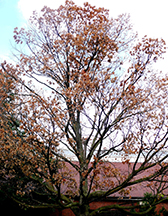
Photo credit: Keith Robinson
Urban trees are more susceptible to weather-related injury because of their oftentimes compromised root systems. In forested areas, trees spread their roots out two to three times the length of the tree. This is important because roots are the tree’s way to receive oxygen from the soil. This provides for a healthy defense system, giving the tree advantages like the ability to draw in moisture during dry spells and secrete fungi- and insect-repelling chemicals. In urban areas, roads and construction oftentimes sever roots or restrict where they can go, leaving the trees in a vulnerable state.
Our vulnerable urban trees are especially likely to be harmed by weather-induced stress. Symptoms like browning of leaves, dying branches and early coloration in the fall are all signs that a tree’s health is declining.
Keep an eye on your trees, and if you are concerned, use the Purdue Tree Doctor app or submit a sample to the Purdue Plant and Pest Diagnostic Lab as you seek best practices to care and protect your trees.
Resources
Purdue Experts: Tree Deaths Across Indiana May be Related to Weather Stress, Purdue Agriculture News
Drought? Don’t forget the trees! The Education Store, Purdue Resource Center
Plan Today For Tomorrow’s Flood, The Education Store
Community & Urban Forestry, Indiana Department of Natural Resources
The Root of the Problem, Northern Woodlands
Purdue University Agriculture News
Lindsey Purcell, Urban Forestry Specialist
Department of Natural Resources, Purdue University
B. Rosie Lerner, Extension Consumer Horticulture Architecture
Department of Horticulture and Landscape Architecture, Purdue University
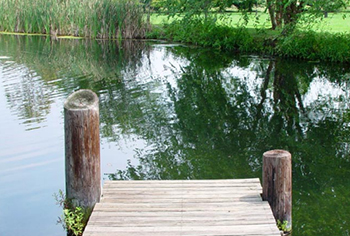
Photo credit: Dan Annarino
Hopefully no one is reading this after a catastrophic loss of their pond. This very wet summer has tested some ponds’ ability to hold and safely release excess water. I would like to quickly review the overflow structures ponds should have and also some management necessary to ensure the safety of ponds levees/dams.
For recreational ponds, there should be one or perhaps two means of releasing water from the pond. Most of these ponds are built on sloping land in order to capture rainwater to fill the pond. In this case, it is necessary to have an emergency spillway that will divert excess water once the pond is full away from the dam to prevent erosion and save the integrity of the structure. Usually they is just an earthen channel that runs around the end of the dam with an initial elevation 1-2 feet below the top of the dam. Water only runs through the spillway when the pond is full. An emergency spillway should have vegetation to prevent erosion but not to the extent that water is blocked from passing through efficiently.
A distinct advantage can be gained by having a drain structure installed through the dam when ponds are initially constructed. Drains such as this typically have a valve or swivel pipe which can regulate water level to whatever height the owner would like. With a wet summer such as we have had, the pond water level could be proactively lowered to save massive amounts of water passing through the spillway.
Additionally you can remove stagnant low oxygen water from the bottom of the pond. If a drain structure is releasing water from the bottom of the pond, it is a good idea to flush this valve two to three times per year to remove debris from around the structure which may plug it up if used infrequently. With these structures, it is a good idea to use the 6/12 rule. Water levels are kept six inches below maximum in order to catch any rain water event without overflowing. Evaporation and seepage will reduce the level back down over time. The 12 refers to the level the inches below maximum where you would add well water if you have the capacity. Generally this is only used with aquaculture ponds.
Control structures to maintain water levels will ensure the integrity of your ponds dams and levees. By controlling the amount of water flushing through a pond, the owner can also manage the productivity of the pond ecosystem by releasing/maintaining nutrients in the pond.
Resources
Commercial Greenhouse and Nursery Production: Controlling Algae in Irrigation Ponds, The Education Store, Purdue Extension Resource Center
Indiana Ponds, The Education Store
Indiana Ponds Q&A, The Education Store
Management of Ponds, Wetlands, and Other Water Reservoirs to Minimize Mosquitoes, The Education Store
Indiana Pond Management, Indiana Department of Natural Resources (IDNR), Fish & Pond Management
Ponds – Planning, Design, Construction, USDA Natural Resources Conservation Service (NRCS)
Bob Rode, Extension Aquaculture Specialist
Department of Forestry and Natural Resources, Purdue University

Recent Posts
- 2026 Winter Bat Survey In Progress, MyDNR
Posted: March 27, 2026 in Wildlife - Fast-Growing Trees for the Landscape, Purdue Landscape Report
Posted: March 26, 2026 in Forestry, Urban Forestry, Woodlands - Urban Tree Spotlight: Planting Deciduous Shade Trees, Purdue Landscape Report
Posted: March 25, 2026 in Forests and Street Trees, Urban Forestry, Woodlands - Beetle that attacks Tree-of-Heaven found in Indiana, Purdue Landscape Report
Posted: March 20, 2026 in Invasive Insects, Wildlife, Woodlands - ID That Tree: Dwarf Chinkapin Oak
Posted: in Forestry, Urban Forestry, Wildlife, Woodlands - IN-PREPared: Essential Resources for Indiana’s Severe Weather Season
Posted: March 11, 2026 in How To, Safety - DNR Hiring for Indiana Conservation Officer Positions, MyDNR
Posted: March 9, 2026 in Urban Forestry, Wildlife, Woodlands - ID That Tree: Shumard Oak
Posted: in Plants, Urban Forestry, Wildlife, Woodlands - A Woodland Management Moment: Windbreak Around Walnut Plantings
Posted: March 3, 2026 in Forestry, Urban Forestry, Woodland Management Moment - Getting Certified as an Indiana Certified Prescribed Burn Manager
Posted: March 2, 2026 in How To, Urban Forestry, Woodlands
Archives
Categories
- Alert
- Aquaculture/Fish
- Aquatic/Aquaculture Resources
- Ask the Expert
- Christmas Trees
- Community Development
- Disease
- Drought
- Forestry
- Forests and Street Trees
- Gardening
- Got Nature for Kids
- Great Lakes
- How To
- Invasive Animal Species
- Invasive Insects
- Invasive Plant Species
- Land Use
- Natural Resource Planning
- Nature of Teaching
- Plants
- Podcasts
- Ponds
- Publication
- Safety
- Spiders
- Timber Marketing
- Uncategorized
- Urban Forestry
- Webinar
- Wildlife
- Wood Products/Manufacturing
- Woodland Management Moment
- Woodlands