 Purdue University - Extension - Forestry and Natural Resources
Got Nature? Blog
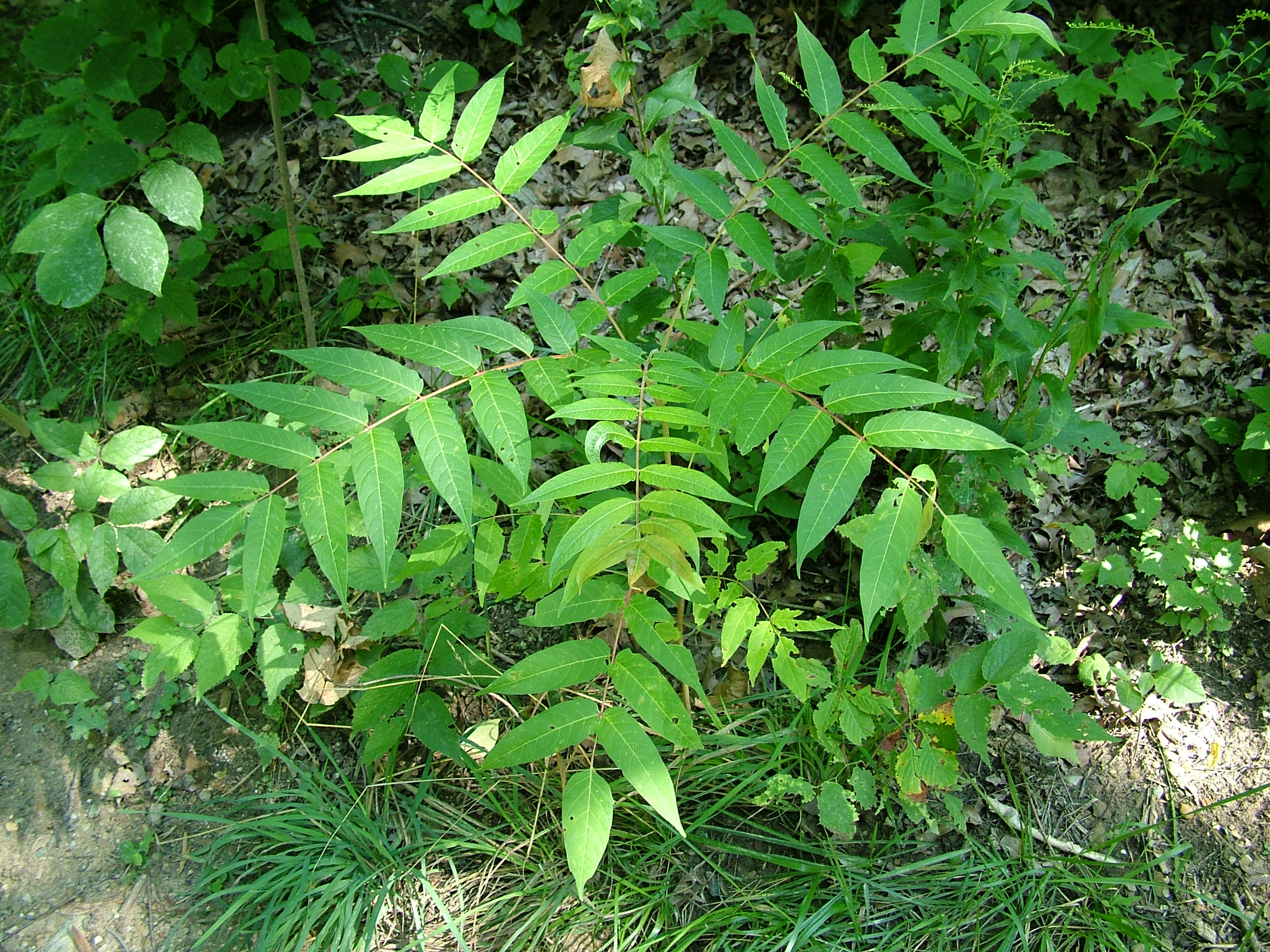
Tree-of-heaven seedling
Invasive plant species threaten many habitats including forests across Indiana. The introduced Asian tree-of-heaven (Ailanthus altissima) is one of these aggressive and troublesome invaders. Tree-of-heaven grows very quickly on a wide variety of sites from seed and sprouts and can rapidly out-compete native trees and shrubs. There are areas in Indiana forests already dominated by this unwelcome invader. Controlling large infestations of this tree can be very expensive and even dangerous. The sap and wet sawdust of this tree can trigger an allergic reaction in some people.
There is some hope on the horizon. Research work done by the U.S. Forest Service and universities in Pennsylvania and Ohio has identified a fungus that can kill tree-of-heaven and has minimal or no impact on surrounding plants. Verticillium nonalfalfae or Ailanthus verticillium wilt is a soil fungus that has been identified so far in Pennsylvania and Ohio that can rapidly kill large patches of tree-of-heaven. Tests with this naturally occurring soil fungus have shown it to be very effective at killing tree-of-heaven without having significant impacts on surrounding native plants.
This naturally-occurring killer of tree-of-heaven could be an important tool in managing this invasive problem in Indiana. The quickest way to get started with natural bio-control of tree-of-heaven is to locate the fungus here in Indiana. Citizens and resource professionals can help us locate ailanthus verticillium wilt by identifying patches of tree-of-heaven that are being impacted by the fungus. This requires familiarity with the identification of both tree-of-heaven and the symptoms of the wilt disease on the tree.
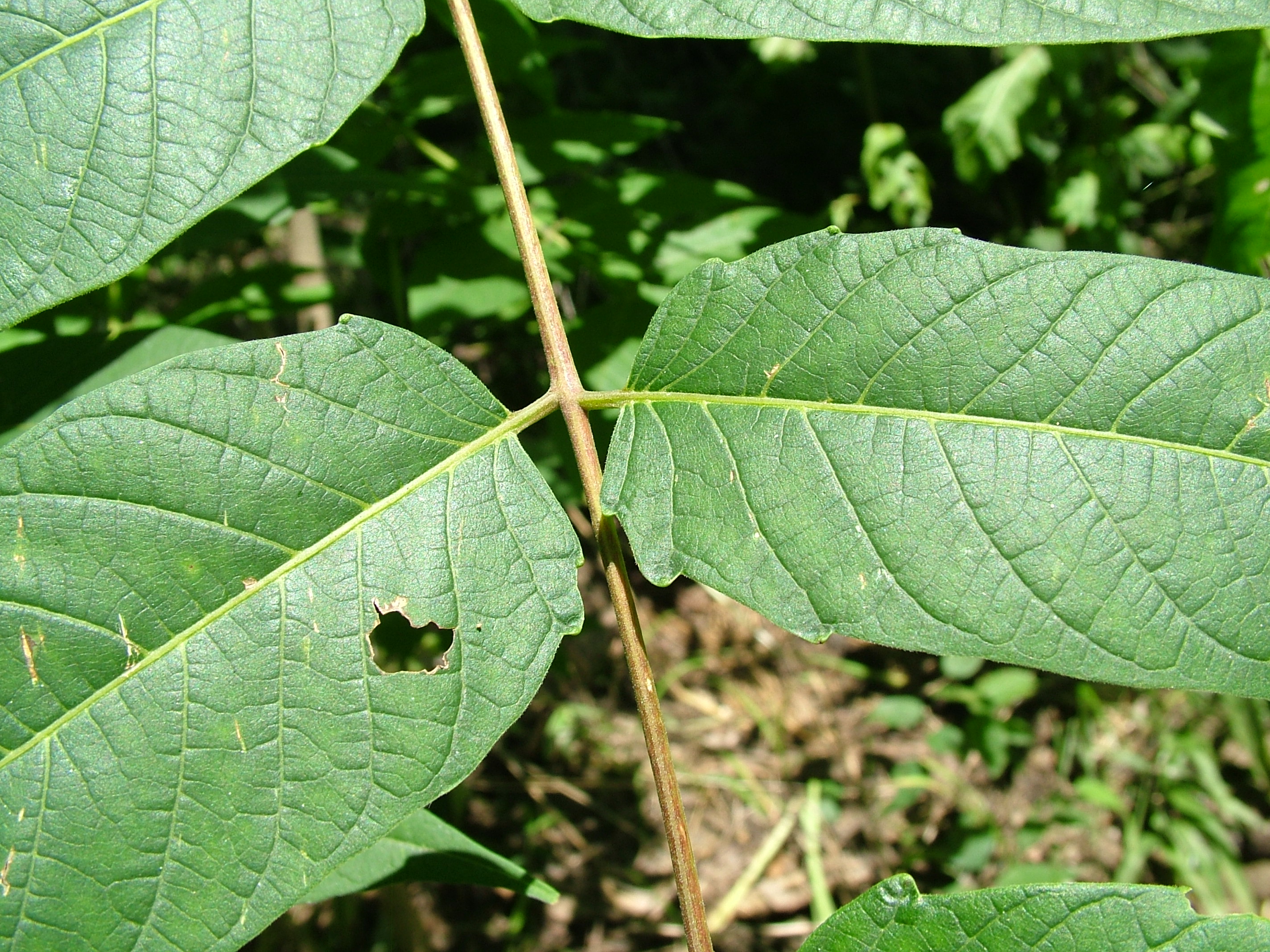
Close-up of the “teeth” on the leaves of tree-of-heaven
Tree of Heaven has long, compound leaves resembling sumac or black walnut but possessing small notches or teeth at the base of the leaflets. The plant parts have a very unpleasant burnt nut odor when crushed or bruised. The bark is smooth and grey with light grey or white fissures running vertically in the bark. Twigs are very stout with a light tan spongy pith in the center.
Ailanthus wilt causes rapid death of the tree, often within one season, so look for patches of tree-of-heaven where most trees are showing wilting foliage or are already dead. The mortality will often be radiating out from a central group of dead or dying trees. Trees with wilt will have a yellow to yellow-brown discoloration of the wood directly beneath the bark. Healthy tree-of-heaven will have nearly white wood under the bark. The mortality will almost always be groups of trees, not scattered individuals. Several resources are included below to help you identify tree-of-heaven and ailanthus wilt.
If you encounter what you think is ailanthus wilt in Indiana, please contact:
Lenny Farlee, Hardwood Ecosystem Extension Specialist
Purdue Forestry and Natural Resources
Email: lfarlee@purdue.edu
Phone: 765-494-2153
Joanne Rebbeck, Plant Physiologist
USFS, Northern Research Station
Email: jrebbeck@fs.fed.us
Phone: 740-368-0054
Resources
Tree-of-heaven Images, Center for Invasive Species and Ecosystem Health
Scientists Using Fungi to Stop an Invader, The Columbus Dispatch
Verticillium nonalfalfae, USDA Forest Service
Invasive Species, Purdue Extension
The Education Store, Purdue Extension Resource Center (search “invasive”)
Lenny Farlee, Hardwood Ecosystem Extension Specialist
Department of Forestry and Natural Resources, Purdue University
 We all know that trees help to improve our air quality. Absorbing toxins, reducing CO2 levels and providing shade are well-known benefits of trees, and many initiatives are in place to increase urban forested areas. However, there is an interesting fact to consider. According to the U.S. EPA, the average American spends 90% of their time indoors, where those benefits of outdoor trees aren’t nearly as impacting. In fact, pollutants are estimated to be two to five times higher indoors than outdoors and account for several billion dollars of health costs nationally. Indoor air needs to be cleaned too. This is the problem that Purdue’s BioWall team hopes to solve.
The project began in 2009 as part of a fully self-sustainable house called the INhome. In 2011, INhome competed against 20 other teams in the United States Department of Energy’s Solar Decathlon and scored second place, largely due to its most distinguishable feature, the BioWall. The BioWall was integrated into the return duct of INhome’s air conditioning system, filtering the air inside the home through the roots of golden pothos and other species of ivy that are known to have a strong effect on air quality.
Today, the BioWall team is in the process of testing out an updated version of the BioWall. Prototype designs are being tested to improve the air cleaning qualities as well as the lifespan of the plants. Bypass tubes are being implemented to lessen the amount of air passing over the plants’ roots, allowing them to dry out slower and live longer. Eventually, the team would like to put out a consumer version in the next few years for about $2,000. It’s a lofty goal, but the team believes they can succeed and bring affordable and self-sustaining indoor air cleanliness to homes around the world.
For more information, check out the BioWall team’s website.
Resources
BioWall, Purdue University
Office of University Sustainability, Purdue University
Questions About Your Community: Indoor Air, United States Environmental Protection Agency
William Hutzel, Professor of Mechanical Engineering Technology
Purdue University
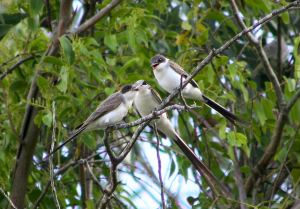 Bird biologist Amy Kearns of Indiana Department of Natural Resources found a fork-tailed flycatcher Tuesday in Daviess County while conducting a survey for another bird. The sighting was extremely unusual because this bird is typically found in Venezuela this time of year and has rarely, if ever, been spotted in Indiana before. Kearns believes that this bird could have ended up in Indiana as a result of its migration route being thrown off by storm systems.
Several avian enthusiasts came to look at this unusual bird, eager for a chance to observe a bit of South American wildlife here in Indiana.
Resources
South American Bird Spotted in Southern Indiana, IndyStar
Fork-tailed Flycatcher, Audubon
2014 Wildlife Science Report, Indiana Department of Natural Resources
Breeding Birds and Forest Management, The Education Store, Purdue Extension Resource Center
 With all of the recent rain we have had throughout the state, I have received several inquiries about effects on wildlife and what we can expect. While some flooding is natural in low areas and wildlife are adapted to respond, extreme flooding can impact wildlife. Flood waters can wash away nests or drown developing or very young animals for those living in low-lying areas. For example, heavy spring rains can reduce nest success of wild turkeys in flood plain areas.
In many cases, wildlife will adapt by simply moving to higher ground. I recently received an email from a Purdue Extension Educator. She was contacted by a homeowner about a possible increase in garter snake populations. According to her email, the homeowner never saw garter snakes in years past until this year. In fact, they were now showing up in neighborhood homes. Certainly our environment changes over time, and wildlife can and do respond to these changes. However, this recent change was likely due to a response of snakes moving to drier ground. This and other similar displacement of wildlife is usually temporary.
What can we do about this? I’m afraid not much for our currently flooded friends. However, in the long-term, times like this reinforce the need to create and enhance quality wildlife habitat. Providing wildlife with quality habitat that contains the necessary food, cover and water resources gives them a fighting chance to deal with issues that inevitably arise. In addition, wetlands that landowners build and restore on their properties not only enhance wildlife habitat, but also help retain flood waters and recharge groundwater supplies.
If some unwanted wildlife has overstayed their welcome around your home, check out my article on trapping nuisance wildlife. If you think you have found a sick or injured animal, you can find a list of licensed Wild Animal Rehabilitators in your area on the DNR Division of Fish and Wildlife’s website. In Indiana, wildlife rehabilitators have necessary state and federal permits to house and care for sick or injured wild animals.
Additional Resources
Preventing Wildlife Damage – Do You Need a Permit? The Education Store, Purdue Extension
The Basics of Managing Wildlife on Agricultural Lands, The Education Store, Purdue Extension
Brian J. MacGowan, Extension Wildlife Specialist
Department of Forestry and Natural Resources, Purdue University
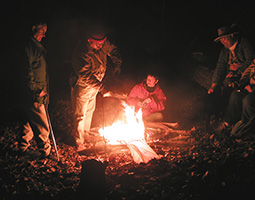 In the summer, it can be a lot of fun spending time outside and making campfires with friends and family. However, it can also be dangerous if you aren’t aware of proper safety techniques.
Smokey the Bear is here to help keep you and your family informed on the best practices while making a fire. On the Prevention How-Tos section of Smokey’s website, you can find tips on how to pick a good spot, how to build a fire pit, how to build and maintain your fire and how to extinguish it when you are done. There are also other bits of useful advice about burning debris, maintaining equipment to reduce wildfire risk and things to consider while indoors.
Take a look at Smokey’s website to make sure you are enjoying summer campfires safely!
Resources
Fire Prevention, Purdue Fire Department
Smokey Bear, National Association of State Foresters
Wildfire Prevention, National Association of State Foresters
Wildfire Safety Outreach Materials, United States Fire Administration
Let’s Have Fun with Fire Safety, United States Fire Administration
Smokey the Bear: Ad Council, National Association of State Foresters, USDA-U.S. Forest Service
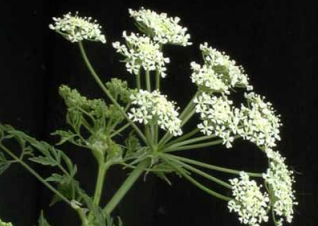
Photo credit: Pedro Tenorio-Lezama, Bugwood.org
Made infamous through the trial of Socrates, Shakespeare’s Hamlet and Macbeth, and several other works of classic literature, poison hemlock is an extremely toxic plant that will pose a risk this summer and should be handled with caution.
Poison hemlock is a biennial plant, meaning that it has a two year lifespan. Last summer, it went through vegetative growth and largely stayed out of sight. This summer, it will produce small white clusters of flowers and will be more likely to catch the attention of animals and people. Poison hemlock is a member of the parsley family and can sometimes be confused with wild carrot. However, its distinguishing feature is its hairless hollow stalks with purple blotches. If you see these, be careful!
The biggest risk with poison hemlock is ingestion. Lethal doses are fairly small, so it is important for animal owners or parents of young children to identify it in their area and remove it if possible. The toxins can also be absorbed through the skin and lungs, so be sure to wear gloves and a mask when handling these plants.
Symptoms of hemlock poisoning include dilation of the pupils, weakening or slowing pulse, blue coloration around the mouth and eventually paralysis of the central nervous system and muscles leading to death. Quick treatment can reverse the effects, so act quickly.
Resources
Invasive Plant Species Fact Sheets: Poison Hemlock, The Education Store, Purdue Extension Resource Center
Recognizing and Managing Poison Hemlock, Purdue Landscape Report
Poison Hemlock, Pest & Crop Newsletter, Purdue Extension – Entomology
Hemlock Woolly Adelgid: Distribution Update, Purdue Landscape Report
What are Invasive Species and Why Should I Care?, Purdue Extension – Forestry and Natural Resources (FNR)
Indiana Invasive Species Council
Report INvasive, Purdue Extension & Indiana Invasive Species Council
Poison Hemlock (Conium maculatum), United States Department of Agriculture (USDA)

Photo: Tom Campbell
Mushrooms are strange forms of life. Some can kill you within hours, some are psychedelic hallucinogens and others are just good on a pizza. There are estimated to be six to 20 times more species of fungi than plants, and a lot of them are still shrouded in mystery. Since the time of Carl Linnaeus in the 1700s, we have been searching for answers in the fungi kingdom, and recently, we just found a big one in the shape of an evolutionary mapping dubbed the “tree of life.”
Using collections of preserved fungal specimens called fungaria from Purdue’s Arthur Fungarium and Kew’s Fungarium in the Royal Botanic Gardens, two of the biggest and most important fungi collections in the world, mycologists like Catherine Aime were able to study well over 100 years’ worth of preserved specimens and apply modern DNA technology to piece together genomes and discover new connections linking mushroom species. This “tree of life” is the clearest and most comprehensive mapping to date of the evolutionary history of fungi.
Aime says that this study reinforces the importance of fungaria as we advance in the genomic age. These extensive collections are priceless, containing specimens as far back as some from Darwin himself, and documenting hundreds of thousands of species throughout the years. Some of these species might not exist in the future, and it is essential that we document and preserve them as we learn new ways to use them in the future.
The research paper documenting this ‘tree of life’ was published in the Biological Journal of the Linnean Society and is available for journal subscribers and readers at Purdue.
Read the full article.
Resources
DNA Samples From Purdue, Kew Fungi Collections Provide Key to Mushroom ‘Tree of Life’, Purdue Extension
Arthur Fungarium, Purdue Herbaria
Kew’s Fungarium, Kew Royal Botanic Gardens
Aime Lab, Purdue University Department of Botany and Plant Pathology
Fungi – In a Kingdom All By Themselves, Indiana Department of Natural Resources
Natalie van Hoose, Research News Writer
Purdue Extension
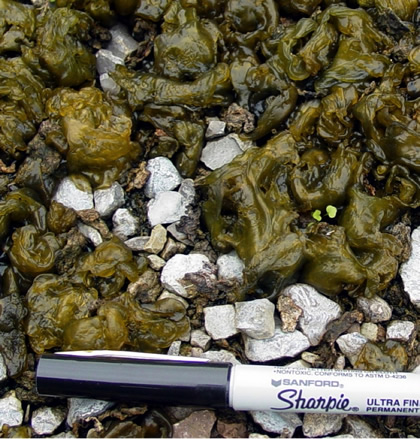
Photo credit: Purdue Plant and Pest Diagnostic Lab
In this month’s column of In the Grow, B. Rosie Lerner, Purdue Extension Consumer Horticulturist, addresses algae that can pop up on stone, concrete, gravel or even lawns this summer as we are getting large amounts of hot, rainy weather.
This terrestrial algae known as Nostoc can look unappealing and also be a slippery safety hazard, but unfortunately, there isn’t much to do about it. Raking the algae will just spread it to larger areas. Keeping the area aerated and dry as much as you are able can help a little with controlling this algae, and applying copper sulfate will also shrink it a little bit, but it will just reappear when warm, rainy weather conditions occur again.
Resources
News Columns & Podcasts, Purdue Agricultural Communication
Nostoc: A Green, Jelly-Like Substance Growing in Lawns, Michigan State University Extension
B. Rosie Lerner
Purdue Extension Consumer Horticulturist
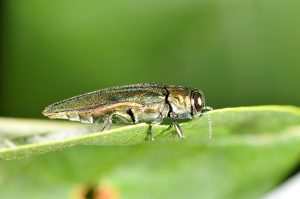
An adult emerald ash borer feeds off a leaf. (Purdue University Department of Entomology photo/John Obermeyer)
Article by Pat Munsey, taken from KokomoPerspective.com:
The ash borer beetle is a scourge that has spread across the Midwest for more than a decade, laying waste to trees as it burrows and feeds. Now it is in Howard County.
Ash trees in several areas of the community are showing signs of the inevitable death that comes with infestation, but citizens can stop the pest in its tracks.
According to the Indiana Department of Natural Resources (DNR), the beetles were first discovered in Indiana on April 21, 2004. Since that time, it has steadily spread across the state with heavy concentrations in the northeast. Evidence of the insects’ arrival locally began appearing two years ago, and according to Kristy McNeil, an associate at Salsbery Garden Center, it is vital that people take action now to prevent further damage.
Resources
Emerald Ash Borer, Indiana Department of Natural Resources (IDNR)
Emerald Ash Borer in Indiana, Purdue Extension
 A new sing-along music video has been added to the Help the Hellbender website. This provides a fun and catchy way for teachers and students to learn about hellbenders and see the researchers hard at work helping add to their numbers.
The Help the Hellbender website also has other resources for teachers and students including lesson plans, coloring pages and a Hellbender Havoc video game. Check out the site and sing along with the hellbenders!
Resources
Help the Hellbender, Purdue Extension
Purdue Partners With Indiana Zoos for Hellbender Conservation, Purdue Agriculture News
The Nature of Teaching: Discovering the Watershed, The Education Store, Purdue Extension Resource Center
Amphibians & Reptiles, Indiana Department of Natural Resources
Purdue Extension-Forestry and Natural Resources

Recent Posts
- Heavy August Rains Bring More Mosquitoes to Indiana
Posted: September 9, 2026 in How To, Invasive Insects, Safety, Wildlife - Question: Why Did the Shagbark Hickories Survive the Tornado?
Posted: August 27, 2026 in Forests and Street Trees, How To, Urban Forestry - New Indiana Woodland Steward Newsletter
Posted: August 12, 2026 in Forestry, Urban Forestry, Wildlife, Woodlands - Indiana Fall Hunting Licenses on Sale and New Mobile App Available
Posted: in Forestry, How To, Wildlife - Trees and Storms: Understanding Damage, Risk and Recovery
Posted: in How To, Urban Forestry - Lighting a Spark: Prescribed Burn Associations
Posted: August 6, 2026 in Community Development, Forestry, Safety, Wildlife - ID That Tree: Nannyberry Viburnum
Posted: July 22, 2026 in Forestry, Plants, Wildlife, Woodlands - ID That Tree: Eastern Swamp Privet
Posted: in Forestry, Plants, Wildlife, Woodlands - Jarred Brooke Receives Early Career Award for Prescribed Fire Work
Posted: July 20, 2026 in Forestry, Forests and Street Trees, Natural Resource Planning, Safety - Bovine Tuberculosis in Wild White-tailed Deer: Background and Frequently Asked Questions
Posted: in Disease, Natural Resource Planning, Wildlife
Archives
Categories
- Alert
- Aquaculture/Fish
- Aquatic/Aquaculture Resources
- Ask the Expert
- Christmas Trees
- Community Development
- Disease
- Drought
- Forestry
- Forests and Street Trees
- Gardening
- Got Nature for Kids
- Great Lakes
- How To
- Invasive Animal Species
- Invasive Insects
- Invasive Plant Species
- Land Use
- Natural Resource Planning
- Nature of Teaching
- Plants
- Podcasts
- Ponds
- Publication
- Safety
- Spiders
- Timber Marketing
- Urban Forestry
- Webinar
- Wildlife
- Wood Products/Manufacturing
- Woodland Management Moment
- Woodlands