 Purdue University - Extension - Forestry and Natural Resources
Got Nature? Blog
Trees offer many functional and aesthetic benefits, but one of the most common is shade. Because of this, one of the most important aspects of tree selection and planting is placement. Improper placement of trees can diminish the value of the tree on the site. The tree can actually become a liability if it conflicts with infrastructure or just does not providing any useful function at all. It’s important to consider and energy efficient design to obtain shade where it’s needed most such as south or west facing structures.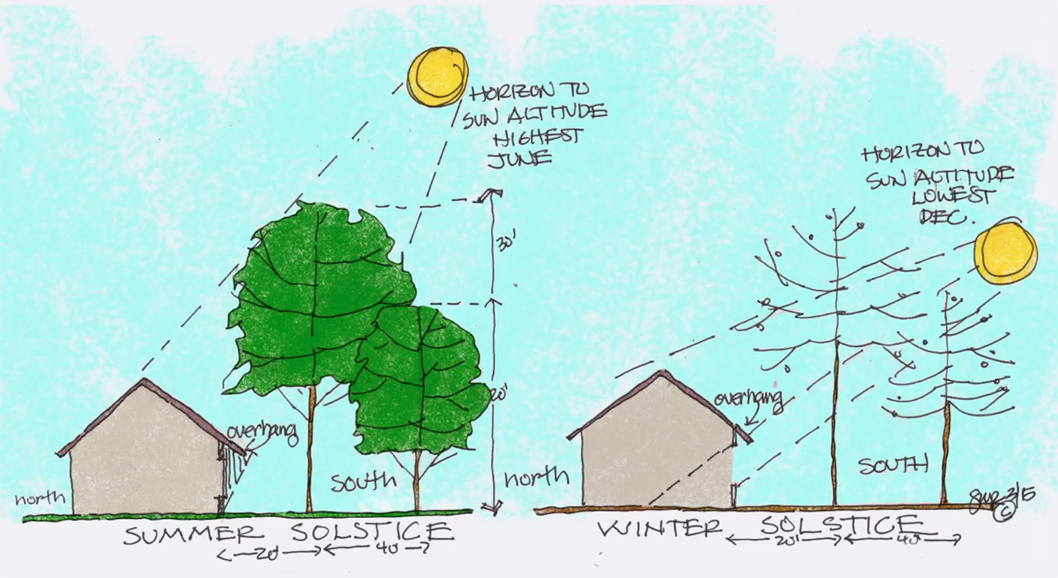
In this hemisphere, the sun is in the south and the source of cold weather is in the north. Whenever possible, place openings for sunlight and radiant heat primarily on the southern exposure, then on the west and east. For energy efficiency in winter, use the low arc of the sun to capture the maximum amount of warmth through east-, west-, and south-facing windows. Windows with a northern exposure are a source of cool air from prevailing winds during the hot months. So, give the north minimum exposure and maximum natural protection in the winter.
When selecting trees for energy efficiency, don’t plant evergreen trees near the house on southern exposures. Trees may provide some shade and screening but will also block out the warming effects of the sun during winter months. When choosing trees for shade and solar gain, choose larger, deciduous-canopy trees, which provide an advantage year-round. This means shade in the summer, blocking the sun’s energy. In the winter, after leaves have dropped, the sun’s energy can pass through the tree and into the window.
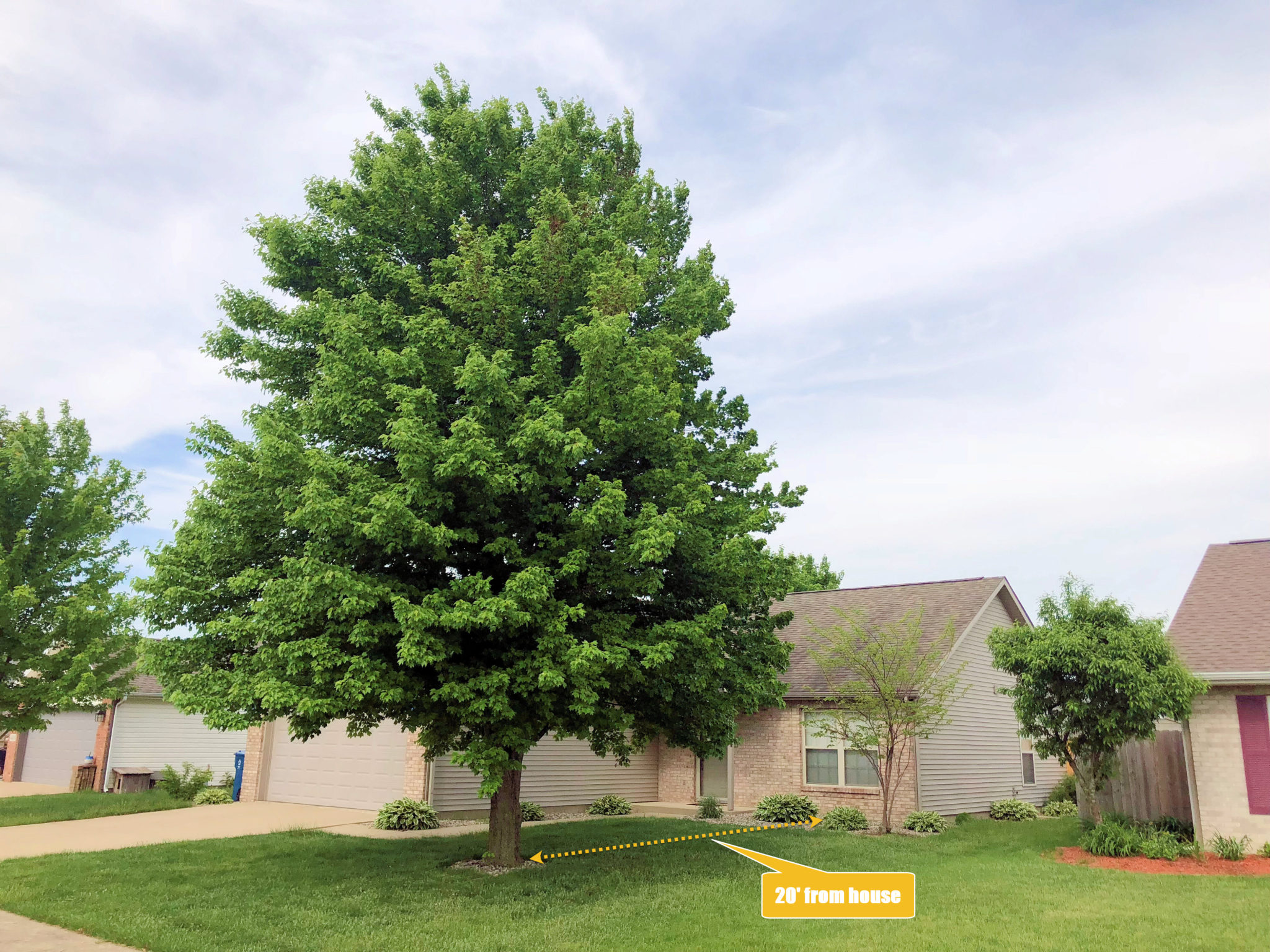
Figure 1. Protection from the summer sun.
Select good quality trees from a reputable source that are suitable for your location. The old adage, “you get what you pay for” goes for nursery stock as well. Correct placement is critical for an energy-efficient design and reduced maintenance as the tree grows and matures. Be certain the mature height and spread fit the location before purchase and planting the tree. This allows the tree freedom to spread into the design space naturally without excessive pruning needed to prevent conflicts with the home. However, the tree still must be close enough to the house for the canopy to provide shade. A good rule of thumb to begin placing the tree at least 20 feet from the house. For larger shade trees, you may need to plant as far as 40 feet from the house to insure room for growth (Figure 1).
Trees provide many benefits besides shade which includes cleaner air and increased property values. These ecosystem services are the reason why we plant trees, besides beautifying our landscape.
The functional benefits of shading help make homes energy-efficient by creating a cooling effect during the hot summer months and by allowing passive solar gain during cold winter months. However, proper selection and placement is critical to make the tree work for your site. Choose wisely, plant properly.
Full article from Purdue Landscape Report.
Resources:
Tree Selection for the “Un-natural” Environment, The Education Store – Purdue Extension resource center
Planting Your Tree Part 1: Choosing Your Tree (Youtube video), Purdue Extension-FNR
Tree Installation: Process and Practices , The Education Store
Tree Planting Part 2: Planting a Tree (Youtube video), Purdue Extension-FNR
Top 5 List for Tree Selection and Planting, Got Nature?, Purdue Extension-FNR
Lindsey Purcell, Urban Forestry Specialist
Purdue University, Department of Forestry and Natural Resources
If you care about wild animals, let them be wild. Most young wild animals you encounter are not orphaned. What may seem like an abandoned animal is normal behavior for most wildlife, to avoid predators. Picking up a wild animal you think is orphaned or abandoned is unnecessary and can be harmful to the animal or you.
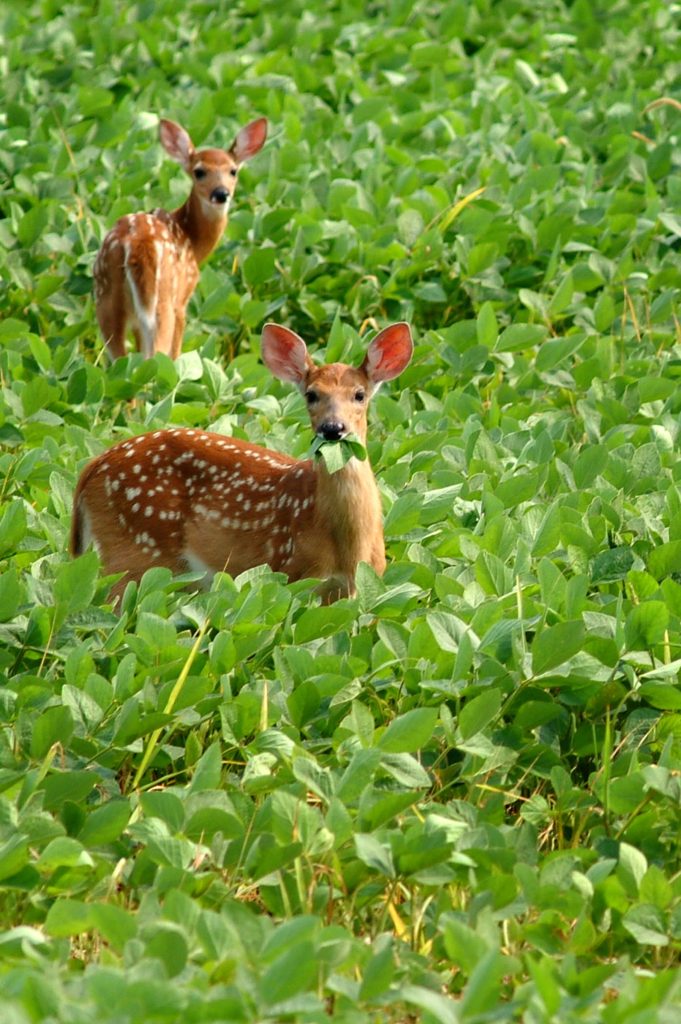 If you find a wild animal that is truly abandoned, sick or injured, here is what you can do:
- Leave it alone, in its natural environment. Don’t turn wildlife into pets.
- Call a licensed wild animal rehabilitator who is trained in caring for wild animals.
- If the animal is sick or severely injured, call a licensed veterinarian.
Resources:
Mammals of Indiana, J.O. Whitker and R.E. Mumford
Common Indiana Mammals, The Nature of Teaching, The Education Store-Purdue Extension’s resource center
Orphaned and Injured Animals, Indiana Department of Natural Resources (IDNR)
MyDNR Indiana’s Outdoor News, Indiana Department of Natural Resources
Jennifer Koch, and other researchers with the U.S. Forest Service, has spent the last several years studying what are known as lingering ash – trees that have fared much better against the emerald ash borer. The invasive beetle, which came to North America from Asia about 20 years ago, has killed millions of ash trees around the Midwest.

An adult emerald ash borer feeds off a leaf. (Purdue University Department of Entomology photo/John Obermeyer)
But for reasons that researchers are learning more about, some trees have survived.
Koch says they’ve identified at least two reasons why. Lingering ash seem to attract fewer hungry adult ash borers, which means they’re less likely to become homes to eggs. And when eggs do hatch on lingering ash trees, they tend to be smaller and have a higher mortality rate.
Those are extremely valuable characteristic for modern ash trees, so Koch is making sure they get passed on through cloning. Not genetic modification, but rather clonal duplicates of lingering ash literally cut from part of the parent tree.
Maybe most importantly, Koch says the cloned trees appear to be even more resistant to the ash borer. With their cloned trees healthy and growing, researchers are waiting on the next generation of seeds to see if they’re even more resistant than their cloned parents.
Koch says they plan to add more lingering ash seedlings into their on-site orchard this year. Ash trees planted from seed typically take seven to 10 years to begin giving off seeds of their own, so it could be another decade before Koch knows just how successful their ash tree breeding program can be.
See full article: Attack Of The Clones: Ohio Researchers Find New Hope For Fighting Ash Borer, WOSU Public Media
Resources:
Question: What options do we have to treat our ash trees against the Emerald Ash Borer?, Got Nature?, Purdue Extension-FNR
Invasive Pest Species: Tools for Staging and Managing EAB in the Urban Forest, Got Nature?, Purdue Extension-FNR
Emerald Ash Borer, Purdue Extension-Entomology
Emerald Ash Borer Tools & Resources – Purdue Extension Entomology
WOSU Radio, Columbus, Ohio
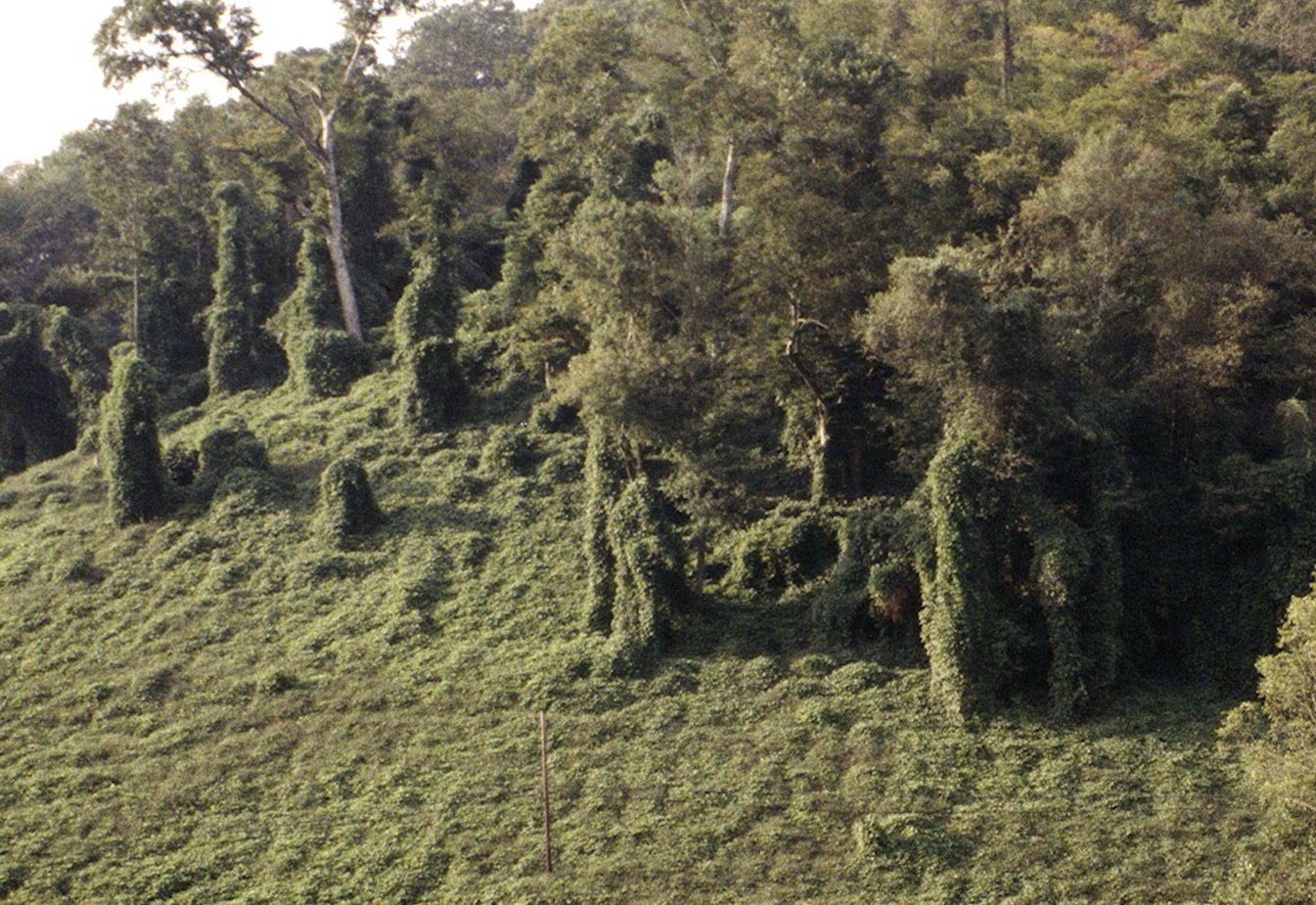
(Figure 1) Mile-a-minute vine grows more than 25 feet in height in one growing season, overtopping shrubs, small trees and growing up forest edges. Image by: USDA APHIS PPQ Archive, USDA APHIS PPQ, Bugwood.org
Preventing the establishment of new invasive species is priority number one and the best expenditure of limited resources in an invasive species management program. Next in priority is early detection of and rapid response (EDRR) to the first report of a new invasion. Stopping invasive species from entering or, next best, at their initial point of introduction saves the incalculable costs later-on associated with rapidly spreading, all-consuming invasive species populations. The verification of a report of mile-a-minute vine (Persicaria perfoliata) on a property in Monroe County, Indiana on May 14, 2018 sets a historical precedence demonstrating a growing capability of detecting and reporting new invaders. The population was very small at this spot and had apparently been sprayed by a homeowner with herbicide, not necessarily to kill the mile-a-minute, but likely to kill the companion multiflora rose.
Our hope is that this is the only instance of mile-a-minute vine in Indiana. There is a significant probability that it is not! In the coming months, a more thorough survey of this property and surrounding area will be conducted to look for more of the vine. But now Indiana stands on high alert as natural resource professionals keep a look out for more of this highly-invasive pest. However, there are too few professionals with eyes on the landscape. The more eyes trained to identify the very distinct characteristics of mile-a-minute, the higher the chance of us catching it before it explodes across the landscape, wreaking havoc and mayhem in our forests and fields, wildlife habitat and mushroom hunting and birding grounds.

(Figure 2) The leaves are simple, alternate, light green and a nearly perfect triangle shape. Image by: Leslie J. Mehrhoff, University of Connecticut, Bugwood.org
All landowners, land stewards, and nature lovers are needed to be additional eyes looking for this insidious threat this summer and in coming years. Please take a moment to learn its identifying characteristics. If you think you have found it, please report it on EDDMapS (Early Detection & Distribution Mapping System) or from your smart phone on the GLEDN (Great Lakes Early Detection Network) app. If you are unsure if you are correctly identifying it, please contact a forester or other natural resource professional for confirmation or just report it in EDDMapS or the GLEDN app, along with photos, and a professional in your area will verify its identification before it actually gets posted.
Mile-a-minute identification:
Mile-a-minute vine is a member of the buckwheat family, Polygonaceae. Although its common name exaggerates its growth potential, this annual vine can grow as much as 6 inches a day and can reach heights of more than 25 feet within the growing season. It forms very dense, tangled mats, growing over shrubs, small trees and up the sides of forest edges (Fig. 1). The leaves are simple, alternate, light green and a nearly perfect triangle shape (Fig. 2). The delicately narrow, green to red-tinted stems, and the petiole (leaf stem) and midrib on the underside of the leaves are armed with small, stiff, recurved barbs (Fig. 3). Small, cup- or saucer-shaped leaf structures, called ocreae, encircle the stem at each node (Fig. 4). Clusters of small white, rather inconspicuous, flowers emerge from the ocreae. Flowers develop into clusters of deep, iridescent blue berry-like fruits, approximately 5 mm in diameter, each fruit containing a single black or reddish-black hard seed, called an achene. Seeds are dispersed by birds and mammals, including chipmunks, squirrels and deer, which eat the fruit. Floodwaters facilitate long distance dispersal of seed.
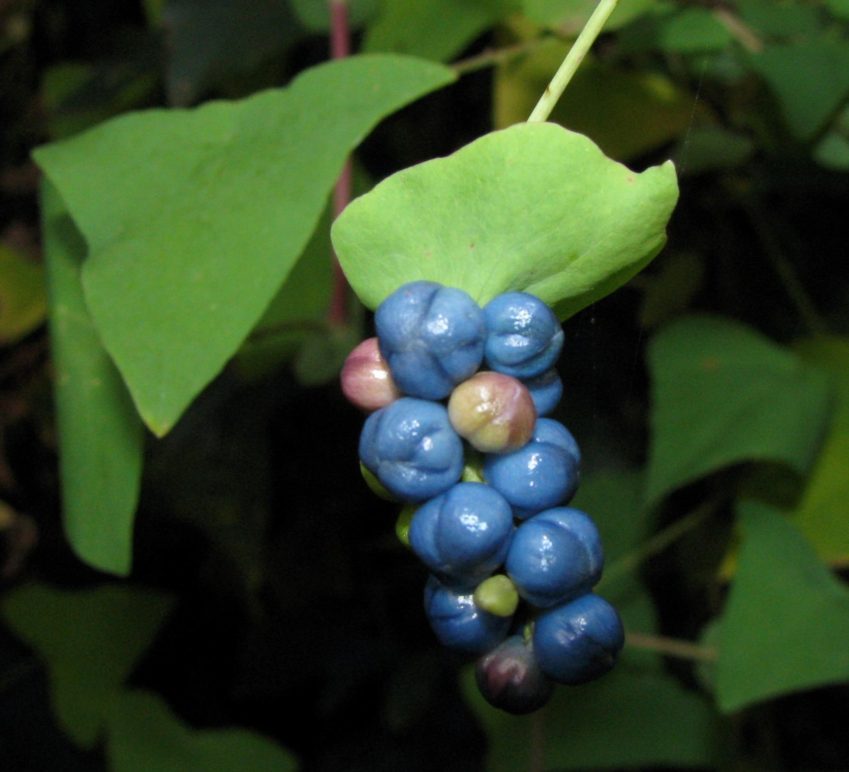
(Figure 4) Small, cup- or saucer-shaped leaf structures, called ocreae, encircle the stem at each node. Flowers emerge from the ocreae and develop into clusters of deep, iridescent blueberry like fruits. Image by: Leslie J. Mehrhoff, University of Connecticut, Bugwood.org
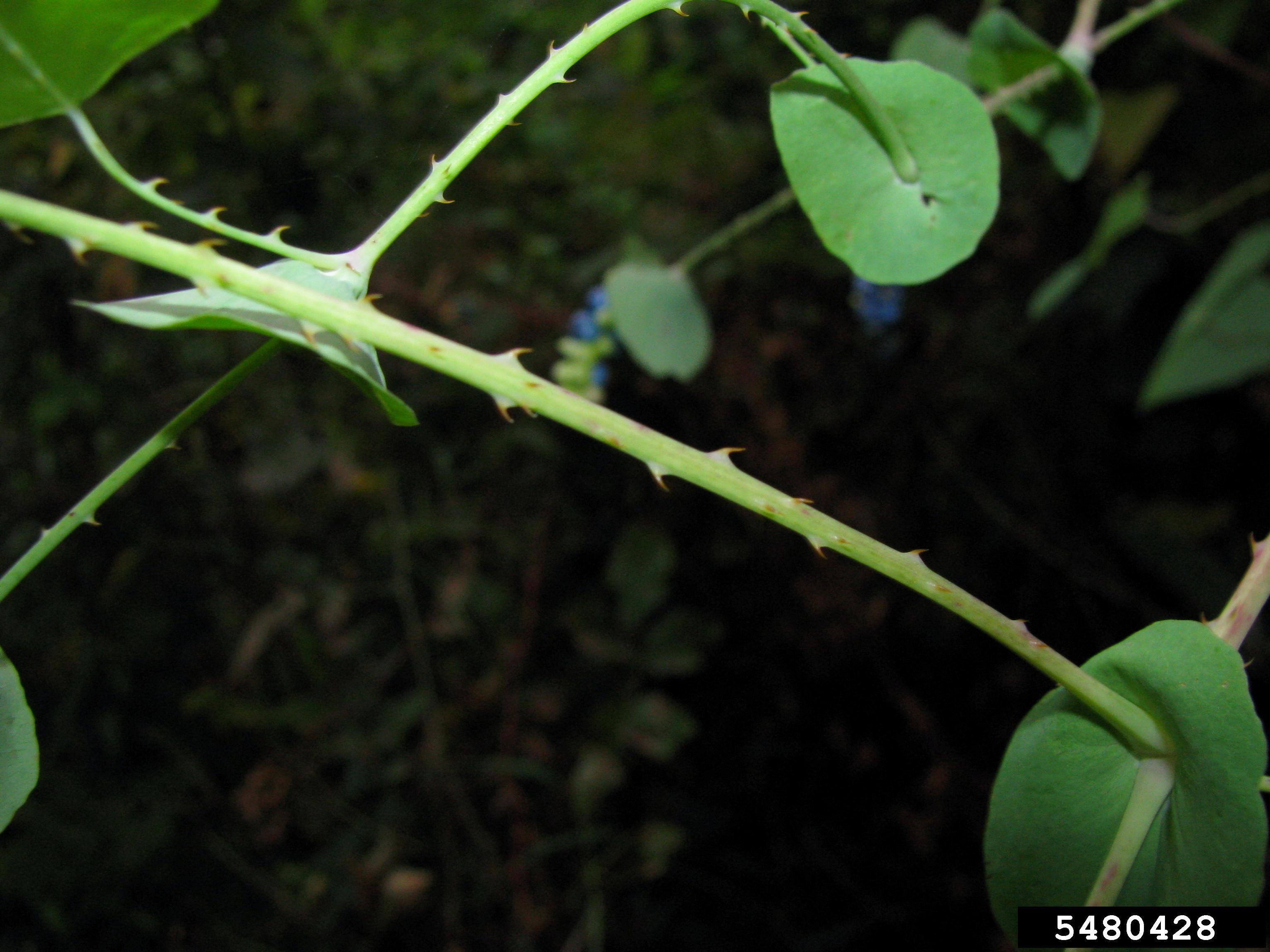
(Figure 3) The delicately narrow, green to red-tinted stems, and the petiole (leaf stem) and midrib on the underside of the leaves are armed with small, stiff, recurved barbs. Image by: Leslie J. Mehrhoff, University of Connecticut, Bugwood.org
Resources:
Mile-a-Minute Vine, FNR-481-W, The Education Store, Purdue Extension’s resource center
Mile-a-minute vine: What you need to know about the plant that can grow 6 inches a day, Indianapolis Star
Invasive Species – Indiana Department of Natural Resources (IDNR)
Ask an Expert – Purdue Extension-Forestry and Natural Resources
Indiana Invasive Species Council – Includes: IDNR, Purdue Department of Entomology and Professional Partners
EDDMaps – Early Detection and Distribution Mapping System
Report Invasives, College of Agriculture
Great Lakes Early Detection Network App (GLEDN) – The Center for Invasive Species & Ecosystem Health
Ron Rathfon, Regional Extension Forester SIPAC
Purdue Department of Forestry and Natural Resources
Choosing fruits and vegetables at the store is fast and easy but the task of fruit and vegetable selection can also be rewarding and a learning experience. There are a number of pick-your-own farms here in Indiana that allow you the freedom of choosing from a vast selection of produce freshly-picked from or still on the tree, vine, or bush. Several of these farms also boast gift shops where freshly-made pies and cakes can be purchased. Others offer a host of additional bonuses like tours, hayrides, and picnic areas. On those days when you want to commune with nature and “live” off of the land. Visit an IN farm and pick-your-own.
There are dozens of farms listed (http://www.pickyourown.org/IN.htm) on this site but more may exist. Do some internet searching to discover the location that best suits your needs and hopefully you will enjoy a number of meals fresh from the farm this year.
This harvest calendar will help inform you about produce likely to be available at a certain time.
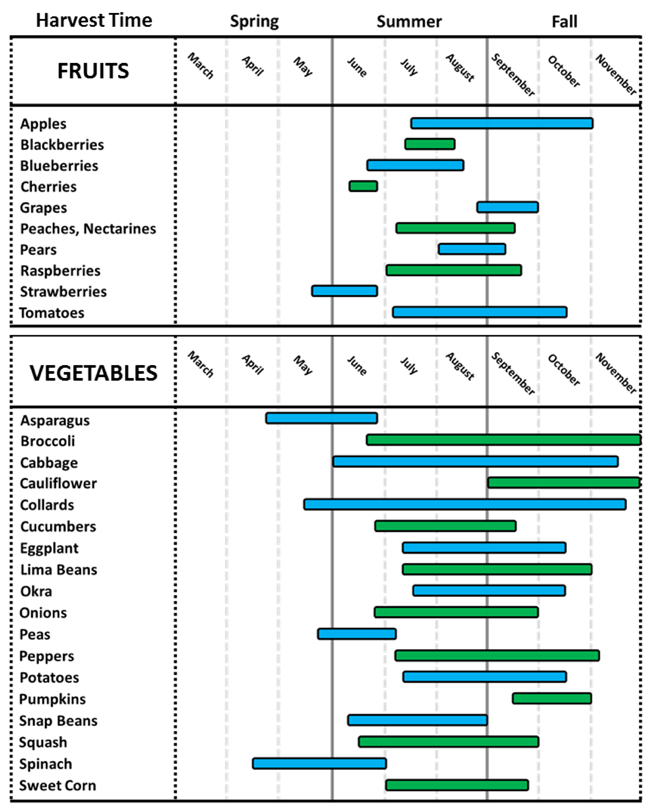
Please note that dates for Spring, Summer, and Fall may be flexible as seasons are typically based on the astronomical calendar, where rigid dates are assigned to the seasons (i.e. March 20th, 2018 = Spring in Indiana) based on the position of the Earth in relation to the sun, as opposed to the meteorological calendar, where actual weather conditions dictate crop growth. The easiest way to be assured that the produce you want to pick will be in season is to call the farm before your visit and use the calendar below as a general guide.
References:
2018 Seasons Calendar
Pick-Your-Own Farms in Indiana
Indiana Harvest Calendar
Other resources:
Fruit and Vegetable Care (place keyword in the search field ), The Education Store, Purdue Extension’s resource center
Purdue Landscape Report, Purdue University
Calendar with Upcoming Workshops, Purdue Extension-Forestry and Natural Resources
Shaneka Lawson, USDA Forest Service/HTIRC Research Plant Physiologist/Adjunct Assistant Professor
Purdue University Department of Forestry and Natural Resources
Question: This little guy lives around our house. We see him almost daily. Do you know what he is? Salamander? Skink? Lizard?
The animal pictured is both a lizard and a skink – specifically, a Common Five-lined Skink. More than 1,200 species of skinks are distributed worldwide. Most are medium-sized lizards with body lengths typically ranging 4-12 centimeters. Skinks are active and alert lizards covered with smooth overlapping scales on the sides and back.
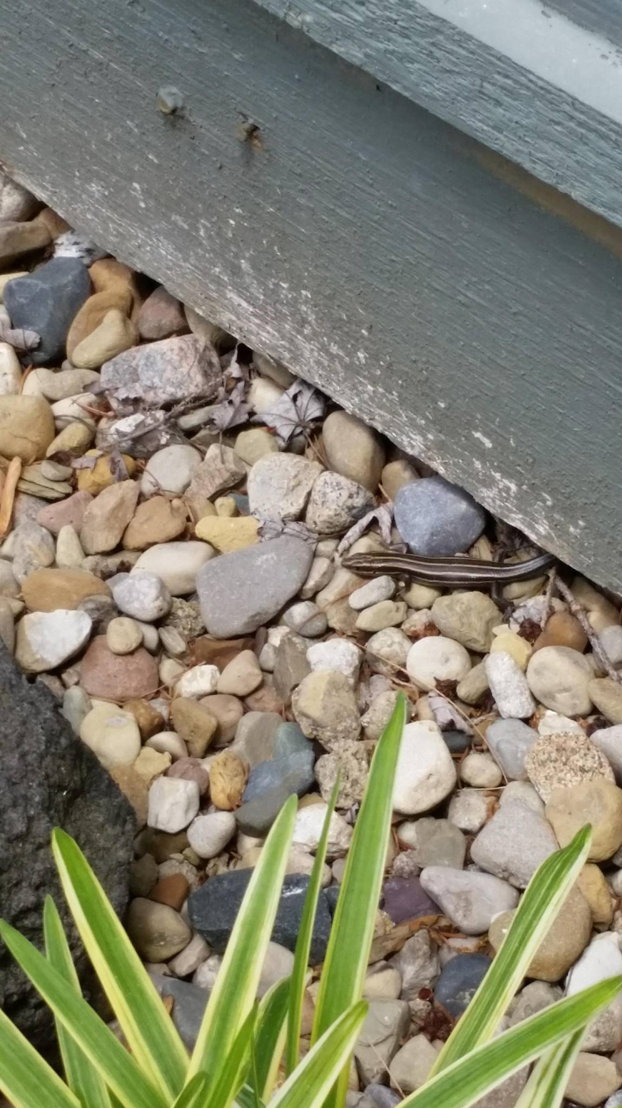
Common Five-lined Skinks are usually 5-7 centimeters in body length(12-21 cm total length) and have smooth overlapping scales. Their heads are distinct from their necks and ear openings are smaller than the eyes. Physical characteristics of Common Five-lined Skinks vary by sex and age. Juveniles have bright blue tails and shiny black bodies marked with five yellow longitudinal stripes. Adult males are uniformly brown and develop wider heads, with red to orange coloration on the snout and jaws. Very faint stripes also might be visible on some adult males. Adult females have brownish bodies marked with five yellowish to cream longitudinal stripes and sometimes have a hint of bluish tail.
Throughout most of Indiana, Common Five-lined Skinks are a common species of open woodlands and edges where stumps, logs, woody debris, and rock piles are present. Porches and rock cover around homes and driveways offer good habitat for these lizards. Areas like these offer hiding places, areas to bask in the sun, and food. Most activity occurs on or near the ground, although they occasionally will climb trees. Their active season extends from April to October. Five-lined Skinks actively pursue a variety of invertebrates including insects, spiders and millipedes.
Resources:
Snakes and Lizards of Indiana, The Education Store, Purdue Extension’s resource center
How can I tell if a snake is venomous, Purdue Extension-Forestry and Natural Resources
Brian MacGowan, Extension Wildlife Specialist
Department of Forestry & Natural Resources, Purdue University
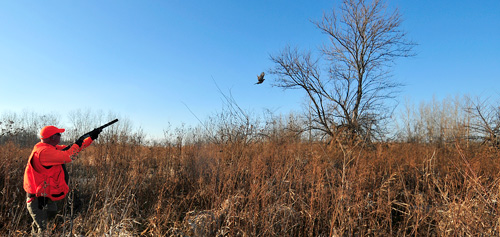
Source: http://www.in.gov/dnr/fishwild/9572.htm
The DNR is seeking private landowners to allow limited public gamebird hunting opportunities on their properties in exchange for financial incentives and technical assistance through a program called APPLE.
APPLE stands for Access Program Providing Land Easements. In its second year, APPLE provides hunters with an opportunity to hunt ring-necked pheasant, bobwhite quail, and American woodcock, while also providing landowners with significant benefits.
With nearly 96 percent of Indiana privately owned, public gamebird hunting opportunities are limited.
Participating landowners are eligible for incentives of up to $25 per acre. Additional financial assistance is also available for creating or improving habitat.
DNR biologists will work closely with each landowner to develop a wildlife habitat management plan. Biologists will also help landowners plan the number and timing of hunts on their land.
The DNR is targeting landowners of 20 acres or more within five focal regions across the state.
Hunters will be selected for the program using Indiana’s online reserved hunt draw system.
Landowners can continue to hunt all other species on their land during the duration of the APPLE hunts, and may hunt gamebirds after the APPLE hunts.
Resources:
Field Season Upon Us! Be Prepared, Got Nature?, Purdue Extension-FNR
Jason Wade, North Region Landscape Biologist
DNR Division of Fish & Wildlife
Erin Basiger, South Landscape Biologist
DNR Division of Fish & Wildlife
As climate change and habitat destruction become more of a public concern, the popularity the Animal Planet channel has grown as it seeks to educate viewers about the importance of wildlife preservation and the role human interaction has in these habitats. The network now shows a variety of programming ranging from survival shows to conservation and management of wildlife.
Wildlife shows such as ‘The Crocodile Hunter’, ‘River Monsters’, and ‘The Zoo’ emphasize the efforts of biologists, wildlife researchers, and zookeepers involved with wildlife to the general public. More recent shows such as ‘Lone Starr Law’, ‘North Wood Law’, and ‘Rugged Justice’ show how Fish and Wildlife Game Wardens enforce laws (Federal and State) that protect aquatic, avian and terrestrial life.
The National Park Service mission, as directed by the Organic Act of 1916 is “to conserve the scenery, natural and historic objects, and the wildlife therein and to provide for the enjoyment of the same in such manner and by such means as will leave them unimpaired for the enjoyment of future generations.” Wildlife biologists/researchers and park managers require extensive information on the species within a habitat to best protect and conserve native wildlife. These data can then be used by managers to devise and implement strategies that will provide future protection of wildlife from invasive species as well as human-induced stresses (air and water pollution, deforestation and habitat encroachment).
Several methods for monitoring wildlife are employed by wildlife researchers in order to track animal movements and determine home range size within a particular habitat. For herding populations such as elk and deer, aircraft are used. For solitary animals such as bears and mountain lions, radio-telemetry can be used. A remote/trail camera (the most non-invasive tool for wildlife research) allows wildlife researchers to observe these animals in their natural habitat without disturbing them (our presence modifies the behavior of many species), answering the question of “What’s present when we are not there?” As an efficient and cost-effective way to supplement or replace human observers, remote wildlife viewing camera systems are used worldwide to document species presence and distribution addressing a variety of research and management objectives.
One of the most promising times to observe trail cameras is during the spring when many species have their young. A popular viewing request is to watch raptors, hummingbirds, and songbirds raise their young. Indiana and other nearby states have erected several high-definition cameras that allow real-time observations of some of these and other native species.
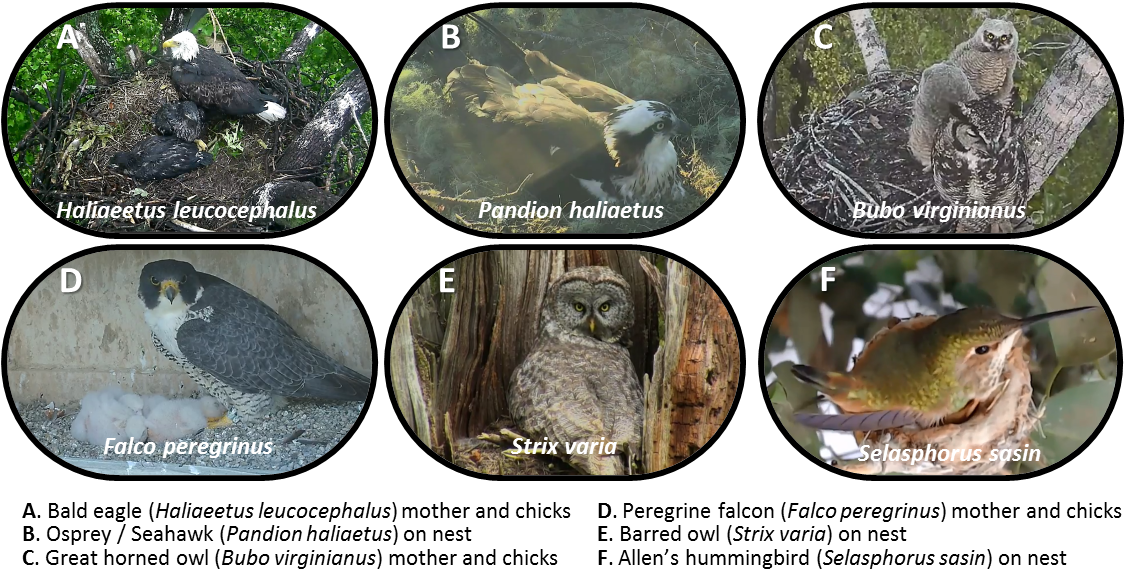
These cameras typically run 24/7 and allow viewers to see eggs hatching and parents feeding their young. There are also cameras within zoos nationwide, along waterways, and in fields to catch glimpses of other animals. If you are unable to venture into the field and want close-up views of some of our majestic wildlife. A host of different online sources are available for you to view animals in their natural habitat or those animals that may be housed in sanctuaries or zoos. Check out the cameras below to start or go to https://explore.org for more great species to watch.
- Indiana Barn Owl cam (https://www.in.gov/dnr/fishwild/8183.htm)
As technology improves and operation costs decrease, use of trail cameras is becoming an increasingly more valuable tool as it gives a more definitive view of the pressures (both natural and human-induced) that wildlife face in their natural habitat. Information collected about wildlife in parks can be as simple as confirmation of the presence of a species or as detailed as the average number of young produced per female per year. If you come across a trail camera in a park or anywhere on public land, recognize the potential for sensitive wildlife habitat in the area and leave them undisturbed.
References:
Wildlife Monitoring and Wildlife Viewing Camera Systems, National Park Service
Resources:
Zoos Work with Purdue University for Hellbender Conservation Efforts, Got Nature?, Purdue FNR-Extension
Shaneka Lawson, USDA Forest Service/HTIRC Research Plant Physiologist/Adjunct Assistant Professor
Purdue University Department of Forestry and Natural Resources
Two important holidays that celebration our connection to nature fall in April. The first, Earth Day, falls on April 21st and marks the 48th anniversary of the day when millions of people initiated a peaceful protest to voice their views of the negative impacts of industrial development. Worldwide air pollution had led to birth defects in children and overuse of pesticides and other pollutants was causing catastrophic declines in biodiversity.
The movement was quickly supported by Congress and President Nixon worked to create the Environmental Protection Agency (EPA), the Clean Water Act (CWA), and the Endangered Species Act (ESA) along with many other environmentally friendly initiatives. Now a global holiday, billions of people across 192 countries take part in Earth Day showing their love of the planet by planting trees and flowers, contacting their congressperson and pledging to uphold more Eco-friendly practices.
On January 4, 1872, J. Sterling Morton, a journalist and later editor of a Nebraska newspaper was a great supporter of the environment with a healthy love of trees in  particular. In a meeting with the state board of Agriculture J. Sterling Morton, proposed a tree-planting holiday to be called “Arbor Day” for April 10, 1872. Estimates state that greater than one million trees were planted in Nebraska on the inaugural date. The success of the effort led the Nebraska governor (Robert W. Furnas) to make an official proclamation of the holiday on March 12, 1874. In 1885, Arbor Day was named a legal holiday and April 22 (J. Sterling Morton’s birthday) was deemed the permanent observance date. The success of the holiday spread nationwide as other states began holding their own Arbor Day celebrations and is now a well-celebrated holiday.
References:
Earth Day, PDF
‘Twas the Day Before Arbor Day, Got Nature?, Purdue FNR-Extension
Tree Planting Part 1: Choosing a Tree, The Education Store, Purdue Extension
Shaneka Lawson, USDA Forest Service/HTIRC Research Plant Physiologist/Adjunct Assistant Professor
Purdue University Department of Forestry and Natural Resources
White-nose syndrome is a fatal disease that has devastated bat populations in parts of the United States and Canada. In a recent study published by the USDA Forest Service Northern Research Station, a surprising result regarding treatment and eradication of Pseudogymnoascus destructans, the psychrophilic fungus that causes white-nose syndrome, was obtained. When exploring the disease using genetic methods, it was noted that exposure to UV-light kills Pseudogymnoascus destructans.

The primary scientists involved in these studies are USDA scientists Jon Palmer (Research Botanist based in Madison, WI) and Daniel Lindner (Research Plant Pathologist based in Madison, WI) and University of New Hampshire scientists Kevin P. Drees and Jeffery T. Foster. These scientists initially noted P. destructans only infected bats during hibernation because the fungus has rigid temperature requirements for growth 39-68 °F. It was later noted that the fungus is unable to repair DNA damage done by UV light. This early study was funded by the US Fish and Wildlife Service and published in Nature Communications. It went on to explain that the fungus likely evolved with bat species in Europe and Asia allowing them to evolve defenses against the fungus while American bats have no defense. However, a moderate dose of UV-C light for a few seconds results in <1% survival of the fungus.
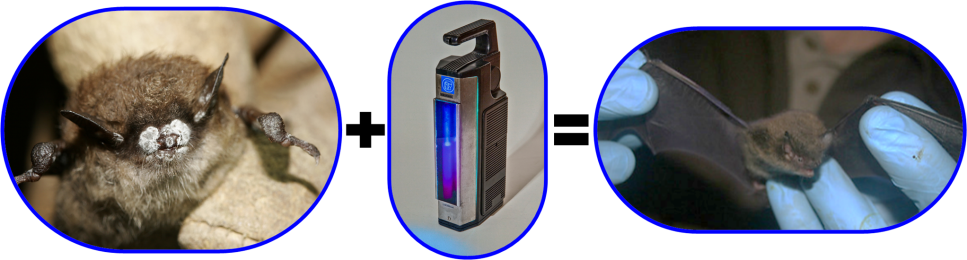
Research on this topic is ongoing, with additional funds provided by Bats for the Future to examine survival of little brown bat colonies exposed to UV-C light during hibernation compared to unexposed colonies. The study will also examine potential non-target effects such as changes in bat skin microbes and bacteria. This breakthrough could lead to the long-term survival of our bat colonies.
References
Online article: https://www.sciencedaily.com/releases/2018/01/180102153209.htm
Publication: Jonathan M. Palmer, Kevin P. Drees, Jeffrey T. Foster, Daniel L. Lindner. Extreme sensitivity to ultraviolet light in the fungal pathogen causing white-nose syndrome of bats. Nature Communications, 2018; 9 (1) DOI: 10.1038/s41467-017-02441-z
Resources:
Night Time is the Right Time to Look for Bats, Research on White Nose Syndrome – Dr. Pat Zollner
Shaneka Lawson, USDA Forest Service/HTIRC Research Plant Physiologist/Adjunct Assistant Professor
Purdue University Department of Forestry and Natural Resources

Recent Posts
- 2026 Winter Bat Survey In Progress, MyDNR
Posted: March 27, 2026 in Wildlife - Fast-Growing Trees for the Landscape, Purdue Landscape Report
Posted: March 26, 2026 in Forestry, Urban Forestry, Woodlands - Urban Tree Spotlight: Planting Deciduous Shade Trees, Purdue Landscape Report
Posted: March 25, 2026 in Forests and Street Trees, Urban Forestry, Woodlands - Beetle that attacks Tree-of-Heaven found in Indiana, Purdue Landscape Report
Posted: March 20, 2026 in Invasive Insects, Wildlife, Woodlands - ID That Tree: Dwarf Chinkapin Oak
Posted: in Forestry, Urban Forestry, Wildlife, Woodlands - IN-PREPared: Essential Resources for Indiana’s Severe Weather Season
Posted: March 11, 2026 in How To, Safety - DNR Hiring for Indiana Conservation Officer Positions, MyDNR
Posted: March 9, 2026 in Urban Forestry, Wildlife, Woodlands - ID That Tree: Shumard Oak
Posted: in Plants, Urban Forestry, Wildlife, Woodlands - A Woodland Management Moment: Windbreak Around Walnut Plantings
Posted: March 3, 2026 in Forestry, Urban Forestry, Woodland Management Moment - Getting Certified as an Indiana Certified Prescribed Burn Manager
Posted: March 2, 2026 in How To, Urban Forestry, Woodlands
Archives
Categories
- Alert
- Aquaculture/Fish
- Aquatic/Aquaculture Resources
- Ask the Expert
- Christmas Trees
- Community Development
- Disease
- Drought
- Forestry
- Forests and Street Trees
- Gardening
- Got Nature for Kids
- Great Lakes
- How To
- Invasive Animal Species
- Invasive Insects
- Invasive Plant Species
- Land Use
- Natural Resource Planning
- Nature of Teaching
- Plants
- Podcasts
- Ponds
- Publication
- Safety
- Spiders
- Timber Marketing
- Uncategorized
- Urban Forestry
- Webinar
- Wildlife
- Wood Products/Manufacturing
- Woodland Management Moment
- Woodlands