 Purdue University - Extension - Forestry and Natural Resources
Got Nature? Blog
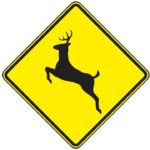 As a child growing up in rural St. Joe County, I can vividly recall the feeling of excitement when the occasional deer visited our backyard. It’s hard to believe now, but we actually placed salt licks out to attract deer for viewing. I still enjoy the sight of a white-tailed deer, but things are a lot different today – the Internet, iPods, and yes, more deer. Estimating the size of wildlife populations is a difficult task in most cases. Currently, experts estimate about 30 million white-tailed deer throughout its range. There are probably more white-tailed deer in North America today than at the time of European settlement. In Indiana, the total deer harvested today exceeds by many times the numbers harvested during my days of youth in the 1970s.
According to the Insurance Institute for Highway Safety, there are approximately one and a half million deer-vehicle collisions in the United States each year, resulting in about 150 deaths and over $1 billion in vehicle damage. The average claim of these deer-collisions is $3,995.
While deer-vehicle collisions can happen any time of year, October to December is the peak. Most collisions occur from dusk to dawn on high speed rural roads. In Indiana, if a deer dies following a collision with a motor vehicle, a conservation officer, DNR property manager or other law enforcement officer may issue a permit to an individual to possess the deer.
Don’t Waste Your Money
Many tactics have been tried over the years to reduce collisions. Most of these have proved ineffective or at least need more investigation. One common approach that does not work is the deer whistle. Deer whistles are attached to vehicles and emit noises at moderate to fast speeds. The noise presumably warns deer of approaching vehicles, thereby reducing collisions. While manufacturers contend that deer can hear the whistles up to a quarter mile away, published studies have not verified their effectiveness or whether or not deer can even hear them. The lack of deer response to deer whistles may be because deer don’t recognize the sounds as threatening or they have too little time to react.
What can I do?
There is no foolproof way to prevent deer-vehicle collisions. Hunting is the most biologically and economically effective method of maintaining Indiana’s deer herd at an optimal level – all else being equal, less deer translates to reduced probability of hitting a deer. Fencing deer from roadways has been proven most effective at reducing accidents at specific locations, but it is very costly to construct and maintain.
So what do you do? There are some common-sense precautions all drivers can take to reduce the risk of deer-vehicle collisions. The Insurance Information Institute recommends the following driving tips.
- Be vigilant in early morning and evening hours, the most active time for deer.
- Use your high-beam headlights.
- Slow down and blow your horn with one long blast to frighten the deer away.
- Brake firmly when you notice a deer in or near your path. Do not swerve. It can confuse the deer as to where to run. It can also cause you to lose control and hit a tree or another car.
- Be alert and drive with caution when you are moving through a deer crossing zone.
- Obey posted speed limits and always wear your seatbelt. Most people injured in car/deer crashes were not wearing their seatbelt.
- Look for other deer after one has crossed the road. Deer seldom run alone.
Got Nature? Blog post was also published in the IndyStar, How to avoid hitting a deer with your car, and what to do when you can’t.
Brian MacGowan, Extension Wildlife Specialist
Department of Forestry and Natural Resources, Purdue University

Photo Credit: Katja Schulz, flickr.com
A lepidopterist from the Florida Museum of Natural History has made a shocking discovery regarding moth behavior. Dr. Andrei Sourakov noted a dozen or so black Idia moths resting inside a hollow tree. This species, and most other moth species is typically solitary as opposed to social species like bees and ants. He went on to discover groups of as many as 400 individuals each oriented facing north (the top of the tree) and tucked away form the light. Both males and females rested quietly, each spaced away form the first reported example of moths gathering in a large group on a daily basis, similar to the roosting observed in bats, a primary predator of moths.

Photo Credit: Katja Schulz, flickr.com

Photo Credit: Collin Gillette, flickr.com
Dr. Sourakov also noted that the moths do not have a preference for tree type as they have been observed in sweetgum (Liquidambar styraciflua) and southern red oak (Quercus falcata) trees in Florida. It is suspected that a single moth finds a hollow tree and releases sex hormones to inform nearby moths where to assemble. As no mating has been observed at the location, these moths respond to the pheromone lure but do not act on a any perceived sexual stimulus.
References:
Andrei Sourakov. Mass aggregations of Idia moths (Lepidoptera: Erebidae) inside hollow trees in Florida. Tropical Lepidoptera Research, 2018 DOI: 10.5281/zenodo.1309644
Online Article: Florida Museum of Natural History. “Hollow trees host massive moth slumber parties.” ScienceDaily. ScienceDaily, 28 July 2018.
Resources:
Hardwood Ecosystem Experiment (HEE) Highlights: Moths, video, Purdue Extension – Forestry & Natural Resources Got Nature? Blog
Gypsy Moth (Spongy Moth) website, Purdue Extension-Entomology
Spongy Moth – Indiana Department of Natural Resources
The Gypsy Moth in Indiana – The Education Store, Purdue Extension resource center
Shaneka Lawson, USDA Forest Service/HTIRC Research Plant Physiologist/Adjunct Assistant Professor
Purdue University Department of Forestry and Natural Resources
Snake fungal disease (SFD), caused by the fungus Ophidiomyces ophiodiicola, is an emerging pathogen of snakes identified in more than 15 genera of captive and free-ranging snakes in 21 states.
SFD is not considered a risk to people.
Some infected snakes show no symptoms. Others develop facial swelling and disfigurement, skin and scale lesions and internal lesions. For some snakes, the disease is fatal.
The fungus can persist in the soil. The route of transmission is unknown, but may occur through contact with soil, other infected snakes, or from mother to offspring.
SFD in Indiana
Researchers from the University of Illinois first identified SFD in Indiana in late 2017 during a surveillance project for the disease.
The researchers swabbed the skin of 53 snakes from 10 Indiana counties. Of those, 13 tested positive for the fungus. Two of those 13 snakes had visible lesions. Species that tested positive included the northern water snake (Nerodia sipedon), racer (Coluber constrictor), milk snake (Lampropeltis triangulum) and queen snake (Regina septemvittata).
The surveillance project was funded by the Indiana Department of Natural Resources State Wildlife Grant T7R22.
Why monitoring SFD is important
Snakes are important predators and play a critical role in maintaining a balanced ecosystem. Having healthy snake populations in Indiana is necessary to keep rodent populations in check.
Documenting the distribution of this disease will help us develop conservation and management plans.
Snake fungal disease may cause high mortality rates in eastern massasauga rattlesnakes (Sistrurus catenatus), a federally threatened and state-endangered species in parts of northern Indiana. The potential long-term effect on populations of massasaugas and other snakes remains uncertain.
Contact an Indiana DNR wildlife biologist if you have any information you would like to share.
For full article view Snake Fungal Disease, Indiana Department of Natural Resources.
Resources:
Snakes and Lizards of Indiana, The Education Store, Purdue Extension’s resource center
Snakes of the Central and Northeastern United States, The Education Store
Indiana Department of Natural Resources (IDNR)
This summer the Nature of Teaching team partnered with the Maine Department of Inland Fisheries and Wildlife (IFW) to host teacher workshops at the Maine IFW headquarters in Gray and the Fields Audubon Center in Holden, ME. The team worked together to organize and facilitate these two two-day workshops to bring Nature of Teaching educational resources to 47 K-12 public and private school educators, administrators, and environmental center staff.
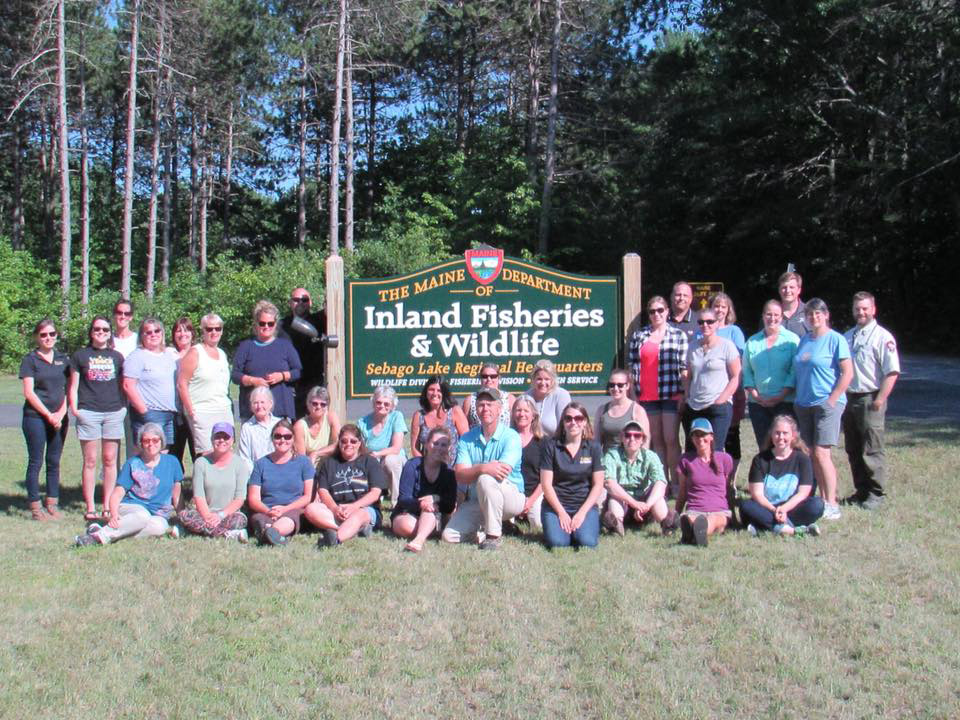
During these workshops, funded by an FNR small grant and an IBAT grant, the Purdue/Maine team, as well as guest speakers from Project Wild, took turns presenting information on wildlife, health and wellness, and food waste. After each presentation, teachers walked through corresponding lesson activities that they could use with their students. Then they were given the opportunity to collaborate with other educators in their grade levels. Workshop participants walked away with a binder of resources and were given the opportunity to pursue stipends by completing a post-workshop survey and submitting student pre/post assessment data.
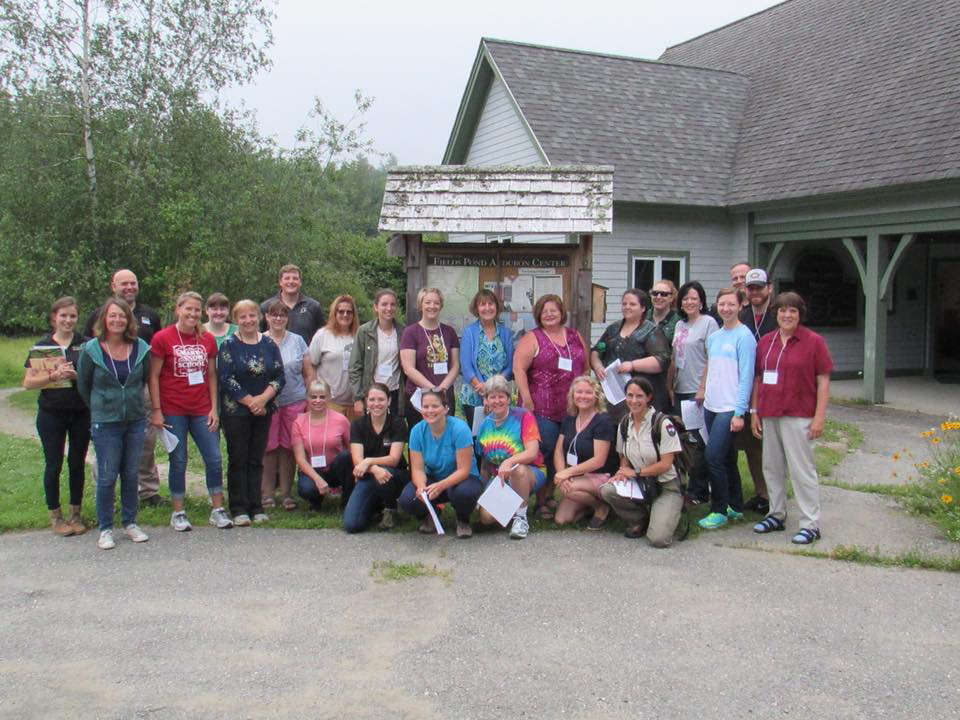
The Purdue/Maine partnership has been beneficial in bringing the Nature of Teaching resources to Maine educators while incorporating local knowledge and expertise and increasing awareness of resources provided by the Maine IFW. The team is currently developing a Mammals of Maine publication to accompany the Mammals of Indiana publication on the Nature of Teaching website, and planning for at least one workshop in Maine next year.
To learn more about the Nature of Teaching, visit our website at www.purdue.edu/nature, connect with us on Facebook at https://www.facebook.com/NatureofTeaching/, or contact Rebecca Busse at busser@purdue.edu.
Resources:
Nature of Teaching Lesson Plan: Conservation Biology, Got Nature? Blog
The Nature of Teaching – Purdue Extension
Rebecca Busse, Nature of Teaching Program Coordinator
Purdue Forestry and Natural Resources
A recent study at the University of British Columbia noted that a single tree along an urban street can help alleviate winds, shade pedestrians, and decrease wind pressure on nearby buildings. For both homes and businesses, the presence of trees can help decrease costs associated with maintaining indoor temperatures.
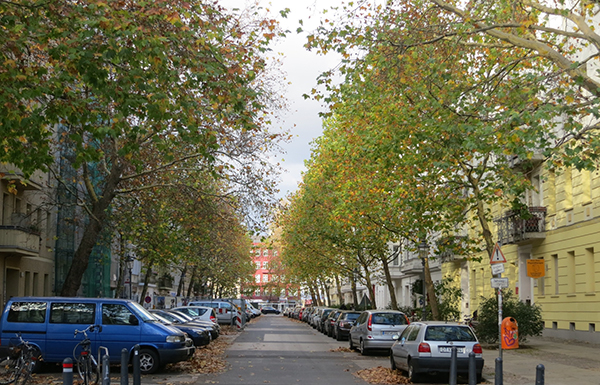
Photo credit: Kris Arnold, flickr.com
Researchers used remote sensing technology to create intricately detailed computer models of a neighborhood that included each tree, garden, and structure. The models were able to elucidate how various scenarios (no trees, bare trees, full-leaf trees) influence airflow, thermal patterns, and overall radiant heating and cooling throughout the streets of the neighborhood. Resultant data indicated trees at various stages can decrease wind speeds by as much as a factor of two. For example, a strong 30km/h wind could be reduced to a comfortable 15km/h breeze. The results also showed trees reduced the strain caused by wind pressure on building spaced closely together and farther apart. Close examination of the data indicated wind pressure causes up to a third of the costs associated with energy consumption and increased costs up to 10% in winter and 15% in summer. Using data gleaned from over a decade of measurements (from a monitored wind tower), they discovered even leafless trees are beneficial in winter months to regulate air flow and wind pressure on buildings.
This modeling effort represents the first of its kind to simulate actual neighborhood conditions using an existing neighborhood recreated in great detail as a model. Further work of this kind can be used to predict storm effects on structures and pedestrian movement. These data can assist engineers and city planners in the creation and layout of buildings, streets, and greenery while limiting energy losses and help evaluate proposed effects of weather forecasts throughout the neighborhood.
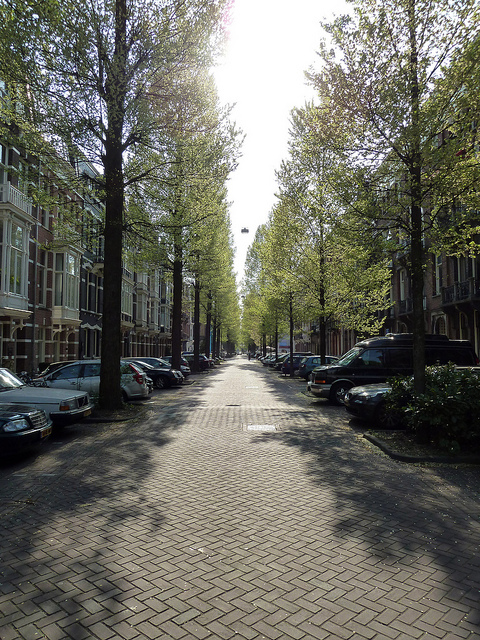
Photo credit: Rob Young, flickr.com.
References:
M.G. Giometto, A. Christen, P.E. Egli, M.F. Schid, R.T. Tooke, N.C. Coops, M.B. Parlage. 2017. Effects of trees on mean wind, turbulence and momentum exchange within and above a real urban environment. Advances in Water Resources, 106: 154 DOI: 10.1016/j.advwatres.2017.06.018
University of British Columbia. Trees can make or break city weather. Science Daily, 26 July 2017.
Resources:
Tree Selection for the “Un-natural” Environment, The Education Store – Purdue Extension’s resource center
Planting Your Tree Part 1: Choosing Your Tree (Youtube video), Purdue Extension-FNR
Tree Installation: Process and Practices , The Education Store
Tree Planting Part 2: Planting a Tree (Youtube video), Purdue Extension-FNR
Top 5 List for Tree Selection and Planting, Got Nature?, Purdue Extension-FNR
Indiana’s Urban Woodlots, The Education Store
Shaneka Lawson, USDA Forest Service/HTIRC Research Plant Physiologist/Adjunct Assistant Professor
Purdue University Department of Forestry and Natural Resources
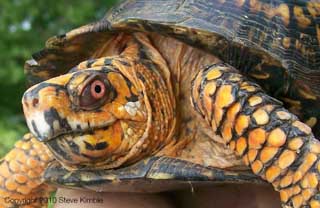
People have been catching wild turtles and selling them as pets, leading to many species becoming endangered. This is very dangerous for the health and survival of the turtle as well as being highly illegal in Indiana. We highly discourage you from taking turtles from their natural habitat and turning them into pets (or any animal for that matter). Here’s a list of reasons why it is not good to make a pet out of a wild turtle and what you can do if you see any turtle miss handling and turtle wrong doing.
Turtles DO NOT make good pets!
Reasons why turtles aren’t good pets:
- Turtles require time and money for proper care, and some species can live up to 50 years.
- Pet turtles do not like to be held and are loners; therefore, they can become boring pets for children.
- Turtles are cold-blooded and need a source of heat. They also require an ultraviolet light for proper growth and health.
- Without this special light, many health issues arise such as metabolic bone disease.
- It is very important to know what kind of species you want and the care it needs before you acquire a pet turtle. Many need special food and tanks.
- Each species has different feeding requirements, with some being strictly carnivores or herbivores. Map turtles, for example, have restricted diets that must include snails, aquatic insects and crayfish. Some species of aquatic turtles, such as the red-eared slider, map turtle and soft-shell, grow up to 12 inches long, requiring a large tank for swimming and basking.
- Land turtles need a large pen, with sufficient substrate, properly sized water bowl, a hide area, as well as heat. Some require more humidity than others.
- If you no longer want your pet turtle, you cannot release into the wild because it is not likely to survive.
- It will have to find its own food, deal with the elements and deal with predators.
- These once-captive turtles are also likely to transmit diseases to wild turtle populations.
- Turtles can carry salmonella bacteria.
- The Centers for Disease Control and Prevention recommend that children, pregnant women, and persons with compromised immune systems avoid contact with reptiles to avoid getting Salmonella.
- The DNR does not encourage the keeping of turtles as pets, but does allow it if the turtle species is obtained legally with a hunting or fishing license.
It is illegal to sell wild turtles
Many native, wild-caught turtles are still sold as pets, even though this practice is illegal in Indiana. The collection of wild turtles has caused many species to become endangered, especially when combined with habitat loss, water pollution and predators. Predators such as raccoons eat a large number of turtle eggs each year, and some species do not even breed until they are several years old, meaning that it can take many years for a population to become established. You can help protect Indiana’s turtles by helping to preserve turtle habitat, especially wetlands, through local conservation organizations or the Indiana Nongame and Endangered Wildlife Program.
Help our endangered turtle species and report any wrong handling, contact DNR Customer Service Center.
For the full article, see Turtles As Pets, Indiana Department of Natural Resources.
Resources:
Turtles of Indiana, The Education Store, Purdue Extension’s resource center
Reptile and Amphibian Regulations, Indiana Department of Natural Resources
Eastern Box Turtle Information, Indiana Department of Natural Resources
Indiana Department of Natural Resources (IDNR)
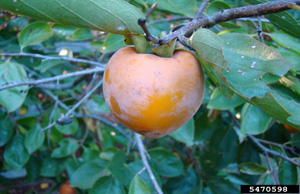
Ripe persimmon. Photo: Rebekah D. Wallace, University of Georgia, Bugwood.org.
The American persimmon tree’s scientific name, Diospyros virginiana, is loosely interpreted “divine fruit” or “fruit of the gods” of Virginia. If you have tasted a ripe persimmon on a crisp fall day, you might agree with that assessment. Several persimmon tree species are found in both the new and old world and have been used for food and wood products for centuries. Our American persimmon is native to the southern half of Indiana but can survive in the northern half of the state as well.
The ripe fruit is famous for the sweet orange pulp used in puddings, cookies and candies. If you are unlucky enough to eat a persimmon that has not yet ripened, your opinion of its eating quality will be quite different. Unripe persimmons have a high tannin content that makes the fruit very astringent – I describe it as feeling like your head is shrinking while simultaneously trying to expel a glue ball from your mouth! Most dedicated persimmon collectors wait for the fruit to become soft and fall from the tree before collecting to avoid this unpleasant experience. Contrary to popular belief, the fruit does not have to experience a frost to ripen. Persimmon fruit normally ripen in September and October, but some trees hold fruit well into winter.
A warning to those tempted to over-indulge in persimmon fruit: the tannin in the unripened fruit can combine with other stomach contents to form what is called a phytobezoar, a sort of gooey food ball that can become quite hard. One patient had eaten over two pounds of persimmons every day for over 40 years. Surgery is often required to remove bezoars, but a recent study indicated Coca-Cola could be used to chemically shrink or eliminate the diospyrobezoar. There is very little risk to those infrequently eating ripe persimmons.
Persimmon is related to ebony and has extremely hard wood once commonly used for golf clubs when “woods” where actually made of wood. The heartwood of persimmon can be black, like ebony, but significant dark heartwood formation may not occur until the tree is quite old. Persimmon is a medium-sized tree here in Indiana but can be over 100 feet tall in the bottomland forests of the Southern U.S. Where I grew up in Southern Indiana, my family ritual in the fall was to go to Brown County State Park and pick up persimmons, separate the tasty pulp from the skin and seeds and freeze the pulp for use in persimmon pudding and candy over the holidays. We might also collect some black walnuts or hickory nuts to include in the candy. We had to be diligent, as the opossums, raccoons and deer liked persimmon as much as we did.

The embryo in persimmon seed – is it a spoon, knife or fork? Photo: Lenny Farlee, Purdue Extension Forester
In addition to use for food, persimmon has some folk tradition related to winter weather forecasting. It was thought the shape of the embryo in the seed could predict the winter weather: a spoon shape indicated deep snow, a knife would indicate icy cutting winds and a fork meant it would be mild with plenty to eat until spring. I collected a few seeds from trees here on the West Lafayette campus and split them open to see what the tree wants to tell me – looks like a spoon to me, but you can make your own predictions.
The Indiana DNR Division of Forestry Nursery sells American persimmon seedlings. You can also find selections for fruit production being sold commercially, along with several Asian persimmon varieties. Male and female flowers are normally formed on separate trees, so plant several to get good pollination.
The following site has a wealth of information on persimmon, including several recipes and locations to buy pulp and seedlings, as well as natural and cultural history including the annual Persimmon Festival in Mitchell, Indiana:
http://www.persimmonpudding.com/.
Resources:
Persimmons, The Education Store, Purdue Extension resource center
Resources and Assistance Available for Planting Hardwood Seedlings, The Education Store
Tree Installation: Process and Practices, The Education Store
Tree Planting Part 1: Choosing a Tree, video, The Education Store
Lenny D Farlee, Sustaining Hardwood Extension Specialist
Purdue University Department of Forestry and Natural Resources

Review trees on a regular basis for health and safety.
Trees provide many benefits for our homes with shade, beauty and improved air quality as just a few, however, if a tree has defects which could lead to a failure, your shade tree could become a liability. It is important to understand that tree owners have a legal duty to inspect and maintain their trees. All property owners should take reasonable steps to protect themselves and others by taking a look at trees around the property on a regular basis. Here are some suggestions to consider in making your trees safer for everyone.
Reduce Tree Liabilities: In general, the law obligates tree owners to periodically inspect their property and take reasonable care to maintain it and this includes trees. Routine inspections also exhibit that the tree owner is actively managing their property and trees and thereby reduces their liability if a failure does occur.
When it comes to trees, it’s best to have a professional conduct risk and tree health assessments if there is any uncertainty. However, Homeowners can look for tree defects, including dead branches, broken limbs, decay pockets or other conditions that reduce a tree’s strength. Review the tree from the top, down. Look at the tree’s crown, main branches, trunk and root area to see if there is anything abnormal. If you find easily recognizable defects like dead and falling branches, cavities, fungal fruiting bodies or newly-formed leans on a tree, consider having the tree examined by a certified arborist. This is especially important after a severe storm. Trees can easily survive normal weather conditions for many years, however, excessive winds can have a real impact. Make certain trees aren’t removed prematurely out of fear without making an informed decision along with the arborist.
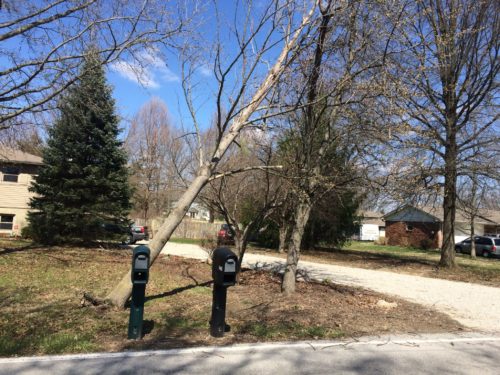
Recent leans developing on trees may be corrected, however, they do pose a risk and should be inspected by an arborist.
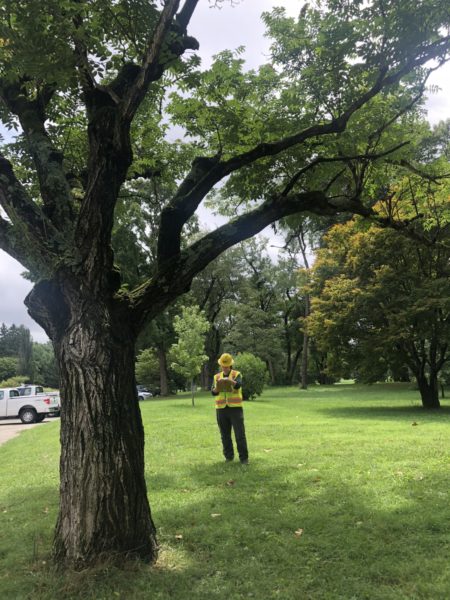
Understanding tree health and risk is challenging for tree owners. It is best to find a ISA Certified Arborist to help with identifying tree issues.
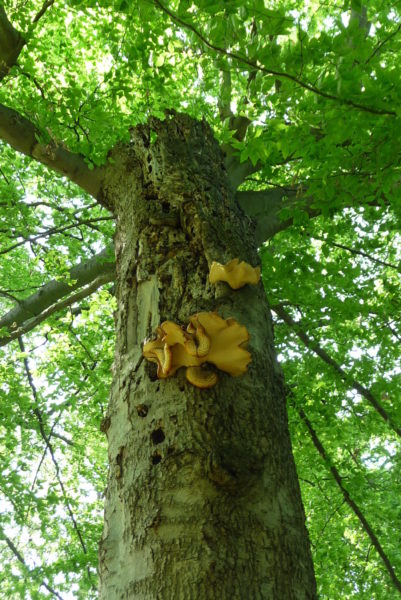
Look for unusual fungal growths on you trees. This indicates decay which can lead to a higher risk of failure.
Schedule Tree Work: If risk or health issues are found during the inspection, schedule the tree work with a qualified arborist. Be sure to find a tree care company in the area that is reputable and can provide references. Also, being fully insured is another important item to be aware when choosing an arborist. To find an arborist in your area, go to the website, www.treesaregood.org.
Inspection on a regular basis: Trees should be inspected regularly. These inspections should occur during the growing season and dormancy. Further inspections should be conducted after major weather occurrences. At a minimum, trees should be inspected every five years by an arborist, especially if there is decline and dieback present in your trees.
Article shared by: The Landscape Report, Why Tree Inspections?.
Resources:
Trees and Storms, The Education Store, Purdue Extension’s resource center
Tree Risk Management, The Education Store
Planting Problems: Trees Planted Too Deep, Video, Purdue Extension – Forestry and Natural Resources YouTube Channel
Planting Your Tree Part 1: Choosing Your Tree, Video, Purdue Extension YouTube Channel
Tree Planting Part 2: Planting a Tree, Video, Purdue Extension YouTube Channel
Tree Appraisal and the Value of Trees, The Educational Store, Purdue Extension resource center
Surface Root Syndrome, The Education Store
Iron Chlorosis of Trees and Shrubs, The Education Store
Tree Pruning Essentials, Publication & Video, The Education Store
Cold Injury to Trees, Got Nature? Post, Purdue FNR Extension
Urban Forestry
Purdue Extension – Forestry and Natural Resources (FNR)
A color-banded loggerhead shrike found south of Goose Pond FWA in July 2017 successfully raised six young in Davies County this summer. Fledging six young is exceptional for shrikes, which on average fledge 2.6 per nesting attempt.

Loggerhead photo from IDNR
This female is even more special because she is the only one of 12 banded shrikes that hatched last year to be sighted back in Indiana this year. This summer she paired with a male shrike that did not nest in 2017, likely because there were no female shrikes left in his area after steep declines in this songbird’s population.
For more information view the Indiana Department of Natural Resources, Fish and Wildlife, Loggerhead Shrike.
Resources:
Birds and Residential Window Strikes: Tips for Prevention, Got Nature? blog post, Purdue Forestry and Natural Resources (FNR)
Learn How Forests are used by Birds, Got Nature? blog post, FNR
Managing Woodlands for Birds, The Education Store, Purdue Extension’s resource center
Breeding Birds and Forest Management: the Hardwood Ecosystem Experiment and the Central Hardwoods Region, The Education Store
Article from MYDNR Email Newsletter, Indiana Department of Natural Resources
 Trail camera surveys are a great tool that provide a wealth of information about white-tailed deer and other wildlife on your property. You can gather information about deer population density, doe-to-buck ratio, and fawn recruitment, which may ultimately help guide management decisions on your property.
Here are a few tips when conducting a trail camera survey for deer.
Survey design
- Place cameras at a density of 1 camera per 100 acres of property
- Run cameras for 10-14 days
- Check cameras every 4-5 days
- Conduct surveys in the late summer before hunting season or late winter after hunting season
Camera set-up & placement
- Set the camera to the correct date and time
- Turn the burst mode to off
- Set camera to a 5-10 minute delay (the delay can be shorter, but it will result in more pictures that will take longer to analyze)
- Place the camera about waist height (2.5 – 3 feet) above the ground
- Place the bait 10-15 feet from the camera
- Face the camera north or south to avoid over-exposure from the sun
- Place a ID tag on a tree in the view of the camera to differentiate camera locations
Analyzing camera data
When analyzing camera data from a survey, based on antler characteristics you can then determine the number of unique bucks captured during the survey. You also need to determine the total number of bucks, does, and fawns in all the photos. This will help you determine density, doe-to-buck ratios, and fawn recruitment (fawn-to-doe ratio). For easy data analysis check out this Trail Camera Data Computation Form from the Quality Deer Management Association.
Trail camera surveys can be a fun activity for you and your family to do prior to or after the hunting season. They can also provide you with information about deer and other wildlife that are using your property.
*Before conducting a baited camera survey be sure to check the wildlife feeding and baiting laws in your state. For the state of Indiana you can find this information in the Indiana Hunting & Trapping Guide.
Resources:
Conducting Camera Surveys to Estimate Population Characteristics of White-tailed Deer, Mississippi State University Extension
Estimating Deer Populations on Your Property: Camera Survey, University of Missouri Extension
How to Run a Trail-Camera Survey – National Deer Association
Handling Harvested Game: Field Dressing, The Education Store, Purdue Extension resource center
Bovine Tuberculosis in Wild White-tailed Deer, The Education Store
Jarred Brooke, Extension Wildlife Specialist
Department of Forestry & Natural Resource, Purdue University

Recent Posts
- Urban Tree Spotlight: Planting Deciduous Shade Trees, Purdue Landscape Report
Posted: March 25, 2026 in Forests and Street Trees, Urban Forestry, Woodlands - Beetle that attacks Tree-of-Heaven found in Indiana, Purdue Landscape Report
Posted: March 20, 2026 in Invasive Insects, Wildlife, Woodlands - ID That Tree: Dwarf Chinkapin Oak
Posted: in Forestry, Urban Forestry, Wildlife, Woodlands - IN-PREPared: Essential Resources for Indiana’s Severe Weather Season
Posted: March 11, 2026 in How To, Safety - DNR Hiring for Indiana Conservation Officer Positions, MyDNR
Posted: March 9, 2026 in Urban Forestry, Wildlife, Woodlands - ID That Tree: Shumard Oak
Posted: in Plants, Urban Forestry, Wildlife, Woodlands - A Woodland Management Moment: Windbreak Around Walnut Plantings
Posted: March 3, 2026 in Forestry, Urban Forestry, Woodland Management Moment - Getting Certified as an Indiana Certified Prescribed Burn Manager
Posted: March 2, 2026 in How To, Urban Forestry, Woodlands - Uniting Indiana Residents Against Invasive Species
Posted: February 27, 2026 in Community Development, Invasive Insects, Wildlife - Have You Seen a Soaring Eagle Lately? Morning Ag Clips
Posted: February 25, 2026 in Urban Forestry, Wildlife
Archives
Categories
- Alert
- Aquaculture/Fish
- Aquatic/Aquaculture Resources
- Ask the Expert
- Christmas Trees
- Community Development
- Disease
- Drought
- Forestry
- Forests and Street Trees
- Gardening
- Got Nature for Kids
- Great Lakes
- How To
- Invasive Animal Species
- Invasive Insects
- Invasive Plant Species
- Land Use
- Natural Resource Planning
- Nature of Teaching
- Plants
- Podcasts
- Ponds
- Publication
- Safety
- Spiders
- Timber Marketing
- Uncategorized
- Urban Forestry
- Webinar
- Wildlife
- Wood Products/Manufacturing
- Woodland Management Moment
- Woodlands