 Purdue University - Extension - Forestry and Natural Resources
Got Nature? Blog
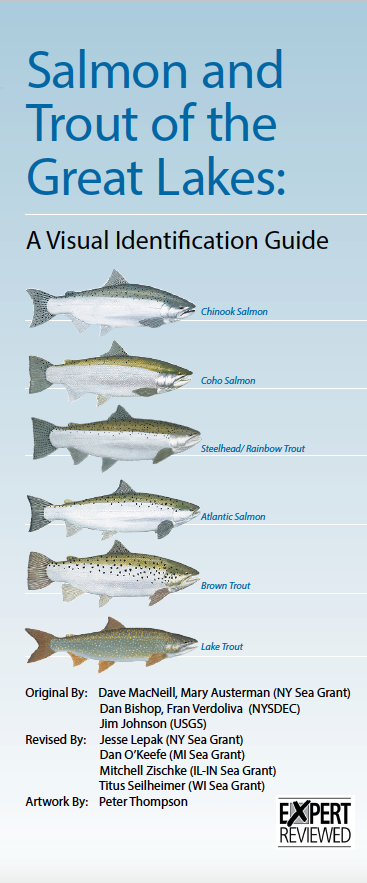 The Illinois-Indiana Sea Grant and Purdue Forestry and Natural Resources Extension have recently released a new publication through The Education Store. This collaborative publication is a visual identification guide on salmon and trout of the Great Lakes.
The Great Lakes are home to eight species of salmon and trout. These species can be difficult to distinguish from each other as they overlap in their distributions and change appearance depending on their habitat and the time of year. This illustrated, peer-reviewed, two-page guide, courtesy of the Great Lakes Sea Grant Network, shows important body features and helpful tips to identify and distinguish between salmon and trout species in the Great Lakes.
View the Salmon and Trout of the Great Lakes: A Visual Identification Guide on The Education Store-Purdue Extension. See below for other related publications and websites.
Resources
A Fish Farmer’s Guide to Understanding Water Quality, National Oceanic and Atmospheric Administration
Pond Management: Stocking Fish in Indiana Ponds, The Education Store
The Nature of Teaching: Adaptations for Aquatic Amphibians, The Education Store
DNR Fish Identification Form, Indiana Department of Natural Resources
Illinois-Indiana Sea Grant, IISG Homepage
Mitchell Zischke, Clinical Assistant Professor
Purdue University Department of Forestry and Natural Resources
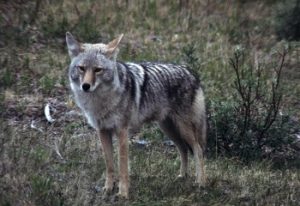
Coyote (Canis latrans) – Photo by Alfred Viola, Northeastern University, Bugwood.org
Question
Can you help me identify the canines that live on my farm? Are they “coyote” or “coywolf”? I have taken photos of the pups and have been confused on trying to identify them from articles I have found online. One article I found suggests a “coywolf” is something unusual; but another article I found suggests every canine we refer to in Indiana as “coyote” is actually a “coywolf” hybrid rather than a “true” coyote. I would like to know. Thank you.
Answer
Thanks for submitting this question. You are correct that many of the online articles we find are confusing and contradicting, and if I might add often just plain wrong. The truth is all coyotes east of the Mississippi River have some level of wolf genes as well as domestic dog genes. What is recent, is that this was discovered regarding wolf genes. Not because of a recent hybridization event, but that new genetic technologies (specifically, next gen sequencing) allowed researchers to detect this. Coyotes we have now are no different than they were 50 years ago. The term coywolf is a poor term at best. It is misleading and its use should be avoided. News outlets use it because it captures viewers attention.
In terms of variation in size and current hybridization, these things can happen but are very rare. The size of coyotes, as with people or any other animal species, can be extreme for a rare individual. However, the vast majority are within a normal range. Published weights of coyotes average 13 to 15 kg. So on average, coyotes in Maine are about 5 lbs heavier than those in Indiana. So, a typical adult coyote is 28 to 33 lbs, you do find one that is 40 lbs or even approaches 50 lbs total. Wolves are capable of breeding with coyotes, but they will most often run them off or kill them as competitors for shared resources. Also, we don’t have any wolves around either.
Stan Gerht is a researcher from Ohio State. His team has studied coyotes in the Chicagoland area for years. They have a lot of good information about them at the Urban Coyote Research website.
Resources
Coyotes, IN DNR
Coyotes (PDF), Wildlife Conflicts, Department of Entomology, Purdue University
Should I Be Worried About Coyotes in My Yard?, Purdue Extension – Forestry & Natural Resources (FNR) Got Nature? Blog
Coexisting With Coyotes, Wild Bulletin, Indiana Department of Natural Resources, Division of Fish and Wildlife
Ask the Expert: Coexisting with Coyotes , Purdue Extension – FNR Got Nature? Blog
Urban Coyotes – Should You Be Concerned?, Purdue Extension – FNR Got Nature? Blog
Pets Disappearing? The Cause May Be Coyotes, Purdue Extension – FNR Got Nature? Blog
Permitted Wildlife Rehabilitators, Indiana Department of Natural Resources
How do you eliminate a nuisance animal on your property?, Indiana Department of Natural Resources (IN DNR)-Fish and Wildlife
Urban Coyote Research Center, Urban Coyote Ecology & Management, Cook County, Illinois
Brian MacGowan, Wildlife Extension Specialist & Extension Coordinator
Purdue University Department of Forestry and Natural Resources Extension
 Fish stocking in a pond is like a retirement plan—you need to have a vision of your ultimate goal. You want to start off in the right direction or your long-term investment may not pay the dividends you had hoped for. Pond Management: Stocking Fish in Indiana Ponds is an 8-page publication written by our experts partnering together from Purdue’s Pesticide Programs, Forestry and Natural Resources and Purdue Weed Science. They share recommendations regarding fish types, numbers, and predator/prey relationships for new and renovated ponds.
Main topics include:
- Stocking new or renovated ponds with no fish present
- Assessment of ponds with existing fish populations
- Northern strain largemouth bass
- Stocking fathead minnows
- Stocking fish to control vegetation
- Dissolved oxygen – fish need it to live
- Fish health
Properly stocking your pond with the correct number of the recommended species at the right size are all important steps in creating a healthy and well-balanced pond that will provide good fishing into the future. For more information on pond management go to extension.purdue.edu/pondwildlife or contact Jarred Brooke at jmbrooke@purdue.edu.
Other resources:
Indiana Pond Fish, Species Identification Card Set, The Education Store, Purdue Extension Resource Center
Forestry and Water Quality: Pollution Control Practices, The Education Store
Marine Shrimp Biofloc Systems: Management Practices, The Education Store
The Nature of Teaching: Healthy Water, Happy Home – Lesson Plan, The Education Store
Aquaculture & Aquatics, Purdue Extension-Forestry & Natural Resources
Jarred Brooke, Wildlife Extension Specialist
Purdue University, Department of Forestry and Natural Resources
Proper disposal of medicine and personal care products is important not only  for you and your loved ones, but for the safety of the community around you. This article will walk you through methods of proper disposal for your area.
“Illinois-Indiana Sea Grant’s (IISG) Pollution Prevention Team is continually working with individuals, communities, and local governments to make the disposal of your unused, expired, or unwanted medicines convenient and safe. Since 2007, IISG has helped set up more than 70 new take-back programs, including more than 40 permanent take-back sites, collecting over 55 tons of unwanted medicines at collection events/locations in Illinois, Indiana, Michigan, and Wisconsin.” Read more and find out “Where to Dispose”. . .
Unwanted Medicine, Indiana Department of Environmental Management
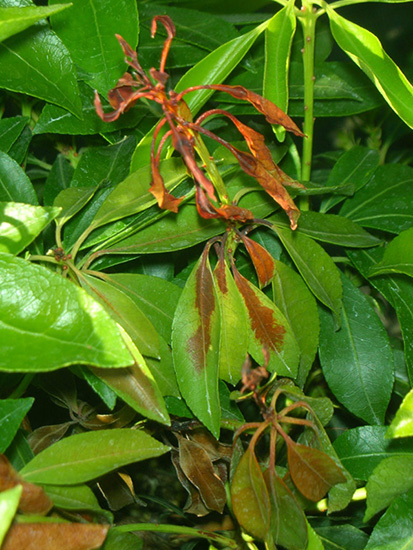 Sudden oak death, as the name suggests, is a disease that is capable of rapidly killing certain species of oaks. It was first identified in California, in 1995. Two years earlier it was identified in Germany and the Netherlands, killing rhododendron. Because the pathogen originally infected and killed tanoaks, an undesirable, understory scrub tree, it generated little interest until other, more desirable oaks species began dying. However, by this point, the disease was well established and eradication no longer an option, with millions of oak trees killed by the disease. Currently, over 120 hosts in addition to oaks have been identified, and more continue to be added to this list. What is most unusual about sudden oak death is the severity of disease symptoms coupled with the broad host range of the pathogen. This leads to difficulty in diagnosing and managing this disease.
What causes this disease?
The pathogen that causes SOD is Phytophthora ramorum (pronounced Fī-toff-thor-ă ră-mor-ǔm). This pathogen belongs to a group of organisms in the Kingdom Chromista, and has characteristics similar to fungi, plants and animals. It spreads throughout the plant by hyphal threads (like fungi), produces spores (like fungi) that have flagella and swim through water (like animals), but its cell wall is made up of cellulose (like plants). When conditions dry up, Phytophthora can produce thick walled sexual spores called oospores, or asexual chlamydospores. Because P. ramorum is not a ‘true’ fungus, many fungicides labeled for control of other fungal diseases are not effective against it.
With such a broad range of plant hosts, it is important to stress that P. ramorum affects different species in different ways. Identification must be confirmed in the laboratory and cannot be identified on field symptoms alone. Many common landscape shrubs are also infected by other endemic Phytophthora species, and symptoms look similar. Boring insects and other root rots may be mistaken for this disease. For this reason, all Phytophthora infections should be screened by the Purdue Plant and Pest Diagnostic Laboratory.
What are the symptoms of SOD?
To understand this disease, it is important to recognize that there are two categories of hosts: bark canker hosts and foliar hosts. Further complicating this is the fact that oaks are divided into three subgroups, and only the red oak group are susceptible to this pathogen. Of our 17 oak species in Indiana, half are potentially, or known to be susceptible, and include black, blackjack, cherrybark, Northern pin, pin, red, scarlet, and Shumard oaks. Diagnostic symptoms of infected red oaks include oozing sap and red-brown cankers that often leading to death.
Our concern right now is on ‘the other’ hosts. Despite its name, sudden oak death primarily spreads through foliar hosts that are sold throughout the United States. Foliar hosts include rhododendrons, azalea, viburnum, lilac, and periwinkle (Vinca minor).
These hosts (and many others) are infected via the leaves and small branches. These infections rarely cause death, and can be mistaken for sunscald, twig canker, and dieback caused by other pathogens, including native Phytophthora species. Although symptoms from these infections are not severe, and are rarely fatal, the infections produce enormous numbers of spores that can infect neighboring, susceptible oaks—and other plant species. For this reason, we are asking people to examine any rhododendrons (or other co-mingled hosts like azalea, viburnum and lilac) purchased this spring from Walmart and Rural King, while the disease may still be controlled and the pathogen contained. Although this disease doesn’t look like much on rhododendron or lilac, its ability to spread to oaks and kill them is what makes it so devastating. These shrubs play a key role in the spread of P. ramorum, acting as a breeding ground for spores (inoculum) that can spread through water, wind-driven rain, plant material, or human activity. Oaks are considered terminal hosts, since the pathogen does not readily spread from intact bark cankers; they become infected only when exposed to spores produced on the leaves and twigs of neighboring plants.
For full article and photos view: Purdue Landscape Report
Other resources:
Sudden Oak Death, California Oak Mortality Task Force
Sudden Oak Death, Indiana Department of Natural Resources
White Oak, The Education Store, Purdue Extension resource center
Planting Forest Trees and Shrubs in Indiana, The Education Store
Successful Oak and Hickory Regeneration, The Hardwood Ecosystem Experiment: 2006-2016, The Education Store
Find a Certified Arborist, International Society of Arboriculture
Janna Beckerman, Professor
Purdue Botany and Plant Pathology
Question: I have noticed that a lot of very mature (> 80 ft) sycamore trees look ill. They don’t seem to have as many 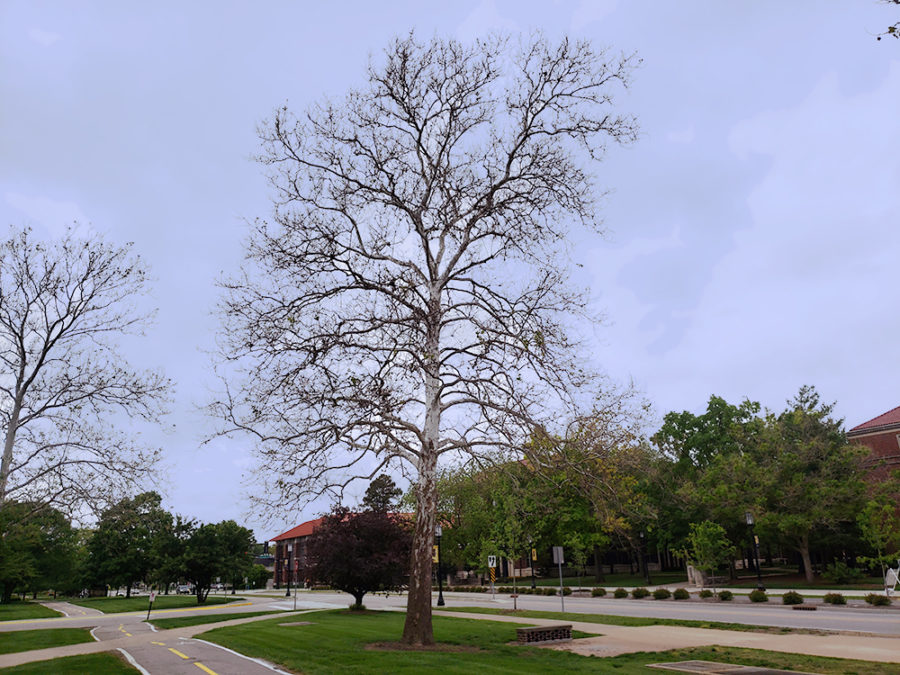 leaves, or as large as they usually get and some have already turned brown and died. There are at least 2 in my 5 acres of woods and have noticed the same with other sycamores while driving from Mooresville to Indianapolis. Is there a certain blight/canker/pest that is damaging sycamores this year?
Answer: I have also noticed that many sycamores appear relatively bare and may have brown or wilted leaves on the stems and littering the ground around the trees. The culprit is sycamore anthracnose, a fungal disease that causes damage and death of leaves as well as stem cankers. Sycamore anthracnose symptoms can be severe when we have cool, moist spring weather at the time of bud-break and leaf emergence , but healthy trees generally recover and put on new leaf area once the environmental conditions that favor the disease change to the warmer, drier conditions of late spring and summer.
Normally, the best management practices for sycamore anthracnose are patience and maintaining good tree health. The disease cycle is dependent on cool, moist spring weather, so it will run its course by late spring or summer when the average temperatures rise. Trees that are repeatedly defoliated could be reduced in vigor and be more susceptible to other problems, so steps to promote good tree health can be used as a preventative measure.
Resources:
Fertilizing Woody Plants – The Education Store, Purdue Extension Resource Center
Diseases of Landscape Plants (leaf diseases) – The Education Store
Sycamore – The Education Store
Hardwood Lumber and Veneer Series – The Education Store
Anthracnose of Shade Trees – Purdue Plant and Pest Diagnostic Laboratory
Purdue Plant Doctor App- Purdue Extension
Lenny Farlee, Sustaining Hardwood Extension Specialist
Purdue University Department of Forestry and Natural Resources
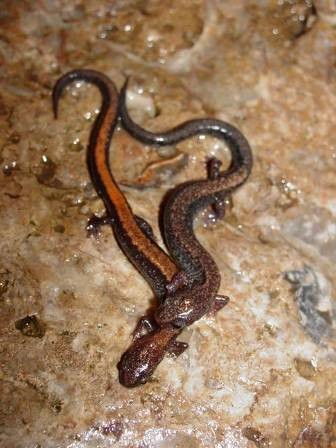 The Purdue Extension-Nature of Teaching has recently released a new publication through The Education Store. The Nature of Teaching provides free Indiana Academic Standard-based lesson plans for students in grades second through sixth to guide them on how to help maintain a healthy environment.
Understanding adaptations for aquatic amphibians can help humans learn more about healthy ecosystems. Through this educational unit, students will be able to explain how amphibian adaptations benefit survival, describe the importance of Eastern Hellbender adaptations, and identify impacts that humans have on aquatic amphibians.
These packed lesson plans are great resources for school teachers, parents, 4-H leaders and other natural resource educators. View the Adaptations for Aquatic Amphibians for the latest installment in the Nature of Teaching resources. See below for other related publications, lesson plans and games.
Resources
Frogs and Toads of Indiana, The Education Store, Purdue Extension
Salamanders of Indiana, The Education Store
Snakes and Lizards of Indiana, The Education Store
Turtles of Indiana, The Education Store
Help the Hellbender, Purdue Extension
Hellbender Decline, Purdue Extension-FNR Youtube
The Nature of Teaching, Lesson Plans K-12, Purdue Extension
Nick Burgmeier, Extension Wildlife Specialist & Research Biologist
Purdue University Department of Forestry and Natural Resources
The Invasive Terrestrial Plant Rule was signed by Governor Holcomb and published on March 18, 2019. the rule goes into effect 30 days after publishing, so it will be effective in April.
The Rule States that a person must not: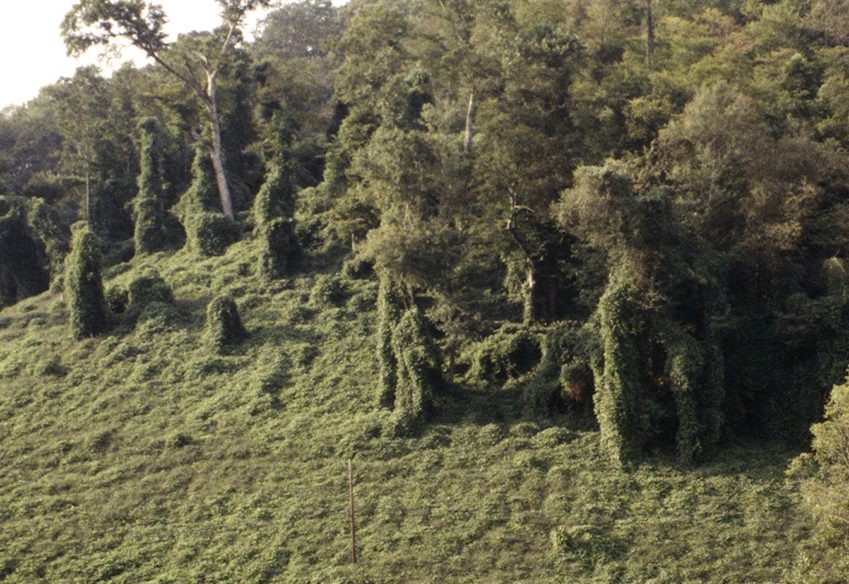
- sell, offer or grow for sale, gift, barter, exchange, or distribute a species;
- transport or transfer a species;
- introduce a species
with respect to the 44 invasive plant species (see full list in the Landscape Report).
Note: Selling, offering, distributing and transporting doesn’t go into effect until April of 2020, so nurseries will have some time to sell down their stock. This is an important component of the rule to minimize economic loss to nurseries that grow and/or sell the few commercially available species that are on the list. Currently there is no mandate to eradicate existing plantings in nurseries, landscapes, or forested areas
To learn more about what an invasive species is, what damage they do, what Indiana is doing, and more please read the Landscape Report, Terrestrial Invasive Species Rule Signed by Indiana Governor.
Resources
Mile-a-Minute Invasive Vine Found Indiana, Got Nature? Blog
Invasive plants: impact on environment and people, Purdue Extension The Education Store
Invasive Plant Species in Hardwood Tree Plantations, The Education Store
Invasive Plant Species: Callery Pear, Purdue Extension The Education Store
Invasive Plant Species: Wintercreeper, Purdue Extension The Education Store
Invasive Plant Species Oriental Bittersweet, Purdue Extension The Education Store
Report Invasive Species, Purdue Invasive Species
The GLEDN Phone App – Great Lakes Early Detection Network
EDDMaps – Early Detection and Distribution Mapping System (Report Invasives)
Cooperative Invasive Species Management Area (CISMA)
Indiana Department of Natural Resources: Invasive Species
Indiana Invasive Species Council
Indiana Department of Natural Resources (IDNR)
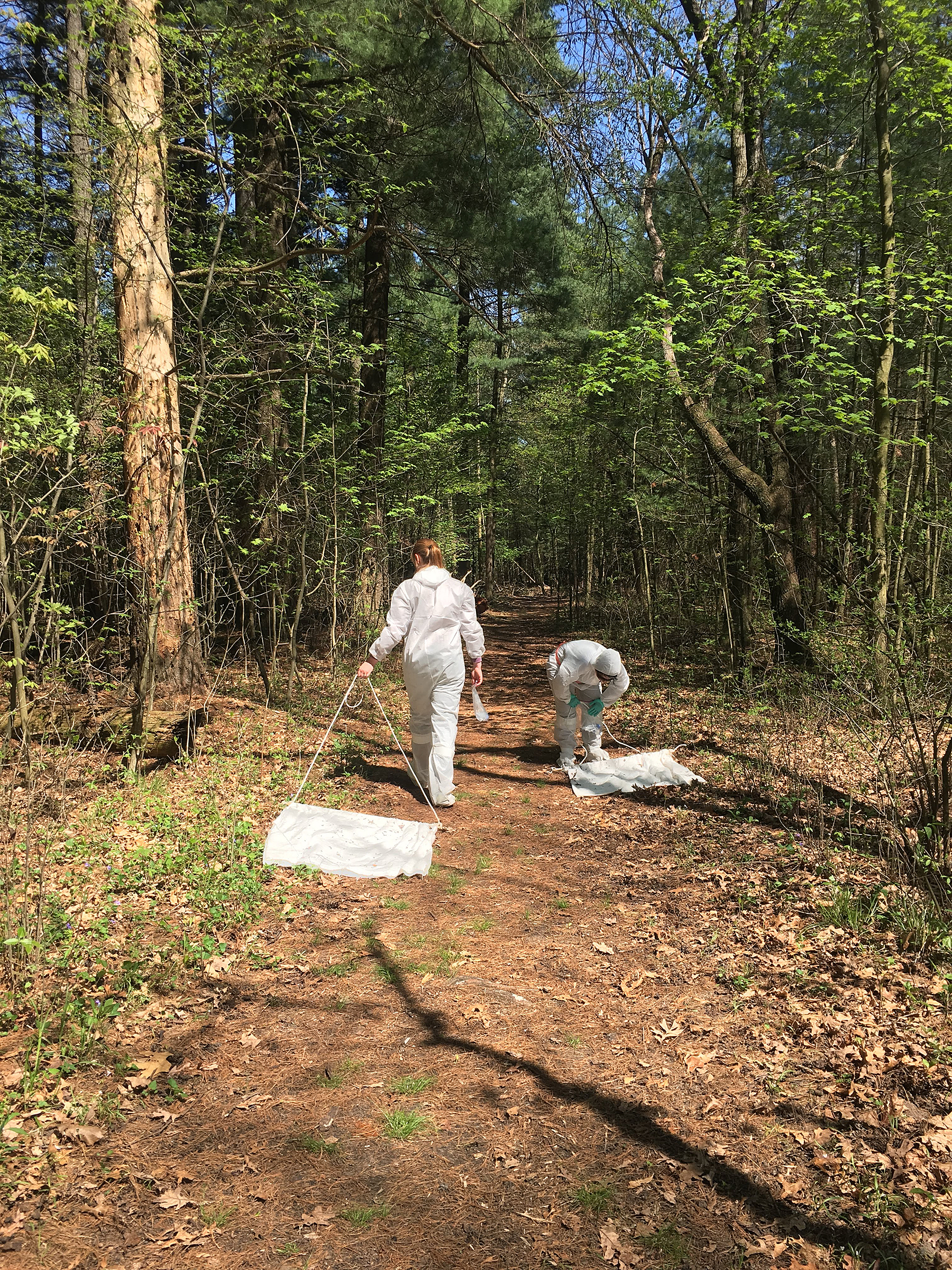
Scientists from Purdue’s Tick INsiders program, Lauren Hagen (left) and Maria Muriga (right), drag and check tick cloths at Tippecanoe River State Park in 2018. The program is looking for high school students and citizen scientists interested in helping with tick collections this year. (Tick INsiders photo)
Purdue University’s Tick INsiders program is looking for Indiana high school students and other Indiana residents willing to roll down their sleeves to get involved in a citizen science project.
Cate Hill, a Purdue professor of entomology, leads this effort to analyze the bacteria and viruses in Indiana’s ticks to build an understanding of what they are carrying and how that might impact human health. To do that, she needs volunteers to collect ticks from all over the state.
This year the Tick INsiders program will provide training for up to 50 students. Citizen scientists are also now welcome to collect and send ticks to Hill’s lab.
“It’s really important work. The Centers for Disease Control and Prevention reports that human cases of tick-borne diseases doubled from 2004 to 2016. If we’re going to get a handle on that and develop strategies for reducing tick bites and treating patients, we need to know where our ticks are and what our ticks are carrying around inside them,” Hill said. “That means we need a lot of ticks, and we need help collecting them.”
Three species of ticks – the blacklegged or deer tick, the lone star tick and the American dog tick – are found in Indiana. These ticks can transmit multiple pathogens, nine of which are known to cause human illnesses, though not all have been identified in Indiana. The Indiana State Department of Health reports more than 100 cases of Lyme disease each year and dozens of cases of Ehrlichiosis, anaplasmosis and Rocky Mountain spotted fever.
Research suggests that ticks can carry a cocktail of microbes – bacteria and viruses – that can sicken bite victims and may work in concert to affect the severity of an illness and human immune response.
“Not all tick bites are the same. We don’t know what is passed from a tick to a human each time someone is bitten, which means that health care professionals may need to consider multiple tick-borne pathogens in a person who has been bitten by a tick,” Hill said. “This program improves our knowledge so that we can improve our outcomes.”
Indiana residents interested in participating can collect ticks and send them to Hill’s lab for analysis. Videos on safe and proper collection techniques, as well as how to send ticks will be at Tick INsiders.
For full article, see Purdue Agriculture News.
Resources
Ticks 101: A Quick Start Guide to Indiana Tick Vectors, The Education Store – Extension Resource
The Biology and Medical Importance of Ticks in Indiana, The Education Store
Mosquitoes, Purdue Extension Entomology
One Small Bite: One Large Problem, Got Nature?, Purdue Extension-Forestry and Natural Resources
Mosquitoes and ticks – little pests carry big risks, Got Nature?
Catherine A Hill, Professor of Entomology/Vector Biology
Purdue University Department of Entomology

Empty cage trap with door open. Image taken by Doug Beckers and courtesy of flickr.com.
Having raccoon, groundhog, or other bothersome wildlife problems? Thinking about setting traps to catch these animals? There is much to consider when using traps. Take a look at the latest publication for best results.
Wildlife specialists Brian MacGowan and Rick Shadel have collaborated to bring you this new publication: Considerations for Trapping Nuisance Wildlife with Box Traps.
Homeowners commonly set traps to capture and remove wildlife from their home or yard. Setting a box trap improperly can decrease their effectiveness and even lead to safety risks to both people and wildlife. The purpose of this publication is to 1) outline the legal and ethical factors homeowners should consider before setting a trap, 2) review the basic procedure for effectively trapping wildlife, and 3) help you to determine the fate of the captured animal.
If you have a serious, dangerous, or a nuisance wildlife issue, you may want to consider hiring a professional. Consider reading this publication before deciding whether or not you need to hire a professional: Selecting a Nuisance Wildlife Control Professional.
Resources
Preventing Wildlife Damage – Do You Need a Permit? – The Education Store, Purdue Extension resource center
Selecting a Nuisance Wildlife Control Professional, The Education Store
How to Construct a Scent Station, The Education Store
Question: How do I properly relocate raccoons from my attic?, Got Nature? Blog, Purdue Extension FNR
Nuisance Wildlife – Indiana Department of Natural Resources
Brian MacGowan, Wildlife Extensions Specialist
Purdue Forestry and Natural Resources

Recent Posts
- Urban Tree Spotlight: Planting Deciduous Shade Trees, Purdue Landscape Report
Posted: March 25, 2026 in Forests and Street Trees, Urban Forestry, Woodlands - Beetle that attacks Tree-of-Heaven found in Indiana, Purdue Landscape Report
Posted: March 20, 2026 in Invasive Insects, Wildlife, Woodlands - ID That Tree: Dwarf Chinkapin Oak
Posted: in Forestry, Urban Forestry, Wildlife, Woodlands - IN-PREPared: Essential Resources for Indiana’s Severe Weather Season
Posted: March 11, 2026 in How To, Safety - DNR Hiring for Indiana Conservation Officer Positions, MyDNR
Posted: March 9, 2026 in Urban Forestry, Wildlife, Woodlands - ID That Tree: Shumard Oak
Posted: in Plants, Urban Forestry, Wildlife, Woodlands - A Woodland Management Moment: Windbreak Around Walnut Plantings
Posted: March 3, 2026 in Forestry, Urban Forestry, Woodland Management Moment - Getting Certified as an Indiana Certified Prescribed Burn Manager
Posted: March 2, 2026 in How To, Urban Forestry, Woodlands - Uniting Indiana Residents Against Invasive Species
Posted: February 27, 2026 in Community Development, Invasive Insects, Wildlife - Have You Seen a Soaring Eagle Lately? Morning Ag Clips
Posted: February 25, 2026 in Urban Forestry, Wildlife
Archives
Categories
- Alert
- Aquaculture/Fish
- Aquatic/Aquaculture Resources
- Ask the Expert
- Christmas Trees
- Community Development
- Disease
- Drought
- Forestry
- Forests and Street Trees
- Gardening
- Got Nature for Kids
- Great Lakes
- How To
- Invasive Animal Species
- Invasive Insects
- Invasive Plant Species
- Land Use
- Natural Resource Planning
- Nature of Teaching
- Plants
- Podcasts
- Ponds
- Publication
- Safety
- Spiders
- Timber Marketing
- Uncategorized
- Urban Forestry
- Webinar
- Wildlife
- Wood Products/Manufacturing
- Woodland Management Moment
- Woodlands