 Purdue University - Extension - Forestry and Natural Resources
Got Nature? Blog
MyDNR, Indiana’s Outdoor Newsletter: The Indiana Natural Resources Foundation, in partnership with the Division of Forestry, is planning another busy year for the Indiana Tree Project. In 2022, more than 11,000 trees were added to Indiana’s public lands through Indiana Tree Project plantings, and this year is expected to be another successful year.
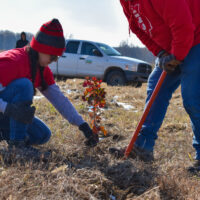
Through a partnership with the Division of Forestry, we are helping Indiana’s forests grow, one tree at a time, with the Indiana Tree Project. Healthy forests in Indiana promote wildlife habitats, clean air and an abundance of outdoor recreation opportunities. It is estimated that 85 percent of Indiana was once forested. Today, only 19 percent of the state is forested. The Indiana Tree Project is much more than just planting trees. Through this project we are adding new acreage to Indiana’s State Forests and we’re trying to add 1,000 acres of new forested land.
When you support the Indiana Tree Project, we provide you with an official tree certificate to demonstrate your support for the smart management of Hoosier forests. It includes the coordinates for the acre on which your tree is, or will be, planted.
Newsletter can be found online: MyDNR Email Newsletter
For more information please visit Help Grow Indiana’s Forests – MyDNR
Resources:
Forest Improvement Handbook, The Education Store, Purdue Extension’s resource center
Harvesting our forests, the wildlife debate, Purdue Extension – Forestry and Natural Resources (FNR) Got Nature? Blog
Wildlife Responses to Timber Harvesting, The Education Store
Breeding Birds and Forest Management: the Hardwood Ecosystem Experiment and the Central Hardwoods Region, The Education Store
Forest Management for Reptiles and Amphibians: A Technical Guide for the Midwest, The Education Store
Hardwood Ecosystem Experiment – Forest Birds , Purdue Extension – FNR YouTube Channel
Managing Woodlands for Birds , Purdue Extension – FNR YouTube Channel
Sustaining Our Oak-Hickory Forests , Purdue Extension – FNR YouTube Channel
Ask the Expert: Hardwood Ecosystem Experiment – Birds and Salamander Research, Purdue Extension – FNR
Subscribe to Purdue Extension-FNR YouTube Channel
Indiana Department of Natural Resources, Department of Fish & Wildlife
MyDNR, Indiana’s Outdoor Newsletter: During the spring and summer please let us know if you think you may have seen spotted lanternfly by contacting us at 866-NO-EXOTIC (866-663-9684), or by email at DEPP@dnr.IN.gov. Please be sure to provide your contact information and detailed information about the location. Early detection is crucial to successful spotted lanternfly management efforts.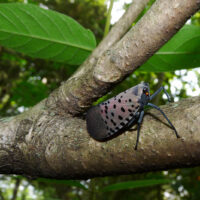
Spotted lanternfly is a major pest of concern across most of the United States. This insect is native to China and parts of India, Vietnam, Japan, and Taiwan. It was first identified as an invasive species in 2004 in South Korea and is now a major pest there. Spotted lanternfly was first detected in the United States in Pennsylvania in 2014.
In July 2021, a population of spotted lanternfly (Lycorma delicatula) was identified in Indiana in Switzerland County, near the Ohio River. A second population was found in Huntington, Indiana in July 2022. DEPP and USDA continue to conduct surveys to ascertain the extent and source of these infestations as well as determine what management strategies will be implemented.
Newsletter can be found online: MyDNR Email Newsletter
For more information please visit Spotted Lanternfly – MyDNR
Resources:
Spotted Lanternfly, Indiana Department of Natural Resources Entomology
Spotted Lanternfly Found in Indiana, Purdue Landscape Report
Invasive plants: impact on environment and people, The Education Store, Purdue Extension’s resource center
Woodland Management Moment: Invasive Species Control Process, Video, Purdue Extension – Forestry and Natural Resources (FNR) YouTube Channel
Invasive Species, Playlist, Purdue Extension – FNR YouTube Channel
What are invasive species and why should I care?, Got Nature? Blog, Purdue Extension – FNR
Report Invasive, Purdue College of Agriculture – Entomology
Indiana Department of Natural Resources, Department of Fish & Wildlife
In this episode of ID That Tree, Recep Yildiz a FNR graduate student shares his expertise on how to ID black alder. Black alder, which is also known as common alder or European alder, is found in most of Europe and extends into North Africa and Asia. It is easily identified by its gummy twigs and leaves. Learn more about the black alder tree and how it was introduced to Indiana with now current warning signs of being an invasive species.
If you have any questions regarding wildlife, trees, forest management, wood products, natural resource planning or other natural resource topics, feel free to contact us by using our Ask an Expert web page.
Resources:
ID That Tree, Playlist, Purdue Extension – Forestry and Natural Resources YouTube Channel (Invasive White Mulberry, Siberian Elm, Tree of Heaven)
Invasive Species Playlist, Playlist, Purdue Extension – FNR YouTube Channel (Asian Bush Honeysuckle, Burning Bush, Callery Pear, Multiflora rose)
A Woodland Management Moment, Playlist, Purdue Extension – FNR YouTube Channel (Against Invasives, Garlic Mustard, Autumn Olive)
Woodland Stewardship for Landowners, Playlist, Purdue Extension – FNR YouTube Channel (Common Buckthorn, Japanese Barberry)
Report Invasive Species, Purdue Invasive Species
The GLEDN Phone App – Great Lakes Early Detection Network
EDDMaps – Early Detection and Distribution Mapping System
How long do seeds of the invasive tree, Ailanthus altissima remain viable? (Invasive Tree of Heaven), USDA Forest Service
Indiana Department of Natural Resources: Invasive Species
Indiana Invasive Species Council
Cooperative Invasive Species Management Area (CISMA)
Aquatic Invasive Species, Illinois-Indiana Sea Grant (IISG)
Episode 11 – Exploring the challenges of Invasive Species, Habitat University-Natural Resource University
What are invasive species and why should I care?, Got Nature? Blog, Purdue Extension – FNR
Spotted Lanternfly Feeds on Over 70 Plus Plant Species, Got Nature? Blog, Purdue Extension – FNR
Shrubs and Woody Vines of Indiana and the Midwest, The Education Store, Purdue Extension Resource Center
Native Trees of the Midwest, The Education Store
Investing in Indiana Woodlands, The Education Store
Forest Improvement Handbook, The Education Store
Recep Yildiz, FNR graduate student
Purdue Department of Forestry & Natural Resources
 MyDNR, Indiana’s Outdoor Newsletter: Become a Paddlecraft Wildlife Index volunteer and help DNR by documenting the wildlife you observe while on the water from June 1 to July 31. After signing up online, you will be mailed a packet with details on how to participate.
Paddling is a great way to enjoy Indiana’s natural beauty, observe wildlife, and connect with nature. Indiana paddlers have a unique opportunity to observe wildlife while enjoying Indiana’s countless water resources. Indiana DNR would like more information about the wildlife that spend time around Indiana’s waterways. The Indiana Paddlecraft Wildlife Index compiles wildlife observations from people who use canoes, kayaks, or other non-motorized paddlecraft on Indiana’s waterways. Volunteer paddlers can help by completing a paddling trip postcard documenting the wildlife they observed while floating from June 1 to July 31.
Newsletter can be found online May: DNR: Communications: MyDNR Email Newsletter (in.gov)
For more information please visit Paddlecraft Wildlife Index – MyDNR.
Resources:
Yellow Perch Farmed Fish Fact Sheet, The Education Store, Purdue Extension’s resource center
Rainbow Trout Farmed Fish Fact Sheet, The Education Store
American Paddlefish, The Education Store
Aquaculture Family Coloring Book Development, The Education Store
Eat Midwest Fish, Illinois-Indiana Sea Grant online resource hub
Protect Your Waters, U.S. Fish and Wildlife Service & U.S. Coast Guard
What are invasive species and why should I care?, Got Nature? Blog, Purdue Extension – Forestry and Natural Resources
Aquatic Invasive Species in the Great Lakes: The Quagga Mussel, Purdue Extension – Forestry & Natural Resources (FNR) Got Nature? Blog
Aquatic Invaders in the Marketplace, Illinois-Indiana Sea Grant (IISG)
Invasive Species, Playlist, Purdue Extension – FNR YouTube Channel
Nongame and Endangered Wildlife, Indiana Department of Natural Resources
Subscribe to Purdue Extension-FNR YouTube Channel
Indiana Department of Natural Resources, Department of Fish & Wildlife
In this episode of ID That Tree, Recep Yildiz a FNR graduate student shares his expertise on how to ID Persian walnut or sometimes called common walnut or English walnut. It is not native to Indiana but is widely cultivated and grown for nuts. This species is deciduous and native to Europe, the Himalayas and China. Learn more about Persian walnut and along with clear photos of the bark and leaves.
If you have any questions regarding wildlife, trees, forest management, wood products, natural resource planning or other natural resource topics, feel free to contact us by using our Ask an Expert web page.
Resources:
ID That Tree, Playlist, Purdue Extension – Forestry and Natural Resources YouTube Channel (Invasive White Mulberry, Siberian Elm, Tree of Heaven)
Invasive Species Playlist, Playlist, Purdue Extension – FNR YouTube Channel (Asian Bush Honeysuckle, Burning Bush, Callery Pear, Multiflora rose)
A Woodland Management Moment, Playlist, Purdue Extension – FNR YouTube Channel (Against Invasives, Garlic Mustard, Autumn Olive)
Woodland Stewardship for Landowners, Playlist, Purdue Extension – FNR YouTube Channel (Common Buckthorn, Japanese Barberry)
Report Invasive Species, Purdue Invasive Species
The GLEDN Phone App – Great Lakes Early Detection Network
EDDMaps – Early Detection and Distribution Mapping System
How long do seeds of the invasive tree, Ailanthus altissima remain viable? (Invasive Tree of Heaven), USDA Forest Service
Indiana Department of Natural Resources: Invasive Species
Indiana Invasive Species Council
Cooperative Invasive Species Management Area (CISMA)
Aquatic Invasive Species, Illinois-Indiana Sea Grant (IISG)
Episode 11 – Exploring the challenges of Invasive Species, Habitat University-Natural Resource University
What are invasive species and why should I care?, Got Nature? Blog, Purdue Extension – FNR
Spotted Lanternfly Feeds on Over 70 Plus Plant Species, Got Nature? Blog, Purdue Extension – FNR
Shrubs and Woody Vines of Indiana and the Midwest, The Education Store, Purdue Extension Resource Center
Native Trees of the Midwest, The Education Store
Investing in Indiana Woodlands, The Education Store
Forest Improvement Handbook, The Education Store
Recep Yildiz, FNR graduate student
Purdue Department of Forestry & Natural Resources
MyDNR, Indiana’s Outdoor Newsletter: Do you have bats roosting on your property? Help DNR by counting how many bats fly out during a few evenings this summer. Monitoring bats as they emerge from roosts helps us manage the reproductive health of bats across the state.
The Summer Bat Roost Monitoring Project uses volunteers to collect information on the distribution, occupancy and abundance of bat colonies throughout Indiana.
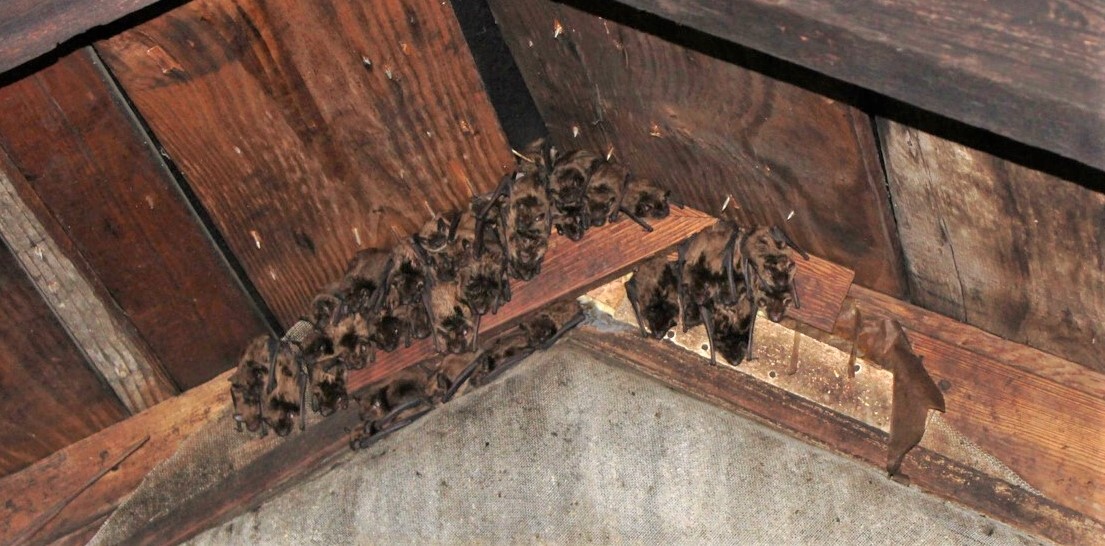
Participants must have bats roosting on their property or permission to enter property where a roost occurs. Possible roost sites include trees, bat houses, barns, attics, outbuildings and other structures. On each night of surveying, volunteers count the bats that exit the roost and record weather information. Each survey takes about an hour and is conducted on eight to 12 nights from mid-May to mid-July.
Newsletter can be found online May: DNR: Communications: MyDNR Email Newsletter (in.gov)
For more information please visit Summer Bat Roost Monitoring Project.
To sign up for the project, visit the Division of Fish & Wildlife’s volunteer page and select “Find an ongoing service project.” Wildlife Diversity staff also monitor bats using mobile acoustic surveys and acoustic monitoring stations.
Resources:
Hardwood Ecosystem Experiment (HEE) Highlights: Bats, Video, Purdue Extension – Forestry and Natural Resources (FNR) YouTube Channel
Bats in the Belfry, Purdue Extension – FNR Got Nature? Blog
Ask An Expert: Bats on the Hardwood Ecosystem Experiment (HEE), Video, Purdue Extension – FNR Facebook
Bats in Indiana, Indiana Department of Natural Resources (IN DNR)
Bat Houses, Bat Conservation International
Creating a Wildlife Habitat Management Plan for Landowners, The Education Store, Purdue Extension’s resource center
The Hardwood Ecosystem Experiment (HEE): Indiana Forestry and Wildlife, The Education Store
Subscribe to Purdue Extension-FNR YouTube Channel
Indiana Department of Natural Resources, Department of Fish & Wildlife
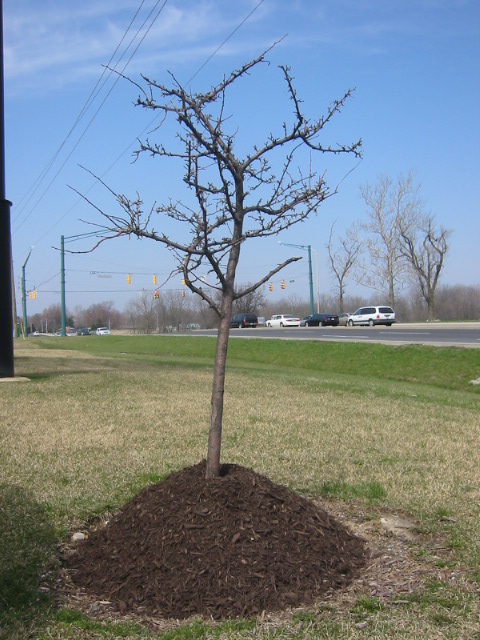
Figure 1: Volcano mulching around the base of the tree. Photo credit Lindsey Purcell.
Purdue Landscape Report: It’s that wonderful time of year again where temps are rising, life is coming back into the landscape, and people are thinking about how to improve the urban canopy around them. Well, maybe not that specifically, but we have the urge to plant trees. Whether it’s for Earth Day or Arbor Day or you just enjoy the act of planting, one of the hot topics is getting trees into the ground. That’s not what I’m here to talk about today, though.
As much as I love assisting communities with their greening efforts, getting the right tree in the right place, planting is not the only way to help grow the canopy around you. One of the topics that can be neglected is maintaining trees from previous plantings. Often, trees get placed in the ground, they are mulched, watered, and staked, then left on their own to make it in the world. New trees can take about 2-5 years to become established in their new homes and they could require assistance from us for much longer to thrive. Luckily, there is a simple activity to do assist trees, young and old.
Just like when they were placed in the ground, trees still benefit from mulch. Reapplying mulch benefits trees in multiple ways. It’s a natural way to prevent weeds and grass competing in the root zone and adds a protective buffer against mechanical damage from mowers and weed eaters. It will also help to maintain moisture levels in the soil as we transition into the hotter summer months. When applying new mulch, don’t worry about removing the old layer. It’s working its way into the soil around the tree adding organic matter, improving the quality of the soil.
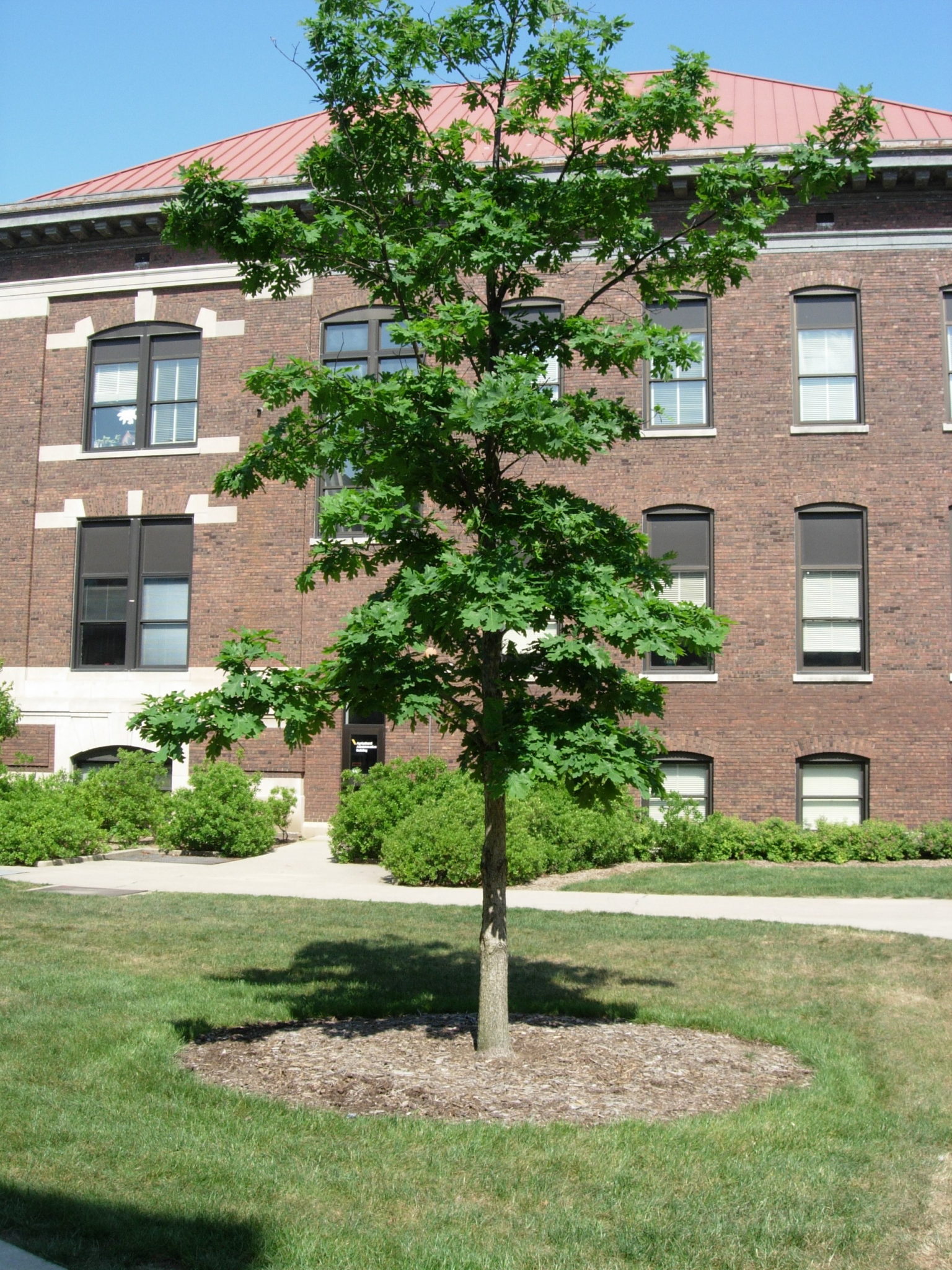
Figure 2: Correct application of mulch. Photo Credit John Bonkowski.
Add enough mulch so there is a 2–3-inch layer sloping away from the tree with at least a 3–5-foot radius around the stem (older, larger trees can benefit from larger mulch rings). No volcano mulching (Figure 1), make sure you also have around a 1-2-inch gap between the stem and the start of the mulch ring (Figure 2) to prevent unwanted root growth above ground and rot from excess moisture on the stem. Continuing this practice every year can help maintain soil moisture levels, while enriching the soil around your tree, maintaining a safety zone, and adding a nice aesthetic.
To view this article and other Purdue Landscape Report articles, please visit Purdue Landscape Report.
Subscribe and receive the newsletter: Purdue Landscape Report Newsletter.
Resources:
The Purdue Landscape Report
Purdue Landscape Report Facebook Page
Find an Arborist website, Trees are Good, International Society of Arboriculture (ISA)
Tree Installation: Process and Practices, The Education Store
Planting Forest Trees and Shrubs in Indiana, The Education Store
Planting Your Tree Part 1: Choosing Your Tree, Video, Purdue Extension – Forestry and Natural Resources YouTube Channel
Tree Defect Identification, The Education Store, Purdue Extension resource center
Tree wounds and healing, Got Nature? Blog
Tree Pruning Essentials, Publication & Video, The Education Store
Shrubs and Woody Vines of Indiana and the Midwest, The Education Store
Tree Risk Management, The Education Store
Why Is My Tree Dying?, The Education Store
ID That Tree, Purdue Extension-Forestry & Natural Resources (FNR) YouTube playlist
Subscribe to Purdue Extension-FNR YouTube Channel
Ben McCallister, Urban Forestry Specialist
Purdue Forestry and Natural Resources
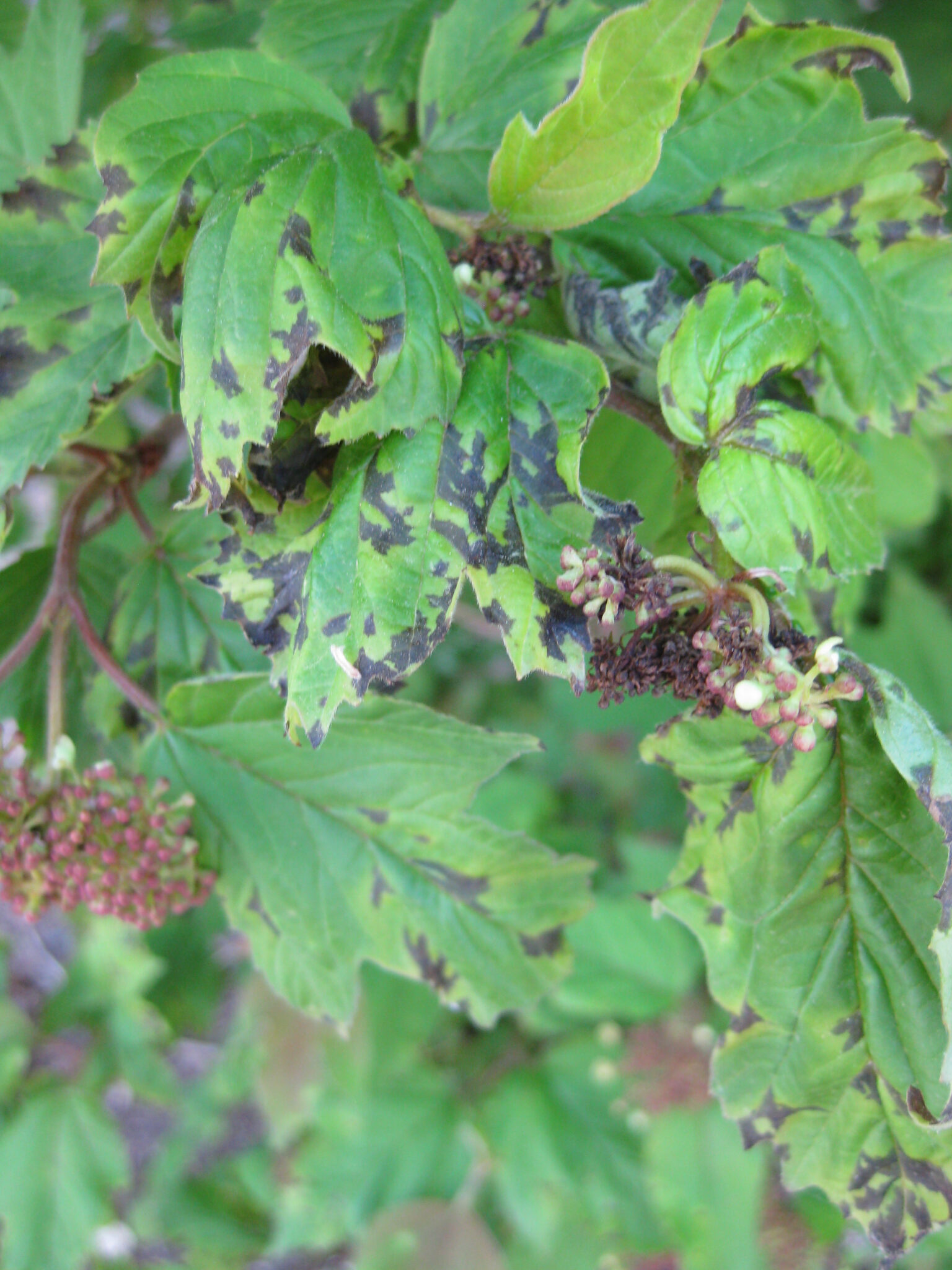
Bacterial leaf spots are often angular with chlorotic halos, as seen on this high bush-cranberry. Photo by Janna Beckerman.
Purdue Landscape Report: Pseudomonas syringae pv. syringae is an opportunistic bacterial pathogen that attacks a diversity of woody ornamental plants. The bacteria cause flower blights, cankers, shoot blights, and diebacks.
Symptoms
Symptoms often begin as expanding leaf spots. On lilac and viburnum, small spots expand to irregularly shaped brown lesions with yellow halos (Fig. 1). For most other hosts (cherry, pear, basswood, dogwood, hydrangea, high bush-cranberry, mountain-ash), infected leaves turn reddish brown or black and usually remain on the branch after they die (Fig. 2). As the bacteria spread into woody tissue, dark, sunken sections of the stem (cankers) expand, working their way back toward the trunk from infected leaves and flowers. Leaves attached to a cankered branch will wilt while the tip of the affected branch curls and droops like a shepherd’s crook (Fig. 3). Cloudy droplets of sticky fluid (ooze) may accumulate on leaf tips, leaf surfaces, stems, and even infected fruit.
Image of infected flowers result in blossom blast.
Figure 2. Infected flowers result in blossom blast. The continued growth of the bacteria can result in cankering and blight. Photo by George Sundin.
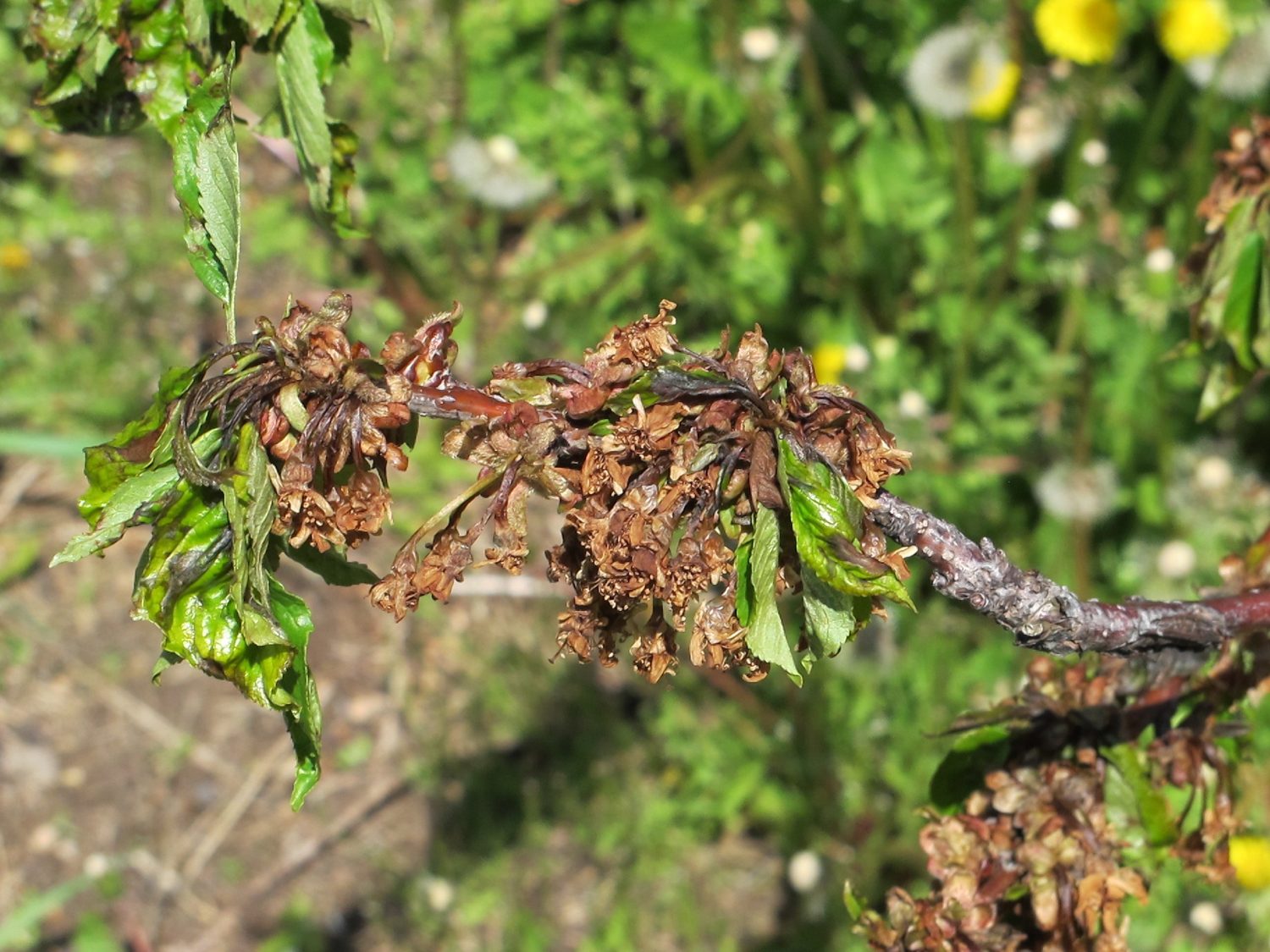
Figure 2. Infected flowers result in blossom blast. The continued growth of the bacteria can result in cankering and blight. Photo by George Sundin.
Life Cycle
The bacteria overwinter and persist in cankers, along with asymptomatic bud and twig tissue. In presence of water and warming temperatures, bacteria multiply and may ooze from infected tissue. Wind-driven rain, insect, or mechanical pruning spread Pseudomonas. Bacteria enter the plant through flowers or injury.
Management
All bacterial pathogens, including Pseudomonas, invade flowers or wounded tissue. To prevent or minimize the risk of infection:
- Use disease-free plants and budwood.
- Prune in the late winter/early spring.
- When pruning, do not mix pruning to shape woody ornamentals with pruning to manage disease.
- When pruning to remove infected shoots, be sure to disinfect shears between plants.
- Minimize overhead irrigation when possible to minimize splashing and pathogen spread.
- Avoid over-fertilization practices that drive excess succulent growth.
Figure 3. Bacterial blight is a common scourge to common lilac. Using resistant varieties is the best way to protect against the disease. Photo by Janna Beckerman.
- Avoid late season fertilization practices that prevent plants from achieving timely dormancy and promote freeze damage and/or winter injury (Fig. 4).
- Choose zone appropriate plants to avoid freeze damage and/or winter injury.
- Choose disease resistant plants, when available. The following lilac varieties were found to be resistant over a four-year trial: Donald Wyman, Royalty, Superba, Miss Kim, Edmund Boisier, Victor Lemoine, Dwarf Korean, Mme. Antoine Buchner Isabella, Sensation, Anna Amhof, Krasavitska Moskvy, Michael Buchner, and Alphonse Lavallée.

Foliar sprays of some copper-based bactericides (e.g., Camelot, Kocide, and Nu-Cop) were found to reduce disease incidence in trials on lilac (Vey and Palmer, 2018). Avoid using copper under cool, humid conditions to reduce the risk of phytotoxicity and damaging plants. Copper resistant populations of Pseudomonas syringae have been reported in other crops (vegetables, stone fruit). Products containing acibenzolar have provided inconsistent control in multiple trials but is labeled for use. Use of quaternary-ammonium disinfestants (KleenGrow) have been found to reduce bacterial populations and disease incidence and should be considered as part of any rotation with copper products. Due to the diversity of copper products, be sure to test for phytotoxicity issues prior to large scale treatment of crops.
To view this article and other Purdue Landscape Report articles, please visit Purdue Landscape Report.
Subscribe and receive the newsletter: Purdue Landscape Report Newsletter.
Resources:
The Purdue Landscape Report
Purdue Landscape Report Facebook Page
Find an Arborist website, Trees are Good, International Society of Arboriculture (ISA)
Phytophthora Diseases in Ornamentals, The Education Store, Purdue Extension’s resource center
Root Rot in Landscape Plants, The Education Store
Symptoms and Signs for Plant Problem Diagnosis, The Education Store
Tree Defect Identification, The Education Store
Tree Pruning Essentials, Publication & Video, The Education Store
Shrubs and Woody Vines of Indiana and the Midwest, Purdue University Press
Tree Risk Management, The Education Store
Equipment Damage to Trees, Got Nature? Blog
Tree wounds and healing, Got Nature? Blog
ID That Tree, Purdue Extension-Forestry & Natural Resources (FNR) YouTube playlist
Southwest Damage, Scalding, or Frost Cracking – Landscape Report
Subscribe to Purdue Extension-FNR YouTube Channel
Janna Beckerman, Professor of Plant Pathology
Purdue Department of Botany
This exotic invasive tree species is commonly found in Indiana landscape, callery pear. Callery pear has been planted as an ornamental tree in the midwest for decades. The original selection bradford pear was actually infertile and would not spread from seed but additional varieties have been planted and have crossed with the original Bradford and those are producing fertile seed. Find out how the seed spreads and what we can do to help our forest.
If you have any questions regarding wildlife, trees, forest management, wood products, natural resource planning or other natural resource topics, feel free to contact us by using our Ask an Expert web page.
Resources:
ID That Tree, Playlist, Purdue Extension – Forestry and Natural Resources YouTube Channel (Invasive White Mulberry, Siberian Elm, Tree of Heaven)
Invasive Species Playlist, Playlist, Purdue Extension – FNR YouTube Channel (Asian Bush Honeysuckle, Burning Bush, Callery Pear, Multiflora rose)
A Woodland Management Moment, Playlist, Purdue Extension – FNR YouTube Channel (Against Invasives, Garlic Mustard, Autumn Olive)
Woodland Stewardship for Landowners, Playlist, Purdue Extension – FNR YouTube Channel (Common Buckthorn, Japanese Barberry)
Report Invasive Species, Purdue Invasive Species
The GLEDN Phone App – Great Lakes Early Detection Network
EDDMaps – Early Detection and Distribution Mapping System (Report Invasives)
How long do seeds of the invasive tree, Ailanthus altissima remain viable? (Invasive Tree of Heaven), USDA Forest Service
Indiana Department of Natural Resources: Invasive Species
Indiana Invasive Species Council
Cooperative Invasive Species Management Area (CISMA)
Aquatic Invasive Species, Illinois-Indiana Sea Grant (IISG)
Episode 11 – Exploring the challenges of Invasive Species, Habitat University-Natural Resource University
What are invasive species and why should I care?, Got Nature? Blog, Purdue Extension – FNR
Shrubs and Woody Vines of Indiana and the Midwest, The Education Store, Purdue Extension Resource Center
Native Trees of the Midwest, The Education Store
Investing in Indiana Woodlands, The Education Store
Forest Improvement Handbook, The Education Store
Lenny Farlee, Extension Forester
Hardwood Tree Improvement and Regeneration Center
Purdue Department of Forestry & Natural Resources

The clitellum, the set of pale, milky colored segments, is the reproductive organ of earthworms.
Purdue Landscape Report: Asian jumping worms, a group of invasive earthworms, have gained a significant amount of media attention in the last several weeks, and for good reason. Unlike the nightcrawlers and other earthworms we know, Asian jumping worms do not improve soil health to the benefit of plants. Instead, jumping worms (also called crazy worms, snake worms, or ‘Alabama jumpers’) almost completely strip nutrients out of soil, altering the soil structure and severely impairing the ability to develop many kinds of plants. After they are done with an area, Asian jumping worms leave behind soil that has a texture similar to that of coffee grounds and very low nutritional value. On top of this, Asian jumping worms are capable of reproducing asexually, allowing their population to grow very rapidly and making them an invasive species of some concern.
Identification
The good news is that Asian jumping worms are not well-suited to Indiana’s environment. They aren’t capable of surviving winters in any life stage except as an egg, meaning their activity periods are limited to late June to the first hard frost of the year. If you see worms outside of this period, it’s highly unlikely an Asian jumping worm. There are also a few traits the worms have that you can use to visually confirm their identity. First off, Asian jumping worms are accurately named; when handled, they writhe and thrash similar to snakes, setting them apart from common earthworms and nightcrawlers. Jumping worms also tend to have drier skin that has an almost iridescent appearance, as compared to the slimy, moist texture of the beneficial earthworms we need for good soil health. The most consistent feature is an organ known as the clitellum, or the reproductive organs of worms. On common earthworms, this looks like a saddle-shape that partially covers several segments, is normally reddish-brown, and is raised off the surface of the body. On an Asian jumping worm, however, the clitellum is indistinguishable from other segments, save for their pale, milky color.
To view this article and other Purdue Landscape Report articles, please visit Purdue Landscape Report.
Subscribe and receive the newsletter: Purdue Landscape Report Newsletter.
Resources:
The Purdue Landscape Report
Purdue Landscape Report Facebook Page
Gardeners Asked to be Vigilant This Spring for Invasive Jumping Worm, Purdue Extension – FNR Got Nature? Blog
Fall webworms: Should you manage them?, Purdue Landscape Report
Mimosa Webworm, The Education Store, Purdue Extension resource center
Sod Webworms, Turf Science at Purdue University
Bagworm caterpillars are out feeding, be ready to spray your trees, Purdue Extension Forestry & Natural Resources (FNR) Got Nature? Blog
Purdue Plant Doctor App Suite, Purdue Extension-Entomology
Landscape & Ornamentals: Bagworms, The Education Store
What are invasive species and why should I care? (How to report invasives.), Purdue Extension – FNR Got Nature? Blog
Indiana Invasive Species Council
Ask An Expert, Purdue Extension-Forestry & Natural Resources
Bob Bruner, Exotic Forest Pest Specialist
Purdue Department of Entomology

Recent Posts
- Beetle that attacks Tree-of-Heaven found in Indiana, Purdue Landscape Report
Posted: March 20, 2026 in Invasive Insects, Wildlife, Woodlands - ID That Tree: Dwarf Chinkapin Oak
Posted: in Forestry, Urban Forestry, Wildlife, Woodlands - IN-PREPared: Essential Resources for Indiana’s Severe Weather Season
Posted: March 11, 2026 in How To, Safety - DNR Hiring for Indiana Conservation Officer Positions, MyDNR
Posted: March 9, 2026 in Urban Forestry, Wildlife, Woodlands - ID That Tree: Shumard Oak
Posted: in Plants, Urban Forestry, Wildlife, Woodlands - A Woodland Management Moment: Windbreak Around Walnut Plantings
Posted: March 3, 2026 in Forestry, Urban Forestry, Woodland Management Moment - Getting Certified as an Indiana Certified Prescribed Burn Manager
Posted: March 2, 2026 in How To, Urban Forestry, Woodlands - Uniting Indiana Residents Against Invasive Species
Posted: February 27, 2026 in Community Development, Invasive Insects, Wildlife - Have You Seen a Soaring Eagle Lately? Morning Ag Clips
Posted: February 25, 2026 in Urban Forestry, Wildlife - Register for Natural Resources Teacher Institute’s Class of 2026
Posted: February 19, 2026 in Forestry, Wildlife, Woodlands
Archives
Categories
- Alert
- Aquaculture/Fish
- Aquatic/Aquaculture Resources
- Ask the Expert
- Christmas Trees
- Community Development
- Disease
- Drought
- Forestry
- Forests and Street Trees
- Gardening
- Got Nature for Kids
- Great Lakes
- How To
- Invasive Animal Species
- Invasive Insects
- Invasive Plant Species
- Land Use
- Natural Resource Planning
- Nature of Teaching
- Plants
- Podcasts
- Ponds
- Publication
- Safety
- Spiders
- Timber Marketing
- Uncategorized
- Urban Forestry
- Webinar
- Wildlife
- Wood Products/Manufacturing
- Woodland Management Moment
- Woodlands