 Purdue University - Extension - Forestry and Natural Resources
Got Nature? Blog
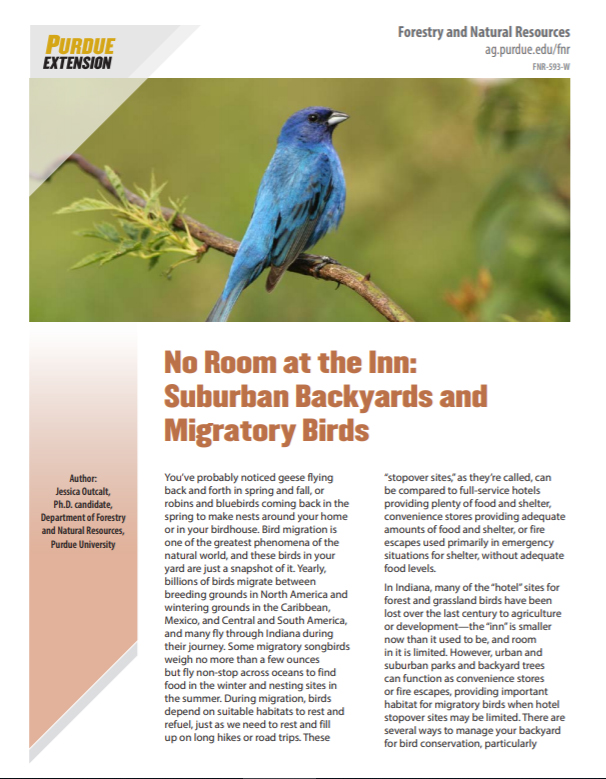 Bird migration is one of the greatest phenomena of the natural world. Birds depend on suitable habitats to rest and refuel. In this free download publication titled No Room at the Inn: Suburban Backyards and Migratory Birds, a Purdue researcher describes ways to manage your backyard to attract birds of all types, for your enjoyment and their survival. Including a list of common migratory birds in Indiana, this publication also provides a list of other suggested resources to learn more about birds and how to identify them.
Resources:
Forest Birds, Video, Purdue Extension
Birds and Residential Window Strikes: Tips for Prevention, The Education Store, Purdue Extension resource center
Managing Woodlands for Birds, video
Breeding Bird Atlas, Indiana Department of Natural Resources
IN DNR Shares How to Keep Your Backyard Birds Healthy, Purdue Extension – FNR Got Nature? Blog
Breeding Birds and Forest Management: the Hardwood Ecosystem Experiment and the Central Hardwoods Region, The Education Store, Purdue Extension resource center
Managing Woodlands for Birds Video, Purdue Extension – FNR YouTube Channel
The Birders’ Dozen, Profile: Baltimore Oriole, Indiana Woodland Steward
Birds and Residential Window Strikes: Tips for Prevention, The Education Store, Purdue Extension resource center
The National Audubon Society
Subscribe, Purdue Extension – FNR YouTube Channel
Jessica Outcalt, Graduate Research Assistant
Department of Forestry and Natural Resources, Purdue University
Just because the winter days are cold and dreary doesn’t mean the work to improve wildlife habitat on your property has to stop. In fact, now is a perfect time for a wide range of habitat projects. One such project is frost seeding native grasses and forbs. Here’s why you should brave the cold and consider sowing your seeds this winter.
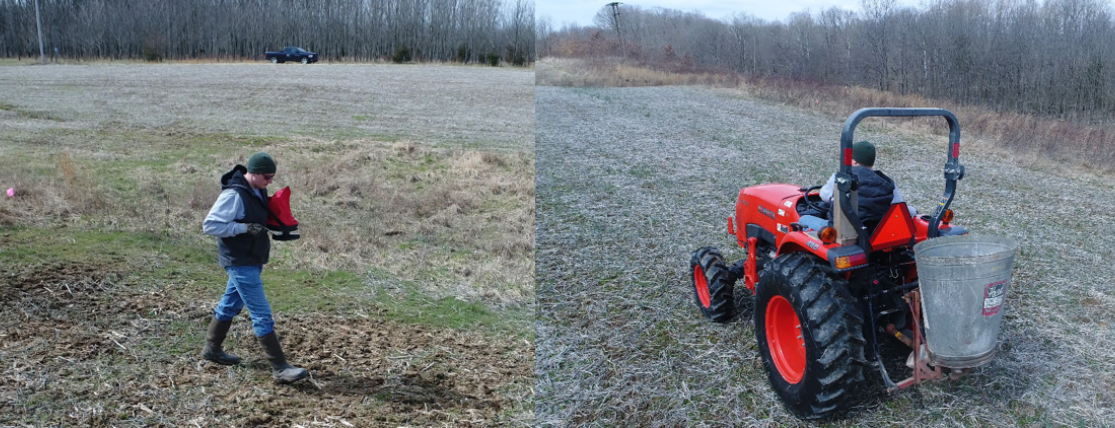
Picture 3. Smaller fields can be established with just a hand seed spreader (left), whereas an ATV or tractor-mounted spreader is better for larger fields (right).
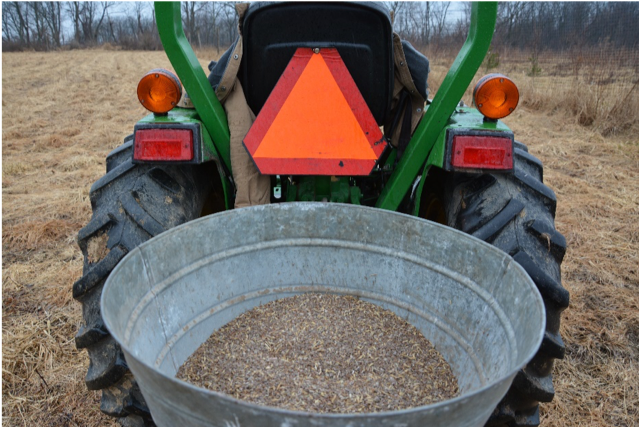
Picture 2. When broadcasting native seed, it should be mixed with a carrier (pelletized lime here) to help the seed flow through the spreader.
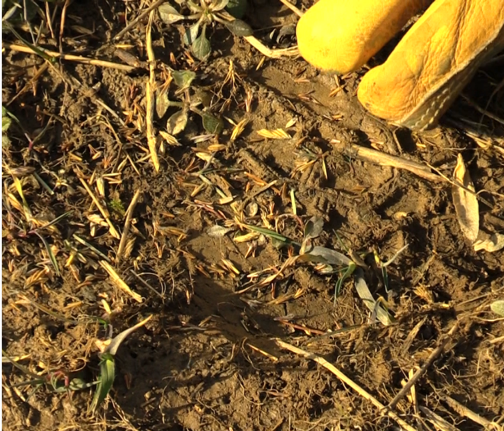
Picture 1. After frost seeding, the native grass and forb seed is visible on the ground, but the freezing and thawing of the soil will ensure good seed-to-soil contact.
Its natural
If you think about how a native prairie works, many of the seeds ripen in the late summer and early fall and drop to the ground throughout the fall and winter. So, sowing seeds from January through March or frost seeding is mimicking what would have occurred naturally. By doing such, you are taking advantage of the freezing and thawing cycles of the soil. The helps with a couple things.
First, many native plant seeds – forbs (wildflowers) especially – need that natural freezing and thawing cycles to break their dormancy. Thus, frost seeding can help increase the germination of many of these species. Second, the freezing and thawing of the soil helps to work the seed into the soil, which can improve seed-to-soil contact, an important factor in planting success (picture 1).
Less time to waste
Dormant seeding or seeding once the soil dips below a certain temperature (as early as November) is another viable option to establish a native grass and forb stand. But with frost seeding, the seed remains on the soil for less time before germination. Which may reduce the seeds’ exposure to soil pathogens, rodents, birds, or other critters that may eat the seed or reduce germination.
Minimalist-style
Frost seeding native grasses and forbs can be done will minimal equipment. All you need to frost seed is a hand or mechanical seed spreader, the seed, and a carrier (picture 2). Using a hand seed spreader works great for small fields, but you may consider using an ATV or tractor-mounted mechanical spreader for larger fields (picture 3).
Another option is to use a no-till seed drill. Of course, this will require more specialized equipment, but many Soil and Water Conservation Districts or Pheasants and Quail Forever Chapters have no-till drills that you can borrow or rent to help complete your project.
When it comes to establishing native grasses and forbs, there is more than one way to plant a field. But, frost seeding might be the option that is best suited for you and your site.
For a How-To on frost seeding, check out our Frost Seeding Video below:
Resources
Frost Seeding to Establish Wildlife Food Plots & Native Grass and Forb Plantings, video, The Education Store, Purdue Extension Resource Center
Calibrating a No-Till Drill for Conservation Plantings and Wildlife Food Plots, video, The Education Store
Renovating native warm-season grass stands for wildlife: a land manager’s guide, The Education Store
Purdue Extension Pond and Wildlife Management Website, Purdue Extension
Jarred Brooke, Wildlife Extension Specialist
Department of Forestry & Natural Resource, Purdue University
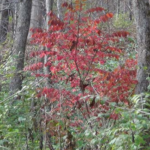 Winged burning bush, winged euonymus, or simply burning bush (Euonymus alatus) is a medium-sized deciduous shrub native to China, Japan and Korea but is widely planted in the United States. Winged burning bush has been planted in the US since the 1860s, primarily as an ornamental shrub due to its bright red fall foliage. Reports of this species escaping cultivation and establishing in natural areas, such as woodlands, prairies and other uncultivated areas, emerged in the 1970s in the Northeast and Midwest US. The species is now considered invasive in most of the eastern US, including Indiana.
Invasive Plant Series: Winged Burning Bush is an 8-page publication written by experts Brian Beheler, farm manager, Don Carlson, forester, Lenny Farlee, sustaining hardwood extension specialist and Ron Rathfon, regional extension forester SIPAC. In this publication, you can learn about the identification, distribution, impact, management and control of this deciduous shrub found in Indiana hardwood forests. For more information check out the Burning Bush Video.
Resources
Report Invasive Species, Purdue Agriculture & Indiana Invasive Species Council
The GLEDN Phone App – Great Lakes Early Detection Network
EDDMaps – Early Detection and Distribution Mapping System (Report Invasives)
Cooperative Invasive Species Management Area (CISMA)
Indiana Department of Natural Resources: Invasive Species
Indiana Invasive Species Council
Burning Bush Video, video, The Education Store, Purdue Extension resource center
What Nurseries Need to Know About the Invasive Species Regulation, The Education Store
Invasive plants: impact on environment and people, The Education Store
Invasive Plant Species: Oriental Bittersweet, The Education Store
Invasive Plant Species: Callery Pear, The Education Store
Invasive Plant Species: Wintercreeper, The Education Store
Lenny Farlee, Extension Forester
Purdue University Department of Forestry and Natural Resources

December IDNR Wildlife Bulletin Newsletter: DNR has recently launched a new interactive website allowing deer hunters to access white-tailed deer harvest data. Hunters have asked for detailed harvest data and comparisons between years. This new website is a direct result of that feedback. Harvest data is updated daily. For full article and more information >>>
Resources
How to Score Your White-tailed Deer, video, The Education Store, Purdue Extension Resource Center
White-Tailed Deer Post Harvest Collection, video, The Education Store
Age Determination in White-tailed Deer, video, The Education Store
How to Build a Plastic Mesh Deer Exclusion Fence, The Education Store
Bovine Tuberculosis in Wild White-tailed Deer, The Education Store
Maine Hunting License and Rules, Maine Department of Inland Fisheries & Wildlife
Indiana Deer Hunting, Biology and Management Safe Food Handling and Preparation, IDNR
Indiana Department of Natural Resources, Department of Fish & Wildlife
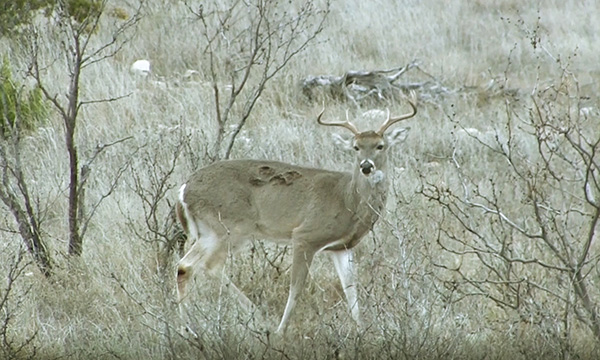 Hunting is an outdoor sport many enjoy while learning new skills, receiving fitness benefits, and bringing healthy food options to their table. The U.S. Fish and Wildlife Service, Wildlife & Sport Fish Restoration Program, reported 36,825 licenses for 2017 as hunting continues to be a recognized and respected sport.
Purdue Extension-Forestry and Natural Resources has recently increased their resources for handling harvested game. This new video series shares step by step instructions starting with field dressing and continuing all the way through to packaging.
Video Series:
Handling Harvested Game: Episode 1, Field Dressing
Handling Harvested Game: Episode 2, Hanging & Skinning
Handling Harvested Game: Episode 3, Deboning
Handling Harvested Game: Episode 4, Cutting, Grinding & Packaging
Free handling harvested game workshops are held every year in September by Purdue Extension. If you would like to attend any of the available workshops please contact Jonathan Ferris, Wayne County Extension Director, or Dave Osborne, Ripley County Extension Director. Feel free to view the Purdue Extension Calendar or the Purdue Extension-Forestry and Natural Resources’ Calendar for future scheduled workshops.
Other resources:
How to Score Your White-tailed Deer, video, The Education Store, Purdue Extension Resource Center
White-Tailed Deer Post Harvest Collection, video, The Education Store
Age Determination in White-tailed Deer, video, The Education Store,
How to Build a Plastic Mesh Deer Exclusion Fence, The Education Store,
Bovine Tuberculosis in Wild White-tailed Deer, The Education Store,
Maine Hunting License and Rules, Maine Department of Inland Fisheries & Wildlife
Safe Food Handling and Preparation
Deer Tips 1: Scouting
Deer Tips 2: Practice
Deer Tips 3: Clothing
Deer Tips 4: Hunting Private Lands
Deer Tips 6: Etiquette
Deer Tips 7: Tracking
Deer Tips 8: After the Harvest
Deer Tips 9: Final Thoughts
Deer Processing 1: Skinning
Bob Cordes, Wildlife Biologist
Maine Department of Inland Fisheries and Wildlife
Brandon Fields, Meat Science Manager
Pig Improvement Company (PIC)
Rod N Williams, Professor of Wildlife Science
Purdue University Department of Forestry and Natural Resources
Six pieces of data to collect from deer you harvest this year
Deer season is upon us in Indiana! If you are a serious hunter and deer manager, here are some things you should consider collecting from deer you harvest. This data provides valuable insights to the deer herd condition, and when combined with hunter observation data and habitat data, like browse transects, you can get a clear picture of the deer herd and habitat quality on your property. However, one year of harvest data is unlikely to be much of value, but collecting data over multiple years can help you track trends in the herd and habitat quality.
What to collect
When you harvest a deer on your property you should consider collecting the following pieces of biological information:
- Sex
- Age
- Weight
- Lactation status
- Antler measurements
- Rumen contents
*Each deer you harvest should be assigned a unique ID number to be sure all the following data is assigned to the right deer.
Sex and Age
Collecting deer sex and age (based on tooth replacement and wear) can help you divide the rest of the data you collect into sex and age classes. Find out how to determine age by viewing Age Determination in White-Tailed Deer video. You do not 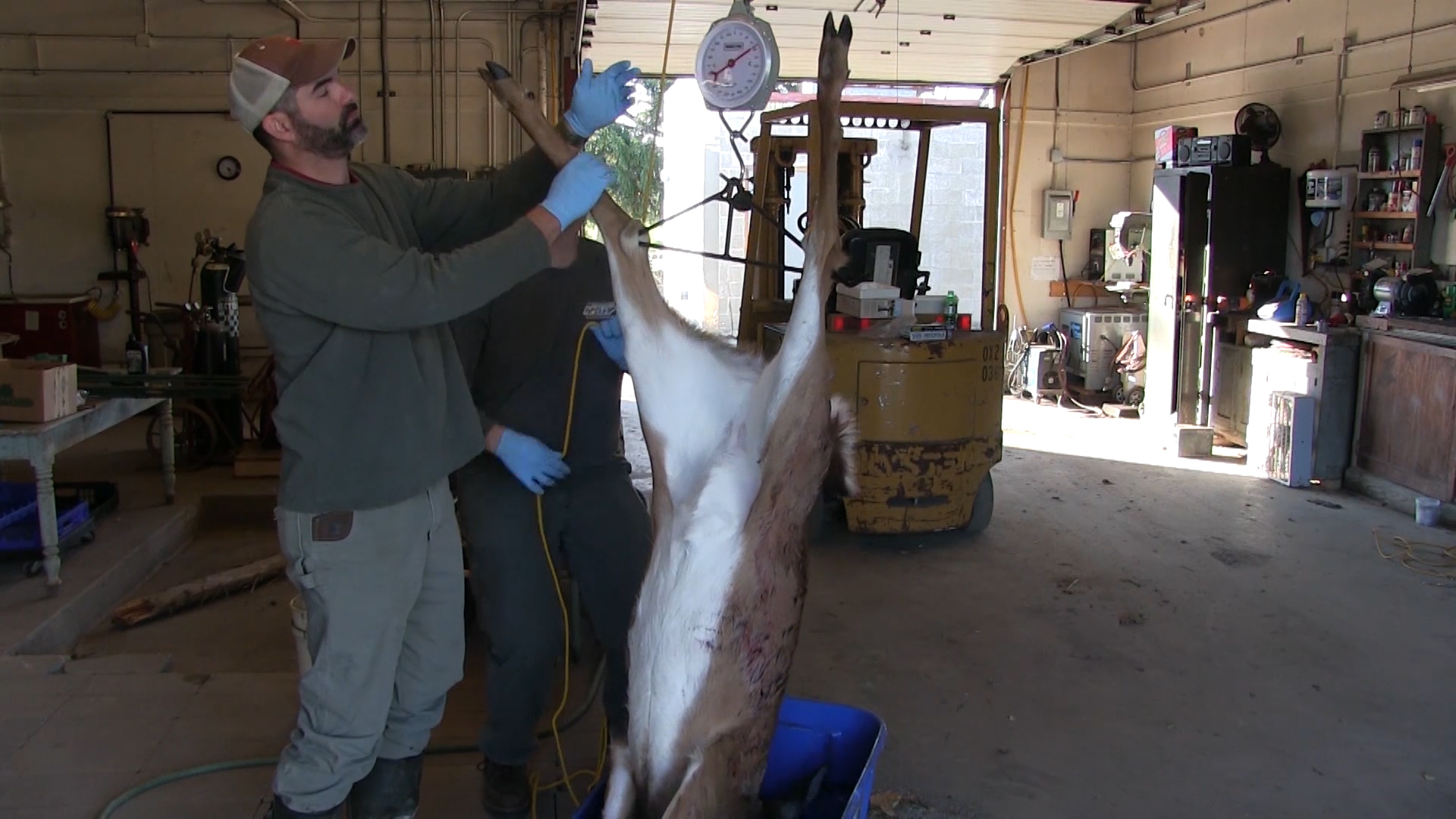 necessarily have to age a deer to the exact year, but you should separate ages into at least 3 age classes; fawns, yearlings, and >= 2.5 years old. This can be important for tracking changes to the average weight per age class or average antler measurements per age class over time.
Weight
You can collect either live weights or dressed weights, but you should pick one or the other and collect all weights consistently. Be sure to test your scales for accuracy before weighing deer. Tracking changes to the average weight per age class can provide 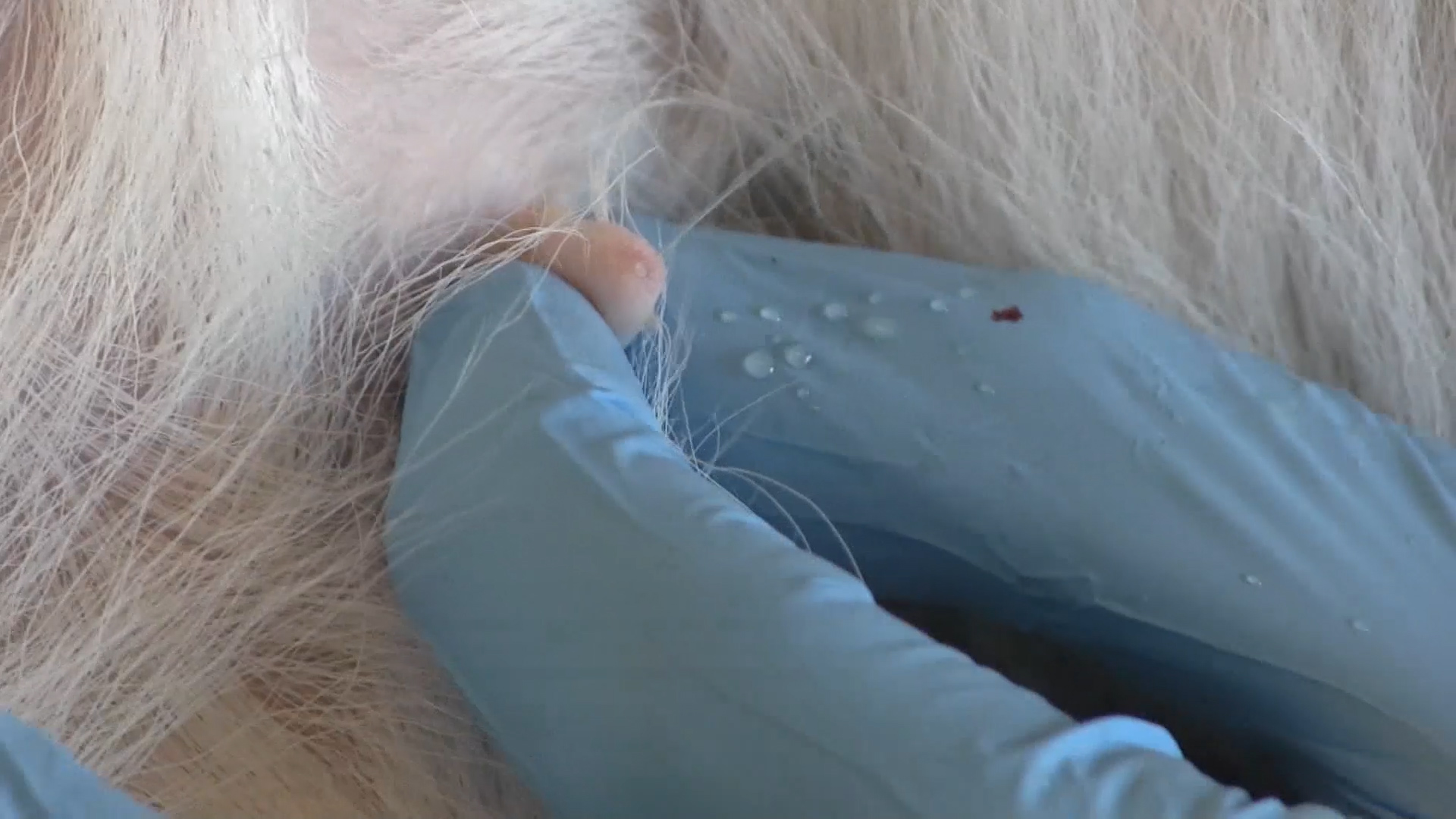 information about the nutritional status of the herd.
Lactation Status
Lactation status of does is often used as an index of fawn recruitment and can help determine if a doe had a fawn the summer preceding the hunting season. Lactation status for does harvested early in the season can be checked by squeezing the teats to produce milk you may need to cut into the mammary gland on does harvested later in the season to check lactation status.
Antler measurements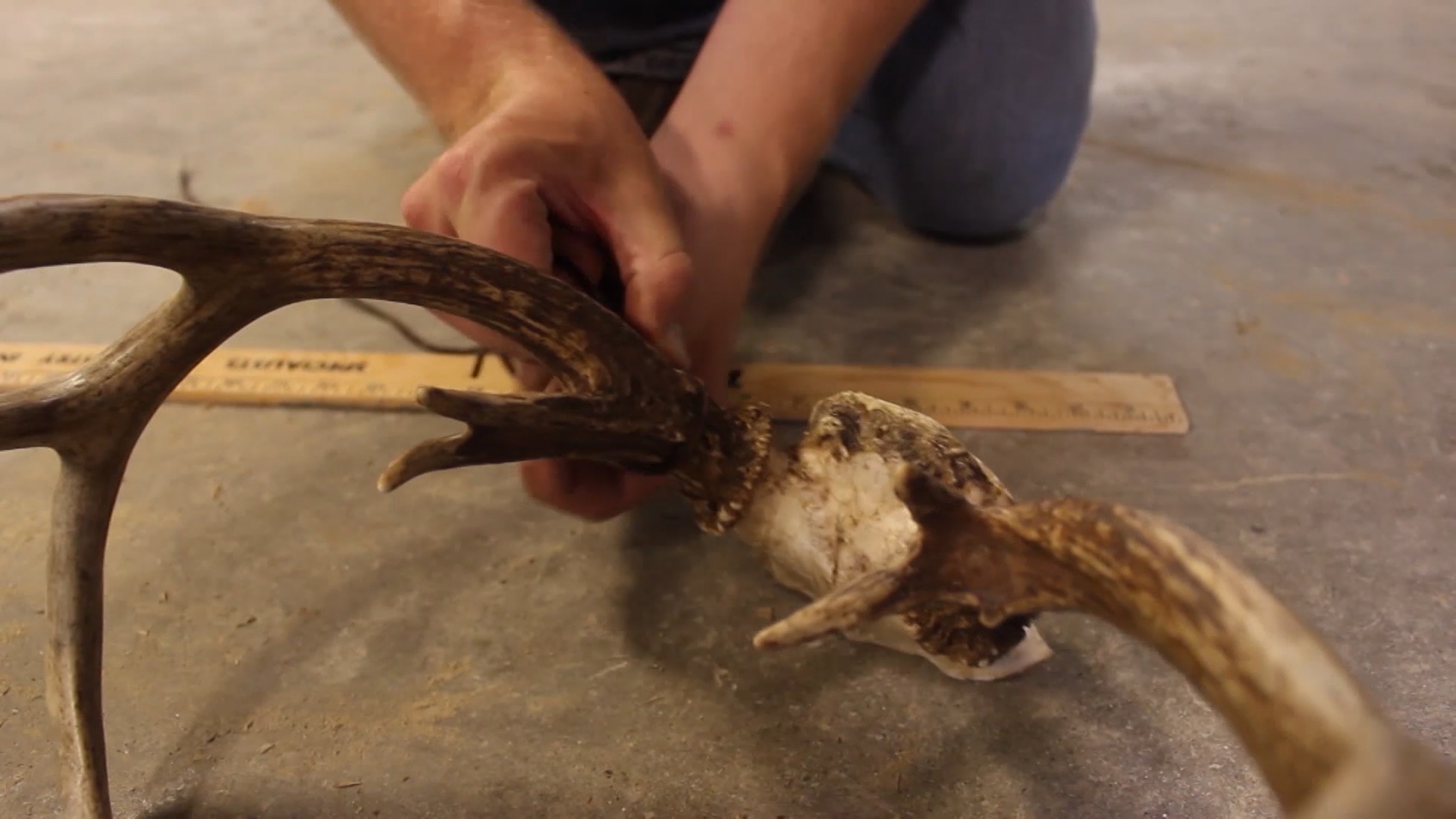
Antler measurements should be collected from bucks harvested on your property, including yearlings. Find out how to measure the antlers by viewing How to Score Your White-Tailed Deer video. At a minimum, you should collect the number of points on each antler and the basal circumference of the main beams. You may also consider collecting the inside spread of the antlers and the main beam lengths. Additionally, you can collect the gross Boone & Crockett Score.
Rumen contents
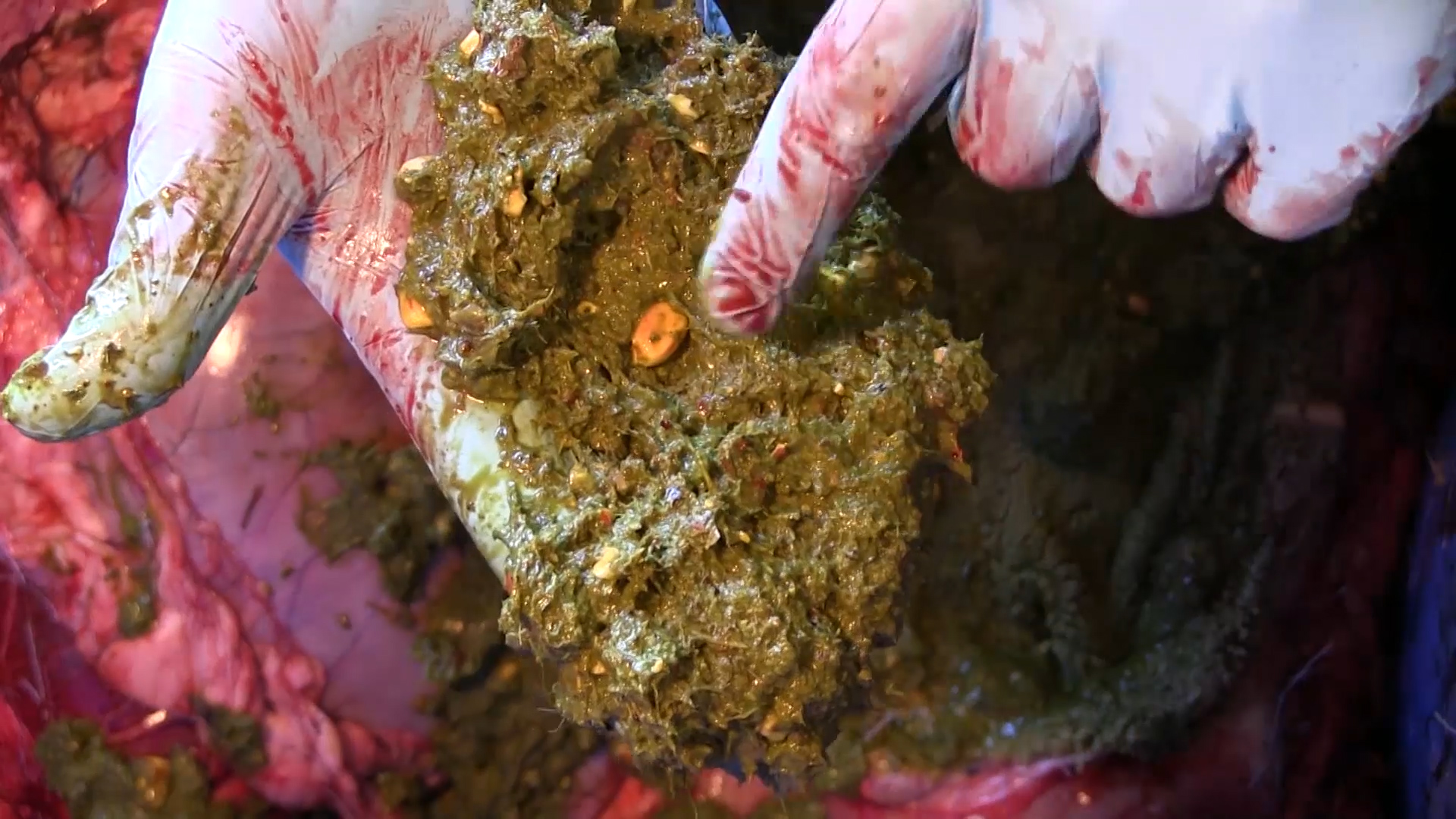 This piece of data can be helpful from a scouting and hunting aspect. Looking into the rumen of a deer can help you determine what deer may be eating during the portion of the year the deer was harvested. You may find green material (which can be hard to identify), corn, acorns, or whatever else deer may be consuming.
Things you need to collect harvest data
Here is a list of items you might need to collect data from harvested deer.
- Jawbone extractor
- Knife
- Loppers
- Scale
- Jawbone tag or permanent marker
- Flexible measuring tape
- White-tailed deer harvest datasheet (if you need any further information please contact fnrextension@purdue.edu)
Putting all of this data together can give you a picture into the condition of the deer herd on your property. Collecting this data only takes a small amount of time and effort and the information you gather is well worth it! For more information of how to collect biological data from harvested deer, check out this video from Purdue Extension.
Help the Indiana Department of Natural Resources (IDNR) collect biological data from harvested deer
Most of the data we discussed in this blog post and that is covered in the White-Tailed Deer Post Harvest Collection video, are data the Indiana DNR is collecting through an online post-harvest survey. This is a great opportunity for hunters to help the DNR collect data that will be used to manage the deer herd throughout the state. More information about the after the hunt survey can be found by visiting the Indiana DNR Deer After Hunt Survey page. If you are successful in harvesting a deer in Indiana this year, be sure to check your email for a link to the survey.
Additional Resources:
Age Determination in White-Tailed Deer video, Purdue Extension – FNR YouTube Playlist
How to Score Your White-Tailed Deer video, Purdue Extension – FNR YouTube Playlist
White-Tailed Deer Post Harvest Collection video, Purdue Extension – FNR YouTube Playlist
White-Tailed Deer Harvest Log (pdf), Purdue Extension-FNR
Indiana Deer Hunting, Biology and Management, Indiana Department of Natural Resources (IDNR)
Indiana Hunting and Trapping Guide, Indiana Department of Natural Resources (IDNR)
Managing White-Tailed Deer: Collecting Data from Harvested Deer, Alabama Cooperative Extension System
Jarred Brooke, Wildlife Extension Specialist
Department of Forestry & Natural Resource, Purdue University
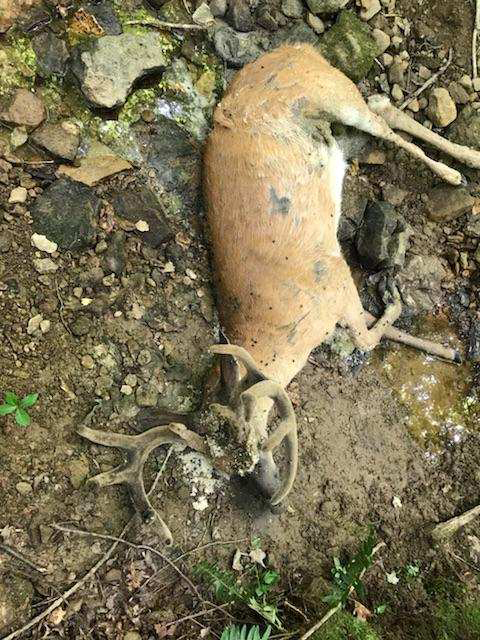
Deer that die from EHD are often found around water. This deer was found in August 2019 in Crawford County and was likely killed by EHD. Photo courtesy of Brody Wade.
Be on the watch for deer with EHD in Indiana
Recently, a white-tailed deer in Clarke County Indiana tested positive for Epizootic Hemorrhagic Disease (EHD), and potential EHD cases have been reported in 26 other Indiana counties. Here are a few things you should know about how EHD, how to spot it, and how to report it.
What is EHD and BTV?
Epizootic hemorrhagic disease (EHD) and bluetongue virus (BTV) are viral diseases, collectively called hemorrhagic diseases (HD), and are common in white-tailed deer. Both diseases are transmitted by biting midges often called “no-see-ums” or gnats. Neither disease is a human health issue, but they can cause significant mortality in white-tailed deer. Outbreaks of HD tend to impact deer populations locally, meaning an outbreak may occur in one part of a county but not in other parts.
When do EHD outbreaks occur?
EHD and BTV outbreaks often occur in late summer and early fall (August-September), especially in years with drought-like conditions. Drought causes water sources to shrink, which creates warm, shallow, and stagnant pockets of water creating ideal breeding habitat for the midges that transmit EHD. Deer also congregate in these areas to find water, which helps the midges pass the disease between infected and healthy deer. EHD outbreaks can last until a frost that kills the midges.
What are the signs of a deer with EHD?
Deer with EHD often appear weak, lethargic, and disoriented. Other signs of EHD in deer are ulcers in the mouth or on the tongue, swollen face, neck, or eyelids, and a bluish color to the tongue. Deer with EHD often search for water to combat the fever caused by the disease. EHD can be confirmed by testing blood and tissue (i.e., spleen) samples, but samples must be collected shortly after death.
Where am I likely to find a deer with EHD?
Because deer with EHD often seek out water to combat the resulting fever, deer killed by EHD are commonly found around water. If you have a stream, creek, river, or other source of water on your property, looking in the vicinity of those areas can help you locate deer that have succumb to EHD.
What do I do if I find a deer I think has EHD?
If you come across a sick or dead deer that you think has EHD you can report it through an online reporting system run by the Indiana DNR. Here is a link to the reporting system: Report a Dead or Sick Deer.
Can deer survive an EHD outbreak?
Yes, some deer will survive EHD. While up to 90% of deer that contract EHD may die from the disease, the deer that survive build up antibodies to EHD, which may make them immune to future outbreaks. Additionally, does may pass the antibodies and immunity to their offspring.
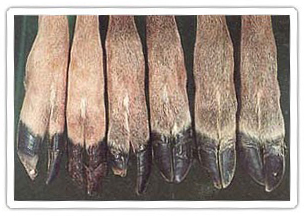
Sloughing or splitting hooves on two or more feet of a deer taken during the fall hunting season are typical of chronic HD. Photo courtesy of the Southeastern Cooperative Wildlife Disease Study.
How can I tell if a deer I killed during hunting season has survived EHD?
If you kill a deer during the hunting season this year, pay attention to the hooves. Deer that survive an EHD outbreak often have indentions or cracks on their hooves (see picture).
Sloughing or splitting hooves on two or more feet of a deer taken during the fall hunting season are typical of chronic HD. Photo used courtesy of the Southeastern Cooperative Wildlife Disease Study.
Are deer that have survived EHD safe to eat?
Yes, deer that have survived EHD are safe to eat.
For updated information on EHD in Indiana check out the Indiana DNR – Epizootic Hemorrhagic Disease web page.
Resources:
Report a Sick or Dead Deer, Indiana Department of Natural Resources (IN-DNR)
EHD Virus in Deer: How to Detect and Report video, Quality Deer Management Association
Epizootic Hemorrhagic Disease, Cornell University
How to Score Your White-Tailed Deer video, Purdue Extension – FNR YouTube Playlist
Deer Harvest Data Collection, Purdue FNR Got Nature? blog
Jarred Brooke, Wildlife Extension Specialist
Purdue Forestry and Natural Resources
United States Department of Agriculture Animal and Plant Health Inspection Service Bulletin: USDA declares August Tree Check Month and urges public to look for Asian longhorned beetle.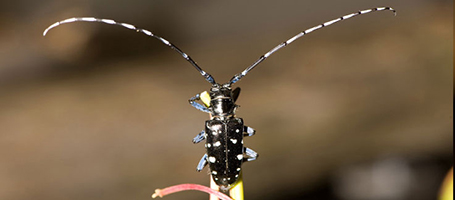
WASHINGTON, July 23, 2019 — August is the height of summer, and it is also the best time to spot the Asian longhorned beetle (ALB) as it starts to emerge from trees. The U.S. Department of Agriculture (USDA) is asking the public to take five minutes to step outside and report any signs of this invasive pest. Checking trees for the beetle will help residents protect their own trees and better direct USDA’s efforts to eradicate this beetle from the United States.
“It’s important to look for signs of the beetle now, because it’s slow to spread during the early stages of an infestation,” said Josie Ryan, APHIS’ National Operations Manager for the ALB Eradication Program. “With the public’s help, we can target new areas where it has spread and provide a better chance of quickly containing it.”
The Asian longhorned beetle feeds on a wide variety of popular hardwood trees, including maple, birch, elm, willow, ash and poplar. It has already led to the loss of more than 180,000 trees. Active infestations are being fought in three areas of the country: Worcester County, MA, Long Island, NY (Nassau and Suffolk Counties), and Clermont County, Ohio.
“Homeowners need to know that infested trees do not recover and will eventually die, becoming safety hazards,” warned Ryan. “USDA removes infested trees as soon as possible because they can drop branches and even fall, especially during storms, and this keeps the pest from spreading to nearby healthy trees.”
The Asian longhorned beetle has distinctive markings that are easy to recognize:
- Antennae that are longer than the insect’s body with black and white bands.
- A shiny, jet-black body with white spots, about 1” to 1 ½” long.
- Six legs and feet, possibly bluish-colored.
Signs of infestation include: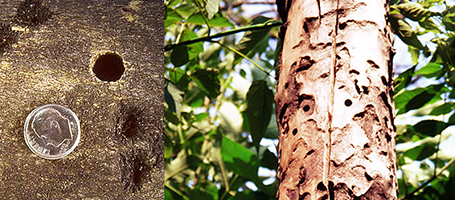
- Round exit holes in tree trunks and branches about the size of a dime or smaller.
- Shallow oval or round scars in the bark where the adult beetle chewed an egg site.
- Sawdust-like material called frass, laying on the ground around the tree or in the branches.
- Dead branches or limbs falling from an otherwise healthy-looking tree.
After seeing signs of the beetle:
- Make note of what was found and where. Take a photo, if possible.
- Try to capture the insect, place in a container, and freeze it. This will preserve it for easier identification.
- Report findings by calling 1-866-702-9938 or completing an online form at USDA Animal and Plant Health Inspection Service.
It is possible to eliminate this pest and USDA has been successfully doing so in several areas. Most recently, the agency declared Stonelick and Batavia Townships in Ohio to be free of the Asian longhorned beetle. We also eradicated the beetle from Illinois, New Jersey, Boston, MA, and parts of New York. The New York City boroughs of Brooklyn and Queens are in the final stages of eradication.
For more information about the Asian longhorned beetle, other ways to keep it from spreading—such as not moving firewood—and eradication program activities, visit USDA Animal and Plant Health Inspection Service. For local inquiries or to speak to your State Plant Health Director, call 1-866-702-9938.
Other Resources:
Report Invasive Species, Purdue Agriculture & Indiana Invasive Species Council
Great Lakes Early Detection Network, Bugwood Apps
New Hope for Fighting Ash Borer, Got Nature? Blog
Mile-a-Minute Invasive Vine Found Indiana, Got Nature? Blog
Sericea Lespedeza: Plague on the Prairie, Got Nature? Blog
Invasive Plants: Impact on Environment and People, The Education Store, Purdue Extension
Invasive Plant Species in Hardwood Tree Plantations, The Education Store
Invasive Plant Species: Callery Pear, Purdue Extension The Education Store
United States Department of Agriculture Animal and Plant Health Inspection Service
With all of the recent rain we have had throughout the state, I have received several inquiries about effects on wildlife and what we can expect. While some flooding is natural in low areas and wildlife are adapted to respond, extreme flooding can impact wildlife. Flood waters can wash away nests or drown developing or very young animals for those living in low-lying areas. For example, heavy spring rains can reduce nest success of wild turkeys.
In many cases, wildlife will adapt by simply moving to higher ground. I tend to get an increase in inquiries about snakes after flooding. They begin showing up in neighborhood homes when they have never been observed in years past. Certainly our environment changes over time and wildlife can and do respond to these changes. However, sudden changes are likely due to a response of snakes moving to drier ground. The good news is this and other similar displacement of wildlife is usually temporary.
What can we do? I’m afraid not much for our currently flooded friends. However, in the long-term, times like this reinforce the need to create and enhance quality wildlife habitat. Providing wildlife with quality habitat that contains the necessary food, cover and water resources gives them a fighting chance to deal with issues that inevitably arise. In addition, wetlands that landowners build and restore on their properties not only enhance wildlife habitat, but also help retain moderate flood waters and recharge groundwater supplies.
If some unwanted wildlife has overstayed their welcome in and around your home, check out the Purdue Education Store publication, Considerations for Trapping Nuisance Wildlife with Box Traps. If you think you have found a sick or injured animal, you can find a list of licensed Wild Animal Rehabilitators in your area on the DNR Division of Fish and Wildlife’s Orphaned and Injured webpage. In Indiana, wildlife rehabilitators have necessary state and federal permits to house and care for sick or injured wild animals.
Additional Resources
Preventing Wildlife Damage – Do You Need a Permit? The Education Store, Purdue Extension
The Basics of Managing Wildlife on Agricultural Lands, The Education Store, Purdue Extension
Brian J. MacGowan, Extension Wildlife Specialist
Department of Forestry and Natural Resources, Purdue University
Cockroaches are serious threats to human health. They carry dozens of types of bacteria, such as E. coli and salmonella, that can sicken people. And the saliva, feces and body parts they leave behind may not only trigger allergies and asthma but could cause the condition in some children.
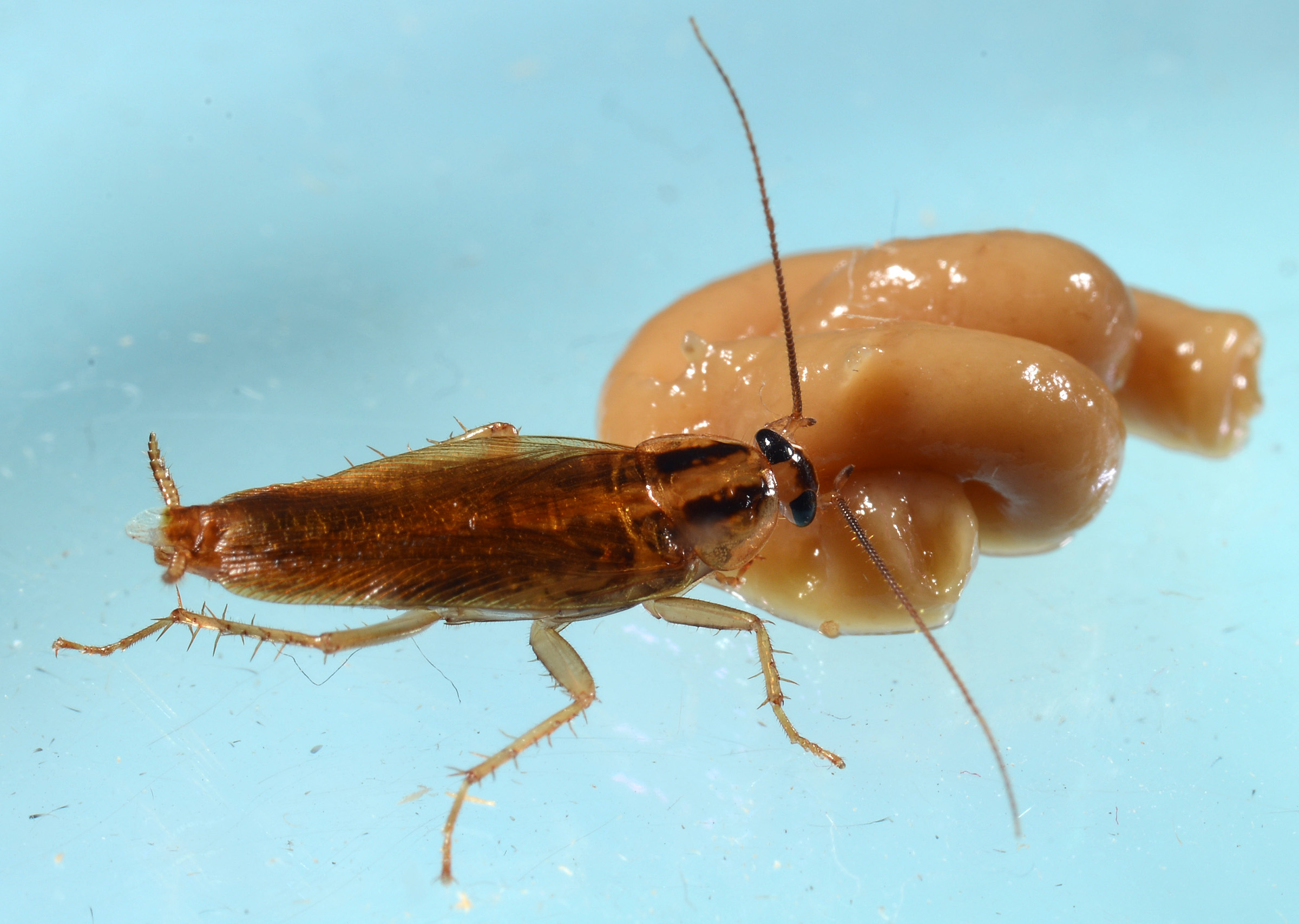
A German cockroach feeds on an insecticide in the laboratory portion of a Purdue University study that determined the insects are gaining cross-resistance to multiple insecticides at one time. (Photo by John Obermeyer/Purdue Entomology)
A Purdue University study led by Michael Scharf, professor and O.W. Rollins/Orkin Chair in the Department of Entomology, now finds evidence that German cockroaches (Blattella germanica L.) are becoming more difficult to eliminate as they develop cross-resistance to exterminators’ best insecticides. The problem is especially prevalent in urban areas and in low-income or federally subsidized housing where resources to effectively combat the pests aren’t as available.
“This is a previously unrealized challenge in cockroaches,” said Scharf, whose findings were published in the journal Scientific Reports. “Cockroaches developing resistance to multiple classes of insecticides at once will make controlling these pests almost impossible with chemicals alone.”
Each class of insecticide works in a different way to kill cockroaches. Exterminators will often use insecticides that are a mixture of multiple classes or change classes from treatment to treatment. The hope is that even if a small percentage of cockroaches is resistant to one class, insecticides from other classes will eliminate them.
Scharf and his study co-authors set out to test those methods at multi-unit buildings in Indiana and Illinois over six months. In one treatment, three insecticides from different classes were rotated into use each month for three months and then repeated. In the second, they used a mixture of two insecticides from different classes for six months. In the third, they chose an insecticide to which cockroaches had low-level starting resistance and used it the entire time.
In each location, cockroaches were captured before the study and lab-tested to determine the most effective insecticides for each treatment, setting up the scientists for the best possible outcomes.
“If you have the ability to test the roaches first and pick an insecticide that has low resistance, that ups the odds,” Scharf said. “But even then, we had trouble controlling populations.”
For full article: Rapid cross-resistance bringing cockroaches closer to invincibility.
Resources
Report Invasive Species, Purdue Agriculture & Indiana Invasive Species Council
Purdue experts encourage ‘citizen scientists’ to report invasive species, Purdue Agriculture News
New Hope for Fighting Ash Borer, Got Nature? Blog, Purdue Forestry and Natural Resources
Mile-a-Minute Invasive Vine Found Indiana, Got Nature? Blog
Sericea Lespedeza: Plague on the Prairie, Got Nature? Blog
Michael E. Scharf, Professor and O.W. Rollins/Orkin Chair
Purdue Department of Entomology
Brian J. Wallheimer, Science Writer
Purdue College of Agriculture

Recent Posts
- Purdue Extension’s Regional Teams Are Here: Connecting Communities with Expertise and Opportunity
Posted: October 14, 2026 in Community Development, Forestry, Forests and Street Trees, Gardening, How To, Timber Marketing, Urban Forestry, Wildlife, Woodlands - Deer and Turkey Archery Seasons Opening Soon, MyDNR
Posted: October 13, 2026 in Alert, Safety, Wildlife - Distinguishing Dogwoods
Posted: in Forestry, Urban Forestry, Wildlife, Woodlands - Can I Plant Trees in the Fall?
Posted: October 12, 2026 in Forestry, How To, Land Use, Plants, Urban Forestry, Wildlife - Publication Helps Midwest Fish Producers “Catch a Following” with Consumers
Posted: in Aquaculture/Fish, Aquatic/Aquaculture Resources, Wildlife - Minecraft Meets the Hellbender
Posted: September 22, 2026 in Aquaculture/Fish, Aquatic/Aquaculture Resources, Wildlife - What You Plant Matters to Wildlife
Posted: September 16, 2026 in Plants, Urban Forestry, Wildlife - Woodland Flowers of Late Summer
Posted: September 14, 2026 in Forestry, Gardening, Wildlife, Woodlands - Heavy August Rains Bring More Mosquitoes to Indiana
Posted: September 9, 2026 in How To, Invasive Insects, Safety, Wildlife - New Indiana Woodland Steward Newsletter
Posted: August 12, 2026 in Forestry, Urban Forestry, Wildlife, Woodlands
Archives
Categories
- Alert
- Aquaculture/Fish
- Aquatic/Aquaculture Resources
- Ask the Expert
- Christmas Trees
- Community Development
- Disease
- Drought
- Forestry
- Forests and Street Trees
- Gardening
- Got Nature for Kids
- Great Lakes
- How To
- Invasive Animal Species
- Invasive Insects
- Invasive Plant Species
- Land Use
- Natural Resource Planning
- Nature of Teaching
- Plants
- Podcasts
- Ponds
- Publication
- Safety
- Spiders
- Timber Marketing
- Urban Forestry
- Webinar
- Wildlife
- Wood Products/Manufacturing
- Woodland Management Moment
- Woodlands