Purdue Landscape Report: The elm zigzag sawfly (EZS), Aproceros leucopoda, is a non-native insect recently detected in several midwestern states. Originally from eastern Asia, this insect is rarely considered a problem in its native range, having several natural enemies and environmental factors able to keep it in check.
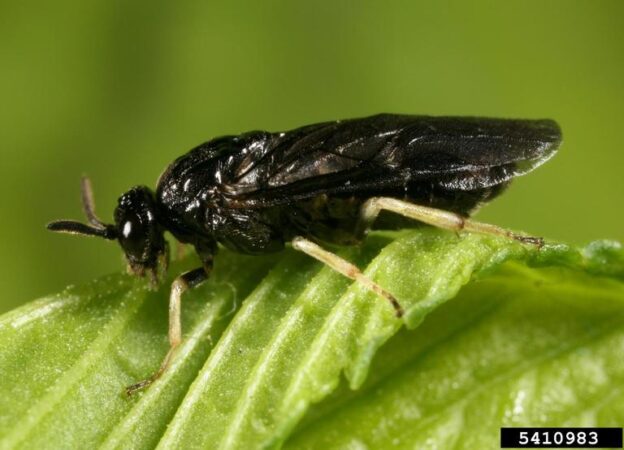
Figure 1. Elm zigzag sawfly adult, Gyorgy Csoka, Hungary Forest Research Institute, Bugwood.org
However, when in new landscapes, aspects of this insect’s life cycle enhance its ability to spread across new habitats and do significant damage to its host plant, the elm tree. EZS was first detected outside of its native range in Europe in 2003. Then, in 2020, it was found in North America for the first time in Quebec. It has since been detected in several states in the US, spreading first through the Northeast before entering the Midwest. It has not yet been detected in Indiana, but has been in the surrounding area.
Elm zigzag sawfly is a member of the insect order Hymenoptera, which includes bees, ants, and wasps. More specifically, sawflies belong to a suborder known as Symphyta, whose members are noted for a broad-waisted appearance and a saw-shaped ovipositor. Sawflies are a fairly common group of insects, though observers will often overlook them or confuse them for other insects. Adult EZS are generally small, darkly-colored insects that are easy to write off as ‘just another black bug’ you see around the garden or yard (Fig. 1).
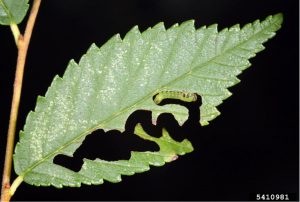
Figure 2. Elm zigzag sawfly larva feeding, Gyorgy Csoka, Hungary Forest Research Institute, Bugwood.org
They resemble wasps, but possess a broad waist with no narrowing of space between the thorax and abdomen, and they lack a stinger. EZS larvae closely resemble caterpillars in both form and feeding habits, with pale green coloration, a black stripe that runs down the length of the body, and dark T-shaped markings on the legs (Fig. 2). The larvae, like moth and butterfly caterpillars, will also possess six pairs of fleshy prolegs that are lost upon reaching maturity. While the larvae bear chewing mouthparts to consume the leaf material of many kinds of plants, the adults are nectar and pollen-feeding. It should be noted that EZS larvae chew zigzag patterns into elm leaves, thus the common name of the insect. Like bees and wasps, sawflies also possess wings, but are typically lazy fliers, choosing to fly only during warm, sunnier periods of the day.
Purdue Agriculture News: As autumn settles in, we eagerly await the transformation of leaves into vibrant hues of red, orange and yellow. However, this year might tell a different story due to prolonged periods of hot weather. Ben McCallister, urban forestry specialist in Purdue University’s Department of Forestry and Natural Resources, sheds light on what to expect this fall.
The Impact of Weather on Fall Foliage Timing
“Right now, we’re seeing a mix of fall coming in and shifting temperatures, which is causing trees to respond. This back-and-forth hot weather is creating some color changes related to drought and stress. This can be expressed as brown color where leaves are starting to wilt and look a little crunchy from exposure to heat and drought stress,” McCallister explains.
While the typical color change occurs from mid-September to early November, it’s not unusual for leaves to remain green at this point in the season. McCallister suggests that while the hot weather “most likely won’t affect anything visually, it could influence fall foliage over time as climate change progresses.”
He anticipates a more pronounced display of fall colors extending through October, with some species showing their colors into November. Ultimately, the vibrancy and timing of these changes will depend on daily temperature fluctuations and the amount of sunlight trees receive.
The environment also plays a significant role in how trees respond. For instance, urban areas with more concrete and buildings create a “urban heat island” effect, which can delay color changes compared to more rural settings.
The Science Behind Color Transformation
The science of fall foliage is both fascinating and complex. McCallister explains that different tree species respond to autumn at varying times, with chlorophyll being a key player in this process.
“Changes in chlorophyll production leads to the color changes in leaves. Chlorophyll allows leaves to take up sunlight and convert it into energy, creating carbohydrates in the form of sugars – really anything that gives energy to the tree to help it grow, sustain itself and compartmentalize,” McCallister notes.
As temperatures cool and the sunlight diminishes, chlorophyll production declines, allowing the green hues of leaves to fade. This decline reveals carotenoids and anthocyanins – two chemicals essential to fall foliage. Carotenoids contribute to the yellow and orange shades, while anthocyanins produce reds and purples. As chlorophyll wanes, these vibrant colors emerge.
“It’s a very cool process,” McCallister adds. “Each color absorbs different spectrums of light, altering energy uptake and preparing trees for leaf drop and dormancy. As leaves in deciduous trees transition, trees store energy in their roots and wood so they can brave the winter.”
Viewing Fall Foliage
When it comes to enjoying fall foliage, McCallister emphasizes that Indiana offers many great viewing locations not far from Purdue’s campus.
Locally, Martell Forest, which is open to the public, is a great spot to check out the fall foliage and immerse yourself in the woods,” says McCallister.
What’s Next?
Leaf drop is likely to occur anytime from mid-October into December, although this process may take longer than usual due to the milder winters we’ve been experiencing. Similar to color changing, the timing of leaf drop varies by tree species and their growth patterns, as well as the overall weather conditions.
“For instance, ginkgo trees turn this brilliant yellow and have a cool reaction to leaf drop. Typically, all their leaves fall within a day or so, creating a carpet of yellow. In contrast, trees like maples and oaks, which have a mix of yellow, orange and red leaves, tend to hold onto their foliage a bit longer,” McCallister recalls.
It’s also important to note that while coniferous trees, like pines, spruces and furs, retain their needles year-round, some conifers like bald-cypress trees drop theirs. This sometimes causes confusion for homeowners who mistake these deciduous conifers for dying trees.
To provide the best care for your trees during these changing weather patterns, McCallister advises familiarizing yourself with different tree species. Resources like Google and dichotomous keys in forestry books can help with species identification and lead to tips for care. Regularly checking your trees’ health is essential year-round. Specialists in your local county Extension offices and ISA Certified Arborists can be valuable resources for proper tree management.
Lenny Farlee, sustaining hardwood Extension specialist for Purdue’s Department of Forestry and Natural Resources (FNR), has been named a 2024 Fellow of the Society of American Foresters (SAF). The SAF Fellow Award, one of the highest honors bestowed on an SAF member by their peers, recognizes long-standing service to forestry at the local, state, regional and national levels.
Farlee was honored with the award during the 2024 SAF National Convention, which took place in Loveland, Colorado from Sept. 17-20.
Zhao Ma accepts the 2024 Family Forests Education Award on behalf of Lenny Farlee and the other project team members.
“Being named a Fellow of the Society of American Foresters is particularly meaningful to me since it originates from a nomination by my peers at the state level,” Farlee said. “I am very grateful that my colleagues in forestry here in Indiana considered my service worthy of recognition, and I owe much of the credit to them for their support of me through my career. It has been my privilege to serve the people and the profession as an Extension forester here at Purdue.”
Farlee educates people about forestry in many ways, including through the popular Extension YouTube series “ID That Tree,” which has over 100,000 views.
Farlee, Ronald Rathfon, Don Carlson, Jonathan Ferris,Dave Osborne and Phil Woolery worked together to develop the course. The course introduces forest landowners to the biology and management of forests and what resources and professional assistance are available. According to survey results from 2021 participants, “94.4% stated that the information was useful to help them make future decisions and 92.5% stated that the information was useful to help act to manage their property objectives.”
“We in FNR, along with forestry professionals in Indiana and the landowners who have communicated with Lenny and his colleagues through the ‘Forest Management for the Private Woodland Owner’ course, know how valuable this program has been to sustainable forest management in Indiana,” said Zhao Ma, interim department head and professor of forestry and natural resources. “So it is absolutely wonderful when others outside of our FNR community and beyond Indiana also recognize the excellent work that Lenny and his colleagues have been doing…, I would also like to share one more note about Lenny – not only has Lenny been a highly valued and respected member of FNR and the forestry profession for many years, but he is also one of the nicest people I have met. He is knowledgeable yet humble, effective yet gentle, serious about his work yet able to have fun, very busy yet always willing to help others and try to be present. We are lucky to have Lenny as our colleague in FNR.”
Morning AgClips — Nestled within the cool, flowing waters of Indiana’s Blue River, the elusive hellbender thrives under big, flat rocks, seeking refuge from predators and finding the perfect conditions to lay their eggs. But in recent years, they have become increasingly difficult to find.
Morning AgClips interviews Purdue hellbender team for details regarding Farmers Helping Hellbenders Project, aimed at restoring Indiana’s endangered hellbender salamander population by improving water quality in the Blue River-Sinking watershed. Learn more about this initiative by hearing directly from the people involved, with the two overarching goals being about improving hellbender habitat and also enhancing local farming operations. Particularly, the project engages farmers in adopting sustainable practices as well, while strengthening conservation efforts for hellbenders.
Hellbenders used to have a much larger range, occurring in most of southeast Indiana’s tributaries to the Ohio River and in the Wabash River. Sadly, its population has dropped drastically due to modification of stream habitats including the accumulation of sediment, agricultural and industrial pollution, warming waters and the channelization of streams and rivers. Because of their decline, these endangered ancient amphibians, with their large, unique flat bodies, have become the focus of an ambitious conservation effort led by Purdue University.
“The significance of the hellbender and its conservation extends beyond the species itself,” Purdue Extension Wildlife Specialist, Nick Burgmeier explains. “Hellbenders are an indicator species; their presence reflects the health of the water quality. Historically common and a top predator in streams, their decline has ecological repercussions, particularly on crayfish populations, which can disrupt food webs.”
Purdue Landscape Report: August was National Check Your Tree Month, but this is something that every tree owner/manager should be doing year-round. As the last hot days of summer are finishing up and we look forward to cooler fall days, we can look to our trees for different signs of trouble.
Most people tend to look up at the canopy before anything else in trees. Check leaves for dieback, discoloration, stickiness or signs of chewing. Check branches and the main stem for damage like splits and breaks, peeling bark, tunneling patterns under the bark, oozing wet spots, or sawdust around the tree. These could be signs of issues in the root system, pathogens like bacteria or fungal organisms, insect problems, or structural damage.
This is not an exhaustive list and if you notice these or anything else that seems off, it could be time for a deeper dive into what might be wrong. If you know the species of your tree the Purdue Plant Doctor is a great tool to narrow down a diagnosis. You can also contact your local Extension office or an ISA Certified Arborist.
On a more positive side, you don’t have to be on the lookout for damage, decline, or signs of pathogens and pests. It is also a matter of enjoying the trees in your landscape. Take some time out of your day to sit in the shade especially as we transition from hot summer temperatures into the cooling of autumn. Revel in the color changes as chlorophyll production slows revealing the carotenoids (that give us yellows, oranges, and browns) and anthocyanin (that produces reds and purples). In winter, not only can you better see damage in the canopy hidden by leaves in the growing seasons, but also the structure and architecture of the canopies in different tree species and the differences in bark textures. And in Spring, new growth of leaves and flowers shows us Winter is nearing its end, bringing warmer days.
So check your trees throughout the year. But not only for potential issues and risk management but also for enjoyment. Trees offer us no many benefits and sometimes it takes a little reminder. If you do see any signs of decline or damage, again, be sure to contact your local Extension office or an ISA Certified Arborist.
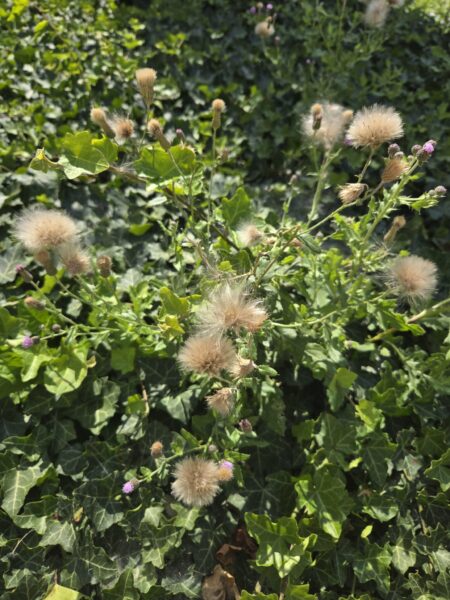
Purdue Landscape Report: As summer comes to a close, plants are rapidly releasing seeds and the most noticeable are the flying fluffy type. Thistles, asters and milkweed are just a few of the summer-flowering plants that depend on the wind to disperse their seeds, sometimes carrying them miles away to potentially suitable locations, though seeds typically land within a few meters of the mother plant. This may not be a concern if it’s a desirable plant, but can become extremely problematic when that seed comes from Canada Thistle (Cirsium arvense) (Fig. 1).
Figure 1. Canada thistle (Cirsium arvense), growing amongst common ivy (Hedera helix), produces a fluffy seed that is dispersed by wind.
Canada thistle is found on the list of Indiana Noxious Weeds (IC 15-16-7-2), which mandates that landowners take necessary steps to control and contain the spread of this highly invasive species. Formal enforcement of this Indiana Code falls to Township Trustees, though weed control is a responsibility that is often overlooked. Landowners and homeowners shouldn’t wait for a notice, or knock at the door, from a Township Trustee to begin controlling Canada thistle. It’s listed as a noxious weed for good reason.
Canada thistle is a perennial plant that can reproduce from seed or rhizomes making it difficult to control and contain. Each plant can produce thousands of wind-blown seeds that may remain viable for up to 20 years in the soil. Rhizomes are horizontal underground stems that can grow several feet and put out new shoots (Fig. 2). To add insult to injury, if a rhizome is cut or tilled, a separate plant may grow from each piece of rhizome.
Mechanical and cultural control options for Canada thistle are limited and may reduce plant density, but are not effective at eradicating large, established populations in a landscape. A new population, without an established root system, may be controlled with frequent mowing to deplete food reserves and prevent seed production.Small, isolated populations may be controlled with hand-pulling, but this will need to be repeated every few weeks.
Figure 2. Canada thistle (Cirsium arvense) reproduces by growing horizontal underground stems called rhizomes. Rhizomes can send up new shoots several feet from the mother plant.
Chemical control options include pre- and post-emergent herbicides and, in many cases, applications of both types are needed for complete eradication. A pre-emergent herbicide, with an active ingredient of dichlobenil, is effective at preventing seed from germinating, but will not control established plants. A post-emergent herbicide with the active ingredient of clopyralid is the most effective option for home gardeners. Clopyralid is a selective herbicide for broadleaf weeds, but most vegetable and ornamental plants are susceptible. Precautions should be taken to avoid off-target damage. Read and understand the herbicide label before use. The label is the law.
Regardless of the method used, complete control of an established Canada thistle population will take persistence over multiple seasons. If the fluffy seed is beginning to fly from your thistle patch, it will likely take many more seasons to rid the garden of this pest, but it is possible. To win the battle against Canada thistle, it takes serious grit and an effective herbicide, or a good realtor.
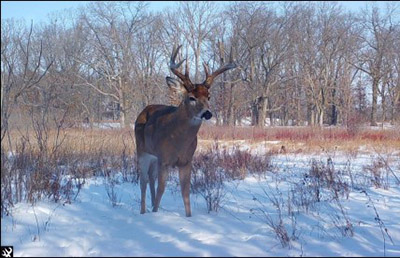
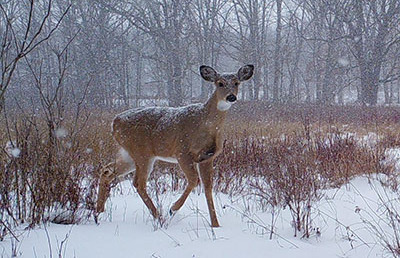
It is in the vested interest of both humans and wildlife to reduce potential traffic collisions. Researchers in the Purdue Department of Forestry and Natural Resources and with the Indiana Department of Natural Resources looked at one possible option to do so in a five-year study involving the development and use of deer-reduction zones, areas where targeted recreational hunting was utilized to reduce animal-vehicle collisions.
“The initial goal for this research was to test a method for decreasing deer-vehicle collisions (DVCs) throughout Indiana,” Delisle said. “DVCs are quite frequent in Indiana. From 2003 to 2022, there were more than 300,000 reported DVCs in Indiana, with estimated costs to society of more than $2.5 billion dollars! Therefore, discovering a way to decrease the number of DVCs is important for deer management in Indiana.”
Researchers initially studied the activity of deer in delineated research units across the state, the findings of which are available in an article titled “Deer activity levels and patterns vary along gradients of food availability and anthropogenic development,” published in Nature’s Scientific Reports. The study examined the relationships between animal activity and the availability and quality of food, proximity to human development and other factors, utilizing trail cameras to sample more than 1,000 unique locations during the winters of 2019, 2020 and 2021.
“In that paper we found that deer in the northeast region of Indiana (what we called RMU 9) spend more of the day active than in other regions we studied,” Swihart explained. “Because traffic volume also tends to be higher during the day, deer in this region presumably are more likely to collide with a car. In the northeast region, we specifically estimated deer to be more active in the morning and less active at night, unlike the other regions.”
The publication summarizes the results:
“If animals either are active during a greater fraction of each day or shift their activity to coincide with periods of peak vehicular traffic volume, the chances of animals and vehicles colliding on the landscape likely will increase. In our study, we documented in RMU 9 the highest regional activity levels and a pattern characterized by a greater fraction of activity during the morning rush hours. Under such conditions, accidents involving collisions between motorists and deer might be expected. Indeed, deer-vehicle collisions occur at a rate 1.98 times higher in RMU 9 compared to RMU 3 and 4. Therefore, quantitative examinations of the relationships between characteristics of activity distributions and deer-vehicle collisions may help future management planning to reduce collisions. If positive relationships are found, incentivizing humans to hunt deer in close proximity to roadways may reduce occurrence of deer-vehicle collisions by causing deer to shift to nocturnal activity patterns, reduce movement rates, or select areas further from roads.”
Based on the results of the initial study, researchers tested how well policies designed to increase human hunting of deer (longer hunting seasons and increased harvest limits) reduced deer-vehicle collisions along 618 kilometers (or 384 miles) of high-risk roadways, or those in the upper 99th percentile in terms of DVCs.
Of the 51 selected roadways covering 949 km, relaxed hunting regulations were implemented among 15 of them, designated as treatment deer reduction zones (DRZs), while 36 roadways were left as is, designated as control DRZs. All parcels of land within 0.8 km of the high-risk road were included as part of the deer-reduction zone.
A unique license was developed specifically for hunters pursuing deer within treatment DRZs, with a cost ranging from $24 to $240 depending on the year and a hunter’s residence status.
Findings from the study show both a decrease in number of deer-vehicle collisions and the amount of economic damages from those accidents, as well as increased revenue for the local wildlife management agency. The publication details:
“We estimated a strong interaction between treatment type and initiation of DRZs. Deer reduction zones decreased DVCs by a predicted 21.12 % along 618 km of high-risk roadways and prevented an estimated 69.6 DVCs from 2018 to 2022. Deer reduction zones saved up to $653,756 in economic damages to society during the 5-y treatment period. This total savings included $483,983 in estimated vehicular damage, $123,180 in avoided fatalities, and $46,593 in avoided injuries. The DRZs brought in $206,268 in revenue from license sales.”
Delisle said the success of the study lies not only in the fact that the methods tested worked in reducing DVCs, but also in the potential supplemental revenue for wildlife agencies, which are often underfunded and overwhelmed.
“Our findings are unique in that most previously tested methods for reducing DVCs cost a lot of money to implement, but our method actually generated revenue from hunting licenses,” Delisle noted. “We also found a way to decrease DVCs, which is massive in terms of the cost savings to society and the potential prevention of human injuries and fatalities, which unfortunately do occur in DVCs. In addition to nontraditional stakeholders, which could be defined as anyone driving a car in Indiana, our method for reducing DVCs also gives traditional stakeholders (i.e., hunters) more opportunities to harvest deer in certain areas of Indiana. Needless to say, we were very pleased with these findings because it was the first test of such methods across very large scales germane to state wildlife management.
“Knowing that we were able to figure out that increased recreational hunting worked at reducing DVCs feels special because we may have prevented someone from getting seriously hurt or killed. Personally, being able to analyze data on an experiment like that this has the potential to really influence how deer are managed in Indiana as well as help people (prevention of costs, human injuries and human fatalities) was really cool and I am thankful to have been given the opportunity to work on this project with my coauthors.”
Caudell believes that there is a future in applying these research findings beyond the original test areas and said the Indiana DNR is already working to do so.
“Now that we have evidence that this method can reduce deer vehicle collisions, the DNR is in the process of adding these deer reduction zones to our rules so that hunters will continue to use these areas over time,” Caudell said. “DNR’s deer biologists will also look for other areas around the state where we would expect this season to be effective and possibly expand the reduction zones to new areas around the state.”
Although the study shows that increased human hunting decreased the number of deer-vehicle collisions, more work must be done to explain the connection between hunting and a reduced number of accidents.
Delisle explains that the group has two main hypotheses: (1) the population density of deer may be reduced before most DVCs occur (mid-October to December), hence, there are fewer deer on the landscape to collide with vehicles; and (2) there is a behavioral change in deer where deer avoid areas with more human hunters (again, behavioral change before mid-October to December).
“Ultimately, although the findings of this project were pretty neat, more research is needed to discover what ecological mechanism is driving the reduction in DVCs,” Delisle noted. “As is typical in the awesome process of science, someone else will need to make that discovery.”
Beyond establishing the connection between hunting and reduced deer-vehicle collisions, another more specific hypothesis, related to No. 2 above, involves expanding the research to examine collision rates with bucks and does.
“Other researchers have shown that deer adjust their activity to avoid risky times and risky places, with greater tolerance for risk during breeding seasons (for bucks) and fawn-rearing seasons (for does),” Swihart said. “So, a prediction that could be tested in future research is that deer-reduction zone policies, which do not include fawning season, should be more effective in reducing deer-vehicle collisions with does than with bucks because does will be more likely to adjust their activity in response to greater hunting risk during fall/winter.”
Purdue Landscape Report: Early June, we received a white pine sample at the Purdue University Plant and Pest Diagnostic Lab that showed early season needle loss lower in the tree canopy (Figure 1, 2). The majority of conifers hold onto their needles for multiple years, so loss of needles, even in the fall, can come as a shock to homeowners. In this particular case, we found multiple fungi that could be contributing to needle blight or needlecast.
Figure 1: Eastern white pine trees with early season needle loss.
Figure 2: Closeup images of white pine with needlecast. Multiple fungi were present: Lophodermium, Lecanosticta, and, Septorioides. Note, primarily the older needles have been affected. New needles appear green and healthy.
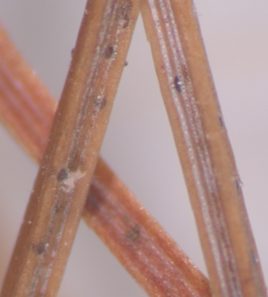
The first two fungi were determined to be relatively common pathogens for Indiana: Lophodermium and Lecanosticta (brown spot). Symptoms appeared relatively typical for these pathogens where the needles turned brown over-time. However, there were other needles in the canopy and on the sample that had a lighter coloration. We found small black fungal structures dotted along the length of these needles producing light colored cirrhi (also called spore horns) (Figure 3). After examining the fungal spores, isolating the fungus, and performing DNA testing, we determined this third fungus to be Septorioides strobi, the causal agent of Septorioides needle blight of pines. This fungus has been determined to be a contributor to white pine needle damage/defoliation.
Figure 3: Black fungal structures developing on dead needles with white sporulation exuding from the top.
White pine needle damage/defoliation (WPND) was first observed in the state of Maine in 2010 and was attributed to three needle blight diseases, including Lecanosticta, and has since been observed throughout the Northeast US. However, researchers eventually determined that a new fungus, Septorioides strobi, was also found consistently in blighted needles and could be contributing to WPND.
This is the first time we have found this fungus in the state of Indiana, though it has been present for longer than a single season. We do not know how it will react to our climate nor if it will cause significant damage to affected trees. Like other needle blight pathogens, Septorioides has been observed to sporulate around the same time during humid, wet weather, but symptoms may not develop until the following year. White pines are the primary host for this needle cast disease, but it can also develop on 2, 3, and 5 needle pines. While we see white pine decline is a major problem, Septorioides will not likely be the final nail in the coffin for white pines in Indiana, though it certainly will not help us keep them healthy.
MyDNR,Indiana’s Outdoor Newsletter: As a result of Indiana’s positive detection of chronic wasting disease (CWD) in LaGrange County in April, Indiana DNR has restricted moving deer from any CWD Positive Area for rehabilitation purposes.
With the change, an individual who finds an orphaned, sick, or injured deer in a CWD Positive Area may only surrender the deer to a DNR-permitted wild animal rehabilitator that is located within a CWD Positive Area. This restriction is to help minimize the spread of CWD to new parts of the state, as deer can carry this disease without appearing sick.
Currently, there is one CWD Positive Area in Indiana. It includes LaGrange, Steuben, Noble, and DeKalb counties. While no CWD positive deer have been documented in Steuben, Noble, or DeKalb counties, those counties are considered part of the CWD Positive Area because of their proximity to where the state’s first CWD-positive deer was found in LaGrange County.
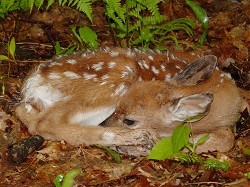
During their first few weeks of life, fawns often hide by themselves and stay motionless to avoid predators while the mother is looking for food. If you find a fawn alone, you can help it by letting it be, giving it space, and leaving the area. Its mother is likely nearby.
How does forest management affect wildlife, specifically birds? Which birds prefer which types of forest habitat? How can you help birds thrive on your property?
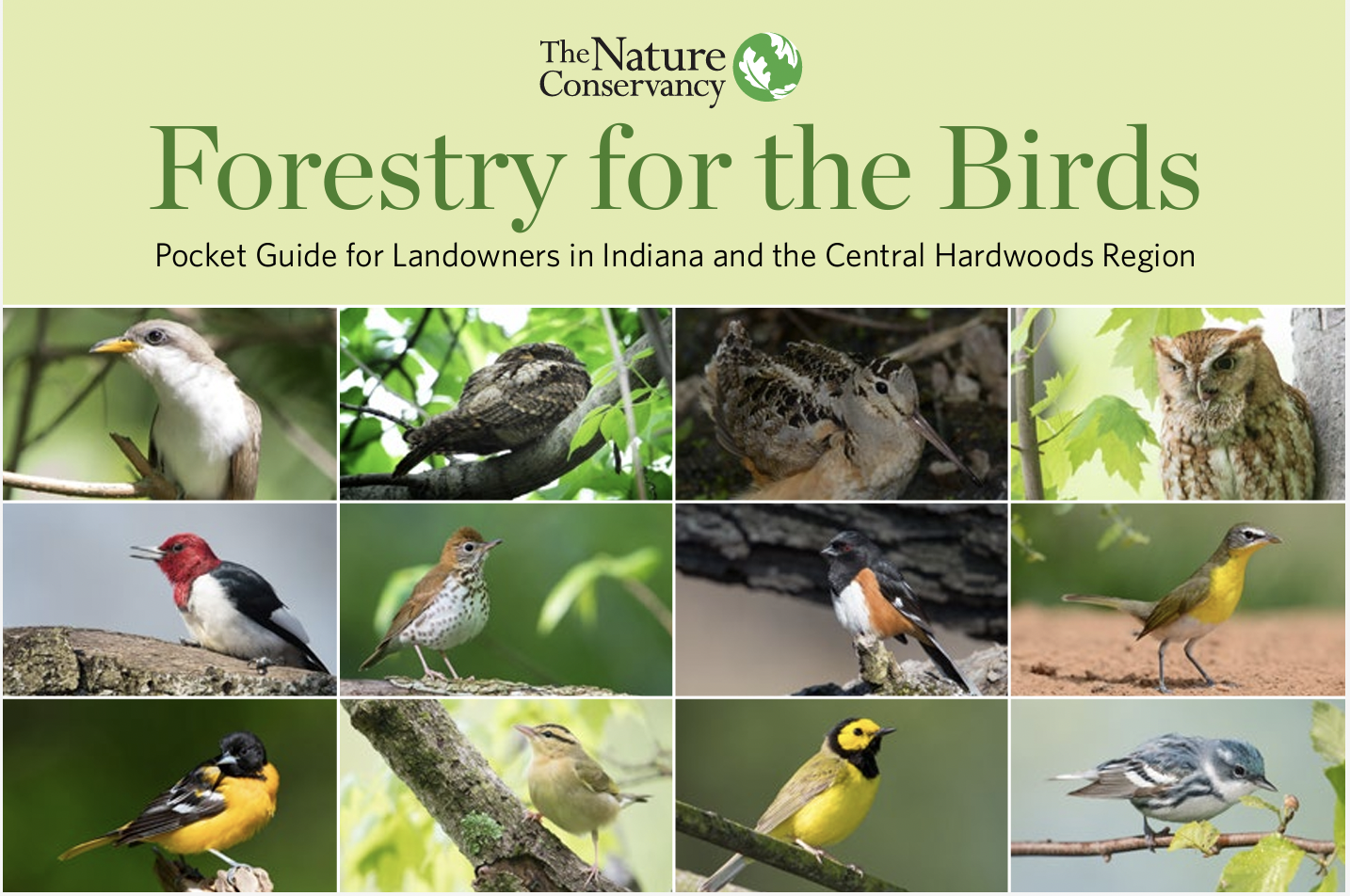
The Forestry for the Birds Virtual Tour is a new tool developed by Purdue Forestry and Natural Resources and Purdue Extension, which offers answers to those questions and more in an easily digestible and visual format. The virtual tour is based on The Nature Conservancy’s Forestry for the Birds program.
The virtual tour is an interactive guide to forest management techniques and birds in the forest that features 360-degree images, including several taken on eight Purdue FNR properties across the state. Bird identification resources from Cornell Lab of Ornithology’s Macaulay Library, forest management resources from Purdue Extension and more make the tour come to life and allow landowners to improve their identification and management skillsets.
Young conducted breeding bird surveys and made recordings of all the species she encountered whether audibly or visually last summer. She utilized a GoPro Max to capture 360-degree images of the properties she surveyed. Song Meter Mini acoustic monitors allowed her to capture various bird songs, which are incorporated into the background of some of the virtual scenes of the tour. Still camera images also provide stunning visuals of each property and bird type.
“I think my favorite thing about the tour is that when you are exploring each scene, it really feels like you are there,” Young explains. “I want folks who may not be able to visit our properties to feel like they are right there, inside the scene, while learning a thing or two about bird conservation and managing our forests for our rapidly declining feathery friends.”
Young is quick to note, however, that it is much easier to spot the birds she added to each scene of the tour than when trying to look for them during surveys, when they are often hiding behind the leaves in the canopy.
Forestry for the Birds is a project developed by the Indiana Chapter of The Nature Conservancy, which provides foresters and private landowners with the information and tools needed to enhance their forests in a way that fosters thriving bird communities. Many resources, including the Forestry for the Birds pocket guides, focus on the “Birders’ Dozen,” or 12 bird species which nest in the Central Hardwood ecoregion of Indiana that are easy to identify by sight and/or sound, and need conservation action to assist with range-wide or local population declines. The Birders’ Dozen species were selected by The Nature Conservancy and an independent group of birders, ornithologists and conservationists.
The virtual tour focuses on how different forest stewardship practices and forest types can benefit a variety of bird species, including the Birders’ Dozen. In each scene, there are three or more bird species to look for, recorded bird songs which are representative of what you could hear in that scene, interactive icons that link to images and videos and an audio description of the scene.
“I’m excited to see this virtual tour come to fruition – it provides some depth of information to complement the Forestry for the Birds Pocket Guide and Silvicultural Guide,” said Jessica Outcalt, Purdue Extension Educator, who helped develop the Forestry for the Birds materials for TNC. “I especially appreciate the visuals and audio that can’t be communicated via printed materials, and how this tour captures the sense of being in a forest that will make the material accessible to a wider audience.”
The properties shown illustrate a variety of forest stewardship techniques ranging from single tree selection to group tree selection, shelterwood, clearcut, oak woodland restoration and prescribed fire. The tour also highlights both young forests and mature closed-canopy forests.
*Bird species listed above with links will take you to the Indiana Woodland Steward website as they share highlights with this information in “The Birders’ Dozen Profile” written by Jessica Outcalt.
The American Woodcock, Wood Thrush and Cerulean Warbler are listed on the National Audubon Society watchlist, while the Cerulean warbler is state endangered in Indiana. The Eastern Whip-poor-will, American Woodcock, Worm-eating Warbler and Hooded Warbler have been noted as species of special concern by the Indiana Department of Natural Resources Division of Fish and Wildlife.