 Purdue University - Extension - Forestry and Natural Resources
Got Nature? Blog
In this episode of “A Woodland Management Moment”, Purdue Extension forester Lenny Farlee discusses the influence of a topographic characteristic on the landscape and that is aspect: the direction that a slope faces. There are some significant implications on the moisture levels of a site and thus, the tree species that could thrive on that site. The video outlines how aspect can affect factors in an environment and how best to utilize this information as a landowner. Watch to learn about site growth and species information as a casual viewer or a landowner!
If you have any questions regarding trees, forests, wildlife, wood products, or other natural resource topics, feel free to contact us by using our Ask an Expert web page.
Resources:
A Woodland Management Moment, Playlist, Purdue Extension – Forestry and Natural Resources (FNR) YouTube Channel
Explore the Rich World of Oaks with Purdue FNR Extension & Partners, Purdue Extension – FNR Got Nature? Blog
Conservation Tree Planting: Steps to Success, Purdue Extension – FNR YouTube Channel
It’s Not Too Late to Order Trees for Spring Planting, Purdue Extension – FNR Got Nature? Blog
Shrubs and Woody Vines of Indiana and the Midwest, Purdue University Press
Native Trees of the Midwest, Purdue University Press
ID That Tree, Playlist, Purdue Extension – FNR YouTube Channel
Investing in Indiana Woodlands, The Education Store
Woodland Stewardship for Landowners Video Series, Playlist, Indiana Department of Natural Resources YouTube Channel
District Forester, Indiana DNR Division of Forestry, for over 10 acres of woodlands
Professional Forester, Indiana Forestry & Woodland Owners Association (IFWOA)
Forest Improvement Handbook, The Education Store
Purdue Arboretum Explorer
Lenny Farlee, Extension Forester
Hardwood Tree Improvement and Regeneration Center
Purdue Department of Forestry & Natural Resources
Purdue Landscape Report: An unfortunate question I am sometimes asked is similar to this: “I lost my prized shade tree! What can I plant that will grow fast and give me shade?” While there is no instant fix to this scenario, let’s review a few trees that might be better choices here in northern Indiana.
One obstacle to consider is that many of the fast-growing trees are also fast-dying, meaning that, relatively speaking, they are not long-lived for trees. We’re already behind the 8-ball in our highly manipulated landscapes because we know that trees in landscapes tend to live much shorter lives than trees in their unmanipulated natural habitats.
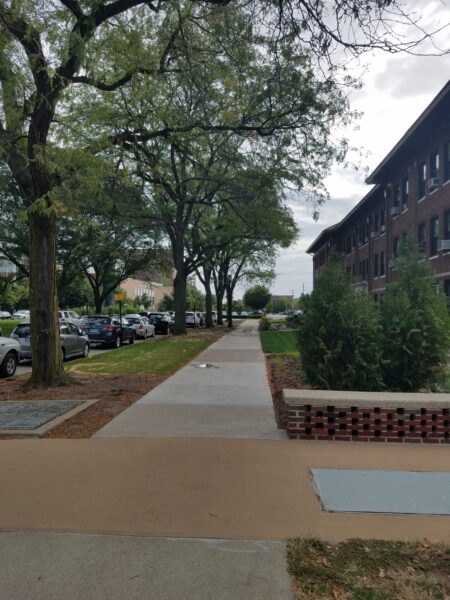
Figure 1. Honeylocust is a fast growing tree that performs well in urban plantings (Image from Purdue Landscape Report)
That said, here are a few trees to consider. I would still encourage homeowners to invest some time in researching the trees that they are considering. There are pros and cons to almost every tree, and there isn’t room in this article to fully explore all the advantages and disadvantages of each tree. Additionally, I will not be getting into detail about all the cultivars available.
Let’s start with our state tree, the Tuliptree (a.k.a Tulip-poplar or Yellow-poplar). Tuliptrees can become quite large and offer a pretty yellow fall color. They prefer deep, rich, well-drained soils.
If maples are on your mind, a couple of options would be Red maple and Freeman maple (a hybrid cross of Silver maple and Red maple). Red maple has more moderate growth. The Freeman maple is a faster grower and has stronger wood than one of its parents, the Silver maple. These maples do best in well-drained, slightly acid soils, but will tolerate a variety of soil conditions.
Northern catalpa is a fast grower, but dealing with the fruit litter, a long seed pod, may be a deterrent for some locations. It has large, heart-shaped leaves. It would grow well in moist sites.
Common hackberry is a fast grower, but it is susceptible to galls on the leaves (from a n insect), and limbs can become susceptible to wind and ice damage. It tolerates a wide variety of soil conditions. Thornless honeylocust is widely adapted to different soil types. Honeylocusts in the wild produce large thorns. The Thornless honeylocust is adapted to landscapes and allows dappled sunlight to reach turfgrass, so that it thrives more than it would under a tree that provides heavy shade.
Sweetgum is also a fast-growing shade tree with brilliant fall colors. It has a star-shaped leaf. One drawback of sweetgum is the spiny seed capsule. This fallen fruit can make walking in the yard barefoot a painful experience.
Eastern cottonwood is the tree on record for the fastest growth rate of any tree native to the U.S. However, those with cottonwoods in their yard can tell you that the cottony seed mass shed in the spring sticks everywhere. It can be a mess. Plus, cottonwood can shed limbs frequently, especially after storms. This tree is commonly found along rivers and streams, so it not surprisingly prefers moist soils.
Also found along rivers and streams, American sycamore is a fast-growing tree in some landscapes. However, it can be a messy landscape tree, shedding bark, leaves, limbs, and fruit nearly year-round. The large fallen leaves can smother grass if not mowed or raked. It is also sensitive to a spring disease called anthracnose, which can cause defoliation and twig death.
Wild black cherry may be another good choice. Although it may not be available in some nurseries, it can be grown from seed. It prefers rich, moist, well-drained soils.
A couple of faster-growing oaks to consider are Pin oak and Northern red oak. Pin oak would be better suited to slightly wetter spots, while Red oak would work on a wider variety of soils, preferring rich, moist, well-drained sites. Pin oak is susceptible to iron chlorosis (yellowing leaves) on alkaline soils.
Finally, American basswood also prefers rich, moist, well-drained soils and is somewhat shade-tolerant. This tree can grow quite tall and provide excellent shade.
In your research, find out how large the tree you will be purchasing will get. One common planting mistake is locating trees too close to structures. Consider the mature size when placing it in the landscape.
Time your spring planting near Arbor Day, the last Friday in April.
Original article posted: Fast-Growing Trees for the Landscape.
Subscribe and receive the newsletter: Purdue Landscape Report Newsletter.
Resources:
Fifty Common Trees of Indiana
An Introduction to Trees of Indiana
Native Trees of the Midwest, The Education Store
Shrubs and Woody Vines of Indiana and the Midwest, The Education Store
Tree Installation: Process and Practices, The Education Store
Wildlife Habitat Hint YouTube Playlist, Purdue Extension – FNR
Invasive Species YouTube Playlist, Purdue Extension – FNR
Report Invasive Species, Purdue Invasive Species
Find an Arborist video, Trees are Good-International Society of Arboriculture (ISA)
ID That Tree, Purdue Extension-FNR YouTube playlist
Purdue Plant and Pest Diagnostic Laboratory
Trees and Storms – The Education Store, Purdue Education’s resource center
Planting Your Tree, video, Purdue Extension
Subscribe Purdue Extension – Forestry and Natural Resources YouTube Channel
John Woodmansee, Extension Educator, Whitely County
Purdue Extension
Purdue Landscape Report: Spring is just around the corner, green spaces are beginning to wake from their winter slumber, Earth Day and Arbor Day are a little over a month away, and people are ready to get outside with planting on their minds. But before you go and get your tree(s) for planting, there is quite a lot to think about. Every tree is an investment, and if properly cared for, will outlast us and potentially future generations. So, what goes into planting trees, especially large trees?
One important note for successfully planting any tree is thinking about your goals, or what you want out of a new tree. In the case of large trees, the first thing that usually comes to mind is shade. Having a large shade tree to block the sun on your home in hot summers can significantly reduce power consumption from air conditioning. Large shade trees also give us great locations to play, picnic, or relax outside in our backyard, at local playgrounds, or parks. Given the space and care to grow, they can create wonderful local environments and beautiful aesthetics, driving down neighborhoods and city streets. The right species can benefit local wildlife with food production and habitat improvement.
When you know what you want, you can begin to assess your site to see if you have the right space for your future tree. Large trees require larger spaces. If your tree survives to a mature size, will it interfere with anything else around it? Are there utility lines above or below your planting site? What is the proximity to homes, buildings, or other structures? Will it obstruct road signs, lights, or line of sight? Will falling leaves, nuts, or fruits adversely affect anything around the tree? What is the quality of the soil: pH, well-drained, wet, clay, loam, or sand? A poorly assessed planting site could lead to a doomed planting project by placing the wrong tree in the wrong place.
Once you have your goals in mind and know what type of site you have, you can begin to consider what species you may want to plant. A couple of good resources for considering species selection in the Midwest include your local extension offices, reputable nurseries, and online resources like the Morton Arboretum. In the case of large shade trees, we all would like to have our shade now, but trees take time to reach mature heights. That being said, some species grow a little faster than others. Faster-growing trees that grow well in urban settings include:
- Tuliptree or tulip-poplar, Liriodendron tulipifera, the state tree of Indiana, can withstand varying light exposure, acidic soil that is moist to well-drained, is moderately sensitive to drought, and can reach heights up to 70-90 feet. It is susceptible to ice damage and has weaker wood than other species.
- Northern catalpa, Catalpa speciosa, is slightly smaller at about 60 feet in good conditions, thrives in full sun, and a little more alkaline soil that is moist to well-drained. Large leaves and long bean-like seed pods can be messy, and the wood and structure are on the weaker side.
- Dawn redwood, Metasequoia glyptostroboides, is a deciduous conifer (drops its foliage every fall) that can reach heights of 70-100 feet. A non-native tree, it does very well in urban settings without competing with native trees, and can survive full sun in acidic, moist to well-drained soils. It is tolerant of some drought and flooding as well as road salt during the winter.
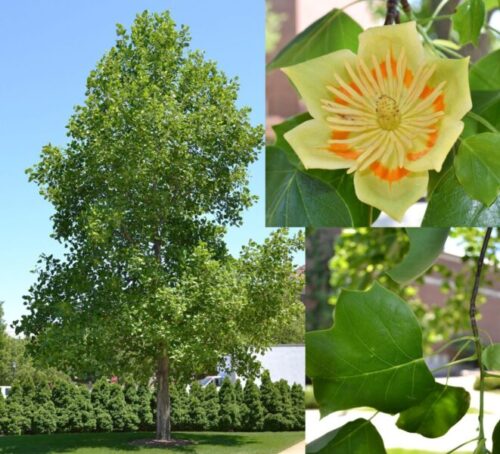
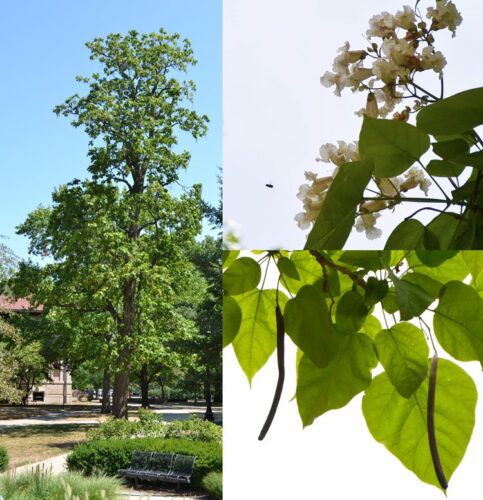
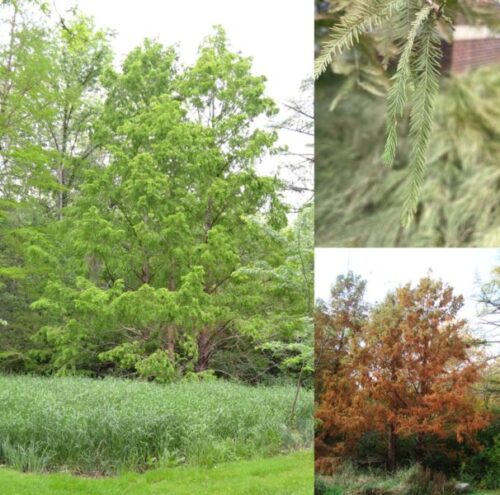
Next, we have some examples of trees slowing down to moderate growth:
- Silver linden, Tilia tomentosa, another non-native, is a common street tree that can reach heights up to 70 feet. Surviving in full sun to shade, it does well in moist to well-drained soils and is tolerant of some drought, alkaline soils, and road salt. Leaves that are dark green on top and silvery on the bottom, and flowers that can benefit some pollinators.
- Northern red oak, Quercus rubra, is one of my favorite native trees and reaches mature heights up to 75 feet. Preferring acidic, moist to well-drained soils, they can tolerate some drought as well as alkaline soils and clay soils. Leaves are dark green in summer and a beautiful red in the fall, with acorn production and interesting branch structure that benefits native birds and small mammals.
- Bald-cypress, Taxodium distichum, is similar to the dawn redwood. A deciduous conifer that loses its needles after the fall and can grow up to 70 feet. It can survive many soil types, but thrives in acidic, wet soils. In wetter sites, one thing to take into consideration is that it can send up “knee-like” roots well above the soil line to improve structural support and gas exchange. If these appear in lawn situations, they can both damage and be damaged by mowing operations. Extending mulch beds can reduce these negative interactions.
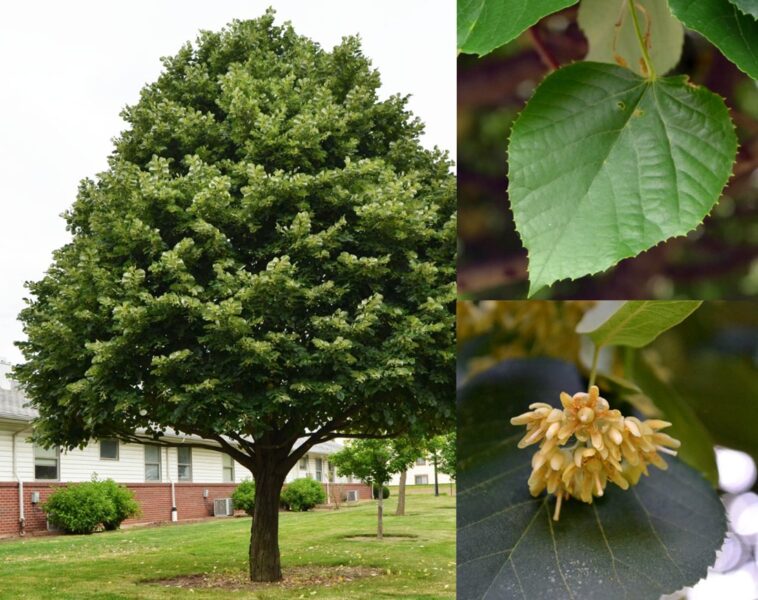
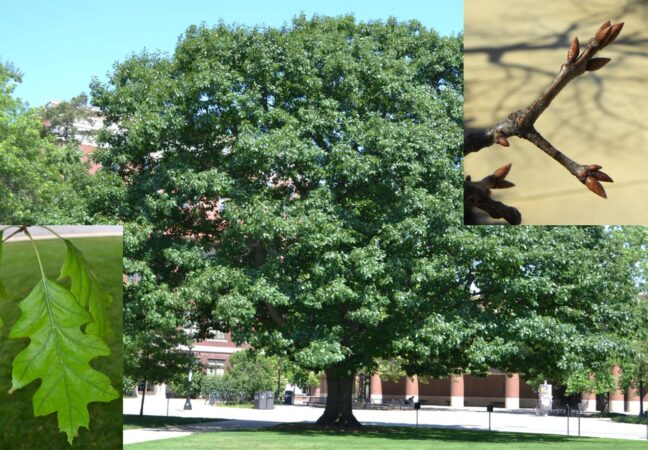
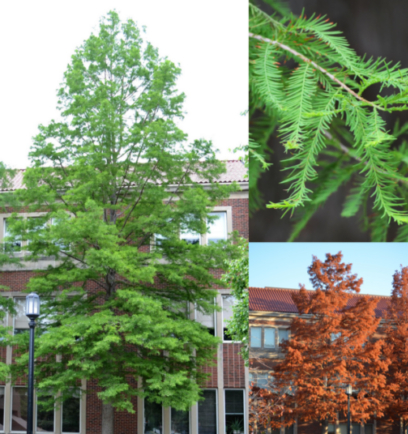
These suggestions are a small sample of large shade trees that can grow well in different urban settings. Remember to think of what the overall goal is for your planting and to assess your site to make informed species choices. With proper forethought, you can make a resilient landscape that your trees will be able to survive in for years and years. If you still have questions, you can contact your local extension office or find an ISA Certified Arborist at Find an ISA-Credentialed Arborist.
Subscribe and receive the newsletter: Purdue Landscape Report Newsletter.
Resources:
Re-mulch Your Trees, Purdue Landscape Report
Find an Arborist video, Trees are Good-International Society of Arboriculture (ISA)
Trees and Storms: Understanding Damage, Risk and Recovery – Got Nature? Blog, Purdue Extension – FNR
Why Is My Tree Dying? – Got Nature? Blog, Purdue Extension – Forestry and Natural Resources
Tree Risk Management – The Education Store
Tree Pruning Essentials, Publication & Video, The Education Store
Trees and Electric Lines – The Education Store
Southwest Damage, Scalding or Frost Cracking, Got Nature? Blog, Purdue Extension – Forestry and Natural Resources (FNR)
Tree Defect Identification, The Education Store
Planting Your Tree, video, Purdue Extension
Tree Risk Management – Got Nature? Blog, Purdue Extension – FNR
Tree Wound and Healing, Got Nature? Blog, Purdue Extension – FNR
Subscribe – Purdue Extension-FNR YouTube Channel
Ben McCallister, Urban Forestry Specialist
Purdue Forestry & Natural Resources
In this edition of ID That Tree, Purdue Extension Forester Lenny Farlee introduces us to dwarf chinkapin oak, an uncommon oak species found in far northern Indiana. Unlike many oaks that grow into large forest trees, this species often takes on a different form. Learn about the types of sites where dwarf chinkapin oak is typically found, how it compares to its relative the chinkapin oak and why it plays an important role in supporting wildlife. Whether you’re a student, landowner or simply curious about Indiana’s native trees and shrubs, this video offers a quick introduction to this unique and lesser-known oak species.
If you have any questions regarding wildlife, trees, forest management, wood products, natural resource planning or other natural resource topics, feel free to contact us by using our Ask an Expert web page.
Resources:
ID That Tree – Video Playlist, Purdue Extension – Forestry and Natural Resources (FNR) YouTube Channel
Purdue Arboretum Explorer
Conservation Tree Planting: Steps to Success, Purdue Extension – FNR YouTube Channel
A Woodland Management Moment, Playlist, Purdue Extension – FNR YouTube Channel
Woodland Stewardship for Landowners, Playlist, Purdue Extension – FNR YouTube Channel
Fifty Common Trees of Indiana, Purdue Extension – FNR
Indiana Invasive Species Council
Cooperative Invasive Species Management Area (CISMA)
Report Invasive, Purdue Extension
Habitat University, Episode 12 – Exploring the challenges of Invasive Species, Habitat University-Natural Resource University
Shrubs and Woody Vines of Indiana and the Midwest, Purdue University Press
Native Trees of the Midwest, Purdue University Press
Professional Forester, Indiana Forestry Woodland Owners Association
District Forester, Indiana Department of Natural Resources, 10+ acres
Find an Arborist, International Society of Arboriculture
Forest Improvement Handbook, The Education Store
Lenny Farlee, Extension Forester
Hardwood Tree Improvement and Regeneration Center
Purdue Department of Forestry & Natural Resources
In this edition of ID That Tree, Purdue Extension Forester Lenny Farlee introduces us to Shumard oak, a native oak species found in parts of Indiana. While it is sometimes confused with other oaks, including northern red oak, this species has key characteristics that set it apart. Learn where Shumard oak is typically found, how it fits into Indiana’s woodland landscapes and what to look for when distinguishing it from similar plants. This video provides a helpful introduction to identifying Shumard oak whether you’re a student, landowner or just interested in better understanding the trees around you.
If you have any questions regarding wildlife, trees, forest management, wood products, natural resource planning or other natural resource topics, feel free to contact us by using our Ask an Expert web page.
Resources:
ID That Tree – Video Playlist, Purdue Extension – Forestry and Natural Resources (FNR) YouTube Channel
Purdue Arboretum Explorer
Conservation Tree Planting: Steps to Success, Purdue Extension – FNR YouTube Channel
A Woodland Management Moment, Playlist, Purdue Extension – FNR YouTube Channel
Woodland Stewardship for Landowners, Playlist, Purdue Extension – FNR YouTube Channel
Fifty Common Trees of Indiana, Purdue Extension – FNR
Indiana Invasive Species Council
Cooperative Invasive Species Management Area (CISMA)
Report Invasive, Purdue Extension
Habitat University, Episode 12 – Exploring the challenges of Invasive Species, Habitat University-Natural Resource University
Shrubs and Woody Vines of Indiana and the Midwest, Purdue University Press
Native Trees of the Midwest, Purdue University Press
Professional Forester, Indiana Forestry Woodland Owners Association
District Forester, Indiana Department of Natural Resources, 10+ acres
Find an Arborist, International Society of Arboriculture
Forest Improvement Handbook, The Education Store
Lenny Farlee, Extension Forester
Hardwood Tree Improvement and Regeneration Center
Purdue Department of Forestry & Natural Resources
Join Purdue Extension forester Lenny Farlee in this episode of “A Woodland Management Moment” as he discusses the benefits of using windbreak plantings around hardwood tree plantations. Using a black walnut planting as an example, this episode introduces how windbreaks can influence early growth, protection and overall tree form. The video also connects windbreaks to broader planting strategies and long-term management objectives. Watch to learn how thoughtful plantation design can support both tree performance and woodland management goals.
A good resource to learn more is the Walnut Council website. Founded in 1970, the Walnut Council is an international association representing nearly 700 woodland owners, foresters, forest scientists, and wood-producing industry representatives in 45 states and three foreign countries. The purpose is to assist in the technical transfer of forest research to field applications, help build and maintain better markets for wood products and nut crops, and to promote sustainable forest management, conservation, reforestation, and utilization of American black walnut (Juglans nigra) and other high quality fine hardwoods.
If you have any questions regarding trees, forests, wildlife, wood products, or other natural resource topics, feel free to contact us by using our Ask an Expert web page.
Resources:
A Woodland Management Moment, Playlist, Purdue Extension – Forestry and Natural Resources (FNR) YouTube Channel
Explore the Rich World of Oaks with Purdue FNR Extension & Partners, Purdue Extension – FNR Got Nature? Blog
Conservation Tree Planting: Steps to Success, Purdue Extension – FNR YouTube Channel
It’s Not Too Late to Order Trees for Spring Planting, Purdue Extension – FNR Got Nature? Blog
Shrubs and Woody Vines of Indiana and the Midwest, Purdue University Press
Native Trees of the Midwest, Purdue University Press
ID That Tree, Playlist, Purdue Extension – FNR YouTube Channel
Investing in Indiana Woodlands, The Education Store
Woodland Stewardship for Landowners Video Series, Playlist, Indiana Department of Natural Resources YouTube Channel
District Forester, Indiana DNR Division of Forestry, for over 10 acres of woodlands
Professional Forester, Indiana Forestry & Woodland Owners Association (IFWOA)
Forest Improvement Handbook, The Education Store
Purdue Arboretum Explorer
Lenny Farlee, Extension Forester
Hardwood Tree Improvement and Regeneration Center
Purdue Department of Forestry & Natural Resources
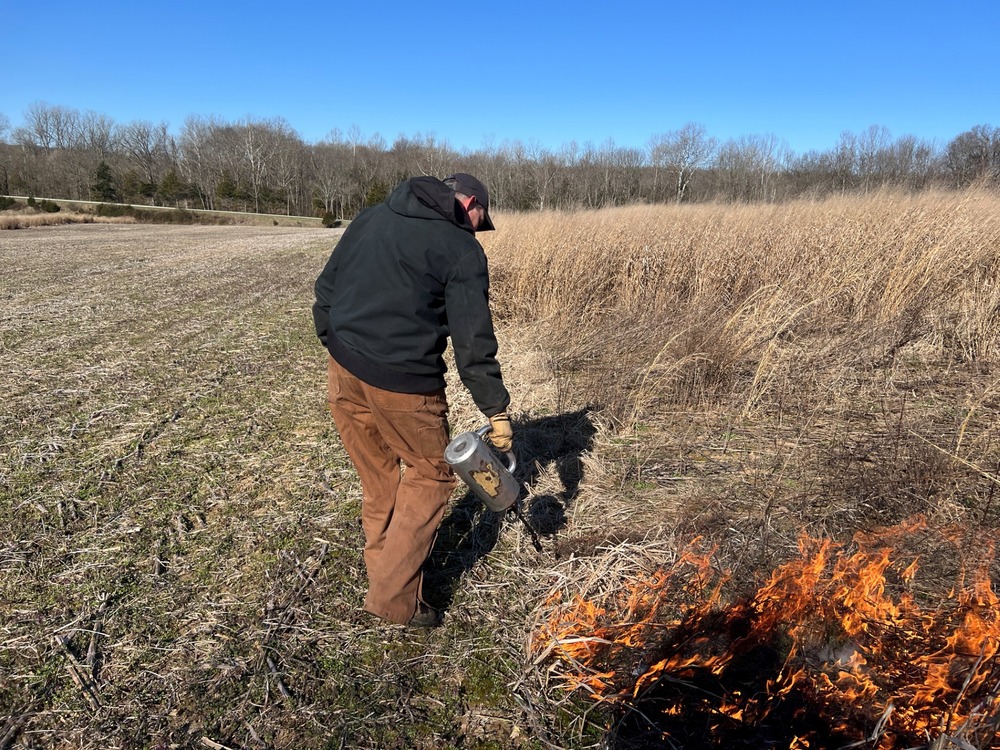
Indiana joined 22 other states in 2025 when it launched its state-level Certified Prescribed Burn Manager (CPBM) Program. This program resulted from HB-1557, which went into effect on July 1, 2025. For more information about the new prescribed fire law in Indiana and what it means for burners, check out the Indiana Prescribed Burn Law Factsheet.
This article will walk through the steps to complete all stages of the program. The Indiana DNR CPBM Policy can be viewed by visiting the Indiana Prescribed Fire Council website.
The CPBM program consists of three parts:
- Online Training
- In-Person Training
- Prescribed Burn Experience
 Indiana CPBM Requirements At-a-glance
- Online Training
- S-130
- S-190
- L-180
- IS-100
- In-Person Training
- S-130 Field Day (no pack test requirement)
- Indiana DNR Prescribed Fire for Managers
- Burn Experience (Minimum of 5 total burns for experience)
- Participate in 5 prescribed fires
- At least 3 in woodland at least 1 in grassland
- Ben an Apprentice Burn Manager for 2 burns
- 1 woodland and 1 grassland burn
- Paperwork and Documentation
- IN CPBM Application
- IN CPBM Experience Log
- IN CPBM Task Book
- Burn Plans for Apprentice Burns

Online Training Requirements
The online training required for the CPBM program includes many of the same courses as are necessary for Basic Wildland Firefighting.
- S-130 Firefighter Training
- S-190 Introduction to Wildland Fire Behavior
- L-180 Human Factors on the Fireline I
- S-100 Introduction to the Incident Command System
These are self-paced, free online courses available through FEMA, the National Fire Academy (NFA), and the Wildland Fire Learning Portal.
- FEMA – IS-100
- National Fire Academy Registration Page – S-130, S-190, L-180
- Wildland Fire Learning Portal – S-130, S-190, L-180
*Before taking any courses through FEMA or registering for the NFA, you need to obtain a FEMA SID#. You can do that at FEMA: Student Identification System.

In-Person Training Requirements
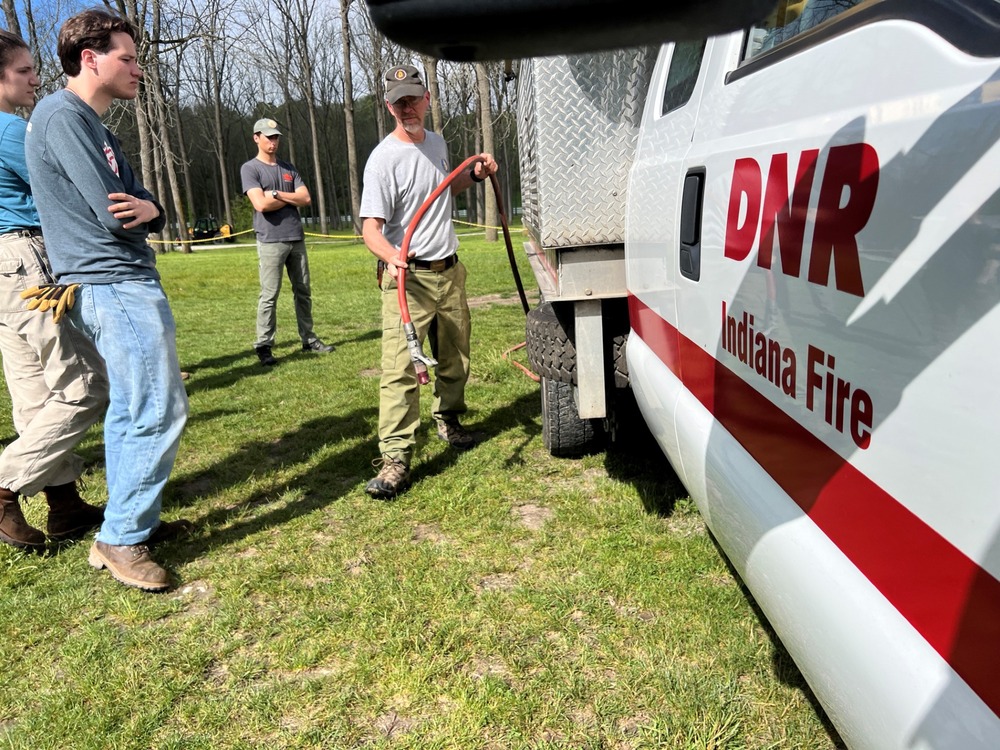 The two requirements for in-person training are:
- S-130 Field Day (1-day; no pack test required)
- Indiana DNR Prescribed Fire for Managers (2-day)
How to complete the in-person training?
In-person S-130 Field Days and Indiana DNR Prescribed Fire for Managers courses are offered 1-2 times per year, often offered in the spring (Feb-Mar) and in December.
*To take the S-130 Field Day, you need to complete the required online training before the field day. To take the Prescribed Fire for Managers Course, you need to take the S-130 Field Day.
You can find information about upcoming trainings by visiting the Indiana Prescribed Fire Council (INPFC) website and the Indiana DNR Fire Headquarters Training Portal.

Prescribed Burn Experience
To be an Indiana CPBM, you need the following prescribed fire experience:
- Participate in 5 prescribed fires across the 2 major fuel model groups in Indiana (grass and hardwood timber litter)
- At least 3 of the burns shall be in the hardwood timber litter fuel model
- Serve as an Apprentice Burn Manager on 2 of the 5 prescribed burns – 1 from each of the two fuel model groups (grass and timber litter)
Serving as an “Apprentice Burn Manager” means you need to lead burns under the guidance of an existing CPBM, RxB1, or RxB2 (RxB1 & RxB2 are Burn Boss qualifications through the National Wildfire Coordinating Group) and complete a Certified Prescribed Burn Manager Task Book related to preparing for and managing a prescribed burn.
How do I receive prescribed fire experience?
To get experience as a crew member on prescribed fires, here are a few steps:
- Meet Common Training Requirements: Many organizations (but not all) require burn crews to have basic wildland fire training courses, many of which are needed for the CPBM program. Having these trainings will open the door for more opportunities.
- Basic Wildland Firefighter (FFT2) Requirements (bolded are required for CPBM)
- S-130 (Online and Field Day)
- S-190
- L-180
- IS-100
- IS-700B
- Arduous Work Capacity Test (Pack Test)
- Basic Wildland Firefighter (FFT2) Requirements (bolded are required for CPBM)
- Attend a Learn-N-Burn: these half- or full-day events can help you get your feet wet with prescribed fire and are offered by groups like the Indiana DNR Division of Fish and Wildlife and Purdue Extension. Generally, prior experience or training is not required for these events.
- Upcoming Learn-N-Burns can be found under Events on the INPFC events website.
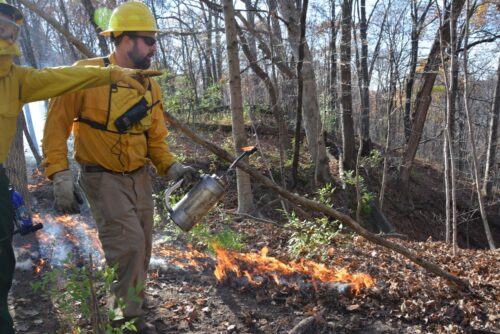 Find Volunteer Opportunities: Many organizations accept volunteers for prescribed fire, but may require Basic Wildland Firefighter Training (see above).
- Volunteer on burns with The Nature Conservancy
- To be a TNC fire volunteer, you need to be a FFT2 or complete the Prescribed Fire Crew Member (RxCM) standard, which is similar to FFT2 standards but does not require IS-700 and requires a moderate pack test. View the TNC Fire Manual for more information.
- To learn more about helping TNC on prescribed burns, contact Stuart Orr, Indiana Fire Program Manager at sorr@tnc.org.
- Volunteer on burns with The Nature Conservancy
- Volunteer with your Local Land Trust
- Indiana is home to over 20 land trusts, many of which utilize prescribed fire.
- Each land trust may have different requirements to volunteer for prescribed fire.
- Visit the Discover Your Land Trust page on the Indiana Land Protection Alliance website to find a land trust in your area.
- Find landowners in your area who are using prescribed fire and volunteer to help
- Several landowners across Indiana use prescribed fire and may be seeking help.
- You may be able to find landowners who burn through existing conservation networks, such as local NGOs (NWTF, NDA, PF, or QF Chapters) or landowner groups such as the Indiana Forest and Woodland Owners Association.
- Join or start a Prescribed Burn Association, which is a collection of landowners who help each other burn by pooling resources, equipment, knowledge, and crew through a “Neighbor Helping Neighbor” model.
- Several landowners across Indiana use prescribed fire and may be seeking help.
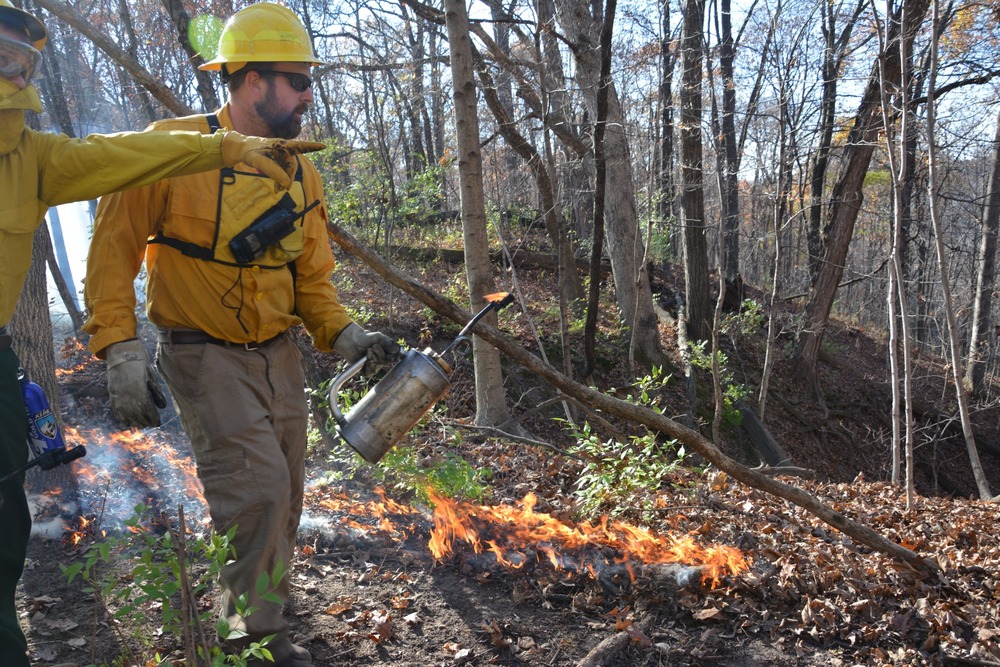
How do I receive apprentice burn manager fire experience?
The first step in finding opportunities is building relationships with current prescribed fire practitioners. By volunteering as a crew member, you start to learn about prescribed fire and build relationships with existing burn managers. This may lead to opportunities to apprentice in the future.
The Indiana Prescribed Fire Council is piloting a Prescribed Fire Opportunity Sharing Network to help connect those seeking burn experience with experienced burners. You can use the links below to sign up for this network as either a Mentor (have experience) or Mentee/Apprentice (need experience). Register on the Mentor sign-up or the Mentee sign-up.
Resources:
FNR Ask The Expert: Prescribed Fire, Purdue Extension Forestry & Natural Resources
100 Year Project Shares New Video, Prescribed Fire, Purdue Extension – FNR Got Nature? Blog
Brooke’s Prescribed Fire Videos Utilized in Global USFS Efforts, Purdue Extension – FNR Got Nature? Blog
Prescribed fire: 6 things to consider before you ignite, Got Nature? Blog, Purdue Extension – 4Forestry and Natural Resources
Wildlife Habitat Hint: Prescribed Fire Techniques – Backing Fire, Video, Purdue Extension – Forestry and Natural Resources YouTube channel
Wildlife Habitat Hint: Prescribed Fire Techniques – Flanking Fire, Purdue Extension – FNR Video
Wildlife Habitat Hint: Prescribed Fire Techniques – Strip Head Fire, Purdue Extension – FNR Video
Wildlife Habitat Hints: Prescribed Fire Techniques – Ring Fire, Purdue Extension – FNR Video
Wildlife Habitat Hints: Prescribed Fire Techniques – Point Source Fire, Purdue Extension – FNR Video
Wildlife Habitat Hint: Late Growing Season Prescribed Fire, Purdue Extension – FNR Video
FNR Ask The Expert: Prescribed Fire with Jarred Brooke and Mike Saunders, Purdue Extension – FNR Video
Indiana Prescribed Fire Council
Renovating Native Warm-Season Grass Stands for Wildlife: A Land Manager’s Guide, The Education Store, Purdue Extension resource center
Jarred Brooke, Wildlife Extension Specialist
Purdue Department of Forestry and Natural Resources
Morning AgClips: Have you seen a bald eagle recently? I still marvel when I see one soaring in flight. It’s exciting to see them swoop down near the surface of a river and snatch a fish. You may have even taken advantage of watching “eagle cams,” 24-hour video feeds of an eagle’s nest. You may have participated in an “Eagle Watch” event, hosted by the Indiana Department of Natural Resources (DNR). Or, perhaps you have seen and kept an eye on an eagle’s nest near you!

Mathew Schwartz, Unsplash
The bald eagle (Haliaeetus leucocephalus) has been the national bird of the United States since 1782, when it was adopted as a core element in the Great Seal of the United States.
Apparently, a long-standing and frequently perpetuated myth in American history is that Benjamin Franklin preferred the turkey to the eagle as a national symbol. According to Harvard University, his tongue-in-cheek comments berating the eagle while extolling the turkey were taken out of context. Evidently, they were meant as a joke regarding the insignia of the Society of the Cincinnati, in which Franklin thought the bird depicted looked more like a turkey than an eagle. (I’m not a historian; you can do your own research and decide for yourself.)
Once a federal- and state-endangered species, due to hunting and use of certain pesticides (now banned), the bald eagle has recovered quite well.
Brian MacGowan, Purdue Extension wildlife specialist, said that bald eagles were once listed under the Endangered Species Act. “However, their populations recovered to a level where they were delisted,” he said. “Even so, Bald Eagles are still offered some level of protection under the Bald and Golden Eagle Protection Act and Migratory Bird Treaty Act.”
Indiana DNR reported that in 2020, there were more than 350 nesting territories in Indiana. Bald eagles have been sighted in almost every Indiana county.
You might assume that springtime is bald eagle breeding season, but bald eagles breed in the winter. “Winter is a time when Bald Eagles build nests in large trees or snags near sources of food – rivers, streams, and lakes,” said MacGowan. “The nests they construct are very large (4-6 feet in diameter) and can weigh more than 1,000 pounds.” He said they also construct alternate nests within their territory and will usually return to the same nesting territory year after year.
The Indiana Department of Natural Resources (DNR) website offers more facts on bald eagles and their young. They write that wintering eagles prefer mature trees along large, open bodies of water for daytime perches. At night, large trees in sheltered valleys and ravines are preferred for roosting, and it is common for eagles to roost in small groups during winter.
Indiana DNR further states that eagle eggs have a 35-day incubation period and that young eagles leave the nest or “fledge” at 11-12 weeks old. Adult eagles do not begin to nest until they are 4 or 5 years old. Eagles mate for life and return each year to the same location to nest and breed, selecting nest sites close to where they were raised as young.
View Morning AgClips full article for more interesting facts of bald eagles: Have You Seen A Soaring Eagle Lately?
To subscribe and receive the Morning AgClips Newsletter by email view, Subscribe to Our Daily Newsletter.
Resources:
Bald Eagle Breeding Season is Upon Us, Purdue Extension – Forestry & Natural Resources (FNR) Got Nature? Blog
Indiana Department of Natural Resources Shares Bald Eagle Successfully Recovered, MyDNR, Indiana’s Outdoor News
Bald Eagle, Indiana Department of Natural Resources (IN DNR)
Forestry for the Birds Virtual Tour, Purdue Extension – Pond and Wildlife
Breeding Birds and Forest Management: the Hardwood Ecosystem Experiment and the Central Hardwoods Region, The Education Store, Purdue Extension resource center
Forest Birds, The Education Store
Managing Woodlands for Birds, The Education Store
Managing Woodlands for Birds Video, Purdue Extension – FNR YouTube Channel
Breeding Birds and Forest Management: the Hardwood Ecosystem Experiment and the Central Hardwoods Region, The Education Store
The Birders’ Dozen, Profile: Baltimore Oriole, Indiana Woodland Steward
Ask An Expert: Birdwatching, Playlist, Purdue Extension – FNR YouTube channel
Birds and Residential Window Strikes: Tips for Prevention, The Education Store
No Room at the Inn: Suburban Backyards and Migratory Birds, The Education Store
John E. Woodmansee, Extension Educator – Agriculture and Natural Resources (ANR)
Purdue Extension – Whitely County
In this edition of ID That Tree, Purdue Extension Forester Lenny Farlee introduces us to a native Indiana shrub that’s seen less often than some of its relatives. While it’s related to other sumac species, fragrant sumac has its own place in Indiana’s landscapes. Learn where it grows, how it fits into woodland and edge environment along with what makes it distinct from other sumacs you might recognize. Whether you’re a student, landowner or even just simply curious about native shrubs, this video offers a quick overview of this interesting bush in Indiana.
If you have any questions regarding wildlife, trees, forest management, wood products, natural resource planning or other natural resource topics, feel free to contact us by using our Ask an Expert web page.
Resources:
ID That Tree – Video Playlist, Purdue Extension – Forestry and Natural Resources (FNR) YouTube Channel
Purdue Arboretum Explorer
Conservation Tree Planting: Steps to Success, Purdue Extension – FNR YouTube Channel
A Woodland Management Moment, Playlist, Purdue Extension – FNR YouTube Channel
Woodland Stewardship for Landowners, Playlist, Purdue Extension – FNR YouTube Channel
Fifty Common Trees of Indiana, Purdue Extension – FNR
Indiana Invasive Species Council
Cooperative Invasive Species Management Area (CISMA)
Report Invasive, Purdue Extension
Habitat University, Episode 12 – Exploring the challenges of Invasive Species, Habitat University-Natural Resource University
Shrubs and Woody Vines of Indiana and the Midwest, Purdue University Press
Native Trees of the Midwest, Purdue University Press
Professional Forester, Indiana Forestry Woodland Owners Association
District Forester, Indiana Department of Natural Resources, 10+ acres
Find an Arborist, International Society of Arboriculture
Forest Improvement Handbook, The Education Store
Lenny Farlee, Extension Forester
Hardwood Tree Improvement and Regeneration Center
Purdue Department of Forestry & Natural Resources
Check out the Purdue Extension – Forestry and Natural Resources YouTube Channel for more videos and webinars covering urban and forestry management, woodlands and wildlife.
Lenny Farlee, Extension Forester
Hardwood Tree Improvement and Regeneration Center
Purdue Department of Forestry & Natural Resources

Recent Posts
- What You Plant Matters to Wildlife
Posted: September 16, 2026 in Plants, Urban Forestry, Wildlife - Question: Why Did the Shagbark Hickories Survive the Tornado?
Posted: August 27, 2026 in Forests and Street Trees, How To, Urban Forestry - New Indiana Woodland Steward Newsletter
Posted: August 12, 2026 in Forestry, Urban Forestry, Wildlife, Woodlands - Trees and Storms: Understanding Damage, Risk and Recovery
Posted: in How To, Urban Forestry - Pruning Highlight-Pollarding Trees: A Traditional Pruning Practice with Modern Uses
Posted: June 11, 2026 in Forestry, Forests and Street Trees, Urban Forestry, Wildlife, Woodlands - Flat-Faced Longhorn Beetle Found in Hardwood Logs – IDNR Division of Entomology
Posted: June 8, 2026 in Alert, Forestry, Forests and Street Trees, Invasive Insects, Urban Forestry, Wildlife, Woodlands - Connecting Research to Practice: Natural Resources & Land Use Spring Training
Posted: June 5, 2026 in Forestry, Forests and Street Trees, How To, Invasive Animal Species, Invasive Plant Species, Land Use, Natural Resource Planning, Urban Forestry, Wildlife, Woodlands - Indiana Monarch and Pollinator Conservation
Posted: June 1, 2026 in Forestry, Forests and Street Trees, Gardening, How To, Natural Resource Planning, Plants, Urban Forestry, Wildlife - Spotted Lanternfly Feeds on Over 70 Plus Plant Species
Posted: May 20, 2026 in Alert, Forestry, Forests and Street Trees, Gardening, Invasive Insects, Urban Forestry, Wildlife - Spring Storms Are Coming: How to Reduce Tree Damage and Risk
Posted: May 1, 2026 in How To, Urban Forestry, Wildlife, Woodlands
Archives
Categories
- Alert
- Aquaculture/Fish
- Aquatic/Aquaculture Resources
- Ask the Expert
- Christmas Trees
- Community Development
- Disease
- Drought
- Forestry
- Forests and Street Trees
- Gardening
- Got Nature for Kids
- Great Lakes
- How To
- Invasive Animal Species
- Invasive Insects
- Invasive Plant Species
- Land Use
- Natural Resource Planning
- Nature of Teaching
- Plants
- Podcasts
- Ponds
- Publication
- Safety
- Spiders
- Timber Marketing
- Urban Forestry
- Webinar
- Wildlife
- Wood Products/Manufacturing
- Woodland Management Moment
- Woodlands