 Purdue University - Extension - Forestry and Natural Resources
Got Nature? Blog
Kristol from Tippecanoe County, IN, sent in question to the Purdue Extension-Forestry and Natural Resources experts (Ask an Expert ) asking what resources are available to help with landscaping for a front yard and sidewalk area that accumulates water after a hard rain. She also asked for resources to improve drainage.
Purdue Extension has several articles and resources to help with this type of situation.
The resources in our Rainscaping and Master Gardeners Program shares several neat options:
Rain Gardens Go with the Flow, Indiana Yard and Garden, Purdue Horticulture
Rainscaping Program
Master Gardeners Program
Don’t miss the publications located in the Purdue Extension resource center, The Education Store, relating to the topic:
Tree Installation: Process and Practices
Planting Forest Trees and Shrubs in Indiana
Climate Change: How will you manage stormwater runoff?
For Midwest Landscapes, have a look at the Purdue Landscape Report:
Purdue Landscape Report
Check out upcoming workshops available for land and woodland owners, to talk with an expert:
Purdue Extension-Forestry and Natural Resources Calendar
Check out our Got Nature? posts as well, as this is always a great resource for new information:
Got Nature?, Forestry and Natural Resources-Purdue Extension
These resources give you lots of options that match what your looking for along with experts in the field to contact if needed.
We always appreciate the questions coming in, so keep them coming. Our experts will respond quickly and give you the guidance you need for your next steps.
Diana Evans, Extension Information Coordinator
Purdue Forestry and Natural Resources
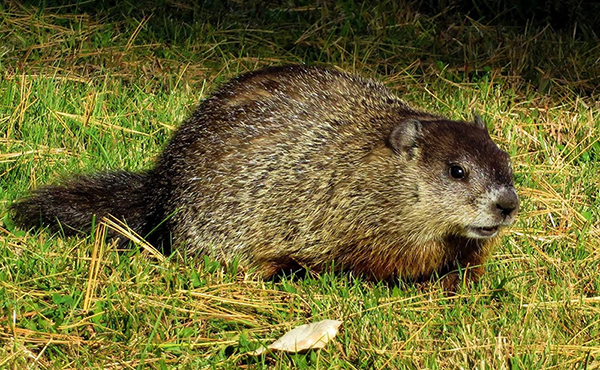 Groundhogs are good at many things, said Brian MacGowan, Purdue University Extension wildlife specialist and Forestry and Natural Resources Extension coordinator, but predicting the weather definitely isn’t one of them.
The lore surrounding Groundhog Day originated in Germany where people used the reactions of badgers and hedgehogs to gauge weather patterns. When the tradition eventually migrated to America, Jarred Brooke, Extension wildlife specialist, said hedgehogs, which can be found throughout the United States, became the mammalian forecaster of choice.
“They’re crafty little critters,” McGowan explains, “which is why they’re found in so many different places. They’re habitat generalists and can live in open woodlands, grasslands, what have you.”
While MacGowan and Brooke agreed groundhogs don’t have a great track-record of weather prediction, other facts make groundhogs one of the more interesting members of the squirrel-family.
For full article see: Groundhogs can’t predict the weather but they do poop underground.
Resources:
Selecting a Nuisance Wildlife Control Professional – The Education Store, Purdue Extension Resource Center
Preventing Wildlife Damage – Do You Need a Permit? – The Education Store
The Basics of Managing Wildlife on Agricultural Lands – The Education Store
Nuisance Wildlife – Indiana Department of Natural Resources
Dealing with nuisance geese this spring – Got Nature?
Animal Damage Management: Woodchucks, The Education Store
Brian MacGowan, Wildlife Extension Specialist
Purdue University, Forestry and Natural Resources
Jarred Brooke, Wildlife Extension Specialist
Purdue University, Forestry and Natural Resources
Emerald ash borer (EAB), the most destructive forest pest to enter North America has left hundreds of millions of dead ash trees in its wake. Although this pest has been found throughout our state, many of Indiana’s ash trees are still alive, or dead and still standing. Ash trees killed by emerald ash borer, become extremely brittle and break easily as they decline. Branches can fall on people and property in snowstorms, with a light breeze, or even on a calm clear day. Danger could be hanging over your head in the street, in the forest, and even in your backyard.
Why does emerald ash borer make ash trees so brittle?
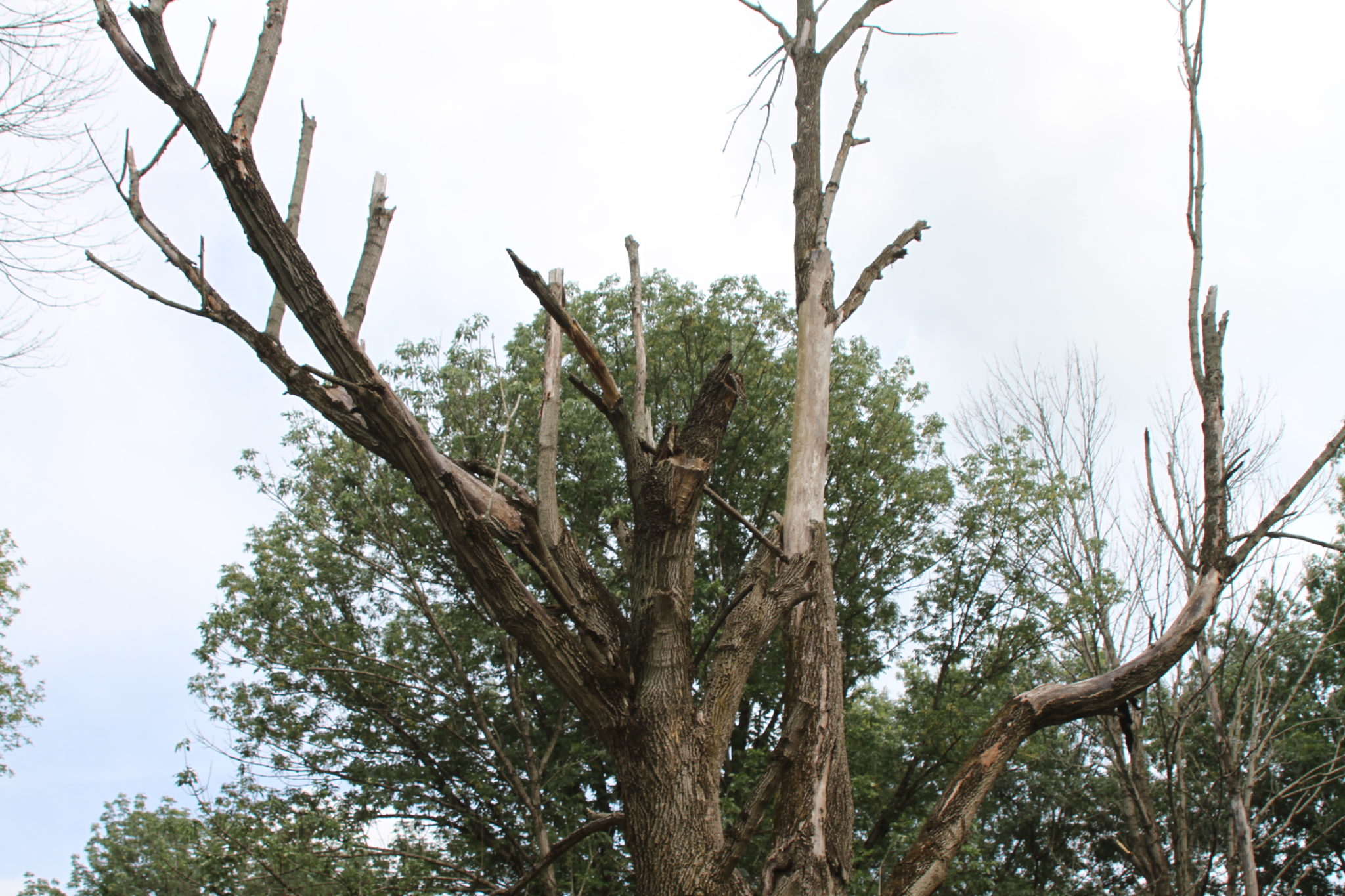
Large ash limbs that have broken off in the upper canopy.
Unlike elms, oaks, and maples, ash trees use a thin ring of conducting tissue to supply water from the roots to the entire tree. Emerald ash borer grubs will damage these functional water pipes as they chew just beneath the bark inside trunks and branches. This causes the tree to dry quickly and the structural wood to become prone to cracking. Internal breaks in the structural wood that bear the weight of the tree are often hidden from view by tree bark. As such, limbs can break and fall at any point along the branch at any time. It is not uncommon to have sizable limbs snap 30 feet off the ground on a calm day.
The threat of falling limbs is not limited to just dead ash. A comparative study of ash trees conducted in Ohio shows that structural integrity of ash trees can begin to decline even when trees are mostly green and have two thirds of the canopy still intact.
What should I do to protect myself from falling ash trees and limbs?

If your tree has lost less than 30% of its canopy hire a professional to protect the tree.
If the tree has lost more than 30% of the canopy, make plans to remove it. Delaying removal allows the tree to become more brittle and the problem more dangerous. Remember, EAB causes progressively more injury to ash trees as time goes on. The dead parts never come back to life.
If you have been treating your tree continue to do so.
How should I remove the tree?
To minimize risk of harm, hire a trained professional who has experience removing emerald ash borer damaged trees. The International Society of Arboriculture maintains a directory of Certified Arborists and their credentials. They can help find an arborist near you. Always get bids from more than one contractor. Be sure your contractor is insured and bonded in case of an accident. Professionals are happy to share this information.
Some homeowners might be hesitant to remove dead ash trees because they provide valuable habitat for a range of woodland animals and mushrooms. However, we do not recommend keeping them standing unless you can guarantee that no people, domesticated animals, or property will ever be in their path if they fall. If you have a dead tree that can’t be felled right away or ever, stay away from it until after it has fallen.
Article courtesy of the Landscape Report.
Resources:
New Hope for Fighting Ash Borer, Got Nature? Purdue Extension-FNR
Emerald Ash Borer, Purdue Extension-Entomology
Emerald Ash Borer Cost Calculator – Purdue Extension Entomology
Lindsey Purcell, Urban Forestry Specialist
Purdue Forestry and Natural Resources
Elizabeth Barnes, Exotic Forest Pest Educator
Purdue Entomology
Cliff Sadof, Professor, Ornamental, Pest Management
Purdue Entomology Extension Coordinator
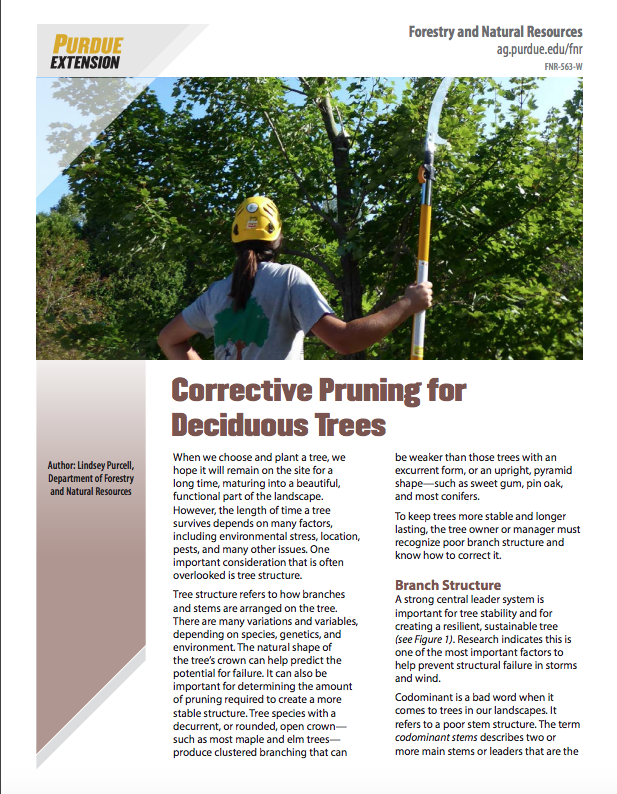
How do I remedy poor branching? Is my tree at risk of splitting, and how can pruning prevent that? Corrective pruning has many implications for tree structure, health, and longevity. Developing a strong, central branch structure in a deciduous tree is critical for preventing structural failure caused by storms, wind, and ice. This 8-page publication explains the problems resulting from a co-dominant stem structure and addresses pruning strategies for correcting poor structure.
To view this full publication please go to Corrective Pruning for Deciduous Trees located in The Education Store, Purdue Extension’s resource center.
Resources
Preparations to Prevent Southwest Tree Injury, Got Nature? Blog
When do you stake a tree?, Got Nature? Blog
Top 5 List for Tree Selection and Planting, Got Nature? Blog
Tree Selection for the “Un-natural” Environment, The Education Store, Purdue Extension
Tree Support Systems, The Education Store, Purdue Extension
Tree Installation: Process and Practices, The Education Store, Purdue Extension
Planting Your Tree Part 1: Choosing Your Tree, video, The Education Store, Purdue Extension
Lindsey Purcell, Urban Forestry Specialist
Purdue Forestry and Natural Resources
It all starts with providing some supplemental nutrition for small to medium-aged trees in the late fall when trees go into a state of dormancy. This is when trees stop active growth and begin to form terminal buds, drop leaves and develop cold resistance. Adding fertilizer to trees too early in the season can push new growth which will be prone to winter damage.
A fertilization program is used to maintain trees in a vigorous condition and to improve their immune system against pests. Fertilizing trees refers to the practice of adding supplemental nutrients (chemical elements) required for normal growth and development. However, you really can’t “feed” a tree, since trees are autotrophs. They use nutrients to feed themselves by making sugar in the leaves through photosynthesis.
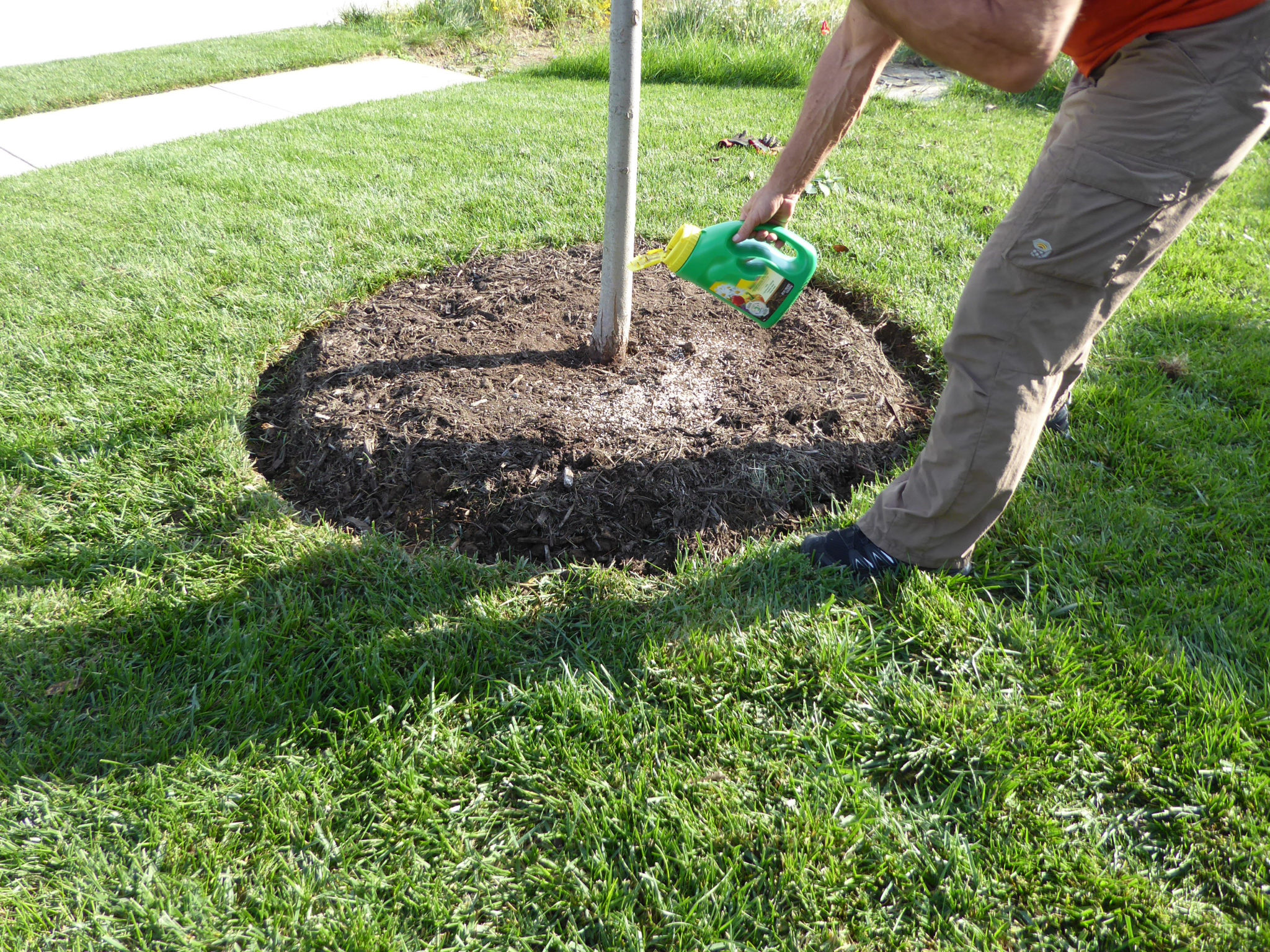
Applying fertilizer to newly established tree 3rd year after transplanting.
Nitrogen (N), phosphorus (P), and potassium (K) are plant nutrients needed in the largest quantity and these are most commonly applied as a complete fertilizer. However, the addition of any soil nutrient is recommended only if soil or plant foliage tests indicate a deficiency. For trees and shrubs in most of Indiana, the two most common causes of nutrient problems are high pH (alkaline) soils, which can lead to chronic deficiencies of nutrients in some tree species, such as red maple and pin oak, and nitrogen-deficient soils. Typical symptoms include yellowing chlorotic leaves and reduced growth and smaller leaf size.
Trees in natural settings get nutrients from the air, organic matter, nutrient cycling, and microbial activity. In many cases, supplemental nutrition is not necessary in fertile soils which have enough nutrients in the proper amounts to support healthy growth, especially on established trees, but in the urban and suburban environment, often a little assistance is needed. The more challenging urban environment provides less opportunity for healthy growth due to poor, fragmented soils, reduced microbial activity and compaction. Trees needing fertilization to stimulate growth include those exhibiting the symptoms of pale green, undersized leaves, chlorosis, reduced growth rates and those in decline resulting from insect attacks or disease problems. Also, turf can be a serious contender for nutrients and trees surround by turf benefit from additional nitrogen applications every couple of years.
Trees which should not be fertilized include newly planted trees in the current year and those with root damage from recent trenching, construction or other disturbance. The root systems of these plants will need to re-establish before fertilizers are applied with cultural practices such as supplemental moisture and mulch. Older, established trees do not need to be fertilized every year and may never need supplemental feeding. In fact, serious pest problems can result on over-fertilized trees. Research indicates that young deciduous trees benefit from additional nitrogen in low-analysis, slow release forms. Conifers require less fertilization and are genetically adapted to low-nutrient soils.
For more information on how and when to fertilize trees, refer to HO-140-W, Fertilizing Woody Plants from the Purdue Extension Education Store.
Article shared by: The Landscape Report, Start Preparing Trees for Winter and Next Year.
Resources:
Trees and Storms, The Education Store, Purdue Extension’s resource center
Tree Risk Management, The Education Store
Fertilizing Woody Plants, The Education Store
Lindsey Purcell, Urban Forestry Specialist
Purdue Forestry and Natural Resources

Photo Credit: Katja Schulz, flickr.com
A lepidopterist from the Florida Museum of Natural History has made a shocking discovery regarding moth behavior. Dr. Andrei Sourakov noted a dozen or so black Idia moths resting inside a hollow tree. This species, and most other moth species is typically solitary as opposed to social species like bees and ants. He went on to discover groups of as many as 400 individuals each oriented facing north (the top of the tree) and tucked away form the light. Both males and females rested quietly, each spaced away form the first reported example of moths gathering in a large group on a daily basis, similar to the roosting observed in bats, a primary predator of moths.

Photo Credit: Katja Schulz, flickr.com

Photo Credit: Collin Gillette, flickr.com
Dr. Sourakov also noted that the moths do not have a preference for tree type as they have been observed in sweetgum (Liquidambar styraciflua) and southern red oak (Quercus falcata) trees in Florida. It is suspected that a single moth finds a hollow tree and releases sex hormones to inform nearby moths where to assemble. As no mating has been observed at the location, these moths respond to the pheromone lure but do not act on a any perceived sexual stimulus.
References:
Andrei Sourakov. Mass aggregations of Idia moths (Lepidoptera: Erebidae) inside hollow trees in Florida. Tropical Lepidoptera Research, 2018 DOI: 10.5281/zenodo.1309644
Online Article: Florida Museum of Natural History. “Hollow trees host massive moth slumber parties.” ScienceDaily. ScienceDaily, 28 July 2018.
Resources:
Hardwood Ecosystem Experiment (HEE) Highlights: Moths, video, Purdue Extension – Forestry & Natural Resources Got Nature? Blog
Gypsy Moth (Spongy Moth) website, Purdue Extension-Entomology
Spongy Moth – Indiana Department of Natural Resources
The Gypsy Moth in Indiana – The Education Store, Purdue Extension resource center
Shaneka Lawson, USDA Forest Service/HTIRC Research Plant Physiologist/Adjunct Assistant Professor
Purdue University Department of Forestry and Natural Resources
A recent study at the University of British Columbia noted that a single tree along an urban street can help alleviate winds, shade pedestrians, and decrease wind pressure on nearby buildings. For both homes and businesses, the presence of trees can help decrease costs associated with maintaining indoor temperatures.
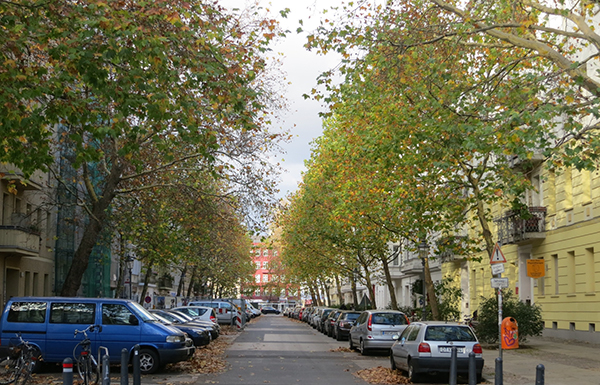
Photo credit: Kris Arnold, flickr.com
Researchers used remote sensing technology to create intricately detailed computer models of a neighborhood that included each tree, garden, and structure. The models were able to elucidate how various scenarios (no trees, bare trees, full-leaf trees) influence airflow, thermal patterns, and overall radiant heating and cooling throughout the streets of the neighborhood. Resultant data indicated trees at various stages can decrease wind speeds by as much as a factor of two. For example, a strong 30km/h wind could be reduced to a comfortable 15km/h breeze. The results also showed trees reduced the strain caused by wind pressure on building spaced closely together and farther apart. Close examination of the data indicated wind pressure causes up to a third of the costs associated with energy consumption and increased costs up to 10% in winter and 15% in summer. Using data gleaned from over a decade of measurements (from a monitored wind tower), they discovered even leafless trees are beneficial in winter months to regulate air flow and wind pressure on buildings.
This modeling effort represents the first of its kind to simulate actual neighborhood conditions using an existing neighborhood recreated in great detail as a model. Further work of this kind can be used to predict storm effects on structures and pedestrian movement. These data can assist engineers and city planners in the creation and layout of buildings, streets, and greenery while limiting energy losses and help evaluate proposed effects of weather forecasts throughout the neighborhood.
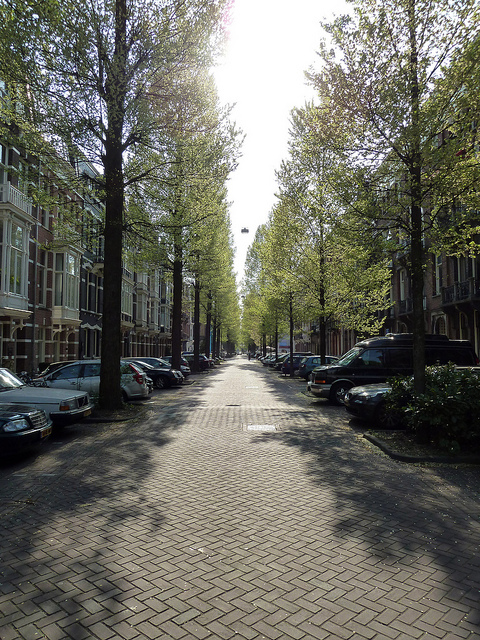
Photo credit: Rob Young, flickr.com.
References:
M.G. Giometto, A. Christen, P.E. Egli, M.F. Schid, R.T. Tooke, N.C. Coops, M.B. Parlage. 2017. Effects of trees on mean wind, turbulence and momentum exchange within and above a real urban environment. Advances in Water Resources, 106: 154 DOI: 10.1016/j.advwatres.2017.06.018
University of British Columbia. Trees can make or break city weather. Science Daily, 26 July 2017.
Resources:
Tree Selection for the “Un-natural” Environment, The Education Store – Purdue Extension’s resource center
Planting Your Tree Part 1: Choosing Your Tree (Youtube video), Purdue Extension-FNR
Tree Installation: Process and Practices , The Education Store
Tree Planting Part 2: Planting a Tree (Youtube video), Purdue Extension-FNR
Top 5 List for Tree Selection and Planting, Got Nature?, Purdue Extension-FNR
Indiana’s Urban Woodlots, The Education Store
Shaneka Lawson, USDA Forest Service/HTIRC Research Plant Physiologist/Adjunct Assistant Professor
Purdue University Department of Forestry and Natural Resources
A color-banded loggerhead shrike found south of Goose Pond FWA in July 2017 successfully raised six young in Davies County this summer. Fledging six young is exceptional for shrikes, which on average fledge 2.6 per nesting attempt.

Loggerhead photo from IDNR
This female is even more special because she is the only one of 12 banded shrikes that hatched last year to be sighted back in Indiana this year. This summer she paired with a male shrike that did not nest in 2017, likely because there were no female shrikes left in his area after steep declines in this songbird’s population.
For more information view the Indiana Department of Natural Resources, Fish and Wildlife, Loggerhead Shrike.
Resources:
Birds and Residential Window Strikes: Tips for Prevention, Got Nature? blog post, Purdue Forestry and Natural Resources (FNR)
Learn How Forests are used by Birds, Got Nature? blog post, FNR
Managing Woodlands for Birds, The Education Store, Purdue Extension’s resource center
Breeding Birds and Forest Management: the Hardwood Ecosystem Experiment and the Central Hardwoods Region, The Education Store
Article from MYDNR Email Newsletter, Indiana Department of Natural Resources
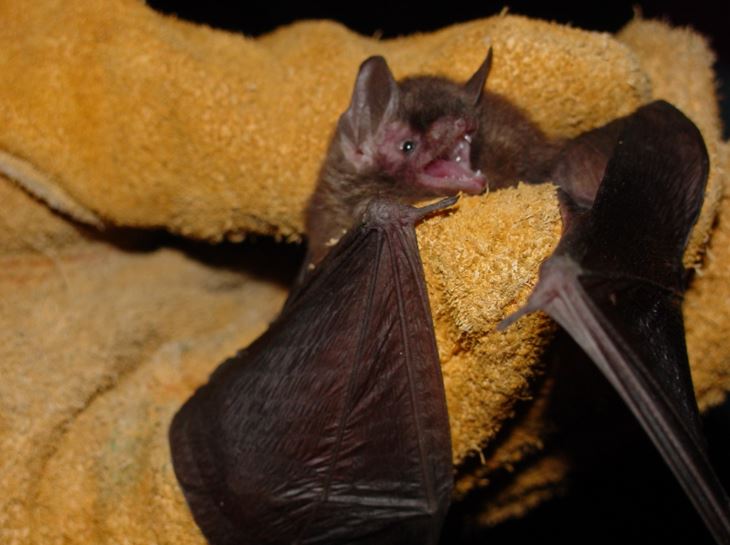 At different times of the year, I get questions about bats in structures. Bats are a timely issue towards the end of summer because young bats will soon be able to fly. Excluding bats from structures is limited to this time. This process is typically called “venting” where access points (both in use and potential) are identified, most are sealed off, and the remaining points are fitted with one-way doors that allow bats to leave but not reenter. If only the opening they use is sealed off, they will simply use another entry point. Think of it this way – our houses have multiple points of entry, but you may only use one. You will use another if necessary.
Bats can make their way into a house in a number of ways – gaps between siding and chimney, gaps between roof sheathing and fascia board, etc. New and old construction alike. Eliminating access to all of these small, potential points of access can be a challenge. The bodies of some bat species are as small as your thumb. Even though you don’t have an attic, there are still spaces inside a structure where bats can live.
Bats are one of the most difficult wildlife conflicts to deal with because of the nature of their habits. They can pass through extremely small openings, move throughout the inside of a structure, and often entre/occupy hard to reach areas. Bat exclusion is not an activity I recommend for most homeowners. There is a skill necessary to find and seal all possible access points. Since most of these are located high above ground and accessing these points can require special ladders, lifts and other safety equipment.
Having bats in the attic isn’t simply a nuisance issue, but also can be a safety issue. Like Most wildlife carry diseases. With bats, histoplasmosis and rabies are the two that are the ones most concern for people with bats in their homes. The Center of Disease Control (CDC) has good information on these and other diseases. Fleas that live on bats can also be vectors for disease. It is always a good idea to limit exposure to wildlife animals as much as possible. For bats, venting in the end of summer and fall and preventing reentry is a logical first step.
If you have bats and want to solve the problem now is the time to contact professionals who can help. Unfortunately, most nuisance wildlife control operators don’t do bat work because it requires specialized equipment and the difficulty of it. Because of that, control will not be cheap for the customer. Many people construct bat houses to attract bats. While beneficial, artificial bat houses will not attract bats from an attic.
Resources:
Selecting a Nuisance Wildlife Control Professional, The Education Store-Purdue Extension’s resource center
Bats in Indiana, Indiana Department of Natural Resources (IDNR)
Bat Houses, Bat Conservation International
Brian J. MacGowan, Extension Wildlife Specialist
Department of Forestry & Natural Resources, Purdue University

Collisions with man-made structures are one of the primary causes of bird mortality. In fact, up to a billion birds are killed each year in the United States due to window strikes. Approximately 50% of the time, these strikes result in death.
This publication offers practical, researched, do-it-yourself tips to limit bird collisions at your residence – many of which can be implemented at little or no cost. It also outlines best practices for what to do if and when a bird strike occurs.
To view this full publication please go to Birds and Residential Window Strikes: Tips for Prevention at The Education Store.
Resources
Learn how forests are used by birds new videos, Got Nature? Blog
Managing Woodlands for Birds, The Education Store-Purdue Extension resource center
Jennifer Antonides, Graduate Research Assistant
Purdue Forestry and Natural Resources

Recent Posts
- Urban Tree Spotlight: Planting Deciduous Shade Trees, Purdue Landscape Report
Posted: March 25, 2026 in Forests and Street Trees, Urban Forestry, Woodlands - ID That Tree: Dwarf Chinkapin Oak
Posted: March 20, 2026 in Forestry, Urban Forestry, Wildlife, Woodlands - DNR Hiring for Indiana Conservation Officer Positions, MyDNR
Posted: March 9, 2026 in Urban Forestry, Wildlife, Woodlands - ID That Tree: Shumard Oak
Posted: in Plants, Urban Forestry, Wildlife, Woodlands - A Woodland Management Moment: Windbreak Around Walnut Plantings
Posted: March 3, 2026 in Forestry, Urban Forestry, Woodland Management Moment - Getting Certified as an Indiana Certified Prescribed Burn Manager
Posted: March 2, 2026 in How To, Urban Forestry, Woodlands - Have You Seen a Soaring Eagle Lately? Morning Ag Clips
Posted: February 25, 2026 in Urban Forestry, Wildlife - ID That Tree: Fragrant Sumac
Posted: February 4, 2026 in Plants, Urban Forestry, Wildlife - Tree Silvics and Succession Webinar: A Biological Basis for Management
Posted: January 30, 2026 in Forests and Street Trees, Urban Forestry, Woodlands - Southwest Damage, Scalding or Frost Cracking
Posted: in Forestry, Urban Forestry
Archives
Categories
- Alert
- Aquaculture/Fish
- Aquatic/Aquaculture Resources
- Ask the Expert
- Christmas Trees
- Community Development
- Disease
- Drought
- Forestry
- Forests and Street Trees
- Gardening
- Got Nature for Kids
- Great Lakes
- How To
- Invasive Animal Species
- Invasive Insects
- Invasive Plant Species
- Land Use
- Natural Resource Planning
- Nature of Teaching
- Plants
- Podcasts
- Ponds
- Publication
- Safety
- Spiders
- Timber Marketing
- Uncategorized
- Urban Forestry
- Webinar
- Wildlife
- Wood Products/Manufacturing
- Woodland Management Moment
- Woodlands