 Purdue University - Extension - Forestry and Natural Resources
Got Nature? Blog
MyDNR, Indiana’s Outdoor Newsletter: When you purchase this limited edition shirt, you are helping reforest Indiana. For each shirt sold, the Natural Resources Foundation will partner with the Indiana Department of Natural Resources – Division of Forestry and plant one tree in an Indiana State Forest to celebrate Arbor Day and Earth Day.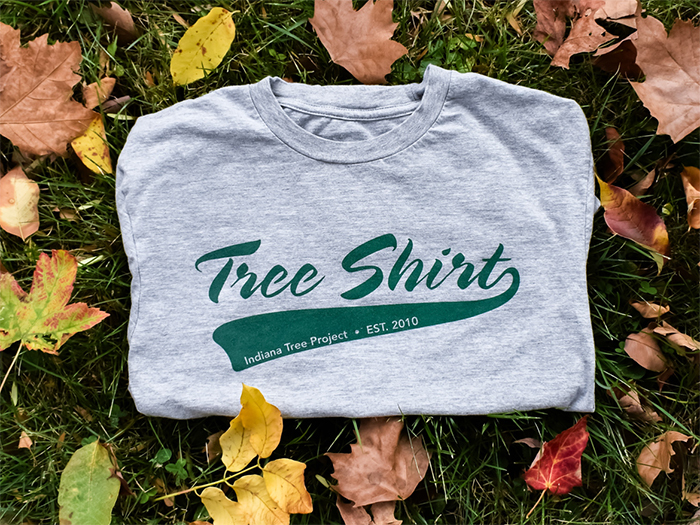
Along with each shirt, you’ll receive an official tree certificate with a unique tree ID and the coordinates for the acre where the tree will be planted. If you are interested in participating in the next public tree planting, please e-mail Cheryl Hampton at champton@dnr.in.gov to receive updates.
The types of trees planted are native Indiana hardwoods and typically upland and bottomland oaks, walnut, black cherry and other species that are in need of restoration.
To buy a shirt and learn more please visit the store page.
For more information on the Indiana Tree Project please visit the Indiana Natural Resources Foundation.
Sign up to receive the MyDNR Newsletter by email: MyDNR Email Newsletter
Resources:
Investing in Indiana Woodlands, The Education Store
Forest Improvement Handbook, The Education Store
ID That Tree, Purdue Extension-Forestry & Natural Resources (FNR) YouTube playlist
Woodland Management Moment , Purdue Extension-FNR YouTube playlist
Find an Arborist, International Society of Arboriculture
Planting Your Tree Part 1: Choosing Your Tree, Purdue Extension YouTube Channel
Native Trees of the Midwest, Purdue University Press
Shrubs and Woody Vines of Indiana and the Midwest, Purdue University Press
Finding help from a professional forester, Indiana Forestry & Woodland Owners Association
District Foresters for 10 plus acres, Indiana Department of Natural Resources
Indiana Department of Natural Resources
Purdue Landscape Report: Temperatures are finally dropping and leaves are changing color. Autumn is progressing well in my opinion. Before you know it winter will be here, and some people will be wondering is there anything to be done to better protect the trees around you? The answer is yes, and I applaud you for your initiative to continue caring for your trees. To give your trees the best chance to survive the winter and better thrive next year there is an assortment of activities available ranging from diy projects up to calling in an ISA certified arborist to help you out.
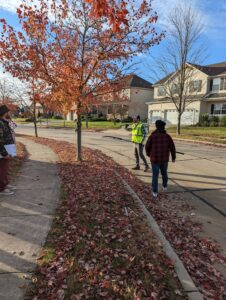
Figure 1. Maintenance of trees in the fall include many tasks before dormancy occurs.
Mulching:
One simple task to better prepare your trees for winter is to add a new layer of mulch, which benefits your trees in multiple ways. Adding a 2-3 inch thick layer of mulch will better maintain moisture levels and buffer extreme temperature changes in the soil and will add some organic matter too. Mulching to the drip line will benefit the tree the most, but in the case of larger trees it’s not always feasible. Try for at least a 3-foot radius from the trunk and make sure to leave a 2 inch or so gap between the trunk and the mulch. Remember, no volcano mulching.
Fertilizing:
That mulch you just added will add some organic material to your soil as it slowly breaks down, but an autumn fertilization can benefit your trees too. Unlike trees in the forest that have a natural supply of nutrients from fallen leaves and twigs, trees around our homes are usually deprived as we rake and clean up our yards. Adding a slow-release fertilizer in the fall helps provide a nutrient boost over the winter, can promote root growth, and better prepare your tree for Spring.
Watering:
Water is still an essential part of your tree care plan, but as temperatures drop and trees begin to head into dormancy they don’t need as much water as is required in the hit summer months. If you have irrigation systems in your yard start to drop the frequency of watering. You can water up until the first freeze, but make sure soils are just a little damp and not soaked. Evergreens in particular will benefit from slow deep watering 1-2 times a week until the soil freezes. Winter winds and temperatures can desiccate the needles without an adequate supply of water.
Pruning:
Now is a good time to prune out any dead, damaged, or diseased limbs in your trees. If you have access to hand saws and pole saws or pruners, you can remove smaller branches or those closer to the ground. Make sure you are making proper pruning cuts though, and if there are large limbs, those at heights, or you are just unsure of how to make a good cut enlist the help of a professional arborist.
Trunk damage:
Sunscald or southwest damage occurs on young and/or thin barked trees in the winter. Wounds can occur between the south to southwest facing part of the trunk on sunny days in the winter as temperatures rise and suddenly drop. Over time these wounds can become quite large. Trees can also incur damage from deer during the rut. Bucks will scrape trees with their antlers, scraping off the bark and damaging the cambium. Both of these injuries can be reduced one younger trees by installing tree guards in the fall. Tree guards are plastic barriers you place around the main stem of the tree. I recommend using white corrugated drainage pipe that can be found at most home centers. You can make a cut lengthwise along the pipe for easy installation and make sure it has a large enough diameter to leave a space between it and the tree. Just remember to remove it come Spring.
Inspections:
Visual inspections can be done year-round, but this time of the year it might be easier to see changes in your tree as leaves are falling and the canopy becomes more visible. From the ground up to the canopy, some of the things you’re looking for include fungal growth around the base of the tree, any sort of damage on the main stem or branches, premature leaf drop or color change, and branches that are dead, cracked, diseased, or seem weak. Any concerns you find are also great information to share with an ISA Certified arborist which can be found using the Trees Are Good website.
To view this full article and other Purdue Landscape Report articles, please visit Purdue Landscape Report.
Subscribe and receive the newsletter: Purdue Landscape Report Newsletter.
Resources:
Re-mulch Your Trees, Purdue Landscape Report
Pruning, Purdue Landscape Report
Southwest Damage/Sunscald, Purdue Landscape Report
Planning the Tree Planting Operation, The Education Store, Purdue Extension’s resource center
Tree Risk Management – Got Nature? Blog, Purdue Extension – FNR
Tree Planting Part 2: Planting Your Tree, The Education Store
Planting Your Tree Part 1: Choosing Your Tree, Purdue Extension – Forestry and Natural Resources (FNR) YouTube Channel
Summer Tree Care, Purdue Landscape Report
Tree Defect Identification, The Education Store
Tree Wound and Healing, Got Nature? Blog, Purdue Extension – FNR
Surface Root Syndrome, The Education Store
Shrubs and Woody Vines of Indiana and the Midwest, The Education Store
Ask an Expert: Tree Selection and Planting, Purdue Extension-FNR YouTube playlist
ID That Tree, Purdue Extension-FNR YouTube playlist
Subscribe – Purdue Extension-FNR YouTube Channel
Ben McCallister, Urban Forestry Specialist
Purdue Forestry & Natural Resources
MyDNR, Indiana’s Outdoor Newsletter: We need the public’s help to update The Big Tree Registry, a list of the largest known specimen of each native tree species in Indiana.
“Indiana’s currently tallest recorded tree is a 152-foot-tall bitternut hickory, and our widest tree circumference is a silver maple at more than 361 inches,” said Jacob Roos, DNR urban forestry director. “We need help getting out across the state to find our new record-setting trees.”
That means it’s time to review the recently updated champions list and start looking for new candidates to nominate for the list, which is maintained by DNR’s Division of Forestry.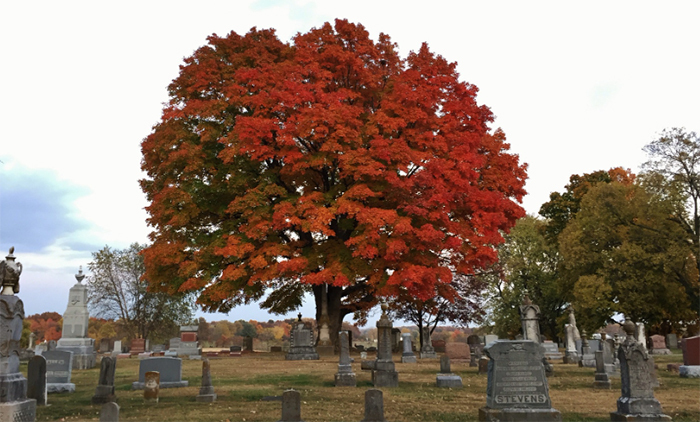 Three measurements are required:• trunk circumference, in inches, at 4 1/2 feet above the ground;• total height, in feet;• and average crown spread, in feet.The total size of each tree nominated is calculated by adding the circumference and height to a quarter of the average crown spread.The individual tree of each Indiana native tree species with the highest total points will be that species’ Big Tree champion. All nominations are reviewed, but only those with the highest scores will be verified.
To see full post please visit IN DNR, It’s Time to Start Looking for Big Trees.
To learn more please visit The Big Tree Registry, IN DNR-Division of Forestry.
Sign up to receive the MyDNR Newsletter by email: MyDNR Email Newsletter
Resources:
Investing in Indiana Woodlands, The Education Store
Forest Improvement Handbook, The Education Store
ID That Tree, Purdue Extension-Forestry & Natural Resources (FNR) YouTube playlist
Woodland Management Moment , Purdue Extension-FNR YouTube playlist
Find an Arborist, International Society of Arboriculture
Planting Your Tree Part 1: Choosing Your Tree, Purdue Extension YouTube Channel
Native Trees of the Midwest, The Education Store
Shrubs and Woody Vines of Indiana and the Midwest, The Education Store
Finding help from a professional forester, Indiana Forestry & Woodland Owners Association
District Foresters for 10 plus acres, Indiana Department of Natural Resources
Indiana Department of Natural Resources
Purdue Landscape Report: When I was a kid, if you’d asked me what my favorite season was it would always immediately be summer. No school, time for playing outdoors, swimming, hiking, and late nights playing flashlight tag. Now, if I ranked the seasons from worst to best, they’d be Summer in last, followed by Winter (yes, I choose winter over summer), and a tie between Spring and Fall. With the best temperatures, a mix of sun and rain/snow, and an explosion of colors from new blooms in the spring to the reds, yellows, and oranges of leaves before they drop in the fall, Spring and Fall are by far my favorite times of the year. Well, we are nearly to the autumnal equinox with temperatures beginning to drop and the onset of some fall showers as I write this article. With Fall on the doorstep, I’ve received a repeated question recently, “Is it ok to plant a tree in the Fall?”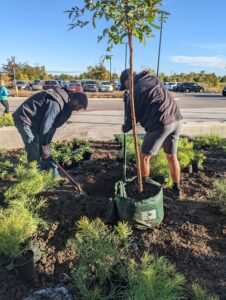
The short answer to this question is, “Yes!” If you want to add some new tree canopy to your yard, then pick your spot, choose the appropriate species, call #811 before you dig, and get that shovel out. Fall has some excellent reasons to plant trees, two of which I’ve already mentioned, cooler temps and autumn rains. While Autumn tends to be the driest time of the growing season, evapotranspiration rates are generally lower than during the summer season. These conditions reduce heat and water stress on trees (but are not an excuse to not mulch and water your new tree). Another good reason to plant in the fall as opposed to Spring is that instead of amping up for growing, trees are powering down and putting resources into root growth and storage. This means better establishment for the root system and a head start on protection for next year’s summer heat and drought.
There are some points to take into consideration, though. Again, make sure to properly water and mulch your new trees. They need an average of 5 gallons a week per inch of stem diameter if weekly rain isn’t providing around 1” of water. Be aware of when the first freeze is expected. You want to make sure your new trees have at least 6 weeks in the ground before the first freeze/frost and can stop watering after the first freeze. Also, for tree selection/protection, avoid broad leafed evergreen trees as they can be damaged by cold desiccation and wrap the trunks of your new trees to protect them from sunscald and animal damage like rubbing from bucks during the rut.
If you keep these points in mind and continue caring for your tree for the next 2-5 years you should have a successful planting. If you have any questions feel free to contact me at bmccalli@purdue.edu or you can find an ISA Certified Arborist at the following link Find an Arborist.
To view this full article and other Purdue Landscape Report articles, please visit Purdue Landscape Report.
Subscribe and receive the newsletter: Purdue Landscape Report Newsletter.
Resources:
The Purdue Landscape Report
Planning the Tree Planting Operation, The Education Store
Tree Risk Management – Got Nature? Blog, Purdue Extension – FNR
Tree Planting Part 2: Planting Your Tree, The Education Store
Planting Your Tree Part 1: Choosing Your Tree, Purdue Extension YouTube Channel
Summer Tree Care, Purdue Landscape Report
Tree Defect Identification, The Education Store
Tree Wound and Healing, Got Nature? Blog, Purdue Extension – Forestry and Natural Resources
Surface Root Syndrome, The Education Store
Shrubs and Woody Vines of Indiana and the Midwest, The Education Store
Ask an Expert: Tree Selection and Planting, Purdue Extension-Forestry & Natural Resources (FNR) YouTube playlist
ID That Tree, Purdue Extension-FNR YouTube playlist
Subscribe – Purdue Extension-FNR YouTube Channel
Ben McCallister, Urban Forestry Specialist
Purdue Forestry & Natural Resources
Purdue Landscape Report: Many trees are planted for their beautiful fall color, especially in locations where the climate provides reliable autumn weather. I have said this multiple times during extension talks and conversations with submitters to the Purdue Pest & Plant Diagnostic Lab (PPDL), but I seem to have not experienced a ‘normal’ fall since moving to Indiana with how erratic the weather has been from year to year. Depending on weather conditions, such as high heat and drought, colors may develop early or may be duller for specific varieties than expected.
However, individual trees that begin to show fall colors earlier than expected (August, September, even early October) may be shouting out a proverbial cry for help. Plants will often show yellow or red foliage coloration during periods of stress, so this may occur at any point during spring, summer, or fall. Individual trees may also show fall coloration earlier than others of their species in the same area. Now is the time to keep an eye out for this kind of early fall color as it can give you a heads-up on issues you can expect next year.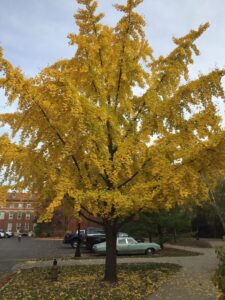
When examining a tree with early fall color, I would recommend checking the following:
- Is there a root flare?
Purdue Landscape Report: Deep Planting article- If not – tree could be planted too deep or the soil grade may have been changed
- Is there any obvious damage to the trunk, root flare, or surface roots?
- If so, there could internal decay that is not obvious and could be contributing to stress
- Are there any girdling roots?
Purdue Landscape Report: Stem Girdling Roots article- If present, they could be affecting the vascular system and strangling the tree
- Is the rootzone mulched?
- If not, the tree could be under stress from earlier drought, or weed and grass competition.
- If so, make sure it is not mounded against the trunk of the tree
- Does the soil appear compacted? Was there construction near the tree within the last 5 years?
- Compaction leads to issues with water, nutrient, and even oxygen availability to the roots and could lead to general decline
It is important to know the host species, but with the sheer volume of plant material available for sale in the nursery trade, it is even more important to know the cultivar that you are planting so you know what you might expect coming into the fall.
To view this full article and other Purdue Landscape Report articles, please visit Purdue Landscape Report.
Subscribe and receive the newsletter: Purdue Landscape Report Newsletter.
Resources:
Why Fall Color is Sometimes a Dud, Purdue Landscape Report
Forest Migration Plays a Role in Fall Foliage Colors, Purdue College of Agriculture News
U.S. Forest Service Fall Colors, Forest Service, U.S. Department of Agriculture
ID That Tree Fall Color: Sugar Maple, Purdue Extension – Forestry and Natural Resources YouTube Channel, ID That Tree Playlist
ID That Tree Fall Color Edition: Black Gum, Purdue Extension – FNR YouTube Channel, ID That Tree Playlist
Autumn Highlights Tour – South Campus, Purdue Arboretum Explorer
Why Leaves Change Color – the Physiological Basis, The Education Store, Purdue Extension resource center
Subscribe, Purdue Extension-Forestry and Natural Resources YouTube Channel
Planting Your Tree Part 1: Choosing Your Tree, Purdue Extension YouTube Channel
Summer Tree Care, Purdue Landscape Report
Tree Defect Identification, The Education Store
Tree Wound and Healing, Got Nature? Blog, Purdue Extension – Forestry and Natural Resources
Surface Root Syndrome, The Education Store
Shrubs and Woody Vines of Indiana and the Midwest, The Education Store
Ask an Expert: Tree Selection and Planting, Purdue Extension-Forestry & Natural Resources (FNR) YouTube playlist
ID That Tree, Purdue Extension-FNR YouTube playlist
John Bonkowski, Plant Disease Diagnostician
Departments of Botany & Plant Pathology
Purdue Landscape Report: Stop me if you’ve heard this one…. A tree is in a slow decline year after year. You are called to your client’s property only to find the root flare well below grade.
Most professionals in the Green Industry have encountered this at some point in their career. The most common reason for the slow decline of trees in the landscape is due to the depth of planting and girdling roots. Deep planting can cause a number of deleterious problems, including an increase in circling/girdling roots restricting vascular tissue and decay of protective bark (Fig. 1). The vascular tissue in the bark is located on the outer portions of the trunk, while the anatomy of roots contains the vascular tissue in the center. This is why roots can graft with roots and stems can graft with stems, but also why roots can girdle the stems of trees (Fig. 2)
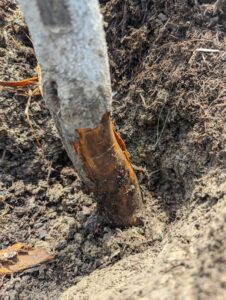
Figure 1. A tree that’s planted too deep can have bark decay from too much soil moisture around the trunk.
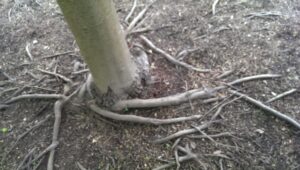
Figure 2. Root girdling can occur on trees that didn’t have a root correction during transplanting and/or being planted too deep. Restriction of vascular tissue in the trunk will decrease the amount of water and nutrients taken up by the tree.
Excessive mounding of mulch (aka volcano mulch) (Fig. 3) can contribute to tree decline, very similar to a tree planted too deep. It’s important to remember that keeping mulch several inches away from the trunk is imperative in tree health.
If a newly transplanted tree is planted significantly too deep, a faster decline can occur, especially in plants that can’t tolerate ‘wet feet’ (aka too much soil moisture) (Fig.4). In heavy-clay soils, the negative effects on tree health increase by creating a bath-tub situation by water not draining expeditiously after a rainfall or irrigation event.
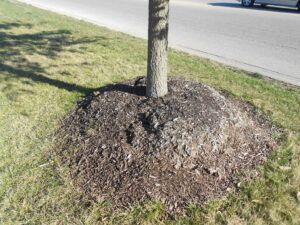
Figure 3. Volcano mulch can cause the same problems that a tree planted too deep can experience.
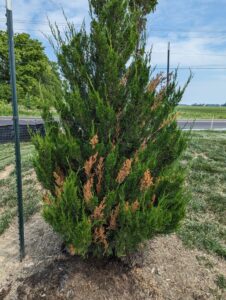
Figure 4. Decline of this juniper is caused by this tree being planted too deep.
To view this full article and other Purdue Landscape Report articles, please visit Purdue Landscape Report.
Subscribe and receive the newsletter: Purdue Landscape Report Newsletter.
Resources:
The Purdue Landscape Report
Planting Your Tree Part 1: Choosing Your Tree, Purdue Extension YouTube Channel
Summer Tree Care, Purdue Landscape Report
Tree Defect Identification, The Education Store
Tree Wound and Healing, Got Nature? Blog, Purdue Extension – Forestry and Natural Resources
Surface Root Syndrome, The Education Store
Shrubs and Woody Vines of Indiana and the Midwest, The Education Store
Ask an Expert: Tree Selection and Planting, Purdue Extension-Forestry & Natural Resources (FNR) YouTube playlist
ID That Tree, Purdue Extension-FNR YouTube playlist
Subscribe – Purdue Extension-FNR YouTube Channel
Kyle Daniel, Commercial Landscape and Nursery Crops Extension Specialist
Purdue Horticulture & Landscape Architecture
Purdue Landscape Report: Poison hemlock was introduced to North America as a garden/ornamental plant. It is a native of Europe, and it is a member of the Apiaceae (parsley) family.
Purdue experts Bill Johnson and Marcelo Zimmer wrote about poison hemlock in a Purdue Pest & Crop newsletter.
They wrote that poison hemlock can be noticed very early in the spring every year, as it is typically one of the first weeds to green up, usually in late February to early March if temperatures are favorable. They said the largest threat of this weed is the toxicity of its alkaloids if ingested by livestock or humans, but it can also reduce the aesthetic value of landscapes and has been reported to creep into no-till corn and soybean fields as well.
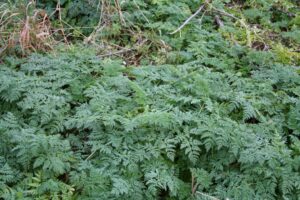
Poison Hemlock
Purdue Extension’s fact sheet on poison hemlock states that it can also be found along roads, streams, trails, ditches, forest edges, and waste areas.
The Purdue experts said that poison hemlock is a biennial weed that exists as a low-growing herb in the first year, and bolts to three to eight feet tall in the second year, when it produces flowers and seed. It is often not noticed until the bolting and reproductive stages of the second year. Poison hemlock is often confused with wild carrot, but can be distinguished by its lack of hairs and purple blotches that occur on the stems.
The experts pointed out that poison hemlock contains five alkaloids that are toxic to humans and livestock, and it can be lethal if ingested. They warn that the plant’s alkaloids may also be absorbed through the skin, so if you find yourself hand-pulling poison hemlock, it would be a good idea to wear gloves. All parts of the plants contain the toxic alkaloids with levels being variable throughout the year. Symptoms of toxicity include nervousness, trembling, and loss of coordination followed by depression, coma, and/or death. Initial symptoms will occur within a few hours of ingestion.
For history buffs, the Greek philosopher Socrates was sentenced to death by hemlock poisoning.
Cases of poisoning due to poison hemlock ingestion are rare as the plants emit a mousy odor that makes it undesirable and unpalatable to livestock and humans. Consumption and toxicity in animals usually occur in poorly managed or overgrazed pastures where animals are forced to graze poison hemlock because desirable forage is lacking.
To view this full article and other Purdue Landscape Report articles, please visit Purdue Landscape Report.
Subscribe and receive the newsletter: Purdue Landscape Report Newsletter.
Resources:
Recognizing and Managing Poison Hemlock, Purdue Landscape Report
Purdue Pest & Crop Newsletter
Invasive Plant Species Fact Sheets: Poison Hemlock, The Education Store, Purdue Extension Resource Center
Hemlock Woolly Adelgid: Distribution Update, Purdue Landscape Report
Be Careful Around Highly Toxic Poison Hemlock Plant This Summer, Purdue Extension – Forestry and Natural Resources (FNR)
Poison Hemlock (Conium maculatum), United States Department of Agriculture (USDA)
Invasive plants: impact on environment and people, The Education Store, Purdue Extension’s resource center
Woodland Management Moment: Invasive Species Control Process, Video, Purdue Extension – Forestry and Natural Resources (FNR) YouTube Channel
Invasive Species, Playlist, Purdue Extension – FNR YouTube Channel
What are invasive species and why should I care?, Got Nature? Blog, Purdue Extension – FNR
Report Invasive, Purdue College of Agriculture – Entomology
Purdue Pest and Plant Diagnostic Lab, send in photo or sample
John Woodmansee, Extension Educator, Whitely County
Purdue Extension
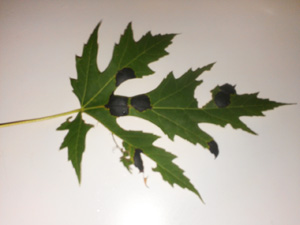 Question: we have several maple trees in our neighborhood afflicted with this black spot (see attached photo). What can we do to protect our maple trees?
Anwer: while it is difficult to confirm a diagnosis from photos alone it looks and could be a fungal disease called tar spot. The most common species are Rhytisma acerinum and R. punctatum. Symptoms first appear in late spring or early summer as infected leaves develop light green or yellow-green spots. During mid to late summer these produce black tar-like raised structures on the upper surface of leaves within the yellow spots. R. acerinum causes larger spots that are 0.5 to 2 cm in diameter; R.punctatum causes many small punctate spots that are smaller (about 1mm in diameter). Spots caused by R. punctatum are sometimes called speckled tar spots.
Tar spot is a common disease on silver maple and is primarily considered to be a cosmetic problem rather than a serious threat. The Purdue Plant and Pest Diagnostic Laboratory has additional information on tar spot including more photos and best treatment, Tar Spot on Maple.
To confirm a diagnosis, you can submit a sample directly to the Purdue Plant & Pest Diagnostic Lab (PPDL) or find a certified arborist to come to your property and access your tree.
Resources:
Large Spots on Maple Leaves that Look Like Tar, Purdue Extension News
Find an Arborist, International Society of Arboriculture
Diseases in Hardwood Tree Plantings, The Education Store, Purdue Extension’s resource center
Fifty Common Trees of Indiana
An Introduction to Trees of Indiana
Native Trees of the Midwest, The Education Store
Shrubs and Woody Vines of Indiana and the Midwest, The Education Store
Tree Installation: Process and Practices, The Education Store
Planting Your Tree Part 1: Choosing Your Tree, Video, Purdue Extension – Forestry & Natural Resource (FNR) YouTube Channel
Investing in Indiana Woodlands, The Education Store
Forest Improvement Handbook, The Education Store
ID That Tree, Purdue Extension-FNR YouTube playlist
Purdue Plant and Pest Diagnostic Laboratory
Diana Evans, Extension and Web Communication Specialist
Purdue University Department of Forestry and Natural Resources
Purdue Landscape Report: Some of the questions that I get asked quite frequently are “Are my trees ok?”, “Do I need to have an arborist come work on my trees?”, and “Is there anything I can do to help my trees without hurting my savings?”. Just like many questions, the answers are dependent on the situation. There are a multitude of cases where it is in the best interest of both you and the tree to hire a professional. From removals and storm damage, to pruning at height and/or around utilities, and other dangerous situations, you really should invest in the cost of a certified arborist. But there are instances where you can save some money and feel the pride of caring for your trees yourself by doing some of your own pruning work.
You might not think too much about pruning. Maybe you feel like “Hey! Anyone can cut off a branch”, and you’re right but also not. There is a right and wrong way to pruning and cleaning out dead wood. Depending on where you cut and how much you remove, you might end up doing more damage to your tree and end up requiring the assistance of an arborist earlier than needed. For the pruning layperson, there are several topics that can help you prune like a pro: safety, equipment, and proper pruning cuts.
First and foremost is safety. From this time of the year onward it’s only going to get hotter, but it’s important to protect your body from accidents with your tools, from the elements, and even from the plants you’re pruning by wearing the proper personal protective equipment (PPE). From the toes up, skilled professionals have their work boots (closed toed shoes), pants (not shorts), at the very least a t-shirt, gloves and safety glasses, and hearing and head protection depending on the equipment and scale of work. And if you’re using power equipment like chainsaws make sure you’ve got protective chaps for that added level of safety.
The standard equipment available for pruning includes hand pruners, loppers, and hand and pole saws (I’ll touch on chainsaws more in a later article). The two main types of pruners and loppers are called bypass and anvil styles. Bypass pruners have two blades that “bypass” each other like scissors, leaving clean cuts on your trees and shrubs. Anvil pruners have a single blade that shuts against a flat surface, the “anvil”, and can leave bruised or crushed plant material after cuts. Use your hand pruners for smaller cuts (up to 3/4” in diameter depending on the quality of your blade) and your loppers for larger diameters that might not require a hand saw.
When choosing a hand or pole saw, it is best to have one specifically designed for pruning. Pruning saws come in different configurations. They can be straight or curved, have fixed or folding blades, and come in different lengths and teeth sizes. A good rule of thumb is shorter blades or blades with smaller teeth for finer pruning cuts and longer blades with larger teeth for bigger diameter limbs (pole saws will usually have larger blades attached to single or extendable poles). You’ll also want a blade that isn’t so thin that it buckles on the first cut. For pruning at home, I recommend a 10-12” saw with medium sized teeth. That coupled with a hand pruner and some loppers should cover most of your pruning projects.
Now that you have your PPE and your pruning equipment you’ll want to begin cutting, but there are some considerations along with dos and don’ts for pruning. First, you want to decide what your goals are (raising the canopy off the ground or a building, thinning the crown to increase light and/or wind, or reducing the canopy by shortening limbs) and how much you need to remove from your tree (Fig. 1). In most cases, less is more. Whenever you remove plant material you are doing two things:
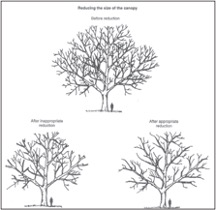
Figure 1a: Examples of canopy reduction, thinning, and raising (FNR-506-W).

Figure 1b: Examples of canopy reduction, thinning, and raising (FNR-506-W).
1) you are injuring the tree, exposing open cuts to pests, diseases, and the elements
2) you are removing plant material that could continue to create energy for the tree if left on.
Both will stress your tree and it will need time to adapt and heal. You can always remove more later, but once you make your cuts you cannot put them back. If your tree needs a heavier prune, it’s time to bring in an arborist.
Next you need to consider what are you cutting? Are you removing whole limbs back to the trunk or are you shortening limbs? If you are removing limbs you want to avoid flush cuts, cutting back even to the trunk. Flush cuts (Fig. 2) are usually oval and have a larger surface area exposing more of the tree to pests, diseases, and the elements. Instead, you want to cut up to the branch bark ridge, a raised portion of bark on the top of the limb where it meets the trunk, and the branch collar, usually a swollen area on the bottom side of the limb where it begins to flare out from the trunk (Fig. 3). This is a proper removal cut that has the smallest surface area exposed and is usually more circular than oval.
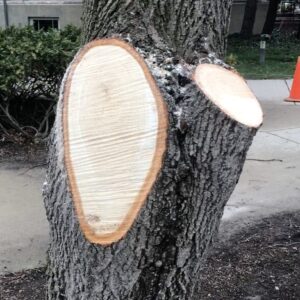
Figure 2: Examples of a flush cut (left) and a proper removal cut (right).
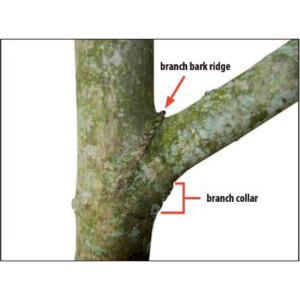
Figure 3: Identifying the branch bark ridge and the branch collar for proper removal cuts (FNR-506-W).
If you are shortening limbs you want to perform a reduction cut, which is removing a larger stem by cutting back to a lateral branch that is at least 1/3 the diameter of the portion you are removing (Fig. 4). This provides sufficient energy production the keep the remaining limb alive. In this situation, you want to avoid heading cuts, which are length reductions without regard to the position or diameter of the lateral branch you are cutting back too. Cutting too far away from the lateral will lead to dead stubs that increase exposure and the time needed to heal over wounds. Cutting to laterals that are too small won’t allow the limb to produce enough energy to survive.
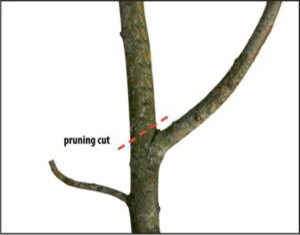
Figure 4: Correct placement of a reduction cut to an properly sized lateral branch (FNR-506-W).
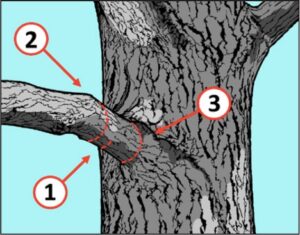
Figure 5: The 3-cut method for safe removal of limbs (FNR-506-W).
Last, whether you are applying removal or reduction cuts, you want to utilize what is called the ternary or 3-Cut Method (Fig. 5). The purpose of this method to stop damage from splitting and tear-outs in larger limbs that can’t be controlled by hand. The first cut is the undercut, about 1/3 the diameter of the limb and usually 6-12 inches from your final cut. The second cut is the top cut just outside the undercut. This cut continues down until it meets the same plane as the undercut where gravity will take hold as the branch snaps and falls. The final cut is to the branch collar, or the chosen lateral as noted above.
Proper pruning can be a daunting task at first. With time, the correct materials, and practice you can better care for your trees, your landscape, and yourself. If you are still worried about your trees, there are plenty of resources at Purdue Extension and The Education Store or you can always find an ISA Certified Arborist nearby using the Trees Are Good website. They will be able to help assess any other issues and provide excellent professional help.
Resources:
Tree Pruning Essentials, Video & Document
Tree Pruning for the Landscape Webinar, Purdue Extension – Forestry and Natural Resources (FNR) Youtube Channel
Tree Appraisal and the Value of Trees, The Education Store, Purdue Extension resource center
Tree Pruning: What Do Trees Think?, The Education Store
Mechanical Damage to Trees: Mowing and Maintenance Equipment, The Education Store
Tree Installation Process and Practices, The Education Store
Tree Planting Part 1: Choosing a Tree, The Education Store
Tree Planting Part 2: Planting Your Tree, The Education Store
Planting Problems: Planting Too Deep, Video, Purdue Extension – FNR Youtube Channel
Ben McCallister, Urban Forestry Specialist
Purdue Forestry and Natural Resources
The classic and trusted book “Fifty Common Trees of Indiana” by T.E. Shaw was published in 1956 as a user-friendly guide to local species. Nearly 70 years later, the publication has been updated through a joint effort by the Purdue Department of Forestry and Natural Resources, Indiana 4-H, and the Indiana Department of Natural Resources, and reintroduced as “An Introduction to Trees of Indiana.”
The full publication is available for download for $7 in the Purdue Extension Education Store. The field guide helps identify common Indiana woodlot trees.
Each week, the Intro to Trees of Indiana web series will offer a sneak peek at one species from the book, paired with an ID That Tree video from Purdue Extension forester Lenny Farlee to help visualize each species as it stands in the woods. Threats to species health as well as also insight into the wood provided by the species, will be provided through additional resources as well as the Hardwoods of the Central Midwest exhibit of the Purdue Arboretum, if available.
This week, we meet the Virginia pine, or Pinus virginiana. In Indiana, this species is native to the southern part of the state, namely Clark and Floyd counties in the dry, hilly areas known as the Knobs near the Ohio River, but it has been widely planted across the state.
This native conifer has clusters of two needles, approximately two inches long, which are often twisted.
The Virginia pine has an open canopy. Bark on the Virginia pine is flaky, with a combination of gray and red-orange tones. The bark gets more orange higher up the trunk. Cones are one to three inches long and have very sharp thorns at the end of the scales. Cones typically stay on the tree for several years.
For full article with additional photos view: Intro to Trees of Indiana: Virginia Pine, Forestry and Natural Resources’ News.
If you have any questions regarding wildlife, trees, forest management, wood products, natural resource planning or other natural resource topics, feel free to contact us by using our Ask an Expert web page.
Other Resources:
ID That Tree: Virginia Pine
Borers of Pines and Other Needle Bearing Evergreens in Landscapes, The Education Store, Purdue Extension’s resource center
Managing the Zimmerman Pine Moth, The Education Store
Purdue Arboretum Explorer
The Woody Plant Seed Manual, U.S. Forest Service
Native Trees of the Midwest, The Education Store
Shrubs and Woody Vines of Indiana and the Midwest, The Education Store
Investing in Indiana Woodlands, The Education Store
Forest Improvement Handbook, The Education Store
ID That Tree, Purdue Extension-Forestry & Natural Resources (FNR) YouTube playlist
Woodland Management Moment , Purdue Extension-FNR YouTube playlist
Wendy Mayer, FNR Communications Coordinator
Purdue University Department of Forestry and Natural Resources
Lenny Farlee, Extension Forester
Purdue University Department of Forestry and Natural Resources

Recent Posts
- What You Plant Matters to Wildlife
Posted: September 16, 2026 in Plants, Urban Forestry, Wildlife - Question: Why Did the Shagbark Hickories Survive the Tornado?
Posted: August 27, 2026 in Forests and Street Trees, How To, Urban Forestry - New Indiana Woodland Steward Newsletter
Posted: August 12, 2026 in Forestry, Urban Forestry, Wildlife, Woodlands - Trees and Storms: Understanding Damage, Risk and Recovery
Posted: in How To, Urban Forestry - Pruning Highlight-Pollarding Trees: A Traditional Pruning Practice with Modern Uses
Posted: June 11, 2026 in Forestry, Forests and Street Trees, Urban Forestry, Wildlife, Woodlands - Flat-Faced Longhorn Beetle Found in Hardwood Logs – IDNR Division of Entomology
Posted: June 8, 2026 in Alert, Forestry, Forests and Street Trees, Invasive Insects, Urban Forestry, Wildlife, Woodlands - Connecting Research to Practice: Natural Resources & Land Use Spring Training
Posted: June 5, 2026 in Forestry, Forests and Street Trees, How To, Invasive Animal Species, Invasive Plant Species, Land Use, Natural Resource Planning, Urban Forestry, Wildlife, Woodlands - Indiana Monarch and Pollinator Conservation
Posted: June 1, 2026 in Forestry, Forests and Street Trees, Gardening, How To, Natural Resource Planning, Plants, Urban Forestry, Wildlife - Spotted Lanternfly Feeds on Over 70 Plus Plant Species
Posted: May 20, 2026 in Alert, Forestry, Forests and Street Trees, Gardening, Invasive Insects, Urban Forestry, Wildlife - Spring Storms Are Coming: How to Reduce Tree Damage and Risk
Posted: May 1, 2026 in How To, Urban Forestry, Wildlife, Woodlands
Archives
Categories
- Alert
- Aquaculture/Fish
- Aquatic/Aquaculture Resources
- Ask the Expert
- Christmas Trees
- Community Development
- Disease
- Drought
- Forestry
- Forests and Street Trees
- Gardening
- Got Nature for Kids
- Great Lakes
- How To
- Invasive Animal Species
- Invasive Insects
- Invasive Plant Species
- Land Use
- Natural Resource Planning
- Nature of Teaching
- Plants
- Podcasts
- Ponds
- Publication
- Safety
- Spiders
- Timber Marketing
- Urban Forestry
- Webinar
- Wildlife
- Wood Products/Manufacturing
- Woodland Management Moment
- Woodlands