 Purdue University - Extension - Forestry and Natural Resources
Got Nature? Blog
Welcome to this edition of “ID That Tree”. In this video Purdue Extension forester Lenny Farlee will introduce you to leatherwood, a charming Indiana shrub. Typically found in the understory of forest areas, this compact shrub is easy to identify by its oblong leaves with smooth margins and alternate leaf arrangement. Join us to learn more about leatherwood and its unique characteristics!
If you have any questions regarding wildlife, trees, forest management, wood products, natural resource planning or other natural resource topics, feel free to contact us by using our Ask an Expert web page.
Resources:
ID That Tree – Video Playlist, Purdue Extension – Forestry and Natural Resources (FNR) YouTube Channel
Purdue Arboretum Explorer
Conservation Tree Planting: Steps to Success, Purdue Extension – FNR YouTube Channel
A Woodland Management Moment, Playlist, Purdue Extension – FNR YouTube Channel
Woodland Stewardship for Landowners, Playlist, Purdue Extension – FNR YouTube Channel
Indiana Department of Natural Resources: Invasive Species
Indiana Invasive Species Council
Cooperative Invasive Species Management Area (CISMA)
Report Invasive, Purdue Extension
Fifty Common Trees of Indiana, Purdue Extension – FNR
Episode 11 – Exploring the challenges of Invasive Species, Habitat University-Natural Resource University
Shrubs and Woody Vines of Indiana and the Midwest, The Education Store
Native Trees of the Midwest, The Education Store
Professional Forester, Indiana Forestry Woodland Owners Association
Forest Improvement Handbook, The Education Store
Find an Arborist, International Society of Arboriculture
Lenny Farlee, Extension Forester
Hardwood Tree Improvement and Regeneration Center
Purdue Department of Forestry & Natural Resources
Tax preparation time usually brings with it questions about what is deductible, how to report this income and what you can do to save on your taxes in the future. Fortunately for woodland owners, there are several excellent resources available to help you find some guidance.
A national site addressing tax issues for woodland owners is the National Timber Tax Website. This site provides updated tax tips for the 2024 filing year, as well as many guides and references to help you effectively plan a tax strategy for your property.
The first link you will see on the National Timber Tax website is the recent timber tax tips by the U.S. Department of Agriculture (USDA), Forest Service:
Tax Tips for Forest Landowners: 2024 Tax Year (pdf 176KB)
Purdue Forestry and Natural Resources Extension offers some publications covering taxation issues for timber sales and tree planting.
How to Treat Timber Sale Income
Determining Tax Basis of Timber
Financial and Tax Aspects of Tree Planting
If you sold timber or planted trees for timber production last year, the references above may help you understand your options and possibly provide some tax savings.
Familiarizing yourself with the tax treatment of timber sales and tree plantings may help you more effectively plan for future tax returns.
Other resources:
U.S. Forest Service
Indiana Department of Natural Resources Offers Program Aiding in Property Tax Reductions, Purdue Extension – Forestry & Natural Resources (FNR) Blog Article
The Education Store, Purdue Extension (place in search field: “timber”)
Find an Indiana Professional Forester, Indiana Forestry & Woodland Owners Association (IFWOA)
Purdue Arboretum Explorer
Native Trees of the Midwest, The Education Store
Shrubs and Woody Vines of Indiana and the Midwest, The Education Store
Investing in Indiana Woodlands, The Education Store
Forest Improvement Handbook, The Education Store
ID That Tree, Purdue Extension-Forestry & Natural Resources (FNR) YouTube playlist
Woodland Management Moment , Purdue Extension-FNR YouTube playlist
Indiana DNR Offers Special Program Aiding in Property Tax Reductions – IFWOA
Lenny Farlee, Extension Forester
Hardwood Tree Improvement and Regeneration Center (HTIRC)
Forestry and Natural Resources, Purdue University

Photo by Larry Caplan.
When do you need to discard your real Christmas tree? What options are there in disposing the tree?
Check out these tips from our Purdue experts:
Lenny Farlee, Purdue Extension Forester with Forestry and Natural Resources, in interview with the WLFI news team shares the first steps is to remove all decorations. “Several municipalities here in the area will either take the trees for mulching or composting. So if you don’t want to fool with the tree anymore, that’s a great option. You can just take it to the curb, or certain locations, and they’ll take care of it for you and it gets reused or recycled into usable material,” explains Farlee. Choosing to keep the tree in your backyard is a great wildlife friendly option. Lenny shares how important it is to remove your tree in a timely manner to avoid any fire hazards in your house. The video explains on how you can test your tree to see if it should be discarded. See video and full article for more options: Options for Getting Rid of Real Christmas Tree, wlfi.com.
John Woodmansee, Purdue Extension Educator-Agriculture Natural Resources (ANR), also shares tips in the Purdue Extension article Recycle Your Christmas Tree. If you have permission and/or have access to a private pond you can discard your tree in the pond to improve fish habitat.
Resources:
A Choose-and-Cut Pine and Fir Christmas Tree Case Study, The Education Store, Purdue Extension’s resource center
Living Christmas Trees For The Holidays and Beyond, The Education Store
Tips for First-Time Buyers of Real Christmas Trees, The Education Store
Growing Christmas Trees, The Education Store
Selecting an Indiana-Grown Christmas Tree, The Education Store
Repurposing Your Real Christmas Tree, Purdue Extension News
An Introduction to Trees of Indiana, The Education Store
Native Trees of the Midwest, The Education Store
Shrubs and Woody Vines of Indiana and the Midwest, The Education Store
ID That Tree, Playlist, Subscribe to Purdue Extension – Forestry and Natural Resources YouTube Channel
A Woodland Management Moment, Playlist, Purdue Extension – FNR YouTube Channel
Investing in Indiana Woodlands, The Education Store
Forest Improvement Handbook, The Education Store
Finding help from a professional forester, Indiana Forestry & Woodland Owners Association
District Foresters for 10 plus acres, Indiana Department of Natural Resources
Sustainable Biomaterials, FNR Concentration
Diana Evans, Extension & Web Communications Specialist
Purdue University Department of Forestry and Natural Resources
Lenny Farlee, Extension Forester
Hardwood Tree Improvement and Regeneration Center
Purdue Department of Forestry & Natural Resources
Join Purdue Extension forester Lenny Farlee and wildlife specialist Brian MacGowan as they help you prepare for the holidays while keeping your family and local wildlife safe. This video discusses everything from how to choose and care for a real Christmas tree as well as what to do with it after the season and also how to make wildlife/nature-friendly decorations.
Topics Include:
– What can I do with my tree after Christmas that would benefit wildlife?
– Are artificial structures legal in Indiana lakes?
– What types of items can I collect from the wild for holiday decorations?
– How do I do it in an environmentally responsible way?
– Are there some things I shouldn’t or can’t collect?
– What outdoor holiday decorations can benefit wildlife?
– How do I make it last longer?
– Can I avoid problems with non-target wildlife?
If you have any questions regarding trees, forest management, wildlife, wood products or other natural resource topics, feel free to contact us by using our Ask an Expert web page.
Resources
Selecting an Indiana-Grown Christmas Tree, The Education Store, Purdue Extension resource center
Tips for First-Time Buyers of Real Christmas Trees, The Education Store
Indiana Christmas Tree Growers Association
Purdue University Invasive Species resources
Indiana DNR Division of Fish and Wildlife for wildlife possession rules
Feed the birds with a DIY wreath, Audubon
Dan Cassens: Tips for First-Time Christmas Tree Buyers, Video, Purdue Agriculture
Dan Cassens: Starting Your Own Christmas Tree Farm, Video
Lenny Farlee, Sustaining Hardwood Extension Specialist
Purdue University Department of Forestry and Natural Resource
Brian MacGowan, Extension Wildlife Specialist
Department of Forestry & Natural Resources, Purdue University
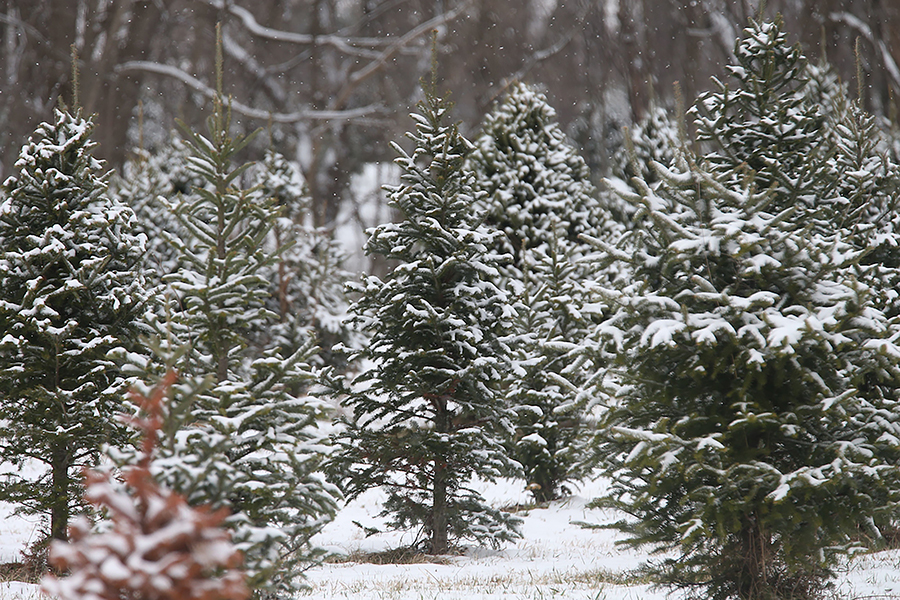 A real Christmas tree is an important part of a holiday celebration for many Hoosier households. Consumers have several choices for purchasing a real tree, including pre-cut trees at retail outlets or seasonal sales locations, choose-and-cut trees at Christmas tree farms, or even live trees that can be replanted after the holidays. Purdue Extension offers two publications that can help you select and care for your tree: Tips for First-Time Buyers of Christmas Trees provides advice and direction on how to set up and care for your tree to improve safety and enjoyment. Selecting an Indiana-Grown Christmas Tree provides details on the characteristics of different species of real Christmas trees available in Indiana, as well as care instructions for cut and live Christmas trees.
Pre-cut real Christmas trees are available at many retail outlets like garden centers, supermarkets, or seasonal sales locations. If you are looking for local choose-and-cut Christmas tree farms you can consult local media and advertising outlets or the Indiana Christmas Tree Growers Association. Some garden centers and Christmas tree farms may also offer live trees for sale.
If you are considering growing your own Christmas trees for personal use or sale, the Extension publications Growing Christmas Trees and A Choose-and-Cut Pine and Fir Christmas Tree Case Study outline economic and management considerations for growing Christmas trees.
Check out the Ask an Expert: Holidays in the Wild as the experts answer questions regarding Christmas trees along with wildlife you may see while you walk in the woods this winter. In this Ask an Expert video they share resources about picking a real Christmas tree and how to access real trees locally in Indiana as well as collecting decoration materials like cones, seed pods and nuts form the wild for crafting and decorating. They also discuss how you can provide habitat and supplemental food for wildlife using Christmas trees and wreaths before, during and after the holiday season.
Resources:
A Choose-and-Cut Pine and Fir Christmas Tree Case Study, The Education Store, Purdue Extension’s resource center
Living Christmas Trees For The Holidays and Beyond, The Education Store
Tips for First-Time Buyers of Real Christmas Trees, The Education Store
Growing Christmas Trees, The Education Store
Selecting an Indiana-Grown Christmas Tree, The Education Store
Winterize Your Trees, The Education Store
Tree Installation: Process and Practices, The Education Store
What do Treed Do in the Winter?, Got Nature? Blog, Purdue Extension – Forestry and Natural Resources (FNR)
Forest/Timber Playlist, subscribe to Purdue Extension – Forestry and Natural Resources (FNR) YouTube Channel
Ask the Expert: Holidays in the Wild, Purdue Extension – FNR YouTube Channel
ID That Tree: Balsam Fir, Purdue Extension – FNR YouTube Channel
ID That Tree: Scotch Pine, Purdue Extension – FNR YouTube Channel
To identify other pine trees view ID That Tree, Purdue Extension – FNR YouTube Channel
Lenny Farlee, Extension Forester
Hardwood Tree Improvement and Regeneration Center
Purdue Department of Forestry & Natural Resources
MyDNR, Indiana’s Outdoor Newsletter: Donate your harvested deer to feed hungry Hoosiers. In Indiana, you can enjoy a great day hunting and also help Hoosiers in need. In fact, one donated deer can provide 200 meals for a Hoosier family!
Follow these simple steps:
- Enjoy a deer hunting experience.
- Harvest a deer.
- Drop off the field-dressed deer at a local participating processor.
- Processing fees are paid for by Hunt for Hunger (at no cost to you).
- The processor creates healthy venison burgers to distribute to food banks.
This is a part of the program Indiana Hunt for Hunger (also known as Sportsmen’s Benevolence Fund). The Indiana Department of Natural Resources launched this in 2008 to provide an easy way for hunters across Indiana to help hungry Hoosiers in need. Since its launch, the program has grown across the state to collect thousands of deer donations, providing hundreds of thousands of meals for Hoosiers.
For more information, visit the Hunt for Hunger page.
To subscribe to the newsletter, visit MyDNR Email Newsletter.
Resources:
Ask an Expert: Wildlife Food Plots, video, Purdue Extension – Forestry and Natural Resources (FNR) YouTube Channel
Handling Harvested Game: Episode 1, Field Dressing, video, Purdue Extension – FNR YouTube Channel
Handling Harvested Game: Episode 2, Hanging & Skinning, video, Purdue Extension – FNR YouTube Channel
Handling Harvested Game: Episode 3, Deboning, video, Purdue Extension – FNR YouTube Channel
Handling Harvested Game: Episode 4, Cutting, Grinding & Packaging, video, Purdue Extension – FNR YouTube Channel
Deer Harvest Data Collection, Got Nature? Blog, Purdue Extension – FNR
How to Score Your White-tailed Deer, video, The Education Store, Purdue Extension Resource Center
White-Tailed Deer Post Harvest Collection, video, The Education Store
Age Determination in White-tailed Deer, video, The Education Store
Handling Harvested Deer Ask an Expert? video, Purdue Extension – FNR YouTube Channel
How to Build a Plastic Mesh Deer Exclusion Fence, The Education Store
Bovine Tuberculosis in Wild White-tailed Deer, The Education Store
Woodland Stewardship for Landowners: Managing Deer Damage to Young Trees, video, Purdue Extension – FNR YouTube Channel
Integrated Deer Management Project, Purdue FNR
New Deer Impact Toolbox, Purdue Extension-Forestry and Natural Resources (FNR)
Indiana Department of Natural Resources, Department of Fish & Wildlife
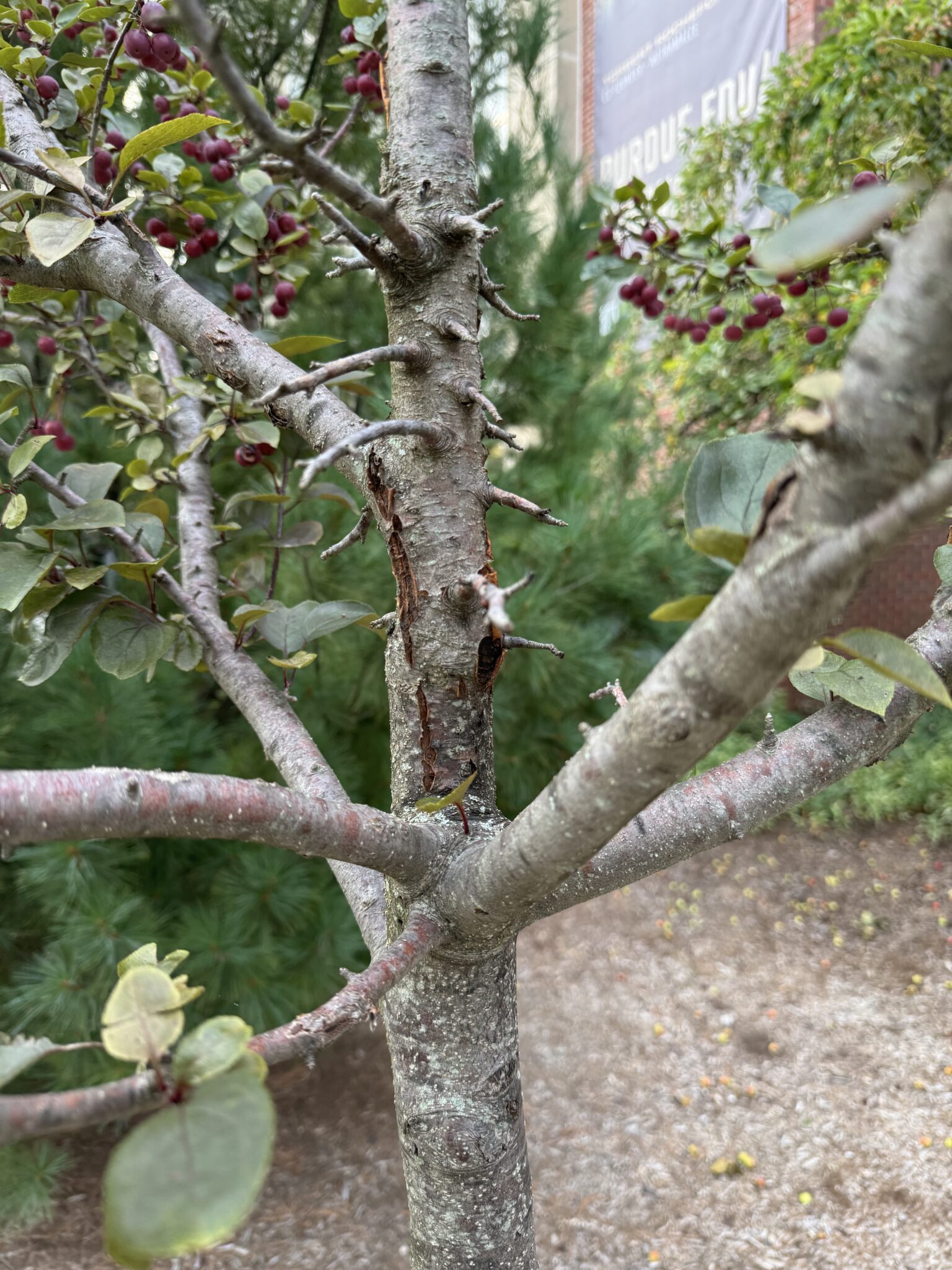
Figure 1: This crabapple tree was attacked first by fire blight and later by Botryosphaeria canker, killing the main trunk.
Purdue Landscape Report: Dieback and canker diseases caused by Botryosphaeria, Sphaeropsis, Diplodia and other closely related fungal pathogens are exceptionally common on woody landscape plants. This group of diseases are often referred to collectively as Botryosphaeria diseases and this article will follow that convention to discuss them as a group. Examine any mature oak tree long enough and you’re likely to find at least some stems dying due to Botryosphaeria. Check the base of dying stems of cranberry bush viburnum and you’re likely to find a Botryosphaeria canker. Look closely at sunken cracked stems and dieback on redbud and, you guessed it, more Botryosphaeria.
Botryosphaeria is opportunistic and is often seen killing individual branches that have been wounded or attacked by other diseases, providing an entry point for the fungus. (Fig 1) Stress factors like drought, freezing or defoliation due to disease or insect attack increases susceptibility to infection, and reduces plant defenses so that existing infections often move faster down the stem. However, wounds are not required for infection. In susceptible trees and shrubs, the fungus may attack the smallest twigs and later spread to larger branches where they cause cankers.
Symptoms:
Discoloration and death of leaves on individual stems may point to Botryosphaeria canker at the base of the dying stem (Fig 2). As the canker girdles a stem, the portion of the stem above the canker gradually dies. Smaller twigs with immature bark may become discolored as the pathogen spreads. Symptoms may vary depending on the plant species infected. In many cases the infection fails to completely encircle the stem, resulting in stems with half necrotic and half living stem tissue (Fig 3).
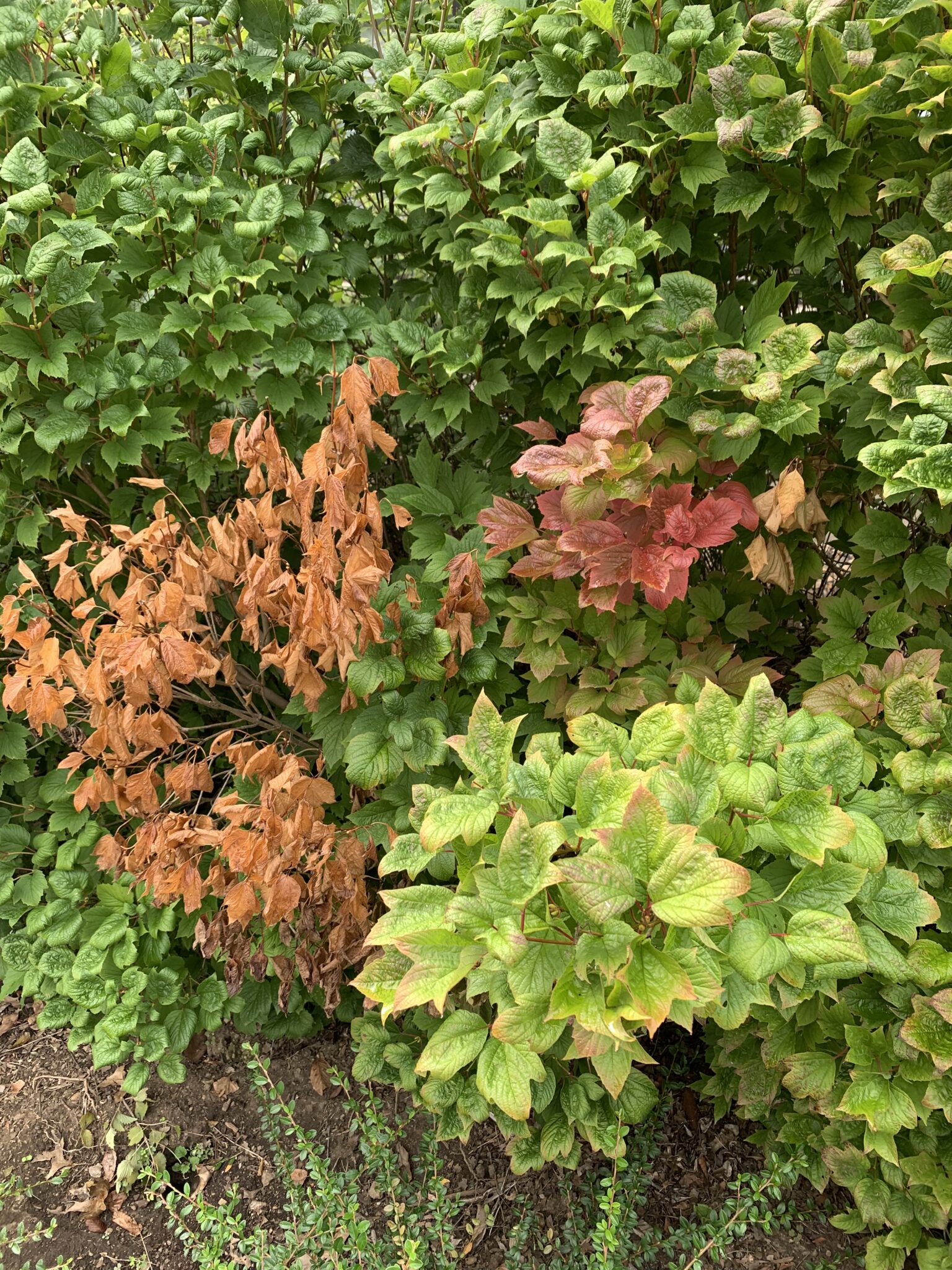
Figure 2: A viburnum hedge with dieback caused by Botryosphaeria. Leaf color may progress from yellow to red to brown as branches die.
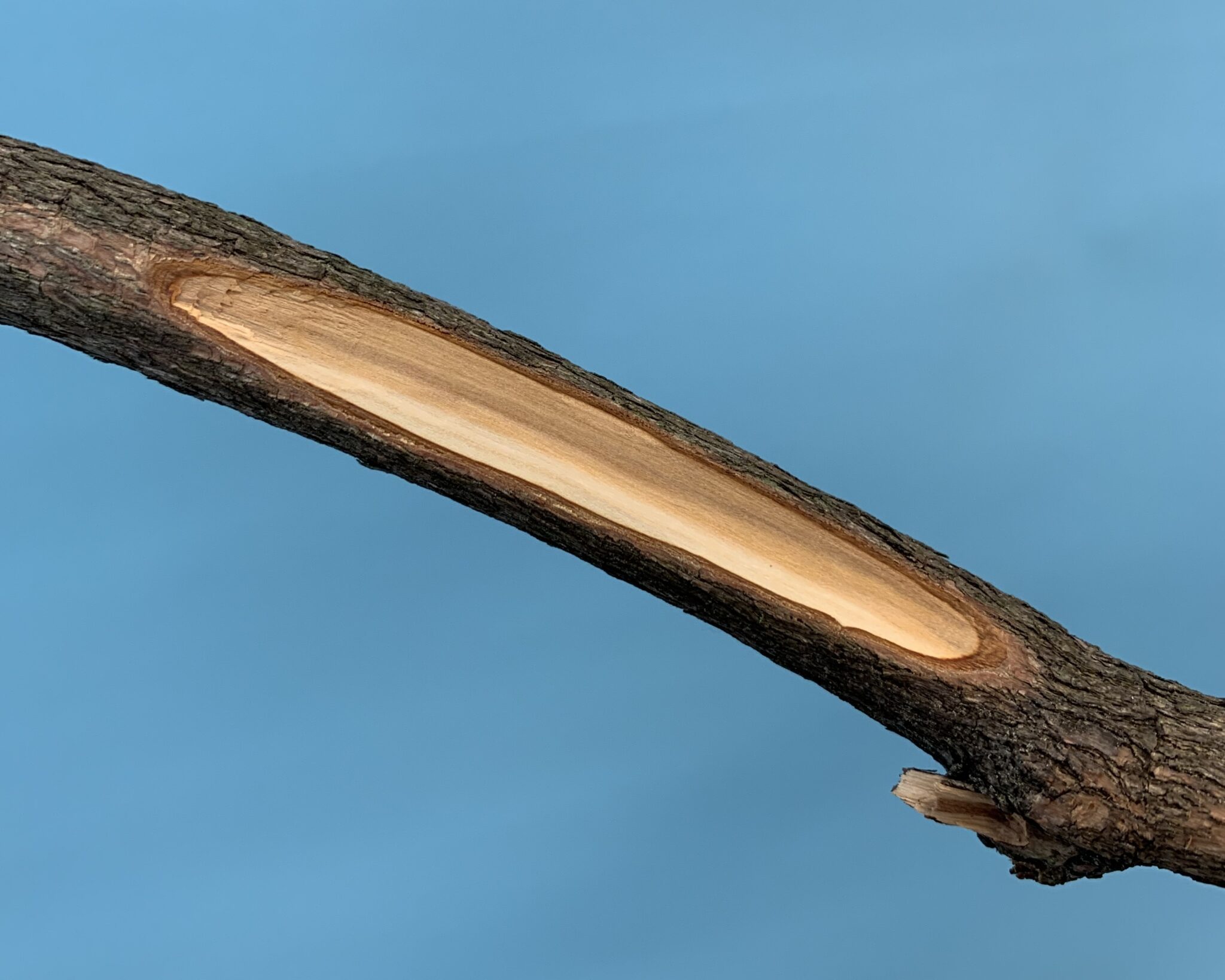
Figure 3: A rhododendron stem showing one-sided necrosis caused by Botryosphaeria infection. The tan to brown discoloration in the wood is typical of Botryosphaeria on many deciduous trees and shrubs.
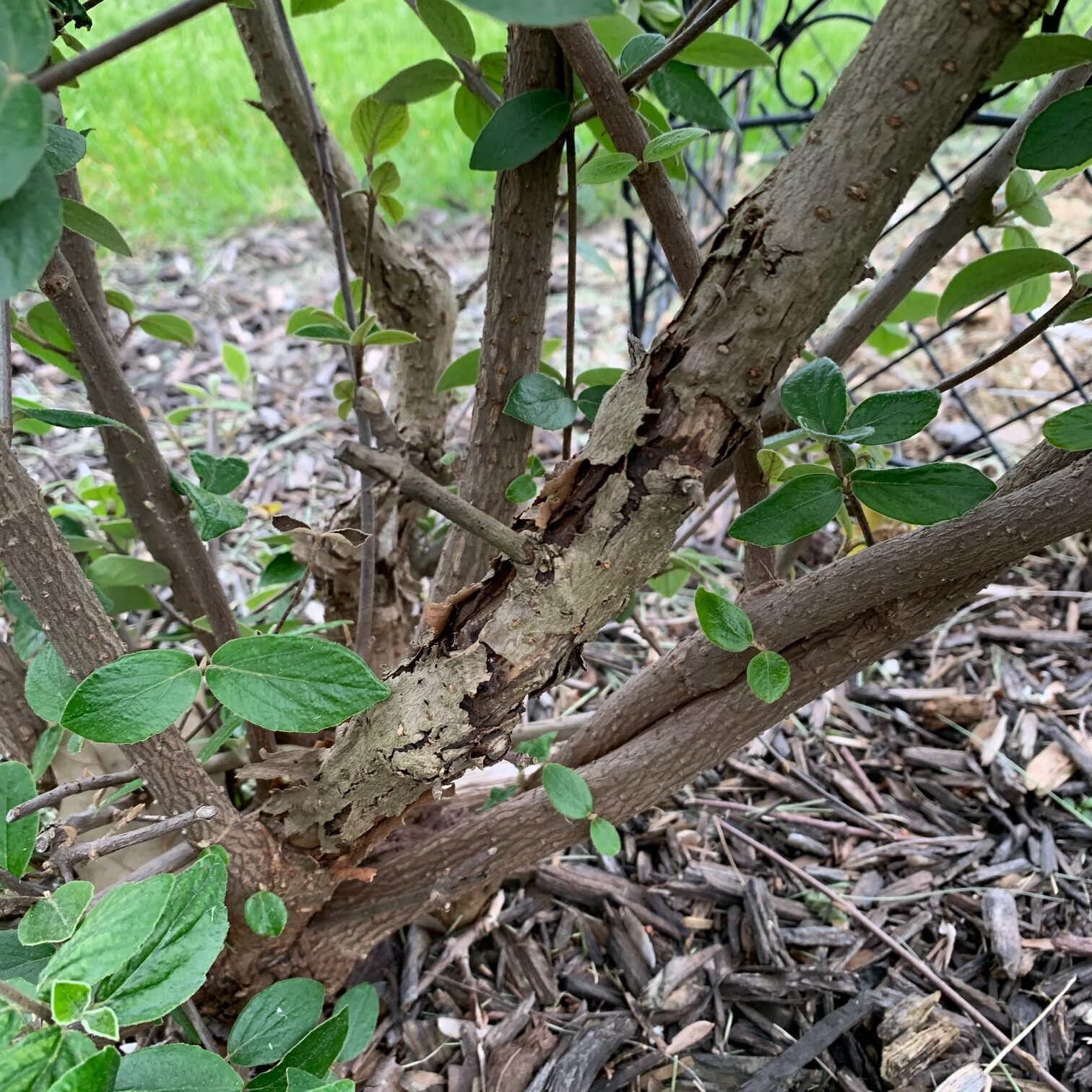
Figure 4: This Viburnum x burkwoodii stem has a large Botryosphaeria canker at the base, killing the branch above that point. After the branch was pruned out the remainder of the shrub survived.
Botryosphaeria cankers usually cause bark to be cracked, sunken and discolored (Fig 4). Fruiting bodies of the fungus appear as pinhead-sized black specks embedded in the bark, which may be raised in small bumps covering the cankers.
Management:
Prevention of infection depends mainly upon avoiding unnecessary wounding and minimizing environmental stresses that induce susceptibility. Avoid allowing trees and shrubs, especially those recently transplanted, to become drought stressed. Keep plants in good condition and in moderate growth. Avoid high fertilizer rates that induce rapid, succulent growth that may be more susceptible to infection.
Prune out and destroy any dead branches at least six inches below discoloration in the bark or sapwood. Be sure to clean pruning tools with a disinfectant after working on infected plants.
Fungicides have not been effective at preventing infections, and once the fungus is inside the wood fungicides can’t touch it, so they are generally not recommended in the landscape.
Avoid using highly susceptible plants, such as Viburnum trilobum or Salix spp., in drought prone sites.
Resources:
Botryosphaeria Canker, Purdue Plant Doctor
Beat Back Borers Attacking Pines, Purdue Landscape Report
Black Spot of Elm, Purdue Landscape Report
Inonotus Dryadeus – Butt and Root Rot of Oaks, Purdue Landscape Report
Stories in the Bark – Patterns and Growth, Purdue Extension – Forestry & Natural Resources Got Nature? Blog
Root Rot in Landscape Plants, The Education Store, Purdue Extension resource center
Dead Man’s Fingers, Purdue Landscape Report
ID That Tree Fall Color: Sugar Maple, Purdue Extension – Forestry and Natural Resources (FNR) YouTube Channel
ID That Tree Fall Color Edition: Black Gum, Purdue Extension – FNR YouTube Channel
An Introduction to Trees of Indiana, The Education Store
Tree Defect Identification, The Education Store
Tree Wound and Healing, Got Nature? Blog, Purdue Extension – FNR
Shrubs and Woody Vines of Indiana and the Midwest, The Education Store
Ask an Expert: Tree Selection and Planting, Purdue Extension – FNR YouTube playlist
ID That Tree, Purdue Extension – FNR YouTube playlist
Invasive Species, Playlist, Purdue Extension – FNR YouTube Channel
Report Invasive Species, Purdue Invasive Species
Find an Arborist, International Society of Arboriculture
Subscribe, Purdue Extension – FNR YouTube Channel
Tom Creswell, Plant & Pest Diagnostic Laboratory Director
Purdue Botany and Plant Pathology
Wild Bulletin, Indiana Department of Natural Resources (DNR) Fish and Wildlife: Interested in processing your own deer? Head over to our new webpage to view instructional videos from our partners at the International Hunter Education Association (IHEA) and National Deer Association (NDA). They’ll guide you through each step, including grinding and preserving the meat. Plus, you can download our printable PDF that includes step-by-step instructions for skinning and processing your own deer.
To learn more, view the Deer Processing page on the official Indiana DNR website. This is where you can find the instructional PDF along with training videos and other resources!
Subscribe to the Indiana Department of Natural Resources YouTube Channel.
Resources:
Ask an Expert, Playlist, Purdue Extension – FNR YouTube Channel
Handling Harvested Game: Episode 1, Field Dressing, video, Purdue Extension – FNR YouTube Channel
Handling Harvested Game: Episode 2, Hanging & Skinning, video, Purdue Extension – FNR YouTube Channel
Handling Harvested Game: Episode 3, Deboning, video, Purdue Extension – FNR YouTube Channel
Handling Harvested Game: Episode 4, Cutting, Grinding & Packaging, video, Purdue Extension – FNR YouTube Channel
Introduction to White-tailed Deer Impacts on Indiana Woodlands, Got Nature? Blog & The Education Store
Purdue Extension Pond and Wildlife Management
Understanding White-tailed Deer and Their Impact on Indiana Woodlands, The Education Store
Monitoring White-tailed Deer and Their Impact on Indiana Woodlands, The Education Store
Managing White-tailed Deer Impacts on Indiana Woodlands, The Education Store
How to Build a Plastic Mesh Deer Exclusion Fence, The Education Store
Managing Your Woods for White-Tailed Deer, The Education Store
Deer Harvest Data Collection, Got Nature? Blog, Purdue Extension – FNR
Handling Harvested Deer Ask an Expert? video, Purdue Extension – FNR YouTube Channel
Subscribe to Purdue Extension-Forestry & Natural Resources YouTube Channel, Wildlife Playlist
A Woodland Management Moment – Deer Fencing, Purdue Extension – FNR YouTube Video
Indiana Department of Natural Resources – Division of Fish & Wildlife
In this edition of ID That Tree, Purdue Extension forester Lenny Farlee takes us through the different characteristics of Hoptree, a relatively common shrub here in Indiana. This is a unique native plant with three-part leaves and hop-like seed pods. Also called Wafer Ash due to its distinctive wafer-shaped seeds, this shrub can often be confused with Poison Ivy or Bladdernut, so be sure to pay attention to key differences in the video. Features include trifoliate leaves and the temperate areas in which it grows.
If you have any questions regarding wildlife, trees, forest management, wood products, natural resource planning or other natural resource topics, feel free to contact us by using our Ask an Expert web page.
Resources:
ID That Tree: Firs and Spruces, Video Playlist, Purdue Extension – Forestry and Natural Resources (FNR) YouTube Channel
ID That Tree – Jack Pine, Scotch Pine, Red Pine, Virginia Pine, Eastern White Pine, Video Playlist, Purdue Extension – Forestry and Natural Resources (FNR) YouTube Channel
Beat Back Borers Attacking Pines and Other Cone Bearing Trees, Purdue Landscape Report
Tree Diseases: White Pine Decline in Indiana, The Education Store, Purdue Extension Resource Center
Purdue Arboretum Explorer
Conservation Tree Planting: Steps to Success, Purdue Extension – FNR YouTube Channel
A Woodland Management Moment, Playlist, Purdue Extension – FNR YouTube Channel
Woodland Stewardship for Landowners, Playlist, Purdue Extension – FNR YouTube Channel
Indiana Department of Natural Resources: Invasive Species
Indiana Invasive Species Council
Cooperative Invasive Species Management Area (CISMA)
Report Invasive, Purdue Extension
Episode 11 – Exploring the challenges of Invasive Species, Habitat University-Natural Resource University
Shrubs and Woody Vines of Indiana and the Midwest, The Education Store
Native Trees of the Midwest, The Education Store
Professional Forester, Indiana Forestry Woodland Owners Association
Forest Improvement Handbook, The Education Store
Find an Arborist, International Society of Arboriculture
Lenny Farlee, Extension Forester
Hardwood Tree Improvement and Regeneration Center
Purdue Department of Forestry & Natural Resources
The aquaculture industry in the Midwest region of the United States has limited or no access to economically feasible seafood processing infrastructure for farmed seafood products, leaving producers to rely on live ethnic fish and recreational markets. This handbook highlights the necessary elements of processing fish to guide any interested fish farmer or entrepreneur.
Local kitchens, such as shared-use commercial kitchens and licensed on-farm kitchens, can provide resources for fish farming entrepreneurs interested in adding some form of value to their fish, by allowing them to diversify their market. These shared-use commercial kitchens can be found in many communities and are rented by food producers, local food entrepreneurs, and caterers to prepare and process their food products for consumer markets. Using local facilities for processing fish and developing aquaculture products could diversify marketing opportunities for small-scale fish farmers and have a positive impact on farm profitability. A diversified market also reduces market risks for fish farmers. Embarking on processing is an additional investment for a fish farmer and requires resources.
This handbook provides some information and resources for fish farmers interested in using licensed kitchen facilities for fish processing or setting up their own on-farm processing kitchen. This handbook highlights the necessary elements of processing fish to guide any interested fish farmer or entrepreneur.
To receive the free download, visit the Purdue Extension’s resource center: The Education Store – Handbook on Processing Fish for Small-Scale Fish Farmers.
Resources:
Profitability of Hybrid Striped Bass Cage Aquaculture in the Midwest, The Education Store, Purdue Extension resource center
A Guide to Marketing for Small-Scale Aquaculture Producers, The Education Store
A Guide to Small-Scale Fish Processing Using Local Kitchen Facilities, The Education Store
Marine Shrimp Biofloc Systems: Basic Management Practices, The Education Store
Aquaculture Industry in Indiana Growing, Purdue Today
Tilapia Farmed Fish Fact Sheet, The Education Store
Rainbow Trout Farmed Fish Fact Sheet, The Education Store
Pacific White Shrimp Farmed Fish Fact Sheet, The Education Store
Walleye Farmed Fish Fact Sheet: A Guide for Seafood Consumers, The Education Store
Sustainable Aquaculture: What does it mean to you?, The Education Store
The Benefits of Seafood Consumption The Education Store
Walleye Farmed Fish Fact Sheet: A Guide for Seafood Consumers, The Education Store
Pond and Wildlife Management website, Purdue Extension
Fish Cleaning with Purdue Extension County Extension Director, Got Nature? Blog, Purdue Extension – Forestry and Natural Resources
Aquaponics: What to consider before starting your business, YouTube, Purdue Ag Economics
Aquatics & Fisheries, Playlist, YouTube, Purdue Extension – Forestry and Natural Resources
Eat Midwest Fish, Illinois-Indiana Sea Grant online resource hub
Kwamena Quagrainie, Aquaculture Marketing Director/Clinical Engagement Full Professor
Purdue Agricultural Economics/Department of Forestry and Natural Resources/Illinois Indiana Sea Grant Program
Amy Shambach, Aquaculture Marketing Outreach Associate
Purdue Department of Forestry and Natural Resources/Illinois Indiana Sea Grant Program

Recent Posts
- Purdue Extension: Empowering Indiana Through Innovation, Education and Community Impact
Posted: January 28, 2026 in Community Development, How To, Invasive Insects, Invasive Plant Species, Natural Resource Planning, Woodlands - Forest Landowners: Share Your Experience with Regeneration and Restoration
Posted: January 27, 2026 in Forestry, How To, Timber Marketing, Woodlands - It’s Not Too Late to Order Trees for Spring Planting
Posted: January 13, 2026 in Forestry, How To, Plants - Now Is The Time To Control Non-Native Bush Honeysuckle
Posted: October 30, 2025 in Forestry, How To, Invasive Plant Species, Woodlands - October Is Firewood Month: Protect Indiana’s Forests by Making Smart Choices
Posted: October 13, 2025 in Forestry, Forests and Street Trees, How To, Invasive Insects, Urban Forestry - ID That Tree: Smooth Sumac
Posted: October 2, 2025 in Forestry, How To, Wildlife - ID That Tree: Wild Grape Vine
Posted: August 12, 2025 in Forestry, How To, Urban Forestry, Wildlife - Publication – Sericea Lespedeza Control
Posted: July 7, 2025 in Forestry, How To, Invasive Plant Species, Wildlife - How to ID Asian Jumping Worms, Purdue Landscape Report
Posted: July 2, 2025 in How To, Invasive Insects, Wildlife - Alert – Water Your Trees, Watch Video
Posted: June 20, 2025 in Alert, Drought, Forests and Street Trees, How To, Urban Forestry, Wildlife, Woodlands
Archives
Categories
- Alert
- Aquaculture/Fish
- Aquatic/Aquaculture Resources
- Ask the Expert
- Christmas Trees
- Community Development
- Disease
- Drought
- Forestry
- Forests and Street Trees
- Gardening
- Got Nature for Kids
- Great Lakes
- How To
- Invasive Animal Species
- Invasive Insects
- Invasive Plant Species
- Land Use
- Natural Resource Planning
- Nature of Teaching
- Plants
- Podcasts
- Ponds
- Publication
- Safety
- Spiders
- Timber Marketing
- Uncategorized
- Urban Forestry
- Webinar
- Wildlife
- Wood Products/Manufacturing
- Woodland Management Moment
- Woodlands