 Purdue University - Extension - Forestry and Natural Resources
Got Nature? Blog
This is the eighth in a series of consumer guides that describe fish and shellfish farmed in the Midwest region of the United States. The fact sheet also includes culinary characteristics, cooking tips and a recipe for Easy Baked Salmon.
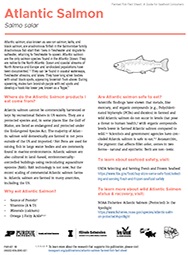
Atlantic salmon, also known as sea-run salmon, kelts, and black salmon, are anadromous finfish in the Salmonidae family. Anadromous fish start their lives in freshwater and migrate to saltwater, returning to freshwater to spawn. Atlantic salmon are the only salmon species found in the Atlantic Ocean. They are native to the North Atlantic Ocean and coastal streams of North America and Europe and landlocked populations have been documented.1,2 They can be found in coastal waterways, freshwater streams, and lakes. They have long silver bodies with small black spots, appearing brownish from above. During spawning, males turn bronzish-purple with red spots and develop a hook-like lower jaw, known as a “kype.”
To receive the free download for the Atlantic Salmon Farmed Fish Fact Sheet please visit The Education Store.
Resources:
Walleye Farmed Fish Fact Sheet, The Education Store, Purdue Extension’s resource center
Pacific White Shrimp Farmed Fact Sheet, The Education Store
Yellow Perch Farmed Fish Fact Sheet, The Education Store
Tilapia Farmed Fish Fact Sheet, The Education Store
Rainbow Trout Farmed Fish Fact Sheet, The Education Store
American Paddlefish, The Education Store
A Guide to Small-Scale Fish Processing Using Local Kitchen Facilities, The Education Store
Aquaculture Family Coloring Book Development, The Education Store
Eat Midwest Fish, Illinois-Indiana Sea Grant online resource hub
Aquatics & Fisheries Videos, Purdue Extension-Forestry and Natural Resources YouTube Channel Playlist
Channel Catfish, The Education Store
Amy Shambach, Aquaculture Marketing Outreach Associate
Purdue Department of Forestry and Natural Resources/Illinois Indiana Sea Grant Program
A rain garden is a green infrastructure project that can improve the quality of stormwater, minimize pollution, and enhance biodiversity and pollinator habitat. Purdue, Iowa State and Illinois-Indiana Sea Grant researchers explain how to site, size, design, install and maintain a rain garden, and provide advice on plant selection, too.
When stormwater runs off streets, driveways, roofs, and other impervious surfaces, it can move pollutants such as oil, fertilizers, heat, and chemicals to storm drains and eventually to natural bodies of water, such as lakes, streams, and rivers. These natural water sources are valuable resources for recreation, irrigation, and drinking water. Green infrastructure projects, such as rain gardens, can improve the quality of stormwater, reduce flooding, minimize pollution, enhance biodiversity and pollinator habitat, and create educational and recreational opportunities.

Green infrastructure includes a range of practices that allows stormwater to infiltrate into the soil or be stored for later use, thereby reducing flows to sewer systems and surface waters (U.S. EPA, 2022). A rain garden is one such practice. It is a small-scale landscape feature planted with native shrubs, perennial plants, or flowers in a shallow depression. It captures and stores runoff, allowing it to slowly infiltrate into the soil. At the property scale and when properly located, rain gardens lessen erosion in steeply sloped areas, reduce the potential for water to flow into basements, and minimize ponding in areas with poor drainage. The net effect of multiple green infrastructure practices can reduce streambank erosion and downstream flooding as stream flows decrease. Water quality is also affected as plants and microbes in the soil filter nutrients and some heavy metals as the stormwater soaks into the soil.
To receive the free download for the Introduction to Rain Garden Design please visit The Education Store.
Resources:
Community Development, Purdue Extension Program
Environmental Planning in Community Plans, The Education Store, Purdue Extension’s resource center
Enhancing the Value of Public Spaces: Creating Healthy Communities, The Education Store
Conservation through Community Leadership, The Education Store
Tree Installation: Process and Practices, The Education Store
Planting Forest Trees and Shrubs in Indiana, The Education Store
Planting Your Tree Part 1: Choosing Your Tree, Video, Purdue Extension – Forestry and Natural Resources YouTube Channel
Subscribe – Purdue Extension – Forestry and Natural Resources YouTube Channel
Purdue Extension-Forestry and Natural Resources Calendar, workshops and Conferences
Kara A Salazar, Sustainable Communities
Purdue Community Development Extension Specialist
Sara Winnike McMillan, Associate Professor
Purdue University
Payton Ginestra, Natural Resources and Environmental Science
Purdue University
Laura Esman, Water Quality Program Coordinator
Purdue University
John Orick, Purdue Extension Master Gardener State Coordinator
Purdue University
The classic and trusted book “Fifty Common Trees of Indiana” by T.E. Shaw was published in 1956 as a user-friendly guide to local species. Nearly 70 years later, the publication has been updated through a joint effort by the Purdue Department of Forestry and Natural Resources, Indiana 4-H, and the Indiana Department of Natural Resources, and reintroduced as “An Introduction to Trees of Indiana.”
The full publication is available for download for $7 in the Purdue Extension Education Store. The field guide helps identify common Indiana woodlot trees.
Each week, the Intro to Trees of Indiana web series will offer a sneak peek at one species from the book, paired with an ID That Tree video from Purdue Extension forester Lenny Farlee to help visualize each species as it stands in the woods. Threats to species health as well as also insight into the wood provided by the species, will be provided through additional resources as well as the Hardwoods of the Central Midwest exhibit of the Purdue Arboretum, if available.
This week, we meet the Jack pine, or Pinus banksiana.
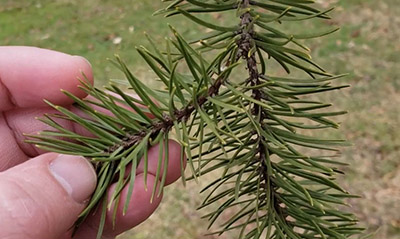
This conifer, also known as scrub pine, has clusters of two dark green needles, which are one to one and a half inches long, noticeably curved or arched like a bow and slightly twisted.
Bark on the jack pine is dark to medium gray, thin and flaky when young and features thick plates in older trees. This tree growth irregularly and can produce between one and three whorls of side branches annually. It tends to have a much lighter crown than white pine or the spruces.
The cones of jack pine are one to three inches long and remain closed while on the tree unless disturbed by a heat event such as fire. The cones may also be curved and twisted into many irregular shapes and tend to stay on the tree for many years.
For full article with additional photos view: Intro to Trees of Indiana: Jack Pine, Forestry and Natural Resources’ News.
If you have any questions regarding wildlife, trees, forest management, wood products, natural resource planning or other natural resource topics, feel free to contact us by using our Ask an Expert web page.
Other Resources:
ID That Tree: Jack Pine
Morton Arboretum: Jack Pine
Jack Pine, Native Trees of Indiana River Walk, Purdue Fort Wayne
Borers of Pines and Other Needle Bearing Evergreens in Landscapes, The Education Store, Purdue Extension’s resource center
Managing the Zimmerman Pine Moth, The Education Store
Purdue Arboretum Explorer
The Woody Plant Seed Manual, U.S. Forest Service
Native Trees of the Midwest, The Education Store
Shrubs and Woody Vines of Indiana and the Midwest, The Education Store
Investing in Indiana Woodlands, The Education Store
Forest Improvement Handbook, The Education Store
ID That Tree, Purdue Extension-Forestry & Natural Resources (FNR) YouTube playlist
Woodland Management Moment , Purdue Extension-FNR YouTube playlist
Wendy Mayer, FNR Communications Coordinator
Purdue University Department of Forestry and Natural Resources
Lenny Farlee, Extension Forester
Purdue University Department of Forestry and Natural Resources
 Question: What resources does Purdue Extension have on wind energy/contracts?
Answer: Purdue Extension has wind energy resources and information through the Purdue Extension – Community Development program. This program strengthens the capacity of local leaders, residents, businesses, and organizations to build resilient, inclusive and sustainable communities through research-based resources and processes. The team actively partners with a variety of state-level entities, including state agencies, private and nonprofit organizations, as well as universities and colleges. Such partnerships have facilitated the launch of applied research projects, the development of innovative educational programs and the delivering of technical assistance and non-formal education programs that are designed to meet the unique needs of Indiana communities and regions.
Under “Community Planning” you will find the resources and information for Renewable Energy. Learn more about the Purdue Extension Land Use Team as you visit the overview and find contacts, events, publications, general renewable energy, solar and wind resources.
Here are just a few of the resources listed on the Community Development-Community Planning-Wind Energy web page:
Agricultural Impact Statements: Wind Farms – State of Wisconsin Department of Agriculture, Trade and Consumer Protection
This article provides construction recommendations for commercial scale wind farms on farmland located specifically in the state of Wisconsin. This resource has links to licenses, permits, impact statements and groundwater quality reports that all pertain to the impacts of wind turbines on green-fields and the surrounding areas.
An Examination of the Community Level Dynamics Related to the Introduction of Wind Energy in Indiana
A team of researchers from Purdue University focused on where wind farm projects have and have not been located and examined socio-economic conditions that have resulted since the wind farms were (or were not) installed and made operational.
Blowing in the Wind: The Answer to Farmland Preservation – University of Michigan
This resource highlights the ways commercial wind farms can be used to preserve farmland and farming communities. This resource also emphasizes that wind farms are another source of income for farmers without having to sell their land.
Does my Land Qualify for a Wind Lease, LandGate Resources
This article highlights the requirements of a proper site for a commercial wind farm. These requirements include acreage, power grid access and the quality of the land. Included is a wind land estimator, designed to provide a rough estimate of a possible wind lease.
Sample Zoning for Wind Energy Systems – Michigan State University Extension
This publication presents a zoning ordinance sample amendment for utility-scale wind energy systems and smaller wind electric generation systems for an individual business or home.
These resources are just a glimpse from the Community Development program which shares many aspects of wind energy, along with other community planning, community economics and workforce development, community health, leadership and civic engagement. If you have further questions, feel free to reach out to the Renewable Energy Team.
Other Resources:
Environmental Planning in Community Plans, The Education Store, Purdue Extension’s resource center
Enhancing the Value of Public Spaces: Creating Healthy Communities, The Education Store
Conservation through Community Leadership, The Education Store
Tree Installation: Process and Practices, The Education Store
Planting Forest Trees and Shrubs in Indiana, The Education Store
Planting Your Tree Part 1: Choosing Your Tree, Video, Purdue Extension – Forestry and Natural Resources YouTube Channel
Subscribe – Purdue Extension – Forestry and Natural Resources YouTube Channel
Purdue Extension-Forestry and Natural Resources Calendar, workshops and Conferences
Michael Wilcox, Program Leader
Purdue Extension Community Development
Kara Salazar, Assistant Program Leader for Community Development and Sustainable Communities Extension Specialist
Purdue Forestry and Natural Resources/Illinois-Indiana Sea Grant/Purdue Extension
Diana Evans, Extension and Web Communication Specialist
Purdue University Department of Forestry and Natural Resources
The classic and trusted book “Fifty Common Trees of Indiana” by T.E. Shaw was published in 1956 as a user-friendly guide to local species. Nearly 70 years later, the publication has been updated through a joint effort by the Purdue Department of Forestry and Natural Resources, Indiana 4-H, and the Indiana Department of Natural Resources, and reintroduced as “An Introduction to Trees of Indiana.”
The full publication is available for download for $7 in the Purdue Extension Education Store. The field guide helps identify common Indiana woodlot trees.
Each week, the Intro to Trees of Indiana web series will offer a sneak peek at one species from the book, paired with an ID That Tree video from Purdue Extension forester Lenny Farlee to help visualize each species as it stands in the woods. Threats to species health as well as also insight into the wood provided by the species, will be provided through additional resources as well as the Hardwoods of the Central Midwest exhibit of the Purdue Arboretum, if available.
This week, we meet the scotch pine, or Pinus sylvestris, which is not native to Indiana, but has been widely planted in the state for Christmas tree production.
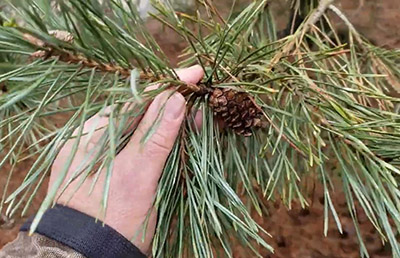
This conifer, also known as Scots pine, has clusters of two blue green or yellow green needles, which are one to three inches long and do not break when bent.
Bark on the scotch pine is light gray on the outside and orange in color on the inner bark, but it is not flaky like red pine. Bark on the lower end of the trunk is dark and blocky, while the upper bark is more orange.
On the tree, cones are cylindrical and pointed at the ends, approximately three inches long and do not have spines at the end of the scales. Cones become more egg shaped as the scales begin to open up once off the tree.
Scotch pine, which grows to between 25 and 60 feet tall, is typically found on acidic, moist, well-drained soil. It prefers full sun and has some drought tolerance. The species’ native range is Scotland, Scandinavia, northern Europe and northern Asia. According to the U.S. Forest Service database, It has been introduced across the United States and Canada and is naturalized in the Northeast and in the Great Lakes states.
For full article with additional photos view: Intro to Trees of Indiana: Scotch Pine, Forestry and Natural Resources’ News.
If you have any questions regarding wildlife, trees, forest management, wood products, natural resource planning or other natural resource topics, feel free to contact us by using our Ask an Expert web page.
Other Resources:
ID That Tree: Scotch Pine
Morton Arboretum: Scotch Pine
A Choose-and-Cut Pine and Fir Christmas Tree Case Study
Diplodia Tip Blight of Two-Needle Pines, The Education Store, Purdue Extension’s resource center
Borers of Pines and Other Needle Bearing Evergreens in Landscapes, The Education Store
America’s Least Wanted Wood-Borers, Japanese Pine Sawyer, The Education Store
Managing the Zimmerman Pine Moth, The Education Store
Purdue Arboretum Explorer
The Woody Plant Seed Manual, U.S. Forest Service
Native Trees of the Midwest, The Education Store
Shrubs and Woody Vines of Indiana and the Midwest, The Education Store
Investing in Indiana Woodlands, The Education Store
Forest Improvement Handbook, The Education Store
ID That Tree, Purdue Extension-Forestry & Natural Resources (FNR) YouTube playlist
Woodland Management Moment , Purdue Extension-FNR YouTube playlist
Wendy Mayer, FNR Communications Coordinator
Purdue University Department of Forestry and Natural Resources
Lenny Farlee, Extension Forester
Purdue University Department of Forestry and Natural Resources
The Niehaus’ tree farm encompasses 182 acres in Perry and Dubois counties in southern Indiana. The land has been in their family since Dave Niehaus’ grandparents bought it soon after they married in 1909. Back then, only 100 or so acres of the property were forest; the remaining 80 acres comprised open land.
Niehaus’ grandparents built a house on the farm in 1918. In 1931, his grandfather died in a horse accident, leaving his grandmother to raise their nine children. Dave’s father, the oldest, was 19 at the time.
The children grew up and moved on, but Niehaus’ grandmother would continue living there for the remainder of her life. Young Dave grew up in Saint Meinrad, about six miles away. “I spent a lot of time up there, in the forest,” he says. “The fields then were in the Soil Bank program (now the Conservation Reserve Program) because about 40 acres of the open ground was in the flood plain, so they were used to losing their crops, and losing their soil down in the bottoms. In the CRP ground, once a year you’d have to mow all of that down. Dad had a little 8N Ford tractor with a side mower on there, and I mowed all that down and just spent time with Grandma up there.”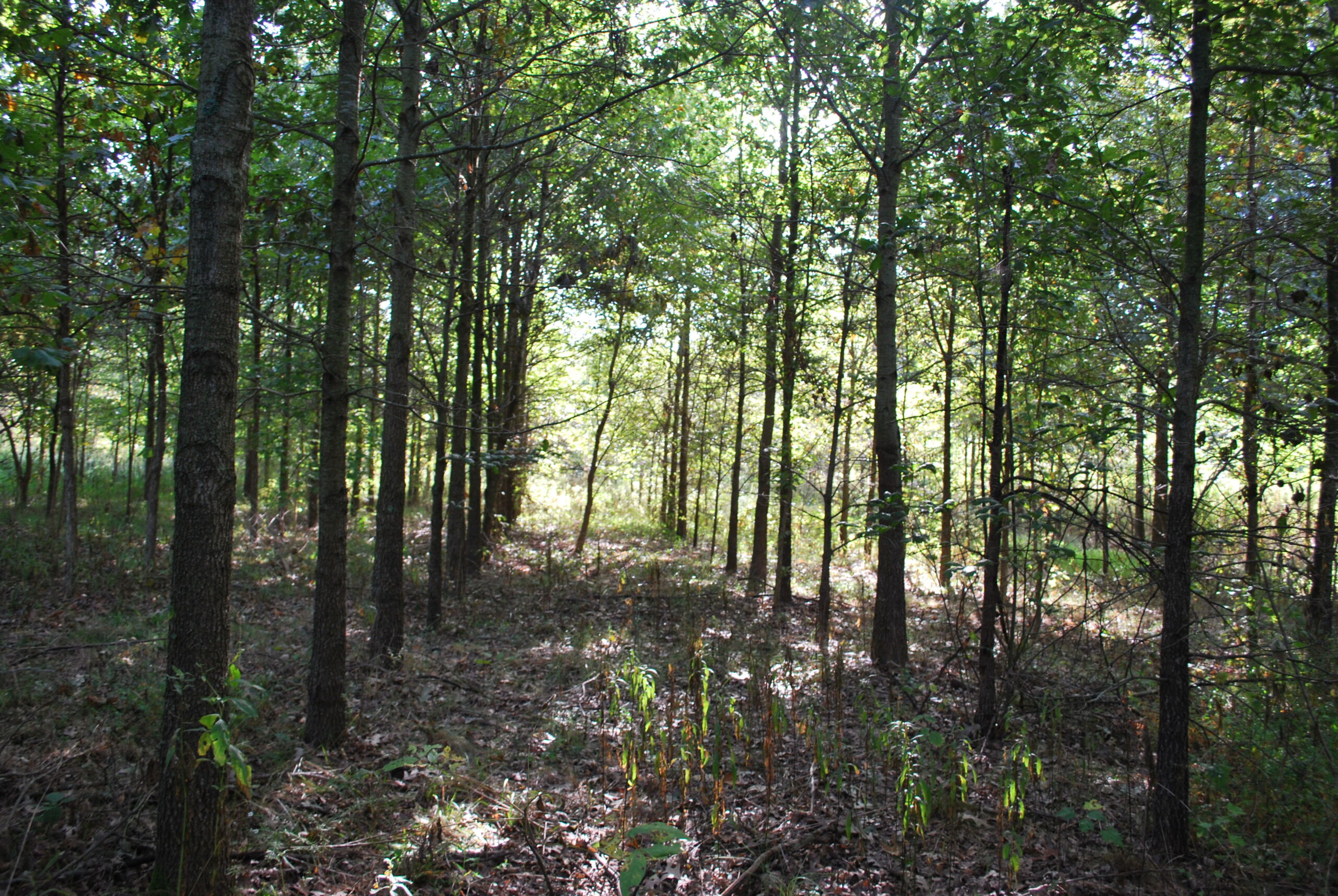
Niehaus’ older brother bought the property in 1969. When he decided to sell, Dave stepped up to purchase it in 2005. “It’s our roots,” he explains. “I didn’t want it divided up.”
Ten years earlier, he’d asked his brother for some land so he could try his hand at planting trees. Niehaus was an Army veteran and a carpenter; he didn’t know much about forestry, but he wanted to learn. He started in 1995 on a four-acre horse pasture with 16 5-gallon buckets of acorns he’d raked up in a city park. He rigged up a PVC pipe that dug a trench in the subsoil as he dropped the acorns through a funnel into the pipe, planting them in rows across the field.
The following spring, not a single white oak came up. “My brother just laughed and said, ‘You got a lot of fat mice running around up there,” Niehaus recalls.
The following fall, he enlisted the help of Dr. Jim Wichman with the Indiana Department of Natural Resources, Division of Forestry Nursery Section. Niehaus started one bucket of acorns in his garden, where he could better protect them from predators and mold. He experimented with coverage, noting that germination under peat moss far exceeded that of pine needles and dirt. He then hand-transplanted the seedlings to rows on the open land — a second, and more successful, try at growing a forest.
Over the next three years, Niehaus cultivated enough seedlings to hand plant the four acres. He expanded his sights.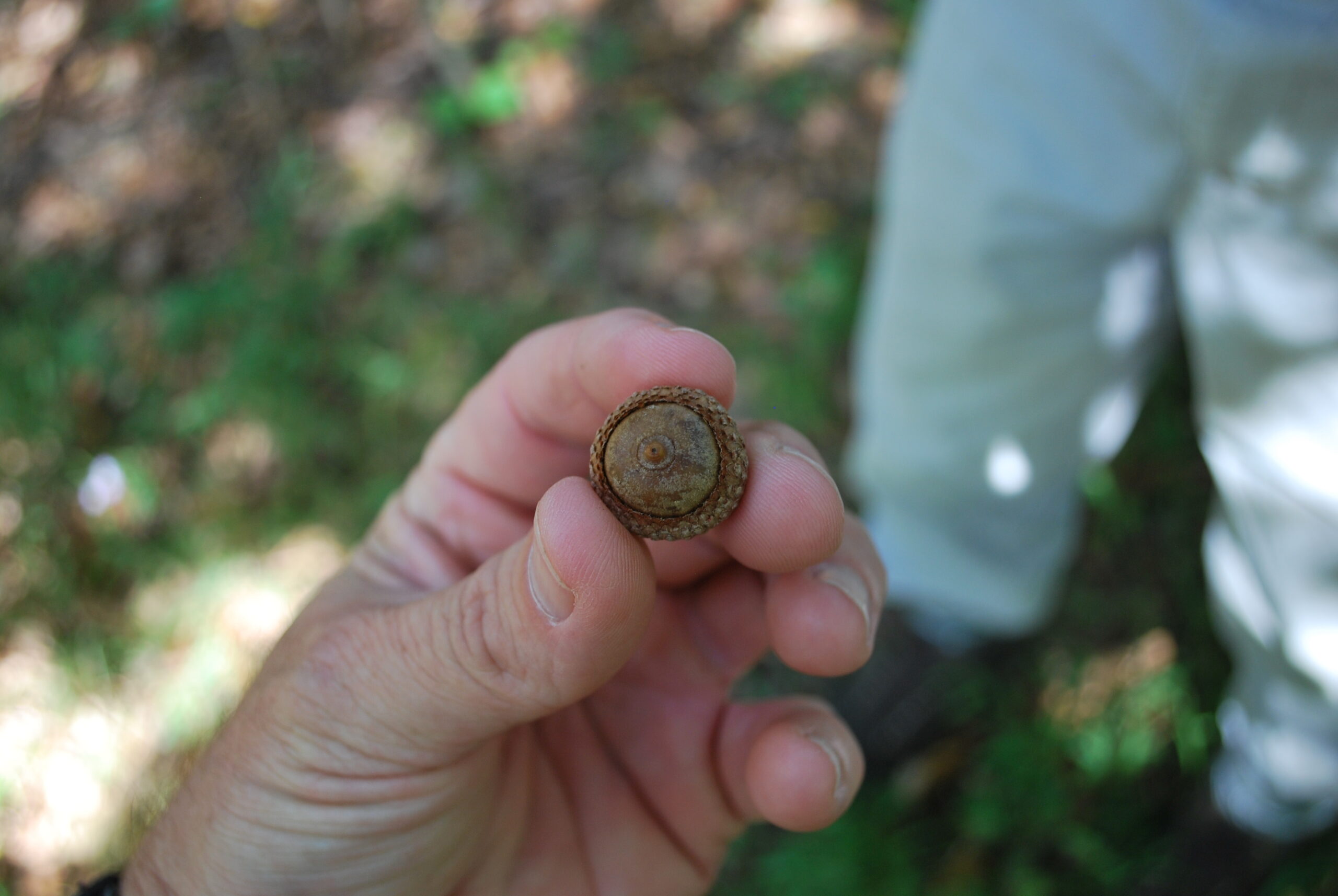
One year he got 500 seedlings from the state nursery and in the course of planting them, credits his then 10-year-old daughter with an important lesson. “She said, ‘Dad, this is going to look funny when this grows up… When you go into a forest, the trees are spaced here and there. And these are all going to be in a row.’ And I said, ‘Andrea, you just got the vision.’ So that’s what it is now.”
After he bought the property in 2005, Niehaus signed on for a class at the Southern Indiana Purdue Agricultural Center in nearby Dubois, Indiana, Forest Management for the Private Woodland Owner. Extension Forester Ron Rathfon led the eight-week course.
“I wanted to know a little more about forestry,” Niehaus says. “I wanted to be a good steward of the property.”
Rathfon has been helping residents manage their woodlands for 30 years, along with the Purdue Forestry and Natural Resources Extension team and public and private resource professionals who offer classroom and field instruction. “Ron makes the class interesting, and he makes it fun,” Niehaus says.
His main takeaways from the course were in tree identification and forest biology. “If you want to manage your forest to get it to grow back to be oak trees, you have to be able to recognize the different species of trees at different ages,” Niehaus says.
For full article with additional photos view: Creating A Woodland Legacy: Dave and Carol Niehaus, Extension News and Stories
Resources
Hardwood Ecosystem Experiment – Wildlife Responses to Timber Harvesting, The Education Store, Purdue Extension resource center
Forest Improvement Handbook, The Education Store
Invasive plants: impact on environment and people, The Education Store
Managing Your Woods for White-Tailed Deer, The Education Store
Shrubs and Woody Vines of Indiana and the Midwest, The Education Store
Forest Management for Reptiles and Amphibians: A Technical Guide for the Midwest, The Education Store
Breeding Birds and Forest Management: the Hardwood Ecosystem Experiment and the Central Hardwoods Region, The Education Store
Native Trees of the Midwest, The Education Store
Investing in Indiana Woodlands, The Education Store
ID That Tree, Purdue Extension-Forestry & Natural Resources (FNR) YouTube playlist
Woodland Management Moment , Purdue Extension-FNR YouTube playlist
Subscribe: Deer, Forest Management, ID That Tree, Woodland Management Moment, Invasive Species and many other topic video playlists, Purdue Extension-Forestry and Natural Resources YouTube Channel
Ron Rathfon, Regional Extension Forester
Purdue University Department of Forestry and Natural Resources
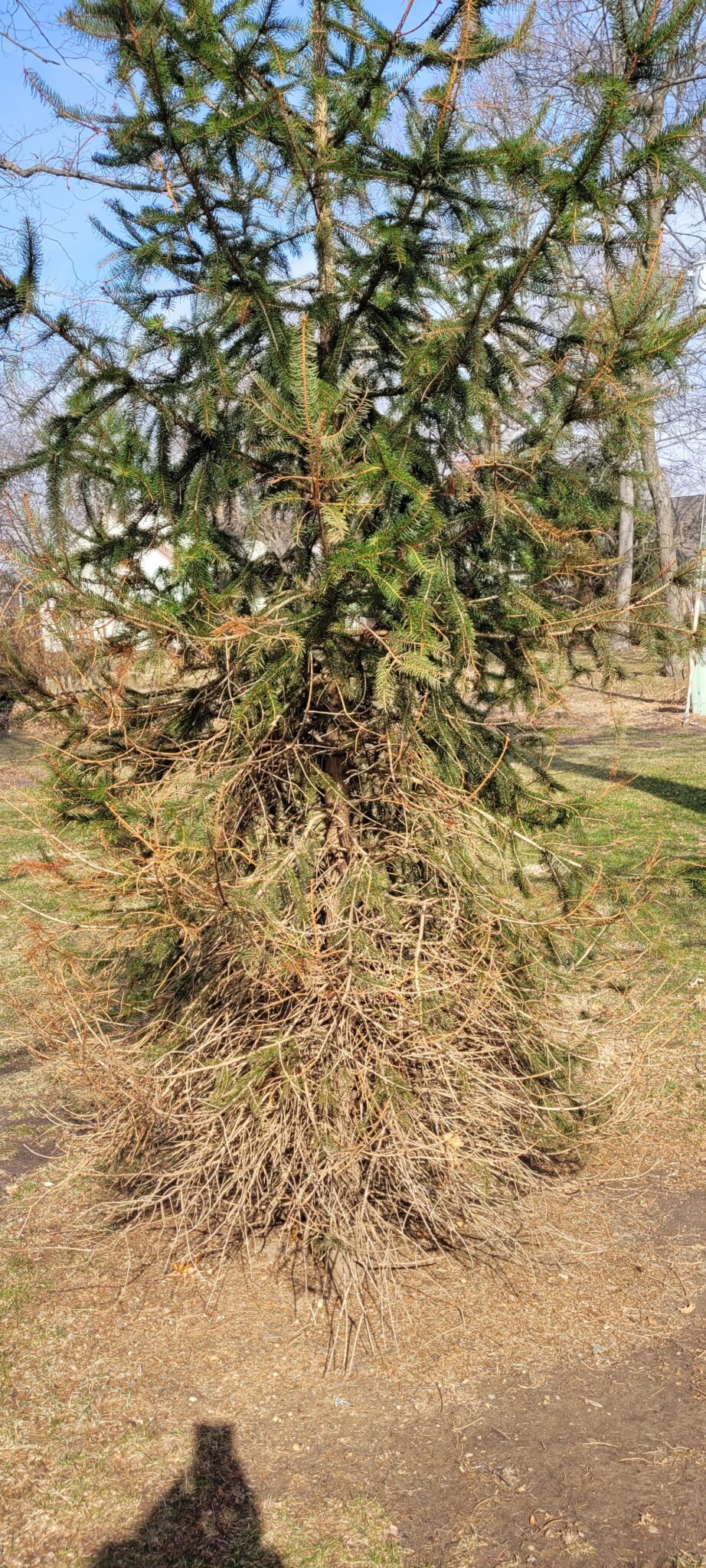
Figure 1: A spruce tree showing significant needle loss and dieback lower in the canopy.
Purdue Landscape Report: There have been a number of samples we have received at the PPDL in recent weeks that bear similar problems worth noting. It is still relatively early for significant in-season disease development due to how cold it has been, although we have certainly had enough rainfall to encourage fungal growth. We have received multiple samples of spruce and boxwood which will be covered.
Since the start of the year, we have been received spruce samples showing needle thinning, browning, and loss in the lower canopy (Fig 1, 2, 3). If I said these are Colorado Blue Spruce, we could call it Rhizosphaera and maybe call it a day, however, these samples are primarily from other species of spruce. An important thing to remember when it comes to evergreen conifers is that it takes time for symptoms to develop, whether due to disease or to abiotic factors. The majority of these branches lacked any discoloration within, suggesting that there was no infection and that the limbs were still living.
Last year, we had drought conditions during the summer throughout large parts of the state leading into the fall with below average precipitation (Fig 4). Since evergreen plants hold onto their foliage through the winter, desiccation can occur since they are still losing water to the air, especially when it is dry and windy. If these plants are not getting enough water going into winter, there is greater risk of winter injury or burn and needles may turn brown, especially near branch tips (exposed areas).
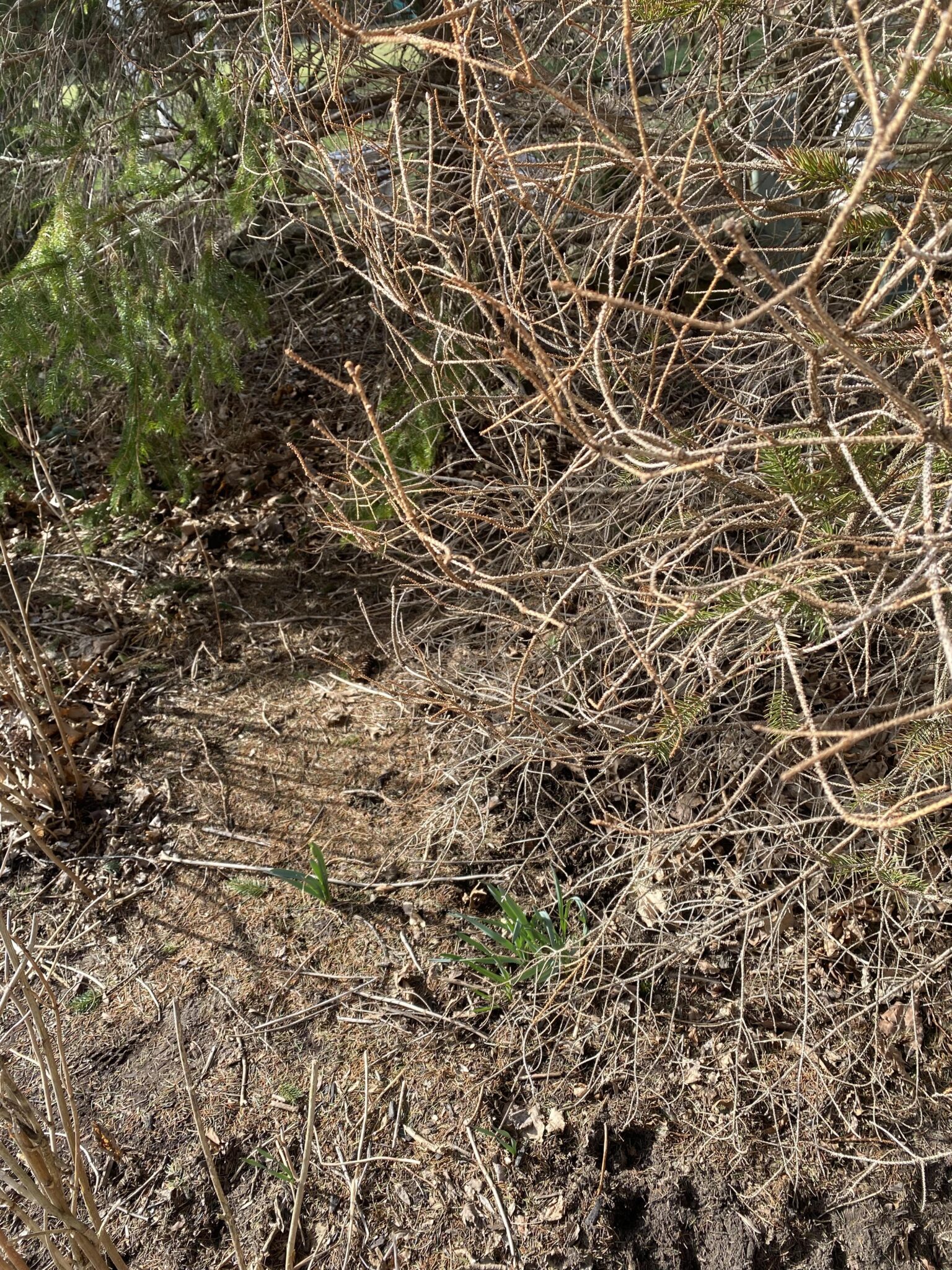
Figure 2: Needle loss at or near branch tips.
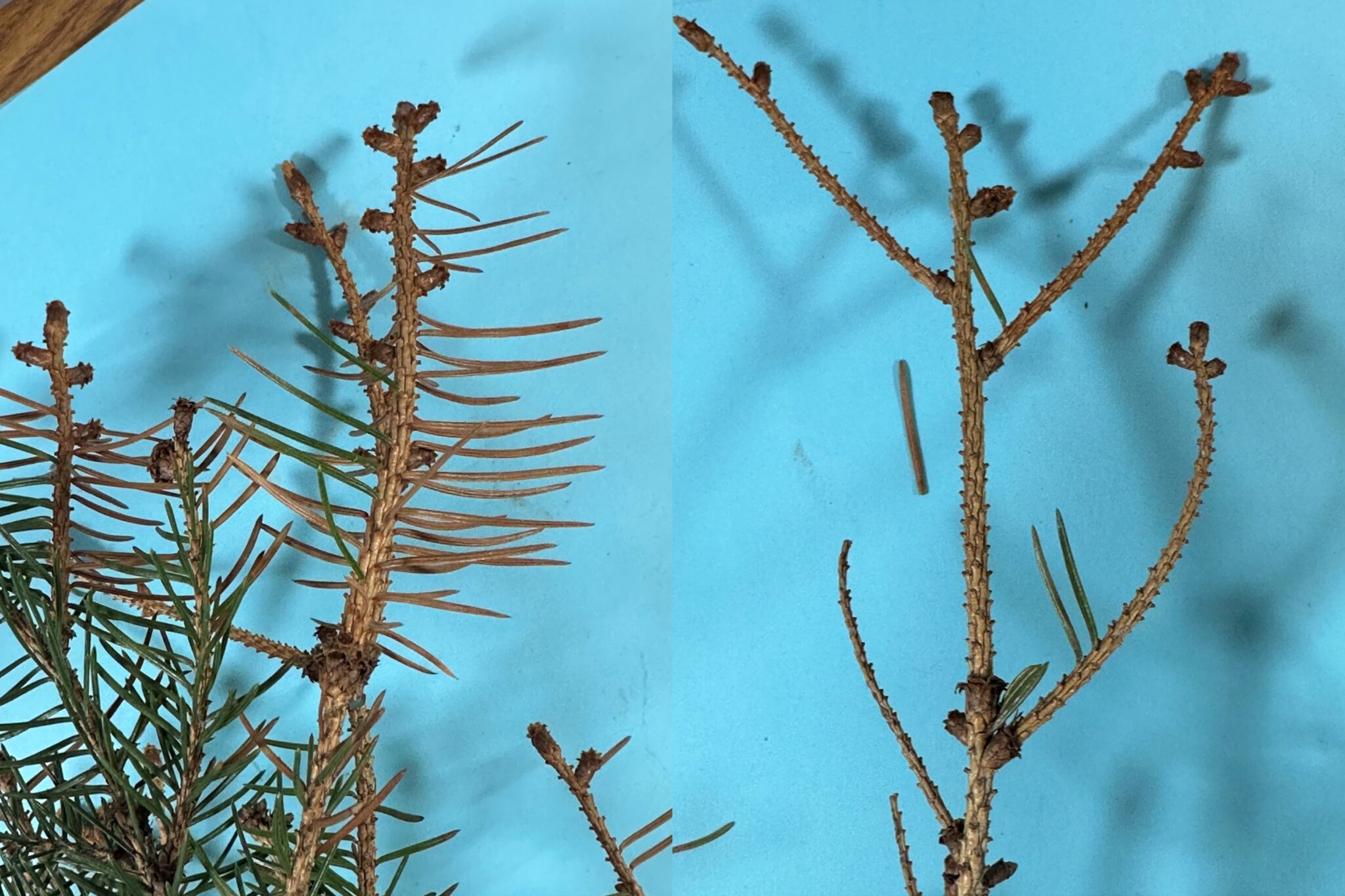
Figure 3: Close up of needle browning and loss near spruce branch tips.
Irrigation during periods of hot and dry weather will mitigate drought stress, but irrigation may still be necessary in the fall to avoid needle desiccation. What about when trees of the same age, on the same property are showing different levels of severity or one tree is perfectly fine while the next is toast?
I think it is important to remember each tree is an individual. We may see similar patterns in the landscape across the same tree species when stress is caused by environmental effects, but if the overall health of that tree when it was first planted, the amount of love and care, and the site conditions (soil, light, general water levels) are different, then the trees may have vastly different reactions to stress. Determining this 5 years after planting can be difficult for someone just walking into the situation, or when dealing with 30ft tall trees, but it is something we have to keep in mind.
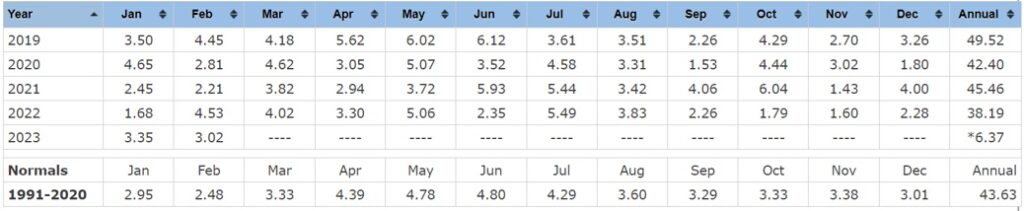
Figure 4: Indiana Precipitation data, in inches of rainfall, from 2019 to present.
For more images and full article view: Early Season Samples: Spruce Needle Loss and Boxwood Leaf Spots
Subscribe and receive the newsletter: Purdue Landscape Report Newsletter.
Resources:
The Purdue Landscape Report
Purdue Landscape Report Facebook Page
Find an Arborist website, Trees are Good, International Society of Arboriculture (ISA)
Equipment Damage to Trees, Got Nature? Blog
Tree wounds and healing, Got Nature? Blog
Tree Defect Identification, The Education Store, Purdue Extension resource center
Tree Pruning Essentials, Publication & Video, The Education Store
Shrubs and Woody Vines of Indiana and the Midwest, The Education Store
Tree Risk Management, The Education Store
Why Is My Tree Dying?, The Education Store
ID That Tree, Purdue Extension-Forestry & Natural Resources (FNR) YouTube playlist
Subscribe to Purdue Extension-FNR YouTube Channel
John Bonkowski, Plant Disease Diagnostician
Departments of Botany & Plant Pathology
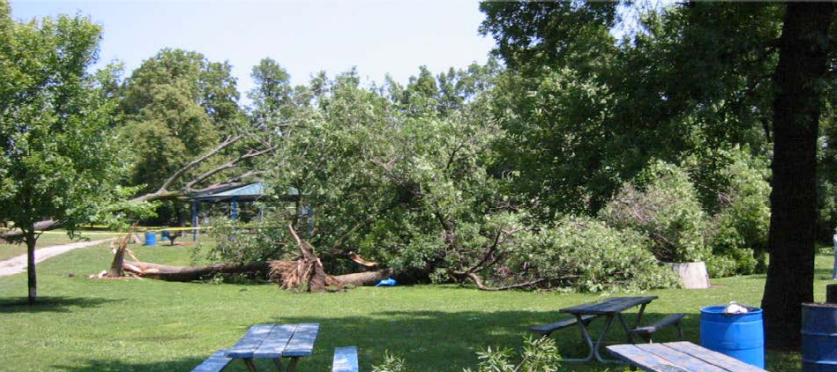 Safety first! Stay clear and look for dangerous hanging limbs, broken branches and other failures before beginning cleanup or inspections. Keep others clear of the areas beneath and around damaged trees. Be alert for power lines that could be involved with damaged trees. All utility lines should be considered energized and dangerous.
Lindsey Purcell, Chapter Administrator & Master Arborist with Indiana Arborist Association, shares, “in my experience, during storm cleanup, many tree owners are faced with the decision of what to do with their trees relative to restoration or removal”. There are several types of tree damage that occur from violent weather. Each has its own specific assessment considerations. All parts of the tree should be inspected during a post-storm assessment. This requires the expertise of trained, professional arborists to assist with the decision making regarding the best course of action. Unfortunately, there are those who take advantage of the situation and overcharge or provide poor advice when it comes to the best decision on their trees. Don’t make any hasty decisions and be sure you are hiring an International Society of Arboriculture (ISA) Certified Arborist, ask for references and proof of insurance in the process. To find an arborist near you, verify credentials and to find more information on trees view video: Find an Arborist, Trees are Good, ISA.
View publication Trees and Storms located in The Education Store, Purdue Extension’s resource center, for more information.
Resources:
Find an Arborist video, Trees are Good-International Society of Arboriculture (ISA)
Caring for storm-damaged trees/How to Acidify Soil in the Yard – In the Grow, Purdue Extension
Moist soil and rotten roots makes it easy for trees to come crashing down – Fox 59 News
Why Is My Tree Dying? – The Education Store
Tree Risk Management – The Education Store
Mechanical Damage to Trees: Mowing and Maintenance Equipment – The Education Store
Trees and Electric Lines – The Education Store
Indiana Prepared (IN-PREPared), Purdue Extension
Lindsey Purcell, Chapter Administrator & Master Arborist
Indiana Arborist Association
The classic and trusted book “Fifty Common Trees of Indiana” by T.E. Shaw was published in 1956 as a user-friendly guide to local species. Nearly 70 years later, the publication has been updated through a joint effort by the Purdue Department of Forestry and Natural Resources, Indiana 4-H, and the Indiana Department of Natural Resources, and reintroduced as “An Introduction to Trees of Indiana.”
The full publication is available for download for $7 in the Purdue Extension Education Store. The field guide helps identify common Indiana woodlot trees. 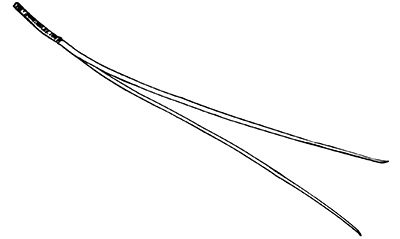
Each week, the Intro to Trees of Indiana web series will offer a sneak peek at one species from the book, paired with an ID That Tree video from Purdue Extension forester Lenny Farlee to help visualize each species as it stands in the woods. Threats to species health as well as also insight into the wood provided by the species, will be provided through additional resources as well as the Hardwoods of the Central Midwest exhibit of the Purdue Arboretum, if available.
This week, we meet the red pine, or Pinus resinosa, which is not native to Indiana, but has been planted widely across the state.
This conifer has clusters of two slender, flexible, green or yellow green needles, which are four to six inches long. If the needles are bent, they will break cleanly, unlike that of ornamentally planted Austrian pine. The long needles cause a very tufted look to the tree canopy.
Bark on the red pine is scaly and red-orange in color in younger trees and platy and reddish brown in older trees. Cones are egg-shaped, approximately two inches long and have smooth scales.
Red pine tends to be very, straight and tall, growing to between 50 and 80 feet tall. This species, which can be as tall as 200 feet, is typically found on sandy, well-drained soils with low pH and full sun. The natural range of the red pine is the northeastern United States and southern Canada near the Great Lakes and St. Lawrence River. The species can be found as far west as Minnesota and into Manitoba. It can be found dipping south into Wisconsin, Illinois, Michigan, West Virginia and Pennsylvania.
For full article with additional photos view: Intro to IN Trees: Red Pine, Forestry and Natural Resources’ News.
If you have any questions regarding wildlife, trees, forest management, wood products, natural resource planning or other natural resource topics, feel free to contact us by using our Ask an Expert web page.
Other Resources:
ID That Tree: Red Pine
Morton Arboretum: Red Pine
Diplodia Tip Blight of Two-Needle Pines, The Education Store, Purdue Extension’s resource center
Borers of Pines and Other Needle Bearing Evergreens in Landscapes, The Education Store
Native Trees of the Midwest, The Education Store
Shrubs and Woody Vines of Indiana and the Midwest, The Education Store
Investing in Indiana Woodlands, The Education Store
Forest Improvement Handbook, The Education Store
Purdue Arboretum Explorer
The Woody Plant Seed Manual, U.S. Forest Service
ID That Tree, Purdue Extension-Forestry & Natural Resources (FNR) YouTube playlist
Woodland Management Moment , Purdue Extension-FNR YouTube playlist
Wendy Mayer, FNR Communications Coordinator
Purdue University Department of Forestry and Natural Resources
Lenny Farlee, Extension Forester
Purdue University Department of Forestry and Natural Resources
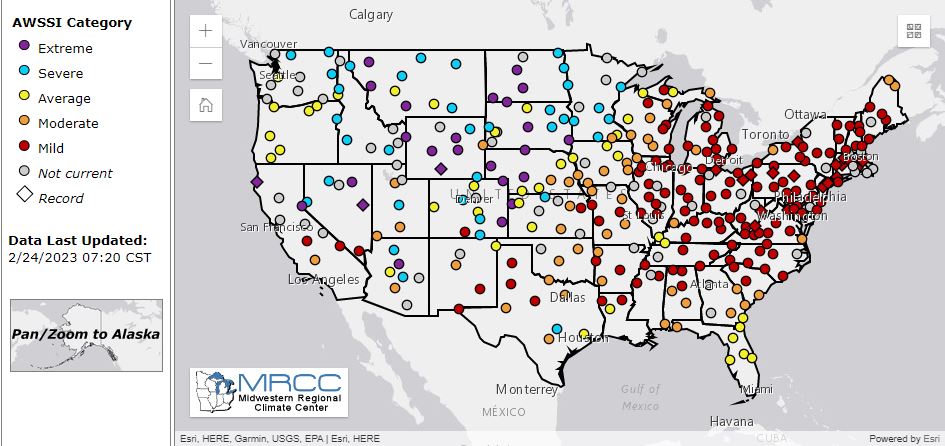
Figure 1. Accumulated Winter Season Severity Index for winter 2022-2023 in the United States from the Midwest Regional Climate Center.
Purdue Landscape Report: Remember the pre-Christmas freeze? What about the extremely long fall? The Midwest experienced above-average temperatures through most of the winter, but those extremely cold temps in late December made for more than a few pipes to freeze in the southern part of the Midwest. The dichotomy in weather patterns over the last several years has been mind-boggling. We’ve gone from flooding to drought in most recent growing seasons, to the extremes in temperatures this winter. Though it’s an inconvenience for us, plants don’t have the option of heated seats or umbrellas, thus stress or death can occur in these extremes.
East of the Mississippi River, the 2022-2023 winter has been significantly milder than average, based on past climate models (Fig. 1). We don’t typically have cold injury in late December, but drastic changes in temperatures can cause pernicious effects on plant health. The entire state of Indiana had the drastic changes in temperature December 22-27, 2022 (Table 1).
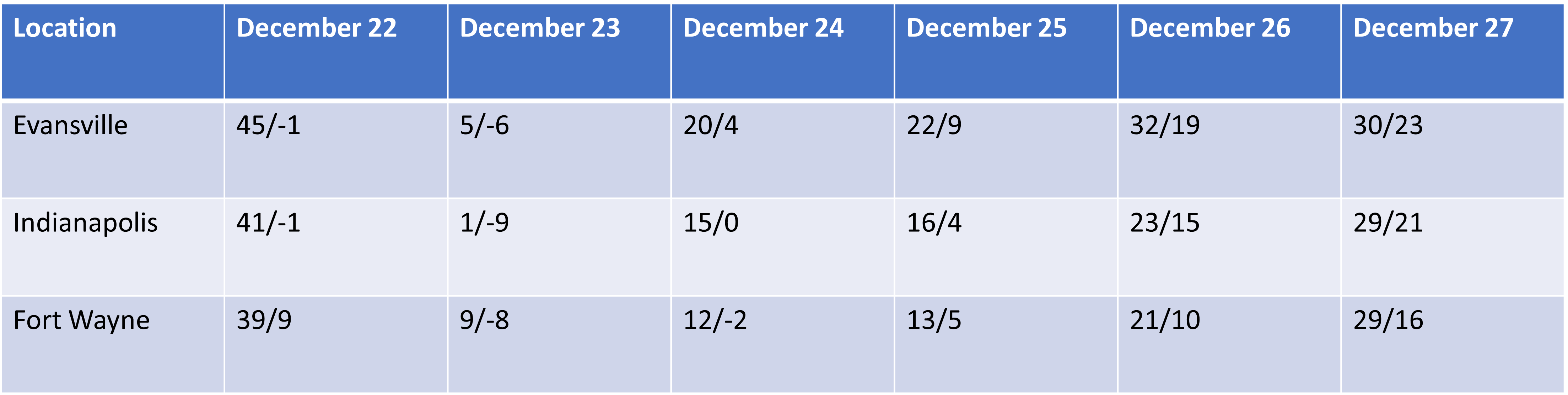
Table 1. The high and low temperatures (F) in Evansville, Indianapolis, and Fort Wayne December 22-27, 2022. Data courtesy of the National Weather Service.
There’s on-going evidence of damage across the Midwest from the late/long fall and extreme cold that was experienced in mid-late December. We’ve observed some perennial evergreens, i.e., American holly, Meserve holly (Fig. 2), and skip laurel (Fig. 3), damaged or killed during this winter, especially in the southern parts of the Midwest. In addition, some deciduous trees have significant bark cracking (Fig. 4). Though these plants are hardy well below the temperatures that were experienced, the maximum dormancy wasn’t yet reached by plants due to the warm temperatures so late into the winter season.
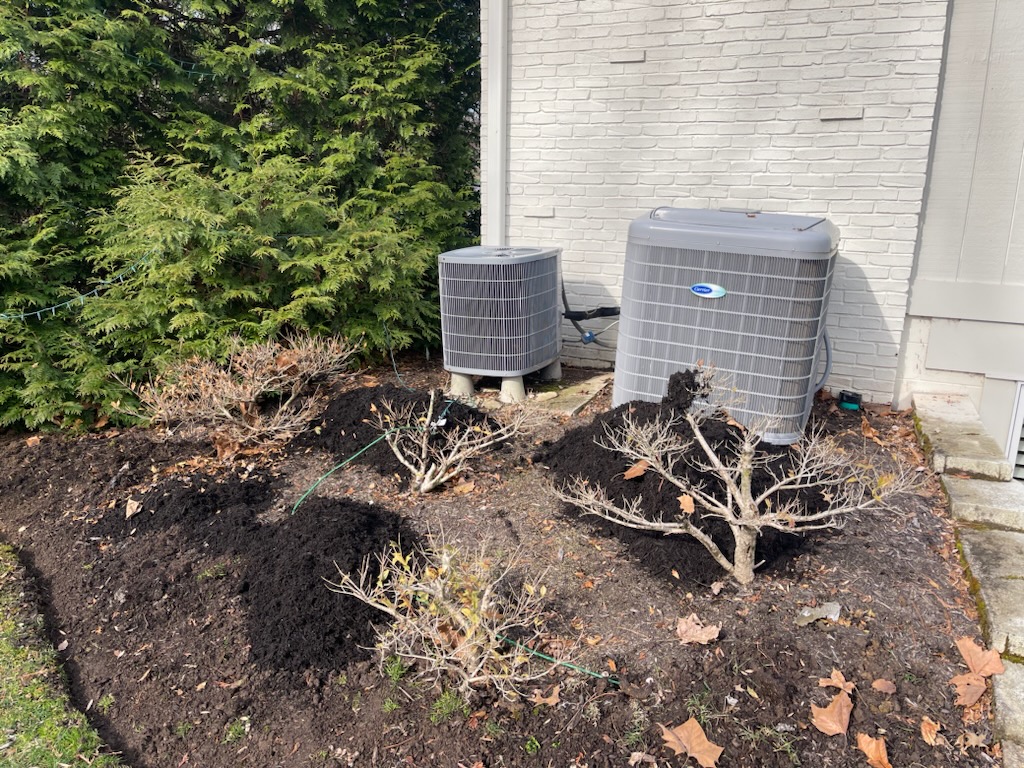
Figure 2. A planting of Meserve hollies died during the winter of 2022-2023 due to cold injury. Photo via Gabriel Gluesenkamp.
There’s on-going evidence of damage across the Midwest from the late/long fall and extreme cold that was experienced in mid-late December. We’ve observed some perennial evergreens, i.e., American holly, Meserve holly (Fig. 2), and skip laurel (Fig. 3), damaged or killed during this winter, especially in the southern parts of the Midwest. In addition, some deciduous trees have significant bark cracking (Fig. 4). Though these plants are hardy well below the temperatures that were experienced, the maximum dormancy wasn’t yet reached by plants due to the warm temperatures so late into the winter season.
Plants survive through the winter by entering a phase of dormancy in which the plant is in a state of suspended animation. The dormancy process in plants is a complicated series of internal events caused by external events, that allow perennial plants to protect themselves during environmental changes, such as winter.
For more images and full article view: Cold Injury During a Very Mild Winter?

Figure 3. Skip laurel death due to cold injury in 2022-2023. Photo via Tom Creswell.
Resources:
The Purdue Landscape Report
Purdue Landscape Report Facebook Page
Fall webworms: Should you manage them, Got Nature? Blog
Purdue Landscape Report Team Begins New Virtual Series, Got Nature? Blog, Purdue Extension – Forestry and Natural Resources (FNR)
Tree wounds and healing, Got Nature? Blog
Shrubs and Woody Vines of Indiana and the Midwest, The Education Store
Tree Risk Management, The Education Store
Why Is My Tree Dying?, The Education Store
ID That Tree, Purdue Extension-Forestry & Natural Resources (FNR) YouTube playlist
Subscribe to Purdue Extension-Forestry & Natural Resources (FNR) YouTube Channel
Kyle Daniel, Commercial Landscape and Nursery Crops Extension Specialist
Purdue Horticulture & Landscape Architecture

Recent Posts
- Purdue Extension: Empowering Indiana Through Innovation, Education and Community Impact
Posted: January 28, 2026 in Community Development, How To, Invasive Insects, Invasive Plant Species, Natural Resource Planning, Woodlands - Forest Landowners: Share Your Experience with Regeneration and Restoration
Posted: January 27, 2026 in Forestry, How To, Timber Marketing, Woodlands - It’s Not Too Late to Order Trees for Spring Planting
Posted: January 13, 2026 in Forestry, How To, Plants - Now Is The Time To Control Non-Native Bush Honeysuckle
Posted: October 30, 2025 in Forestry, How To, Invasive Plant Species, Woodlands - October Is Firewood Month: Protect Indiana’s Forests by Making Smart Choices
Posted: October 13, 2025 in Forestry, Forests and Street Trees, How To, Invasive Insects, Urban Forestry - ID That Tree: Smooth Sumac
Posted: October 2, 2025 in Forestry, How To, Wildlife - ID That Tree: Wild Grape Vine
Posted: August 12, 2025 in Forestry, How To, Urban Forestry, Wildlife - Publication – Sericea Lespedeza Control
Posted: July 7, 2025 in Forestry, How To, Invasive Plant Species, Wildlife - How to ID Asian Jumping Worms, Purdue Landscape Report
Posted: July 2, 2025 in How To, Invasive Insects, Wildlife - Alert – Water Your Trees, Watch Video
Posted: June 20, 2025 in Alert, Drought, Forests and Street Trees, How To, Urban Forestry, Wildlife, Woodlands
Archives
Categories
- Alert
- Aquaculture/Fish
- Aquatic/Aquaculture Resources
- Ask the Expert
- Christmas Trees
- Community Development
- Disease
- Drought
- Forestry
- Forests and Street Trees
- Gardening
- Got Nature for Kids
- Great Lakes
- How To
- Invasive Animal Species
- Invasive Insects
- Invasive Plant Species
- Land Use
- Natural Resource Planning
- Nature of Teaching
- Plants
- Podcasts
- Ponds
- Publication
- Safety
- Spiders
- Timber Marketing
- Uncategorized
- Urban Forestry
- Webinar
- Wildlife
- Wood Products/Manufacturing
- Woodland Management Moment
- Woodlands