 Purdue University - Extension - Forestry and Natural Resources
Got Nature? Blog
Illinois-Indiana Sea Grant (IISG) has recently added to its YouTube Channel new water safety videos, which share what to watch for and how to stay out of those scary situations that can become dangerous very quickly.
Water Safety Basics: Water safety is more then just knowing how to swim. You need to what can cause hazards, what type of water bodies have hazards and how to avoid or survive those hazards.
Water Safety – What to Know Before You Go to the Beach: On average every year, 87 people die in the Great Lakes, half of them are in Lake Michigan. Ocean waves are very different from Great Lake waves.
Water Safety – Winter Beach Hazards: Water safety is so important during the winter. When covered in snow and ice, it’s difficult to tell where the beach ends and the lake begins. Shelf ice is beautiful but dangerous. There are many places where it cannot support a person’s weight, which may cause a fall into freezing water below, so you should never walk on shelf ice.
Water Safety – How to Escape Dangerous Currents: Of the five Great Lakes, Lake Michigan has the highest number of drownings and rescues each year. Lake Michigan is freshwater. This is so different from an ocean. It doesn’t have the salt, so it is lacking that buoyancy already. If waves get super high and rip currents start to form and that water gets volatile, it is going to be much harder to get out of the situation if you start struggling while you are swimming.
Water Safety – Southern Lake Michigan: Lake Michigan has also had more than 250 recorded cases of swimmers caught in rip currents since 2002, which is double the combined total of the other four Great Lakes. Make sure you check the forecast before you come and have a safety plan. In the ocean you can get hit by two waves in 15 seconds but in the Great Lakes you could get his with five waves in that same time period. Learn more about high frequency waves and how dangerous it can be.
Illinois-Indiana Sea Grant combines research, education, and outreach to empower southern Lake Michigan communities to secure a healthy environment and economy. The program is funded through National Oceanic and Atmospheric Administration (NOAA) via the National Sea Grant College Program, as well as the University of Illinois and Purdue University. IISG also works in partnerships with key organizations, institutions, and agencies in the region to reach more audiences and multiply opportunities for success. IISG brings together scientists, educators, policy makers, community decision makers, outreach specialists, business leaders, and the general public to work towards a healthy environment and economy.
Subscribe to the Illinois-Indiana Sea Grant (IISG) YouTube Channel.
More Resources:
Implementation Examples of Smart Growth Strategies in Indiana, The Education Store, Purdue Extension’s resource center
Conservation Through Community Leadership, The Education Store
Community Development, Purdue Extension
Rainscaping Education Program, Purdue Extension
Rainscaping and Rain Gardens, Purdue Extension YouTube Channel
Enhancing the Value of Public Spaces, The Education Store
Enhancing the Value of Public Spaces: Creating Healthy Communities, The Education Store
Enhancing the Value of Public Spaces Program, Purdue Extension YouTube Channel
One Water Approach to Water Resources Management, The Education Store
Community Development, Purdue Extension
Community Planning Playlist, Purdue Extension-Forestry & Natural Resources (FNR) YouTube Channel
Indiana Creek Watershed Project – Keys to Success, Partnerships and People, Subscribe to Purdue Extension-FNR YouTube Channel
Climate Change and Sustainable Development, The Education Store
Climate Change: Are you preparing for it?, The Education Store
Diana Evans, Extension & Web Communications Specialist
Purdue University Department of Forestry and Natural Resources
Illinois-Indiana Sea Grant Newsroom: The U.S. Department of State and the Fulbright Foreign Scholarship Board announced earlier this year that Kwamena Quagrainie of Purdue University received a Fulbright Specialist Program award. Through April and May of 2023, Dr. Quagrainie completed a project at Kwame Nkrumah University of Science and Technology, training faculty and graduate students about the economics of aquaculture. The project’s aim was to exchange knowledge and establish partnerships benefiting participants, institutions, and communities both in the U.S. and overseas through a variety of educational and training activities within the field of agriculture.
Dr. Quagrainie is one of over 400 U.S. citizens who share expertise with host institutions abroad through the Fulbright Specialist Program each year. Recipients of Fulbright Specialist awards are selected on the basis of academic and professional achievement, demonstrated leadership in their field, and their potential to foster long-term cooperations between institutions in the U.S. and abroad.
The Fulbright Program is the flagship international educational exchange program sponsored by the U.S. government and is designed to build lasting connections between the people of the United States and the people of other countries. The Fulbright Program is funded through an annual appropriation made by the U.S. Congress to the U.S. Department of State. Participating governments and host institutions, corporations, and foundations around the world also provide direct and indirect support to the Program, which operates in over 160 countries worldwide.
For full article and videos please visit Kwamena Quagrainie receives Fulbright Specialist award to Ghana – IISG
Resources
A Guide to Marketing for Small-Scale Aquaculture Producers, The Education Store
A Guide to Small-Scale Fish Processing Using Local Kitchen Facilities, The Education Store
Marine Shrimp Biofloc Systems: Basic Management Practices, The Education Store
Aquaculture Industry in Indiana Growing, Purdue Today
Walleye Farmed Fish Fact Sheet: A Guide for Seafood Consumers, The Education Store, Purdue Extension resource center
Sustainable Aquaculture: What does it mean to you?, The Education Store
The Benefits of Seafood Consumption The Education Store, Purdue Extension Resource Center
Walleye Farmed Fish Fact Sheet: A Guide for Seafood Consumers, The Education Store, Purdue Extension resource center
Pond and Wildlife Management website, Purdue Extension
Fish Cleaning with Purdue Extension County Extension Director, Got Nature? Blog, Purdue Extension – Forestry and Natural Resources
Aquatics & Fisheries, Playlist, Purdue Extension – Forestry and Natural Resources
Eat Midwest Fish, Illinois-Indiana Sea Grant online resource hub
Illinois-Indiana Sea Grant (IISG)
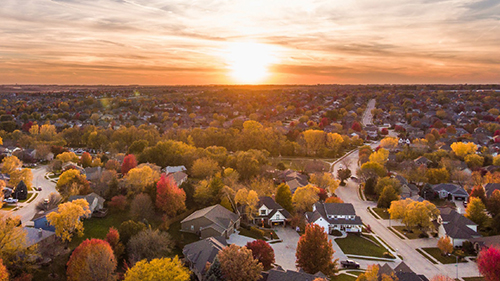 Purdue Extension is launching the Purdue Broadband Team (PBT) to harness the power of Indiana’s land-grant institution to help expand broadband access, adoption, and use as an essential catalyst for economic growth in the state. The Purdue Extension PBT is part a collaborative effort between Purdue, the Indiana Broadband Office, and the Indiana Office of Community and Rural Affairs. Coordinated by Purdue’s Office of Engagement, the Purdue Broadband Team will include Purdue Extension, 4-H, the Purdue Center for Regional Development and the Purdue for Life Foundation. View Purdue News – Purdue launches broadband team, effort to increase high-speed internet access, adoption and use throughout Indiana.
“The lack of affordable high-speed broadband affects economic development and quality of life in various communities in our state,” Purdue President Mung Chiang said. “Continuing our long-standing tradition as Indiana’s land-grant institution, Purdue is honored to play a small and hopefully useful role as the state government plans the next-level broadband deployment.”
Why PBT?
The federal government, in partnership with states, is deploying broadband funds through the Broadband Equity, Adoption, and Deployment program, also known as BEAD. Indiana is receiving close to $870 million starting mid to late 2024. A map put together by the Federal Communications Commission or FCC, the government entity that regulates telecommunications, will dictate where these funds go.
So, PBT needs to make sure Indiana’s broadband map is as accurate as possible.
The PBT will help by spreading the word on resources that will make Indiana’s broadband map more accurate and help with broadband adoption which includes:
- Validating your address and internet service available on the FCC map
- Applying for the Indiana Connectivity Program or ICP
- Conducting speed tests or reporting a lack of connectivity at your address
- Learning more about the Affordable Connectivity Program or ACP
To learn more about the PBT and how you can get involved, along with how to test your internet connection, view the : Purdue Broadband Team website.
Resources:
The Time for Broadband is Now – Purdue University is Playing its Part, Purdue Extension News
Thinking Broadly About Broadband, Purdue Extension News
Purdue Extension Community Development, programs include: Digital Ready Business; Digital Ready Community; Remote Work Certificate Program; Essential Digital Employability Skills Program; and much more.
Broadband, Purdue Center for Regional Development
Connecting Indiana: Broadband for the Future is Now, Purdue Center for Regional Development
Diana Evans, Extension & Web Communications Specialist
Purdue University Department of Forestry and Natural Resources
We all want clean water but sometimes it is hard to know how one individual or family can make a difference. People who have a home with a yard have the opportunity to make decisions that can protect and improve water quality.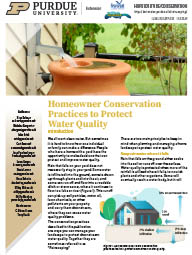
Rain that falls on your yard does not necessarily stay in your yard. Some water is infiltrated into the ground, some is drawn up through plants and into the air, and some can run off and flow into a roadside ditch or storm sewer, where it continues to flow to a lake or river. This runoff can pick up soil particles, motor oil, lawn chemicals, or other pollutants on your property and carry them downstream, where they can cause water quality problems.
Anyone who has a home with a yard can help protect and improve water quality. This publication offers practical advice about reducing impervious surfaces, select proper landscape plants, effective management of lawns, installing rain barrels and rain gardens, and proper care of septic systems.
To receive the free download visit the Purdue Extension’s resource center: The Education Store – Homeowner Conservation Practices to Protect Water Quality.
Resources:
Improving Water Quality by Protecting Sinkholes on Your Property, The Education Store, Purdue Extension’s resource center
A Landowner’s Guide to Sustainable Forestry: Part 5: Forests and Water, The Education Store
Improving Water Quality Around Your Farm, The Education Store, YouTube
Animal Agriculture’s Effect on Water Quality: Pastures and Feedlots, The Education Store
Improving Water Quality At Your Livestock Operation, The Education Store, YouTube
The Nature of Teaching: Discovering the Watershed, Purdue Extension-The Nature of Teaching
Rainscaping Education Program, Purdue Extension
Community Planning, Purdue Extension
Kara Salazar, Assistant Program Leader and Extension Specialist for Sustainable Communities
Purdue Department of Forestry and Natural Resources
Nick Burgmeier, Research Biologist and Wildlife Extension Specialist
Purdue Department of Forestry and Natural Resources
Laura Esman, Water Quality Program Coordinator
Purdue Department of Forestry and Natural Resources
 Purdue Agriculture News – Purdue Extension has been selected to support a multistate effort to help rural, tribal and underserved communities access federal funding for energy and environmental improvement efforts.
The University of Minnesota will lead the effort as an Environmental Justice Thriving Communities Technical Assistance Center (TCTAC) for Region 5 with funding from the U.S. Environmental Protection Agency. Purdue Extension’s Community Development program will provide central support in Indiana to help communities navigate federal grant application systems, identify partners and matching funds, and assist with project design and development.
“Purdue Extension is positioned well to connect with rural and underserved communities across Indiana with staff in all 92 counties,” said Kara Salazar, assistant program leader for Purdue Extension Community Development and sustainable communities extension specialist. “We look forward to working with regional partners as a liaison for communities in need of resources to assist with clean energy and water, affordable and sustainable housing, and addressing legacy pollution.”
Additional partners in Indiana include the North Central Regional Center for Rural Development (NCRCRD), Illinois-Indiana Sea Grant and Purdue Center for Regional Development (PCRD).
Michael Wilcox, associate director of NCRCRD and assistant director and program leader of Purdue Extension Community Development, welcomes interested community partners to reach out to get involved.
“We look forward to connecting with communities across the state while collaborating with our partners across the EPA Region 5. This is another excellent example of states within the north central region working together as partners to address pressing issues while fostering community resilience,” he added.
“Illinois-Indiana Sea Grant is enthusiastic to build on our ongoing programs as we partner on this broad project to help support underserved coastal communities around southern Lake Michigan and throughout the Great Lakes in addressing environmental challenges,” said Tomas Höök, director of Illinois-Indiana Sea Grant and professor in Purdue University’s Department of Forestry and Natural Resources.
Resources:
Implementation Examples of Smart Growth Strategies in Indiana, The Education Store, Purdue Extension’s resource center
Conservation Through Community Leadership, The Education Store
Community Development, Purdue Extension
Conservation Through Community Leadership, video, Purdue Extension You Tube Channel
Rainscaping Education Program, Purdue Extension
Rainscaping and Rain Gardens, Purdue Extension YouTube Channel
Enhancing the Value of Public Spaces, The Education Store
Enhancing the Value of Public Spaces: Creating Healthy Communities, The Education Store
Enhancing the Value of Public Spaces Program, video, Purdue Extension YouTube Channel
Community Planning Playlist, Purdue Extension-Forestry & Natural Resources (FNR) YouTube Channel
Indiana Creek Watershed Project – Keys to Success, Partnerships and People, Subscribe to Purdue Extension-FNR YouTube Channel
Abby Leeds, Senior Communications Specialist
Purdue Agricultural Communications
Michael Wilcox, Associate Director & Program Leader
North Central Regional Center for Rural Development (NCRCRD) & Purdue Extension Community Development
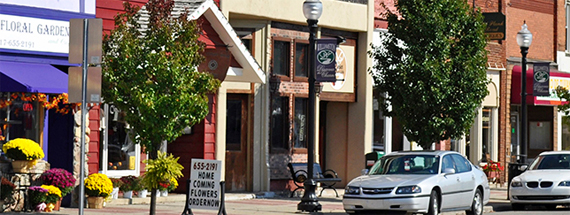 A Purdue Extension program that helps Indiana communities improve public spaces such as parks and town centers is surveying West Lafayette residents to get input on the city parks and recreation department’s next five-year master plan.
Specialists and educators in Extension’s Enhancing the Value of Public Spaces program are administering the survey and collecting and analyzing the feedback. The objective is to create a five-year plan for improving facilities, services and programs.
Citizens can access the survey online. Those who do not have access to a computer but would like to participate can receive a copy of the survey at the Morton Community Center, the Riverside Skating Center, the Lilly Nature Center and the West Lafayette Parks & Recreation Service Center on Kalberer Road. Deadline to complete the survey is March 15.
“The Enhancing program is strongly rooted in the community development principles of good practice,” said Kara Salazar, sustainable communities Extension specialist. “As such, we concentrate on participation, inclusion, capacity building and balancing action planning with long-term sustainability.”
To read more, check out Purdue Agriculture News‘ full article titled “Purdue Extension program’s objective: enhance public spaces.” Further questions about the survey can be directed to Kara Salazar at 765.496.1070 or salazark@purdue.edu.
Resources:
Purdue Extension program’s objective: enhance public spaces – Purdue Agriculture News
Enhancing the Value of Public Places Home Page – Purdue Extension
Enhancing the Value of Public Places Action Plan – The Education Store, Purdue Extension Resource Center
Kara Salazar, Sustainable Communities Extension Specialist
Purdue University Department of Forestry and Natural Resources

Recent Posts
- Lighting a Spark: Prescribed Burn Associations
Posted: August 6, 2026 in Community Development, Forestry, Safety, Wildlife - Bat Roost Reporting Tool
Posted: July 8, 2026 in Alert, Community Development, Invasive Animal Species, Wildlife - Thank You, Turkey Trackers! Your Brood Counts Make a Difference – MyDNR
Posted: in Alert, Community Development, Wildlife - Uniting Indiana Residents Against Invasive Species
Posted: February 27, 2026 in Community Development, Invasive Insects, Wildlife - Purdue Extension: Empowering Indiana Through Innovation, Education and Community Impact
Posted: January 28, 2026 in Community Development, How To, Invasive Insects, Invasive Plant Species, Natural Resource Planning, Woodlands - Powering Rural Futures: Purdue’s Agrivoltaics Initiative for Sustainable Growth
Posted: December 9, 2025 in Community Development, Wildlife - Succession Planning Resource: Secure your Future
Posted: December 2, 2025 in Community Development, Land Use, Woodlands - HTIRC Partners with Tree Pro Distributing Hardwood Seedlings
Posted: May 19, 2025 in Community Development, Forestry, Woodlands - American Citizen Planner – Indiana Program Celebrating 4 Years of Impact
Posted: October 16, 2024 in Community Development, Land Use - Publication – Quality of Place and Community Development
Posted: July 18, 2024 in Community Development, Land Use, Publication, Urban Forestry
Archives
Categories
- Alert
- Aquaculture/Fish
- Aquatic/Aquaculture Resources
- Ask the Expert
- Christmas Trees
- Community Development
- Disease
- Drought
- Forestry
- Forests and Street Trees
- Gardening
- Got Nature for Kids
- Great Lakes
- How To
- Invasive Animal Species
- Invasive Insects
- Invasive Plant Species
- Land Use
- Natural Resource Planning
- Nature of Teaching
- Plants
- Podcasts
- Ponds
- Publication
- Safety
- Spiders
- Timber Marketing
- Urban Forestry
- Webinar
- Wildlife
- Wood Products/Manufacturing
- Woodland Management Moment
- Woodlands