 Purdue University - Extension - Forestry and Natural Resources
Got Nature? Blog
 With storm season just around the corner, one topic of concern on many minds is damage to and from trees. Depending on the intensity of the storms and the condition of the trees, damage from high winds, heavy rainfall, and lightning can be quite severe. Cracked or broken branches, stem failure, and root failure are some of the main concerns, but also the risk and liability of damage to people and property.
If your tree is damaged, there are some steps to deal with the situation. First and foremost, consider the safety of yourself and others around you. Inspect the tree from a distance first looking for the following:
- Heaving of the ground indicating potential root failure
- Damage to limbs and/or the trunk of the tree
- Hanging branches can fall to the ground resulting in injury or death
- Be aware of utility and power lines. Trees can become charged by coming in contact with live wires. All utility lines should be considered energized and dangerous.
If you find your trees damaged from a storm hiring an International Society of Arboriculture (ISA) Certified Arborist to perform a risk assessment will help guide your decision of how to manage your tree. To find an arborist near you and verify credentials use the link at Find an Arborist, Trees are Good, International Society of Arboriculture (ISA). For more information, you can also view Trees and Storms: Understanding Damage, Risk and Recovery, an informational Got Nature? Blog article from Purdue Extension.
Resources:
Find an Arborist video, Trees are Good-International Society of Arboriculture (ISA)
Caring for storm-damaged trees/How to Acidify Soil in the Yard – In the Grow, Purdue Extension
Tree Risk Management – Got Nature? Blog, Purdue Extension – FNR
Why Is My Tree Dying? – Got Nature? Blog, Purdue Extension – Forestry and Natural Resources (FNR)
Mechanical Damage to Trees: Mowing and Maintenance Equipment – Got Nature? Blog, Purdue Extension – FNR
Trees and Electric Lines – The Education Store
Planting Your Tree Part 1: Choosing Your Tree, video, Purdue Extension – FNR YouTube Channel
Tree Installation: Process and Practices, The Education Store
Tree Wound and Healing, Got Nature? Blog, Purdue Extension – FNR
Subscribe – Purdue Extension-FNR YouTube Channel
Lindsey Purcell, Executive Director
Indiana Arborist Association

Damage to the cambium layer can cause serious health issues for the tree.
One of the most dangerous pests of trees is humans, especially humans with equipment. Lawn mowers and weed trimmers can cause injuries that create a hazard when an injury leads to tree disease or death. This blog explains why the damage is so dangerous and suggests ways to protect your trees.
Defended by Bark
The site of injury is usually the root flare: the area where the tree meets the turf and gets in the path of the mower or trimmer. The root flare, like the rest of the trunk, is protected by bark, which guards a very important plant transport system just behind the woody bark layer. Specialized tubes move nutrients and water between the roots and leaves to keep the tree alive. Any damage to this transport system can affect tree health and the tree could die.

Old damage from mowing can create a serious risk in the landscape
The bark layer can vary in thickness on different tree species. It can be more than an inch in thickness or less than 1/16 of an inch on young, smooth-barked trees such as maples and birches. This isn’t much protection against string trimmers and mowing equipment, especially on young, newly planted trees.
Damage Done
Any damage to or removal of the bark and the transport system can cause problems for a tree. Even when a tree tries to recover from a wound, leaves and branches often decline and die back, because food and water pathways were destroyed. Although a large wound is generally more serious than a smaller one, repetitive wounding adds up to greater trouble for the tree. If the damage extends completely around the base of the tree (a situation called girdling), the tree ultimately dies.

Recent damage from mowing equipment leads to decay and dieback in the tree
All tree wounds are serious when it comes to tree health. No matter what size the wound is, the damage done is irreversible. The tree must devote a great deal of energy and many resources into trying to seal off the damaged area to prevent further complications. The wounded area is an opening for wood-rotting organisms and decay fungi to enter and cause further damage. These microorganisms often attack the injured bark and invade adjacent healthy tissue, greatly enlarging the wound and extending the damage. Trees can be completely girdled from pathogen attack following injuries.
Fungi that are active on the wound surface can also deteriorate the structure of the woody tissues beneath, decaying and weakening the tree. This weakened, structurally unsound tree may eventually die and become a hazard to people around it.
Preventing Problems
Newly planted, young trees need our help to become established in the landscape. They are the trees most commonly and seriously affected by maintenance equipment.

Mulch rings can provide a healthier environment as well as a visual cue to keep equipment away.
However, injury to these trees can be avoided easily and at very low cost if you follow one or more of these suggestions.
- Physically remove turf or prevent grass and weeds from growing at the base of the tree. This lowtech solution can eliminate a potentially serious problem.
- Spray herbicides to eliminate vegetation around the base of the tree to decrease mowing maintenance costs. Be sure to use care when applying herbicides around trees. Carefully follow label directions.
- Add a mulch ring, when possible, to help reduce the competition for water and nutrients. Mulch or other ground coverings reduce mowing requirements in the landscape.
- Add a 2˝ to 3˝ layer of mulch on the root zone of the tree to provide an attractive and healthy environment for the tree to grow. This also provides a visual cue to keep equipment away from the tree.
- Add trunk guards or similar devices to give the tree additional protection. White, expanding tree guards can help help trees withstand equipment contact and also can help to reduce winter injury.
Trees are a valuable asset to your property and are important to our environment. Every tree contributes to the urban forest and improves air and water quality in your neighborhood. Protect and preserve these growing assets by keeping mowing and weed-trimming equipment away from tree trunks. The damage lasts and it cannot be undone. Don’t create a hazard!
Resources:
Planting Your Tree Part 1: Choosing Your Tree, Purdue Extension YouTube Channel
Tree Pruning Essentials Video, Purdue Extension YouTube Channel
Tree Defect Identification, The Education Store, Purdue Education’s resource center
Why Is My Tree Dying?, Got Nature? Blog, Purdue Extension – Forestry and Natural Resources (FNR)
Tree Wound and Healing, Got Nature? Blog, Purdue Extension – FNR
Surface Root Syndrome, The Education Store
Find an Arborist video, Trees are Good-International Society of Arboriculture (ISA)
Trees and Storms: Understanding Damage, Risk and Recovery – Got Nature? Blog, Purdue Extension – FNR
Report INvasive, Purdue Extension
Indiana Invasive Species Council
ID That Tree, Playlist, Purdue Extension – FNR YouTube Channel (Invasive White Mulberry, Siberian Elm, Tree of Heaven)
Fifty Common Trees of Indiana
Native Trees of the Midwest, Purdue University Press
Subscribe – Purdue Extension-FNR YouTube Channel
Lindsey Purcell, Executive Director
Indiana Arborist Association
Purdue Landscape Report: April showers bring May Flowers. Many of us were taught this little rhyme to describe the weather of Spring. April has arrived along with the beginning of the Spring storm season and damage to and from trees is a topic of concern on many minds. Depending on the intensity of the storms and the condition of the trees, damage from high winds, heavy rainfall, and lightning can be quite severe. Cracked or broken branches, stem failure, and root failure are some of the main concerns, but also the risk and liability of damage to people and property.

Storm season is upon us. There are a number of resources from Purdue to help dealing with storm-damaged trees.
If your tree is damaged, there are some steps to deal with the situation. First and foremost, consider the safety of yourself and others around you. Inspect the tree from a distance first, looking for the following:
- Heaving of the ground, indicating potential root failure
- Damage to limbs and/or the trunk of the tree
- Hanging branches can fall to the ground, resulting in injury or death
- Be aware of utility and power lines. Trees can become charged by coming in contact with live wires. All utility lines should be considered energized and dangerous.
If you find your trees damaged from a storm hiring an International Society of Arboriculture (ISA) Certified Arborist to perform a risk assessment will help guide your decision of how to manage your tree. To find an arborist near you and verify credentials, use the link at Find an Arborist, Trees are Good, International Society of Arboriculture (ISA). For more information, you can also view the publication Trees and Storms, located in The Education Store, Purdue Extension’s resource center.
Subscribe and receive the newsletter: Purdue Landscape Report Newsletter.
Resources:
Find an Arborist video, Trees are Good-International Society of Arboriculture (ISA)
Trees and Storms: Understanding Damage, Risk and Recovery – Got Nature? Blog, Purdue Extension – FNR
Caring for storm-damaged trees/How to Acidify Soil in the Yard – In the Grow, Purdue Extension
Why Is My Tree Dying? – The Education Store
Tree Risk Management – The Education Store
Mechanical Damage to Trees: Mowing and Maintenance Equipment – The Education Store
Trees and Electric Lines – The Education Store
Tree Risk Management – Got Nature? Blog, Purdue Extension – FNR
Planting Your Tree, video, The Education Store
Tree Installation, The Education Store
Tree Wound and Healing, Got Nature? Blog, Purdue Extension – Forestry and Natural Resources
Ask an Expert: Tree Selection and Planting, Purdue Extension – Forestry and Natural Resources (FNR) YouTube Channel
Tree Pruning Essentials, Purdue Extension – FNR YouTube Channel
Subscribe – Purdue Extension-FNR YouTube Channel
Ben McCallister, Urban Forestry Specialist
Purdue Forestry & Natural Resources
Question: We have a large 60+ foot mulberry tree in our backyard that is located by our pond. This is the first year I have seen these dark streaks on the bark of the tree. Should I have concerns?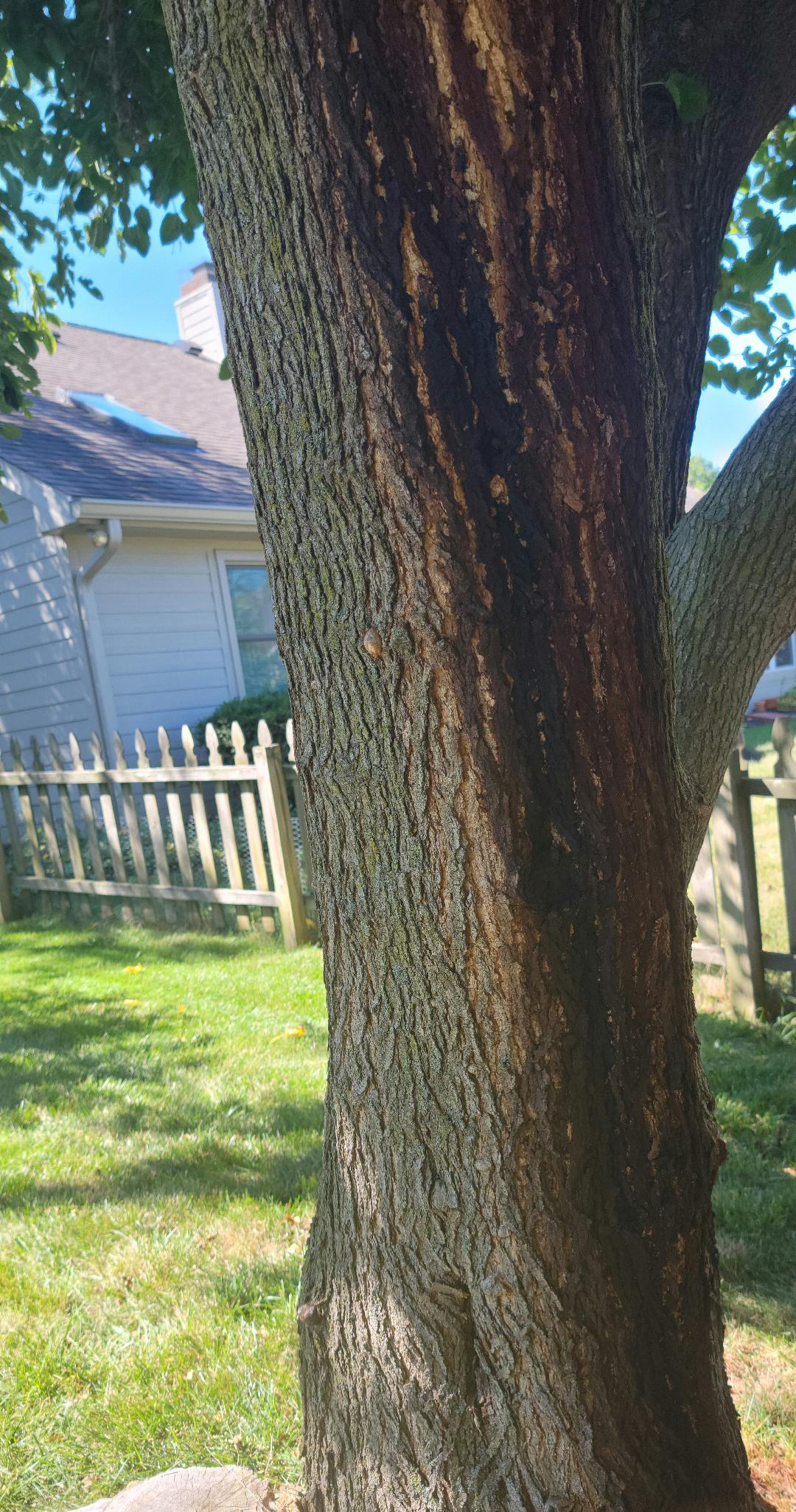
Answer: From the photos, it looks like wet wood/slime flux is affecting your tree. It is a bacterial infection on trees and in most cases is not a serious issue, but unfortunately, there is nothing to be done about it. Many years ago they used to drill holes to try and allow gases and liquids drain from an area with the slime flux but through research and experience this practice is not recommended.
The Purdue Landscape Report titled Slime Flux of Trees shares more about this disease:
Slime flux (also known as wet wood) is a dark, foul-smelling and unsightly seepage of sap from tree trunks. The disease is not usually a serious problem but the appearance can be alarming. Slime flux is caused by common surface-inhabiting bacteria or yeast fungi that enter the trunk through wounds associated with improper pruning, stem breakage, injections, cracks from freeze injury or weak limb crotches. The bacteria and yeast may live on sap nutrients within injured trees for many years without any outward evidence.
Symptoms
The main symptom is the appearance of the dark sap oozing on the trunk exterior which happens when gasses produced by growth of the bacteria and yeast cause the internal pressure of the sap to become high enough to force the sap out through cracks in the bark. The dark streaks usually turn light gray or white upon drying. Oozing sap may be frothy and white at the point of exit. Airborne bacteria, yeasts, and fungi often colonize the wet oozing material, which ferments and releases a foul odor. Slime flux may delay wound healing (callus formation).
For prevention and other resources view: Slime Flux of Trees.
Resources
Purdue Landscape Report
Find an Arborist video, Trees are Good-International Society of Arboriculture (ISA)
Tree Pruning Essentials, Publication & Video, The Education Store, Purdue Extension resource center
Tree Pruning: What Do Trees Think?, The Education Store
Tree Installation Process and Practices, The Education Store
Tree Pruning for the Landscape, Webinar, Purdue Extension – Forestry and Natural Resources YouTube channel
Tree Wounds and Healing
Why Is My Tree Dying? – Got Nature? Blog, Purdue Extension – Forestry and Natural Resources
Tree Risk Management – Got Nature? Blog, Purdue Extension – FNR
What Are Invasive Species and Why Should I Care?, Got Nature? Blog Post, Purdue Extension – FNR
Purdue Plant & Pest Diagnostic Lab (PPDL)
Subscribe – Purdue Extension-FNR YouTube Channel
Ben McCallister, Urban Forestry Specialist
Purdue Forestry & Natural Resources
Purdue Landscape Report: Stop me if you’ve heard this one…. A tree is in a slow decline year after year. You are called to your client’s property only to find the root flare well below grade.
Most professionals in the Green Industry have encountered this at some point in their career. The most common reason for the slow decline of trees in the landscape is due to the depth of planting and girdling roots. Deep planting can cause a number of deleterious problems, including an increase in circling/girdling roots restricting vascular tissue and decay of protective bark (Fig. 1). The vascular tissue in the bark is located on the outer portions of the trunk, while the anatomy of roots contains the vascular tissue in the center. This is why roots can graft with roots and stems can graft with stems, but also why roots can girdle the stems of trees (Fig. 2)
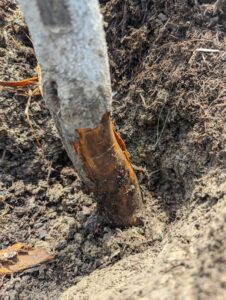
Figure 1. A tree that’s planted too deep can have bark decay from too much soil moisture around the trunk.
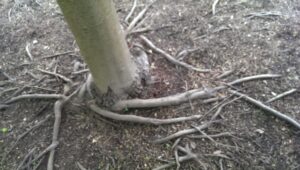
Figure 2. Root girdling can occur on trees that didn’t have a root correction during transplanting and/or being planted too deep. Restriction of vascular tissue in the trunk will decrease the amount of water and nutrients taken up by the tree.
Excessive mounding of mulch (aka volcano mulch) (Fig. 3) can contribute to tree decline, very similar to a tree planted too deep. It’s important to remember that keeping mulch several inches away from the trunk is imperative in tree health.
If a newly transplanted tree is planted significantly too deep, a faster decline can occur, especially in plants that can’t tolerate ‘wet feet’ (aka too much soil moisture) (Fig.4). In heavy-clay soils, the negative effects on tree health increase by creating a bath-tub situation by water not draining expeditiously after a rainfall or irrigation event.
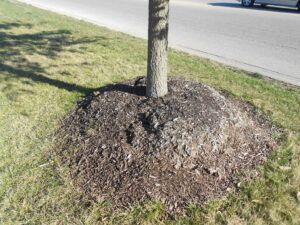
Figure 3. Volcano mulch can cause the same problems that a tree planted too deep can experience.
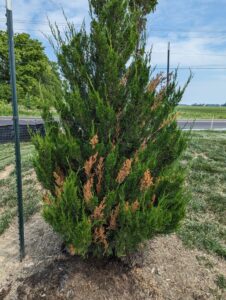
Figure 4. Decline of this juniper is caused by this tree being planted too deep.
To view this full article and other Purdue Landscape Report articles, please visit Purdue Landscape Report.
Subscribe and receive the newsletter: Purdue Landscape Report Newsletter.
Resources:
The Purdue Landscape Report
Planting Your Tree Part 1: Choosing Your Tree, Purdue Extension YouTube Channel
Summer Tree Care, Purdue Landscape Report
Tree Defect Identification, The Education Store
Tree Wound and Healing, Got Nature? Blog, Purdue Extension – Forestry and Natural Resources
Surface Root Syndrome, The Education Store
Shrubs and Woody Vines of Indiana and the Midwest, The Education Store
Ask an Expert: Tree Selection and Planting, Purdue Extension-Forestry & Natural Resources (FNR) YouTube playlist
ID That Tree, Purdue Extension-FNR YouTube playlist
Subscribe – Purdue Extension-FNR YouTube Channel
Kyle Daniel, Commercial Landscape and Nursery Crops Extension Specialist
Purdue Horticulture & Landscape Architecture
One of the most dangerous pests to trees is a human, especially with equipment. 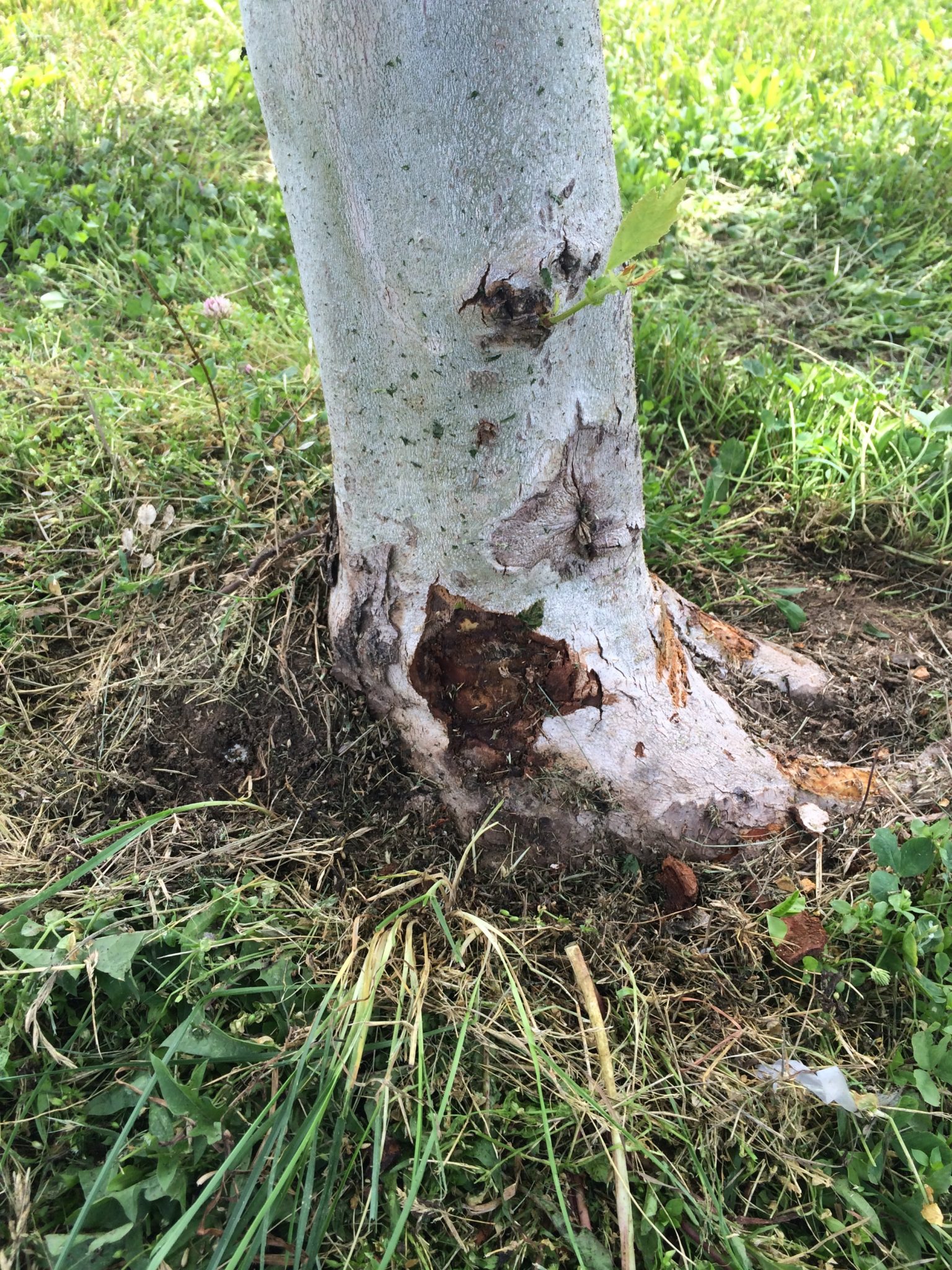 Injuries to trees caused by a lawn mower or weed trimmer can seriously threaten a tree’s health.
Additionally, damage to the bark layer of trees causes a long-term liability by creating a wound which leads to a defect, becoming an unsafe tree.
The site of injury is usually the root flare area, where the tree meets the turf and gets in the path of the mower or trimmer. The bark on a tree acts to protect a very important transport system called the cambium layer.
This is where specialized tubes are located which move nutrients and water between the roots and the leaves. Bark layers can vary in thickness on different tree species. It can be more than an inch in thickness or less than 1/16 of an inch on young, smooth-barked trees such as maples and birch trees. This isn’t much protection against string trimmers and mowing equipment, especially the young trees.
Any type of damage or removal of the bark and the transport system can result in long-term damage. Damage, which extends completely around the base of the tree called girdling, will result in ultimate death in a short time.
Tree wounds are serious when it comes to tree health. The wounded area is an opportunity for other insects and diseases to enter the tree that causes further damage. Trees can be completely killed from an attack following injuries. Fungi becomes active on the wound surface, causing structural defects from the decay. This weakens the tree or it eventually dies, creating a risk tree to people around it.
Newly planted, young trees need all the help we can provide to become established in the landscape and these trees are often the most commonly and seriously affected by maintenance equipment. However, injury can be avoided easily and at very low cost with these suggestions.
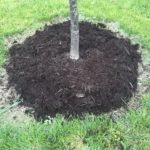 The removal of turf or prevention of grass and weeds from growing at the base of the tree are low-tech solutions to eliminate a serious problem. Spraying herbicides to eliminate vegetation around the base of the tree can decrease mowing maintenance costs. Be sure to use care when applying herbicides around trees.
- A 2-3” layer of mulch on the root zone of the tree provides an attractive and healthy environment for the tree to grow. Additionally, it provides a visual cue to keep equipment away from the tree.
- Also, trunk guards and similar devices can add an additional measure of protection for the tree. Using white, expanding tree guards can help improve the trees ability to withstand equipment contact, but also help to reduce winter injury.

Trees are a major asset to your property and important to our environment. Protect our trees and preserve these valuable assets by staying away from tree trunks with any mowing or weed trimming equipment. The damage lasts and it cannot be repaired and often results in losing your tree.
Purdue University Landscape Report Article
Resources
Corrective Pruning for Deciduous Trees, The Education Store – Purdue Extension resource center
What plants can I landscape with in areas that floods with hard rain?, Purdue Got Nature? Blog
Tree support systems, The Education Store
Tree Installation: Process and Practices, The Education Store
Lindsey Purcell, Urban Forest Specialist
Forestry and Natural Resources

Recent Posts
- Disease May Cause Wilting and Eventual Death of Certain Trees and Shrubs, Purdue Landscape Report
Posted: October 5, 2026 in Disease, Forestry, Plants - October Is Firewood Month: Protect Indiana’s Forests by Making Smart Choices
Posted: October 1, 2026 in Forestry, Forests and Street Trees, How To, Invasive Insects, Urban Forestry - Minecraft Meets the Hellbender
Posted: September 22, 2026 in Aquaculture/Fish, Aquatic/Aquaculture Resources, Wildlife - Is It Too Early to Think About Christmas Tree Pests?
Posted: in Christmas Trees, Invasive Insects, Safety - What You Plant Matters to Wildlife
Posted: September 16, 2026 in Plants, Urban Forestry, Wildlife - Woodland Flowers of Late Summer
Posted: September 14, 2026 in Forestry, Gardening, Wildlife, Woodlands - Heavy August Rains Bring More Mosquitoes to Indiana
Posted: September 9, 2026 in How To, Invasive Insects, Safety, Wildlife - Question: Why Did the Shagbark Hickories Survive the Tornado?
Posted: August 27, 2026 in Forests and Street Trees, How To, Urban Forestry - New Indiana Woodland Steward Newsletter
Posted: August 12, 2026 in Forestry, Urban Forestry, Wildlife, Woodlands - Indiana Fall Hunting Licenses on Sale and New Mobile App Available
Posted: in Forestry, How To, Wildlife
Archives
Categories
- Alert
- Aquaculture/Fish
- Aquatic/Aquaculture Resources
- Ask the Expert
- Christmas Trees
- Community Development
- Disease
- Drought
- Forestry
- Forests and Street Trees
- Gardening
- Got Nature for Kids
- Great Lakes
- How To
- Invasive Animal Species
- Invasive Insects
- Invasive Plant Species
- Land Use
- Natural Resource Planning
- Nature of Teaching
- Plants
- Podcasts
- Ponds
- Publication
- Safety
- Spiders
- Timber Marketing
- Urban Forestry
- Webinar
- Wildlife
- Wood Products/Manufacturing
- Woodland Management Moment
- Woodlands