 Purdue University - Extension - Forestry and Natural Resources
Got Nature? Blog
Several things come into play when it comes to determining the colors that we find on leaves of our trees. As our days get shorter and our nights get longer there is a chemical change that happens in the tree. In this video Lenny Farlee talks about the several pigments that are found in trees and what changes from summer to fall that brings us the bright colors on leaves.
Explore IndyStar Story Behind Our Fall Colors
For more on what determines the specific colors our leaves turn and how weather and other factors influence the fall display check out this recent IndyStar article: What determines what color leaves turn in the fall? The story features insights from Lenny Farlee, Purdue Extension forester, who shares his expertise on the science and beauty behind Indiana’s fall foliage.
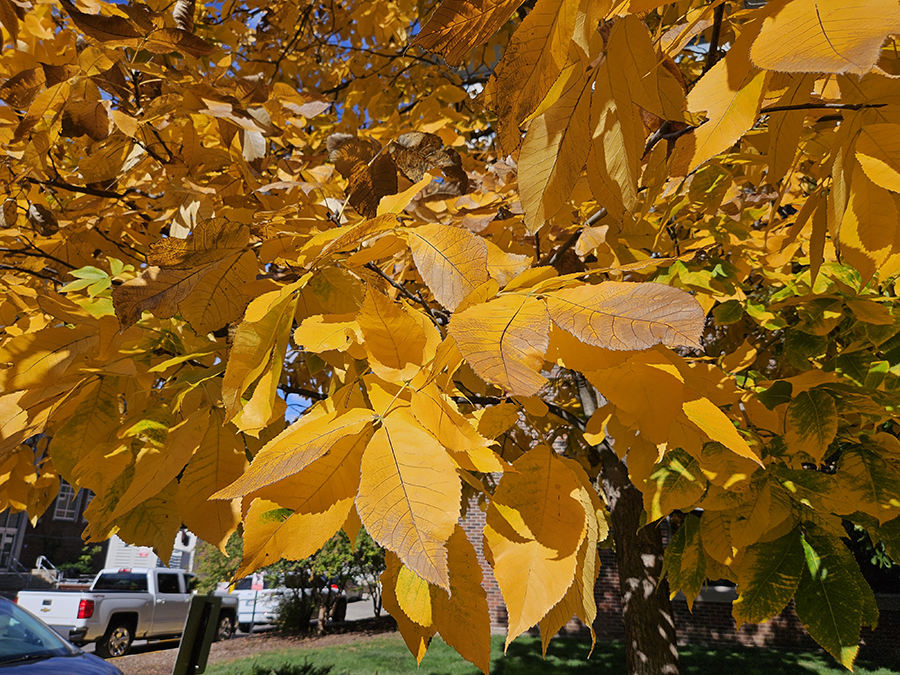
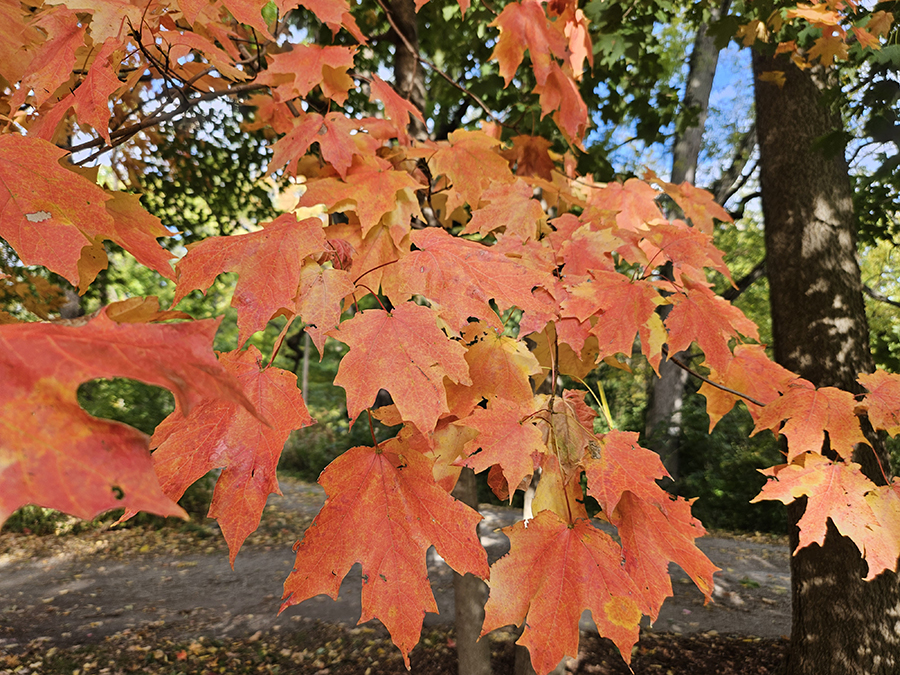
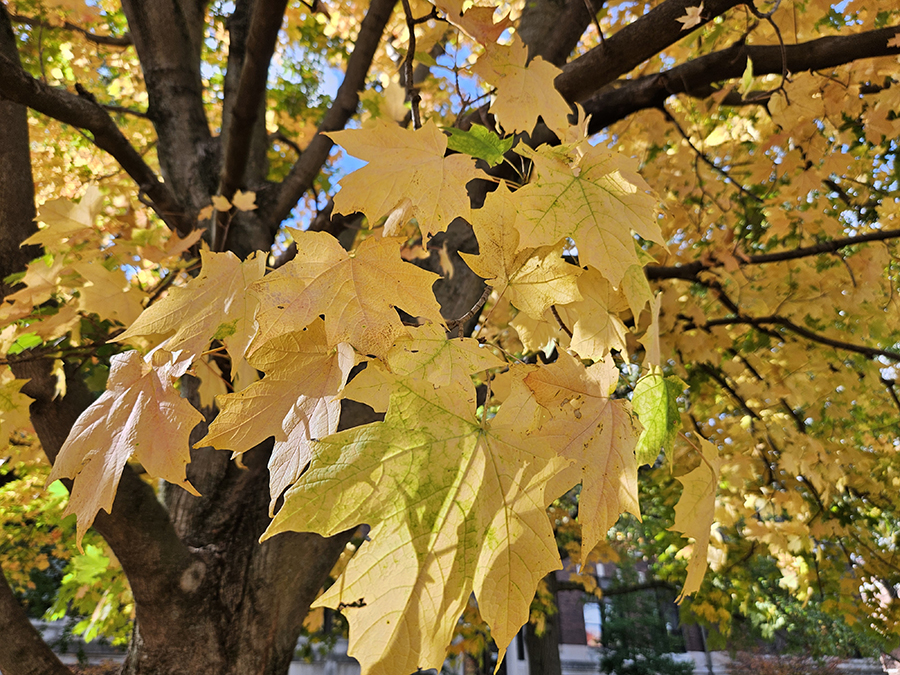
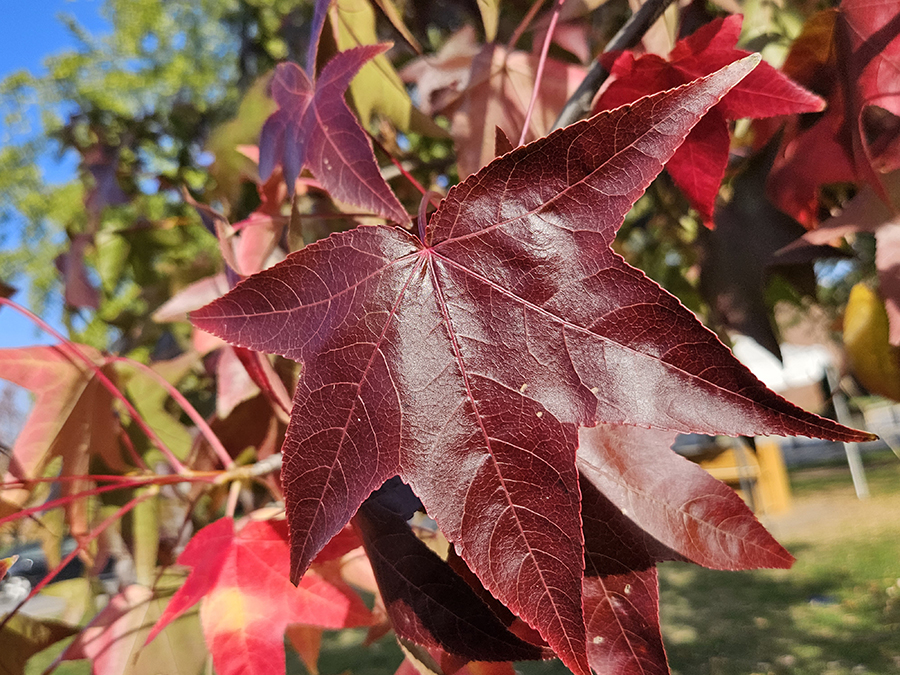
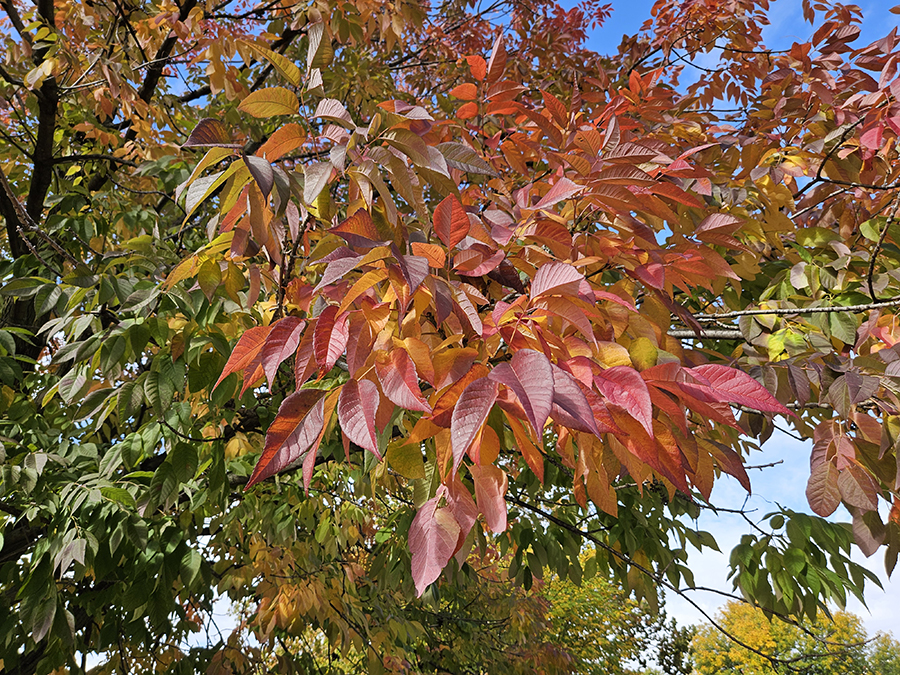
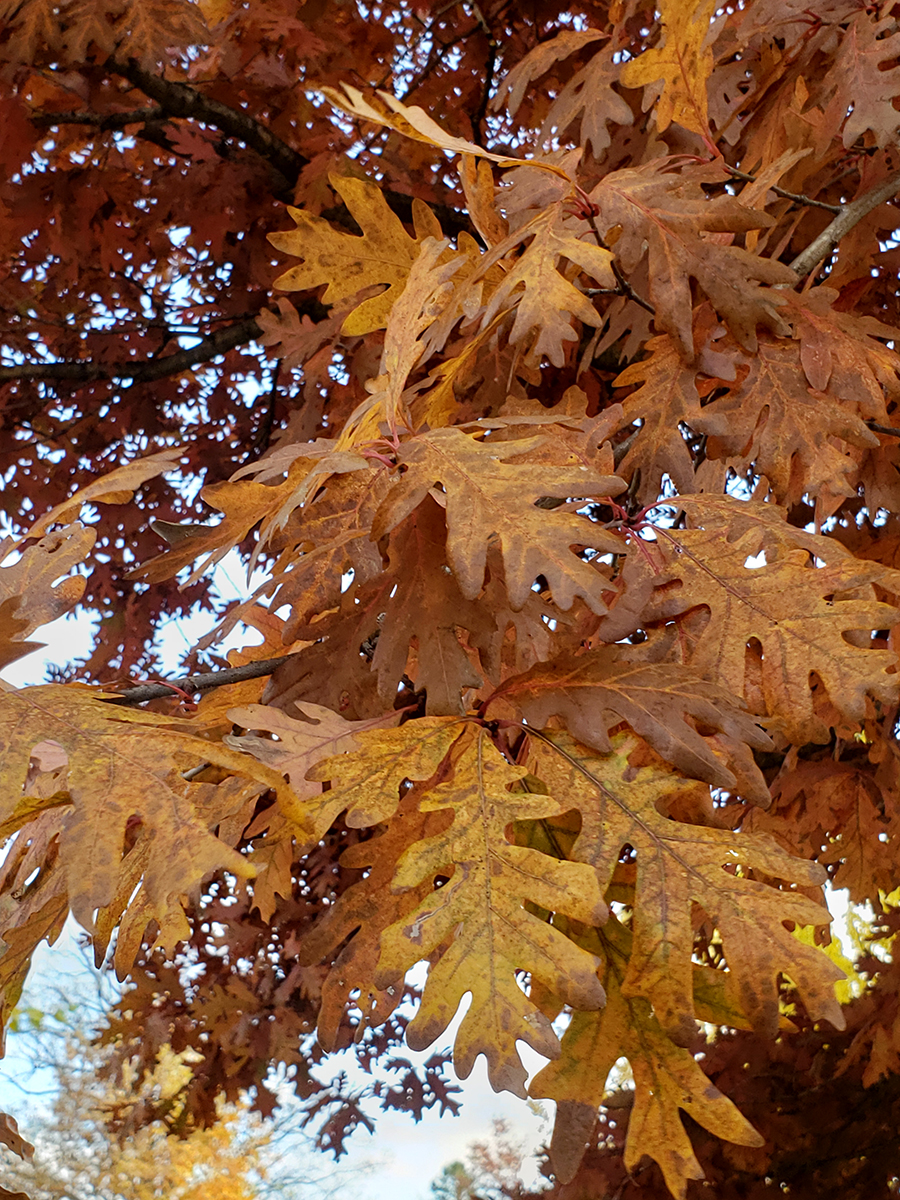
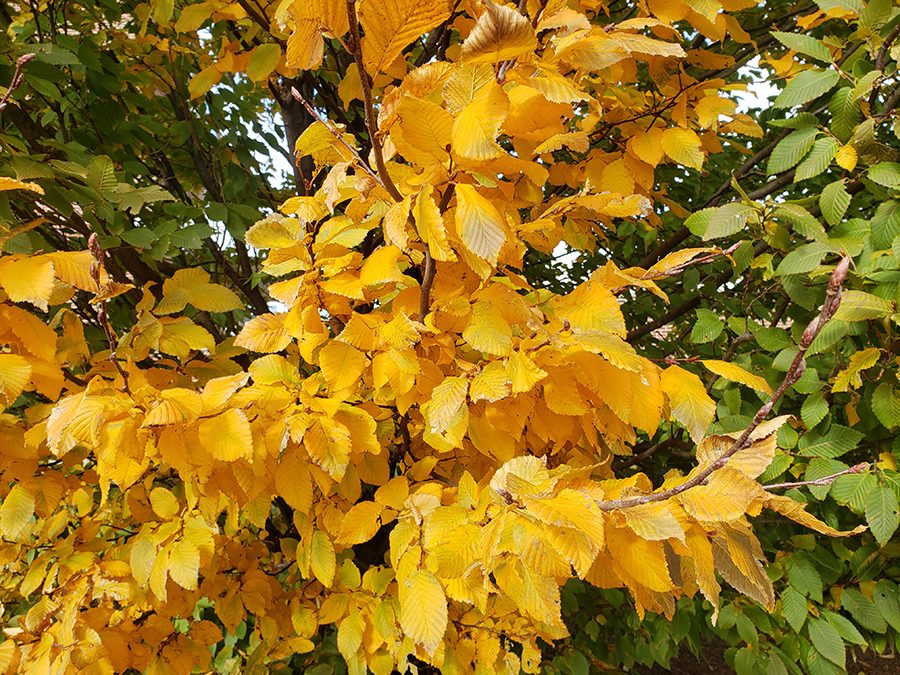
Fall Foliage by Tree Species (click on the image to expand)



Resources:
Indiana Fall Foliage Map, Explore Fall
Why Fall Color is Sometimes a Dud, Purdue Landscape Report
U.S. Forest Service Website and Hotline, Highlight Fall Colors on National Forests
ID That Tree Fall Color: Sugar Maple, Purdue Extension – Forestry and Natural Resources YouTube Channel, ID That Tree Playlist
ID That Tree Fall Color Edition: Black Gum, Purdue Extension – FNR YouTube Channel, ID That Tree Playlist
ID That Tree Fall Color Edition: Shagbark Hickory, Purdue Extension – FNR YouTube Channel, ID That Tree Playlist
ID That Tree Fall Color Edition: Virginia Creeper, Purdue Extension – FNR YouTube Channel, ID That Tree Playlist
ID That Tree Fall Color Edition: Winged Sumac, Purdue Extension – FNR YouTube Channel, ID That Tree Playlist
Autumn Highlights Tour – South Campus, Purdue Arboretum Explorer
Why Leaves Change Color – the Physiological Basis, The Education Store, Purdue Extension resource center
ID That Tree, Playlist, Subscribe to Purdue Extension – Forestry and Natural Resources YouTube Channel
Lenny Farlee, Extension Forester
Purdue University Department of Forestry and Natural Resources
Hardwood Tree Improvement & Regeneration Center (HTIRC)
 Wild Bulletin, Indiana Department of Natural Resources (DNR) Fish and Wildlife: Instead of raking and bagging leaves this fall, consider allowing them to stay and naturally decay. Fallen leaves, plant stems, flower heads, twigs, and logs provide crucial winter habitat for Indiana’s wildlife.
The warmth and cover of leaves provide shelter for Eastern box turtles, salamanders and frogs, as well as insulation for butterflies and moths. Leaf piles can even benefit landscaping, as they can suppress weeds, retain moisture, and add nutrients to the soil as they decay. Leaves don’t have to be left exactly where they fall—you can rake them into flower beds and around tree bases.
For more information about creating habitat for wildlife in your backyard, visit the DNR website and the Wildlife Habitat Fact Sheet.
Resources:
Frost Seeding to Establish Wildlife Food Plots and Native Grass and Forb Plantings – The Education Store, Purdue Extension’s resource center
Wildlife Habitat Hint: Tips for Evaluating a First Year Native Grass and Forb Plantings, Purdue Extension – FNR YouTube Channel
Drone Seeding Native Grasses and Forbs: Project Overview & Drone Setup, Purdue Extension – FNR YouTube channel
Forest Improvement Handbook, The Education Store
Ordering Seedlings from the State Forest Nursery System, Got Nature? – Purdue Extension-Forestry & Natural Resources (FNR)
Designing Hardwood Tree Plantings for Wildlife – The Education Store
ID That Tree – YouTube Playlist
Forest Management for Reptiles and Amphibians: A Technical Guide for the Midwest, The Education Store
Ask the Expert: Hardwood Ecosystem Experiment – Birds and Salamander Research, Purdue Extension – FNR
A Template for Your Wildlife Habitat Management Plan, The Education Store
Managing Your Woods for White-Tailed Deer, The Education Store
Woodland Stewardship for Landowners, Playlist, Purdue Extension – FNR YouTube channel
Nature of Teaching Unit 1: Animal Diversity and Tracking, The Education Store
Subscribe Purdue Extension – Forestry and Natural Resources YouTube Channel, Playlists include wildlife, Nature of Teaching, Moments in the Wild and much more.
Indiana Department of Natural Resources – Division of Fish & Wildlife
In this edition of ID That Tree, Purdue Extension forester Lenny Farlee takes us through the different characteristics of Hoptree, a relatively common shrub here in Indiana. This is a unique native plant with three-part leaves and hop-like seed pods. Also called Wafer Ash due to its distinctive wafer-shaped seeds, this shrub can often be confused with Poison Ivy or Bladdernut, so be sure to pay attention to key differences in the video. Features include trifoliate leaves and the temperate areas in which it grows.
If you have any questions regarding wildlife, trees, forest management, wood products, natural resource planning or other natural resource topics, feel free to contact us by using our Ask an Expert web page.
Resources:
ID That Tree: Firs and Spruces, Video Playlist, Purdue Extension – Forestry and Natural Resources (FNR) YouTube Channel
ID That Tree – Jack Pine, Scotch Pine, Red Pine, Virginia Pine, Eastern White Pine, Video Playlist, Purdue Extension – Forestry and Natural Resources (FNR) YouTube Channel
Beat Back Borers Attacking Pines and Other Cone Bearing Trees, Purdue Landscape Report
Tree Diseases: White Pine Decline in Indiana, The Education Store, Purdue Extension Resource Center
Purdue Arboretum Explorer
Conservation Tree Planting: Steps to Success, Purdue Extension – FNR YouTube Channel
A Woodland Management Moment, Playlist, Purdue Extension – FNR YouTube Channel
Woodland Stewardship for Landowners, Playlist, Purdue Extension – FNR YouTube Channel
Indiana Department of Natural Resources: Invasive Species
Indiana Invasive Species Council
Cooperative Invasive Species Management Area (CISMA)
Report Invasive, Purdue Extension
Episode 11 – Exploring the challenges of Invasive Species, Habitat University-Natural Resource University
Shrubs and Woody Vines of Indiana and the Midwest, The Education Store
Native Trees of the Midwest, The Education Store
Professional Forester, Indiana Forestry Woodland Owners Association
Forest Improvement Handbook, The Education Store
Find an Arborist, International Society of Arboriculture
Lenny Farlee, Extension Forester
Hardwood Tree Improvement and Regeneration Center
Purdue Department of Forestry & Natural Resources
In this edition of ID That Tree, Purdue Extension forester Lenny Farlee takes us through the different characteristics of coniferous trees found here in Indiana, particularly their foliage and the features that pertain to them. Come along as we look through real examples of shape, scales, leaf and branches of various local trees. The featured species include Eastern red cedarwood, Northern white cedar, and more.
If you have any questions regarding wildlife, trees, forest management, wood products, natural resource planning or other natural resource topics, feel free to contact us by using our Ask an Expert web page.
Resources:
ID That Tree: Firs and Spruces, Video Playlist, Purdue Extension – Forestry and Natural Resources (FNR) YouTube Channel
ID That Tree – Jack Pine, Scotch Pine, Red Pine, Virginia Pine, Eastern White Pine, Video Playlist, Purdue Extension – Forestry and Natural Resources (FNR) YouTube Channel
Beat Back Borers Attacking Pines and Other Cone Bearing Trees, Purdue Landscape Report
Tree Diseases: White Pine Decline in Indiana, The Education Store, Purdue Extension Resource Center
Purdue Arboretum Explorer
Conservation Tree Planting: Steps to Success, Purdue Extension – FNR YouTube Channel
A Woodland Management Moment, Playlist, Purdue Extension – FNR YouTube Channel
Woodland Stewardship for Landowners, Playlist, Purdue Extension – FNR YouTube Channel
Indiana Department of Natural Resources: Invasive Species
Indiana Invasive Species Council
Cooperative Invasive Species Management Area (CISMA)
Report Invasive, Purdue Extension
Episode 11 – Exploring the challenges of Invasive Species, Habitat University-Natural Resource University
Shrubs and Woody Vines of Indiana and the Midwest, The Education Store
Native Trees of the Midwest, The Education Store
Professional Forester, Indiana Forestry Woodland Owners Association
Forest Improvement Handbook, The Education Store
Find an Arborist, International Society of Arboriculture
Lenny Farlee, Extension Forester
Hardwood Tree Improvement and Regeneration Center
Purdue Department of Forestry & Natural Resources
In this edition of ID That Tree, Purdue Extension forester Lenny Farlee goes over leaf characteristics to look for when attempting to identify broadleaved deciduous trees in Indiana. He shares the features of both single and compound leaves while outlining the differences between tree leaves. He takes you through a thorough guide on analyzing the leaflets, leaves, stems and buds, while increasing your knowledge of your surroundings.
If you have any questions regarding wildlife, trees, forest management, wood products, natural resource planning or other natural resource topics, feel free to contact us by using our Ask an Expert web page.
Resources:
ID That Tree – Jack Pine, Scotch Pine, Red Pine, Virginia Pine, Eastern White Pine, Video Playlist, Purdue Extension – Forestry and Natural Resources (FNR) YouTube Channel
Beat Back Borers Attacking Pines and Other Cone Bearing Trees, Purdue Landscape Report
Tree Diseases: White Pine Decline in Indiana, The Education Store, Purdue Extension Resource Center
Purdue Arboretum Explorer
Conservation Tree Planting: Steps to Success, Purdue Extension – FNR YouTube Channel
A Woodland Management Moment, Playlist, Purdue Extension – FNR YouTube Channel
Woodland Stewardship for Landowners, Playlist, Purdue Extension – FNR YouTube Channel
Indiana Department of Natural Resources: Invasive Species
Indiana Invasive Species Council
Cooperative Invasive Species Management Area (CISMA)
Report Invasive, Purdue Extension
Episode 11 – Exploring the challenges of Invasive Species, Habitat University-Natural Resource University
Shrubs and Woody Vines of Indiana and the Midwest, The Education Store
Native Trees of the Midwest, The Education Store
Professional Forester, Indiana Forestry Woodland Owners Association
Forest Improvement Handbook, The Education Store
Lenny Farlee, Extension Forester
Hardwood Tree Improvement and Regeneration Center
Purdue Department of Forestry & Natural Resources
Question: Often ginkgo trees will drop all of their leaves on a single day after a cold night. I thought that was going to be Monday at Purdue (left: leaves falling). But no, we’re at Wednesday now (right) and this one changed its mind. Anyone know how common that is?
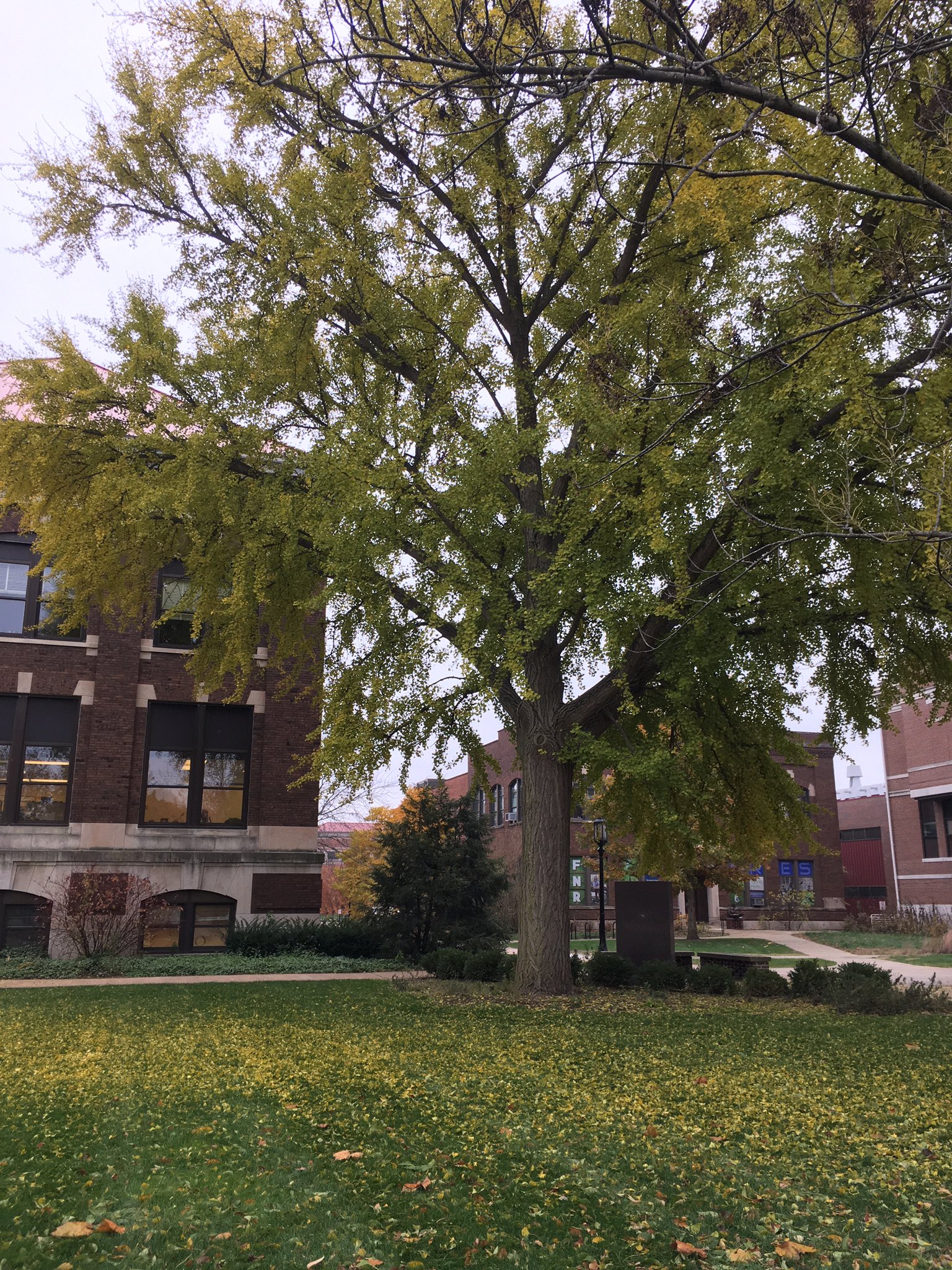
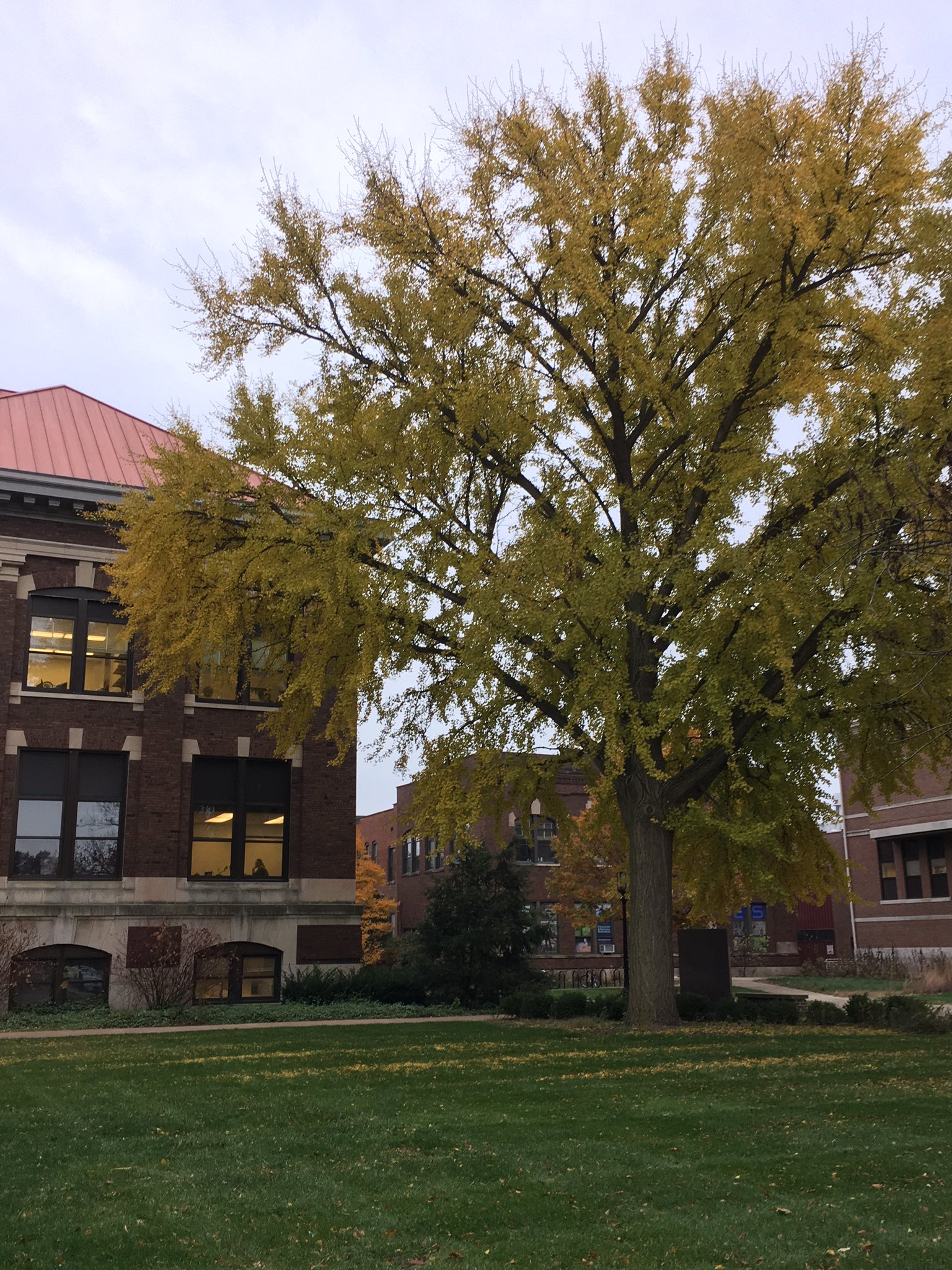
Answer: It was a very peculiar fall. The overall leaf drop was one to two weeks later than normal at least. An October with weather more like September has likely had some impact on this. Individual trees will vary some on their leaf drop timing, probably due to their geographic origin (for planted trees) and individual genetic variation. The severity and timing of frost/freeze also influences strongly. As you can see, lots of variables!
Leaf drop is not solely dependent on temperatures. There is a process of dormancy the tree follows to properly acclimate in preparation for winter. One of these is leaf drop, but it must go through the process of developing an abscission layer between the petiole base and branch. Most likely, the tree didn’t drop leaves yet because this separation layer of chemicals hasn’t fully responded yet. We often see frozen leaves on a tree and later they fall, but this is the result of sudden extreme cold ahead of proper dormancy routines.
Resources:
Fall Color Pigments, Purdue Extension YouTube Channel
Why Leaves Change Color – The Physiological Basis,
Oak Wilt in Indiana, Purdue Landscape Report
Dog Days of Summer Barking Early This Year, Purdue Landscape Report
Tulip Poplar Summer Leaf Drop, Purdue Landscape Report
Be on the Lookout for Defoliated Viburnums and Viburnum Leaf Beetle, Purdue Landscape Report
Will my Trees Recover After Losing Their Leaves?, Purdue Landscape Report
What Do Trees Do in the Winter?, Purdue Landscape Report
Why Fall Color is Sometimes a Dud, Purdue Landscape Report
Alternatives to Burning Bush For Fall Color, Purdue Landscape Report
Start Preparing Trees for Winter and Next Year, Purdue Landscape Report
ID That Tree Winter Edition: Opposite Leaf Arrangement – Ohio buckeye, Red Maple, Purdue Extension YouTube Channel
ID That Tree Winter Edition: Alternate Leaf Arrangement – Black Walnut, Eastern Cottonwood, Purdue Extension YouTube Channel
ID That Tree Winter Edition: Alternate Leaf Arrangement – Honey Locust, Burr Oak, Purdue Extension YouTube Channel
Lenny Farlee, Sustaining Hardwood Extension Specialist
Purdue University Department of Forestry and Natural Resources
Lindsey Purcell, Urban Forestry Specialist
Purdue University Department of Forestry and Natural Resources
Trees offer many functional and aesthetic benefits, but one of the most common is shade. Because of this, one of the most important aspects of tree selection and planting is placement. Improper placement of trees can diminish the value of the tree on the site. The tree can actually become a liability if it conflicts with infrastructure or just does not providing any useful function at all. It’s important to consider and energy efficient design to obtain shade where it’s needed most such as south or west facing structures.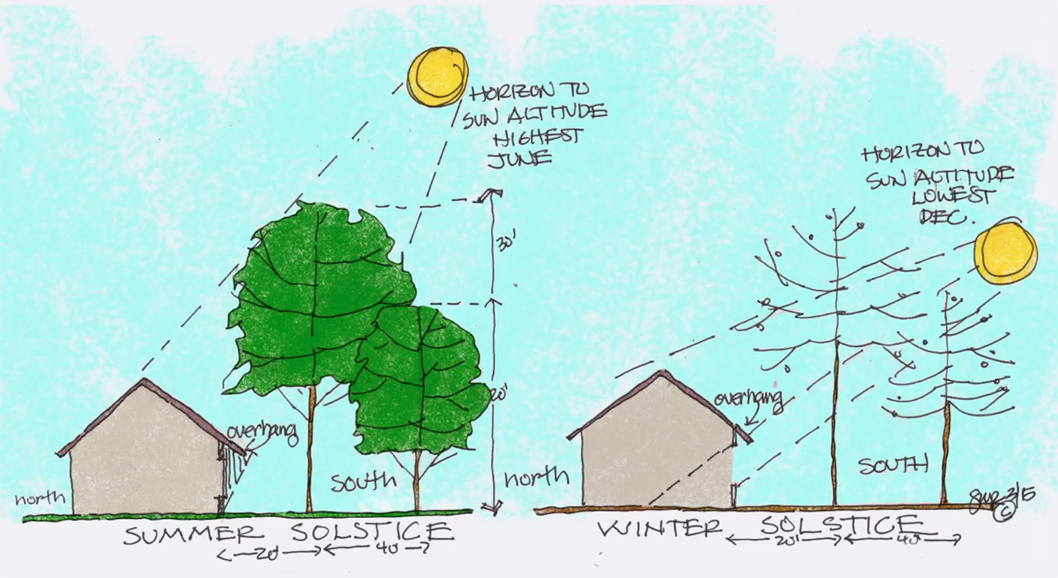
In this hemisphere, the sun is in the south and the source of cold weather is in the north. Whenever possible, place openings for sunlight and radiant heat primarily on the southern exposure, then on the west and east. For energy efficiency in winter, use the low arc of the sun to capture the maximum amount of warmth through east-, west-, and south-facing windows. Windows with a northern exposure are a source of cool air from prevailing winds during the hot months. So, give the north minimum exposure and maximum natural protection in the winter.
When selecting trees for energy efficiency, don’t plant evergreen trees near the house on southern exposures. Trees may provide some shade and screening but will also block out the warming effects of the sun during winter months. When choosing trees for shade and solar gain, choose larger, deciduous-canopy trees, which provide an advantage year-round. This means shade in the summer, blocking the sun’s energy. In the winter, after leaves have dropped, the sun’s energy can pass through the tree and into the window.
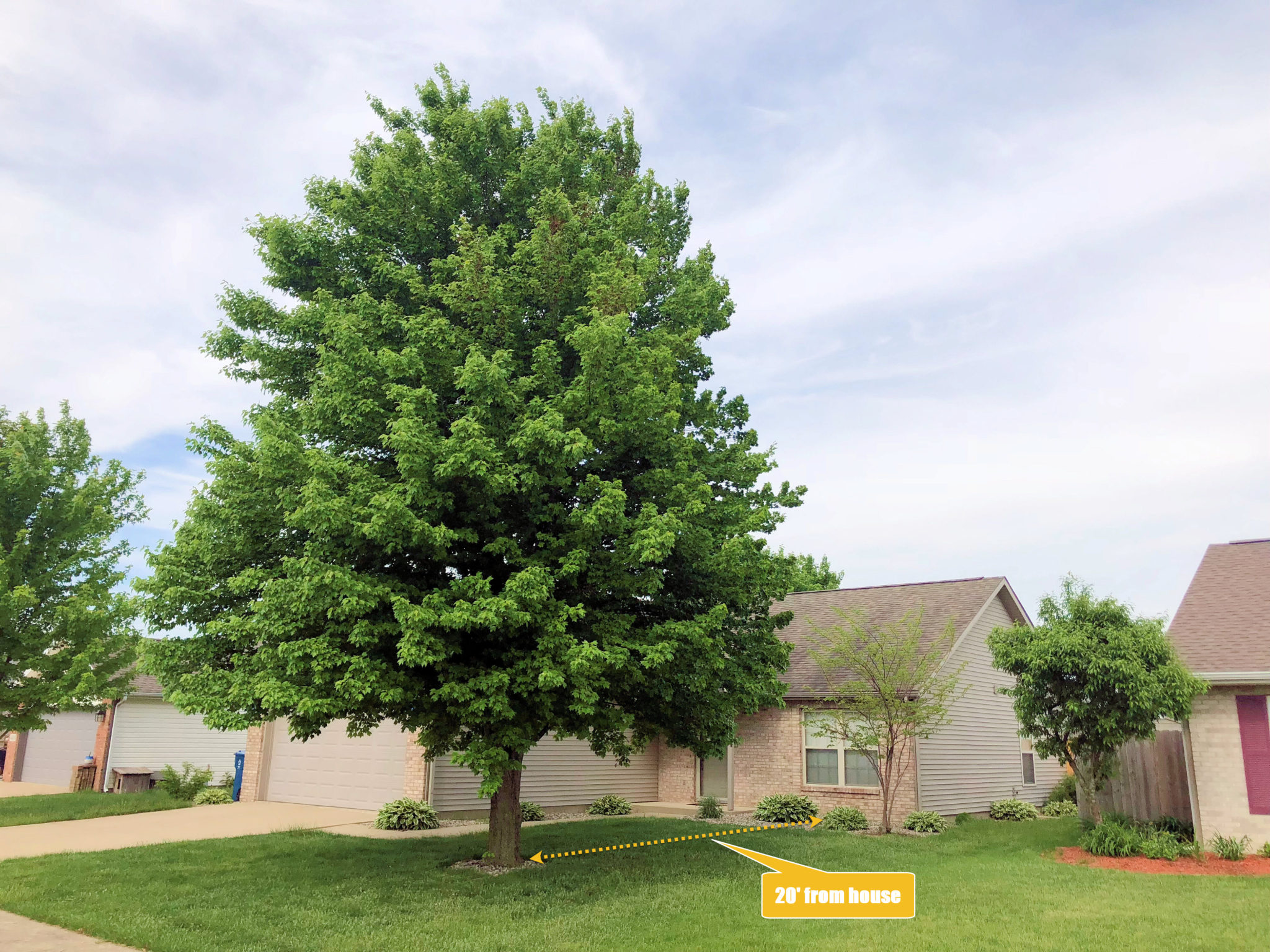
Figure 1. Protection from the summer sun.
Select good quality trees from a reputable source that are suitable for your location. The old adage, “you get what you pay for” goes for nursery stock as well. Correct placement is critical for an energy-efficient design and reduced maintenance as the tree grows and matures. Be certain the mature height and spread fit the location before purchase and planting the tree. This allows the tree freedom to spread into the design space naturally without excessive pruning needed to prevent conflicts with the home. However, the tree still must be close enough to the house for the canopy to provide shade. A good rule of thumb to begin placing the tree at least 20 feet from the house. For larger shade trees, you may need to plant as far as 40 feet from the house to insure room for growth (Figure 1).
Trees provide many benefits besides shade which includes cleaner air and increased property values. These ecosystem services are the reason why we plant trees, besides beautifying our landscape.
The functional benefits of shading help make homes energy-efficient by creating a cooling effect during the hot summer months and by allowing passive solar gain during cold winter months. However, proper selection and placement is critical to make the tree work for your site. Choose wisely, plant properly.
Full article from Purdue Landscape Report.
Resources:
Tree Selection for the “Un-natural” Environment, The Education Store – Purdue Extension resource center
Planting Your Tree Part 1: Choosing Your Tree (Youtube video), Purdue Extension-FNR
Tree Installation: Process and Practices , The Education Store
Tree Planting Part 2: Planting a Tree (Youtube video), Purdue Extension-FNR
Top 5 List for Tree Selection and Planting, Got Nature?, Purdue Extension-FNR
Lindsey Purcell, Urban Forestry Specialist
Purdue University, Department of Forestry and Natural Resources
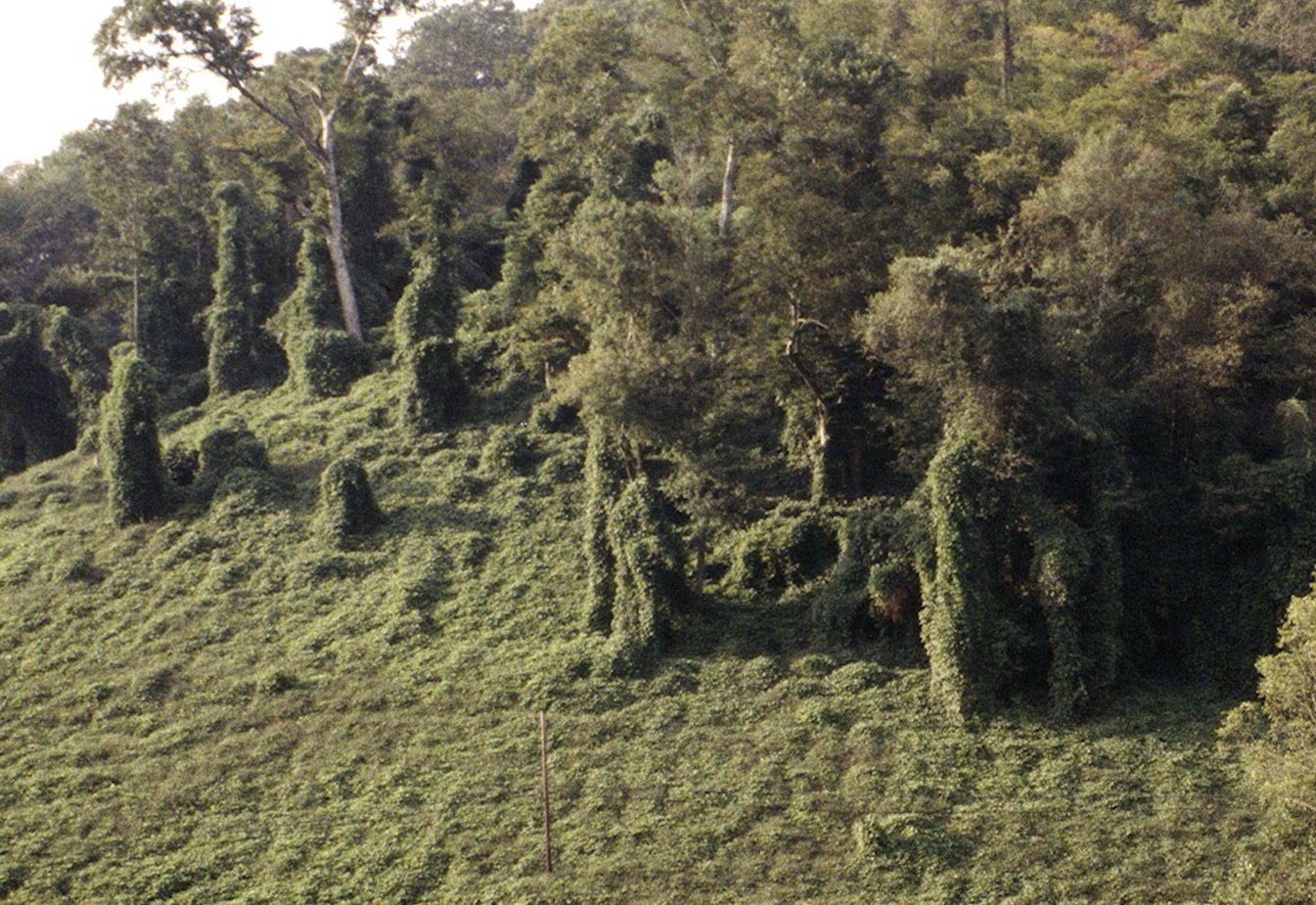
(Figure 1) Mile-a-minute vine grows more than 25 feet in height in one growing season, overtopping shrubs, small trees and growing up forest edges. Image by: USDA APHIS PPQ Archive, USDA APHIS PPQ, Bugwood.org
Preventing the establishment of new invasive species is priority number one and the best expenditure of limited resources in an invasive species management program. Next in priority is early detection of and rapid response (EDRR) to the first report of a new invasion. Stopping invasive species from entering or, next best, at their initial point of introduction saves the incalculable costs later-on associated with rapidly spreading, all-consuming invasive species populations. The verification of a report of mile-a-minute vine (Persicaria perfoliata) on a property in Monroe County, Indiana on May 14, 2018 sets a historical precedence demonstrating a growing capability of detecting and reporting new invaders. The population was very small at this spot and had apparently been sprayed by a homeowner with herbicide, not necessarily to kill the mile-a-minute, but likely to kill the companion multiflora rose.
Our hope is that this is the only instance of mile-a-minute vine in Indiana. There is a significant probability that it is not! In the coming months, a more thorough survey of this property and surrounding area will be conducted to look for more of the vine. But now Indiana stands on high alert as natural resource professionals keep a look out for more of this highly-invasive pest. However, there are too few professionals with eyes on the landscape. The more eyes trained to identify the very distinct characteristics of mile-a-minute, the higher the chance of us catching it before it explodes across the landscape, wreaking havoc and mayhem in our forests and fields, wildlife habitat and mushroom hunting and birding grounds.

(Figure 2) The leaves are simple, alternate, light green and a nearly perfect triangle shape. Image by: Leslie J. Mehrhoff, University of Connecticut, Bugwood.org
All landowners, land stewards, and nature lovers are needed to be additional eyes looking for this insidious threat this summer and in coming years. Please take a moment to learn its identifying characteristics. If you think you have found it, please report it on EDDMapS (Early Detection & Distribution Mapping System) or from your smart phone on the GLEDN (Great Lakes Early Detection Network) app. If you are unsure if you are correctly identifying it, please contact a forester or other natural resource professional for confirmation or just report it in EDDMapS or the GLEDN app, along with photos, and a professional in your area will verify its identification before it actually gets posted.
Mile-a-minute identification:
Mile-a-minute vine is a member of the buckwheat family, Polygonaceae. Although its common name exaggerates its growth potential, this annual vine can grow as much as 6 inches a day and can reach heights of more than 25 feet within the growing season. It forms very dense, tangled mats, growing over shrubs, small trees and up the sides of forest edges (Fig. 1). The leaves are simple, alternate, light green and a nearly perfect triangle shape (Fig. 2). The delicately narrow, green to red-tinted stems, and the petiole (leaf stem) and midrib on the underside of the leaves are armed with small, stiff, recurved barbs (Fig. 3). Small, cup- or saucer-shaped leaf structures, called ocreae, encircle the stem at each node (Fig. 4). Clusters of small white, rather inconspicuous, flowers emerge from the ocreae. Flowers develop into clusters of deep, iridescent blue berry-like fruits, approximately 5 mm in diameter, each fruit containing a single black or reddish-black hard seed, called an achene. Seeds are dispersed by birds and mammals, including chipmunks, squirrels and deer, which eat the fruit. Floodwaters facilitate long distance dispersal of seed.
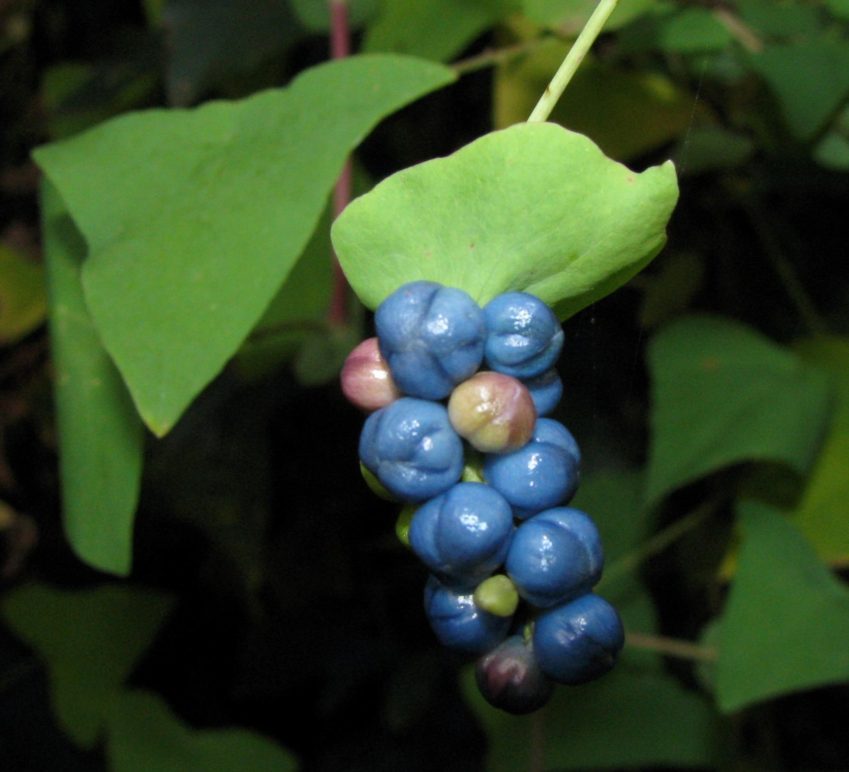
(Figure 4) Small, cup- or saucer-shaped leaf structures, called ocreae, encircle the stem at each node. Flowers emerge from the ocreae and develop into clusters of deep, iridescent blueberry like fruits. Image by: Leslie J. Mehrhoff, University of Connecticut, Bugwood.org
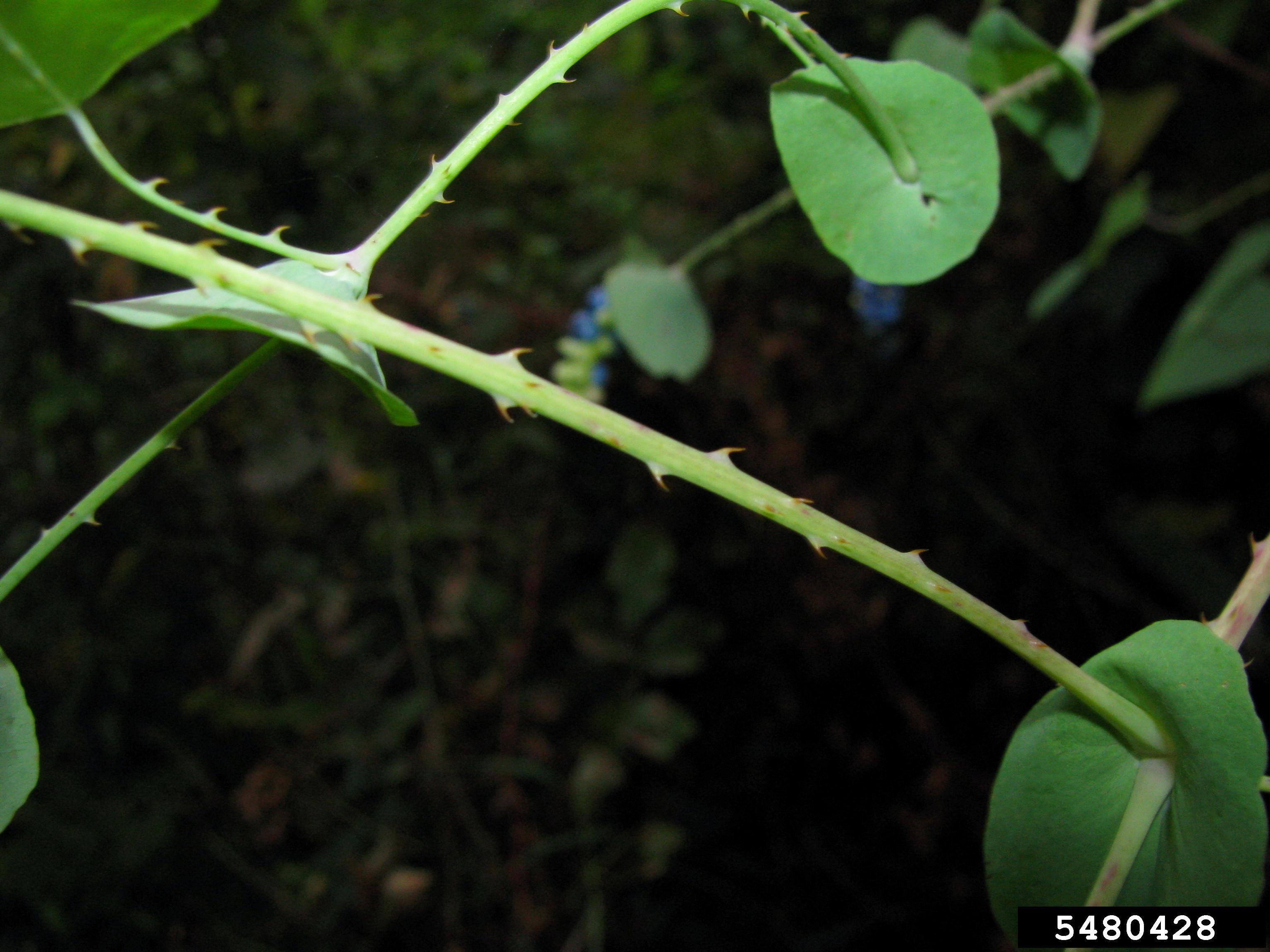
(Figure 3) The delicately narrow, green to red-tinted stems, and the petiole (leaf stem) and midrib on the underside of the leaves are armed with small, stiff, recurved barbs. Image by: Leslie J. Mehrhoff, University of Connecticut, Bugwood.org
Resources:
Mile-a-Minute Vine, FNR-481-W, The Education Store, Purdue Extension’s resource center
Mile-a-minute vine: What you need to know about the plant that can grow 6 inches a day, Indianapolis Star
Invasive Species – Indiana Department of Natural Resources (IDNR)
Ask an Expert – Purdue Extension-Forestry and Natural Resources
Indiana Invasive Species Council – Includes: IDNR, Purdue Department of Entomology and Professional Partners
EDDMaps – Early Detection and Distribution Mapping System
Report Invasives, College of Agriculture
Great Lakes Early Detection Network App (GLEDN) – The Center for Invasive Species & Ecosystem Health
Ron Rathfon, Regional Extension Forester SIPAC
Purdue Department of Forestry and Natural Resources
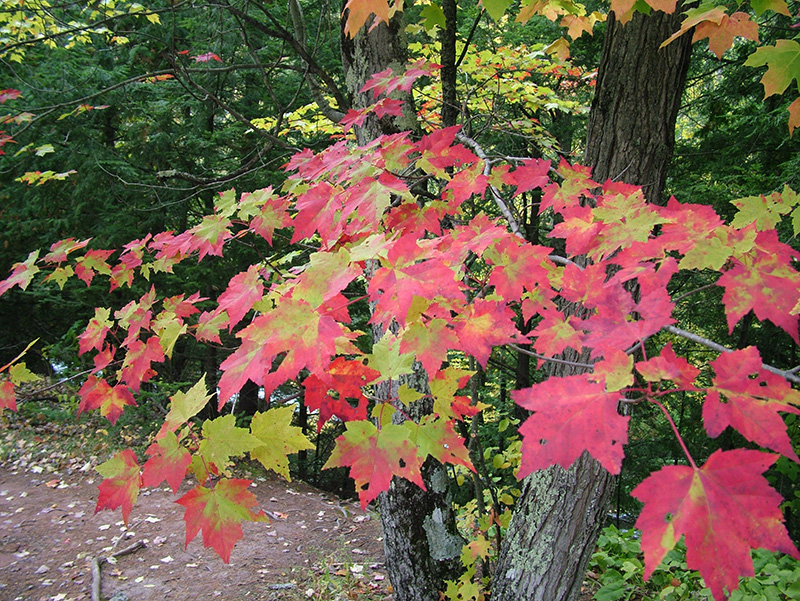
Red maple tree with leaves turning red in fall. Photo by: Lenny Farlee
The calendar flipping over to October is a reminder the annual Autumn leaf color display is on its way. The perennial question is “how will the color be this year?” Predicting the quality of the fall display requires weighing several factors that may vary over time and across the landscape. In general, Indiana started the growing season wet and is ending it dry. The good growing conditions early this year have produced abundant leaf area on many trees. As we have dried out late in the season, some trees are experiencing stress that may cause leaves to turn color and drop early, or to simply turn brown. Drought may also delay the color change by a week or more in some cases. Leaves that were attacked by insects or disease may also drop early or provide very little color. I noticed Japanese beetles seemed to be more active than normal this year, skeletonizing leaves on preferred plants like linden and Virginia creeper. Local weather patterns can also influence color intensity in a positive way. Sunny days and cool nights late in the summer and early fall can enhance the production of anthocyanin – a pigment produced in some trees that provides bright red, maroon and purple tones to the fall color palate.

Hop hornbeam tree with yellow fall leaves. Photo by: Lenny Farlee.
This brings us to another variable: different species of trees may produce different colors, timing, and duration of fall color. Some species like sassafras, sumac, black and sweet gum, and sugar and red maple are famous for bright fall color. Some species like elms, buckeye and walnut may simply turn brown or drop early with little color display. Different individual trees may also vary due to genetic differences, growing conditions and tree health. For example, some sugar maple located in open areas or on the edge of a woodlot, receiving lots of sunlight, may regularly produce vibrant oranges and reds, while nearby sugar maple in the shade of the forest will turn a subdued yellow, lacking the sugar reserves produced by their neighbors in the sun.
Leaf color change is also the result of a very predictable process based on the longer night period as summer slips into fall. The production of green chlorophyll pigments slows and finally stops as the nights become longer and cooler, exposing the yellows and oranges of carotenoids and reds and maroons of anthocyanins. This process also starts forming a zone of separation between the leaf and branch that ultimately brings the leaves to the ground, often with the help of wind and rain.
My best answer to those asking for a fall color prediction is another set of questions: how was your weather, what species of trees do you have, and how much sunlight do they receive?
Resources:
Why Leaves Change Color, The Education Store, Purdue Extension
Why Leaves Change Color, USDA Forest Service, Northeastern Area
Fifty Common Trees of Indiana
An Introduction to Trees of Indiana
Native Trees of the Midwest, The Education Store
Shrubs of Indiana CD: Their Identification and Uses, The Education Store
Shrubs and Woody Vines of Indiana and the Midwest, The Education Store
Trees of Indiana CD, The Education Store
Lenny Farlee, Sustaining Hardwood Extension Specialist
Purdue Department of Forestry and Natural Resources
In Tennessee, magnolia and the highly invasive ornamental pear trees are in full bloom. In New Jersey, crocuses and buttercups are vibrant spectacles of color. Here in Indiana, flowering dogwood, pawpaw, and red oak have responded to an early spring with a burst of blooms as well. This vibrant display is the result of a mild winter. Unfortunately, there is a downside. A sudden cold freeze after this swathe of warm weather could severely damage blossoms, buds, and significantly reduce yields in fruit and nut trees.
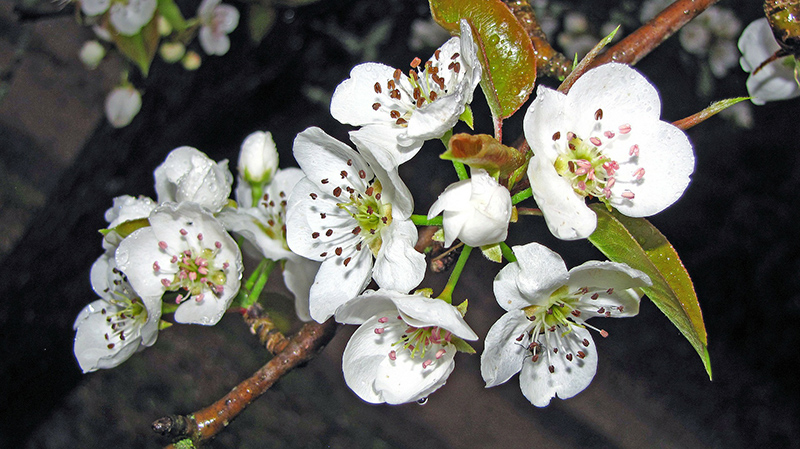
Blooms on pear tree.
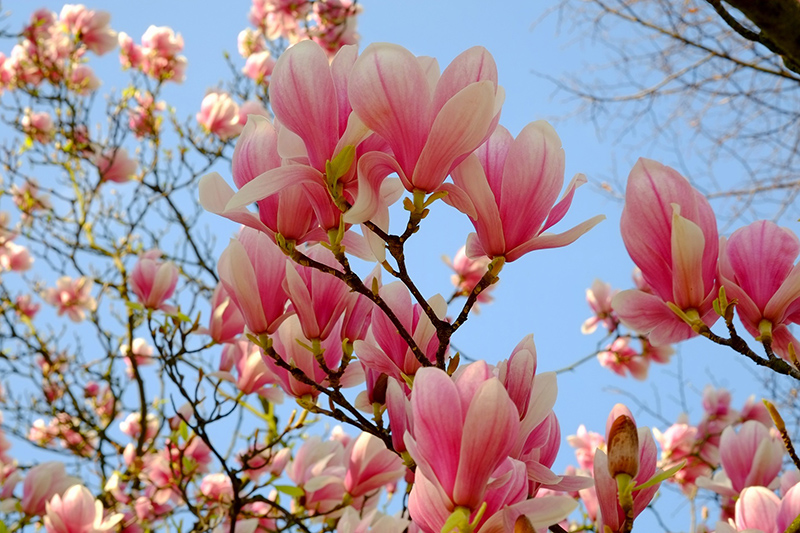
Blooms on magnolia tree.
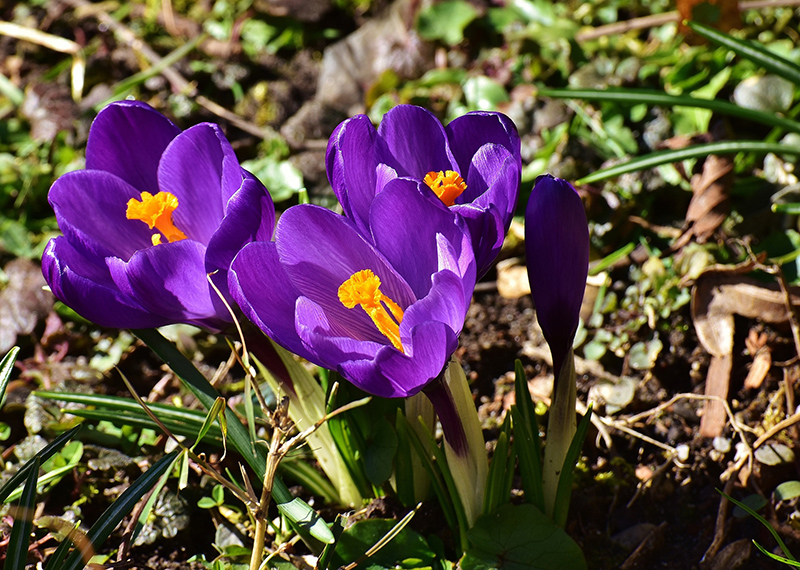
Crocus blooms.
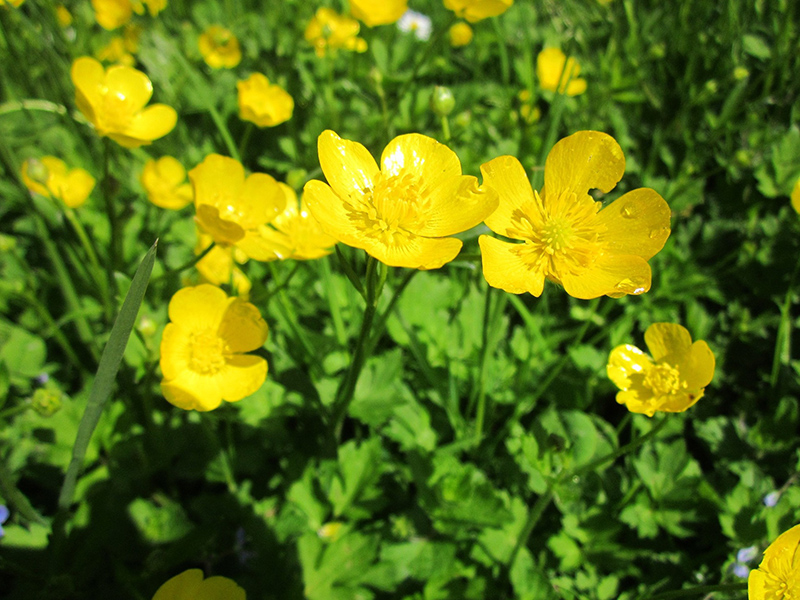
Buttercup blooms.
Growth of a tree or flower is the result of the weather and the perpetuation of its natural growth cycle. To store sufficient resources for the following year, trees use the winter season as an opportunity to shuttle nutrients to their roots. With cold temperatures keeping pests at bay, fewer nutrient resources are needed for defense and maintenance. These nutrients will be shuttled to the branches the following spring to support the growth of buds and blossoms. Interruption in the storage process caused by early spring conditions interferes with nutrient supplies and kickstarts the growing cycle again.
Nutrients once slated for root storage are now being sent to the branches to begin fruit and bud production despite having fewer resources in storage than usual. A freeze that occurs after leaves and buds begin to appear will damage the new growth and likely delay flowering and fruiting until much later in the year when surfeit energy is available to support a second growth effort. While trees are usually able to leaf out a second time, there are often more issues with low yield and early leaf drop.
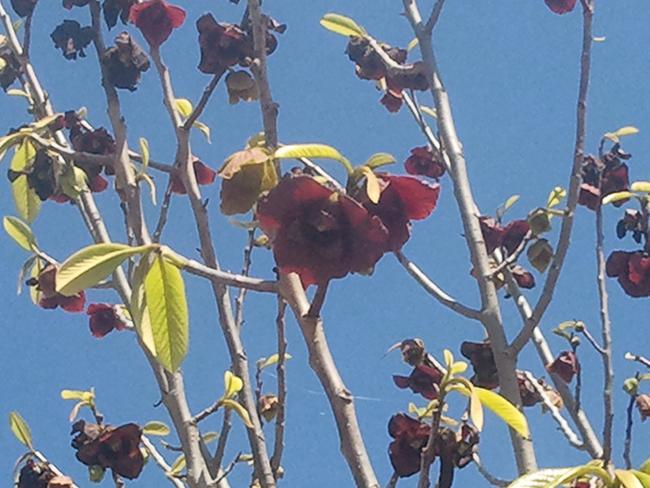
Pawpaw
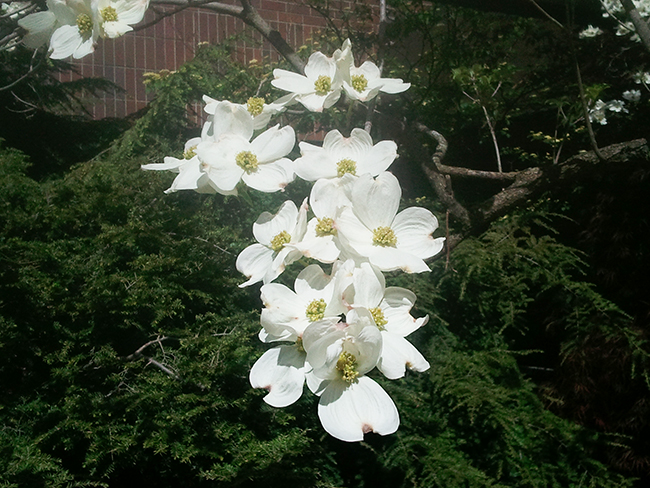
Dogwood
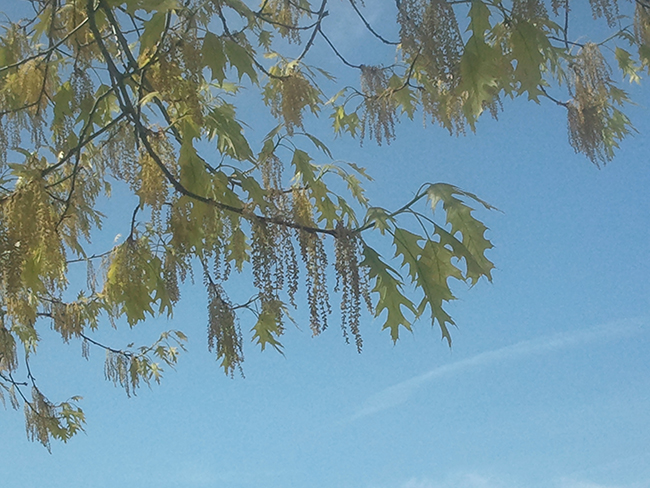
Red oak
Also, insect pests, usually subdued by cold winter temperatures are likely to be out much earlier than usual and with greater numbers. This increase in insect presence does not necessarily bode well for plant pollinator populations. If, for example, a tree flowers earlier than honeybee populations are available, then it is possible that those trees will go unpollinated. Also, if other pollinators are also unavailable, there will be no fruits the following year on that tree.
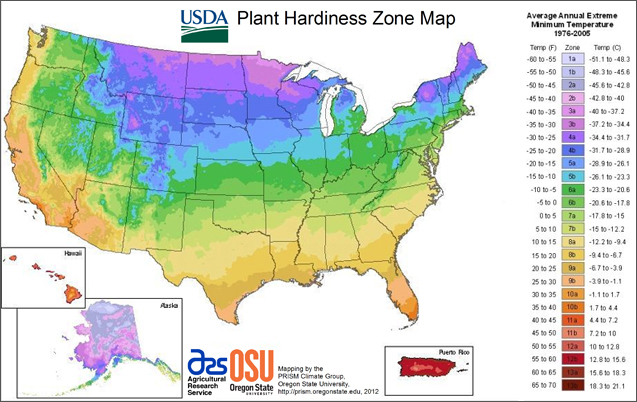
USDA Plant Hardiness Zone Map. Agricultural Research Service, U.S. Department of Agriculture, planthardiness.ars.usda.gov.
Ultimately, the state of our seed, fruit, and nut production depends on two major events; pollination and lack of a cold freeze. If we see a sudden cold snap that damages the trees and eliminates pollinators, then next spring will be a time of sorrow rather than an exciting start to the growing season. The dramatic shifts in weather temperatures over the last decade have led the Department of Agriculture to reevaluate and reassess plant hardiness zones. For the first time in thirty years, an updated map with new zones has now been created, USDA Plant Hardiness Zone Map.
Resources:
Purdue Plant Doctor App, Purdue Extension
Purdue Plant and Pest Diagnostic Laboratory, Purdue Agriculture
Planting & Transplanting Landscape Trees and Shrubs, The Education Store, Purdue Extension resource center
Tree Planting Part 1: Choosing a Tree – video, The Education Store
Tree Installation: Process and Practices, The Education Store
Shaneka Lawson, USDA Forest Service/HTIRC Research Plant Physiologist/Adjunct Assistant Professor
Purdue University Department of Forestry and Natural Resources
Lenny Farlee, Sustaining Hardwood Extension Specialist
Purdue Department of Forestry and Natural Resources

Recent Posts
- Spotted Lanternfly Feeds on Over 70 Plus Plant Species
Posted: May 20, 2026 in Alert, Forestry, Forests and Street Trees, Gardening, Invasive Insects, Urban Forestry, Wildlife - Painted Hickory Borer, Purdue Landscape Report
Posted: May 14, 2026 in Forestry, Invasive Insects, Wildlife - Saving Giants of the Blue River: Purdue Team Earns Statewide Recognition
Posted: in Aquaculture/Fish, Aquatic/Aquaculture Resources, Wildlife - Restoring Roots to Save the Salamanders, USDA – Natural Resources Conservation Service
Posted: May 6, 2026 in Aquaculture/Fish, Forestry, Wildlife - Spring Storms Are Coming: How to Reduce Tree Damage and Risk
Posted: May 1, 2026 in How To, Urban Forestry, Wildlife, Woodlands - Cryptocline Leaf Spot (Anthracnose) of Elm, Purdue Landscape Report
Posted: April 30, 2026 in Disease, Forestry, Woodlands - Mechanical Damage to Trees: Mowing and Maintenance Equipment
Posted: April 24, 2026 in Forestry, Forests and Street Trees, Urban Forestry - A Woodland Management Moment: Growing Quality Black Walnut in Openings
Posted: April 20, 2026 in Urban Forestry, Woodland Management Moment, Woodlands - Spring Into Bloom With ID That Tree
Posted: in Forests and Street Trees, Urban Forestry, Woodlands - Question: Have Whippoorwill Birds Declined in Numbers?
Posted: in Ask the Expert, Wildlife
Archives
Categories
- Alert
- Aquaculture/Fish
- Aquatic/Aquaculture Resources
- Ask the Expert
- Christmas Trees
- Community Development
- Disease
- Drought
- Forestry
- Forests and Street Trees
- Gardening
- Got Nature for Kids
- Great Lakes
- How To
- Invasive Animal Species
- Invasive Insects
- Invasive Plant Species
- Land Use
- Natural Resource Planning
- Nature of Teaching
- Plants
- Podcasts
- Ponds
- Publication
- Safety
- Spiders
- Timber Marketing
- Urban Forestry
- Webinar
- Wildlife
- Wood Products/Manufacturing
- Woodland Management Moment
- Woodlands