 Purdue University - Extension - Forestry and Natural Resources
Got Nature? Blog
 Jarred Brooke, wildlife extension specialist, was featured in the April 2022 Agriculture & Natural Resources (ANR) newsletter. Jarred continues to share workshops and resources for the state of Indiana and beyond, with topics including prescribed fire, planting native grasslands, habitat management, wildlife management for landowners, utilizing drones and much more.
ANR Newsletter April 2022: Featured Extension Specialist – Jarred Brooke
What do 79% of Indiana woodland owners have in common? They agree providing wildlife habitat is an important reason they own land – making it the 2nd most common reason for owning a woodland, according to a 2018 national survey. And more than just woodland owners are interested in wildlife. Many agriculture producers are keenly interested in wildlife conservation. Jarred Brooke has built his extension program around this idea – wildlife are important to private landowners, and private landowners are important to wildlife.
Habitat Management Education Through Experiential Learning
Embracing the “Learn by Doing” approach of 4-H, Jarred is involved in several wildlife habitat management workshops and field days emphasizing experiential learning opportunities. These range from forestry and wildlife field tours to live prescribed fire demonstrations. One such program is the “Learn-N-Burn” workshops.
Jarred has partnered with Extension Educators and Specialists, Soil and Water Conservation Districts, and Indiana DNR and Pheasants Forever Biologists to host workshops to help landowners understand the importance of prescribed fire in managing grasslands and woodlands. Participants are treated to a live prescribed fire demonstration during the workshop (weather permitting). Attendees of these workshops own or manage more than 23,000 acres, their knowledge about prescribed fire increased from 37-125%, and 94% of attendees agreed the workshops helped them make decisions on their property.
Moving Natural Resources Extension Digital
Jarred has also been involved in several projects to create digital extension resources. This includes being part of an Issue-Based Action Team that published multiple pond and wildlife management publications, videos, created a pond and wildlife management website, and a tool to help landowners find natural resource professionals in their county. He is also part of a team that helped develop the Purdue FNR Ask-the-Expert Facebook Live program, which has received more than 28,000 views.
Taking to the airwaves, Jarred is part of the multi-state team that created the Natural Resources University (NRU) Podcast Network. He co-hosts the Habitat University podcast with the Extension Wildlife Specialist at Iowa State University. NRU podcasts have received 123,000 downloads in 50 states and 63 countries. A survey of Habitat University listeners indicated they plan to apply or have applied information from the podcast to over 19,000 acres of land.
Train-the-Trainer: Reaching Private Landowners Through Conservation Partnerships
Jarred collaborates with other FNR Extension Specialists and Indiana conservation partners to deliver conservation training programs. These programs are aimed at helping natural resources professionals deliver conservation programs like the Conservation Reserve Program. For example, Jarred works with the Natural Resources Conservation Service to create and provide native grass establishment and management trainings. Jarred helped develop six of these workshops for 164 professionals. More than 95% of participants agreed their future native grass establishment and management recommendations would improve after attending these workshops.
Jarred’s extension efforts aim to help landowners become better stewards of Indiana’s wildlife resources by helping them acquire the knowledge to make sound decisions on their property.
View full ANR Newsletter.
Resources:
Frost Seeding to Establish Wildlife Food Plots & Native Grass and Forb Plantings, video, The Education Store, Purdue Extension Resource Center
Calibrating a No-Till Drill for Conservation Plantings and Wildlife Food Plots, video, The Education Store
Renovating native warm-season grass stands for wildlife: a land manager’s guide, The Education Store
Creating a Wildlife Habitat Management Plan for Landowners, The Education Store
Purdue Extension Pond and Wildlife Management Website, Purdue Extension
Subscribe: Purdue Extension – FNR YouTube Channel, includes videos: Ask an Expert-Prescribed Fire, Ask an Expert-Handling Harvested Deer and more
Upcoming Purdue Extension-FNR Events, Purdue Extension-Forestry & Natural Resources (FNR)
Henry Quesada, FNR Professor, Assistant Directory of Extension and ANR Program Leader
Purdue Extension
Jarred Brooke, Wildlife Extension Specialist
Purdue Forestry and Natural Resources
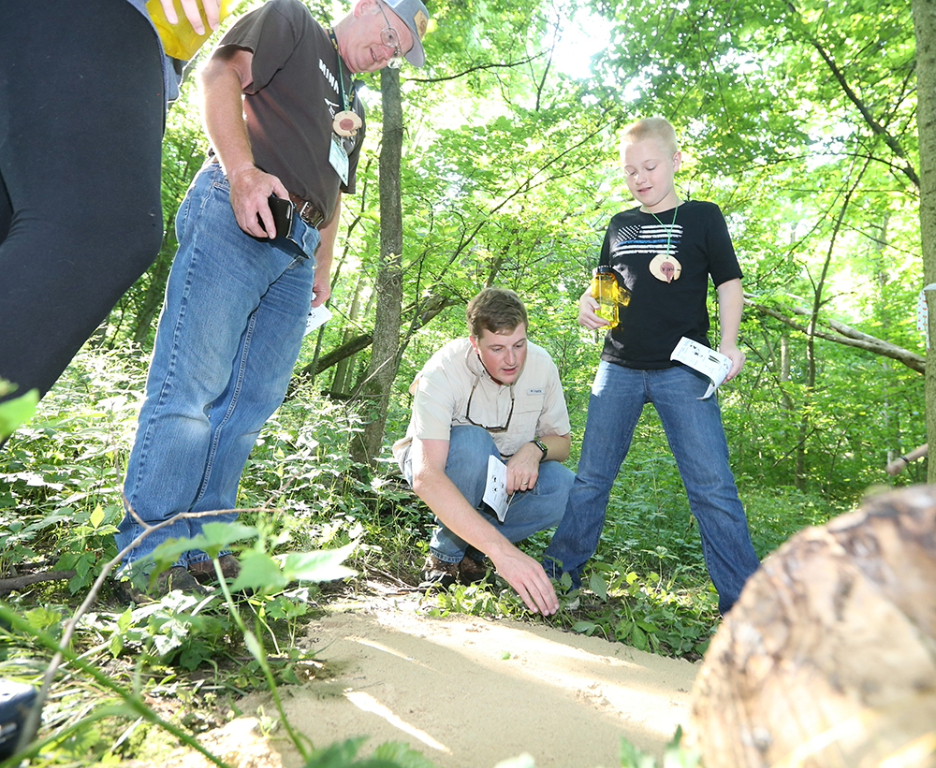 Purdue Extension wildlife specialist Jarred Brooke has been named as a recipient of the Purdue Cooperative Extension Specialists’ Association (PUCESA) Early Career Award, which recognizes an Extension specialist with less than 10 years of service.
Recipients must demonstrate Extension leadership; excellence in delivering public education programs; innovative approaches to program development and delivery; outreach efforts to county Extension educators; research that benefits Extension clientele through practical application; or through demonstrated collaboration with county educators, agencies or community leaders.
“I am truly grateful to be honored by my peers with this award, but most of my extension work would not have been possible without the wonderful people I work with both inside and outside of Purdue,” Brooke said. “I am indebted to them.”
Brooke, a 2012 wildlife science alum, returned to his alma mater in August 2016 as an Extension wildlife specialist after completing his master’s degree in wildlife management from the University of Tennessee in 2015. Over the past five years, Brooke has become a productive and effective extension specialist and has taken on multiple leadership roles, collaborated with partners in an outside of Extension, conducted applied research and worked to deliver impactful and innovative extension programming.
Brooke was honored with the PK-12 Outreach and Engagement Excellence Staff Award in April 2021 for his work with the 4H-Academy, the Wildlife Habitat Education Program and The Nature of Teaching.
Outside of Extension, Brooke helped form the Indiana Prescribed Fire Council, of which he has served as chair since 2018. He also is currently the Past President of the Indiana Chapter of the Wildlife Society, and served on the continuing education committee for the group. In these roles, Brooke collaborates with other natural resources professionals to plan and deliver natural resource-based programming to other professionals and landowners throughout Indiana.
Resources:
Jarred Brooke Receives PK-12 Council Staff Excellence Award, Got Nature? Blog, Purdue Extension-FNR
Brooke’s Prescribed Fire Videos Utilized in Global USFS Efforts, Got Nature? Blog, Purdue Extension-FNR
Pond and Wildlife Management, Purdue Extension-Forestry and Natural Resources
Natural Resources University, Deer, Fire, Pond and Habitat Podcasts
Creating a Wildlife Habitat management Plan for Landowners, Got Nature? Blog, Purdue Extension-FNR
A Template for Your Wildlife Habitat Management Plan, Got Nature? Blog, Purdue Extension-FNR
Subscribe to Purdue Extension – Forestry and Natural Resources YouTube Channel and view Jarred Brooke’s deer, fire and other wildlife videos.
Wendy Mayer, FNR Communications Coordinator
Purdue University Department of Forestry and Natural Resources
Jarred Brooke, Wildlife Extension Specialist
Purdue Forestry and Natural Resources
Tribune-Star: Both my son and daughter raised rabbits as members of 4-H, so for years our barn served as a makeshift hutch, complete with wire cages, watering and feeding bowls, and fur — lots of fur, some still sticking to the old building’s dusty rafters all this time later.
My brother and sister and I also grew up with rabbits, although it was through the likes of immortal “Bugs Bunny” features, such as “The Rabbit of Seville” (yes, with Bugs massaging Elmer Fudd’s head to the music of Rossini) and “14 Karat Rabbit” (featuring a greedy gold mining “Yosemite Sam”). I plan to share those cartoons with my grandsons, and sure hope they have the opportunity to watch them as we did: on a Saturday morning; not fully dressed; with few cares in the world; preferably, a bowl of cereal in hand.
That being said, I have no predisposed dislike of rabbits at all. But this summer has tested my patience as far as the Eastern Cottontail is concerned; they’ve invaded my property in record numbers. I have never seen so many rabbits short of a show at the fairgrounds, not even in my more innocent Warner Brothers days.
They seem to be everywhere: peeking out from beneath my car when I walk out the door; startled from a flower bed or garden when I reach for a weed to pull; nibbling about in our yard as we watch from our windows in the evenings. Some of them hardly even move now when I show up; I honestly think I could get them to eat out of my hand.
I don’t think our infestation approaches what’s happened in Australia. According to a 2020 “National Geographic” article, European rabbits were introduced to the continent in 1859 (I also read 1788 in another story) so they could be hunted; just 13 were originally brought in. By the turn of the century, the rabbits constituted one of the greatest invasive threats any country has ever experienced. They destroyed crops at prodigious rates, caused erosion, and nearly restructured the continent’s biodiversity. Fences, poisons, traps, even the use of rabbit-sensitive pathogens were used to try to control them; it’s estimated — despite doubled-down efforts with new pathogens — that there are over 200 million feral rabbits there now.
In a summer that has already been a bit out of whack, I have lately begun to wonder if it’s just me, or are there others seeing an uptick in rabbit populations too? And, before I take this any further, I’ll say that I am ruling out eliminating our problem with a shotgun, let alone pathogens. Just a few trips decades ago with a hardcore-hunting grandfather ended my ambitions for putting rabbits on our supper table; I tend to live and let live, and, of course, complain.
Not only did the furry little vandals eat all of the swamp milkweed I was growing for our monarch butterflies, they have gnawed off sunflowers — both planted and volunteer — and have, in particular, eaten many of our late-blooming hostas (nearly ready to flower) that must be particularly tender and tasty.
Purdue University Extension Specialist Jarred Brooke says, “I have received reports of abundant rabbits around the state. There are likely several causes for this, but it is hard to pin down the exact causes. Cottontail populations tend to be cyclical … One year the population may be booming, and then the next you might not see many. And it’s really hard to predict when those cycles will occur.”
Brooke says that things like mild winters — which we have luckily had these past few years — allow cottontails to breed earlier and more often, bring on lush green vegetation, and often allow predators to choose from a more varied menu than in summers following harsh winters.
“It’s hard to say exactly what is going on this year, but it sounds like we are in the increasing phase of their cycle, which is normal, “Brooke says. “Adding in the fact that many cottontail predators in some areas had an easy meal this spring with cicadas certainly doesn’t hurt. With that said, I don’t know any research that has linked rabbit populations with cicadas, but cicadas have been linked to population increases in other mammals, turkeys and songbirds.”
Brian McGowan, Certified Wildlife Biologist through Purdue University’s Department of Forestry and Natural Resources, says it’s nearly impossible to tell when we are having a big rabbit year: “Methods like roadkill surveys or bow hunter surveys provide some information, as well as annual harvest; however, these and other methods have a time lag element to them where they are done once a year and the data is not always immediately analyzed.”
Resources:
Wildlife Habitat Hint, Playlist, Purdue Extension – Forestry and Natural Resources YouTube channel
Considerations for Trapping Nuisance Wildlife with Box Traps, The Education Store, Purdue Extension’s resource center
Preventing Wildlife Damage – Do You Need a Permit? – The Education Store, Purdue Extension resource center
Selecting a Nuisance Wildlife Control Professional, The Education Store
How to Construct a Scent Station, Youtube
Question: How do I properly relocate raccoons from my attic?, Got Nature? Blog, Purdue Extension FNR
Jarred Brooke, Wildlife Extension Specialist
Purdue Forestry and Natural Resources
Brian MacGowan, Extension Wildlife Specialist
Department of Forestry & Natural Resources, Purdue University
In this video, Purdue Extension wildlife specialist Jarred Brooke describes a point source fire. The igniters will light points or spots of fire and thus create less intense fire behavior than a strip head fire.
If you have any questions regarding wildlife, trees, forest management, wood products, natural resource planning or other natural resource topics, feel free to contact us by using our Ask an Expert web page.
Resources
Wildlife Habitat Hint, Playlist, Purdue Extension – Forestry and Natural Resouces YouTube channel
Wildlife Habitat Hint: Late Growing Season Prescribed Fire, Video
Renovating Native Warm-Season Grass Stands for Wildlife: A Land Manager’s Guide, The Education Store, Purdue Extension resource center
Prescribed fire: 6 things to consider before you ignite, Got Nature? Blog, Purdue Extension – 4Forestry and Natural Resources
Jarred Brooke, Wildlife Extension Specialist
Purdue Department of Forestry and Natural Resources
In this prescribed fire ignition technique videos Purdue Extension wildlife specialist Jarred Brooke describes a ring fire. The igniters will light fires to encircle the unit. Ring fire technique usually creates more intense fire behavior than strip head fires.
If you have any questions regarding wildlife, trees, forest management, wood products, natural resource planning or other natural resource topics, feel free to contact us by using our Ask an Expert web page.
Resources
Wildlife Habitat Hint, Playlist, Purdue Extension – Forestry and Natural Resources YouTube channel
Wildlife Habitat Hint: Late Growing Season Prescribed Fire, Video
Renovating Native Warm-Season Grass Stands for Wildlife: A Land Manager’s Guide, The Education Store, Purdue Extension resource center
Prescribed fire: 6 things to consider before you ignite, Got Nature? Blog, Purdue Extension – 4Forestry and Natural Resources
Jarred Brooke, Wildlife Extension Specialist
Purdue Department of Forestry and Natural Resource
In this episode of Wildlife Habitat Hint, Purdue Wildlife Extension specialist Jarred Brooke talks about exclusion cages. Exclusion cages are cheap and easy ways to gain information about deer and food plots on your property.
If you have any questions regarding wildlife, trees, forest management, wood products, natural resource planning or other natural resource topics, feel free to contact us by using our Ask an Expert web page.
Resources
Wildlife Habitat Hint, Playlist, Purdue Extension – Forestry and Natural Resources YouTube channel
Ask an Expert: Wildlife Food Plots, Video
A Woodland Management Moment – Deer Fencing, Video
Deer Exclosures, Video, Purdue Forestry and Natural Resources YouTube channel
Frost Seeding to Establish Wildlife Food Plots and Native Grass and Forb Plantings, Purdue Extension resource center
Woodland Stewardship for Landowners: Managing Deer Damage to Young Trees, Video
Jarred Brooke, Wildlife Extension Specialist
Purdue Department of Forestry and Natural Resources
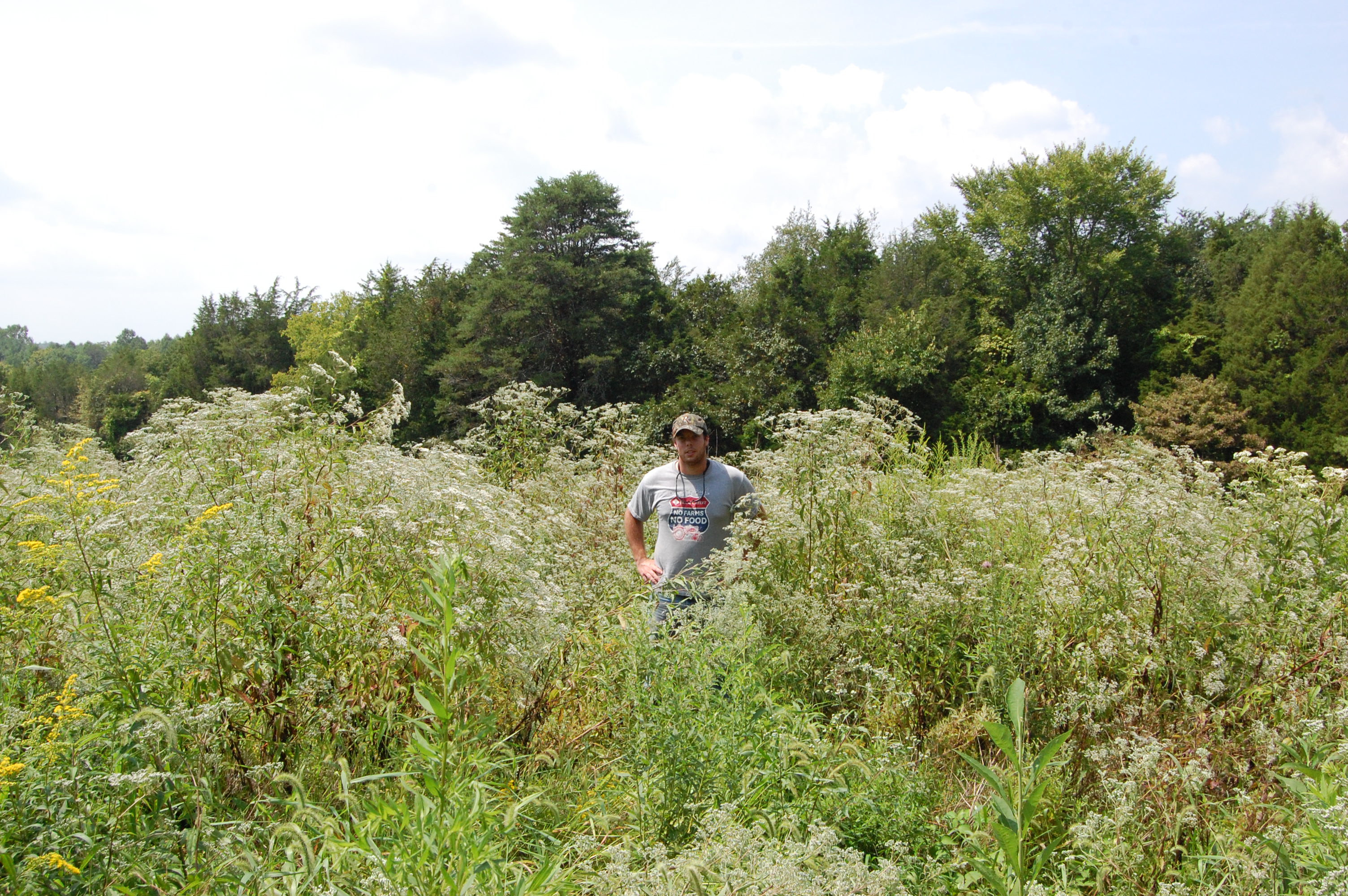
A “weedy” field like this may seem unsightly to some, but to wildlife, it provides invaluable food and cover. Just by leaving this field unmowed, you can improve habitat on your farm.

Mowing just to clean up the farm, or Recreational Mowing Syndrome (RMS), eliminates habitat for countless wildlife species.
Do you have a sudden urge to jump in the tractor and mow your fields, field borders or road ditches?
You might have RMS.
Do you enjoy spending your weekend in the cab of the tractor with a mower in tow in search of places to mow across your property?
You might have RMS.
Do you get queasy at the sight of a “weedy” unkempt field?
You might have RMS.
What is RMS you ask? RMS stands for Recreational Mowing Syndrome, a condition that afflicts many rural landowners during the summer months. And if you answered yes to any or all of the questions above, then you have RMS.
What is it?
RMS is the sudden urge many landowners get to ‘clean’ up their property by mowing the ideal fields, field borders, and road ditches around the farm during the summer months. While a mowed field may look attractive in the eyes of a landowner, in the eyes of wildlife, this is a serious problem.
These prime mowing spots provide habitat for a suite of birds, mammals, herpetofauna, and pollinating insects that inhabit our rural landscapes. Many of these species are actively nesting or raising young in these areas during peak mowing season – April through September. And the weeds coming up in these fields like common milkweed, tall ironweed, common ragweed, and many others provide food and cover for wildlife.
How to treat it?
The easiest way to treat RMS is by going cold-turkey – park the tractor for the summer. If you are not ready to give up mowing all together, then restrict your mowing to just the lanes around the fields, instead of the whole field. If you are ready to give up mowing, but still want to enjoy time in the tractor, try these options.
Instead of hooking up the mower, hook up the sprayer and go control some invasive species on the property, like bush honeysuckle, autumn olive, or sericea lespedeza. Or try hooking up the disk and disking around the field to prepare firebreaks for a late summer or fall prescribed fire.
You can still spend time on the tractor during the summer months without eliminating wildlife habitat through mowing. In fact, you can improve it!
Next time you look at your window and see a “weedy” field, don’t cringe and give into the urge to mow it. Instead, just smile and listen to all the quail whistling, songbirds singing, and bees buzzing in the habitat you improved by not mowing.
Resources
Renovating native warm-season grass stands for wildlife: A Land Manager’s Guide, The Education Store, Purdue Extension Resource Center
Effective Firebreaks for Safe Use of Prescribed Fire, Got Nature?, Purdue Extension – FNR
Sericea Lespedeza: Plague on the Prairie, Got Nature?, Purdue Extension – FNR
Jarred Brooke, Wildlife Extension Specialist
Purdue Forestry and Natural Resources

Recent Posts
- Restoring Roots to Save the Salamanders, USDA – Natural Resources Conservation Service
Posted: May 6, 2026 in Aquaculture/Fish, Forestry, Wildlife - Spring Storms Are Coming: How to Reduce Tree Damage and Risk
Posted: May 1, 2026 in How To, Urban Forestry, Wildlife, Woodlands - Cryptocline Leaf Spot (Anthracnose) of Elm, Purdue Landscape Report
Posted: April 30, 2026 in Disease, Forestry, Woodlands - Mechanical Damage to Trees: Mowing and Maintenance Equipment
Posted: April 24, 2026 in Forestry, Forests and Street Trees, Urban Forestry - A Woodland Management Moment: Growing Quality Black Walnut in Openings
Posted: April 20, 2026 in Urban Forestry, Woodland Management Moment, Woodlands - Spring Into Bloom With ID That Tree
Posted: in Forests and Street Trees, Urban Forestry, Woodlands - Question: Have Whippoorwill Birds Declined in Numbers?
Posted: in Ask the Expert, Wildlife - Invasive Species in Eastern Forests, Webinar Series
Posted: in Invasive Insects, Invasive Plant Species, Urban Forestry, Wildlife - Tree Risk Management: What Every Property Owner Needs to Know
Posted: April 17, 2026 in Forests and Street Trees, Wildlife, Woodlands - As the spring wildflowers emerge, so do the woodland invaders
Posted: April 16, 2026 in Forestry, Forests and Street Trees, Invasive Plant Species
Archives
Categories
- Alert
- Aquaculture/Fish
- Aquatic/Aquaculture Resources
- Ask the Expert
- Christmas Trees
- Community Development
- Disease
- Drought
- Forestry
- Forests and Street Trees
- Gardening
- Got Nature for Kids
- Great Lakes
- How To
- Invasive Animal Species
- Invasive Insects
- Invasive Plant Species
- Land Use
- Natural Resource Planning
- Nature of Teaching
- Plants
- Podcasts
- Ponds
- Publication
- Safety
- Spiders
- Timber Marketing
- Urban Forestry
- Webinar
- Wildlife
- Wood Products/Manufacturing
- Woodland Management Moment
- Woodlands