 Purdue University - Extension - Forestry and Natural Resources
Got Nature? Blog
As the crisp autumn air settles in and campfires become a seasonal staple, October brings an important reminder: your firewood choices matter. That’s why October is officially Firewood Month, a nationwide campaign to raise awareness about the risks of moving firewood and the spread of invasive forest pests.
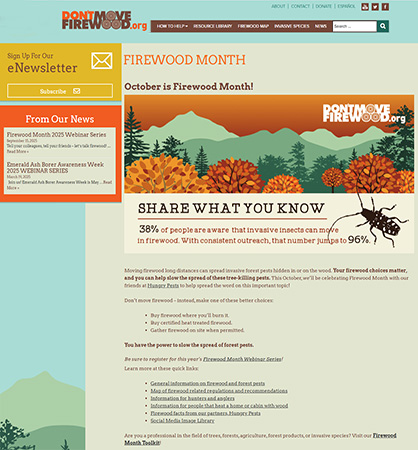 Why “Don’t Move Firewood” Matters
Transporting firewood, even just a few miles, can unintentionally spread destructive pests like emerald ash borer, Asian longhorned beetle and spongy moth. These invaders often hide inside or on firewood, threatening Indiana’s forests, parks and urban trees.
The Don’t Move Firewood website offers excellent resources to help you make informed choices. Whether you’re heating a cabin, heading out to hunt, or planning a backyard bonfire, they recommend:
- Buying firewood where you’ll burn it
- Choosing certified heat-treated wood
- Gathering wood on-site when permitted
You can also explore their Firewood Month Toolkit, maps of regulations and a webinar series designed for professionals and outdoor enthusiasts alike.
While October is Firewood Month, the risk of spreading invasive pests lasts well beyond the fall. Many forest pests remain a threat throughout the year. Adults may still be visible until the first hard freeze, and egg masses can be observed from now through June. The spotted lanternfly females lay egg masses in late summer through early winter, often peaking in October. These masses can survive through winter and hatch in the spring. Learn more about the Spotted Lanternfly from the Indiana Department of Natural Resources. This is why it’s important to practice safe firewood habits year-round.
Spotlight on ReportINvasive
Check out the latest post on the ReportINvasive Facebook which reinforces the importance of Firewood Month. ReportINvasive is a trusted source for updates on invasive species in Indiana, and their social media outreach is a great way to stay informed and engaged. Give the Facebook page a LIKE and FOLLOW for future webinars and workshops.
Concerned About Insects? Purdue Extension Entomology Can Help
 If you suspect insect damage or want to learn more about forest pests, the Purdue Extension Entomology team is an outstanding resource. Their experts provide science-based guidance on insect identification, management strategies, and outreach materials to help protect Indiana’s ecosystems.
Let’s work together to keep Indiana’s forests healthy and resilient. This October, make the smart choice—don’t move firewood!
More Resources
Spotted Lanternfly – including map sharing locations, Indiana Department of Natural Resources
October is Firewood Awareness Month!, Purdue Landscape Report
Indiana Department of Natural Resources: Invasive Species
Indiana Invasive Species Council
Cooperative Invasive Species Management Area (CISMA)
Aquatic Invasive Species, Illinois-Indiana Sea Grant (IISG)
Emerald Ash Borer Information Network, Purdue University and Partners
Invasive plants: impact on environment and people, The Education Store, Purdue Extension’s resource center
Entomology Weekly Review, Indiana Department of Natural Resources, Division of Entomology & Plant Pathology
Division of Entomology & Plant Pathology, Indiana Department of Natural Resources
Diana Evans, Extension and Web Communication Specialist
Purdue University Department of Forestry and Natural Resources
Purdue Landscape Report: As summer comes to a close, plants are rapidly releasing seeds and the most noticeable are the flying fluffy type. Thistles, asters and milkweed are just a few of the summer-flowering plants that depend on the wind to disperse their seeds, sometimes carrying them miles away to potentially suitable locations, though seeds typically land within a few meters of the mother plant. This may not be a concern if it’s a desirable plant, but can become extremely problematic when that seed comes from Canada Thistle (Cirsium arvense) (Fig. 1).
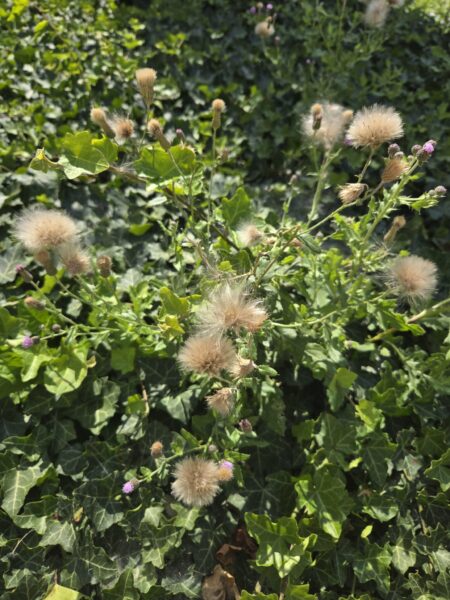
Figure 1. Canada thistle (Cirsium arvense), growing amongst common ivy (Hedera helix), produces a fluffy seed that is dispersed by wind.
Canada thistle is found on the list of Indiana Noxious Weeds (IC 15-16-7-2), which mandates that landowners take necessary steps to control and contain the spread of this highly invasive species. Formal enforcement of this Indiana Code falls to Township Trustees, though weed control is a responsibility that is often overlooked. Landowners and homeowners shouldn’t wait for a notice, or knock at the door, from a Township Trustee to begin controlling Canada thistle. It’s listed as a noxious weed for good reason.
Canada thistle is a perennial plant that can reproduce from seed or rhizomes making it difficult to control and contain. Each plant can produce thousands of wind-blown seeds that may remain viable for up to 20 years in the soil. Rhizomes are horizontal underground stems that can grow several feet and put out new shoots (Fig. 2). To add insult to injury, if a rhizome is cut or tilled, a separate plant may grow from each piece of rhizome.
Mechanical and cultural control options for Canada thistle are limited and may reduce plant density, but are not effective at eradicating large, established populations in a landscape. A new population, without an established root system, may be controlled with frequent mowing to deplete food reserves and prevent seed production.Small, isolated populations may be controlled with hand-pulling, but this will need to be repeated every few weeks.

Figure 2. Canada thistle (Cirsium arvense) reproduces by growing horizontal underground stems called rhizomes. Rhizomes can send up new shoots several feet from the mother plant.
Chemical control options include pre- and post-emergent herbicides and, in many cases, applications of both types are needed for complete eradication. A pre-emergent herbicide, with an active ingredient of dichlobenil, is effective at preventing seed from germinating, but will not control established plants. A post-emergent herbicide with the active ingredient of clopyralid is the most effective option for home gardeners. Clopyralid is a selective herbicide for broadleaf weeds, but most vegetable and ornamental plants are susceptible. Precautions should be taken to avoid off-target damage. Read and understand the herbicide label before use. The label is the law.
Regardless of the method used, complete control of an established Canada thistle population will take persistence over multiple seasons. If the fluffy seed is beginning to fly from your thistle patch, it will likely take many more seasons to rid the garden of this pest, but it is possible. To win the battle against Canada thistle, it takes serious grit and an effective herbicide, or a good realtor.
View the original article here: What the Fluff?!
Subscribe and receive the newsletter: Purdue Landscape Report Newsletter.
Resources:
ID That Tree, Playlist, Purdue Extension – FNR YouTube Channel
Find an Arborist video, Trees are Good-International Society of Arboriculture (ISA)
A Woodland Management Moment, Playlist, Purdue Extension – FNR YouTube Channel (Against Invasives, Garlic Mustard, Autumn Olive)
Woodland Stewardship for Landowners, Playlist, Purdue Extension – FNR YouTube Channel (Common Buckthorn, Japanese Barberry)
Planting Your Tree, Video, The Education Store
Tree Installation, The Education Store
Indiana Invasive Species Council
Indiana Department of Natural Resources: Invasive Species
Purdue Extension Pond and Wildlife Management Website
Control of Canada Thistle in CRP and Other Noncrop Acreage, The Ed Store
Invasive Thistles
Report Invasive Species, Purdue Invasive Species
Understanding and Controlling Thistle in the Nursery and Landscape, Purdue Landscape Report
Subscribe – Purdue Extension-FNR YouTube Channel
Karen Mitchell, Consumer Horticulture Extension Specialist
Purdue Horticulture & Landscape Architecture
Familiar with surprise lilies? Indiana has a native surprise onion!
Many yards where I grew up in southern Indiana were graced with surprise lilies. These plants grew long narrow leaves in the spring, which faded and died by early summer. After a pause with no evidence of the plant, long stems with pink lily-like flowers emerged, with no leaves to be seen.

Ramps foliage is often found in clusters or patches in early spring. These leaves will die before summer.
While these plants are not a native species, we do have a native with similar habits that is a distant relative of the surprise lily. That plant is ramps, also known as wild leek and a variety of other local names. There are two species of ramps recognized now – the more common broad-leaved ramps, Allium tricoccum, and the narrow-leaved ramps, Allium burdickii. Ramps are related to onions and garlic and have odor and taste reminiscent of those plants. Ramps foliage emerges early in the spring and was one of the earliest green edibles available to First Nations people and early European settlers.
Many communities developed festivals or celebrations centered on the emergence of ramps as a sign of spring and some fresh greens to eat. The bright green leaves emerge before the tree leaves and fade before summer, but by the first half of June expect to see thin stems with a rounded cluster of small white flowers emerge – our surprise onion! It may take a ramps plant seven to ten years from seed to produce a flower, so this is a slow-growing and long-lived forest perennial. The flowers are pollinated by insects and produce round black seeds that may stay on the stalk through winter.
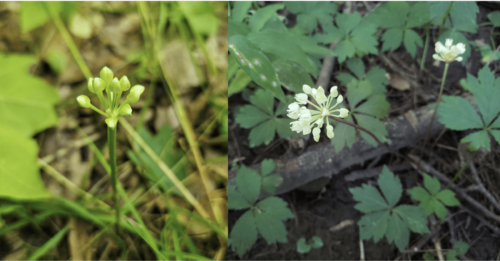
Newly emerged flower stem and buds and the blooming flowers of ramps.
Look for ramps in well-shaded forest areas with moist soils. They have a scattered distribution across Indiana, so you won’t find them in every woodland. The leaves and bulbs are edible, but absolute certainty of ID is essential as there are some toxic plants that look similar. Check ID references and spend some time with experienced foragers before eating any wild plants. The onion/garlic odor of ramps is a good indicator for positive ID.
Since this is a slow growing plant with a limited distribution, over-collection is a threat. A responsible harvesting technique is to harvest one leaf from mature plants, leaving the other leaves and the bulb. If you harvest the whole plant, take less than 5 percent of the plants in a patch, allowing seeding and bulb division to repopulate the area. Seed or bulbs can also be used to plant new patches. So keep you eyes open for our local surprise flowers this June – ramps!
Resources:
ID That Tree, Playlist, Purdue Extension – Forestry and Natural Resources (FNR) YouTube Channel
A Woodland Management Moment, Playlist, Purdue Extension – FNR YouTube Channel (Against Invasives, Garlic Mustard, Autumn Olive)
Woodland Stewardship for Landowners, Playlist, Purdue Extension – FNR YouTube Channel (Common Buckthorn, Japanese Barberry)
Indiana Department of Natural Resources: Invasive Species
Indiana Invasive Species Council
Cooperative Invasive Species Management Area (CISMA)
Episode 11 – Exploring the challenges of Invasive Species, Habitat University-Natural Resource University
What are invasive species and why should I care?, Got Nature? Blog, Purdue Extension – FNR
Shrubs and Woody Vines of Indiana and the Midwest, The Education Store, Purdue Extension Resource Center
Planting Your Tree Part 1: Choosing Your Tree, video, The Education Store
Find an Arborist website, Trees are Good, International Society of Arboriculture (ISA
Lenny Farlee, Extension Forester
Hardwood Tree Improvement and Regeneration Center
Purdue Department of Forestry & Natural Resources
MyDNR – Indiana’s Outdoor Newsletter, Indiana Department of Natural Resources (DNR): This summer, you may see turtles crossing roadways to find places to nest. Here’s how you can safely lend a helping hand:
- Do not remove turtles from the area. They will want to return to their home range, even if it means spending the rest of their life trying. If it is safe to do so, you can move turtles off the roadway in the same direction in which they were already heading. Move them by grasping the back of the top shell.
- If you see a snapping turtle trying to cross the road, be aware that grabbing a snapping turtle’s tail can damage its spine. To keep yourself and the snapping turtle safe, hold it by the top back of its shell and leverage it upward.

Moreover, turtles as pets are challenging and costly due to their long lifespans, specialized care needs, and potential health risks. Different species require specific diets, habitats, and environmental conditions to thrive. Releasing pet turtles into the wild is harmful to both the turtles and native populations due to disease transmission and ecological disruptions. Although some regulations allow for pet turtle ownership, it’s essential to prioritize conservation efforts and responsible pet care practices. We must protect both captive and wild turtle populations.
To learn more about turtles, visit DNR: Turtles as Pets.
To subscribe to the newsletter visit MyDNR Email Newsletter.
Resources
Turtles of Indiana, The Education Store
Appreciating Reptiles and Amphibians in Nature, The Education Store
Forestry Management for Reptiles and Amphibians: A Technical Guide for the Midwest, The Education Store
The Nature of Teaching, Unit 3: Reptiles, Amphibians, and the Scientific Method, The Education Store
Partners in Amphibian and Reptile Conservation (PARC)
Ask An Expert, Purdue Extension – FNR Playlist
Indiana Department of Natural Resources
Join alumna Megan Benage, a regional ecologist for the Minnesota Department of Natural Resources, and Bee Redfield, a postgraduate research assistant, as they explore the world of pollinators. They cover the who’s, the what’s and how’s of pollination as well as how you can help bring pollinators to your yard and help the pollinator population in general. They also share about ongoing research and cool projects related to pollinators.
If you have any questions regarding wildlife, trees, forest management, wood products, natural resource planning or other natural resource topics, feel free to contact us by using our Ask an Expert web page.
Resources
Protecting Pollinators: Biology and Control of Varroa Mites in Bee Hives, The Education Store, Purdue Extension resource center
The Complex Life of the Honey Bee: Environmental, Biological, and Chemical Challenges to Colony Health, The Education Store
Pollinator Protection, Website, Purdue Extension
Gardening for Pollinators, Purdue Graden Articles
Megan Benage, Regional Ecologist
Minnesota Department of Natural Resources
Bee Redfield, Postgraduate Research Assistant
Purdue Forestry and Natural Resources
Question: Once I’ve pulled or cut, and have treated the bush honeysuckle stumps, can it be left to decay, particularly if not piled directly on the ground in a woodland?
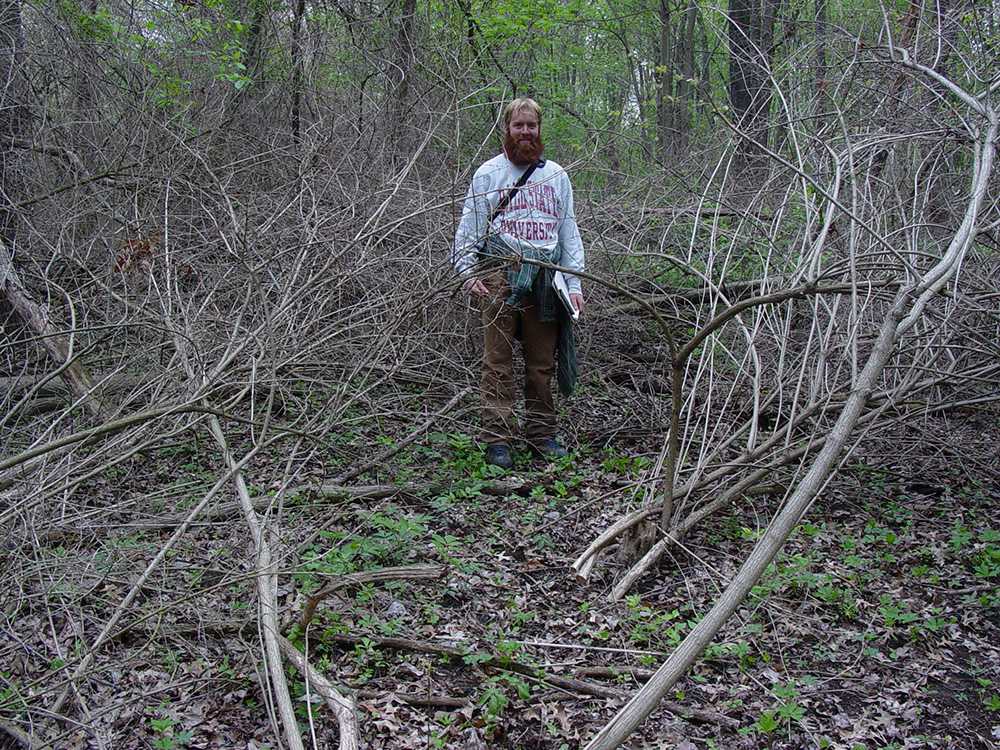
Figure 1. Invasive brush cut and left in place to decay. (click to enlarge)
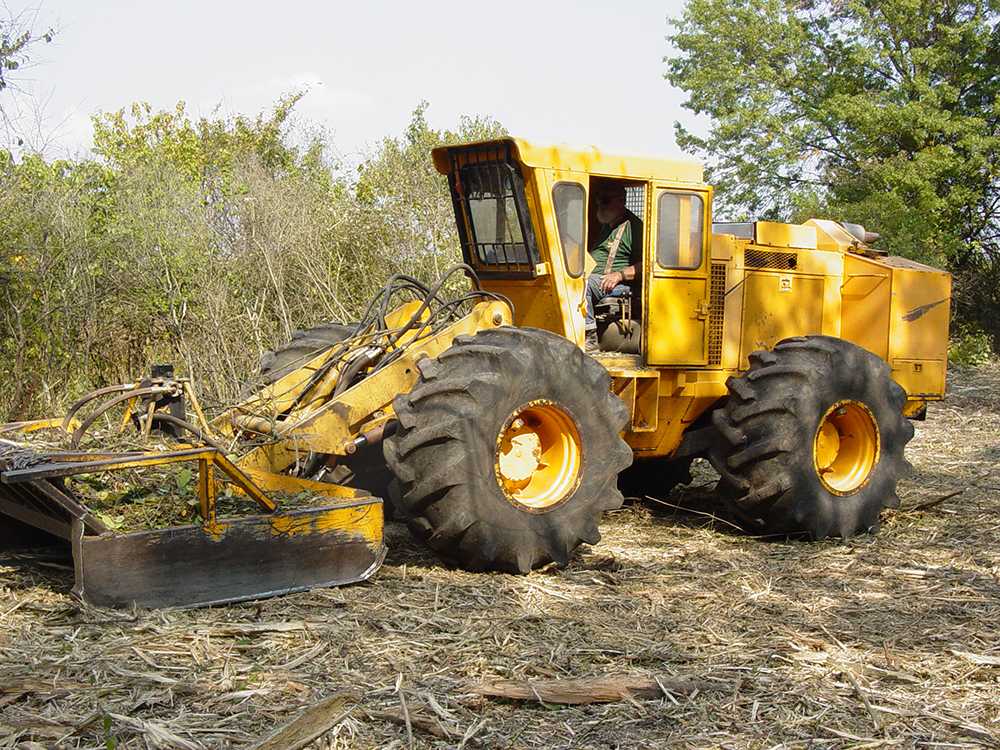
Figure 2. Kershaw Hydroax brush cutter. (click to enlarge)
When deciding what methods to use to control invasive brush on your property, one of the questions often asked is “what should I do with the cut tops?” (Fig. 1) A similar question we often get from landowners planning to have timber harvested from their woods is “what should I or the loggers do with the tree tops that are left?” The simple answer is just leave them where they are and they will decay over time and gradually disappear. If you have many acres to treat for invasive brush infestation, then this is good news. But there may be other factors to consider. In this blog post I will try to unpack those other considerations to help you decide what to do.To start let’s do a quick review of the more common methods of controlling invasive brush and the resulting ground conditions left in their aftermath. By invasive brush, I am primarily talking about non-native brush species that have invaded our native habitats, including the woods, and that are wreaking ecological havoc and degrading the productive potential of those lands for wildlife, timber, and recreation. The more common species include Asian bush honeysuckle, autumn olive, multiflora rose and callery pear (aka Bradford, Cleveland, ornamental pear).There are a variety of methods, tools, equipment, and chemicals used for invasive brush control. Other blog posts cover many of these methods, so I will not describe their use except to show what a site looks like in their wake. Large equipment like skid steer mounted mulchers or brush cutters or the industrial size Hydroax (Fig. 2) thoroughly chop up or mulch all that brush material and leave a fairly clean site (Fig. 3). In this case, there are no brush tops to dispose of. If you are wanting a very “clean” site, then hiring a dozer may be what you’re after. All those tops can then be piled and burned. The bare soil can then be planted in desired vegetation.Most forest landowners are going to use smaller scale methods and equipment, especially in the woods. Spraying herbicide on the foliage (Fig. 4) or applying it as a basal bark application to the lower stems leaves dead standing shrubs. Using brushsaws and chainsaws to cut the shrubs close to the ground and then applying a concentrated herbicide to the stump (commonly called cut-stump treatment, Fig. 5) leaves severed brush tops lying about. Even the less conventional prescribed fire will almost always leave standing dead shrub tops.
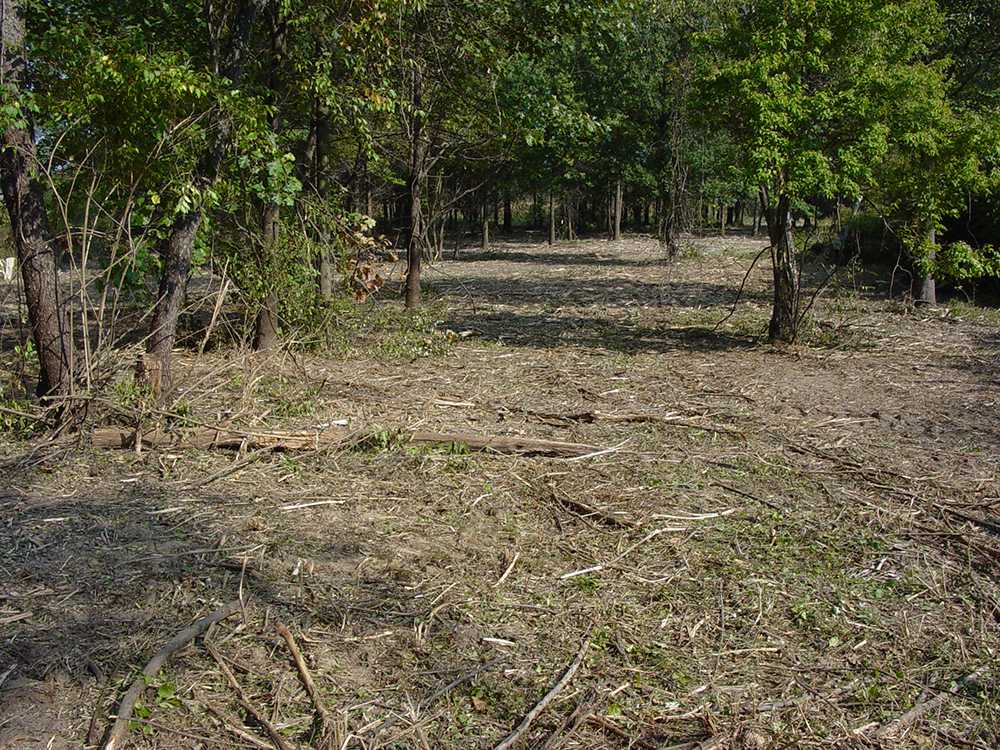
Figure 3. Once dominated by large non-native bush honeysuckle shrubs, this site was recently cleared by large brush cutting equipment. (click to enlarge)
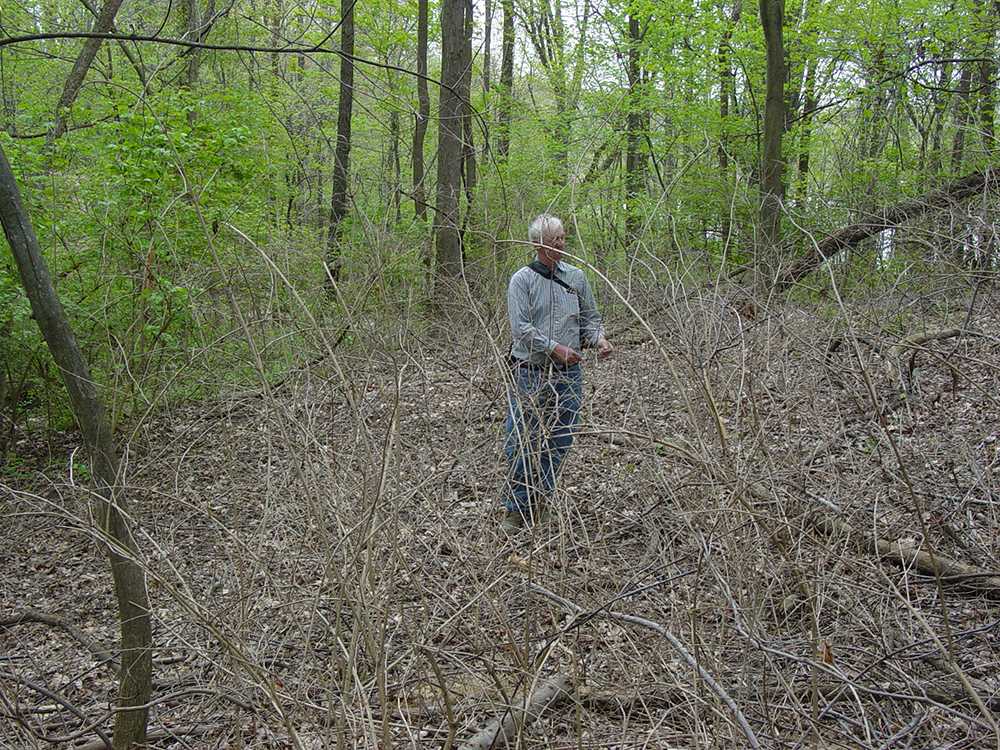
Figure 4. Dead non-native bush honeysuckle recently sprayed with herbicide. (click to enlarge)
For many people, the problem with all these dead shrubs lying about is aesthetic – it makes the property look cluttered, at best, if not downright unsightly. If aesthetics were the only concern, we might be able to talk ourselves into putting up with it for several years until the dead shrub tops begin to decay and break down and new vegetation grows up to mask them.
But are there other concerns that would justify expending time and money to dispose of the dead tops?
Access may be another consideration, especially in high use areas such as those used frequently for recreation like hunting or hiking. Depending on habitat restoration plans, you may want access to those areas to seed or plant native trees, shrubs, forbs or grasses. Especially if you are using specialized planting or seed drill equipment, the site may need to be relatively clear of obstructions and debris.
How does leaving dead invasive shrub tops impact this restoration process?
The removal of invasive species should not be the end goal in managing habitat, but only an important step in restoring a healthy native plant community. How does leaving dead invasive shrub tops impact this restoration process? Researchers in Ohio found in the short term that cutting and applying herbicide to the stumps of Amur honeysuckle (Asian bush honeysuckle) and leaving the tops in place allowed more sunlight to reach the forest floor than the basal bark treatment which left dead tops standing in place (Cipollini et al. 2009). This resulted in greater height growth for native herbaceous plant growth. However, in the presence of deer browse, the native plants suffered less deer damage in the basal bark treatment area, due to the greater protection afforded by the standing dead tops, compared to the areas where tops were cut. One might surmise that even leaving cut tops in place may provide some protection from deer browse compared to complete removal of the tops. Joshua Shields and fellow researchers at Purdue University (2014) studied the impact of clearing bush honeysuckle in a forest environment on white footed mice populations. They found that where bush honeysuckle was cut and the tops removed from the site that white footed mice numbers increased, compared with mice numbers in nearby standing live bush honeysuckle. They did not, however, test how leaving cut honeysuckle tops on site would affect mice populations.
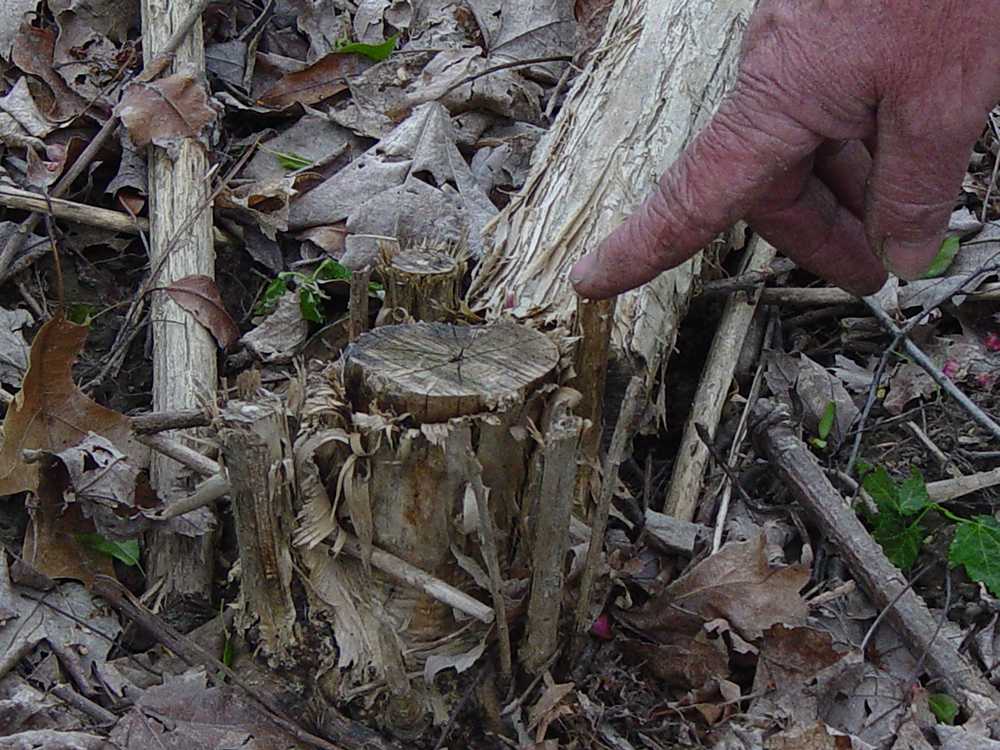
Figure 5. Cut stump of bush honeysuckle. (click to enlarge)
Many people may cringe at the thought of increasing numbers of mice, but mice in their natural environment are an important source of food for many predators, including hawks, owls, fox, mink, weasels, and bobcats. In a study comparing the cut stump method (cutting the stems and treating the stump with herbicide) and the use of a mulching head attachment on a skid steer for controlling bush honeysuckle, Purdue researchers found no difference in the growth and recovery of the native plants (Graham et al. 2018). However, the mulching head treatment resulted in a greater abundance of garlic mustard, a non-native invasive biennial herb. Invasive brush control treatments resulting in greater soil disturbance often lead to a second wave of invasive plants that need follow-up treatment.
So what can we conclude from all this?
There are benefits and drawbacks to removing invasive brush tops when managing invasive species on your property. It really depends on your management objectives. It can even vary depending on the specific location on your property. In some select areas it may be very beneficial to remove the tops while in most other areas you can just let them rot in place. The important thing is that you have a well thought out plan for managing the invasive species on your property and that you are working your plan. As you work your plan you will begin seeing the positive results as native plant communities begin to make a comeback.
Resources:
A Woodland Management Moment, Playlist, Purdue Extension – Forestry and Natural Resources (FNR) Youtube Channel
Conservation Tree Planting: Steps to Success, Purdue Extension – FNR Youtube Channel
Invasive Species, Playlist, Purdue Extension – FNR Youtube Channel
Woodland Stewardship for Landowners, Playlist, Purdue Extension – FNR Youtube Channel
Invasive Plant Species Identification, Video, Purdue Extension – FNR Youtube Channel
Report Invasive Species, Purdue Invasive Species
The GLEDN Phone App – Great Lakes Early Detection Network
EDDMaps – Early Detection and Distribution Mapping System
Indiana Department of Natural Resources: Invasive Species
Indiana Invasive Species Council
Cooperative Invasive Species Management Area (CISMA)
Invasive plants: impact on environment and people, The Education Store, Purdue Extension’s resource center
A Landowner’s Guide to Sustainable Forestry: Part 7: Managing for a Diversity of Value-Added Forest Products, The Education Store
Investing in Indiana Woodlands, The Education Store
Woodland Invaders, Got Nature? Blog, Purdue Extension – FNR
Ron Rathfon, Regional Extension Forester, Southern Indiana Purdue Agriculture Center (SIPAC)
Purdue Forestry and Natural Resources
Wild Bulletin, Indiana Department of Natural Resources (DNR) Fish and Wildlife: The Eastern box turtle (Terrapene carolina) is a species of hinge-shelled turtle that lives on forested land in Indiana. Box turtles are long-lived, slow to mature and have few offspring per year. This, coupled with the high mortality rate of box turtles being hit on roads, has resulted in Eastern box turtles being a species of special concern in Indiana.
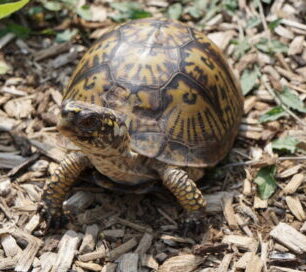
Eastern box turtles are listed as a species of special concern in Indiana due to population declines involving habitat loss, road mortality, and collection for pets. If you see one this summer, be sure to keep these guidelines in mind:
- Eastern box turtles may not be collected from the wild; however, if you accidentally catch an Eastern box turtle from Indiana from the wild, please contact the Division of Fish & Wildlife at DFW@dnr.IN.gov; do not release it into the wild. Its chances of survival are low, and it could transmit diseases to other wild Eastern box turtles.
- Sick or injured Eastern box turtles should be left in the wild. Don’t fret—box turtles are surprisingly resilient to damage and disease. If left alone, they will likely heal on their own. If a box turtle appears severely injured, it can be given to a licensed rehabilitator or licensed veterinarian.
If you see a wild Eastern box turtle crossing a busy road, you can pick it up and move it to the other side of the road in the direction it was facing. DNR appreciates your efforts to conserve wildlife.
To identify and learn more about the Eastern box turtle, please visit the DNR: Fish and Wildlife: Eastern Box Turtle website
Resources
Turtles of Indiana, The Education Store
Appreciating Reptiles and Amphibians in Nature, The Education Store
Forestry Management for Reptiles and Amphibians: A Technical Guide for the Midwest, The Education Store
The Nature of Teaching, Unit 3: Reptiles, Amphibians, and the Scientific Method, The Education Store
Partners in Amphibian and Reptile Conservation (PARC)
Ask An Expert, Purdue Extension – FNR Playlist
Indiana Department of Natural Resources
With winter upon us this is actually a good time to look for owls on your property. Most owls breed from January to March. You can either listen for calls in the evening, or use owl calls or recorded calls to get responses from owls in the area. We have three common species in Indiana and one rare species. All are non-migratory. However, each has different needs and habits. The following descriptions were written by Barny Dunning, professor of wildlife ecology at Purdue. These accounts were originally published in the Indiana Woodland Steward (www.inwoodlands.org).
Owls are among the most intriguing animals native to Indiana. They have been celebrated in story from the myths of the early Greeks to the books of Harry Potter. Owls are common across much of the state, but are relatively unknown, probably because of the nocturnal habits of these birds. But since they are efficient predators of mice and rats, among other things, owls are very useful birds to have around. Three species of owls are common year-round residents in Hoosier forests. The largest of these is the great horned owl, one of the dominant predators of our forests. Most people are surprised to learn that the great horned owl is as common as the familiar redtailed hawk even though the owl is much less likely to be seen.
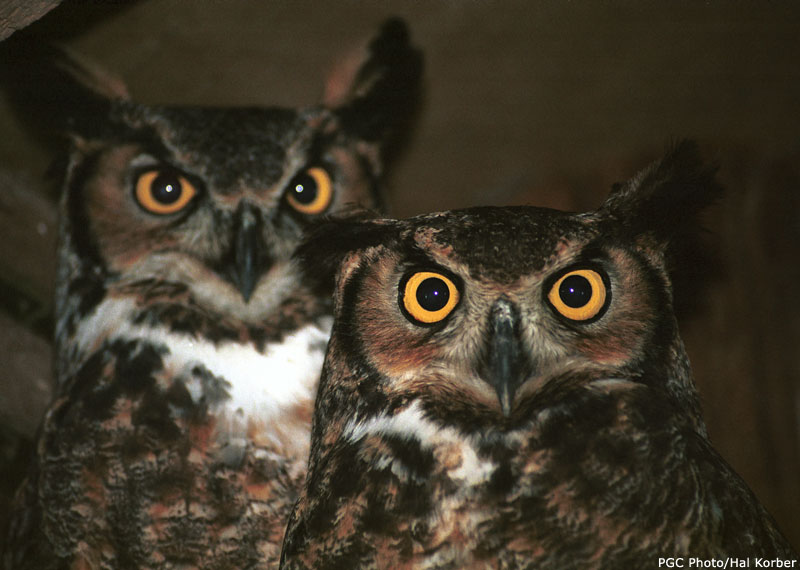
Great horned owls hunt in open areas but nest in large trees, where they take over a nest abandoned by a hawk, crow or heron. They are common where both woods and fields mix. The owls start breeding in January and February, adding new sticks to an old nest and laying a clutch of three eggs. Most species of owls nest very early in the year so that there will be a lot of easily caught prey in the form of young mammals and birds when the owl chicks are learning to hunt on their own. Many nests of the great horned owl are in snags or trees with broken tops, therefore retaining some of these forest features will provide good nesting spots for this dominant bird.
A second species of large owl is found in the larger woodlands of Indiana. The barred owl is most common in the interiors of forests and spends less time along the woodland edge. One major reason for this is the presence of the great horned owls, which will kill and eat a barred owl. Barred owls usually nest in the cavities of deciduous trees, laying their eggs in deep winter. Their dependence on tree cavities means that barred owls are likely to respond well to land management activities that retain large trees on a property and increase the number of snags with cavities. They also do well when there are forest patches of a variety of ages on a property, in addition to the older trees that provide nest sites.
Eastern screech-owls are the smallest resident owl in the state. They nest in small tree cavities and readily make use of nest boxes made especially for them. More than the other two species, screech-owls are found in suburban backyards, urban parks and on college campuses – anywhere there is a variety of trees and shrubs. Screech-owls feed on small prey such as insects, songbirds and mice. They breed later than do the big owls and have active nests in March and April. In addition to nest boxes, these owls will use old cavities excavated by northern flickers, tree holes created by storm damage, and hollow trunks of snags. Their ready use of a wide variety of cavity types makes our screech-owls a prime beneficiary of snag retention and other habitat improvement activities. Indiana’s smallest owl does not breed here, but its numbers during the fall migration can be in the thousands statewide. The northern saw-whet owl breeds from the most northern states on into Canada and migrates from there when food becomes scarce. “Swets” are an irruptive species, meaning their populations rise and fall dramatically from one year to the next on a roughly four-year cycle. A group of volunteer researchers in Yellowwood State Forest began studying the movements of these owls in 2002 as part of the larger Project Owlnet (www.projectowlnet.org). Their first year produced 71 owls on just one ridge in Yellowwood. Since then, the annual numbers have averaged around 70, but nearly 200 owls were captured and banded on that same ridge in 2007. The low point in the cycle was in 2009 when only nine owls were captured. There are now eight such banding stations scattered around Indiana. Brookeville Reservoir had the largest number of captures in 2009 with 32; while an Indianapolis station tallied only six. Some northern saw-whet owls winter in Indiana where forests with an open understory provide good foraging opportunities throughout the winter months.
The rarest owl in Indiana is, paradoxically, the species with the largest geographic range. Barn owls are found across the globe, but in the Midwestern United States their populations have declined dramatically. The species is considered endangered in Indiana. Barn owls originally nested in tree cavities, but when early settlers built barns and other farm buildings, the owls were quick to adapt. They are not limited to barns however, as recent Hoosier nests have been found in old churches, silos, and within the walls of abandoned buildings. To be suitable, human structures must have openings that allow the owls to fly in and out and an interior area that is undisturbed and big enough for the nest. The biggest factor in their decline has been changing agricultural practices. Barn owls hunt in open areas such as pastures, but do not use row crop fields. As Hoosier farmers converted pastures to corn and soybean, the barn owl lost its hunting grounds. Farmers in the southern part of the state that still retain some open grassy fields on their land can contact the state Department of Natural Resources to have a barn owl nest box added to their outbuildings if they don’t have appropriate nest sites.
Resources
Learn how forests are used by birds new videos, Got Nature? Blog
Managing Woodlands for Birds, The Education Store-Purdue Extension resource center
National Audubon Society
The Cornell Lab of Ornithology
Brian MacGowan, Wildlife Extension Specialist
Purdue University, Forestry and Natural Resources
The new USDA-Natural Resources Conservation Service (NRCS) website is designed for farmers, ranchers and forest landowners who use NRCS conservation programs, and our partners who help us deliver the conservation mission.
You will find information that includes:
- Conservation Basics: find soil health, soil science, water, air, plants, animals, land, energy, climate, wildlife habitat and invasive species and pests
- Getting Assistance: find your local service center
- Programs & Initiatives
- Resources
- News & Events
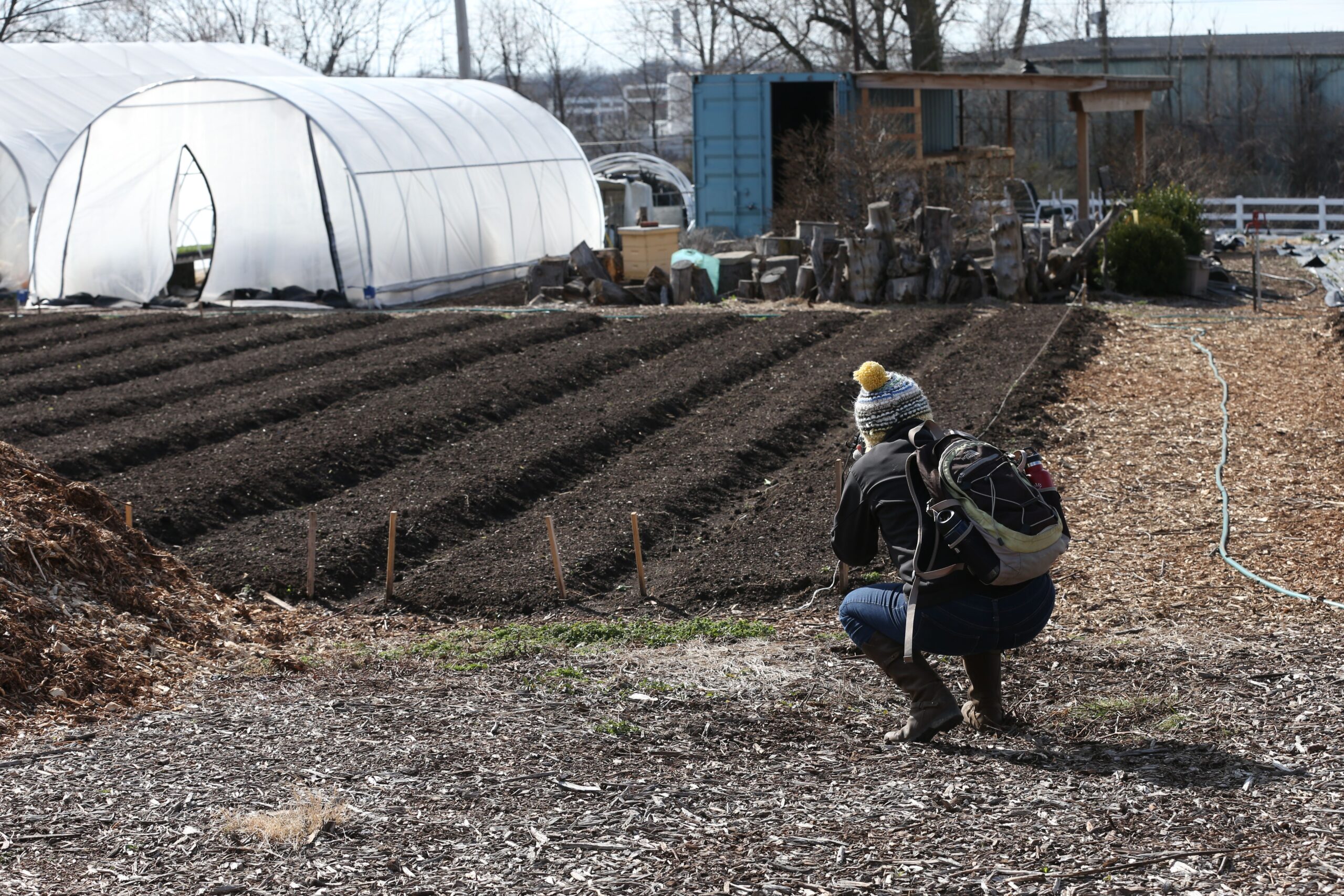
For more than 80 years, NRCS has helped people make investments in their operations and local communities to keep working lands working, boost rural economies, increase the competitiveness of American agriculture, and improve the quality of our air, water, soil, and habitat.
As the USDA’s primary private lands conservation agency, NRCS generates, manages, shares data, technology and standards that enable partners and policymakers to make decisions informed by objective, reliable science.
Resources:
Consumer Horticulture: Collecting Soil Samples for Testing, The Education Store , Purdue Extension resource center
Soil Sampling Guidelines, The Education Store
Soil Testing for Lawns, The Education Store
Certified Soil Testing Laboratories, Purdue Extension – Master Gardener Program
Lawn to Lake Midwest, Illinois-Indiana Sea Grant Program
Forest Improvement Handbook, The Education Store
Frost Seeding Native Grasses and Forbs with a Drone (UAV), Purdue Extension-Forestry & Natural Resources (FNR)
Hardwood Ecosystem Experiment – Wildlife Responses to Timber Harvesting, The Education Store
Invasive Plants: Impact on Environment and People, The Education Store
Urban Forestry, Playlist, Purdue Extension – FNR YouTube Channel
USDA-Natural Resources Conservation Service (NRCS)
 The classic and trusted book “Fifty Common Trees of Indiana” by T.E. Shaw was published in 1956 as a user-friendly guide to local species. Nearly 70 years later, the publication has been updated through a joint effort by the Purdue Department of Forestry and Natural Resources, Indiana 4-H, and the Indiana Department of Natural Resources, and reintroduced as “An Introduction to Trees of Indiana.”
The full publication is available for download for $7 in the Purdue Extension Education Store. The field guide helps identify common Indiana woodlot trees.
Each week, the Intro to Trees of Indiana web series will offer a sneak peek at one species from the book, paired with an ID That Tree video from Purdue Extension forester Lenny Farlee to help visualize each species as it stands in the woods. Threats to species health as well as also insight into the wood provided by the species, will be provided through additional resources as well as the Hardwoods of the Central Midwest exhibit of the Purdue Arboretum, if available.
This week, we introduce Ohio Buckeye or Aesculus glabra.
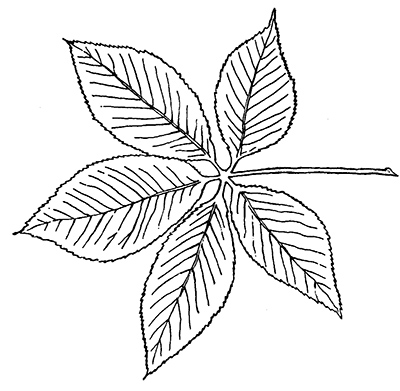
This understory tree is easily identifiable by its oppositely arranged compound leaves with five leaflets, placed like the fingers on your hand, that originate from one location on the long leaf stems. Ohio Buckeye features clusters of tubular yellow/green flowers borne on the end of the stems in the spring. In the winter, twigs show large white leaf scars where leaves were present the season prior. This tree produces round, shiny dark brown nuts, which are contained in a spiny shell.
 Ohio Buckeye is one of the first trees to leaf out in the spring, while its smooth buds also form early in the season. It is also one of the first trees to lose its leaves, typically at the end of the summer.
Ohio Buckeyes are found mostly in the understory, in the shade of other trees, on moist sites. They grow to be anywhere from 20 to 40 feet tall. According to the Morton Arboretum, Ohio Buckeyes are native from western Pennsylvania to Iowa and south to Alabama and Arkansas.
Ohio Buckeye is susceptible to a variety of pests and diseases from leaf blotch and powdery mildew to infestation by scale and Japanese beetles.
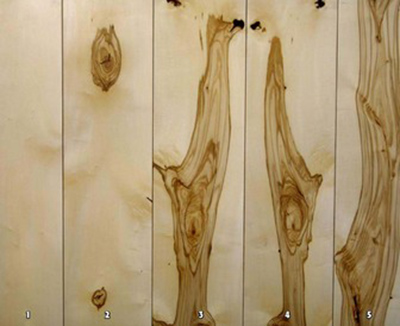
According to the Hardwoods of the Central Midwest exhibit, the sapwood is white to grayish with a darker irregular heartwood. The wood has uniformly distributed pores and its growth rings are slightly visible. With a 12 percent moisture content, buckeye weighs about 25 pounds per cubic foot, making it one of Indiana’s lightest weight woods.
The wood from Ohio Buckeye is very desirable for carving. In the past, it was used for artificial limbs. When the material is processed today, it is used for low-strength pallets and crates. It can also be used for paint grade molding.
For full article with photos view: Intro to Trees of Indiana: Ohio Buckeye
Resources:
Ohio Buckeye – Purdue Arboretum
ID That Tree Winter Edition: Opposite Leaf Arrangement – Ohio buckeye, Red maple, Purdue Extension-Forestry and Natural Resources’ YouTube playlist
Fifty Common Trees of Indiana
An Introduction to Trees of Indiana
Native Trees of the Midwest, The Education Store, Purdue Extension’s resource center
Shrubs and Woody Vines of Indiana and the Midwest, The Education Store
ID That Tree, Purdue Extension-FNR’s YouTube playlist
Woodland Management Moment , Purdue Extension-FNR’s YouTube playlist
Investing in Indiana Woodlands, The Education Store
Forest Improvement Handbook, The Education Store
Wendy Mayer, FNR Communications Coordinator
Purdue University Department of Forestry and Natural Resources
Lenny Farlee, Sustaining Hardwood Extension Specialist
Purdue University Department of Forestry and Natural Resources

Recent Posts
- Publication – Planting Forest Trees and Shrubs in Indiana
Posted: April 8, 2026 in Forests and Street Trees, Urban Forestry, Wildlife, Woodlands - ID That Tree: Virgin’s Bower Clematis
Posted: April 6, 2026 in Urban Forestry, Wildlife, Woodlands - It’s Timberdoodle Time!
Posted: April 3, 2026 in Got Nature for Kids, How To, Wildlife - Keep An Eye Out for Hammerhead Worms, Purdue Landscape Report
Posted: April 2, 2026 in Invasive Animal Species, Wildlife, Woodlands - When is the Peak Migration For Hummingbirds and How Can You Attract Them?
Posted: in How To, Wildlife - ID That Tree Featured in National Woodland Owners Association Newsletter
Posted: April 1, 2026 in Urban Forestry, Wildlife, Woodlands - New 2026 Indiana Woodland Steward Newsletter
Posted: March 30, 2026 in Urban Forestry, Wildlife, Woodlands - A Woodland Management Moment: Why Aspect Matters
Posted: in Urban Forestry, Woodland Management Moment, Woodlands - 2026 Winter Bat Survey In Progress, MyDNR
Posted: March 27, 2026 in How To, Wildlife - Fast-Growing Trees for the Landscape, Purdue Landscape Report
Posted: March 26, 2026 in Forestry, Urban Forestry, Woodlands
Archives
Categories
- Alert
- Aquaculture/Fish
- Aquatic/Aquaculture Resources
- Ask the Expert
- Christmas Trees
- Community Development
- Disease
- Drought
- Forestry
- Forests and Street Trees
- Gardening
- Got Nature for Kids
- Great Lakes
- How To
- Invasive Animal Species
- Invasive Insects
- Invasive Plant Species
- Land Use
- Natural Resource Planning
- Nature of Teaching
- Plants
- Podcasts
- Ponds
- Publication
- Safety
- Spiders
- Timber Marketing
- Uncategorized
- Urban Forestry
- Webinar
- Wildlife
- Wood Products/Manufacturing
- Woodland Management Moment
- Woodlands