 Purdue University - Extension - Forestry and Natural Resources
Got Nature? Blog
Trees offer many functional and aesthetic benefits, but one of the most common is shade. Because of this, one of the most important aspects of tree selection and planting is placement. Improper placement of trees can diminish the value of the tree on the site. The tree can actually become a liability if it conflicts with infrastructure or just does not providing any useful shade at all. For shade where it’s needed most that also allows passive solar gain in the winter months, you must use an energy efficient design.

Figure 1 (Diagram by Greg Pierceall)
In this hemisphere, the sun is in the south, and the source of cold weather is in the north. Whenever possible, place openings for sunlight and radiant heat primarily on the southern exposure, then on the west and east. For energy efficiency in winter, use the low arc of the sun to capture the maximum amount of warmth through east-, west- and south-facing windows. Windows with a northern exposure are a source of cool air from prevailing winds during the hot months, so give the north minimum exposure and maximum natural protection in the winter.
When selecting trees for energy efficiency, don’t plant evergreen trees near the house on southern exposures. Trees may provide some shade and screening but will also block out the warming effects of the sun during winter months. When choosing trees for shade and solar gain, choose larger, deciduous-canopy trees that provide an advantage year round. Select good quality trees that are suitable for your location from a reputable source. See the publication FNR-433-W on the Education Store website for more information on tree selection and planting.
Correct placement is critical for an energy-efficient design and low maintenance as the tree grows and matures. Be certain that the mature height and spread fit the location before placing the tree. This allows the tree freedom to spread into the design space naturally without excessive pruning to prevent conflicts with the house. However, the tree still must be close enough to the house for the canopy to provide shade. A good rule of thumb is to plant the tree at least 20 feet from the house. For larger shade trees, you may need to plant as far as 40 feet from the house to insure room for growth (see Figure 1).
Trees help make homes energy-efficient by creating a cooling effect during the hot summer months or by allowing the passive solar gain during cold winter months. However, proper selection and placement is critical to make this work.
Resources
Tree Installation: Process and Practices, The Education Store
Tree Planting Instructions, Indiana Department of Natural Resources
Planting & Transplanting Landscape Trees and Shrubs, Department of Horticulture, Purdue University
Lindsey Purcell, Urban Forestry Specialist
Department of Forestry and Natural Resources, Purdue University
 The Purdue Center for Global Soundscapes has been recognized by PBS. NOVA, a PBS documentary series focused on science, interviewed Bryan Pijanowski, Professor of Human-Environment Modeling and Analysis Laboratory, and Matt Harris, Graduate Research Assistant, to learn more on the subject and to share this story on the NOVA website in video format. Soundscape ecology is the study of how the environment changes by studying the sounds within that environment.
Anyone can be a citizen scientist and download their “sounds of earth” to the soundscape ecology database. There is no cost, and it is easy to do. Just visit the website, Record the Earth, for instructions.
Resources
Soundscape Ecology Research Projects, Forestry and Natural Resources
Purdue Boiler Bytes Highlights Discovery Park Global Soundscape Research Center Led by FNR’s Dr. Bryan Pijanowski, Got Nature?
Bryan Pijanowski, Professor of Human-Environment Modeling and Analysis Laboratory
Department of Forestry and Natural Resources
 Have you ever wondered what an unfettered rainforest sounds like? Or maybe been curious about the sounds of the shifting coastal tides of Alaska? Well Purdue Department of Forestry and Natural Resources Professor Bryan Pijanowski and his students have now made it possible to hear sounds from a wide number of locations around the world. Dr. Pijanowski, Professor of Human-Environment Modeling & Analysis Laboratory, has led teams to locations across the globe, including Costa Rica, Borneo and the Sonaran Desert, in an effort to record and archive the sounds produced by various ecosystems. Dr. Pijanowski and his team have developed a series of applications for mobile devices and other technologies for soundscape recordings and research.
You can help capture and preserve sounds of the Earth and highlight their bellwether role in alerting scientists to environmental habitat changes by using the free app available at The Education Store, Purdue Extension. On Earth Day, April 22, 2015, The Global Soundscapes Research Center will try to surpass the number of downloads these received in 2014 on Earth Day.
Resources
Center for Global Soundscapes
Conserving Biodiversity in Agricultural Landscapes, Purdue University Press
Managing Forest & Wildlife Resources: An Integrated Approach, The Education Store
Bryan Pijanowski, Professor of Human-Environment Modeling & Analysis Laboratory
Department of Forestry and Natural Resources, Purdue University
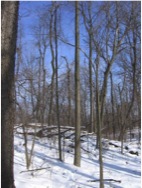 “When it snows…
and temperatures drop,
That’s when you’ll hear
The Snap, Crackle and Pop.”
Few things can compare to the peacefulness of walking in a forest filled with snow covered trees until you hear a snap, crackle or an explosive “POP” echoing through the woods. What on earth was that? If the noise is followed by a “whoosh,” it may be a limb that just broke and crashed to the ground. If it sounded like a gunshot but nobody is there, you may be listening to the sound of a frost crack forming on a tree.
What are frost cracks?
Nobody knows for sure. You may hear one happen, typically on a cold late winter morning after a warm spell. They sound like muffled to loud rifle shots. Typically, these cracks occur on the south side of the trunk between two and five feet up the tree (when measuring from the ground). With leaves on, water is pulled upwards from tree roots through the xylem vessels by the differences in water potential from the air to the soil and escapes through the leaves (the soil-plant-air continuum).
Water in the plant is under a negative water potential, or in common terms, under tension. In the winter, when deciduous trees have no leaves, the water pressure in the sap becomes positive. A flow occurs where water moves up in the xylem and cycles down in the phloem (food conducting cells). The mechanism of this winter flow in temperate trees is not well understood physiologically. The sap increases in simple soluble sugars as the cold weather begins and increases until midwinter to work like antifreeze, depressing the freezing point of water. This is why maple syrup can be tapped in late winter.
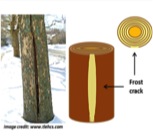 Scientists are challenged to study the phenomena of frost cracks. They involve thousands of xylem vessels in a very narrow vertical line bursting all at once – as if a line of sap is too low in sugar concentration – and then freezes hard explosively bursting the vessels. After several growing seasons, most trees will heal over the crack, but callus growth makes them appear wider. Valuable timber logs can still be profitably harvested with frost cracks as millers can cut through them to minimize the defect.
Species with darker colored bark and thinner bark can be affected by frost cracks. Some genotype effects have been found in black walnuts at Purdue. Field conditions and topography that effect cold air movement can affect frost cracks. Most form on the southwestern section of the trunk, the area most affected by warming from sunlight during winter afternoons. Somehow, this conditioning sets up the tree when temperatures plummet to single digits (in Fahrenheit) or lower, especially after a warmer period.
So if you wander through the woods this winter, stop but don’t “drop” when you listen to the sounds of the trees.
“When the snow twinkles
and the skies are bare…
Temperatures drop
and a chill fills the air.
If you listen real close
and adjust your cap,
You just might hear
a tree go ‘Snap!’”
Resources
Bark Splitting on Trees, Cornell University
Video: How Do Trees Survive Winter? MinuteEarth
Winterize Your Trees, The Education Store
Shaneka Lawson, Adjunct Assistant Professor
Department of Forestry and Natural Resources
James McKenna, Operational Tree Breeder
Department of Forestry and Natural Resources
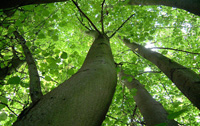 The 2015 Indiana Tree Farm Landowners Clinic is a program designed to provide landowners interested in managing their forests and wild lands an introduction to management practices and resources for advice and assistance. The program is open to anyone interested in trees and wildlife. Since 1941, the American Tree Farm System has educated and recognized the commitment of private family forestland owners demonstrated in sustainable forest stewardship. We will have tree measuring sticks available for sale. Join us to learn more about Tree Farm and how you can improve your property. This program is offered through the cooperation of the Indiana Tree Farm Committee, the Indiana Department of Natural Resources (INDNR) – Division of Forestry and the Hardwood Tree Improvement and Regeneration Center (HTIRC).
What: 2015 Indiana Tree Farm Landowners Clinic
When/Where: Friday, March 27, 2015, at The Reuter Tree Farm from 1-4 pm; Saturday, March 28, 2015, at McCormick’s Creek State Park, Spencer, IN from 9 am to 4 pm
Registration: $50 per person or $75 per couple. Must register by March 20, 2015.
See the brochure for more details and registration.
Resources
Purdue FNR Events
Forest Improvement Handbook, The Education Store
A Landowner’s Guide to Sustainable Forestry: Part 1: Sustainable Forestry – What Does It Mean For Indiana?, The Education Store
Lenny Farlee, Sustaining Hardwood Extension Specialist
Department of Forestry and Natural Resources & HTIRC
Bob Burke, Consulting Forester
Indiana Tree Farm Program
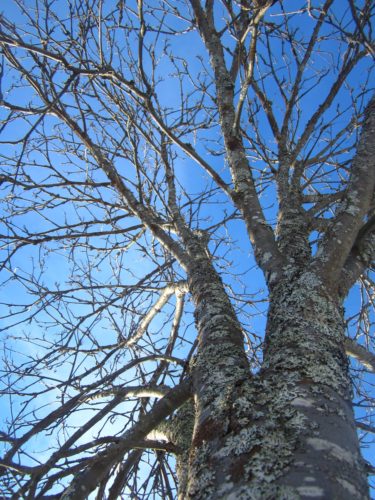 The Terre Haute area in Indiana is in a tree crisis. With Emerald Ash Borer and other deciding factors, 300+ trees a year will be removed. Over the next few years, this averages to approximately 24 percent of the total trees will be gone. Planning for the future with the knowledge of this loss is crucial. While the city will pay for removing the trees and tree-related projects, it is not in the city’s budget to replace the trees at this time. The city needs to apply for grants to fund replanting projects. The trees are removed due to diseases, age and when people run into them with cars. If you want to learn more about the tree crisis and the action that will be taken, you are welcome to attend the Emerald Ash Borer summit.
What: TREES Inc. Emerald Ash Borer Summit
Where: Vigo County Library, Meeting Rooms A, B and C
When: Thursday, February 12, 12-1:30 pm
Resources
Emerald Ash Borer in Indiana, Purdue Extension
Tree Installation: Process and Practices, The Education Store
Tree Risk Management – Got Nature? Blog, Purdue Extension – FNR
Got Nature?
Department of Forestry and Natural Resources
Purdue University
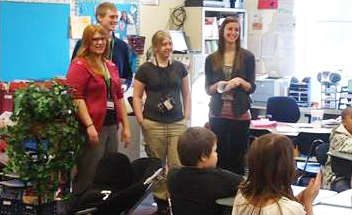 FNR is pleased to announce a new program that will provide undergraduate extension internship opportunities for qualified students this summer. This is an exciting program with the potential to build on an already strong set of FNR extension programs while providing valuable experience and training for undergraduates.
Purdue University’s Department of Forestry and Natural Resources seeks candidates for extension internship positions. The department extension program has a broad environmental scope including fisheries, forest management, invasive species, urban forestry, sustainability, wildlife and wood products. Student interns can enhance their career potential through practical, hands-on experience. Our extension internship program can help you:
- Develop leadership and decision-making skills in handling creative challenges
- Gain experience developing extension products including publications, online videos, presentations and/or more
- Participate in professional development opportunities
- Build professional references and contacts
- Clarify career goals
- Learn from a diverse and experienced group of natural resources professionals
Internships are open to non-Purdue students. Requirements for the position(s) include status as a junior or senior level college student in natural resources or related discipline, minimum 3.0 GPA, evidence of initiative, independence and commitment to conservation of natural resources. Internships are available for summer term (up to 40 hours/wk., up to 8 weeks) with pay at a rate of $12 per hour. Internship start dates and work hours are flexible depending on the applicant’s availability.
Resources
FNR Extension Internship Information, Purdue Forestry and Natural Resources (FNR)
Brian MacGowan, Extension Wildlife Specialist
Department of Forestry and Natural Resources, Purdue University
 Trees in Rice Cemetery in Elkhart, IN, were cut down due to verticillium wilt, a disease causing discoloration and wilt of branches. The fungus causing this disease spreads through roots. Many trees in the cemetery have been marked with a red dot and will be removed. If all goes well, new younger trees will take their place in the fall. If you have witnessed verticillium wilt, please notify the Indiana Department of Natural Resources.
Resources
Rice Cemetery Trees Cut Down Due to Verticillium Wilt as Elkhart Forestry Workers Fight to Save Those Left, The Elkhart Truth
Verticillium Wilt of Shade Trees, The Education Store, Purdue Extension’s resource center
Diseases in Hardwood Tree Plantings, The Education Store
Forest Health Informer, Indiana Department of Natural Resources
How to Check for Verticillium Wilt, July “In The Grow” (Q&A), Indiana Yard and Garden – Purdue Consumer Horticulture
What are Invasive Species and Why Should I Care?, (What to do if you see any disease) Purdue Extension-Forestry & Natural Resources Got Nature? Blog
Diana Evans, Extension and Web Communication Specialist
Purdue University Department of Forestry and Natural Resources
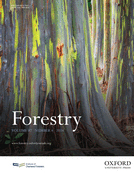 Effects of Root Competition on Development of Chestnut and Oak Regeneration Following Midstory Removal was featured in the Oxford Journals, Forestry: An International Journal of Forest Research. The Department of Forestry and Natural Resources has continued to work for the regeneration of the American chestnut and red oak.
Abstract: “Partial canopy cover promotes regeneration of many ecologically and/or economically favored tree species in temperate mesic forests. However, the specific effects of belowground resource competition from different canopy strata in these systems are poorly understood. This is particularly…” Read more.
Resources
Indiana American Chestnut Foundation
The American Chestnut Foundation
Natural Oak Regeneration Following Clearcutting on the Hoosier National Forest, The Education Store
Hardwood Tree Improvement and Regeneration Center
Caleb E. Brown, M.S. graduate student
Brian G. Bailey, graduate student
Michael R. Saunders, Associate Professor of Ecology and Natural Resources
Douglass F. Jacobs, Fred M. van Eck Professor of Forest Biology
Department of Forestry and Natural Resources
 The invasive insect has made its way to its 79th county, Sullivan County. It was recently spotted in Jennings, Pike, Scott, Spencer and Warrick counties. There are only a few counties in southern Indiana that have not been affected by the Emerald Ash Borer (EAB). In order to slow the spread of the EAB, the Indiana Department of Natural Resources (DNR) has restricted the movement of ash trees, limbs and untreated ash lumber with bark attached or any cut hardwood lumber of any species with bark attached. Visitors to DNR properties may only bring in firewood that has been certified by the USDA or DNR Division of Entomology and Plant Pathology or is free of bark. Homeowners should also be aware of this invasive species. To learn more about the EAB and what signs to look for if your tree is infected, take a look at the resources below.
Resources
Arrest That Pest! – Emerald Ash Borer in Indiana, Purdue Extension
Invasive Species, Got Nature?
Emerald Ash Borer, Indiana Department of Natural Resources
Emerald Ash Borer in Indiana, Purdue Extension

Recent Posts
- Opportunities for Prescribed and Wildland Fire Training
Posted: November 4, 2026 in Forestry, How To, Wildlife, Woodlands - Wildlife Issues and Solutions: A New Online Series
Posted: in Forestry, How To, Wildlife, Woodlands - Burning for Benefits: Where Fire Belongs in Indiana
Posted: in Forestry, Safety, Wildlife, Woodlands - Residents, Alumni Invited to Share Indiana Natural Resource, Spaces, Species Memories
Posted: in Forestry, Forests and Street Trees, Gardening, Urban Forestry, Wildlife - Now Is The Time To Control Non-Native Bush Honeysuckle
Posted: October 30, 2026 in Forestry, How To, Invasive Plant Species, Woodlands - Help Strengthen the Future of Indiana Maple Syrup
Posted: October 29, 2026 in Forestry, How To, Woodlands - Popular Landscape Shrub is Invasive
Posted: October 15, 2026 in Alert, Forestry, Forests and Street Trees, Invasive Plant Species, Plants, Woodlands - Purdue Extension’s Regional Teams Are Here: Connecting Communities with Expertise and Opportunity
Posted: October 14, 2026 in Community Development, Forestry, Forests and Street Trees, Gardening, How To, Timber Marketing, Urban Forestry, Wildlife, Woodlands - Why Do Our Trees Go From Green Leaves to Different Colors?
Posted: in Forestry, Forests and Street Trees, Urban Forestry, Woodlands - Deer and Turkey Archery Seasons Opening Soon, MyDNR
Posted: October 13, 2026 in Alert, Safety, Wildlife
Archives
Categories
- Alert
- Aquaculture/Fish
- Aquatic/Aquaculture Resources
- Ask the Expert
- Christmas Trees
- Community Development
- Disease
- Drought
- Forestry
- Forests and Street Trees
- Gardening
- Got Nature for Kids
- Great Lakes
- How To
- Invasive Animal Species
- Invasive Insects
- Invasive Plant Species
- Land Use
- Natural Resource Planning
- Nature of Teaching
- Plants
- Podcasts
- Ponds
- Publication
- Safety
- Spiders
- Timber Marketing
- Urban Forestry
- Webinar
- Wildlife
- Wood Products/Manufacturing
- Woodland Management Moment
- Woodlands