 Purdue University - Extension - Forestry and Natural Resources
Got Nature? Blog
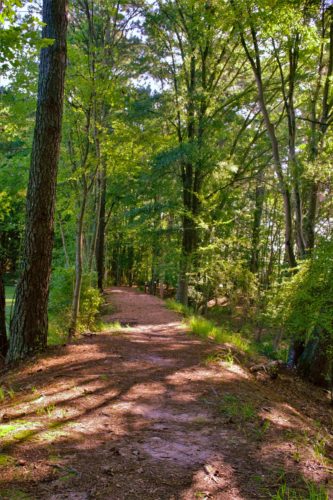 The Washington Post has published an article stating that experts fear how smaller parcels of forest owned, combined with an increase in the number of owners, will affect the long-term health of the American woodlands. With smaller parcels of land, owners are less likely to invest in forest management plans because managing wildlife is more difficult compared to a larger parcel of land. Also the average age of those who privately own forest land is 62.5. The article pointed out how the best and most important thing to do is bridge the gap between the generations, so parents and children talk to each other and know what they want. The restoration of the forest land will benefit many generations to come.
View the full article “Experts Fear For Long-Term Health of U.S. Forests” at The Washington Post’s website.
Resources
State Forest Management Guides, Indiana DNR
Forest Health, Indiana DNR
A Landowner’s Guide to Sustainable Forestry: Part 2: Planning for the Future, The Education Store
Got Nature?
Department of Forestry and Natural Resources, Purdue University
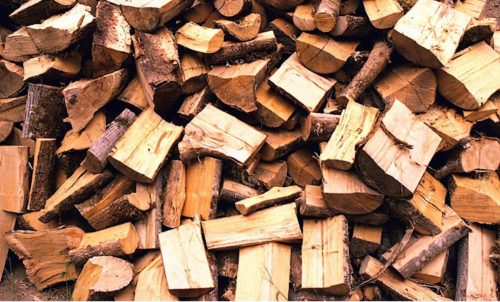 The National Association of State Foresters has published an article debating whether to stack firewood bark up or bark down. They concluded that there are benefits and drawbacks to both ways. When storing wood under shelter, it would depend on personal preference and ease of handling. When split wood is stored outdoors bark down, it is possible that water can collect in the u-shaped trough, causing prolonged drying and accelerating decay. When storing the split wood bark up, it was questioned whether the bark would protect wood from long-term photo-degradation, but it wouldn’t degrade the wood enough to significantly affect thermal output. It was suggested that smaller logs be put perpendicular under stacks of wood to allow for better air-flow and reduce the chance of infestation.
Resources
Wood for Home Heating, The Education Store
Insects in Firewood, The Education Store
Firewood Rules, Indiana DNR
Heating with Firewood, Indiana DNR
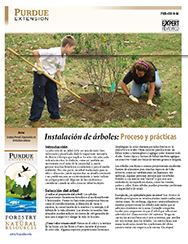 This is a Spanish-language version of our helpful how-to guide, Tree Installation: Process and Practices, which helps in choosing, planting and maintaining trees. It includes a 12-step planting process, Indiana native tree and utility-friendly tree charts, information on Midwest hardiness zones and detailed tree-planting graphics and photographs. View it in The Education Store today!
Resources:
Tree Installation: Process and Practices, The Education Store
Native Trees of the Midwest, The Education Store
Shrubs and Woody Vines of Indiana and the Midwest, The Education Store
Planting Forest Trees and Shrubs in Indiana, The Education Store
Lindsey Purcell, Chapter Executive Director
Indiana Arborist Association
As winter comes swiftly upon us, there are precautions we need to take to ensure our plants, both indoor and outdoor, are well taken care of. Below are a few examples of how you can prevent certain problems that occur in the cold months ahead. View all of the steps you can take at the Purdue Extension Yard and Garden Calendar page.
HOME (Indoor plants and activities)
- Houseplants may not receive adequate light because days are short and gloomy. Move plants closer to windows, but avoid placing foliage against cold glass panes. Artificial lighting may be helpful.
- Because growth slows or stops in winter months, most plants will require less water and little, if any, fertilizer.
- Extend the lives of holiday plants such as poinsettias and Christmas cactus by placing them in a cool, brightly lit area that is free from warm or cold drafts.
YARD (Lawns, woody ornamentals and fruits)
- Prevent bark splitting of young and thin-barked trees, such as fruit and maple trees. Wrap trunks with tree wrap or paint them with white latex (not oil-based) paint, particularly on the south- and southwest-facing sides.
- Provide winter protection for roses by mounding soil approximately 12 inches high to insulate the graft union after plants are dormant and temperatures are cold. Additional organic mulch such as straw compost or chopped leaves can be placed on top.
GARDEN (Flowers, vegetables and small fruits)
- To protect newly planted or tender perennials and bulbs, mulch with straw, chopped leaves or other organic material after plants become dormant.
- Store leftover garden chemicals where they will stay dry, unfrozen and out of the reach of children, pets and unsuspecting adults.
- Once the plants are completely dormant and temperatures are consistently below freezing, apply winter mulch to protect strawberries and other tender perennials. In most cases, two to four inches of organic material such as straw, pine needles, hay or bark chips will provide adequate protection.
Resources
Winter Garden Calendar, The Education Store
Winter Storage of Geranium, Canna, Gladiolus, Caladium, and Begonia, The Education Store
Winterize Your Trees, The Education Store
Communities that have been infested by emerald ash borers can apply for a share of a federal grant received by the Indiana Department of Natural Resources. This federal grant worth $100,000 will allow for communities in the Great Lakes area to take on tree-planting projects. Due to the loss of trees in the infested areas, planting trees will help replace the large amounts of trees lost by the emerald ash borer. The tree planting project will also improve water quality. Flooding due to storms can cause raw sewage to enter waterways, but trees can intercept the water to stop the flooding. A three inch tree is able to intercept around 400 gallons of water; 800 trees can intercept 320,000 gallons of water which can greatly decrease the chances of flooding. Communities that would like to apply for a share in the grant can first subscribe to the grants information listserv by visiting the Indiana DNR’s forestry site and click on the red envelope on the left side of the page.
Resources
DNR Receives Grant to Help Communities Recover From Ash Borer, Indiana DNR
Emerald Ash Borer, Purdue Extension
Emerald Ash Borer, Indiana DNR
Invasive Insects, Got Nature?
Arrest That Pest! – Emerald Ash Borer in Indiana, Purdue Extension
Carrie Tauscher, Urban Forestry Specialist
Indiana Department of Natural Resources (INDNR)
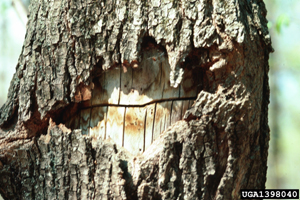
Glycobius speciosus, sugar maple borer, photo by Steven Katovich, USDA Forest Service.
Some of the most diverse taxa on the planet are rarely seen yet play critical roles within our environment. The insects found in the Order Coleoptera (beetles) are represented by over 500,000 species. Collectively, these insects provide a wide range of ecosystem services. They are important pollinators and predators on other insects, and they play essential roles in nutrient cycling. While most species are beneficial or vital for ecosystem functions, there are a few species that are considered pests.
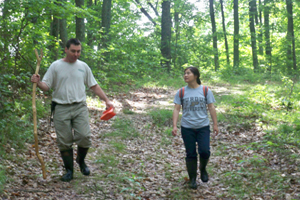
Dr. Jeff Holland and research team studying sugar maple borer in the woods.
The Sugar Maple Borer is a native species found throughout the eastern United States. The larval stage of the beetle specializes in feeding on sugar maple trees, particularly stressed or injured trees. In this podcast, our host, Rod Williams, will be interviewing Dr. Jeff Holland about the unique distribution of this wood-boring beetle, how to survey for this species on your property and the impacts to sugar maple trees throughout the eastern deciduous forests.
To find out more information about sugar maple borers, visit:
Holland Website
Bug Guide Identification
Resources
The Education Store (Search entomology or forest)
Got Nature? Blog Posts
Got Nature? Blog Posts
Jeff Holland, Associate Professor of Spatial Ecology and Biodiversity
Department of Entomology, Purdue University
Rod Williams, Associate Professor of Wildlife Science
Department of Forestry and Natural Resources, Purdue University
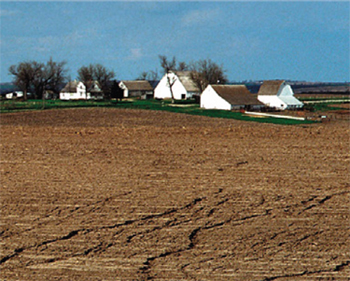 Agricultural educators, community organizers and others promoting environmental awareness can learn about the myths and realities of agricultural conservation from the perspective of a researcher, practitioner and student in a new Purdue Extension publication.
Adoption of Agricultural Conservation Practices: Insights from Research and Practice, developed by the Department of Forestry and Natural Resources at Purdue University, is available for free download from The Education Store.
The authors (Linda Prokopy, associate professor of Natural Resource Social Science; Dan Towery, Indiana Conservation Cropping System Initiative educator; and Nicholas Babin, postdoctoral research assistant in Forestry and Natural Resources) use academic studies and their own observations to address ways of motivating farmers to adopt environmentally-friendly farming practices.
To read the full article, visit Ag conservation publications available from Purdue Extension, Purdue Agriculture News.
Resources
Indiana Soils: Evaluation and Conservation Manual Review, Purdue Agronomy
Conservation Tillage and Water Quality, Purdue Extension
Optimizing Conservation Tillage Systems: Plant-to-Plant Uniformity is Essential for Optimum Yield in No-Till Cont. Corn, The Education Store
Linda Prokopy, Associate Professor of Natural Resource Social Science
Department of Forestry and Natural Resources
Emerald Ash Borer University will be providing webinars on the wood-boring pest, the Emerald Ash Borer, along with other pests and disease threats. These live sessions will allow participants to ask questions to the session presenter and moderators. The webinars will last from October to December 2014. To view the webinars, visit the Emerald Ash Borer website.
Resources
Emerald Ash Borer, Purdue Extension
Emerald Ash Borer, Indiana DNR
Invasive Species, Got Nature?
Arrest That Pest! – Emerald Ash Borer in Indiana, Purdue Extension
Cliff Sadof, Professor-Ornamental & Pest Management
Purdue Department of Entomology
For the first time in history, the majority of people reside in cities. For a species that evolved to live in small, primate tribes on the African Savanna, such a migration marks a dramatic shift. In recent years, it’s become clear that such unnatural surroundings have important implications for our mental and physical health and can powerfully alter how we think.
Enter the urban forest. This article, titled How The City Hurts Your Brain by Jonah Lehrer on Boston.com, shares some insight on healthy living in urban areas. Because of the huge migration to city life, urban forests and park spaces have become an integral part of living a healthy life. The good news is that even slight alterations, such as planting more trees in the inner city or creating urban parks with a greater variety of plants, can significantly reduce the negative side effects of city life.
To view more information, see the Urban Forests post from the National Association of State Foresters (NASF).
 Trees are cultivated in public and private landscapes in and around cities and towns. They are grown for the tremendous contributions they make both to the environment and the quality of people’s lives. In this urban forest, trees must be removed when they die or for reasons of health, safety or necessary changes in the landscape. The wood from these felled landscape trees could potentially be salvaged and used to manufacture wood products but not in the same way as forest-grown trees. This publication describes some key differences between wood products from traditional forests and those available from urban forests.
Urban Wood and Traditional Wood: A Comparison of Properties and Uses is available at The Education Store as a free download.
Resources
Lumber from Hardwood Trees, The Education Store
Winterize Your Trees, The Education Store
Lumber from Urban and Construction-Site Trees, The Education Store
Indiana’s Urban Woodlots, The Education Store
Dan Cassens, Professor of Wood Products and Extension Specialist
Department of Forestry and Natural Resources
Edith Makra, Chairman
Illinois Emerald Ash Borer Wood Utilization Team

Recent Posts
- Opportunities for Prescribed and Wildland Fire Training
Posted: November 4, 2026 in Forestry, How To, Wildlife, Woodlands - Wildlife Issues and Solutions: A New Online Series
Posted: in Forestry, How To, Wildlife, Woodlands - Burning for Benefits: Where Fire Belongs in Indiana
Posted: in Forestry, Safety, Wildlife, Woodlands - Residents, Alumni Invited to Share Indiana Natural Resource, Spaces, Species Memories
Posted: in Forestry, Forests and Street Trees, Gardening, Urban Forestry, Wildlife - Now Is The Time To Control Non-Native Bush Honeysuckle
Posted: October 30, 2026 in Forestry, How To, Invasive Plant Species, Woodlands - Help Strengthen the Future of Indiana Maple Syrup
Posted: October 29, 2026 in Forestry, How To, Woodlands - Popular Landscape Shrub is Invasive
Posted: October 15, 2026 in Alert, Forestry, Forests and Street Trees, Invasive Plant Species, Plants, Woodlands - Purdue Extension’s Regional Teams Are Here: Connecting Communities with Expertise and Opportunity
Posted: October 14, 2026 in Community Development, Forestry, Forests and Street Trees, Gardening, How To, Timber Marketing, Urban Forestry, Wildlife, Woodlands - Why Do Our Trees Go From Green Leaves to Different Colors?
Posted: in Forestry, Forests and Street Trees, Urban Forestry, Woodlands - Deer and Turkey Archery Seasons Opening Soon, MyDNR
Posted: October 13, 2026 in Alert, Safety, Wildlife
Archives
Categories
- Alert
- Aquaculture/Fish
- Aquatic/Aquaculture Resources
- Ask the Expert
- Christmas Trees
- Community Development
- Disease
- Drought
- Forestry
- Forests and Street Trees
- Gardening
- Got Nature for Kids
- Great Lakes
- How To
- Invasive Animal Species
- Invasive Insects
- Invasive Plant Species
- Land Use
- Natural Resource Planning
- Nature of Teaching
- Plants
- Podcasts
- Ponds
- Publication
- Safety
- Spiders
- Timber Marketing
- Urban Forestry
- Webinar
- Wildlife
- Wood Products/Manufacturing
- Woodland Management Moment
- Woodlands